
Osteoarthritis Treatment Market Size and Share
Market Overview
| Study Period | 2020 - 2031 |
|---|---|
| Market Size (2026) | USD 8.04 Billion |
| Market Size (2031) | USD 10.14 Billion |
| Growth Rate (2026 - 2031) | 4.74 % |
| Fastest Growing Market | Asia Pacific |
| Largest Market | North America |
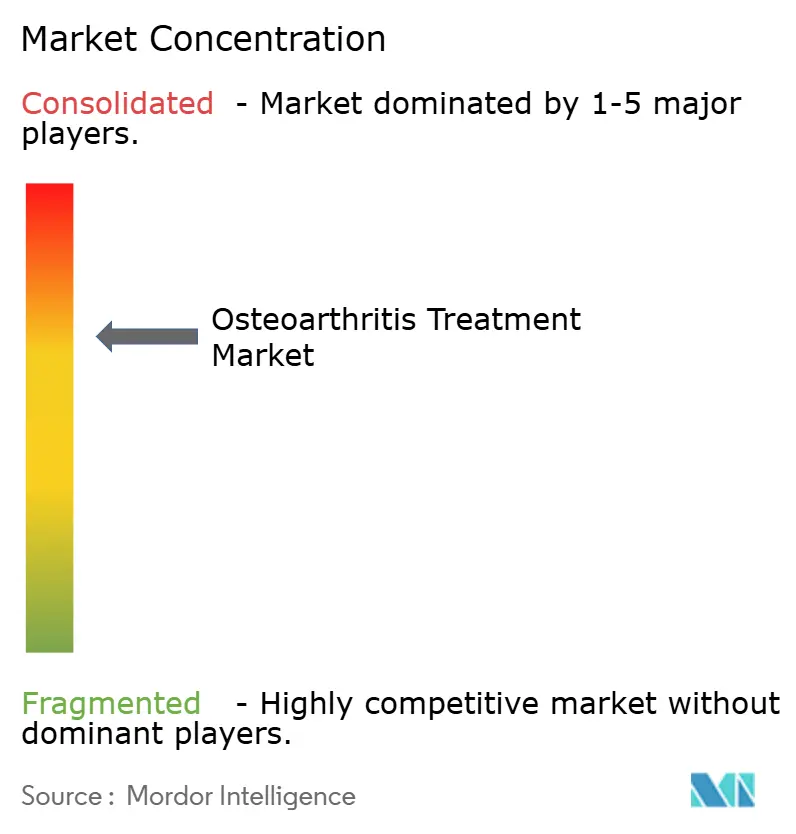
| Market Concentration | Medium |
Major Players *Disclaimer: Major Players sorted in no particular order Image © Mordor Intelligence. Reuse requires attribution under CC BY 4.0. | |
Osteoarthritis Treatment Market Analysis by Mordor Intelligence
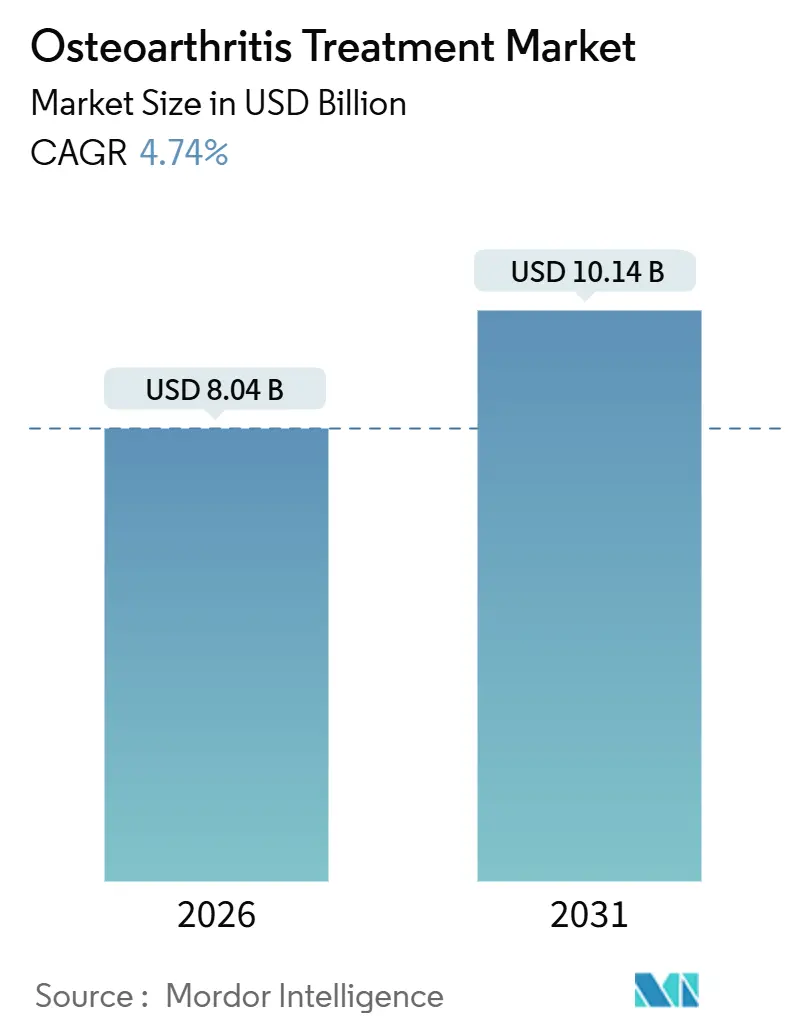
The Osteoarthritis Treatment Market size is estimated at USD 8.04 billion in 2026, and is expected to reach USD 10.14 billion by 2031, at a CAGR of 4.74% during the forecast period (2026-2031).
Demand is rising as aging and obese populations expand the addressable patient pool, yet reimbursement hurdles and evidence gaps slow uptake of disease-modifying therapies. Non-steroidal anti-inflammatory drugs (NSAIDs) remain first-line because they are inexpensive and widely available. Still, safety warnings are prompting clinicians to favor topical formulations and single-injection hyaluronic acid products. Hospital budgets favor minimally invasive injections that delay costly arthroplasty, encouraging manufacturers to innovate around extended-release corticosteroids and cross-linked viscosupplements. Competitive dynamics are intensifying as implant companies acquire regenerative assets to hedge against declining volumes of joint replacements.
Key Report Takeaways
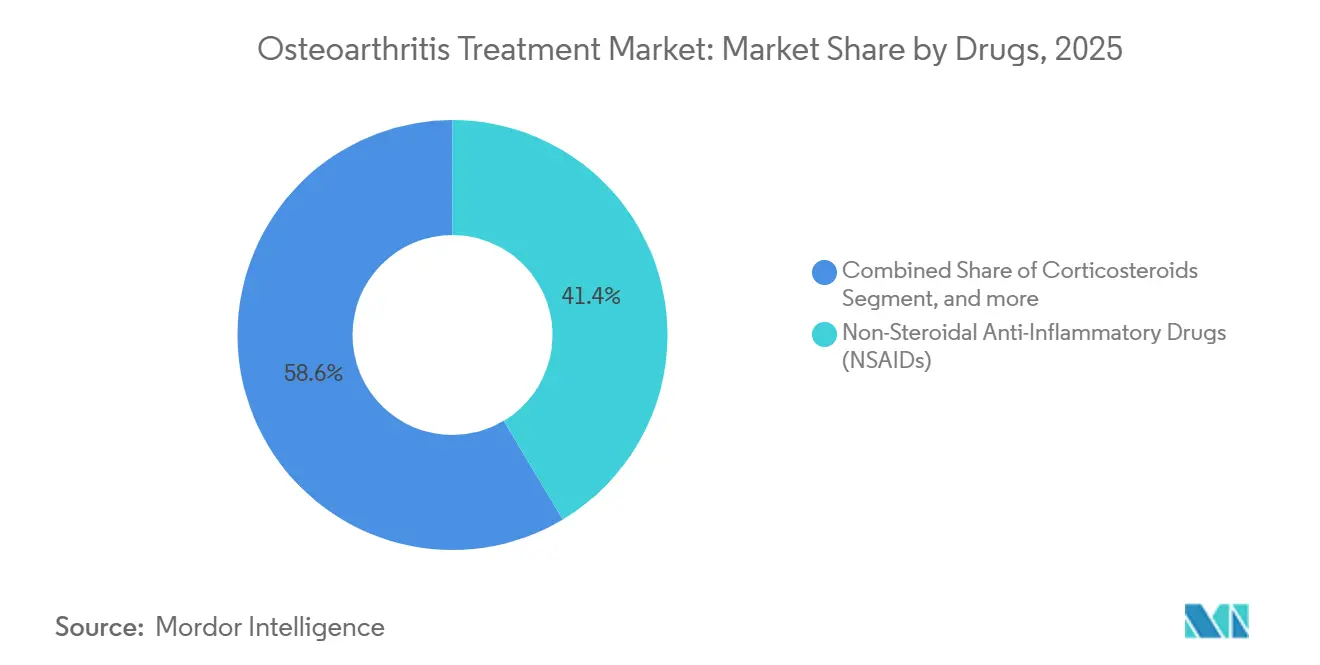
- By drug class, NSAIDs led with 41.43% of the osteoarthritis treatment market share in 2025, while single-injection hyaluronic acid is forecast to expand at a 6.54% CAGR to 2031.
- By anatomy, knee disease accounted for 46.76% of the osteoarthritis treatment market size in 2025, and shoulder cases are projected to advance at a 6.76% CAGR through 2031.
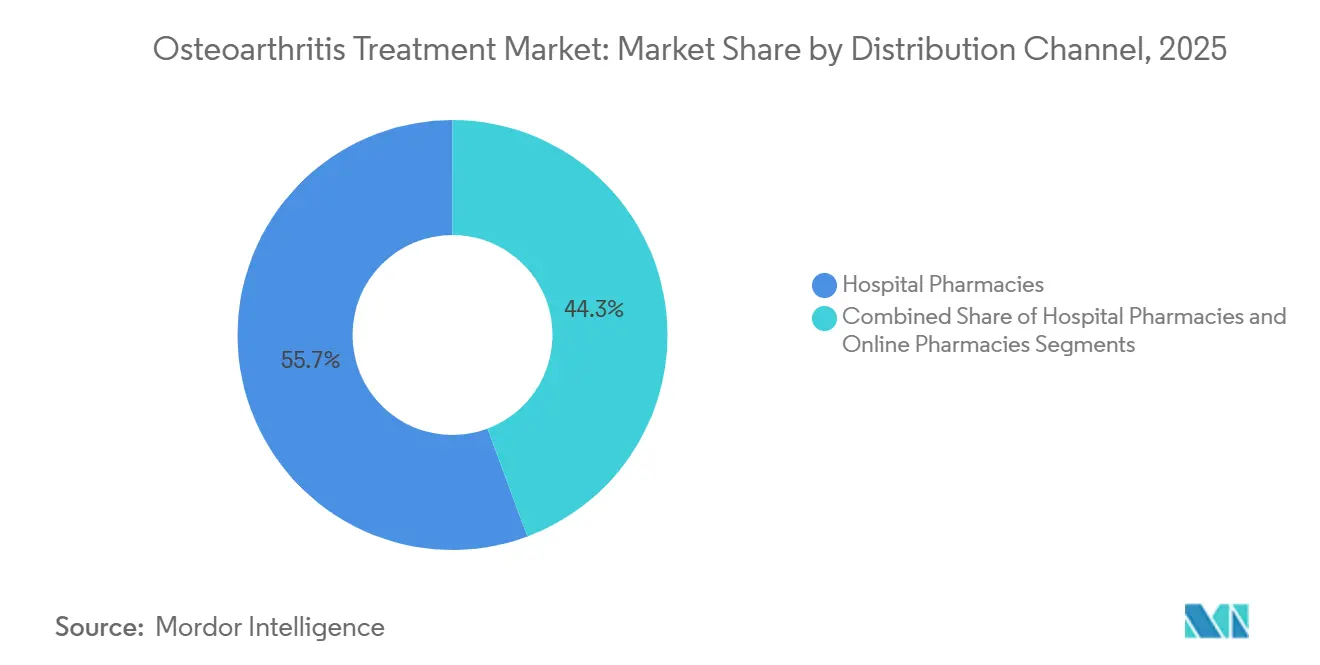
- By distribution channel, hospital pharmacies held a 55.67% revenue share in 2025, whereas online pharmacies are expected to grow at a 7.86% CAGR through 2031.
- By end user, hospitals captured 48.65% of the osteoarthritis treatment market size in 2025; however, orthopedic clinics are expected to expand at a 7.65% CAGR through 2031.
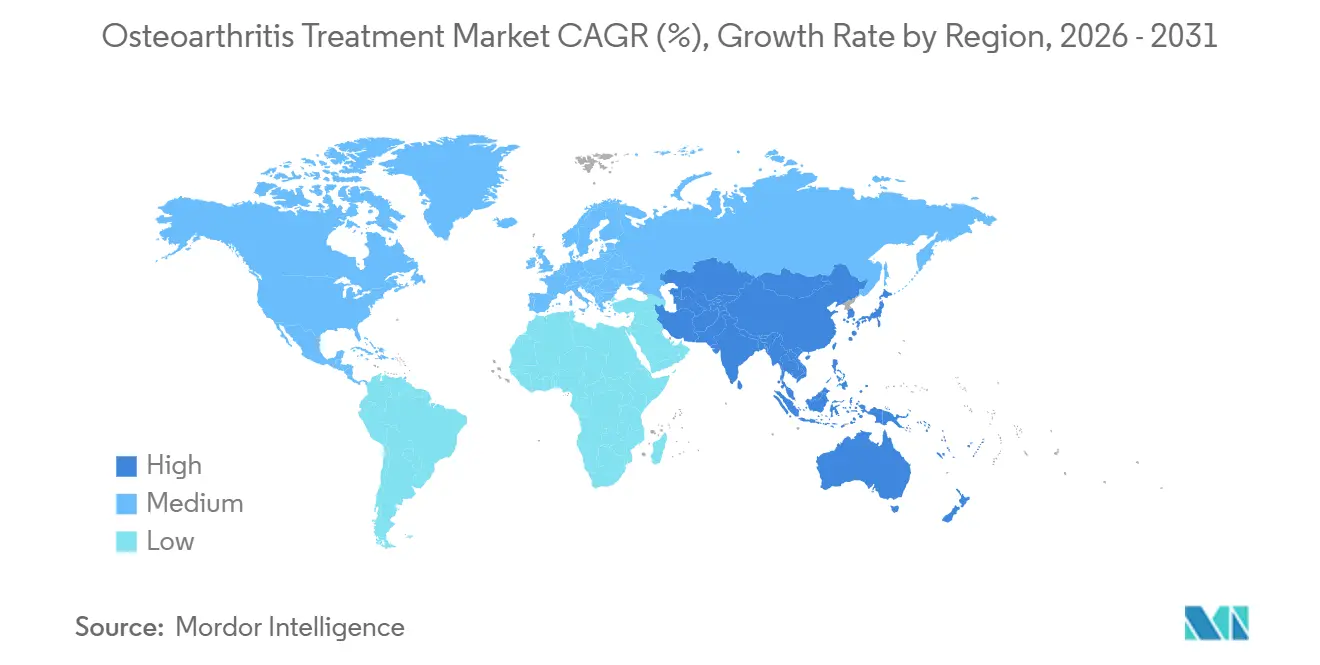
- By geography, North America retained a 42.65% revenue share in 2025, while the Asia-Pacific region is projected to grow at a 5.64% CAGR through 2031.
Note: Market size and forecast figures in this report are generated using Mordor Intelligence’s proprietary estimation framework, updated with the latest available data and insights as of January 2026.
Market Trends and Insights
Drivers Impact Analysis of Osteoarthritis Treatment Market*
| Driver | (~) % Impact on CAGR Forecast | Geographic Relevance | Impact Timeline |
|---|---|---|---|
| Rapidly aging global population and rising osteoarthritis prevalence | +1.2% | Global, with concentration in Japan, Western Europe, North America | Long term (≥ 4 years) |
| Rising obesity and sedentary lifestyles | +0.9% | North America, Middle East, Latin America | Medium term (2-4 years) |
| Growing adoption of minimally invasive intra-articular injections and single-injection viscosupplements | +0.8% | North America, Europe, Asia-Pacific urban centers | Short term (≤ 2 years) |
| Expanding insurance coverage and reimbursement for non-surgical therapies in emerging markets | +0.5% | Asia-Pacific (China, India), Latin America, Middle East | Medium term (2-4 years) |
| Advances in regenerative medicine and disease-modifying therapies | +0.7% | North America, Western Europe | Long term (≥ 4 years) |
| AI-enabled early diagnostics and personalized treatment pathways | +0.4% | North America, Europe, select Asia-Pacific hubs | Medium term (2-4 years) |
| Source: Mordor Intelligence | |||
Rapidly Aging Global Population
United Nations projections indicate that 1.4 billion people will be aged 60 or older by 2030, up from 1 billion in 2020[1]. Japan illustrates the impact, with 29% of residents already over 65 years. The prevalence of osteoarthritis is expected to reach 1 billion cases worldwide by 2050. China’s 280 million citizens aged 60 and above in 2024 are accelerating demand for cost-effective injections over surgery, according to. Pharmaceutical pipelines are adjusting; Novartis advanced its Wnt-pathway inhibitor LNA043 into Phase 2b during 2024.
Rising Obesity and Sedentary Lifestyles
The World Health Organization reported more than 1 billion obese individuals worldwide in 2022. Obesity raises the risk of knee osteoarthritis fivefold and quickens cartilage loss. Novo Nordisk’s STEP 9 trial demonstrated a 13.7% weight loss with semaglutide, reducing knee pain scores by 41.7 points in 2024. U.S. obesity-related medical costs exceed USD 170 billion annually. A 2024 Lancet study linked fewer than 5,000 daily steps to 22% faster cartilage thinning.
Growing Adoption of Single-Injection Viscosupplements
The FDA cleared HYMOVIS ONE in April 2025, reducing the number of clinic visits from three to one. ESCEO guidelines published in 2024 recommend single-injection hyaluronic acid for grade 2-3 knee disease. Ambulatory injections cost USD 800-1,200 per episode compared with USD 25,000-35,000 for knee replacement. Pacira and Johnson & Johnson began co-promoting ZILRETTA in July 2025 to extend corticosteroid relief to three months. Ultrasound guidance improves accuracy; a 2024 study in Arthritis & Rheumatology found 18% better pain reduction compared to the landmark technique.
AI-Enabled Early Diagnostics
The FDA cleared Lunit INSIGHT MSK in 2024, detecting early radiographic change with 92% sensitivity. A 2025 study in Nature Medicine predicted four-year progression to knee replacement with an AUC of 0.87, using MRI-based deep learning. IBM and the Osteoarthritis Research Society International launched a decision-support tool in 2024 that matches imaging, cytokine, and patient-reported data to recommended injections. A 2024 Health Affairs analysis estimated AI triage could save USD 1.2 billion per year in the U.S. by reducing unnecessary arthroscopies. The EMA issued draft guidance in 2025 to regulate such software.
Restraints Impact Analysis of Osteoarthritis Treatment Market*
| Restraint | (~) % Impact on CAGR Forecast | Geographic Relevance | Impact Timeline |
|---|---|---|---|
| High cost of advanced biologic therapies | -0.6% | Global, acute in emerging markets | Medium term (2-4 years) |
| Safety concerns and regulatory scrutiny around long-term NSAID and opioid use | -0.5% | North America, Europe | Short term (≤ 2 years) |
| Limited clinical evidence for novel regenerative treatments hindering physician adoption | -0.4% | North America, Western Europe, Japan | Medium term (2-4 years) |
| Variability in reimbursement policies across regions | -0.3% | Europe, Canada, selected Asia-Pacific markets | Long term (≥ 4 years) |
| Source: Mordor Intelligence | |||
High Cost of Advanced Biologic Therapies
Platelet-rich plasma costs USD 700-1,200 per injection and requires three sessions, yet Medicare offers no national coverage. Stem-cell injections priced at USD 3,000-7,000 showed no superiority to corticosteroids in a 2023 Nature Medicine trial. Amniotic suspension allografts, priced at USD 2,500-4,000, have faced repeated FDA warning letters for unsubstantiated claims. Pacira acquired GQ Bio in 2025 to develop PCRX-201 gene therapy that may debut at above USD 10,000 per dose. India’s Ayushman Bharat scheme reimburses only generic NSAIDs and corticosteroids, leaving viscosupplements as out-of-pocket purchases.
Safety Concerns and Regulatory Scrutiny Around Long-Term NSAID Use
The FDA boxed warning highlights elevated myocardial infarction and stroke risk from systemic NSAIDs. A 2024 Lancet meta-analysis reported diclofenac raised major vascular events by 40%[2]. A Cochrane review estimated that 1 in 1,200 annual NSAID users require hospitalization for upper-GI bleeding. The CDC’s 2024 guideline discourages opioids for chronic osteoarthritis pain. The UK MHRA will mandate cardiovascular risk checks for prescriptions longer than 30 days from 2025.
*Our forecasts treat driver/restraint impacts as directional, not additive. The impact forecasts reflect baseline growth, mix effects, and variable interactions.
Osteoarthritis Treatment Market Segment Analysis
By Drugs:
Single-Injection Viscosupplements Reshape ProtocolsHyaluronic acid injections are forecast to rise at a 6.54% CAGR through 2031 as single-dose products remove adherence barriers. NSAIDs retained a 41.43% revenue share in 2025, yet topical diclofenac gels are gaining favor due to their lower systemic exposure. Corticosteroids, such as ZILRETTA, offer 12 weeks of relief, thereby limiting the need for repeat procedures. Biologics account for a small portion of spending but dominate R&D budgets. In 2024, GlaxoSmithKline partnered with Relation Therapeutics to identify genetic targets, with USD 200 million in milestones. The osteoarthritis treatment market share is likely to tip toward injectables if forthcoming disease-modifying candidates demonstrate structural benefit.
The FDA approval of HYMOVIS ONE in 2025 validated the one-shot approach, following a 600-patient trial that demonstrated six-month pain reduction equivalent to that of three-dose regimens. ESCEO’s 2024 guideline shift triggered European demand despite fragmented reimbursement. Opioid prescribing for osteoarthritis dropped 40% in the U.S. between 2020 and 2024 after CDC guideline updates. Pharmaceutical pipelines, therefore, prioritize structural agents that can postpone the need for replacement surgery and preserve pricing power in the face of generic NSAID competition.

By Anatomy:
Shoulder Gains as Rotator-Cuff Sequelae MountKnee disease accounted for 46.76% of the osteoarthritis treatment market size in 2025, owing to its high biomechanical load and clear surgical pathways. Shoulder cases are projected to grow at 6.76% through 2031 as chronic rotator-cuff injuries progress to glenohumeral degeneration in aging workers and athletes. Hip disease follows a similar growth pattern but faces slower viscosupplement uptake because injections are technically complex[3]. Ankle and small-joint disease together account for less than 10% of spending.
Smith & Nephew acquired CartiHeal for USD 180 million upfront in 2024, targeting focal defects that can precede knee replacement. Reverse total shoulder arthroplasty has expanded indications, leading to increased use of presurgical injections. The osteoarthritis treatment market share for shoulder interventions is expected to climb as implant survival improves and patients seek delay strategies before prosthesis.
By Distribution Channel:
Online Gains as OTC NSAIDs Bypass GatekeepersHospital pharmacies captured 55.67% revenue in 2025 because clinic-based injections require sterile compounding. Online pharmacies are forecast to grow 7.86% annually as direct-to-consumer NSAIDs and nutraceuticals gain traction. Retail chains still dominate prescription volume but face mail-order competition that compresses margins. The osteoarthritis treatment market size within e-commerce will expand if telemedicine waivers that allow virtual prescribing remain in force.
Amazon Pharmacy’s 2024 expansion into 20 U.S. states cut 90-day ibuprofen costs by 30% compared with brick-and-mortar outlets. Hims & Hers introduced a virtual musculoskeletal-pain service in 2025 pairing consults with home-delivered topical diclofenac. Specialty pharmacies now deliver ZILRETTA directly to orthopedic clinics under buy-and-bill models, eroding hospital control.
By End User:
Orthopedic Clinics Capture Ambulatory ShiftHospitals held 48.65% of osteoarthritis treatment market size in 2025 because joint replacement remains largely inpatient. Orthopedic clinics are growing 7.65% annually as ultrasound-guided injections migrate to office settings. Ambulatory surgical centers captured more unicompartmental knee cases after Medicare classified them as outpatient-eligible in 2024. Sports-medicine centers cater to younger patients seeking platelet-rich plasma or stem-cell injections that hospitals avoid due to uncertain reimbursement.
Pacira and Johnson & Johnson launched a bundled model for ZILRETTA that packages drug, supplies, and imaging in a single purchase order for clinics. Zimmer Biomet’s USD 177 million acquisition of Monogram Orthopaedics in 2025 equips high-volume centers with autonomous robotic planning that personalizes implant alignment. Digital therapeutics like Hinge Health reduced joint-replacement intent by 30% in a 2024 trial, hinting at further decentralization.
Geography Analysis
North America Osteoarthritis Treatment Market
North America generated 42.65% of osteoarthritis treatment revenue in 2025, primarily driven by Medicare reimbursement for injections and surgeries. Local contractors tightened prior authorization, resulting in a 35% increase in denial rates for hyaluronic acid between 2023 and 2025. The FDA approval of HYMOVIS ONE and AI-based detection tools underscores the region’s leadership in innovation. Canada limits viscosupplement coverage, keeping penetration below 15% in Ontario.
APAC Osteoarthritis Treatment Market
The Asia-Pacific region is projected to expand at a rate of 5.64% through 2031, as Japan’s super-aged population and China’s 280 million seniors seek injections to defer surgery. Japan reimburses over 2 million viscosupplement injections annually. China added several hyaluronic acid brands to its national drug list in 2024, boosting domestic output. India’s public scheme excludes viscosupplements, but the rising income of the middle class is supporting a self-pay market. South Korea’s universal coverage and rapid aging underpin double-digit growth in Seoul and Busan.
EMEA and South America Osteoarthritis Treatment Market
Europe grows more slowly because cost-effectiveness thresholds vary. NICE confines hyaluronic acid use to salvage cases in the UK. Germany covers multi-injection regimens that boost volume but cap per-patient spend. ESCEO’s 2024 endorsement of single-injection products may harmonize reimbursement over time. In the Middle East, the UAE and Saudi Arabia are building orthopedic centers that attract medical tourists, whereas sub-Saharan Africa relies on low-cost NSAIDs. South American growth is concentrated in Brazil, where private insurance uptake is improving viscosupplement access despite currency volatility.
Regulatory Landscape
Regulatory oversight for osteoarthritis therapies spans drug, device, and software pathways, which affects evidence standards and time-to-market. In the United States, intra-articular viscosupplements such as single-injection hyaluronic acid products can proceed through FDA device pathways (including PMA where applicable), while pharmacologic candidates pursue NDA review. Biosplice Therapeutics submitted an NDA to the FDA in January 2026 for lorecivivint (knee osteoarthritis), which underscores continued regulator focus on benefit-risk in chronic symptomatic conditions.
For disease-modifying claims, regulators emphasize clinically meaningful pain and function outcomes alongside structural endpoints, as reflected in FDA guidance on osteoarthritis structural endpoints and the EMA guideline for clinical investigation of medicinal products used in osteoarthritis. In Europe, EMA evaluation frameworks continue to shape development plans and comparators, and post-authorization requirements and labeling expectations keep the bar high for novel regenerative and DMOAD approaches versus established symptomatic options (NSAIDs, corticosteroids, and hyaluronic acid injections).
Value Chain Analysis
The osteoarthritis treatment value chain starts with raw materials (small-molecule APIs and excipients for NSAIDs and corticosteroids, and specialized inputs for injectable hyaluronic acid and emerging biologic or regenerative candidates), followed by formulation and fill-finish. Injectable products add sterility assurance, device compatibility, and packaging requirements, and distribution is often routed through hospital pharmacies and specialty channels that support buy-and-bill models for office-based injections.
Downstream economics are shaped by payer utilization management and clinic adoption, which makes partnerships and co-promotion a key go-to-market lever for branded injectables. For example, Johnson & Johnson MedTech and Pacira entered a co-promotion agreement for ZILRETTA in July 2025. Supply resilience also remains a visible constraint, as USP highlighted single-facility dependence for key starting materials across essential medicines, increasing exposure to disruptions that can cascade into availability issues for chronic pain and arthritis-related therapies in some markets.
Competitive Landscape
The osteoarthritis treatment market is moderately fragmented, with branded NSAID leaders competing against specialty injection firms and regional manufacturers. Pfizer, Johnson & Johnson, and Sanofi remain strong in oral analgesics through pharmacy-benefit-manager contracts. Zimmer Biomet and Smith & Nephew are diversifying by acquiring regenerative assets; Zimmer bought Monogram Orthopaedics for USD 177 million in 2025 to leverage autonomous robotic planning. Smith & Nephew paid USD 180 million plus milestones for CartiHeal’s Agili-C scaffold in 2024.
Specialty players such as Anika Therapeutics and Bioventus focus on single-injection hyaluronates and extended-release corticosteroids distributed through specialty pharmacies. Relation Therapeutics entered a USD 200 million-per-target genomic collaboration with GlaxoSmithKline in 2024. Lunit’s FDA-cleared INSIGHT MSK AI tool is being integrated into hospital imaging systems to guide treatment pathways. Pacira’s GQ Bio acquisition brings gene therapy into its pipeline, potentially reducing repeat injection frequency if long-term expression proves durable. Market entry barriers include stringent FDA oversight for regenerative claims and growing payer scrutiny of high-cost biologics.
Osteoarthritis Treatment Industry Leaders
-
Sanofi SA
-
GlaxoSmithKline plc
-
Pfizer Inc
-
Bayer AG
-
Zimmer Biomet
- *Disclaimer: Major Players sorted in no particular order
Osteoarthritis Treatment Market Companies Covered in this Report
- Abbott Laboratories
- Anika Therapeutics
- Bayer
- Bioventus
- Ferring Pharmaceuticals
- Flexion Therapeutics Inc.
- GlaxoSmithKline
- Johnson & Johnson
- LG Chem
- Novartis
- Pfizer
- Sanofi
- Seikagaku
- Smiths Group
- Teva Pharmaceutical Industries
- Viatris
- Zimmer Biomet
Market Opportunities and Future Outlook
A major opportunity is in therapies that move beyond episodic symptom relief toward longer-lasting intra-articular options and disease-modifying programs that can meet regulator evidence thresholds for both symptom improvement and structural benefit. In 2026, multiple U.S. regulatory actions and filings point to active whitespace, with Biosplice Therapeutics submitting an FDA NDA (January 2026) for lorecivivint in knee osteoarthritis, Organogenesis completing a rolling BLA submission for ReNu (April 2026), and 4Moving Biotech receiving FDA Fast Track designation for 4P004 (May 2026). Together, these steps show investment in differentiated mechanisms and regulatory pathways (NDA, BLA, and expedited programs) that could alter treatment sequencing in knee osteoarthritis.
Access and care-setting shifts create additional headroom for products that reduce visits and fit ambulatory delivery, supporting demand for single-injection viscosupplement formats and clinic-friendly distribution. FDA approval of HYMOVIS ONE (March 2026) provides a current commercial anchor for one-visit viscosupplement protocols, and payer scrutiny of higher-cost biologics and uneven reimbursement keeps a need for manufacturers to pair clinical evidence with contracting, specialty distribution, and real-world outcomes programs that reduce denials and standardize utilization across regions.
Recent Industry Developments in Osteoarthritis Treatment Market
- July 2026: Enlivex Ltd. received FDA Regenerative Medicine Advanced Therapy (RMAT) designation for Allocetra in age-related knee osteoarthritis. The designation formalizes an accelerated development and interaction pathway with the FDA, supporting faster iteration on clinical plans for advanced immunotherapy approaches beyond traditional analgesics and injectables.
- December 2025: Helmholtz Munich announced participation in the EU osteoarthritis research initiative PROBE under Horizon Europe through the Innovative Health Initiative, with the overall program funded at around EUR 26 million. The collaboration expands precompetitive research capacity around diagnosis and treatment, strengthening the translational pipeline feeding future OA therapeutics and tools.
- July 2024: Relation Therapeutics partnered with GlaxoSmithKline to identify genetic targets in osteoarthritis, with milestones reported at up to USD 200 million per target. The deal increased large-pharma commitment to target discovery and validation, reinforcing R&D intensity behind disease-modifying and biologic strategies for osteoarthritis.
Osteoarthritis Treatment Market Report Scope and Research Methodology
Market Definition and Coverage
This market covers revenues generated from therapies used to manage osteoarthritis symptoms and progression across major joints, including prescription drugs, injections, and commonly used supplements that are positioned as part of treatment.
Scope exclusions: We do not count joint replacement implants, standalone diagnostic tests, or general physiotherapy service revenues unless they are packaged and priced as a treatment offering within the covered therapy set.
Segments Covered in This Report
- By Drugs
- Non-Steroidal Anti-Inflammatory Drugs (NSAIDs)
- Corticosteroids
- Hyaluronic Acid Injections
- Biologics & Disease-Modifying Therapies
- Other Drugs
- By Anatomy
- Ankle Osteoarthritis
- Hip Osteoarthritis
- Knee Osteoarthritis
- Shoulder Osteoarthritis
- Other Anatomies
- By Distribution Channel
- Hospital Pharmacies
- Retail Pharmacies
- Online Pharmacies
- By End User
- Hospitals
- Ambulatory Surgical Centers
- Orthopedic & Rheumatology Clinics
- Sports Medicine Centers
- Homecare Settings
- Geography
- North America
- United States
- Canada
- Mexico
- Europe
- Germany
- United Kingdom
- France
- Italy
- Spain
- Rest Of Europe
- Asia-Pacific
- China
- Japan
- India
- Australia
- South Korea
- Rest Of Asia-Pacific
- Middle East And Africa
- GCC
- South Africa
- Rest Of Middle East And Africa
- South America
- Brazil
- Argentina
- Rest Of South America
- North America
Data Sources, Market Sizing, and Validation
Desk Research
Desk work starts with mapping the treated pool and the care pathway for osteoarthritis so that demand signals match what gets purchased in real settings. We rely on public health burden and utilization references such as CDC tables and briefs, NIH and NCBI publications, WHO health statistics, OECD health data, and clinical guideline bodies such as ACR and EULAR, which help anchor what therapies are used and when.
To translate clinical use into dollars, we review drug labels and regulatory databases such as FDA and EMA, along with national price and reimbursement references where available, and then cross-check against company filings, earnings transcripts, investor presentations, and credible press coverage. Patent and publication searches are also used to understand therapy shifts over time, and shipment and trade signals are checked where relevant through an import and export shipment-level database. These sources are not exhaustive, and we also used other public references to collect, validate, and clarify data points during the work.
Primary Interviews and Surveys
Primary inputs come from discussions with clinicians, hospital and clinic pharmacy teams, payor and reimbursement stakeholders, and distribution-side experts who track utilization changes. We collected feedback across the Americas, EMEA, and APAC to confirm therapy mix, typical dosing and retreatment patterns, and pricing movement, and then we re-checked any outliers in a second round of expert validation.
Distribution of primary research fieldwork respondents
| Company type | Respondent position | Region |
|---|---|---|
| Top tier: 33% | CXOs: 14% | APAC: 44% |
| Mid tier: 52% | Functional/Unit leaders: 28% | EMEA: 34% |
| Smaller Players: 15% | Managers: 58% | Americas: 22% |
Market-Sizing & Forecasting
Sizing is built with a top-down logic where epidemiology and treated-patient assumptions are converted into therapy volumes, and then pricing is applied to reach market value for each therapy group and region. Inputs that matter in this market include osteoarthritis prevalence by age band, diagnosis and treatment rates, split between oral pain management and injections, repeat cycle behavior for hyaluronic acid and corticosteroids, and the share of patients routed through hospital, retail, or online pharmacy channels.
Once the demand pool is formed, we corroborate results with selective bottom-up approximations, such as sampled country-level price points multiplied by estimated prescription and procedure volumes. We also apply channel checks on mix shifts across joints, with knee versus hip commonly affecting the volume-weighted profile. Gaps in any local pricing series are handled by using a proxy basket from comparable markets and then adjusting with expert feedback on reimbursement and affordability, before rolling totals up.
For forecasting, we use scenario analysis supported by a simple multivariate regression overlay where the main drivers are aging population, obesity trend direction, access to injections, and expected price movement for key drug classes. Assumptions are kept transparent so a client can trace how changes in retreatment frequency or price per course move the final numbers.
Data Validation & Update Cycle
Validation is done through triangulation across demand signals, therapy mix checks, and price sanity checks, and then the model is reviewed in steps before sign-off. When outputs move away from known anchors, such as prescription volume direction, procedure utilization, or public pricing references, we dig into the driver and adjust assumptions only when the evidence is consistent.
Reports are refreshed annually, and interim updates are triggered when material events occur, such as major label changes, reimbursement shifts, or meaningful pricing actions. Before delivery, a final pass is completed to ensure the currency timing, conversion assumptions, and the latest public disclosures are reflected in the published view.
Mordor Intelligence's Osteoarthritis Treatment Market Size Versus Other Published Estimates
Published market values for osteoarthritis treatment can differ even when the topic sounds the same, because each publisher makes its own choices on what is counted as treatment and which year and currency settings are used. Differences also come from how pricing is handled for injections and branded therapies, and whether patient-level logic is validated with real-world utilization checks.
A refresh-led gap is common here, since annual price movements, therapy switching, and retreatment patterns can shift value quickly even if patient counts change slowly. When currency conversion timing is inconsistent, or when average selling price is applied as a simple list-price proxy rather than a net realized price range, the estimate can move by a noticeable margin. In that context, the 2026 value of USD 8.04 B (2026) from Mordor Intelligence can sit away from other public figures.
Benchmark comparison
| Source | Market Size | Gaps in Research Methodology |
|---|---|---|
| Mordor Intelligence | USD 8.04 B (2026) | |
| Industry Publisher A | USD 10.04 B (2024) | Uses a broader treatment frame that explicitly includes physical therapy, lifestyle modification programs, and alternative therapies, which expands the spend pool beyond drug and injection revenues. A longer forecast window and a different base year also increase sensitivity to early-year pricing assumptions. |
| Industry Publisher B | USD 9.80 B (2025) | Appears to apply a faster growth case and may blend adjacent osteoarthritis care elements, which can raise the starting value before therapy-specific validation is applied. The definition and pricing basis are less transparent on whether values reflect net realized pricing or list-price proxies. |
Across the three figures, the spread is mainly explained by boundary choices and timing choices, rather than a disagreement that osteoarthritis burden is rising. By tying volumes to treated cohorts, re-checking injection repeat patterns, and keeping pricing and currency settings consistent at the year level, the final number stays traceable to inputs that can be reviewed and repeated.
Key Questions Answered in the Report
How large is the osteoarthritis treatment space in 2026, and what is its projected growth?
Spending totals USD 8.04 billion in 2026 and is projected to reach USD 10.14 billion by 2031, reflecting a 4.74% CAGR.
Which therapy class currently generates the highest revenue share?
Non-steroidal anti-inflammatory drugs account for 41.43% of 2025 revenue.
Which therapeutic approach is expanding most rapidly?
Single-injection hyaluronic acid injections are forecast to grow at a 6.54% CAGR through 2031.
Which anatomical site drives the greatest demand for treatment?
Knee disease held 46.76% of 2025 spending due to its load-bearing role and clear surgical pathway.
Which region is expected to post the fastest revenue growth?
Asia-Pacific is projected to advance at a 5.64% CAGR from 2026 to 2031.
What safety issues are shaping prescribing patterns?
FDA boxed warnings link systemic NSAIDs to elevated cardiovascular and gastrointestinal risk, while CDC guidance discourages long-term opioid use, pushing clinicians toward topical NSAIDs and injection therapies.