
Organoids Market Size and Share
Market Overview
| Study Period | 2020 - 2031 |
|---|---|
| Market Size (2026) | USD 1.42 Billion |
| Market Size (2031) | USD 3.29 Billion |
| Growth Rate (2026 - 2031) | 18.31 % |
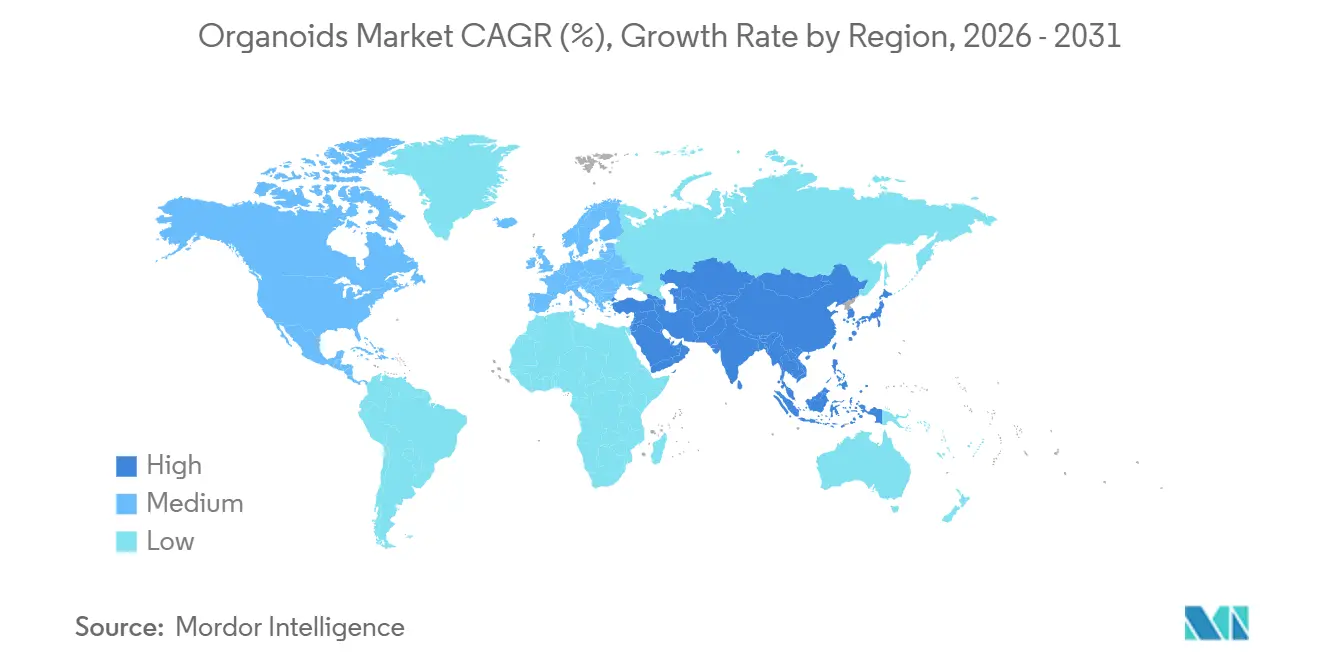
| Fastest Growing Market | Asia-Pacific |
| Largest Market | North America |
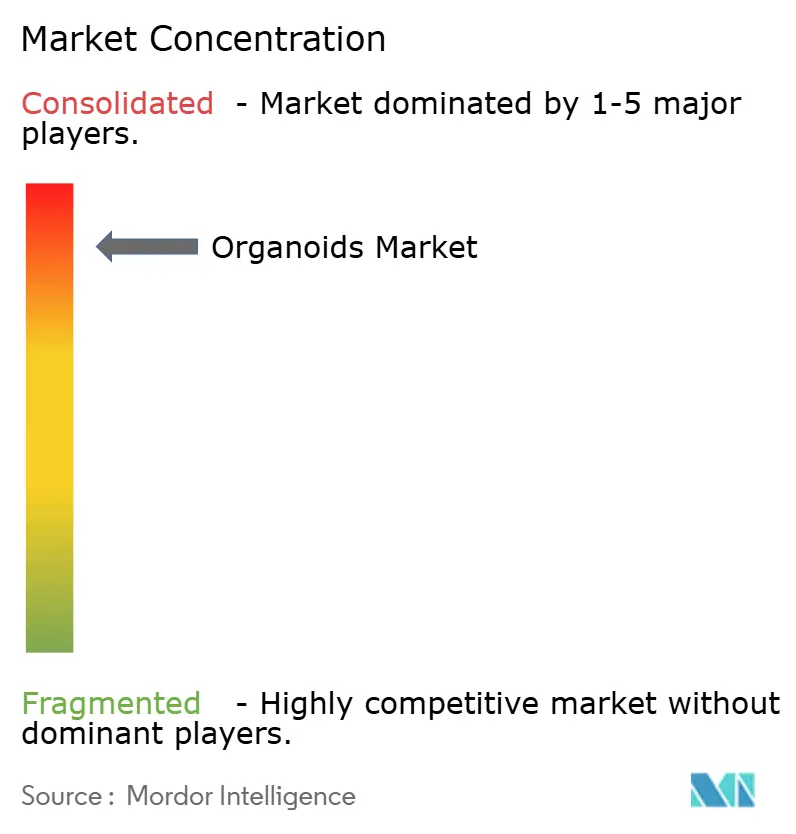
| Market Concentration | High |
Major Players *Disclaimer: Major Players sorted in no particular order Image © Mordor Intelligence. Reuse requires attribution under CC BY 4.0. | |
Organoids Market Analysis by Mordor Intelligence
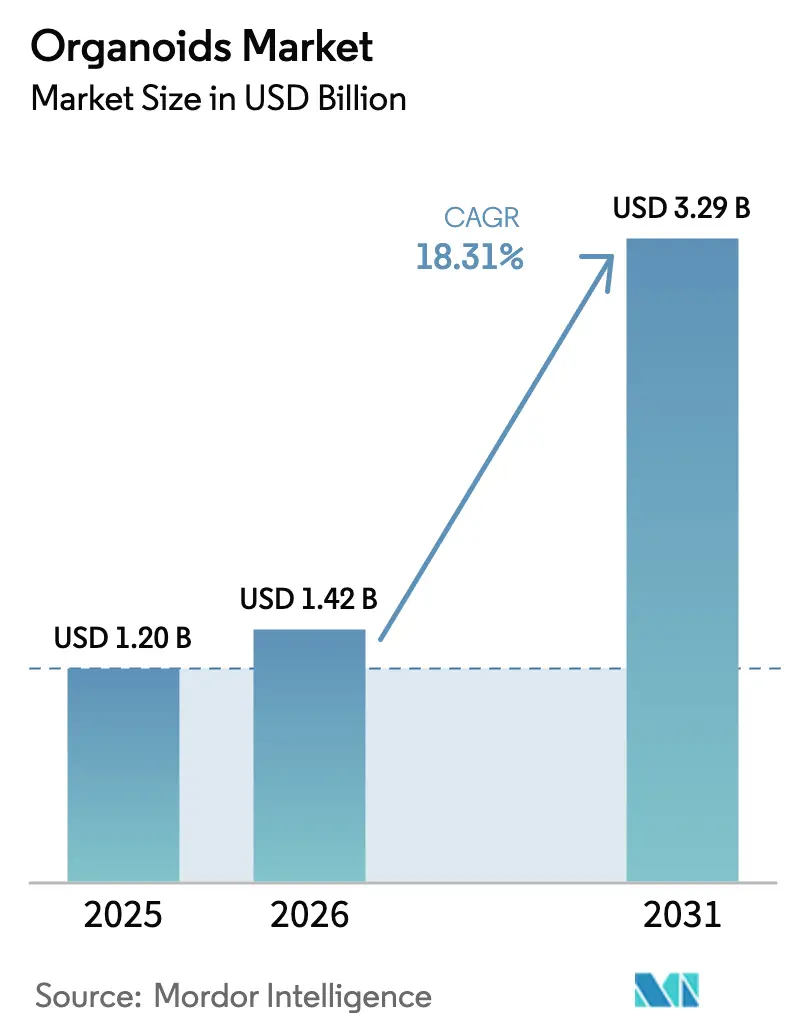
The Organoids Market size is projected to expand from USD 1.20 billion in 2025 and USD 1.42 billion in 2026 to USD 3.29 billion by 2031, registering a CAGR of 18.31% between 2026 to 2031.
Rising investment by pharmaceutical sponsors in three-dimensional patient-derived cultures, the elimination of mandatory animal studies in the United States, and parallel guideline workstreams in Europe are accelerating demand for preclinical organoid packages. Venture funding continues to pour into start-ups that supply bioprinted matrices and microfluidic chips, while established life-science suppliers broaden reagent portfolios to lock in recurring media revenue. Cost pressures linked to animal-derived extracellular matrices persist, yet suppliers are releasing chemically defined substitutes that promise lower batch-to-batch variability. Overall, the organoids market is shifting from an academic niche toward an integrated development platform that compresses timelines, de-risks oncology programs, and unlocks value in precision medicine trials.
Key Report Takeaways
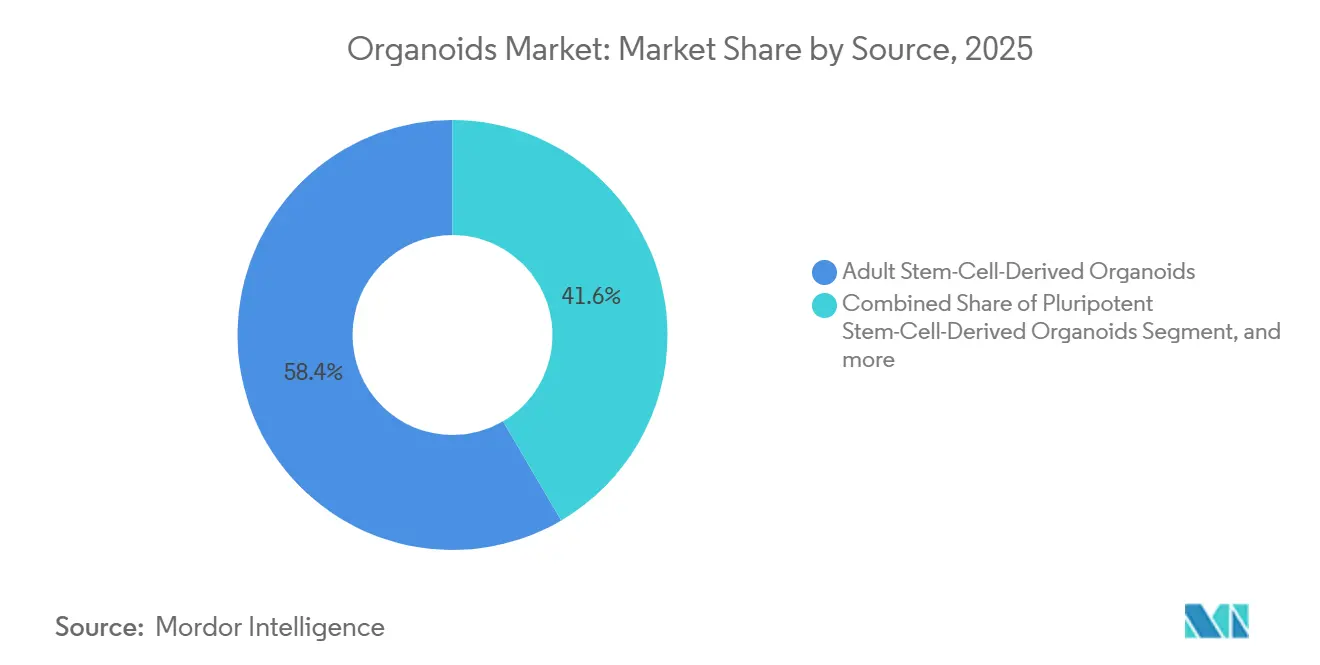
- By source, adult stem-cell-derived models led with 58.43% of the organoids market share in 2025.
- By organ type, intestinal cultures accounted for a 28.65% slice of the organoids market size in 2025, while pancreas models are set to expand at a 20.76% CAGR through 2031.
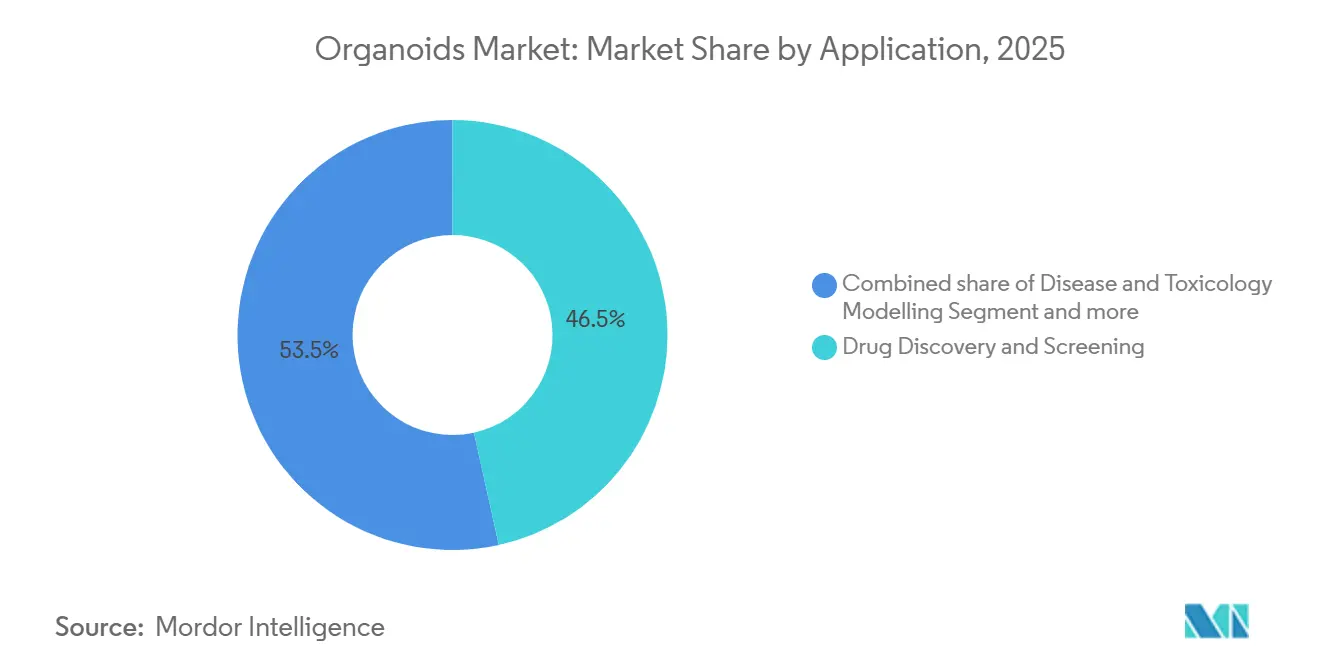
- By application, drug discovery and screening accounted for 46.54% of revenue in 2025; precision and personalized medicine are poised to grow at a 21.55% CAGR through 2031.
- By end user, pharmaceutical and biotech companies accounted for 55.63% of 2025 spending, whereas CROs and CDMOs are forecast to grow at a 21.65% CAGR over 2026-2031.
- By technology, scaffold-based 3-D culture accounted for 32.65% of 2025 revenue; 3-D bioprinting-assisted organoids are projected to post a 21.43% CAGR through 2031.
- By geography, North America dominated with 43.65% 2025 revenue; Asia-Pacific is anticipated to register a 19.43% CAGR through 2031.
Note: Market size and forecast figures in this report are generated using Mordor Intelligence’s proprietary estimation framework, updated with the latest available data and insights as of 2026.
Global Organoids Market Trends and Insights
Drivers Impact Analysis*
| Driver | (~) % Impact on CAGR Forecast | Geographic Relevance | Impact Timeline |
|---|---|---|---|
| Rising adoption of organoids in oncology drug discovery | +4.2% | North America, Europe | Medium term (2-4 years) |
| Expansion of precision medicine trials and personalized therapies | +3.8% | North America, Europe, Asia-Pacific | Medium term (2-4 years) |
| Government funding for 3-D cell-culture infrastructure | +3.1% | United States, European Union, China | Short term (≤2 years) |
| Shift away from animal testing in preclinical research | +2.9% | Global (led by United States & Europe) | Short term (≤2 years) |
| Commercialization of large-scale organoid biobanks | +2.4% | North America, Europe, early-adopter APAC markets | Long term (≥4 years) |
| Integration of gene-editing and advanced microfluidics platforms | +2.1% | Global innovation hubs | Long term (≥4 years) |
| Source: Mordor Intelligence | |||
Rising Adoption of Organoids in Oncology Drug Discovery
Colorectal tumor organoids predicted chemotherapy response in 84% of cases during a 2025 Nature Medicine study, outperforming traditional cell lines and spurring broader pharmaceutical uptake[1]Nature Medicine Editors, “Organoids Predict Chemotherapy Response,” nature.com . Roche’s 2025 annual report disclosed an internal biobank exceeding 1,000 patient-derived models spanning 12 tumor types, which now underpins lead-optimization screens. The U.S. National Cancer Institute allocated USD 100 million to the Human Tumor Atlas Network, which created spatial transcriptomic maps that integrate with organoid assays to inform combination-therapy design. Sponsors report preclinical timeline compression of 6-12 months and lower late-stage attrition, reinforcing return on R&D capital. These gains strengthen the economic rationale that propels the organoids market toward routine oncology workflows.
Expansion of Precision Medicine Trials and Personalized Therapies
Organoid-guided interventions raised objective response rates by 23 percentage points in relapsed pediatric solid tumors at the Princess Máxima Center, a data point that convinced Dutch insurers to test reimbursement pathways[2]Princess Máxima Center, “Organoid-Guided Therapy Study,” prinsesmaximacentrum.nl. Japan’s Ministry of Health, Labour and Welfare cleared the first companion diagnostic based on patient-derived cultures in March 2025, providing a 14-day functional readout unattainable with histopathology alone. Basket trials now embed organoid assays to enroll patients with shared molecular targets, shrinking screening costs and accelerating recruitment in rare oncology indications. As payers tighten evidence standards, functional response data generated by organoids further underpins reimbursement negotiations, boosting adoption in the organoids market.
Government Funding for 3-D Cell Culture Infrastructure
The U.S. National Institutes of Health directed USD 48 million to Tissue Chip for Drug Screening in fiscal 2025 to couple organoids with perfused microfluidics. Horizon Europe earmarked a slice of its EUR 95 billion research envelope for in-vitro models that reduce animal use, adding momentum on the continent. China’s Ministry of Science and Technology has invested CNY 500 million in regional centers to harmonize protocols and train researchers, lowering the entry barrier for small enterprises[3]Ministry of Science and Technology of China, “Organoid Center Initiative,” most.gov.cn. Public investment spreads fixed costs across academia and industry, creating a pipeline of skilled personnel and standardized reagents that sustains long-term growth in the organoids market.
Shift Away from Animal Testing in Preclinical Research
The U.S. FDA Modernization Act 2.0 removed the statutory animal-testing mandate in December 2022, formally recognizing organoid-based data in new drug applications. The European Chemicals Agency followed with 2024 guidance covering organoid assays for skin sensitization and hepatotoxicity. A Johns Hopkins analysis estimated 30-40% cost savings when sponsors replace animal studies with organoids, coupled with 12-18 month timeline reductions. Industry consortia are now standardizing assay protocols to facilitate multi-site validation, a prerequisite for broader regulatory acceptance, thereby fueling additional organoids market expansion.
Restraints Impact Analysis*
| Driver | (~) % Impact on CAGR Forecast | Geographic Relevance | Impact Timeline |
|---|---|---|---|
| High cost of specialized matrices and growth factors | -2.7% | Global, most acute in emerging markets | Short term (≤2 years) |
| Lack of standardized reproducibility protocols | -2.3% | Global, affecting regulatory submissions | Medium term (2-4 years) |
| Ethical and regulatory ambiguity around complex human models | -1.8% | North America, Europe, Asia-Pacific | Long term (≥4 years) |
| Limited cold-chain logistics for live organoid transport | -1.2% | Global, especially cross-border collaborations | Short term (≤2 years) |
| Source: Mordor Intelligence | |||
High Cost of Specialized Matrices and Growth Factors
Matrigel ranges from USD 400–600 per milliliter, and large screens often require 5–10 milliliters, pushing reagent bills to USD 6,000 per experiment. Essential recombinant proteins such as R-spondin and Wnt3a cost another USD 300–800 per milligram, with high turnover owing to short half-lives. A 2024 ISSCR survey found 62% of respondents citing reagent expense as a primary barrier, prompting some labs to revert to two-dimensional models. Suppliers are rolling out animal-free hydrogels and bulk-pricing schemes, but cost compression remains incremental, holding back uptake in resource-constrained regions and thereby tempering the organoids market growth rate.
Lack of Standardized Reproducibility Protocols
A Cell Stem Cell multicenter study revealed up to 40% variability in morphology and gene expression across eight labs using ostensibly identical intestinal-organoid protocols. Absent harmonized quality metrics, sponsors struggle to meet evidentiary requirements, delaying filings. The European Medicines Agency convened a 2024 workshop yet does not expect formal guidance until 2027, leaving a multi-year gap. Voluntary initiatives such as the Organoid Standards Initiative seek to create reference materials, but adoption hinges on resources often lacking in smaller labs, constraining scale-up in the organoids market.
*Our forecasts treat driver/restraint impacts as directional, not additive. The impact forecasts reflect baseline growth, mix effects, and variable interactions.
Segment Analysis
By Source: Tumor-Derived Models Gain Traction
Adult stem-cell-derived organoids anchored 58.43% of 2025 revenue by offering well-validated gastrointestinal and hepatic models that regulators recognize. Pluripotent stem-cell lines supply developmental and rare-disease insights, although longer differentiation timelines limit throughput. Tumor-derived cultures are forecast to log a 20.65% CAGR through 2031, the fastest-growing slice of the organoids market. Novartis now maintains more than 800 patient-derived lines across 15 tumor types, enabling parallel drug screens that shorten lead optimization windows. Nature Biotechnology reported in 2025 that tumor organoids retained genomic fidelity across 10 passages, validating stability for longitudinal studies. As biobanking expands, tumor-derived models are positioned to overtake adult stem-cell lines in absolute revenue within a decade, underscoring the strategic shift toward precision oncology.
The convergence of CRISPR gene editing with tumor organoids supports synthetic-lethal discovery, while AI-enabled imaging accelerates phenotypic readouts. These advances align with pharmaceutical demand for earlier proof-of-concept, reinforcing structural growth in this source segment of the organoids market. Proprietary culture media tailored to tumor lineages promise additional recurring revenue for suppliers, although cost containment remains essential to penetrate mid-tier pharma budgets. Consequently, competitive differentiation is migrating toward service bundles that integrate derivation, screening, bioinformatics, and regulatory support into a single contract.


By Organ Type: Pancreas Organoids Surge
Intestinal models captured 28.65% of organ-type revenue in 2025 through applications spanning inflammatory bowel disease, microbiome studies, and enteric pathogen assays. Liver organoids excel in hepatotoxicity screens, while brain models, despite culture complexity, enable neurodevelopmental research. Pancreas models are projected to book a 20.76% CAGR over 2026-2031, the strongest trajectory inside this segmentation. A 2024 Cell Metabolism study demonstrated faithful recapitulation of beta-cell insulin secretion defects, advancing diabetes drug pipelines. The Cystic Fibrosis Foundation’s USD 15 million outlay in 2025 expanded its pancreatic organoid repository to 500 patient samples, facilitating CFTR modulator testing.
Suspension bioreactors now enable centimeter-scale pancreatic cultures, opening potential for cell-therapy seed stocks. As regulatory agencies evaluate clinical-grade manufacturing protocols, pancreas organoids gain strategic relevance for both drug screening and regenerative approaches. Suppliers that master scale-up technologies will secure early-mover advantage in this high-growth pocket of the organoids market size.
By Application: Precision Medicine Accelerates
Drug discovery and screening generated 46.54% of 2025 revenue, reflecting entrenched pharmaceutical reliance on organoids to truncate target-validation cycles. Disease modeling and toxicology round out legacy demand channels, but the precision-medicine slice is expected to deliver a 21.55% CAGR through 2031. Dutch insurers already reimburse organoid-guided therapy selection in pediatric oncology, a precedent likely to ripple outward as more health systems link payment to functional response data. Japan’s companion-diagnostic approval underscores regulatory alignment, further widening clinical adoption.
Growing clinical demand spurs investments in high-throughput functional assays and fast data-analysis pipelines, creating a feedback loop that enlarges organoids market size within the healthcare delivery value chain. Hybrid business models—combining service fees, licensing, and data monetization—are emerging as clinics integrate organoid readouts into electronic health records, positioning precision medicine as the long-run growth engine.
By End User: CROs and CDMOs Expand Capacity
Pharmaceutical and biotech firms accounted for 55.63% of 2025 spend, yet the 21.65% CAGR forecast for CROs and CDMOs highlights accelerating outsourcing. Charles River injected USD 20 million into organoid infrastructure in January 2025 to broaden screening services. WuXi AppTec rolled out a three-continent service network that spans sample collection through data analytics. Outsourcing appeals to sponsors seeking flexible capacity without heavy capital outlay, especially as assay complexity rises.
Academic centers still drive protocol innovation, but budget constraints push them toward partnerships that tap private capital and industrial process expertise. Hospital-based diagnostics labs increasingly procure turnkey tests from specialty CROs, blurring traditional boundaries and enlarging the overall organoids market.
By Technology: 3-D Bioprinting Gains Momentum
Scaffold-based culture retained 32.65% of 2025 revenue but faces price pressure as synthetic matrices enter the field. 3-D bioprinting, forecast at a 21.43% CAGR, automates layer-by-layer deposition to reduce batch variability. BICO shipped 47 printers in 2025, up 35% year over year, with organoid workflows its fastest-growing use case. Advanced Materials published a 2025 study showing bioprinted liver constructs that maintained albumin production for 28 days, outperforming manually seeded counterparts.
AI-guided process control systems now fine-tune nozzle pressure and extrusion speed in real time, enhancing reproducibility. As microfluidic perfusion integrates with printed constructs, the technology segment positions itself to displace manual scaffold seeding, expanding organoids market share.
Geography Analysis
North America led with 43.65% revenue in 2025, propelled by NIH’s USD 48 million Tissue Chip grants and the FDA’s permissive regulatory stance. Canada injected CAD 12 million into a national biobank while Mexico emerged as a near-shoring destination for contract organoid services catering to U.S. pharma clients. Venture capital concentrations in Boston and the San Francisco Bay Area continue to seed start-ups across matrices, imaging, and bioreactors, underpinning local demand in the organoids market.
Europe benefits from Horizon Europe’s EUR 95 billion framework, with Germany’s Federal Ministry of Education and Research adding EUR 30 million for competence centers that disseminate harmonized protocols. The United Kingdom’s Medical Research Council deployed GBP 18 million to extend its Human Developmental Biology Resource into organoid models, attracting multinational collaborations. France, Italy, and Spain leverage European Structural Funds to support rare-disease applications, expanding regional uptake. Together, these initiatives foster an integrated supply chain that boosts European organoids market competitiveness.
Asia-Pacific is forecast to clock a 19.43% CAGR to 2031. China’s CNY 500 million investment in regional centers seeks to standardize protocols and train personnel. Japan’s approval of an organoid companion diagnostic and South Korea’s KRW 25 billion program expand clinical demand. India lures contract services through lower labor costs, while Australia channels AUD 10 million into biobanks targeting indigenous health. These programs collectively elevate regional capacity, broadening the global organoids market base.
Middle East, Africa, and South America remain nascent but show early signs of infrastructure build-out. Brazil’s São Paulo Research Foundation and South Africa’s Medical Research Council launched pilot initiatives to localize protocols, hinting at future uptake. Export of cryopreserved organoid lines from Europe and North America currently fills supply gaps, indicating early-stage opportunity for logistics providers.

Regulatory Landscape
Regulatory acceptance for organoid-derived evidence continues to build on policy shifts that reduce reliance on animal models. In the United States, the FDA Modernization Act 2.0 (December 2022) removed the statutory animal-testing mandate, enabling sponsors to incorporate organoid data into development packages where fit-for-purpose justification exists. In Europe, the European Chemicals Agency issued 2024 guidance that includes organoid assays for endpoints such as skin sensitization and hepatotoxicity, while the European Medicines Agency has used workshops (notably in 2024) to align expectations on validation and reproducibility, with formal guidance still developing.
Inter-lab reproducibility and assay standardization remain a regulatory friction point, because they shape whether organoid readouts can be relied on for cross-site submissions. Measurement standards and reference methods are emerging alongside public programs, including work involving the UK National Physical Laboratory (NPL) with Cellesce on documentation and analysis approaches for colorectal cancer organoids, which feed into international imaging and characterization standards. These efforts complement broader government funding for microphysiological systems, such as NIH Tissue Chip funding in fiscal 2025, that promotes standardized, human-relevant test systems for regulatory discussions.
Value Chain Analysis
The organoids value chain starts with donor sample acquisition and consented biobanking (for patient-derived organoids) or cell line sourcing (for pluripotent and adult stem-cell models), followed by organoid derivation, expansion, and characterization using specialized media, growth factors, matrices or synthetic hydrogels, and increasingly microfluidic or automation hardware. Upstream suppliers include life-science reagent providers (media components, recombinant proteins, and matrices), while instrumentation vendors contribute bioreactors, imaging, and microfluidic platforms that support scale and consistent readouts. Standardization and QC checkpoints (morphology, viability, genomic fidelity, and functional assays) add value by directly shaping sponsor confidence and the usability of results in downstream submissions.
Midstream, specialized developers and service providers manufacture and validate ready-to-screen organoids and assay workflows, selling via catalog products, custom projects, or licensing and services. Consolidation and integration are visible, with Merck KGaA bringing HUB Organoids into its Life Science portfolio (acquisition completed in late 2024 and communicated in early 2025), tightening linkages between foundational organoid IP, high-throughput screening capabilities, and Merck's broader consumables and tools footprint. Downstream customers include pharmaceutical and biotech companies and outsourced partners (CROs and CDMOs) running drug discovery, toxicology, and translational workflows, as well as hospitals and diagnostics labs where organoid-guided treatment selection is emerging. Cold-chain and cryopreservation logistics remain enabling links for cross-border biobank distribution and multicenter studies.
Competitive Landscape
Market concentration is moderate as legacy life-science suppliers extend catalogues while specialized start-ups carve out niches. Thermo Fisher launched animal-free media priced 20% below Matrigel in December 2025, leveraging its global distribution footprint to penetrate cost-sensitive labs. Corning partnered with the Princess Máxima Center to co-develop reference protocols, reinforcing its extracellular-matrix dominance. BICO’s January 2026 acquisition of a German microfluidics firm broadens its platform into organ-on-chip territory, pitting it against Emulate’s perfused systems.
Hubrecht Organoid Technology operates a hybrid licensing-and-service model, while Sartorius doubled bioreactor capacity to meet high-throughput demand. Merck KGaA’s 2025 patent on a synthetic hydrogel underscores an arms race to eliminate animal-derived components, a key cost and reproducibility pain point. Logistics innovators such as Cellesce extend cryopreservation windows to six months, enabling cross-border biobank distribution. Competitive intensity is expected to rise as suppliers converge on turnkey solutions that couple reagents, hardware, and software in seamless workflows, reinforcing platform lock-in across the organoids market.
Organoids Industry Leaders
Merck KGaA
Cellesce Ltd
3Dnamics Inc.
R&D Systems, Inc.
Hubrecht Organoid Technology
- *Disclaimer: Major Players sorted in no particular order

Market Opportunities and Future Outlook
A near-term opportunity sits in standardization and measurement infrastructure that makes organoid outputs more transferable across sites and easier to use in regulated decision-making. The 12-month collaboration reported in February 2026 between Cellesce and the UK National Physical Laboratory (NPL) to document a colorectal cancer organoid range and contribute to imaging standards reflects active work on reference methods and reproducibility, directly targeting one of the market's adoption constraints. Vendors that bundle organoid supply with validated characterization workflows (imaging, mass spectrometry-based profiling, and analytics) can differentiate as sponsors look for consistent, submission-ready data packages.
Another whitespace area is end-to-end platforms that combine organoid biology with high-throughput assay readouts and microphysiological systems to replace or reduce animal studies in specific contexts. Merck's October 2025 partnership with Promega to co-develop technologies for drug screening and real-time tracking of cellular activity in 3D organoids points to demand for integrated assay stacks, not just cultures. Separately, Merck's May 2025 partnership with imec to develop microphysiological systems that combine organoid models with semiconductor biosensing indicates momentum toward instrumented, higher-content workflows, supporting opportunities across chips, sensors, automation, and software, as well as recurring consumables and analysis services attached to organoid programs.
Recent Industry Developments
- February 2026: Cellesce Ltd began a 12-month collaboration with the U.K. National Physical Laboratory to document its colorectal cancer organoid range. The collaboration advances standardization for organoid imaging across international labs.
- October 2025: Merck KGaA entered into a partnership with Promega Corporation to co-develop novel drug screening technologies, combining Merck's organoid expertise with Promega's assay technologies. It expands the capability set for high-throughput organoid screening.
- January 2025: Merck KGaA completed the acquisition of HUB Organoids Holding B.V. on December 23, 2024, to advance its cell culture portfolio. The move strengthens its next-generation biology solutions.


Research Methodology Framework and Report Scope
Market Definition and Coverage
For this methodology, the market covers revenue earned from organoid products and related services that enable the creation, growth, and use of organoids for research and testing across end users.
Scope exclusions: Revenues from 2D cell culture consumables and general lab equipment that are not specifically required for organoid workflows are excluded.
Segmentation Overview
- By Source
- Pluripotent Stem-Cell-Derived Organoids
- Adult Stem-Cell-Derived Organoids
- Tumor-Derived Patient Organoids
- By Organ Type
- Intestinal
- Liver
- Brain
- Kidney
- Lung
- Pancreas
- Cardiac
- Other Organ Types
- By Application
- Drug Discovery & Screening
- Disease & Toxicology Modelling
- Precision & Personalised Medicine
- Regenerative Medicine
- Organoid Biobanking Services
- Other Applications
- By End User
- Academic & Research Institutes
- CROs & CDMOs
- Hospitals & Diagnostics Labs
- Pharmaceutical & Biotech Companies
- By Technology
- 3-D Bioprinting-Assisted Organoids
- AI-Guided Automated Platforms
- Micro-Fluidic Organ-On-Chip Integrated
- Scaffold-Based 3-D Culture
- Suspension / Scaffold-Free Culture
- Geography
- North America
- United States
- Canada
- Mexico
- Europe
- Germany
- United Kingdom
- France
- Italy
- Spain
- Rest of Europe
- Asia-Pacific
- China
- Japan
- India
- Australia
- South Korea
- Rest of Asia-Pacific
- Middle East & Africa
- GCC
- South Africa
- Rest of Middle East & Africa
- South America
- Brazil
- Argentina
- Rest of South America
- North America
Data Sources, Market Sizing, and Validation
Desk Research
Desk research is used to frame the demand story, define what gets counted, and build the first set of assumptions for pricing and adoption. We rely on public sources such as NIH RePORTER for funding signals, FDA communications for testing and model-use direction, NCBI PubMed for publication intensity by organoid type, and the OECD for broader nonclinical testing context, which helps keep the model anchored to observable activity.
On the supply side, we review company annual reports, investor presentations, and credible press releases to understand product launches, installed workflows, and distribution reach. A paid subscription for company financials and intelligence is used selectively to confirm revenue ranges where disclosures are limited, and a patent database is referenced to track where new organoid methods are being filed. The sources mentioned are illustrative and not exhaustive, and additional public documents and datasets were also used for data collection, validation, and research clarification.
Primary Interviews and Surveys
Primary work is done through expert interviews and structured surveys with organoid workflow stakeholders, including product specialists, lab managers, and leaders responsible for R and D purchasing. We use these discussions to validate adoption rates, typical assay volumes, and realistic price ranges across key regions so mismatches from desk findings can be closed before finalizing the model.
Distribution of primary research fieldwork respondents
| Company type | Respondent position | Region |
|---|---|---|
| Top tier: 31% | CXOs: 13% | APAC: 46% |
| Mid tier: 52% | Functional/Unit leaders: 37% | EMEA: 34% |
| Smaller Players: 17% | Managers: 50% | Americas: 20% |
Market-Sizing & Forecasting
Sizing starts from a top-down demand pool view where research activity and spend patterns are reconstructed by geography and end-user group, then translated into organoid workflow consumption. Inputs that matter most include the number of active organoid research programs, grant-funded project intensity, organoid culture throughput used in screening, typical consumables per run, and average selling price ranges for key workflow items, which are then adjusted for regional mix.
Those totals are checked using selective bottom-up approximations so we can spot overcounts early. In practice, this means sampled revenue mapping from disclosure-based suppliers, channel checks on recurring consumable pulls, and ASP x volume logic for common assay formats, with gaps handled through conservative proxies when a country has limited disclosures. For forecasting, we mainly use scenario analysis supported by expert views on how quickly pharma screening adoption expands, how academic funding cycles change, and how automation affects per-experiment cost, and then the year-by-year curve is smoothed to avoid step changes that do not match buying cycles.
Data Validation & Update Cycle
Outputs are validated through cross-checks against independent signals such as publication volume trends, funding direction, and the pace of new organoid workflow announcements, and then reconciled with interview feedback. When an estimate looks inconsistent, we trace it back to the driver level, recheck units and currency timing, and re-contact sources if the variance cannot be explained by mix or pricing.
Before release, the model goes through analyst-to-analyst review so assumptions are questioned and recalculated where needed, and a final pass is done close to delivery to capture recent changes. The report is refreshed annually, with interim updates added when a material event changes demand, pricing, or availability in a noticeable way.
Mordor Intelligence's Organoids Market Size Compared With Other Published Estimates
Different published market sizes for organoids can vary because the counted product set, the included end uses, and the way demand is converted into dollars are not the same across studies. Timing also matters, since fast-changing areas like oncology models and drug screening can shift assumptions even within a year.
Spheroids and other 3D cell culture models sit outside Mordor Intelligence's scope here, and this exclusion alone can widen the spread when other estimates bundle adjacent model systems. Other common gap drivers include whether pricing is assumed from list prices instead of realized lab spend, whether academic demand is treated as a full commercial market, and whether older exchange rates or slow refresh cycles are carried forward into the current-year base.
Benchmark comparison
| Source | Market Size | Gaps in Research Methodology |
|---|---|---|
| Mordor Intelligence | USD 1.42 B (2026) | |
| Trade Journal A | USD 1.19 B (2024) | Uses a narrower definition focused on human organoids, and the base year differs, which can understate later adoption in screening-heavy workflows. |
| Industry Release B | USD 1.31 B (2024) | Press-release sizing often summarizes a high-level total without showing how prices and recurring consumable volumes were validated across regions and end users. |
The table shows that year selection and what gets grouped into the term organoids explain much of the variance. By keeping the scope clean and tying prices and usage rates to repeatable checks, the final number stays easier to defend and update when new evidence comes in.


Key Questions Answered in the Report
How large is the organoids market in 2026 and how fast is it growing?
The organoids market size reached USD 1.42 billion in 2026 and is forecast to expand at an 18.31% CAGR through 2031.
Which segment shows the fastest growth inside this field?
Pancreas organoids are projected to post a 20.76% CAGR between 2026 and 2031, outpacing other organ-type segments.
What is driving adoption of organoids in oncology programs?
High predictive accuracy, regulatory acceptance following the FDA Modernization Act 2.0, and pharma initiatives such as RocheÕs 1,000-sample biobank are accelerating oncology use cases.
Why are CROs and CDMOs gaining share?
Sponsors prefer outsourcing complex culture and screening workflows, leading CROs and CDMOs to grow at a 21.65% CAGR through 2031.
How are suppliers addressing the high cost of matrices?
Firms such as Thermo Fisher and Merck KGaA are launching animal-free, chemically defined hydrogels priced below legacy Matrigel to reduce batch variability and reagent expense.
Which regions will expand fastest?
Asia-Pacific is expected to record a 19.43% CAGR as China, Japan, and South Korea invest in standardized organoid centers and companion diagnostics.
Page last updated on:


 Your data is secure and never sold or shared.


