
Nucleic Acid Amplification Testing (NAAT) Market Size and Share
Market Overview
| Study Period | 2020 - 2031 |
|---|---|
| Market Size (2026) | USD 11.13 Billion |
| Market Size (2031) | USD 16.32 Billion |
| Growth Rate (2026 - 2031) | 7.93 % |
| Fastest Growing Market | Asia-Pacific |
| Largest Market | North America |
| Market Concentration | Medium |
Major Players *Disclaimer: Major Players sorted in no particular order Image © Mordor Intelligence. Reuse requires attribution under CC BY 4.0. | |
Nucleic Acid Amplification Testing (NAAT) Market Analysis by Mordor Intelligence
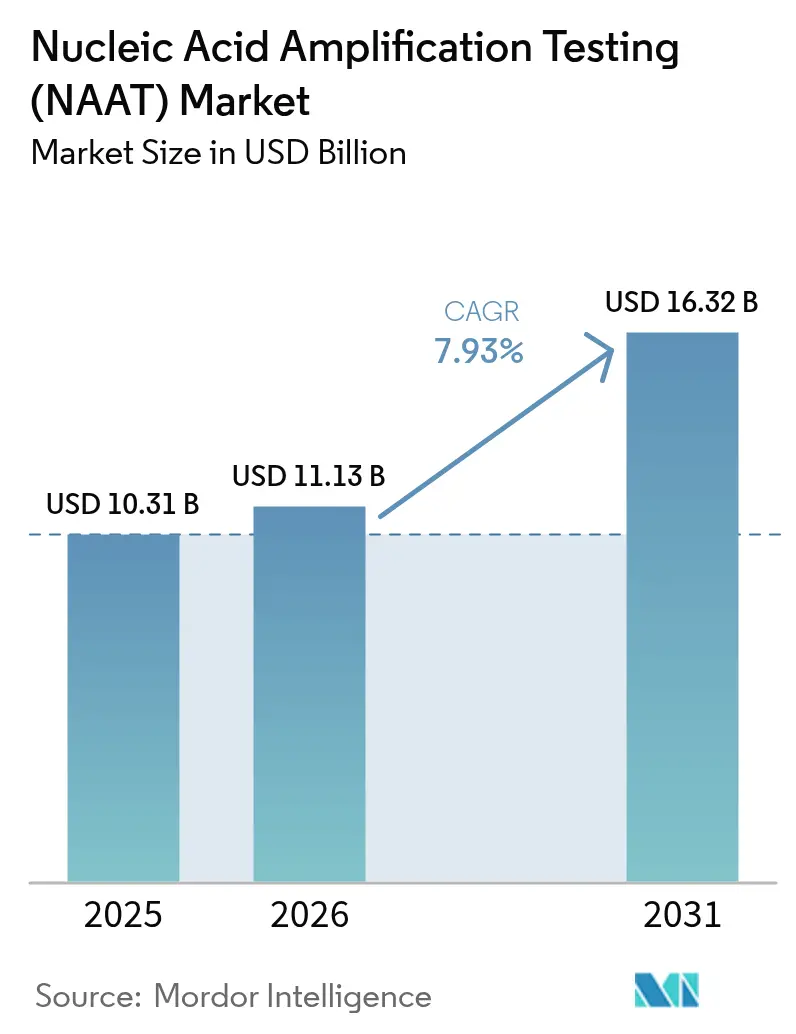
The nucleic acid amplification testing (NAAT) market size was valued at USD 10.31 billion in 2025 and estimated to grow from USD 11.13 billion in 2026 to reach USD 16.32 billion by 2031, at a CAGR of 7.93% during the forecast period (2026-2031). A shift toward precision medicine, routine syndromic surveillance, and value-based care is amplifying demand as molecular assays become embedded in everyday clinical work-flows. Hospitals and reference laboratories alike are scaling capacity through automation, while artificial-intelligence modules optimize everything from sample triage to result interpretation. These digital layers reduce human error, accelerate clinical decisions, and mitigate staffing shortfalls. At the same time, the nucleic acid amplification testing market is expanding into primary-care clinics, retail health, and public-health programs once reliant on conventional immunoassays. Isothermal chemistries advance decentralization, and regulatory momentum around liquid biopsy is positioning molecular oncology as the next high-volume frontier.
Key Report Takeaways
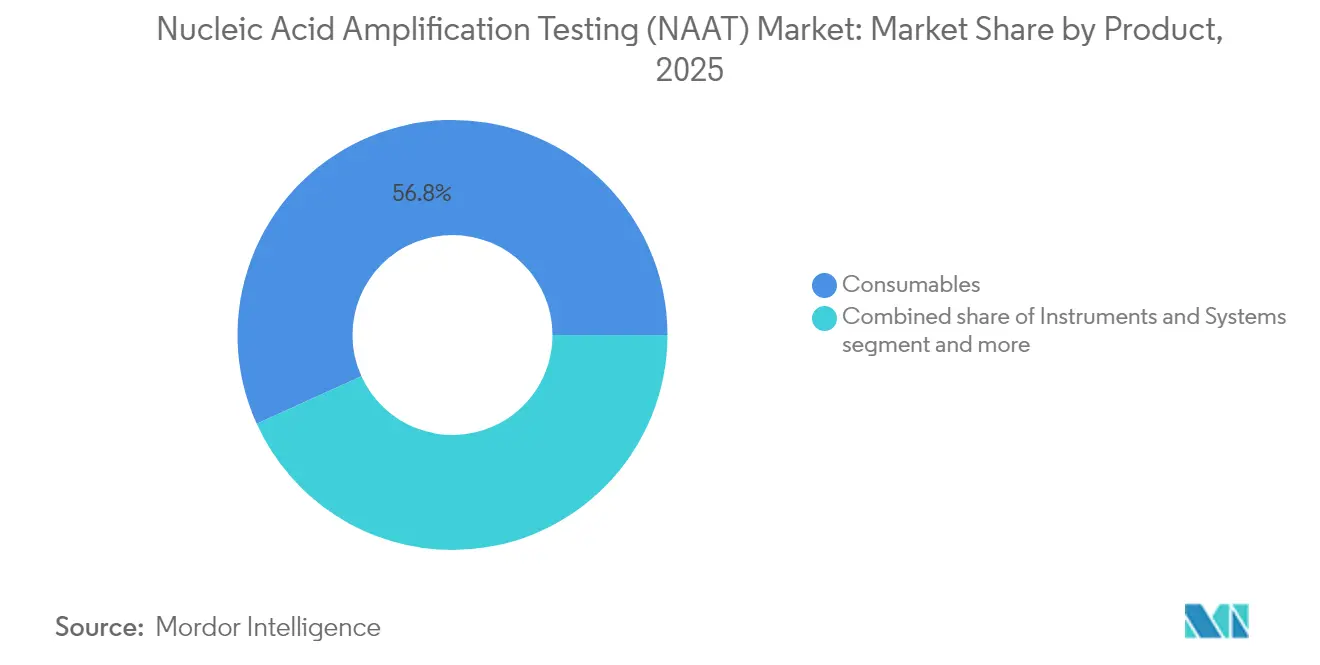
- By product, consumables captured 56.78% of revenue in 2025 and is projected to grow at a 9.28% CAGR through 2031.
- By technology, PCR held 67.12% of the nucleic acid amplification testing market share in 2025; INAAT systems are on track for a 9.94% CAGR through 2031.
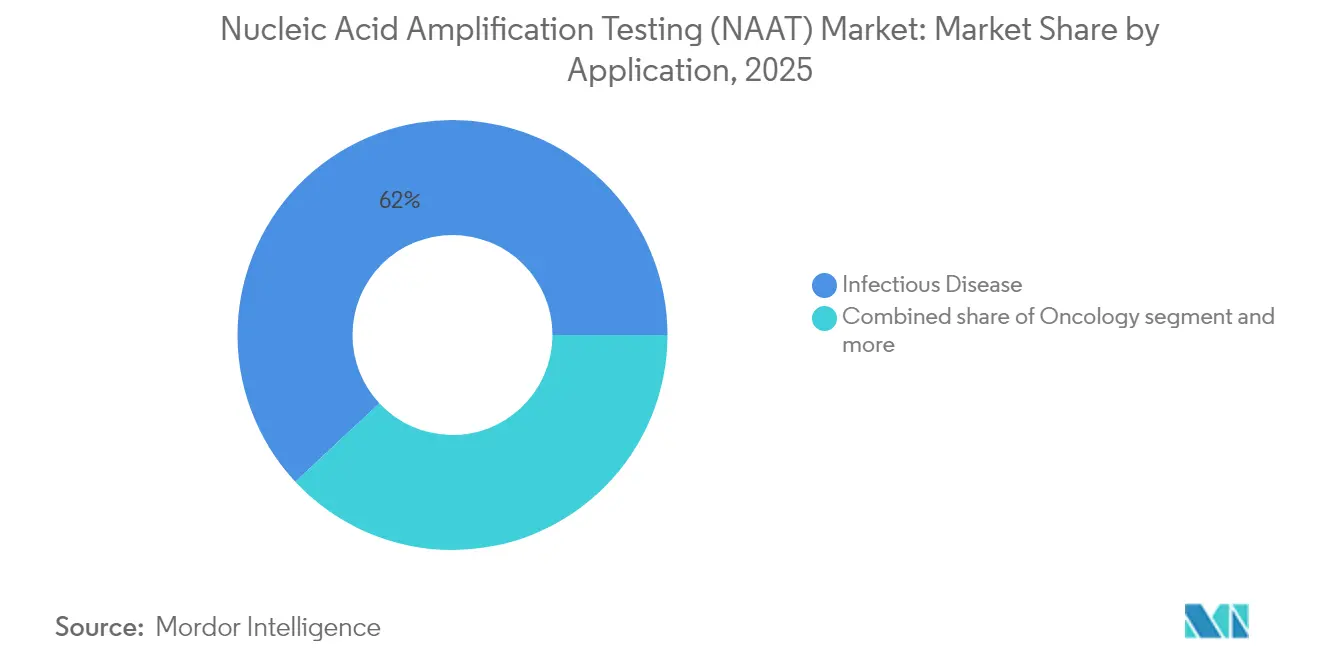
- By application, infectious disease dominated with 61.95% of the nucleic acid amplification testing market size in 2025, while oncology assays are forecast to grow at a 9.06% CAGR to 2031.
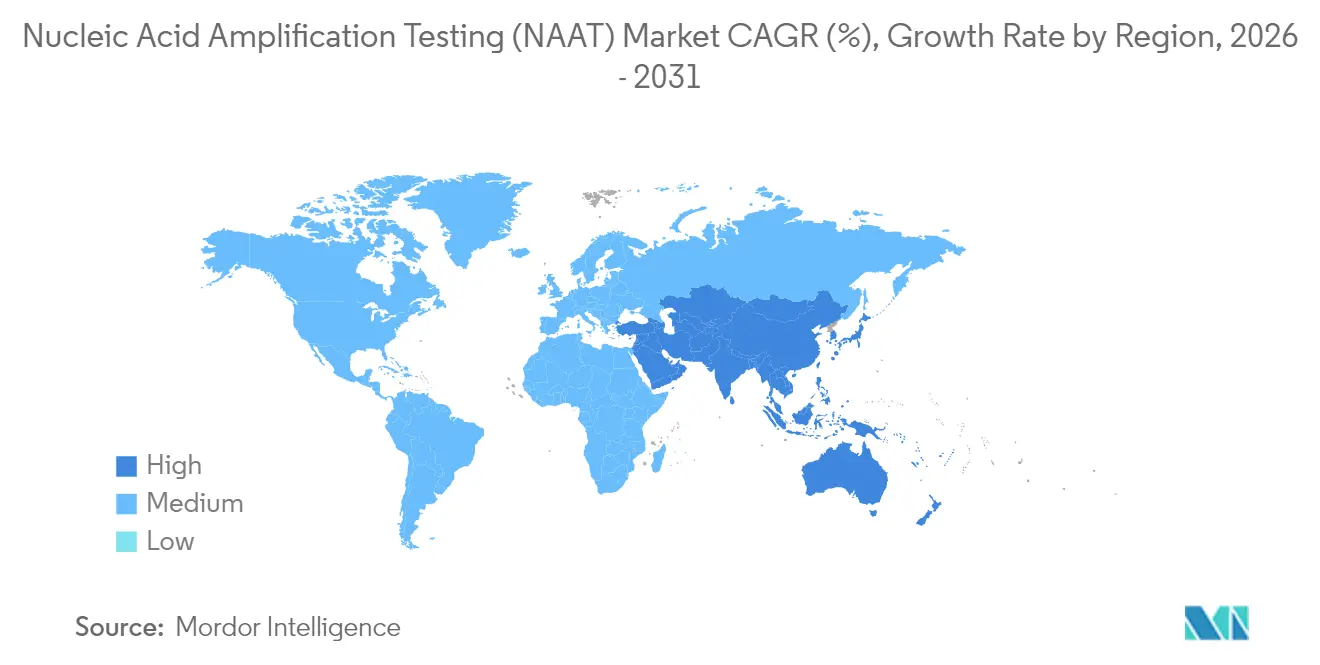
- By geography, North America led with 43.10% of nucleic acid amplification testing market share in 2025; Asia-Pacific is projected to deliver a 9.88% CAGR between 2026 and 2031.
Note: Market size and forecast figures in this report are generated using Mordor Intelligence’s proprietary estimation framework, updated with the latest available data and insights as of 2026.
Market Trends and Insights
Drivers Impact Analysis of Nucleic Acid Amplification Testing (NAAT) Market*
| Driver | (~) % Impact on CAGR Forecast | Geographic Relevance | Impact Timeline |
|---|---|---|---|
| Escalating Demand for Multiplexed Respiratory Pathogen Panels | +2.1% | North America, Europe, Asia-Pacific | Medium term (2-4 years) |
| Rapid Adoption of Isothermal Loop-Mediated Platforms for Decentralized Testing | +1.8% | Global, with emphasis on emerging markets | Long term (≥ 4 years) |
| Integration of NAAT with Automated Sample-to-Answer Cartridges | +1.5% | North America, Europe, developed Asia-Pacific | Medium term (2-4 years) |
| Inclusion of NAAT in Blood-Screening Mandates | +1.2% | Global, with stronger impact in regulated markets | Long term (≥ 4 years) |
| Growth of ctDNA NAAT Companion Diagnostics in Oncology | +0.9% | North America, Europe, China, Japan | Long term (≥ 4 years) |
| Private Investment Surge in Portable CRISPR-Based NAAT Solutions | +0.7% | North America, Europe, China | Short term (≤ 2 years) |
| Source: Mordor Intelligence | |||
Escalating Demand for Multiplex Respiratory Pathogen Panels
Syndromic respiratory panels allow clinicians to detect several viruses and bacteria in one run[1]ScienceDirect, “Exploring the Utility of Multiplex Infectious Disease Panel Testing for ...,” sciencedirect.com, cutting diagnostic uncertainty and guiding targeted therapy within hours. Hospitals report shorter lengths of stay and reduced empiric antibiotic use, advantages that align with value-based payment models. Laboratory managers also appreciate streamlined workflows that ease staffing pressure during seasonal surges. Because many of these panels are cartridge-based, they integrate smoothly with existing analyzers and help laboratories justify capital upgrades. Overall, their adoption is pushing the nucleic acid amplification testing market deeper into urgent-care and outpatient settings.
Rapid Adoption of Isothermal Loop-Mediated Platforms for Decentralized Testing
Loop-mediated amplification eliminates thermal cycling[2]ScienceDirect, “The Evolution of Isothermal Amplification Technology,” sciencedirect.com, enabling devices the size of a smartphone to perform sensitive detection in clinics, pharmacies, and field sites. Publication volume on LAMP and RPA rose steadily from 2013-2024, signalling maturing science. Coupled with microfluidic chips, these chemistries support sample-to-answer formats that require no lab bench. As emerging markets invest in infectious-disease surveillance, isothermal tools can reach rural zones where PCR systems are impractical, broadening the nucleic acid amplification testing market footprint.
Integration of NAAT with Automated Sample-to-Answer Cartridges
Closed cartridges combine extraction, amplification, and detection in a sealed path that reduces contamination risk and shrinks hands-on time to minutes mdpi.com. Built-in analytics translate raw curves into clear calls, freeing technologists for higher-value tasks. Vendors targeting outpatient clinics cite ease of use as the top buying criterion, and reimbursement policies increasingly recognize these rapid molecular results. Automation therefore propels the nucleic acid amplification testing market into lower-complexity laboratories without compromising accuracy.
Inclusion of NAAT in Blood-Screening Mandates
Window-period infections once slipped past serology; molecular assays now close that gap. National regulators in the United States, Japan, and parts of Europe require NAAT for HIV, HBV, and HCV screening, guaranteeing baseline demand for high-throughput instruments able to process thousands of donors daily. As more countries harmonize standards, the nucleic acid amplification testing market gains a stable, compliance-driven revenue stream in transfusion medicine.
Restraints Impact Analysis of Nucleic Acid Amplification Testing (NAAT) Market*
| Restraint | (~) % Impact on CAGR Forecast | Geographic Relevance | Impact Timeline |
|---|---|---|---|
| Shortage of Qualified Molecular Technologists | -1.2% | Global, most severe in emerging markets | Long term (≥ 4 years) |
| High Per-Test Cost of Proprietary Cartridge Systems | -0.9% | Global, particularly impactful in LMICs | Medium term (2-4 years) |
| Primer Redesign Needs Owing to Pathogen Mutations | -0.7% | Global | Short term (≤ 2 years) |
| Reagent Supply-Chain Vulnerabilities During Demand Surges | -0.5% | Global, with a greater impact in import-dependent regions | Medium term (2-4 years) |
| Source: Mordor Intelligence | |||
Shortage of Qualified Molecular Technologists
Vacancy rates in public-health and clinical labs climbed in 2024, increasing overtime costs and limiting batch runs. Training pipelines lag behind demand, and rural facilities struggle to offer competitive salaries. Consequently, vendors emphasize plug-and-play designs that require minimal expertise, ensuring the nucleic acid amplification testing market can still grow despite labor shortages.
High Per-Test Cost of Proprietary Cartridge Systems
Closed cartridges simplify workflows but add financial strain, especially in low-resource settings. A Unitaid report[3]Unitaid, “Gonorrhea Point-of-Care Diagnostics Technology and Market Landscape Report,” unitaid.org showed many STI programs shelved NAAT despite WHO recommendations because test prices exceed treatment costs. Manufacturers responding with microfluidic reagent-sparing designs may unlock untapped segments of the nucleic acid amplification testing market.
*Our forecasts treat driver/restraint impacts as directional, not additive. The impact forecasts reflect baseline growth, mix effects, and variable interactions.
Nucleic Acid Amplification Testing (NAAT) Market Segment Analysis
By Product:
Consumables Drive Recurring Revenue StreamsConsumables represented 56.78% of 2025 revenue, anchoring the nucleic acid amplification testing market with dependable, repeat sales tied directly to test volumes. Reagent kits, probe mixtures, and disposable cartridges form the backbone of laboratory budgets. Multi-year procurement contracts shield buyers from price swings and assure manufacturers of predictable run-rates, reinforcing the segment’s projected 9.28% CAGR. Meanwhile, smart packaging that embeds RFID tags supports automated inventory tracking, addressing stock-out risk and helping laboratories meet accreditation requirements. As point-of-care platforms proliferate, single-use cartridges become the dominant consumable form factor, further scaling the nucleic acid amplification testing market size for consumables.
Instruments and systems, although purchased less frequently, catalyze assay expansion. Modular analyzers that accept both PCR and isothermal chemistries protect capital investment and future-proof laboratories. Software and services revenue rises as facilities subscribe to cloud analytics and preventive-maintenance packages. Machine-learning upgrades that classify amplification curves in real time can be sold as annual licenses, giving vendors recurring top-line growth that rivals consumables within the nucleic acid amplification testing market.


By Technology:
PCR Dominance Challenged by Isothermal InnovationsPCR held 67.12% nucleic acid amplification testing market share in 2025, leveraging decades of validation, robust supply chains, and a vast installed base. Vendors refine multiplex kits to detect up to 30 targets, making PCR panels competitive with newer syndromic arrays. High-speed thermal cyclers now complete 45-cycle runs in under 20 minutes, keeping PCR relevant even when rapid results are mandatory.
Isothermal nucleic-acid amplification technology is projected to post a 9.94% CAGR, the fastest in the nucleic acid amplification testing market. LAMP’s six-primer architecture confers exceptional specificity, and colorimetric readouts remove the need for fluorescence optics, cutting hardware costs. Recombinase polymerase amplification operates at body temperature, simplifying heater design for portable devices. These attributes position isothermal tools for field diagnostics, border-screening, and emergency triage. Ligase chain reaction, albeit niche, remains indispensable for single-nucleotide variant confirmation in targeted oncology assays, securing a small but stable slice of the nucleic acid amplification testing market.
By Application:
Infectious Disease Testing Expands Beyond COVID-19Infectious diseases contributed 61.95% of revenue in 2025. COVID-19 volumes have normalized, yet syndromic panels for respiratory and gastrointestinal pathogens continue climbing. Expanded WHO guidelines on tuberculosis endorse molecular assays like Xpert Ultra, ensuring sustained uptake in high-burden nations. Sexually transmitted infection testing also expands as programs move from syndromic treatment to etiological diagnosis. The nucleic acid amplification testing market size for infectious disease therefore remains robust despite pandemic tapering.
Oncology is forecast for the highest growth at 9.06% CAGR. Liquid biopsy permits serial monitoring, driving recurrent revenue per patient. Laboratories integrate ctDNA panels into comprehensive genomic profiling workflows, attracting precision-therapy referrals. Genetic and mitochondrial disorder testing is another growth pocket, as newborn-screening programs adopt next-generation sequencing combined with amplification confirmations to ensure accuracy. These diversified applications collectively broaden the nucleic acid amplification testing market.
By End-User:
Hospitals Lead While Reference Laboratories Grow FastestHospitals captured 47.63% of 2025 revenue. Many institutions now install rapid molecular platforms in emergency departments to guide admission decisions within 30 minutes. Pharmacogenomic assays tailored to cardiology and psychiatry are gaining traction, widening test menus and reinforcing hospital dominance in the nucleic acid amplification testing market.
Reference laboratories are slated for an 8.66% CAGR, boosted by national programs outsourcing high-plex oncology panels and rare pathogen screens. Centralized labs leverage economies of scale to offer broad test menus cost-effectively, drawing samples from physician-office networks. Public-health labs adopt molecular workflows for surveillance, and retail health chains pilot influenza-COVID combo tests using cartridge-based analyzers. Each setting adds incremental volumes, expanding the overall nucleic acid amplification testing market size across end-user categories.
Geography Analysis
North America Nucleic Acid Amplification Testing (NAAT) Market
North America retained 43.10% of global revenue in 2025, supported by mature reimbursement, continuous innovation, and early adoption of digital-health integrations. Precision-oncology programs bolster molecular volumes, and capitated payment models reward faster, more accurate diagnoses. Cloud-based result portals allow rural clinicians to access expert molecular data, extending specialty care beyond tertiary hospitals. The nucleic acid amplification testing market is expected to advance at a steady pace as these dynamics deepen.
APAC Nucleic Acid Amplification Testing (NAAT) Market
Asia-Pacific is projected for the fastest 9.88% CAGR, propelled by rising health budgets and domestic manufacturing. China’s provincial procurement schemes favor made-in-China instruments, accelerating local adoption. India’s public-private laboratory networks are expanding molecular menus in tuberculosis and HIV programs, offering vendors scale. Portable isothermal systems remove infrastructure barriers in Southeast Asia, further enlarging the nucleic acid amplification testing market.
EMEA and South America Nucleic Acid Amplification Testing (NAAT) Market
Europe commands a significant share with an 8.01% CAGR outlook. Stringent quality regulations mandate standardized result reporting, boosting demand for instruments with built-in audit trails. Funding initiatives such as the EU4Health program finance molecular upgrades across member states, sustaining growth. The Middle East & Africa will grow at 9.52% CAGR; Gulf countries invest in world-class hospital complexes featuring full molecular suites, while donor-funded programs retrofit GeneXpert systems for broader disease panels. South America is set for 8.97% CAGR as Brazil and Colombia expand universal-health coverage and adopt rapid molecular diagnostics for Zika, dengue, and COVID-flu combos. Together, these regions deepen global penetration, lifting the nucleic acid amplification testing market.

Competitive Landscape
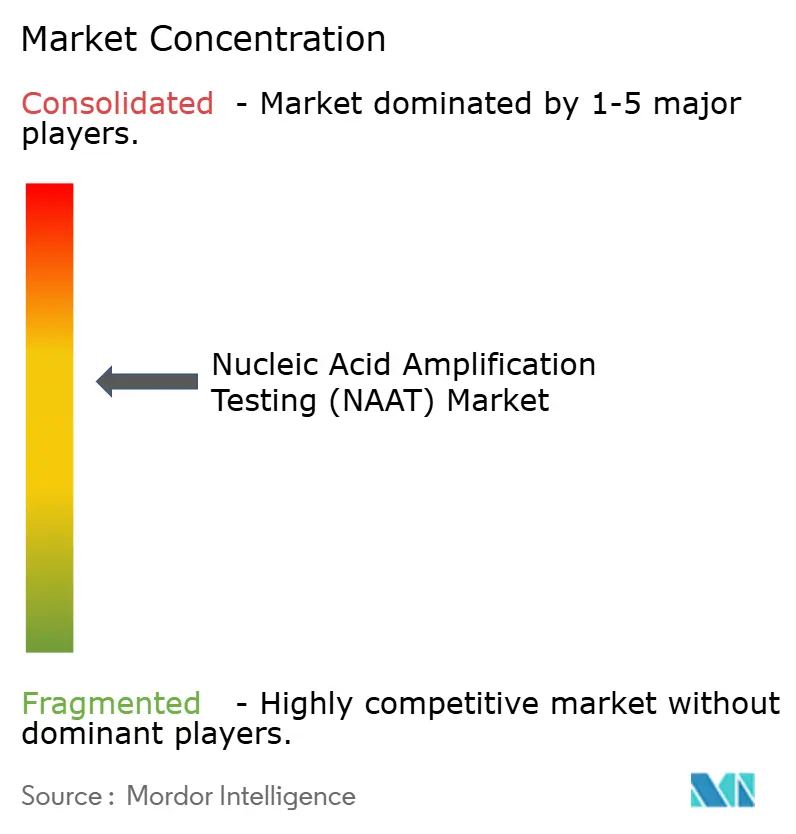
The nucleic acid amplification testing market shows moderate concentration: the top five firms hold a large chunk of revenue share, leaving space for regional specialists and technology disruptors. Abbott, Roche, and Thermo Fisher Scientific expand via acquisitions that bundle sample prep, amplification, and post-analytic software into a single ecosystem. This one-vendor approach appeals to hospital administrators seeking integrated solutions that minimize validation labor.
Mid-tier innovators capture niches through isothermal chemistries, CRISPR-based detection, and AI-powered decision support. For example, Synoligo Biotechnologies’ TR-FRET probes sharpen sensitivity in portable assays, challenging incumbent PCR systems. Start-ups leverage cloud platforms to deliver real-time epidemiological dashboards, a service that larger firms may acquire to round out offerings.
Equipment openness is emerging as a differentiator; platforms that accept third-party reagents reduce consumable lock-in, a major concern for cost-constrained buyers. Several public tenders in Asia now require reagent interchangeability clauses, pressuring closed-cartridge incumbents to alter business models. Competitive intensity therefore remains high, and sustained R&D investment is essential to retain share in the nucleic acid amplification testing market.
Nucleic Acid Amplification Testing (NAAT) Industry Leaders
Abbott Laboratories
bioMérieux SA
F. Hoffmann-La Roche AG
Grifols SA
Thermo Fisher Scientific Inc.
- *Disclaimer: Major Players sorted in no particular order
Nucleic Acid Amplification Testing (NAAT) Market Companies Covered in this Report
- Abbott Laboratories
- Beckton Dickinson
- BGI Genomics Co. Ltd.
- bioMérieux
- Bio-Rad Laboratories
- Bruker
- Danaher
- Diasorin S.p.A.
- Roche
- Grifols
- Hologic
- Molbio Diagnostics Pvt. Ltd.
- Mylab Discovery Solutions
- Pfizer Inc (Lucira Health)
- QuidelOrtho Corp.
- Randox Laboratories
- Sansure Biotech Inc.
- Seegene
- Siemens Healthineers
- Thermo Fisher Scientific
Read Analysis of Nucleic Acid Amplification Testing (NAAT) Companies

Market Opportunities and Future Outlook
Formalization of regulatory pathways for near-patient molecular testing is creating whitespace beyond hospital and reference labs. In June 2026, the FDA issued a final order establishing a Class II classification for simple point-of-care devices that directly detect SARS-CoV-2 in near-patient settings (21 CFR 866.3982). This provides a more standardized route for some molecular point-of-care systems than emergency mechanisms, supporting broader deployment of cartridge-based and simplified NAAT workflows in retail health and primary care, where rapid turnaround and minimal operator steps are central.
Oncology continues to expand NAAT utilization through companion diagnostics and liquid biopsy workflows, with new approvals adding confidence for labs and health systems expanding molecular menus. In August 2025, the FDA approved the original PMA for the Idylla CDx MSI Test, reinforcing momentum for tumor profiling assays that run on integrated platforms and support recurring consumable pull-through. Surveillance and reporting frameworks are also shifting: the 2025 CDC COVID-19 case definition updated laboratory criteria to include molecular assays that do not rely on amplification. That change encourages laboratories to evaluate test portfolios that combine established PCR with emerging molecular modalities while keeping clinical performance and reporting alignment in view.
Recent Industry Developments in Nucleic Acid Amplification Testing (NAAT) Market
- July 2026: bioMerieux launched GENE-UP PROBIOTIC SPECIES ID, a PCR-based solution for species-level identification used in dietary-supplement manufacturing quality control, developed with NOW. While the product targets industrial QC, it reinforces the vendor’s assay-development and PCR workflow capabilities that can carry over to broader molecular-testing adoption and consumables pull-through.
- April 2026: Thermo Fisher Scientific signed a definitive agreement to sell its microbiology business to Astorg for about USD 1.075 billion. The portfolio includes culture media and antimicrobial susceptibility testing, and the divestment streamlines Thermo Fisher’s Specialty Diagnostics focus and capital allocation across its remaining life-sciences and diagnostic platforms that interface with molecular lab workflows.
- July 2024: Roche completed its acquisition of LumiraDx, adding microfluidic point-of-care technology to its diagnostics portfolio. The transaction strengthens Roche’s ability to pair near-patient system design with its molecular assay ecosystem, supporting wider decentralization of testing across outpatient and rapid-care settings.


Nucleic Acid Amplification Testing (NAAT) Market Report Scope and Research Methodology
Market Definition and Coverage
This market covers revenue generated from nucleic acid amplification testing used for human clinical diagnosis, where DNA or RNA is amplified to support patient-care decisions across common care settings.
Scope exclusions: We exclude veterinary NAAT products and single-donor blood screening test kits sold only to blood banks.
Segments Covered in This Report
- By Product
- Consumables
- Reagents
- Assay Kits
- Other Consumables
- Instruments & Systems
- Software & Services
- Consumables
- By Technology
- Polymerase Chain Reaction (PCR)
- Isothermal Nucleic Acid Amplification Technology (INAAT)
- Ligase Chain Reaction (LCR)
- By Application
- Infectious Disease
- COVID-19
- Sexually Transmitted Infections
- Mosquito Borne
- Gastrointestinal Infections
- Tuberculosis
- Hepatitis
- Other Infectious Diseases
- Oncology
- Genetic & Mitochondrial Disorder Testing
- Others
- Infectious Disease
- By End-User
- Hospitals
- Independent & Reference Laboratories
- Other End-Users
- By Geography (Value)
- North America
- United States
- Canada
- Mexico
- Europe
- Germany
- United Kingdom
- France
- Italy
- Spain
- Rest of Europe
- Asia-Pacific
- China
- India
- Japan
- Australia
- South Korea
- Rest of Asia-Pacific
- Middle East & Africa
- GCC
- South Africa
- Rest of Middle East & Africa
- South America
- Brazil
- Argentina
- Rest of South America
- North America
Data Sources, Market Sizing, and Validation
Desk Research
Desk research is used to set a realistic demand backdrop and to avoid counting adjacent areas that look similar on paper but behave differently in pricing and volumes. We reference public health and disease-burden statistics (such as CDC and WHO updates), and regulatory and clearance databases (such as FDA device listings) to understand where NAAT is actively used and how quickly new assays move into routine practice.
Along with that, we review trade and customs indicators for diagnostics inputs, peer-reviewed journals on molecular testing adoption, and association materials from laboratory medicine groups, which helps explain testing pathways and typical utilization by setting. Company filings, investor presentations, and reputable press releases are checked to map product coverage and to understand directional pricing, and then a paid company financials and intelligence subscription is used selectively to normalize revenues across geographies and reporting calendars. These desk sources are not exhaustive, and many other public references were used to collect, validate, and clarify datapoints throughout the work.
Primary Interviews and Surveys
Primary inputs are collected from diagnostic lab decision-makers, hospital procurement and lab managers, assay developers, distributors, and subject experts who track molecular testing workflows. We use these discussions to confirm what is counted as NAAT revenue in routine clinical use, to pressure-test assumptions on testing mix shifts, and to align regional dynamics across APAC, EMEA, and the Americas.
Distribution of primary research fieldwork respondents
| Company type | Respondent position | Region |
|---|---|---|
| Top tier: 29% | CXOs: 13% | APAC: 50% |
| Mid tier: 54% | Functional/Unit leaders: 27% | EMEA: 29% |
| Smaller Players: 17% | Managers: 60% | Americas: 21% |
Market-Sizing & Forecasting
Sizing starts with a top-down build where clinical testing demand is reconstructed from disease and screening pools, mapped to likely NAAT usage rates, and then converted to revenue using typical test volumes and average selling prices across core workflows. To keep the model grounded, the totals are corroborated with selective bottom-up approximations, such as sampled reagent and kit consumption patterns, channel checks for instrument placements, and sanity checks on revenue intensity by major end-user settings.
Key inputs used in the model include NAAT test utilization by setting (hospital labs versus independent/reference labs), the mix of PCR versus isothermal methods, instrument installed base refresh cycles, reagent and consumable price erosion, and regulatory clearance cadence for new assays that can expand addressable testing. Where a variable is hard to observe in a country, proxy indicators are applied, and then the results are adjusted using interview feedback so that the model does not end up relying on unrealistic volume assumptions.
For forecasting, scenario analysis is used because demand can shift quickly when public health priorities, reimbursement behavior, or care-site decentralization changes. Growth paths are shaped through a short set of drivers and constraints, and then the year-by-year output is checked for logical volume and pricing movement before finalizing the curve.
Data Validation & Update Cycle
Validation is done by triangulating the model output against independent signals, such as regulatory activity trends, published testing guidance changes, and directional company revenue disclosures that are consistent with the defined scope. Outliers are flagged early, and assumptions are revisited when a region shows price or volume movement that does not align with known adoption patterns.
Before sign-off, the work is reviewed in multiple steps, where a second analyst checks definitions, unit consistency, currency conversion timing, and whether any adjacent market has been accidentally included. Reports are refreshed annually, and interim updates are triggered when major policy shifts, disease waves, or meaningful technology changes occur. Right before delivery, a final pass is done so the numbers reflect the latest validated inputs.
Mordor Intelligence's Nucleic Acid Amplification Testing Market Size Compared Against Other Published Estimates
Published NAAT market values can look inconsistent even when they are all trying to describe the same industry. The differences usually come from how each study draws the boundary of what counts as NAAT revenue, which year is treated as the current market, and how pricing and volume shifts are carried forward into forecasts.
By checking end-use level utilization signals and refresh cadence assumptions, Mordor Intelligence keeps the NAAT total tied to commercial in-vitro patient-care testing and excludes areas like veterinary NAAT and single-donor blood screening kits sold only to blood banks, which can inflate totals when blended into a single definition.
Benchmark comparison
| Source | Market Size | Gaps in Research Methodology |
|---|---|---|
| Mordor Intelligence | USD 11.13 B (2026) | |
| Industry Publisher A | USD 9.96 B (2024) | Uses an earlier base year and a broader application framing that can pull in temporary testing surges, and it does not clearly separate routine clinical IVD revenue from adjacent research-oriented spend in the summary scope. |
| Global Consultancy B | USD 9.15 B (2024) | Anchors the market on 2024 and may apply a more aggressive long-run growth curve, and scope notes do not explicitly call out exclusions like blood-bank screening kits, which can shift the counted revenue pool. |
When the year of measurement and the inclusion rules are aligned, the spread narrows and the remaining difference mostly comes from how fast price erosion and testing mix changes are modeled. Our approach makes these drivers explicit so the total is traceable to utilization, pricing, and a clear clinical-use boundary that can be repeated year after year.


Key Questions Answered in the Report
Which nucleic-acid amplification technique dominates routine laboratory testing?
Polymerase chain reaction (PCR) remains the workhorse because it delivers high analytical sensitivity, accepts many sample types, and integrates easily with automated workflows.
What makes isothermal amplification attractive for point-of-care use?
Isothermal chemistries operate at a constant temperature, eliminating bulky thermal cyclers and enabling battery-powered devices that clinicians can deploy in clinics, pharmacies, or field settings.
How do multiplex respiratory panels benefit patient management?
By identifying multiple pathogens in a single run, syndromic panels cut diagnostic uncertainty, support targeted antimicrobial therapy, and shorten the time from sample collection to clinical action.
Why are consumables such a crucial revenue stream for NAAT suppliers?
Every test consumes fresh reagents and cartridges, so recurring consumable purchases provide stable cash flow and align vendor incentives with laboratory throughput.
How is the shortage of molecular technologists influencing instrument design?
Vendors are prioritizing fully automated, sample-to-answer systems with built-in analytics so laboratories can maintain testing capacity even when skilled staff are limited.
What impact does circulating-tumor-DNA testing have on oncology practice?
Liquid-biopsy assays allow oncologists to monitor treatment response and detect minimal residual disease without invasive tissue sampling, enabling more timely therapy adjustments.
Page last updated on:


 Your data is secure and never sold or shared.


