
Market Overview
| Study Period | 2021 - 2031 |
|---|---|
| Forecast Data Period | 2026 - 2031 |
| Base Year Market Size (2025) | USD 437.4 Million |
| Market Size (2026) | USD 467.25 Million |
| Market Size (2031) | USD 648.76 Million |
| Growth Rate (2026 - 2031) | 6.82 % |
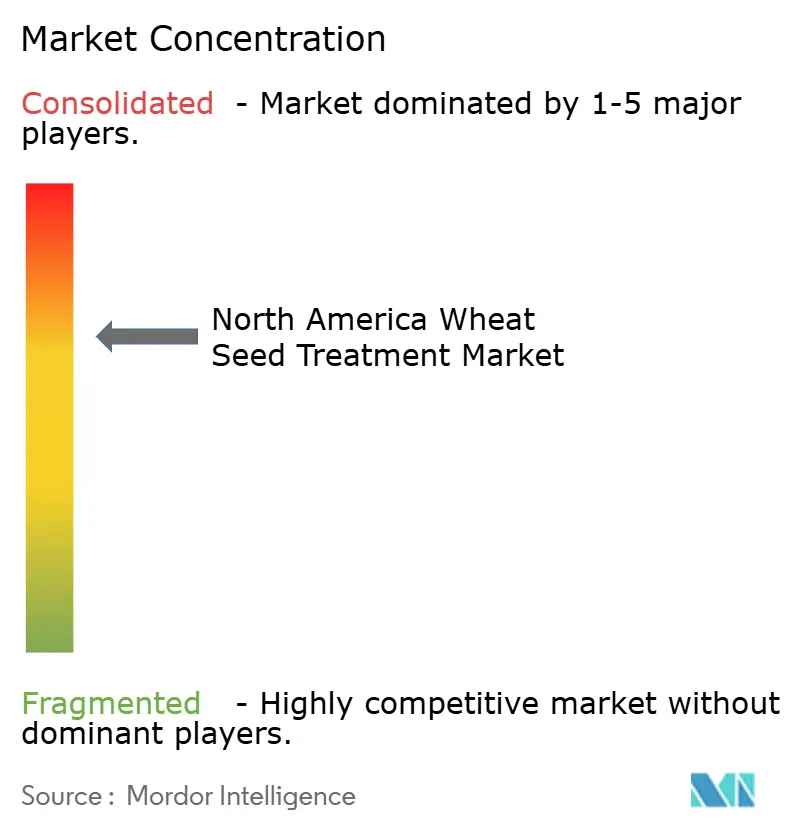
| Market Concentration | Medium |
Major Players *Disclaimer: Major Players sorted in no particular order Image © Mordor Intelligence. Reuse requires attribution under CC BY 4.0. | |
North America Wheat Seed Treatment Market Analysis by Mordor Intelligence
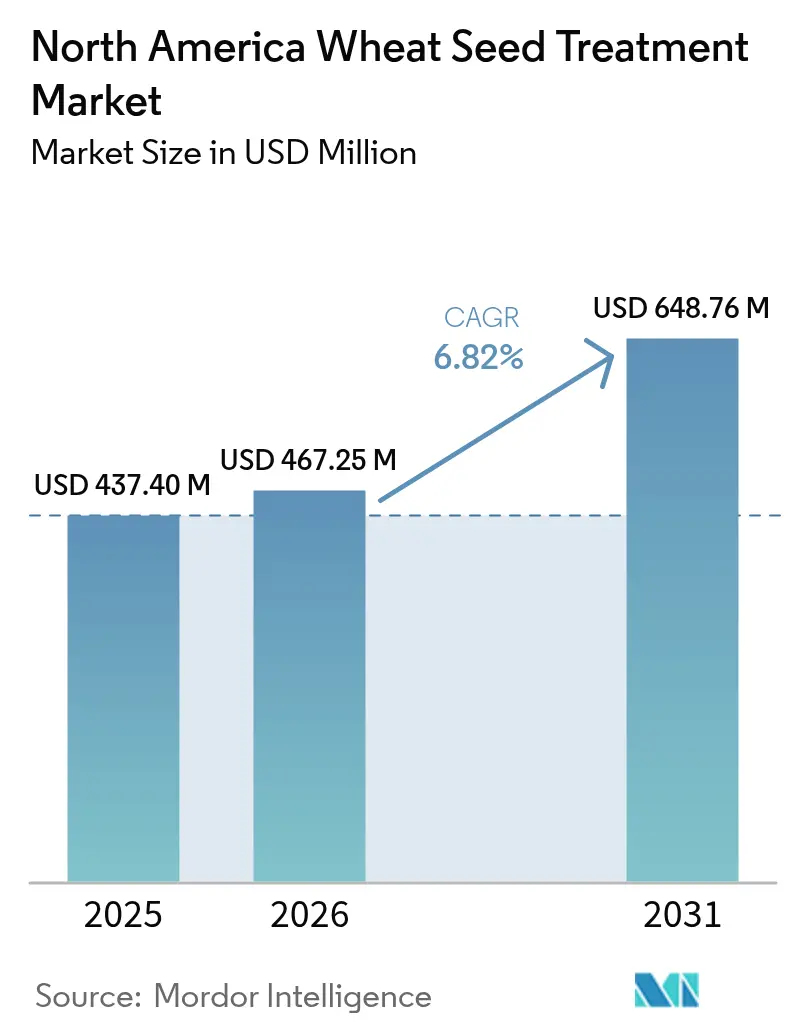
North America wheat seed treatment market size in 2026 is estimated at USD 467.25 million, growing from 2025 value of USD 437.4 million with 2031 projections showing USD 648.76 million, growing at 6.82% CAGR over 2026-2031. Farmers are increasingly transitioning from broadcast foliar sprays to precision seed-applied chemistries to address early-season disease and insect pressures while adhering to stricter re-entry regulations. Following the 2024 phase-down of thiram, investments in next-generation active ingredients and polymer film-coat delivery systems have increased. Demand is supported by climate-induced pest migration, the economic benefits of protecting certified seed, and federal programs subsidizing phytosanitary applications. These factors collectively drive the structural growth of the North America wheat seed treatment market, intensifying competition among formulators for shelf space and regulatory approvals.
Key Report Takeaways
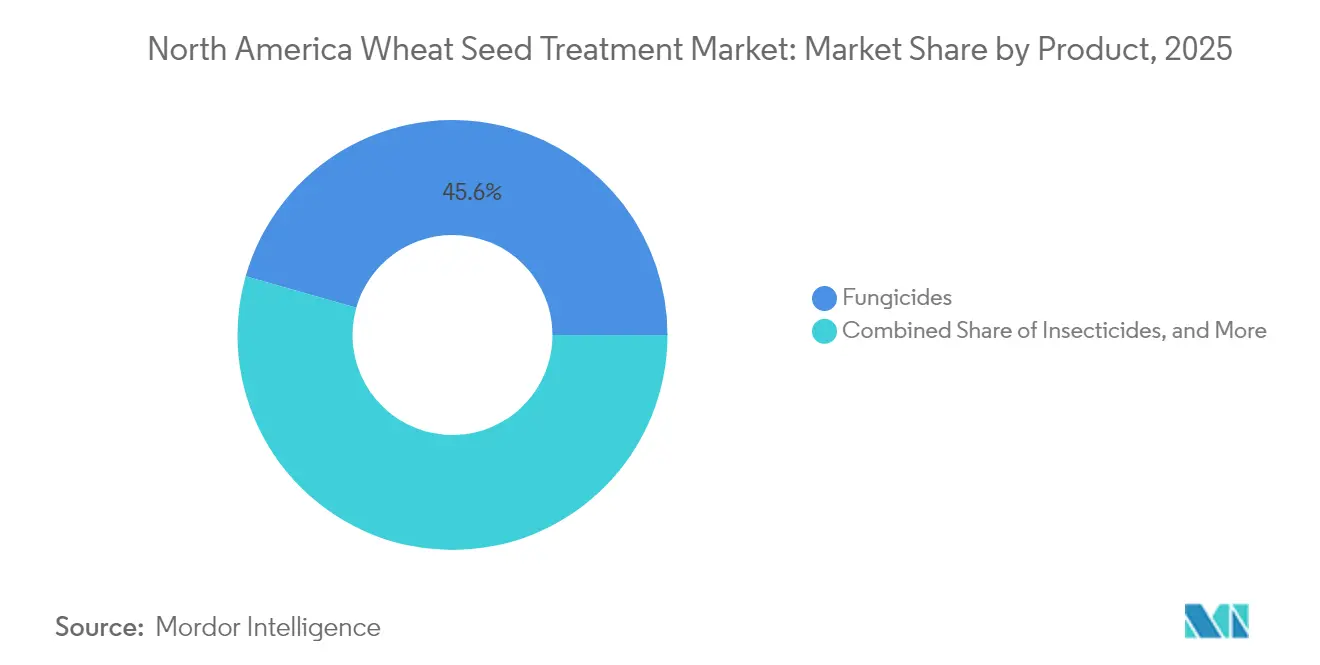
- By product type, fungicides led with a 45.60% of the North America wheat seed treatment market share in 2025, while insecticides are forecast to expand at an 7.85% CAGR through 2031.
- By formulation type, suspension concentrates accounted for 33.70% of the North America wheat seed treatment market size in 2025, whereas polymer film-coat technologies are set to register a 8.72% CAGR through 2031.
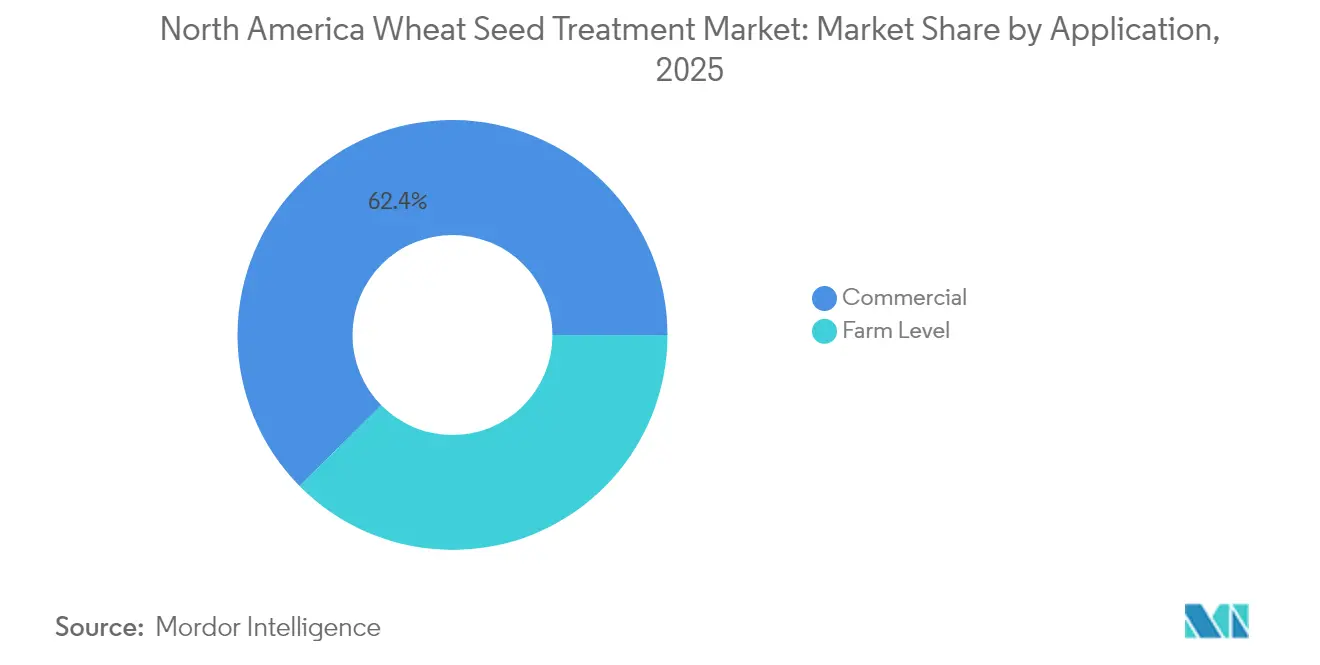
- By application, commercial treatment captured 62.40% of the market share in 2025, and farm-level treatment is projected to grow at the fastest rate, 7.05%, to 2031.
- By geography, the United States dominated with a 70.85% revenue share in 2025; Mexico is poised for the highest growth, at a 6.95% CAGR, during the forecast period.
Note: Market size and forecast figures in this report are generated using Mordor Intelligence’s proprietary estimation framework, updated with the latest available data and insights as of 2026.
Market Trends and Insights
Drivers Impact Analysis of North America Wheat Seed Treatment Market*
| Driver | (~) % Impact on CAGR Forecast | Geographic Relevance | Impact Timeline |
|---|---|---|---|
| Rising limitations of soil and foliar pesticide applications | +1.2% | United States and Canada | Medium term (2–4 years) |
| Escalating insect and pest pressure in wheat-growing belts | +1.5% | United States, Canada, and Mexico | Short term (≤ 2 years) |
| Growing demand for certified seed quality and uniform stands | +0.9% | United States and Canada | Long term (≥ 4 years) |
| Stricter United States and Canadian re-entry interval rules favoring seed treatment | +1.3% | United States and Canada | Medium term (2–4 years) |
| Blockchain-enabled grain traceability premiums for treated seed | +0.4% | United States and Canada | Long term (≥ 4 years) |
| Climate-driven expansion of winter-wheat acres in the Northern Plains | +0.8% | United States Northern Plains | Medium term (2–4 years) |
| Source: Mordor Intelligence | |||
Rising Limitations of Soil and Foliar Pesticide Applications
In the North America wheat seed treatment market, tighter pollinator-protection windows and rising fuel costs have reduced the practicality of broadcast sprays [1]. Seed-applied products offer an alternative by avoiding issues such as drift and re-entry restrictions, as the active ingredient remains confined within the furrow. Trials conducted in North Dakota demonstrated that a single seed treatment can achieve the same efficacy as two foliar sprays, while reducing labor and fuel costs by 40% [2]. Growers participating in conservation programs are moving away from multiple tillage passes associated with granular soil insecticides, increasing the demand for seed treatments. With 72% of wheat acres in the United States under conservation compliance, the economic benefits of seed treatments are further reinforced.
Escalating Insect and Pest Pressure in Wheat-Growing Belts
Stripe rust, tan spot, and Fusarium head blight caused USD 1.8 billion in crop losses in 2024, significantly driving the demand for fungicides as farmers seek to mitigate these substantial losses [3]. Warmer winters, attributed to changing climatic conditions, now enable pests such as Hessian fly and wheat stem sawfly to survive in regions that were previously too cold, resulting in increased reliance on insecticides to protect wheat crops. In Mexico, the Karnal bunt surveillance program has introduced a requirement for treated seed in interstate movement, effectively transforming what was once a voluntary practice into a legally enforced mandate across 492,404 hectares. This regulatory shift aims to contain the spread of Karnal bunt and safeguard wheat production.
Growing Demand for Certified Seed Quality and Uniform Stands
Certified seed accounts for 38% of plantings in the United States, an increase from 32% in 2020, driven by demand from export buyers for varietal purity. This growth reflects the increasing importance of certified seed in ensuring consistent quality and meeting international trade standards. Several states mandate seed treatment to ensure certification when seedborne diseases pose a risk to trade acceptance, highlighting the critical role of disease management in maintaining market access. The Federal Seed Act requires visible colorants and label declarations, serving as a quality indicator that enables a 15%–20% price premium, further incentivizing the adoption of certified seed. Canada’s Seed Synergy digital records enhance traceability, supporting identity-preserved contracts and fostering greater confidence in the supply chain.
Blockchain-Enabled Grain Traceability Premiums for Treated Seed
Pilot blockchain programs in the Northern Plains track seed treatment status from the field to the elevator, generating premiums of USD 0.15–0.25 per bushel. These systems support food-safety certifications by ensuring compliance with stringent standards and reducing the risk of contamination. They also mitigate commingling risks, which led to USD 120 million worth of rejected export shipments in 2023. Although currently less than 5% of wheat acres are involved in these programs, early results demonstrate the potential for traceability premiums to significantly influence purchasing decisions, encouraging the adoption of treated seed and enhancing overall supply chain transparency.
Restraints Impact Analysis of North America Wheat Seed Treatment Market*
| Restraint | (~) % Impact on CAGR Forecast | Geographic Relevance | Impact Timeline |
|---|---|---|---|
| Limited grower awareness of optimal application rates | –0.6% | United States and Mexico | Short term (≤ 2 years) |
| Rapid adoption of wheat hybrids with stacked pest-resistant traits | –0.9% | United States Northern Plains and Canadian Prairies | Long term (≥ 4 years) |
| Retailer pressure for lower chemical residues in value-chain certified wheat | –0.5% | United States and Canada | Medium term (2–4 years) |
| Active-ingredient shortages following the Environmental Protection Agency phase-down of thiram | –0.7% | United States, Canada, and Mexico | Short term (≤ 2 years) |
| Source: Mordor Intelligence | |||
Limited Grower Awareness of Optimal Application Rates
Surveys conducted in Kansas and Oklahoma indicate that 42% of farm-level applicators either underdose or overapply seed treatments, reducing their effectiveness and, in some cases, causing phytotoxicity, according to the Kansas State University (K-State). Similarly, smallholders in Mexico encounter knowledge gaps, as extension services are concentrated in irrigated regions. Misapplication of seed treatments can result in excess active ingredients leaching into groundwater, leading to increased regulatory scrutiny and potential restrictions on product labels. Training programs under SENASICA’s NOM-022 aim to improve application standards; however, there are fewer than 200 certified providers currently available to meet national demand.
Retailer Pressure for Lower Chemical Residues in Value-Chain Certified Wheat
Sustainability programs require stricter maximum residue limits, often set at half the federal vomitoxin threshold, to obtain premium flour contracts. These stringent requirements are driven by the growing demand for higher-quality and safer food products, emphasizing the importance of compliance with regulatory standards. This necessitates the development of shorter half-life chemistries, which presents a significant technical challenge. The complexity of this process leads to increased research and development costs and longer time-to-market cycles, which in turn impact the overall efficiency of product development. Additionally, the European Union's default limit of 0.01 mg/kg for unlisted pesticides effectively restricts the use of certain neonicotinoids. This regulation forces growers to adapt by relying on a narrower range of active ingredients, which may affect crop protection strategies and agricultural productivity.
*Our forecasts treat driver/restraint impacts as directional, not additive. The impact forecasts reflect baseline growth, mix effects, and variable interactions.
North America Wheat Seed Treatment Market Segment Analysis
By Product Type:
Fungicides Remain the MainstayFungicides accounted for 45.60% of the North America wheat seed treatment market revenue in 2025, as growers addressed challenges from stripe rust, tan spot, and Fusarium head blight, which collectively resulted in USD 1.8 billion in crop losses. Strobilurin and succinate dehydrogenase inhibitor combinations provided systemic protection for four to six weeks of seedling growth, driving high adoption rates. Following the phase-down of thiram, growers transitioned to premium sedaxane and fludioxonil blends, increasing the average per-acre expenditure to USD 5.20 and contributing to the current market size for this segment.
Insecticides represent the fastest-growing category, with a projected CAGR of 7.85% through 2031, driven by warmer winters that are expanding the range of pests such as the Hessian fly and wheat stem sawfly. Alternatives like chlorantraniliprole are gaining traction in regions where concerns over neonicotinoid exports persist, highlighting a strategic shift projected to expand the insecticide segment of the North America wheat seed treatment market by the end of the decade. Nematicides continue to play a niche role due to their inconsistent standalone efficacy.

By Formulation Type:
Liquids Lead While Polymer Films Gain SpeedSuspension concentrates accounted for 33.70% of the North America wheat seed treatment market size in 2025, valued for their compatibility with automated coating lines and multi-active blending. These formulations are particularly advantageous for large-scale operations requiring efficient and uniform seed coverage. Challenges such as nozzle clogging during cold seeding periods and concerns over dust drift have prompted the exploration of alternative solutions.
Polymer film-coat systems, which reduce airborne particles by 85%, are projected to grow at an annual rate of 8.72%, making them the fastest-growing formulation category. This growth is driven by increasing regulatory focus on minimizing environmental impact and the rising demand for advanced seed treatment technologies that enhance planting efficiency. Film-coat adoption is most prominent in the United States, where commercial treater capacity offsets the USD 500,000 line-cost barrier. Liquid flowables remain a preferred choice for farm-level applicators due to their lower capital requirements and ease of use, maintaining a balance in the North America wheat seed treatment market between cost-efficient liquid platforms and premium film-coating technologies. This equilibrium ensures that both small-scale and large-scale operations can access suitable seed treatment solutions tailored to their specific needs.
By Application:
Commercial Dominates, Farm-Level AcceleratesCommercial treatment is projected to account for 62.40% of the North America wheat seed treatment market in 2025. This dominance is attributed to large seed companies offering uniform coverage, regulatory compliance, and traceability. By embedding treatment costs directly into seed invoices rather than farm budgets, commercial treatment provides a streamlined and efficient solution for farmers, ensuring consistency and adherence to industry standards. This approach not only simplifies the procurement process but also enhances the overall value proposition for growers by reducing administrative burdens and ensuring high-quality treatment outcomes.
The farm-level application is experiencing an annual growth rate of 7.05%, driven by prairie producers utilizing slurry systems to treat retained seeds at a cost of USD 4–6 per acre, thereby avoiding the USD 8–15 commercial premium. This method allows producers to achieve cost savings while maintaining control over the treatment process. The expansion of farm-level application is contingent on several critical factors, including the availability of extension training programs to educate farmers on best practices, access to proprietary treatment products that meet regulatory and performance standards, and the ability to manage recordkeeping requirements effectively. These factors can present challenges, particularly for smaller operations with limited resources, which may impact their ability to adopt farm-level treatment methods at scale.
Geography Analysis
United States Wheat Seed Treatment Market
The United States accounted for 70.85% of the North America wheat seed treatment market share in 2025, supported by 38.5 million harvested acres and an extensive commercial treatment network. The demand for fungicides is driven by hard red winter wheat in the Southern Plains, where high pressure from stripe rust is prevalent. In the Northern Plains, the cultivation of spring wheat has led to an increase in insecticide usage to combat pests such as the Hessian fly and sawfly. The adoption of polymer film coatings has accelerated following the phase-down of thiram, ensuring compliance with stricter dust-drift regulations. While hybrid wheat may reduce insecticide usage later in the decade, overall demand in the United States is projected to continue growing.
Mexico Wheat Seed Treatment Market
Mexico is the fastest-growing market in the region, with an annual growth rate of 6.95%, driven by intensified Karnal bunt surveillance and government subsidies covering 30%–40% of growers’ phytosanitary costs. Although there are fewer than 200 certified treaters, harmonized NOM-032 standards have simplified cross-border registrations, enabling access to premium products. Increasing pest pressure in regions such as Sonora and Guanajuato, combined with year-round cropping practices, is contributing to a steady rise in treatment volumes.
Canada Wheat Seed Treatment Market
Canada’s 24.7 million wheat acres support consistent demand for seed treatments as growers address challenges like Fusarium head blight and leaf rust. Provincial associations promote shared treatment facilities, and 28% of growers now self-treat retained seed to reduce costs. Although breeding programs valued at CAD 19.9 million (USD 14.5 million) aim to reduce chemical reliance after 2028, seed protection remains a critical strategy until stacked traits are widely adopted.
Regulatory Landscape
Seed treatment products for wheat in North America are governed primarily by national pesticide regulators, with the United States Environmental Protection Agency (EPA) and Health Canada Pest Management Regulatory Agency (PMRA) setting label conditions for crop uses, rates, handling, and worker and environmental protections. Recent regulatory actions that affect product availability and reformulation include EPA label and registration updates in 2024 for wheat-relevant seed treatment products, including BASF Stamina F4 Cereals Fungicide Seed Treatment and BASF Poncho 750 Seed Treatment, and an unconditional EPA registration in October 2024 for Bayer CropScience LP Acceleron 26FI Fungicide and Insecticide Seed Treatment for crops that include wheat.
In Canada, PMRA registration decisions in 2025-2026 expanded the toolset for wheat seed treatment, including the April 2025 registration of Vismax Seed Treatment (Flg22-Bt peptide) for Fusarium control and the January 2026 registration of Equento (isocycloseram) as a seed treatment for cereals including wheat. Cross-border access and compliance are also shaped by trade rules and sanitary and phytosanitary (SPS) measures under USMCA, which entered its first required six-year review as of June 2026, reinforcing the need for predictable, science-based SPS alignment for seed and crop protection input flows across the United States, Canada, and Mexico.
Competitive Landscape
Market concentration is moderate, with the top five companies, Syngenta Group, Bayer AG, BASF SE, Corteva Agriscience, and FMC Corporation, collectively holding a significant share in 2024. These firms link proprietary chemistries to branded seed genetics, creating pull-through demand. Syngenta’s hybrid wheat expansion has driven increased sales of Vibrance fungicide, while Corteva’s Lumisena received PMRA approval in 2025, addressing triazole resistance. The replacement of Thiram has led to higher per-acre treatment prices, improving margins for suppliers with diversified portfolios.
Smaller companies, such as Vive Crop Protection and Meristem Crop Performance, specialize in creating custom blends that enhance rainfastness and root uptake, catering to growers who seek tailored solutions. Polymer film-coat technology presents a growth opportunity but requires significant capital investment, which discourages mid-sized treaters. FMC experienced a 23% rebound in seed treatment revenue in late 2024, demonstrating elastic demand as inventories normalized.
Digital agronomy tools are introducing new switching costs. Bayer’s Climate FieldView pilot in Montana and North Dakota integrates live pest and weather data to optimize treatment prescriptions. The adoption of stacked pest-resistant traits could reduce chemical demand by approximately 15% after 2028. Slow trait deployment and hesitancy in export markets are likely to limit near-term disruption. Overall, competition in the market is driven by regulatory agility, formulation patents, and digital service ecosystems rather than price alone.
North America Wheat Seed Treatment Industry Leaders
-
Syngenta AG
-
BASF SE
-
Corteva Agriscience
-
Bayer AG
-
FMC Corporation
- *Disclaimer: Major Players sorted in no particular order
North America Wheat Seed Treatment Market Companies Covered in this Report
- Bayer AG
- Syngenta Group
- Corteva Agriscience
- BASF SE
- UPL Limited
- Sumitomo Chemical Co. Ltd
- Nufarm Limited
- Albaugh, LLC
- FMC Corporation
- Helena Agri-Enterprises, LLC (Marubeni America Corporation)
- Wilbur-Ellis Company LLC
- Nutrien Ltd.
- Vive Crop Protection, Inc.
- Meristem Crop Performance Group, LLC
Read Analysis of North America Wheat Seed Treatment Companies
Market Opportunities and Future Outlook
A near-term opportunity is the replacement cycle triggered by the 2024 phase-down of thiram, which has supported shifts toward newer actives and more complex premixes that broaden early-season disease and insect coverage. Commercial launches and registrations provide specific signals for cereal product momentum, with Corteva announcing the commercial launch of Lumiscend LUXE in March 2026 for Canadian cereals (including wheat) and Syngenta extending PLINAZOLIN-based insect control in cereals through Equento registrations and in-season positioning of Equento-branded cereal seed treatments. These steps support portfolio differentiation in a market where fungicides represent the largest revenue block and insecticide adoption is tied to expanding soil and early-season pest pressure.
A second opportunity is the push toward lower-dust, better-handling delivery formats to meet tighter stewardship and residue expectations in identity-preserved and value-chain certified wheat. Polymer film-coat systems already show a handling advantage from dust drift reduction referenced in the report context, and adoption is supported by commercial treater infrastructure and retailer-driven compliance requirements that reward traceability and residue management. In Mexico, capacity and compliance enablement still constrain execution, creating space for service models such as mobile treating and audited digital recordkeeping, particularly as Karnal bunt surveillance and phytosanitary cost support increase treated seed use while limited certified treaters and application training requirements remain bottlenecks.
Recent Industry Developments in North America Wheat Seed Treatment Market
- March 2026: Corteva Agriscience announced the commercial launch of Lumiscend LUXE for Canadian cereals including wheat, positioning a multi-active fungicide seed treatment option for early-season disease complexes. The launch reinforces the shift toward higher-value premixes as growers replace older chemistries and seek broader protection in a single application.
- December 2025: Syngenta reported that Equento insecticide seed treatment, powered by PLINAZOLIN technology, received U.S. EPA registration for use on cereal and pulse crops to manage wireworms. The approval adds a newer mode-of-action option for soil insect control and supports differentiated insecticide positioning alongside fungicide-led seed treatment programs.
- May 2024: BASF SE launched Sistiva for treating wheat seeds, built on the Xemium (fluxapyroxad) active ingredient from the carboxamide group and aimed at diseases such as powdery mildew and leaf rust. This type of product introduction supports longer residual protection from seed-applied fungicides, helping growers reduce reliance on in-season foliar passes where re-entry and operational constraints are tightening.
North America Wheat Seed Treatment Market Report Scope and Research Methodology
Market Definition and Coverage
This market includes products and services used to treat wheat seed in North America before planting, so the seed is protected from early pests and diseases and has better stand establishment. The sizing is captured in value terms for treatments applied through commercial channels and at the farm level.
Scope exclusions: We exclude foliar crop protection sprays after emergence and any non-wheat treated seed value that is not directly linked to wheat seed treatment use.
Segments Covered in This Report
- By Product Type
- Insecticides
- Fungicides
- Nematicides
- Other Product Types
- By Formulation Type
- Liquid Flowable
- Suspension Concentrate
- Dry Powder
- Polymer Film-Coat
- By Application
- Commercial
- Farm Level
- By Geography
- United States
- Canada
- Mexico
- Rest of North America
Data Sources, Market Sizing, and Validation
Desk Research
Desk research started with building the demand pool for wheat seeding in the United States, Canada, and Mexico, and then linking it to how seed is treated in practice. We used public sources such as USDA crop acreage and production series, Statistics Canada crop reports, Mexico agriculture statistics from official agencies, and FAO datasets to cross-check longer-term wheat area movements.
To shape realistic assumptions, we reviewed seed-treatment rules and label context from regulators such as the US EPA and similar national bodies, plus technical notes from universities and extension systems that cover common seed-borne diseases and early season insect pressure. We also used company filings, investor presentations, and credible press for product mix direction and pricing commentary, and we referenced paid subscriptions for company financials and patent landscapes to understand innovation activity and commercialization timing. These sources are illustrative rather than exhaustive, and we used additional references for data collection, validation, and research clarification.
Primary Interviews and Surveys
We interview seed-treatment formulators, commercial treaters, distributors, growers, agronomists, and regulatory specialists across North America. Interviews and surveys test treated-acre assumptions, application rates, product mix, ASP changes, and gaps in public data. We use these findings to challenge secondary inputs and reconcile the final model.
Distribution of primary research fieldwork respondents
| Company type | Respondent position |
|---|---|
| Top tier: 28% | CXOs: 14% |
| Mid tier: 52% | Functional/Unit leaders: 31% |
| Smaller Players: 20% | Managers: 55% |
Market-Sizing & Forecasting
We modeled the market using a top-down demand build that starts from wheat planted area, seeding rates, and the share of acreage using treated seed, which are then converted into treated seed volumes and spending. Results were then corroborated through selective bottom-up checks, such as sampled price per unit treatment, channel markups, and realistic product mix splits across fungicide, insecticide, and other treatments.
Inputs were kept practical and repeatable, including wheat acreage trends by country, shifting disease and pest incidence signals reported by extension systems, adoption of biological versus synthetic chemistry, and the split between commercial treatment and farm-level treatment. Price assumptions were treated carefully since the same acreage can shift value up or down based on active ingredient intensity and the timing of price resets, and this was a point interview feedback helped clarify. Forecasting leaned on scenario analysis tied to wheat area outlook, likely penetration changes, and expected ASP movement, and the final path was aligned to what most respondents described as a reasonable planning case. Where direct bottom-up totals were incomplete, gaps were handled by applying validated penetration and pricing ranges to the uncovered acreage, then running consistency checks against known channel structure.
Data Validation & Update Cycle
Several checks were run before finalizing outputs, including cross-verifying totals against independent indicators such as wheat area shifts, treatment penetration boundaries, and observed product mix direction. Outliers were reviewed by another analyst, and when a mismatch could not be explained by a clear scope or unit issue, respondents were re-contacted to confirm the assumption and the underlying logic.
Reports are refreshed on an annual cycle, and interim updates are made when material events occur, for example major regulatory changes or sharp input cost movements. Before delivery, we do a fresh pass on currency conversion timing, price assumptions, and the latest wheat planting outlook so clients receive an updated and internally consistent view.
Mordor Intelligence's North American Wheat Seed Treatment Market Sizing Compared With Other Published Estimates
It is normal to see different market sizes published for wheat seed treatment because the boundaries can shift, even when the geography is the same. Differences usually come from what is counted as seed treatment, the year used for pricing, and how quickly assumptions are refreshed when product mix or currency conditions move.
When pricing is updated around the planting cycle and then reconciled against treatment intensity and mix, for example fungicide versus insecticide emphasis, the base-year value behaves differently than numbers that carry older averages forward. This is one of the reasons the totals here differ for Mordor Intelligence.
Benchmark comparison
| Source | Market Size | Gaps in Research Methodology |
|---|---|---|
| Mordor Intelligence | USD 437.40 M (2025) | |
| Regional Consultancy A | USD 1.99 B (2024) | The figure is stated for an earlier year and appears to reflect a wider spend bucket where wheat is mixed with broader seed-treatment value, and the implied treated seed base can be larger than wheat alone. |
| Trade Journal B | USD 0.90 B (2025) | This number is presented as a regional share of a global total and may include a wider set of techniques and functions, and the roll-up can shift if country coverage and price translation are simplified. |
Taken together, the spread mainly comes from scope boundaries and how pricing is carried into the base year. By keeping the demand pool tied to wheat planting and then checking penetration and pricing with field feedback, the estimate stays traceable to clear drivers and can be repeated with the same steps when assumptions are updated.
Key Questions Answered in the Report
How large is the North America wheat seed treatment market in 2026?
It is valued at USD 467.25 million and is forecast to climb to USD 648.76 million by 2031.
Which product type generates the most revenue?
Fungicides lead with 45.60% of revenue due to effective control of major wheat diseases.
Why is Mexico the fastest-growing territory?
Federal subsidies and stricter Karnal bunt surveillance fuel a forecast 6.95% CAGR over 2026-2031.
What drives polymer film-coat adoption?
Film coats cut dust drift by 85% and meet new EPA guidelines while improving seed flowability.
How will hybrid wheat affect seed treatment demand?
Stacked pest-resistant traits could trim chemical use by 15% after 2028, but slow deployment tempers near-term impact.