
Market Overview
| Study Period | 2021 - 2031 |
|---|---|
| Forecast Data Period | 2026 - 2031 |
| Base Year Market Size (2025) | USD 7.80 Billion |
| Market Size (2026) | USD 8.12 Billion |
| Market Size (2031) | USD 9.9 Billion |
| Growth Rate (2026 - 2031) | 4.10 % |
| Market Concentration | Medium |
Major Players *Disclaimer: Major Players sorted in no particular order Image © Mordor Intelligence. Reuse requires attribution under CC BY 4.0. | |
North America Pasta And Noodles Market Analysis by Mordor Intelligence
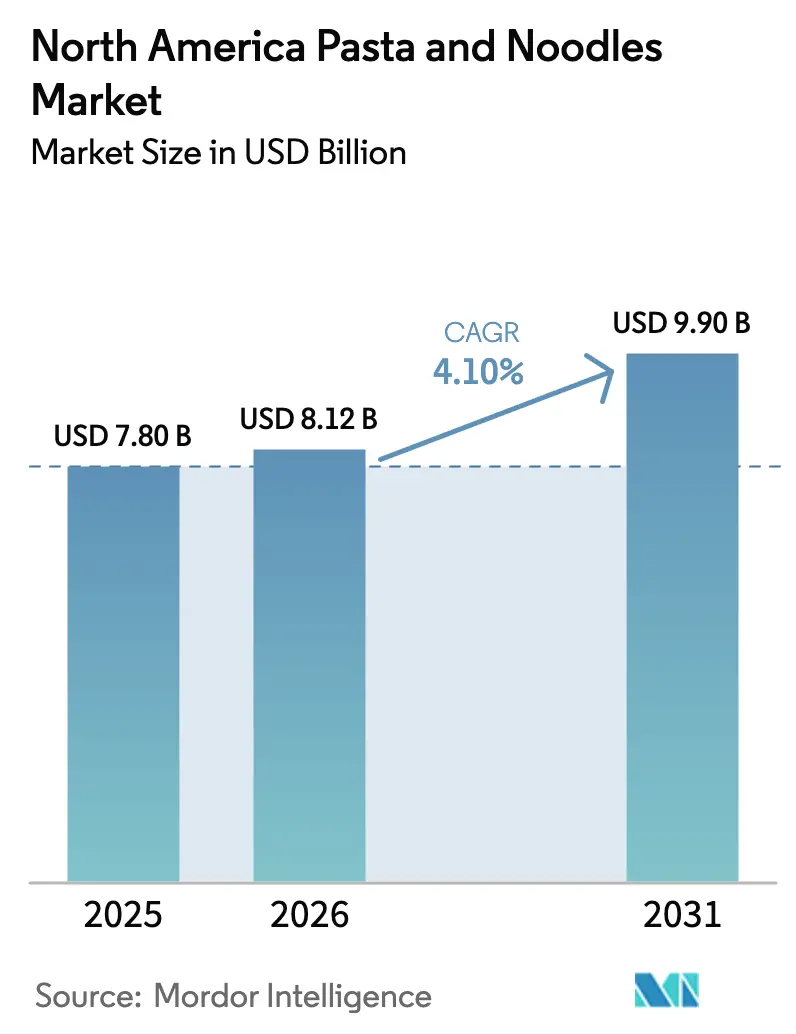
North America pasta and noodles market size in 2026 is estimated at USD 8.12 billion, growing from 2025 value of USD 7.80 billion with 2031 projections showing USD 9.9 billion, growing at 4.1% CAGR over 2026-2031. This growth is primarily driven by consumers' increasing preference for quick and easy meal options, along with a rising demand for premium and high-quality products. Dried pasta continues to dominate the market, while gluten-free options are gaining popularity as more consumers seek healthier alternatives. The role of e-commerce is also growing significantly, enabling companies to deliver products directly to customers and expand their reach. The market is also witnessing a shift in ingredients, with traditional wheat-based products facing competition from alternatives like quinoa and chickpea-based pasta. Conventional products hold a significant share, but organic options are steadily gaining traction. Packaging trends are evolving as well, with companies adapting traditional formats to meet consumer demand for convenience and sustainability. The United States remains the largest market in terms of volume, while Canada is experiencing the fastest growth due to the increasing adoption of organic and clean-label products, which appeal to health-conscious consumers. The competitive landscape is balanced, with large multinational companies maintaining their dominance through economies of scale, while smaller, specialized brands are carving out niches in health-focused and innovative product segments.
Key Report Takeaways
- By product type, dried pasta held 67.10% of the North America pasta and noodles market share in 2025, while canned and frozen formats are forecast to expand at a 6.55% CAGR through 2031.
- By ingredient, wheat products accounted for a 56.20% share of the North America pasta and noodles market size in 2025; rice-based offerings are projected to grow at a 5.55% CAGR between 2026 and 2031.
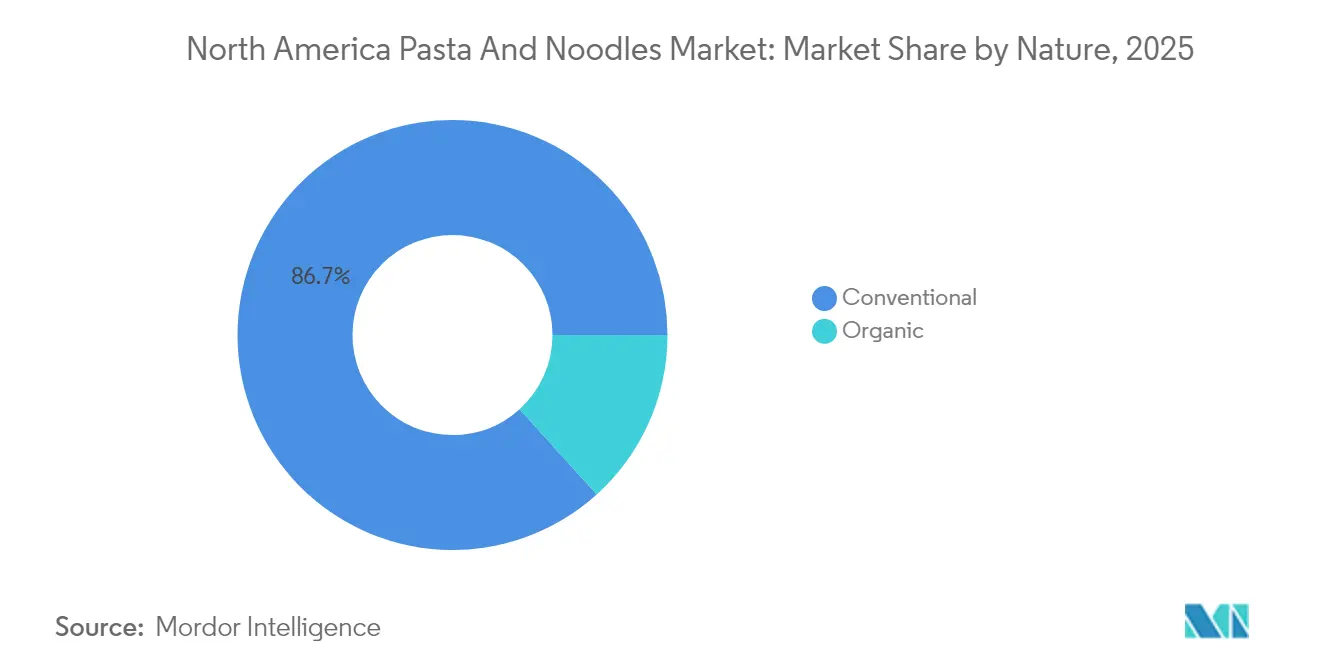
- By nature, conventional items controlled 86.70% of category revenue in 2025, whereas organic lines are pacing at a 6.18% CAGR to 2031.
- By packaging, packets/bags led with 62.10% share in 2025; cups/bowls are tracking a 5.62% CAGR through 2031.
- By distribution channel, supermarkets/hypermarkets captured 55.40% of sales in 2025, while online retail stores are poised to rise at a 6.42% CAGR through 2031.
- By country, United States controlled 74.10% revenue in 2025, whereas Canada is pacing at a 5.60% CAGR to 2031.
Note: Market size and forecast figures in this report are generated using Mordor Intelligence’s proprietary estimation framework, updated with the latest available data and insights as of 2026.
North America Pasta And Noodles Market Trends and Insights
Drivers Impact Analysis*
| DRIVER | (~) % IMPACT ON CAGR FORECAST | GEOGRAPHIC RELEVANCE | IMPACT TIMELINE |
|---|---|---|---|
| Rising consumption of convenience food | +1.2% | Strongest in United States urban centers | Medium term (2-4 years) |
| Increasing demand for gluten-free pasta and noodles | +0.8% | North America, premium segments | Long term (≥ 4 years) |
| Innovation and gourmet premiumization | +0.9% | United States and Canada metropolitan areas | Medium term (2-4 years) |
| Shift toward plant-based diets | +0.7% | North America, coastal regions | Long term (≥ 4 years) |
| Rising popularity of meal kits and ready meals | +0.6% | United States and Canada, suburban demographics | Short term (≤ 2 years) |
| Strong preference for clean-label ingredients | +0.5% | Educated consumer segments in United States | Medium term (2-4 years) |
| Source: Mordor Intelligence | |||
Rising consumption of convenience food
The pasta and noodles market in North America is growing steadily, driven by the increasing demand for convenient and quick meal options. Many urban households, especially those with dual incomes, are looking for easy-to-prepare food that fits into their busy schedules. Pasta has become a staple, with a survey by the Share The Pasta Organization, revealing that 86% of respondents eat pasta at least once a week[1]. This highlights how deeply pasta is integrated into everyday meals. Companies are introducing innovative products that enhance both convenience and enjoyment. For example, in 2024, Barilla launched a limited-edition pasta shape called 'Snowfall.' This unique pasta features intricate snowflake designs with poinsettia-like ridges and a heart at the center, symbolizing the brand’s tagline, 'A Sign of Love.' The product was designed to bring a sense of togetherness during the holiday season. Such creative offerings resonate with consumers, as nearly half of Americans have shown interest in fun and seasonal pasta shapes.
Shift toward plant-based diets
The increasing popularity of plant-based diets is influencing the North American pasta and noodles market as consumers are looking for healthier and nutritious options beyond traditional wheat-based products. Noodles made from lentils and chickpeas are gaining traction because they are high in protein. This trend aligns with the broader adoption of plant-based foods. According to the Good Food Institute, as of 2024, 53% of Americans have tried plant-based meat at some point, and 40% consumed it in the past year, indicating interest in plant-based alternatives[2]. In response to this demand, Veggiecraft relaunched its products nationwide in 2024 with improved recipes and updated packaging. Their offerings, such as Veggiecraft Zucchini Penne and Veggiecraft Sweet Potato Spaghetti, showcase innovation in plant-based pasta. Coastal states, in particular, are seeing higher adoption rates, which is helping the market diversify its ingredient options and cater to changing dietary preferences across the region.
Innovation and gourmet premiumization
The North American pasta and noodles market is undergoing significant changes, with consumers increasingly favoring innovative and premium options. For example, Barilla introduced chickpea spaghetti and chickpea orzo, priced at USD 2.99 and USD 3.49 respectively, to meet this growing demand. Companies are also adopting advanced production technologies, such as low-temperature extrusion, to improve product texture and consistency. Blockchain-enabled traceability is being used to ensure authenticity and enhance quality control and operational efficiency. These advancements help brands differentiate themselves in a competitive market. In May 2024, Maggi launched a new noodle line in the United States, featuring globally inspired flavors like Indian Classic Masala, Chinese Spicy Garlic, and Korean Spicy BBQ. This product line caters to the increasing demand for diverse flavors, particularly among younger consumers who are eager to try new and exciting culinary experiences.
Increasing demand for gluten-free pasta and noodles
The North American pasta and noodles market is experiencing a growing demand for gluten-free products, driven by both health concerns and changing consumer preferences. Around 0.75% of the United States population is estimated to have gluten intolerance, as per the World Population Review, as of 2025[3]. while many others are opting for gluten-free options due to perceived health benefits. To meet this demand, brands are introducing innovative products. For example, in August 2025, Banza launched a new gluten-free pasta line made from a blend of brown rice and chickpeas. This product, available at Whole Foods and other major retailers, aims to address common issues like texture and taste, which are often challenges for gluten-free alternatives. By focusing on quality and flavor, brands like Banza are making gluten-free pasta more appealing and accessible to a wider range of consumers, including those with dietary restrictions and those seeking healthier options.
Restraints Impact Analysis*
| RESTRAINT | (~) % IMPACT ON CAGR FORECAST | GEOGRAPHIC RELEVANCE | IMPACT TIMELINE |
|---|---|---|---|
| Intense competition from alternatives | -0.9% | Strongest in health-conscious segments | Medium term (2-4 years) |
| Health concerns over refined carbs and sodium | -0.7% | North America, urban educated demographics | Long term (≥ 4 years) |
| Growing consumer shift toward low-carb / keto diets | -0.6% | United States and Canada, fitness-focused consumers | Medium term (2-4 years) |
| Climate-induced wheat supply volatility | -0.5% | Supply chain, regional price impacts | Short term (≤ 2 years) |
| Source: Mordor Intelligence | |||
Health concerns over refined carbs and sodium
Health concerns are becoming a significant factor affecting the North American pasta and noodles market, as more consumers prioritize whole-grain options and lower sodium levels to align with health recommendations. In August 2024, the United States' Food and Drug Administration (FDA) introduced draft guidelines for Phase II sodium reduction targets. These guidelines aim to reduce the average sodium intake from 3,400 mg/day to about 2,750 mg/day over 3 years. This effort is part of the FDA's broader initiative to lower sodium levels in processed, packaged, and prepared foods[4]. In response, manufacturers are introducing healthier alternatives. For example, General Mills launched Carbe Diem pasta, which contains 55% fewer net carbs while maintaining the same texture as traditional pasta. Similarly, Fiber Gourmet offers high-fiber pasta options that cut calorie density by nearly half. However, these healthier products often come with higher price tags, making them less accessible to some consumers.
Intense competition from alternatives
The North American pasta and noodles market is encountering challenges due to rising competition from alternative meal options. Products such as ready-to-eat meals, frozen entrees, rice and grain substitutes, and plant-based noodles are becoming increasingly popular. These alternatives attract consumers by offering convenience, a variety of dietary choices, and unique flavors. Many of these options are also marketed as healthier or more affordable, while being quick and easy to prepare, making them appealing to busy or health-conscious individuals. This growing competition is pushing traditional pasta manufacturers to innovate and differentiate their products to stay relevant. The increasing availability of substitutes is not only dividing market share but also making it more difficult for conventional pasta products to maintain consumer loyalty and secure prominent shelf space in a highly competitive food industry.
*Our forecasts treat driver/restraint impacts as directional, not additive. The impact forecasts reflect baseline growth, mix effects, and variable interactions.
Segment Analysis
By Product Type: Shelf-Stable Dominance Faces Convenience Challenge
Dried pasta remains the leading segment in the North American pasta and noodles market, holding 67.10% of the total market share in 2025. Its popularity stems from its long shelf life, easy storage, and versatility, making it a staple in households. Consumers value dried pasta for its consistent quality, quick cooking time, and ability to be used in a wide range of dishes, from simple meals to elaborate recipes. Major brands continue to offer a variety of shapes and blends, catering to both traditional preferences and health-conscious trends. This segment’s dominance highlights its role as a dependable and convenient option for meal planning, maintaining its relevance despite shifting consumer preferences.
On the other hand, canned and frozen pasta products are gaining traction, with a projected CAGR of 6.55% through 2031, growing faster than the dried segment. These options appeal to consumers looking for convenience, as they eliminate the need for boiling and draining while offering precise portion control. This makes them ideal for smaller households or individuals seeking quick, ready-to-eat meals. Improved packaging technologies ensure freshness and flavor, making these products suitable for busy lifestyles. The rising demand for canned and frozen pasta reflects the needs of time-strapped urban consumers and dual-income families, who prioritize efficiency without sacrificing taste.


By Ingredient: Wheat Supremacy Challenged by Alternative Grains
Wheat-based pasta remains the most popular choice in the North American pasta and noodles market in 2025, accounting for 56.20% of the total market share. This dominance is due to the well-established infrastructure for wheat processing, affordable raw materials, and consumer trust in the quality and texture of semolina-based products. Wheat pasta is widely available in both retail stores and foodservice outlets, making it a convenient option for everyday meals. Its familiarity in traditional recipes and consistent quality from trusted brands further strengthen its position. Its versatility in various cuisines ensures it remains a staple in households across the region.
Rice-based pasta is steadily gaining popularity and is projected to grow at a CAGR of 5.55% from 2026 to 2031. This growth is driven by increasing demand from consumers with gluten sensitivities and a growing interest in Asian cuisine, where rice noodles are a key ingredient. Improvements in product quality, such as better texture and taste, along with wider availability in stores, are encouraging more consumers to try rice-based options. The rising awareness of gluten-free diets is also contributing to its growth. As a result, rice-based pasta is gradually expanding its market share, offering consumers more variety and catering to diverse dietary preferences.
By Nature: Conventional Scale Meets Organic Premiumization
Conventional pasta remained the leading segment in the North America pasta and noodles market in 2025, accounting for 86.70% of the total market share. This dominance is primarily due to the cost advantages of large-scale production facilities, which enable brands to offer competitive pricing. Conventional pasta is widely available across various retail channels, including supermarkets, hypermarkets, convenience stores, and online platforms. Established brands benefit from strong consumer trust and recognition, making conventional pasta the go-to choice for households looking for affordable and easily accessible meal options. Its long-standing presence in the market has solidified its position as a staple in many North American kitchens.
On the other hand, organic pasta is rapidly gaining traction as the fastest-growing segment, with a projected CAGR of 6.18% through 2031, significantly outpacing conventional pasta. Consumers are increasingly drawn to organic pasta due to its association with cleaner ingredients, USDA certification, and environmentally friendly farming practices. The rising focus on health and wellness, along with the growing demand for premium food products, is encouraging more people to try and repurchase organic options. As organic pasta becomes more widely available and the price difference compared to conventional pasta decreases, it is expected to secure a larger presence on store shelves across North America. This trend reflects a shift in consumer preferences toward healthier and more sustainable food choices.
By Packaging Type: Traditional Formats Adapt to Convenience Trends
Packets/bags were the most popular packaging format in 2025, making up 62.10% of the total volume in the North America pasta and noodles market. This format is widely preferred because it is affordable, easy to store, and readily available in supermarkets, club stores, and dollar stores. It is versatile and supports various product types, including dried pasta and instant noodles, making it a convenient choice for households. Many well-established brands rely on packets and bags for distribution, which has helped maintain their dominance in the market. Their ability to cater to both bulk purchases and everyday needs makes them a staple in pasta packaging.
On the other hand, cups/bowls are gaining popularity and are expected to grow at a faster rate, with a projected CAGR of 5.62% from 2026 to 2031. These packaging formats are particularly appealing to individuals with busy lifestyles, such as commuters, students, and smaller households, as they offer convenience, portion control, and quick preparation in just a few minutes. Innovations like improved insulation, recyclable materials, and premium flavor options are further driving their demand. As more people adopt on-the-go lifestyles, cups and bowls are likely to become a key growth area in the pasta and noodles market, offering a practical and modern solution for quick meals.
By Distribution Channel: Traditional Retail Faces Digital Disruption
Supermarkets/hypermarkets remained the leading sales channels for pasta and noodles in 2025, accounting for 55.40% of total revenue. These stores are popular because they offer a wide variety of products, including both regular and specialty options, all in one place. Shoppers often rely on them for their weekly grocery needs, and competitive pricing further attracts customers. Their strong supply chains ensure that essential items like pasta are always available on shelves. For many families in North America, supermarkets and hypermarkets are the most convenient and reliable places to shop for pasta and noodles.
On the other hand, online retail is growing rapidly and is expected to be the fastest-expanding distribution channel, with a projected CAGR of 6.42% through 2031. This growth is fueled by the increasing popularity of subscription services for pantry staples, partnerships with meal-kit companies, and greater consumer confidence in the safe delivery of groceries. Online platforms also provide access to unique, premium, and international pasta varieties, catering to a broader range of preferences. As more consumers prioritize convenience and adopt digital shopping habits, online sales are expected to steadily gain market share while complementing the dominance of physical stores.
Geography Analysis
The United States accounted for 74.10% of the market volume in 2025, driven by its large and diverse consumer base, strong Italian-American food culture, and widespread retail availability. Urban consumers prefer quick and convenient options like instant, microwaveable pasta bowls, while suburban families often opt for larger bulk packages. Coastal states are leading the way in adopting plant-based and organic pasta varieties, which often set trends that gradually spread to other regions. This layered demand highlights the varied preferences across different demographics and regions within the country, making the United States a dominant player in the North American pasta and noodles market.
Canada is the fastest-growing market in the region, with a projected compound annual growth rate (CAGR) of 5.60% through 2031. The country’s growing immigrant population is introducing a wider variety of culinary preferences, increasing the popularity of both wheat and rice noodles. Canada’s alignment with the United States Department of Agriculture organic standards has simplified cross-border trade, enabling brands to use United States manufacturing capabilities while customizing products for Canadian consumers. A mix of domestic and imported brands, such as Italpasta and other international options, are expanding choices for Canadian shoppers.
Mexico and other parts of North America present additional growth opportunities, supported by stable tariffs under the United States-Mexico-Canada Agreement. In southern markets, wheat-based pasta remains a staple, but rising disposable incomes and exposure to international cuisines are encouraging consumers to try gourmet and gluten-free options. Adapting to local preferences, such as offering region-specific sauce flavors and varying package sizes, is essential for brands to succeed in these culturally diverse markets. This focus on localization is helping companies tap into the growing demand for pasta and noodles across the region, particularly in areas with distinct culinary traditions.
Regulatory Landscape
In the United States, macaroni and noodle products are regulated under the Food and Drug Administration (FDA) standards of identity in 21 CFR Part 139 (including 21 CFR 139.150), which set the permitted ingredients for products marketed as macaroni and noodle and define what may be sold under those names (such as semolina, durum flour, farina, flour, and egg components). These requirements influence formulation choices and labeling across mainstream dried pasta and egg noodle categories, and they also shape how manufacturers position alternative-ingredient products relative to standardized items.
In Canada, oversight by the Canadian Food Inspection Agency (CFIA) and Health Canada under the Food and Drug Regulations includes compositional requirements for labeled products. This includes minimum egg-yolk solids thresholds for products marketed as egg-based macaroni, spaghetti, and noodles, for example under Section B.13.051. At the industry level, organizations including the National Pasta Association (NPA) and the North American Millers' Association (NAMA) remain active in standards, labeling, and trade advocacy topics that affect wheat-based supply chains and finished pasta and noodle products across North America.
Competitive Landscape
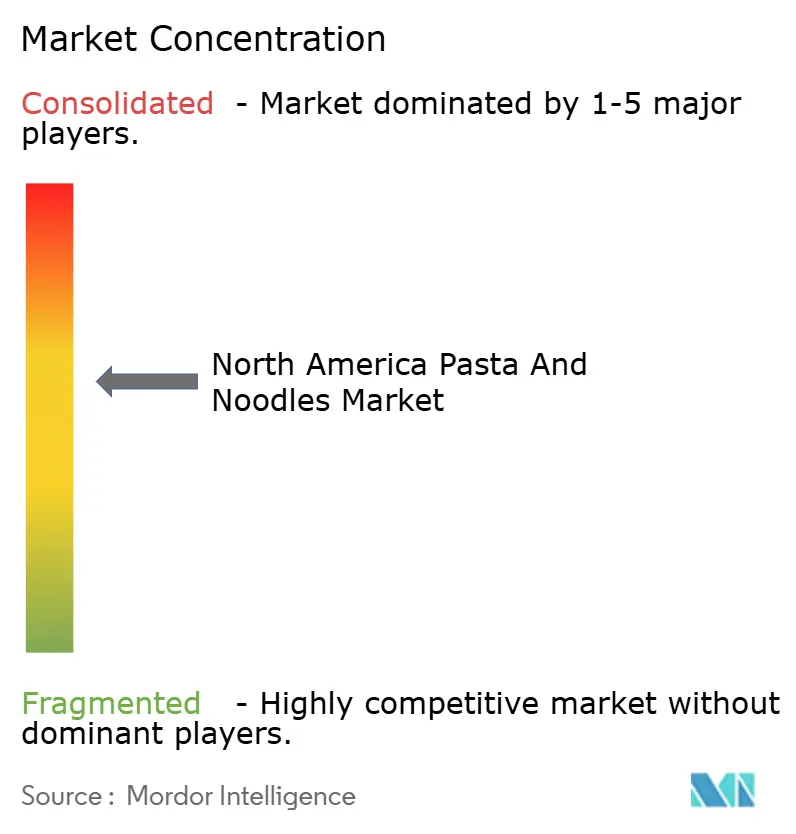
The North America pasta and noodles market is moderately concentrated, with major players like Barilla Holding SpA, Nestlé SA and Campbell Soup Company competing against emerging brands such as Banza and Jovial Foods. Large multinational companies maintain a competitive edge through cost advantages, vertical integration, and extensive brand portfolios. On the other hand, smaller specialty brands are gaining traction by offering unique products made from chickpea or lentil flour, promoting clean-label claims, and utilizing direct-to-consumer sales models. These strategies allow smaller players to build loyal customer bases within specific niches of the market.
Investments in technology are playing a significant role in shaping the market. For instance, Barilla has adopted AI-based optical sorting technology to detect surface defects, reducing waste and enhancing its premium product image. In late 2024, Winland Foods acquired Philadelphia Macaroni Company for USD 495 million, expanding its production capacity on the East Coast and strengthening its relationships with restaurant suppliers. Similarly, Colavita’s acquisition of Vitelli Foods in 2025 helped the company reinforce its authentic Italian-origin branding while increasing its distribution reach in the Northeast region.
Innovation in the market is focused on addressing emerging consumer needs and sustainability trends. Companies are exploring protein-fortified pasta bowls designed for Glucagon Like Peptide (GLP-1) medication users, developing packaging made from recycled materials, and implementing blockchain technology to ensure traceability of durum wheat. These advancements highlight the dynamic nature of competition in the North America pasta and noodles market, as companies strive to meet evolving consumer preferences and differentiate themselves in a crowded marketplace.
North America Pasta And Noodles Industry Leaders
-
Nissin Foods Holdings Co., Ltd.
-
Barilla Holding SpA
-
Ebro Foods SA
-
Campbell Soup Company
-
Nestlé SA
- *Disclaimer: Major Players sorted in no particular order
Market Opportunities and Future Outlook
Convenience and premiumization are creating headroom for brands that link pasta and noodles with adjacent meal-solution offerings, particularly sauces and ready formats designed for faster weekday cooking. A clear example appeared in May 2026, when The Campbell's Company completed the acquisition of a 49% interest in La Regina (Rao's Homemade pasta sauces). The move increases coupling between pasta occasions and sauce-led meal solutions, and it reinforces how tighter category control can support shelf presence and basket-building across retail channels.
Product architecture and channel strategy also point to opportunities in specialty ingredients and substantiated claims. Companies are expanding gluten-free and organic assortments to address texture, taste, and clean-label expectations at scale. Banza added a gluten-free pasta line in August 2025 using a brown rice and chickpea blend to improve eating quality, and Barilla expanded into certified organic premium pasta in 2026 under its Al Bronzo line. With online retail growing as a route to broader SKU access and direct-to-consumer trial, brands that can align with compliant labeling requirements under US FDA standards and Canadian egg-noodle composition rules, while differentiating through ingredient innovation, convenience packaging (cups/bowls), and premium cues, have clearer pathways to incremental distribution and repeat purchase.
Recent Industry Developments
- June 2026: Nissin Foods launched limited-edition Cup Noodles Kansas City BBQ and Cup Noodles Texas BBQ, available exclusively at Walmart starting June 9, 2026. The launch targets the North America grocery and retail channel. It adds premium and regionally tailored choices aimed at driving category growth and improving shelf differentiation in the US market.
- May 2026: Barilla America announced a 145 million dollar, two-phase expansion of its manufacturing facility in Avon, New York, including a new building and multiple production and packaging lines (phase one by 2028). The expansion strengthens manufacturing capacity in North America. It supports supply chain resilience and extends Barilla's long-term pasta production footprint in the region.
- May 2026: Barilla America launched certified organic Al Bronzo pasta with Radiatori shape, rolling out to retailers in June 2026. The product line expansion targets organic and premium segments in North America. It supports ongoing health-conscious and premiumization trends while reinforcing Barilla's organic positioning in the region.
Research Methodology Framework and Report Scope
Market Definition and Coverage
For this study, the market covers the value generated from retail and foodservice sales of pasta and noodles across North America, counted as finished products sold to end buyers in the region.
Scope exclusions: It does not count upstream farming or milling value, equipment sales, or unrelated prepared meals where pasta or noodles are only a minor ingredient.
Segmentation Overview
- By Product Type
- Dried
- Instant
- Canned and Frozen
- By Ingredient
- Rice
- Corn
- Millet
- Wheat
- Other Ingredients
- By Nature
- Conventional
- Organic
- By Packaging Type
- Packets/Bags
- Cups/Bowls
- Boxes
- By Distribution Channel
- Supermarkets/Hypermarkets
- Convenience Stores
- Online Retail Stores
- Other Channels
- By Country
- United States
- Canada
- Mexico
- Rest of North America
Data Sources, Market Sizing, and Validation
Desk Research
Desk research began by setting clear boundaries for what is counted as pasta and noodles in North America, and then aligning those boundaries with how trade and consumption are reported publicly. For that, we referred to official and open sources such as the USDA and Economic Research Service, the US Census Bureau and its trade releases, Statistics Canada, and Mexico's national statistics institute, followed by customs and tariff classification notes where needed.
To keep assumptions realistic, we also used company annual reports, investor presentations, and reputable press coverage to understand product mix shifts, channel importance, and pricing direction. Patent databases were checked to sense product and packaging innovation activity (for example, shelf-stable formats and portion packs) that can affect volumes over time. The desk sources listed above are illustrative only, and additional references were used to collect data, validate inputs, and clarify gaps.
Primary Interviews and Surveys
Primary work focused on interviews and structured surveys with manufacturers, ingredient and packaging participants, distributors, and retail and foodservice side stakeholders across the United States, Canada, and Mexico. The input helped confirm how demand differs by channel and price tier, and it supported adjustment of assumptions when public data was delayed or reported at a broader food category level.
Distribution of primary research fieldwork respondents
| Company type | Respondent position |
|---|---|
| Top tier: 39% | CXOs: 18% |
| Mid tier: 43% | Functional/Unit leaders: 24% |
| Smaller Players: 18% | Managers: 58% |
Market-Sizing & Forecasting
The core model used a top-down approach, where food consumption and retail sales signals were translated into a pasta and noodles demand pool for North America, then normalized to match product categories and the channel split. We then corroborated the totals using selective bottom-up checks, such as sampled brand and private label price points, channel checks with distributors, and a limited roll-up of supplier and retailer signals to keep the result practical.
Key inputs used in the model included household penetration and at-home eating indicators, foodservice traffic recovery patterns, wheat and durum cost direction, observed price per unit movement by pack type, and the mix shift between classic pasta, instant noodles, and better-for-you variants. Where a variable was not available consistently by country or channel, we used proxy series and then applied interview-based adjustment factors, which were reviewed for reasonableness before finalizing.
Forecasting used scenario analysis supported by multivariate regression on a small set of drivers, mainly pricing and consumption indicators. Assumptions were refreshed based on what industry experts shared about promotions, private label momentum, and expected cost pass-through. This keeps the forecast explainable in a client discussion, while still tied to variables that can be checked and updated.
Data Validation & Update Cycle
Validation used stepwise triangulation, where model outputs were compared against independent signals like trade direction, category growth cues in public statistics, and channel feedback from interviews. If a country or channel result moved too far from the expected range, driver assumptions were revisited, and respondents were re-contacted when a discrepancy could not be explained by seasonality or a known price shock.
Before sign-off, the model and write-up go through multiple analyst reviews to check math consistency, unit alignment, and currency timing consistency across North America. Reports are refreshed annually, with interim updates when material events occur, such as sudden commodity price changes or major labeling and trade developments. Right before delivery, a final pass is run to ensure the latest public releases and validated assumptions are reflected.
Mordor Intelligence's North America Pasta and Noodles Market Estimate Compared With Other Published Estimates
Published estimates for pasta and noodles in North America can vary because each study draws the line differently between product types, channels, and the point in the value chain that gets counted. Differences also come from how pricing is handled during inflationary periods, and from whether the base year aligns to the same calendar timing and currency treatment.
By tracking category-level price per unit changes and refreshing channel mix inputs using interviews, Mordor Intelligence keeps the 2025 value tied to finished pasta and noodles sold in North America rather than being inflated by adjacent ready-meal categories or broader staples groupings.
Benchmark comparison
| Source | Market Size | Gaps in Research Methodology |
|---|---|---|
| Mordor Intelligence | USD 7.80 B (2025) | |
| Industry Association A | USD 8.60 B (2025) | Often reported from a broader packaged staples lens, which can include certain shelf-stable meal kits or mixed prepared foods, and may apply blended pricing without separating retail versus foodservice mix shifts. |
| Trade Journal B | USD 6.90 B (2025) | Commonly derived from a narrower retail-only tracking approach, which can undercount foodservice and selected cross-border volumes, and may use older price points that lag rapid promotional and inflation cycles. |
The spread in values mainly comes from what is included beside core pasta and noodles, and how quickly pricing and channel shifts are updated in the base year. Our approach stays repeatable because each adjustment is linked to a clear demand indicator, a defined scope boundary, and a check against real market behaviors in the region.
Key Questions Answered in the Report
How large is the North America pasta and noodles market in 2026?
The North America pasta and noodles market size is USD 8.12 billion in 2026, with a projected value of USD 9.9 billion by 2031.
Which product segment expands the fastest through 2031?
Canned and frozen alternatives post the strongest growth at a 6.55% CAGR because they deliver heat-and-eat convenience.
Why are legume-based noodles gaining popularity?
Chickpea, lentil, and pea flours supply extra protein and align with plant-based diets, making them attractive to health-conscious buyers.
What drives online pasta sales in North America?
Direct-to-consumer bundles, meal-kit subscriptions, and wider SKU availability fuel a 6.42% CAGR for online retail channels.