
Non-invasive Aesthetic Treatment Market Size and Share
Market Overview
| Study Period | 2020 - 2031 |
|---|---|
| Market Size (2026) | USD 44.65 Billion |
| Market Size (2031) | USD 67.29 Billion |
| Growth Rate (2026 - 2031) | 8.55 % |
| Fastest Growing Market | Asia-Pacific |
| Largest Market | North America |
| Market Concentration | Medium |
Major Players *Disclaimer: Major Players sorted in no particular order Image © Mordor Intelligence. Reuse requires attribution under CC BY 4.0. | |
Non-invasive Aesthetic Treatment Market Analysis by Mordor Intelligence
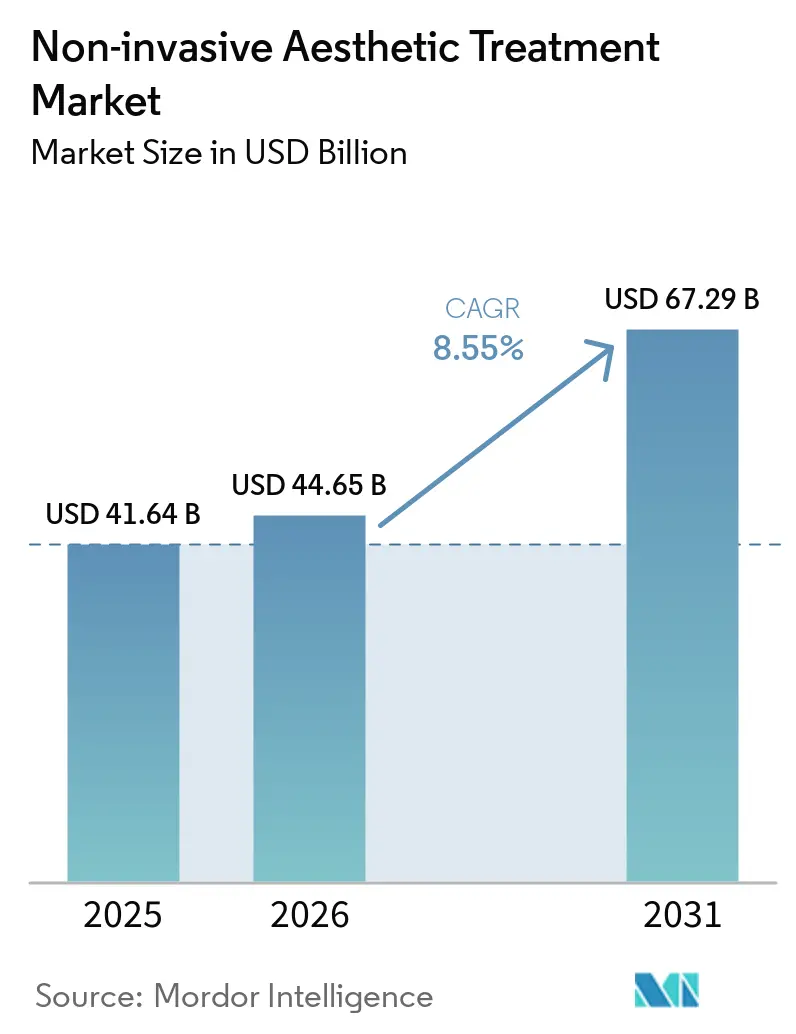
The Non-invasive Aesthetic Treatment Market size is projected to expand from USD 41.64 billion in 2025 and USD 44.65 billion in 2026 to USD 67.29 billion by 2031, registering a CAGR of 8.55% between 2026 and 2031.
Consumer preference is tilting toward procedures that deliver surgical-level outcomes without incisions or downtime, and this structural change has accelerated as post-pandemic elective volumes normalize. Subscription-based med-spa programs are turning episodic visits into recurring revenue, supporting higher clinic utilization and stronger cash flow. AI-enabled facial-mapping engines now individualize energy and injectable protocols, raising patient satisfaction and shrinking revision rates.[1] The emergence of semaglutide-driven weight loss has opened an unexpected corridor for body-contouring devices that tighten lax skin after dramatic fat loss. Competitive pressure remains intense as incumbents defend neurotoxin and filler franchises while energy-platform innovators differentiate through multimodal clearances and faster treatment cycles.
Key Report Takeaways
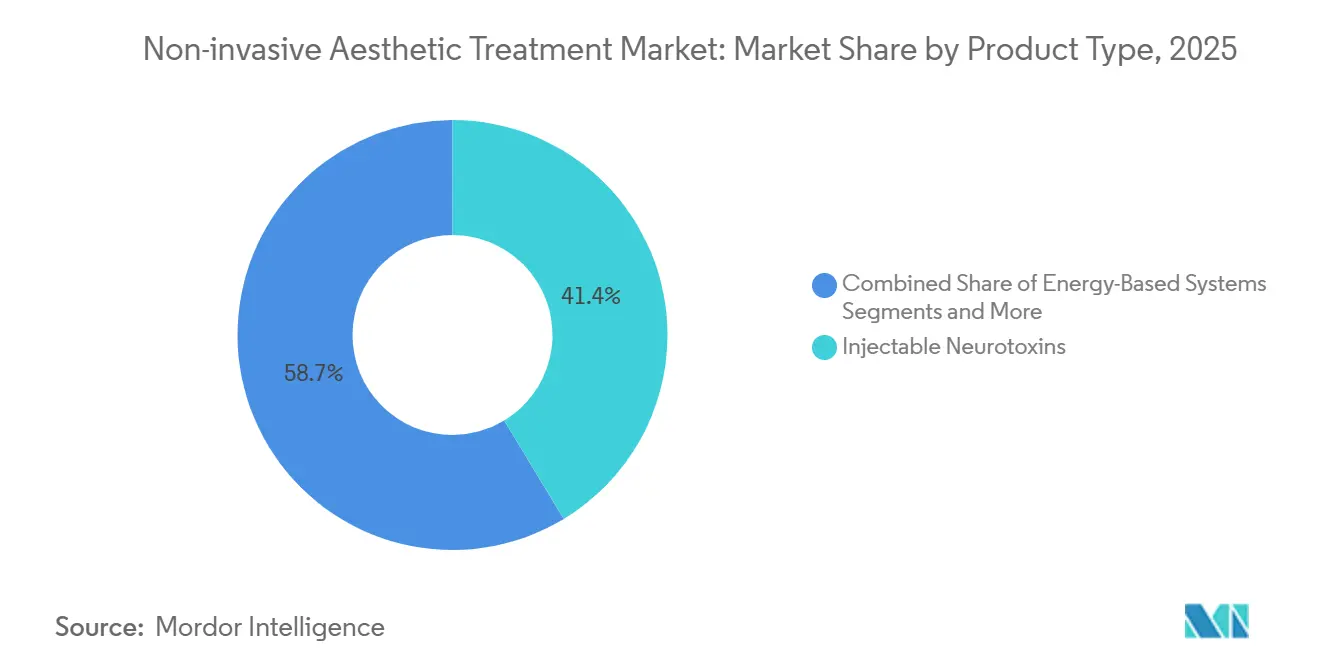
- Injectable neurotoxins led with 41.35% of the non-invasive aesthetic treatment market share in 2025, while energy-based systems are forecast to post the fastest 12.56% CAGR through 2031.
- Dermatology and plastic-surgery clinics captured 44.23% of end-user revenue in 2025, yet medical spas are projected to expand at an 11.57% CAGR to 2031.
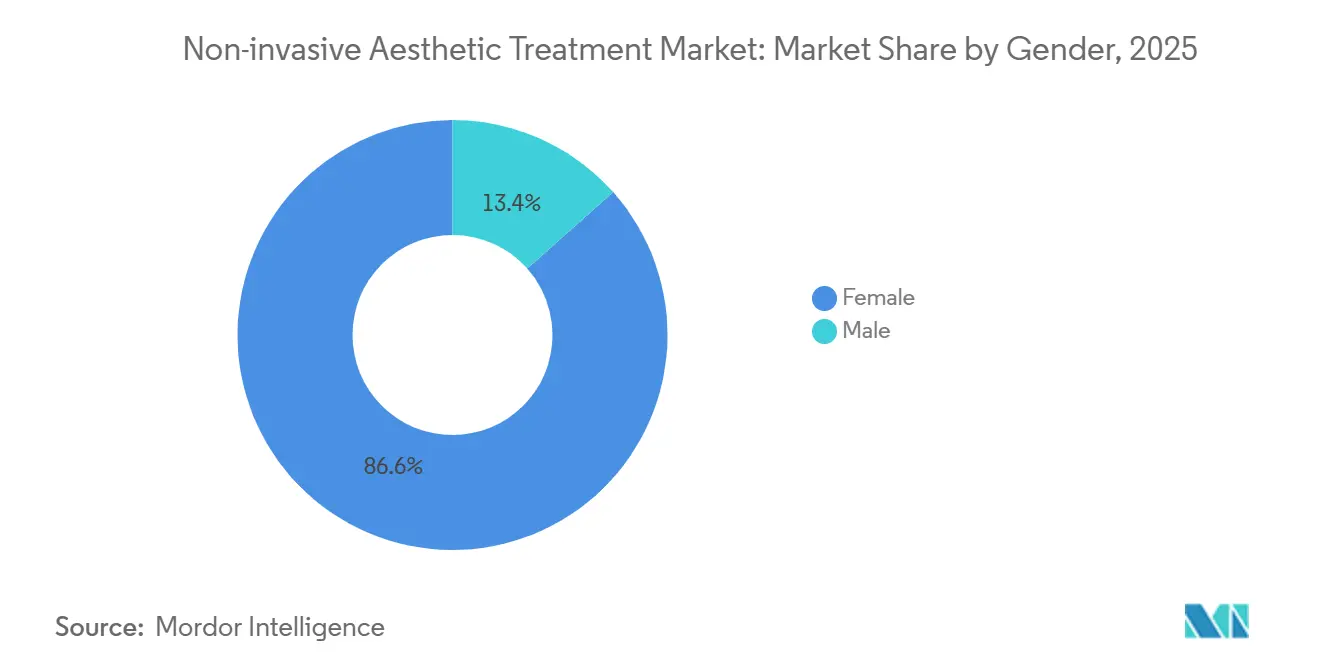
- Female patients accounted for 86.57% of global procedures in 2025, whereas male volumes are projected to climb at a 9.78% CAGR through 2031.
- The 40-54 age cohort represented 42.56% of procedure volume in 2025, while the 13-39 group is set to rise at a 10.47% CAGR between 2026-2031.
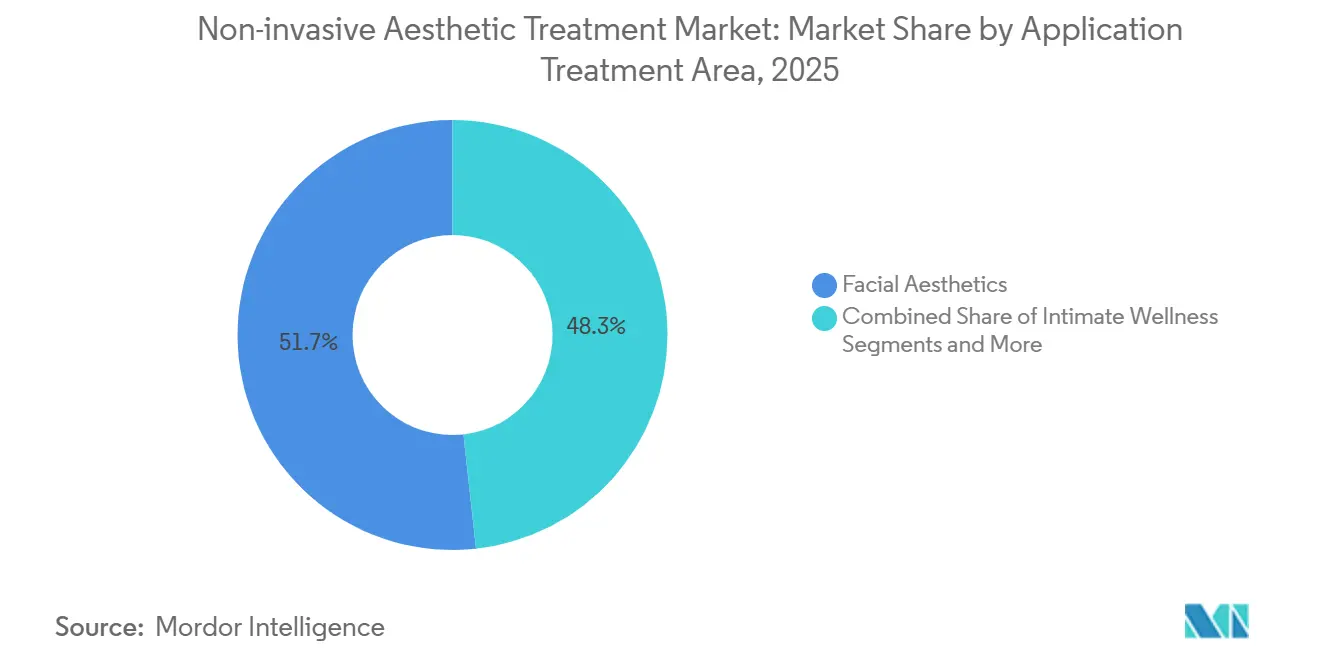
- Facial aesthetics held 51.75% of application revenue in 2025, but body-contouring procedures are forecast to register an 11.23% CAGR through 2031.
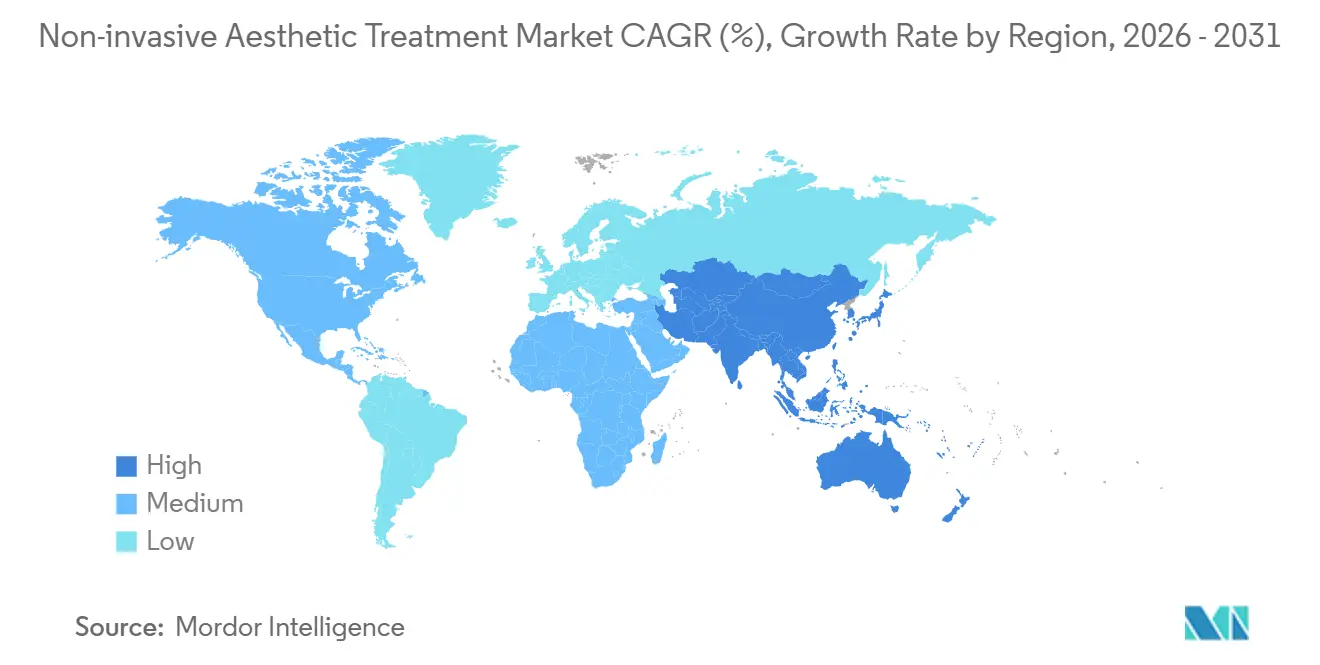
- North America retained 36.38% of global revenue in 2025, whereas Asia-Pacific is expected to lead regional growth at a 10.45% CAGR through 2031.
Note: Market size and forecast figures in this report are generated using Mordor Intelligence’s proprietary estimation framework, updated with the latest available data and insights as of January 2026.
Market Trends and Insights
Drivers Impact Analysis of Non-invasive Aesthetic Treatment Market*
| Driver | (~) % Impact on CAGR Forecast | Geographic Relevance | Impact Timeline |
|---|---|---|---|
| Surging procedure volumes of neuromodulators & HA fillers post-pandemic | 1.8% | Global, strongest in North America & Europe | Short term (≤ 2 years) |
| Continuous device innovation in multi-modal energy platforms | 2.1% | Global, early adoption in North America & APAC | Medium term (2-4 years) |
| Rising disposable income & beauty consciousness in emerging APAC | 1.5% | APAC core (China, India, South Korea), spill-over to Southeast Asia | Long term (≥ 4 years) |
| AI-driven facial mapping enabling hyper-personalised protocols | 1.0% | North America & Europe, gradual APAC uptake | Medium term (2-4 years) |
| Subscription-based med-spa programmes boosting repeat utilisation | 1.2% | North America, expanding to Europe & APAC urban centers | Short term (≤ 2 years) |
| Post-semaglutide body-contouring demand spike | 0.9% | North America & Europe, emerging in APAC affluent segments | Short term (≤ 2 years) |
| Source: Mordor Intelligence | |||
Surging Procedure Volumes of Neuromodulators & HA Fillers Post-Pandemic
The rebound of elective aesthetics after pandemic shutdowns has driven neuromodulator and hyaluronic acid (HA) filler sessions to record levels, evidenced by AbbVie’s Allergan Aesthetics unit booking USD 1.1 billion in Q3 2024 revenue, an 8.6% year-over-year increase.[2] This upswing is more than pent-up demand; remote work keeps faces on camera, prompting patients to pursue wrinkle prevention earlier in life. According to the International Society of Aesthetic Plastic Surgery (ISAPS) 2024 global survey, the number of hyaluronic acid procedures reached 6,338,184, marking a 5.2% rise from 2023 figures worldwide.[3] Concurrently, new cross-linking chemistries in HA fillers increase persistence and reduce post-injection inflammation, and dual-product protocols—utilizing neurotoxin for dynamic lines and filler for volume loss—are now routine in high-volume practices. The U.S. Food and Drug Administration has heightened surveillance of counterfeit injectables, issuing multiple warning letters in 2024 to unlicensed distributors, a move that safeguards patient safety and maintains clinician confidence.
Continuous Device Innovation In Multi-Modal Energy Platforms
Manufacturers are migrating from single-purpose lasers to systems that blend radiofrequency, ultrasound, and electromagnetic muscle stimulation in one handpiece. InMode’s Morpheus8 gained 2024 clearance for RF microneedling plus body-contouring modules, letting practitioners tighten skin and debulk fat in the same appointment. BTL’s EmSculpt Neo fuses RF heating with high-intensity focused electromagnetic pulses to cut fat and build muscle simultaneously, expanding cleared indications to abdomen, buttocks, and thighs. These platforms command premium pricing yet shorten chair time, improving clinic throughput and revenue per hour. Single-modality lasers now face commoditization risk unless vendors add software planning tools or flexible financing for smaller sites.
Rising Disposable Income And Beauty Consciousness In Emerging Asia-Pacific
The non-invasive aesthetic treatment market is set for double-digit expansion in Asia-Pacific as rising wages intersect with cultural acceptance of cosmetic upgrades. China and South Korea cleared multiple RF and ultrasound devices in 2024, showing regulatory alignment with global norms. Tier-2 Chinese cities now host more trained injectors, broadening access beyond Beijing and Shanghai, though clinician scarcity still caps volumes. India combines a swelling middle class with a surge of dermatology graduates, creating strong entry-level demand for injectables even as price sensitivity hampers premium device uptake. Japan’s aging population favors non-ablative lasers and collagen-stimulating fillers that yield subtle yet cumulative improvement.
AI-Driven Facial Mapping Enabling Personalized Protocols
Three-dimensional imaging is evolving into treatment-planning software that predicts post-procedure outcomes and guides injection depth, laser energy, and sequence order. North American surgeons using AI-guided systems report higher conversion rates for multi-session packages and fewer touch-ups. Cloud delivery models are lowering capital barriers for medical spas, yet integration complexity slows adoption. Regulatory frameworks still lag; if adverse events arise from algorithmic guidance, the FDA may impose software-as-a-medical-device audits.
Restraints Impact Analysis of Non-invasive Aesthetic Treatment Market*
| Restraint | (~) % Impact on CAGR Forecast | Geographic Relevance | Impact Timeline |
|---|---|---|---|
| High device & treatment costs limit access | -1.3% | Global, most acute in emerging APAC & South America | Long term (≥ 4 years) |
| Stringent, patchwork regulations delay launches | -0.9% | Global, particularly Europe (MDR) & China (NMPA) | Medium term (2-4 years) |
| Counterfeit injectables eroding clinician & patient trust | -0.7% | Global, concentrated in unregulated med-spa chains | Short term (≤ 2 years) |
| Shortage of trained practitioners outside tier-1 cities | -0.8% | APAC, Middle East & Africa, South America tier-2/3 cities | Long term (≥ 4 years) |
| Source: Mordor Intelligence | |||
High Device And Treatment Costs Limit Access
Premium energy platforms cost USD 100,000-300,000, putting them beyond reach for many independent clinics in emerging economies. Session fees of USD 500-1,500 restrict demand to high-income groups where household income exceeds USD 20,000. Leasing models ease some burden yet remain hindered by credit constraints. Manufacturers are releasing entry-level devices with fewer modes to gain volume, even at lower margins. Injectable pricing is comparatively manageable, but gray-market supply cuts margins and threatens R&D investment.
Stringent, Patch-Work Regulations Delay Launches
Europe’s Medical Device Regulation imposes extensive post-market evidence, slowing novel device approvals and favoring incumbents with strong regulatory arms. The FDA’s 510(k) route remains quicker for predicate devices, but De Novo submissions for novel energy mechanisms still stretch timelines. China’s NMPA has quickened approvals, yet foreign manufacturers endure multi-year documentation drills. Fragmentation burdens smaller innovators and raises development costs.
*Our forecasts treat driver/restraint impacts as directional, not additive. The impact forecasts reflect baseline growth, mix effects, and variable interactions.
Non-invasive Aesthetic Treatment Market Segment Analysis
By Product Type:
Biostimulators Challenge HA Filler DominanceInjectable neurotoxins commanded 41.35% of the non-invasive aesthetic treatment market share in 2025, underscoring entrenched brand equity for formulations such as Botox and Xeomin. Energy-based platforms, however, will post a 12.56% CAGR through 2031, the fastest among all categories, as bundled radiofrequency and ultrasound heads help clinicians address skin laxity and adipose reduction in a single visit. Hyaluronic acid fillers remain the revenue anchor because of reversibility and safety, yet polycaprolactone and poly-L-lactic acid products offer up to 24-month persistence, drawing share from HA. Galderma’s Sculptra and Merz’s Radiesse are marketed as collagen stimulators for post-weight-loss skin quality, resonating with GLP-1 patients. Laser and intense pulsed light units still dominate energy sales by installed base, but radiofrequency devices are closing fast as consumers seek non-ablative tightening without pigment risk. Electromagnetic muscle stimulators, epitomized by EmSculpt, created a fresh indication by building muscle mass and trimming overlying fat. Cryolipolysis growth is moderating as pharmaceutical weight loss shrinks treatable fat pockets, pushing vendors toward adjunctive skin-tightening features.
Energy vendors now bundle software subscriptions that unlock new protocols over Wi-Fi, turning hardware sales into recurring revenue streams. Consumable microneedle tips and single-use RF cartridges create razor-razor-blade economics, cushioning the margin impact of hardware price erosion. The non-invasive aesthetic treatment market size for energy platforms is projected to climb steadily as Asian clinics adopt multimodal towers to maximize floor space and procedure range. Competition will heighten when Chinese device makers scale exports after clearing U.S. and EU audits. Intellectual-property litigation is expected to rise, especially around proprietary pulse algorithms that claim superior tissue selectivity.

By End User:
Med-Spas Capture Share From Traditional ClinicsBoard-certified dermatology and plastic-surgery clinics held 44.23% of the non-invasive aesthetic treatment market size in 2025, leveraging hospital affiliations and complex case-handling capability. Yet medical spas are expanding at an 11.57% CAGR to 2031 by offering lounge-style environments and subscription pricing that spreads costs over twelve months. Relaxed U.S. state supervision rules permit nurse practitioners to inject under physician oversight, widening labor supply and lowering wage expenses. Hospitals and ambulatory centers sit at the low end of share because higher facility fees deter price-sensitive clients, although they attract post-bariatric body-contouring cases requiring anesthesia and multidisciplinary care.
Traditional clinics are fighting back by adopting luxury interiors, online scheduling, and membership programs to retain patients who might defect to spas. Some med-spas, in turn, recruit board-certified dermatologists to boost credibility and qualify for advanced procedure insurance. The competitive line is blurring as each model borrows elements from the other, yet pricing gaps persist: average neurotoxin vial costs USD 10-12 per unit in spas versus USD 14-16 in physician-owned clinics. The non-invasive aesthetic treatment market will likely stabilize with a hybrid model where core medical acts remain physician-led while high-volume maintenance treatments sit in spa settings.
By Gender:
Male Aesthetics Destigmatizes RapidlyWomen represented 86.57% of global procedure counts in 2025, reflecting decades of targeted marketing and social acceptance. Male demand, though from a lower baseline, is rising at a 9.78% CAGR on the back of workplace competition and influencer-led normalization. Neurotoxin remains the gateway for men, focusing on forehead lines and masseter slimming without altering masculine facial contours. Fillers for jawline definition and tear-trough correction are gaining ground as product viscosity improves. Laser hair removal and RF skin tightening also resonate with male patients seeking minimal downtime.
Regional nuances matter: South Korea leads male penetration, while Middle Eastern markets are early in the adoption curve. Device makers now print male-specific protocols that adjust needle depth and energy fluence for thicker skin. Marketing materials emphasize discreet, natural outcomes to avoid the stigma of overt cosmetic intervention. The non-invasive aesthetic treatment market sees an opportunity in preventive regimens for men aged 25-40, aiming to lock in lifelong revenue before deeper rhytids form.
By Age Group:
Preventive Treatments Drive Youth SegmentThe 40-54 cohort generated 42.56% of 2025 procedure volume, targeting established photoaging, volume loss, and laxity. However, the 13-39 group is on track for the fastest CAGR at 10.47%, driven by preventive neurotoxin micro-dosing nicknamed “Baby Botox”. Social platforms amplify before-and-after visuals, encouraging early adoption. This younger audience values affordability, squeezes appointments between work and travel, and gravitates toward non-ablative lasers and light chemical peels. Practices lure them with loyalty apps and influencer referrals, banking on upsell potential as they age into higher-value filler and energy treatments.
The 55-69 segment remains steady, favoring combination packages that mix neuromodulators, fillers, and resurfacing for comprehensive rejuvenation. Patients over 70 represent a niche due to comorbidities and lower aesthetic prioritization, yet selective uptake occurs for minimally invasive treatments that improve quality of life without anesthesia risk. Regulators are focusing on informed consent for younger patients influenced by social media filters, ensuring realistic outcome expectations.
By Application:
Intimate Wellness Emerges As High-Growth NicheFacial aesthetics absorbed 51.75% of revenue in 2025, anchored by the dominance of neuromodulators and fillers. Body-contouring procedures will climb at an 11.23% CAGR as post-semaglutide patients seek skin tightening, and electromagnetic muscle stimulation adds sculpture to leaner frames. Skin-rejuvenation treatments—pigment, texture, vascular—benefit from versatile laser and IPL platforms, though topical growth-factor serums add competition at lower price points.
Hair and scalp therapies such as platelet-rich plasma injections are niche but expanding, propelled by destigmatization of male and female hair loss. Intimate wellness—RF or laser vaginal rejuvenation, penile aesthetic fillers—is the fastest-growing segment, catalyzed by new FDA clearances and broader cultural discourse around sexual health. Clinics market these services to postpartum and menopausal women as well as men seeking non-surgical enhancement. Regulatory vigilance over efficacy claims is tightening, yet first movers enjoy limited competition and attractive pricing.
Geography Analysis
North America Non-invasive Aesthetic Treatment Market
North America generated 36.38% of global revenue in 2025 and remains the highest per-capita spender on aesthetic services. A dense network of trained practitioners and access to flexible patient financing enable rapid uptake of new technologies. GLP-1 prescriptions are fueling a surge in post-weight-loss body-contouring referrals, bringing endocrinology and primary-care physicians into the aesthetic funnel. Med-spa subscription models thrive in cities such as New York and Los Angeles, where patient acquisition costs are steep and consumers accept membership billing. Regulatory oversight is favorable but increasingly targets unlicensed operators selling counterfeit injectables.
Europe Non-invasive Aesthetic Treatment Market
Europe maintains a mature installed base of laser and RF devices, yet the Medical Device Regulation has lengthened approval pathways, giving incumbents a compliance advantage. Germany, France, and the United Kingdom lead procedure volumes, while Italy and Spain post robust filler demand due to cultural emphasis on facial aesthetics. Eastern Europe is emerging, aided by rising household incomes and cross-border practitioner training, although price sensitivity remains high. The strategic challenge is balancing patient-safety rigor with innovation speed so that Europe does not cede technology leadership to Asia or the United States.
APAC, MEA and South America Non-invasive Aesthetic Treatment Market
Asia-Pacific will deliver the fastest regional CAGR of 10.45% through 2031, propelled by expanding middle classes in China, India, and Southeast Asia alongside regulatory harmonization that speeds device clearance. South Korea continues to top global procedure density, bolstered by government-supported medical-tourism programs. China’s National Medical Products Administration issued multiple RF and ultrasound approvals in 2024, signaling an openness that should shorten market entry for foreign brands. India’s tier-2 cities form the next frontier, though practitioner shortages and price sensitivity temper high-end device adoption. Japan sees steady demand for non-ablative lasers among an aging population seeking subtle rejuvenation. Australia rounds out the developed cohort with strict regulatory standards and high uptake of body-contouring technologies. The Middle East and Africa are nascent but benefit from Dubai’s push to become the Beverly Hills of the Gulf, attracting international surgeons and investment. South America, led by Brazil and Argentina, rides cultural acceptance of cosmetic enhancement yet remains vulnerable to currency swings.
Regulatory Landscape
Non-invasive aesthetic treatments cut across medical devices, drugs, biologics, and combination products, which leads to a patchwork of premarket and post-market requirements. In the United States, the FDA oversees combination products through the Office of Combination Products under 21 CFR 3.2, and many aesthetic energy devices are regulated as Class II devices via the 510(k) pathway (for example, radiofrequency coagulation devices under product code PAY and focused ultrasound stimulators under product code OHV).
In Europe, Regulation (EU) 2017/745 (MDR) extends to certain non-medical aesthetic products via Annex XVI, which subjects devices such as lasers for hair/tattoo removal and lipolysis equipment to medical-device style conformity assessment and clinical evidence expectations. Annex XVI transitional provisions keep key deadlines in place, including through December 31, 2027 for higher-risk categories and December 31, 2028 for lower-risk categories when specified conditions are met. That structure raises the importance of timely Notified Body capacity and contracting. In February 2026, the FDA Quality Management System Regulation (QMSR) became effective, aligning device quality requirements more closely with ISO 13485:2016 and raising the compliance bar for manufacturers supporting global aesthetic device portfolios.
Value Chain Analysis
The value chain runs from upstream materials and specialized inputs (pharmaceutical-grade actives and excipients for neurotoxins and fillers; polymers, needles, sterile packaging, and RF/laser components for energy systems) through formulation and device manufacturing under regulated quality systems, and then into global distribution for clinics and medical spas. Brand owners with large injectable franchises (such as AbbVie/Allergan Aesthetics, Galderma, and Merz) and energy-platform specialists (such as Cutera, BTL Industries, and Hologic/Solta Medical) typically combine in-house R&D and regulatory functions with outsourced elements, including component supply and contract manufacturing for select subassemblies and consumables.
Regulatory and quality compliance acts as a gating step across the chain: the FDA primary mode of action framework for combination products and the EU MDR requirements for integral combinations (including Notified Body involvement) can extend design-to-launch timelines and influence make-vs-buy decisions. The February 2026 QMSR shift increases the need for harmonized documentation and supplier controls, while EU MDR and Annex XVI conformity expectations expand downstream requirements for clinical evidence, labeling, and post-market surveillance. On the commercial side, the chain also depends on clinical training and protocol standardization, including AI-enabled treatment planning and subscription-style med-spa utilization models that sustain repeat consumable demand (for example, single-use tips and cartridges for microneedling RF platforms).
Competitive Landscape
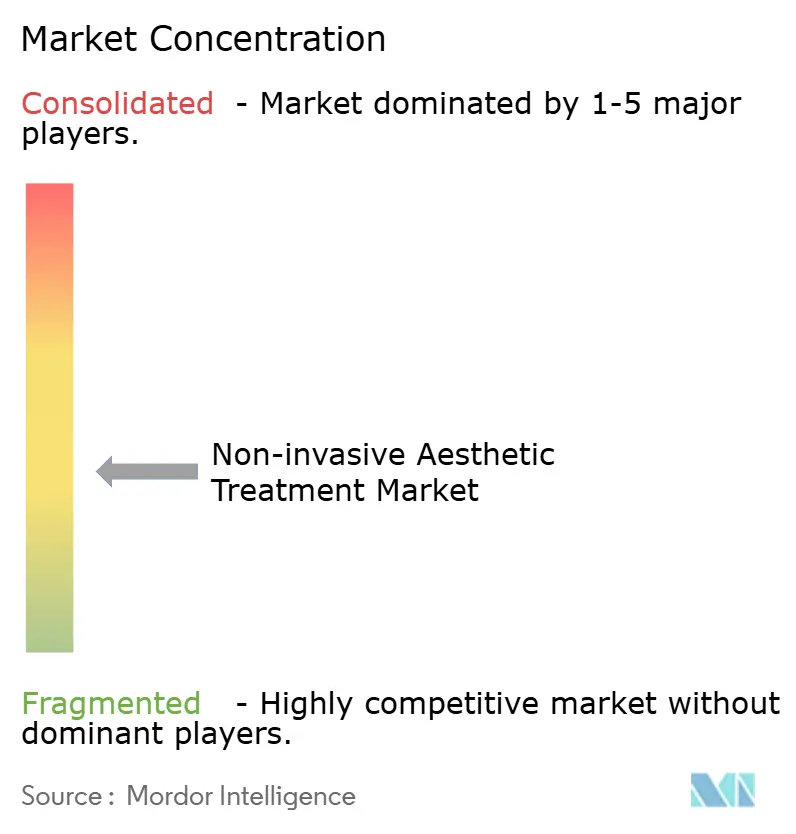
Market concentration is moderate. AbbVie, Galderma, and Merz collectively dominate injectables through well-established neurotoxin and filler portfolios and extensive KOL engagement. AbbVie’s Allergan Aesthetics booked USD 1.1 billion in Q3 2024, reflecting steady Botox demand despite biosimilar entries. Galderma’s USD 2.6 billion IPO in 2024 equips it with fresh capital for biostimulator R&D and tuck-in acquisitions. Merz focuses on Xeomin’s purity positioning to guard against neutralizing antibodies.
Energy-device specialists—InMode, BTL Industries, Candela, Cutera—compete by layering new applicators and software updates onto installed towers, defending margins as hardware ASPs slide. InMode secured 2024 clearances for Morpheus8 microneedle RF and new body-contouring modules, illustrating iterative innovation that extends platform life. BTL’s EmSculpt Neo differentiates with combined RF and electromagnetic pulses, delivering muscle hypertrophy metrics that appeal to fitness-oriented demographics.
Disruptors include Korean toxin producers Hugel and Daewoong, which leverage cost advantages and local K-beauty clout to seize Asia-Pacific share. Subscription med-spa chains are consolidating fragmented practices, unlocking bulk buying power and unified training programs but also drawing regulatory scrutiny over supervision standards. Intellectual-property disputes are rising around RF pulse shapes and cooling algorithms. Counterfeit injectables remain a systemic threat, prompting brands to pilot blockchain traceability and QR-based authentication that clinics and patients can verify via smartphone.
Non-invasive Aesthetic Treatment Industry Leaders
-
AbbVie
-
Galderma SA
-
Merz Aesthetics
-
Hologic
-
Candela Medical
- *Disclaimer: Major Players sorted in no particular order
Non-invasive Aesthetic Treatment Market Companies Covered in this Report
- Abbvie
- Alma Lasers
- Bausch Health (Solta Medical)
- BTL
- Candela Medical
- Cutera
- Daewoong Pharma
- Galderma
- Hologic (Cynosure)
- Hugel Inc.
- InMode Ltd.
- Ipsen
- Lumenis
- Merz Pharma
- Revance Therapeutics
- Sciton
- Sinclair Pharma
- Teoxane SA
- Venus Concept
Market Opportunities and Future Outlook
Portfolio expansion through new indications and improved delivery formats is a key whitespace lever, particularly where repeatable maintenance regimens lift utilization per patient. Recent regulatory and commercial actions reflect this direction: in June 2026, the U.S. FDA approved SKINVIVE by JUVEDERM for improvement of neck appearance, and in March 2026, the U.S. FDA approved Restylane Contour for correction of temple hollowing. In parallel, ergonomic and workflow improvements are being packaged into newer syringe formats. February 2026 regulatory approvals in the EU, the U.S., and Canada for Galderma's next-generation Restylane syringe for the NASHA lidocaine range support clinic throughput and injector preference within established filler portfolios.
In energy-based systems, the most immediate opportunities center on dual-modality platforms and wider skin-type coverage, which reduce protocol complexity and broaden the treatable population. Several platform moves in 2026 reinforce this focus: Lumenis commercially launched triLIFT 2.0 combining Dynamic Muscle Stimulation and RF-based collagen/elastin stimulation, Cynosure Lutronic launched the XERF monopolar RF skin-tightening platform across EMEA, and SkinHealth Systems secured FDA clearance for the SkinStylus microneedling device for periorbital wrinkles across all Fitzpatrick skin types. These launches, together with peer-reviewed evidence such as Candela's 2026 Scientific Reports publication on Nordlys 1940 nm non-ablative fractional laser effects on epigenetic aging markers, emphasize differentiation through efficacy, safety, and personalization rather than single-modality hardware commoditization.
Recent Industry Developments in Non-invasive Aesthetic Treatment Market
- July 2026: Allergan Aesthetics received European Commission approval for Boey (trenibotulinumtoxinE) for the temporary improvement of frown lines in adult patients. The rapid-onset, short-duration positioning broadens the neurotoxin menu in Europe and supports more tailored treatment intervals across high-volume injector practices.
- June 2026: Allergan Aesthetics received U.S. FDA approval for SKINVIVE by JUVEDERM for the improvement of neck appearance. The expanded indication strengthens cross-selling within established Juvederm portfolios and provides clinics an additional premium-use case beyond facial hydration and texture-focused applications.
- November 2025: Galderma gained U.S. FDA approval for Restylane Lyft with Lidocaine for chin augmentation in adults. This indication extension reinforces HA filler breadth in facial shaping workflows and helps providers keep multi-area treatment plans within a single supplier ecosystem.
Non-invasive Aesthetic Treatment Market Report Scope and Research Methodology
Market Definition and Coverage
We size the non-invasive aesthetic treatment market as revenue from office-based aesthetic procedures that improve appearance without surgical incisions, typically delivered by certified clinicians or licensed medical spa settings. The scope covers patient-facing services across major treatment modalities and geographies.
Scope exclusions: we exclude invasive cosmetic surgeries, over-the-counter beauty topicals, purely home-use devices, and services delivered through unlicensed outlets.
Segments Covered in This Report
- By Product Type
- Injectables – Neurotoxins
- Botulinum Toxin Type A
- Botulinum Toxin Type B
- Injectables – Dermal Fillers
- Hyaluronic Acid
- Calcium Hydroxylapatite
- Poly-L-Lactic Acid
- Collagen & PMMA Microspheres
- Polycaprolactone / Other Biostimulators
- Energy-Based Systems
- Laser / IPL Platforms
- Radiofrequency Devices
- Ultrasound / HIFU Platforms
- Cryolipolysis Systems
- Electro-Magnetic Muscle Stimulators
- Topical & Skin Booster Products
- Injectables – Neurotoxins
- By End User
- Dermatology & Plastic-Surgery Clinics
- Medical Spas
- Hospitals & Ambulatory Centers
- By Gender
- Female
- Male
- By Age Group
- 13 – 39 Years
- 40 – 54 Years
- 55 – 69 Years
- 70+ Years
- By Application / Treatment Area
- Facial Aesthetics
- Body Contouring & Fat Reduction
- Skin Rejuvenation / Pigment & Texture
- Hair & Scalp Treatments
- Intimate Wellness (Vaginal / Penile)
- By Geography
- North America
- United States
- Canada
- Mexico
- Europe
- Germany
- France
- United Kingdom
- Italy
- Spain
- Rest of Europe
- Asia-Pacific
- China
- Japan
- India
- South Korea
- Australia
- Rest of Asia-Pacific
- Middle East & Africa
- GCC
- South Africa
- Rest of Middle East & Africa
- South America
- Brazil
- Argentina
- Rest of South America
- North America
Data Sources, Market Sizing, and Validation
Desk Research
Desk research starts with mapping procedure categories and the care setting where revenue is actually booked, then linking those categories to public health and demographic signals. We commonly refer to sources such as the American Society of Plastic Surgeons, the International Society of Aesthetic Plastic Surgery, the US CDC, the World Bank, and peer-reviewed clinical and dermatology journals to understand procedure trends, age mix, and demand drivers.
To support the commercial side, we also review company filings, investor presentations, regulator and customs releases where relevant, and trusted press coverage of clinic expansion and device utilization patterns. For a few checks, we use paid subscriptions for company financials and intelligence, news and financials, and patent databases to validate technology adoption timing and product cycle shifts. These desk sources are illustrative only, since many other public and paid references are used for cross-checking and clarification during the study.
Primary Interviews and Surveys
Primary interviews and surveys are used to test assumptions that desk sources cannot settle cleanly, especially average selling price (ASP) per procedure, utilization per device, and how pricing differs by setting and country. We spoke with a mix of clinic operators, distributors, and industry experts across major regions so the model reflects real patient mix and typical purchasing behavior, and then key assumptions were rechecked when gaps or conflicts appeared in earlier inputs.
Distribution of primary research fieldwork respondents
| Company type | Respondent position | Region |
|---|---|---|
| Top tier: 31% | CXOs: 16% | APAC: 50% |
| Mid tier: 50% | Functional/Unit leaders: 37% | EMEA: 30% |
| Smaller Players: 19% | Managers: 47% | Americas: 20% |
Market-Sizing & Forecasting
Our sizing starts with a top-down build where procedure demand is reconstructed using population and age cohort patterns, penetration by treatment type, and expected visit frequency, then converted into value using region-specific ASPs. The totals are corroborated through selective bottom-up approximations, such as sampled provider revenue checks, channel feedback on device utilization, and sanity checks using ASP times estimated procedure volumes.
Inputs that materially move the model include procedure mix shifts across injectables and energy-based treatments, provider pricing and discounting behavior, device replacement cycles that affect capacity, consumer disposable income and urbanization signals, and the share of procedures performed in medical spa settings versus physician-led clinics. For forecasting, scenario analysis is used so growth stays realistic under different adoption and pricing paths, and the near-term trend line is tuned using expert views on how quickly ASPs normalize after inflation and how rapidly new indications translate into higher throughput. Where bottom-up checks are incomplete, gaps are handled through conservative ranges, followed by revisiting the assumption with additional interviews before final sign-off.
Data Validation & Update Cycle
We validate results by comparing modeled totals against independent demand signals like procedure counts, utilization ranges, and reported revenue direction from major parts of the value chain, then investigating variances that fall outside expected bands. Outliers are reviewed through a second analyst pass, followed by re-contacting sources when the gap is driven by pricing shifts, mix changes, or regional timing differences.
Reports are refreshed annually, and interim updates are triggered when material events occur, such as regulatory actions, major technology launches, or clear pricing resets in large markets. Before delivery, a final review is run so the published numbers reflect the latest available inputs and the same market boundary is applied consistently.
Mordor Intelligence's Non Invasive Aesthetic Treatment Market Size Measured Against Other Published Estimates
Published market values can differ even when the topic name looks identical, because firms may count different procedure bundles, use different currency conversion timing, and apply different ASP progression rules across regions. We also see differences when some studies use older inflation assumptions or do not recheck utilization and pricing once new procedure demand data becomes visible.
In this market, the biggest gaps usually come from whether injectables and energy-based procedures are treated as provider-revenue services or partly counted as device sales, and whether medical spa delivered procedures are fully included. A refresh-led approach also matters since exchange rates and regional ASP updates can shift the same procedure pool meaningfully, which is why the model is revalidated at each update cycle, a control applied by Mordor Intelligence.
Benchmark comparison
| Source | Market Size | Gaps in Research Methodology |
|---|---|---|
| Mordor Intelligence | USD 41.64 B (2025) | |
| Trade Journal A | USD 22.67 B (2025) | Uses a narrower service scope and tends to emphasize selected procedure categories, which can undercount medical spa delivered treatments and exclude some energy-based office procedures. |
| Data Platform B | USD 9.54 B (2025) | Appears to concentrate on a limited set of injectable and filler categories, which reduces the counted procedure pool and compresses ASP assumptions when compared with a full modality view. |
Across the three figures, the spread is best explained by scope boundaries and how pricing is updated, rather than by any single growth assumption. When procedure coverage, service setting inclusion, and currency timing are made explicit and then checked against utilization and pricing feedback, the resulting total becomes easier to trace and repeat year after year.
Key Questions Answered in the Report
How big is the non-invasive aesthetic treatment market today?
The non-invasive aesthetic treatment market size reached USD 44.65 billion in 2026 and is set to climb to USD 67.29 billion by 2031.
Which segment leads by product type?
Injectable neurotoxins held 41.35% of global share in 2025, maintaining the lead despite rapid growth in energy-based systems.
What is the fastest-growing application area?
Body-contouring procedures are forecast to advance at an 11.23% CAGR through 2031, driven by demand from post-weight-loss patients.
Which region will grow the quickest?
Asia-Pacific is projected to post the highest regional CAGR at 10.45% through 2031, fueled by rising disposable income and faster device approvals.
Why are medical spas gaining share?
Subscription models, lower overhead, and relaxed supervision rules let medical spas expand patient volumes at an 11.57% CAGR to 2031.
What risks does the industry face?
High device costs, fragmented regulations, counterfeit injectables, and practitioner shortages in second-tier cities all restrain growth.