
Nitinol Medical Devices Market Size and Share
Market Overview
| Study Period | 2020 - 2031 |
|---|---|
| Market Size (2026) | USD 3.14 Billion |
| Market Size (2031) | USD 4.77 Billion |
| Growth Rate (2026 - 2031) | 8.74 % |
| Fastest Growing Market | Asia-Pacific |
| Largest Market | North America |
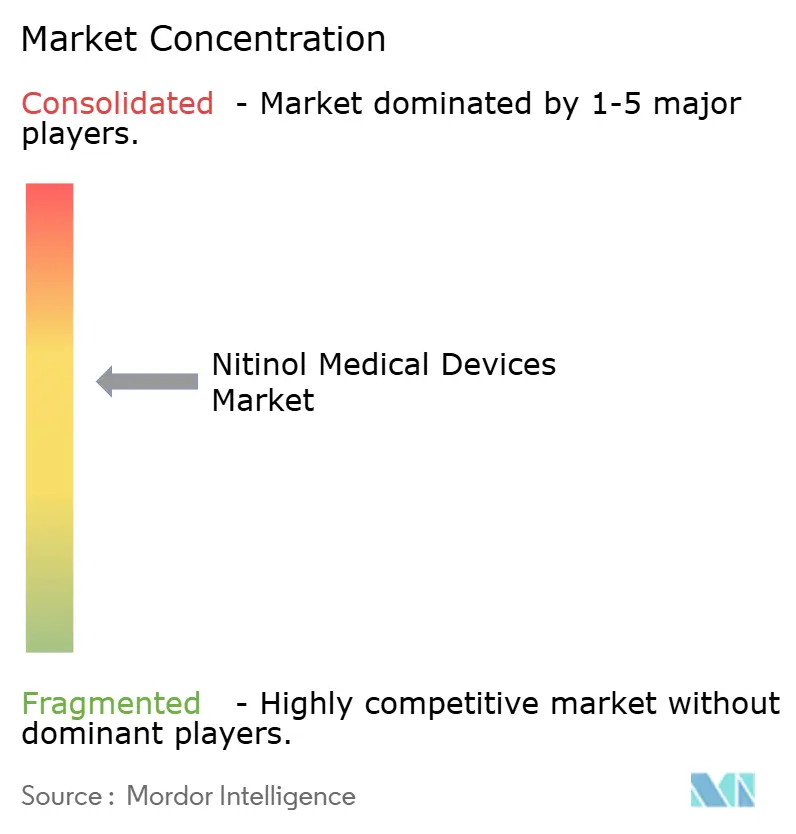
| Market Concentration | Medium |
Major Players *Disclaimer: Major Players sorted in no particular order Image © Mordor Intelligence. Reuse requires attribution under CC BY 4.0. | |
Nitinol Medical Devices Market Analysis by Mordor Intelligence
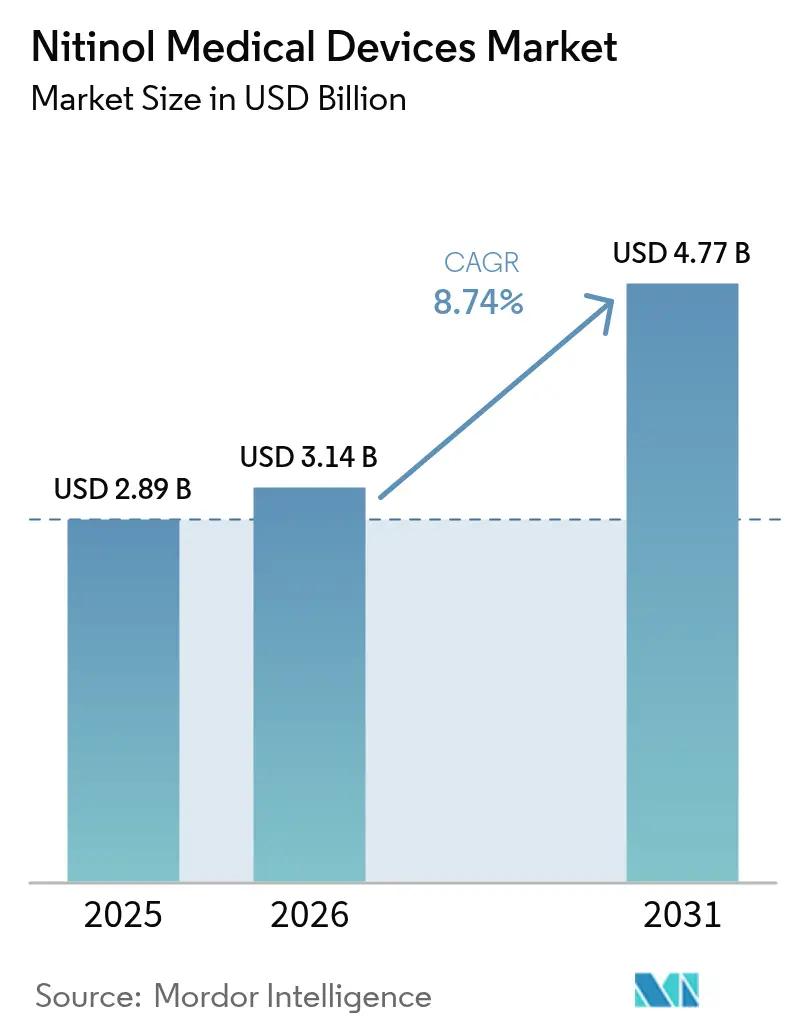
The Nitinol Medical Devices Market size is expected to grow from USD 2.89 billion in 2025 to USD 3.14 billion in 2026 and is forecast to reach USD 4.77 billion by 2031 at 8.74% CAGR over 2026-2031.
Robust demand stems from the convergence of aging populations, rising chronic disease prevalence, and the continual push toward less-invasive care pathways that exploit nitinol’s superelasticity and shape-memory behavior. Material suppliers are scaling melting and tubing capacity to keep pace with orders for miniaturized components that navigate previously inaccessible anatomies. Hospitals remain the primary customers, yet ambulatory surgical centers are winning procedures as reimbursement incentives reward day-care interventions that lower total treatment costs. At the same time, geographic momentum is shifting toward Asia-Pacific, where local manufacturing initiatives and wider healthcare access are accelerating device approvals and adoption.
Key Report Takeaways
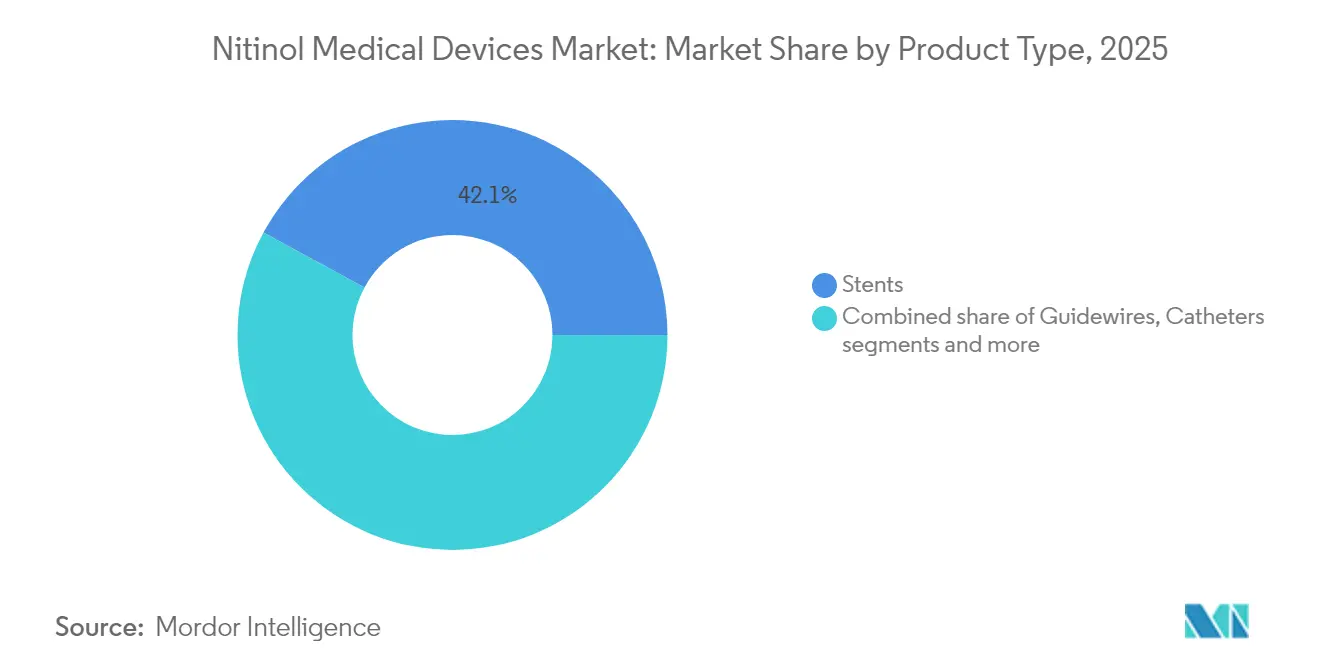
- By product type, stents led with 42.10% of the nitinol medical devices market share in 2025, while filters and occlusion devices are projected to expand at an 10.55% CAGR to 2031.
- By application, cardiovascular interventions held a 64.85% share of the nitinol medical devices market in 2025; gastroenterology applications are forecast to rise at a 11.32% CAGR through 2031.
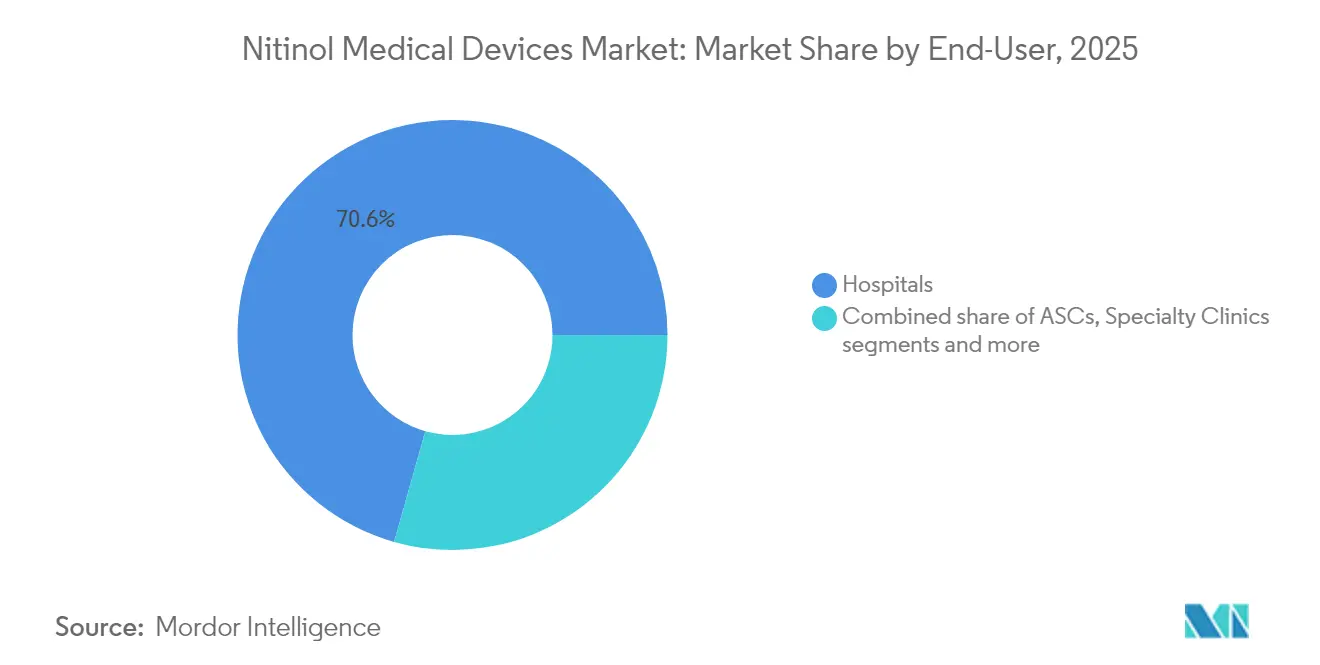
- By end-user, hospitals held 70.62% of the nitinol medical devices market size in 2025, whereas ambulatory surgical centers are advancing at a 9.98% CAGR to 2031.
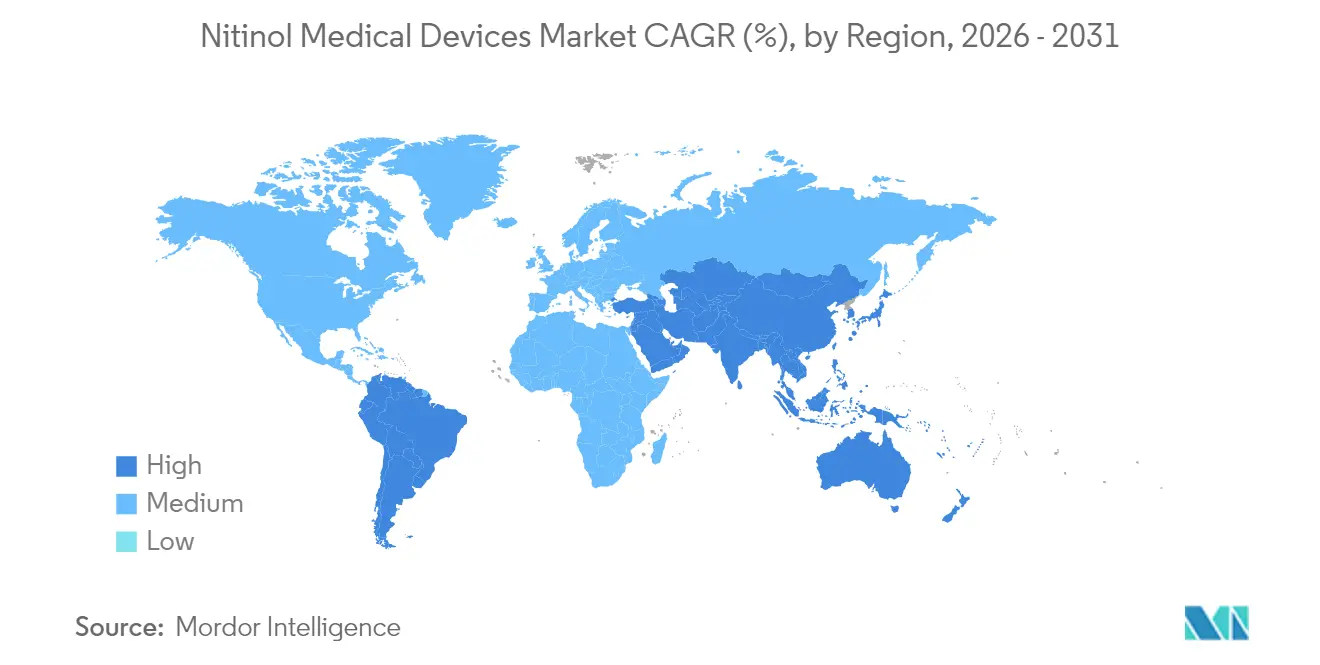
- By geography, North America dominated with a 43.10% revenue share in 2025; Asia-Pacific is set to register the highest regional CAGR of 10.98% between 2026 and 2031.
Note: Market size and forecast figures in this report are generated using Mordor Intelligence’s proprietary estimation framework, updated with the latest available data and insights as of 2026.
Market Trends and Insights
Drivers Impact Analysis of Nitinol Medical Devices Market*
| Driver | (~) % Impact on CAGR Forecast | Geographic Relevance | Impact Timeline |
|---|---|---|---|
| Accelerating chronic-care interventional procedures | +2.1% | Global, with higher impact in North America & Europe | Medium term (2-4 years) |
| Growing adoption of super-elastic alloys to miniaturize devices | +5.2% | Global, with innovation centers in North America, Europe, and Japan | Long term (≥ 4 years) |
| Shift toward day-care minimally-invasive surgeries | +1.8% | North America, Europe, and developed APAC | Medium term (2-4 years) |
| Expanding reimbursement coverage for implantable devices | +1.4% | North America, with gradual adoption in Europe and select APAC countries | Short term (≤ 2 years) |
| Increasing clinical evidence boosting physician confidence | +1.1% | Global | Medium term (2-4 years) |
| AI-assisted imaging and robotics boosting precision and success rates of nitinol interventions | +1.6% | North America, Europe, and developed APAC markets with advanced imaging infrastructure | Medium term (2-4 years) |
| Source: Mordor Intelligence | |||
Accelerating Chronic-Care Interventional Procedures
Cardiovascular disease continues to claim 17.9 million lives each year, propelling steady demand for nitinol stents that navigate tortuous vasculature and sustain high patency rates. A single-center study[1] of the Supera interwoven device reported 95.6% primary patency at 1 month and 77.7% at 24 months in femoropopliteal lesions. Beyond the heart, interventional gastroenterology and neurology are shifting away from open surgery, embracing nitinol-based systems that shorten recovery, reduce infection risk, and support outpatient workflows. Aging demographics magnify these trends as older patients benefit most from low-trauma therapies compatible with comorbidities.
Growing Adoption of Super-Elastic Alloys to Miniaturize Devices
Device engineers now routinely specify wall thicknesses below 50 µm, leveraging nitinol’s capacity to recover up to 8% strain without plastic deformation. Suppliers such as Fort Wayne Metals doubled their melting output[2] from 2022 to 2024 and plan another doubling during 2025 to reach 1 million lb annual capacity. Miniaturization opens neurovascular and pediatric markets where compact catheters and self-expanding frames create clinical options that stainless steel cannot match. High success rates for devices like the Alpha stent, which achieved 97.1% technical success in wide-neck intracranial aneurysms,[3] validate the engineering push toward thinner, more flexible solutions.
Shift Toward Day-Care Minimally-Invasive Surgeries
Global health systems are migrating procedures from inpatient wards to ambulatory settings to control costs and free hospital beds. The United States finalized a 2.9% payment increase for outpatient services in 2025, alongside expanded pass-through payments for device-intensive cases. Ambulatory surgical centers typically deliver 35-50% cost savings to payers, making nitinol-enabled techniques financially attractive. Dedicated CPT codes for innovations such as the iTind implant for benign prostatic hyperplasia remove coding ambiguity and accelerate scheduling in outpatient theatres.
Expanding Reimbursement Coverage for Implantable Devices
Coverage wins spur wider adoption. U.S. private insurers now reimburse FDA-cleared nitinol stents for peripheral artery disease and chronic mesenteric ischemia, acknowledging superior performance versus bare-metal alternatives. Europe is following with iterative updates that compensate hospitals for device-driven value, particularly where randomized evidence shows lower re-intervention rates. In Asia-Pacific, Japan’s favorable device reimbursement and China’s volume-based procurement pilots are starting to balance affordability with quality, expanding the addressable population for nitinol implants
Restraints Impact Analysis of Nitinol Medical Devices Market*
| Restraint | (~) % Impact on CAGR Forecast | Geographic Relevance | Impact Timeline |
|---|---|---|---|
| Premium pricing of nitinol-based implants | -1.2% | Global, with higher impact in price-sensitive markets | Medium term (2-4 years) |
| Complex thermo-mechanical processing requirements | -0.9% | Global, with manufacturing concentrated in North America, Europe, and Japan | Short term (≤ 2 years) |
| Risk of nickel hypersensitivity in susceptible patients | -0.3% | Global | Long term (≥ 4 years) |
| Uncertain long-term biocompatibility data related to nickel ion release | -0.7% | Global, with higher regulatory scrutiny in Europe and North America | Long term (≥ 4 years) |
| Source: Mordor Intelligence | |||
Premium Pricing of Nitinol-Based Implants
Raw nitinol ingot prices rose during 2024 as demand tightened supply, widening the cost gap with stainless steel by 30-40%. Budget-constrained hospitals in emerging economies often defer adoption until alternative funding emerges. Value-based contracting that shares savings from lower readmission rates partly offsets premiums, yet widespread acceptance in low-income regions will depend on localized production and streamlined logistics that trim landed cost.
Complex Thermo-Mechanical Processing Requirements
Shape-set accuracy, oxidation control, and micro-machining tolerances demand specialized know-how, limiting the number of qualified suppliers. Variations in surface finish can influence corrosion resistance and nickel ion release, forcing OEMs to audit partners rigorously. Resonetics acquired gun-drilling assets in 2025 to internalize critical tubing steps and shrink lead-times for high-precision components. While such investments gradually boost capacity, the learning curve and capital intensity restrain smaller entrants and slow high-volume scale-up for novel geometries.
*Our forecasts treat driver/restraint impacts as directional, not additive. The impact forecasts reflect baseline growth, mix effects, and variable interactions.
Nitinol Medical Devices Market Segment Analysis
By Product Type:
Stents Lead While Filters AccelerateStents generated the largest revenue pool, capturing 42.10% of the nitinol medical devices market share in 2025 by virtue of their proven efficacy in challenging vasculature. Consistent radial force and kink resistance give nitinol stents a clinical edge, reflected in 24-month patency rates exceeding 77% in peripheral arteries. Guidewires, catheters, and orthodontic archwires follow, each exploiting the alloy’s torqueability and pseudoelastic properties to reduce procedure time and improve patient comfort.
Filters & occlusion devices represent the fastest-growing segment, expanding at an 10.55% CAGR as physicians embrace retrievable vena cava filters, embolic protection systems, and implantable hemodynamic monitors. Phraxis’ EndoForce Connector, integrating a flexible nitinol segment, reached a 92% patency rate at six months, illustrating how hybrid devices address longstanding graft complications. Diagnostic sensors such as the FIRE1 IVC platform further enlarge the addressable space by enabling remote monitoring of chronic heart failure, a capability unattainable with rigid metallic materials.

By Application:
Cardiovascular Dominance Meets Gastroenterology GrowthCardiovascular indications commanded 64.85% of revenue in 2025, underscoring nitinol’s irreplaceable role in vascular reconstruction. Drug-eluting, self-expanding frames cut restenosis risk while small-profile delivery catheters curtail procedural trauma. Urology, orthopedics, dentistry, and neurology form the secondary tier, yet each shows sustained pipeline activity supported by the alloy’s fatigue endurance and biocompatibility.
Gastroenterology delivers the highest upside with a 11.32% forecast CAGR. Researchers engineered polyurethane-silicone coated nitinol stents loaded with 5-fluorouracil that release cytotoxic concentrations for up to 150 days in esophageal cancer models. Such combination devices address tumor obstruction and drug delivery simultaneously, reducing re-intervention frequency. Endoscopists also leverage nitinol’s flexibility to traverse tight colonic strictures, broadening indications for minimally invasive palliation.
By End-User:
Hospitals Lead While ASCs Gain MomentumHospitals held 70.62% of revenue in 2025, as complex neurovascular, structural heart, and peripheral interventions still gravitate to tertiary centers with hybrid theatres and advanced imaging. These centers also host multidisciplinary panels required for novel device credentialing. The segment’s growth reflects organic volume growth and incremental adoption in emerging nations.
Ambulatory surgical centers (ASCs) record the fastest expansion at a 9.98% CAGR. Predictable procedure times and reduced infection rates make ASCs ideal for peripheral angioplasty, urologic implants, and gastrointestinal stent placements that rely on nitinol delivery systems. Payment reforms that equalize device-intensive reimbursement with hospital outpatient departments reinforce the shift. Specialty clinics and academic institutes contribute minor, yet strategically important, volumes through focused expertise and first-in-human trials that de-risk next-generation products.
Geography Analysis
North America Nitinol Medical Devices Market
North America retained a commanding 43.10% share in 2025 as extensive clinical infrastructure, broad reimbursement, and a cohesive supply chain reinforced leadership in the nitinol medical devices market. Fort Wayne Metals’ capacity expansion exemplifies the regional commitment to secure raw alloy availability for OEMs. The United States continues to issue pass-through payments for breakthrough implants, supporting a steady 8.27% regional CAGR through 2031. Canada and Mexico post single-digit growth, focused on metropolitan centers, integrating advanced endovascular programs.
APAC Nitinol Medical Devices Market
Asia-Pacific is the fastest-growing region with 10.98% CAGR. Japan’s mature interventional cardiology market anchors early adoption, while China scales domestic manufacturing and broadens device listing under national insurance. India targets a medical devices market jump to USD 50 billion by 2030, buoyed by production-linked incentives and dedicated industrial parks that ease entry barriers for nitinol component fabrication. South Korea nurtures proprietary designs like the Alpha stent, demonstrating regional innovation capacity.
EMEA and South America Nitinol Medical Devices Market
Europe ranks second, driven by Germany, France, and the United Kingdom, where hospital networks value the lower re-intervention profile of nitinol technology. Regional CAGR stands at 8.72%, based on expectations of wider adoption in lower-limb artery revascularization and emerging neurovascular procedures. The Middle East & Africa and South America collectively represent a relatively smaller chunk of global revenue today, but show double-digit compound growth. Private hospitals in the Gulf and Brazil implement complex structural heart and neurovascular programs that depend on nitinol’s performance advantages. Government tenders increasingly accept value-based bids, creating openings for cost-optimized devices supplied from Asia.
Regulatory Landscape
In the United States, nitinol device manufacturers operate under FDA device regulations with specific scrutiny on alloy behavior and nickel-related risks. FDA guidance on the non-clinical assessment of medical devices containing nitinol, alongside biocompatibility expectations tied to ISO 10993-1, anchors test planning for transformation temperature characterization and corrosion-related endpoints. A major quality-system shift followed the FDA finalizing the Quality Management System Regulation (QMSR) in February 2024, incorporating ISO 13485:2016 by reference and aligning QMS expectations for global manufacturers supplying nitinol-based implants and delivery systems.
In Europe, MDR classification and naming are being refined through MDCG guidance updates, including an April 2026 update affecting classification interpretation and EMDN code assignment for borderline products under MDR. In parallel, standards activity continues to shape technical documentation for nitinol forms and test methods: ASTM F2063 remains foundational for binary NiTi alloys, while ASTM initiated work in December 2025 (WK97399) to develop a guide for bend and free recovery testing of finished nitinol devices, indicating more explicit expectations for device-level functional verification in addition to material certification.
Competitive Landscape
The nitinol medical devices market presents a moderate concentration. Multinational device manufacturers dominate cardiovascular, neurovascular, and structural heart niches, yet specialized component firms wield influence through proprietary tubing, laser-cutting, and shape-setting knowledge. Vertical integration is intensifying: Resonetics’ 2025 purchase of gun-drilling assets assures internal control of precision lumen creation vital for microcatheters, while Fort Wayne Metals scales ingot supply to safeguard alloy purity across the value chain.
White-space potential lies in gastroenterology, remote hemodynamic monitoring, and transcatheter valve repair, where nitinol’s fatigue resistance and conformability create differentiated therapy options. Surface engineering is another competitive frontier; low-temperature plasma oxidation yields uniform titanium dioxide layers that cut nickel ion release and boost endothelialization. Companies pairing such coatings with drug-elution technology may capture premium positioning as payers emphasize durability and patient safety.
Mergers and acquisitions are reshaping portfolios. Medical Device Components completed the Lighteum takeover in 2024 to access femtosecond laser processing for high-complexity implants, and Edwards Lifesciences added J-Valve to strengthen its transcatheter regurgitation offering built on nitinol frames. Competition in neurovascular markets remains fierce, highlighted by Penumbra’s ACCESS25 launch that complements stent retrievers with agile delivery tooling designed around nitinol kink resistance.
Nitinol Medical Devices Industry Leaders
-
Arthrex, Inc.
-
B. Braun Melsungen AG
-
Boston Scientific Corporation
-
Terumo Corporation
-
Zimmer Biomet Holdings, Inc.
- *Disclaimer: Major Players sorted in no particular order
Nitinol Medical Devices Market Companies Covered in this Report
- Abbott Laboratories
- AccuPath Group Co., Ltd.
- Alleima AB
- Arthrex
- B. Braun
- Beckton Dickinson
- Boston Scientific
- Cardinal Health
- Cook Group
- Cordis
- Edward Lifesciences
- Endo-Med Technologies Pvt. Ltd.
- Lepu Medical
- Medtronic
- Meril Life Sciences
- MICRO-TECH Europe GmbH
- Sinus Medical
- Terumo
- W. L. Gore & Associates
- Zimmer Biomet
Market Opportunities and Future Outlook
Opportunities concentrate where nitinol enables smaller, more navigable platforms and supports outpatient procedure migration, particularly across neurovascular tools, peripheral interventions, and hybrid implants. The shift toward day-care minimally invasive procedures is reinforced by reimbursement mechanics and coding clarity in the United States, and the report also notes ambulatory surgical centers gaining procedure volume due to cost savings versus inpatient pathways. On the supply side, vertical integration and capacity actions remain a practical lever to relieve constraints tied to complex thermo-mechanical processing and tight lead times, as seen in Fort Wayne Metals scaling melting output and Resonetics internalizing tubing-related capability through its 2025 gun-drilling asset acquisition.
Technology whitespace is opening around manufacturing methods that preserve superelastic behavior while enabling more complex geometries and tighter tolerances. In 2026, peer-reviewed work describing post-heat-treatment protocols for additively manufactured nitinol stents and short-duration annealing approaches highlights pathways to better control transformation temperatures at body-temperature conditions and improve processing efficiency, supporting broader design exploration beyond conventional laser-cut tubing. Regulatory throughput for new nitinol-based products also provides real-world confirmation of development activity: in 2026, FDA 510(k) clearance of devices such as the TriMemo semirigid annuloplasty ring with an electropolished nitinol core demonstrates continued adoption of nitinol in cardiovascular prosthetic components, while earlier 2025 clearances for hybrid nitinol implant systems extend the set of precedent predicates for future submissions.
Recent Industry Developments in Nitinol Medical Devices Market
- February 2026: Arthrex announced the commercial release of the TightRope SB all-suture implant for ACL fixation. The launch extends nitinol-enabled and minimally invasive orthopedic fixation options, supporting faster procedure workflows and competitive differentiation in sports medicine portfolios.
- May 2025: Phraxis Inc. received FDA clearance for the EndoForce Connector, an ePTFE-covered device incorporating a flexible nitinol segment for dialysis graft applications. The clearance expands nitinol use beyond core vascular stents into access maintenance, with reported six-month patency performance supporting adoption discussions with clinicians and payers.
- November 2024: Medical Device Components completed its acquisition of Lighteum, adding femtosecond laser processing capabilities relevant to high-precision nitinol manufacturing. The deal strengthens in-house micromachining depth for complex implants and can shorten development-to-production cycles for OEM customers that need tight dimensional control.
Nitinol Medical Devices Market Report Scope and Research Methodology
Market Definition and Coverage
This market covers medical devices where nitinol (nickel-titanium) is used as a key functional material, typically for shape-memory or flexibility-driven performance. Revenue is counted at the point of sale to healthcare channels, since that is where device-level demand signals are observable.
Scope exclusions: It excludes industrial actuators, orthodontic archwires sold to dental labs, and raw nitinol tubing or wire sold as semi-finished inputs.
Segments Covered in This Report
- By Product Type
- Stents
- Guidewires
- Catheters
- Filters & Occlusion Devices
- Baskets & Retrieval Devices
- Orthodontic Archwires
- Other Nitinol Implants
- By Application
- Cardiovascular
- Urology
- Orthopedics & Trauma
- Dental
- Gastroenterology
- Neurology
- Other Applications
- By End-User
- Hospitals
- Ambulatory Surgical Centers
- Specialty Clinics
- Academic & Research Institutes
- By Geography (Value)
- North America
- United States
- Canada
- Mexico
- Europe
- Germany
- United Kingdom
- France
- Italy
- Spain
- Rest of Europe
- Asia-Pacific
- China
- India
- Japan
- Australia
- South Korea
- Rest of Asia-Pacific
- Middle East & Africa
- GCC
- South Africa
- Rest of Middle East & Africa
- South America
- Brazil
- Argentina
- Rest of South America
- North America
Data Sources, Market Sizing, and Validation
Desk Research
Desk research sets the boundaries of what is counted, and it also gives early demand and procedure signals that help the model stay aligned with how the market is actually used in clinics. We rely on public sources such as the US FDA device databases and safety notices, and where relevant we use CDC procedure and disease statistics plus international trade and health statistics from bodies such as the World Bank and OECD. We also review open scientific and clinical literature (for example, PubMed-indexed studies) to see where nitinol use is expanding and where it remains more niche.
To keep assumptions anchored, we review company filings, investor presentations, earnings call transcripts, and reputable medical device press to map product exposure and the direction of pricing. Patent databases are also checked to see where filing intensity is rising, which often lines up with new device launches or design refresh cycles. When needed, paid subscriptions support company financials and intelligence, news and financials, and patent lookups to cross-check timelines and revenue mix. These sources are illustrative only, and additional public references are reviewed for data collection, validation, and clarification.
Primary Interviews and Surveys
Primary interviews and surveys are used to pressure-test the scope and the numbers that come out of desk work, especially where product pricing, utilization, or adoption is not clearly disclosed. We speak with a mix of device manufacturers, contract manufacturers and component specialists, distributors, and clinical stakeholders. We balance inputs across APAC, EMEA, and the Americas so regional procedure patterns and reimbursement differences are reflected in the assumed utilization and uptake.
Distribution of primary research fieldwork respondents
| Company type | Respondent position | Region |
|---|---|---|
| Top tier: 38% | CXOs: 13% | APAC: 46% |
| Mid tier: 42% | Functional/Unit leaders: 33% | EMEA: 36% |
| Smaller Players: 20% | Managers: 54% | Americas: 18% |
Market-Sizing & Forecasting
The core model uses a top-down approach where procedure volumes and treated patient pools are reconstructed by major therapy areas that commonly use nitinol devices, and they are translated into device demand using usage rates per procedure. To keep totals realistic, we corroborate these top-down outputs with selective bottom-up approximations, including sampled average selling price (ASP) by device class, channel markups where applicable, and checks with supplier and distributor sources on volume direction.
Key inputs used in sizing include (illustratively) interventional procedure volumes, self-expanding device penetration trends, device replacement or re-intervention patterns, ASP progression by device category, and the pace of regulatory clearances that typically precede wider commercialization. Where a clean count is not possible, gaps are handled with conservative adoption bands informed by interviews, then tightened through consistency checks against observed revenue mix disclosures.
For forecasting, scenario analysis is used because adoption curves and pricing pressure can shift quickly by indication and geography. Procedure growth, reimbursement stability, and new product introductions are forecast with expert consensus from primary discussions, and scenarios are used to set a central case and reasonable bounds before finalizing the yearly path.
Data Validation & Update Cycle
Results are validated through multiple rounds of triangulation, where outputs are compared against independent signals such as procedure trend lines, regulatory activity, and disclosed device revenue direction. When a number changes in a way that does not match these signals, the assumptions are revisited, and respondents are re-contacted to determine whether the gap reflects a scope mismatch, a pricing shift, or a timing issue.
Before sign-off, the model and write-up go through analyst review steps focused on variance checks across regions and year-to-year logic. The report is refreshed annually, with interim updates triggered when material events occur, such as major regulatory changes, sudden procedure disruptions, or meaningful pricing resets. Right before delivery, a final pass is completed so clients receive the most current view that can be explained back to specific inputs.
Mordor Intelligence's Nitinol Medical Devices Market Estimate Compared With Other Published Estimates
Published market sizes for nitinol medical devices can look far apart, even when the titles sound similar, because counting rules and the point of revenue capture are not always the same. Differences typically come from what is treated as a finished device versus an intermediate component, which care settings are included, and whether the estimate leans more on shipments, procedures, or company revenue mix.
By tracking procedure-based demand signals and refreshing scope boundaries, Mordor Intelligence keeps the estimate focused on finished nitinol medical devices while excluding raw tubing or wire revenues that can inflate totals, which also reduces double counting across the value chain.
Benchmark comparison
| Source | Market Size | Gaps in Research Methodology |
|---|---|---|
| Mordor Intelligence | USD 3.14 B (2026) | |
| Global Consultancy A | USD 3.64 B (2024) | Uses an earlier base year and a broader device bundle, which can mix nitinol-enabled devices with adjacent materials and may carry older pricing assumptions into the stated market value. |
| Industry Association B | USD 4.10 B (2024) | Often leans on supplier-side or component-linked accounting, which can pull in semi-finished nitinol inputs and create double counting when finished device revenues are also included. |
The spread in the table is mainly explained by scope and counting point, rather than a real disagreement that demand is growing. When the model is tied to procedures, adoption rates, and realistic ASP movement, the final number stays traceable to inputs that can be checked and repeated across years.
Key Questions Answered in the Report
How does device miniaturization influence adoption of nitinol-based interventions?
Thinner nitinol components allow delivery through smaller catheters, enabling procedures in tortuous or previously inaccessible anatomies and improving patient eligibility for minimally invasive care.
Why are ambulatory surgical centers increasingly choosing nitinol devices?
Nitinol’s flexibility supports same-day, low-trauma procedures that align with outpatient workflows, helping centers cut recovery times and meet payer incentives for cost-efficient care.
What role do surface-modification techniques play in the competitive landscape?
Advanced coatings such as low-temperature plasma oxidation reduce nickel ion release and enhance endothelialization, giving manufacturers a differentiation lever based on long-term biocompatibility.
Which clinical evidence most strongly persuades physicians to switch to nitinol implants?
Real-world studies showing high patency and occlusion success rates—especially in complex cardiovascular and neurovascular cases—boost confidence in nitinol’s durability versus conventional alloys.
How are supply-chain strategies evolving among nitinol component suppliers?
Firms are vertically integrating melting, tubing, and gun-drilling capabilities to secure raw alloy availability and shrink lead times, positioning themselves as reliable partners for OEMs.
How is reimbursement influencing adoption?
Expanded Medicare pass-through payments and new CPT codes for nitinol implants reduce financial hurdles, accelerating clinical uptake across multiple specialties.