
Neonatal Intensive Care Market Size and Share
Market Overview
| Study Period | 2020 - 2031 |
|---|---|
| Market Size (2026) | USD 4.88 Billion |
| Market Size (2031) | USD 6.88 Billion |
| Growth Rate (2026 - 2031) | 7.10 % |
| Fastest Growing Market | Asia-Pacific |
| Largest Market | North America |
| Market Concentration | Low |
Major Players *Disclaimer: Major Players sorted in no particular order Image © Mordor Intelligence. Reuse requires attribution under CC BY 4.0. | |
Neonatal Intensive Care Market Analysis by Mordor Intelligence
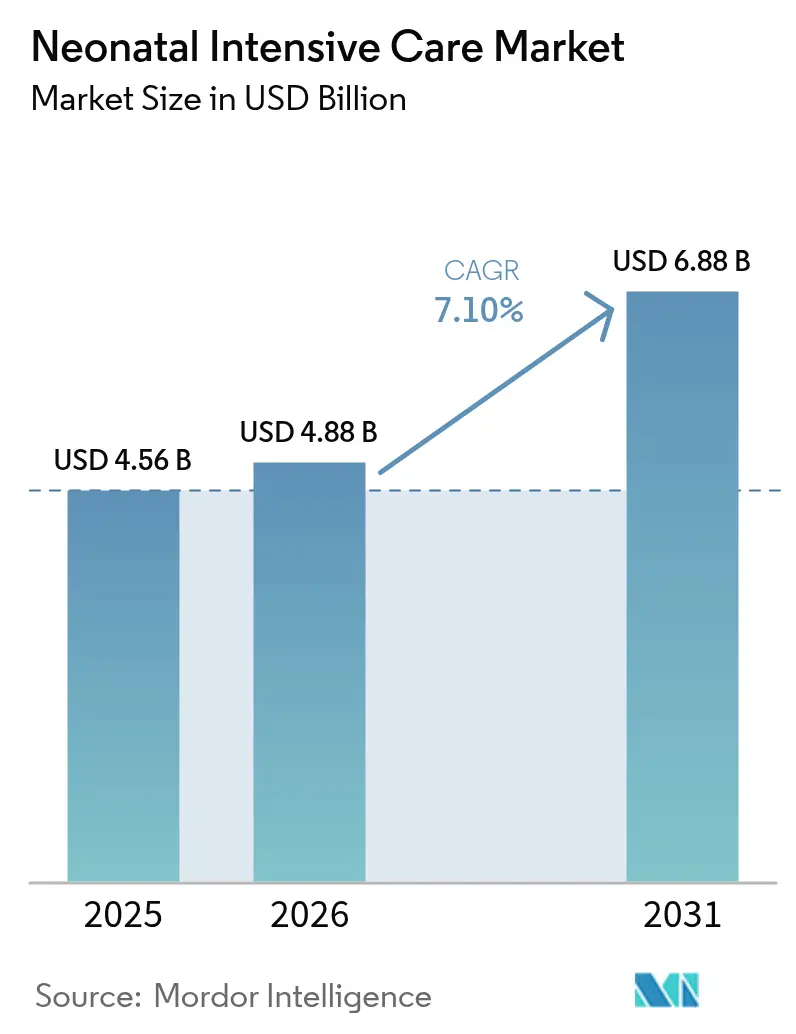
The neonatal intensive care market size in 2026 is estimated at USD 4.88 billion, growing from 2025 value of USD 4.56 billion with 2031 projections showing USD 6.88 billion, growing at 7.10% CAGR over 2026-2031. Demand tracks the 13.4 million preterm births recorded every year as well as the rapid integration of artificial intelligence into neonatal care. Hospitals are investing in connected incubators, non-contact monitoring, and precision nutrition systems that lower medical error rates and shorten stays. Respiratory support innovations address the complex needs of the 15% of preterm births occurring before 32 weeks of gestation and sit alongside traditional thermoregulation solutions that still form the backbone of many units. Vendors are also responding to procurement teams that now weigh cybersecurity readiness, supply-chain resilience, and workforce efficiency on par with clinical performance.
Key Report Takeaways
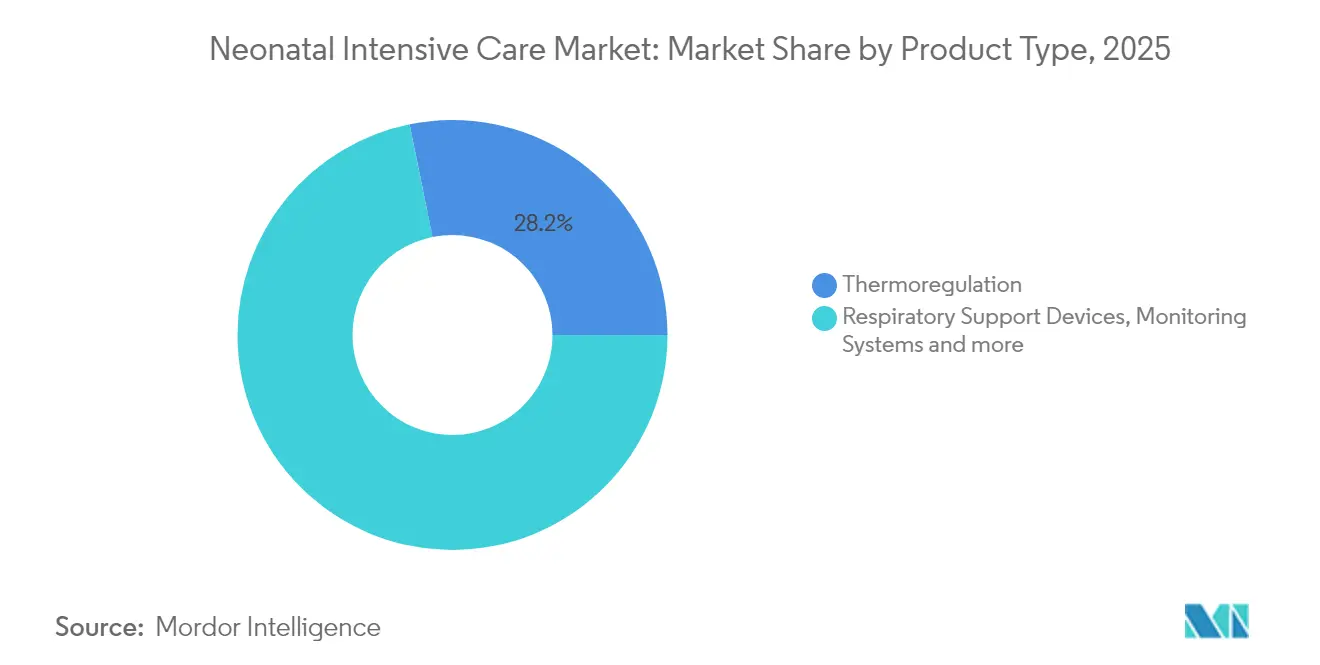
- By product type, thermoregulation equipment led with 28.20% of neonatal intensive care market share in 2025, while respiratory support devices are set to expand at an 8.14% CAGR through 2031.
- By device modality, closed care systems captured 52.72% of the neonatal intensive care market share in 2025; hybrid systems are projected to grow at a 9.35% CAGR to 2031.
- By end user, hospitals held 54.05% share of the neonatal intensive care market size in 2025, whereas ambulatory surgical centers are advancing at a 9.92% CAGR through 2031.
Note: Market size and forecast figures in this report are generated using Mordor Intelligence’s proprietary estimation framework, updated with the latest available data and insights as of 2026.
Market Trends and Insights
Drivers Impact Analysis of Neonatal Intensive Care Market*
| Driver | (~) % Impact on CAGR Forecast | Geographic Relevance | Impact Timeline |
|---|---|---|---|
| Rising global pre-term birth rates | +1.2% | Global, concentrated in Southern Asia & Sub-Saharan Africa | Long term (≥ 4 years) |
| Rapid NICU technology upgrades | +1.8% | North America & Europe leading, APAC adoption accelerating | Medium term (2-4 years) |
| Expansion of neonatal bed capacity | +1.1% | APAC, Latin America, MEA | Medium term (2-4 years) |
| Accelerated reimbursement approvals | +0.9% | North America, Europe | Short term (≤ 2 years) |
| Shift to family-integrated, modular design | +0.7% | Global, early adoption in Scandinavia & Canada | Long term (≥ 4 years) |
| Growing demand for single-use consumables | +0.6% | Global | Short term (≤ 2 years) |
| Source: Mordor Intelligence | |||
Rising Global Pre-term Birth Rates
Global preterm birth complications account for more than 1 million child deaths each year, and persistent high rates translate directly into higher utilization of ventilators, incubators, and phototherapy units. The share of births before 32 weeks stands at 15%, a cohort that requires intensive respiratory and thermal support and magnifies equipment demand. This pressure is strongest in low- and middle-income countries where preterm rates often exceed 12%. Health ministries increasingly link capital budgets to survival gains, making advanced devices a strategic investment rather than a discretionary purchase.
Rapid NICU Technology Upgrades (AI-enabled Monitoring, IoT)
Artificial intelligence is reshaping workflows across the neonatal intensive care market. Stanford Medicine’s TPN2.0 algorithm, trained on 80,000 historical prescriptions, now delivers precision parenteral nutrition in seconds and reduces human error during formulation. Mount Sinai’s computer-vision tool analyzes 16 million seconds of video to flag subtle neurologic changes that bedside staff might miss. Non-contact camera and radar systems further address skin fragility by removing adhesive sensors altogether. The convergence of IoT connectivity and predictive analytics allows clinicians to pull ventilator settings, incubator temperatures, and real-time vitals into a single dashboard, creating data-rich profiles that support earlier intervention and shorter stays.
Expansion of Neonatal Bed Capacity in Tier-2/-3 Hospitals
Secondary and tertiary hospitals in emerging economies are adding neonatal beds to meet national mortality targets. India’s nationwide survey documented rapid growth in NICU facilities, most outfitted with imported ventilators yet still lacking in-house blood gas analysis in many units. Ethiopia and Zambia report similar gaps, where syringe pumps and oxygen concentrators remain scarce in provincial centers. Donor-funded procurement programs and blended-finance models are channeling capital toward scalable, durable equipment lines that can function in variable power and water conditions, shaping specification sheets for new tenders.
Accelerated Reimbursement Approvals for Advanced NICU Devices
Policy makers are smoothing the payment pathway for neonatal innovations. The US CMS has boosted outpatient payment rates by 2.9% for 2025 and broadened the definition of medically necessary equipment, giving hospitals more latitude to bill for AI-enabled monitors and hybrid incubator-warmers federalregister.gov. Early coverage decisions shorten the sales cycle and provide revenue visibility that manufacturers use to justify focused R&D budgets for the neonatal intensive care industry.
Restraints Impact Analysis of Neonatal Intensive Care Market*
| Restraint | (~) % Impact on CAGR Forecast | Geographic Relevance | Impact Timeli |
|---|---|---|---|
| High capital & maintenance cost | -1.4% | Global, acute in emerging markets | Long term (≥ 4 years) |
| Shortage of trained neonatal nurses | -0.8% | Global, severe in rural areas | Medium term (2-4 years) |
| Cyber-security certification delays | -0.5% | North America & Europe | Short term (≤ 2 years) |
| Supply-chain crunch for rare-earth heaters | -0.3% | Global | Short term (≤ 2 years) |
| Source: Mordor Intelligence | |||
High Capital & Maintenance Cost of NICU Infrastructure
Full-featured NICU suites demand incubators, ventilators, infusion pumps, and lab analyzers whose combined price often exceeds USD 1 million per eight-bed pod. Uganda’s OMWaNA trial calculated incremental infrastructure outlays of up to USD 95,796 per hospital to implement immediate kangaroo mother care, illustrating the investment required even for low-tech upgrades. Manufacturers face their own inflation headwinds; freight, labor, and raw materials now consume up to 20% of revenue, and firms allocate 3-5% solely to supply-chain services. Service contracts, spare-part lead times, and calibration requirements add further overhead for buyers, deterring refresh cycles and lengthening asset life far beyond depreciation schedules.
Shortage of Trained Neonatal Nurses & Intensivists
Two-thirds of administrators report open neonatal nurse practitioner positions, and the pipeline remains thin because doctoral programs add an extra year to training. South Korean data link intensivist coverage with a 27% drop in 30-day mortality, yet even high-income countries struggle to fund around-the-clock staffing nature.com. Equipment vendors now bundle e-learning modules, decision-support algorithms, and remote service to ease the burden, but staffing bottlenecks still cap utilization across the neonatal intensive care market.
*Our forecasts treat driver/restraint impacts as directional, not additive. The impact forecasts reflect baseline growth, mix effects, and variable interactions.
Neonatal Intensive Care Market Segment Analysis
By Product Type:
Respiratory Support Drives InnovationThe neonatal intensive care market size for thermoregulation devices stood at USD 1.29 billion in 2025, equal to 28.20% of revenue. Incubators and radiant warmers remain indispensable because temperature instability can raise mortality risk within minutes. New models feature servo-controlled humidity, embedded cameras, and antimicrobial surfaces, aligning with infection-control mandates. Respiratory support equipment posted the fastest 8.14% CAGR outlook to 2031 as clinicians seek non-invasive ventilation modes and closed-loop oxygen targeting. High-flow nasal cannula systems, turbine-driven ventilators, and volume-guaranteed modes are standardising worldwide, particularly for the 15% of preterm births occurring before 32 weeks gestation . Consumables such as single-patient circuits and humidifier chambers grow in parallel because disposable use is now embedded in many infection bundles.
Monitoring systems sit at the convergence of AI and hardware, integrating ECG, pulse oximetry, cerebral oxygenation, and video tracking. FDA analysis confirmed that new incubators no longer need run-in periods to clear airborne chemicals, supporting faster turnover and higher utilisation. Phototherapy remains relevant for jaundice management, while newborn screening platforms expand alongside national mandates. Each of these sub-segments benefits from connectivity that funnels data into hospital EMRs and research registries, making them key touchpoints for value-based care contracts across the neonatal intensive care market.

By Device Modality:
Hybrid Systems Gain MomentumClosed care systems accounted for USD 2.40 billion in 2025, equal to 52.72% of neonatal intensive care market share. They deliver precision temperature, humidity, and sound control for fragile neonates. Hospitals, however, increasingly prefer hybrid incubator-warmers that flip open and allow quick maternal access without moving the infant, supporting family-integrated protocols. This sub-segment is projected to deliver a 9.35% CAGR to 2031. Hybrid devices decrease transfers, lower hypothermia risks, and free up staff time, which is critical amid workforce shortages.
Open care systems continue to serve stable infants and kangaroo care use cases, especially in cost-constrained settings where maintenance budgets are thin. Evidence from India’s Mother-Newborn Care Unit model shows a 25% mortality reduction when mothers remain bedside, reinforcing the role of these flexible layouts. The rise of modular designs influences purchase decisions: hospitals want platforms that can slot into future renovation schemes, handle IoT upgrades, and integrate bedside analytics. Manufacturers that pre-wire units for software certifications and power-over-Ethernet ports gain an edge in replacement cycles of the neonatal intensive care industry.
Geography Analysis
North America Neonatal Intensive Care Market
North America retained leadership in 2024 thanks to robust reimbursement, continuous R&D, and rapid uptake of AI. Medicare’s 2025 payment updates raise device reimbursement by 2.9%, making capital acquisition plans easier to approve federalregister.gov. The United States also hosts early adopters of cybersecurity-certified ventilators that comply with FDA Section 524B. Canada’s embrace of single-family room models informs global design guidelines.
Europe Neonatal Intensive Care Market
Europe follows with a coordinated push for evidence-based neonatal care. Multicenter stepped-wedge trials in the Netherlands evaluate family-integrated care, and cross-border registries funnel outcome data into procurement decisions. Regulatory harmonisation under the EU Medical Device Regulation tightens post-market surveillance, favoring vendors with comprehensive clinical dossiers. Countries such as Germany and France allocate infrastructure budgets that link NICU occupancy to bundled payment models, stimulating demand for advanced monitors and incubators.
APAC, LATAM and MEA Neonatal Intensive Care Market
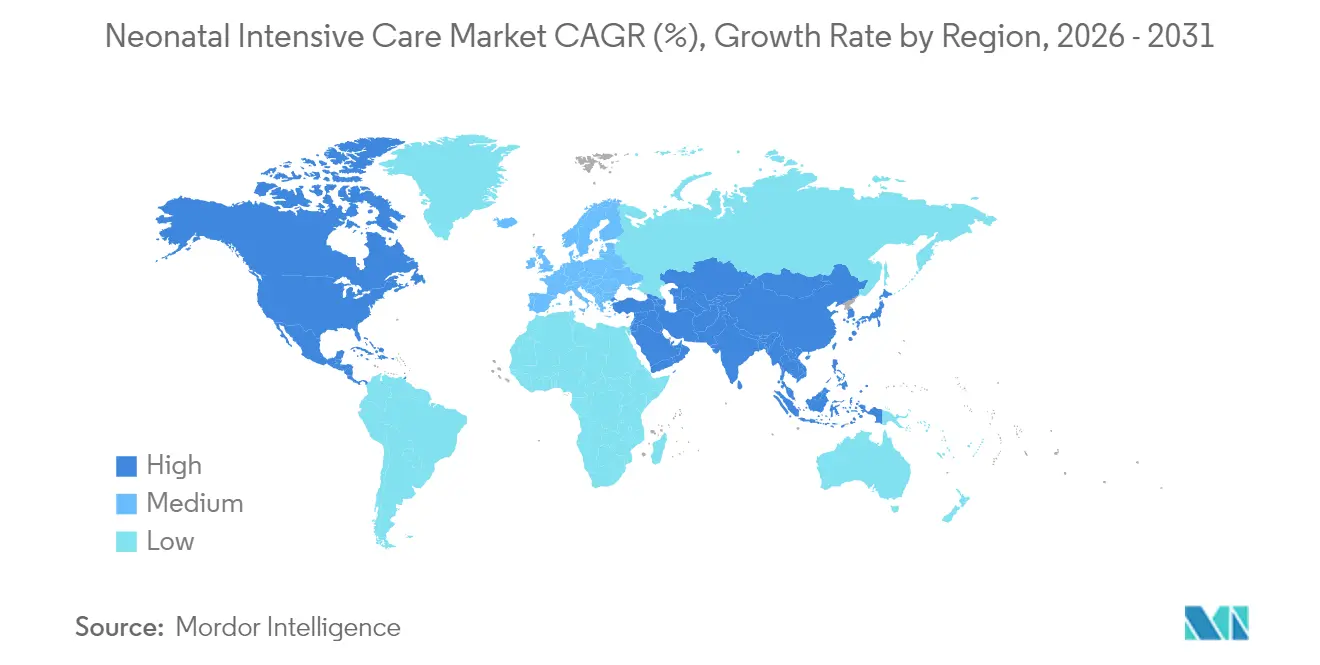
Asia-Pacific remains the fastest-growing region. South Korea’s hospital bills for preterm infants tripled over the past decade, pushing administrators toward precision ventilation that shortens length of stay. India recorded exponential NICU growth across tier-2 and tier-3 cities, though oxygen and blood-gas analyser gaps remain. China’s 3-child policy and rising maternal age sustain higher preterm rates, driving hospitals to upgrade hybrid incubators with bilingual interfaces. Sub-Saharan Africa and Latin America rely on targeted donor programs; Burundi achieved 87% survival for 32-36-week infants using low-tech warming and oxygen protocols, proving the value of context-appropriate devices. Middle Eastern governments funnel oil revenues into specialist NICUs that cater to medical tourism, demanding premium, cybersecurity-certified equipment lines to match international accreditation standards.
Regulatory Landscape
Neonatal intensive care devices are regulated under mainstream medical-device frameworks, with added scrutiny on safety, performance, and software-connected features used at the bedside. In the United States, FDA oversight follows the medical device classification and premarket pathways used for NICU hardware, and neonatal incubators are classified as Class II devices (21 CFR 880.5400) that typically require 510(k) clearance. Compliance expectations also expanded with the FDA Quality Management System Regulation (QMSR) becoming effective on February 2, 2026, aligning quality-system requirements more closely with ISO 13485:2016.
In Europe, MDR-driven conformity assessment continues to shape timelines and post-market obligations for NICU OEMs selling connected incubators, ventilators, monitoring, and phototherapy. Commission Implementing Regulation (EU) 2026/977 (adopted May 4, 2026) adds a harmonized framework around notified-body conformity assessment timelines and recertification practices, while EUDAMED’s phased roll-out tightened operational compliance. Four modules (actor registration, UDI/device registration, notified bodies and certificates, and market surveillance) became mandatory on May 28, 2026. Standards updates also influence product redesign and technical files, including ISO 80601-2-74:2026 for respiratory humidifying equipment (published April 2026) and ISO 12487:2026 for clinical performance evaluation of clinical thermometers (published May 2026).
Value Chain Analysis
The neonatal intensive care value chain begins with upstream suppliers of medical-grade plastics, optics and adhesives, sensors and semiconductors for control modules, and specialized components for heating, humidification, and gas delivery. Midstream manufacturing is led by global OEMs with NICU portfolios spanning incubators and warmers, ventilators and CPAP, monitoring, phototherapy, and diagnostics. Software, cybersecurity, and clinical-integration partners support connectivity into hospital IT, and regulatory and clinical validation requirements (including pediatric device considerations used by FDA for patients from birth through 21 years) extend development cycles and increase dependence on experienced design, quality, and clinical-evidence teams.
Downstream, devices move through a mix of direct sales into large hospital systems and tenders, regional distributors and service partners, and hospital biomedical engineering teams that handle installation, calibration, and maintenance contracts. Supply-chain resilience has become a core operational lever because sensors and control electronics remain exposed to semiconductor concentration in East Asia and to component availability constraints. That dynamic raises the value of dual-sourcing, inventory strategies, and component standardization. Procurement in high-income markets also depends on the installed base, including bedside platform compatibility, consumables fit, and the service footprint, which shapes renewal and replacement decisions. OEMs such as Drager have highlighted reducing parts needed for preventive maintenance and increasing in-house capability for critical components to improve uptime across NICU fleets.
Competitive Landscape
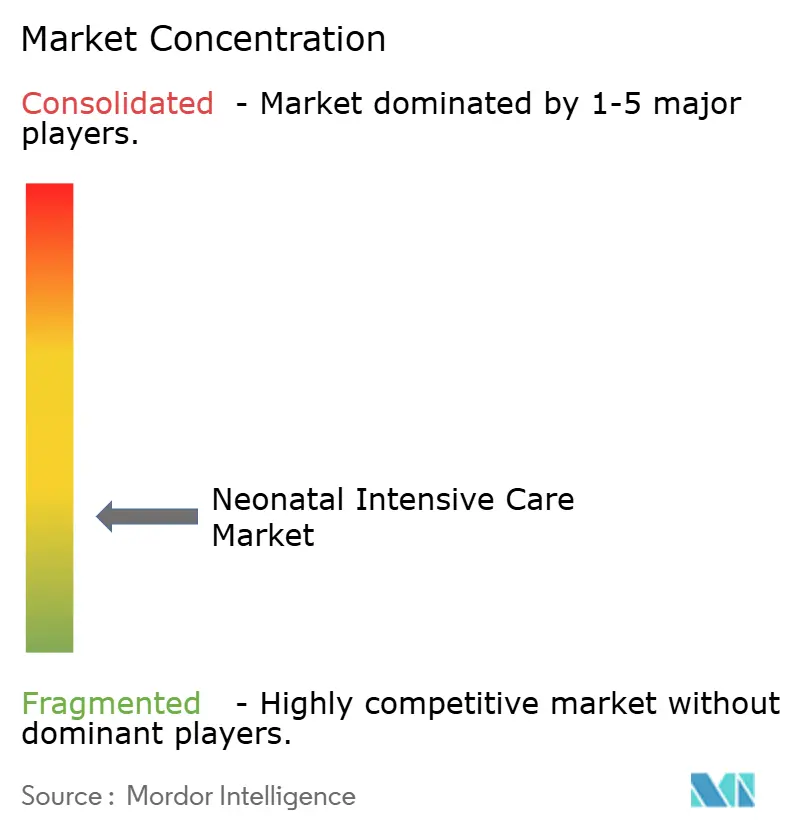
The neonatal intensive care market is moderately fragmented, including key vendors like. GE Healthcare, Philips, and Drägerwerk leverage broad catalogs, yet supply-chain volatility is eroding lead-time reliability. Freight and raw-material inflation now account for up to 20% of device cost structures, prompting firms to integrate 3D-printed components and IoT-driven demand.
Partnerships define innovation speed. Radiometer teamed with Etiometry to meld blood-gas data into predictive dashboards that flag cardio-pulmonary instability etiometry.com. AngelEye Health bought NICU2Home to merge camera-based parental updates with discharge education, aligning with hospitals that want to reduce length of stay without raising readmission risk hitconsultant.net. Vendors that can demonstrate FDA Section 524B compliance win RFP points, as cybersecurity audits are now mandatory clauses.
Emerging players target white-space niches: non-contact heart rate monitoring, AI-guided ventilator tuning, and modular warming platforms designed for intermittent power grids. Inspiration Healthcare and Löwenstein Medical focus on neonatal respiratory lines, filling gaps left by larger firms that prioritise adult portfolios. The result is a stable yet dynamic field where sustained R&D funding and distribution depth separate long-term winners from niche specialists.
Neonatal Intensive Care Industry Leaders
-
Becton, Dickinson and Company
-
Medtronic PLC
-
Koninklijke Philips N.V
-
ICU Medical, Inc.
-
Cook Group (Cook Medical)
- *Disclaimer: Major Players sorted in no particular order
Neonatal Intensive Care Market Companies Covered in this Report
- GE Healthcare
- Dragerwerk
- Koninklijke Philips
- Atom Medical
- Fisher & Paykel Healthcare
- Natus Medical
- Inspiration Healthcare Group plc
- Medtronic
- Fanem Ltda
- Masimo
- Vyaire Medical
- Phoenix Medical Systems
- Cobams Medical
- Beckton Dickinson
- Smiths Group
- GPC Medical
- Inspiration Healthcare,
- Ningbo David Medical Device
- Pluss Advanced Technologies
- Löwenstein Medical
Market Opportunities and Future Outlook
A visible whitespace is forming around connected workflows that extend beyond the bedside, especially feeding management, documentation, and hospital-to-home transition tools that integrate with existing monitors and nursery equipment. M&A and platform expansion in early 2026 reflect this direction. Natus Sensory acquired Keriton to add cloud-based feeding management software to its connected newborn care portfolio, and it also acquired TheraB Medical to add wearable phototherapy technology, pointing to demand for solutions that reduce staff burden while maintaining continuity of care. These transactions also track hospital preferences for upgrades that deliver measurable workflow gains without requiring full replacement of incubators, ventilators, or central monitoring infrastructure.
Portability and modularity is another opportunity area, particularly for transport, step-down care, and resource-variable settings, while still meeting stringent regulatory and safety requirements. In January 2026, mOm Incubators received FDA 510(k) clearance for a portable incubator, supporting adoption of compact thermoregulation platforms where space, transport needs, or intermittent infrastructure constrain conventional NICU layouts. At the same time, regulatory mechanisms are evolving in ways that can affect go-to-market sequencing: the EU’s Implementing Regulation (EU) 2026/977 and mandatory EUDAMED modules (as of May 28, 2026) elevate compliance readiness as a differentiator, while the UK MHRA’s draft Medical Devices (Amendment) Regulations 2026 introduces an International Reliance Pathway concept for devices authorized in the US, Canada, and Australia. That pathway encourages companies with prior approvals to prioritize UK submissions alongside EU recertification planning.
Recent Industry Developments in Neonatal Intensive Care Market
- April 2026: Becton, Dickinson and Company commercially launched the BD CentroVena One Insertion System for central venous catheter insertion in acute care settings. The launch complements BD's broader push in high-acuity care workflows and strengthens its vascular access offering that interfaces with NICU and pediatric critical care lines where line placement and infection prevention are tightly managed.
- July 2025: Medtronic announced a strategic partnership with Koninklijke Philips N.V. to expand access to patient monitoring technology, including ECG and non-invasive blood pressure capabilities. The collaboration supports broader deployment of integrated monitoring platforms across high-acuity hospital environments where neonatal monitoring interoperability and standardization are increasingly weighted in procurement.
- September 2024: Becton, Dickinson and Company completed its acquisition of the Edwards Lifesciences Critical Care product group, which was rebranded as BD Advanced Patient Monitoring. The transaction expanded BD's monitoring portfolio and scale in hospital critical care, strengthening its positioning with integrated device ecosystems relevant to neonatal and pediatric intensive care settings.
Neonatal Intensive Care Market Report Scope and Research Methodology
Market Definition and Coverage
The neonatal intensive care market in this methodology covers the value generated from specialized NICU equipment and related systems used to stabilize, monitor, and treat premature or critically ill newborns in clinical settings, captured across major regions and common care modalities.
Scope exclusions: We exclude general pediatric ICU equipment that is not designed or procured for neonatal use, along with routine maternity supplies not used for intensive neonatal care.
Segments Covered in This Report
- By Product Type (Value)
- Thermoregulation Equipment
- Incubators
- Infant Warmers
- Neonatal Cooling Systems
- Respiratory Support Devices
- Ventilators
- CPAP Devices
- Oxygen Therapy Equipment
- Monitoring Systems
- Multiparameter Monitors
- Pulse Oximeters
- EEG & ECG Monitors
- Phototherapy Equipment
- Diagnostic & Screening Devices
- Newborn Screening Panels
- Imaging Systems
- Consumables & Accessories
- Thermoregulation Equipment
- By Device Modality (Value)
- Open Care Systems
- Closed Care Systems
- Hybrid / Convertible Systems
- By End User (Value)
- Hospitals
- Maternity Hospitals
- Pediatric & Neonatal Hospitals
- Clinics & Nursing Homes
- Ambulatory Surgical Centers
- By Geography (Value)
- North America
- US
- Canada
- Mexico
- Europe
- Germany
- United Kingdom
- France
- Italy
- Spain
- Rest of Europe
- Asia-Pacific
- China
- India
- Japan
- South Korea
- Australia
- Rest of Asia-Pacific
- South America
- Brazil
- Argentina
- Rest of South America
- Middle East and Africa
- GCC
- South Africa
- Rest of Middle East and Africa
- North America
Data Sources, Market Sizing, and Validation
Desk Research
Desk research was used to build the initial demand and supply picture for neonatal intensive care before we sized the market. We reviewed public health statistics on preterm births and neonatal outcomes, including World Health Organization and World Bank materials, and we also used country health ministry publications where available.
To ground the equipment side, we referred to sources such as the US FDA device databases, the CDC for relevant health indicators, and peer-reviewed clinical and biomedical journals that discuss NICU utilization and technology adoption. We also checked trade association updates, hospital procurement notes shared in public documents, company annual reports, investor presentations, and trusted press coverage for product launch timing and pricing direction. Where needed, we supplemented this with paid subscriptions that provide company financials and intelligence, patent coverage, and shipment-level trade signals. These desk sources are not exhaustive, and many other public references were used during data collection, validation, and clarification.
Primary Interviews and Surveys
Primary work was done through expert interviews and structured surveys with NICU clinicians, biomedical engineers, hospital procurement teams, distributors, and product managers across major geographies so gaps from desk research could be closed. Respondent input was used to confirm adoption patterns for incubators, warmers, respiratory support, monitoring, phototherapy, and NICU disposables, and then to pressure test utilization assumptions before final numbers were signed off.
Distribution of primary research fieldwork respondents
| Company type | Respondent position | Region |
|---|---|---|
| Top tier: 39% | CXOs: 18% | APAC: 51% |
| Mid tier: 43% | Functional/Unit leaders: 37% | EMEA: 29% |
| Smaller Players: 18% | Managers: 45% | Americas: 20% |
Market-Sizing & Forecasting
Sizing started from a top-down build where preterm and at-risk birth volumes, NICU admission rates, and typical length of stay were used to reconstruct the active demand pool for intensive neonatal care by region. These demand indicators were then translated into equipment needs using practical ratios, such as beds per facility, device per bed norms, and replacement cycles for core categories.
To keep results realistic, we corroborated totals with selective bottom-up approximations, including sampled average selling prices times estimated unit volumes for key devices, plus channel feedback on procurement cadence and the split between upgrades versus new installs. Where direct unit signals were weak, we filled gaps using proxy variables like hospital infrastructure expansion, regulatory and tender timing, and the pace of wireless and integrated monitoring adoption, then rechecked them with follow-up calls.
For forecasting, scenario analysis was used around a central case, since future growth depends on how quickly NICUs expand capacity and how fast hospitals adopt higher-acuity monitoring and respiratory support. Assumptions for price progression were kept transparent by using inflation direction, mix shifts toward higher-spec systems, and interview-based checks on discounting behavior.
Data Validation & Update Cycle
Validation was done in multiple steps so any single source did not overly influence the outcome. We compared model outputs against independent signals, such as neonatal birth and preterm trends, NICU bed expansion announcements, and import and export patterns for relevant device categories, and then reviewed unusual jumps until a clear explanation was documented.
Before sign-off, the model was reviewed by another analyst who checked math logic, year-on-year movements, and whether assumptions were consistent across regions and product groups. Reports are refreshed annually, and interim updates are triggered when material events occur, such as regulatory shifts, major hospital funding changes, or pricing shocks. Right before delivery, we do a fresh pass on key inputs so clients receive the most current view possible.
Mordor Intelligence's Neonatal Intensive Care Market Size Measured Against Other Published Estimates
Published market values for neonatal intensive care can differ quite a bit because firms do not always count the same things, or they anchor their math to different years and care settings. Differences also show up when one estimate leans more on long-range projections, while another stays closer to near-term purchasing and replacement cycles.
In practice, the biggest gap drivers are usually whether the scope counts only NICU-focused devices (like incubators, warmers, monitoring, respiratory, phototherapy, and catheters) or also folds in broader maternal-fetal equipment and general pediatric ICU items, which can inflate totals. The year used for the current value and the way currency conversion timing is handled can shift USD results, and so can assumptions on device-to-bed ratios, upgrade rates, and how quickly hospitals move to integrated and wireless monitoring, which are treated as separate technology layers in Mordor Intelligence.
Benchmark comparison
| Source | Market Size | Gaps in Research Methodology |
|---|---|---|
| Mordor Intelligence | USD 4.88 B (2026) | |
| Global Consultancy A | USD 2.95 B (2024) | Uses an earlier base year and a slower growth track, and its scope description is broader and less explicit on what is counted as NICU-only equipment versus adjacent hospital devices, which can compress the near-term total. |
| Industry Publisher B | USD 4.83 B (2025) | Anchors sizing to a different year and organizes the market around system technologies, which can shift how integrated and wireless monitoring is counted across product groups and can change the split between replacements and new installations. |
The spread across the three figures is mostly explained by timing and by what gets counted as NICU-specific spend versus adjacent neonatal and hospital categories. Our checks kept the estimate tied to clear demand indicators like NICU utilization, bed capacity, and replacement cycles, which makes the final number easier to trace and repeat when the market moves.
Key Questions Answered in the Report
What is the current Neonatal Intensive Care Market size?
The Neonatal Intensive Care Market is projected to register a CAGR of 7.10% during the forecast period (2026-2031)
Who are the key players in Neonatal Intensive Care Market?
Becton, Dickinson and Company, Medtronic PLC, Koninklijke Philips N.V, ICU Medical, Inc. and Cook Group (Cook Medical) are the major companies operating in the Neonatal Intensive Care Market.
Which is the fastest growing region in Neonatal Intensive Care Market?
Asia-Pacific is estimated to grow at the highest CAGR over the forecast period (2026-2031).
Which region has the biggest share in Neonatal Intensive Care Market?
In 2025, the North America accounts for the largest market share in Neonatal Intensive Care Market.
What years does this Neonatal Intensive Care Market cover?
The report covers the Neonatal Intensive Care Market historical market size for years: 2019, 2020, 2021, 2022, 2023 and 2024. The report also forecasts the Neonatal Intensive Care Market size for years: 2026, 2027, 2028, 2029, 2030 and 2031.