
Natural Food Flavors Market Size and Share
Market Overview
| Study Period | 2021 - 2031 |
|---|---|
| Market Size (2026) | USD 6.81 Billion |
| Market Size (2031) | USD 9.53 Billion |
| Growth Rate (2026 - 2031) | 6.93 % |
| Fastest Growing Market | Asia Pacific |
| Largest Market | Asia Pacific |
| Market Concentration | Medium |
Major Players *Disclaimer: Major Players sorted in no particular order Image © Mordor Intelligence. Reuse requires attribution under CC BY 4.0. | |
Natural Food Flavors Market Analysis by Mordor Intelligence
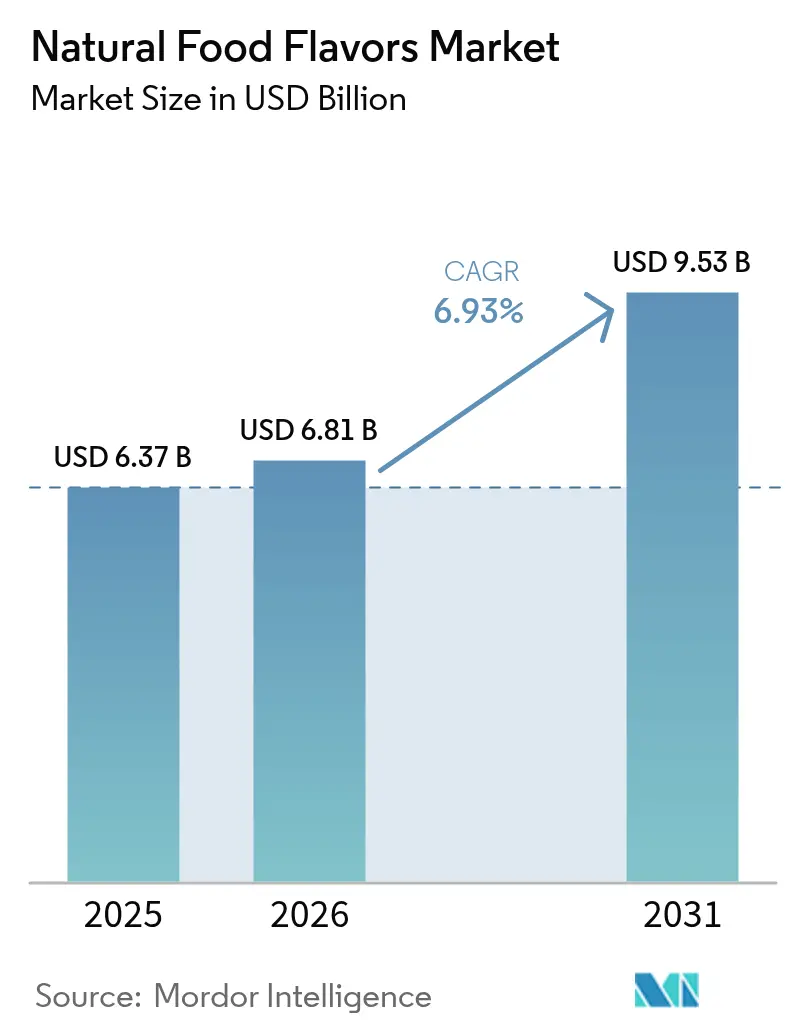
The natural food flavors market size is expected to grow from USD 6.37 billion in 2025 to USD 6.81 billion in 2026 and is forecast to reach USD 9.53 billion by 2031 at 6.93% CAGR over 2026-2031. This growth is driven by increasing consumer preference for clean-label products and the food industry's transition from synthetic alternatives due to stricter global regulations. The market expansion is further supported by consumer demand for natural ingredients, regulatory requirements, and supply chain considerations. Companies are adopting fermentation, bioconversion, and advanced extraction technologies to maintain product quality, minimize agricultural risks, and ensure compliance with natural ingredient regulations across regions. The combination of health-conscious consumers, regulatory requirements, and supply chain considerations has made technological advancement a key factor in market competition. To meet natural classification standards while reducing agricultural dependency, companies are investing in fermentation-based production and bioconversion processes across various regulatory environments.
Key Report Takeaways
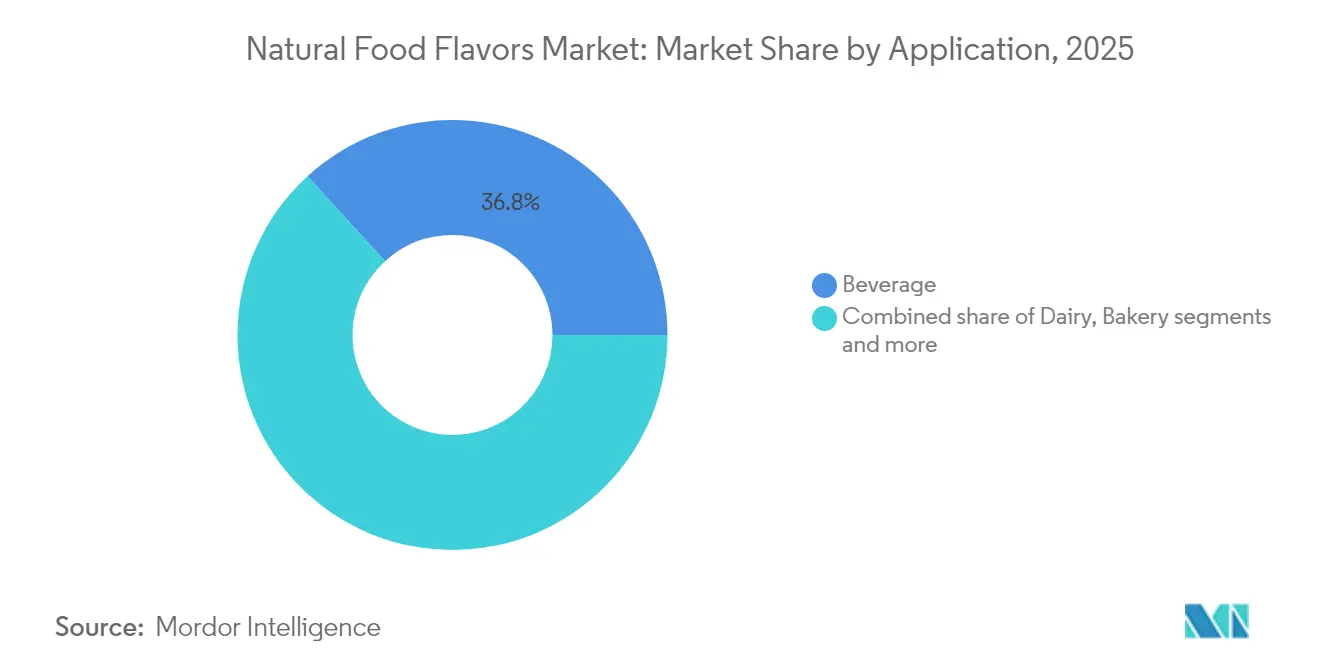
- By application, beverages led with a 36.78% market share of natural food flavors in 2025 and are projected to grow at a 7.31% CAGR through 2031.
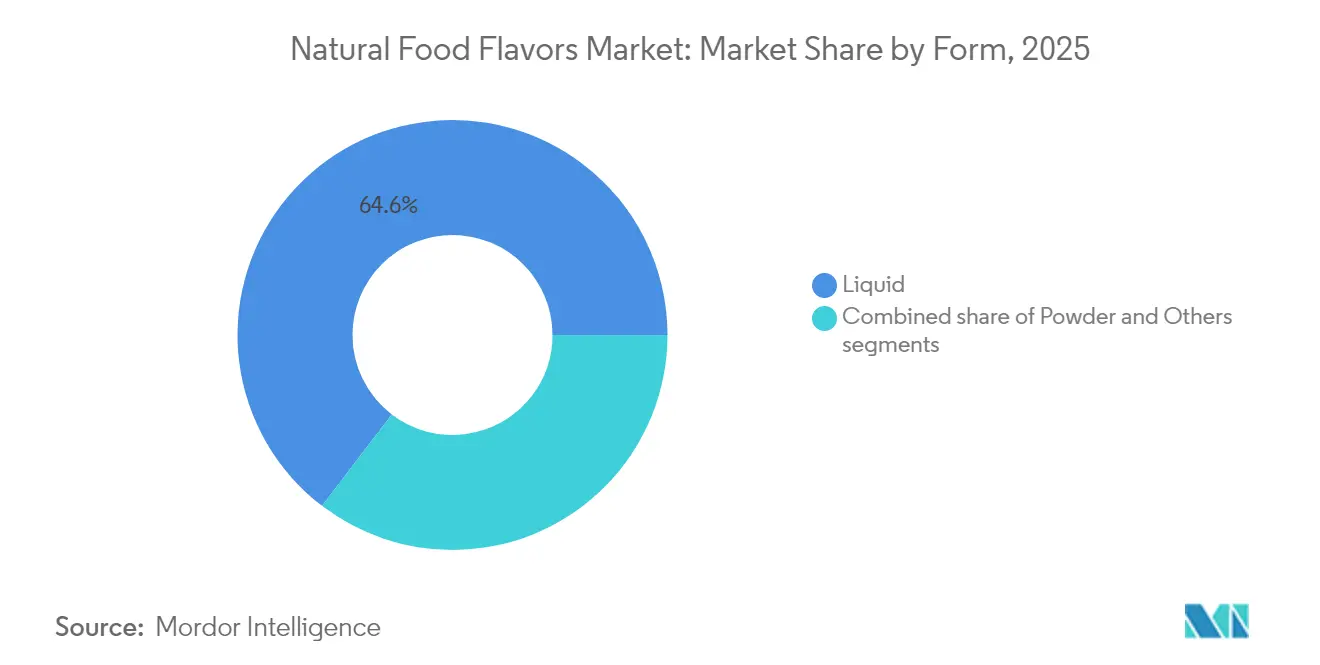
- By form, liquids captured 64.62% of the natural food flavors market size in 2025, while powders are projected to grow at the fastest rate, with a 7.44% CAGR during 2026-2031.
- By geography, Asia-Pacific accounted for 32.11% of the natural food flavors market share in 2025 and is forecast to expand at a 7.62% CAGR to 2031.
Note: Market size and forecast figures in this report are generated using Mordor Intelligence’s proprietary estimation framework, updated with the latest available data and insights as of 2026.
Market Trends and Insights
Drivers Impact Analysis of Natural Food Flavors Market*
| Driver | (~) % Impact on CAGR Forecast | Geographic Relevance | Impact Timeline |
|---|---|---|---|
| Advancement in stabilization techniques enhancing shelf life of natural flavors | +1.2% | Global, with early adoption in North America and European Union | Medium term (2-4 years) |
| Increasing availability of diverse natural sources through global sourcing and cultivation | +0.8% | Asia-Pacific core, spill-over to Latin America | Long term (≥ 4 years) |
| Consumer inclination towards clean label products to boost the market | +1.5% | Global, strongest in North America and European Union | Short term (≤ 2 years) |
| Rising demand for plant-based flavor to boost the market growth | +1.1% | Global, with premium growth in Asia-Pacific | Medium term (2-4 years) |
| Innovation in flavor extraction technologies | +0.9% | Global, concentrated in research and development hubs | Long term (≥ 4 years) |
| Increasing demand from the beverage and bakery industries | +1.3% | Global, accelerated in emerging markets | Short term (≤ 2 years) |
| Source: Mordor Intelligence | |||
Consumer inclination towards clean label products to boost the market
Clean label regulations are reshaping product formulations across food categories, as manufacturers focus on ingredient transparency and natural components. The European Union's amendments to flavor regulations have removed synthetic smoke flavoring options, requiring companies to use natural alternatives that cost 3-5 times more than synthetic versions [1]. This regulatory change creates a mandatory compliance requirement, making the transition to natural flavors essential in European markets. The impact extends beyond Europe, as global brands align their formulations to avoid operating separate production systems and maintain consistency across regions. Consumer acceptance of premium pricing for natural products has evolved significantly, making clean label compliance a fundamental requirement for market entry rather than a competitive advantage. This shift has prompted manufacturers to invest heavily in research and development to identify cost-effective natural alternatives while maintaining product quality and taste profiles.
Rising demand for plant-based flavor to boost the market growth
Plant-based flavor development has achieved technological advancements that overcome previous performance constraints and expand applications across food and beverage categories. Fermentation processes using Bacillus subtilis produce natural fruit flavors with increased antioxidant properties, enabling manufacturers to create more authentic taste profiles. This biotechnology method reduces supply chain risks associated with agricultural sourcing while maintaining natural classification under regulations, ensuring consistent flavor production throughout the year. The growth of plant-based foods and flavor innovation has created markets where conventional flavor profiles are redeveloped through botanical extraction methods, offering improved stability and enhanced sensory characteristics. Companies are investing in advanced extraction methods and biotechnology platforms to achieve authentic taste profiles while maintaining natural ingredient declarations. The market has split between mass-market plant-based products and premium botanical extracts, with premium extracts commanding higher prices despite limited supply. This price differentiation reflects both the sophisticated processing technologies required and the growing consumer preference for natural, sustainably sourced ingredients.
Innovation in flavor extraction technologies
Biotechnological extraction methods improve natural flavor production by providing consistent quality profiles and reducing dependency on agricultural sources. These methods address natural flavor standardization challenges through controlled production environments that minimize seasonal variations and quality inconsistencies. Advanced fermentation techniques and precision enzyme applications enable manufacturers to maintain uniform flavor profiles throughout the year. The patent landscape shows increased investment in enzyme-based conversion systems and fermentation optimization, indicating a shift toward biotechnology-driven production. Research and development efforts focus on enhancing extraction efficiency and developing novel bioconversion pathways. Companies using these technologies benefit from enhanced supply chain stability and production scalability independent of agricultural limitations. The implementation of biotechnology-based methods also supports sustainable practices by optimizing resource utilization and reducing waste generation in flavor production processes.
Increasing demand from beverage and bakery industries
Beverage manufacturers are driving natural flavor adoption through reformulation initiatives aimed at reducing synthetic ingredient dependencies while maintaining sensory appeal. The industry's focus on functional beverages and health-conscious positioning creates demand for natural flavors that complement nutritional claims without compromising taste profiles. According to the Australian Bureau of Statistics data from 2024, per capita consumption of soft drinks in Australia was 164.8 milliliters [2]. Moreover, bakery applications present unique technical challenges where natural flavors must withstand high-temperature processing while delivering consistent sensory experiences across batch production. The convergence of clean label requirements and functional food trends is expanding the addressable market for natural flavors beyond traditional applications into nutraceutical and dietary supplement categories. Regional preferences for specific flavor profiles are creating opportunities for localized natural flavor development, particularly in Asia-Pacific markets where traditional botanical ingredients align with consumer expectations.
Restraints Impact Analysis of Natural Food Flavors Market*
| Restraint | (~) % Impact on CAGR Forecast | Geographic Relevance | Impact Timeline |
|---|---|---|---|
| Changing regulatory landscape | -0.7% | Global, with varying regional interpretations | Short term (≤ 2 years) |
| Inconsistent flavor performance impacts the market growth | -0.5% | Global, acute in temperature-sensitive applications | Medium term (2-4 years) |
| Higher cost associated with natural food flavor | -1.1% | Global, most pronounced in price-sensitive segments | Short term (≤ 2 years) |
| Challenges in standardizing taste and aroma profile | -0.6% | Global, critical in industrial food production | Long term (≥ 4 years) |
| Source: Mordor Intelligence | |||
Higher cost associated with natural food flavor
Natural flavors command price premiums of 3-7 times compared to their synthetic counterparts, creating significant margin pressure across food categories. This cost differential particularly affects price-sensitive market segments, where consumers have limited willingness to pay higher prices. Food manufacturers face the challenge of balancing product quality with cost considerations, especially in categories like beverages, snacks, and dairy products. In response, manufacturers either optimize their formulations through ingredient substitution and process improvements or accept lower margins to maintain market share. Companies are pursuing vertical integration strategies, such as acquiring natural ingredient suppliers and developing in-house production capabilities. Additionally, they are investing in biotechnology-based production methods, including fermentation and enzyme technologies, to reduce costs while maintaining the natural classification of their flavors. These initiatives aim to achieve cost parity with synthetic alternatives without compromising the clean label appeal that consumers demand.
Challenges in standardizing taste and aroma profile
Natural flavor standardization faces significant challenges due to inherent variations in botanical sources, which directly impact quality control processes in industrial food production. Agricultural factors such as soil composition, nutrient availability, seasonal climate patterns, and precise harvest timing create notable inconsistencies between production batches, which synthetic production methods avoid through tightly controlled chemical processes. Natural flavors must maintain consistent stability across diverse food matrices and various processing conditions while delivering uniform sensory profiles to meet consumer expectations. Modern extraction and purification technologies, including advanced chromatography and molecular distillation techniques, help achieve better standardization in natural flavor production. However, these sophisticated technological solutions substantially increase production costs and operational complexity compared to synthetic alternatives, presenting manufacturers with important cost-benefit considerations.
*Our forecasts treat driver/restraint impacts as directional, not additive. The impact forecasts reflect baseline growth, mix effects, and variable interactions.
Natural Food Flavors Market Segment Analysis
By Application:
Beverage Segment Leads Clean Label TransformationThe beverage application commanded 36.78% market share in 2025, with the segment projected to maintain its leadership position through 7.31% CAGR growth during 2026-2031. Major beverage manufacturers are reformulating products to eliminate synthetic flavoring agents, driven by consumer health consciousness and regulatory pressures across key markets. Dairy applications represent the second-largest segment, benefiting from the clean label trend in yogurt, milk-based beverages, and cheese products, where natural flavors enhance sensory appeal without compromising nutritional positioning.
Bakery applications are experiencing robust growth as manufacturers seek natural alternatives that withstand high-temperature processing while delivering consistent flavor profiles across batch production. Confectionery segments face unique challenges where natural flavors must provide intense sensory experiences traditionally achieved through synthetic compounds, driving innovation in concentration techniques and flavor delivery systems. Savory snack applications are emerging as a high-growth opportunity where natural flavors align with premium positioning and health-conscious consumer preferences. Meat applications, while smaller in volume, represent a specialized segment where natural flavors enhance processed meat products and plant-based alternatives, with Beyond Meat's patent portfolio demonstrating the technical complexity of achieving meat-like sensory profiles through natural ingredients.

By Form:
Liquid Dominance Faces Powder Innovation ChallengeLiquid formulations maintained 64.62% market share in 2025, reflecting their versatility across beverage applications and ease of integration in industrial food production processes. However, powder formulations are experiencing accelerated growth at 7.44% CAGR through 2031, driven by advantages in storage stability, shipping efficiency, and application flexibility in dry food products. The shift toward powder formulations reflects technological advances in spray-drying and encapsulation technologies that preserve flavor integrity while extending shelf life and reducing transportation costs.
Encapsulation innovations are enabling powder formulations to compete with liquid alternatives in previously challenging applications, with Givaudan's expansion of encapsulation capacity in Mexico doubling its global production capabilities to meet growing demand. Other form categories, including paste and emulsion formulations, serve specialized applications where specific texture and release characteristics are required. The form selection increasingly depends on end-application requirements, with liquid formulations preferred for beverages and powder forms gaining traction in bakery, confectionery, and processed food applications where moisture control and extended shelf life are critical factors.
Geography Analysis
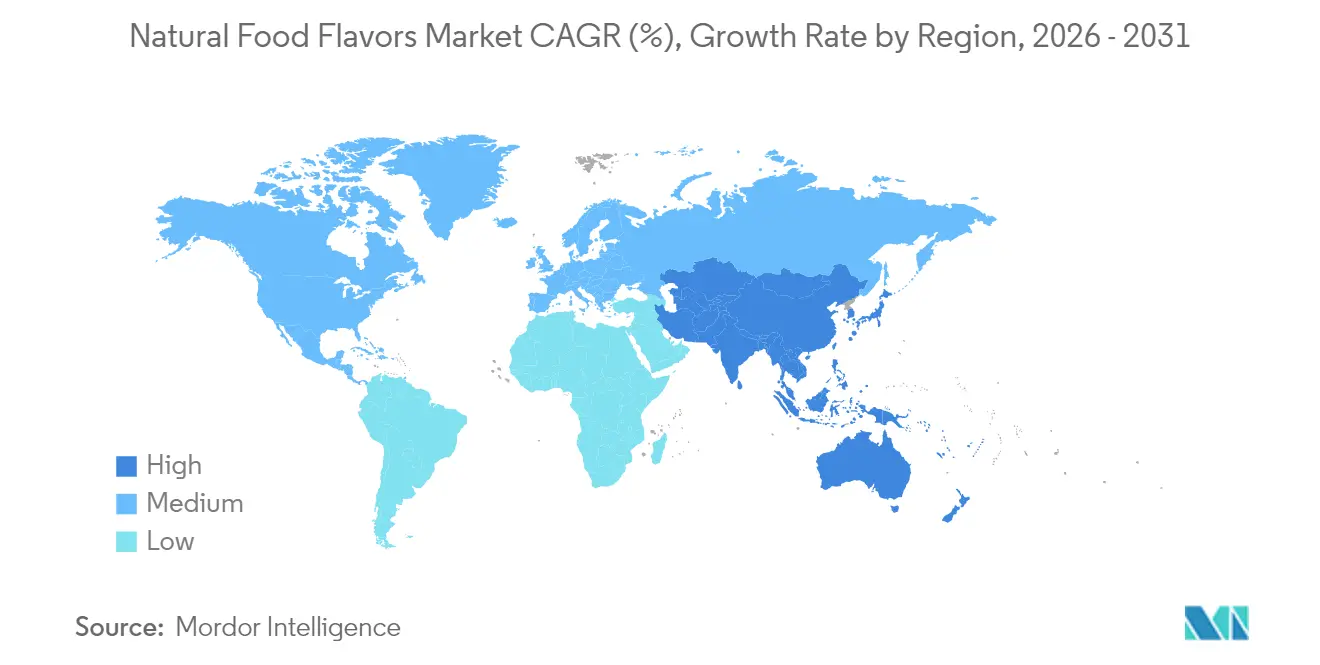
APAC Natural Food Flavors Market
Asia-Pacific holds 32.11% market share in 2025 and is expected to grow at 7.62% CAGR through 2031, functioning as both a primary consumer and supplier of natural flavors. China's implementation of GB 2760-2024 Standard has improved the regulatory environment, providing clearer guidelines for product approval and market access. The growth is further supported by India's expanding food processing industry and Japan's premium consumer market, with both countries aligning their regulations with international natural ingredient standards. While the region's botanical diversity provides sourcing advantages, companies must manage complex supply chains across multiple jurisdictions. Givaudan's USD 37.5 million investment in an Indonesian facility in October 2024 highlights the importance of regional manufacturing presence to meet local demand.
North America and Europe Natural Food Flavors Market
North America and Europe maintain steady market growth through established regulatory frameworks and high consumer acceptance. The US FDA's natural flavor definition under 21 CFR 101.22 provides a stable foundation for industry investment, while European markets operate under stricter requirements that benefit companies with sophisticated extraction methods. IFF's 30,000 square foot Citrus Innovation Center in Florida, opening in April 2025, demonstrates the industry's commitment to botanical research and sustainable production. Moreover, the International Food Information Council's 2024 survey indicated that 11% of United States respondents adhere to clean-label eating practices . This consumer segment drives market demand for ingredient transparency and simplicity, contributing to increased sales of natural food flavors manufactured from botanical extracts and essential oils rather than synthetic ingredients.
South America and MEA Natural Food Flavors Market
South America, and Middle East and Africa show increasing market potential driven by economic growth and urbanization. These regions currently face challenges, including limited extraction infrastructure, dependence on flavor imports, and price sensitivity affecting premium product adoption. As consumer preferences shift toward natural ingredients and regulatory frameworks evolve, these markets offer significant growth opportunities. Market participants must develop cost-effective solutions while establishing local supply chain networks to meet growing demand efficiently.
Regulatory Landscape
Natural food flavor compliance is anchored by region-specific definitions and positive lists that shape how "natural" can be claimed and which substances can be used. In the United States, FDA labeling rules under 21 CFR 101.22 define "natural flavor" by source and process (including essential oils, oleoresins, distillates, and products of roasting, heating, or enzymolysis derived from plant or animal materials). Flavoring substances used in foods are handled under FDA frameworks such as 21 CFR 172.510, with good manufacturing practice and GRAS pathways where applicable.
In the European Union, Regulation (EC) No 1334/2008 governs flavorings and sets conditions for use and labeling, including constraints on the use of the term "natural" and a Union list of permitted flavoring substances. This list is periodically updated; Commission Regulation (EU) 2024/234 amended Annex I to Regulation (EC) No 1334/2008 and removed certain substances from the Union list with effect from January 2024. EFSA continues to underpin authorizations through its flavourings evaluations, and it is piloting a new data model for collecting use-level data on food flavourings across 2025 and 2026, indicating tighter, more data-driven exposure assessment expectations for suppliers and brand owners active in the EU.
Value Chain Analysis
The natural food flavors value chain starts with agricultural and marine feedstocks (fruits, botanicals, spices, dairy and meat derivatives) provided by farmers, plantations, cooperatives, and ingredient aggregators. These feedstocks move into primary processing such as curing, pressing, distillation, and solvent or hydroethanolic extraction. Flavor manufacturers then carry out compounding and formulation steps including blending, emulsification, spray drying, and encapsulation, supported by analytical verification to meet customer specifications for stability and consistency across beverages, bakery, dairy, and savory applications. Regulatory requirements in major markets, including the EU framework under Regulation (EC) No 1334/2008 and US FDA rules such as 21 CFR 172.510, drive documentation, traceability, and quality-control checkpoints from sourcing through finished flavor release.
Distribution typically runs through direct sales from major flavor houses to multinational food and beverage producers, supplemented by regional blenders and distributors that adapt formulations to local tastes and label requirements. The chain is increasingly supported by backward integration and origin programs to stabilize supply and quality for sensitive botanicals such as citrus and vanilla, while localized manufacturing reduces logistics risk and speeds customer application development. Recent capacity and capability moves reflect these shifts, including Givaudan inaugurating a 24,000 square meter facility in Cikarang, Indonesia (July 2026) focused on flavor powders, and Dohler expanding hydroethanolic botanical extraction and reaction-chemistry capabilities at its Cartersville, Georgia site (June 2026).
Competitive Landscape
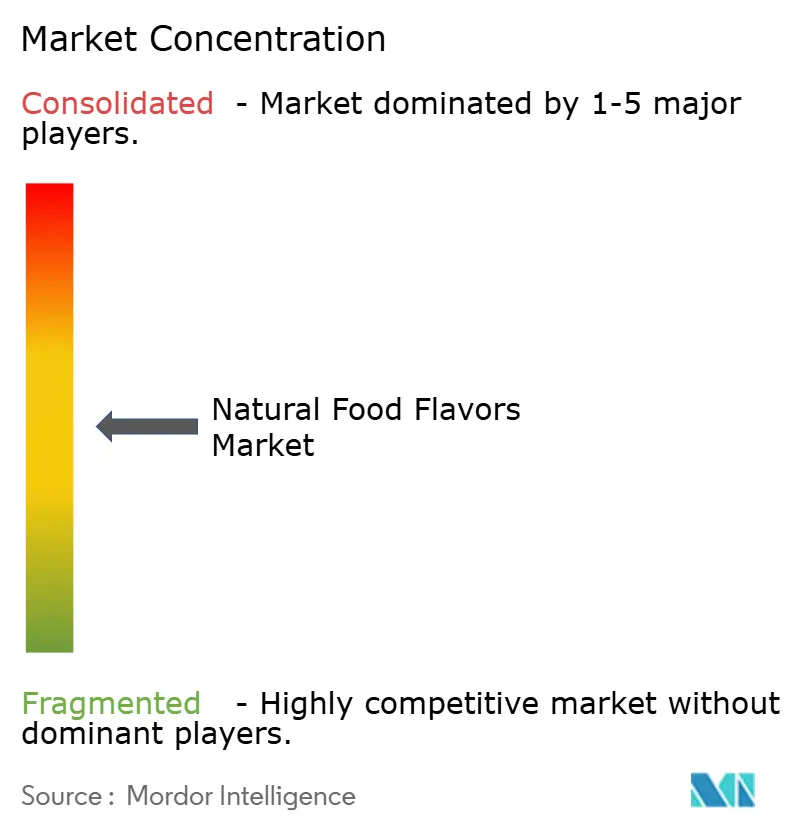
The natural food flavors market exhibits moderate fragmentation, indicating significant competitive intensity among established players while creating opportunities for specialized technology providers and regional suppliers. Market leaders, including Givaudan, DSM-Firmenich, and IFF, are pursuing differentiated strategies that combine scale advantages with technological innovation. The competitive landscape is characterized by vertical integration initiatives, biotechnological production investments, and strategic acquisitions that consolidate extraction capabilities and expand geographic reach.
Additionally, companies are investing in research and development to produce natural flavors that match the performance of artificial additives while complying with clean-label and sustainability standards. The production methods incorporate extraction techniques, enzymatic processes, and fermentation-based systems that maintain flavor quality and minimize environmental impact. Companies implementing regulatory compliance measures and supply chain traceability increase consumer confidence and competitive advantage. This strategy allows them to address the increasing demand for organic snacks, natural beverages, and healthier packaged foods.
Technology adoption is becoming the primary competitive differentiator as companies invest in fermentation-based production methods, advanced extraction techniques, and analytical verification systems to achieve consistent quality while reducing agricultural dependencies. Patent portfolios in vanillin biosynthesis, enzyme-based conversion systems, and encapsulation technologies create competitive moats that enable premium pricing and market share protection. White-space opportunities exist in biotechnological production methods, specialized application development, and regional market penetration, where local botanical knowledge and supply chain relationships provide competitive advantages over global players.
Natural Food Flavors Industry Leaders
-
Givaudan SA
-
Symrise AG
-
DSM-Firmenich
-
Takasago International Corp.
-
International Flavors & Fragrances Inc.
- *Disclaimer: Major Players sorted in no particular order
Natural Food Flavors Market Companies Covered in this Report
- Givaudan SA
- DSM–Firmenich AG
- International Flavors & Fragrances Inc.
- Symrise AG
- Kerry Group plc
- Archer Daniels Midland Company
- Sensient Technologies Corp.
- Takasago International Corp.
- BASF SE (Aroma Ingredients)
- Mane SA
- T. Hasegawa Co. Ltd.
- Robertet SA
- McCormick & Company Inc.
- Treatt plc
- Huabao International Holdings Ltd.
- Döhler GmbH
- Bell Flavors & Fragrances Inc.
- Synergy Flavors Inc.
- Blue Pacific Flavors
- Keva Flavours
Market Opportunities and Future Outlook
Reformulation and compliance workstreams are expanding demand for natural flavor solutions that can deliver consistent performance across processing conditions, especially as brands simplify ingredient statements and tighten substantiation around "natural" claims. One concrete signal appears in manufacturing and application-capability investments tied to naturally derived solutions, such as ADM's USD 26 million investment (January 2026) to expand flavor reformulation capabilities at its Erlanger, Kentucky campus. Capacity additions closer to growth markets and customers also broaden the scope for localized powder and encapsulated formats, including Givaudan's July 2026 inauguration of a new production facility in Cikarang, Indonesia for savory, sweet, and snack flavor powders.
Technology-led opportunities center on improving the reliability and scalability of natural flavor supply through fermentation, bioconversion, and advanced extraction, while still aligning products to region-specific definitions for natural labeling. Precision fermentation is being commercialized for high-purity aroma molecules, as shown by Lallemand's March 2026 introduction of Hevani (a vanillin ingredient produced through precision fermentation technology). Investments in botanical extraction and reaction chemistry platforms support product-line expansion and faster customer iteration cycles, with Dohler's June 2026 Cartersville, Georgia expansion serving as a specific example. Alongside tighter EU data expectations (for example, EFSA's 2025-2026 pilot on use-level data collection), these developments create a clearer opening for suppliers that can combine origin traceability, process validation, and application support to help customers meet both label compliance and sensory performance requirements.
Recent Industry Developments in Natural Food Flavors Market
- July 2026: Givaudan inaugurated a new 24,000 square meter production facility in Cikarang, Indonesia, to manufacture savory, sweet, and snack flavor powders. The added footprint supports localized supply for Asia-Pacific customers and strengthens the company's ability to scale powder and encapsulated formats used in clean-label reformulation work.
- May 2026: IFF opened a 650 square meter Vanilla Innovation Center in Toamasina, Madagascar, to support origin-based sourcing, extraction, and flavor development. The opening deepens the company's vertical connection to a critical natural raw material and strengthens traceability and resilience for vanilla-dependent flavor portfolios.
- June 2024: Tate and Lyle announced its decision to acquire CP Kelco for USD 1.8 billion to build a broader specialty food and beverage solutions platform. The combination expands formulation toolkits used alongside natural flavors (for example, mouthfeel systems) and increases cross-selling potential into reformulation programs.
Natural Food Flavors Market Report Scope and Research Methodology
Market Definition and Coverage
For this study, we size the value of natural food flavors sold for use in food and beverage manufacturing, where the flavoring substance is derived from natural sources and sold as a commercial ingredient.
Scope exclusions: We exclude finished packaged foods, foodservice preparation, and on-farm botanical production that is not sold as a standardized flavor ingredient.
Segments Covered in This Report
- By Application
- Dairy
- Bakery
- Confectionery
- Savory Snack
- Meat
- Beverage
- Other Applications
- By Form
- Powder
- Liquid
- Others
- By Geography
- North America
- United States
- Canada
- Mexico
- Rest of North America
- Europe
- United Kingdom
- Germany
- Spain
- France
- Italy
- Poland
- Netherlands
- Belgium
- Sweden
- Rest of Europe
- Asia-Pacific
- China
- India
- Japan
- Australia
- Indonesia
- South Korea
- Thailand
- Singapore
- Rest of Asia-Pacific
- South America
- Brazil
- Argentina
- Colombia
- Chile
- Peru
- Rest of South America
- Middle East and Africa
- Saudi Arabia
- South Africa
- United Arab Emirates
- Turkey
- Morocco
- Nigeria
- Egypt
- Rest of Middle East and Africa
- North America
Data Sources, Market Sizing, and Validation
Desk Research
Desk work starts with building a clear map of where natural flavors sit inside the wider food ingredients space, and how regulations describe flavoring substances across major regions. We refer to public and official sources such as the US Food and Drug Administration (FDA), the European Commission and EFSA materials on flavorings, Codex Alimentarius references, and trade data programs such as UN Comtrade and national customs statistics to understand supply movement and classification behavior.
We also review company annual reports, investor presentations, and reputable press coverage to track portfolio mix changes, capacity additions, and raw material availability for common natural inputs such as citrus, vanilla, and botanical extracts. In parallel, we use paid subscriptions for company financials and intelligence, patent databases to monitor extraction and fermentation activity, and an import and export shipment-level database to sanity-check trade directions for key natural flavor intermediates. These sources are used to set guardrails for volumes, pricing direction, and plausible adoption across food applications, and this list is not exhaustive because many other references are reviewed for data collection, validation, and clarification.
Primary Interviews and Surveys
Primary work is used to pressure-test what desk signals cannot confirm cleanly, especially how natural flavor demand shifts by application and how pricing is negotiated when supply tightens for key botanicals. We speak with ingredient suppliers, distributors, and food and beverage manufacturers, then align inputs across APAC, EMEA, and the Americas so regional regulation and labeling practices are reflected in the final model.
Distribution of primary research fieldwork respondents
| Company type | Respondent position | Region |
|---|---|---|
| Top tier: 37% | CXOs: 13% | APAC: 47% |
| Mid tier: 44% | Functional/Unit leaders: 36% | EMEA: 31% |
| Smaller Players: 19% | Managers: 51% | Americas: 22% |
Market-Sizing & Forecasting
Our market model begins with a top-down build that reconstructs flavor ingredient demand from food and beverage output trends and the typical flavor usage intensity in major categories, then narrows it to natural flavor share based on labeling and formulation direction shared by industry participants. To keep the estimate grounded, we corroborate totals with selective bottom-up approximations, including sampled supplier revenue mix, distributor channel checks, and ASP times volume spot-checks for high-visibility applications.
Inputs used in the model include clean-label adoption rates, the mix shift between natural, synthetic, and nature-identical flavoring, application-level growth in beverages, dairy, bakery, confectionery, and savory, plus form factor preferences between liquid and powder (since handling and price points differ). Pricing logic also considers raw material availability and volatility for common botanical sources, along with changes in extraction and fermentation-based production that can alter yields and cost curves. Forecasting is run using scenario analysis supported by expert consensus on regulation tightening, new product launch intensity, and normalization paths for key natural inputs, and where bottom-up detail is missing for smaller countries, we fill gaps using regional proxies tied to packaged food production and trade intensity, before rechecking the outputs with interviews.
Data Validation & Update Cycle
Validation is done through multiple checks that compare the modeled value against independent signals such as trade direction for flavor intermediates, application growth consistency, and implied pricing bands by form and end use. When a country or application shows an unexpected jump, we recheck assumptions, revisit conversion factors, and re-contact participants if the variance remains unexplained.
Before sign-off, the work is reviewed in steps so calculation logic, units, and currency conversions are consistent across regions and years. Reports refresh annually, with interim updates triggered by material events such as regulatory changes, sharp raw material disruptions, or major capacity moves, and a final pre-delivery pass is completed so clients receive the latest updated view.
Mordor Intelligence's Natural Food Flavor Market Size Compared Against Other Published Estimates
Published market sizes for natural food flavors can look far apart because different authors are not always counting the same ingredient set, the same value point in the chain, or the same timing for currency and pricing updates. Differences also show up when one estimate leans on broad flavor totals and then applies a simple natural-share factor, even though adoption varies by beverage, bakery, dairy, and savory.
Some external figures fold natural flavors into a wider food flavors and enhancers pool, then carry that total forward with a single growth assumption that does not separate form factors or application shifts. In Mordor Intelligence's model, value is counted only for natural flavor ingredients sold into food and beverage manufacturing, and the totals are rechecked against application growth, form mix, and interview-led pricing progression so adjacent categories do not inflate the number.
Benchmark comparison
| Source | Market Size | Gaps in Research Methodology |
|---|---|---|
| Mordor Intelligence | USD 6.81 B (2026) | |
| Global Consultancy A | USD 7.90 B (2026) | Uses a broader definition that blends natural flavors with adjacent enhancer systems, and applies a uniform natural-share assumption across applications without checking category-level usage intensity. |
| Industry Association B | USD 5.60 B (2026) | Leans on conservative pricing and limited coverage of cross-border ingredient flows, which can undercount value in high-growth regions and in liquid flavor formats used heavily by beverage producers. |
The spread in published values mainly comes from how tightly natural flavor ingredients are separated from related flavor and enhancer products, and how pricing is carried forward by form and application. By tying the build to food output signals, realistic usage rates, and interview-validated ASP movement, we can keep the estimate traceable and repeatable even when public data is incomplete.
Key Questions Answered in the Report
What is the current size of the natural food flavors market?
The natural food flavors market size reached USD 6.81 billion in 2026 and is projected to hit USD 9.53 billion by 2031 at a 6.93% CAGR.
Which application holds the largest share of natural food flavors?
Beverages led with 36.78% of 2025 revenue and are on track for a 7.31% CAGR during 2026-2031.
Which region is growing fastest for natural food flavors?
Asia-Pacific commands the highest share at 32.11% and is also the fastest-growing region, forecast at 7.62% CAGR to 2031.
How are companies mitigating supply volatility in natural flavors?
Leading firms invest in fermentation-based production, vertical integration of key crops, and encapsulation technologies that stabilize supply and reduce dependency on seasonal harvests.