
Nasal Drug Delivery Market Size and Share
Market Overview
| Study Period | 2020 - 2031 |
|---|---|
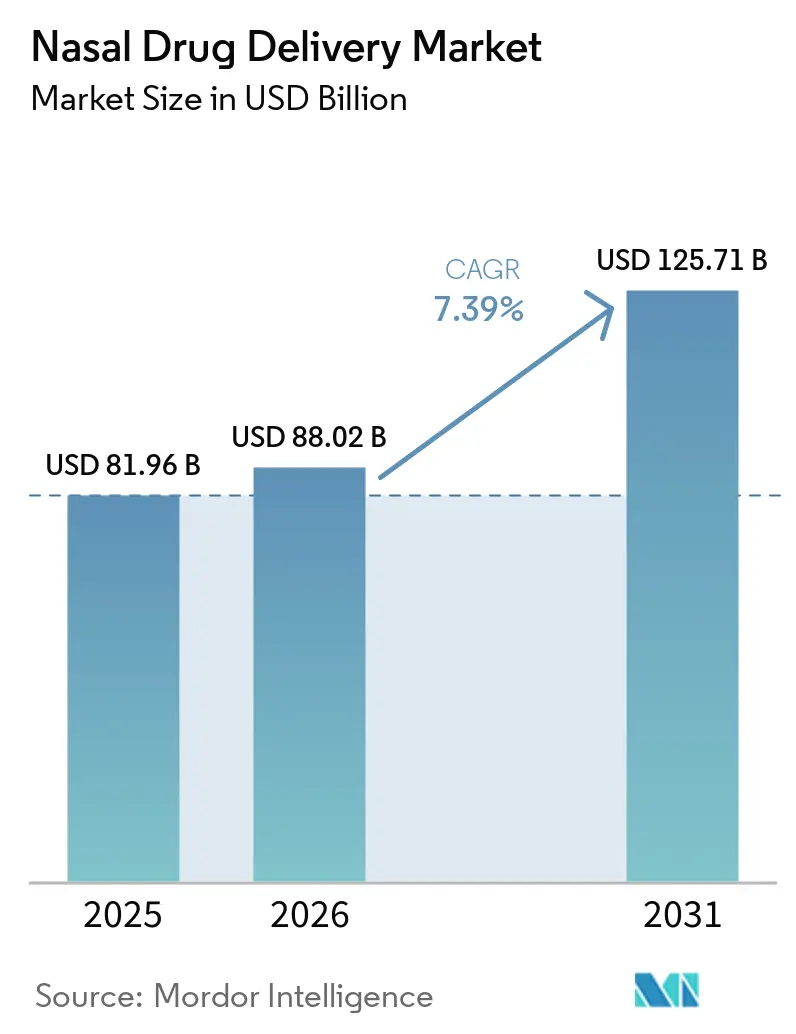
| Market Size (2026) | USD 88.02 Billion |
| Market Size (2031) | USD 125.71 Billion |
| Growth Rate (2026 - 2031) | 7.39 % |
| Fastest Growing Market | Asia Pacific |
| Largest Market | North America |
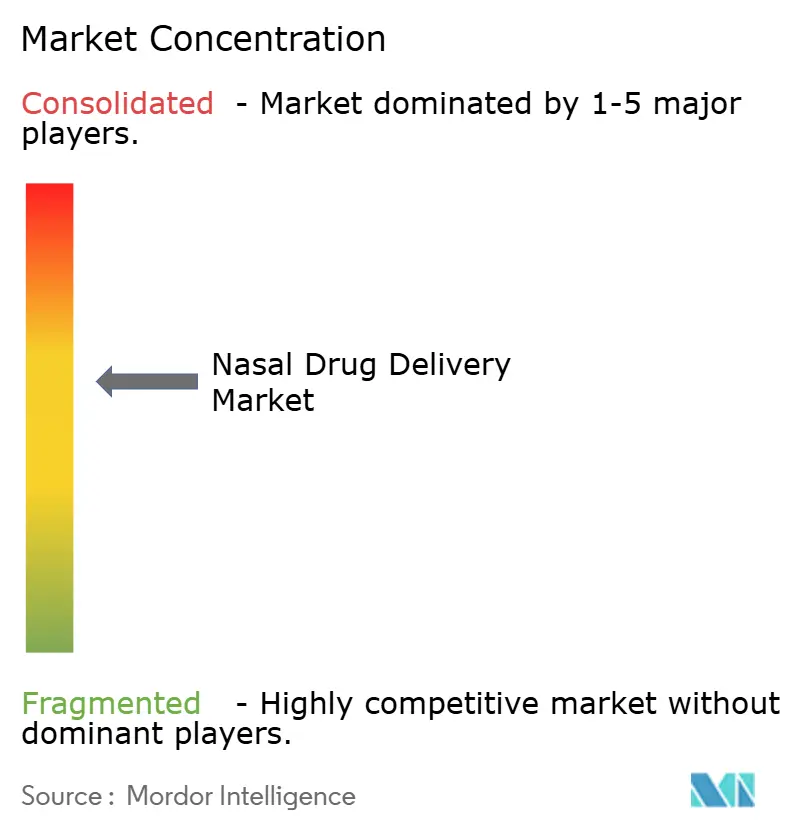
| Market Concentration | Medium |
Major Players *Disclaimer: Major Players sorted in no particular order Image © Mordor Intelligence. Reuse requires attribution under CC BY 4.0. | |
Nasal Drug Delivery Market Analysis by Mordor Intelligence
The nasal drug delivery market size is expected to grow from USD 81.96 billion in 2025 to USD 88.02 billion in 2026 and is forecast to reach USD 125.71 billion by 2031 at 7.39% CAGR over 2026-2031. This solid growth reflects regulatory approvals that have shifted intranasal administration from niche use to a mainstream option for both small- and large-molecule therapeutics. Needle-free epinephrine, at-home influenza vaccination, and the first intranasal antidepressant in China illustrate the powerful pull of patient-centric innovation. Companies are matching the regulatory momentum with new device-drug combinations, especially where self-administration reduces the burden on overcrowded care settings. Dry-powder technologies, pressurized delivery systems, and smart-device integration together deepen the competitive moat for firms that can balance formulation science with engineering rigor. Across every region, the nasal drug delivery market benefits from patients seeking faster onset, less invasive routes, and freedom from cold-chain constraints.
Key Report Takeaways
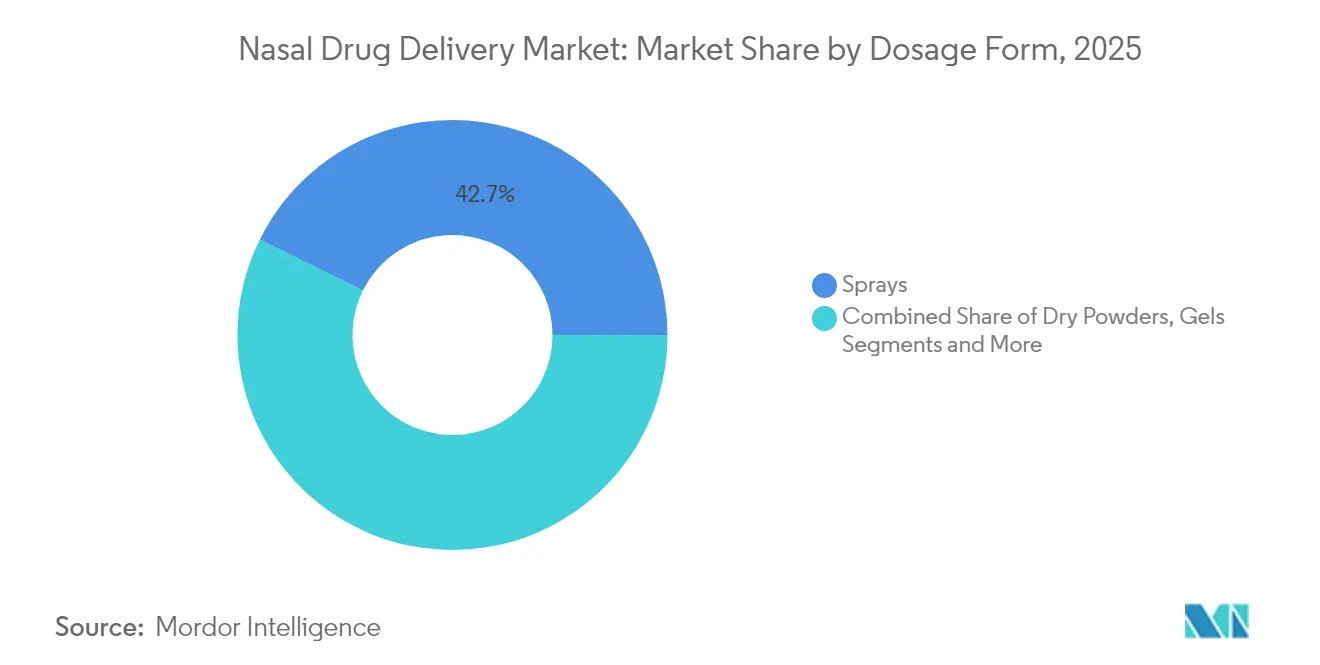
- By dosage form, sprays held 42.68% of the nasal drug delivery market share in 2025, while dry powders are projected to post a 10.24% CAGR through 2031.
- By container type, non-pressurized systems captured 61.63% revenue in 2025; pressurized containers are forecast to rise at a 9.55% CAGR to 2031.
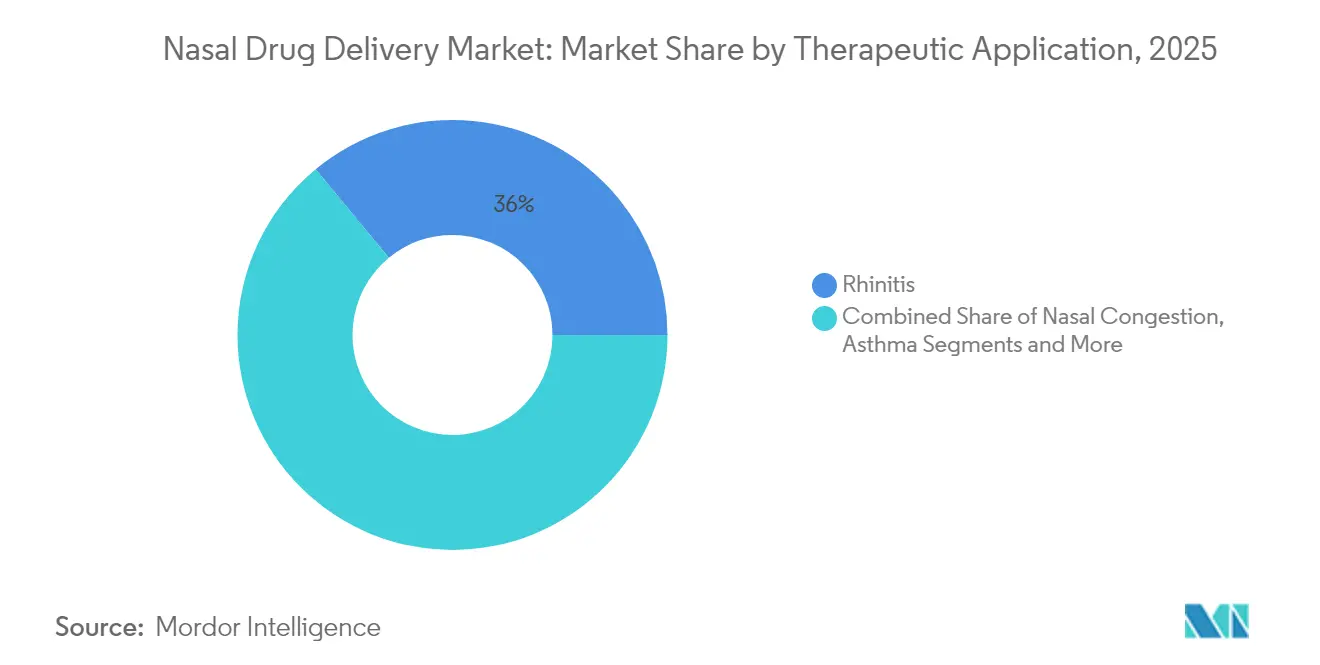
- By therapeutic application, rhinitis treatments commanded 35.98% of the nasal drug delivery market size in 2025, whereas pain management is set to expand at a 9.62% CAGR between 2026 and 2031.
- By end user, hospitals accounted for 46.89% of the nasal drug delivery market in 2025, while home healthcare is advancing at an 10.98% CAGR through 2031.
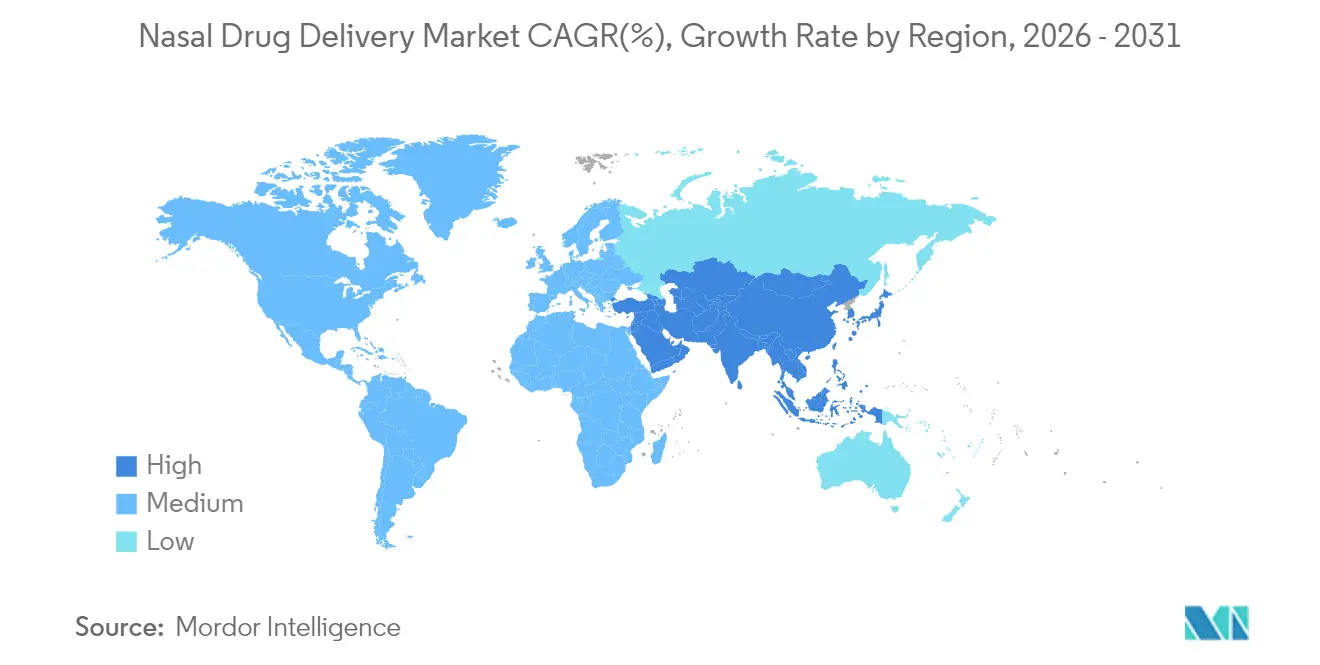
- By geography, North America led with 38.15% of nasal drug delivery market share in 2025; Asia Pacific is the fastest-growing region at a 9.87% CAGR to 2031.
Note: Market size and forecast figures in this report are generated using Mordor Intelligence’s proprietary estimation framework, updated with the latest available data and insights as of 2026.
Market Trends and Insights
Drivers Impact Analysis of Nasal Drug Delivery Market*
| Driver | (~) % Impact on CAGR Forecast | Geographic Relevance | Impact Timeline |
|---|---|---|---|
| Increasing prevalence of allergic rhinitis & chronic sinusitis | +1.2% | Global, North America & Europe | Long term (≥ 4 years) |
| Growing adoption of self-administration practices | +1.8% | North America & Europe; Asia Pacific strengthening | Medium term (2-4 years) |
| Rising patient preference for needle-free routes | +1.5% | Global, strong in pediatric groups | Medium term (2-4 years) |
| Regulatory approvals of large-molecule biologics via intranasal route | +0.9% | North America & Europe leadership | Short term (≤ 2 years) |
| Pandemic-driven cold-chain cost-saving push | +0.7% | Global, emerging markets highlighted | Medium term (2-4 years) |
| Sensor-enabled smart nasal devices for adherence tracking | +0.4% | North America & Europe early adoption | Long term (≥ 4 years) |
| Source: Mordor Intelligence | |||
Increasing Prevalence of Allergic Rhinitis & Chronic Sinusitis
The rising burden of allergic rhinitis and chronic sinusitis sustains steady demand for intranasal therapies. The FDA cleared fluticasone propionate (XHANCE) for chronic rhinosinusitis without nasal polyps in March 2024, validating exhalation-delivery technology that targets inflamed nasal tissue. Phase 3 data show marked symptom relief and fewer exacerbations, broadening the addressable respiratory market. Pipeline programs extend to biologics such as stapokibart, an IL-4 receptor monoclonal antibody that improved nasal and ocular scores in late-stage trials, pointing to a new class of targeted intranasal immunotherapies.
Growing Adoption of Self-Administration Practices
Regulators now back patient-handled delivery. In September 2024 the FDA authorized FluMist for at-home use, the first vaccine approved for self-administration. Usability studies confirmed safe delivery across age brackets, removing both needle anxiety and clinic scheduling bottlenecks. Similar design principles guided neffy, which enables emergency epinephrine without medical supervision, a meaningful advance for people who avoid injectors. Education programs from hospital pharmacists reinforce correct technique, tightening the feedback loop between device innovation and real-world adherence.
Rising Patient Preference for Needle-Free Routes
Needle phobia affects up to one-quarter of patients who need epinephrine. Neffy directly tackles this barrier with a 30-month shelf-stable spray that resolved pediatric reactions in 16 minutes on median.[1]Anne K. Ellis, “Development of neffy, an Epinephrine Nasal Spray, for Severe Allergic Reactions,” Pharmaceutics, mdpi.com Companies see strategic value: ARS Pharmaceuticals has active filings in China, Japan, and Australia, aiming to leverage the global prevalence of injection avoidance. Beyond anaphylaxis, mucosal vaccines deliver broader immune coverage at the local infection site, illustrating how needle-free design can expand both market and clinical impact.
Regulatory Approvals of Large-Molecule Biologics Via Intranasal Route (2025+)
FDA draft guidance now details performance standards for nasal combination products, giving sponsors a clear path for complex biologics. Thin-film freeze-drying converts antibodies into stable powders that maintain activity when sprayed intranasally.[2]J.G. Barnard, “Intranasal Delivery of Thin-Film Freeze-Dried Monoclonal Antibodies Using a Powder Nasal Spray System,” ScienceDirect, sciencedirect.com Novel PLGA nanoparticles delivered trastuzumab nose-to-brain with nine-fold improved transport, underscoring intranasal feasibility for oncology and neurology.
Restraints Impact Analysis of Nasal Drug Delivery Market*
| Restraint | (~) % Impact on CAGR Forecast | Geographic Relevance | Impact Timeline |
|---|---|---|---|
| Overuse complications causing rhinitis medicamentosa | -0.8% | Global, OTC markets | Medium term (2-4 years) |
| Patent cliff for leading allergic-rhinitis brands (2025-27) | -1.1% | North America & Europe | Short term (≤ 2 years) |
| Cold-chain integrity risk for temperature-sensitive biologics | -0.6% | Global, emerging markets | Long term (≥ 4 years) |
| Stringent regulations | -0.4% | North America & Europe | Medium term (2-4 years) |
| Source: Mordor Intelligence | |||
Overuse Complications Causing Rhinitis Medicamentosa
Prolonged vasoconstrictor use can trigger rebound congestion. Surveys show 75% of Canadian otolaryngologists think current warning labels are insufficient, and nearly 30% of patients cannot stop over-the-counter sprays despite counseling. Severe cases call for surgical turbinate reduction, adding complexity and cost.
Patent Cliff For Leading Allergic-Rhinitis Brands (2025-27)
Key formulations such as oxymetazoline and fluticasone face impending exclusivity loss. Historical trends suggest 80-90% price erosion within 18 months post-expiry, compressing branded revenue and unsettling forecast baselines. Originator firms respond with combination products and device upgrades aimed at fresh patent life.
*Our forecasts treat driver/restraint impacts as directional, not additive. The impact forecasts reflect baseline growth, mix effects, and variable interactions.
Nasal Drug Delivery Market Segment Analysis
By Dosage Form:
Dry Powders Drive InnovationSprays owned 42.68% of the nasal drug delivery market in 2025, reflecting decades of clinical familiarity. Dry powders, however, are projected to grow 10.24% annually as firms harness freeze-drying and spray-drying methods to stabilize antibodies and peptides. Thin-film freeze-dried monoclonal antibodies achieve effective aerosol performance without refrigeration. Breath-actuated insufflators, combined with mucoadhesive excipients, further lift residence time. Drops retain a role in pediatrics, while gels cater to chronic cases needing sustained mucosal contact. Each modality meets distinct clinical needs, yet powders capture the highest forward momentum by marrying stability with patient convenience.
The nasal drug delivery market size for dry powders is set to expand at the fastest clip, whereas sprays continue to anchor baseline revenue. Product design now centers on Quality by Design frameworks that link particle morphology to consistent dosing. Nanocarrier-loaded powders push the therapeutic frontier into vaccines, gene therapy, and brain-targeted oncology. This balanced portfolio lets manufacturers hedge mature volume against high-growth innovation streams.


By Container Type:
Pressurized Systems Gain MomentumNon-pressurized formats delivered 61.63% of 2025 sales due to low cost and simple design. Pressurized systems are on a 9.55% CAGR trajectory because biologics often need exact, repeatable doses. Aptar’s acquisition of SipNose technology signals confidence in soft-mist platforms that protect fragile proteins. Bespak’s customizable valves add another layer of precision. At the same time, unit-dose devices such as NasaDose improve sterility, making them attractive for emergency neurologic sprays.
As the nasal drug delivery market evolves, container choice increasingly follows molecule complexity. Large antibodies favor pressurized devices that guarantee plume geometry and minimal shear stress. Small molecules and decongestants stay in pump sprays for price sensitivity. The push-pull dynamic means suppliers must maintain dual manufacturing lines while upgrading quality control to meet combination-product regulations.
By Therapeutic Application:
Pain Management AcceleratesRhinitis therapies held a 35.98% share in 2025 thanks to high global prevalence. Pain management will outpace all others at 9.62% CAGR through 2031. Intranasal tapentadol reached faster pain reduction than intravenous tramadol in head-to-head trials, confirming the route’s value in post-operative care.Cardiovascular uses follow closely: intranasal etripamil offers rapid relief from supraventricular tachycardia without hospital IV access.
Vaccines represent a strategic frontier. FluMist’s self-administration approval built confidence for nasally delivered COVID-19 and dual RNA vaccines entering US phase 1. In palliative settings, one-third of hospice patients may benefit from nasal morphine sprays when oral or subcutaneous paths fail. This versatility keeps the nasal drug delivery market diversified against single-segment shocks.
By End User:
Home Healthcare TransformationHospitals controlled 46.89% of 2025 demand, yet home healthcare is advancing 10.98% per year. FDA’s nod to at-home FluMist flipped the paradigm by proving that even live attenuated vaccines can be self-administered safely. Remote coaching apps and pharmacist-led tutorials ensure correct technique, directly addressing the misuse that historically undermined outcomes.
The nasal drug delivery market size for home healthcare will keep expanding as digital monitoring couples with user-friendly devices. Emergency products like neffy show parents can deliver lifesaving therapy without delay. Ambulatory surgery centers prefer nasal analgesics to speed discharge, and specialty clinics adopt intranasal biologics for targeted CNS delivery. Together, these settings dilute the hospital’s historic dominance.
Geography Analysis
North America and Europe Nasal Drug Delivery Market
North America retained 38.15% market share in 2025 on the back of a mature regulatory framework, early adopter payers, and high allergic-rhinitis prevalence. The region also acts as the first launch pad for large-molecule nasal biologics, reflecting strong FDA engagement. Europe follows with robust reimbursement structures, yet growth is more measured as generics temper price points. Stringent device guidelines, though, preserve premium space for engineered combination products.
APAC Nasal Drug Delivery Market
Asia Pacific is the standout growth engine at a 9.87% CAGR. China’s June 2024 approval of esketamine nasal spray for depression validated the route for central-nervous-system biologics and unlocked a sizeable untreated segment. Japan positions itself as a fast follower: Aculys Pharma’s diazepam filing in 2024 signals future intranasal seizure-rescue launches. Australia mirrors these trends by fast-tracking needle-free epinephrine.
MEA and South America Nasal Drug Delivery Market
Middle East and Africa benefit from ongoing cold-chain upgrades that allow sensitive biologics to reach major urban centers. In South America, high respiratory-disease incidence and crowded outpatient clinics strengthen the appeal of self-administered sprays. As supply chains mature, the nasal drug delivery market will continue to widen its geographic footprint through localized manufacturing and regulatory harmonization.

Regulatory Landscape
Nasal drug-device combinations are regulated as combination products in major markets. In the United States, the FDA Office of Combination Products supports integrated oversight, with 21 CFR Part 4 quality system alignment across drug and device elements. FDA guidance for nasal spray and inhalation solution/suspension/spray products, together with combination-product human factors expectations (including use-related risk analysis and comparative-use human factors studies for generics), pushes sponsors to define user interface, delivered dose, and spray performance controls early to limit late-stage bridging work.
In Europe, EMA quality expectations for inhalation and nasal products, along with lifecycle change management (including ICH Q12-oriented approaches), affects how manufacturers manage post-approval updates to devices, valves, and formulations. EMA also moved forward on work related to demonstrating therapeutic equivalence for nasal products through a consultation concept paper released in July 2024, keeping pressure on evidence packages for generics and follow-on products. A 2026 milestone was the CHMP positive opinion in January 2026 for a new 1 mg strength of Eurneffy (epinephrine) nasal spray, which highlights continued regulatory traction for needle-free emergency therapies in Europe.
Value Chain Analysis
The value chain starts with API and excipient sourcing, including mucoadhesives and stabilizers used for powders and biologics, followed by particle engineering for dry powders (spray drying, freeze drying, and thin-film freeze drying) and formulation development to hit sprayability and bioavailability targets. Device development and component supply, including pumps, valves, actuators, unit-dose systems, and pressurized containers, depend on specialized, leach-resistant materials such as cyclic olefin polymers and high-performance elastomeric seals. Because products are regulated as drug-device combinations, manufacturers must run aligned cGMP and device quality controls, with tight in-vitro performance control over delivered dose, plume geometry, and spray pattern throughout shelf life.
Downstream, sterile fill-finish is especially critical for unit-dose nasal sprays, followed by final assembly and packaging, which commonly drives outsourcing to integrated CDMOs with both device know-how and aseptic capability. Distribution generally runs through hospital and retail/pharmacy channels for established rhinitis therapies, while newer emergency and specialty products increasingly depend on training materials and home-use support to improve correct administration. Recent capability expansion and platform consolidation reinforce this chain: Kindeva Drug Delivery acquired Summit Biosciences in January 2024 to expand intranasal formulation and manufacturing capacity, and AptarGroup completed the acquisition of SipNose nasal delivery technology assets in October 2024 to strengthen advanced intranasal device options for pharmaceutical partners.
Competitive Landscape
The landscape is moderately fragmented. Global pharmaceutical firms such as AstraZeneca, Janssen, and ARS Pharmaceuticals lean on device specialists like Aptar and Bespak to lock in differentiated delivery platforms. Aptar spent part of its USD 3.5 billion revenue on SipNose’s assets in October 2024, bolstering its pressurized portfolio. Such vertical integration raises barriers for single-capability entrants.
Generics loom large as patents lapse between 2025 and 2027, pressuring incumbents to innovate in combination sprays and smart-device tie-ins that are harder to copy. Meanwhile, AI-enabled adherence tools appear as a new battleground: firms that can integrate sensor feedback into therapeutic ecosystems may pull ahead on value-based-care contracts.
Third-tier innovators concentrate on nano-structured powders and CNS-targeted antibodies, often licensing device platforms to fast-track to clinic. Venture funding gravitates to programs that bridge formulation science, user-centered design, and regulatory clarity. As a result, the nasal drug delivery market remains contestable yet rewards cross-disciplinary execution.
Nasal Drug Delivery Industry Leaders
GlaxoSmithKline PLC
AstraZeneca PLC
Johnson & Johnson
Novartis AG
Pfizer Inc
- *Disclaimer: Major Players sorted in no particular order
Nasal Drug Delivery Market Companies Covered in this Report
- Solventum
- Neurelis Inc.
- AptarGroup Inc.
- AstraZeneca
- BD (Becton, Dickinson & Co.)
- GlaxoSmithKline
- Johnson & Johnson
- Merck
- Novartis
- Pfizer
- Teva Pharmaceutical Industries
- Cipla
- Bausch Health
- OptiNose Inc.
- Impel NeuroPharma Inc.
- Kurve Technology Inc.
- Recipharm
- Sun Pharma Industries Ltd.
- Hikma Pharmaceuticals
- Dr. Reddy’s Laboratories Ltd.
- Sandoz Group

Market Opportunities and Future Outlook
A clear opportunity is scaling high-performance platforms for non-injectable rescue and self-administration use cases, where regulators have already validated at-home and needle-free paradigms. FDA authorizations such as FluMist for at-home use (September 2024) and pediatric expansion for neffy (March 2025) show how usability and human factors packages can broaden settings of care, supporting additional launches across emergency allergy, seizure rescue, and migraine. Europe adds parallel evidence through EURneffy approvals and the EMA CHMP positive opinion for a new 1 mg strength in January 2026, reinforcing multi-region pathways for epinephrine nasal sprays.
The market also has whitespace in chronic and prophylactic programs that benefit from dry-powder stability and precision dosing, particularly as performance-based regulatory expectations become more explicit. FDA work on essential drug delivery outputs (June 2024 draft guidance) and broader acceptance of advanced in-vitro characterization approaches for nasal suspensions reduce reliance on comparative clinical endpoint studies for certain pathways. That shifts investment toward analytical testing, particle engineering, and standardized device platforms. Commercial signals include Aptar Pharma systems being selected for multiple Phase II intranasal programs in March 2026, and Hovione and IDC launching an integrated single-use nasal dry powder platform for partnership in May 2026, which points to more end-to-end development routes that combine formulation, device access, and manufacturability.
Recent Industry Developments in Nasal Drug Delivery Market
- April 2026: GlaxoSmithKline reported that China’s NMPA approved Exdensur (depemokimab) as an add-on therapy with intranasal corticosteroids for adults with chronic rhinosinusitis with nasal polyps. The approval expands the role of intranasal regimens in specialty ENT care and reinforces interest in nasal-route strategies that pair advanced biologics with established local therapies.
- December 2025: The FDA approved CARDAMYST (etripamil) for acute symptomatic episodes of paroxysmal supraventricular tachycardia (PSVT), using Aptar Pharma’s Bidose (BDS) liquid nasal spray system as the delivery mechanism. This approval lifts intranasal delivery in cardiovascular rescue settings and underscores the strategic value of validated, partner-ready device platforms for regulated combination products.
- October 2024: Aptar Pharma acquired SipNose’s nasal delivery technology assets to strengthen its advanced intranasal platform portfolio. The deal expands Aptar’s device capabilities for complex programs, including CNS-oriented and precision dosing applications, and increases competitive pressure on other component and platform suppliers seeking preferred-partner positions with pharmaceutical developers.


Nasal Drug Delivery Market Report Scope and Research Methodology
Market Definition and Coverage
For this study, the nasal drug delivery market covers finished drug products and combination products administered through the nasal cavity to achieve local or systemic therapeutic effects, along with the delivery formats used in routine patient care.
Scope exclusions: We exclude over-the-counter nasal dilators and diagnostic swabs that do not involve drug administration.
Segments Covered in This Report
- By Dosage Form
- Sprays
- Drops & Liquids
- Gels
- Dry Powders
- Others
- By Container Type
- Non-Pressurized Containers
- Pressurized Containers
- By Therapeutic Application
- Rhinitis
- Nasal Congestion
- Asthma
- Pain Management
- Vaccination
- Others
- By End User
- Hospitals
- Home Health Care
- Ambulatory Surgery Centers
- Specialty Clinics
- By Geography
- North America
- United States
- Canada
- Mexico
- Europe
- Germany
- United Kingdom
- France
- Italy
- Spain
- Rest of Europe
- Asia-Pacific
- China
- Japan
- India
- Australia
- South Korea
- Rest of Asia-Pacific
- Middle East and Africa
- GCC
- South Africa
- Rest of Middle East and Africa
- South America
- Brazil
- Argentina
- Rest of South America
- North America
Data Sources, Market Sizing, and Validation
Desk Research
Desk work starts with building a clear fact base for demand and supply signals that influence intranasal therapies. We refer to public sources such as the US FDA and other regulators for approvals and labeling, the US CDC for disease burden context, and the WHO for global health indicators that influence treatment volumes.
We also use sources such as national health statistics portals, peer reviewed journal articles on intranasal pharmacokinetics and adherence, and trade association releases that discuss device standards and packaging requirements. Company annual reports, investor presentations, and press releases are used to confirm product launches, pipeline shifts, and geographic focus. Where needed, we also use paid subscriptions for company financials and intelligence, and for patent databases to map technology activity and validate timing of innovation cycles. These examples are illustrative, and many other public sources were also used to collect, validate, and clarify data points.
Primary Interviews and Surveys
Primary checks were completed through expert interviews and structured surveys with manufacturers, distributors, clinicians, and pharmacy channel participants who see prescription and OTC movement patterns. Coverage was balanced across major regions so we could validate therapy mix changes, typical pack pricing, and adoption of newer device formats, then close gaps where public data stayed high level.
Distribution of primary research fieldwork respondents
| Company type | Respondent position | Region |
|---|---|---|
| Top tier: 37% | CXOs: 12% | APAC: 42% |
| Mid tier: 45% | Functional/Unit leaders: 31% | EMEA: 37% |
| Smaller Players: 18% | Managers: 57% | Americas: 21% |
Market-Sizing & Forecasting
Sizing begins with a top-down build where treatment demand is reconstructed using disease prevalence signals and therapy usage patterns, then translated into value using typical pack prices and annual course assumptions. To keep the model practical, inputs include the mix of local versus systemic indications, share shift between sprays, drops, gels, and powders, the prescription versus OTC split where applicable, average selling price movement by key markets, and the pace of new approvals and reformulations that change volumes.
After the main build, results are checked with selective bottom-up approximations, such as sampling key product categories and estimating ASP multiplied by volume, followed by channel checks with pharmacies and distributors. When a product or geography has limited public visibility, we handle gaps through proxy indicators like adjacent therapy class growth, regulatory event timing, and expert confirmed pricing bands, then apply them consistently across the model.
For forecasting, we mainly use scenario analysis supported by simple trend fitting on the demand drivers, since shifts in indication mix and launch timing can move growth up or down. Assumptions are finalized only after they match what respondents describe as realistic adoption curves and pricing behavior over the forecast window.
Data Validation & Update Cycle
Outputs are validated through repeated cross-checks against independent signals, such as approval counts, product launch timelines, and region level demand indicators that should move in the same direction as the model. Outliers are reviewed with a second analyst, and when a variance cannot be explained by scope or timing, we re-check source assumptions and, if needed, re-contact respondents for clarification.
The report is refreshed annually, and interim updates are made when material events occur, such as major approvals, recalls, or sharp pricing changes in large markets. Before delivery, a final pass is completed to incorporate the latest public releases and ensure the numbers still reconcile cleanly across the full time series.
Mordor Intelligence's Nasal Drug Delivery Market Size Compared With Other Published Estimates
Published market values for nasal drug delivery often vary because the market can be defined in different ways, and because each publisher chooses different base years, price logic, and forecasting assumptions. Differences also show up when one estimate is driven by therapy demand signals and another relies more on broader technology statements.
The main gap often comes from whether device or technology related revenue is counted separately from finished drug products, and from how local congestion products are blended with systemic delivery uses like pain and emergency therapies. Some estimates also mix older base years with later inflation or currency timing, which can make the current year look bigger or smaller even before growth is applied.
Benchmark comparison
| Source | Market Size | Gaps in Research Methodology |
|---|---|---|
| Mordor Intelligence | USD 88.02 B (2026) | |
| Industry Data Provider A | USD 69.93 B (2024) | Uses an earlier base year and a broader segmented structure where the inclusion of container and system types is not clearly separated from finished drug revenue, which can pull totals down when pricing and volume are not refreshed to later years. |
| Global Publisher B | USD 88.85 B (2025) | Positions the scope as nasal drug delivery technology and appears to use a different year alignment, so its number can be close in level while still reflecting a different mix of dosage forms, container assumptions, and longer horizon growth set. |
Across the three figures, the spread is mainly explained by year timing and what is counted as market revenue, especially around technology and device related elements. The key gap driver is scope composition: Mordor Intelligence counts drug led nasal formats and related combination products, while keeping non-drug items like nasal dilators outside the total, which makes the value easier to trace back to therapy demand and pricing steps.


Key Questions Answered in the Report
What is the current value of the nasal drug delivery market?
The market stands at USD 88.02 billion in 2026 and is projected to grow to USD 125.71 billion by 2031.
Which region is expanding the fastest?
Asia Pacific is expected to register a 9.87% CAGR, the highest among all regions.
Why are dry-powder nasal formulations gaining traction?
They offer improved stability for biologics, longer shelf life without refrigeration, and a projected 10.24% CAGR through 2031.
How did the FDA’s approval of FluMist for self-administration impact the market?
It validated at-home vaccination, accelerated growth in the home-healthcare segment, and underscored patient demand for needle-free options.
What is driving the rise of pressurized nasal delivery systems?
Large-molecule therapeutics need precise, repeatable dosing, pushing pressurized containers to a 9.55% CAGR.
Page last updated on:


 Your data is secure and never sold or shared.


