
Market Overview
| Study Period | 2021 - 2031 |
|---|---|
| Forecast Data Period | 2026 - 2031 |
| Base Year Market Size (2025) | USD 1.25 Billion |
| Market Size (2026) | USD 1.36 Billion |
| Market Size (2031) | USD 2.12 Billion |
| Growth Rate (2026 - 2031) | 9.19 % |
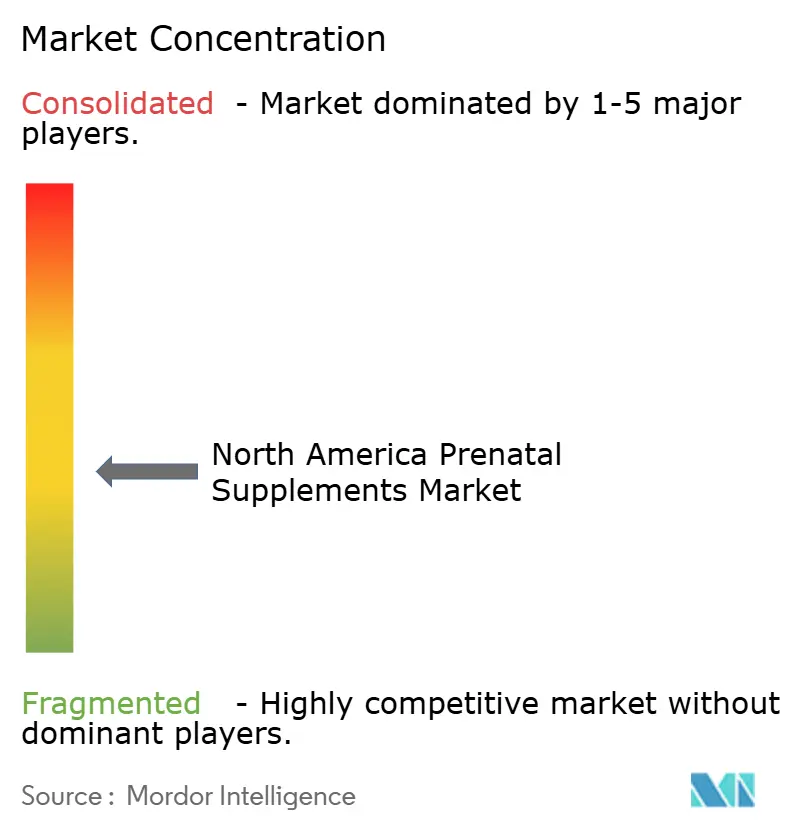
| Market Concentration | Medium |
Major Players *Disclaimer: Major Players sorted in no particular order Image © Mordor Intelligence. Reuse requires attribution under CC BY 4.0. | |
North America Prenatal Supplements Market Analysis by Mordor Intelligence
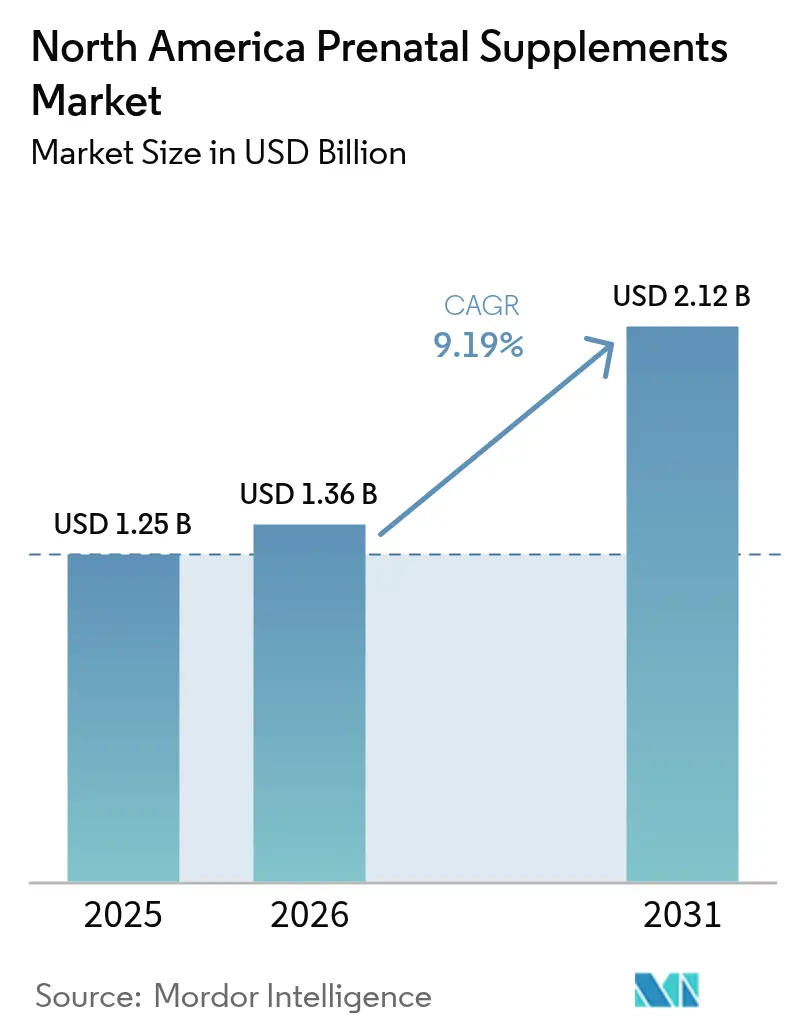
The North American prenatal supplements market size is expected to grow from USD 1.25 billion in 2025 to USD 1.36 billion in 2026 and is forecast to reach USD 2.12 billion by 2031 at 9.19% CAGR over 2026-2031. This growth stems from increased awareness of prenatal nutrition's importance in maternal and fetal health outcomes, alongside the shift toward preventive healthcare and rising maternal age across the region. The market expansion also reflects growing consumer education about the critical role of micronutrients during pregnancy, enhanced product accessibility through various distribution channels, and increasing healthcare provider recommendations for prenatal supplementation. The market’s growth is also tied to rising maternal age, broader insurance coverage for prenatal care, and proliferating direct-to-consumer (DTC) brands that bundle convenience with transparency.
Key Report Takeaways
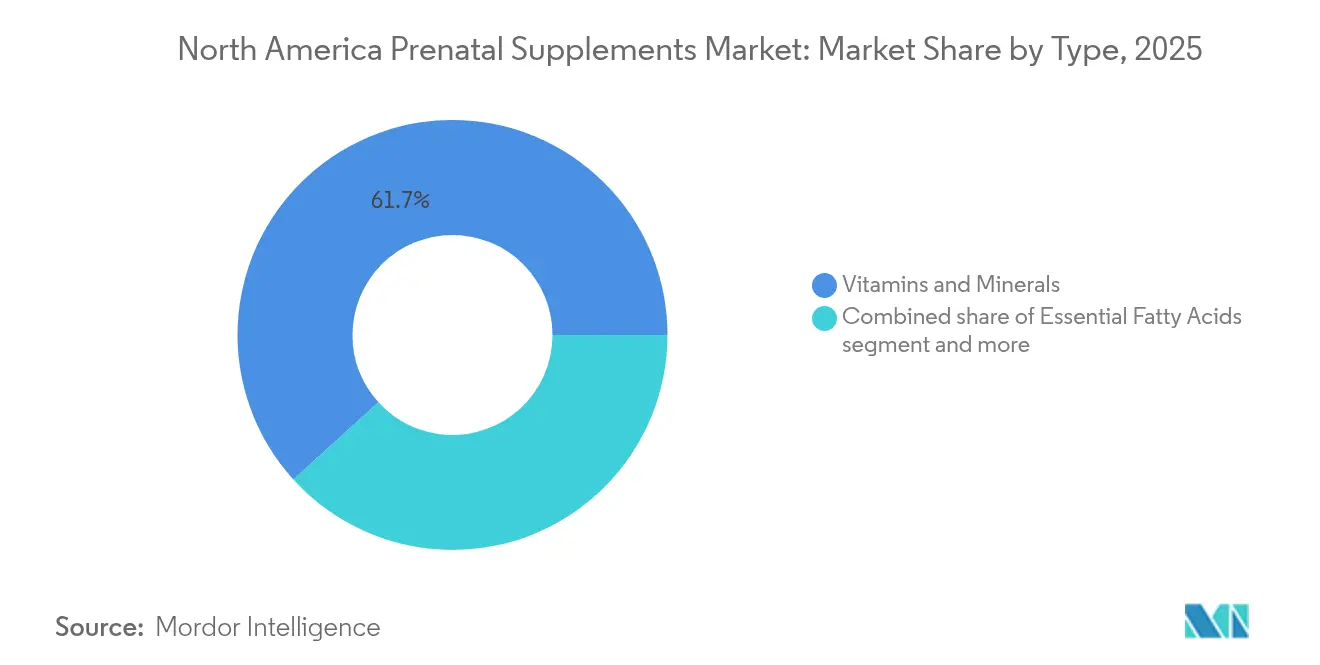
- By type, vitamins and minerals led with 61.74% of the North America prenatal supplements market share in 2025, while essential fatty acids are projected to advance at 9.41% CAGR through 2031.
- By form, capsules and softgels retained 59.68% share in 2025; gummies are set to post the fastest 10.98% CAGR over 2026-2031.
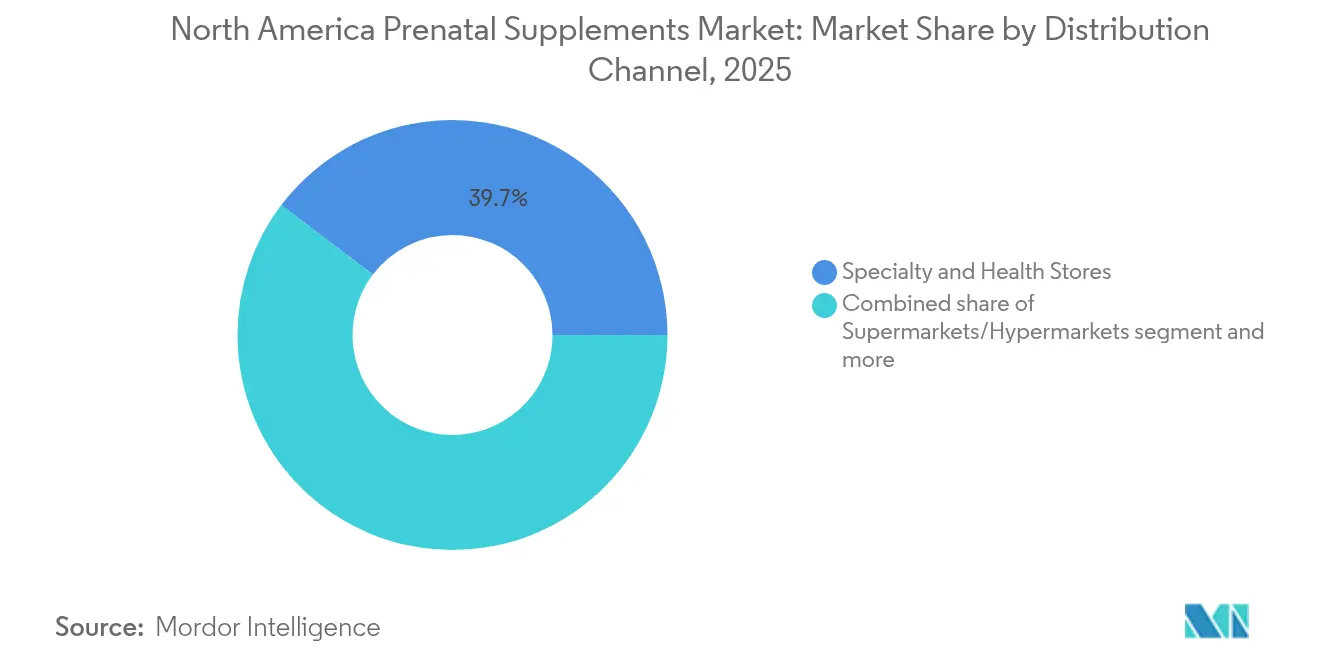
- By distribution channel, specialty and health stores accounted for 39.67% revenue share in 2025, whereas online retail is on track for a 10.32% CAGR to 2031.
- By geography, the United States dominated with 81.55% share in 2025; Mexico displays the highest regional growth at 10.5% CAGR through 2031.
Note: Market size and forecast figures in this report are generated using Mordor Intelligence’s proprietary estimation framework, updated with the latest available data and insights as of 2026.
North America Prenatal Supplements Market Trends and Insights
Drivers Impact Analysis*
| Driver | (~) % Impact on CAGR Forecasts | Geographic Relevance | Impact Timeline |
|---|---|---|---|
| High awareness of prenatal nutrition benefits among expectant mothers | +2.1% | North America, with strongest impact in United States and Canada | Medium term (2-4 years) |
| Strong endorsements from healthcare providers and organizations | +1.8% | North America, particularly United States | Short term (≤ 2 years) |
| Rising maternal age leading to increased focus on foetal health | +1.5% | United States and Canada, emerging in Mexico | Long term (≥ 4 years) |
| Growing demand for personalized and trimester-specific supplement formulations | +1.3% | United States and Canada | Medium term (2-4 years) |
| Increased preference for natural, organic, and plant-based prenatal supplements | +1.2% | North America, with premium positioning in United States | Medium term (2-4 years) |
| Influencer-led awareness campaigns boosting product visibility | +0.9% | North America, particularly digital-native demographics | Short term (≤ 2 years) |
| Source: Mordor Intelligence | |||
High awareness of prenatal nutrition benefits among expectant mothers
The Centers for Disease Control and Prevention's 2025 guidance recommends that women of reproductive age consume 400 micrograms of folic acid daily, expanding beyond pregnancy planning to include preconception health management [1]. This recommendation aligns with the first 1,000 days concept, which recognizes that maternal nutrition during pregnancy and early infancy influences long-term health outcomes for both mother and child. The American College of Obstetricians and Gynecologists supports healthcare provider education programs that incorporate nutritional supplementation into standard prenatal care protocols as a preventive measure. Public health campaigns now highlight the importance of multiple nutrients, including choline for cognitive development and DHA for neurological function, leading to increased demand for comprehensive prenatal supplements.
Strong endorsements from healthcare providers and organizations
Medical professional organizations significantly influence prenatal vitamin demand through clinical guidelines and recommendations. The American College of Obstetricians and Gynecologists has established prenatal vitamin supplementation as a standard care protocol in obstetric practices. The Office of Dietary Supplements' 2025 guidelines recommend that women of childbearing age consume a minimum of 250 mg daily of DHA plus EPA omega-3 fatty acids, with pregnant women needing an additional 100-200 mg of DHA daily. Healthcare systems incorporate specific prenatal supplement brands into their care protocols after clinical validation, creating stable revenue opportunities for manufacturers. The integration of prenatal nutrition recommendations into electronic health records and clinical support systems enables healthcare providers to generate automated supplement recommendations based on patient profiles and pregnancy stages.
Rising maternal age leading to increased focus on foetal health
The trend of delayed childbearing increases the demand for nutritional supplements, as women of advanced maternal age face higher risks of pregnancy complications and chromosomal abnormalities. These risks can be reduced through targeted nutritional support. Older mothers often have higher disposable income and are more likely to invest in preventive health measures, creating opportunities in the premium supplement market. These women typically receive increased medical supervision during pregnancy, resulting in more frequent nutritional assessments and supplement recommendations. The growth of personalized medicine allows healthcare providers to customize supplement plans based on individual risk factors, genetic profiles, and specific nutritional needs identified through comprehensive prenatal testing.
Growing demand for personalized and trimester-specific supplement formulations
The personalized nutrition market for pregnancy demonstrates increasing sophistication in addressing specific nutritional needs across different pregnancy stages. Companies offer targeted products for preconception, pregnancy, and postpartum phases, supported by clinical research showing varying nutrient requirements throughout pregnancy. The first trimester focuses on neural tube development, the second on organ formation, and the third on brain development and growth. Digital health platforms analyze dietary intake, lifestyle factors, and genetic information to provide customized supplement recommendations. Companies also develop stage-specific formulations with appropriate delivery methods to address pregnancy-related symptoms. The market supports premium pricing for personalized nutrition solutions, particularly for companies that demonstrate clinical effectiveness and maintain robust technological infrastructure.
Restraints Impact Analysis*
| Restraint | (~) % Impact on CAGR Forecasts | Geographic Relevance | Impact Timeline |
|---|---|---|---|
| Regulatory challenges due to varying supplement standards | -1.4% | North America, with particular complexity in cross-border trade | Medium term (2-4 years) |
| High cost of premium prenatal supplements limiting affordability | -1.1% | United States and Canada, less impact in Mexico | Short term (≤ 2 years) |
| Presence of counterfeit products undermining consumer trust | -0.8% | North America, with particular concern in online channels | Long term (≥ 4 years) |
| Potential side effects like nausea and constipation deterring usage | -0.6% | North America, affecting all demographics | Short term (≤ 2 years) |
| Source: Mordor Intelligence | |||
Regulatory challenges due to varying supplement standards
The regulatory landscape for dietary supplements is becoming increasingly complex due to varying safety standards across jurisdictions. California's Senate Bill 646 mandates prenatal vitamin manufacturers to test and publicly disclose heavy metal levels, creating compliance costs that may be prohibitive for smaller manufacturers. The lack of complete regulatory harmonization between the United States and Canada adds further complexity, as Health Canada's Natural Health Products Regulations require separate documentation and testing protocols from FDA requirements [2]. This creates dual compliance obligations for manufacturers operating in both markets. The rise of state-level regulations beyond federal oversight has established a fragmented compliance environment, giving large manufacturers with dedicated regulatory teams an advantage over smaller companies with limited compliance management resources. The FDA's 75-day review process for new dietary ingredient notifications causes market entry delays, affecting companies' ability to capitalize on emerging consumer trends.
High cost of premium prenatal supplements limiting affordability
The cost of pregnancy-related healthcare, including nutritional supplements, creates an additional financial burden beyond insurance-covered prenatal care. The direct relationship between supplement quality and price leads to market segmentation, as lower-income consumers often choose basic formulations that may not provide optimal nutrients for pregnancy. Insurance companies typically cover prescription medications but require full out-of-pocket payment for nutritional supplements, creating a significant financial disparity in access to comprehensive prenatal care. Healthcare initiatives increasingly recognize that proper prenatal nutrition serves as preventive care and can substantially reduce long-term healthcare costs. However, current insurance policies do not include supplements as a covered benefit, resulting in persistent affordability barriers that disproportionately affect economically disadvantaged populations. This gap in coverage continues to limit market penetration among lower-income segments and potentially impacts maternal health outcomes across different socioeconomic groups.
*Our forecasts treat driver/restraint impacts as directional, not additive. The impact forecasts reflect baseline growth, mix effects, and variable interactions.
Segment Analysis
By Type: Essential Fatty Acids Accelerate Clinical Validation
Vitamins and minerals maintained 61.74% market share in the North America prenatal supplements market in 2025, driven by mandatory folic acid recommendations, economical formulations, and established pharmacy distribution. Product development focuses on chelated iron, methylfolate, and time-release B-complex formulations to minimize pregnancy-related nausea. The "other nutrients" segment, including probiotics and botanicals, remains small but attracts consumers seeking digestive benefits and antioxidant support. Balchem increased its VitaCholine production capacity by 50% in anticipation of new prenatal formulations incorporating choline, supported by perinatal neurological development research.
Essential fatty acids are projected to grow at 9.41% CAGR, the highest growth rate in the North America prenatal supplements market. Medical recommendations for 600-1,000 mg DHA supplementation in women with insufficient intake have driven demand for premium DHA/EPA formulations from algae sources, which command prices twice that of standard vitamin-mineral combinations. Manufacturers emphasize triglyceride forms for enhanced absorption, while regulatory support facilitates structure-function claims. New products combine DHA with choline to support fetal brain development, and plant-based omega-3 options expand the market among vegetarian consumers.

By Form: Gummies Transform Consumer Experience
Capsules and softgels dominate the North American prenatal supplements market with a 59.68% share in 2025, benefiting from their compact form, extended shelf stability, and efficient shipping economics. The market shows increasing adoption of vegan softgels using carrageenan from algae as an alternative to animal-derived gelatin, while enhanced coating technologies reduce iron-related stomach issues. Tablets remain prevalent in value-focused distribution channels, while powders and effervescent formats serve healthcare facilities requiring precise dosing for high-risk pregnancies. The market's "others" category includes emerging formats like oral strips and liquid shots, specifically designed for severe pregnancy-related conditions like hyperemesis gravidarum.
The gummies segment shows an 10.98% CAGR in the market, driven by consumers seeking alternatives to traditional pills and those experiencing morning sickness. Pharmavite's new Ohio facility opened in May 2025, features pectin-based gummy production lines that maintain nutrient stability at high temperatures and offer reduced-sugar formulations to address medical concerns about blood sugar levels. Due to gummies' limited nutrient capacity, manufacturers often recommend combination regimens that pair gummies with capsules to ensure adequate mineral intake.
By Distribution Channel: Digital Transformation Accelerates Access
Specialty and health stores hold the largest market share at 39.67% in 2025, driven by their ability to provide professional consultation services and product education. Meanwhile, online retail is growing at a 10.32% CAGR through 2031, as companies enhance their digital customer acquisition strategies. For instance, FullWell's "Go Beyond Prenatal" campaign in March 2025 demonstrates effective demographic targeting of women aged 25-45 through streaming platforms.
Supermarkets and hypermarkets primarily attract price-conscious consumers seeking accessibility and competitive prices. Other distribution channels include healthcare provider offices, pharmacies, and institutional sales, which benefit from professional recommendations and potential insurance coverage. The growth in online retail reflects increasing consumer demand for subscription services, comprehensive product information, and direct manufacturer engagement. The market's shift toward omnichannel distribution allows consumers to research products online while purchasing through their preferred retail outlets, requiring brands to develop integrated marketing and distribution strategies.
Geography Analysis
The United States accounts for 81.55% of the North American prenatal supplements market share in 2025. The country's established obstetric infrastructure, widespread private insurance coverage, and efficient direct-to-consumer logistics support the distribution of premium products. California's regulations on heavy metal content influence national retail standards, improving product quality across the market. Companies increasingly implement bilingual packaging to serve the Hispanic demographic, which demonstrates higher prenatal supplement adoption rates and growing purchasing power. According to the US Census Bureau data from 2023, the Hispanic population in the United States was 65.22 million .
Canada maintains steady single-digit growth, supported by Health Canada's Natural Health Products Regulations requiring pre-market product licenses. The stringent regulatory framework enhances consumer confidence and willingness to invest in certified products. While cross-border e-commerce with the United States facilitates market entry for niche brands, mandatory bilingual packaging requirements necessitate English-French labeling. Canadian consumers demonstrate preferences for trimester-specific products and environmentally sustainable packaging, prompting manufacturers to enhance supply chain transparency.
Mexico exhibits the highest regional growth at 10.5% CAGR. Market expansion is driven by increasing maternal age, growth in private healthcare facilities, and integration of prenatal care in public health systems. Urban consumers with rising disposable income show a preference for premium products, particularly omega-3 enriched supplements that complement dietary needs. The USMCA agreement reduces import costs for U.S. products, improving market accessibility. However, challenges persist in rural distribution networks and health awareness, highlighting opportunities for community education programs and mobile health initiatives in the North American prenatal supplements market.
Regulatory Landscape
Prenatal supplements in the United States are regulated as dietary supplements under the FDA framework (DSHEA), which relies on post-market oversight rather than pre-market approval for safety or efficacy. New dietary ingredients (NDIs) require notification and review. In 2026, the FDA Human Foods Program listed work on dietary supplement priorities, including NDIs, reinforcing the importance of substantiation, identity, and safety documentation for ingredient changes and innovation in formats such as gummies, capsules, and softgels.
In Canada, prenatal supplement products are typically overseen by Health Canada under the natural health products framework, including product licensing aligned to monographs. Health Canada updated its Multi-Vitamin/Mineral Supplements Monograph in 2026, anchoring folate positioning for prenatal use, including a 400 ug/day reference, and its 2026-2028 Forward Regulatory Plan points to continued modernization that can affect labeling and compliance expectations. Cross-border operators keep managing dual compliance (FDA dietary supplement requirements and Health Canada licensing or monograph alignment), while state-level rules in the United States, such as California heavy metals disclosure requirements referenced in the report context, add further complexity for national brands.
Value Chain Analysis
In North America, the prenatal supplements value chain begins with sourcing vitamins, minerals, and specialty nutrients (including methylfolate and algae-derived DHA), then moves into formulation, blending, encapsulation or tableting, and gummy deposition. Packaging and labeling follow to meet country and state requirements. A meaningful portion of upstream micronutrient and specialty inputs is imported, while much of the regional footprint is concentrated downstream in contract manufacturing, quality testing, and packaging, which supports rapid SKU refresh cycles and omnichannel replenishment.
Finished goods typically move through both DTC and retailer-led distribution. Specialty and health stores are a major channel in the report context, with online retail supporting subscription models and education-led conversion. Quality management is a key differentiator given the GAO scrutiny of prenatal supplement label variability, which pushes brands and manufacturers toward tighter incoming-ingredient qualification, batch testing, and documentation. Cross-border logistics under USMCA also shapes how firms balance production and fulfillment across the United States, Canada, and Mexico, while port-based import flows and last-mile parcel networks remain important for DTC-heavy prenatal brands.
Competitive Landscape
The North American prenatal vitamins market maintains moderate fragmentation, with established pharmaceutical and nutrition companies operating alongside direct-to-consumer startups. Market leaders employ comprehensive distribution networks and differentiate products through clinical validation. Companies focus on expanding their product portfolios while maintaining strict quality standards and regulatory compliance. The competitive landscape continues to evolve as traditional manufacturers adapt to changing consumer preferences and emerging market trends.
Church & Dwight's performance illustrates market strength, reporting a 9.2% increase in worldwide net sales for 2023, primarily from their Vitafusion brand's growth in gummy dietary supplements. Competition intensifies through product format innovations and distribution channel expansion as traditional companies diversify into gummies and powders. Direct-to-consumer brands strengthen customer relationships through subscription models and digital engagement. Market participants increasingly invest in research and development to create innovative formulations that address specific nutritional needs.
The market offers expansion opportunities in quality control improvement, particularly after Government of Accountability Office (GAO) findings revealed in 2024 that 11 out of 12 tested prenatal supplements contained nutrients outside acceptable label variations [4]. This creates market entry opportunities for companies implementing strict quality control processes and transparent testing protocols. Companies gain competitive advantages through digital platform integration, offering educational content, supplement compliance tracking, and personalized formulations. The integration of technology enables manufacturers to provide tailored solutions based on individual health needs and pregnancy stages, while maintaining product quality and safety standards.
North America Prenatal Supplements Industry Leaders
-
Church & Dwight Co. Inc
-
Neslte SA
-
Procter and Gamble Company
-
Unilever Plc
-
Bayer AG
- *Disclaimer: Major Players sorted in no particular order
Market Opportunities and Future Outlook
Quality-led positioning and compliance-forward product systems are a visible opportunity set as scrutiny increases on label accuracy and contaminant controls for products used by pregnant consumers. The 2024 GAO work highlighting nutrient amounts that differed from labels strengthens the commercial case for brands that publish testing results, tighten specifications, and build provider trust, particularly in premium vitamins and minerals and DHA-forward formulations referenced in the report context.
Manufacturing and format diversification continues to create opportunities in gummies, capsules, and veggie softgels, supported by recent capacity additions and launches. Pharmavite opened a USD 250 million facility in New Albany, Ohio (May 2025) to expand vitamin production and R&D, and Robinson Pharma expanded production support in Santa Ana, California and added veggie softgel capacity (January 2026), which can improve regional responsiveness for private label and branded programs. Product innovation is also moving beyond gummies into capsule-based prenatal regimens, including SmartyPants (Unilever) launching Prenatal Plus Multivitamin Capsules in March 2026, which aligns with demand for higher-load nutrient delivery (such as choline and bioavailable forms) that can be harder to fit into gummy formats.
Recent Industry Developments
- March 2026: SmartyPants Vitamins (Unilever) launched SmartyPants Prenatal Plus Multivitamin Capsules, co-developed with an OB-GYN and formulated with choline and bioavailable vitamin forms such as methylfolate and methylcobalamin. The launch expands the brand beyond its historically gummy-led portfolio, targeting higher nutrient-load needs that capsules can deliver more easily. Broader distribution plans, including expansion beyond initial online availability, support deeper penetration across mass and omnichannel retail.
- December 2025: Nestle expanded its Materna Expert range with Materna Expert Healthy Pregnancy and Materna Expert Post-Birth Recovery supplements, positioned around a research-backed platform referenced with patents and peer-reviewed publications. The rollout reflects a shift toward segmented women's health nutrition across pregnancy and postpartum rather than a single prenatal SKU. For North America, it reinforces competitive pressure from global players building science-forward line extensions that can be localized across regions.
- May 2024: The US Government Accountability Office (GAO) published findings that many tested prenatal supplements contained certain nutrients outside acceptable label-variation ranges. This raised the stakes for manufacturers on verification, documentation, and testing practices across the supply chain, especially for sensitive nutrients like folate and iron. The report also strengthened retailer and healthcare-provider scrutiny of quality claims, pushing brands to differentiate through transparency and tighter quality systems.
Research Methodology Framework and Report Scope
Market Definition and Coverage
This market covers retail and online sales of prenatal supplements used before conception, during pregnancy, and in the post partum/lactation period across North America. It includes vitamins, minerals, essential fatty acids, and other prenatal nutrient blends sold in common consumer formats.
Scope exclusions: We exclude prescription-only prenatal drugs and hospital-administered nutrition products that are not sold as dietary supplements.
Segmentation Overview
- By Type
- Vitamins and Minerals
- Essential Fatty Acids
- Other Types
- By Form
- Capsules and Softgels
- Tablets
- Gummies
- Powders
- Other Forms
- By Distribution Channel
- Supermarkets/Hypermarkets
- Specialty and Health Stores
- Online Retailers
- Other Distribution Channels
- By Geography
- United States
- Canada
- Mexico
- Rest of North America
Data Sources, Market Sizing, and Validation
Desk Research
Desk work started by mapping the demand pool and product context using public health and nutrition references, which then guided what we needed to validate later. We reviewed sources such as NIH Office of Dietary Supplements fact sheets, CDC maternal health statistics, Health Canada nutrition guidance, the FDA dietary supplement compliance pages, and UN Comtrade trade data for relevant vitamin and mineral inputs.
To connect the demand story to market value, we also checked company annual reports, investor presentations, retailer announcements, and reputable business press for pricing moves and channel shifts. Where needed, we used paid subscriptions for company financials and intelligence, plus news and financials coverage, patent databases, and shipment-level import and export views to fill gaps that public sources do not typically publish in one place. These desk sources are illustrative only, and many other references were also used for data collection, cross-checks, and clarification.
Primary Interviews and Surveys
We use expert interviews and surveys with manufacturers, retailers, distributors, healthcare professionals, and category specialists across North America. Their input helps validate supplement use, channel movement, price levels, product availability, and assumptions that public data cannot fully explain, with follow-up checks used to resolve major differences.
Distribution of primary research fieldwork respondents
| Company type | Respondent position |
|---|---|
| Top tier: 38% | CXOs: 16% |
| Mid tier: 44% | Functional/Unit leaders: 31% |
| Smaller Players: 18% | Managers: 53% |
Market-Sizing & Forecasting
Market sizing was built using a top-down demand pool approach where pregnancy and birth-related population indicators were reconstructed into an addressable buyer base, and then filtered by supplement usage rates and typical purchase frequency across pre-conception, trimester, and post partum windows. After that, value was derived using channel-level price points and a realistic product mix across tablets, capsules, gummies, powders, and softgels.
To keep totals grounded, we corroborated the output with selective bottom-up approximations, including sampled price tracking across key channels and supplier and distributor checks on shipment momentum and promotional intensity. Inputs that mattered most in the model included live births and fertility trends, prenatal care and nutrition guidance adoption, the share of consumers choosing gummies versus tablets, online retail share changes, and observed price ranges by pack size and ingredient positioning (illustrative examples, not an exhaustive list). For forecasting, scenario analysis was applied, with a base case informed by expert views on maternal age trends, channel shift toward e-commerce, and pricing progression under inflation and quality compliance costs. When a bottom-up signal was patchy for a country or channel, the gap was handled by weighting the closest comparable market within North America and then re-validated through follow-up calls.
Data Validation & Update Cycle
Outputs were checked in more than one way before sign-off, so obvious outliers could be caught early. We compared the model totals against independent signals such as category growth commentary, channel shift indicators, and implied per-user spend, and then we reworked assumptions where the math did not match how the market actually sells.
Anomaly checks were followed by an internal analyst review, and re-contact with respondents was triggered when pricing, channel mix, or demand inputs moved beyond a reasonable range. Reports refresh annually, with interim updates for material events such as major regulatory changes, ingredient price shocks, or sudden channel disruptions. Before delivery, a fresh review pass is completed so clients receive the latest updated view.
Mordor Intelligence's Na Prenatal Supplements Market Size Compared Against Other Published Estimates
Published estimates for this market can vary even when they sound like they cover the same products, because the counted items, timing, and pricing logic are often not aligned. Differences usually show up when one estimate mixes prescription products with supplements, applies aggressive online growth assumptions, or uses a different currency conversion point.
Prescription prenatal drugs are kept outside Mordor Intelligence's scope, which is why some wider "prenatal nutrition" totals from other publishers can look larger even in the same year. Gaps also come from how brands are priced over time. Some sources use list price progression, while others use blended realized prices by channel, and refresh cadence can also matter when recent shifts toward gummies and online retail are not yet incorporated.
Benchmark comparison
| Source | Market Size | Gaps in Research Methodology |
|---|---|---|
| Mordor Intelligence | USD 1.36 B (2026) | |
| Trade Journal A | USD 2.52 B (2023) | Uses a broader "prenatal vitamins supplements" framing and may fold in adjacent prenatal nutrition categories and older price points, which inflates value versus a supplements-only, North America-focused demand pool. |
| Regional Consultancy B | USD 0.19 B (2024) | Limits coverage to the United States and appears narrower on product definition and channel capture, which can understate North America totals when Canada and Mexico sales and cross-border e-commerce are not fully counted. |
The spread across the table is mainly explained by scope width and the year used, followed by pricing and channel assumptions. By keeping the demand pool tied to supplement use over pregnancy stages and by checking prices and channel mix with market participants, the resulting market value stays traceable to clear inputs and can be repeated as conditions change.
Key Questions Answered in the Report
What is the current size of the North America prenatal supplements market?
The market generated USD 1.36 billion in 2026 and is projected to reach USD 2.12 billion by 2031.
Which product type is growing the fastest?
Essential fatty acids, especially DHA-focused blends, are on track for a 9.41% CAGR through 2031, outpacing vitamins and minerals.
How significant is the online channel for prenatal supplements?
Online retail is the fastest-expanding channel, forecast at 10.32% CAGR, buoyed by subscription models and transparency-oriented DTC brands.
Why are gummies gaining traction among pregnant consumers?
Gummies improve compliance by mitigating pill fatigue and pregnancy-related nausea, leading the form factor with an 10.98% CAGR.