
Muscle Stimulator Market Size and Share
Market Overview
| Study Period | 2021 - 2032 |
|---|---|
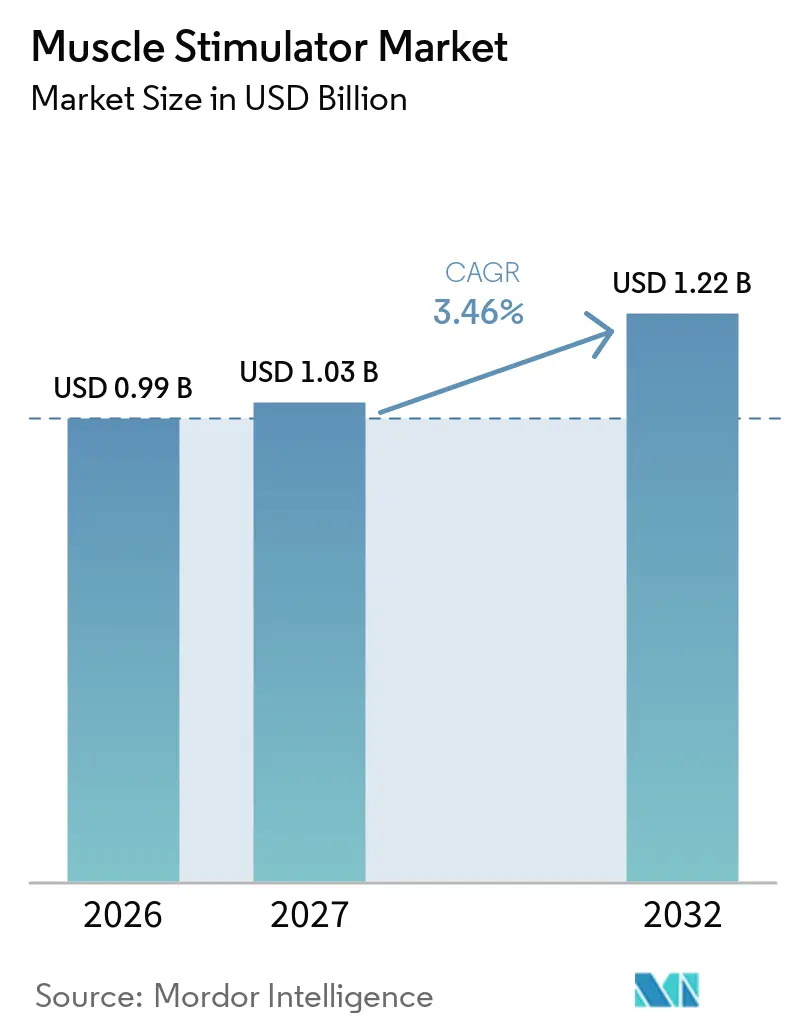
| Market Size (2027) | USD 1.03 Billion |
| Market Size (2032) | USD 1.22 Billion |
| Growth Rate (2027 - 2032) | 3.46 % |
| Fastest Growing Market | Asia Pacific |
| Largest Market | North America |
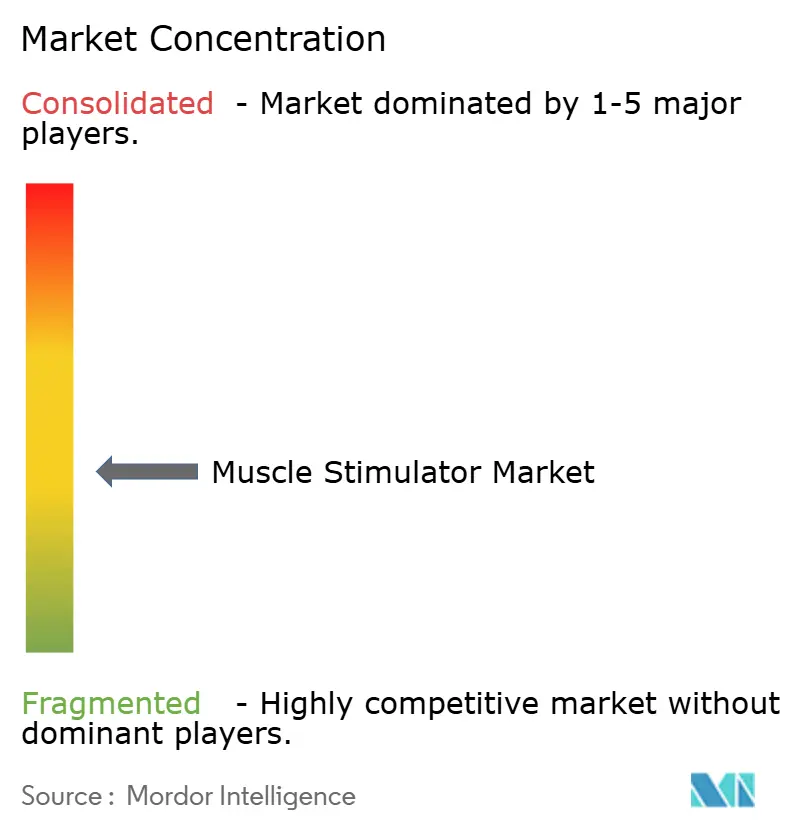
| Market Concentration | Medium |
Major Players *Disclaimer: Major Players sorted in no particular order Image © Mordor Intelligence. Reuse requires attribution under CC BY 4.0. | |
Muscle Stimulator Market Analysis by Mordor Intelligence
The muscle stimulator market size is expected to grow from USD 0.99 billion in 2026 to USD 1.03 billion in 2027 and is forecasted to reach USD 1.22 billion by 2032 at 3.46% CAGR over 2027-2032. This measured expansion reflects a transition from clinic-centric equipment toward connected, consumer-oriented devices enabled by miniaturized electronics, longer-life micro-batteries and app-based interfaces. Demand is reinforced by the global rise in chronic pain, increasing preference for non-pharmacological care, and growing integration of smart electrodes with cloud platforms that let clinicians adjust settings remotely. Growth remains moderate because reimbursement rules differ widely by country, while multi-step regulatory pathways lengthen time-to-market for novel closed-loop and bioabsorbable systems. Competitive momentum is intensifying as consumer electronics brands enter the space, compelling incumbent device firms to differentiate through digital services and advanced materials.
Key Report Takeaways
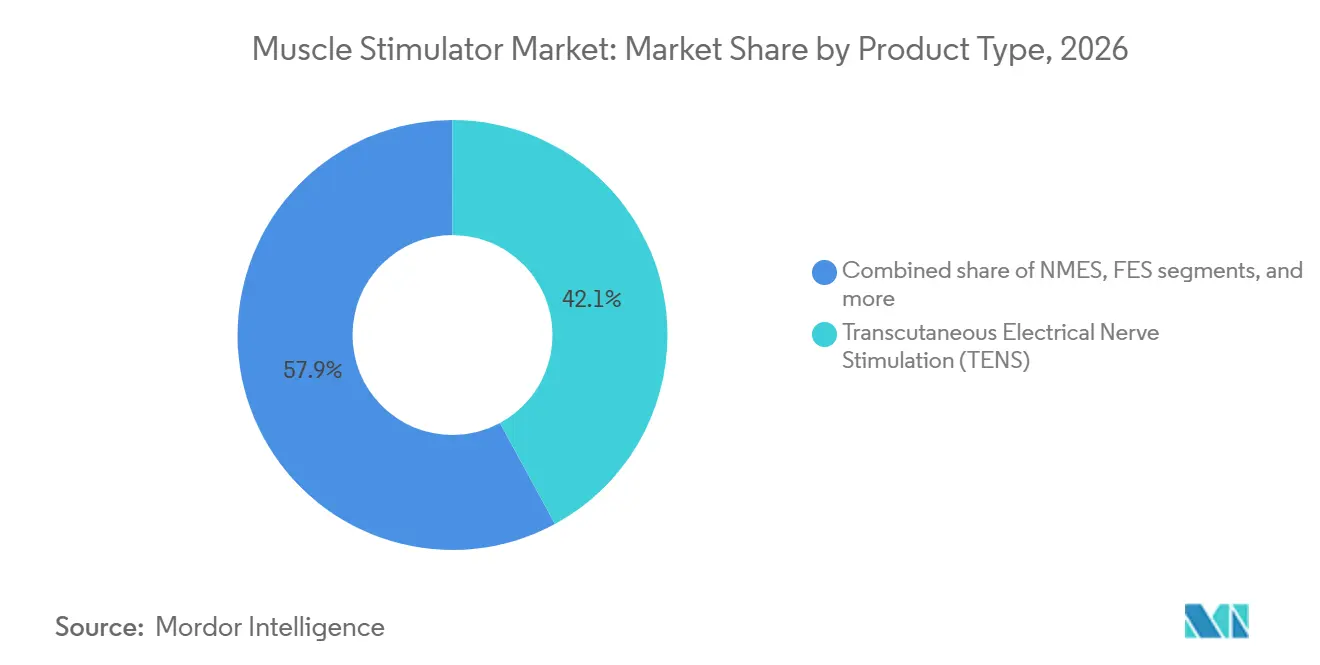
- By product type, Transcutaneous Electrical Nerve Stimulation (TENS) led with 42.10% revenue share of the muscle stimulator market in 2026; Functional Electrical Stimulation (FES) is projected to grow at a 4.93% CAGR through 2032.
- By modality, portable/bench-top systems held a commanding 63.70% of the muscle stimulator market share in 2026, whereas hand-held units are set to expand at 4.12% CAGR from 2027-2032.
- By application, pain management captured 58.05% of the muscle stimulator market size in 2026; neurological rehabilitation is poised for the fastest 4.61% CAGR to 2032.
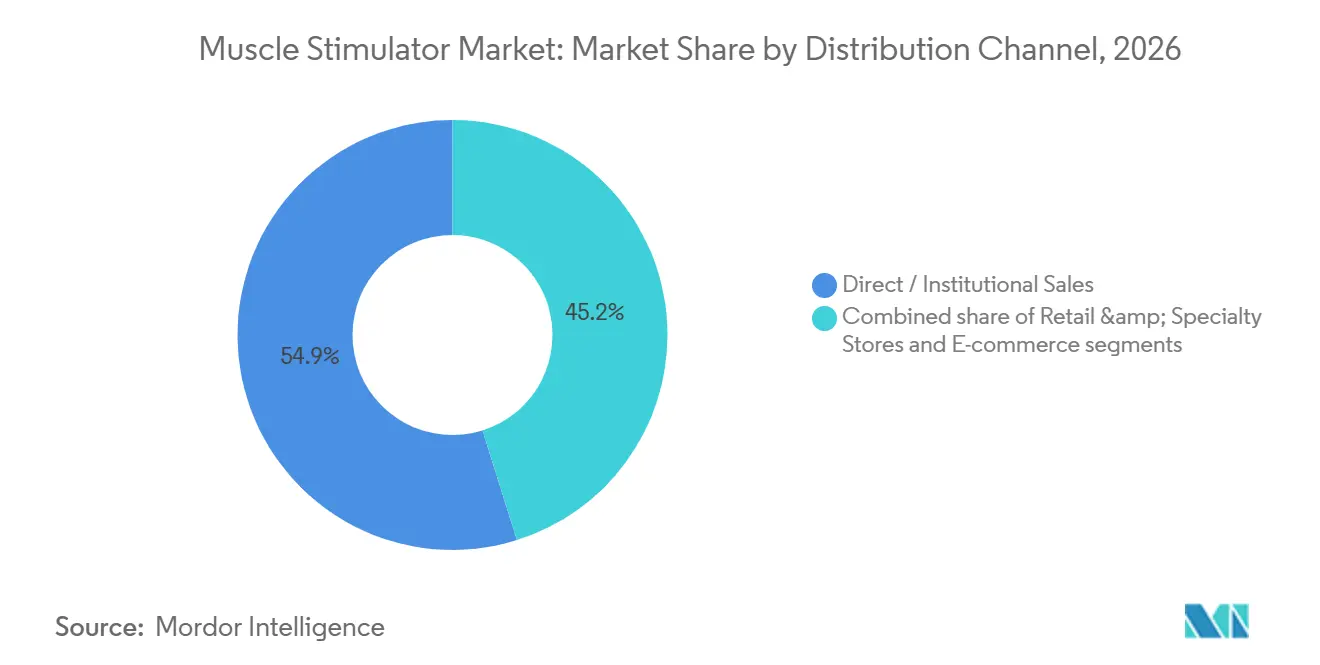
- By distribution channel, direct or institutional sales accounted for 54.85% of 2026 revenue, while e-commerce is forecast to post a 5.21% CAGR.
- By end-user, hospitals contributed 47.30% of 2026 demand; home-care settings will advance at a 5.09% CAGR between 2027 and 2032.
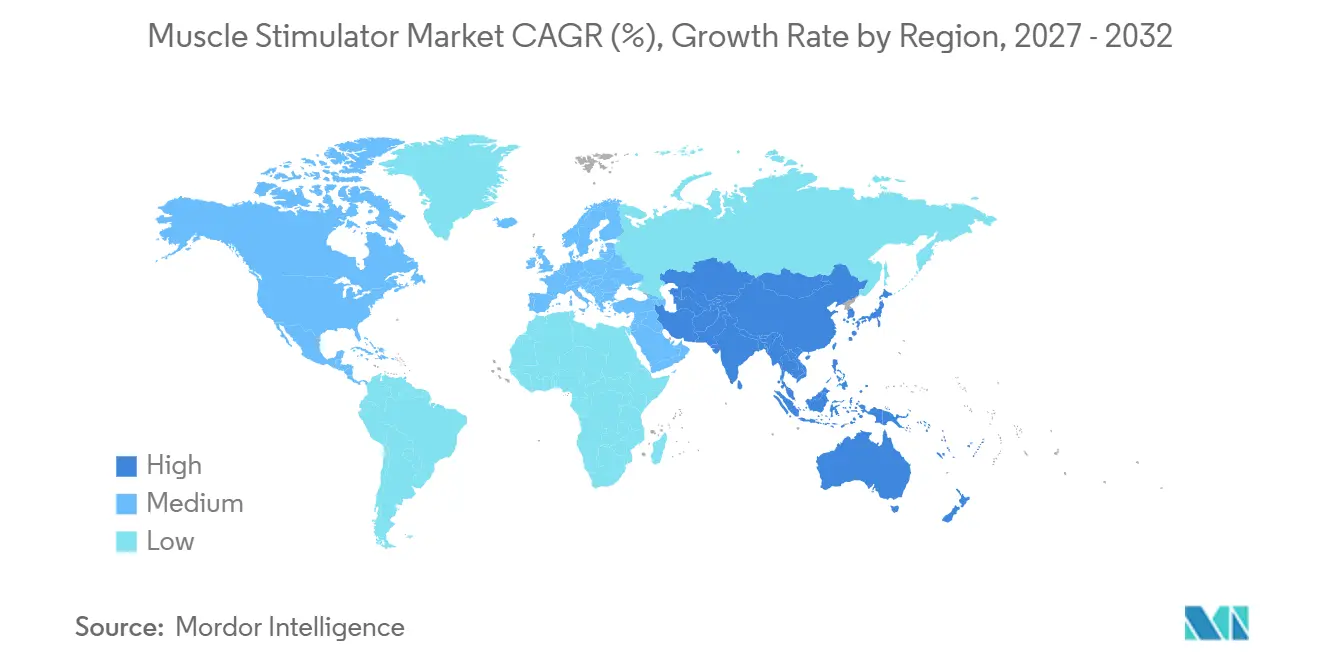
- By geography, North America dominated with 41.25% of 2026 revenue; Asia-Pacific will record the highest 4.68% CAGR over the forecast period.
Note: Market numbers in this report are based on Mordor Intelligence's proprietary estimation framework, which combines nine months of actuals with Q4 projections for base year 2026.
Market Trends and Insights
Drivers Impact Analysis of Muscle Stimulator Market*
| Driver | (~) % Impact on CAGR Forecast | Geographic Relevance | Impact Timeline |
|---|---|---|---|
| Digitally Enabled Home-Use Adoption | 1.1% | Global, with stronger penetration in North America and Europe | Medium term (2-4 years) |
| Age-Linked Chronic Pain Prevalence | 0.9% | Global, with higher impact in regions with aging populations (Japan, Europe, North America) | Long term (≥ 4 years) |
| Sports Medicine Integration | 0.7% | North America, Europe, and high-income Asia Pacific countries | Medium term (2-4 years) |
| AI-Driven Personalized Therapy Protocols | 0.7% | North America, Europe, and high-income Asia Pacific countries | Medium term (2-4 years) |
| Connected Wearable Compatibility | 0.6% | North America, Europe, and urban centers in Asia Pacific | Short term (≤ 2 years) |
| Miniaturized Battery Innovation | 0.4% | Global | Medium term (2-4 years) |
| Source: Mordor Intelligence | |||
Digitally Enabled Home-Use Adoption
Smartphone-paired stimulators, cloud dashboards, and tele-supervised protocols are shifting treatment toward the home. One trial reported 84.17% adherence[1] among stroke survivors using an app-guided FES program, well above clinic-only regimens. User-friendly interfaces lower technical barriers, while reimbursement pilots for remote physical therapy encourage insurers to cover connected devices. As data streams accumulate, algorithm-driven dose adjustments further personalize therapy and cut clinic visits, reinforcing demand across the muscle stimulator market.
Age-Linked Chronic Pain Prevalence
Populations aged ≥ 65 now account for over 60% of chronic pain cases, and non-drug solutions are increasingly preferred to minimize opioid exposure. High-frequency spinal cord stimulation has yielded 26.1% incremental pain relief for long-COVID patients[2], validating electrical modalities in complex syndromes. The economic burden of pain—measured in healthcare outlays and lost productivity—propels public and private payers to support cost-effective neuromodulation, sustaining steady expansion of the muscle stimulator market.
Sports Medicine Integration
Elite teams and rehabilitation centers embed neuromuscular electrical stimulation into injury-prevention, post-surgery strength recovery, and performance programs. NIH-funded research[3]showed substantial quadriceps strength gains after total knee arthroplasty when NMES was supplemented with standard rehab. Sport-specific protocols are migrating to amateur athletes and fitness enthusiasts, broadening the muscle stimulator market’s customer base and spurring device makers to refine form factors for use during training.
Connected Wearable Compatibility
Integration with biometric wearables enables stimulators to self-adjust using heart-rate variability, muscle oxygen saturation, or skin impedance. Closed-loop designs[4] reduce overstimulation incidents that affect 58% of open-loop spinal cord stimulation (SCS) device users, extending session comfort. Mainstream consumer wearables embedding stimulation modules extend reach beyond clinical channels and generate large datasets that feed future algorithm refinement.
Restraints Impact Analysis of Muscle Stimulator Market*
| Restraint | (~) % Impact on CAGR Forecast | Geographic Relevance | Impact Timeline |
|---|---|---|---|
| Limited Long-Term Efficacy Evidence | -0.6% | Global | Medium term (2-4 years) |
| Skin-Burn & Irritation Risk | -0.4% | Global | Short term (≤ 2 years) |
| High Capital Cost of Advanced FES | -0.3% | Emerging markets in Asia Pacific, Middle East & Africa, South America | Medium term (2-4 years) |
| Regulatory Approval Delays | -0.3% | Global, with higher impact in North America and Europe | Short term (≤ 2 years) |
| Source: Mordor Intelligence | |||
Limited Long-Term Efficacy Evidence
Randomized trials with multiyear follow-up remain scarce, especially for newer pulse-width-modulated or bioabsorbable platforms. A 16-study review on FES cycling for spinal cord injury reported inconsistent spasticity outcomes, underscoring methodological gaps. Without durable evidence, payers often label emerging indications investigational, dampening near-term demand despite FDA clearances.
Skin-Burn and Irritation Risk
Transcutaneous electrodes can cause irritation in up to 25% of users. Carbon-based dry textiles and aloe-infused hydrogels lessen reactions, and smart current-distribution algorithms map skin impedance to avoid hotspots, yet long-term home users remain wary. Device selection for sensitive populations therefore demands careful clinician oversight, tempering widespread self-administration.
*Our forecasts treat driver/restraint impacts as directional, not additive. The impact forecasts reflect baseline growth, mix effects, and variable interactions.
Muscle Stimulator Market Segment Analysis
By Product Type:
TENS Sustains Leadership as FES AcceleratesThe TENS segment generated 42.10% of 2026 revenue and benefits from decades of clinical familiarity in pain relief. Ultrahigh-frequency protocols now extend post-session analgesia for neuropathic pain, raising patient satisfaction. FES, expanding at a 4.93% CAGR, leverages neuroplasticity research to restore function in stroke and spinal cord injury, pushing commercialization in upper- and lower-limb systems. NMES remains pivotal in strength conditioning, whereas interferential units maintain a niche for deep-tissue treatment. Microcurrent stimulators, while smaller in volume, draw interest for wound-healing and cell-regeneration applications. AI-optimized pulse width that modulates activation depth, up to 21-fold variance, illustrates product differentiation beyond price, supporting long-tail growth within the muscle stimulator market.
Adoption dynamics illustrate that hospital rehabilitation wings continue to purchase multi-protocol consoles, yet consumers gravitate toward single-purpose pads integrated with mobile coaching apps. Suppliers are therefore segmenting portfolios: one line targets high-acuity neurorehabilitation with closed-loop sensing, and another focuses on over-the-counter wellness. As bioabsorbable mechanoelectric sutures progress through pre-clinical studies, manufacturers anticipate disruptive post-surgical indications that could re-shape the muscle stimulator industry’s competitive order.

By Modality:
Portable Systems Anchor Access, Hand-Held Units ProliferatePortable bench-top consoles held 63.70% revenue share in 2026, valued for multi-channel outputs suitable for outpatient departments and satellite clinics. Cloud connectivity uploads usage logs to electronic health records, helping providers validate therapy adherence. Form-factor reductions of 30-40% achieved through compact power electronics and efficient heat sinks make these carts easier to reposition across wards, cutting idle time and improving return on capital.
Hand-held stimulators, predicted to advance at 4.12% CAGR, extend therapy to gyms, homes and athletic fields. Longer-life solid-state batteries and energy-harvesting patches address past re-charging frustrations, while Bluetooth programming reduces setup complexity. Research on self-powered piezoelectric systems that convert biomechanical motion to therapeutic currents hints at future wire-free devices. As these innovations mature, they enlarge the addressable muscle stimulator market size for point-of-care and consumer channels.
By Application:
Pain Management Dominates, Neuro-Rehab SurgesPain management captured 58.05% of 2026 demand, as clinicians seek opioid-sparing modalities. TENS efficacy in post-operative, neuropathic, and long-COVID pain is increasingly documented, prompting guideline updates in physiotherapy societies. Musculoskeletal rehabilitation remains a major revenue sub-node, with sports clinics integrating NMES to expedite return-to-play timelines. Virtual-reality-paired stimulation improves engagement in shoulder and hand therapy, an emerging differentiator among device lines.
Neurological rehabilitation is forecast to deliver the highest 4.61% CAGR through 2032. Adaptive FES gait systems that adjust pulse timing based on real-time plantar pressure data enhance symmetry in stroke survivors, opening broader reimbursement for ambulation assistance. Combining VR with FES also elevates motivation and neuroplastic gains in upper-limb protocols. Growth in these evidence-based indications reinforces the depth and resilience of the muscle stimulator market.
By Distribution Channel:
Institutional Sales Prevail, E-Commerce AcceleratesDirect institutional procurement represented 54.85% of 2026 revenue. Hospitals and rehab centers prefer bundled training, service contracts, and volume-based pricing. Recent CMS guidance that reimburses taVNS for chronic lower-back pain has buoyed capital budgets for neuromodulation lines in integrated delivery networks. Moreover, milestone insurer payments, such as USD 15,420 for a neuromodulation device, signal strengthening reimbursement confidence, preserving institutional dominance.
E-commerce sales, however, are set for 5.21% CAGR. Tele-health consults now authorize prescription-only stimulators via secure online portals, shortening delivery lead-times and expanding reach into rural areas. Reviews and user-generated content boost consumer trust, while subscription electrodes and mobile apps create recurring revenue models. Retail pharmacies and specialty sports stores continue to serve first-time buyers who value hands-on trials, balancing channel mix within the muscle stimulator market.
By End-User:
Hospitals Lead, Home-Care Expands RapidlyHospitals generated 47.30% of 2026 revenue, leveraging multi-specialty utilization, from anesthesiology to orthopedics, to justify high-spec consoles. Pay-for-performance models encourage early mobilization, and electrical stimulation is embedded in fast-track surgical pathways to reduce length of stay. Data captured in hospital settings also underpins registry studies that feed payer dossiers, reinforcing in-patient volume.
Home-care, the fastest-growing end-user at 5.09% CAGR, benefits from policy shifts promoting outpatient recovery and patient self-management. Surveys reveal that people with spinal cord injuries prioritize spasticity relief and bladder control, outcomes well addressed by tailored home FES units. Physiotherapy centers remain vital for skill-intensive regimens, while sports clinics expand premium packages that integrate pre-event warm-up and post-event recovery stimulation. Smaller segments such as long-term care facilities adopt devices that combine stimulation with falls-prevention analytics, enlarging the overall muscle stimulator market.
Geography Analysis
North America Muscle Stimulator Market
North America commanded 41.25% of 2026 revenue on the back of extensive insurance coverage, high chronic pain prevalence, and rapid uptake of closed-loop spinal cord stimulators. In the United States, first-time insurer payments for portable neuromodulation devices set reimbursement benchmarks that ripple across private payers. Canada’s universal system supports clinic adoption, while Mexico leverages cross-border medical tourism for pain procedures, collectively bolstering the muscle stimulator market.
APAC Muscle Stimulator Market
Asia Pacific is expected to post the fastest 4.68% CAGR through 2032, driven by infrastructure investments and demographic aging. China and India prioritize non-pharmacological pain care in national guidelines, spurring purchases by public hospitals and private wellness chains. Japan leads in neuro-rehabilitation device adoption, with insurers covering advanced FES for post-stroke mobility. South Korea’s contract manufacturers supply global brands, while domestic firms launch low-profile wearables for geriatric home use, expanding the muscle stimulator market size across the region.
EMEA and South America Muscle Stimulator Market
Europe maintains robust share through stringent evidence-based procurement in Germany, the United Kingdom and the Nordics. Pan-EU medical device regulation demands rigorous post-market surveillance, pushing suppliers to run pan-European registries that validate outcomes. Central and Eastern European countries tap EU structural funds to upgrade rehab centers, widening installation bases. Meanwhile, Middle East & Africa and South America grow from low starting points, projecting 3.98% and 3.75% CAGRs respectively. Brazil’s orthopedic clinics adopt NMES for post-arthroplasty rehab, while Gulf Cooperation Council hospitals deploy premium neuro-stimulation suites in medical tourism initiatives. Emerging urban centers across these regions continue to add incremental volume to the global muscle stimulator market.
Regulatory Landscape
In the United States, powered muscle stimulators intended for medical use are regulated by the FDA as Class II devices under 21 CFR 890.5850, and they typically proceed through the 510(k) pathway. FDA recognized consensus standards for electrical safety and essential performance include IEC 60601-2-10 Edition 2.2 (2023-01), with the FDA allowing declarations of conformity to Edition 2.1 (2016-04) until July 2, 2028, which supports phased updates to technical files across installed product lines.
Competitive Landscape
The muscle stimulator market is moderately fragmented, with globally diversified med-tech vendors, niche neuro-stimulation specialists, and agile consumer electronics firms jostling for share. Top players concentrate on full-featured platforms spanning pain, neuro-rehab and incontinence, often pairing hardware with subscription-based analytics dashboards. Mid-tier innovators pursue AI-enhanced waveform customization, while start-ups exploit flexible printed electrodes and biodegradable materials to differentiate.
Strategic partnerships flourish: device companies link with tele-health providers to bundle virtual coaching; battery developers co-design ultra-thin cells for smart garments; sports franchises pilot in-app performance data feeds to refine training algorithms. Closed-loop SCS launches mark a pivotal shift toward autonomous patient-responsive systems, addressing survey findings that 58% of open-loop users face overstimulation. Bioabsorbable mechanoelectric fibers capable of converting motion into wound-site electrical therapy exemplify convergence between materials science and neuromodulation, opening white-space indications in surgical recovery.
Market entry barriers are easing in consumer segments, but clinical-grade pathways remain demanding due to safety and data requirements. Consequently, dual-brand portfolios emerge: a class-II cleared medical unit for chronic pain, and an over-the-counter muscle-recovery pad for fitness. Established firms leverage scale to secure component supply and regulatory expertise, whereas newcomers rely on crowdfunding and influencer marketing for direct-to-consumer traction. As evidence accumulates and payers reward outcomes-based care, competitive advantage will increasingly hinge on integrated ecosystems that combine adaptive hardware, real-time analytics, and user-centric design across the muscle stimulator market.
Muscle Stimulator Industry Leaders
-
Beurer
-
EMS Physio Ltd
-
Enovis (DJO, LLC)
-
NeuroMetrix, Inc
-
Zynex Medical
- *Disclaimer: Major Players sorted in no particular order
Muscle Stimulator Market Companies Covered in this Report
- Abbott Laboratories
- AxioBionics
- Beurer
- BioMedical Life Systems
- BTL
- Chattanooga (DJO)
- Compex
- EMS Physio
- Enovis Corporation
- GAMA Healthcare
- Globus Corporation
- Ito Physiotherapy & Rehabilitation
- Liberate Medical
- Mettler Electronics
- NeuroMetrix
- OG Wellness Technologies
- OMRON
- Restorative Therapies
- RS Medical
- Tone-A-Matic
- Zimmer MedizinSysteme
- Zynex Medical
Market Opportunities and Future Outlook
Neurorehabilitation stands out as a whitespace for differentiated external stimulation systems that pair clinical evidence with home-based delivery, especially for gait and stroke-related functional deficits. In June 2026, Bioness Medical received FDA 510(k) clearance for its PoNS System for dynamic gait deficit due to chronic stroke symptoms, supported by a 159-patient clinical program across 10 centers of excellence. This points to an active regulatory pathway for indication-specific neuromodulation claims that go beyond commodity pain TENS.
Technology roadmaps also leave room for miniaturized, wirelessly powered, and dissolvable stimulation modalities that reduce tethering and removal procedures after use. In 2026, researchers reported a bioresorbable, wirelessly powered electrical stimulation system that dissolves after treatment, and related work described battery-free, ultrasound-powered patches for limb rehabilitation, along with biodegradable self-powered concepts for muscle repair. Together, these developments expand the direction of remote monitoring and adherence tracking for external muscle stimulation.
Recent Industry Developments in Muscle Stimulator Market
- March 2026: Beurer expanded US access to its German-engineered, drug-free pain relief portfolio across TENS and EMS devices, widening consumer channel reach for at-home electrotherapy. The move strengthened availability of branded stimulation solutions in a market where e-commerce and retail adoption is rising alongside preference for non-pharmacological care.
- April 2025: Abbott introduced a next-generation delivery system for its Proclaim DRG neurostimulator, designed to improve lead-placement precision for complex regional pain syndrome treatment. The upgrade supports procedural consistency and can reinforce clinician adoption in higher-acuity pain pathways where device performance and workflow are central to purchasing decisions.
- April 2024: Medtronic secured FDA approval for Inceptiv, its first closed-loop rechargeable spinal cord stimulator that senses ECAPs and automatically adjusts therapy in real time. Closed-loop capability differentiates premium neuromodulation platforms as payers and providers scrutinize outcomes and overstimulation-related comfort issues.
Muscle Stimulator Market Report Scope and Research Methodology
Market Definition and Coverage
For this study, the market covers external, electrically powered muscle stimulation devices that deliver controlled current through electrodes to activate skeletal muscle or related nerves for pain relief, rehabilitation, or performance support in clinical and home settings.
Scope exclusions: We exclude implantable neurostimulators, radio-frequency ablation systems, and purely cosmetic EMS wearables.
Segments Covered in This Report
- By Product Type
- Neuromuscular Electrical Stimulation (NMES)
- Functional Electrical Stimulation (FES)
- Transcutaneous Electrical Nerve Stimulation (TENS)
- Interferential (IF)
- Micro Current Electrical Neuromuscular Stimulator
- Other Products
- By Modality
- Hand-held Devices
- Portable/Bench-top Systems
- By Application
- Pain Management
- Musculoskeletal Disorders
- Neurological Rehabilitation
- Other Applications
- By Distribution Channel
- Direct/Institutional Sales
- Retail & Specialty Stores
- E-commerce
- By End-User
- Hospitals
- Physiotherapy & Rehabilitation Centers
- Sports Clinics
- Home-Care Settings
- Other End-Users
- By Geography (Value)
- North America
- United States
- Canada
- Mexico
- Europe
- Germany
- United Kingdom
- France
- Italy
- Spain
- Rest of Europe
- Asia-Pacific
- China
- India
- Japan
- Australia
- South Korea
- Rest of Asia-Pacific
- Middle East & Africa
- GCC
- South Africa
- Rest of Middle East & Africa
- South America
- Brazil
- Argentina
- Rest of South America
- North America
Data Sources, Market Sizing, and Validation
Desk Research
Desk research was used to build the base structure of the model and to keep assumptions consistent across regions. We mainly relied on public health statistics and medical-device context sources such as CDC/NCHS health indicators, NIH and PubMed clinical literature, and WHO burden-of-disease references to understand demand signals tied to pain and rehabilitation needs.
To ground the supply side, we reviewed sources such as US FDA device databases and safety communications, plus trade and shipment context using customs and trade statistics where relevant. We also used company annual reports, investor presentations, and reputable press to capture product positioning changes, distribution moves, and pricing direction. In a few places, we used paid company financials and intelligence subscription and a patent database to confirm ownership changes and technology trend timing. The desk sources listed here are illustrative only, and many other public references were also checked for data collection, validation, and clarification.
Primary Interviews and Surveys
Primary interviews focused on validating what desk sources could not fully answer, especially how devices are used and purchased across care settings. We spoke with a balanced mix of clinicians, physiotherapy and rehabilitation professionals, channel-side contacts, and product specialists across major regions to confirm adoption patterns, typical pricing ranges, and how demand shifts between clinic use and home use.
Distribution of primary research fieldwork respondents
| Company type | Respondent position | Region |
|---|---|---|
| Top tier: 29% | CXOs: 17% | APAC: 44% |
| Mid tier: 54% | Functional/Unit leaders: 39% | EMEA: 33% |
| Smaller Players: 17% | Managers: 44% | Americas: 23% |
Market-Sizing & Forecasting
Sizing starts from a top-down demand pool build that connects rehabilitation and pain-management usage to the addressable installed base of care delivery points and home-care adoption. From there, we converted activity into value by applying realistic device mix and average selling price (ASP) ranges, which were stress-tested using interview feedback.
Inputs used in the model include the share of therapy pathways where electrostimulation is commonly prescribed, the split between clinic-based and home-use consumption, average replacement cycles for portable units and accessories, regional reimbursement or out-of-pocket patterns that affect purchase behavior, and price bands by form factor (handheld, portable, and bench-top). Where public data was thin, gaps were handled with conservative ranges, and then narrowed by triangulating multiple interview viewpoints.
For forecasting, scenario analysis was used so the outlook reflects how treatment preference shifts, home-care penetration, and price progression could move together over time. Results were corroborated with selective bottom-up approximations, such as sampled ASP multiplied by estimated unit volumes from channel checks, and a supplier-side reasonableness review to make sure totals stayed practical.
Data Validation & Update Cycle
Validation is done in steps so the final numbers are not driven by a single assumption. We compare outputs against independent signals such as device regulation activity, clinical adoption direction discussed by experts, and consistency checks across regions and care settings, and then unusual jumps are reviewed before sign-off.
When a variance is too large to explain through inputs, we re-check the underlying drivers and, if needed, re-contact sources to confirm whether a pricing or adoption shift is real. Reports are refreshed annually, and interim updates are made when material events occur, such as major policy changes or notable technology transitions. Before delivery, a final pass is performed so clients receive the most current view based on the latest available signals.
Mordor Intelligence's Muscle Stimulator Market Estimate Compared With Other Published Estimates
Published market numbers for muscle stimulators can differ even when they appear to cover the same device category. The spread usually comes from what is included in the product scope, which year is treated as the base, and how pricing and adoption are translated into revenue.
The key drivers behind gaps are typically whether implantable stimulation systems are mixed into the total, whether wellness-led EMS wearables are counted, and how clinical versus home-use purchasing is weighted. Differences also show up when one estimate applies a single global ASP curve, or when currency conversion timing and update cadence are not aligned with recent pricing shifts.
Benchmark comparison
| Source | Market Size | Gaps in Research Methodology |
|---|---|---|
| Mordor Intelligence | USD 0.96 B (2025) | |
| Global Consultancy A | USD 0.79 B (2023) | This estimate is anchored to an earlier base year and can land lower if it applies broader historical averages for pricing, and if it does not fully reflect the recent mix shift toward home-use portable units in some regions. |
| Industry Publisher B | USD 0.71 B (2024) | The total can be reduced when the scope is limited to core therapeutic stimulation devices and narrower channel coverage, and when accessory-driven replacement demand is not explicitly modeled as part of the revenue build. |
The table shows a clear range around the mid-2020s. In the Mordor Intelligence model, revenue is counted only for external stimulation devices used for pain relief, rehabilitation, or performance support, with implantable neurostimulators and purely cosmetic EMS wearables kept outside the scope. That separation ties the estimate to an observable demand pool and repeatable pricing logic.
Key Questions Answered in the Report
How is miniaturization shaping next-generation muscle stimulators?
Advances in compact batteries and low-power electronics are enabling lighter, wearable designs that patients can use during daily activities or athletic training without clinical supervision.
Why are sports medicine programs increasingly integrating neuromuscular electrical stimulation?
Athletic trainers deploy stimulation protocols to accelerate post-injury strength recovery and to maintain muscle condition during immobilization, shortening return-to-play timelines.
How are reimbursement policies evolving for home-use electrical stimulation devices?
Insurers are beginning to issue indication-specific coverage, such as for chronic low-back pain, once manufacturers provide evidence of clinical benefit and remote-monitoring safeguards.
What technological hurdle still limits widespread consumer adoption of transcutaneous stimulators?
Skin irritation and burn risk from conventional hydrogel electrodes continues to deter long-term use, prompting R&D into textile-embedded dry electrodes and adaptive current-distribution algorithms.
How does data generated by connected stimulators benefit clinicians?
Cloud-synced usage logs and symptom scores give therapists objective insight into adherence and response, allowing timely adjustment of waveforms and session frequency for each patient.