
Mouth Ulcer Treatment Market Size and Share
Market Overview
| Study Period | 2020 - 2031 |
|---|---|
| Market Size (2026) | USD 1.75 Billion |
| Market Size (2031) | USD 2.09 Billion |
| Growth Rate (2026 - 2031) | 3.61 % |
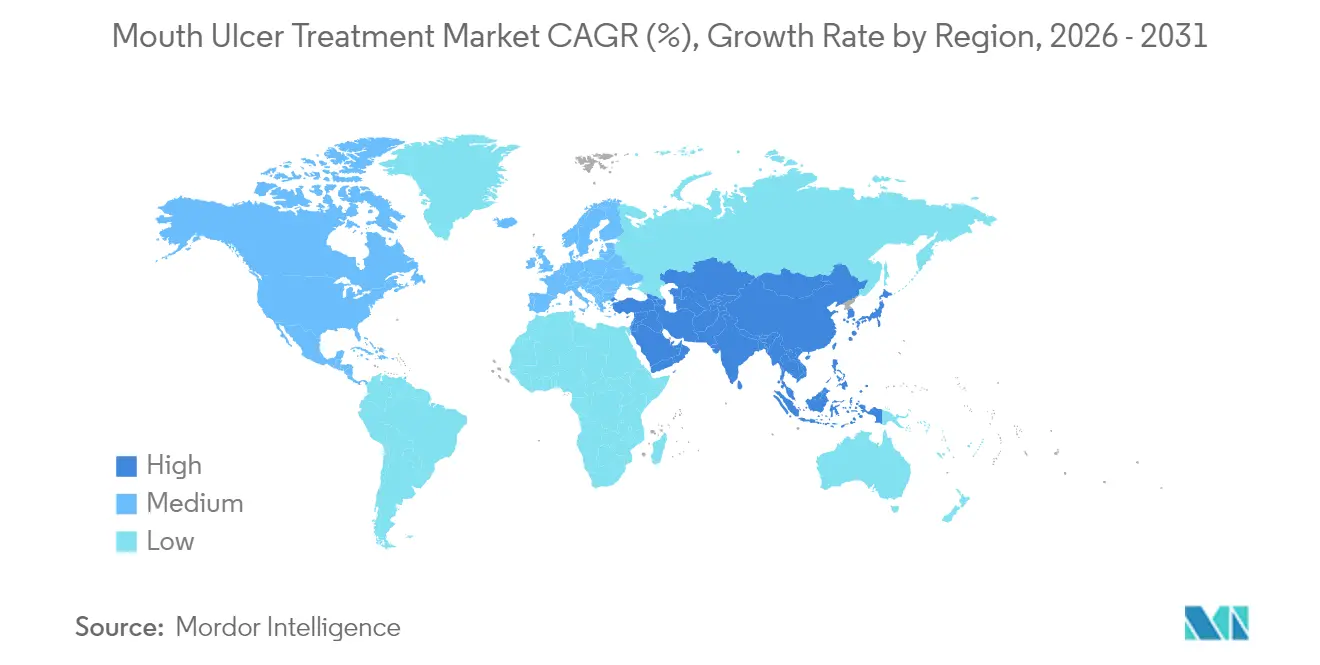
| Fastest Growing Market | Asia-Pacific |
| Largest Market | North America |
| Market Concentration | Low |
Major Players *Disclaimer: Major Players sorted in no particular order Image © Mordor Intelligence. Reuse requires attribution under CC BY 4.0. | |
Mouth Ulcer Treatment Market Analysis by Mordor Intelligence
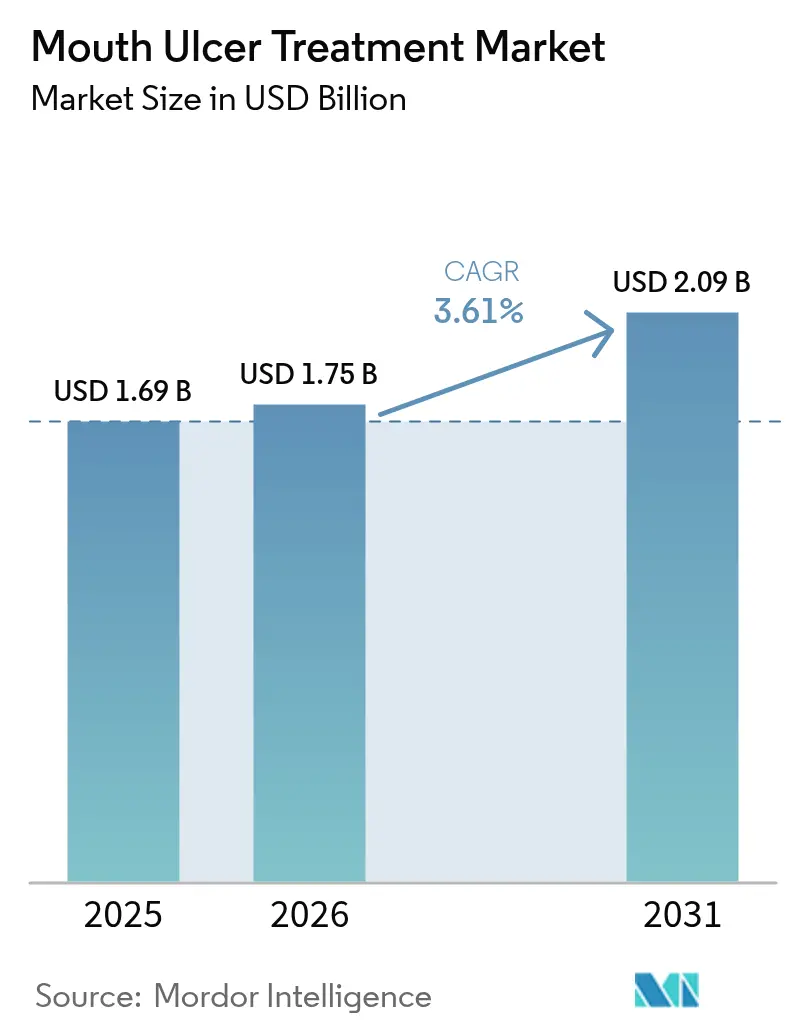
mouth ulcer treatment market size in 2026 is estimated at USD 1.75 billion, growing from 2025 value of USD 1.69 billion with 2031 projections showing USD 2.09 billion, growing at 3.61% CAGR over 2026-2031. Moderate expansion reflects a maturing landscape in which well-established corticosteroid and analgesic brands face new competition from AI-guided personalization, herbal actives, and muco-adhesive films. Demand is reinforced by growing autoimmune disease prevalence, wider e-commerce access to over-the-counter (OTC) remedies, and a steady pipeline of delivery-system innovations. Market participants also contend with cost pressure as generic erosion accelerates and subscription-commerce models reset consumer expectations. While premium formulations command higher unit revenues in North America and Western Europe, emerging economies focus on affordable sprays and gels that deliver rapid pain relief and minimal systemic exposure.
Key Report Takeaways
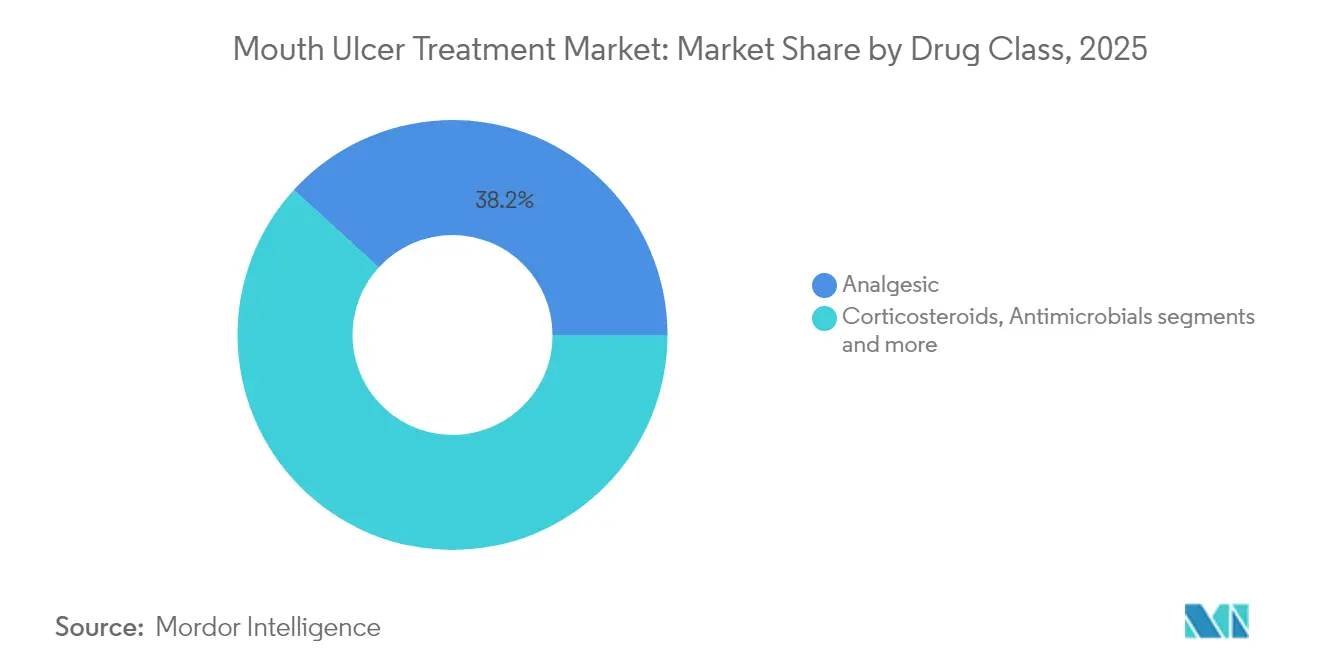
- By drug class, analgesics led with 38.22% of the mouth ulcer treatment market share in 2025, whereas anesthetics post the fastest 4.03% CAGR through 2031.
- By formulation, gels held 40.88% revenue share in 2025; sprays are projected to rise at a 4.44% CAGR to 2031.
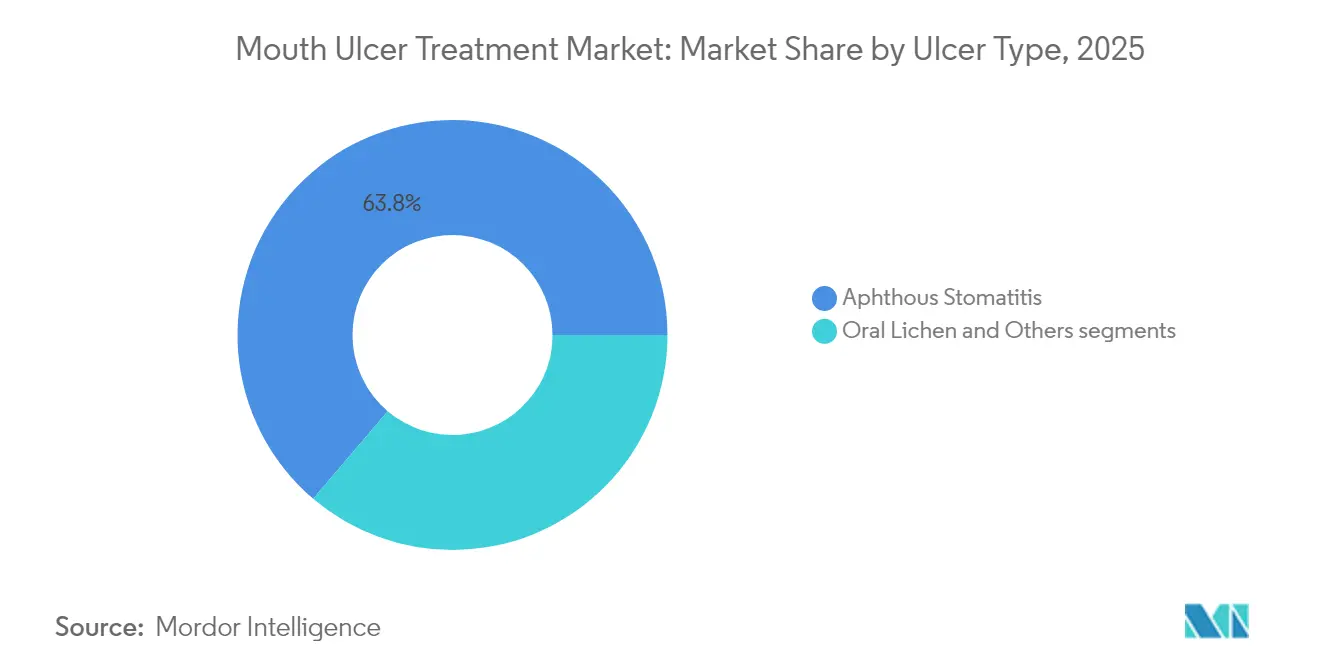
- By ulcer type, aphthous stomatitis accounted for a 63.78% share of the mouth ulcer treatment market size in 2025, while oral lichen planus records the highest 4.93% CAGR during the same period.
- By geography, North America captured 38.21% of 2025 sales; Asia-Pacific is advancing at a 5.44% CAGR to 2031.
Note: Market size and forecast figures in this report are generated using Mordor Intelligence’s proprietary estimation framework, updated with the latest available data and insights as of 2026.
Market Trends and Insights
Drivers Impact Analysis of Mouth Ulcer Treatment Market*
| Driver | (~) % Impact on CAGR Forecast | Geographic Relevance | Impact Timeline |
|---|---|---|---|
| Rise in sugar-free & herbal OTC gels | +0.8% | North America, Europe, expanding globally | Medium term (2-4 years) |
| Growing prevalence of autoimmune disorders | +1.2% | Developed markets with aging populations | Long term (≥ 4 years) |
| E-commerce proliferation boosting self-care | +0.9% | APAC and North America | Short term (≤ 2 years) |
| Advances in muco-adhesive drug-delivery films | +0.7% | North America, EU, APAC | Medium term (2-4 years) |
| AI-driven personalized oral-care regimens | +0.5% | North America and selected APAC markets | Long term (≥ 4 years) |
| Microbiome-targeted therapeutics pipeline | +0.4% | North America, EU | Long term (≥ 4 years) |
| Source: Mordor Intelligence | |||
Rise in Sugar-Free & Herbal OTC Gels
Consumers increasingly choose plant-derived and sugar-free gels, pushing manufacturers to invest in botanical actives such as eugenol and flavonoids that pair well with modern muco-adhesive bases. Clinical validation supports efficacy, addressing regulatory and prescriber scrutiny. Market leaders differentiate through transparent labeling, clinical dossiers, and convenient packaging aligned with tele-pharmacy growth.
Growing Prevalence of Autoimmune Disorders
Enhanced and aging demographics lift autoimmune disease incidence, increasing oral lichen planus and aphthous ulcer cases. Targeted small-molecule therapies, illustrated by tofacitinib success in erosive lichen planus, shift treatment from broad anti-inflammatory regimens to precision approaches. Cross-portfolio synergies emerge as systemic immunology pipelines adapt topical formulations for oral lesion
E-commerce Proliferation Boosting Self-Medication
Healthcare e-commerce, projected to hit USD 750 billion by 2027, rewires purchase pathways and emphasizes direct-to-consumer education, loyalty programs, and subscription refill models. Digital engagement accelerates adoption of convenient sprays and films, while price transparency intensifies competition.
Advances in Muco-Adhesive Drug-Delivery Films
Next-generation films made from green-tea polyphenols or foam-actuated nano-emulgels increase residence time, reduce dosing frequency, and enhance antimicrobial activity. Intellectual-property filings around polymer matrices and nanocarriers create durable competitive barriers.
Restraints Impact Analysis of Mouth Ulcer Treatment Market*
| Restraint | (~) % Impact on CAGR Forecast | Geographic Relevance | Impact Timeline |
|---|---|---|---|
| OTC product commoditization | -0.6% | Price-sensitive emerging markets | Short term (≤ 2 years) |
| Safety concerns over chronic corticosteroid use | -0.4% | Developed regions | Medium term (2-4 years) |
| Regulatory hurdles for novel biologic topicals | -0.3% | North America, EU | Long term (≥ 4 years) |
| Under-diagnosis in low-income regions | -0.2% | APAC, Latin America, MEA | Long term (≥ 4 years) |
| Source: Mordor Intelligence | |||
OTC Product Commoditization Keeps Prices Low
Patent expiries and biosimilar entry drop average selling prices by nearly 50%, limiting premium scope unless backed by clear clinical or convenience advantages. Manufacturers lengthen life-cycles through reformulations, but retailers use private-label parity to restrain shelf prices.
Safety Concerns Over Long-Term Corticosteroid Use
Meta-analyses link prolonged systemic corticosteroid exposure to gastrointestinal and infectious complications, encouraging prescribers to pivot toward cannabidiol and other non-steroidal actives . Demand shifts create room for safer, plant-based or biologic alternatives, though higher manufacturing costs require supportive reimbursement.
*Our forecasts treat driver/restraint impacts as directional, not additive. The impact forecasts reflect baseline growth, mix effects, and variable interactions.
Mouth Ulcer Treatment Market Segment Analysis
By Drug Class:
Anesthetics Gain Momentum Amid Analgesic DominanceAnalgesics retained 38.22% of the mouth ulcer treatment market in 2025, benefiting from physician familiarity and broad OTC access. The segment’s lead, however, is challenged as anesthetics log a 4.03% CAGR, reflecting patient preference for rapid numbness that supports daily function. Combination nanofiber platforms delivering acyclovir plus clobetasol demonstrate superior lesion resolution, underlining the role of co-formulations in the mouth ulcer treatment market.
In revenue terms, anesthetic expansion translates into a rising contribution to the mouth ulcer treatment market size, propelled by dentistry partnerships and digital triage apps that advise immediate symptomatic relief. Corticosteroid brands remain indispensable for immune-mediated ulcers despite safety debate, while antimicrobial agents occupy niche use against secondary infection.

By Formulation:
Sprays Challenge Gel SupremacyGels accounted for 40.88% of 2025 sales, leveraging strong muco-adhesion and dosing accuracy. Yet sprays are advancing at a 4.44% CAGR, lifted by non-contact comfort and compatibility with tele-consult refill protocols. The transition is visible in North America where QR-coded spray packs integrate with insurer telehealth dashboards.
The mouth ulcer treatment market size opportunity for sprays climbs as plant-derived oromucosal sprays combine antiseptic and anti-inflammatory claims. Film strips and foams add variety, but gel upgrades—such as sugar-free herbal bases—help incumbents protect share.
By Ulcer Type:
Oral Lichen Planus AcceleratesAphthous stomatitis represented 63.78% of 2025 volume, mirroring high prevalence. Diagnosis and therapeutic innovation now shift attention to oral lichen planus, which grows 4.93% annually. Phase IIa data for LP-310 and targeted kinase inhibitors indicate unmet need and commercial upside in this subset.
As specific biologic pathways become clearer, differentiated labeling and companion diagnostics will define future mouth ulcer treatment market share allocation. Other categories, including radiation-induced mucositis, benefit from muco-adhesive film innovation and oncology supportive-care funding.
Geography Analysis
North America Mouth Ulcer Treatment Market
North America contributed 38.21% of 2025 value through robust insurance coverage, specialist networks, and marketing scale. Retail pharmacies increasingly co-pack AI-guided consultation leaflets, reinforcing premium positioning. The United States posts the highest per-capita spend, while Canada’s reimbursement reforms encourage expanded OTC usage.
APAC Mouth Ulcer Treatment Market
Asia-Pacific registers the top 5.44% CAGR through 2031, driven by urbanization, oral health campaigns, and regulatory streamlining in China and India. Beijing’s 2027 reform blueprint promises faster review cycles, likely accelerating innovative spray and film launches. Malaysia’s National Oral Health Strategic Plan further underscores regional policy focus on mouth ulcer prevention and early treatment. Local manufacturing hubs reduce cost, supporting volume penetration.
Europe Mouth Ulcer Treatment Market
Europe sustains steady growth as evidence-based guidelines promote clinically proven products. Cross-border e-pharmacy directives foster online share gains, although strict advertising codes cap direct-to-consumer promotional flexibility. Market access hinges on health-technology-assessment outcomes that reward real-world evidence for novel delivery systems.
Regulatory Landscape
Regulation for mouth ulcer treatments depends on product classification (OTC monograph versus prescription drug versus device or barrier dressing) and route of administration (oromucosal or topical versus systemic). In the United States, many symptomatic relief products use the OTC monograph pathway, while prescription topical generics typically rely on ANDA requirements for complex topical products, including FDA-referenced in vitro permeation test (IVPT) expectations to support bioequivalence.
In Europe, developers follow EMA and national authority procedures, with dossier preparation anchored to eCTD requirements. EMA adopted version 6.0 harmonised eCTD guidance in November 2024, effective from 1 March 2025. Cost and administrative planning also reflect the updated EU fee framework under Regulation (EU) 2024/568 (February 2024), and EMA CHMP scientific advice activity (including protocol assistance) provides a formal route to de-risk development for differentiated mucosal delivery programs.
Value Chain Analysis
The value chain starts with raw materials and APIs, for example amlexanox in oral paste formulations and antivirals such as acyclovir in topical products. It then extends to excipients designed for buccal residence time, including bioadhesive bases such as carboxymethylcellulose, pectin, and petrolatum. Formulation and filling are often handled by specialized GMP manufacturers and oral-care focused CMOs and private-label producers that can manage semi-solids, sprays, rinses, and emerging film or patch formats. Brand owners then set portfolio strategy, oversee clinical substantiation, manage labeling, and submit multi-country regulatory dossiers.
Distribution runs through national wholesalers and pharmacy chains, with e-commerce and tele-pharmacy channels becoming more relevant for OTC gels and sprays. Along the chain, quality-system compliance (GMP/ISO) and country-by-country classification (drug versus device versus cosmetic in some markets) shape timelines, documentation burden, and vendor qualification. This is especially visible for barrier-forming hydrogels and mucoadhesive patch products, which can trigger device or combination-product considerations alongside classic drug pathways.
Competitive Landscape
Competition remains moderate, with large consumer-health corporations and focused biotech innovators sharing space. Colgate-Palmolive leverages OTC brand equity, while Pfizer benefits from systemic immunology expertise that informs topical pipeline extensions. Reckitt’s new OTC manufacturing facility expands supply flexibility, positioning the firm for private-label and brand output in parallel[2].
Investment themes center on AI-powered drug discovery and personalization, illustrated by Bristol Myers Squibb’s USD 400 million AI Proteins alliance. Patents covering hydrogel nanocarriers and probiotic combinations create defensible niches. Manufacturers explore partnerships with telehealth firms to embed therapy algorithms into mobile workflows, enhancing stickiness.
Price competition intensifies where generics proliferate, but innovators defend gross margins via novel actives, improved delivery, and digital support platforms. Consolidation talk persists, yet antitrust constraints and diverse pathology segments keep the mouth ulcer treatment market from tipping into high concentration.
Mouth Ulcer Treatment Industry Leaders
-
3M
-
Blistex Inc.
-
Colgate- Palmolive Company
-
Church & Dwight, Inc.
-
GSK plc
- *Disclaimer: Major Players sorted in no particular order
Mouth Ulcer Treatment Market Companies Covered in this Report
- GlaxoSmithKline
- Colgate-Palmolive Company
- Sun Pharmaceuticals Industries
- Pfizer
- Blistex
- Church & Dwight
- Bristol-Myers Squibb
- Taro Pharmaceutical Industries Ltd.
- Bausch Health
- 3M
- Teva Pharmaceutical Industries
- Reckitt Benckiser Group
- Novartis
- Sanofi
- Prestige Consumer Healthcare
- EUSA Pharma
- Himalaya
- Dr. Reddy’s Laboratories Ltd.
- Johnson & Johnson Consumer Health
- Procter & Gamble
- Dexcel Pharma
Market Opportunities and Future Outlook
Delivery-system differentiation remains the clearest whitespace as commoditization pressures standard OTC gels and rinses. Most development attention is centered on mucoadhesive systems that extend contact time on oral mucosa, including nanoparticle pastes and patches. In July 2026, a registered clinical trial (NCT07702474) began evaluating a 5 wt.% mucoadhesive chitosan nanoparticle paste versus triamcinolone acetonide 0.1% oral paste, highlighting head-to-head development against established corticosteroid standards. It also fits current momentum for non-contact formats such as sprays and films that align with digital self-care and refill workflows.
A second opportunity track sits with non-steroidal and nature-derived alternatives, supported by growing safety concerns around chronic corticosteroid exposure. In June 2026, a published comparison of an herbal alpha-pinene gel versus triamcinolone acetonide paste reported non-inferior efficacy for minor recurrent aphthous stomatitis. In March 2026, research on topical erythropoietin gel and mouthwash in recurrent aphthous stomatitis reported reductions in pain and ulcer size versus placebo. Together, these findings point to multiple differentiation routes, including wound-healing actives, botanicals with clinical comparators, and novel residence-time platforms that can support premium positioning beyond basic numbing and analgesia.
Recent Industry Developments in Mouth Ulcer Treatment Market
- January 2026: Laboratoires Juva Sante (Urgo Group) completed the acquisition of the Ricqles brand from Haribo Group, adding an established oral-health franchise that includes mouth ulcer treatments. The deal keeps manufacturing at Haribo Ricqles Zan, supporting continuity of supply while Urgo integrates the brand into its broader oral-care portfolio and distribution footprint.
- August 2025: Curatick, a patented water-resistant oral wound dressing, was positioned in the UK market as an MHRA-registered medical device for mouth ulcers and canker sores. The device framing reinforces the role of barrier-forming approaches alongside classic pharmacologic gels and pastes, widening competitive benchmarks for non-drug wound protection solutions in retail channels.
- May 2024: Mucocort AB initiated a clinical trial of its M045A intraoral patch for aphthous stomatitis in collaboration with Oral Care AB, with Aurena Laboratories AB managing manufacturing. The program reflects continued investment in mucoadhesive patch platforms designed to improve on short-contact topical therapies by extending residence time and mechanical protection at the lesion site.
Mouth Ulcer Treatment Market Report Scope and Research Methodology
Market Definition and Coverage
This market covers medicines and treatment products used to relieve pain, reduce inflammation, prevent infection, and support healing of mouth ulcers, across prescription and over-the-counter channels, and measured as revenue at manufacturer selling prices.
Scope exclusions: Dental procedure services and broader oral care products that do not claim ulcer treatment (such as standard toothpaste and routine mouthwash) are not counted.
Segments Covered in This Report
- By Drug Class
- Analgesics
- Corticosteroids
- Antimicrobials
- Antihistamines
- Anesthetics
- Other Drug Classes
- By Formulation
- Ointments & Creams
- Gels
- Mouthwashes & Rinses
- Sprays
- Lozenges
- Other Formulations
- By Ulcer Type
- Aphthous Stomatitis
- Oral Lichen Planus
- Others
- By Geography
- North America
- United States
- Canada
- Mexico
- Europe
- Germany
- United Kingdom
- France
- Italy
- Spain
- Rest of Europe
- Asia-Pacific
- China
- India
- Japan
- South Korea
- Australia
- Rest of Asia-Pacific
- South America
- Brazil
- Argentina
- Rest of South America
- Middle East and Africa
- GCC
- South Africa
- Rest of Middle East and Africa
- North America
Data Sources, Market Sizing, and Validation
Desk Research
Desk work started by building a clear medical and commercial picture of mouth ulcers, so the model stays tied to treated demand rather than general oral care spending. We reviewed public health and epidemiology references such as CDC oral health material, NIH and MedlinePlus resources, and peer reviewed clinical publications that explain ulcer types, recurrence patterns, and typical treatment pathways.
For the market math, pricing and volume signals were organized using sources such as the FDA drug database and labeling, the U.S. Bureau of Labor Statistics price series where relevant, and trade and customs statistics for topical preparations where they help validate movement trends. Company annual reports, investor slides, and reputable press were used to understand portfolio focus and geographic mix, and a paid subscription for company financials and a patent database were used selectively to confirm revenue direction and product activity. These examples are not exhaustive, and many other public and paid references were checked to collect data, validate assumptions, and clarify open questions.
Primary Interviews and Surveys
Primary work was used to sanity check treatment mix and real world pricing, especially where OTC products, prescription therapies, and generic substitution blur reported sales. Interviews included a balanced set of stakeholders such as dentists, pharmacists, product managers, and distribution contacts across major regions, then follow up questions were used to lock down assumption ranges for utilization, switching, and average selling price movements.
Distribution of primary research fieldwork respondents
| Company type | Respondent position | Region |
|---|---|---|
| Top tier: 26% | CXOs: 21% | APAC: 43% |
| Mid tier: 53% | Functional/Unit leaders: 24% | EMEA: 35% |
| Smaller Players: 21% | Managers: 55% | Americas: 22% |
Market-Sizing & Forecasting
Sizing is built using a top-down path where the treated patient pool is reconstructed from ulcer prevalence cues, diagnosis and self care behavior, and typical therapy uptake by channel, then translated into value using country level pricing logic. To keep totals realistic, selective bottom-up checks were also done through sampled brand and generic price points, pack sizes, and a roll up of a limited set of supplier revenues where disclosures are available.
Key inputs in this market include the split of aphthous ulcers versus other ulcer causes, the share of cases managed OTC versus prescription, the frequency of repeat episodes per year, the mix of dosage forms like gels, rinses, sprays, and patches, and the rate of generic substitution that pulls down average selling prices over time. Where local data is thin, gaps are handled by using proxy ratios from similar markets, then primary validation and a sensitivity pass are applied so outliers do not drive the final number.
For forecasting, we rely mainly on scenario analysis supported by simple trend fitting. Demand is linked to stable health patterns, but pricing and channel mix can shift with regulation and product launches. The scenarios are anchored to expert consensus on drivers like aging population, access to OTC remedies, and pharmacy channel expansion, then translated into country forecasts before being aggregated to regional and global totals.
Data Validation & Update Cycle
Outputs are checked against independent signals, including medicine pricing movement, product availability trends, and the expected share of oral health spending that can reasonably map to ulcer therapy. When a country result looks too high or too low, the underlying levers are revisited, and respondents may be re-contacted to confirm whether the issue is volume, mix, or pricing.
Before sign-off, the model goes through a multi-step analyst review where assumptions, unit conversions, and currency handling are rechecked, and variance versus the prior edition is explained in plain terms. Reports are refreshed annually, with interim updates when material events occur, and a final pre-delivery pass is completed so clients receive the latest view.
Mordor Intelligence's Mouth Ulcer Treatment Market Size Measured Against Other Published Estimates
Published market values for mouth ulcer treatment do not always line up, even when they describe the same condition. Differences usually come from what is counted as a treatment, which year is treated as the base, and how pricing and channel mix are carried forward in the forecast.
Non-ulcer oral care items like routine toothpaste and standard mouthwash sit outside Mordor Intelligence's scope, which can lower the total versus estimates that blend ulcer relief products with wider oral care spending. Other common gap drivers are how OTC volumes are inferred, whether generic price erosion is modeled each year or held flat, and whether currency conversion uses a single point rate or a yearly average.
Benchmark comparison
| Source | Market Size | Gaps in Research Methodology |
|---|---|---|
| Mordor Intelligence | USD 1.75 B (2026) | |
| Global Consultancy A | USD 1.68 B (2025) | Uses an earlier base year and a longer forecast window, and OTC sizing is typically built from broad consumer health shares, which can shift totals when channel mix assumptions differ. |
| Industry Research Group B | USD 1.80 B (2025) | Starts from 2025 and may apply a more aggregated pricing path, where generic erosion and dosage form mix changes are not always adjusted at the country level each year. |
Taken together, the spread is mostly explained by scope tightness, base year selection, and the way OTC demand and price erosion are carried into forecasts. When the same treated demand pool is used and pricing is adjusted by form and channel, the market size becomes easier to trace and repeat across countries.
Key Questions Answered in the Report
What is the current size of the mouth ulcer treatment market?
The market generated USD 1.75 billion in 2026.
How fast will the mouth ulcer treatment market grow?
It is projected to expand at a 3.61% CAGR to reach USD 2.09 billion by 2031.
Which drug class is growing fastest?
Anesthetics post the highest 4.03% CAGR, reflecting demand for rapid pain relief.
Which region offers the strongest growth outlook?
Asia-Pacific leads with a 5.44% CAGR through 2031 on the back of healthcare access expansion.