
Market Overview
| Study Period | 2021 - 2031 |
|---|---|
| Forecast Data Period | 2026 - 2031 |
| Base Year Market Size (2025) | USD 14.83 Billion |
| Market Size (2026) | USD 15.68 Billion |
| Market Size (2031) | USD 20.73 Billion |
| Growth Rate (2026 - 2031) | 5.74 % |
| Market Concentration | Medium |
Major Players *Disclaimer: Major Players sorted in no particular order Image © Mordor Intelligence. Reuse requires attribution under CC BY 4.0. | |
Middle East And Africa Wine Market Analysis by Mordor Intelligence
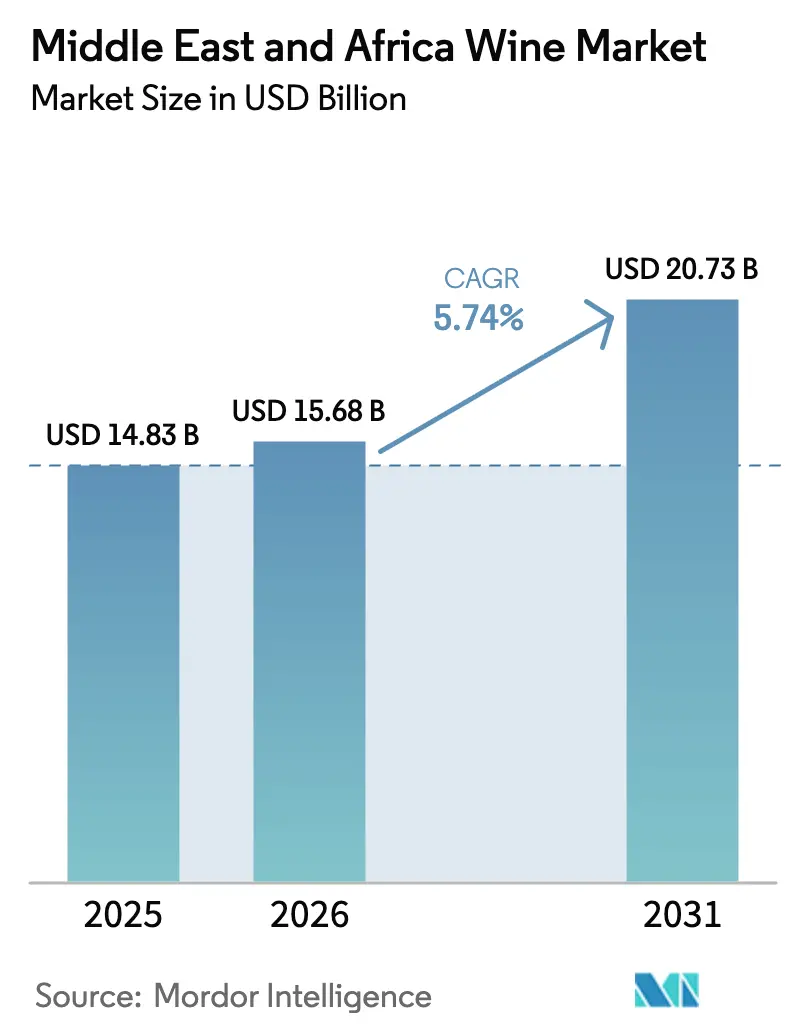
The Middle East and Africa wine market size was valued at USD 14.83 billion in 2025 and estimated to grow from USD 15.68 billion in 2026 to reach USD 20.73 billion by 2031, at a CAGR of 5.74% during the forecast period (2026-2031). This upward trajectory is buoyed by regulatory shifts in the Gulf, a surge in tourism investments, and an uptick in disposable incomes, all steering consumers towards premium labels. Saudi Arabia's 2026 move to permit controlled alcohol sales in tourism zones broadens the market's reach. Concurrently, infrastructure enhancements in Egypt, Morocco, and the UAE are streamlining the supply chain. Innovations in climate-resilient varietals and non-alcoholic offerings not only meet sustainability goals but also respect regional religious sentiments. The formation of Vinarchy underscores a trend towards consolidation, enhancing market reach and brand investment returns. While counterfeit risks and inconsistent tax regimes pose challenges, they also drive the adoption of blockchain traceability and heightened import inspection measures.
Key Report Takeaways
- By product type, still wine led with a 72.10% share of the Middle East and Africa wine market in 2025, whereas sparkling wine is projected to advance at a 7.14% CAGR through 2031.
- By color, red wine accounted for 57.88% share of the Middle East and Africa wine market size in 2025, whereas rosé wine is projected to expand at a 6.72% CAGR to 2031.
- By price range, the premium tier accounted for 32.80% share of the Middle East and Africa wine market size in 2025 and is forecast to expand at a 7.39% CAGR to 2031.
- By end user, men retained 60.82% participation in 2025, while women are set to deliver a 6.02% CAGR through 2031 as social norms shift and purchasing power rises.
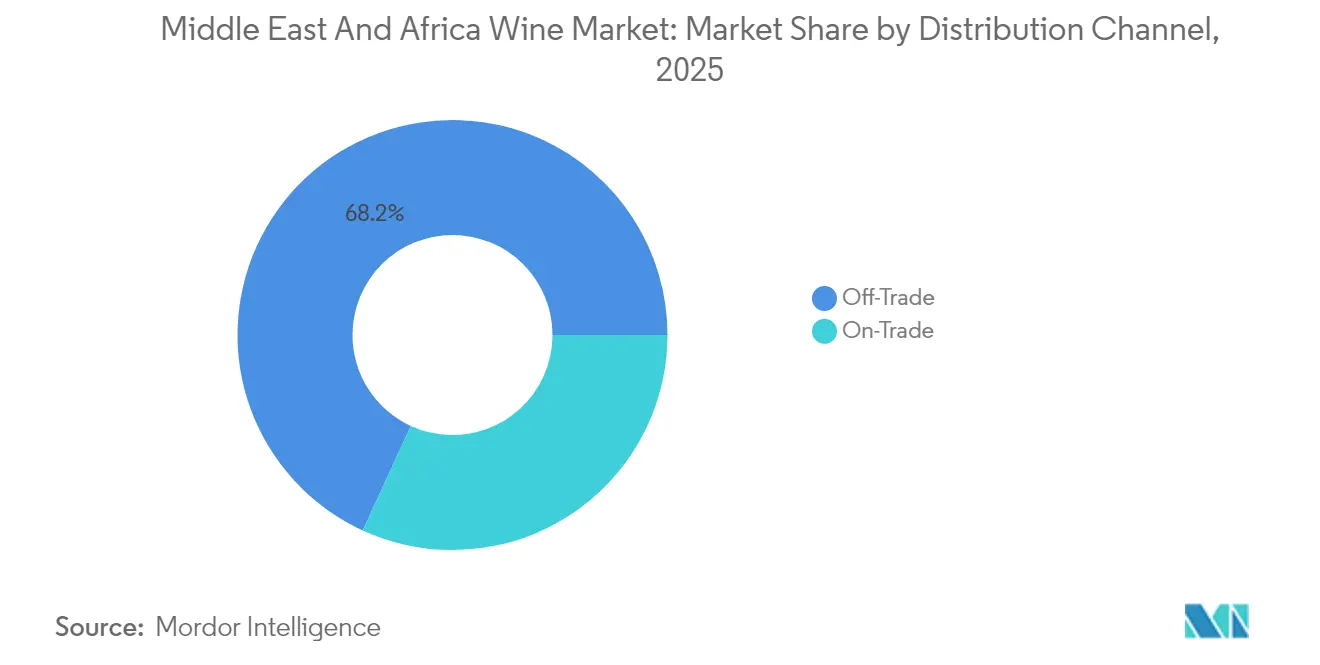
- By distribution channel, the off-trade captured 68.15% of the Middle East and Africa wine market size in 2025, as the on-trade accelerated at a 6.52% CAGR, driven by new hospitality projects.
- By geography, South Africa commanded 38.61% revenue share of the Middle East and Africa wine market size in 2025, while the United Arab Emirates is on track for the fastest 7.69% CAGR between 2026-2031.
Note: Market size and forecast figures in this report are generated using Mordor Intelligence’s proprietary estimation framework, updated with the latest available data and insights as of 2026.
Market Trends and Insights
Drivers Impact Analysis of Middle East And Africa Wine Market*
| Driver | (~) % Impact on CAGR Forecast | Geographic Relevance | Impact Timeline |
|---|---|---|---|
| Rising premiumization and gifting culture | +1.2% | UAE, Saudi Arabia, South Africa, Egypt | Medium term (2-4 years) |
| Hospitality-tourism boom | +0.9% | UAE, Saudi Arabia, Turkey, Egypt, Morocco | Short term (≤ 2 years) |
| Exotic flavor exploration and new taste preferences | +0.7% | Urban centers across region | Medium term (2-4 years) |
| Rising disposable income | +0.8% | Nigeria, Egypt, South Africa, UAE | Long term (≥ 4 years) |
| Technological advances in viticulture and winemaking | +0.5% | South Africa, Morocco, Turkey | Long term (≥ 4 years) |
| Halal-certified de-alcoholised wines | +0.4% | Saudi Arabia, UAE, Egypt, Morocco | Medium term (2-4 years) |
| Source: Mordor Intelligence | |||
Rising premiumization and gifting culture
As urban affluence rises, Middle Eastern and African markets witness a surge in premium wine consumption, driven by sophisticated drinking occasions and corporate gifting. The UAE, through ADGM, showcases its regulatory flexibility by granting alcohol service permits, underscoring its commitment to premium hospitality. Meanwhile, buoyed by record agricultural exports hitting USD 13.7 billion in 2024, South Africa's wine industry is now eyeing higher-value exports, as noted by Wandile Sihlobo. In West Africa, as local spirits are rebranded as luxury items, there's a noticeable spillover demand for imported premium wines. This cultural evolution, positioning wine as a status symbol and preferred gift, especially favors the sparkling wine segment, known for its higher margins and celebratory appeal. With enhancing port infrastructure and streamlined customs procedures, premium wine selections are becoming staples in corporate entertainment and diplomatic events across these regions.
Hospitality-tourism boom
As Egypt aims for a USD 30 billion tourism revenue by 2025 and 30 million visitors by 2032, the country will need an additional 200,000 hotel rooms, as highlighted by the New Zealand Ministry of Foreign Affairs and Trade[1]. Saudi Arabia's Vision 2030, featuring initiatives like the Red Sea Global megaprojects and Qiddiya entertainment hubs, sees alcohol licensing in select tourism zones as a strategy for economic diversification. The UAE's well-established hospitality sector is broadening its premium dining offerings. Meanwhile, Turkey's strong sales of Chivas and other premium brands indicate a shift towards more sophisticated consumption patterns, according to Pernod Ricard. Cultural tourism is on the rise in Morocco and Egypt, spurring a demand for wine pairings with local dishes. As hotels expand their capacities, there's a growing need for refined beverage programs, leading to increased bulk wine imports for on-premise use and presenting opportunities for regional distributors.
Exotic flavor exploration and new taste preferences
As consumer tastes shift, there's a growing embrace of indigenous varietals and innovative production methods that resonate with regional terroirs and cultural nuances. In Rwanda, the development of locally-sourced banana wine yeast cultures showcases a leap in technological innovation, tapping into alternative fermentation substrates. Meanwhile, Malawi's foray into banana wine production not only highlights a response to climate challenges but also serves as a means for income diversification. Across Egypt, Turkey, and South Africa, pomegranate wine is making waves. Leveraging established fruit production infrastructures, these regions are crafting antioxidant-rich pomegranate wines, boasting bioactive compounds up to tenfold higher than their traditional grape counterparts. South African wine regions are not just resting on their laurels; they're experimenting with climate-adapted varieties like Assyrtiko and Vermentino. Coupled with precision viticulture technologies, they're honing terroir-specific flavors, as noted by the London Wine Competition. These strides in innovation not only bolster climate resilience but also cater to a burgeoning consumer appetite for distinct flavor profiles, setting regional offerings apart from global contenders.
Rising disposable income
Key African markets are witnessing economic growth, bolstering wine purchasing power. Projections from the USDA indicate that Sub-Saharan Africa is set to achieve an average GDP growth of 3.8% through 2033, while North Africa is on track with a steady 3.7% growth rate[2]. In Nigeria, an expanding middle class is fueling a surge in wine import demand, even in the face of regulatory hurdles. Meanwhile, Egypt, buoyed by currency stabilization and backing from the IMF, is enhancing its capacity to import premium beverages. Côte d'Ivoire has emerged as the largest wine importer in Sub-Saharan Africa, bringing in wines worth USD 64.1 million in 2023, outpacing South Africa's imports valued at USD 54.3 million. This shift underscores the nation's robust economic growth and urbanization trends, as highlighted by the USDA Foreign Agricultural Service. Urban dwellers are increasingly dedicating discretionary funds to lifestyle products, with wine taking center stage for both home enjoyment and social gatherings. As incomes rise, there's a noticeable shift from informal alcohol consumption to branded, regulated wine products. This transition is particularly advantageous for international imports and the burgeoning premium segment of domestic production.
Restraints Impact Analysis of Middle East And Africa Wine Market*
| Restraint | (~) % Impact on CAGR Forecast | Geographic Relevance | Impact Timeline |
|---|---|---|---|
| Persistent counterfeit risk undermining consumer trust | -0.8% | Nigeria, Egypt, South Africa | Short term (≤ 2 years) |
| Strict alcohol regulation and religious norms | -1.1% | Saudi Arabia, Egypt, Morocco | Long term (≥ 4 years) |
| Youth shift toward flavoured RTDs and spirits | -0.6% | Global, concentrated in urban areas | Medium term (2-4 years) |
| High import tariffs and excise taxes | -0.9% | Nigeria, Egypt, Morocco, Turkey | Short term (≤ 2 years) |
| Source: Mordor Intelligence | |||
Persistent counterfeit risk undermining consumer trust
Illicit alcohol trade accounts for 25-40% of global consumption, leading to annual fiscal losses of USD 8.9 billion. The World Customs Organization highlighted a 30% surge in alcohol trafficking cases in 2022, with a primary focus on wine and grape-distilled products[3]. In South Africa, a fragmented food control system has paved the way for counterfeit wine circulation. This has resulted in documented deaths from methanol-adulterated alcohol in 2022 and seizures valued at R24 million in Cape Town alone, according to BMC Public Health. The region's limited laboratory capacity hampers authentication efforts. Furthermore, modest statutory fines (R400 for first offences under South Africa's FCD Act) prove ineffective in deterring large-scale fraud operations. The rise of e-commerce has introduced new avenues for counterfeit distribution, especially impacting premium wine segments where brand authenticity significantly influences pricing. While regional coordination via INTERPOL's OPSON operations and blockchain traceability initiatives present potential solutions, their successful implementation demands considerable investment in enforcement infrastructure and enhanced cross-border collaboration.]
Strict alcohol regulation and religious norms
Across Muslim-majority nations, market penetration faces hurdles due to religious and cultural constraints. Notably, Saudi Arabia, long known for its stringent 73-year alcohol ban, has recently begun to ease restrictions, but only for select tourism venues. In Egypt, the National Food Safety Authority enforces rigorous registration processes and mandates halal certification. Meanwhile, Morocco's licensing frameworks are skewed to favor domestic production, imposing restrictions on imports. In Nigeria, the NAFDAC's registration process, which includes factory inspections and a mountain of documentation, poses significant challenges for international wine producers eyeing the market. Turkey's Ministry of Agriculture has added another layer of complexity, requiring labels to be in Turkish during production. This stipulation not only bars modifications post-import but also inflates compliance costs. Such regulatory landscapes underscore the profound cultural sensitivities surrounding alcohol consumption in these nations. As a result, any market entry strategy must tread carefully, honoring local customs while pinpointing acceptable consumption occasions and target consumer segments.
*Our forecasts treat driver/restraint impacts as directional, not additive. The impact forecasts reflect baseline growth, mix effects, and variable interactions.
Middle East And Africa Wine Market Segment Analysis
By Product Type:
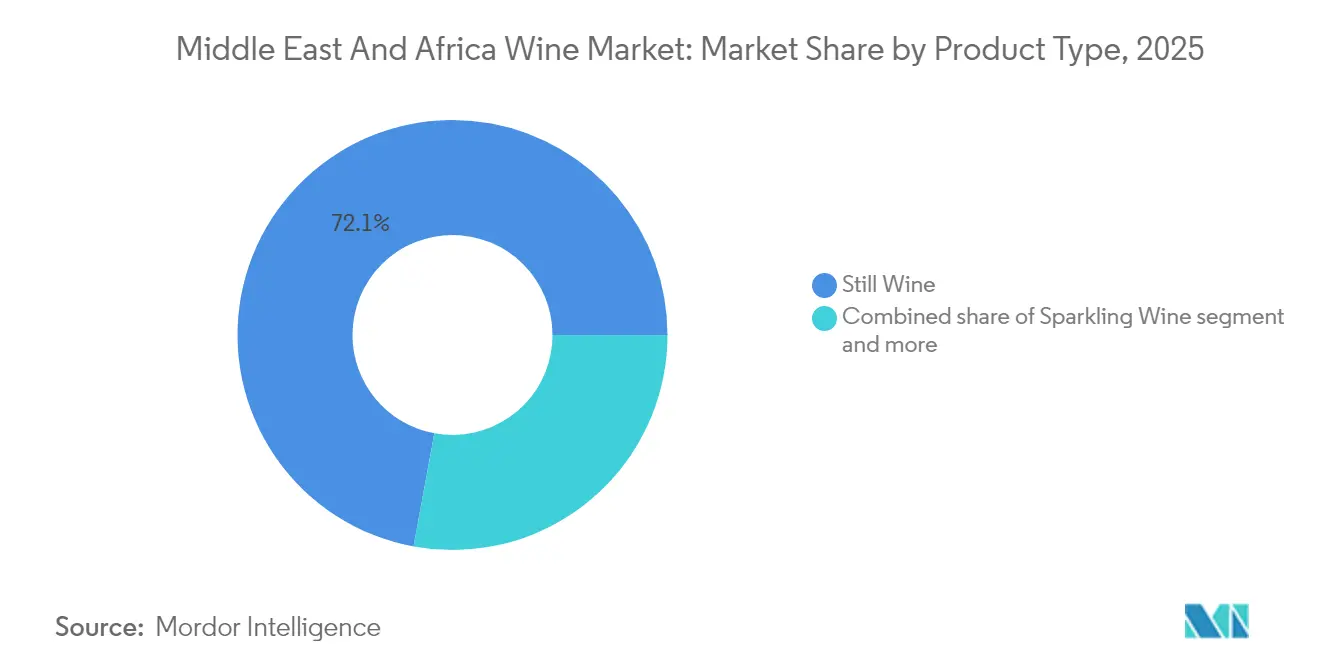
Still Wine Dominance Amid Sparkling AccelerationIn 2025, still wine holds a commanding 72.10% share of the market, underscoring the region's entrenched consumption habits and well-established distribution channels. Sparkling wine, however, is making waves as the fastest-growing segment, boasting a 7.14% CAGR projected through 2031. This surge is largely attributed to its rising popularity in celebrations and a trend towards premium offerings in the hospitality sector. While fortified wine enjoys consistent demand in traditional markets, the "Others" category spanning ice wines, aromatized varieties, and low/no-alcohol options is gaining momentum. This shift is largely driven by health-conscious consumers exploring alternatives. Notably, the halal-certified de-alcoholized wine segment is carving out a niche in Muslim-majority markets. Here, evolving regulatory frameworks are becoming more accommodating, allowing these non-alcoholic alternatives to retain their cultural and ceremonial significance.
Producers in South Africa are adapting to climate change, experimenting with late-harvest and fortified styles to better endure temperature swings. Meanwhile, technological strides in dealcoholization are paving the way for premium non-alcoholic offerings, as highlighted by the Italian Journal of Food Science. Sparkling wine producers are leveraging controlled fermentation technologies to uphold quality, even in the face of challenging climatic conditions. This resilience positions the segment for continued growth, especially as regional economies flourish and celebratory occasions become more frequent.

By Colour:
Red Wine Leadership Challenged by Rosé InnovationIn 2025, red wine commands a dominant 57.88% share of the market, buoyed by longstanding traditions and food pairing practices prevalent in Mediterranean and African cuisines. Rosé wine, however, is on a rapid ascent, projected to grow at a 6.72% CAGR through 2031. Its appeal resonates with younger consumers and is particularly favored during warm-climate occasions, a hallmark of the region. Meanwhile, white wine carves out a notable presence in coastal markets and premium segments, reaping benefits from a surge in tourism and its affinity for seafood pairings. The segmentation by color not only mirrors cultural inclinations but also climatic factors, with rosé's upward trajectory echoing a global shift towards lighter, more refreshing wine styles.
South Africa's 2025 vintage stands out for its exceptional quality across all color categories. Favorable growing conditions have not only preserved acidity but also cultivated optimal color and flavor profiles. This is especially evident in the enhanced expressions of Pinotage and Shiraz red wines, alongside a more pronounced Chardonnay white wine. As regional producers hone in on color-specific marketing strategies, rosé is being strategically positioned for the bustling summer tourism season, while red wines are being marketed for the cozy winter months and upscale dining experiences.
By Price Range:
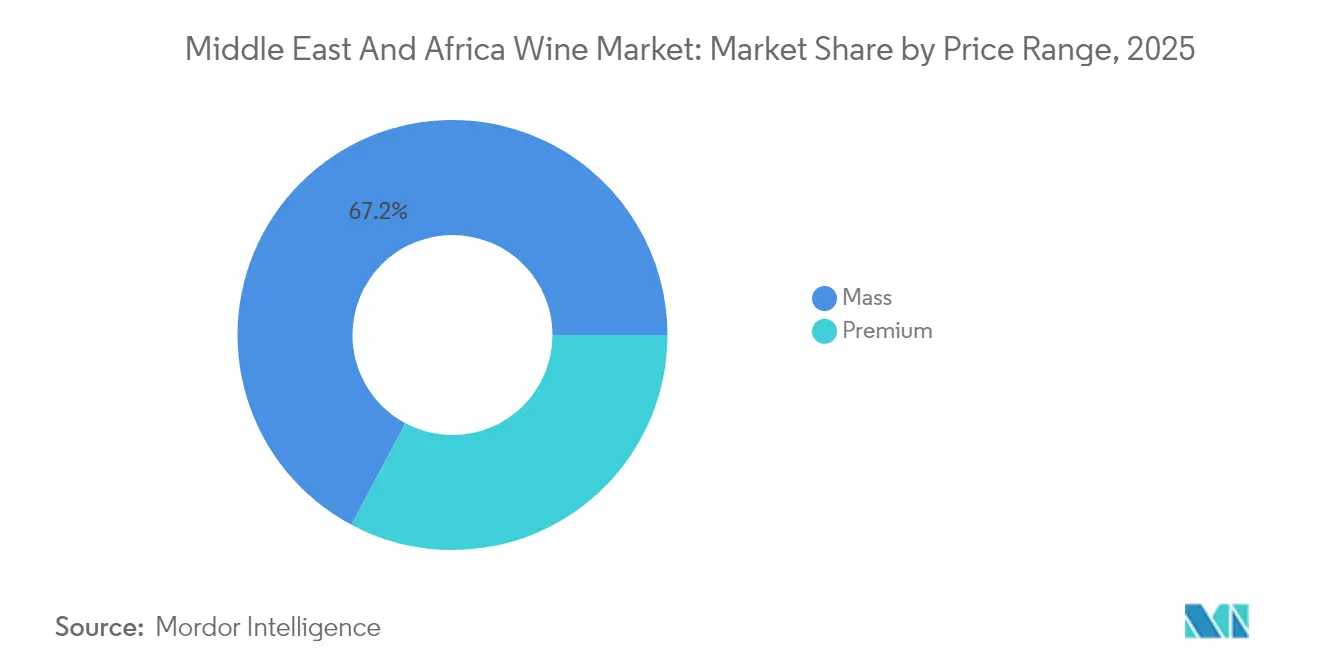
Premium Segment Drives Value CreationIn 2025, mass market wines dominate with a 67.20% market share, underscoring the influence of price-sensitive consumers and robust off-trade distribution channels. Meanwhile, the premium wine segment is on a growth spurt, boasting a 7.39% CAGR through 2031. This surge is fueled by rising disposable incomes and a growing penchant for sophisticated consumption, especially in urban hubs and tourist hotspots. Notably, this trend of premiumization not only aligns with global wine market movements but also highlights regional economic growth and a deepening cultural appreciation for wine.
Strategies in the premium wine sector are increasingly honing in on terroir expression, sustainable production, and genuine regional characteristics. For instance, South African vintners are capitalizing on the "Wine of Origin" certification and estate-specific branding, allowing them to command premium prices. Furthermore, regional regulatory frameworks are becoming more accommodating to premium wine imports. Egypt has streamlined its customs procedures, while the UAE's well-established hospitality licensing is paving the way for these high-value products. Given the premium segment's upward trajectory, producers who prioritize quality differentiation and brand development stand to reap significant margin expansions.
By End User:
Women Consumers Drive Market EvolutionIn 2025, men hold a 60.82% share of the market, a reflection of the region's entrenched consumption patterns and cultural norms. Meanwhile, women are propelling a more rapid growth rate of 6.02% CAGR, a trend projected to continue through 2031. This surge is buoyed by shifting social dynamics, heightened economic engagement, and changing lifestyle choices. Such demographic transitions are reshaping product development and marketing strategies, influencing everything from packaging and flavor profiles to preferred distribution channels.
According to Diageo's Foresight Report 2025, key consumer trends spotlight conscious wellbeing and a sense of collective belonging. Notably, women are at the forefront, championing moderation and community-centric consumption. However, the gender landscape isn't uniform. In markets like the UAE and South Africa, more lenient regulations have paved the way for greater female involvement in wine consumption. In contrast, traditional markets are witnessing a more gradual shift towards social acceptance and purchasing behaviors.
By Distribution Channel:
Off-Trade Dominance with On-Trade AccelerationIn 2025, off-trade channels capture a commanding 68.15% market share, led by specialty liquor stores that expertly curate and premium-position wine products. Meanwhile, on-trade channels, buoyed by an expanding hospitality sector and bolstered tourism infrastructure in key markets, are set to grow at a robust 6.52% CAGR through 2031. Specialty liquor stores leverage their product expertise, premium positioning, and adeptness at navigating regulatory landscapes. At the same time, other off-trade avenues, notably e-commerce platforms, are resonating with younger consumers.
The distribution landscape is shaped by regulatory constraints and cultural inclinations. While off-trade channels cater to private consumption, the growth of on-trade channels underscores their role in social and business entertainment. Egypt's burgeoning tourism and Saudi Arabia's proactive hospitality licensing pave the way for significant on-trade prospects. Conversely, Nigeria's regulatory landscape leans towards established distribution networks, especially those adept with NAFDAC compliance. Embracing technology, the distribution sector is turning to blockchain for traceability and digital tools for inventory management, tackling authenticity challenges and streamlining supply chain operations.
Geography Analysis
South Africa Wine Market
In 2025, South Africa holds a 38.61% share of the African wine market, benefiting from its strong viticulture infrastructure, export capacity, and proximity to major regional markets. Challenges such as Cape Town’s port congestion, Eskom’s load shedding, and climate change require adaptive strategies, yet the 2025 vintage delivered 1.244 million tonnes from 86,544 hectares. This supports premiumization, diversifies exports to over 120 countries, and aligns with transformation initiatives emphasizing Black ownership and sustainable production.
United Arab Emirates and Saudi Arabia Wine Market
The United Arab Emirates is the fastest-growing market, with a projected CAGR of 7.69% through 2031, driven by tourism, a rising expatriate population, and advanced hospitality infrastructure. Dubai’s automated customs and ADGM alcohol licensing simplify the import of premium wines, while the UAE’s strategic location strengthens its role as a distribution hub for Gulf Cooperation Council markets. Saudi Arabia is poised for growth with the implementation of Vision 2030 reforms and preparations for the 2034 FIFA World Cup, where the introduction of controlled alcohol licensing in tourism venues could boost demand.
Africa and Europe Wine Market
Nigeria, Egypt, Morocco, and Turkey hold notable shares but face distinct regulatory and cultural conditions. In Nigeria, NAFDAC registration and a sachet alcohol ban reflect stricter consumer protection and market formalization. Egypt’s 14% VAT and Arabic labeling requirements increase compliance costs, yet tourism and economic stabilization efforts support alcohol imports. Morocco and Turkey balance wine production with religious and cultural sensitivities, focusing on domestic production and selective imports for tourists and expatriates.
Regulatory Landscape
Alcohol regulation across the Middle East and Africa remains highly heterogeneous, shaping route-to-market, labeling, and licensing decisions by country and channel. In South Africa, the Wine and Spirit Board is a central reference point for origin certification and production standards, supporting premium positioning for locally produced wines. In the UAE, alcohol licensing is administered by emirate-level authorities, and reforms implemented in 2022-2023 streamlined consumer access in Dubai and Abu Dhabi by removing residential license requirements, strengthening the role of hospitality-led sales in key emirates.
For import-led markets, compliance and registration processes create material time and cost gates. Nigeria requires product registration with the National Agency for Food and Drug Administration and Control (NAFDAC), including factory inspection protocols that can slow onboarding of new brands and SKUs, while industry groups such as the Spirits and Wines Association of Nigeria (SWAN) engage with stakeholders on balanced regulation and counter-illicit trade measures. Alongside these formal controls, ethical and trade compliance frameworks also influence supply decisions, with bodies such as WIETA (Wine and Agricultural Ethical Trade Association) in South Africa helping align producer practices to buyer expectations in regulated retail and on-trade environments.
Competitive Landscape
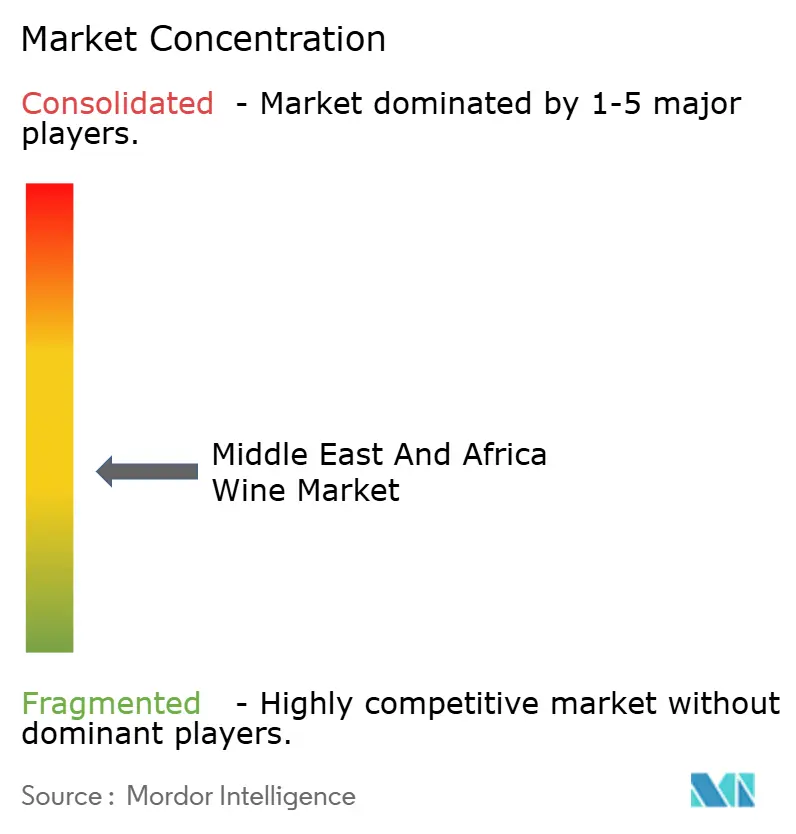
The wine market in the Middle East and Africa is moderately fragmented, with the top five groups holding a significant share. The merger of Accolade Wines and Pernod Ricard's regional assets has birthed Vinarchy, a 32-million-case powerhouse with a focus on premium exports. This merger streamlines overlapping distributors and injects capital for vineyard enhancements in South Africa and Spain. Constellation Brands has divested its mainstream labels, choosing instead to focus on higher-margin SKUs, reflecting a regional shift towards premiumization.
Castel Group's USD 81 million acquisition of Diageo's stake in Guinness Ghana highlights a trend of consolidation in Africa, aiming to boost scale and regulatory sway. Treasury Wine Estates, initially set to divest its commercial portfolio in 2025, has reversed course, underscoring the importance of mass-market coverage for stable cash flow. Technological advancements are making waves: from blockchain authentication and AI-driven irrigation to predictive demand modeling. While smaller estates in Morocco and Turkey find their footing through eco-certifications and agro-tourism, South African cooperatives are bundling logistics to make inroads into Nigerian retail.
Strategies are increasingly shaped by the need to combat counterfeiting. Leading firms are adopting tamper-proof neck tags and collaborating with customs agencies for swift authenticity checks. Sustainability is also a major focus; producers are outlining carbon-reduction strategies to meet the expectations of importers in Europe and Asia. A shortage of talent in enology and vineyard management has led to internship exchanges between South Africa and France, elevating technical standards throughout the region.
Middle East And Africa Wine Industry Leaders
-
Accolade Wines
-
E. & J. Gallo Winery
-
Pernod Ricard
-
Castel Group
-
Distell Group Holdings
- *Disclaimer: Major Players sorted in no particular order
Middle East And Africa Wine Market Companies Covered in this Report
- Distell Group Holdings
- Castel Group
- E. & J. Gallo Winery
- Pernod Ricard
- Accolade Wines
- Treasury Wine Estates
- Constellation Brands
- The Wine Group
- Birthmark of Africa Wines
- Davide Campari-Milano
- Compagnia del Vino
- Henkell Freixenet
- Möet Hennessy (LVMH)
- KWV South Africa
- Jordan Wine Estate
- Backsberg Family Wines
- Awash Winery
- Rift Valley Wines
- Suntory Holdings Limited
- Birthmark of Africa Wines
Market Opportunities and Future Outlook
Tourism-linked on-trade is a key opportunity lever, especially where licensing frameworks allow premium on-premise programs to scale. Gulf Cooperation Council hospitality remains a high-value concentration point for fine wine, and market evidence points to a larger share of fine wine consumption occurring in hotels and restaurants. That pattern supports supplier prioritization of on-trade portfolio building, staff training, and by-the-glass programs. In North Africa, tourism recovery in Morocco and Egypt is a visible demand anchor for premium categories and wine-food pairing occasions, supported by the region’s expanding hotel and restaurant base and creating clearer execution paths for importers and distributors seeking compliant on-trade service models.
Opportunities are also emerging through compliance-led premiumization and portfolio localization. Regulatory complexity in Nigeria (NAFDAC registration and inspections) and differing emirate-level rules in the UAE create room for operators to offer end-to-end regulatory services, authenticated sourcing, and traceability to address counterfeiting concerns. Consolidation and capability building among large suppliers supports broader assortment and route-to-market investment, as reflected in the formation of Vinarchy as a scaled global wine group and in multinational operators such as Pernod Ricard maintaining a structured regional presence across Africa. Product innovation that aligns with cultural norms, including de-alcoholised and no/low offerings, offers another route to participate in occasions where traditional alcohol consumption is restricted, while still using premium brand cues and gifting formats.
Recent Industry Developments in Middle East And Africa Wine Market
- July 2026: Pernod Ricard accelerates investment in South Africa using AI and predictive analytics to refine marketing and consumer engagement for premium brands. The approach reflects AI driven growth in MEA wine market. It enhances premium-brand penetration and data driven marketing in South Africa, potentially lifting premium sales in MEA.
- March 2026: Pernod Ricard appointed Team Conviviality as media partner for South Africa, Nigeria, Turkey, and 38 other African markets to accelerate growth with locally tailored tools. The partnership gives Pernod Ricard broader distribution reach and local market effectiveness across key MEA wine markets. The collaboration supports tailored campaigns that align with diverse consumer bases across the region.
- March 2026: Vinarchy to transition from transitional distribution agreements with Pernod Ricard to direct control of its sales and distribution operations in Spain starting July 1, 2026. The transition consolidates Vinarchy’s distribution capabilities in a major Spain based market. The action influences MEA global wine reach through Spain and strengthens Vinarchy's logistics footprint in Southern Europe.
Middle East And Africa Wine Market Report Scope and Research Methodology
Market Definition and Coverage
For this study, the market is defined as the value of wine sales across the Middle East and Africa, counted as revenue generated from still, sparkling, and fortified wine sold through on-trade and off-trade channels in the covered countries.
Scope exclusions: We exclude beer, spirits, RTDs, cider, and grape juice, and we also do not count home-made informal alcohol not captured in tracked retail or on-trade sales.
Segments Covered in This Report
- By Product Type
- Fortified Wine
- Still Wine
- Sparkling Wine
- Others Wine Types (Ice, Aromatised, Low/No-Alc)
- By Colour
- Red Wine
- White Wine
- Rose Wine
- By Price Range
- Mass
- Premium
- By End User
- Men
- Women
- By Distribution Channel
- On-Trade
- Off-Trade
- Specialty/Liquor Stores
- Others Off Trade Channels
- By Geography
- South Africa
- Saudi Arabia
- United Arab Emirates
- Nigeria
- Egypt
- Morocco
- Turkey
- Rest of Middle East and Africa
Data Sources, Market Sizing, and Validation
Desk Research
Desk research was used to set the country coverage, confirm product boundaries, and build a consistent starting set of demand and supply indicators before modeling. We relied on public statistical series and sector references that reflect legal trade and consumption patterns, including UN Comtrade for wine import and export flows, FAOSTAT for grapes and agriculture context, and World Bank macro indicators linked to purchasing power.
We also reviewed official sources that affect demand visibility, such as tourism and hospitality indicators from UNWTO, and alcohol policy and public health references from WHO. Company annual reports and investor presentations were used to cross-check channel exposure and price positioning. A paid subscription database for company financials and an import and export shipment-level database were used selectively to resolve gaps in importer activity. The desk sources listed are illustrative, and we checked many additional public and paid references for data collection, validation, and clarification.
Primary Interviews and Surveys
Primary work focused on validating what is actually selling by country, since regulations, licensing, and channel access can shift quickly across the Middle East and Africa. We spoke with importers, distributors, large retailers, on-trade buyers, and category managers, then used their input to re-check desk assumptions on price ladders, mix shifts, and product availability in key markets.
Distribution of primary research fieldwork respondents
| Company type | Respondent position |
|---|---|
| Top tier: 25% | CXOs: 12% |
| Mid tier: 58% | Functional/Unit leaders: 43% |
| Smaller Players: 17% | Managers: 45% |
Market-Sizing & Forecasting
The sizing starts with a top-down reconstruction. We build country demand pools using legal trade direction, channel structure, and consumption proxies, then derive value using country price ladders.
We corroborate the results with selective bottom-up approximations, such as sampled ASP by channel multiplied by estimated volumes, plus distributor and retailer checks. Where desk data is thin, those comparisons are used to adjust totals.
Key inputs in the model include recorded wine imports by type, tourism arrivals and hotel capacity signals, on-trade licensing shifts, disposable income and inflation indicators, and observed price movement by pack size and origin. When direct volume series were inconsistent, gaps were handled by carrying forward nearby-year trade patterns, applying conservative conversion factors, and validating the direction of change through primary feedback.
For forecasting, we use scenario analysis because policy direction, tourism investment, and FX movement can affect wine value more than a smooth historical trend in this region. Growth paths are anchored to expert consensus on pricing progression, channel expansion, and premiumization, then tuned country by country to reflect restrictions and affordability pressure.
Data Validation & Update Cycle
Outputs were validated through triangulation across desk indicators, primary feedback, and internal consistency checks within the model. We reviewed anomalies such as sudden value jumps without supporting volume, unusual price swings, and trade spikes that did not align with channel commentary, then re-checked assumptions until the variance was explainable.
Before sign-off, the model and narrative go through multi-step analyst reviews, and re-contacts are triggered when a material mismatch appears between interviews and independent metrics. Reports are refreshed annually, with interim updates for material events, and a final pre-delivery pass is completed so clients receive the latest updated view.
Mordor Intelligence's Middle East and Africa Wine Market Size Measured Against Other Published Estimates
Published market sizes for Middle East and Africa wine often diverge because the scope can shift in small but important ways, and pricing and currency assumptions are not always stated clearly. Differences also come from base year selection, on-trade recovery timing, and how missing country data is filled when official series are limited.
The biggest gaps typically come from whether unrecorded alcohol is included, whether non-alcoholic wine or adjacent alcoholic categories are blended into the same number, and whether values are reported at retail versus import declared value. Another driver is ASP progression, where some estimates apply one regional price uplift while others re-price by country using inflation and FX timing. That difference was controlled through country-level re-pricing checks and annual refresh discipline before sign-off at Mordor Intelligence.
Benchmark comparison
| Source | Market Size | Gaps in Research Methodology |
|---|---|---|
| Mordor Intelligence | USD 14.83 B (2025) | |
| Trade Analytics Bulletin A | USD 1.30 B (2024) | Uses a narrower MENA footprint and values wine closer to declared trade or wholesale pricing, which reduces on-trade margin capture and omits several African markets included in wider MEA coverage. |
| Regional Consultancy B | USD 41.93 B (2025) | Likely applies broader category inclusions or higher retail price assumptions that lift the total materially, and the consistency checks against trade and channel signals are not clearly stated. |
Overall, the spread in published values is explained by geography coverage, the pricing point used, and how price ladders are refreshed under inflation and FX. By keeping assumptions traceable to observable trade, channel mix, and country pricing checks, the estimate stays repeatable and easier to audit when updates are made.
Key Questions Answered in the Report
What is the current size of the Middle East and Africa wine market?
The market is valued at USD 15.68 billion in 2026 and is forecast to hit USD 20.73 billion by 2031.
Which country leads regional sales?
South Africa leads with 38.61% share, supported by a mature viticulture base and export reach.
Which segment is growing fastest?
Sparkling wine shows the highest 7.14% CAGR through 2031, buoyed by premium tourism and gifting.
Which distribution channel holds the greatest share?
Off-trade channels, notably specialty liquor stores, account for 68.15% of 2025 value, though on-trade is trending up.
How will Saudi Arabia’s policy shift affect demand?
Controlled licenses tied to Vision 2030 and FIFA 2034 are expected to open new on-trade channels from 2026 forward.