
Market Overview
| Study Period | 2021 - 2031 |
|---|---|
| Forecast Data Period | 2026 - 2031 |
| Base Year Market Size (2025) | USD 7.78 Billion |
| Market Size (2026) | USD 8.2 Billion |
| Market Size (2031) | USD 10.66 Billion |
| Growth Rate (2026 - 2031) | 5.39 % |
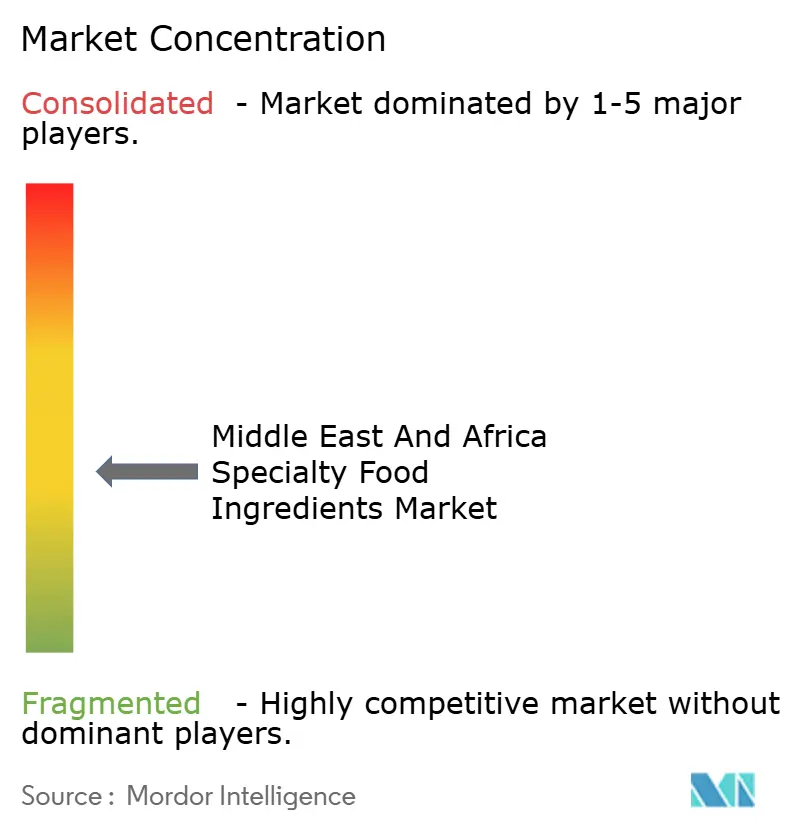
| Market Concentration | Medium |
Major Players *Disclaimer: Major Players sorted in no particular order Image © Mordor Intelligence. Reuse requires attribution under CC BY 4.0. | |
Middle East And Africa Specialty Food Ingredients Market Analysis by Mordor Intelligence
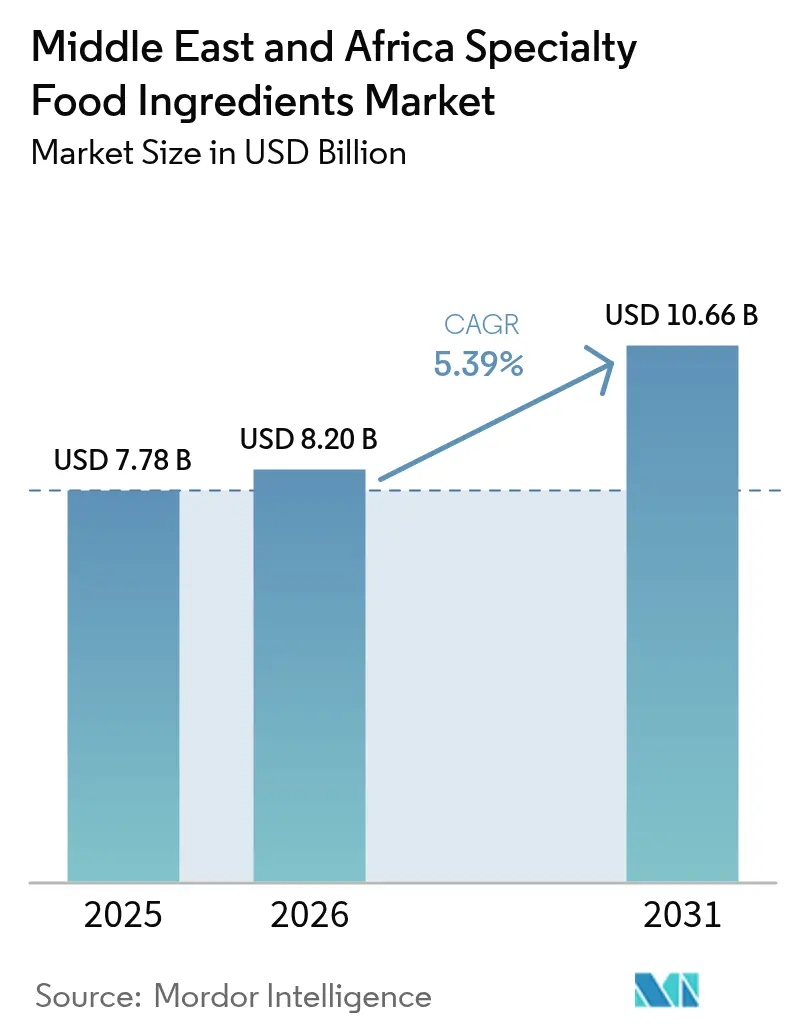
The Middle East and Africa specialty food ingredients market size was valued at USD 7.78 billion in 2025 and estimated to grow from USD 8.2 billion in 2026 to reach USD 10.66 billion by 2031, at a CAGR of 5.39% during the forecast period (2026-2031). This trajectory reflects a structural shift as governments mandate fortification to address micronutrient deficiencies while consumers increasingly demand functional benefits beyond basic nutrition. Saudi Arabia's requirement that all milk products contain vitamin D, implemented by the Saudi Food and Drug Authority in 2024, exemplifies how regulatory intervention is converting optional enrichment into baseline compliance [1]. The UAE's Nutri-Mark front-of-pack labeling system, launched in November 2024 with mandatory adoption by mid-2025, is pushing manufacturers to reformulate with cleaner ingredient profiles [2]. Investment incentives under Saudi Vision 2030 and the UAE Food Security Strategy 2051 are stimulating domestic production capacity, gradually reducing dependence on European and Asian suppliers. Supply-chain upgrades, including temperature-controlled logistics and regional ingredient hubs, are enabling faster product launches across the Middle East and Africa specialty food ingredients market, even as manufacturers navigate divergent national standards and certification regimes.
Key Report Takeaways
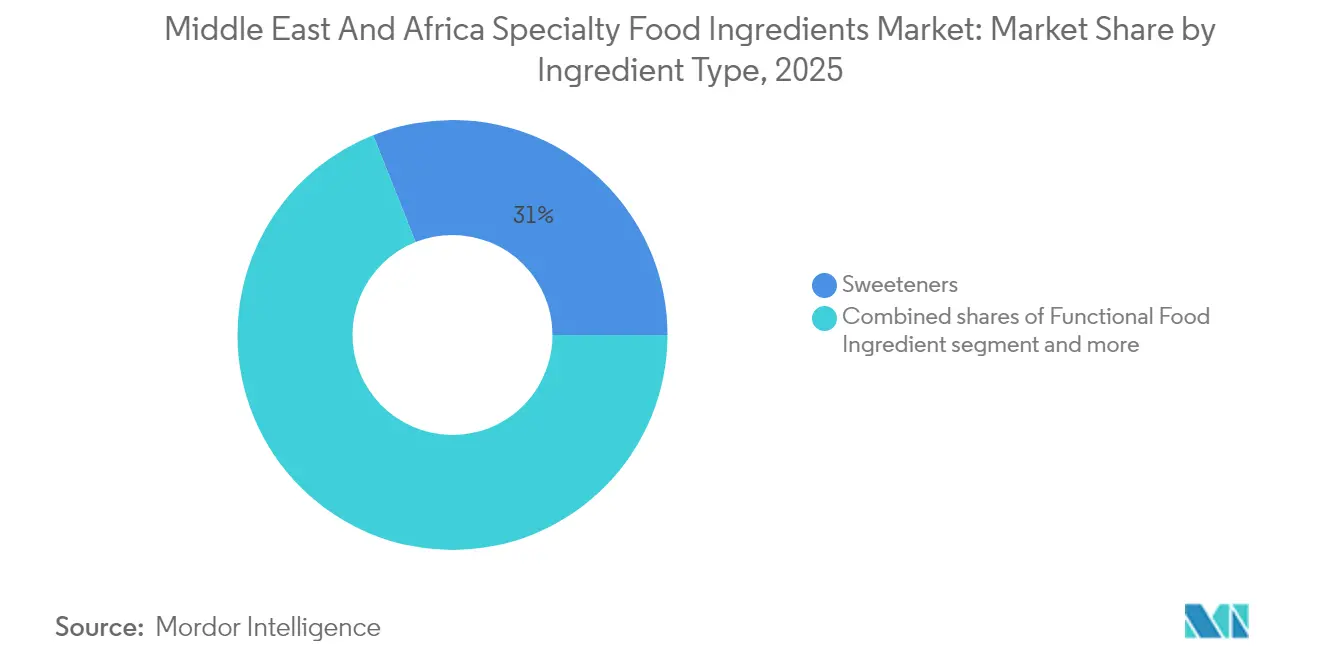
- Sweeteners captured 31.02% of the Middle East and Africa specialty food ingredients market share in 2025, Functional food ingredients are forecast to grow at a 6.48% CAGR to 2031.
- Powder and granular forms accounted for 66.78% of 2025 revenue; the liquid segment is projected to climb at 6.82% CAGR through 2031.
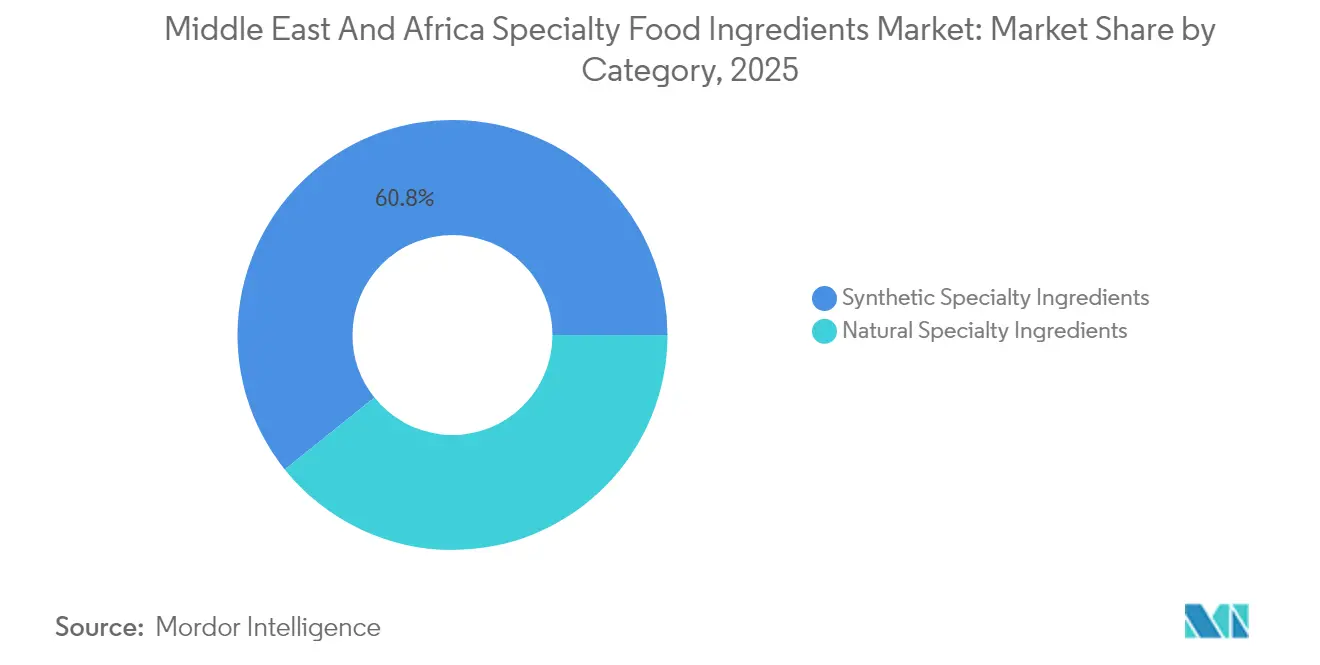
- Synthetic sources still held 60.75% share in 2025, but natural alternatives are expanding at a 6.12% CAGR.
- Beverages led applications with 29.72% revenue in 2025, whereas dairy products are forecast to post the highest 6.05% CAGR to 2031.
- South Africa generated 22.08% of 2025 regional revenue, while Nigeria is expected to record a 7.11% CAGR through 2031.
Note: Market size and forecast figures in this report are generated using Mordor Intelligence’s proprietary estimation framework, updated with the latest available data and insights as of 2026.
Market Trends and Insights
Drivers Impact Analysis of Middle East And Africa Specialty Food Ingredients Market*
| Driver | (~) % Impact on CAGR Forecast | Geographic Relevance | Impact Timeline |
|---|---|---|---|
| Rising consumer demand for healthier, functional food options | +1.2% | Saudi Arabia, UAE, South Africa, with spillover to urban Nigeria | Medium term (2-4 years) |
| Local flavor traditions plus globalization | +0.8% | Saudi Arabia, UAE (date-based ingredients), South Africa (rooibos), Nigeria (indigenous crops) | Long term (≥ 4 years) |
| Strong bakery and bread culture | +0.9% | Middle East (flatbreads, pita), North Africa (baguettes), Sub-Saharan Africa (fortified bread programs) | Short term (≤ 2 years) |
| Demand for fortified staples and affordable nutrition | +1.4% | Nigeria, South Africa, Kenya, Tanzania (government-mandated fortification programs) | Short term (≤ 2 years) |
| Food manufacturers reformulating with bioactive ingredients | +1.0% | UAE, Saudi Arabia, South Africa (clean-label reformulation) | Medium term (2-4 years) |
| Rise in demand for processed/packaged food | +1.1% | Nigeria, Kenya, urban centers across MEA (middle-class expansion) | Medium term (2-4 years) |
| Source: Mordor Intelligence | |||
Rising Consumer Demand for Healthier, Functional Food Options
Urban populations in Saudi Arabia and the UAE are driving demand for fortified dairy, probiotic beverages, and omega-3-enriched products as chronic disease prevalence rises. The Saudi Ministry of Health reported in 2024 that 35.4% of adults are obese, prompting consumers to seek functional ingredients that deliver tangible health outcomes beyond basic nutrition [3]. DSM-Firmenich's vitamin premix sales in the Middle East grew 18% year-over-year in 2024, reflecting manufacturers' shift toward fortification as a competitive differentiator. Probiotic cultures, particularly Lactobacillus and Bifidobacterium strains, are being incorporated into yogurt and fermented milk drinks, with South Africa's dairy sector mandating vitamin A and D fortification to address micronutrient deficiencies. This trend is creating premium pricing opportunities for ingredient suppliers who can demonstrate clinical efficacy through peer-reviewed studies.
Local Flavor Traditions Plus Globalization
Date syrup and date sugar are gaining traction as natural sweeteners in Saudi Arabia and the UAE, leveraging regional agricultural heritage while meeting clean-label demands. A 2024 study published in the Journal of Food Science documented date syrup's lower glycemic index compared to sucrose, positioning it as a functional sweetener for diabetic consumers. South African rooibos extract is being adopted in functional beverages across the Gulf Cooperation Council for its antioxidant properties, while Nigerian manufacturers are exploring Bambara nuts and cowpea as protein sources for fortified snacks. Ingredion's launch of FIBERTEX citrus fiber in EMEA in May 2024 exemplifies how global suppliers are adapting formulations to accommodate regional taste preferences while delivering functional benefits like improved satiety. This fusion of local and global flavors is expanding the addressable market for specialty ingredients beyond commodity sweeteners and preservatives.
Demand for Fortified Staples and Affordable Nutrition
Micronutrient deficiencies remain widespread across Sub-Saharan Africa, with the World Health Organization estimating that 42% of children under 5 in Nigeria are stunted due to inadequate nutrition. Government-mandated fortification of maize flour, edible oils, and salt is driving volume growth for vitamin A, iron, and iodine premixes, with Nigeria's National Agency for Food and Drug Administration and Control enforcing compliance across domestic and imported products. South Africa's fortification program, operational since 2003, has reduced neural tube defects by 31%, demonstrating the public health impact that justifies regulatory mandates. Kerry Group's taste and nutrition center in Dubai, opened in 2022, is formulating cost-effective micronutrient blends that maintain organoleptic properties in fortified staples, addressing the challenge of metallic off-flavors from iron compounds. This driver is creating predictable, regulation-driven demand that insulates ingredient suppliers from discretionary spending cycles.
Rise in Demand for Processed/Packaged Food
Nigeria's middle class is projected to reach 58 million by 2030, driving consumption of packaged snacks, beverages, and dairy products that require specialty ingredients for shelf stability and sensory appeal. Cold chain infrastructure remains limited outside major urban centers, placing a premium value on emulsifiers, stabilizers, and preservatives that maintain product integrity at ambient temperatures. Symrise's acquisition of Probi probiotics in 2023 positions it to supply shelf-stable probiotic strains for ambient yogurt drinks popular in West Africa. The UAE's food service sector, which grew 12% in 2024, is demanding clean-label emulsifiers and enzymes for industrial bakery and dairy applications. This urbanization-driven trend is creating sustained volume growth for specialty ingredients that enable processed food manufacturers to compete on convenience and shelf life.
Restraints Impact Analysis of Middle East And Africa Specialty Food Ingredients Market*
| Restraint | () % Impact on CAGR Forecast | Geographic Relevance | Impact Timeline |
|---|---|---|---|
| High production cost of specialty food ingredients | -0.9% | Global, with an acute impact in Nigeria and Kenya due to currency depreciation | Short term (≤ 2 years) |
| Stringent regulatory compliance requirements hinders growth | -0.6% | Saudi Arabia (SFDA), UAE (ESMA), South Africa (SABS), Nigeria (NAFDAC) | Medium term (2-4 years) |
| Supply chain complexities for niche ingredient sourcing | -0.5% | Sub-Saharan Africa (infrastructure gaps), landlocked countries (transit delays) | Long term (≥ 4 years) |
| Short shelf life and stability challenges of ingredients | -0.4% | High-temperature regions (Gulf states, Sub-Saharan Africa) | Medium term (2-4 years) |
| Source: Mordor Intelligence | |||
High Production Cost of Specialty Food Ingredients
Raw material price volatility is compressing margins for ingredient manufacturers and limiting adoption of premium functional ingredients. Cocoa prices surged to USD 10,000 per ton in April 2024, driven by crop failures in Côte d'Ivoire and Ghana, forcing confectionery manufacturers to reduce cocoa content or switch to compound coatings. Vanilla extract prices climbed 25-30% in 2024 due to cyclone damage in Madagascar, prompting flavor houses to develop synthetic vanillin blends that sacrifice clean-label positioning for cost control. Palm oil price fluctuations directly impact emulsifier costs, with Malaysian palm oil futures averaging 15% higher in 2024 compared to 2023. Currency depreciation in Nigeria and Kenya is amplifying import costs for specialty ingredients, with the naira losing 42% against the dollar in 2024, making locally produced alternatives increasingly competitive despite quality gaps.
Stringent Regulatory Compliance Requirements Hinders Growth
Divergent regulatory frameworks across the Middle East and Africa impose duplicative testing and certification costs on ingredient suppliers. Saudi Arabia's SFDA requires separate registration for each ingredient variant, with approval timelines extending 6-9 months, delaying product launches and increasing working capital requirements. The Gulf Cooperation Council Standardization Organization has harmonized some food standards, but individual member states retain discretion over additive approvals, forcing suppliers to navigate country-specific dossiers. South Africa's SABS mandates compliance with Codex Alimentarius standards but adds local testing requirements that can add USD 50,000-100,000 per ingredient to market entry costs. Halal certification from recognized bodies like JAKIM (Malaysia) or ESMA (UAE) is effectively mandatory for Gulf markets, requiring dedicated production lines and traceability systems that smaller suppliers struggle to afford.
*Our forecasts treat driver/restraint impacts as directional, not additive. The impact forecasts reflect baseline growth, mix effects, and variable interactions.
Middle East And Africa Specialty Food Ingredients Market Segment Analysis
By Ingredient Type:
Functional Fortification Drives Premium ShiftFunctional food ingredients will expand at 6.48% CAGR through 2031, outpacing the overall market as governments mandate micronutrient enrichment and consumers seek health benefits beyond basic nutrition. Vitamins and minerals dominate this segment, driven by Saudi Arabia's requirement for vitamin D in all milk products and Tanzania's fortification of wheat and maize flour with iron and folic acid. Omega-3 ingredients are gaining traction in premium dairy and bakery products, with encapsulation technology improving oxidative stability in high-temperature climates. Probiotic cultures, particularly Lactobacillus and Bifidobacterium strains, are being incorporated into yogurt and fermented beverages, though cold chain limitations constrain adoption in rural markets. Amino acids like lysine and methionine are finding application in fortified porridges and infant nutrition products across Sub-Saharan Africa.
Sweeteners commanded 31.02% market share in 2025, reflecting their ubiquity in beverages, confectionery, and bakery applications, but growth is moderating as sugar taxes reshape consumption patterns. Saudi Arabia's 50% tax on sweetened beverages and 100% levy on energy drinks, implemented in 2024, is accelerating substitution toward natural sweeteners like stevia, monk fruit, and date syrup. Food flavors and enhancers are experiencing steady demand as manufacturers reformulate to mask off-flavors from fortification minerals and natural preservatives. Preservatives face headwinds as clean-label preferences drive substitution toward natural alternatives like rosemary extract and fermented ingredients, with Corbion's Verdad line capturing share from sodium benzoate. Emulsifiers, colorants, and enzymes serve specialized applications, with Novonesis reporting 22% growth in bakery enzyme sales in Africa during 2024 as artisanal bakers adopt clean-label dough conditioners.

By Form:
Powder Dominance Reflects Climate RealitiesLiquid formats will grow at 6.82% CAGR through 2031, driven by beverage reformulation and enzyme applications in dairy processing, yet powder and granular forms held 66.78% market share in 2025 due to superior shelf stability in high-temperature distribution networks. The Middle East and Africa's ambient temperatures, often exceeding 40°C during summer months, accelerate degradation of liquid ingredients, making powder formats the default choice for vitamins, minerals, and flavor compounds. Microencapsulation technology is enabling powder formats for previously liquid-only ingredients like omega-3 oils and probiotics, with DuPont's Danisco HOLDBAC YM-C culture offering improved heat tolerance in powder form. Reconstitution challenges in hard water regions are driving innovation in instant-dispersible powders that maintain functionality across varying water quality.
Liquid ingredients are gaining share in applications where immediate solubility and uniform dispersion are critical, particularly enzyme solutions for dairy and bakery processing. Kerry Group's taste and nutrition center in Dubai is formulating liquid flavor systems optimized for beverage reformulation, where powder formats can cause sedimentation or cloudiness. Liquid emulsifiers and stabilizers are preferred in industrial bakery applications for consistent dough handling properties. The beverage sector's 29.72% market share in 2025 is supporting liquid ingredient growth, as manufacturers adopt liquid sweetener blends and flavor systems that integrate seamlessly into production lines. Cold chain expansion in urban centers is gradually reducing the shelf-life disadvantage of liquid formats, though rural distribution remains powder-dominated.
By Category:
Natural Gains Ground Despite Cost PremiumNatural specialty ingredients will expand at a 6.12% CAGR through 2031, closing the gap with synthetic alternatives that held 60.75% market share in 2025. Clean-label preferences are reshaping ingredient selection, with the UAE's Nutri-Mark front-of-pack labeling system incentivizing manufacturers to reformulate with recognizable, natural ingredients. Rosemary extract and green tea extract are replacing synthetic antioxidants in meat and dairy applications, with South African processors reporting 15-20% longer refrigerated shelf life compared to BHA and BHT. Givaudan's acquisition of DDW natural colors in 2023 reflects strategic positioning for the clean-label transition, as synthetic azo dyes face regulatory scrutiny. Date-based sweeteners, rooibos extract, and indigenous African crops like Bambara nuts are creating differentiation opportunities for regional suppliers.
Synthetic ingredients retain the majority share due to cost advantages and functional consistency, particularly in price-sensitive markets like Nigeria and Kenya, where affordability outweighs clean-label preferences. Synthetic vitamins and minerals cost 30-50% less than natural equivalents, making them the default choice for government-mandated fortification programs targeting low-income populations. Aspartame and acesulfame-K remain dominant in sugar-free beverages despite consumer skepticism, as natural sweeteners like stevia require higher usage rates and can impart bitter aftertastes. Halal certification requirements in the Gulf Cooperation Council are constraining synthetic ingredient choices, as alcohol-based extraction processes disqualify otherwise compliant ingredients. The cost-performance trade-off will continue favoring synthetic ingredients in staple fortification while natural alternatives capture premium segments.
By Application:
Dairy Fortification AcceleratesDairy products will post 6.05% CAGR through 2031, driven by mandatory vitamin D fortification in Saudi Arabia and probiotic innovation across the region, yet beverages commanded 29.72% market share in 2025 as the largest application segment. Sugar reduction mandates are reshaping beverage formulations, with Saudi Arabia's 50% tax on sweetened drinks accelerating adoption of natural sweeteners and functional ingredients that deliver health positioning. Functional beverages enriched with vitamins, minerals, and probiotics are capturing share from traditional carbonated soft drinks, with DSM-Firmenich reporting 18% growth in Middle East vitamin premix sales during 2024. Ambient-stable probiotic strains are enabling yogurt drinks that bypass cold chain constraints in West Africa, with Symrise's Probi acquisition in 2023 targeting this opportunity.
Bakery and confectionery applications are benefiting from the region's strong bread culture, with enzyme technologies extending shelf life and improving dough handling in high-temperature climates. Novonesis reported 22% growth in African bakery enzyme sales during 2024, as artisanal bakeries replace chemical dough conditioners with clean-label amylases and xylanases. Fortification of wheat flour with iron, folic acid, and B vitamins creates captive demand for micronutrient premixes, with Tanzania's 2024 National Nutrition Survey revealing that fortified flour reaches 68% of rural households. Meat, poultry, and seafood applications are adopting natural preservatives like nisin and rosemary extract to extend refrigerated shelf life, addressing cold chain limitations in distribution networks. Other applications, including sauces, dressings, and snacks, are incorporating emulsifiers and stabilizers to maintain texture and prevent separation in ambient storage conditions.
Geography Analysis
South Africa Specialty Food Ingredients Market
South Africa captured 22.08% of regional revenue in 2025, anchored by its established food processing infrastructure and compliance with South African Bureau of Standards fortification protocols that mandate vitamin A and iron enrichment in maize meal and wheat flour. The country's dairy sector is incorporating probiotic cultures and vitamin D to address micronutrient deficiencies, with local manufacturers partnering with DSM-Firmenich and Kerry Group for premix formulations. Rooibos extract is emerging as a regional specialty ingredient, leveraging South Africa's monopoly on this crop for antioxidant applications in functional beverages. However, currency volatility and electricity load-shedding are constraining manufacturing capacity, with ingredient suppliers reporting production disruptions that extend lead times by 2-3 weeks. The South African market is mature relative to the broader region, with growth driven by premiumization and clean-label reformulation rather than volume expansion.
Nigeria Specialty Food Ingredients Market
Nigeria will surge at 7.11% CAGR through 2031, propelled by a rapidly expanding middle class projected to reach 58 million by 2030 and government mandates for fortification of wheat flour, maize flour, vegetable oil, and sugar. The National Agency for Food and Drug Administration and Control enforces compliance across domestic and imported products, creating predictable demand for vitamin A, iron, and iodine premixes. Cold chain limitations constrain the adoption of probiotic and enzyme ingredients outside Lagos and Abuja, though microencapsulation technology is improving ambient stability. Local production incentives are attracting investment in ingredient manufacturing, with the Nigerian government offering tax holidays and import duty waivers for food processing facilities.
MEA Specialty Food Ingredients Market
Saudi Arabia and the UAE are driving premiumization trends, with Vision 2030 targeting 85% food self-sufficiency and the UAE's Food Security Strategy 2051 prioritizing local ingredient production. Saudi Arabia's mandatory vitamin D fortification of milk and 50% sugar tax on sweetened beverages are reshaping ingredient demand, with natural sweeteners like date syrup and stevia gaining share. The UAE's Nutri-Mark front-of-pack labeling system, launched in November 2024, is accelerating clean-label reformulation and creating demand for natural preservatives and emulsifiers. Ingredion's Dubai innovation center and Kerry Group's taste and nutrition facility are supporting regional manufacturers with localized formulations that accommodate halal requirements and high-temperature stability needs. The Rest of Middle East and Africa, encompassing Kenya, Tanzania, Ethiopia, and North African countries, exhibits heterogeneous regulatory environments but shares common challenges of infrastructure gaps and cold chain limitations that favor powder formats and ambient-stable ingredients.
Regulatory Landscape
Specialty food ingredients in the Middle East and Africa operate under a layered regime of national regulators and regional standards, with the GCC increasingly using harmonized technical regulations as market-entry anchors. The GCC Standardization Organization has advanced GSO 2500:2025 for food additives, setting permitted substances and maximum limits aligned to international numbering and safety evaluations, while Saudi Arabia applies SFDA requirements that include pre-registration evaluation and ingredient-level compliance with its additives technical regulation framework (commonly referenced via SFDA.FD 2500 documentation). These structures increase documentation expectations for suppliers, especially for additive variants and category-specific ingredients.
In the UAE, mandatory technical rules for the food sector have been reinforced through Cabinet Resolution No. 28 of 2024, strengthening the role of standards adoption (including GSO-based specifications such as those used for flavourings) in import and manufacturing compliance. Halal requirements act as a parallel market-access gate in Gulf markets, with the UAE’s Halal National Mark program under the Ministry of Industry and Advanced Technology and standards such as UAE.S 2055-1 shaping traceability, segregation, and certification choices for ingredient supply chains. In Africa, Nigeria’s NAFDAC Food Hygiene Regulations, 2025 broaden compliance expectations across manufacturing, processing, and distribution, raising the need for quality systems and audit readiness for ingredient and premix operators serving fortified staples and processed food producers.
Value Chain Analysis
The value chain spans agricultural and petrochemical feedstocks (sugars and starches, oilseeds and fats, botanicals, fermentation substrates, and mineral inputs), upstream processing into base ingredients, and downstream conversion into higher-value specialties such as premixes, cultures, enzymes, flavors, and functional systems. MEA demand is served through a mix of imports and regional blending and manufacturing hubs, supported by application labs that tailor formulations for heat stability, water quality, and halal constraints. Recent investments point to deeper localization of capability: dsm-firmenich opened a premix and additives manufacturing plant in Sadat City, Egypt (September 2024) to supply Egypt, the Middle East, Southern Europe, and Africa, while Saudi Arabia and the UAE continue to attract projects in industrial zones that consolidate processing, warehousing, and re-export.
Downstream, distribution is handled by specialty ingredient distributors and direct-to-manufacturer supply for large beverage, dairy, and bakery processors, with regulatory dossiers and halal certification shaping supplier selection. Logistics remains a key constraint and cost driver, as rerouting and congestion linked to Red Sea and Suez Canal disruptions have lengthened voyages around Southern Africa, tightening vessel availability and raising storage and freight costs across MEA lanes. Supplier responses include building local production and formulation nodes (to support faster reformulation cycles under programs such as UAE Nutri-Mark and Saudi fortification rules) and pursuing multimodal corridor concepts, including GCC rail connectivity initiatives, to improve reliability for temperature-sensitive or time-critical ingredient shipments.
Competitive Landscape
The Middle East and Africa specialty food ingredients market exhibits moderate fragmentation, as global multinationals leverage scale economies and R&D capabilities while regional specialists capture niche segments through halal certification and indigenous ingredient expertise. Cargill, Archer Daniels Midland, and DuPont dominate fortification premixes and commodity sweeteners, but clean-label reformulation is creating openings for agile suppliers offering natural preservatives and functional ingredients. ADM's USD 230 million acquisition of Deerland Probiotics & Enzymes in October 2024 signals a strategic pivot toward high-margin functional ingredients that align with government fortification mandates and consumer health trends.
Novonesis, formed from the January 2024 merger of Chr. Hansen and Novozymes, is leveraging combined enzyme and probiotic portfolios to offer integrated solutions for dairy and bakery applications, reporting 22% growth in African enzyme sales during 2024. Opportunities exist in thermostable probiotic strains for ambient yogurt drinks, natural emulsifiers for industrial bakery, and date-based sweeteners that bridge clean-label and regional flavor preferences. Kerry Group's acquisition of c-LEcta enzyme technology in 2024 targets thermostable variants that maintain activity at elevated temperatures, addressing a critical pain point for MEA manufacturers operating without reliable cold chain infrastructure.
Smaller players are differentiating through halal certification from recognized bodies like JAKIM and ESMA, which requires dedicated production lines and traceability systems that impose barriers to entry. Corbion's Verdad N6 natural mold inhibitor, based on fermented wheat flour, exemplifies how technology-driven innovation can displace synthetic preservatives and capture premium pricing. Regulatory compliance remains a competitive moat, with SFDA registration timelines of 6-9 months in Saudi Arabia and country-specific dossiers across the Gulf Cooperation Council favoring established suppliers with local regulatory expertise.
Middle East And Africa Specialty Food Ingredients Industry Leaders
-
Cargill, Incorporated
-
Tate & Lyle PLC
-
The Archer Daniels Midland Company
-
DSM‑Firmenich
-
Ingredion
- *Disclaimer: Major Players sorted in no particular order
Middle East And Africa Specialty Food Ingredients Market Companies Covered in this Report
- Cargill, Incorporated
- Archer Daniels Midland Company
- DuPont
- Ingredion
- Tate & Lyle PLC
- DSM‑Firmenich
- Kerry Group PLC
- Givaudan SA
- Sensient Technologies Corporation
- Chr. Hansen Holding A/S
- BASF SE
- Symrise AG
- Corbion N.V.
- Novozymes A/S
- Roquette Frères
- International Flavors & Fragrances Inc. (IFF)
- Firmenich (part of DSM‑Firmenich)
- Ashland Global Holdings Inc.
- Lonza Group AG
- Ajinomoto Co., Inc.
Read Analysis of Middle East And Africa Specialty Food Ingredients Companies
Market Opportunities and Future Outlook
Industrial food-ingredient manufacturing investments in GCC industrial zones and North African processing hubs are expanding the addressable set of specialty inputs such as starches, fibers, proteins, and clean-label functional systems. In the UAE, new capacity initiatives create specific pull-through: Solico Group opened an AED 130 million facility in Jebel Ali Free Zone (January 2026) positioned as an innovation and manufacturing hub, and Barakat Group started construction of an AED 150 million baby food facility in KEZAD (February 2026) focused on halal-certified, protein-based baby foods, supporting demand for texturants, stabilizers, and nutrient premixes. Alongside this, the UAE’s push for local processing, including Al Ghurair Foods’ corn starch project at KEZAD, supports localized specialty starch derivatives and functional blends and reduces reliance on imported inputs.
Saudi Arabia is a focal point for import substitution and higher-value ingredient platforms, backed by food-security and industrial diversification programs and by tighter reformulation drivers such as sugar taxes and fortification. Modern Mills’ plan to begin work on an 87.7 million Saudi riyal food-ingredients factory in western Saudi Arabia (with work commencement slated for Q3 2026) highlights new domestic capacity that can shorten lead times for bakers, beverage producers, and dairy manufacturers that rely on stabilizers, sweetener systems, and fortification components. There is also active innovation space in next-generation proteins and fermentation-derived ingredients: the Liberation Labs partnership with NEOM Investment Fund to develop a precision fermentation biomanufacturing facility in Saudi Arabia (April 2025) indicates emerging local capability for dairy proteins and other high-value functional ingredients, complementing the region’s need for ambient-stable solutions suited to hot-chain distribution and variable cold-chain coverage.
Recent Industry Developments in Middle East And Africa Specialty Food Ingredients Market
- March 2026: Cargill announced an expansion of its Port Klang, Malaysia edible oil facility with a new specialty fats production line supplying global markets including EMEA. The added capacity supports tighter availability and faster fulfillment for specialty fats used in bakery, confectionery, and dairy applications that are widely imported into MEA.
- November 2025: Brenntag began an exclusive distribution agreement for ADM’s soy-based ingredients in Saudi Arabia and the UAE, covering emulsifiers and functional soy proteins under brands such as Adlec, Ultralec, Sopro, and Soprotex. The agreement strengthens localized availability and technical support for reformulation in beverages, bakery, and processed foods across two of the region’s most regulated, premium-focused markets.
- April 2024: Tate & Lyle completed its acquisition of CP Kelco, adding pectin, specialty gums, citrus fiber, and related texturants to its portfolio. The broader hydrocolloid and fiber platform expands formulation options for clean-label texture, stability, and mouthfeel in MEA beverages, dairy, and bakery products where reformulation is influenced by front-of-pack and sugar-reduction initiatives.
Middle East And Africa Specialty Food Ingredients Market Report Scope and Research Methodology
Market Definition and Coverage
This market covers specialty ingredients sold into food and beverage manufacturing across the Middle East and Africa, where the ingredient is used to improve taste, texture, stability, nutrition, or shelf life. Values are captured in USD at the ingredient sales level within the region.
Scope exclusions: It does not count regular commodity food inputs and basic agricultural raw materials that are not sold and positioned as specialty ingredients.
Segments Covered in This Report
- By Ingredient Type
- Functional Food Ingredient
- Vitamins
- Minerals
- Amino Acids
- Omega‑3 Ingredients
- Probiotic Cultures
- Other Functional Food Ingredients
- Sweetener
- Food Flavors and Enhancers
- Preservatives
- Emulsifiers
- Colorants
- Enzymes
- Other Product Types
- Functional Food Ingredient
- By Form
- Powder/Granular
- Liquid
- By Category
- Synthetic Specialty Ingredients
- Natural Specialty Ingredients
- By Application
- Bakery and Confectionery
- Beverages
- Meat, Poultry, and Seafood
- Dairy Products
- Other Applications
- By Geography
- South Africa
- Saudi Arabia
- United Arab Emirates
- Nigeria
- Rest of Middle East and Africa
Data Sources, Market Sizing, and Validation
Desk Research
Desk research was used to map the demand pool and set realistic guardrails for volumes and pricing. We referred to public sources such as FAOSTAT food processing indicators, UN Comtrade import and export flows for key ingredient groups, national statistics offices where food manufacturing output is reported, and the WHO and Codex Alimentarius for nutrition and labeling related context. Trade and regulatory signals were then paired with disclosures from ingredient suppliers and food manufacturers, including annual reports, product catalogs, investor presentations, and credible press coverage.
To make the model more complete, we also used paid subscriptions for company financials and intelligence, and for shipment level import and export checks where available, since specialty ingredients often move through cross border channels. These inputs helped us sanity check country level demand direction, identify fast growing applications, and avoid double counting between locally produced and imported supply. The desk sources mentioned above are illustrative, and many other public references were reviewed for data collection, validation, and clarification.
Primary Interviews and Surveys
Primary work focused on validating what is actually being purchased and used in finished foods, and how pricing is moving by ingredient group and form. We spoke with a mix of ingredient suppliers, distributors, and food and beverage manufacturers across the Middle East and Africa so that assumptions from desk research could be corrected, and then cross-checked again before finalizing the numbers.
Distribution of primary research fieldwork respondents
| Company type | Respondent position |
|---|---|
| Top tier: 27% | CXOs: 15% |
| Mid tier: 58% | Functional/Unit leaders: 29% |
| Smaller Players: 15% | Managers: 56% |
Market-Sizing & Forecasting
Market sizing was built using a top-down approach where food processing output, ingredient import dependence, and application level penetration rates were used to reconstruct the addressable spend across the Middle East and Africa. The model was then corroborated through selective bottom-up checks, like sampling average selling prices by ingredient group and form, and testing volumes through distributor channel checks, which helped adjust totals where the first pass looked too high or too low.
A few practical inputs that shaped the model include packaged food and beverage production growth, bakery and confectionery expansion indicators, dairy processing scale, adoption of fortification and reformulation in key categories, and the split between powder or granular versus liquid formats which affects pricing. Where primary inputs showed uneven reporting by country, gaps were handled using proxy markets with similar consumption patterns, followed by a second pass to confirm that the implied per-capita spend stayed reasonable. For forecasting, we used scenario analysis supported by expert views on consumer premiumization, private label expansion, and expected pricing progression, and then we stress-tested the outcome against trade flows and local manufacturing activity.
Data Validation & Update Cycle
Validation was done through multiple checks so the final number is not driven by one source type. We compared the model outputs with independent signals such as import trends, food manufacturing output changes, and observable shifts in fortification and clean label adoption, and then outliers were investigated before sign-off. When a variance was too large to explain, respondents were re-contacted and the assumptions were revisited, especially around price ladders and application penetration.
The report is refreshed annually, and interim updates are made when material events occur, such as major regulatory moves, supply disruptions, or sharp currency changes that affect ingredient prices. Before delivery, a final review pass is completed so clients receive the most current view that can be traced back to clear inputs and repeatable steps.
Mordor Intelligence's Middle East and Africa Specialty Food Ingredient Market Sizing Compared With Other Published Estimates
Published market values for specialty food ingredients in the Middle East and Africa can look different across sources, even when the topic name sounds the same. The spread usually comes from how each study draws the line between specialty and commodity ingredients, which countries are included, what year is treated as the base, and how pricing is converted and trended in USD.
The table shows a wide range for 2025, and in Mordor Intelligence's model the total is built from ingredient sales that are tied back to food and beverage manufacturing use and trade checks, rather than broad food additives totals that may include adjacent commodity inputs and overlapping categories. Differences also show up when one estimate leans on an aggressive growth case, or when currency conversion timing is not aligned to the base year average, which can inflate the USD figure in volatile years.
Benchmark comparison
| Source | Market Size | Gaps in Research Methodology |
|---|---|---|
| Mordor Intelligence | USD 7.78 B (2025) | |
| Global Consultancy A | USD 9.55 B (2025) | Uses a higher 2025 starting value that appears to rely on broad segment splits (such as sensory versus functional) with less visibility on how commodity-like additives and overlapping ingredient groups are removed at the country level. |
| Industry Publisher B | USD 15.88 B (2025) | Runs a wider category net by mixing many ingredient families and nature or source splits, which can pull in fortification and sweetener totals that overlap with mainstream ingredients, thereby pushing the 2025 USD value upward. |
Looking across the three figures, the key takeaway is that scope discipline and consistent pricing logic explain most of the gap, not a sudden demand jump. By tying assumptions back to food manufacturing indicators, trade flows, and interview validation, our sizing stays repeatable and easier to audit when new data comes in.
Key Questions Answered in the Report
What is the current value of the Middle East and Africa specialty food ingredients market?
The Middle East and Africa specialty food ingredients market is valued at USD 8.2 billion in 2026 and is forecast to reach USD 10.66 billion by 2031.
Which ingredient type leads sales in the region?
Sweeteners remain ahead, accounting for 31.02% of 2025 revenue across the region.
Why are functional ingredients growing faster than other categories?
Government fortification mandates and rising consumer health awareness are driving a 6.48% CAGR for functional ingredients through 2031.