
Market Overview
| Study Period | 2021 - 2032 |
|---|---|
| Forecast Data Period | 2027 - 2032 |
| Base Year Market Size (2026) | USD 143.03 Million |
| Market Size (2027) | USD 153.41 Million |
| Market Size (2032) | USD 217.79 Million |
| Growth Rate (2027 - 2032) | 7.26 % |
| Market Concentration | Medium |
Major Players *Disclaimer: Major Players sorted in no particular order Image © Mordor Intelligence. Reuse requires attribution under CC BY 4.0. | |
Middle East and Africa Glucagon-like Peptide-1 (GLP-1) Agonists Market Analysis by Mordor Intelligence
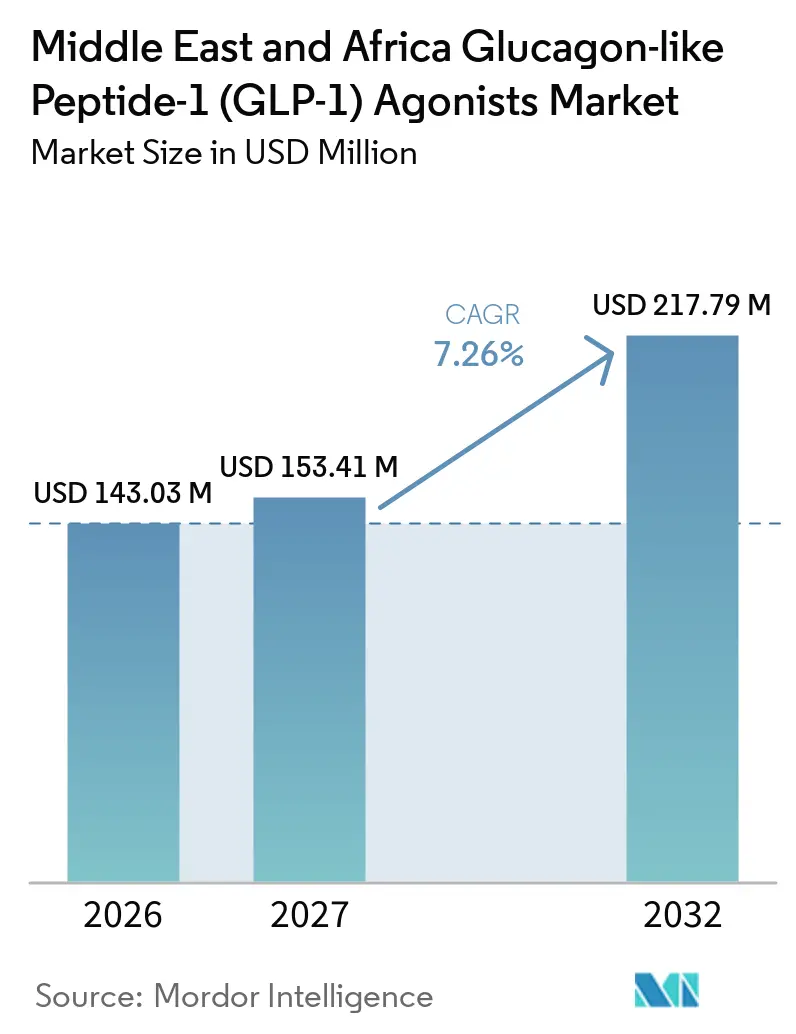
The Middle East And Africa Glucagon-like Peptide-1 Agonists Market size is projected to be USD 143.03 million in 2026, USD 153.41 million in 2027, and reach USD 217.79 million by 2032, growing at a CAGR of 7.26% from 2027 to 2032.
The COVID-19 pandemic positively impacted the Middle East and African Glucagon-like Peptide-1 (GLP-1) Agonists Market. Diabetes and uncontrolled hyperglycemia are risk factors for poor outcomes in patients with COVID-19 including an increased risk of severe illness or death. People with diabetes have a weaker immune system, the COVID-19 complication aggravates the condition, and the immune system gets weaker very fast. People with diabetes have more chances to get into serious complications rather than normal people.
The adoption of GLP-1 agonists in the Middle East and Africa accelerated during the post-pandemic period as several Gulf countries intensified efforts to address the growing burden of obesity and metabolic disorders. National healthcare transformation programs in Saudi Arabia and the UAE increasingly emphasized preventive care and chronic disease management, creating a favorable environment for the uptake of innovative diabetes therapies. At the same time, leading pharmaceutical manufacturers expanded their regional presence through partnerships with government healthcare institutions and private hospital networks, improving the availability of advanced GLP-1 treatments across major urban centers.
The market has further benefited from the increasing commercialization of newer GLP-1 products with enhanced efficacy in weight reduction and glycemic control. Demand has been particularly strong in high-income Gulf Cooperation Council (GCC) countries, where rising obesity prevalence has encouraged physicians to prescribe GLP-1 agonists for broader metabolic management beyond blood glucose control. In addition, investments in specialized diabetes centers, digital disease-management programs, and endocrinology services across Saudi Arabia, the UAE, and South Africa have increased patient access to advanced injectable therapies, supporting the growth of the Middle East and Africa GLP-1 agonists market.
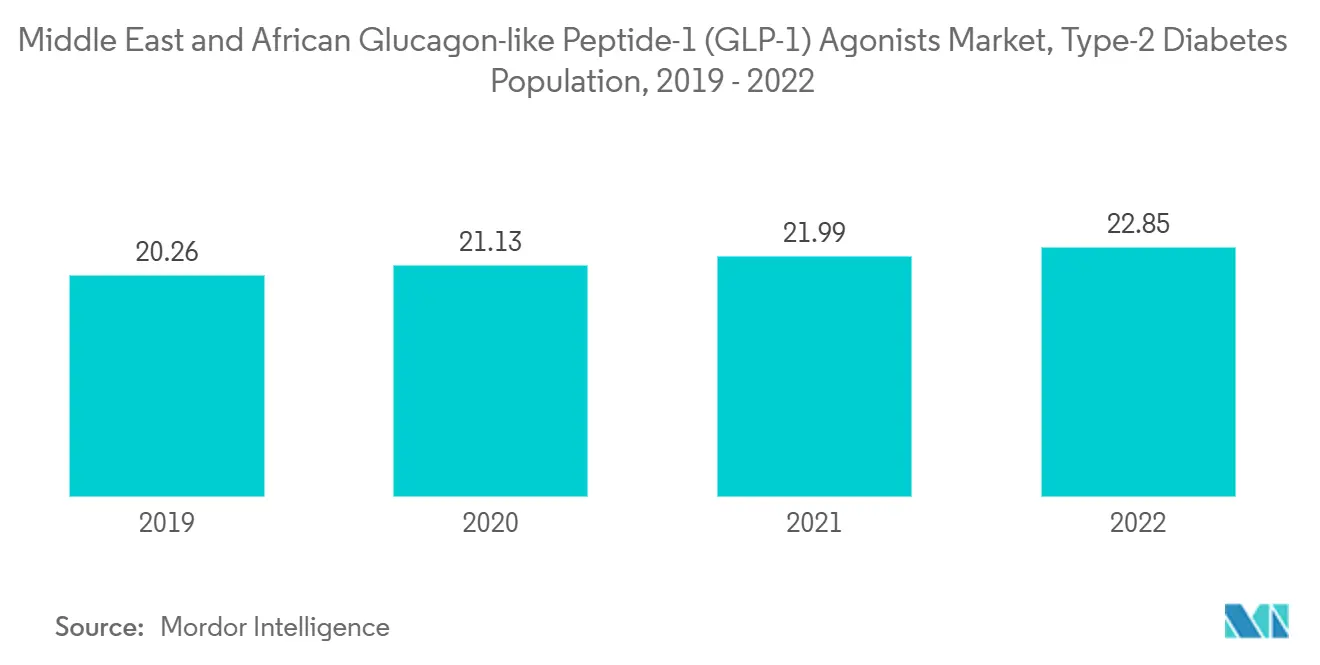
The Middle East and African region had witnessed an alarming increase in the prevalence of diabetes, in recent years, the rate of diabetes is at an all-time high, mainly due to lifestyle changes. Diabetes is associated with many health complications. Patients with diabetes require many corrections throughout the day to maintain nominal blood glucose levels, such as administering additional insulin or ingesting additional carbohydrates by monitoring their blood glucose levels.
Therefore, owing to the aforementioned factors the studied market is anticipated to witness growth over the analysis period.
Note: Market numbers in this report are based on Mordor Intelligence's proprietary estimation framework, which combines nine months of actuals with Q4 projections for base year 2026.
Middle East and Africa Glucagon-like Peptide-1 (GLP-1) Agonists Market Trends and Insights
Dulaglutide Segment held the highest market share in the Middle East and African Glucagon-like Peptide-1 (GLP-1) Agonists Market in the current year
The Dulaglutide segment held the highest market share of about 58% in the Middle East and the African Glucagon-like Peptide-1 (GLP-1) Agonists Market in the current year.
GLP1RAs are available internationally and are now recommended for use when treatment escalation for type 2 diabetes is required after metformin and lifestyle management. They can be safely used with all other glucose-lowering therapies except vildagliptin. Dulaglutide (Trulicity) is a weekly subcutaneous GLP1RA that reduces HbA1c with additional weight loss and cardiorenal protection benefits. Therapy with dulaglutide allows many patients to reach and maintain target HbA1c without insulin and/or sulfonylureas, eliminating the associated hypoglycemia risk. GLP1RAs elicit greater weight reduction and are recommended over SLGT2 inhibitors when cerebrovascular disease other than heart failure or renal disease predominates.
The UAE Ministry of Health granted the marketing authorization for Lilly's Trulicity (dulaglutide) solution for injection. It is a once-weekly, injectable solution designed to improve glycemic control in adults with type 2 diabetes. Trulicity (dulaglutide) also reduces the risk of non-fatal stroke in adults with type 2 diabetes mellitus. It is for those with multiple cardiovascular risk factors or established cardiovascular disease as an adjunct to diet, exercise, and standard-of-care therapy. This decision made Eli Lilly and Company's Trulicity the first and only GLP1 receptor agonist approved to provide a cardiovascular benefit in people with multiple CV risk factors or with established cardiovascular disease.
Governments in the Middle East identified the threat of diabetes and started to respond with various policies, initiatives, and programs. Six out of fifteen countries in this region still do not include a national operational action policy for diabetes. Many countries still do not contain a national strategy to reduce overweight, obesity, and physical inactivity, which are important risk factors for diabetes. Most counties fully implemented national diabetes treatment guidelines. However, constant measures are being taken to minimize diabetic complications.
The market will likely continue to grow due to the rising rate of obesity, the increasing prevalence, and the factors mentioned above.
Saudi Arabia held the highest market share in the Middle East and African Glucagon-like Peptide-1 (GLP-1) Agonists Market in the current year
Saudi Arabia held the highest market share of about 30% in the Middle East and African Glucagon-like Peptide-1 (GLP-1) Agonists Market in the current year.
More than one in ten people in Saudi Arabia is living with diabetes, and the prevalence of the disease will almost double by 2045, according to a report by the International Diabetes Federation. The report mentioned that 4.27 million people in Saudi Arabia include diabetes. This figure will increase to 5.6 million by 2030. Glucagon-like peptide-1 receptor agonists are a class of prescription medications effective in treating type 2 diabetes. In addition to lowering blood glucose levels to help treat type 2 diabetes, GLP-1 agonists also result in weight loss and other metabolic health benefits. GLP-1 medications are safe, effective and come with relatively few side effects. Any common side effects that patients may experience while taking GLP-1s, such as nausea, are manageable.
There are constant innovations and studies relating to drug molecules or formulation technologies. For instance, Hanmi Pharmaceutical stated in September 2021 announced that its new, long-acting diabetes biologic drug, efpeglenatide (GLP-1 RA), was shown to significantly reduce incidences of major adverse cardiovascular events (MACE) and kidney disease. It results from its global, large-scale clinical trial with more than 4,000 patients adding to the drug's efficacy.
Saudi Government, in July 2022, announced that Saudi Arabia saw growing demand for quality healthcare services spurred by changes. It includes an increasing aging population and a growing prevalence of lifestyle diseases such as diabetes and obesity. The government and private sector are involved in working on healthcare entities, certifications, and regulations. The government is taking steps to include 100% of Saudi citizens covered by insurance. They are working towards ensuring affordability, access, and quality digital healthcare and primary care with cost-effectiveness.
Owing to the factors above, the market is expected to grow during the forecast period.
Competitive Landscape
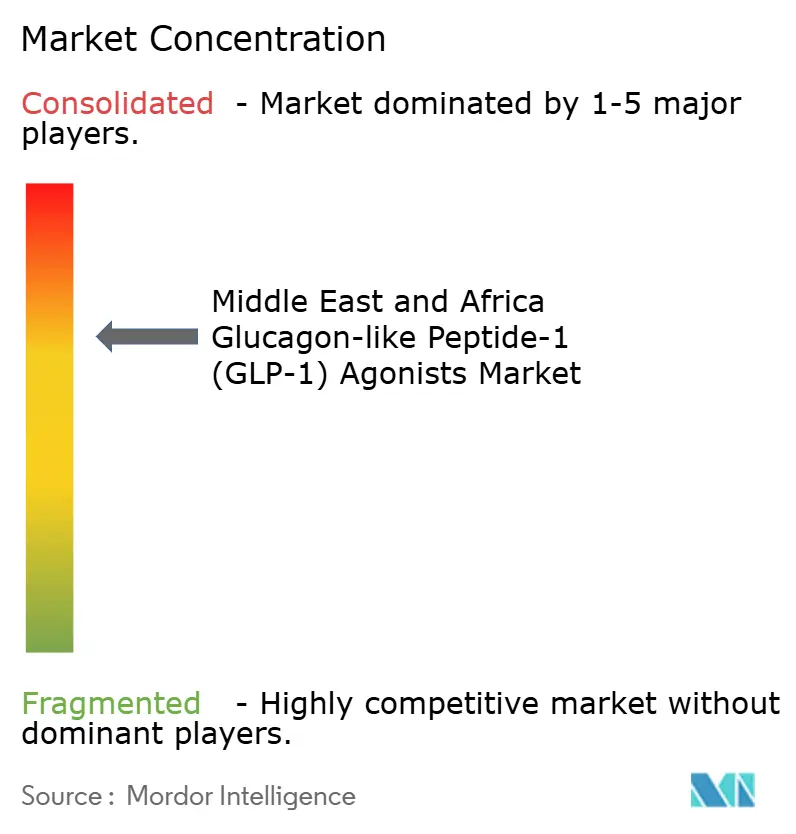
The Middle East and African Glucagon-like Peptide-1 (GLP-1) Agonists Market is consolidated, with major manufacturers, namely Eli Lilly, Sanofi, Novo Nordisk, and AstraZeneca, holding their presence in all regions.
Middle East and Africa Glucagon-like Peptide-1 (GLP-1) Agonists Industry Leaders
-
AstraZeneca
-
Sanofi
-
Eli Lilly and Company
-
Novo Nordisk A/S
-
Pfizer Inc.
- *Disclaimer: Major Players sorted in no particular order
Recent Industry Developments
- June 2022: Gulf Pharmaceutical Industries (Julphar) and Hangzhou Zhongmei Huadong Pharmaceutical Co. announced strategic cooperation to develop, manufacture, and commercialize Liraglutide (including both indications of diabetes and obesity) in 17 countries in the Middle East and North Africa region (MENA) including the UAE.
- May 2022: The US FDA approved Eli Lilly and Company's Mounjaro (tirzepatide) injection as an adjunct to diet and exercise to enhance glycemic control in adult patients with type 2 diabetes. A single molecule, Mounjaro is a once-weekly glucose-dependent insulinotropic polypeptide (GIP) and glucagon-like peptide-1 (GLP-1) receptor agonist.
Middle East and Africa Glucagon-like Peptide-1 (GLP-1) Agonists Market Report Scope
GLP-1 receptor agonists are a non-insulin medication combined with diet and exercise to help treat type 2 diabetes. The Middle East and African Glucagon-like Peptide-1 (GLP-1) Agonists Market is segmented into drugs (Dulaglutide (Trulicity), Exenatide (Byetta and Bydureon), Liraglutide (Victoza), Lixisenatide (Lyxumia), and Semaglutide (Ozempic)), and geography (Saudi Arabia, Egypt, Iran, South Africa, Oman, and rest of Middle East and Africa). The report offers the value (in USD) and volume (in units) for the above segments. Further, the report will cover a segment-wise breakdown (value and volume) for all the countries covered under the Table of Contents.
Drugs
| Dulaglutide | Trulicity |
| Exenatide | Byetta |
| Bydureon | |
| Liraglutide | Victoza |
| Lixisenatide | Lyxumia |
| Semaglutide | Ozempic |
Geography
| Saudi Arabia |
| Egypt |
| Iran |
| South Africa |
| Oman |
| Rest of Middle East and Africa |
| Drugs | Dulaglutide | Trulicity |
| Exenatide | Byetta | |
| Bydureon | ||
| Liraglutide | Victoza | |
| Lixisenatide | Lyxumia | |
| Semaglutide | Ozempic | |
| Geography | Saudi Arabia | |
| Egypt | ||
| Iran | ||
| South Africa | ||
| Oman | ||
| Rest of Middle East and Africa | ||
Key Questions Answered in the Report
How big is the Middle East And Africa Glucagon-like Peptide-1 Agonists Market?
The Middle East And Africa Glucagon-like Peptide-1 Agonists Market size is expected to reach USD 153.41 million in 2027 and grow at a CAGR of 7.26% to reach USD 217.79 million by 2032.
What is the current Middle East And Africa Glucagon-like Peptide-1 Agonists Market size?
In 2026, the Middle East And Africa Glucagon-like Peptide-1 Agonists Market size is expected to reach USD 143.03 million.
Who are the key players in Middle East And Africa Glucagon-like Peptide-1 Agonists Market?
AstraZeneca, Sanofi, Eli Lilly and Company, Novo Nordisk A/S and Pfizer Inc. are the major companies operating in the Middle East And Africa Glucagon-like Peptide-1 Agonists Market.
What years does this Middle East And Africa Glucagon-like Peptide-1 Agonists Market cover, and what was the market size in 2025?
In 2025, the Middle East And Africa Glucagon-like Peptide-1 Agonists Market size was estimated at USD 133.35 million. The report covers the Middle East And Africa Glucagon-like Peptide-1 Agonists Market historical market size for years: 2021, 2022, 2023, 2024, 2025, and 2026. The report also forecasts the Middle East And Africa Glucagon-like Peptide-1 Agonists Market size for years: 2027, 2028, 2029, 2030, 2031, and 2032.