
Market Overview
| Study Period | 2021 - 2031 |
|---|---|
| Forecast Data Period | 2026 - 2031 |
| Base Year Market Size (2025) | USD 3.48 Billion |
| Market Size (2026) | USD 3.72 Billion |
| Market Size (2031) | USD 5.18 Billion |
| Growth Rate (2026 - 2031) | 6.86 % |
| Market Concentration | Medium |
Major Players *Disclaimer: Major Players sorted in no particular order Image © Mordor Intelligence. Reuse requires attribution under CC BY 4.0. | |
Middle East And Africa Freeze-Dried Product Market Analysis by Mordor Intelligence
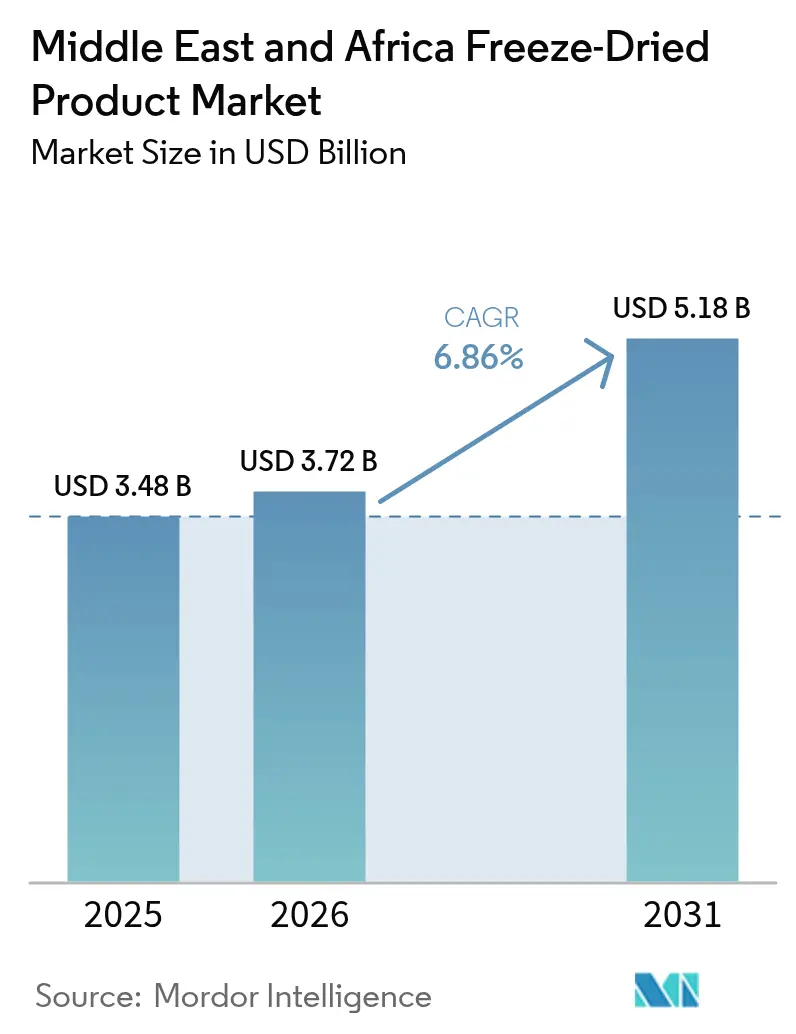
The Middle East and Africa freeze-dried product market size is expected to grow from USD 3.48 billion in 2025 to USD 3.72 billion in 2026 and is forecast to reach USD 5.18 billion by 2031 at 6.86% CAGR over 2026-2031. This growth is driven by government-backed food-security programs, increasing consumer adoption of shelf-stable products, and the diversification of retail channels. Gulf Cooperation Council nations are enhancing grain reserves, expanding cold-storage capacities, and providing fiscal incentives to support domestic production and mitigate climate and geopolitical risks. The growing occurrence of climate-induced crop failures in Nigeria and Sudan highlights the critical role of freeze-drying as a safeguard against supply disruptions. Simultaneously, the United Arab Emirates, a tourism-driven economy, is fostering premium food innovation by encouraging the development of halal-certified, ready-to-eat products with extended shelf lives. Furthermore, technology providers are introducing energy-efficient lyophilization platforms that reduce operational costs and accelerate the transition from concept to market. These advancements are positioning the Middle East and Africa's freeze-dried product market as an emerging manufacturing hub, moving beyond its traditional reliance on imports.
Key Report Takeaways
- By product type, freeze-dried fruits held 32.07% of the Middle East and Africa freeze-dried product market share in 2025, while freeze-dried meat and seafood is forecast to expand at a 7.17% CAGR to 2031.
- By nature, conventional variants led with 77.76% revenue share in 2025; organic products are advancing at an 7.96% CAGR through 2031.
- By distribution channel, supermarkets and hypermarkets accounted for 46.56% of the Middle East and Africa freeze-dried product market size in 2025, whereas online retail is projected to register the fastest growth at 8.39% CAGR by 2031.
- By geography, the United Arab Emirates contributed 18.32% revenue share in 2025, and Nigeria is expected to record the highest regional CAGR of 7.97% through 2031.
Note: Market size and forecast figures in this report are generated using Mordor Intelligence’s proprietary estimation framework, updated with the latest available data and insights as of 2026.
Market Trends and Insights
Drivers Impact Analysis of Middle East And Africa Freeze-Dried Product Market*
| Driver | (~) % Impact on CAGR Forecast | Geographic Relevance | Impact Timeline |
|---|---|---|---|
| Rising demand for shelf-stable foods | +1.2% | Strongest impact in Nigeria, Egypt, Sudan | Medium term (2-4 years) |
| Increasing tourism and outdoor activities | +0.8% | UAE, Saudi Arabia, South Africa, Morocco | Short term (≤ 2 years) |
| Technological advancements in freeze-drying | +0.9% | UAE and Saudi Arabia | Long term (≥ 4 years) |
| Busy lifestyles and convenience demand | +0.7% | Urban centers across UAE, Saudi Arabia, South Africa | Medium term (2-4 years) |
| Halal-certified freeze-dried food launches | +0.6% | GCC countries, Turkey, Egypt, Morocco | Short term (≤ 2 years) |
| Government food-security investments | +1.1% | Saudi Arabia, UAE, Egypt, Nigeria | Long term (≥ 4 years) |
| Source: Mordor Intelligence | |||
Rising demand for shelf-stable foods
Modern, convenience-focused lifestyles are driving the demand for shelf-stable freeze-dried foods. These products provide nutritious, ready-to-eat options that are simple to store and transport. Demand is particularly high among busy urban consumers, outdoor enthusiasts, and in regions with limited cold chain infrastructure or elevated ambient temperatures, where fresh food has a short shelf life and logistics are challenging. Food security challenges across the region have transformed shelf-stable products from convenience items into strategic essentials. To address global economic instability and rising food prices, Egypt's Cabinet Information and Decision Support Center implemented comprehensive food security frameworks. Similarly, Nigeria introduced a 150-day duty-free import window for essential staples, highlighting the critical need for supply chain resilience. In 2024, flooding in Nigeria destroyed crops that fed 8.5 million people, while food inflation surged, according to the International Organization for Migration[1]. These factors have driven institutional procurement of freeze-dried products for emergency preparedness programs. This shift goes beyond crisis response, as governments increasingly recognize that shelf-stable foods can help bridge seasonal supply gaps and reduce reliance on fresh produce imports, which are often affected by geopolitical issues and climate-related transport disruptions.
Increasing tourism and outdoor activities
The Middle East's tourism growth is driving demand for portable and nutritious meal solutions. Saudi Arabia's NEOM project and the UAE's luxury camping initiatives have positioned outdoor hospitality as a key growth driver. This premium focus encourages tourists to spend more on freeze-dried gourmet meals that maintain both taste and nutritional value. The region's tourism sector is thriving, with international arrivals increasing from 93.4 million in 2023 to 101.2 million in 2024, according to the World Tourism Organization (UN Tourism)[2]. Travelers and outdoor adventurers need foods that are compact, temperature-resistant, and easy to store, making freeze-dried products ideal for extended trips. The seasonal nature of Gulf tourism, with peak activity occurring outside the May-September period, aligns well with the ambient storage capabilities of freeze-dried products. This eliminates the cold chain limitations that fresh meals face during the extreme summer heat. The expansion of tourism infrastructure is also driving investments in modernizing the food supply chain, supporting consistent market growth and emphasizing the importance of freeze-dried foods for international events, expeditions, and luxury hotel services.
Technological advancements in freeze-drying
Advancements in energy efficiency are effectively removing the cost barriers that previously restricted the adoption of freeze-drying technology in the region. GEA's RAY Plus series batch freeze dryers, which leverage proprietary Computational Fluid Dynamics (CFD) modeling, deliver a significant reduction of approximately 50% in pressure drop compared to earlier models. Additionally, randomized-field microwave-assisted lyophilization technology enables drying cycles that are 1.8 to 2.4 times faster while maintaining comparable product quality. These technological innovations align with the region's growing focus on renewable energy integration. For instance, South African companies like Forever Fresh Foods have already implemented solar-powered freeze-drying facilities, showcasing the feasibility of sustainable operations. The combination of reduced energy consumption and the region's abundant solar energy resources positions the Middle East and Africa to evolve from being heavily reliant on imports to becoming competitive exporters in the freeze-dried production market.
Government food-security investments
Local governments, striving to reduce dependency on imports and mitigate risks associated with climate change, geopolitical tensions, and logistical challenges, are increasingly channeling investments into advanced food processing infrastructures, with freeze-drying technology being a key focus. These efforts are driven by state-led initiatives aimed at strengthening domestic processing capabilities and addressing food security concerns, thereby generating substantial institutional demand. For instance, Saudi Arabia has demonstrated its commitment to food supply resilience through the launch of SABIL (National Grains Supply Company), which operates across 14 silo branches. This initiative highlights the scale of government involvement in ensuring a stable food supply chain. The Gulf Cooperation Council (GCC) has also adopted a unified food security strategy, supported by USD 3.8 billion in Gulf investments for 2024, according to the Islamic Organization for Food Security[3]. This strategy emphasizes adding value to food industries and fostering greater private-sector participation. These investments are not limited to procurement but also extend to technology transfer and workforce development. Such comprehensive measures create a ripple effect, benefiting freeze-dried food processors by enhancing infrastructure, ensuring the availability of skilled labor, and providing preferential financing for projects aligned with food security objectives.
Restraints Impact Analysis of Middle East And Africa Freeze-Dried Product Market*
| Restraint | (~) % Impact on CAGR Forecast | Geographic Relevance | Impact Timeline |
|---|---|---|---|
| Sensory and texture challenges | -0.4% | Middle East and Africa | Medium term (2-4 years) |
| High capital and energy cost of freeze-drying | -0.8% | Small-medium enterprises | Long term (≥ 4 years) |
| Availability of alternative products | -0.3% | Urban centers with diverse retail options | Short term (≤ 2 years) |
| Premium-price perception among mid-income consumers | -0.5% | Nigeria, Egypt, Morocco, emerging urban markets | Medium term (2-4 years) |
| Source: Mordor Intelligence | |||
High capital and energy cost of freeze-drying
Market entry continues to face significant challenges, particularly for small and medium enterprises, due to the high capital requirements associated with freeze-drying equipment. These enterprises play a crucial role in Africa's food processing industry, yet the financial burden of adopting traditional freeze-drying systems remains a major barrier. Commercial-scale operations typically require investments ranging from USD 500,000 to USD 5 million, making it difficult for smaller players to compete. Additionally, in regions where grid reliability is limited, energy consumption becomes a critical factor, accounting for 60-80% of operating costs. However, advancements in hybrid technologies are beginning to address these issues. EnWave Corporation's REV (Radiant Energy Vacuum) platforms have emerged as a noteworthy solution, offering faster processing times and lower costs compared to traditional freeze-drying methods, while also delivering higher-quality results than air or spray drying techniques. Moreover, the introduction of modular, containerized freeze-drying units and solar-assisted systems presents a promising opportunity to lower both capital investments and operational expenses. These innovations are particularly relevant in Africa, where abundant solar resources can be leveraged to enhance the feasibility and sustainability of freeze-drying operations.
Premium-price perception among mid-income consumers
Freeze-dried foods are considered specialty or premium products due to their advanced processing methods and imported nature, which result in higher retail prices compared to conventional dried or fresh items. In the MEA markets, mid-income consumers are highly price-sensitive, often perceiving freeze-dried items as luxuries or non-essential dietary additions, leading to infrequent purchases. These elevated price points limit freeze-dried food purchases to specific occasions such as travel, emergencies, or occasional treats, restricting sales volume and market penetration to affluent urban niches. Consumer price sensitivity remains significant across much of the region, where households allocate a large share of their income to food. In Nigeria, rising food inflation has intensified the focus on value-for-money positioning. This has created a market divide: premium freeze-dried products perform well in high-income segments and tourism channels, while achieving mass market penetration requires innovative strategies. These include customized packaging, portion sizing, and communication efforts that highlight cost-per-serving benefits and the economic advantages of extended shelf life.
*Our forecasts treat driver/restraint impacts as directional, not additive. The impact forecasts reflect baseline growth, mix effects, and variable interactions.
Middle East And Africa Freeze-Dried Product Market Segment Analysis
By Product Type:
Fruits Hold Leadership While Proteins AccelerateFreeze-dried fruits accounted for 32.07% of the Middle East and Africa's freeze-dried product market in 2025, highlighting strong consumer familiarity with dried formats and robust demand across breakfast items, confectionery, and on-the-go snacks. Regional food processors are enhancing cereals and bakery mixes by adding raspberries, mangoes, and dates, boosting flavor intensity without affecting shelf life. Institutional buyers, such as airlines and defense caterers, prefer berries and citrus for their ability to retain vitamin C during extended storage, driving consistent reorder volumes. Vegetables, led by peas, corn, and mushrooms, hold a significant secondary position, catering to ready-meal manufacturers, particularly those fulfilling humanitarian aid contracts. Additionally, innovations like seasoning-infused vegetable cubes are expanding culinary applications in soups and stews, especially in North and West African cuisines.
Freeze-dried meat and seafood are experiencing the fastest growth, with a 7.17% CAGR, and are expected to capture a larger share of the Middle East and Africa's freeze-dried product market by 2031. Halal certification standards provide a competitive advantage, as controlled lyophilization environments simplify traceability compared to traditional methods like sun-drying or salting. Outdoor recreation retailers in Saudi Arabia and the UAE report increasing sales of beef, chicken, and shrimp meal kits designed for overnight desert camping. Additionally, innovations such as low-sodium spice marinades applied before freeze-drying are improving flavor while adhering to health guidelines. Meanwhile, the dairy and beverage segments are steadily growing, with instant coffee and tea formats benefiting from premiumization, particularly in Gulf coffeehouse chains.

By Nature:
Conventional Dominates Yet Organic AdvancesConventional products accounted for 77.76% of the freeze-dried product market in the Middle East and Africa in 2025, driven by well-established sourcing networks and competitive pricing structures. Commodity-grade fruits and vegetables are routed through Dubai’s Jebel Ali Port and redistributed across the Gulf and Levant, enabling processors to secure volume discounts. These cost efficiencies allow supermarkets to offer family-size pouches at competitive prices, encouraging repeat purchases among middle-income households. Additionally, food-service operators purchase larger packs of conventional freeze-dried tomato, onion, and garlic powders, simplifying recipe standardization and enhancing product stability.
Organic formulations, while starting from a smaller base, are growing at an 7.96% CAGR (2026-2031), fueled by health-conscious consumers in affluent urban areas. Export-oriented farms in Morocco and Tunisia are obtaining EU and USDA organic certifications, ensuring a reliable supply for processors targeting premium retail markets. The organic segment employs transparency tools, such as QR codes that provide farm-origin details, to build trust and justify higher price points. Furthermore, high-protein organic fruit blends designed for children’s lunchboxes are driving increased household adoption. As organic cultivation acreage expands and certification processes become more streamlined, the freeze-dried product industry in the Middle East and Africa is developing a differentiated segment that complements cost-focused conventional offerings.
By Distribution Channel:
Super-Store Reach Meets E-Commerce AgilitySupermarkets and hypermarkets claimed a dominant 46.56% share of the revenue in 2025, bolstered by their widespread presence in Gulf Cooperation Council nations, where weekly grocery shopping is a staple. By positioning products that don't require refrigeration on shelves, retailers can showcase a broader range at end-caps and checkout areas, boosting impulse buys. Pairing freeze-dried berries with yogurt and cereal not only enhances basket size but also caters to health-conscious consumers. Meanwhile, in South Africa, hypermarkets are teaming up with private-label producers, offering freeze-dried vegetable blends in budget-friendly family packs, underscoring their competitive pricing strategy.
Online retail is on an upward trajectory, growing at an 8.39% CAGR (2026-2031). This surge is largely driven by smartphone adoption, which has eclipsed 95% in both the UAE and Saudi Arabia. E-commerce platforms are leveraging the lightweight nature of freeze-dried products, enabling them to provide same-day delivery without the need for temperature-controlled vehicles, thus slashing last-mile expenses. Subscription services are enticing consumers with curated monthly snack boxes, not only familiarizing them with novel flavors but also ensuring steady revenue streams for brands. Influencers in the realm of social commerce are showcasing recipe uses on video platforms, seamlessly guiding viewers to click-to-buy links, effectively turning awareness into tangible sales. In Oman and Bahrain, a growing number of shoppers are opting for hybrid models, placing orders online and picking them up at drive-through lockers, a move that significantly boosts convenience for busy professionals. This diversification across channels not only broadens accessibility but also propels consistent volume growth in the freeze-dried product market across the Middle East and Africa.
Geography Analysis
United Arab Emirates Freeze-Dried Product Market
The United Arab Emirates (UAE) holds an 18.32% share of the regional market in 2025, capitalizing on its strategic role as the Middle East's leading trade and logistics hub. With Dubai managing approximately 75% of the region's shipping volume, the UAE has established itself as the primary distribution hub for freeze-dried products across the Middle East and North Africa corridor. The UAE's National Food Security Strategy 2051 focuses on diversifying import sources and utilizing modern technologies for sustainable production, supporting the adoption of freeze-dried products. Additionally, the UAE's advanced retail infrastructure and growing e-commerce sector provide multiple distribution channels for freeze-dried products.
EMEA Freeze-Dried Product Market
Saudi Arabia, driven by its Vision 2030 initiatives and significant food security investments, represents a key market. The kingdom's USD 20 billion investment in the food industry by 2035 includes targeted support for shelf-stable food technologies, aligning with the capabilities of freeze-dried products. The creation of SABIL (National Grains Supply Company) highlights the government's commitment to food supply resilience, generating institutional demand for freeze-dried products in areas such as emergency preparedness and military applications. Turkey and South Africa also hold significant positions in the market. Turkey benefits from its strategic location as a bridge between Europe and Asia, while South Africa leverages its established food processing infrastructure and the expansion of freeze-dried capabilities by companies like Sunspray Food Ingredients.
Africa Freeze-Dried Product Market
Nigeria, despite facing economic challenges such as a 33.24% food inflation rate in 2024 as reported by the IMF, is the fastest-growing market, with a projected CAGR of 7.97% through 2031. The country's large population, urbanization, and growing middle class create strong long-term demand for shelf-stable food products. Egypt and Morocco also present emerging opportunities; Egypt's food security strategy emphasizes agricultural innovation and climate adaptation, while Morocco benefits from its established trade relationships with Europe and increasing investments in food processing. Furthermore, the broader "Rest of Middle East and Africa" category includes smaller but growing markets that are benefiting from improved logistics infrastructure and rising consumer purchasing power.
Regulatory Landscape
Regulation of freeze-dried products across the Middle East and Africa typically sits within broader frameworks for low-moisture foods, dried fruits, dried meat, and imported processed foods, rather than a single dedicated freeze-dried category. In the GCC, the GCC Standardization Organization (GSO) provides key hygiene and product-handling references used by national authorities, including GSO CAC/RCP 42:2017 (hygienic practice for spices and dried aromatic herbs), which explicitly recognizes freeze-drying as a covered processing technology. The GCC Guide for Control on Imported Foods also shapes import inspection and documentation for processed food categories.
Several countries add national controls that affect labeling, quality, and microbiological compliance for shelf-stable foods. In South Africa, the Foodstuffs, Cosmetics and Disinfectants Act framework treats freeze-drying as a processing method that changes the original state of a foodstuff, and dried-fruit rules set quality and packaging expectations even where freeze-dried fruit is not graded under traditional classifications. In Egypt, the National Food Safety Authority (NFSA) is mandated to issue mandatory technical regulations for food handling and processing, while regional alignment with Codex Alimentarius, including low-moisture food hygiene codes and dried meat standards such as CXS 350R-2022, provides a reference point for hygienic preparation, contaminants, and process control across freeze-dried product supply chains.
Competitive Landscape
In the Middle East and Africa, the freeze-dried product market is moderately fragmented. Global corporations, regional experts, and emerging local producers compete across various value segments. Market concentration remains relatively low, with multinational companies like Nestlé and Mars expanding their freeze-dried product portfolios. Regional specialists, such as Al Kabeer Group, operate three manufacturing facilities in the UAE and Saudi Arabia, with an annual capacity exceeding 40,000 MT. This competitive landscape highlights the region's diverse consumer demands, ranging from premium products for outdoor activities to cost-effective institutional solutions.
Technology adoption plays a crucial role as a differentiator. Companies are investing in energy-efficient freeze-drying equipment and hybrid processing techniques to lower operating costs and enhance product quality. For instance, GEA's RAY Plus series freeze dryers, which reduce energy consumption by 50%, illustrate how equipment innovations are reshaping competitive dynamics. Leading companies in the Middle East and Africa's freeze-dried foods market include Nestle SA, Asahi Group Holdings Ltd, Harmony House Foods Inc., Thrive Life LLC, and Paradise Fruits. To address the growing demand for nutritional snacks and remain competitive, these key players prioritize production innovation as a core strategy.
Opportunities exist in halal-certified premium products, organic offerings, and niche applications like pet food. Companies such as Kormotech are capitalizing on these opportunities by tailoring recipes to suit local tastes and expanding distribution to markets like Qatar and Nigeria. However, compliance with regulations from bodies such as SFDA, ESMA, and other regional halal certification authorities creates both entry barriers and competitive advantages for established players with the necessary certifications.
Middle East And Africa Freeze-Dried Product Industry Leaders
-
Harmony House Foods, Inc.
-
Paradise Fruits
-
Asahi Group Holdings, Ltd.
-
Nestle SA
-
Thrive Life LLC
- *Disclaimer: Major Players sorted in no particular order

Middle East And Africa Freeze-Dried Product Market Companies Covered in this Report
- Nestle S.A.
- Asahi Group Holdings, Ltd.
- Harmony House Foods Inc.
- Paradise Fruits Solutions
- Expedition Foods Limited
- Thrive Life LLC
- Blue Chip Group
- Saraf Foods Ltd.
- Mondelez International Inc.
- Kerry Group Plc
- European Freeze Dry Ltd.
- Chaucer Foods Ltd.
- Brandstorm Inc.
- Kenegrade Ltd.
- Valley Food Storage
- The Kraft Heinz Company
- Honeyville
- Rodelle Inc.
- Farmer's Pantry
- Al Bayara Food Industries
Read Analysis of Middle East And Africa Freeze-Dried Product Companies
Market Opportunities and Future Outlook
Local and regional manufacturing capacity build-out is creating a clearer opportunity to reduce dependence on imported freeze-dried ingredients and improve supply resilience for government procurement and modern retail. In the UAE, a greenfield freeze-drying facility supported by Rieckermann progressed through mechanical and electrical installation completion, with commissioning scheduled to begin in 2026, indicating a move from distribution-led participation toward in-region processing. In Saudi Arabia, factory-scale investments such as Future Harvest Co. for Food Industries establishing a 7,500-square-meter freeze-drying plant in Sudair City for Industry and Businesses, with investments cited up to SAR 300 million, also broaden the local base for supplying fruits, vegetables, prepared meals, and specialized applications.
Product and channel whitespace is visible in halal-certified ready-to-eat meals, institutional emergency-preparedness packs, and premium tourism and outdoor formats that benefit from ambient storage. Demand-side programs and procurement priorities tied to food-security initiatives in GCC markets, combined with rising adoption of energy-efficient lyophilization platforms and solar-assisted operations (already demonstrated by operators in South Africa), create room for mid-sized processors and ingredient suppliers to enter via tolling partnerships, co-manufacturing, or modular capacity. This should also support higher-value uses, including organic-certified inputs from export-oriented farms in North Africa and premium ingredients for hotel, airline, and defense catering buyers that prioritize traceability and consistent quality in low-moisture foods.
Recent Industry Developments in Middle East And Africa Freeze-Dried Product Market
- May 2026: Rieckermann reported progress on a UAE greenfield freeze-drying project, noting completion of key mechanical and electrical installations and that commissioning is scheduled to begin in 2026. The milestone indicates active capital deployment into local lyophilization capacity, supporting shorter lead times and reduced reliance on imported freeze-dried ingredients for regional processors and institutional buyers.
- June 2025: Red Planet introduced freeze-dried meals in the UAE positioned around a 25-year shelf life and no refrigeration requirement. The launch targets emergency preparedness and humanitarian-aid use cases first, extending the addressable market beyond retail snacking into institutional procurement, where shelf-stability and logistics simplicity are key purchase drivers.
- March 2024: Karry Foods Industries, backed by a EUR 35 million Saudi investment, opened a new tomato paste and fruit puree processing facility in Sadat City, Egypt, with initial tomato capacity of 600 tonnes per day. The added upstream processing capability strengthens the ingredient base for shelf-stable formats, improving consistency and scaling options for downstream drying and value-added applications.
Middle East And Africa Freeze-Dried Product Market Report Scope and Research Methodology
Market Definition and Coverage
This market is sized as the value of freeze-dried food products sold in the Middle East and Africa, where moisture is removed through freeze drying to improve shelf life while keeping core taste and texture.
Scope exclusions: It does not count non-freeze-dried alternatives (such as air-dried or spray-dried products) and it excludes in-house transfers that are not sold as market transactions.
Segments Covered in This Report
- By Product Type
- Freeze-Dried Fruits
- Berries
- Tropical Fruits
- Citrus Fruits
- Other Fruits
- Freeze-Dried Vegetables
- Peas and Corn
- Mushrooms
- Other Vegetables
- Freeze-Dried Meat and Seafood
- Freeze-Dried Dairy Products
- Freeze-Dried Beverages (Instant Coffee, Tea)
- Freeze-Dried Prepared Meals
- Freeze-Dried Pet foods
- Freeze-Dried Fruits
- By nature
- Conventional
- Organic
- By Distribution Channel
- Supermarkets/Hypermarkets
- Convenience Stores
- Online Retail Stores
- Other Distribution Channels
- By Geography
- United Arab Emirates
- South Africa
- Saudi Arabia
- Nigeria
- Egypt
- Morocco
- Turkey
- Rest of Middle East and Africa
Data Sources, Market Sizing, and Validation
Desk Research
Desk research starts by mapping the region level demand pool and supply signals that can be checked repeatedly. We rely on public sources such as national statistics offices, UN Comtrade trade statistics, FAOSTAT food supply data, and central bank or official exchange-rate series, which help us anchor import reliance and pricing movements.
To keep assumptions grounded, we also review company annual reports and investor presentations, customs or port authority releases where available, and trade association pages related to food processing and packaged foods. Patent databases are used in a light way to see where freeze-drying equipment and process activity is rising, which helps explain capacity expansion timing. The sources listed here are illustrative only, and many other public references were also used for collection, cross-checking, and clarification.
Primary Interviews and Surveys
Primary work is used to pressure-test pricing, channel mix, and what buyers consider as freeze-dried versus nearby formats. We spoke with participants across manufacturing, distribution, retail, and foodservice, and we also validated patterns with technical and commercial roles across key Middle East and Africa markets so gaps from desk research could be filled with realistic operating inputs.
Distribution of primary research fieldwork respondents
| Company type | Respondent position |
|---|---|
| Top tier: 32% | CXOs: 21% |
| Mid tier: 46% | Functional/Unit leaders: 36% |
| Smaller Players: 22% | Managers: 43% |
Market-Sizing & Forecasting
The core sizing is built using a top-down approach where packaged-food demand and trade flows are reconstructed into a freeze-dried demand pool, and then narrowed using product availability and channel realities across the region. Once the total is formed, selective bottom-up checks are used, such as sampled price per kilogram by category multiplied by estimated volumes in major channels, followed by supplier and distributor sense checks.
Inputs that matter in this market include import and export volumes for relevant food groups, category mix shifts toward fruits, vegetables, and prepared foods, retail and online penetration for shelf-stable snacks, and observed price progression for freeze-dried items versus nearby dried formats. Currency movements are treated carefully because many products are imported, so pricing is modeled with a mix of local currency behavior and USD conversion timing aligned to the year definition.
For forecasting, we use scenario analysis supported by variable trends, especially trade momentum, consumer convenience demand, and channel expansion, and then align the slope with what industry experts expect for pricing and availability. Where volume data is thin for smaller countries, gaps are handled through proxy indicators and are then adjusted back to the regional total to avoid over-counting.
Data Validation & Update Cycle
Outputs are validated through triangulation across independent signals, including trade movements, category pricing ranges, and reported performance cues from relevant food companies. When a country level result looks unusual, it is rechecked for unit errors, currency conversion timing, and unrealistic per-capita consumption before the model is approved.
A multi-step internal review is followed, and if a key assumption shifts materially, experts are re-contacted to confirm whether the change is temporary or structural. The report is refreshed annually, and interim updates are made when large events occur (such as sharp FX changes or trade disruptions). Before delivery, a final analyst pass is completed so the latest available data is reflected in the numbers.
Mordor Intelligence's Middle East and Africa Freeze Dried Product Market Size Versus Other Published Estimates
Published market sizes for freeze-dried products in the Middle East and Africa can vary more than buyers expect, even when the topic name looks the same. The spread usually comes from differences in what products are counted, which countries are included, and how prices are converted and trended over time.
In this market, the biggest gap drivers are scope boundaries (food-only versus adding adjacent dehydration formats), how average selling prices are stepped up year by year, and whether currency conversion uses a consistent annual rate or a point-in-time snapshot. When validation relies mainly on a small set of trade codes or a narrow buyer set, the total can tilt high or low, especially where re-exports and distributor markups are material in parts of the region.
Benchmark comparison
| Source | Market Size | Gaps in Research Methodology |
|---|---|---|
| Mordor Intelligence | USD 3.48 B (2025) | |
| Industry Publisher A | USD 5.13 B (2025) | This figure appears to use a broader category build that can absorb adjacent dried foods, and it may also apply higher price progression without a consistent cross-check to channel-level pricing ranges across MEA. |
| Consultancy B | USD 0.04 B (2024) | The estimate is much smaller and likely reflects a narrower product and application scope, and it may treat only select retail or foodservice items while leaving out wider prepared foods and ingredient use cases. |
The table shows that the difference is mostly explained by how scope and pricing are handled, and by how consistently the model is refreshed as FX and imports shift. By aligning annual currency timing, checking ASP ranges by channel, and re-validating assumptions during each refresh cycle, Mordor Intelligence keeps the 2025 total tied to a repeatable MEA demand pool rather than a one-time price snapshot.
Key Questions Answered in the Report
What is the current valuation of the Middle East and Africa freeze-dried product market?
The market is valued at USD 3.72 billion in 2026, with a projected rise to USD 5.18 billion by 2031.
Which product category leads regional revenue?
Freeze-dried fruits lead with 32.07% share in 2025 due to versatility in snacks and culinary applications.
Which geographic market is growing the fastest?
Nigeria is forecast to expand at a 7.97% CAGR through 2031, driven by food-security initiatives and urban demand.
What is the biggest challenge for small processors entering this sector?
High capital and energy costs of commercial freeze-drying equipment remain a primary barrier.