
Market Overview
| Study Period | 2021 - 2031 |
|---|---|
| Forecast Data Period | 2026 - 2031 |
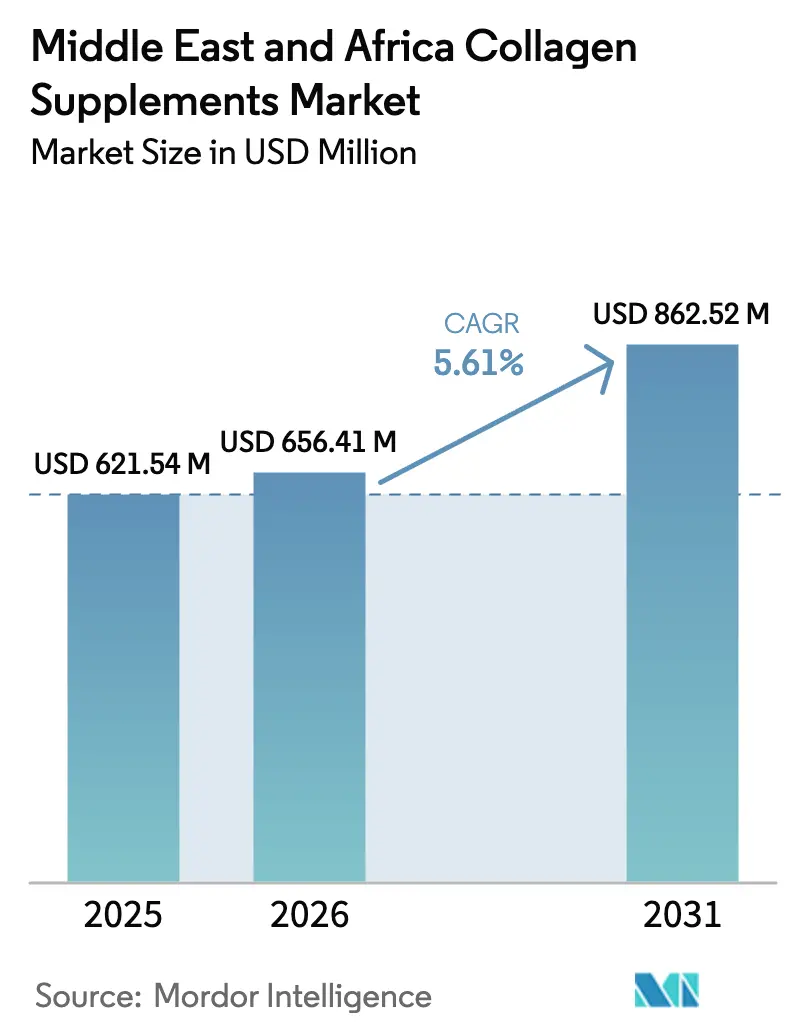
| Base Year Market Size (2025) | USD 621.54 Million |
| Market Size (2026) | USD 656.41 Million |
| Market Size (2031) | USD 862.52 Million |
| Growth Rate (2026 - 2031) | 5.61 % |
| Market Concentration | Medium |
Major Players *Disclaimer: Major Players sorted in no particular order Image © Mordor Intelligence. Reuse requires attribution under CC BY 4.0. | |
Middle East And Africa Collagen Supplements Market Analysis by Mordor Intelligence
The Middle East and Africa collagen supplements market size is expected to grow from USD 621.54 million in 2025 to USD 656.41 million in 2026 and is forecast to reach USD 862.52 million by 2031 at 5.61% CAGR over 2026-2031. Increasing disposable incomes drive this growth, a growing focus on wellness, and a rising youth population in the region. Animal-based collagen sources continue to dominate the market; however, plant-based collagen alternatives are gaining popularity, especially among consumers seeking halal-compliant and environmentally sustainable options. Powdered collagen supplements remain the most preferred format because they offer flexibility in dosage and are cost-effective. At the same time, gummy supplements are becoming increasingly popular, particularly among millennials and Gen Z consumers, due to their appealing taste and convenience for on-the-go consumption. The distribution landscape is undergoing significant changes, with online retail channels growing at a faster pace than traditional brick-and-mortar stores. Packaging trends are also evolving to align with changing consumer lifestyles. Single-serve sachets are popular for their convenience, but premium jars are gaining traction among regular users who value bulk purchasing and attractive shelf presentation. The market is consolidated, with multinational companies competing alongside agile regional players. Nestlé Health Science has strengthened its position in the market by completing the acquisition of Vital Proteins in April 2024.
Key Report Takeaways
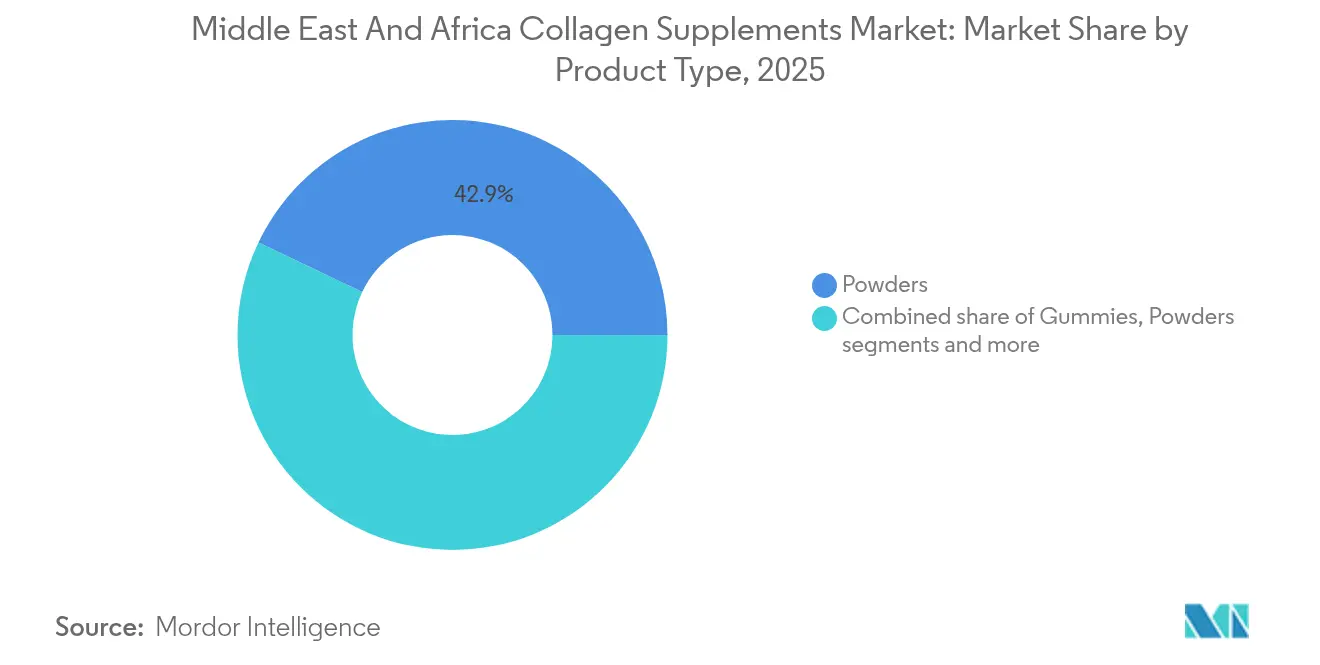
- By product type, powders held 42.92% of the Middle East and Africa collagen supplements market share in 2025, whereas gummies are projected to expand at a 6.88% CAGR to 2031.
- By source, animal-based collagen accounted for 88.33% of the Middle East and Africa collagen supplements market size in 2025, but plant-based collagen is advancing at a 6.15% CAGR through 2031.
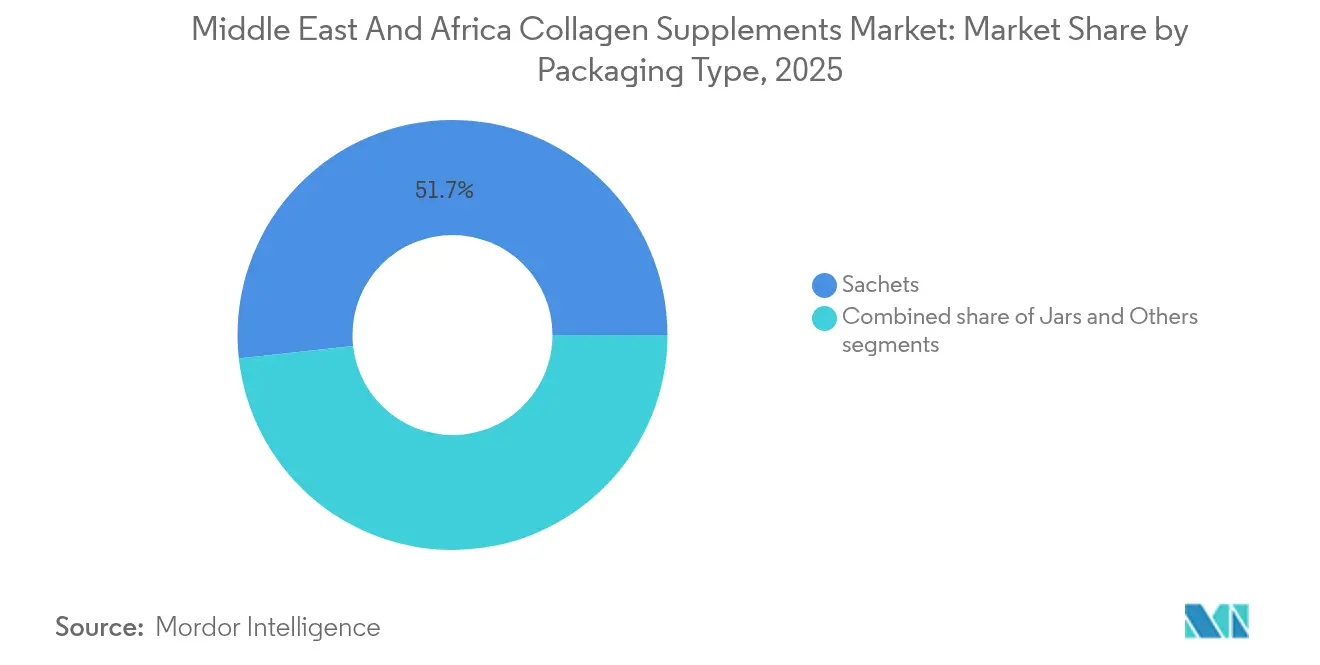
- By packaging type, sachets captured 51.75% share of the Middle East and Africa collagen supplements market in 2025, while jars posted the fastest 6.73% CAGR to 2031.
- By distribution channel, supermarkets/hypermarkets led with 37.11% revenue share in 2025; online retail is forecast to grow at a 7.34% CAGR over the same period.
- By country, the United Arab Emirates commanded 25.42% of the Middle East and Africa collagen supplements market size in 2025, whereas Saudi Arabia exhibits the highest 6.47% CAGR through 2031.
Note: Market size and forecast figures in this report are generated using Mordor Intelligence’s proprietary estimation framework, updated with the latest available data and insights as of 2026.
Market Trends and Insights
Drivers Impact Analysis of Middle East And Africa Collagen Supplements Market*
| DRIVER | (~) % IMPACT ON CAGR FORECAST | GEOGRAPHIC RELEVANCE | IMPACT TIMELINE |
|---|---|---|---|
| Growing health and wellness awareness | +1.2% | Strongest impact in United Arab Emirates and Saudi Arabia | Medium term (2-4 years) |
| Expansion of beauty-from-within and nutricosmetics | +1.0% | United Arab Emirates, Saudi Arabia, Qatar, with spillover to Egypt | Long term (≥ 4 years) |
| Product innovation and format diversity | +0.8% | Regional, led by United Arab Emirates as distribution hub | Short term (≤ 2 years) |
| Clean label and sustainable positioning | +0.6% | United Arab Emirates, Saudi Arabia, South Africa urban centers | Medium term (2-4 years) |
| Rising incidence of lifestyle-related disorders | +0.9% | Saudi Arabia, United Arab Emirates, Egypt, South Africa | Long term (≥ 4 years) |
| Growing millennial and gen Z consumer base | +0.7% | Gulf Cooperation Council countries, urban South Africa | Medium term (2-4 years) |
| Source: Mordor Intelligence | |||
Growing health and wellness awareness
The Middle East and Africa collagen supplements market is growing quickly, driven by increasing awareness about health and wellness and strong government initiatives supporting preventive healthcare. Programs such as the Dubai Fitness Challenge and Saudi Arabia’s National Program for Happiness and Wellbeing encourage people to adopt healthier and more active lifestyles. Governments in the region allocate budgets to public healthcare, which makes up 77% of total healthcare spending in Saudi Arabia, 64.1% in the United Arab Emirates, and 90% in Kuwait, as per Frontiers in March 2025[1]. This focus on healthcare spending promotes the use of supplements like collagen. At the same time, consumers are showing a growing preference for wellness-focused products that offer ingredient transparency and halal certification. Manufacturers are responding to this demand by dedicating more shelf space to collagen supplements.
Rising incidence of lifestyle-related disorders
The Middle East and Africa collagen supplements market is growing significantly due to the increasing prevalence of lifestyle-related health issues, such as obesity and joint problems, which are encouraging consumers to adopt preventive health measures. For instance, in 2024, 23.1% of adults in Saudi Arabia were classified as obese, as per the World Obesity Federation[2]. Collagen supplements are gaining popularity as they help maintain cartilage health, improve joint mobility, enhance skin elasticity, and support overall metabolic well-being. Governments and healthcare systems in the region are promoting wellness programs that emphasize self-care, further driving interest in collagen products. Employers in high-stress industries are also incorporating nutraceutical vouchers into employee wellness programs, making collagen supplements more accessible and appealing to a broader audience.
Expansion of beauty-from-within and nutricosmetics
The Middle East and Africa collagen supplements market is growing significantly as more consumers turn to ingestible products for improving skin health and overall appearance. This trend, often referred to as "beauty-from-within," is gaining popularity as people seek convenient ways to enhance their beauty and wellness. Among younger consumers in the Gulf Cooperation Council (GCC) region, collagen is recognized as a key ingredient for beauty benefits, alongside vitamin C and ceramides. A 2023 study by Science Direct in Saudi Arabia revealed that 59.4% of 736 adolescents used dietary supplements, showcasing the adoption of such products among younger age groups[3]. This shift has encouraged innovation in product formats, making collagen supplements more accessible. Influencers and dermatologists play a crucial role in promoting these products, leveraging social media platforms to build trust and drive sales.
Clean label and sustainable positioning
The Middle East and Africa collagen supplements market is increasingly influenced by consumer demand for clean-label and sustainable products, as people now associate ethical consumption with better health choices. Collagen derived from grass-fed bovine and sustainably sourced marine origins is becoming more popular. This trend is supported by United Arab Emirates regulations, which, as of 2025, mandate clear labeling of product origin and processing methods, as per the International Trade Administration[4]. Transparent supply chains are helping brands position their products as premium, allowing them to justify higher prices by emphasizing certified sourcing, carbon-neutral logistics, and eco-friendly packaging. This focus on sustainability and transparency particularly appeals to millennial parents, who prioritize natural and reliable ingredients for their families.
Restraints Impact Analysis of Middle East And Africa Collagen Supplements Market*
| RESTRAINT | (~) % IMPACT ON CAGR FORECAST | GEOGRAPHIC RELEVANCE | IMPACT TIMELINE |
|---|---|---|---|
| High price of premium collagen | -0.8% | Regional, particularly affecting price-sensitive segments | Short term (≤ 2 years) |
| Religious and cultural sensitivities | -0.5% | Saudi Arabia, United Arab Emirates, Egypt, other Muslim-majority markets | Long term (≥ 4 years) |
| Competition from traditional remedies | -0.4% | Egypt, South Africa, rural markets across region | Medium term (2-4 years) |
| Regulatory complexity and fragmentation | -0.6% | Cross-border trade, multi-country operations | Medium term (2-4 years) |
| Source: Mordor Intelligence | |||
Religious and cultural sensitivities
Religious and cultural sensitivities present a significant challenge in the Middle East and Africa collagen supplements market. Meeting halal standards, such as UAE.S 2055, requires strict adherence to specific guidelines, including ensuring animal welfare, maintaining segregation during production, and following precise enzymatic processing methods. Smaller companies, in particular, face difficulties due to the additional expenses of regular compliance audits and the lack of dedicated halal production facilities. While plant-based and marine collagen are often viewed as more culturally acceptable alternatives, many consumers remain skeptical about their effectiveness compared to animal-derived collagen. To address these challenges, brands are increasingly using webinars and educational campaigns led by trusted experts to explain the benefits and equivalence of plant-based and marine collagen.
Competition from traditional remedies
Traditional remedies present a significant challenge to the growth of the Middle East and Africa collagen supplements market, as these remedies are deeply ingrained in the region's culture and lifestyle. For instance, in Egypt, herbal concoctions made from fenugreek, carob, and dates are not only widely available but also much cheaper than collagen supplements, making them a preferred choice for many consumers. Similarly, in rural areas of South Africa, people rely on natural tonics like rooibos and moringa for their wellness needs, which makes it harder for modern collagen products to gain acceptance. To address this challenge, some manufacturers are collaborating with local herbalists to create hybrid products that blend traditional botanicals with hydrolyzed collagen peptides. These products aim to resonate better with local consumers by combining familiar ingredients with the perceived benefits of collagen.
*Our forecasts treat driver/restraint impacts as directional, not additive. The impact forecasts reflect baseline growth, mix effects, and variable interactions.
Middle East And Africa Collagen Supplements Market Segment Analysis
By Product Type:
Gummies Outpace Legacy FormatsIn 2025, powders were the leading format in the Middle East and Africa collagen supplements market, contributing 42.92% of the total revenue. This popularity is largely due to their affordability, as they offer better value for money compared to other formats. Powders are also highly versatile, allowing users to easily mix them into drinks or meals, making them convenient for daily use. Consumers appreciate the flexibility powders provide in adjusting dosages to suit individual needs. These factors make powders a preferred choice, especially in regions where income levels vary significantly, as they cater to both budget-conscious and regular users.
Gummies, on the other hand, are expected to grow the fastest between 2026 and 2031, with a projected CAGR of 6.88%. Their convenience drives their rising popularity, as they are easy to consume on the go and come in pre-measured portions. Gummies also appeal to younger consumers due to their pleasant taste, which helps mask the natural flavor of collagen. Many gummy products are enhanced with additional ingredients like vitamin C, which further attract health-conscious buyers looking for beauty and wellness benefits. This format is particularly effective in drawing first-time users, as it offers a more approachable and enjoyable way to incorporate collagen into their routines, making it a key driver of market growth in the coming years.

By Source:
Plant-Based Options Edge ForwardIn 2025, animal-derived collagen, mainly sourced from bovine and marine origins, accounted for 88.33% of the Middle East and Africa collagen supplements market. This dominance is due to its well-established benefits, such as improving joint health, enhancing skin elasticity, and supporting overall wellness. Consumers trust these products because of their proven effectiveness and the reliable supply chains that ensure consistent quality. The widespread availability of bovine and marine collagen across both premium and affordable product ranges has made it a popular choice for a broad range of consumers in the region.
On the other hand, plant-based collagen, though currently a smaller segment, is expected to grow rapidly at a CAGR of 6.15% between 2026 and 2031. This growth is driven by advancements in technology that improve the bioavailability and effectiveness of plant-based collagen. These products appeal to vegan, vegetarian, and culturally sensitive consumers who prefer ethical and sustainable options. As awareness of environmental sustainability and halal-friendly formulations increases, plant-based collagen is gaining traction, especially among younger and eco-conscious consumers. This trend indicates a growing shift toward more inclusive and environmentally friendly alternatives in the regional market.
By Packaging Type:
Sachets Dominate, Jars ScaleIn 2025, single-serve sachets were the leading format in the Middle East and Africa collagen supplements market, holding a 51.75% share of the total volume. Their convenience drives their popularity, as they are easy to carry, pre-measured for accurate dosing, and ideal for busy lifestyles. These sachets are particularly favored by urban professionals and fitness enthusiasts who need quick and portable options. Retailers and gyms often place them at checkout counters, encouraging impulse purchases. Single-serve sachets are an affordable way for first-time users to try collagen supplements without committing to larger packages, further boosting their demand.
Meanwhile, jars are expected to see the fastest growth, with a projected CAGR of 6.73% through 2031. Jars are becoming increasingly popular because they offer better value for money, are reusable, and align with the growing focus on sustainability. They are often marketed as a long-term wellness solution, providing more product per purchase and allowing users to customize portion sizes. As consumers in the region become more eco-conscious, jars are being positioned as an environmentally friendly alternative to single-use packaging. This combination of cost efficiency and sustainability is making jars an attractive choice for households looking for both practicality and environmental responsibility.
By Distribution Channel:
E-Commerce Momentum SustainsIn 2025, supermarkets and hypermarkets were the leading sales channels for collagen supplements in the Middle East and Africa, contributing 37.11% of the total revenue. These stores attract a large number of shoppers due to their convenience, wide product availability, and frequent in-store promotions. Customers trust these established retail outlets for quality assurance and the ability to physically inspect products before purchase. Supermarkets and hypermarkets also provide opportunities for buyers to compare different brands and formats, making them especially popular among middle-aged consumers and families who prioritize reliability and ease of access.
Meanwhile, online retail is expected to grow at the fastest rate, with a projected CAGR of 7.34% from 2026 to 2031. The increasing use of smartphones drives the growth of e-commerce, the convenience of digital payment systems, and the influence of social media on shopping habits. Online platforms offer a broader range of products, subscription options, and personalized recommendations, making them appealing to tech-savvy and younger consumers. Influencers and wellness advocates are playing a significant role in promoting collagen supplements online, helping brands reach a wider audience. This trend positions online retail as a key driver of growth in the collagen supplements market across the region.
Geography Analysis
GCC Collagen Supplements Market
The Gulf markets are highly developed in the collagen supplements industry, with the United Arab Emirates leading the region. In 2025, the United Arab Emirates held the largest market share at 25.42%, acting as a central hub for global nutraceutical companies. Many international brands have established their regional headquarters in the United Arab Emirates due to its favorable business environment. The Ministry of Health and Prevention has streamlined product approval processes, enabling faster entry of products into both physical and online stores. Dubai’s free-zone logistics allow brands to distribute products across the Gulf Cooperation Council (GCC) countries within 48 hours, minimizing the need for separate inventories in each country.
Saudi Arabia Collagen Supplements Market
Saudi Arabia is experiencing the fastest growth in the collagen supplement market, with a projected compound annual growth rate (CAGR) of 6.47%. This growth is driven by the government’s Vision 2030 initiatives, which focus on expanding fitness centers, women-centric retail spaces, and wellness applications. The Saudi Food and Drug Authority (SFDA) has partnered with China’s National Medical Products Administration to align with global standards, which is expected to speed up product approval timelines. Platforms like Wasfaty are integrating prescription management with over-the-counter supplement sales, making it easier for consumers to access collagen products. These developments are helping Saudi Arabia bridge the gap between traditional healthcare and wellness retail, further boosting market growth.
Africa Collagen Supplements Market
The African market for collagen supplements shows varied demand trends across different countries. In South Africa, strict regulations under Category D govern the claims made by supplement manufacturers. However, local producers leverage affordable labor and domestic bovine supplies to remain competitive in regional exports. In Egypt, retailers are improving transparency by using bilingual labels and QR codes for product authentication, although currency fluctuations continue to challenge stable pricing. Meanwhile, countries like Kenya and Ghana are utilizing social commerce platforms, where influencers promote collagen products online. This approach helps overcome the limitations of physical retail and expands product reach to a broader audience.
Regulatory Landscape
Collagen supplements in the Middle East and Africa are handled through country-specific food supplement and health product frameworks rather than a harmonized regional rulebook, which increases compliance work for brands operating across borders. In Saudi Arabia, the Saudi Food and Drug Authority (SFDA) requires product registration and Arabic labeling for food supplements, with added scrutiny for animal-derived collagen where halal compliance and supporting documentation are key to market access. Third-party compliance pathways, including authorized conformity assessment providers, are commonly used to support import and listing readiness.
In Africa, South Africa regulates health supplements under SAHPRA guidance aligned to the Medicines and Related Substances Act, 1965. This approach emphasizes GMP expectations and limits disease-treatment claims, which shapes how collagen benefits are presented on-pack and in online listings. Nigeria requires dietary supplement product registration under NAFDACs 2025 dietary supplement regulations, while Egypts National Nutrition Institute classifies collagen as a food supplement subject to Egyptian Drug Authority release controls. Together, these requirements reinforce the need for localized dossiers, labeling, and claims management across key markets.
Competitive Landscape
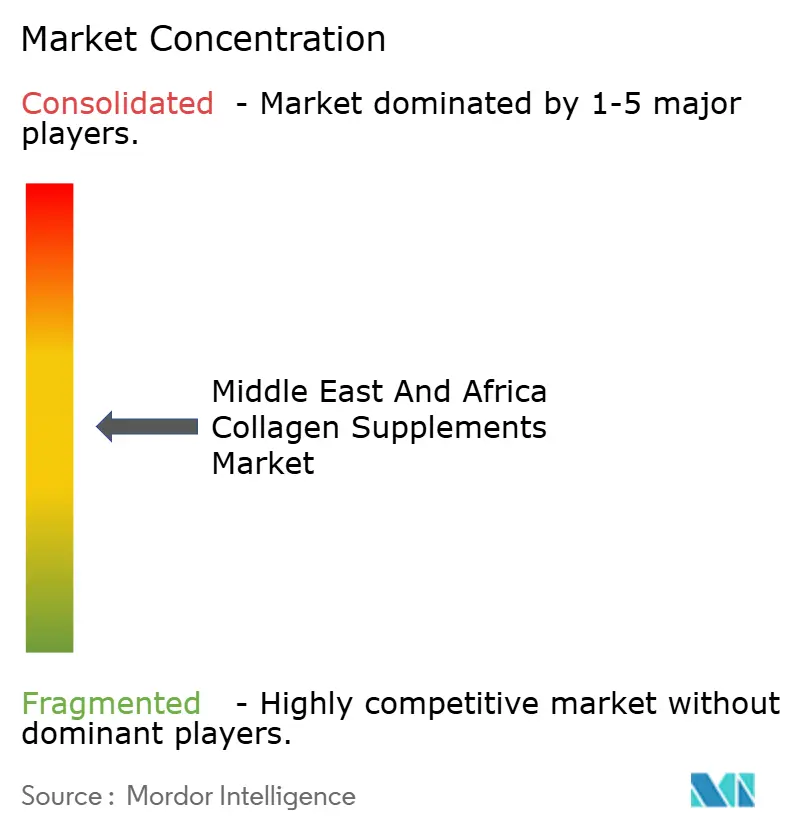
The Middle East and Africa Collagen Supplements Market is consolidated with global companies and regional players competing actively in the collagen supplements market. Nestlé Health Science strengthened its position by completing the acquisition of Vital Proteins in April 2024, which expanded its distribution capabilities across multiple channels. Similarly, Herbalife acquired Pro2col Health and Pruvit Ventures in March 2025 for USD 25-30 million, allowing it to expand its direct-selling operations to 37 countries, including the United Arab Emirates and South Africa. Ingredient manufacturers like GELITA are celebrating milestones, such as their 150th anniversary, with campaigns like “BE ACTIVE!” that emphasize the benefits of scientifically proven peptides for beauty, mobility, and sports.
Regional companies are focusing on niche opportunities to differentiate themselves. For instance, MojoMe offers grass-fed collagen sachets at prices 15% lower than imported competitors, making them more accessible to local consumers. Essentially has partnered with Sacred Glow to introduce collagen-infused juices, which are now available in luxury hotel spas in Dubai. Revive Collagen has gained a competitive edge in the Gulf Cooperation Council market by collaborating with GMG to launch ready-to-drink collagen sachets. Start-ups are leveraging technology, such as AI-driven quizzes, to provide personalized collagen recommendations based on individual factors like diet, sleep patterns, and skin hydration.
Understanding and navigating regulatory frameworks have become critical for success in the collagen supplements market. Companies with dedicated regulatory teams in the Middle East are able to reduce product listing times compared to those relying on external agents. Offering a diverse product portfolio also provides an advantage, as brands that combine collagen with other ingredients like keratin, hyaluronic acid, and botanical antioxidants are securing bundled listings in Gulf Cooperation Council hypermarkets. There is still room for new players, especially those that can combine scientific validation with culturally relevant marketing strategies.
Middle East And Africa Collagen Supplements Industry Leaders
-
Nestlé SA
-
The Clorox Company
-
NOW Foods
-
PB Leiner
-
Gelita AG
- *Disclaimer: Major Players sorted in no particular order
Middle East And Africa Collagen Supplements Market Companies Covered in this Report
- Nestlé SA
- The Clorox Company
- Gelita AG
- CoreFX Ingredients LLC
- Church and Dwight Inc.
- Elnasr4Gelatin
- Bombbar Collagen
- NOW Foods
- PB Leiner
- Wellfull (Ancient Nutrition)
- Jamieson Wellness Inc.
- Native Path
- CULT Food Science
- Darling Ingredients Inc.
- BioCell Technology
- Hunter & Gather
- Absolute Collagen
- Amorepacific Corp.
- Amandean Ltd.
- ACH Food Companies (Anthony's Goods)
Read Analysis of Middle East And Africa Collagen Supplements Companies
Market Opportunities and Future Outlook
Regulatory fragmentation creates room for brands and ingredient suppliers to streamline documentation and claims substantiation across multiple jurisdictions, especially in higher-barrier markets such as Saudi Arabia (SFDA) and South Africa (SAHPRA). Companies that consistently deliver compliant Arabic labeling, halal-aligned sourcing for animal-based collagen, and GMP-aligned quality systems can reduce time-to-listing across supermarkets/hypermarkets and faster-growing online channels. The UAE continues to work as a regional distribution and regulatory-processing hub for nutraceuticals, supporting multi-country rollouts and more predictable replenishment cycles for high-velocity formats like powders and sachets.
Format and positioning expansion is also a practical opportunity. Collagen is moving beyond powders into convenience-led, lifestyle-adjacent products, and Nestle-owned Vital Proteins began expanding collagen delivery into functional sparkling water in April 2026. That type of ready-to-drink format aligns with on-the-go consumption habits and can be paired with beauty-from-within positioning. Ingredient-led differentiation also supports premiumization, supported by continued demand for third-party certifications (halal, non-GMO, and responsibly sourced inputs) and benefit platforms, including specialized bioactive collagen peptide concepts introduced by suppliers such as GELITA.
Recent Industry Developments in Middle East And Africa Collagen Supplements Market
- June 2026: Vital Proteins named official collagen partner of the Lawn Tennis Association for the 2026 summer season. The partnership gives Nestlé elevated presence in a high-visibility sports channel and broadens distribution across major markets. It supports the brand's lifestyle and functional beverage campaigns through related activations.
- May 2026: Gelita AG launched CURADERM, a bioactive collagen peptide for skin healing and gum health. It broadens its portfolio with specialized, clinically positioned collagen ingredients and may have regional relevance for halal-certified solutions in MEA.
- April 2026: Nestlé (Vital Proteins) launched collagen-infused sparkling water formulated with Verisol collagen peptides and vitamin C. It expands collagen formats into ready-to-drink functional beverages and accelerates adoption of on-the-go formats. It also reinforces presence in the beverage channel alongside ongoing wellness trends.
Middle East And Africa Collagen Supplements Market Report Scope and Research Methodology
Market Definition and Coverage
This market covers retail and direct-to-consumer sales of collagen supplements across the Middle East and Africa, counted in value terms and captured at the point where supplements are sold through physical or online channels.
Scope exclusions: Collagen used mainly as an ingredient for food processing, cosmetics manufacturing, or medical materials is excluded when it is not sold as a consumer supplement.
Segments Covered in This Report
- By Product Type
- Capsules
- Gummies
- Powders
- Drinks and Liquid Shots
- Other Product Types
- By Source
- Plant Based
- Animal Based
- By Packaging Type
- Sachets
- Jars
- Others
- By Distribution Channel
- Supermarkets/Hypermarkets
- Specialty and Health Stores
- Online Retail Stores
- Other Distribution Channels
- By Country
- United Arab Emirates
- Saudi Arabia
- Qatar
- Kuwait
- South Africa
- Egypt
- Iraq
- Rest of Middle East and Africa
Data Sources, Market Sizing, and Validation
Desk Research
Desk work started with building a clean demand map for collagen supplementation in MEA, then linking it to measurable signals such as supplement rules, import flows, and retail availability. We focused on non-paywalled public sources including national statistics offices in key countries, UN Comtrade trade data, World Bank macro indicators, and public pages from health or food regulators that publish supplement guidance and labeling requirements.
To keep the model aligned with commercial execution, we also reviewed company annual reports and investor decks, pharmacy and retailer category pages for form-factor checks (capsules, gummies, powders, and related formats), and reputable press covering launches and channel expansion. Where needed, paid subscriptions were used for company financials and intelligence, shipment-level trade visibility, and patent databases to sanity-check whether innovation was moving toward specific supplement formats. This list is illustrative only, and many other public and paid sources were also reviewed for data collection, validation, and clarification.
Primary Interviews and Surveys
Primary work was used to confirm what actually sells as collagen supplements across MEA and how prices move by format, pack size, and channel. We spoke with a mix of brand-side and distribution-side experts, and also included retail and category stakeholders, so assumptions on online share, pharmacy importance, and differences across countries could be adjusted before we finalized the model.
Distribution of primary research fieldwork respondents
| Company type | Respondent position |
|---|---|
| Top tier: 25% | CXOs: 13% |
| Mid tier: 56% | Functional/Unit leaders: 39% |
| Smaller Players: 19% | Managers: 48% |
Market-Sizing & Forecasting
Sizing was built using a top-down demand pool approach, where supplement category spending and country-level consumption signals are reconstructed and then filtered into collagen supplements using penetration and mix assumptions. The totals were then checked against selective bottom-up views, such as sampled price per pack by format multiplied by estimated unit movement from channel checks, followed by adjustments when the two views disagreed.
Key inputs that moved the model included country weights inside MEA, the mix of capsules, gummies, powders, and other forms, and packaging choices like jars and sachets that influence price per serving. We also modeled distribution splits across pharmacies, supermarkets, and online retail stores. In addition, we tracked import reliance for collagen-based products, observed premiumization through pack size and label claims, and used inflation and currency timing to keep values consistent in USD.
For forecasting, scenario analysis was used so growth could be flexed based on how fast online penetration expands, how quickly new formats scale, and how pricing normalizes after promotion-heavy periods. Where country detail was thin, we used proxying from comparable markets, then re-checked assumptions through interview feedback before locking the regional roll-up.
Data Validation & Update Cycle
Validation was done by triangulating desk signals, interview feedback, and model outputs, then running variance checks at the country and regional levels so outliers had to be explained. If a country result implied an unrealistic spend per buyer, an unusual channel split, or a sharp price jump without supporting evidence, it was flagged and the assumptions were reviewed again.
Before sign-off, the numbers move through a multi-step analyst review that checks logic, units, currency handling, and year alignment. Reports are refreshed annually, and interim updates are triggered when material events occur, such as regulation changes or major channel shifts. Right before delivery, a final review pass is completed so the final view reflects the latest update available.
Mordor Intelligence's Middle East and Africa Collagen Supplements Market Size Compared With Other Published Estimates
Published numbers for MEA collagen supplements can look far apart because the underlying scope is not always the same, and because pricing and channel coverage are handled differently across studies. We kept the sizing steps simple and repeatable, and we used interviews to confirm what is actually sold in this region as a supplement.
Some estimates roll in collagen peptides or hydrolyzed collagen used broadly across applications, and they may also treat the category more like an ingredients market than a consumer supplement market. In Mordor Intelligence, the value is counted only for collagen products sold as supplements through defined retail channels, and then country roll-ups are cross-checked against format-level pricing and channel mix so adjacent uses do not inflate the total.
Benchmark comparison
| Source | Market Size | Gaps in Research Methodology |
|---|---|---|
| Mordor Intelligence | USD 621.54 M (2025) | |
| Trade Journal A | USD 98.28 M (2023) | This estimate is for collagen peptides in MEA, which narrows the product scope versus finished supplement products across multiple forms, so the value is structurally lower and not directly comparable by year. |
| Regional Consultancy B | USD 261.00 M (2024) | This figure appears to cover the broader collagen market across end uses (such as nutraceuticals, cosmetics, and food), which mixes ingredient demand with supplements and can shift the total based on application weighting and price assumptions. |
The comparison shows that the spread is mainly explained by product definition and whether the number represents finished supplements or collagen inputs used across industries. By sticking to observable channel sales, realistic format pricing, and country-level roll-ups that can be reviewed step by step, the final value stays easier to track and update over time.
Key Questions Answered in the Report
How large is the Middle East and Africa collagen supplements market in 2026?
The market stands at USD 656.41 million in 2026 and is projected to reach USD 862.52 million by 2031.
Which country currently leads regional sales?
The United Arab Emirates leads with a 25.42% share of regional revenue in 2025.
What is the fastest-growing product format?
Gummies show the highest growth, advancing at a 6.88% CAGR through 2031.
Why are plant-based collagen options gaining ground?
They satisfy halal and sustainability preferences and are forecast to post a 6.15% CAGR.