
Market Overview
| Study Period | 2020 - 2031 |
|---|---|
| Forecast Data Period | 2026 - 2031 |
| Base Year Market Size (2025) | USD 1.44 Billion |
| Market Size (2026) | USD 1.53 Billion |
| Market Size (2031) | USD 2.09 Billion |
| Growth Rate (2026 - 2031) | 6.41 % |
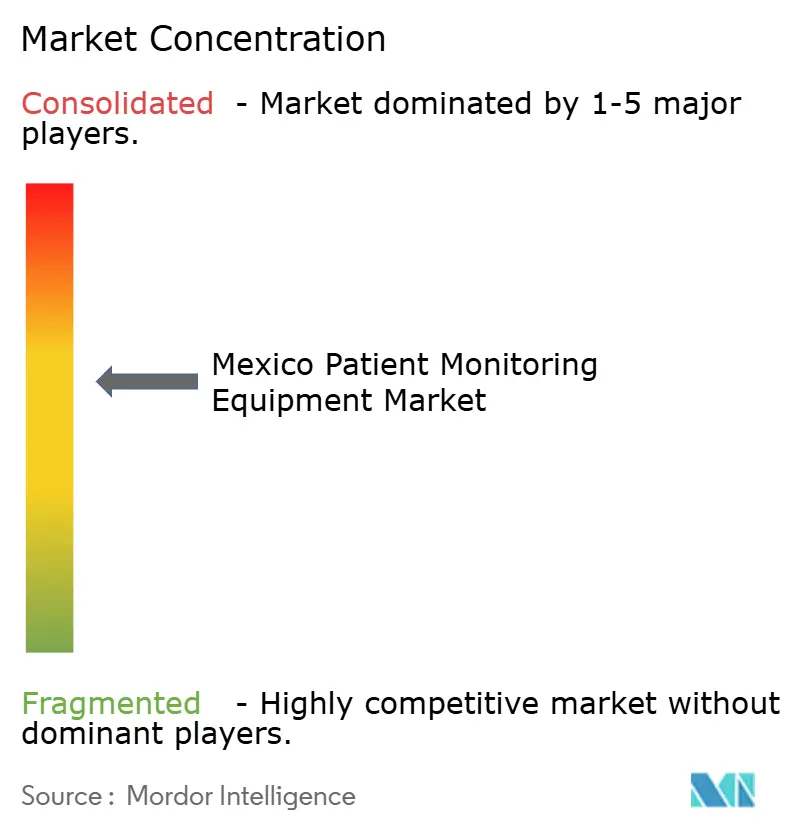
| Market Concentration | Medium |
Major Players *Disclaimer: Major Players sorted in no particular order Image © Mordor Intelligence. Reuse requires attribution under CC BY 4.0. | |
Mexico Patient Care Monitoring Equipment Market Analysis by Mordor Intelligence
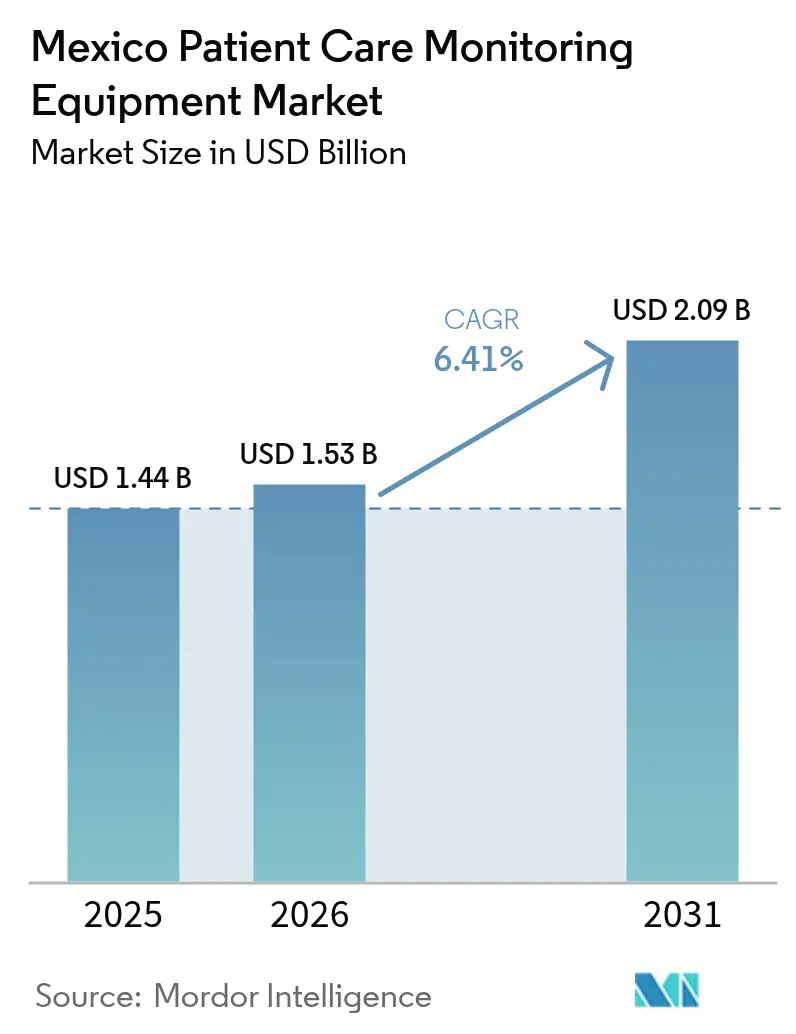
The Mexico Patient Care Monitoring Equipment Market size market is expected to grow from USD 1.44 billion in 2025 to USD 1.53 billion in 2026 and is forecast to reach USD 2.09 billion by 2031 at 6.41% CAGR over 2026-2031.
- COVID-19 had a significant impact on the Mexico patient care monitoring equipment market since patients with COVID-19 used patient monitoring devices more frequently due to the need for constant monitoring. For instance, as per the article published in April 2022 in PubMed, during the pandemic, the Integral System of Hospital Management (Sistema Integral de Administración Hospitalaria (SIAH)) accurately recorded the visit and patient monitoring, with photographic evidence of each consultation offered through the remote medical advice and guidance program.
- However, as the pandemic restrictions are eased, the market is expected to witness significant growth in the coming years due to the advancement in patient monitoring, such as smart wearables, artificial intelligence-based systems, and the increase in demand for patient monitoring due to chronic conditions.
- Factors such as the increasing burden of chronic disorders and growing preference for home and remote monitoring are expected to drive market growth. For instance, as per the IDF Atlas 10th Edition 2021, the estimated number of the population diagnosed with diabetes was 14.1 million in Mexico in 2021. This count is expected to rise to 21.2 million in 2045. Hence, a rise in cases of diabetes is likely to utilize glucose monitoring devices, thereby driving the market growth.
- Furthermore, the rise in product launches and technological advancement in patient monitoring is expected to fuel market growth. For instance, in December 2022, Huawei launched the Watch GT 3 SE with sensors for heart rate and SpO2 blood oxygen monitoring in Mexico. Similarly, in June 2021, Hoy Health opened its first international office in Guadalajara, Mexico. Hoy Health is a health tech company that is leading primary care in the digital health industry via remote patient monitoring, telehealth, and medication access.
- Hence, due to the rise in product launches and increase in chronic disease prevalence in Mexico, the market is expected to witness significant growth over the forecast period. However, resistance from healthcare industry professionals toward the adoption of patient monitoring systems is likely to hinder the market growth.
Note: Market size and forecast figures in this report are generated using Mordor Intelligence’s proprietary estimation framework, updated with the latest available data and insights as of 2026.
Mexico Patient Care Monitoring Equipment Market Trends and Insights
Hemodynamic Monitoring Devices Segment is Expected to Grow Fastest Over the Forecast Period
- The primary purpose of hemodynamic monitoring in critically ill patients is to accurately assess the circulatory system and its response to tissue oxygen needs. The major factors driving the growth of this segment include the rising burden of chronic diseases such as diabetes and cardiovascular diseases due to lifestyle changes and the growing demand for home-based and non-invasive monitoring systems.
- For instance, as per the data from the American Heart Association 2022, in Mexico, 56.1% of adults have high levels of low-density lipoprotein- cholesterol (LDL-C), or bad cholesterol, which is thought to be the primary risk factor for cardiovascular disease. With financing from Novartis, the American Heart Association began a new implementation science program in Mexico aimed at enhancing care for patients with atherosclerotic cardiovascular disease (ASCVD), often known as atherosclerosis. Since hemodynamic monitoring assesses the cardiovascular system and its response to tissue oxygen demands, this initiative is expected to benefit cardiology care in the country in terms of prevention as well as treatment, which will ultimately boost the demand for hemodynamic monitoring in the country.
- Additionally, Mexico has several cardiology-related associations that work for the betterment of cardiac care. For instance, the Mexican Society of Cardiology is dedicated to creating awareness about the risk factors associated with cardiac diseases and the treatments for heart failure.
- With such awareness, the general population can understand the importance of cardiac stents, which is ultimately increasing the demand for stents in Mexico. Furthermore, in Mexico, the current burden of heart disease continues to be very high, affecting approximately 26% of the population, according to data from the Federation Heart World, representing 4% of total health spending.
- Therefore, due to the rise in cardiovascular complications and the increase in key player presence, the studied segment is anticipated to witness significant growth over the forecast period.
Neurology Segment is Likely to Hold a Significant Market Growth Over the Forecast period
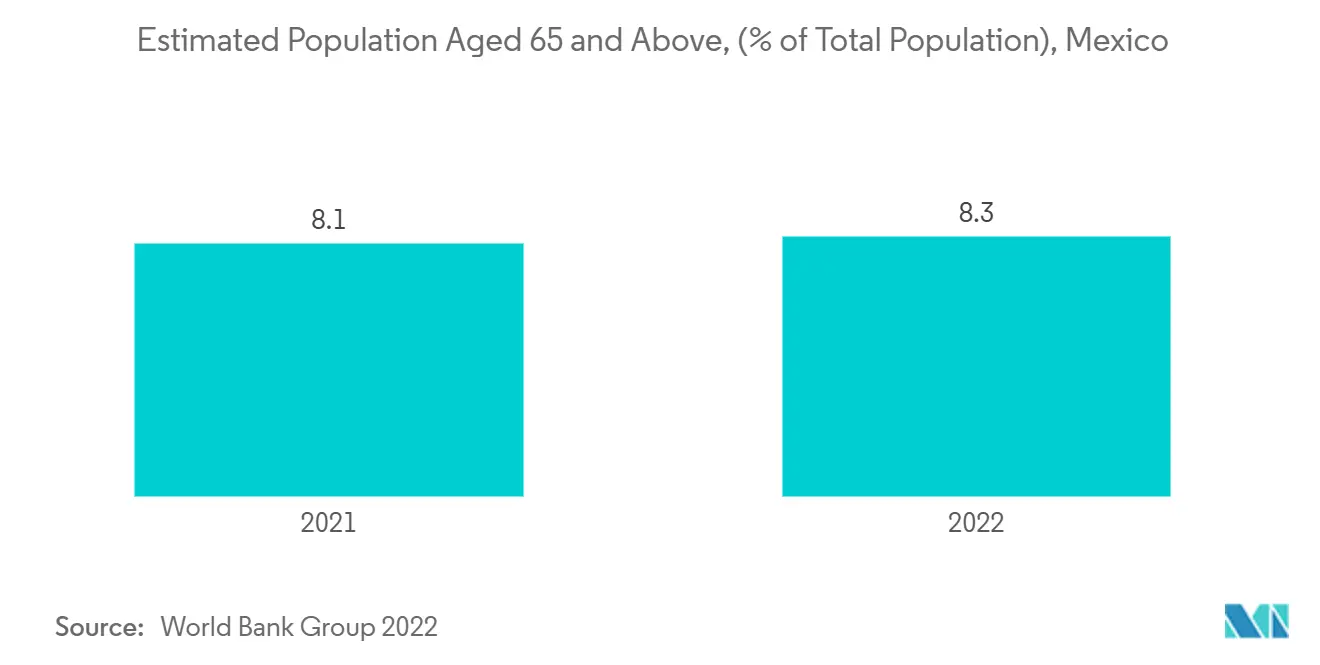
- The neurology segment is expected to expand at a rapid pace due to the rise in neurological disorders, the increasing aging population, and the rise in healthcare expenditure in Mexico. For instance, according to the published in January 2021 in Pubmed, in Mexico, traumatic brain injuries were ranked as the third leading cause of fatalities coupled with the rise in accidents. Similarly, the increasing number of cases of stroke in Mexico is also considered one of the growth-promoting factors for the market.
- For instance, according to the study published in June 2022 in PubMed, a total of 1361 adults with acute stroke were identified (mean age 69.2 years; 52% women) with a transient ischemic attack (5.5%), acute ischemic stroke (68.6%), intracerebral hemorrhage (23.1%), cerebral venous thrombosis (0.2%), and undetermined stroke (2.6%). The study also stated that the main risk factors were hypertension (80.7%) and diabetes mellitus (47.6%). Neurology monitoring devices are generally recommended for continuous monitoring of the risk of stroke. Therefore, such a high prevalence of stroke in the country may propel the demand for neurology monitoring devices.
- Furthermore, improvements in the management of epilepsy medication in Mexico are expected to drive the demand for neurology monitoring in the country. For instance, as per the study published in July 2021 in PubMed, healthcare management was making efforts to improve hospital protocols to reduce the non-attendance of epilepsy patients. Hence, such an initiative may enhance patient adherence to follow-up, ultimately increasing the quality of care in the epilepsy clinic.
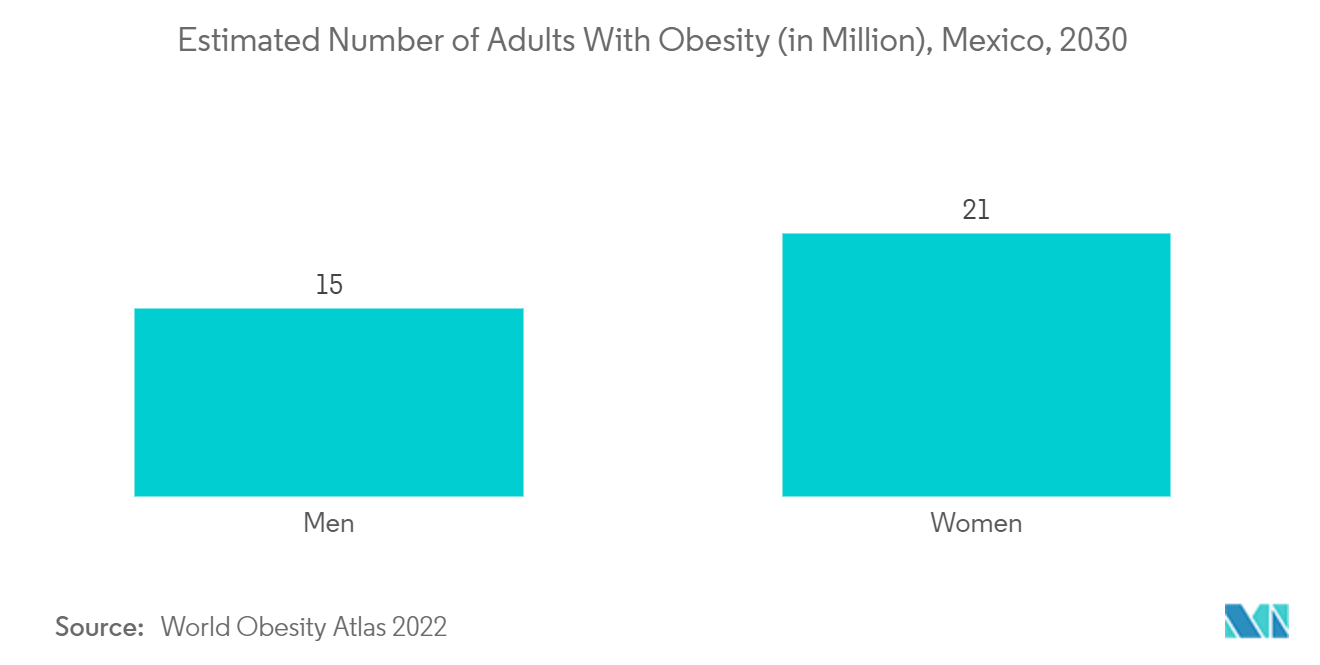
- As patient adherence increases, the demand for patient monitoring devices for neurology increases, thereby contributing to the market growth over the forecast period. Also, The high incidence of obesity is linked to a significant financial, societal, and medical burden. Obesity-related metabolic dysfunction, dyslipidemia, and inflammation are factors in several illnesses and consequences on the neurological system. For instance, as per the World Obesity Atlas 2023, 47% of adults are likely to be obese in Mexico by 2035.
- Therefore, due to the rise in neurological diseases and the increase in government initiatives to boost neurology patient monitoring, the studied segment is anticipated to witness significant growth over the forecast period.
Competitive Landscape
The Mexico patient care monitoring equipment market is consolidated in nature. The companies are implementing certain strategic initiatives, such as mergers, new product launches, acquisitions, and partnerships, that help them strengthen their market position. Some of the market players are Koninklijke Philips NV, Nihon Kohden Corporation, GE Healthcare, Abbott Laboratories, Dragerwerk AG & Co. KGaA, and others.
Mexico Patient Care Monitoring Equipment Industry Leaders
-
Nihon Kohden Corporation
-
Koninklijke Philips N.V.
-
Dragerwerk AG & Co. KGaA
-
GE Healthcare
-
Abbott Laboratories
- *Disclaimer: Major Players sorted in no particular order
Market Opportunities and Future Outlook
Public-sector digitization and procurement programs are creating clearer whitespace for connected monitoring and AI-enabled diagnostic ecosystems across Mexico. In June 2026, the Government of Mexico announced implementation of a single, interoperable Expediente Clinico Digital across IMSS, ISSSTE, and IMSS-Bienestar institutions, which elevates demand for interoperable devices, secure data capture, and remote patient monitoring workflows that can feed standardized clinical records. In parallel, IMSS-Bienestar announced a MXN 13 billion 2026 procurement program covering 32,000 medical devices (including MRI units and AI-enabled mammography systems), signaling scaled purchasing that can pull through multi-parameter monitors, cardiac monitoring, and respiratory monitoring used across screening, acute care, and follow-up pathways.
On the supply side, regulatory and classification changes strengthen the pathway for advanced monitoring software and imported platforms while reducing lifecycle friction for incumbents. COFEPRIS published a June 2026 requirements guide for sanitary registration using equivalence agreements and an abridged pathway that leverages approvals from high-vigilance authorities (such as the U.S. FDA, Health Canada, and Japan MHLW), and the General Health Law reform (Article 376) in January 2026 extended medical device sanitary registration renewals from five to up to ten years. With medical device software recognized under the Mexican Pharmacopoeia medical devices supplement (including risk-based rules for Software as a Medical Device), manufacturers and providers have a more defined route to expand remote monitoring, analytics, and alarm-management capabilities, while aligning labeling and technical documentation to meet absolute identity requirements under reliance-style submissions.
Recent Industry Developments
- June 2026: Royal Philips highlighted cardiovascular imaging and AI-enhanced ultrasound capabilities in Mexico around its participation in the CITIC 2026 cardiovascular congress (June 17-19, 2026). The emphasis on AI-supported imaging and collaboration with clinical stakeholders reinforces competitive focus on advanced monitoring and diagnostic platforms that can integrate into hospital workflows.
- May 2026: GE Healthcare described a market mix in Mexico with the public sector representing a substantial share of its business and noted ongoing contract renewals within ISSSTE and IMSS. The activity underscores the importance of public procurement cycles for patient monitoring and imaging-adjacent equipment suppliers selling into large hospital networks.
- January 2026: Abbott inaugurated a 20,000 square meter electrophysiology manufacturing plant in Queretaro following a USD 200 million investment. The facility strengthens Mexico-based supply for cardiac arrhythmia diagnostic and treatment technologies, supporting broader availability of cardiovascular care devices and related monitoring ecosystems.
Research Methodology Framework and Report Scope
Market Definition and Coverage
This market covers patient care monitoring equipment sold and used in Mexico to track vital signs and other clinical parameters for patients in care settings and at home, where readings are captured by monitoring devices and used for medical decision-making.
Scope exclusions: We exclude general wellness wearables and non-medical fitness trackers that are not intended for clinical patient monitoring.
Segmentation Overview
- By Type of Device
- Hemodynamic Monitoring Devices
- Neuromonitoring Devices
- Cardiac Monitoring Devices
- Multi-parameter Monitors
- Respiratory Monitoring Devices
- Remote Patient Monitoring Devices
- Weight Management and Fitness Monitoring
- Other Types of Devices
- By Application
- Cardiology
- Neurology
- Respiratory
- Fetal and Neonatal
- Other Applications
- By End Users
- Home Healthcare
- Hospitals and Clinics
- Other End Users
Data Sources, Market Sizing, and Validation
Desk Research
Desk research started with public health and device ecosystem information so the model had a realistic Mexico demand context before any assumptions were set. Sources used for orientation and data points included, for example, Mexico Ministry of Health publications, INEGI national statistics releases, and global health indicators from the World Health Organization and the World Bank.
We also reviewed import and trade disclosures, including UN Comtrade and Mexico customs-related summaries, to understand how much monitoring equipment is sourced through imports versus local distribution. On top of that, we used company filings, product catalogs, investor presentations, and reputable medical journals to confirm product definitions and typical device replacement cycles. Select paid subscriptions that provide company financials and news coverage were used to cross-check revenue exposure to Mexico and to screen for major contract wins or recalls. These desk sources are illustrative and not exhaustive, and many other public documents and references were reviewed for data collection, validation, and clarification.
Primary Interviews and Surveys
Primary work was used to confirm what gets purchased in Mexico across hospitals, clinics, and home care, and then to test pricing and adoption assumptions against real buying patterns. Interviews and surveys covered distributors, hospital procurement stakeholders, biomedical engineers, and clinicians, with coverage balanced across Mexico regions so the final inputs reflect both large cities and secondary care networks.
Distribution of primary research fieldwork respondents
| Company type | Respondent position |
|---|---|
| Top tier: 31% | CXOs: 13% |
| Mid tier: 48% | Functional/Unit leaders: 41% |
| Smaller Players: 21% | Managers: 46% |
Market-Sizing & Forecasting
Sizing was built using a top-down approach where Mexico healthcare activity is reconstructed into an addressable monitoring equipment demand pool, and then allocated across key care settings. In practice, we used signals such as hospital bed counts and occupancy trends, procedure and admission patterns that drive monitoring intensity, home healthcare usage indicators, and replacement cycles for bedside and portable monitors. Pricing was handled through a practical average selling price ladder by device class, with checks on how tenders, distributor margins, and inflation expectations can shift realized prices.
To keep totals realistic, the outputs were corroborated with selective bottom-up approximations, such as sampling ASP x unit volumes for common monitor categories and validating distribution channel throughput through interviews. Where volume visibility was weaker, gaps were handled by using proxy ratios (for example monitors per bed by facility type) that were reviewed with field respondents, then applied consistently across the country. Forecasting used scenario analysis, where baseline growth is shaped by expected hospital capacity additions, public and private spending direction, and adoption of remote monitoring for chronic care, and then stress-tested with conservative and upside cases shared by interviewees.
Data Validation & Update Cycle
Validation was done through multiple checks so the market totals do not rely on a single data stream. We compared model outputs against independent signals like import momentum, pricing direction reported by channels, and visible changes in hospital procurement behavior, and then reviewed any large variances before final sign-off.
A second analyst review is conducted to re-check assumptions, formulas, and year-to-year movement, followed by targeted re-contacts when results look out of line with market realities. Reports are refreshed annually, and interim updates are made when material events occur, such as major regulatory changes, large tenders, or supply disruptions. Before delivery, a fresh pass is completed so the final numbers reflect the latest available inputs.
Mordor Intelligence's Mexico Patient Care Monitoring Equipment Market Sizing Compared With Other Published Estimates
Published market sizes for Mexico patient monitoring can differ even when they sound similar, because each publisher draws the line around products, care settings, and what counts as medical monitoring revenue. Differences also show up when one estimate uses a single device category as a proxy, while another aims to represent the full monitoring equipment mix used in hospitals and at home.
The main gap comes from scope coverage, where Mordor Intelligence counts the wider patient care monitoring equipment set used across hospital and home settings, while some external figures stay centered on one monitor type or a narrower definition of monitored parameters, which naturally pulls the total down or shifts the base year value.
Benchmark comparison
| Source | Market Size | Gaps in Research Methodology |
|---|---|---|
| Mordor Intelligence | USD 1.44 B (2025) | |
| Global Consultancy A | USD 1.40 B (2023) | Uses an earlier base year and can blend device-only and broader patient monitoring definitions, which changes what is counted and how price effects are carried into later years. |
| Research Desk B | USD 0.22 B (2024) | Covers multiparameter patient monitoring systems only, so single-parameter monitors and other monitoring equipment used in hospitals and home care are not captured in the total. |
The spread in the table is mostly explained by whether the estimate represents the full monitoring equipment basket in Mexico or only a subset, and by which year is used as the starting point. By tying the model to care setting demand signals and then checking pricing and adoption assumptions with field feedback, the final number stays traceable to clear inputs and repeatable steps.
Key Questions Answered in the Report
How big is the Mexico Patient Care Monitoring Equipment Market?
The Mexico Patient Care Monitoring Equipment Market size is expected to reach USD 1.53 billion in 2026 and grow at a CAGR of 6.41% to reach USD 2.09 billion by 2031.
What is the current Mexico Patient Care Monitoring Equipment Market size?
In 2026, the Mexico Patient Care Monitoring Equipment Market size is expected to reach USD 1.53 billion.
Who are the key players in Mexico Patient Care Monitoring Equipment Market?
Nihon Kohden Corporation, Koninklijke Philips N.V., Dragerwerk AG & Co. KGaA, GE Healthcare and Abbott Laboratories are the major companies operating in the Mexico Patient Care Monitoring Equipment Market.
What years does this Mexico Patient Care Monitoring Equipment Market cover, and what was the market size in 2025?
In 2025, the Mexico Patient Care Monitoring Equipment Market size was estimated at USD 1.53 billion. The report covers the Mexico Patient Care Monitoring Equipment Market historical market size for years: 2019, 2020, 2021, 2022, 2023 and 2024. The report also forecasts the Mexico Patient Care Monitoring Equipment Market size for years: 2026, 2027, 2028, 2029, 2030 and 2031.