
Mental Health Apps Market Size and Share
Market Overview
| Study Period | 2020 - 2031 |
|---|---|
| Market Size (2026) | USD 9.45 Billion |
| Market Size (2031) | USD 18.81 Billion |
| Growth Rate (2026 - 2031) | 14.76 % |
| Fastest Growing Market | Asia-Pacific |
| Largest Market | North America |
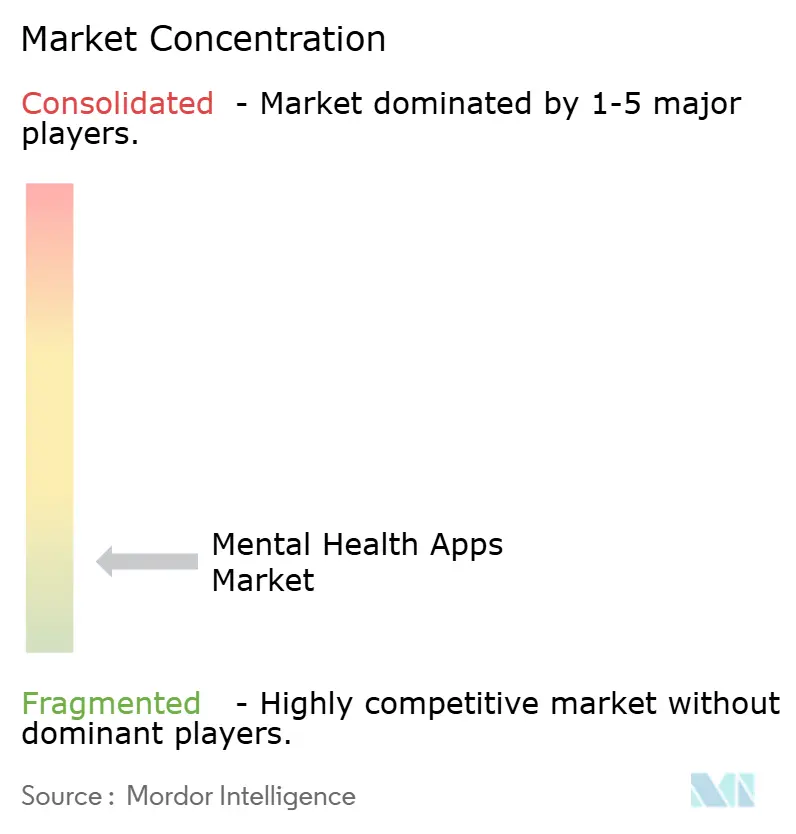
| Market Concentration | Low |
Major Players *Disclaimer: Major Players sorted in no particular order Image © Mordor Intelligence. Reuse requires attribution under CC BY 4.0. | |
Mental Health Apps Market Analysis by Mordor Intelligence
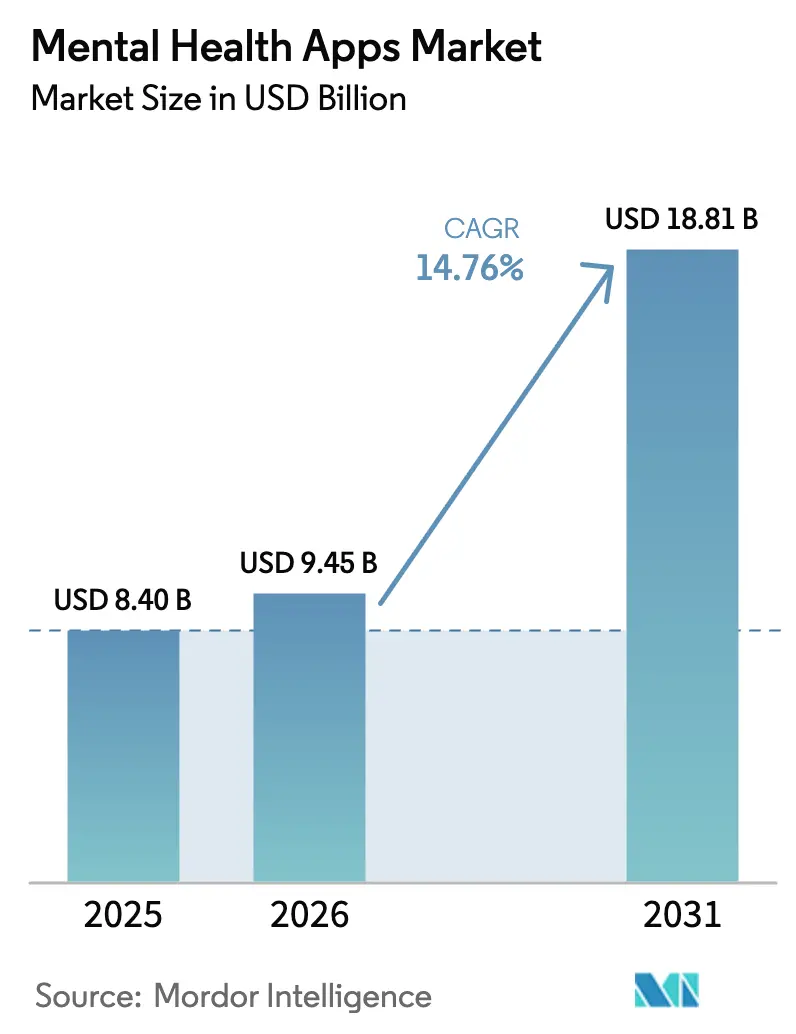
The Mental Health Apps Market size was valued at USD 8.40 billion in 2025 and is estimated to grow from USD 9.45 billion in 2026 to reach USD 18.81 billion by 2031, at a CAGR of 14.76% during the forecast period (2026-2031).
Strong clinical evidence for app-based cognitive behavioral therapy, newly activated U.S. reimbursement codes, and Apple’s on-device State of Mind logging each widen the addressable mental health apps market. The shift from direct-to-consumer cash payments to employer and payer funding reshapes revenue mix, drives higher engagement, and cuts acquisition costs. Rapid smartphone adoption in India and Indonesia is expanding the mental health apps market beyond mature economies, while AI chatbots are personalizing content and enhancing adherence. Consolidation quickens as buyers seek FDA-cleared assets, yet more than 10,000 titles continue to maintain competitive intensity. Privacy-first operating system features alleviate data concerns and enable employer deployment at scale.
Key Report Takeaways
- By platform, iOS led with 52.63% of mental health apps market share in 2025 while Android is forecast to expand at a 17.45% CAGR through 2031.
- By application, depression and anxiety tools captured 30.13% of the mental health apps market share in 2025 and stress management apps are set to grow at a 16.34% CAGR to 2031.
- By end user, homecare and individuals held 62.44% of the mental health apps market share in 2025 whereas employer programs are projected to advance at a 17.02% CAGR during the forecast period.
- By age group, adults accounted for 68.78% of the mental health apps market share in 2025 and the children and adolescent segment is poised for a 16.07% CAGR to 2031.
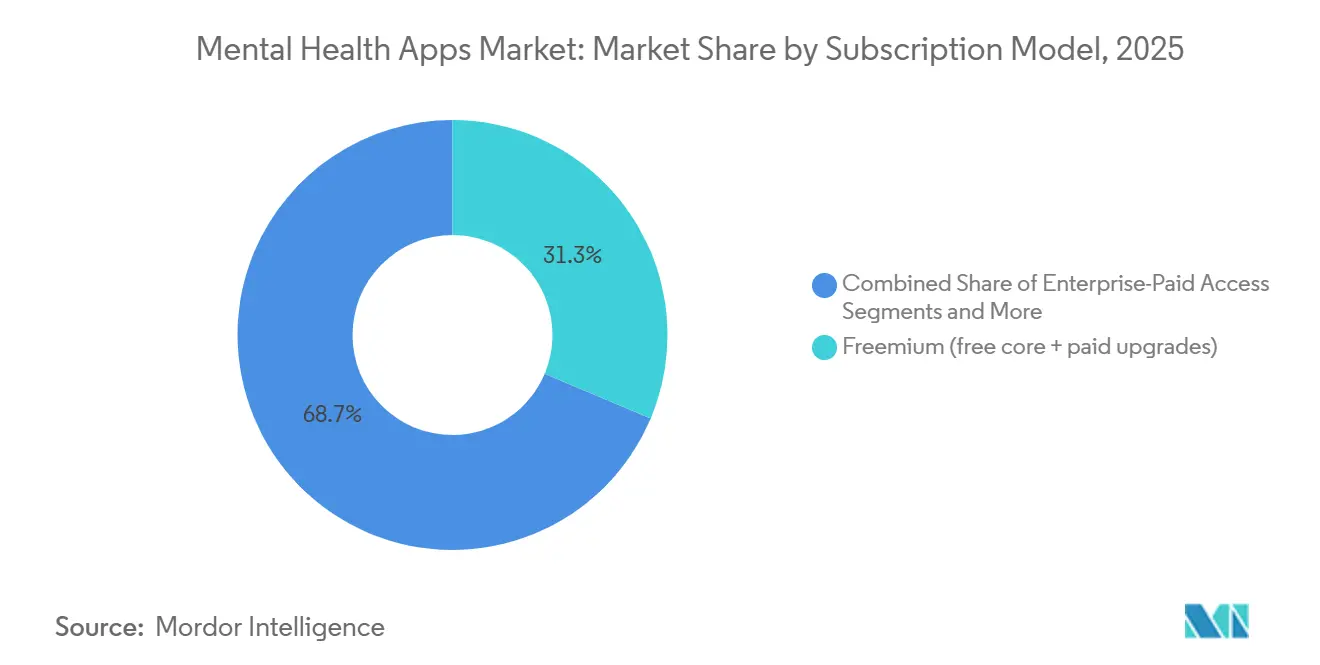
- By subscription model, freemium plans commanded 31.34% of the mental health apps market share in 2025 while paid plans are expected to rise at a 15.77% CAGR through 2031.
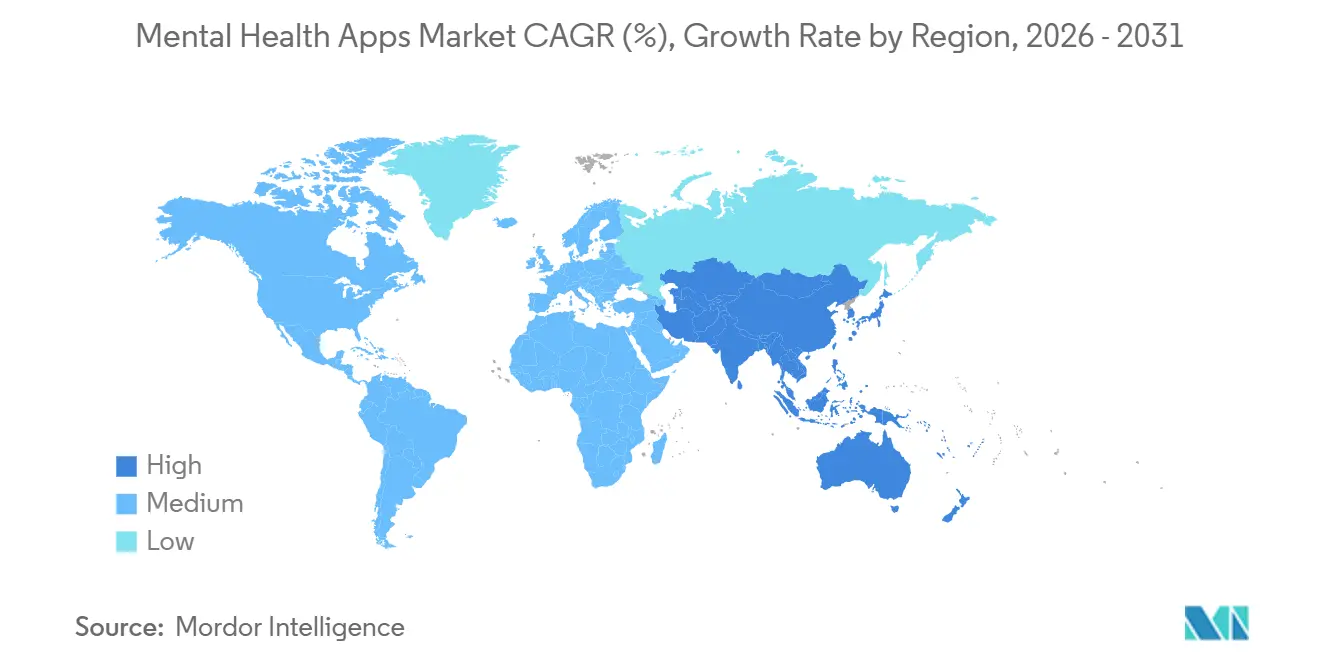
- By geography, North America generated 37.56% revenue in 2025 and Asia-Pacific is estimated to post a 17.55% CAGR up to 2031.
Note: Market size and forecast figures in this report are generated using Mordor Intelligence’s proprietary estimation framework, updated with the latest available data and insights as of January 2026.
Market Trends and Insights
Drivers Impact Analysis of Mental Health Apps Market*
| Driver | (~) % Impact on CAGR Forecast | Geographic Relevance | Impact Timeline |
|---|---|---|---|
| Rising burden of anxiety and depression globally | 3.2% | Global, with acute pressure in North America and Europe | Long term (≥ 4 years) |
| Smartphone penetration and app-store distribution scale | 2.8% | APAC core (India, Indonesia, Vietnam), spill-over to MEA | Medium term (2-4 years) |
| Employer and payer adoption of digital mental health benefits | 2.5% | North America and Western Europe, early pilots in Australia | Medium term (2-4 years) |
| AI chatbots and CBT personalization improving access and outcomes | 2.3% | Global, with faster uptake in English-speaking markets | Short term (≤ 2 years) |
| Shift from D2C cash-pay to insurance-billed hybrid models | 1.9% | North America, Germany, France, Netherlands | Medium term (2-4 years) |
| OS-level mental health features and on-device AI enable privacy-first adoption | 1.7% | Global, concentrated in iOS ecosystem initially | Short term (≤ 2 years) |
| Source: Mordor Intelligence | |||
Rising Burden Of Anxiety And Depression Globally
More than 1 billion people live with a mental disorder, and treatment gaps stay wide.[1] U.S. surveys in 2024 showed 19% of adults reported depression and anxiety, while 42% of high-school students felt persistently sad.[2] Eight thousand U.S. regions lacked enough professionals, leaving 167 million residents underserved. Evidence now places app-based CBT on par with face-to-face therapy for mild cases. Validated results move apps onto payer formularies, converting unmet need into the expanding mental health apps market.
Smartphone Penetration And App-Store Distribution Scale
Smartphone ownership reached 52% in India and 68% in Indonesia by 2024. App stores let developers reach new users at minimal marginal cost and update weekly, speeding feature iteration. Wysa gained 5 million users and embedded its chatbot in leading Indian hospital systems.[3] Japanese public campaigns raised demand for Awarefy and Emol. Fast feedback loops cut the attrition that plagues stand-alone digital content and enlarge the global mental health apps market.
Employer And Payer Adoption Of Digital Mental Health Benefits
Seventy-four percent of U.S. employers offered meditation or mindfulness apps in 2024, up from 52% in 2020. Spring Health now covers more than 10 million lives through per-employee contracts, and Lyra Health reached a USD 5.58 billion valuation in 2022. Medicare Advantage began reimbursing app sessions in 2025 at USD 15-45 each. Payers direct members to lower-cost digital channels first, trimming claims by up to 30% and growing the mental health apps market.
AI Chatbots And CBT Personalization Improving Access And Outcomes
Woebot’s 2024 trial showed a 22% drop in PHQ-9 scores within four weeks and 83% adherence. Wysa achieved a 30% reduction in GAD-7 scores across India and the U.K. Youper deployed large language models in 2025 to produce empathetic exchanges, which increased session time. Personalized sequencing increases engagement and widens the mental health apps market footprint.
Restraints Impact Analysis of Mental Health Apps Market*
| Restraint | (~) % Impact on CAGR Forecast | Geographic Relevance | Impact Timeline |
|---|---|---|---|
| Regulatory classification ambiguity and evidence thresholds | -1.2% | Global, acute in EU and post-Brexit UK | Long term (≥ 4 years) |
| Data privacy and cybersecurity risks erode trust and add compliance cost | -1.0% | Global, with GDPR/HIPAA enforcement concentrated in EU and North America | Medium term (2-4 years) |
| Subscription fatigue and high churn depress LTV of paid apps | -0.9% | Global, most visible in mature D2C markets (North America, Western Europe) | Short term (≤ 2 years) |
| App store privacy changes and paid acquisition costs raise CAC | -0.8% | Global, concentrated in iOS ecosystem | Short term (≤ 2 years) |
| Source: Mordor Intelligence | |||
Regulatory Classification Ambiguity And Evidence Thresholds
The FDA cleared only two prescription digital therapeutics for mental health, and both left the market after Pear Therapeutics’ bankruptcy. Germany’s DiGA directory contained 53 reimbursable apps by late 2024, each needing randomized trial proof within a year. Fragmented rules force multi-country filings that can cost up to USD 1 million. Small developers struggle with these demands, slowing new evidence-grade launches and tempering growth in the mental health apps market.
Data Privacy And Cybersecurity Risks Erode Trust
The U.S. Office for Civil Rights issued 14 penalties in 2024 for unauthorized data sharing, reaching USD 5.1 million per case. The Irish regulator fined a developer EUR 2.3 million under GDPR. Mozilla’s 2024 audit found 37% of iOS mental health apps sent identifiers to Facebook. HIPAA-grade infrastructure adds as much as USD 300,000 in yearly overhead, squeezing margins across the mental health apps industry.
*Our forecasts treat driver/restraint impacts as directional, not additive. The impact forecasts reflect baseline growth, mix effects, and variable interactions.
Mental Health Apps Market Segment Analysis
By Platform:
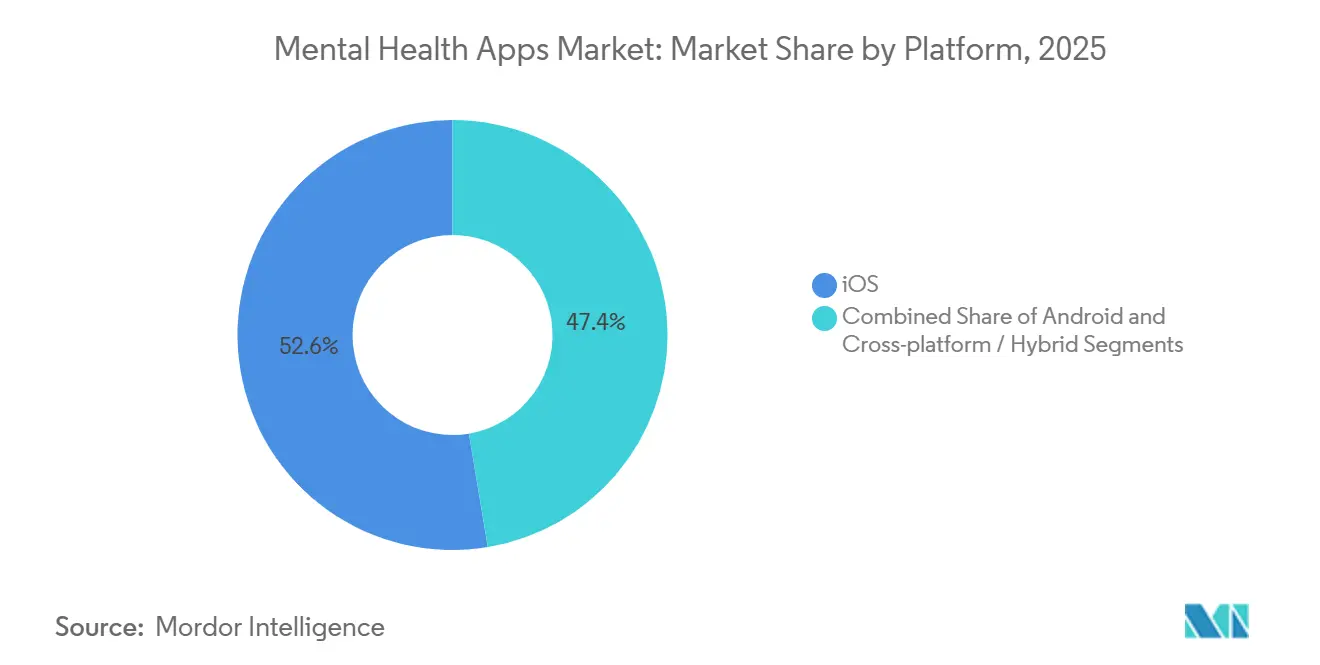
iOS Dominance Faces Android Volume SurgeiOS held 52.63% of mental health apps market share in 2025 due to higher average revenue per user and strong privacy controls. Android is set to grow at a 17.45% CAGR because India, Indonesia, and China now supply most new smartphone users. Cross-platform frameworks cut build costs yet miss native features that deepen engagement. Wearables-first designs stay niche but validate passive tracking. Together these trends diversify the mental health apps market.
Apple’s on-device AI encrypts data and satisfies employer risk teams, boosting adoption in corporate programs. Google’s Health Connect mirrors this privacy stance for Android. Paid conversion remains stronger on iOS, yet enterprise sponsorship is bridging the gap on Android. Platform strategies will determine monetization pathways across the mental health apps market.

By Application:
Stress Management Gains As Employers Prioritize PreventionDepression and anxiety tools captured 30.13% of the mental health apps market share in 2025 on the back of FDA 510(k) clearances for Sleepio and Daylight. Stress management apps are projected to rise at a 16.34% CAGR as employers bundle mindfulness to curb absenteeism. Meditation apps face free-content competition, while sleep solutions benefit from wearable data. Substance use and PTSD apps remain underserved, leaving white space within the mental health apps market.
Employer demand for preventive tools helps stress apps outpace legacy meditation catalogs. Integration with Apple Watch and Fitbit sleep scores anchors engagement. The limited pipeline for substance use care after Pear’s exit signals an acquisition opportunity for validated newcomers. Niches such as eating disorder support need careful design to avoid triggering behaviors, yet they remain part of the broader mental health apps industry.
By End User:
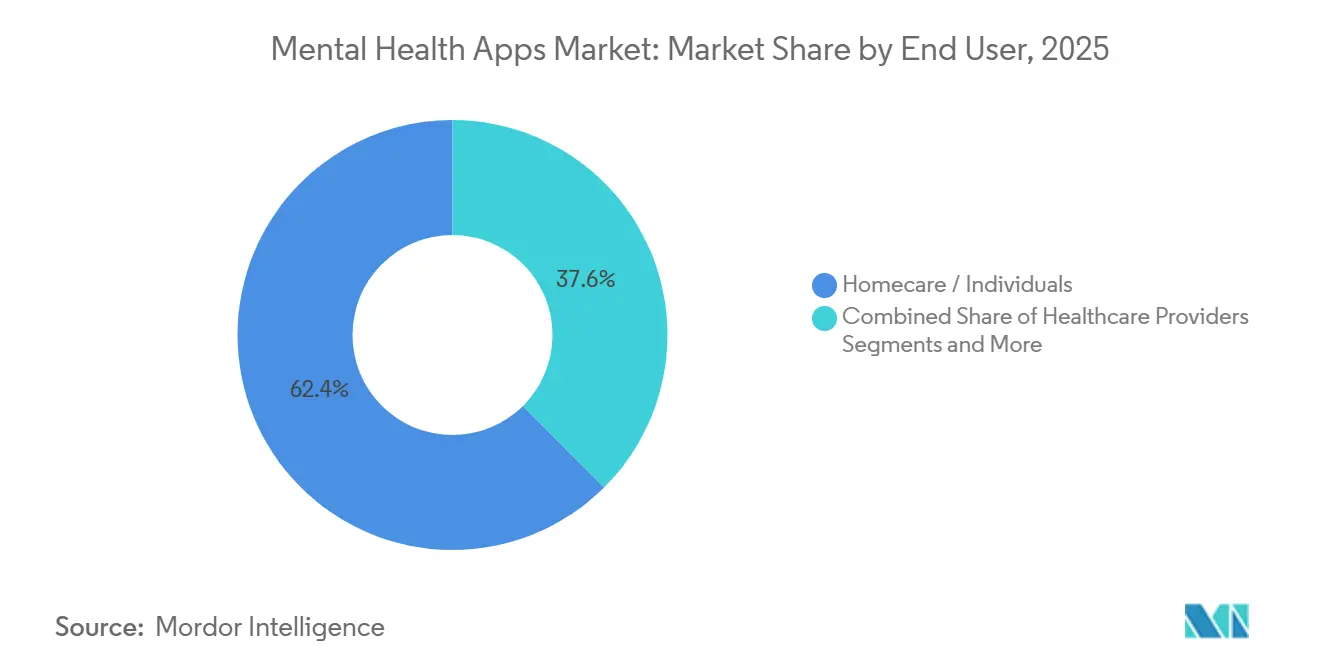
Enterprise-Paid Access Reshapes EconomicsHomecare users controlled 62.44% of mental health apps market share in 2025, yet churn and low lifetime value cap revenue potential. Employer programs are forecast to grow at a 17.02% CAGR as per-employee fees remove cost barriers. Healthcare providers use dashboards to scale therapist reach, while payers now reimburse digital sessions. These channels distribute risk and sustain the mental health apps market size.
Spring Health and Lyra Health show that enterprise contracts cut acquisition cost and triple engagement relative to direct-to-consumer models. CMS reimbursement aligns digital therapy payments with stepped-care models, moving apps into the covered benefits mix. Interoperability demands raise engineering spend but deepen integration into clinical ecosystems, fortifying the mental health apps market.
By Age Group:
Youth Crisis Drives Adolescent Segment GrowthAdults represented 68.78% of users in 2025, reflecting smartphone fluency and diagnosis rates. Children and adolescents are projected to rise at a 16.07% CAGR after U.S. pediatric bodies declared a youth mental health emergency. School programs embed kid-friendly apps under parental consent workflows, enlarging the mental health apps market.
Design limits curb addictive game loops and protect privacy for minors, while compliance with COPPA remains mandatory. Geriatric adoption lags because of usability challenges, yet age-friendly interfaces from firms such as SilverCloud suggest latent demand. Broad demographic reach underpins the long-term expansion of the mental health apps market.
By Subscription Model:
Enterprise Sponsorship Outpaces FreemiumFreemium tiers held 31.34% of mental health apps market share in 2025 but convert poorly to paid plans. Paid subscriptions are forecast to climb at a 15.77% CAGR as employers and payers absorb fees. In-app microtransactions offer high-margin add-ons for reluctant subscribers. Reimbursement codes price sessions above enterprise per-member fees, opening blended models that bolster the mental health apps market size.
Spotify and YouTube crowd the meditation niche, pressing Calm and Headspace to diversify revenue. Enterprise sponsorship shapes higher engagement and reduces churn. Hybrid billing that mixes insurance rates with employer coverage hedges volatility and stabilizes cash flow across the mental health apps industry.
Geography Analysis
North America Mental Health Apps Market
North America produced 37.56% of global revenue in 2025, fueled by wide employer adoption and the 2025 CMS codes that reimburse digital therapy sessions. The United States alone delivered 85% of the region’s value as self-insured firms adopted Spring Health and Lyra Health to curb claims. Canada and Mexico trail because fragmented payor systems complicate reimbursement, though Dialogue Health Technologies expanded mental health offerings for Canadian employers in 2024. CAC inflation from Apple privacy policies squeezed direct-to-consumer margins, yet enterprise channels kept the mental health apps market growing.
APAC Mental Health Apps Market
Asia-Pacific is projected to post the fastest regional expansion at a 17.55% CAGR through 2031. Smartphone ownership and destigmatization campaigns push adoption in India, Indonesia, and China. Wysa’s partnerships with Apollo and Manipal hospitals integrate chatbots into clinical care, while Japanese government initiatives boosted use of Awarefy and Emol. South Korea piloted reimbursement through the National Health Insurance Service. Anonymity addresses cultural stigma, lifting participation and enlarging the mental health apps market.
Europe Mental Health Apps Market
Europe is led by Germany’s DiGA pathway with 53 reimbursable apps. France’s Forfait Innovation approves tools but lacks fixed pricing, slowing roll-out. The U.K. NHS Apps Library sets safety and privacy standards, yet post-Brexit divergence adds duplication. Northern Europe’s high digital literacy speeds adoption, while the Mediterranean and Eastern regions advance slowly. Outside Europe, emerging programs in Brazil and select Middle East markets signal early interest, but infrastructure gaps limit near-term contribution to the mental health apps market.
Regulatory Landscape
Mental health apps face a split regulatory reality between general wellness tools and software that meets medical device or clinical decision support thresholds. In the United States, the FDA Digital Health Center of Excellence continues to govern expectations for software-based products, and in January 2026 the FDA refreshed guidance affecting General Wellness and Clinical Decision Support. This update reinforces a lifecycle approach for software changes, labeling, and evidence.
In the United Kingdom, MHRA guidance on Digital Mental Health Technologies (DMHT) establishes a structured pathway for device characterization and classification, raising the bar for developers positioning apps as clinical tools rather than lifestyle support. Across Europe, the EU MDR environment increasingly ties market access to formal device compliance processes, and the mandated use of the first EUDAMED modules starting May 28, 2026 adds operational requirements that feed into documentation, UDI, and vigilance workflows. Germany remains the most concrete reimbursement-linked pathway through DiGA, and the February 1, 2026 DiGAV amendments strengthened post-market obligations by requiring DiGA manufacturers to provide data for accompanying success measurement. In Asia, Singapore introduced the Health Products (AI Standalone Mobile Application Exemption) Order 2026 (effective February 13, 2026), illustrating a parallel track in which governments clarify how certain AI standalone mobile apps are treated under health-product controls, shaping how multi-market app portfolios are structured and labeled.
Competitive Landscape
More than 10,000 titles populate app stores, yet 2024 saw faster consolidation when Headspace bought Big Health’s FDA-cleared Sleepio and Daylight. Customer acquisition costs, rather than clinical features, now set the competitive bar. Apple’s privacy rules inflated CAC by up to 50% and contributed to Calm’s valuation decline, while Headspace, Cerebral, and Noom enacted layoffs. Two strategy lanes dominate: mass-market subscriptions from Calm and Headspace versus enterprise contracts from Spring Health, Lyra Health, and Modern Health. These tracks segment the mental health apps market.
Regulatory gaps create openings. Pear Therapeutics’ bankruptcy removed the only cleared substance use solutions, inviting new entrants. Generative AI differentiates emerging players: Woebot, Wysa, and Youper implement large language models that improve adherence and user satisfaction. On-device encryption from Apple and similar measures from Google reassure employers and accelerate B2B uptake. Strategic buyers hunt for assets with real-world evidence, suggesting further mergers will shape the mental health apps market.
Sustained fragmentation keeps pricing power low, yet validated clinical outcomes help premium apps stand apart. Enterprise clients value analytics that identify at-risk populations, enhancing retention. As reimbursement expands, evidence and interoperability become acquisition triggers. This dynamic sets the stage for continued reinvention within the global mental health apps industry.
Mental Health Apps Industry Leaders
-
Teladoc Health
-
Calm
-
Cerebral
-
Talkspace
-
Headspace
- *Disclaimer: Major Players sorted in no particular order
Mental Health Apps Market Companies Covered in this Report
- Calm.com Inc.
- Headspace Health
- BetterHelp (Teladoc Health)
- Talkspace Inc.
- Sanvello Health Inc.
- Wysa Ltd.
- Happify Health
- MoodMission
- Youper
- K Health
- CVS Health (Aetna Inc.)
- Lyra Health
- Spring Health
- Big Health (Sleepio)
- Unmind Ltd.
- Inner Explorer Inc.
- Insight Timer
- MoodTools
- TimelyCare
- MindDoc Health GmbH
- Kintsugi
Market Opportunities and Future Outlook
Reimbursement-linked clinical positioning and evidence generation are continuing to open commercial whitespace for apps that move beyond stand-alone consumer subscriptions into payer, employer, and health-system channels. In the United States, CMS expanded reimbursement codes in January 2026 (HCPCS G0552-G0554) to cover ADHD digital therapeutics under the Medicare Physician Fee Schedule, supporting hybrid models that mix app-based skills training with clinically supervised pathways. In Europe, Germany's DiGA tightening (DiGAV changes effective February 1, 2026) reinforces opportunities for vendors that can operationalize success measurement and real-world outcomes reporting as part of their product and market-access strategy.
Consolidation and capital formation are also creating a second opportunity lane for companies building condition-focused capabilities and scaling enterprise distribution. Examples in 2026 include Cerebral acquiring the ADHD digital therapeutic app Inflow (March 2026) and Spring Health completing its acquisition of Alma (May 2026), both of which reflect demand for broader care continuums and larger provider networks that can be bundled into employer and health-plan benefits. Public-sector digital strategies are adding procurement visibility as well, including Ireland's National Digital Mental Health Strategy 2026-2030, which launched with dedicated implementation funding in Budget 2026. Separately, the regulatory agenda is moving toward clearer AI guardrails, highlighted by the FDA's FY2026 guidance agenda that includes forthcoming guidance on AI-enabled device software functions and clinical evidence considerations for digital mental health treatment devices, which favors vendors that can document safety monitoring, crisis escalation, and model updates within quality systems.
Recent Industry Developments in Mental Health Apps Market
- July 2026: DarioHealth reported that a top five national health insurer extended its agreement for behavioral health services and expanded the partnership into cardiometabolic care. The development reinforces multi-condition contracting, where mental health apps are embedded in broader chronic-care programs and sold through health-plan distribution rather than direct-to-consumer acquisition.
- May 2026: Spring Health completed its acquisition of Alma, expanding its platform reach across employers and health plans and positioning a larger network-enabled model alongside digital programs. This combination strengthens enterprise purchasing appeal by pairing provider access with digital navigation and ongoing support, reflecting a shift away from stand-alone app subscriptions.
- March 2026: Universal Health Services announced a definitive agreement to acquire Talkspace for USD 835 million, aiming to connect a virtual mental health provider with a large behavioral health system footprint. The transaction accelerates integration between traditional care delivery and app- and messaging-based mental health access, supporting a continuum model that appeals to payers and large employers.
Mental Health Apps Market Report Scope and Research Methodology
Market Definition and Coverage
We define the mental health apps market as revenues earned from downloadable mobile or web-based applications designed to screen, monitor, or help manage recognized mental health conditions through digital features, content, or guided activities.
Scope exclusions: We exclude general wellness or fitness trackers with no mental health focus, and live telepsychiatry platforms where care is delivered mainly through real-time clinician sessions.
Segments Covered in This Report
- By Platform Type
- iOS
- Android
- Web/Progressive Web Apps
- Others (Wearable-first, Voice-only)
- By Application
- Depression and Anxiety Management
- Stress Management
- Meditation and Mindfulness
- Sleep and Wellness Improvement
- Substance-Use Disorder Support
- Other Applications
- By End User
- Home-care Settings
- Employers and Corporate Wellness Programs
- Mental Hospitals and Clinics
- Schools and Universities
- Other End Users
- By Age Group
- Children and Adolescents (≤17 yrs)
- Adults (18-64 yrs)
- Geriatric (65+ yrs)
- By Geography
- North America
- United States
- Canada
- Mexico
- Europe
- Germany
- United Kingdom
- France
- Italy
- Spain
- Rest of Europe
- Asia-Pacific
- China
- Japan
- India
- Australia
- South Korea
- Rest of Asia-Pacific
- Middle East and Africa
- GCC
- South Africa
- Rest of Middle East and Africa
- South America
- Brazil
- Argentina
- Rest of South America
- North America
Data Sources, Market Sizing, and Validation
Desk Research
Desk research was used to set the market perimeter and to build the first pass of demand and revenue assumptions. We relied on public, non-paywalled sources such as CDC mental health surveillance, NIH and PubMed clinical literature on digital mental health interventions, WHO mental health resources, and OECD health statistics to understand prevalence signals and care access gaps that influence adoption.
We also reviewed company filings, investor presentations, app store policy updates, and reputable press coverage to map monetization patterns like subscriptions, in-app purchases, and enterprise contracts. Where available, we used paid subscriptions for company financial intelligence, news and financials screening, and patent databases to cross-check product positioning and funding milestones that affect scale. These examples are not exhaustive, and many other public sources were also referenced to fill gaps, validate assumptions, and clarify inconsistencies.
Primary Interviews and Surveys
Primary interviews and surveys were run with app publishers, digital health program operators, clinicians advising app deployment, and payer or employer benefit stakeholders, so we could pressure-test the adoption curve and the pricing logic. We also used these discussions to confirm which app revenues are truly tied to mental health use cases, and to sanity-check regional differences across APAC, EMEA, and the Americas.
Distribution of primary research fieldwork respondents
| Company type | Respondent position | Region |
|---|---|---|
| Top tier: 34% | CXOs: 12% | APAC: 37% |
| Mid tier: 49% | Functional/Unit leaders: 41% | EMEA: 37% |
| Smaller Players: 17% | Managers: 47% | Americas: 26% |
Market-Sizing & Forecasting
Market sizing started with a top-down build where we reconstructed a revenue pool from the addressable user base and observed monetization, and then filtered it to apps whose core use is mental health screening, monitoring, or symptom support. To keep the model practical, we used a small set of measurable inputs such as smartphone and internet penetration, mental health condition prevalence signals, share of users engaging with digital self-help, subscription conversion rates, and typical monthly pricing ranges for premium tiers.
Once the totals were formed, they were corroborated through selective bottom-up checks, such as sampled app pricing times estimated paying-user volumes, plus supplier roll-ups from a limited set of disclosed revenues where reporting is available. When direct revenue disclosures were missing, gaps were handled by applying validated price bands and adoption ranges from interviews, followed by consistency checks against known funding stage and user-scale indicators.
For forecasting, we used scenario analysis supported by expert feedback, because reimbursement pathways, employer benefit uptake, and app-store policy shifts can move growth faster or slower than a simple straight-line trend. Assumptions on subscription mix, renewal behavior, and enterprise channel expansion were refreshed in line with the latest interview consensus before finalizing the forecast path.
Data Validation & Update Cycle
Validation was done in steps so outliers were caught early and corrected with evidence. We compared model outputs against independent signals such as consumer app spending patterns, changes in digital mental health utilization, and major regulatory or reimbursement developments, and then revisited assumptions that created abnormal jumps by region or year.
Before sign-off, the work goes through an analyst review chain where inputs, formulas, and year-to-year movements are checked for internal consistency and reasonableness. Reports refresh annually, and interim updates are triggered when there are material events like policy changes, major pricing shifts, or unusually large funding and M&A activity. Right before delivery, a final pass is done so clients receive the most current view available at the time.
Mordor Intelligence's Mental Health Apps Market Estimate Compared With Other Published Estimates
Published market sizes for mental health apps can differ a lot because each publisher decides its own scope and revenue counting rules, and then fills data gaps using different demand signals. Differences also come from whether estimates treat general wellness and adjacent telehealth services as part of the same spend pool.
The spread usually increases when one study includes broader wellness apps, bundles teletherapy visit revenues, or applies aggressive paid-user conversion assumptions without re-checking them against pricing reality and regional adoption. In our case, the market total is kept tied to app revenues for recognized mental health conditions and is re-checked against subscription and in-app purchase logic, a scope choice applied by Mordor Intelligence.
Benchmark comparison
| Source | Market Size | Gaps in Research Methodology |
|---|---|---|
| Mordor Intelligence | USD 9.45 B (2026) | |
| Industry Newswire A | USD 6.49 B (2024) | Uses an earlier base year and can reflect a broader mix of mental wellness apps, which shifts the revenue pool and lowers comparability to a condition-focused app-only definition. |
| Global Research Digest B | USD 8.03 B (2025) | Often blends device and platform coverage and may rely on fast conversion assumptions for paid tiers, which can inflate or compress totals depending on how freemium users are treated. |
The table shows that the biggest drivers are year alignment and what gets counted as app revenue versus adjacent services. By keeping the model tied to clear revenue streams and a repeatable set of adoption and pricing checks, we can explain each assumption and update it when market behavior changes.
Key Questions Answered in the Report
How large is the mental health apps market in 2026?
The mental health apps market size is USD 9.45 billion in 2026 with a 14.76% CAGR toward 2031.
Which platform leads adoption?
IOS holds 52.63% of mental health apps market share, though Android is growing faster at a 17.45% CAGR.
What segment is expanding the quickest?
Stress management applications are projected to rise at a 16.34% CAGR as employers prioritize preventive care.
How are employers influencing growth?
Per-employee contracts between USD 2 and USD 6 remove user payment friction and raise engagement threefold.
Which region will see the fastest growth?
Asia-Pacific is expected to deliver a 17.55% CAGR, supported by rising smartphone use and destigmatization programs.
What drives consolidation among app providers?
Higher customer acquisition costs and demand for validated clinical outcomes encourage mergers and strategic buyouts.