
Market Overview
| Study Period | 2020 - 2031 |
|---|---|
| Market Size (2026) | USD 4.55 Billion |
| Market Size (2031) | USD 5.07 Billion |
| Growth Rate (2026 - 2031) | 2.21 % |
| Fastest Growing Market | Asia-Pacific |
| Largest Market | North America |
| Market Concentration | Medium |
Major Players *Disclaimer: Major Players sorted in no particular order Image © Mordor Intelligence. Reuse requires attribution under CC BY 4.0. | |
Meglitinide Market Analysis by Mordor Intelligence
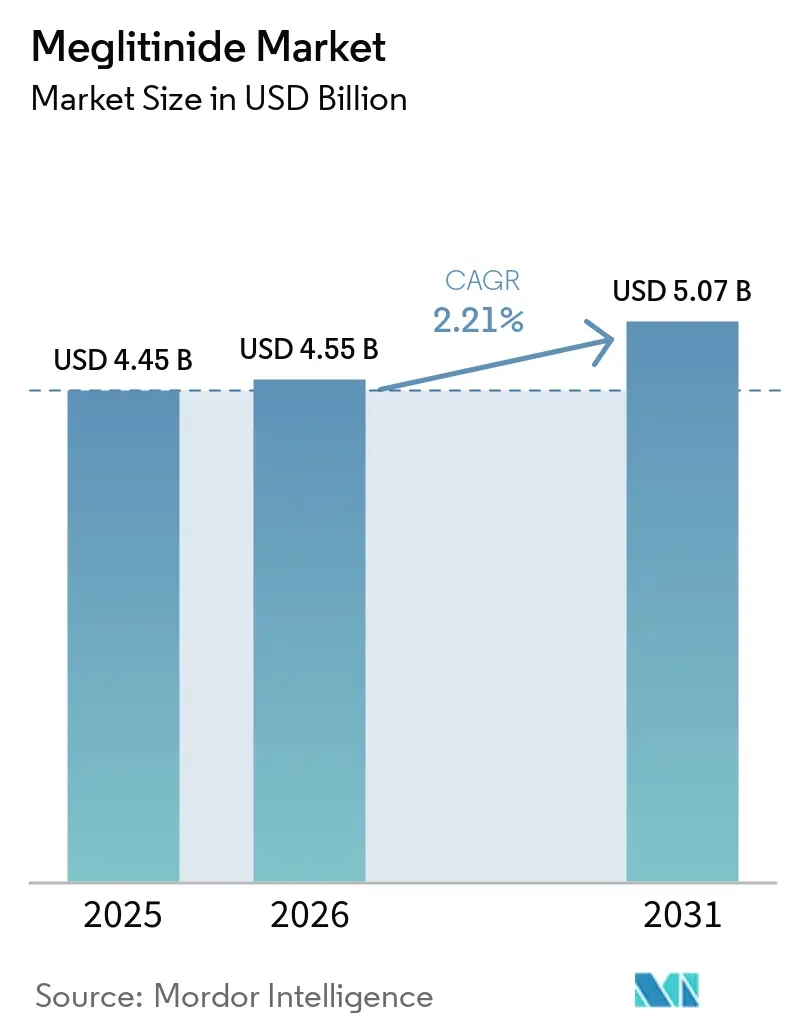
The Meglitinide Market size was valued at USD 4.45 billion in 2025 and is estimated to grow from USD 4.55 billion in 2026 to reach USD 5.07 billion by 2031, at a CAGR of 2.21% during the forecast period (2026-2031).
The Meglitinides market remains a mature treatment category, driven by its position as a cost-effective oral therapy for meal-related glucose control. The growing prevalence of type 2 diabetes supports demand, particularly in middle-income countries where affordability influences prescribing decisions. Demand also persists among patients requiring short-acting medication around meals or those unable to use newer therapies. During the forecast period, generic competition, reimbursement coverage, and public procurement will likely have a greater impact than product innovation, while wealthier healthcare systems increasingly favor treatments with established cardiovascular and renal benefits.
Key Report Takeaways
- By molecule, repaglinide held 53.45% of the Meglitinides market share in 2025, while mitiglinide is projected to grow at a CAGR of 3.45% through 2031.
- By product status, generic formulations held 65.78% of the Meglitinides market share in 2025, while originator products are projected to grow at a CAGR of 4.67% through 2031.
- By product type, single-ingredient products accounted for 72.45% of the Meglitinides market size in 2025, while fixed-dose combination products are projected to grow at a CAGR of 4.85% through 2031.
- By distribution channel, retail and community pharmacies accounted for 48.95% of the Meglitinides market size in 2025, while online pharmacies are projected to grow at a CAGR of 5.23% through 2031.
- By geography, North America held 39.88% of the global market in 2025, while Asia-Pacific is projected to grow at a CAGR of 5.51% through 2031.
Note: Market size and forecast figures in this report are generated using Mordor Intelligence’s proprietary estimation framework, updated with the latest available data and insights as of January 2026.
Global Meglitinide Market Trends and Insights
Drivers Impact Analysis*
| DRIVER | (~) % IMPACT ON CAGR FORECAST | GEOGRAPHIC RELEVANCE | IMPACT TIMELINE |
|---|---|---|---|
| Rising type 2 diabetes burden | +0.8% | Global, with peak impact in Asia-Pacific and South America | Long term (≥ 4 years) |
| Need for postprandial glucose control | +0.6% | Global, particularly Asia-Pacific and North America | Medium term (2-4 years) |
| Continued use of oral antidiabetic therapies | +0.5% | Global, strongest in Asia-Pacific, South America, the Middle East, and Africa | Long term (≥ 4 years) |
| Role in combination therapy | +0.5% | Asia-Pacific and South Asia, growing in South America, the Middle East, and Africa | Medium term (2-4 years) |
| Meal-responsive glycemic management | +0.5% | Global, strongest in Japan, South Korea, and Germany | Medium term (2-4 years) |
| Availability of low-cost generic products | +0.6% | Asia-Pacific, with spillover to the Middle East, Africa, and South America | Short term (≤ 2 years) |
| Source: Mordor Intelligence | |||
Rising Type 2 Diabetes Burden
The increasing prevalence of type 2 diabetes continues to drive demand in the Meglitinides market, particularly in countries where affordability and treatment access are key priorities. The IDF estimated that 589 million adults aged 20 to 79 years were living with diabetes in 2025, representing 11.11% of the global adult population. This figure is projected to reach 853 million by 2050. Middle-income countries recorded the highest age-standardized diabetes prevalence at 11.46%, positioning China, India, and Brazil as key demand centers. The IDF also reported diabetes prevalence of 12.26% in urban areas and 9.23% in rural areas. This gap highlights the importance of peri-urban primary care centers in diabetes management and treatment delivery.[1]
Repaglinide remains competitive due to its affordability, oral administration, and established use among general practitioners. Low-cost generic products remain relevant where patient out-of-pocket spending or payer budget limitations restrict access to newer medicines. China’s 2025 National Reimbursement Drug List includes repaglinide, nateglinide, and mitiglinide calcium as Category B drugs. This reimbursement coverage supports access across public hospitals and community health centers. The Meglitinides market benefits when national reimbursement systems continue to support established oral treatment options, particularly in cost-sensitive healthcare systems.
Need for Postprandial Glucose Control
Meglitinides support patients who require glucose control aligned with meal timing. Their short-acting, glucose-dependent mechanism helps manage postprandial glucose excursions that may persist with longer-acting therapies. The American Diabetes Association recommends reassessing meglitinide doses when initiating a new glucose-lowering medicine to manage treatment burden and hypoglycemia risk.
The drug class remains relevant for patients whose meal patterns or clinical requirements favor short-acting therapy. Meal-responsive treatment is particularly applicable in Japan, China, South Korea, and Germany, where physician familiarity and patient needs support continued use. In Japan, 41.6% of physicians surveyed in September 2025 identified mitiglinide as their most frequently prescribed rapid-acting insulin secretagogue. Mitiglinide ranked ahead of repaglinide at 35.5% and nateglinide at 22.9%. Its selective Kir6.2/SUR1 channel activity and lower within-class hypoglycemia incidence support its use in older patients and those with cardiovascular concerns.[2] These clinical attributes enable the Meglitinides market to retain a focused role as treatment algorithms evolve.
Continued Use of Oral Antidiabetic Therapies
Oral therapies remain important for many patients initiating treatment for type 2 diabetes. A 2025 study of 964,914 U.S. adults initiating glucose-lowering therapy found that GLP-1 receptor agonist prescribing increased 13.66-fold in incidence rate between 2019 and May 2024. However, GLP-1 receptor agonists accounted for only 18% of new treatment initiators by mid-2024.[3]
Metformin, generic sulfonylureas, and meglitinides therefore continue to serve a substantial patient base in primary care. Generic repaglinide is priced below newer branded medicines, supporting its position in cost-conscious treatment plans. The supplied evidence placed monthly semaglutide costs at USD 950, compared with USD 15 to USD 40 for generic repaglinide. Oral administration also supports adoption where injectable therapies are not preferred or accessible. This cost difference is significant in countries with high out-of-pocket medicine spending. Public procurement, essential-medicine policies, and primary care prescribing consequently support the Meglitinides market across Africa, Southeast Asia, and South America.
Role in Combination Therapy
Meglitinides can be used with metformin, thiazolidinediones, DPP-4 inhibitors, and basal insulin, supporting their role in combination regimens. Fixed-dose combinations of repaglinide and metformin combine meal-related insulin secretion with reduced hepatic glucose output in a single tablet. This format can reduce the pill burden for patients managing multiple medicines. These combinations are particularly relevant in South Asia, Southeast Asia, South America, the Middle East, and Africa, where simpler oral regimens can improve adherence. Fixed-dose combination products are forecast to expand at a CAGR of 4.85% through 2031, making them the fastest-growing product type in the Meglitinides market.
Their growth reflects the requirements of primary care settings managing large patient populations. Safety oversight remains important for combination medicines. India is set to ban 35 irrational fixed-dose combinations in 2025, creating a stricter compliance environment for manufacturers. The supplied evidence did not identify repaglinide combinations among the banned products.
Restraints Impact Analysis*
| RESTRAINT | (~) % IMPACT ON CAGR FORECAST | GEOGRAPHIC RELEVANCE | IMPACT TIMELINE |
|---|---|---|---|
| Hypoglycemia risk | -0.5% | North America and Europe, amplified in geriatric populations | Medium term (2-4 years) |
| Weight gain concerns | -0.3% | North America, Europe, and Australia | Medium term (2-4 years) |
| Frequent meal-dependent dosing | -0.4% | Global, particularly North America and Europe | Short term (≤ 2 years) |
| Competition from newer antidiabetic therapies | -0.3% | North America and Europe, growing in premium Asia-Pacific segments | Long term (≥ 4 years) |
| Source: Mordor Intelligence | |||
Hypoglycemia Risk
Hypoglycemia remains a key clinical constraint on the broader adoption of meglitinides. The American Diabetes Association advises clinicians to reassess meglitinide dosages when adding another glucose-lowering medication. This guidance is particularly relevant in markets where clinicians closely follow updated treatment standards. Older patients require careful monitoring, as hypoglycemic events can lead to falls, hospitalization, and other complications.
The need for meal-linked dosing also increases the treatment burden for patients with irregular eating patterns. However, this limitation does not result in the complete withdrawal of the drug class. Physicians may prefer mitiglinide because of its relatively lower within-class incidence of hypoglycemia. Concerns regarding weight gain and frequent meal-dependent dosing reduce the convenience of meglitinides in North America, Europe, and Australia. Therefore, the meglitinides market relies on appropriate patient selection and careful dose management rather than broad first-line adoption. The class continues to serve specific patient segments requiring short-acting glucose control.
Competition From Newer Antidiabetic Therapies
GLP-1 receptor agonists and SGLT2 inhibitors are reshaping treatment decisions in high-income markets. A 2025 U.S. analysis showed that GLP-1 receptor agonist use among new type 2 diabetes treatment initiators reached 18% by May 2024. During the same period, SGLT2 inhibitor use increased to 7%. These therapies can displace older oral agents when insurance coverage and patient affordability support adoption.
The shift is most prominent among commercially insured and premium patient segments. Novo Nordisk is expected to launch a Wegovy pill in the United States in January 2026, expanding oral GLP-1 treatment options. The company is also expected to enter a partnership with Vivtex Corp. in February 2026, valued at up to USD 2.1 billion, to develop oral delivery technologies for obesity and diabetes medications. These initiatives are likely to increase competitive pressure on established oral antidiabetic drug classes. However, the high cost of newer therapies continues to limit substitution in price-sensitive settings. The meglitinides market retains a role for patients with kidney disease tolerance requirements, irregular meal patterns, or complex treatment regimens requiring an affordable, short-acting option.
*Our forecasts treat driver/restraint impacts as directional, not additive. The impact forecasts reflect baseline growth, mix effects, and variable interactions.
Segment Analysis
By Molecule: Repaglinide Leads Through Generic Availability, While Mitiglinide Gains Ground
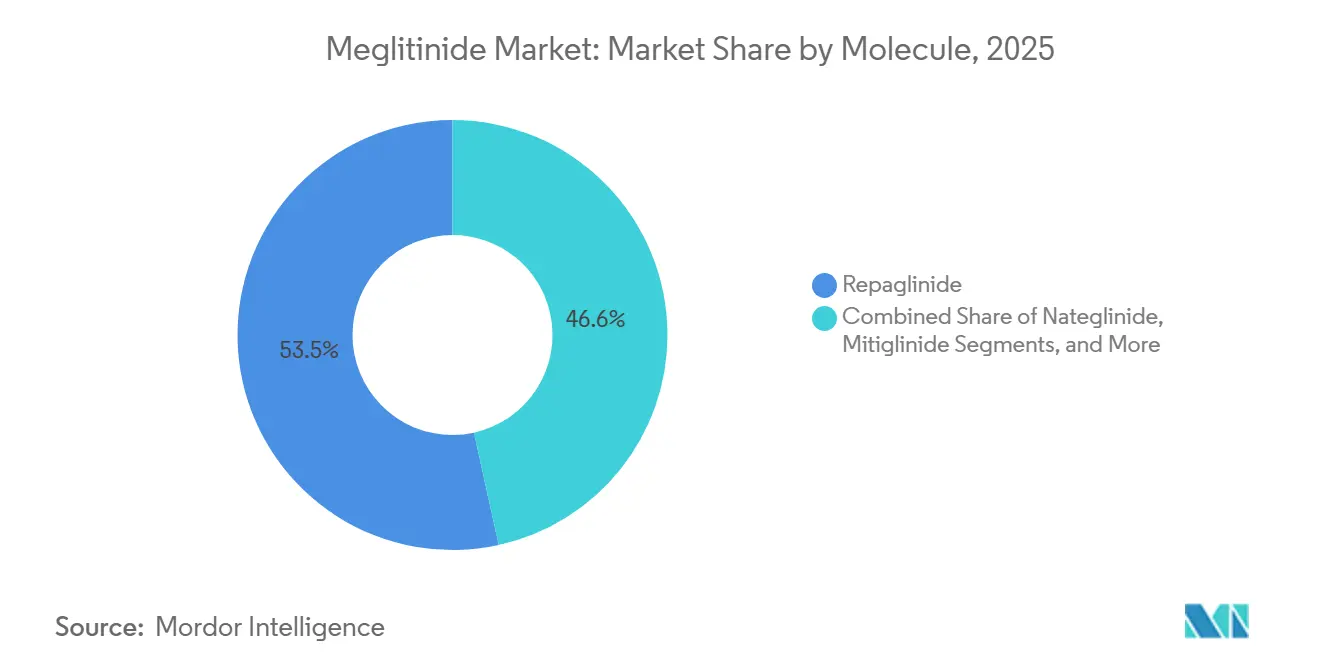
Repaglinide held 53.45% of the meglitinides market by molecule in 2025. Broad generic availability, national formulary inclusion, and an established clinical track record supported its leading position. Its availability as monotherapy and in fixed-dose combinations further strengthened adoption. The product supports meal-related insulin secretion with relatively rapid clearance.
Nateglinide held a smaller market share but addressed demand from patients who benefit from a short half-life and lower interaction potential. As a phenylalanine derivative, it provides a rapid insulin response. Mitiglinide is projected to record the highest growth among molecules, at a CAGR of 3.45% through 2031. A September 2025 physician survey in Japan ranked mitiglinide first among rapid-acting insulin secretagogues, while China retained mitiglinide calcium on its 2025 reimbursement list.

By Product Status: Generics Lead, While Originator Products Retain Selected Demand
Generic formulations held 65.78% of the meglitinides market by product status in 2025. Patent expirations and established bioequivalence pathways supported generic adoption across key molecules. Active pharmaceutical ingredient supply from India and China reinforced price competition. In the United States, Macleods Pharmaceuticals, Aurobindo Pharma, Chartwell RX LLC, and Rising Pharma Holdings supply repaglinide products, while CMS pricing data showed a price of USD 0.09 per tablet in July 2026.
Originator products are forecast to grow at a CAGR of 4.67% through 2031, driven by sustained demand in selected countries. Glufast retains brand recognition in Japan, while hospital tenders and physician familiarity support demand in Germany and Brazil. NovoNorm remains the originator reference product for repaglinide in the European Union. European pharmacovigilance and manufacturing requirements also maintain quality standards for originator and generic medicines.
By Product Type: Single-Ingredient Products Lead, and Fixed-Dose Combinations Expand
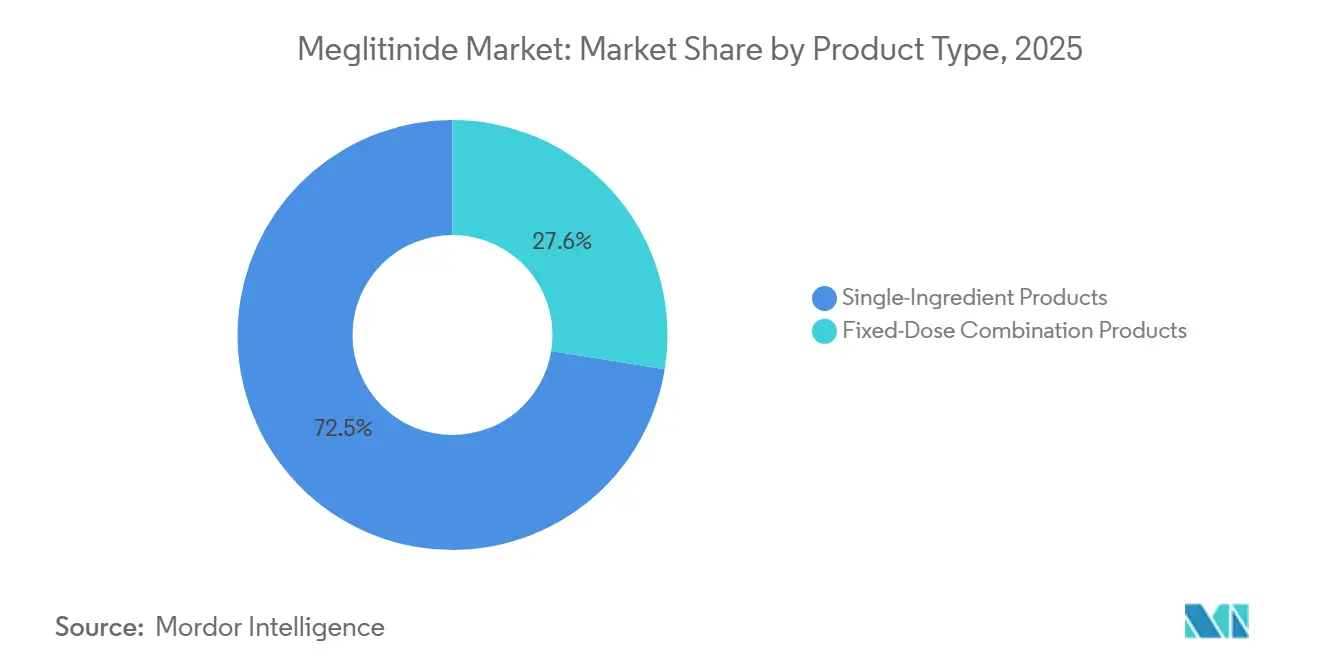
Single-ingredient products accounted for 72.45% of the meglitinides market size in 2025. Their leading position reflects the historical use of meglitinides as standalone therapies. Physicians can adjust dosing based on patients' meal patterns and glucose targets. These products remain widely used in Japan, North America, and Europe, supported by American Diabetes Association guidance on dose reassessment with other glucose-lowering medicines.
Fixed-dose combinations are forecast to grow at a CAGR of 4.85% through 2031. Repaglinide and metformin tablets are available in 0.5 mg/250 mg, 1 mg/500 mg, and 2 mg/500 mg strengths. These combinations integrate prandial insulin secretion with reduced hepatic glucose output in a single dose. Demand is concentrated in emerging markets, where primary care providers favor simplified oral regimens that can improve adherence.
By Distribution Channel: Retail Pharmacies Lead, While Online Pharmacies Grow Faster
Retail and community pharmacies accounted for 48.95% of the market in 2025. Their leading role reflects the chronic and predominantly outpatient nature of diabetes care. Community pharmacies provide essential dispensing services in China, India, Japan, and Brazil. Their proximity to primary care clinics and reimbursement coverage supports repeat dispensing for long-term therapy.
Online pharmacies are forecast to expand at a CAGR of 5.23% through 2031. Telemedicine and repeat online prescriptions are increasing direct-to-patient dispensing among stable diabetes patients. Digital channels provide convenience for patients requiring recurring refills. Hospital pharmacies will retain a role in specialist care but may lose share as outpatient management expands, while mail-order pharmacies served 360,000 repaglinide claims for 92,000 Medicare Part D beneficiaries in the United States in 2024.
Geography Analysis
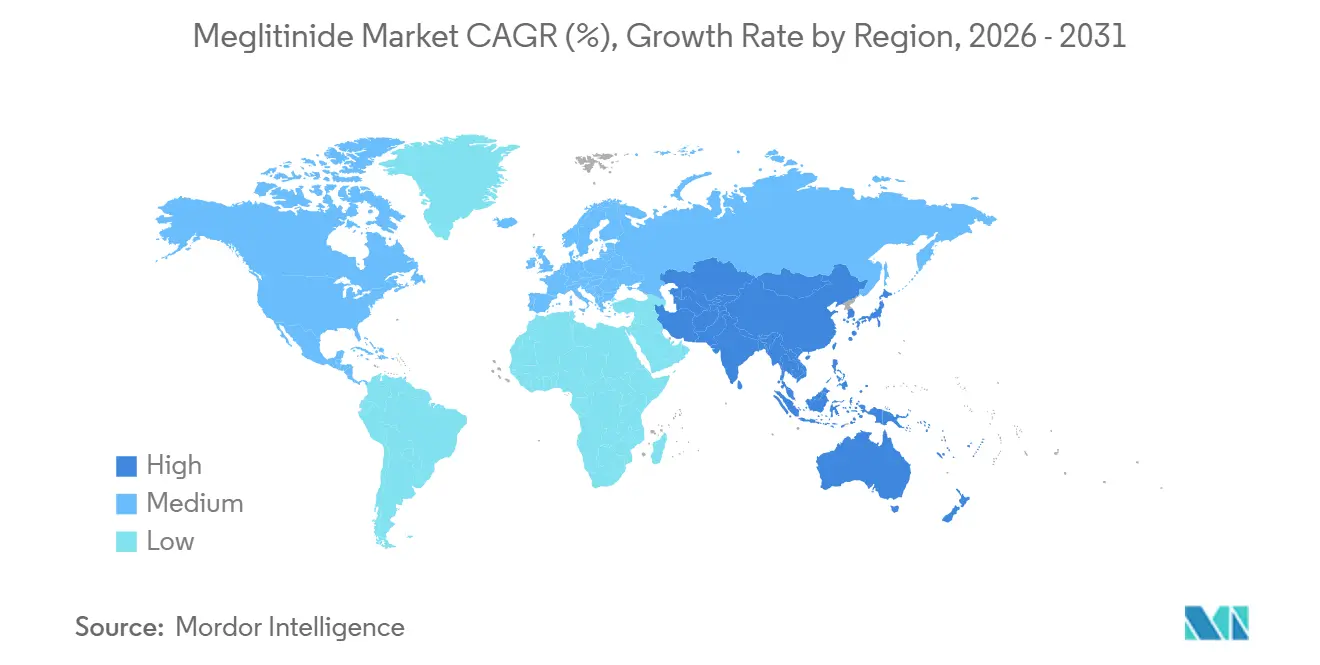
North America is expected to account for 39.88% of the global meglitinides market in 2025. The United States remains the region’s primary revenue contributor, supported by generic product availability and a broad community pharmacy patient base. Six approved repaglinide manufacturers are expected to serve the U.S. market. By mid-2026, repaglinide prices are projected at USD 0.09–0.10 per tablet, reinforcing its position as a low-cost oral treatment option.
The region faces mounting pressure from updated treatment guidelines and the increased adoption of GLP-1 receptor agonists and SGLT2 inhibitors. The ADA has narrowed the role of meglitinides and emphasized the reassessment of hypoglycemia risk. Canada and Mexico provide smaller but stable volumes through public drug benefit programs. Europe remains stable, supported by formulary utilization in Germany, France, and the United Kingdom, which issued a Tier 2 repaglinide supply notification in August 2025 for 500 mcg, 1 mg, and 2 mg tablets.
Asia-Pacific is forecast to be the fastest-growing region, registering a CAGR of 5.51% through 2031. Japan supports demand through established mitiglinide use, while China provides public reimbursement for all three primary molecules. India and Southeast Asia drive uptake of repaglinide-metformin combinations. The IDF Western Pacific region included 215 million adults with diabetes in 2024, while the Middle East and North Africa is projected to record 95% growth in diabetes cases by 2050. Brazil and Argentina support demand through public procurement of low-cost oral treatments.
Competitive Landscape
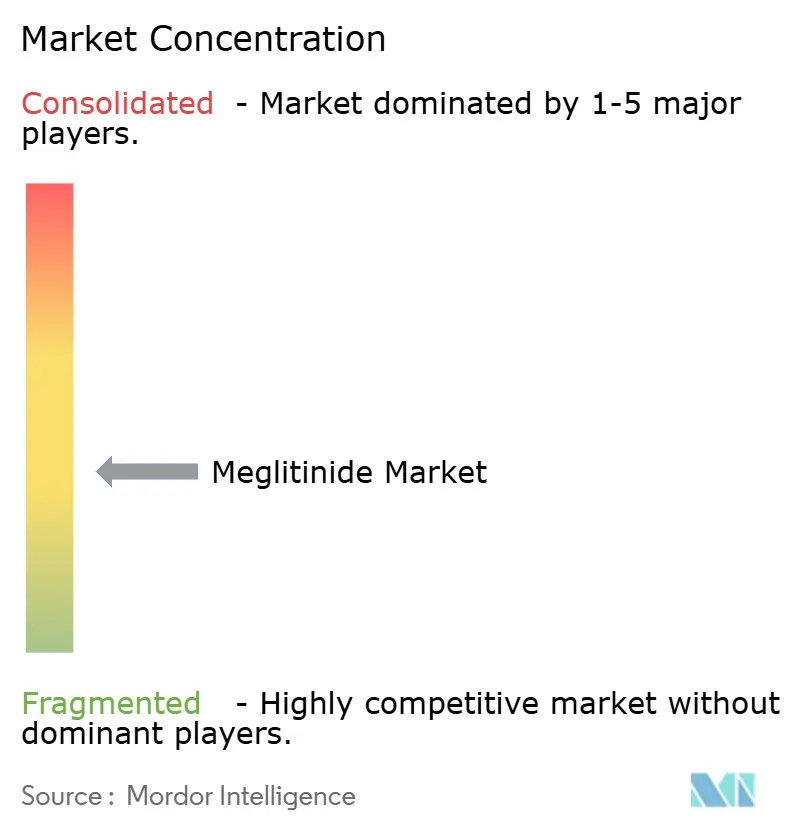
The Meglitinides market is moderately fragmented by manufacturer count, especially within generic products. Competition is nonetheless concentrated around a small number of molecules and national markets. In the United States, 6 approved manufacturers supply generic repaglinide, including Beijing Foyou Pharma, Elixir Pharmaceuticals, Hansoh Pharma, Kissei Pharmaceuticals, Novo Nordisk, Teva Pharmaceuticals, Takeda, and Viatris. These suppliers compete primarily on price and supply continuity. U.S. pricing data showed a narrow repaglinide range of USD 0.08 to USD 0.10 per tablet.
In Japan, Kissei Pharmaceutical remains associated with the Glufast originator brand, while domestic generic manufacturers offer orally disintegrating tablets. Japan's drug-price revisions encourage cost control while preserving access to the molecule. Teva maintains a European presence through Repaglinide Teva. Viatris supplies repaglinide 2 mg tablets in the United Kingdom. The 2025 United Kingdom supply shortage increased the importance of manufacturing resilience and dependable distribution.
Hansoh Pharmaceutical updated prescribing information for its repaglinide tablets in August 2025 to align with the China Pharmacopeia 2025 edition. Novo Nordisk launched an oral Wegovy pill in the United States in January 2026, widening competitive pressure from newer oral therapies. Novo Nordisk also formed its February 2026 partnership with Vivtex to develop oral delivery technologies for obesity and diabetes medicines. Companies in the Meglitinides industry are therefore focused on regulatory compliance, supply reliability, and targeted distribution rather than new molecule development.
Meglitinide Industry Leaders
-
Elixir Pharmaceuticals
-
Novo Nordisk
-
Teva Pharmaceuticals
-
Takeda
-
Viatris
- *Disclaimer: Major Players sorted in no particular order
Recent Industry Developments
- February 2026: Novo Nordisk partnered with Vivtex Corp in a deal valued at up to USD 2.1 billion to develop next-generation oral delivery technologies for obesity and diabetes drugs. The collaboration aimed to improve biologics’ oral bioavailability and intensify competition among established oral antidiabetic drug classes.
- December 2025: China’s National Healthcare Security Administration published the 2025 National Reimbursement Drug List, retaining repaglinide, nateglinide, and mitiglinide calcium as Category B reimbursable drugs.
- August 2025: The United Kingdom Department of Health and Social Care issued a Tier 2 supply notification for repaglinide 500 mcg, 1 mg, and 2 mg tablets. The 500 mcg and 1 mg strengths faced stockouts from late August through early December 2025, while the 2 mg strength remained in limited supply.
Global Meglitinide Market Report Scope
As per the scope of the report, Meglitinides (also known as glinides) are a class of oral medications used to manage Type 2 diabetes mellitus. They act as short-acting insulin secretagogues, meaning they directly stimulate the beta cells in the pancreas to release more insulin.
The Meglitinide Market is segmented by molecule, product status, product type, distribution channel, and geography. By molecule, the market includes repaglinide, nateglinide, mitiglinide, and other meglitinide analogs. By product status, the market is segmented into originator products and generic products. By product type, the market is categorized into single-ingredient products and fixed-dose combination products. By distribution channel, the market is segmented into hospital pharmacies, retail/community pharmacies, specialty/mail-order pharmacies, and online pharmacies. By geography, the market is analyzed across North America, Europe, Asia-Pacific, the Middle East and Africa, and South America. The report also covers the estimated market sizes and trends for 17 countries across major regions globally. The report offers market sizes and forecasts in terms of value (USD) for the above segments.
By Molecule
| Repaglinide |
| Nateglinide |
| Mitiglinide |
| Other Meglitinide Analogues |
By Product Status
| Originator |
| Generic |
By Product Type
| Single-Ingredient Products |
| Fixed-Dose Combination Products |
By Distribution Channel
| Hospital Pharmacies |
| Retail / Community Pharmacies |
| Specialty / Mail-Order Pharmacies |
| Online Pharmacies |
By Geography
| North America | United States |
| Canada | |
| Mexico | |
| Europe | Germany |
| United Kingdom | |
| France | |
| Italy | |
| Spain | |
| Rest of Europe | |
| Asia-Pacific | China |
| India | |
| Japan | |
| Australia | |
| South Korea | |
| Rest of Asia-Pacific | |
| Middle East and Africa | GCC |
| South Africa | |
| Rest of Middle East and Africa | |
| South America | Brazil |
| Argentina | |
| Rest of South America |
| By Molecule | Repaglinide | |
| Nateglinide | ||
| Mitiglinide | ||
| Other Meglitinide Analogues | ||
| By Product Status | Originator | |
| Generic | ||
| By Product Type | Single-Ingredient Products | |
| Fixed-Dose Combination Products | ||
| By Distribution Channel | Hospital Pharmacies | |
| Retail / Community Pharmacies | ||
| Specialty / Mail-Order Pharmacies | ||
| Online Pharmacies | ||
| By Geography | North America | United States |
| Canada | ||
| Mexico | ||
| Europe | Germany | |
| United Kingdom | ||
| France | ||
| Italy | ||
| Spain | ||
| Rest of Europe | ||
| Asia-Pacific | China | |
| India | ||
| Japan | ||
| Australia | ||
| South Korea | ||
| Rest of Asia-Pacific | ||
| Middle East and Africa | GCC | |
| South Africa | ||
| Rest of Middle East and Africa | ||
| South America | Brazil | |
| Argentina | ||
| Rest of South America | ||
Key Questions Answered in the Report
What is the projected value of the meglitinides market by 2031?
The meglitinides market is projected to reach USD 5.07 billion by 2031, from USD 4.55 billion in 2026, at a CAGR of 2.21%. This reflects continued demand for accessible oral treatment, even as newer therapies widen the range of options.
Which meglitinide molecule held the leading share in 2025?
Repaglinide led the molecule segment with a 53.45% share in 2025. Its position is supported by broad generic availability, established formulary access, and use in both single-ingredient and combination formats.
Which product type is growing fastest for meglitinides?
In the Meglitinides market, fixed-dose combination products are projected to grow at a CAGR of 4.85% through 2031. Their growth reflects demand for simpler oral regimens that can reduce pill burden in primary care treatment.
Why are online pharmacies growing in meglitinide distribution?
Online pharmacies are projected to grow at a CAGR of 5.23% through 2031. Telemedicine, repeat prescriptions, and direct-to-patient dispensing make this route more useful for stable long-term diabetes management.
Which region is expected to grow fastest through 2031?
Asia-Pacific is forecast to grow at a CAGR of 5.51% through 2031. The region combines a high diabetes burden, reimbursed access in China, established mitiglinide use in Japan, and combination therapy demand.
What limits wider use of meglitinides?
Hypoglycemia risk, meal-dependent dosing, weight concerns, and competition from GLP-1 receptor agonists and SGLT2 inhibitors limit broader uptake. Careful patient selection remains important when prescribers consider the class.