
Medical Recruitment Market Size and Share
Market Overview
| Study Period | 2020 - 2031 |
|---|---|
| Forecast Data Period | 2026 - 2031 |
| Historical Data Period | 2020 - 2024 |
| Growth Rate | 4.11 % |
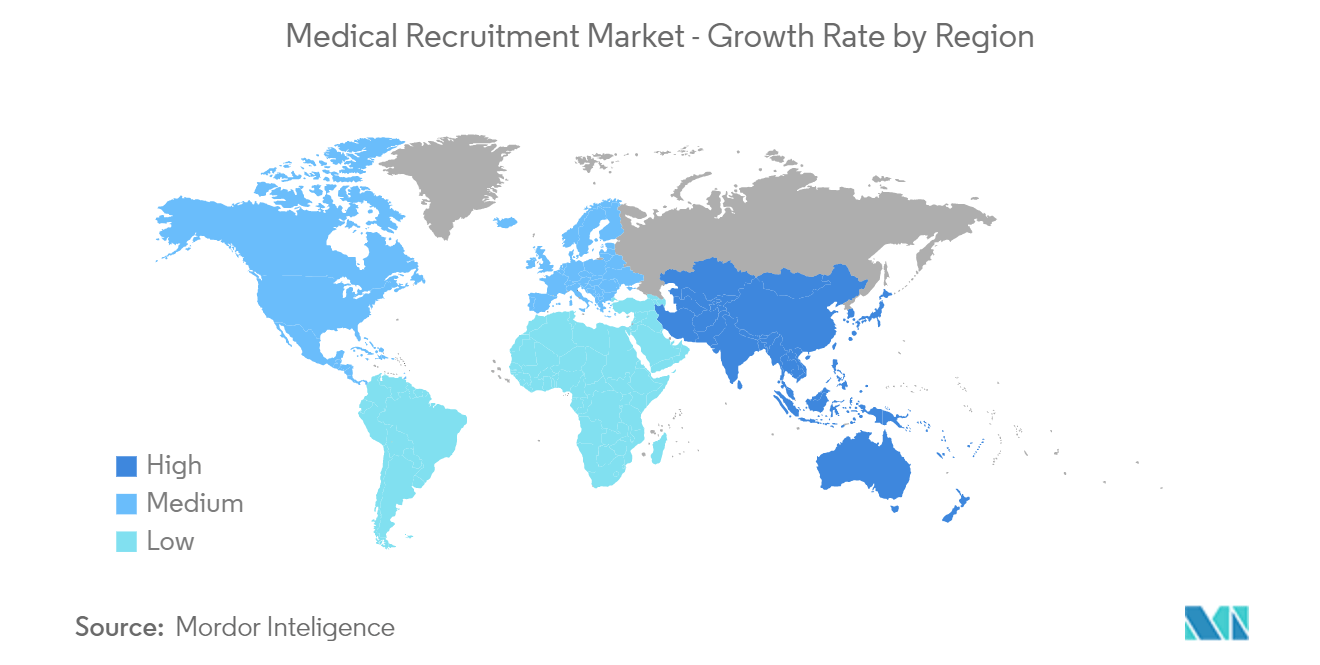
| Fastest Growing Market | Asia-Pacific |
| Largest Market | North America |
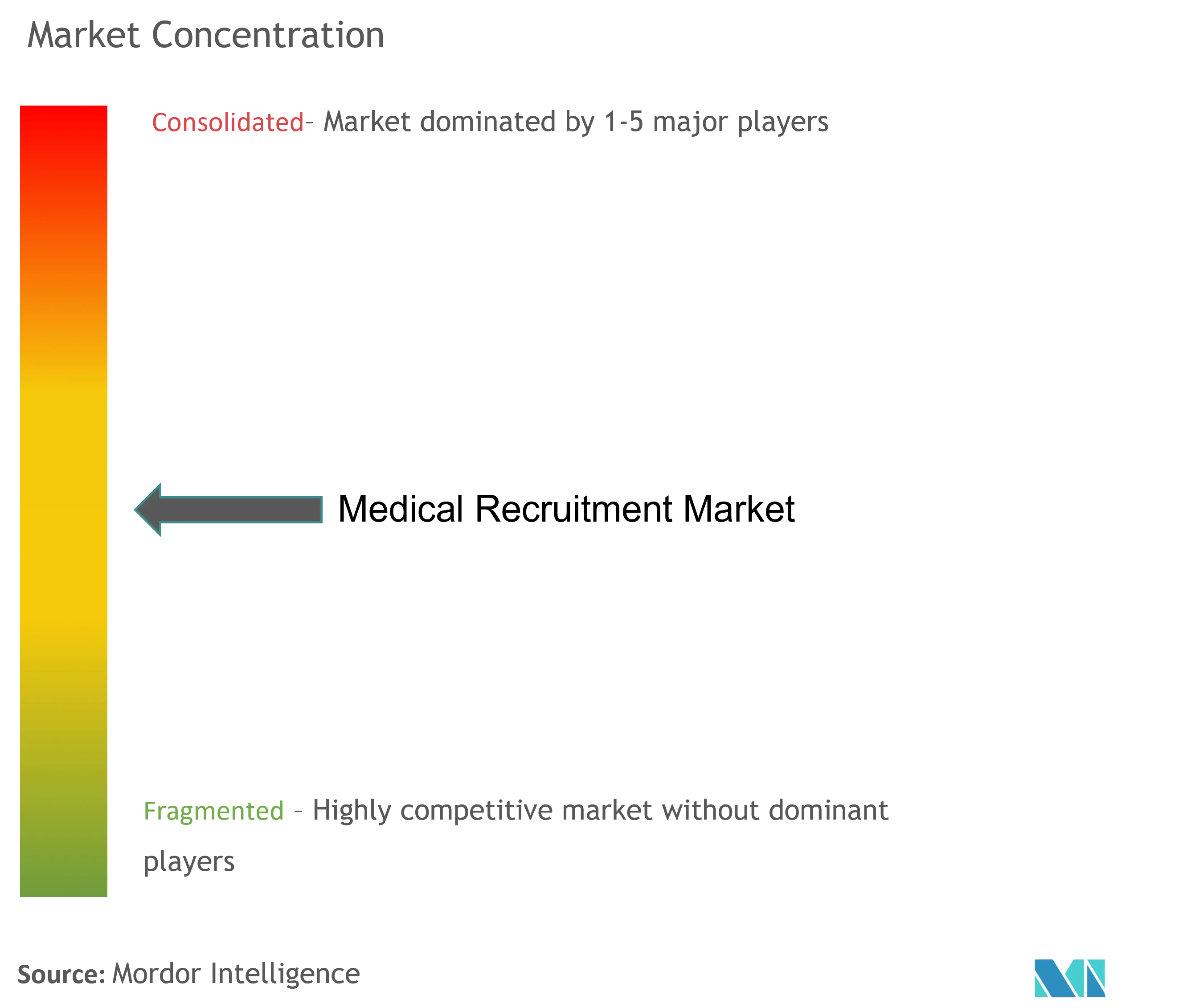
| Market Concentration | Medium |
Major Players *Disclaimer: Major Players sorted in no particular order Image © Mordor Intelligence. Reuse requires attribution under CC BY 4.0. | |
Medical Recruitment Market Analysis by Mordor Intelligence
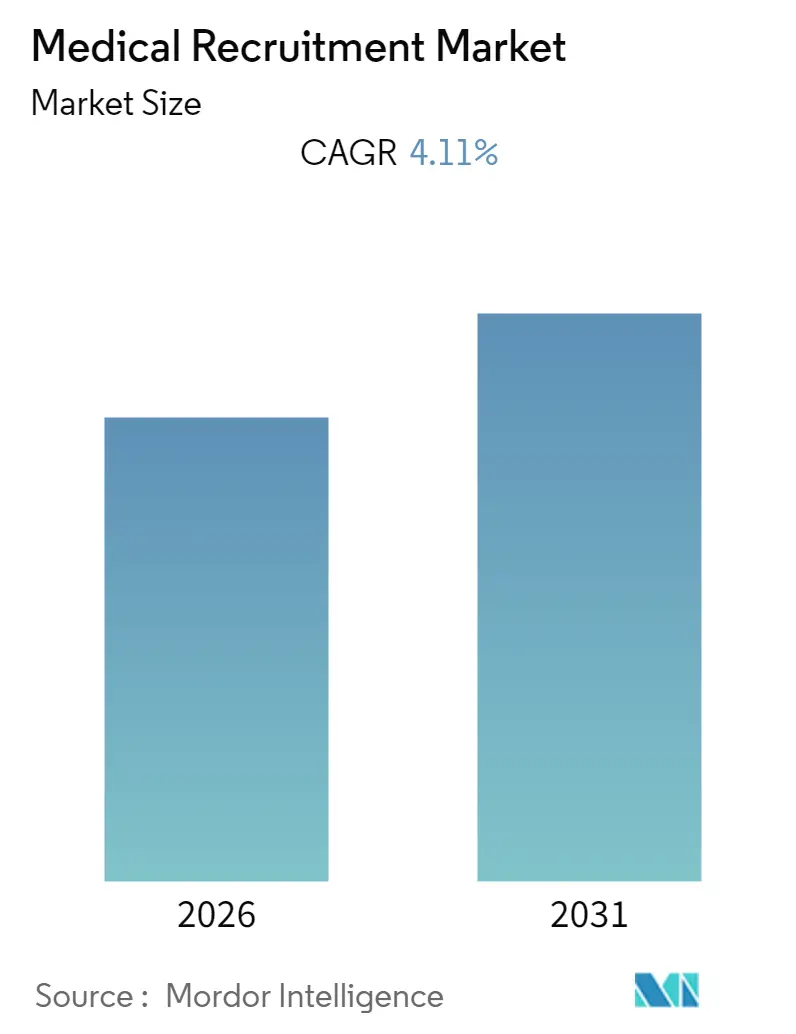
The Medical Recruitment Market size is expected to register a CAGR of 4.11% during the forecast period.
The COVID-19 disease has had a significant impact on the medical recruitment market initially during the pandemic due to the rising job opportunities in various medical centers. For instance, according to the study published in Frontiers in Public Health in April 2021, there were many career opportunities in the medical industry during the COVID-19 epidemic. Most jobs were in testing facilities, the pharmaceutical industry, and vaccination. Although there was a slight decline in the market during the initial phases of the pandemic due to stringent lockdowns globally, the market has gained a significant pace during the late phases of the pandemic.
Factors such as the surge in demand for medical professionals across the globe, rising numbers of healthcare services, and rising healthcare centers such as super specialty and multi-specialty hospitals are expected to increase the market growth in the upcoming future. For instance, in June 2021, Park Group of Hospitals went under rapid expansion, making it North India's one of the first individually owned, fastest-growing chains of super-specialty hospitals, including cancer and tertiary level care, where patients continue to flock seeking medical intervention and care in the state-of-the-art facility for various ailments. Similarly, in December 2021, the government of Telangana sanctioned INR 1,100 crore (USD 132 million) for the construction of a super specialty hospital in Warangal as part of its Health City plans. According to government order (GO) 158, the new super specialty hospital will have 24 floors and 2,000 beds. Of these 2,000 beds, 800 will offer super specialty services. The specialties include ENT, Surgery, Dermatology, Orthopaedics, General Medicine, cardio, urology, neuro, etc. Therefore, the rising demand for healthcare services led to the rising number of super specialty and multispeciality hospitals, which creates the need for the recruitment of healthcare and other medical professionals and is thereby expected to drive market growth.
Furthermore, an increase in the geriatric population will eventually drive the demand for several medications and healthcare services, as this age group is more vulnerable to various metabolic and lifestyle disorders, diminished bodily functions, cognitive impairment, and less mobility. Also, aging is the primary factor driving the market growth for the treatment. For instance, according to the United Nations Department of Economics and Social 2022 report, there were 771 million people aged 65 years or over globally in 2022. The older population is projected to reach 994 million by 2030 and 1.6 billion by 2050. Hence, the rise in the geriatric population is anticipated to drive market growth due to the rising establishment of hospitals and their services,
In addition, in January 2022, Healthcare staffing provider Health Advocates Network Holdings Corp. raised USD 8.4 million funding round that includes a co-investment by management. Such funding initiatives from the key market players are also expected to drive market growth due to increased medical recruitment services.
Hence, the factors mentioned above, such as a surge in demand for medical professionals and the rising number of healthcare services, are expected to increase market growth in the future. However, the overall shortage of available talent will likely hinder the market's growth.
Note: Market size and forecast figures in this report are generated using Mordor Intelligence’s proprietary estimation framework, updated with the latest available data and insights as of 2026.
Global Medical Recruitment Market Trends and Insights
Pharmaceutical and Biotechnology are Expected to Hold a Significant Market Share Over the Forecast Period
The factors driving the segment's growth include rising R&D expenditure by pharmaceutical and biotechnology companies, the surge in demand for drug development for chronic disorders, and the rising investments by the national governments in pharmaceutical and biotechnology research and development for developing novel therapies for various chronic disorders.
The increased R&D investment by biopharmaceutical companies is also contributing to the growth of the segment. There is a huge increase in R&D spending and the introduction of new drugs in developed nations. For instance, according to the EFPIA, the estimated R&D expenditure of European pharmaceutical companies in 2021 was EUR 41,500 million (USD 45,213 million). Therefore, such a huge R&D expenditure is expected to drive market growth due to the increased adoption of medical professionals in development, testing, and scaling in research, driving the market growth.
Moreover, the rising initiatives from the key market players are also driving the segment growth. For instance, in May 2022, BioSpectrum Asia launched a unique job portal, BioSpectrum Jobs. This provides information about the latest job openings across APAC in leading companies such as Merck, Novartis, Novotech, Labcorp, DSM, Thermo Fisher, Piramal Pharma, Eli Lilly, and Sartorius, among others. Furthermore, in September 2021, Syneos Health acquired StudyKIK, technology-enabled clinical trial recruitment and retention company. This will lead to a rise in recruitment services by the recruitment companies, driving the market growth due to a rise in the adoption of medical recruitment services
Therefore, the rising research expenditures and rising grants for national and international governments on research and training are all expected to boost segment growth over the forecast period.
North America is Expected to Dominate the Market Over the Forecast Period
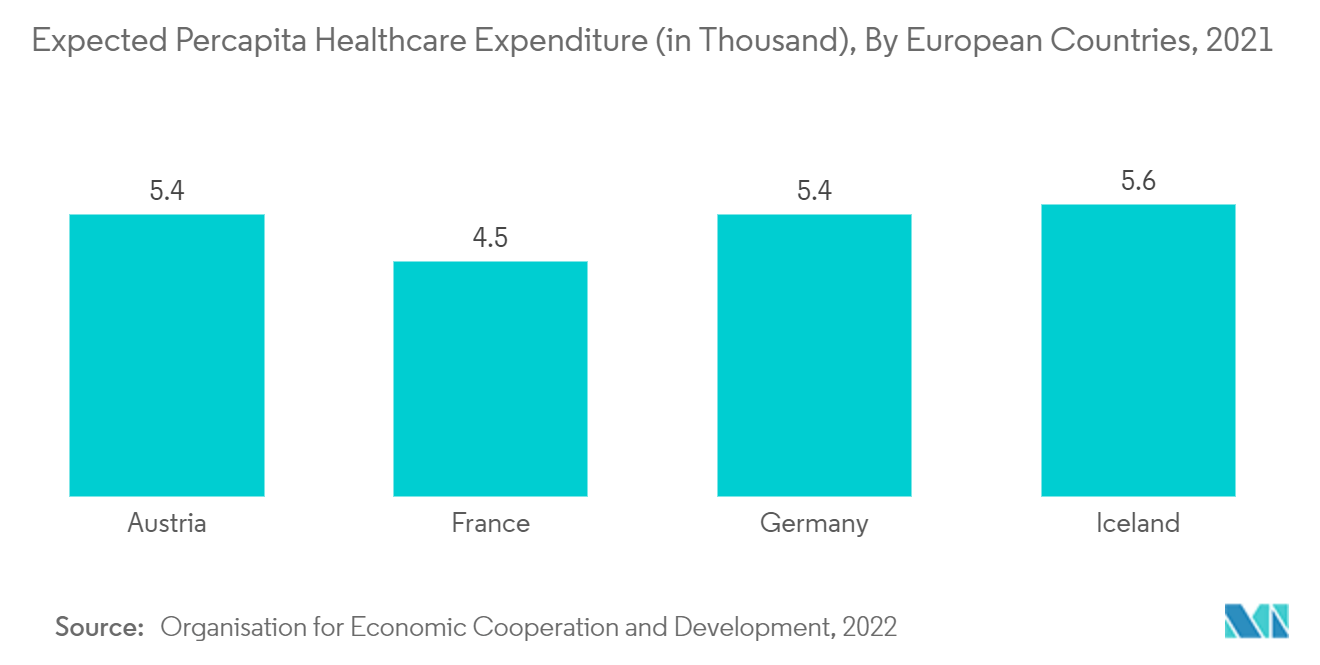
The North American region is likely to dominate the market due to the factors such as advancements and launches in healthcare facilities and the growing number of healthcare service providers in the region coupled with increasing healthcare funding. For instance, in February 2022, New Jersey-based Hackensack Meridian Health, an integrated health network, launched a Hospital At Home at JFK University Medical Center in Edison. This helps provide hospital-based services by delivering care at the patient's home. Such initiatives bolster market growth due to the rising adoption of medical recruitment for providing hospital services to patients at home.
In addition, rising initiatives from the key market players are expected to drive regional market growth. For instance, in April 2022, AMN Healthcare, a medical staffing firm, joined the American Speech-Language-Hearing Association (ASHA) as a corporate partner. Through their collaboration with AMN Healthcare, ASHA members will be able to reach students and patients with communication impairments better. Such initiatives are driving the market studied in the region due to the increased adoption of medical recruitment services.
Furthermore, increasing government funding is another factor in the growth of the market. For instance, in December 2022, the Government of Canada invested in projects that opened vacancies to internationally educated health professionals to address critical labor shortages in Canadian healthcare. This would increase the market growth by increasing the adoption of medical recruitment services in the region.
Hence, factors such as developed healthcare infrastructure, rising funding and grants from the national governments, and an increased number of hospitals, among others, are collectively expected to drive market growth in this region.
Competitive Landscape
The market is moderately competitive and consists of several major players. The competition in the market is majorly based on the rising initiatives from the market players, such as partnerships and acquisitions. Some companies operating in the market are Accountable Healthcare Staffing, AMN Healthcare, Aya Healthcare, CHG Management Inc., and CCM Recruitment, among others.
Medical Recruitment Industry Leaders
-
Accountable Healthcare Staffing
-
AMN Healthcare
-
Aya Healthcare
-
CHG Management, Inc
-
CCM Recruitment
- *Disclaimer: Major Players sorted in no particular order
Market Opportunities and Future Outlook
Health systems and life-science employers are responding to structural workforce constraints and service expansion, which is opening space for recruitment providers that combine sourcing with workforce intelligence, credentialing, and deployment across home-based care and outpatient models. In March 2026, the World Health Organization published the 2026 edition of National Health Workforce Accounts (NHWA), reinforcing the need for standardized workforce data and planning. That publication supports demand for analytics-enabled recruitment and managed-service models alongside traditional placement services.
A second opportunity area is technology-enabled process compression in hiring and onboarding. Recruiters and clinical leaders continue to face throughput bottlenecks, and a March 2026 survey reported by Business Wire found 76% of healthcare leaders said their organizations cannot keep up with the speed required to implement AI. This creates a near-term execution gap for vendors offering compliant automation (screening, scheduling, and multilingual support) without heavy internal change management. Ongoing investment and platform building by large staffing groups, including workforce intelligence partnerships and capability acquisitions by AMN Healthcare in 2026, also points to integrated, data-driven recruiting stacks that can extend into niche specialties, executive search, and cross-border recruiting, where program design is influenced by policy frameworks such as the WHO Global Code of Practice.
Recent Industry Developments
- June 2026: AMN Healthcare acquired Jaide Health, adding AI-enabled medical interpretation and translation capabilities that extend language access services across the patient journey. The acquisition broadens AMN's service portfolio beyond staffing into technology-enabled support functions that are increasingly bundled with workforce solutions.
- June 2025: Aya Healthcare acquired Locum's Nest, a workforce solutions provider serving the UK National Health Service (NHS). The acquisition expands Aya's geographic footprint and adds an established platform in a major public health system, strengthening its international staffing and recruitment capabilities.
- March 2024: Nomi Health and CHG Healthcare announced a partnership to help streamline care delivery for underserved communities. The collaboration connects care access initiatives with workforce capacity and engagement, supporting demand for recruitment and staffing partners that can mobilize clinicians where coverage gaps persist.
Research Methodology Framework and Report Scope
Market Definition and Coverage
This market covers revenues earned from finding, screening, and placing medical and healthcare professionals through specialist recruitment and staffing providers, including permanent, temporary, and contract placements, plus managed hiring support tied to clinical roles.
Scope exclusions: Payroll-only processing, general HR software licensing, and non-healthcare staffing are excluded from this market sizing.
Segmentation Overview
- By Services
- Recruitment Services
- Managed Services
- Homecare Services
- Specialist Care Services
- By Industry Verticals
- Pharmaceuticals and Biotechnology
- Medical Devices
- Nursing/Healthcare
- Other Industry Verticals
- Geography
- North America
- United States
- Canada
- Mexico
- Europe
- Germany
- United Kingdom
- France
- Italy
- Spain
- Rest of Europe
- Asia-Pacific
- China
- Japan
- India
- Australia
- South Korea
- Rest of Asia-Pacific
- Middle East and Africa
- GCC
- South Africa
- Rest of Middle East and Africa
- South America
- Brazil
- Argentina
- Rest of South America
- North America
Data Sources, Market Sizing, and Validation
Desk Research
Desk research helped us pin down the demand and supply signals behind healthcare hiring activity, and then translate those signals into a structured revenue model. We referenced public datasets such as the US Bureau of Labor Statistics, OECD health workforce indicators, the World Health Organization, and national health ministries and regulators (for licensing and workforce stock), which provided consistent counts and long-run trends. Where relevant, we also used immigration and work-permit statistics, and labor market releases that show vacancy pressure and wage movement for clinical occupations.
On the industry side, we reviewed company filings, annual reports, investor decks, and credible press to understand service mix, client types, and how pricing is described (for example, placement fees versus bill rates for temporary coverage). In addition, our analysts used paid subscriptions for company financials and intelligence, news and financials, patent databases when platforms were mentioned, and a global contracts and tenders database to identify outsourcing signals from large buyers. These desk sources are not exhaustive, and we also used other public references to collect data, validate assumptions, and clarify open questions during the work.
Primary Interviews and Surveys
Primary interviews and surveys were used to test the desk assumptions, especially around fee structures, fill rates, and the split between permanent hiring and short-term coverage. We spoke with staffing executives, operations leaders, and recruiter managers, and also with hospital and clinic HR leads and procurement teams, so we could cross-check what was happening on the provider side and the buyer side across major regions.
Distribution of primary research fieldwork respondents
| Company type | Respondent position | Region |
|---|---|---|
| Top tier: 33% | CXOs: 15% | APAC: 44% |
| Mid tier: 48% | Functional/Unit leaders: 34% | EMEA: 36% |
| Smaller Players: 19% | Managers: 51% | Americas: 20% |
Market-Sizing & Forecasting
Sizing started with a top-down build that reconstructs the addressable hiring pool from healthcare workforce demand indicators and staffing utilization patterns, then converts those into recruiter-addressable revenue. To keep the model grounded, we corroborated the totals using selective bottom-up checks such as sampled agency revenue disclosures, typical fee ranges by role, and a reasonableness check on bill-rate driven temporary staffing spend in key countries.
Key inputs included (illustrative) healthcare job openings and vacancy durations, clinician workforce growth by occupation, hospital capacity and patient load signals that influence staffing intensity, the mix of permanent versus temporary coverage, and typical fee or markup ranges by role seniority. Where some countries lacked clean splits, gaps were handled using proxy ratios from similar labor markets, followed by expert validation and sensitivity testing. For forecasting, we used scenario analysis so the outlook could reflect different paths for workforce shortages, wage inflation, and policy actions that change cross-border hiring, then reconciled those scenarios to the most commonly supported view from the primary inputs.
Data Validation & Update Cycle
Validation was done through repeated cross-checks between model outputs and independent signals, including healthcare employment growth, staffing intensity metrics, and disclosed revenue direction from staffing-focused firms. Outliers were flagged, assumptions were revisited, and follow-up calls were triggered when reported fee ranges or service mix shares did not align across respondent groups. Before sign-off, the model and outputs go through multi-step analyst reviews so arithmetic, conversions, and logic are checked consistently.
The report is refreshed annually, and interim updates are made when material events occur (for example, policy shifts affecting licensing, major reimbursement changes, or a sharp wage move that alters bill rates). Just before delivery, a final update pass is completed so clients receive the most current view supported by the latest available evidence.
Mordor Intelligence's Medical Recruitment Market Size Compared Against Other Published Estimates
Published market sizes for medical recruitment can vary widely because different studies do not always measure the same revenue pool, and they also differ in how they treat geography, currency timing, and what they count as recruitment service revenue versus adjacent HR activity. We also see gaps where older assumptions are maintained even after hiring cycles, wage levels, and temporary staffing use shift.
Payroll-only processing and generic HR software subscriptions sit outside Mordor Intelligence's scope for this market, which is one reason some broader talent management figures can look larger than a recruitment-only estimate. Another common driver is whether homecare and specialist care staffing is included as part of recruitment services, plus whether the model uses aggressive wage and bill-rate escalation without checking it against vacancy and fill-rate realities. Finally, refresh cadence matters because healthcare staffing demand can normalize quickly after a surge, and older base-year structures can distort current-year totals.
Benchmark comparison
| Source | Market Size | Gaps in Research Methodology |
|---|---|---|
| Mordor Intelligence | USD 0.00 B (2026) | |
| Industry Association A | USD 5.40 B (2024) | Uses a broader definition that typically blends recruitment with wider talent management and may mix provider revenues with estimated employer internal hiring spend, which inflates the addressable pool versus agency-earned fees. |
| Regional Consultancy B | USD 15.40 B (2024) | Appears to lean toward healthcare staffing services as a whole, where bill-rate based temporary staffing spend dominates and the boundary between staffing delivery and pure recruitment is not clearly separated. |
In practice, the spread in the table mostly comes down to what gets counted as revenue and how closely the estimate stays tied to observable hiring and staffing signals. Our approach keeps the market traceable to repeatable inputs like workforce demand, vacancy pressure, and service fee mechanics, and then we check those against real-world disclosures and expert feedback before finalizing totals.
Key Questions Answered in the Report
What is the current Medical Recruitment Market size?
The Medical Recruitment Market is projected to register a CAGR of 4.11% during the forecast period (2026-2031)
Who are the key players in Medical Recruitment Market?
Accountable Healthcare Staffing, AMN Healthcare, Aya Healthcare, CHG Management, Inc and CCM Recruitment are the major companies operating in the Medical Recruitment Market.
Which is the fastest growing region in Medical Recruitment Market?
Asia-Pacific is estimated to grow at the highest CAGR over the forecast period (2026-2031).
Which region has the biggest share in Medical Recruitment Market?
In 2025, the North America accounts for the largest market share in Medical Recruitment Market.
What years does this Medical Recruitment Market cover?
The report covers the Medical Recruitment Market historical market size for years: 2019, 2020, 2021, 2022, 2023 and 2024. The report also forecasts the Medical Recruitment Market size for years: 2026, 2027, 2028, 2029, 2030 and 2031.