
Medical Composites Market Size and Share
Market Overview
| Study Period | 2020 - 2031 |
|---|---|
| Market Size (2026) | USD 1.68 Billion |
| Market Size (2031) | USD 2.83 Billion |
| Growth Rate (2026 - 2031) | 11.03 % |
| Fastest Growing Market | Asia Pacific |
| Largest Market | North America |
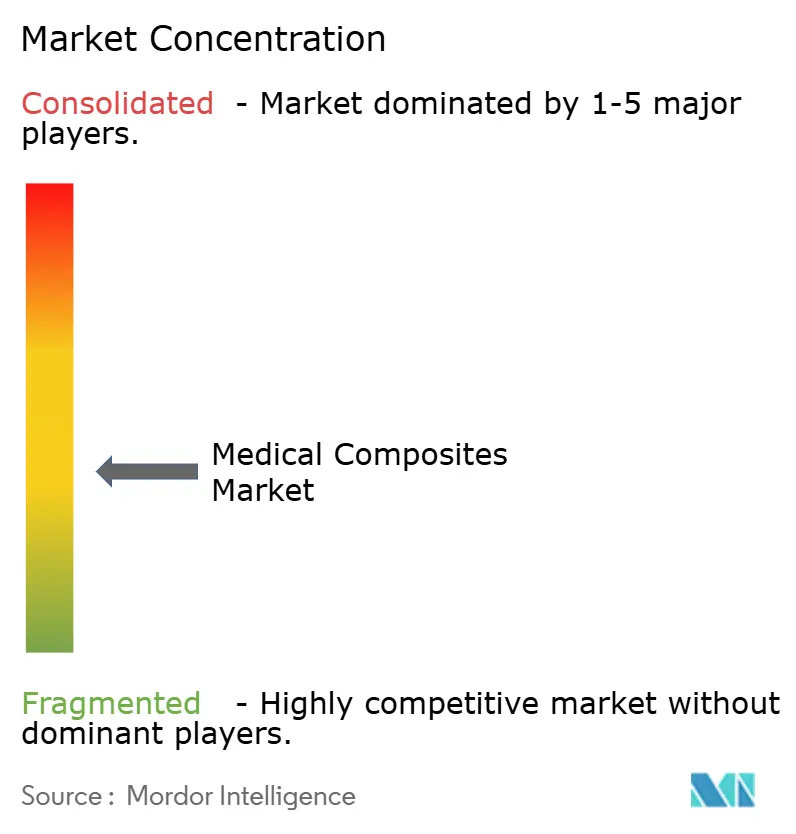
| Market Concentration | Medium |
Major Players *Disclaimer: Major Players sorted in no particular order Image © Mordor Intelligence. Reuse requires attribution under CC BY 4.0. | |
Medical Composites Market Analysis by Mordor Intelligence
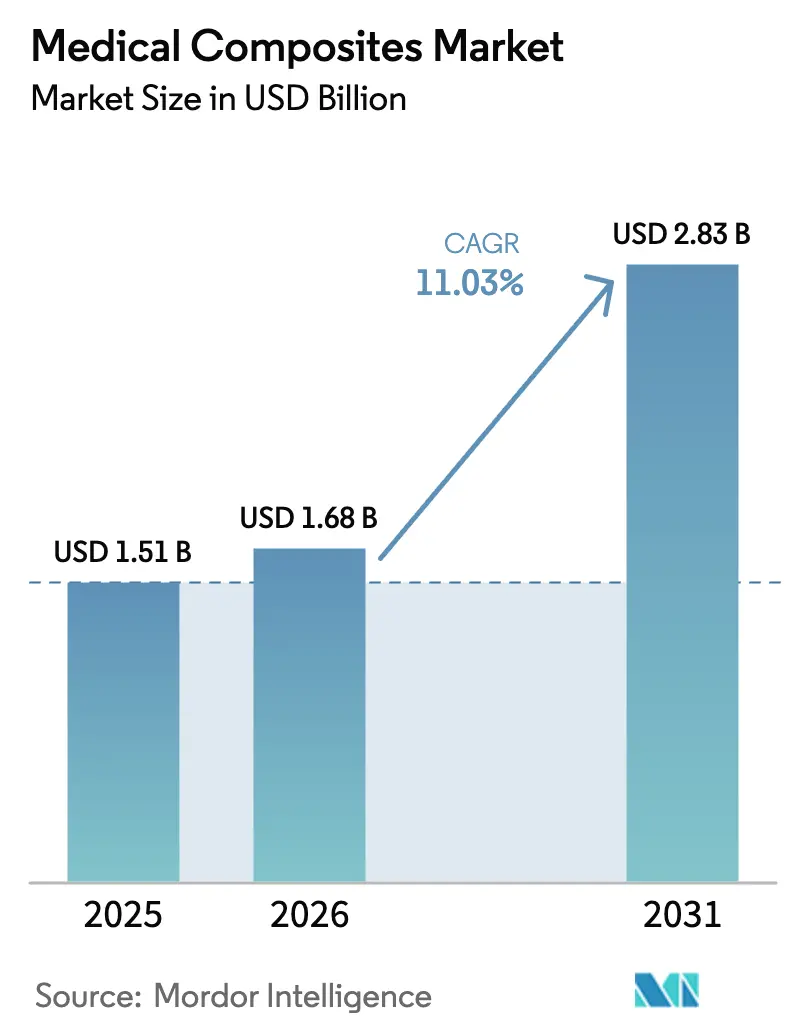
Medical Composites Market size in 2026 is estimated at USD 1.68 billion, growing from 2025 value of USD 1.51 billion with 2031 projections showing USD 2.83 billion, growing at 11.03% CAGR over 2026-2031.
Population aging, fast-tracked regulatory clearances for carbon-fiber PEEK implants, and a device industry pivot toward lightweight, MRI-compatible materials collectively fuel demand. Device makers gain clear clinical advantages from enhanced diagnostic visibility, lower instrument mass, and higher fatigue resistance in long-term implants, prompting hospitals to specify composites for next-generation systems. Rising procedure volumes for minimally invasive and robot-assisted surgeries keep order pipelines full, while additive manufacturing unlocks cost-effective customization. Continuous material R&D especially in bioactive ceramics broadens the addressable application pool, amplifying revenue streams across global supplier networks.
Key Report Takeaways
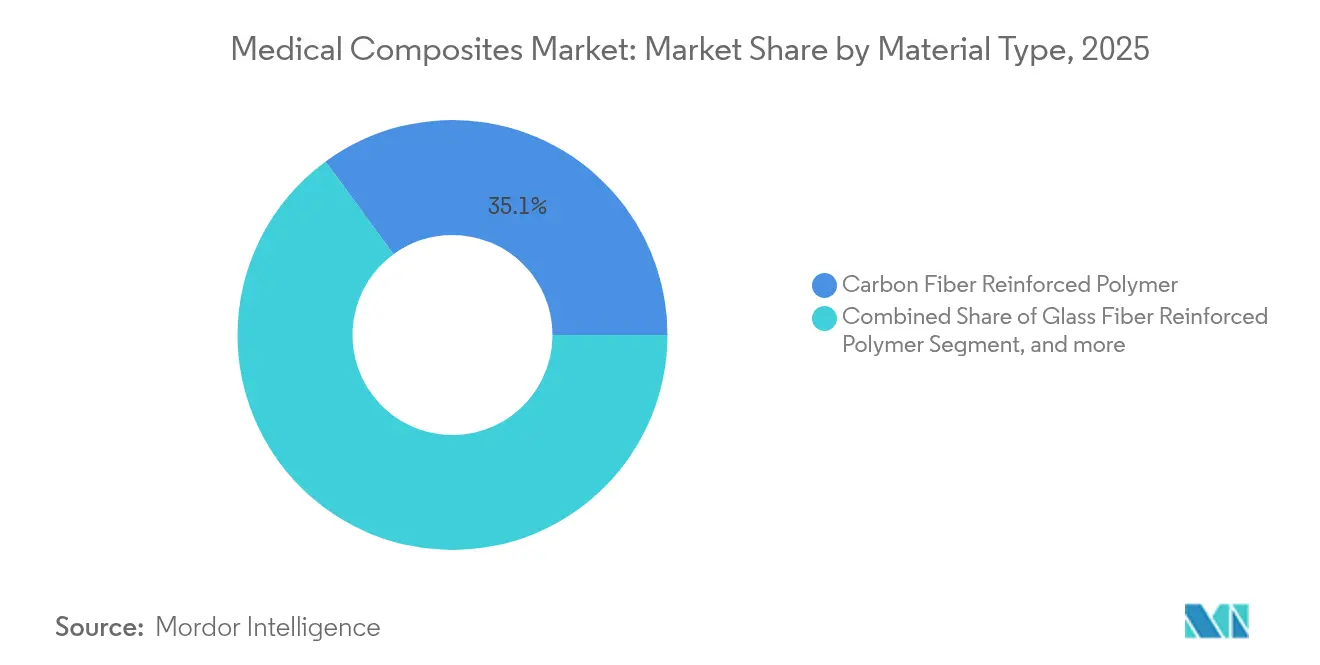
- By material type, carbon fiber reinforced polymer led with 35.05% of the medical composites market share in 2025, whereas ceramic matrix composites are forecast to expand at a 11.73% CAGR through 2031.
- By polymer matrix, PEEK held 41.22% share of the medical composites market size in 2025, while PMMA & acrylics are projected to advance at 12.95% CAGR between 2026-2031.
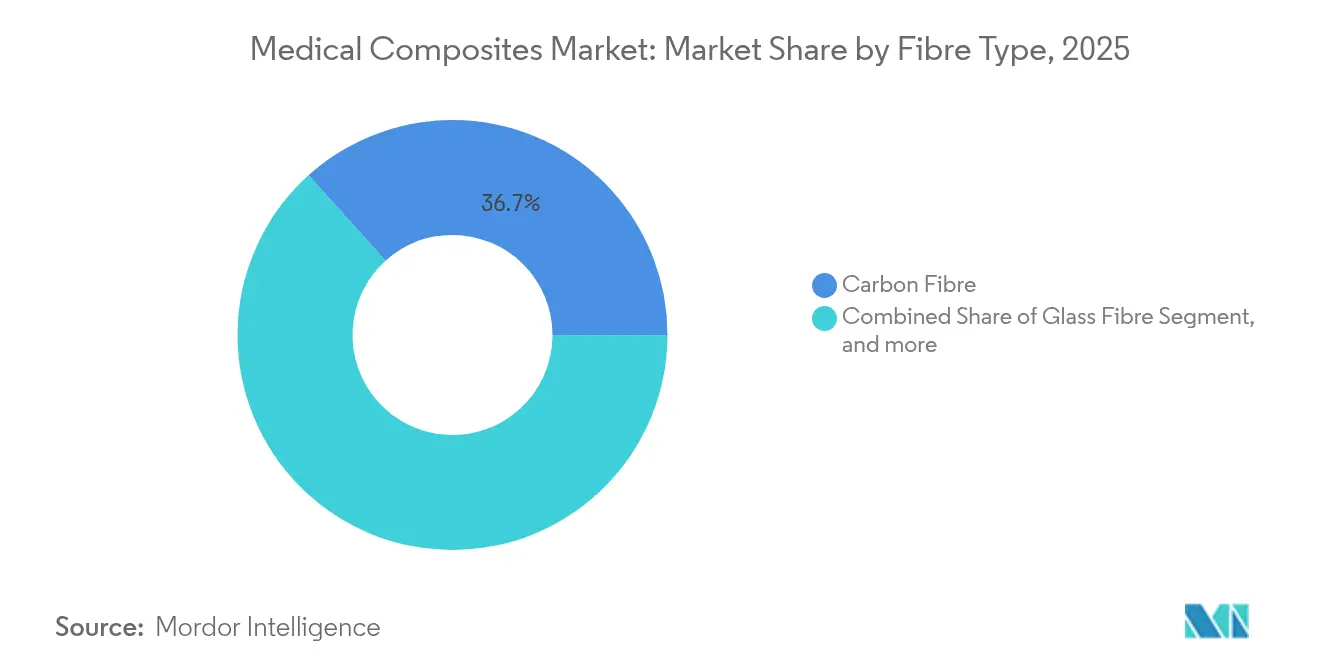
- By fibre type, carbon fibre commanded 36.68% share in 2025; aramid & other high-performance fibres are poised for the fastest 13.42% CAGR to 2031.
- By application, diagnostic imaging components accounted for 32.15% of the medical composites market size in 2025 and tissue engineering scaffolds are moving ahead at 14.9% CAGR through 2031.
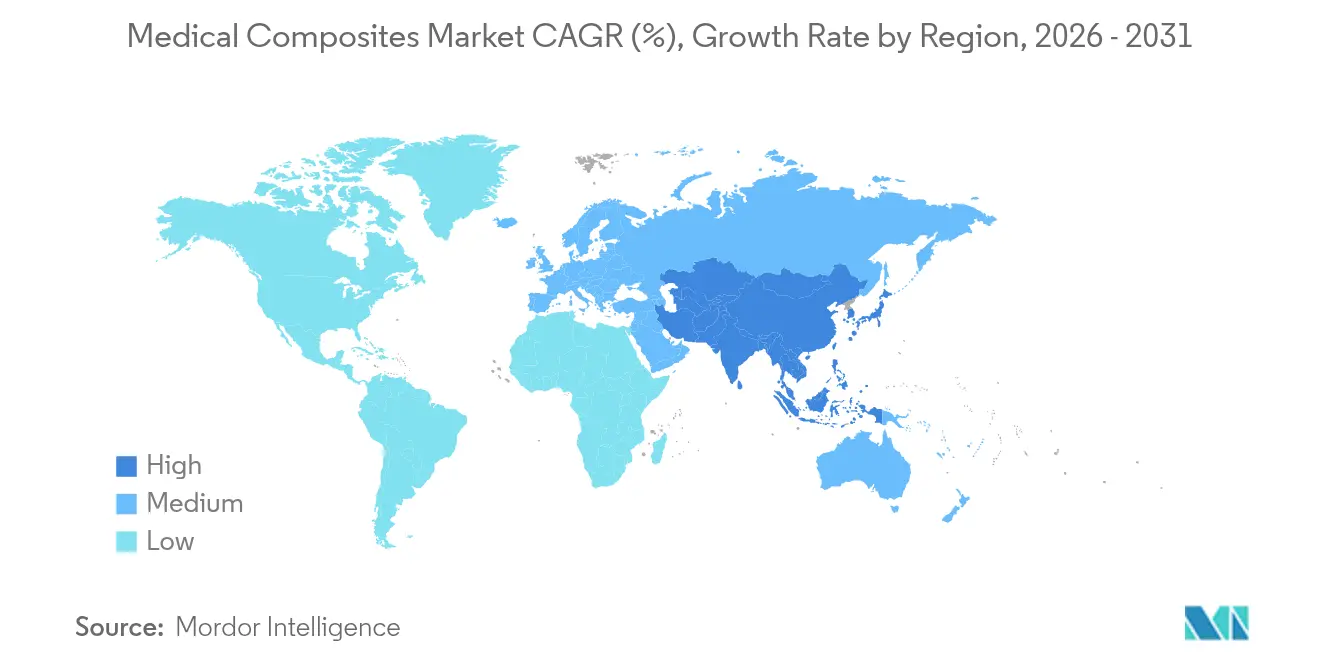
- By geography, North America dominated with 41.10% share in 2025, while Asia-Pacific is forecast to post a 11.98% CAGR up to 2031.
Note: Market size and forecast figures in this report are generated using Mordor Intelligence’s proprietary estimation framework, updated with the latest available data and insights as of 2026.
Market Trends and Insights
Drivers Impact Analysis of Medical Composites Market*
| Driver | (~) % Impact on CAGR Forecast | Geographic Relevance | Impact Timeline |
|---|---|---|---|
| Surging chronic disease burden & aging population | +2.8% | North America, Europe | Long term (≥ 4 years) |
| Growing demand for lightweight, MRI-compatible tools | +2.1% | North America, EU, APAC | Medium term (2-4 years) |
| Advancements in minimally invasive & robotic surgery devices | +1.9% | North America, APAC | Medium term (2-4 years) |
| Rapid adoption of robot-assisted composite instruments | +1.6% | North America, EU, APAC | Short term (≤ 2 years) |
| Regulatory fast-track for carbon-fiber PEEK implants | +1.4% | North America, EU | Short term (≤ 2 years) |
| Expansion of diagnostic imaging infrastructure | +1.2% | APAC, MEA | Long term (≥ 4 years) |
| Source: Mordor Intelligence | |||
Surging Chronic Disease Burden & Aging Population
Orthopedic surgeons increasingly prefer composite implants because carbon fiber’s fatigue resistance outperforms titanium, lowering revision rates for elderly patients. The demographic surge strengthens long-term demand visibility, encouraging suppliers to scale capacity and pursue wider indications. Tissue engineering scaffolds benefit as clinicians adopt bio-resorbable lattices that obviate secondary removal surgeries. Composite producers respond by tailoring degradation profiles and surface chemistries that promote osteointegration. Insurance payors, under pressure to cut re-operation costs, further validate composite solutions, tightening hospital formularies around proven, durable materials. Consequently, the medical composites market registers steady procurement even during broader economic slowdowns.
Growing Demand for Lightweight, MRI-Compatible Tools
Radiolucent composites remove image artifacts, letting surgeons monitor implant placement in real time across fluoroscopy, CT, and MRI suites.[1] Lower instrument weight reduces intra-operative fatigue, trimming procedure times and enhancing patient outcomes. Hospitals standardize composite imaging tables and positioning systems to guarantee uniform quality across modalities. Robotics vendors adopt carbon-fiber joints to sharpen kinematic accuracy while keeping payloads manageable for precision drive units. As reimbursement models reward efficiency, healthcare providers increasingly specify MRI-compatible composite sets, widening the installed base and locking in recurring replacement sales.
Advancements in Minimally Invasive & Robotic Surgery Devices
Composite shafts and end-effectors bring high stiffness and low mass, critical for robotic arms performing delicate cardiac and neurological interventions.[2] Automated fiber placement enables intricate geometries unattainable with machined metal, allowing single-use laparoscopic tools that hit target cost thresholds. As OEMs integrate haptic sensors directly into composite lay-ups, surgeons gain real-time tactile feedback without compromising sterilization cycles. Regulatory filings for robot-ready composite disposables climbed sharply in 2024, indicating commercial readiness. The resulting throughput boost at ambulatory surgery centers reinforces the medical composites market growth trajectory.
Rapid Adoption of Robot-Assisted Composite Instruments
Embedded fiber-optic arrays inside composite grippers feed force data to control algorithms, enhancing precision during soft-tissue manipulation.[3] Material biocompatibility passes stringent cytotoxicity screens, supporting direct tissue contact across multiple reuse cycles. Automated lay-up processes shrink unit costs, enabling broader specialty adoption beyond flagship robotic platforms. Customizable modulus profiles within a single part allow differential flex, matching anatomical contours while retaining structural safety margins. The pace of design iterations accelerates as digital twin simulations predict composite performance, driving swift regulatory submissions.
Restraints Impact Analysis of Medical Composites Market*
| Restraint | (~) % Impact on CAGR Forecast | Geographic Relevance | Impact Timeline |
|---|---|---|---|
| High production costs & limited supply chain depth | -1.8% | Global | Medium term (2-4 years) |
| Stringent multi-region regulatory approvals | -1.2% | North America, EU | Long term (≥ 4 years) |
| End-of-life recycling challenges for composite devices | -1.5% | Europe, North America, APAC | Long term (≥ 4 years) |
| Machining & sterilization complexity | -0.9% | Manufacturing hubs | Medium term (2-4 years) |
| Source: Mordor Intelligence | |||
High Production Costs & Limited Supply Chain Depth
Medical-grade carbon fiber commands a premium because only a handful of producers meet ISO 13485 documentation and purity thresholds. Autoclave and laser-machining assets involve high capital outlays, raising entry barriers for new entrants. Disruptions in precursor supply ripple across implant lines, with lead times stretching past 24 weeks during 2024 aerospace demand spikes. OEMs mitigate by dual-sourcing fibers and investing in in-house prepreg lines, yet cost pass-throughs persist, restraining adoption in price-sensitive emerging markets.
Stringent Multi-Region Regulatory Approvals
Composite formulations rarely enjoy predicate equivalence, forcing full biocompatibility dossiers in each jurisdiction. European MDR rules mandate clinical data for class III composite implants, prolonging validation cycles. SMEs divert R&D capital to protocol compliance, decelerating pipeline breadth. Post-market surveillance obligations add operating overhead, impacting cash flow during scale-up. Convergence efforts under IMDRF remain incomplete, leaving multi-year uncertainty for globally oriented device brands.
*Our forecasts treat driver/restraint impacts as directional, not additive. The impact forecasts reflect baseline growth, mix effects, and variable interactions.
Medical Composites Market Segment Analysis
By Material Type:
CFRP Dominance Drives InnovationCFRP commanded 35.05% of the medical composites market in 2025, substantiating its role as the backbone of imaging tables, orthopedic plates, and robotic arm components. The segment benefits from unmatched strength-to-weight ratios that allow thinner profiles without sacrificing load tolerance. Imaging OEMs capitalize on CFRP’s radiolucency to achieve artifact-free scans, widening its institutional footprint. Meanwhile, the medical composites market size for ceramic matrix composites is projected to advance at a 11.73% CAGR, propelled by bioactivity that accelerates osteointegration. Development programs pair hydroxyapatite-infused ceramics with resorbable polymers, offering hybrid constructs that knit gradually with host tissue. Production cost curves trend downward as pressureless sintering and microwave sintering reduce cycle times. Hybrid and bio-based composites linger in early-stage trials, yet targeted properties such as antimicrobial efficacy attract clinical attention.
CFRP suppliers deploy automated fiber placement to curtail scrap rates and drive consistent mechanical performance batch-to-batch. Hospitals value the reduced infection risk linked to CFRP’s chemical inertness, while insurers flag lower re-operation incidence in postoperative audits. Ceramic matrix innovators leverage additive manufacturing to print lattice structures that match patient-specific defect geometries, shortening operating room time. As surgical robotics shifts toward smaller, outpatient-compatible systems, lightweight ceramic-carbon hybrids offer the stiffness surgeons expect. This evolving material mix ensures the medical composites market retains a robust innovation funnel.

By Polymer Matrix:
PEEK Leadership Faces PMMA ChallengePEEK held 41.22% share in 2025, its elastic modulus mirroring cortical bone and thereby mitigating stress-shielding after implantation. Surgeons prefer PEEK cages for spinal fusion because post-operative imaging clearly distinguishes bone growth around the implant. The medical composites market size expansion for PMMA & acrylics, set for 12.95% CAGR, rests on dental and vertebroplasty demand where low cost and flowable curing matter. Antimicrobial PMMA bone cements containing silver ions are clearing clinical pathways, aiding infection control. Polypropylene retains niche use in catheter components needing chemical resistance at low budgets.
Advances in extrusion-based 3D printing broaden PEEK implant geometries, supporting porous architectures that invite tissue in-growth. Composite matrix developers now blend PEEK with carbon nanotubes to elevate thermal conductivity, facilitating RF ablation probes. PMMA innovators experiment with bioactive glass microspheres to couple radiopacity with controlled elution of therapeutic ions. Regulatory bodies call for robust leachables data, pushing polymer formulators to refine additive packages carefully. The resulting competition ensures that the medical composites market continues to diversify matrix offerings without compromising safety.
By Fibre Type:
Carbon Fibre Strength Meets Aramid InnovationCarbon fibre captured 36.68% of the medical composites market share in 2025, owing to its high modulus of 230 GPa and compatibility with sterilization via gamma irradiation. Its dominance spans robotic struts, external fixation rods, and operating-room furniture. Aramid fibres, forecast at 13.42% CAGR, entice wound-care firms for antibacterial dressings and implantable meshes. Glass fibre remains the economical workhorse in single-use scopes and infusion pump housings, where rigid strength tops imaging visibility.
Surface-sized carbon fibres bond tightly with PEEK matrices, minimizing delamination risk during cyclical spinal loading. Aramid’s intrinsic toughness resists impact damage, suiting trauma plates exposed to abrupt forces. Researchers coat aramid yarns with chitosan to enhance cell adhesion, a breakthrough that extends its relevance to regenerative scaffolds. Hybrid lay-ups combining carbon and aramid enable tailored stiffness gradients, meeting orthopedic demands for proximal flexibility and distal rigidity. Together these developments reinforce the medical composites industry’s ability to customize mechanical response.
By Application:
Imaging Components Lead, Tissue Engineering AcceleratesDiagnostic imaging components held 32.15% share in 2025, proof that radiolucent composites sit at the center of modern radiography suites. Carbon-fiber tabletops support up to 250 kg loads while attenuating X-rays by less than 1 mm aluminum equivalence, boosting detector sensitivity. Hospitals equip angiography rooms with composite C-arm covers to maintain clear fluoroscopic views. Simultaneously, the medical composites market size allocated to tissue engineering scaffolds is on track for 14.9% CAGR, spurred by bioresorbable lattices that deliver stem cells and growth factors directly at defect sites. As payors reimburse regenerative therapies, scaffold demand scales beyond academic centers into mainstream orthopedics.
Composite surgical instruments continue upward adoption as OR managers target instrument sets that combine durability with ergonomic lightness. Orthopedic implants see renewed interest in carbon-PEEK nails and plates capable of real-time monitoring via integrated strain sensors. Dental clinicians move to composite abutments that blend with enamel, pleasing cosmetic dentistry clients. Drug-delivery reservoirs, molded from PEEK-carbon blends, achieve dose control accuracy within 3%, making them prime candidates for implantable infusion pumps. Collectively, applications illustrate how the medical composites market marries performance with clinical utility.
Geography Analysis
North America Medical Composites Market
North America secured 41.10% of the medical composites market in 2025, underpinned by a robust reimbursement ecosystem and continuous R&D investments from players such as 3M and Stryker. The United States accounts for the lion’s share, coupling early technology adoption with large-scale hospital networks that standardize composite instrument trays. Canada, leveraging its single-payer system, funds procurement of advanced MRI-compatible tables to cut wait times. Mexico’s maquiladora corridor attracts device OEMs seeking cost-optimized composite component production while remaining proximate to US regulatory oversight. Federal funding for orthopedic research sustains pipeline momentum, preserving North American leadership.
APAC Medical Composites Market
Asia-Pacific registers the fastest 11.98% CAGR through 2031, a testament to expanded health insurance coverage, burgeoning middle-class demand, and concerted industrial policies in China and India. Chinese composite producers benefit from state incentives that lower precursor import tariffs, boosting domestic supply capacity. Japan integrates composites into surgical robotic exports, reinforcing the region’s high-tech image. India’s National Medical Devices Policy 2025 encourages local manufacture of carbon-fiber implants, targeting reduced import dependencies. Southeast Asian nations invest in radiotherapy centers, each specifying carbon-epoxy patient couches, further swelling regional uptake across the medical composites market.
Europe Medical Composites Market
Europe retains a mature yet innovative profile, with stringent MDR rules nudging suppliers toward traceable, high-quality composite lines. Germany spearheads application engineering, embedding smart sensors into spinal rods for postoperative monitoring. The United Kingdom’s Catapult network supports SME trials of recyclable thermoplastic composites, aligning with National Health Service carbon-footprint mandates. France pilots hospital take-back programs for single-use composite devices, collecting lifecycle data critical to future regulatory relief. Italy’s Lombardy cluster ramps autoclave capacity, exporting orthopedic plates across the EU. Such coordinated initiatives keep Europe integral to technological progress even as growth moderates.
Regulatory Landscape
Medical composites used in medical devices are subject to quality-system, biocompatibility, and product-specific consensus standards across major regions. In the United States, the FDA transitioned to the Quality Management System Regulation (QMSR), effective February 2, 2026, to align device quality management more directly with ISO 13485:2016. For materials and patient-contacting components, FDA-recognized frameworks such as ISO 10993-1 (biological evaluation) and the FDA guidance on Technical Considerations for Additive Manufactured Medical Devices (including design controls, process validation, and material controls for 3D printed devices) influence how composite implants and instruments are qualified, particularly when additive manufacturing is used for customization.
Standards also shape polymer selection and documentation for implantable composites. The FDA recognized ASTM F2820-24 for PEKK polymers in surgical implants, replacing the prior ASTM F2820-12(2021)e1, with a transition period extending to December 19, 2027. This affects change-control planning and supplier qualification for implant programs that use high-performance polymer matrices. In Europe, EU MDR 2017/745 keeps a notified-body centered conformity assessment model, with clinical evidence and post-market surveillance requirements that lengthen and formalize approvals for higher-risk composite implants. As a result, suppliers emphasize traceable material supply, validated manufacturing steps, and robust technical documentation for multi-region launches.
Value Chain Analysis
The medical composites value chain begins with upstream feedstocks and specialty materials, including carbon fibers, high-performance polymers (notably PEEK and related implant-grade grades), and bioresorbable polymers used in scaffolds and temporary fixation products. Suppliers such as Toray (carbon fibers and composite solutions for medical use-cases) and Evonik (VESTAKEEP implant-grade PEEK for additive and conventional processing, and RESOMER bioresorbable polymer families) sit at the core of the raw-material and compounded-material layer. In this stage, medical-grade traceability and documentation aligned to ISO 13485 expectations remain key differentiators.
Midstream conversion covers compounding, prepregging/lamination, and component manufacturing through machining (including waterjet cutting), thermoforming, and additive manufacturing for patient-specific parts and porous architectures. For 3D printed composites and polymers, manufacturers must maintain digital thread controls (file integrity), apply design controls, and operate within validated processing windows per the FDA additive manufacturing guidance. This requirement tightens coordination between material suppliers, printer/platform providers, and device OEMs. In the downstream stage, device OEMs integrate composite components into diagnostic imaging systems, surgical instruments, dental prosthetics, and orthopedic implants. These products then move through sterilization and packaging, distribution to hospitals and dental labs, and post-market monitoring that feeds back into material selection and process control updates.
Competitive Landscape
The medical composites market remains moderately fragmented, with the top five suppliers holding significant market share and combined revenue, leaving room for nimble entrants. Material science giants like Toray Industries license aerospace-grade carbon fibre to medical molding houses, ensuring consistent throughput. Device specialists such as Victrex leverage proprietary PEEK compounds, bundling material and design services for OEM partners. Recent deal flow underscores consolidation: Integer Holdings acquired Precision Coating in January 2025 to vertically integrate surface treatments, expanding its share in orthopedic and cardiovascular composites. Similarly, DuPont’s 2024 purchase of Donatelle Plastics secured access to ISO 13485 injection-molding capacity, accelerating customized implant programs.
Competition intensifies in diagnostic imaging accessories where price parity pressures margins, prompting differentiation via antimicrobial topcoats or embedded RFID asset tracking. Meanwhile, tissue engineering scaffolds foster niche competition centered on bioactive additives and controlled porosity. R&D focus clusters on automated fiber placement, defect-detection AI, and low-temperature recycling of PEEK-carbon blends. Patent filings for composite sterilization techniques grew 18% year-on-year, indicating a race to streamline reprocessing without material degradation. Overall, strategic emphasis pivots toward life-cycle value propositions and sustainability to satisfy hospital procurement scorecards.
Medical Composites Industry Leaders
-
3M
-
Dentsply Sirona
-
Evonik Industries AG
-
Toray Industries Inc.
-
DSM-Firmenich
- *Disclaimer: Major Players sorted in no particular order
Medical Composites Market Companies Covered in this Report
- 3M
- Toray Industries
- Victrex plc (Invibio)
- DSM-Firmenich
- CeramTec GmbH
- SGL Carbon
- Evonik Industries
- Dentsply Sirona
- Solvay
- Kulzer
- Composiflex
- Mitsubishi Chemical Group (MCAM)
- Icotec AG
- Röchling Group
- Zeus Industrial Products
- Trelleborg AB
- Ensinger GmbH
- Hexcel Corporation
- Arkema SA
- Avient Corporation
- LANXESS AG
Market Opportunities and Future Outlook
A near-term whitespace for medical composites sits in diagnostic imaging and adjacent radiolucent infrastructure, where performance improvements translate into workflow and dose-management benefits. In July 2026, Toray Industries highlighted development of a radiolucent CFRP sandwich component for X-ray equipment that reduced radiation dose by 8%, pointing to an opportunity for composite suppliers and imaging OEMs to compete on measurable clinical and operational outcomes rather than weight reduction alone. This supports continued material substitution in patient tables, covers, and positioning accessories across X-ray and hybrid OR environments, where artifact reduction and mechanical stiffness are purchasing criteria.
Another high-value opportunity involves scaling validated additive manufacturing workflows for implantable and dental applications using medical-grade composite polymers and bioresorbables. Activity around carbon-fiber reinforced PEEK filaments for long-term implant use and commercial bioresorbable polymer lines for implantable devices, alongside supplier-OEM collaborations on 3D printed scaffolds for bone regeneration, broadens the set of customized devices under development (facial, spinal, and regenerative scaffolds). It also increases demand for qualified material systems, process validation services, and ISO 13485-aligned documentation packages. As regulators tighten expectations around design controls and biocompatibility evidence, suppliers that bundle materials with application engineering and validated processing guidance gain clearer routes to specification for next-generation composite implants and digitally manufactured instruments.
Recent Industry Developments in Medical Composites Market
- June 2026: Dentsply Sirona validated Lucitone Digital Print Denture resins for one-piece denture production using HeyGears UltraCraft Multi-Material Fusion 3D printers. The validation expands Dentsply Sirona's digital fabrication portfolio and enables faster production of chairside dentures, enhancing customization and throughput.
- January 2026: Dentsply Sirona expanded partnership with Benco Dental to distribute integrated dental technology solutions including CEREC chairside manufacturing systems. The partnership gives broader access to chairside systems across the dental trade channel, accelerating adoption and strengthening the company's direct-to-practice reach.
- November 2024: Solventum launched 3M Clarity Precision Grip Attachments, a 3D-printed composite material solution for aligner treatment in the United States and Canada. The launch expands Solventum's portfolio for aligner augmentation and enters US and Canada markets, offering enhanced customization for clinicians.
Medical Composites Market Report Scope and Research Methodology
Market Definition and Coverage
This market covers revenues generated from medical-grade composite materials used in healthcare products and devices, where performance comes from combining two or more constituent materials into one engineered structure.
Scope exclusions: We exclude pure metals, unfilled commodity plastics, and non-medical industrial composites that are not sold into regulated medical and dental end uses.
Segments Covered in This Report
- By Material Type
- Carbon Fiber Reinforced Polymer (CFRP)
- Glass Fiber Reinforced Polymer (GFRP)
- Ceramic Matrix Composites
- Other Materials
- By Polymer Matrix
- PEEK
- Polypropylene (PP)
- PMMA & Acrylics
- Others
- By Fibre Type
- Carbon Fibre
- Glass Fibre
- Aramid & Other High-Performance Fibres
- By Application
- Surgical Instruments
- Diagnostic Imaging Components
- Orthopedic Implants
- Dental Implants
- Tissue Engineering Scaffolds
- Other Applications
- By Geography
- North America
- United States
- Canada
- Mexico
- Europe
- Germany
- United Kingdom
- France
- Italy
- Spain
- Rest of Europe
- Asia-Pacific
- China
- Japan
- India
- Australia
- South Korea
- Rest of Asia-Pacific
- Middle East & Africa
- GCC
- South Africa
- Rest of Middle East & Africa
- South America
- Brazil
- Argentina
- Rest of South America
- North America
Data Sources, Market Sizing, and Validation
Desk Research
Desk research was used to lock the market boundary and build the first pass of demand and supply indicators that can be repeated each year. We reviewed public sources to understand device manufacturing activity, healthcare procedure trends, and materials regulation signals, since these items directly influence composite usage in implants and dental products.
Sources used include official datasets and publications such as the US FDA device and safety communications, OECD health statistics, World Bank macro indicators, UN Comtrade trade statistics for relevant material and finished device codes, and peer reviewed journals that track biomaterials adoption and performance. We also used company filings and investor presentations to map product focus and regional exposure, plus a paid subscription for company financials and intelligence and a patent database to spot new composite formulations and application pull. This list is illustrative, and many other public and paid sources were also referenced to collect, validate, and clarify data points.
Primary Interviews and Surveys
Primary work was done through expert interviews and structured surveys across the value chain, including materials producers, compounders, device and dental product manufacturers, and distributors that see order flow. Because this is a global market, we spoke with contacts across major producing and consuming regions so regional procedure mix and regulatory timing could be reflected, and then assumptions from desk research were confirmed or corrected.
Distribution of primary research fieldwork respondents
| Company type | Respondent position | Region |
|---|---|---|
| Top tier: 28% | CXOs: 17% | APAC: 44% |
| Mid tier: 52% | Functional/Unit leaders: 30% | EMEA: 29% |
| Smaller Players: 20% | Managers: 53% | Americas: 27% |
Market-Sizing & Forecasting
Sizing starts with a top-down build that ties medical composite demand to the end-use pool, where procedure and device output indicators are used to reconstruct addressable consumption by application and region. The totals are then checked with selective bottom-up approximations, such as sampled supplier revenues, channel conversations on volume movement, and an ASP times volume sense-check for high-value applications, before the final number is locked.
Inputs in the model include trends in orthopedic and trauma procedure volumes, dental restorative and implant activity, adoption of radiolucent components versus traditional materials, typical composite loading and replacement cycles in key devices, and regional manufacturing intensity that shows up in trade flows and new capacity announcements. Where direct volume is not visible, we handle gaps by using proxy indicators, such as procedure counts or device shipment direction, and applying conservative utilization and conversion factors validated in interviews.
Forecasting uses scenario analysis supported by short-cycle indicators, and then the growth path is refined through primary feedback on pricing progression, material substitution pace, and expected approval timelines for new products. The final forecast stays traceable to a small set of repeatable drivers so it can be updated when procedure trends, trade patterns, or pricing moves materially change.
Data Validation & Update Cycle
Model outputs are validated through multiple checks, starting with cross-verifying regional totals against independent signals such as procedure volume direction, device export momentum, and announced manufacturing expansions. Outliers are flagged, investigated, and corrected only when the change can be tied back to a specific driver. After that, the dataset is reviewed again by another analyst before sign-off.
Reports are refreshed annually, and interim updates are made when material events occur, such as regulation shifts, major capacity changes, or sharp raw material price moves that affect composite pricing. Before delivery, a final pass is completed so the numbers reflect the latest available information and the assumptions remain consistent across the time series.
Mordor Intelligence's Medical Composites Market Sizing Compared With Other Published Estimates
Published market values for medical composites can vary because the definition of what counts as a medical composite is not always consistent, and because some studies anchor demand to device end markets while others lean more on broad materials revenue. Differences also come from the year chosen as the reference point and how quickly pricing assumptions are refreshed.
The table shows a wide spread, and in Mordor Intelligence's model the market reflects medical and dental composite materials demand tied to healthcare applications and regional coverage as stated in the report, rather than counting broader industrial composites that may be marketed into adjacent life-science uses. Another common gap driver is the treatment of pricing. Some estimates apply aggressive ASP uplift without matching it to observed resin and fiber movements or verified procurement feedback, and currency conversion timing can also shift the final USD total.
Benchmark comparison
| Source | Market Size | Gaps in Research Methodology |
|---|---|---|
| Mordor Intelligence | USD 1.68 B (2026) | |
| Industry Study A | USD 0.56 B (2024) | Uses a narrower definition that appears closer to select polymer matrix medical composites, and may exclude dental composites and several higher value implant-related applications, which compresses the total. |
| Media Summary B | USD 1.61 B (2025) | Reported as a headline figure with limited visibility on included applications and pricing logic, and the base year selection and currency timing can shift the USD value even when demand is similar. |
Taken together, the comparison suggests that scope choices around dental coverage and how broadly composites are defined explain most of the difference, followed by base year and pricing treatment. By keeping inputs linked to repeatable demand indicators and then stress-testing totals with interviews and sanity checks, the estimate stays easier to trace and update over time.
Key Questions Answered in the Report
What is the current value of the medical composites market?
The medical composites market size reached USD 1.68 billion in 2026 and is forecast to climb to USD 2.83 billion by 2031.
Which material dominates the medical composites market?
Carbon Fiber Reinforced Polymer leads, holding 35.05% share in 2025 because of its high strength-to-weight ratio and radiolucency.
Which region is growing the fastest for medical composites?
Asia-Pacific is projected to register a 11.98% CAGR through 2031, driven by expanding healthcare infrastructure and local manufacturing capacity.
Why is PEEK widely used in composite implants?
PEEK’s modulus closely matches bone, it tolerates repeated sterilization, and its radiolucency enables clear post-operative imaging.
What are the main restraints hindering wider adoption of medical composites?
High production costs, complex multi-region regulatory approvals, recycling challenges, and intricate machining and sterilization processes temper growth.
How fragmented is the competitive landscape?
The market is moderately fragmented; the top five suppliers hold significant market share combined revenue, leaving significant space for new entrants and niche innovators.