
Malaysia Oral Anti-Diabetic Drug Market Size and Share
Market Overview
| Study Period | 2020 - 2031 |
|---|---|
| Forecast Data Period | 2026 - 2031 |
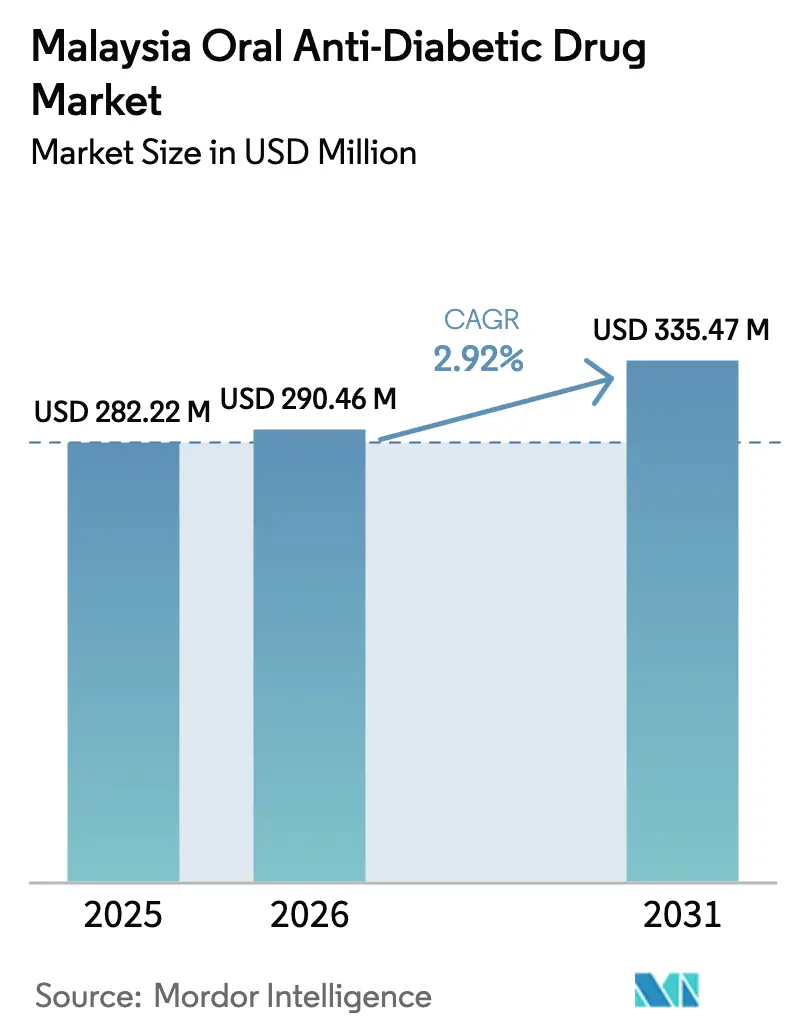
| Base Year Market Size (2025) | USD 282.22 Million |
| Market Size (2026) | USD 290.46 Million |
| Market Size (2031) | USD 335.47 Million |
| Growth Rate (2026 - 2031) | 2.92 % |
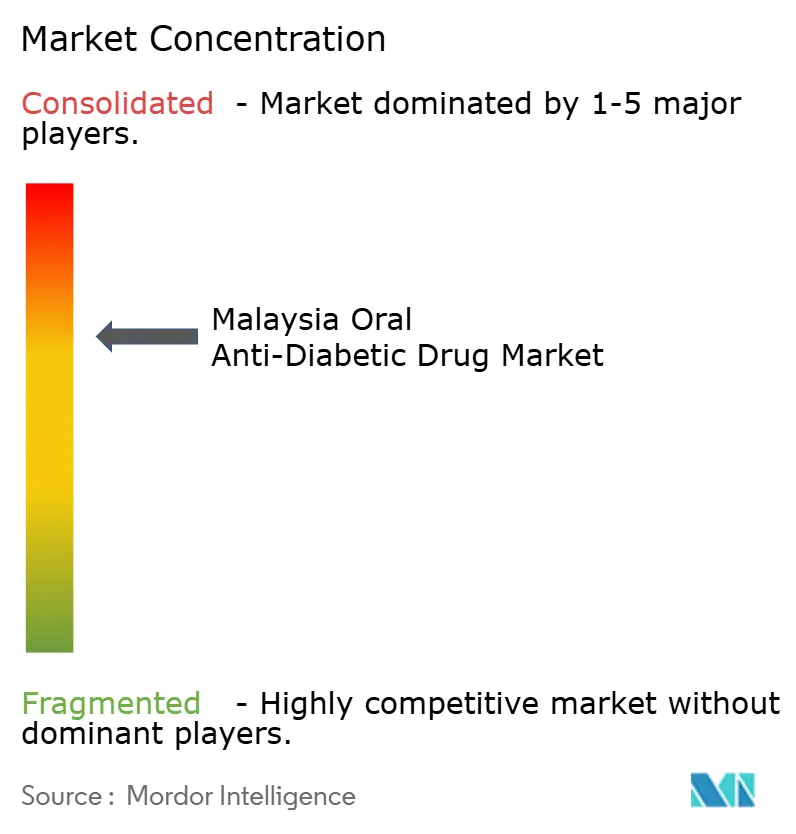
| Market Concentration | Medium |
Major Players *Disclaimer: Major Players sorted in no particular order Image © Mordor Intelligence. Reuse requires attribution under CC BY 4.0. | |
Malaysia Oral Anti-Diabetic Drug Market Analysis by Mordor Intelligence
The Malaysia oral anti-diabetic drug market size is expected to grow from USD 282.22 million in 2025 to USD 290.46 million in 2026 and is forecast to reach USD 335.47 million by 2031 at 2.92% CAGR over 2026-2031. The measured pace conceals brisk changes in public health, policy, and channel dynamics. Rapid urbanisation, an ageing population, and tighter screening protocols keep demand for oral therapies on a steady upward slope. Government budgeting supports this trend, with the Ministry of Health raising 2025 allocations by 9.8% to RM45.3 billion, part of which funds non-communicable disease programs [1]. Newer therapeutic classes such as SGLT-2 inhibitors are now reimbursed in public facilities, while digital pharmacies widen last-mile reach, especially in East Malaysia. Parallel reforms in procurement, halal certification, and price controls further shape competitive behaviour across the Malaysia oral anti-diabetic drug market.
Key Report Takeaways
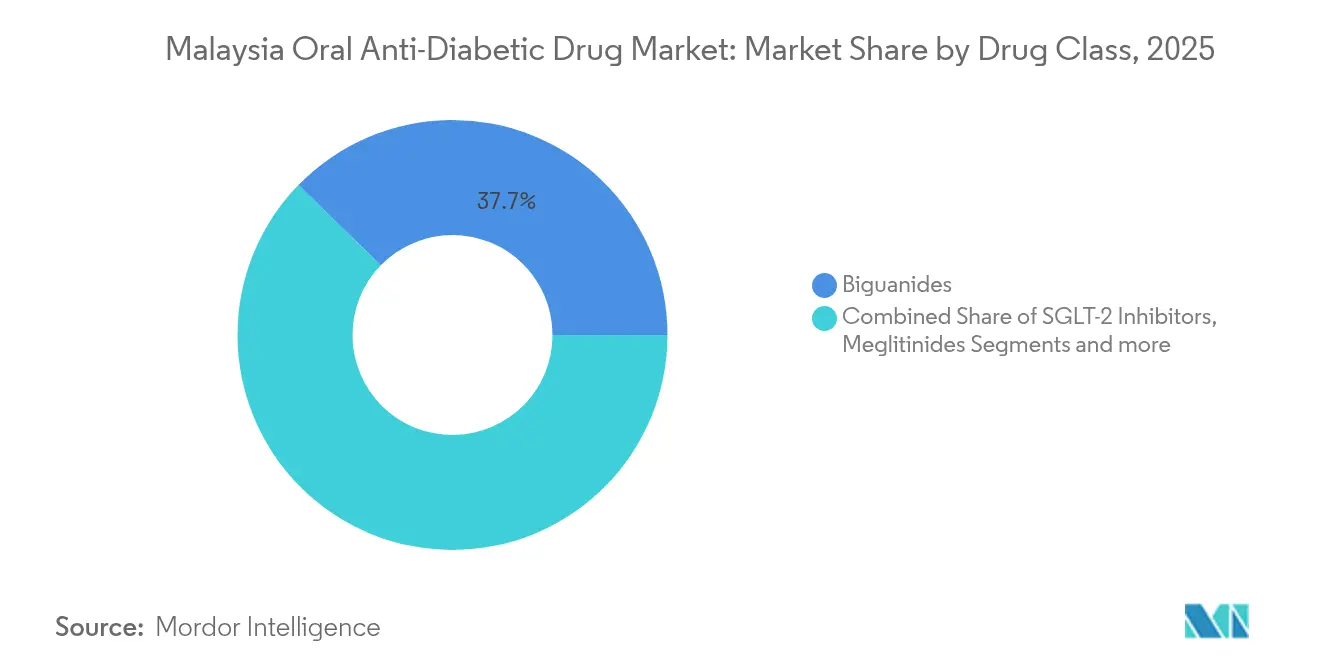
- By drug class, biguanides led with 37.72% revenue share in 2025; SGLT-2 inhibitors are forecast to expand at a 3.45% CAGR through 2031.
- By age group, adults held 66.58% share in 2025; the geriatric segment is set to grow at a 3.78% CAGR to 2031.
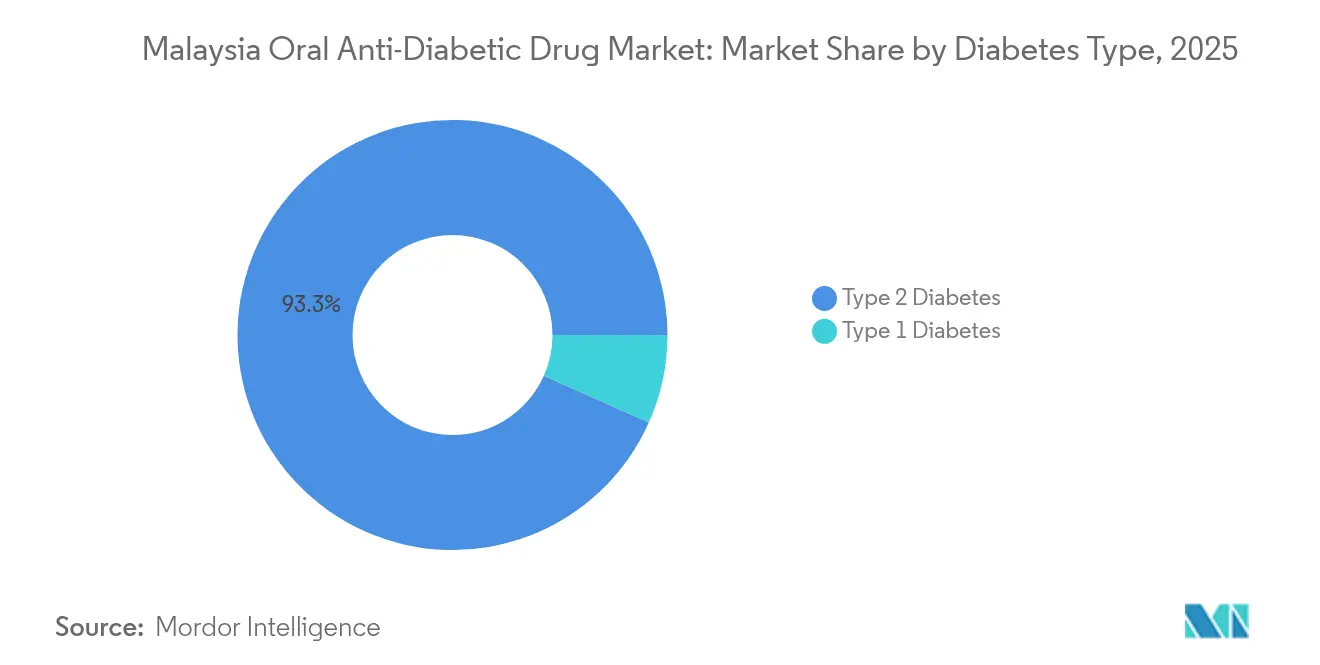
- By diabetes type, type 2 diabetes accounted for 93.32% of the Malaysia oral anti-diabetic drug market share in 2025 and is advancing at a 3.69% CAGR to 2031.
- By distribution channel, hospital pharmacies captured 68.74% share in 2025, while online pharmacies are projected to rise at a 3.72% CAGR through 2031.
Note: Market size and forecast figures in this report are generated using Mordor Intelligence’s proprietary estimation framework, updated with the latest available data and insights as of 2026.
Malaysia participates in a competitive field that extends beyond its own borders. The market landscape in the global oral anti-diabetic drugs industry outlined by Mordor Intelligence covers that wider structure.
Malaysia Oral Anti-Diabetic Drug Market Trends and Insights
Drivers Impact Analysis*
| Driver | (~) % Impact on CAGR Forecast | Geographic Relevance | Impact Timeline |
|---|---|---|---|
| Escalating prevalence of type-2 diabetes in urban Malaysia | +1.2% | Peninsular Malaysia urban centres, spillover to East Malaysia | Medium term (2-4 years) |
| Expansion of the private health-insurance pool | +0.8% | National, early gains in Kuala Lumpur, Selangor, Penang | Long term (≥ 4 years) |
| Rapid uptake of SGLT-2 & DPP-4 inhibitors post-NEML 2024 update | +0.9% | Public healthcare facilities nationwide | Short term (≤ 2 years) |
| Government-led “Mysihat” medication-adherence programmes | +0.6% | National, focus on rural and underserved communities | Medium term (2-4 years) |
| Centralised Pharmaniaga tenders squeezing retail prices | +0.4% | National public-sector procurement | Short term (≤ 2 years) |
| Growth of e-pharmacy platforms enhancing last-mile reach | +0.7% | National, notable impact in East Malaysia and rural areas | Medium term (2-4 years) |
| Source: Mordor Intelligence | |||
Escalating Prevalence of Type-2 Diabetes in Urban Malaysia
Urban centres now post diabetes prevalence of 19.6 deaths per 100,000 population, placing the disease among Malaysia’s top mortality drivers. Registry data spanning a decade lists 288,913 diagnosed patients, and only one-third meet lipid and blood-pressure targets, indicating wide therapeutic gaps [2]. Sedentary lifestyles and nutrition shifts compound genetic predisposition, so pharmacotherapy remains essential even as prevention programs expand. Public hospitals respond by stockpiling metformin and by trialling fixed-dose combinations in primary care. This unmet need anchors baseline growth for the Malaysia oral anti-diabetic drug market.
Expansion of the Private Health-Insurance Pool
Healthcare spending reached 4.38% of GDP in 2025, with private insurance uptake rising among middle-income households. Broader coverage lowers out-of-pocket costs for premium agents such as SGLT-2 and DPP-4 inhibitors. Employer schemes in Kuala Lumpur, Selangor, and Penang now reimburse combination tablets that previously strained household budgets. New policies for foreign workers widen the risk pool and lift unit volumes. Insurers, in turn, negotiate tiered pricing with manufacturers, reinforcing value-based payment models in the Malaysia oral anti-diabetic drug market.
Rapid Uptake of SGLT-2 & DPP-4 Inhibitors Post-NEML 2024 Update
The 2024 National Essential Medicines List removed formulary barriers, allowing public hospitals to dispense SGLT-2 and DPP-4 inhibitors without ad-hoc waivers. Hospital studies report mean 0.9% HbA1c reductions for DPP-4 therapy and improved renal markers under SGLT-2 treatment. Eight SGLT-2 brands are now registered with active NPRA monitoring. Clinicians increasingly prescribe these classes over sulfonylureas, while guideline committees update algorithms accordingly. Early adoption strengthens revenue diversity across the Malaysia oral anti-diabetic drug market.
Government-Led “Mysihat” Medication-Adherence Programmes
The Enhanced Primary Healthcare framework merges telemedicine with community outreach to curb missed doses. Pharmacist-delivered coaching reduced average monthly drug costs to MYR 47.33 for intervention groups versus MYR 236.07 in controls, while tightening HbA1c control [3]. DoctorOnCall’s virtual clinic expands these services to rural Sabah and Sarawak. The Health White Paper allocates multiyear funding for digital adherence tools, embedding monitoring into routine care. These measures boost treatment persistence and add volume to the Malaysia oral anti-diabetic drug market.
Restraints Impact Analysis*
| Restraint | (~) % Impact on CAGR Forecast | Geographic Relevance | Impact Timeline |
|---|---|---|---|
| Intensifying generic competition after key patent expiries | -0.8% | Branded products nationwide | Short term (≤ 2 years) |
| High out-of-pocket cost for latest agents despite reimbursement | -0.6% | Rural and lower-income segments nationally | Medium term (2-4 years) |
| Halal certification gaps limiting acceptance of some branded generics | -0.3% | National, particularly Muslim population segments | Long term (≥ 4 years) |
| Logistics hurdles to East Malaysia causing stock-out risk | -0.4% | East Malaysia (Sabah and Sarawak), affecting rural access | Medium term (2-4 years) |
| Source: Mordor Intelligence | |||
Intensifying Generic Competition After Key Patent Expiries
Empagliflozin’s patent expiry in March 2025 and scheduled sitagliptin/metformin expiries in 2029 invite generic entries priced 50% lower in line with national policy. Indian firms have publicly targeted off-patent launches, and local manufacturers seek fast-track approvals under the updated NPRA guidebook. Branded incumbents respond with patient-support programs and fixed-dose lifecycle extensions. Volume may rise, yet value erosion weighs on headline growth for the Malaysia oral anti-diabetic drug market.
High Out-of-Pocket Cost for Latest Agents Despite Reimbursement
Fixed-dose combinations consume 44.6% of drug spending while making up only 28.91% of prescriptions, underscoring affordability gaps. Average oral therapy costs stand at USD 68 per patient, climbing to USD 185 when supplements and diagnostics are included. Rural households feel this burden most, leading to treatment deferrals or reliance on older agents such as metformin. Even with expanding insurance, co-payments for SGLT-2 tablets deter uptake. The resulting elasticity tempers the premium tier of the Malaysia oral anti-diabetic drug market.
*Our forecasts treat driver/restraint impacts as directional, not additive. The impact forecasts reflect baseline growth, mix effects, and variable interactions.
Segment Analysis
By Drug Class: SGLT-2 Inhibitors Gain Ground on Biguanide Leadership
Biguanides retained 37.72% of the Malaysia oral anti-diabetic drug market share in 2025 owing to metformin’s entrenched role as first-line therapy. SGLT-2 inhibitors contribute small base revenues but grow at 3.45% CAGR, lifted by cardiovascular and renal outcome data. Sulfonylurea sales trend downward because of hypoglycaemia concerns, while DPP-4 inhibitors stabilise as second-line options in elderly cohorts. Alpha-glucosidase inhibitors and thiazolidinediones stay niche after gastrointestinal and safety drawbacks.
Fixed-dose combinations pairing metformin with SGLT-2 or DPP-4 molecules broaden adherence and command premium pricing. Upcoming generic metformin entries cushion price declines within the Malaysia oral anti-diabetic drug market. Meanwhile, exclusivity on newer classes allows innovators to recoup R&D spend. Manufacturers emphasise post-marketing surveillance to reassure prescribers on rare renal adverse events linked to SGLT-2 therapy.

By Age Group: Geriatric Demand Outpaces the Adult Core
Adults aged 20-65 years generated 66.58% of revenue in 2025, reflecting Malaysia’s primary working-age population base. The geriatric cohort, however, is set to expand at a 3.78% CAGR through 2031 as longevity improves and screening intensity rises. Paediatric cases remain minor but escalate with urban childhood obesity.
Geriatric prescribing patterns tilt to DPP-4 inhibitors for low hypoglycaemia risk, while adults receive broader regimens including SGLT-2 tablets. Rural outreach programs in Sarawak now offer quarterly medication reviews for seniors, lifting adherence. As comorbid conditions accumulate, demand shifts toward agents with proven cardiovascular benefit, reinforcing revenue resilience across the Malaysia oral anti-diabetic drug market.
By Diabetes Type: Type 2 Dominance Steers Innovation
Type 2 diabetes accounts for 93.32% of spend and shows a 3.69% CAGR outlook, mirroring global epidemiology. Type 1 remains insulin-centric and occupies a small slice of oral therapy spend, although adjunct trials are ongoing.
Personalised medicine frameworks guide drug choice for type 2 patients, weighing age, BMI, and renal status. Lifestyle programs run concurrently yet pharmacologic escalation remains common as beta-cell function wanes. Pipeline agents focus on weight control and cardiorenal outcomes rather than pure glucose lowering, aligning with unmet needs in the Malaysia oral anti-diabetic drug market.
By Distribution Channel: Online Pharmacies Extend Last-Mile Reach
Hospital pharmacies commanded 68.74% revenue in 2025 under subsidised government supply. Online pharmacies post a 3.72% CAGR forecast thanks to regulatory clarity on telepharmacy and rising consumer trust in e-commerce. Retail chains consolidate to secure purchasing clout and counter online discounting.
Digital platforms now couple medication delivery with teleconsultations and glucometer integrations. In East Malaysia, where terrain restricts physical access, mobile apps cut refill lead times by half. NPRA guidelines on remote counselling ensure safety, further legitimising the channel within the Malaysia oral anti-diabetic drug market.
Geography Analysis
Peninsular Malaysia generated the bulk of 2025 revenue, leveraging dense healthcare infrastructure and higher urban prevalence. Kuala Lumpur, Selangor, and Penang together house most specialist clinics and capture early uptake of SGLT-2 and DPP-4 therapies. Private insurance penetration in these states supports premium prescriptions, while procurement reforms encourage hospital formularies to broaden drug lists.
East Malaysia, covering Sabah and Sarawak, delivers the highest growth outlook to 2031. Federal funding of RM22.1 billion for new hospitals and rural telemedicine hubs narrows the historic service gap. Rural patients now achieve 43% HbA1c goal attainment versus the national average of 23.8% after Enhanced Primary Healthcare pilots. Cross-border trade with West Kalimantan improves supply chain routes, lowering stock-out risk.
Digital solutions hold particular value in remote interiors. DoctorOnCall’s platform schedules video consults with endocrinologists in urban centres, while drones trialled by public hospitals deliver urgent medications to island communities. These initiatives flatten geographic inequities and unlock untapped volumes for the Malaysia oral anti-diabetic drug market.
Mordor Intelligence provides coverage of the oral anti-diabetic drugs market across other key regional markets, including Asia, South America, and North America, each with their regulatory frameworks and demand patterns. Detailed country-level analysis extends to Vietnam, Indonesia, Brazil, Philippines, Thailand, and South Africa incorporating local coverage and market participation, as required.
Regulatory Landscape
The Drug Control Authority (DCA) is the primary regulatory body for pharmaceutical control in Malaysia, with the NPRA acting as its secretariat. All medicinal products must be registered with the DCA to be legally marketed, manufactured, or imported in Malaysia. Registration requires evidence of safety, quality, and efficacy, often aligned with the ASEAN Common Technical Dossier (ACTD) requirements, and post-registration activities including quality control, inspection, and licensing of manufacturers, importers, and wholesalers are governed by the Control of Drugs and Cosmetics Regulations 1984. Patent Act 1983 (Act 291) prohibits marketing or sale of products containing patented active ingredients before patent expiry.
Competitive Landscape
The Malaysia oral anti-diabetic drug industry displays moderate consolidation. Multinationals dominate innovative classes, whereas local producers excel in generics and halal-certified formulations. Pharmaniaga’s shift away from single-supplier contracts pressures incumbents to compete on value rather than exclusivity. The firm’s Q3 2024 net profit jump to RM49.84 million signals success in diversifying revenue beyond public tenders.
Strategic alliances enhance market penetration. Owen Mumford joined forces with Duopharma Biotech to pair pen-injection devices with oral therapy starter kits, offering bundled solutions for newly diagnosed patients. Insulet’s RM878 million investment in an insulin manufacturing plant underscores confidence in Malaysia’s broader diabetes landscape, complementing oral therapy demand.
Digital capabilities emerge as critical differentiators. Firms deploy artificial-intelligence tools to optimise trial design and to predict adherence risks. Blockchain pilots trace halal-certification status from raw material to blister pack, appealing to Muslim consumers. These innovations strengthen competitive moats and sustain value creation within the Malaysia oral anti-diabetic drug market.
Malaysia Oral Anti-Diabetic Drug Industry Leaders
-
Astrazeneca
-
Astellas
-
Eli Lilly
-
Sanofi
-
Johnson and Johnson
- *Disclaimer: Major Players sorted in no particular order
Market Opportunities and Future Outlook
Public-sector access for newer oral agents expanded after the 2024 National Essential Medicines List update, which removed formulary barriers for SGLT-2 and DPP-4 inhibitors in public facilities. Hospital pharmacies captured about 68.74% of revenue in 2025, pointing to strong public-sector uptake alongside the effect of centralized purchasing, while ongoing centralised tenders and halal-certification considerations continue to shape pricing and access. The NPRA's updated DRGD in 2025 also clarifies registration expectations for new drug products and biologics, supporting a more predictable pathway for innovators and follow-on entrants.
Online pharmacies and telemedicine platforms are widening last-mile reach. DoctorOnCall supports access in East Malaysia and rural areas, which helps shift adherence support and refill efficiency into routine care. Against this backdrop, centralised procurement and price controls, along with private insurance expansion, open room for fixed-dose combinations and competitively priced generics to gain share in the hospital and broader public-channel market.
Recent Industry Developments
- July 2026: Duopharma Biotech Bhd secured government supply contracts worth over RM225 million from the Health Ministry for recombinant human insulin, insulin glargine, and insulin aspart, to be supplied by its partner Biocon Limited. The arrangement expands public sector access to essential insulin therapies and adds to Duopharma's revenue visibility from government contracts.
- June 2026: AstraZeneca announced at the American Diabetes Association meeting that its oral GLP-1RA, elecoglipron, demonstrated a 10.5% weight loss in Phase IIb trials and will advance to Phase III trials, including studies for type 2 diabetes. This keeps AstraZeneca among the more advanced candidates in the oral GLP-1RA space with potential relevance for Malaysia over time.
- May 2026: Pharmaniaga Bhd reported a 6.4% increase in net profit to RM31.5 million for the first quarter ended March 31, 2026, driven by higher demand for in-house products from government hospitals. The result points to continuing domestic demand for in-house products and supports further tender driven expansion in the public healthcare channel.
Research Methodology Framework and Report Scope
Market Definition and Coverage
This market covers the value of oral anti-diabetic medicines used in Malaysia to manage diabetes, measured as sales of prescription oral therapies across the main dispensing channels in the country.
Scope exclusions: Excluded items include injectable diabetes therapies (such as insulin and GLP-1 products), devices, diagnostics, and lifestyle or nutrition programs.
Segmentation Overview
- By Drug Class
- Biguanides
- Sulfonylureas
- Meglitinides
- Thiazolidinediones
- Alpha-Glucosidase Inhibitors
- DPP-4 Inhibitors
- SGLT-2 Inhibitors
- Others
- By Age Group
- Adults
- Pediatric
- Geriatric
- By Diabetes Type
- Type 1 Diabetes
- Type 2 Diabetes
- By Distribution Channel
- Hospital Pharmacies
- Retail Pharmacies
- Online Pharmacies
Data Sources, Market Sizing, and Validation
Desk Research
Desk research is used to set the basic demand pool and the rules for what is counted in the market, before any forecast math is built. We start from Malaysia diabetes treatment context, then connect it to medicine access and spending signals that can be checked year by year.
Common public sources reviewed include Malaysia Ministry of Health publications, the National Health and Morbidity Survey, World Health Organization diabetes statistics, World Bank population and aging indicators, and peer reviewed clinical guidelines and journals that describe oral therapy pathways. We also review regulatory and product availability signals from national drug authority portals, then complement this with company filings, investor presentations, and credible local press coverage on procurement and pricing changes. Where helpful, a paid subscription for company financials and a patent database are used to confirm product direction and timing. For selected molecules, an import-export shipment level database is used selectively to sanity check supply patterns and avoid obvious volume distortions. The sources listed above are illustrative and not exhaustive, since other references were also used for data collection, validation, and clarification.
Primary Interviews and Surveys
Primary work is used to validate what desk sources cannot fully explain, especially channel mix, patient switching behavior, and the timing of price changes for older versus newer oral classes. We spoke with a spread of stakeholders such as prescribers, pharmacists, distributors, payor linked experts, and local market participants, then aligned inputs to Malaysia specifics across public facilities and private care settings.
Distribution of primary research fieldwork respondents
| Company type | Respondent position |
|---|---|
| Top tier: 36% | CXOs: 12% |
| Mid tier: 44% | Functional/Unit leaders: 33% |
| Smaller Players: 20% | Managers: 55% |
Market-Sizing & Forecasting
Sizing starts with a top-down demand reconstruction, where diabetes prevalence, treated share, oral therapy eligibility, and class level usage patterns are translated into expected prescription volumes and then into value using typical price bands. To keep the totals realistic, the model is corroborated with selective bottom-up approximations, such as sampled brand and generic price checks in key channels, distributor feedback on mix, and supplier roll ups where public information is available.
Key inputs in Malaysia include the share of Type 2 patients managed on oral drugs, the mix shift between legacy molecules and newer classes, average therapy intensity (mono versus combination use), public versus private dispensing split, and observed price movement after procurement actions. When direct volume signals are weak for a specific class, gaps are handled through proxy metrics like class penetration discussed in interviews, followed by sensitivity checks so one assumption does not over-drive the result.
For forecasting, we use scenario analysis supported by trend smoothing. Each scenario flexes the mix shift and utilization drivers while keeping population and diagnosed pool changes consistent with public health indicators. The final forecast path is selected after aligning scenario outputs with what experts expect for access, reimbursement, and prescribing behavior over the next few years.
Data Validation & Update Cycle
Outputs are validated through cross checks against independent signals such as medicine spending direction, channel demand cues, and any visible inflection points tied to guideline or access changes. Any large variance by class, channel, or year is flagged, reviewed, and reworked, and follow up is triggered when a key input seems inconsistent with how the Malaysia market is behaving.
Before sign-off, the model and assumptions go through multiple analyst reviews, with spot checks on calculations, unit consistency, and year to year movement. Reports are refreshed annually, and interim updates are made if a material event changes availability, pricing, or patient access, after which a final freshness pass is completed prior to delivery.
Mordor Intelligence's Malaysia Oral Anti Diabetic Drug Market Size Compared With Other Published Estimates
It is normal to see different published market sizes for the same topic, even when the country and therapy area look identical at first glance. The gaps usually come from what is included, how sales are valued across channels, and how fast the model is refreshed after policy or pricing changes.
Injectable diabetes therapies sit outside Mordor Intelligence's scope here, so estimates that blend insulin or GLP-1 drugs into total diabetes treatment spending will land at a higher number even if their growth rate looks similar. Another driver is how oral combination therapy is counted. Some methods allocate full value to one class rather than splitting by active ingredient, which can distort class totals. Currency timing and the use of list prices versus realized procurement prices can also move the market value up or down for a given year.
Benchmark comparison
| Source | Market Size | Gaps in Research Methodology |
|---|---|---|
| Mordor Intelligence | USD 282.22 M (2025) | |
| Trade Journal A | USD 274.00 M (2023) | Uses an earlier base year and often relies on published price points with limited channel validation, which can miss later mix changes and procurement driven price movement. |
| Industry Portal B | USD 300.00 M (2026) | May apply faster uptake assumptions for newer oral classes or handle combination therapy differently, which can lift the forward year total even without a clear volume cross check. |
The spread in the table mainly comes from scope and timing, followed by how pricing and combination use are treated in the math. By tying totals back to a defined treated pool and checking implied volumes and price bands with field inputs, the results stay transparent and repeatable for annual refreshes.
Key Questions Answered in the Report
What is the current value of the Malaysia oral anti-diabetic drug market?
The market is valued at USD 290.46 million in 2026 and is projected to hit USD 335.47 million by 2031.
Which drug class is growing the fastest?
SGLT-2 inhibitors lead growth with a 3.45% CAGR following their addition to the 2024 National Essential Medicines List.
Why is the geriatric segment important for future sales?
Malaysia’s ageing population pushes geriatric demand up at a 3.78% CAGR, and elderly patients often require safer agents like DPP-4 inhibitors.
How are online pharmacies affecting distribution?
E-pharmacy channels are projected to grow at 3.72% CAGR, improving rural access and challenging traditional retail models.
What impact will patent expiries have on pricing?
Empagliflozin’s 2025 patent expiry is expected to cut branded prices by 50%, increasing generic competition and pressuring margins.