
Lyme Disease Diagnostic Market Size and Share
Market Overview
| Study Period | 2020 - 2031 |
|---|---|
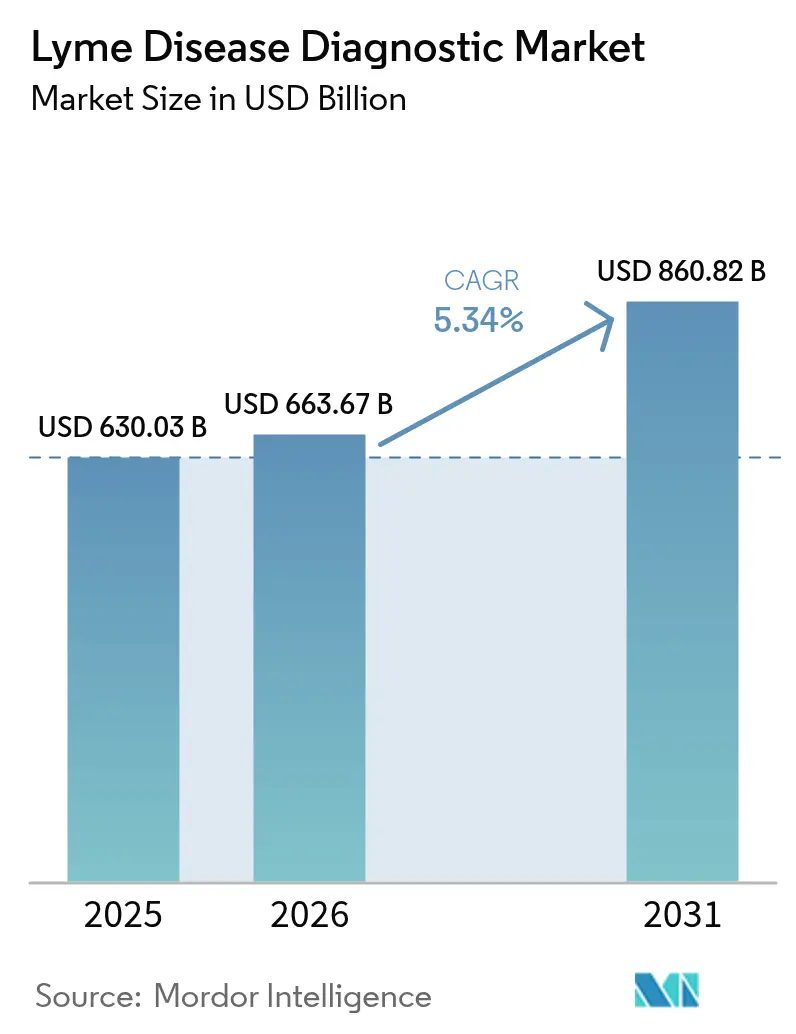
| Market Size (2026) | USD 663.67 Billion |
| Market Size (2031) | USD 860.82 Billion |
| Growth Rate (2026 - 2031) | 5.34 % |
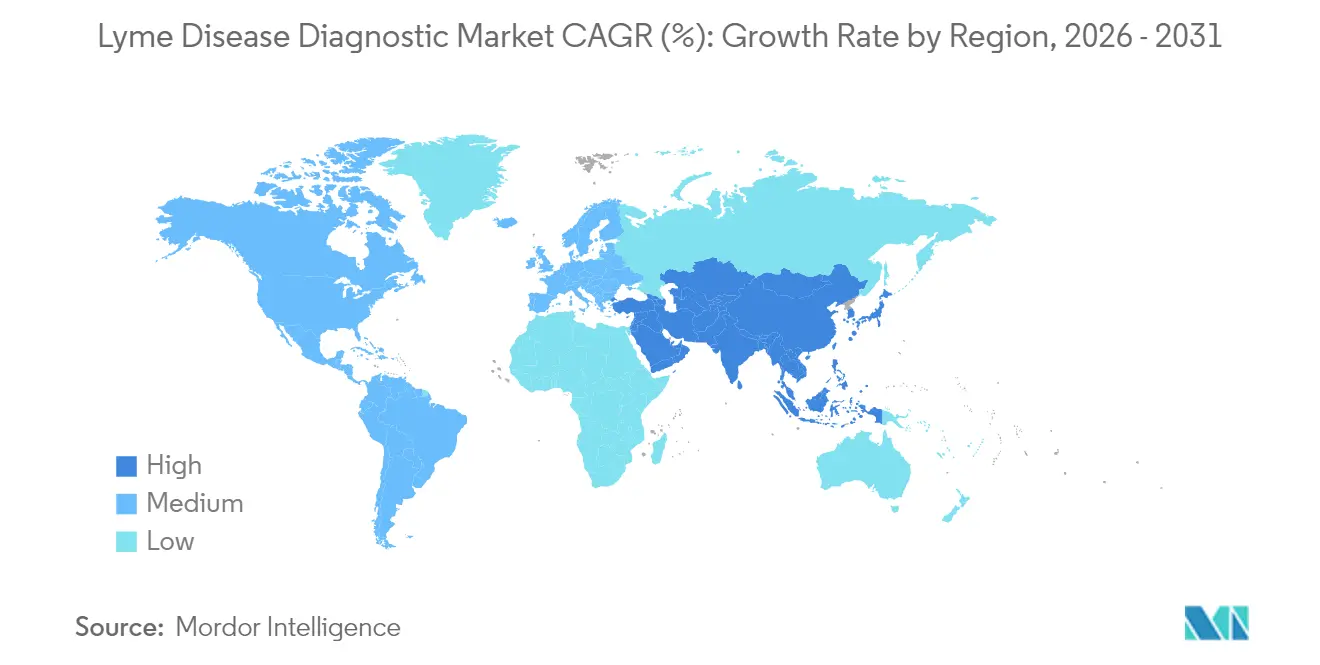
| Fastest Growing Market | Asia Pacific |
| Largest Market | North America |
| Market Concentration | Medium |
Major Players *Disclaimer: Major Players sorted in no particular order Image © Mordor Intelligence. Reuse requires attribution under CC BY 4.0. | |
Lyme Disease Diagnostic Market Analysis by Mordor Intelligence
Lyme disease diagnostics market size in 2026 is estimated at USD 663.67 million, growing from 2025 value of USD 630.03 million with 2031 projections showing USD 860.82 million, growing at 5.34% CAGR over 2026-2031. Growth reflects the steady rise in Lyme disease incidence as ticks expand into warmer latitudes, while laboratories pivot toward more sensitive modified two-tier algorithms and AI-guided readers that cut false-negative rates[1]. Point-of-care investments, home-collection kits, and FDA approvals of rapid ImmunoBlot and xVFA assays broaden patient access and shorten result turnaround times. Global reimbursement policies are gradually recognizing multiplex assays, yet coverage gaps persist, especially for urine-based and multianalyte panels[2]. Competitive intensity is moderate: legacy firms rely on regulatory expertise and distribution scale, whereas smaller innovators focus on direct pathogen detection and smartphone-enabled platforms. Climate-linked tick habitat expansion continues to be the single biggest volume catalyst, sustaining test demand in new endemic zones across North America, Europe, and Asia-Pacific.
Key Report Takeaways
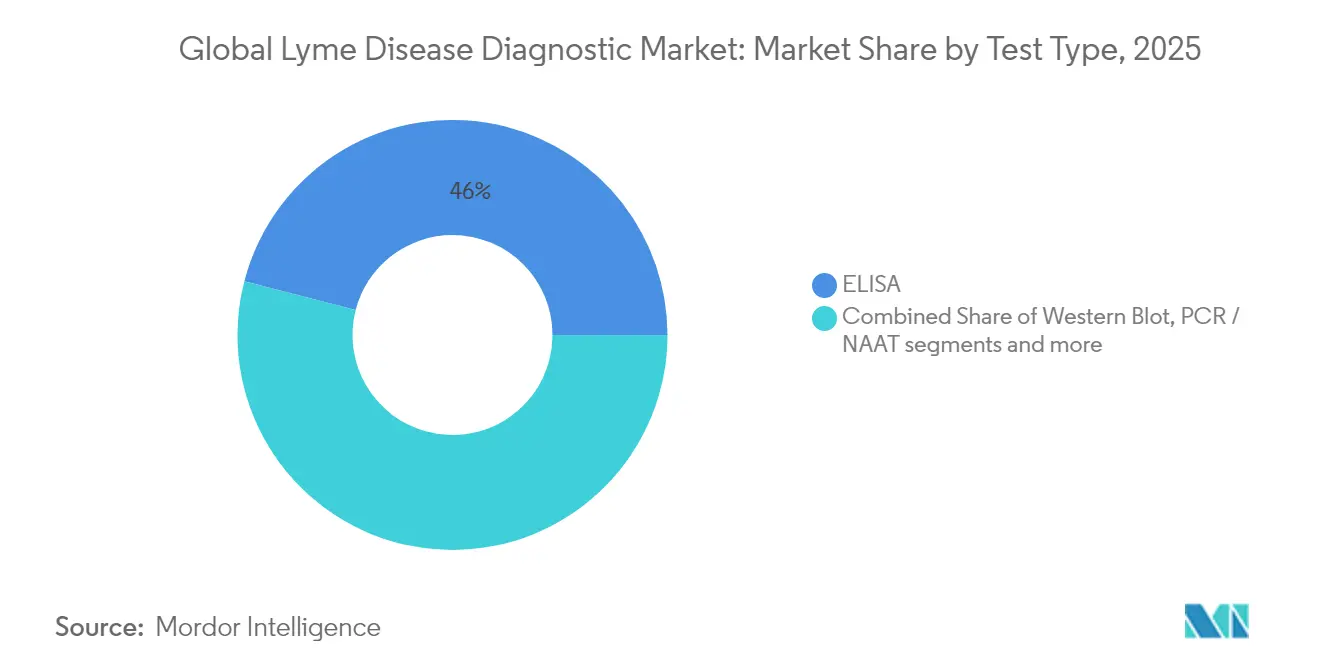
- By test type, ELISA retained 45.98% of the Lyme disease diagnostics market share in 2025, while multiplex microarray is projected to grow at 6.07% CAGR through 2031.
- By technology, serology generated 57.12% revenue in 2025; digital and AI-augmented platforms are expected to post the fastest 6.62% CAGR to 2031.
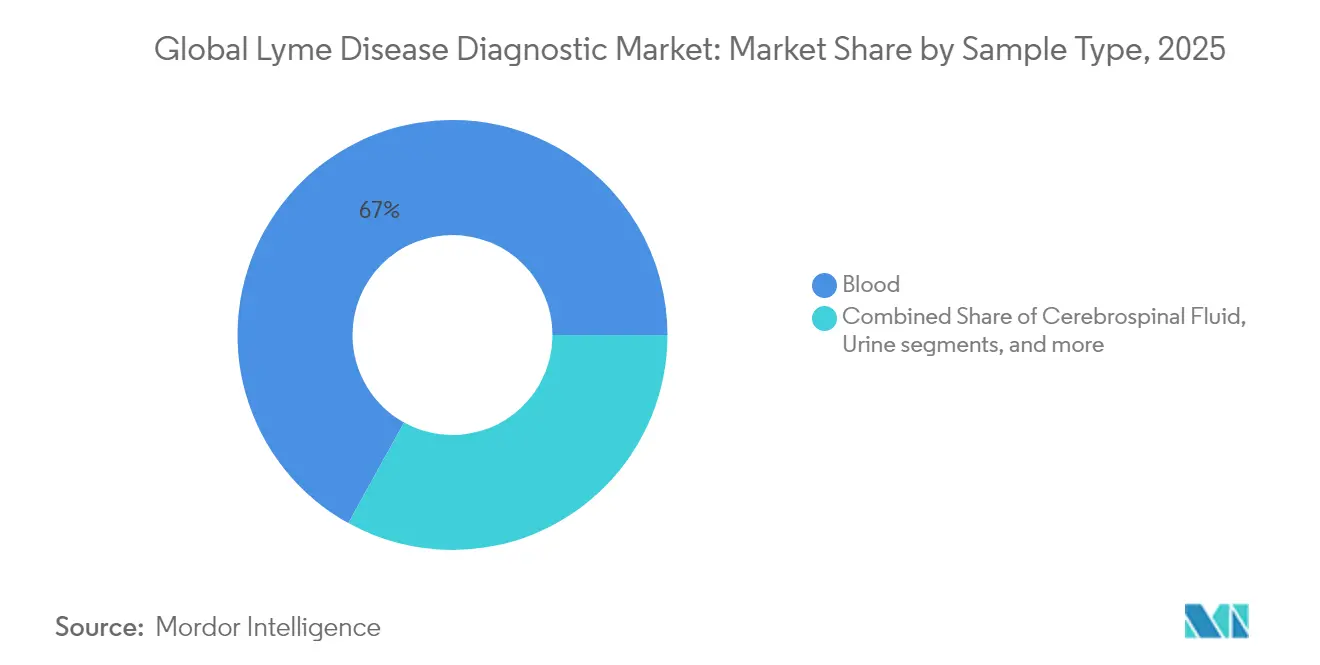
- By sample type, blood/serum accounted for 66.95% of the Lyme disease diagnostics market size in 2025, whereas urine testing will expand at a 7.04% CAGR between 2026-2031.
- By end user, diagnostic laboratories held 38.35% revenue in 2025, yet homecare testing is set to rise at 7.58% CAGR through 2031.
- By geography, North America led with 42.98% revenue share in 2025; Asia-Pacific is poised for the highest 7.18% CAGR to 2031.
Note: Market size and forecast figures in this report are generated using Mordor Intelligence’s proprietary estimation framework, updated with the latest available data and insights as of 2026.
Global Lyme Disease Diagnostic Market Trends and Insights
Drivers Impact Analysis*
| Driver | ( ~ ) % Impact on CAGR Forecast | Geographic Relevance | Impact Timeline |
|---|---|---|---|
| Climate-linked tick habitat expansion | +1.2% | Global, temperate regions | Long term (≥ 4 years) |
| Rising adoption of modified two-tier testing | +0.8% | North America & EU, expanding to APAC | Medium term (2-4 years) |
| FDA approvals of high-sensitivity rapid kits | +0.7% | North America, spill-over to aligned markets | Short term (≤ 2 years) |
| Home-collection kits boosting access | +0.6% | Global, early adoption in developed markets | Medium term (2-4 years) |
| AI-powered digital readers | +0.5% | North America & EU core, spill-over to APAC | Medium term (2-4 years) |
| Growth in point-of-care investments | +0.4% | North America, Latin America, Mediterranean | Short term (≤ 2 years) |
| Source: Mordor Intelligence | |||
Climate-linked Tick Habitat Expansion
Warming winters and longer summers lengthen tick activity seasons and push vectors into higher latitudes, lifting U.S. diagnoses to roughly 476,000 annually and driving test volumes as far south as northern Mexico. Models suggest a 1.5-fold increase in Baltic habitats, alongside a sharp decline in parts of Ukraine, compelling health systems to tailor test menus according to Borrelia species prevalence. Mediterranean and North African nations now report a rise in Borrelia circulation, pressuring suppliers to localize antigen panels for regional strains. Economic projections indicate that a 3 °C temperature rise could swell U.S. healthcare costs to USD 236 million, underlining the persistent demand for accurate early-stage diagnostics.
Rising Adoption of Modified Two-Tier Algorithms (MTTTA)
Clinical laboratories are replacing Western blot confirmation with second-step ELISAs that capture earlier antibody responses, doubling detection sensitivity in some studies without losing specificity. U.S. payers such as Blue Cross NC have started to reimburse MTTTA workflows, easing budget constraints on labs and accelerating uptake. European reference centers are updating guidelines, creating a follow-on effect in emerging Asian laboratories that rely on EU technical standards. Vendors that can bundle first- and second-step kits within a single regulatory filing enjoy stronger purchasing leverage.
FDA Approvals of High-Sensitivity ImmunoBlot & xVFA Rapid Tests
Clearances for 31-antigen ImmunoBlot kits and 20-minute smartphone-interpreted xVFA assays have redefined speed and sensitivity thresholds for Lyme tests. U.S. FDA special controls for nucleic-acid FISH devices signal broader agency willingness to green-light cutting-edge formats, prompting a surge of 510(k) filings in 2024-2025. These authorizations shorten development cycles for rapid point-of-care tools positioned for urgent-care clinics and mobile health units.
Home-Collection Kits Boosting Access & Testing Volumes
FDA-certified fingerstick devices such as the Tasso Remote Kit allow patients to mail blood to specialty labs, sidestepping geography and appointment bottlenecks. Direct-pay models decouple revenue from lagging insurance policies and appeal to Lyme-aware consumers in rural U.S. counties and European tourist corridors. Regulators still require physician oversight for treatment, but early-stage market evidence shows higher completion rates and repeat testing among home users.
Restraints Impact Analysis*
| Restarints | ( ~ ) % Impact on CAGR Forecast | Geographic Relevance | Impact Timeline |
|---|---|---|---|
| High false-negative rate of legacy ELISA protocols | -0.90% | Global, with highest impact in cost-sensitive markets | Medium term (2-4 years) |
| Reimbursement gaps for multiplex & urine-based assays | -0.60% | North America & EU, expanding to emerging markets | Long term (≥ 4 years) |
| Supply-chain fragility for recombinant antigens | -0.40% | Global, with concentrated impact in specialized manufacturing regions | Short term (≤ 2 years) |
| Physician under-recognition in emerging geographies | -0.30% | APAC, Latin America, MEA regions with limited endemic disease awareness | |
| Source: Mordor Intelligence | |||
High False-Negative Rate of Legacy ELISA Protocols
Traditional two-tier testing can miss up to 50% of early infections, leading clinicians to treat empirically or order repeat tests, raising costs and patient anxiety. France’s SPPT classification illustrates policy acknowledgement of these weaknesses, but many insurers still reimburse only the standard workflow, delaying modern upgrades. False negatives also skew surveillance data, masking actual disease burdens in national registries.
Reimbursement Gaps for Multiplex & Urine-Based Assays
Payers often require multi-year clinical-utility evidence before approving novel multiplex panels, slowing hospital adoption despite laboratory. New York regulators recently declined PCR reimbursement, citing insufficient validation relative to serology. This two-speed payment environment restricts advanced test access to self-pay patients, capping broader market penetration.
*Our forecasts treat driver/restraint impacts as directional, not additive. The impact forecasts reflect baseline growth, mix effects, and variable interactions.
Segment Analysis
By Test Type: ELISA Dominance Faces Multiplex Challenge
ELISA generated 45.98% of 2025 revenue, supported by entrenched reimbursement and automated analyzers across clinical labs, yet its high false-negative profile is sparking migration to multiplex arrays growing at a 6.07% CAGR. Western blot remains integral within legacy algorithms, though the Modified Two-Tier ELISA model is gradually curbing blot demand. PCR and NAAT fill a narrow early-infection niche, while lateral-flow cards suit field medicine despite lower sensitivity levels. The Lyme disease diagnostics market size for multiplex microarrays is anticipated to climb markedly as hospitals adopt one-run co-infection panels that improve workflow efficiency. Adoption is paced by payer acceptance and the need for staff training to interpret expanded antigen signatures.
Clinical experience shows protein microarrays lifting sensitivity from 63% to 100% when up to 400 antigens are screened simultaneously. FDA-cleared ImmunoBlot kits with 31-band profiles are eroding Western blot use by matching specificity while reducing laboratory time. As reimbursement codes catch up, ELISA's hold will loosen, yet budget-constrained regional labs may still cling to legacy platforms until depreciation cycles end.

By Technology: Serology Leadership Challenged by Digital Innovation
Serology commanded 57.12% revenue in 2025, but digital and AI-augmented platforms are sprinting ahead with 6.62% CAGR by automating result reads and cutting interpretation errors. Molecular assays appeal for direct pathogen detection within the first two weeks of infection, though higher costs limit routine use. Point-of-care cartridges are now integrating machine-learning analytics, enabling physicians to obtain 95.5%-accurate results in under 20 minutes without shipping specimens off-site. The Lyme disease diagnostics market is therefore seeing technology lines blur as vendors hybridize serology with digital overlay or bundle molecular confirmatory tests.
Over the forecast, AI-enabled lateral-flow readers that link to electronic records will become standard in urgent-care clinics. Cloud-based calibration data will ensure consistent sensitivity across devices, while labs migrate to automated strip interpretation, reducing manpower costs. As software attains Class II medical-device status, technology suppliers will pivot from pure reagents to integrated diagnostics-as-a-service subscriptions.
By Sample Type: Blood Dominance with Urine Innovation
Blood/serum use accounted for 66.95% of 2025 tests thanks to mature ELISA workflows, but urine assays, projected at 7.04% CAGR, entice clinicians seeking painless, repeatable sampling, especially for pediatric and geriatric cohorts. Cerebrospinal fluid testing remains the gold standard for neuroborreliosis though volumes are modest. Skin and synovial samples cover localized manifestations but require invasive collection. The Lyme disease diagnostics market size for urine testing will hinge on assay sensitivity breakthroughs and payer acknowledgment of clinical utility.
Technical hurdles include low antigen concentrations and sample stability during shipping, yet microfluidic concentration devices and targeted peptide detection are pushing limits downward. Some U.S. labs are piloting urine-PCR for real-time treatment monitoring, appealing to physicians who need early therapeutic feedback. Nevertheless, ambiguous reimbursement policies keep adoption in early-adopter territory.
By End User: Laboratory Dominance Shifts to Homecare Growth
Diagnostic laboratories garnered 38.35% revenue in 2025, benefiting from high test throughput and entrenched referral patterns, but the homecare channel is set to rise at a 7.58% CAGR as patients embrace doorstep sampling kits. Hospitals and physician offices will still manage acute presentations, yet their share may plateau as preventive self-testing becomes routine in endemic counties. Research institutes generate niche demand for experimental methods and trial screening but rely on grant cycles.
Direct-to-consumer platforms offer fixed-price bundles that bypass insurance friction, appealing to patients wary of coverage denials. However, regulators mandate clinician review of positive findings, leading many kit providers to partner with telemedicine groups. Laboratories respond by launching white-label home programs to protect specimen inflows, indicating a gradual convergence of traditional and consumer models within the Lyme disease diagnostics market.
Geography Analysis
North America contributed 42.98% revenue in 2025 as endemic counties expanded westward and northward, with the United States logging about 476,000 annual cases and healthcare costs near USD 1 billion. Canada’s provincial reporting upgrades and Mexico’s emerging tick surveillance reinforce regional growth. FDA rulemaking around laboratory-developed tests introduces near-term compliance costs but longer-term confidence in assay quality.
Asia-Pacific is the fastest-growing region at 7.18% CAGR to 2031, driven by heightened awareness in China, India, and Japan. Diverse Borrelia species challenge imported assay panels, pushing suppliers to localize antigens and validation studies. Public-health agencies across South Korea and Australia have begun joint training with European laboratories to accelerate expertise transfer. Investment in point-of-care formats fits the region’s dispersed rural populations and infrastructure gaps.
Europe maintains strong volumes thanks to harmonized testing guidelines and high clinician familiarity. Germany and France spearhead research output, while Mediterranean states such as Italy and Spain face rising incidence linked to warmer climates and migrating birds South America and parts of Africa sit in early-stage adoption: Argentina has documented human cases, yet under-diagnosis persists due to limited reagent availability and clinician knowledge.
Regulatory Landscape
In the United States, Lyme disease in vitro diagnostics are generally regulated by the FDA as Class II devices (commonly via 510(k) under 21 CFR 866.3830), while laboratories also operate within CDC testing guidance that continues to emphasize a two-step serologic approach for supportive evidence of exposure. A key compliance inflection is the FDA final rule on laboratory developed tests (LDTs), effective July 5, 2024, which phases out broad enforcement discretion over roughly four years, with the first phase milestone beginning May 6, 2025 and increasing documentation and quality-system expectations for labs that have historically launched Lyme assays as LDTs.
In Europe, the EU In Vitro Diagnostic Medical Devices Regulation (IVDR) 2017/746 (effective May 26, 2022) tightens conformity assessment and performance evidence requirements for infectious disease diagnostics through notified bodies, and the EMA provides related scientific support for certain device categories (including companion diagnostics frameworks). Taken together, IVDR implementation and updated public-health reporting guidance from CDC/APHL (updated April 2024) are pushing vendors toward clearer clinical performance claims, standardized result reporting, and stronger evidence packages for newer formats such as ImmunoBlot, multiplex panels, and digital reader-assisted tests.
Competitive Landscape
Market competition is moderate. Abbott, Roche, and DiaSorin leverage turnkey analyzers and global distribution to retain core laboratory accounts, while bioMérieux’s VIDAS Lyme IgG II and IgM II assays show legacy firms still innovating within serology. Smaller disruptors like T2 Biosystems target early infection with direct-detection panels that sidestep antibody lag, offering 30-day post-bite coverage. AI-driven startups integrate cloud analytics with smartphone readers, differentiating on user experience rather than reagent chemistry.
The FDA's new special controls for molecular FISH devices ease entry for nucleic-acid platforms, widening the field for mid-sized entrants, while M&A activity such as Quest Diagnostics' USD 985 million acquisition of LifeLabs expands specimen-collection networks across Canada and the U.S. and pressures regional labs to consolidate. Vendors increasingly bundle test kits with digital interpretation software and telemedicine follow-ups, signaling the convergence of diagnostics and virtual care in the Lyme disease diagnostics market.
Lyme Disease Diagnostic Industry Leaders
-
T2 Biosystems, Inc
-
Bio-Rad Laboratories
-
Oxford Immunotec USA, Inc
-
ROCHE DIAGNOSTICS INTERNATIONAL LTD
-
Abbott
- *Disclaimer: Major Players sorted in no particular order

Market Opportunities and Future Outlook
Whitespace is concentrated in early-window detection and in settings where traditional two-tier serology underperforms (for example, within days after a tick bite). Aces Diagnostics disclosed validation data in September 2025 for a multiplexed immunoassay reporting high sensitivity within 72 hours compared with traditional two-tier methods, which supports commercial room for assays that shorten the diagnostic gap and reduce repeat testing. Parallel opportunity exists in point-of-care molecular approaches, with En Carta Diagnostics receiving FDA Breakthrough Device Designation in January 2026 for its EC Pocket Lyme test and signaling faster U.S. access for novel formats targeting non-traditional sample types such as skin interstitial fluid.
Access-led growth avenues are also forming around consumer-oriented collection and decentralized testing that still routes confirmatory interpretation through regulated workflows. En Carta Diagnostics raised EUR 5 million in July 2026 to support market entry of at-home molecular testing for Lyme disease, while Bay Area Lyme Ventures invested in Galaxy Diagnostics in June 2026 to advance molecular and antigen detection technologies, indicating continued capital formation around next-generation formats. For established players and reference laboratories, these actions create near-term partnering and menu-expansion space in home collection, rapid triage, and multiplex co-infection panels, although reimbursement and evidence requirements continue to affect how quickly urine-based and multianalyte approaches scale beyond self-pay channels.
Recent Industry Developments
- February 2026: Bio-Rad Laboratories highlighted progress in scaling its diagnostics strategy, including continued integration work tied to Stilla Technologies and broader product registrations across 60+ countries during 2025. The expanded international registration footprint supports faster rollouts of infectious disease assay offerings and strengthens channel reach for multiplex-capable testing platforms used in laboratory settings.
- June 2025: ID-FISH Technology received FDA 510(k) clearance for the iDart Lyme IgM ImmunoBlot test kit. The clearance broadened the availability of rapid immunoblot-style confirmatory testing options and added momentum to alternatives that reduce turnaround time and operational burden versus legacy Western blot workflows.
- March 2024: T2 Biosystems announced plans to commercialize its T2Lyme Panel as a laboratory developed test (LDT) in the third quarter of 2024 rather than launching on the T2Dx instrument. The shift underscored how LDT deployment can be used as an earlier commercialization route for emerging Lyme assays while companies work through platform, evidence, and regulatory considerations.
Research Methodology Framework and Report Scope
Market Definition and Coverage
This market covers revenues generated from in-vitro diagnostic tests used to detect Lyme disease (Borrelia infection) in human samples. That includes test kits, instruments, and any dedicated readers used across routine clinical testing settings.
Scope exclusions: Therapeutics, tick control programs, and animal or veterinary Lyme testing products are excluded from the market values.
Segmentation Overview
- By Test Type
- ELISA
- Western Blot
- PCR / NAAT
- Lateral Flow Assay (Rapid)
- ImmunoBlot
- Multiplex Microarray & Others
- By Technology
- Serologic (Antibody-based)
- Molecular
- Point-of-Care Platforms
- Multiplex Diagnostic Platforms
- Digital & AI-augmented Diagnostics
- By Sample Type
- Blood / Serum
- Cerebrospinal Fluid
- Urine
- Skin Biopsy
- Synovial Fluid
- By End User
- Hospitals & Clinics
- Diagnostic Laboratories
- Research Institutes
- Homecare / Direct-to-Consumer
- By Geography
- North America
- United States
- Canada
- Mexico
- Europe
- Germany
- United Kingdom
- France
- Italy
- Spain
- Rest of Europe
- Asia-Pacific
- China
- India
- Japan
- South Korea
- Australia
- Rest of Asia-Pacific
- South America
- Brazil
- Argentina
- Rest of South America
- Middle East and Africa
- GCC
- South Africa
- Rest of Middle East and Africa
- North America
Data Sources, Market Sizing, and Validation
Desk Research
Desk research was used to set the epidemiology and testing context first, before the model was built. We relied on public disease surveillance and guidance, such as CDC Lyme disease resources, ECDC publications, and similar national public health agencies, to understand how suspected cases flow into testing and follow up.
To size and sanity check the demand pool, we also reviewed infectious disease and diagnostics journals, clinical guideline references, and laboratory standards documents (for example, recommendations used for screening and confirmatory testing). Where relevant for IVD supplies, we reviewed public trade statistics and customs summaries, and we also checked company filings and investor presentations for directional revenue and product mix signals.
A paid subscription for company financials and intelligence, along with a paid patent database, was used selectively to standardize disclosures and track technology focus over time. The sources listed here are illustrative only, and additional public references were also used to collect, validate, and clarify data points during the work.
Primary Interviews and Surveys
Primary discussions were used to pressure test assumptions that desk sources rarely spell out, especially testing pathways, repeat testing behavior, and average selling price movement by assay type. We spoke with a mix of diagnostic labs, hospital lab decision makers, clinicians involved in ordering, and channel-facing roles, with coverage across APAC, EMEA, and the Americas to reflect regional differences in practice and reimbursement sensitivity.
Distribution of primary research fieldwork respondents
| Company type | Respondent position | Region |
|---|---|---|
| Top tier: 36% | CXOs: 15% | APAC: 49% |
| Mid tier: 48% | Functional/Unit leaders: 39% | EMEA: 33% |
| Smaller Players: 16% | Managers: 46% | Americas: 18% |
Market-Sizing & Forecasting
The market was built using a top-down demand pool approach where incidence and suspected case patterns are translated into testing volumes, which are then reconstructed by test pathway and applied pricing. When the pathway differs by region, the model is adjusted using region-specific shares for first-line screening versus confirmatory testing, and then rolled up into a global total.
To keep totals realistic, results were corroborated with selective bottom-up checks such as sampled test menu pricing, lab throughput discussions, and supplier-level revenue signals where disclosure was available. Key inputs that shape the math include the share of suspected patients who receive testing, the average number of tests per patient episode (including repeat or follow up), the split across assay types used in practice (for example immunoassay screening versus confirmatory methods), average selling prices at the manufacturer level, and the pace of adoption for newer or faster formats that can shift mix.
Forecasts were developed using scenario analysis supported by short trend lines on the core drivers, followed by a reconciliation pass with what interviewees expect for testing demand and pricing. Where direct volume information was missing for smaller countries, gap filling was done using proxy indicators such as population, reported case intensity, and lab infrastructure level, followed by normalization so the implied testing rates stayed within plausible bounds.
Data Validation & Update Cycle
Validation is done by cross-checking the output against independent signals that should move in the same direction, such as reported case trends, diagnostic testing intensity discussed by labs, and mix shifts implied by guideline and practice changes. When a metric looks inconsistent, the assumptions are re-opened, outliers are reviewed, and follow-up calls are triggered so the variance is explained before the numbers are finalized.
A multi-step review is used, where an analyst reviews the model logic, and then a second pass checks math integrity, units, and year-to-year movement. The report is refreshed annually, and interim updates are made when material events occur, such as guideline revisions, reimbursement changes, or major product launches. Before delivery, the content and numbers receive a fresh final pass so clients receive the latest updated view.
Mordor Intelligence's Lyme Disease Diagnostic Market Sizing Compared With Other Published Estimates
Published market values for Lyme disease diagnostics can look far apart even when the topic sounds the same. This usually happens because each publisher makes different choices on what revenues count, what price level is used, and how testing volumes are linked to real world disease patterns.
A common gap driver is scope, where some estimates appear to blend broader infectious disease testing, add adjacent services, or do not clearly separate human testing from other use cases. Another driver is how volume is derived, since assumptions on suspected case conversion, repeat testing, and confirmatory pathway shares can change totals quickly, and price assumptions can drift if list prices are used without netting typical discounts and rebates. The spread is also influenced by refresh cadence and currency timing. Older updates may not reflect current guideline discussion, newer assay mix, or the latest ASP movement, which results in differences in manufacturer net pricing and human-only inclusion applied in the approach described by Mordor Intelligence.
Benchmark comparison
| Source | Market Size | Gaps in Research Methodology |
|---|---|---|
| Mordor Intelligence | USD 663.67 M (2026) | |
| Global Consultancy A | USD 2.85 B (2025) | Uses a broader diagnostics framing with limited clarity on manufacturer net pricing versus end user spend, and the stated scope is not explicit on excluding adjacent non-human or service revenues, which can inflate totals. |
| Regional Consultancy B | USD 1.70 B (2024) | Base year is an estimate year and the method description emphasizes segment splits, but it is not clear how suspected case to test conversion and repeat testing are validated, and this can shift volume assumptions materially. |
Looking at the three published points together, most of the variance can be traced back to what is counted as Lyme disease diagnostics revenue, the price level used, and whether volume assumptions are tied to real testing pathways. By keeping the build tied to observable incidence signals, pathway shares, and manufacturer level pricing, the output stays easier to audit and more repeatable year over year.
Key Questions Answered in the Report
What is the current value of the Lyme disease diagnostics market?
The market is valued at USD 663.67 million in 2026 and is forecast to climb to USD 860.82 million by 2031.
Which region holds the largest share of Lyme disease diagnostics revenue?
North America leads with 42.98% market share in 2025 because of long-standing endemicity and mature laboratory infrastructure.
Why are modified two-tier testing algorithms (MTTTA) gaining traction?
MTTTA workflows replace Western blots with second-step ELISAs, doubling early-stage detection sensitivity while keeping specificity high.
How fast is the home-collection testing segment growing?
Homecare and direct-to-consumer testing is projected to expand at a 7.58% CAGR through 2031 as patients seek convenient sampling kits.
What role does climate change play in Lyme disease diagnostics demand?
Warmer winters and longer summers expand tick habitats, driving sustained testing needs in newly affected regions worldwide.