
Liposome Drug Delivery Market Size and Share
Market Overview
| Study Period | 2020 - 2031 |
|---|---|
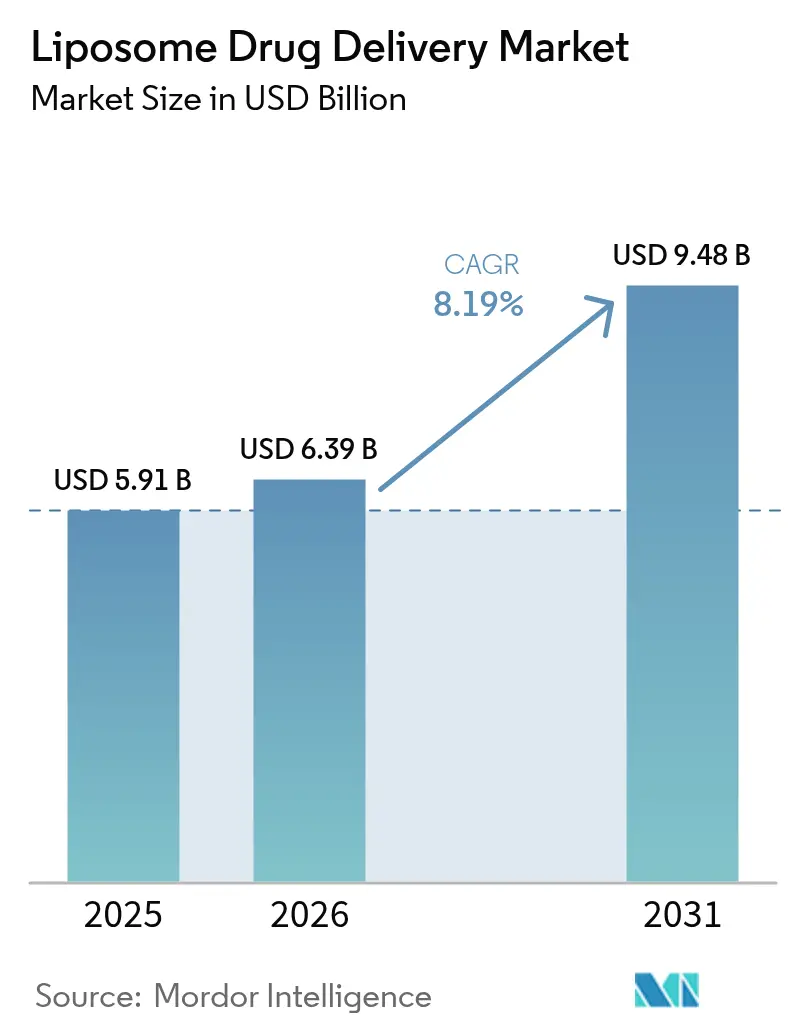
| Market Size (2026) | USD 6.39 Billion |
| Market Size (2031) | USD 9.48 Billion |
| Growth Rate (2026 - 2031) | 8.19 % |
| Fastest Growing Market | Asia Pacific |
| Largest Market | North America |
| Market Concentration | Medium |
Major Players *Disclaimer: Major Players sorted in no particular order Image © Mordor Intelligence. Reuse requires attribution under CC BY 4.0. | |
Liposome Drug Delivery Market Analysis by Mordor Intelligence
liposome drug delivery market size in 2026 is estimated at USD 6.39 billion, growing from 2025 value of USD 5.91 billion with 2031 projections showing USD 9.48 billion, growing at 8.19% CAGR over 2026-2031. This growth path shows how the liposome drug delivery market has evolved beyond niche oncology use into broader applications, including viral vaccines, pain control, and respiratory therapy. Regulatory agencies show greater willingness to license complex nanomedicines, which shortens approval timelines and lowers perceived risk. Demand also gains from the proven safety bias of liposomal formulations relative to free‐drug alternatives, an advantage actively promoted by clinicians as they look to reduce organ toxicity. Manufacturing scale-up remains costly, yet newer continuous processes are trimming production time, which supports competitive pricing and wider access in cost-sensitive regions.
Key Report Takeaways
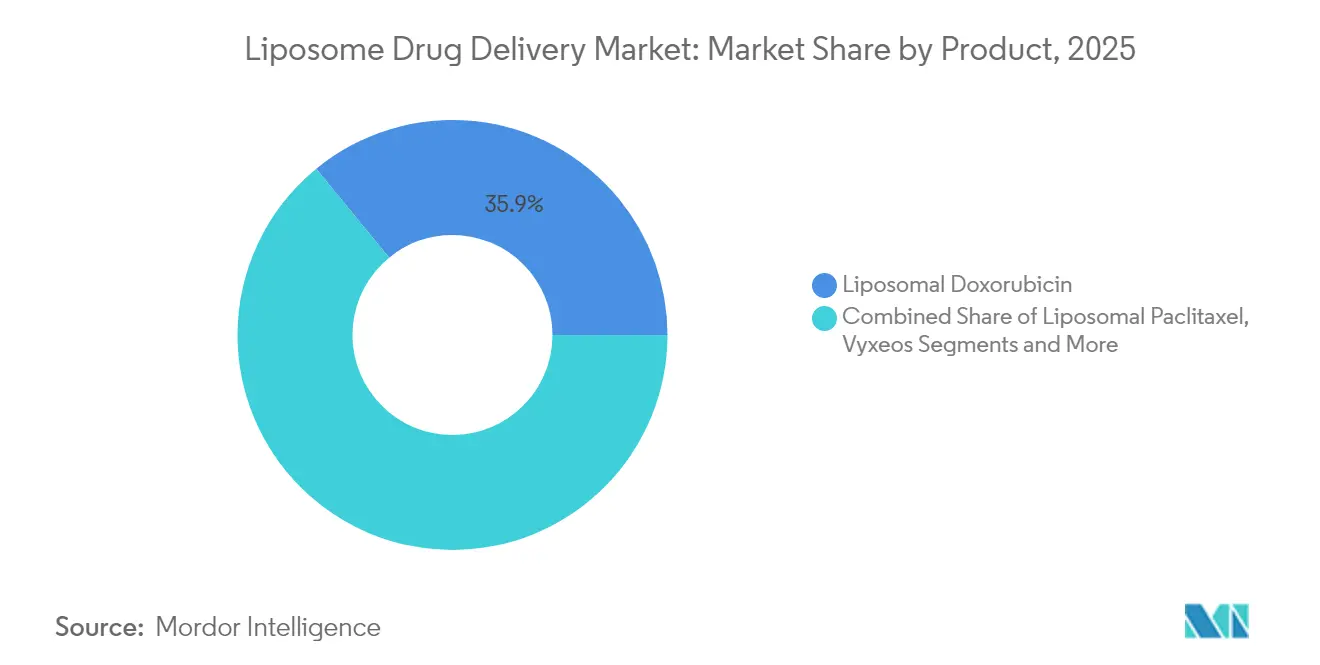
- By product type, liposomal doxorubicin led with 35.92% of the liposome drug delivery market share in 2025, while liposomal paclitaxel posted the fastest 11.09% CAGR to 2031.
- By technology, PEGylated stealth systems held 60.65% share of the liposome drug delivery market in 2025; cubosome-based lipid nanoparticles are advancing at a 10.42% CAGR through 2031.
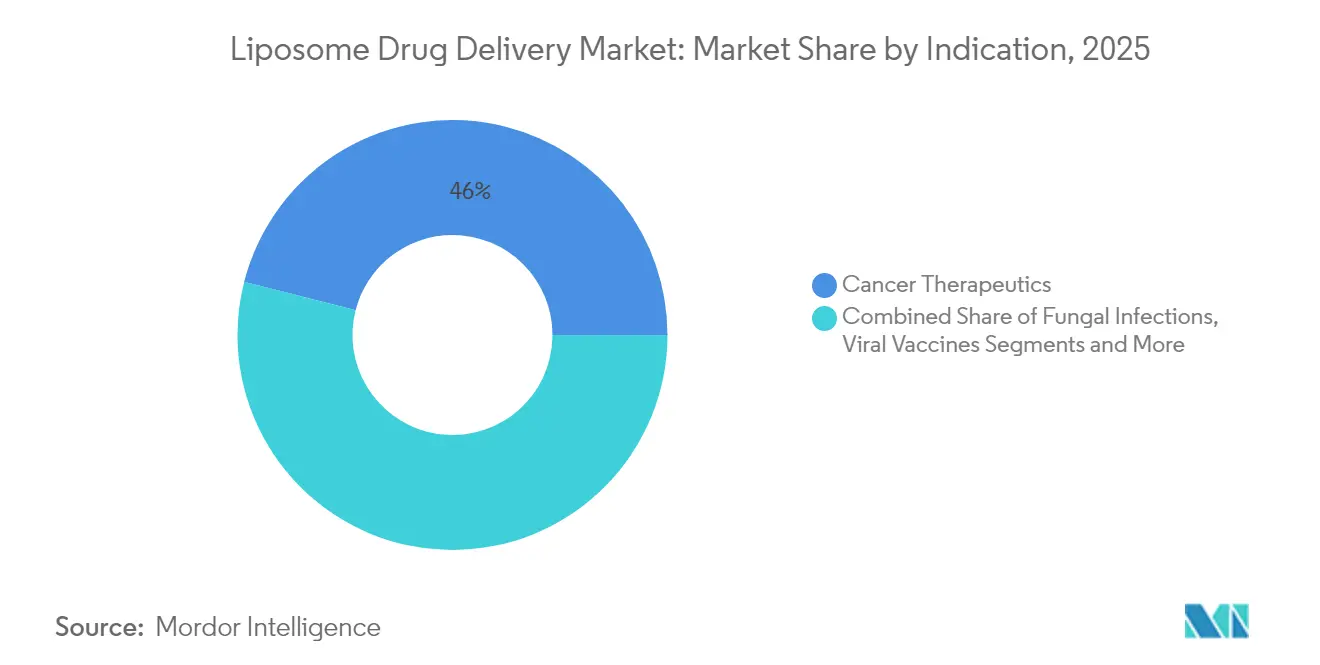
- By indication, cancer therapeutics captured 46.02% of the liposome drug delivery market size in 2025, whereas viral vaccines record the highest 10.95% CAGR toward 2031.
- By route of administration, intravenous delivery accounted for 74.60% of the liposome drug delivery market in 2025, and pulmonary delivery is growing at 10.21% CAGR.
- By geography, North America commanded 40.78% share of the liposome drug delivery market in 2025, while Asia-Pacific is projected to expand at an 10.57% CAGR to 2031.
Note: Market size and forecast figures in this report are generated using Mordor Intelligence’s proprietary estimation framework, updated with the latest available data and insights as of 2026.
Market Trends and Insights
Drivers Impact Analysis of Liposome Drug Delivery Market*
| Driver | (~) % Impact on CAGR Forecast | Geographic Relevance | Impact Timeline |
|---|---|---|---|
| Rising prevalence of cancer & fungal infections | +2.1% | North America, Europe | Long term (≥ 4 years) |
| Proven safety bias vs. conventional formulations | +1.8% | Global regulated markets | Medium term (2-4 years) |
| Rapid adoption of PEGylation & stealth technologies | +1.4% | North America, EU expanding to APAC | Medium term (2-4 years) |
| Expiring patents pushing liposomal reformulations | +1.2% | North America first, global later | Short term (≤ 2 years) |
| Cubosome & other non-spherical LNPs boosting uptake | +0.9% | APAC core, spill-over to North America | Long term (≥ 4 years) |
| AI/ML-guided lipid composition optimisation | +0.7% | North America, EU, emerging APAC | Long term (≥ 4 years) |
| Source: Mordor Intelligence | |||
Rising Prevalence of Cancer & Fungal Infections
Cancer incidence keeps the liposome drug delivery market growing, as targeted liposomes concentrate chemotherapies at tumor sites and reduce systemic toxicity. Pegylated liposomal doxorubicin retains circulation for 55 hours, versus under 10 minutes for free doxorubicin.[1] Fungal infections in immunocompromised populations also favor liposomal amphotericin B, which lowers nephrotoxicity yet maintains antifungal strength.[2]These two high-burden disease groups anchor long-term volume growth and underwrite pipeline investment.
Proven Safety Bias vs. Conventional Formulations
Regulators approve liposomal versions more readily as data accumulate showing longer overall survival and lower severe toxicities. The FDA’s 2024 irinotecan liposome decision illustrates the accepted benefit-risk profile, with median survival of 11.1 months versus 9.2 months for standard therapy.[3] Physicians now prescribe many liposomal drugs first line, boosting demand and reinforcing a virtuous safety-perception cycle.
Rapid Adoption of PEGylation & Stealth Technologies
PEGylation confers stealth that minimizes macrophage clearance, sustaining product efficacy and shaping the liposome drug delivery market. Yet anti-PEG antibodies appear in up to 10% of patients, prompting companies to trial ganglioside-modified or other coatings to hold efficacy and curb immunogenicity. R&D spend flows into new polymer and lipid chemistries rather than abandoning the stealth principle.
Expiring Patents Pushing Liposomal Reformulations
Patent cliffs open space for reformulated liposomal versions that secure fresh intellectual property. Bioequivalence guidance for liposomes is strict, effectively raising entry barriers for simple generics and favoring branded lifecycle-management tactics.
Restraints Impact Analysis of Liposome Drug Delivery Market*
| Restraint | (~) % Impact on CAGR Forecast | Geographic Relevance | Impact Timeline |
|---|---|---|---|
| Stringent CMC & sterility regulations | -1.5% | North America, EU | Medium term (2-4 years) |
| High manufacturing CAPEX & scale-up complexity | -1.2% | Global, acute in emerging markets | Long term (≥ 4 years) |
| Short shelf-life & cold-chain dependence | -0.8% | Tropical regions worldwide | Medium term (2-4 years) |
| Anti-PEG antibody–driven hypersensitivity events | -0.6% | Developed markets with high PEG exposure | Short term (≤ 2 years) |
| Source: Mordor Intelligence | |||
Stringent CMC & Sterility Regulations
The FDA demands full particle-size, encapsulation, and release-profile datasets, which stretch timelines and budgets. Aseptic processing adds cost because liposomes cannot tolerate terminal sterilization. Smaller firms often lack the analytic platforms and GMP suites needed for compliance, leaving the liposome drug delivery market weighted toward large incumbents.
Anti-PEG Antibody–Driven Hypersensitivity Events
Pre-existing and therapy-induced anti-PEG antibodies accelerate blood clearance and can trigger complement activation, lowering efficacy and risking acute reactions. Screening and desensitisation protocols raise clinical overheads, and some chronic indications move toward non-PEG stealth systems to avoid repeat-dose complications.
*Our forecasts treat driver/restraint impacts as directional, not additive. The impact forecasts reflect baseline growth, mix effects, and variable interactions.
Liposome Drug Delivery Market Segment Analysis
By Product:
Doxorubicin Leadership Faces Paclitaxel ChallengeThe liposome drug delivery market size for liposomal doxorubicin reached USD 2.12 billion in 2025, equal to 35.92% of total revenue. Its long record of reduced cardiotoxicity keeps the brand entrenched, especially in ovarian cancer and multiple myeloma. Recent hyperthermia-triggered variants raise local drug release without altering systemic profiles, sustaining clinical relevance. Liposomal paclitaxel posted the quickest 11.09% CAGR as solid tumor treatment centers adopt the nanoformulation to avoid Cremophor-related hypersensitivity. Amphotericin B liposomes hold stable infectious-disease demand, and newly approved irinotecan liposome presents a fresh first-line option for metastatic pancreatic cancer. Pipeline candidates bundle cytotoxics inside temperature-sensitive vesicles, aiming to combine high loading (89.5% encapsulation) with on-demand release.
Ongoing reformulation programs extend patent life for mature chemotherapies and avert pricing erosion. The liposome drug delivery market therefore remains dominated by cancer care, yet formulators are experimenting with antimicrobial dual-payload liposomes to slow resistance growth. Growth rates suggest paclitaxel liposomes may nudge doxorubicin from the top spot beyond 2030 if current uptake persists.

By Technology:
PEGylation Dominance Under Immunogenicity PressureThe liposome drug delivery market saw PEGylated stealth coatings account for 60.65% revenue in 2025, capitalizing on three decades of safety data and well-characterised GMP methods. Yet clinicians grow cautious after hypersensitivity case series, so manufacturers are pivoting to ganglioside or zwitterionic alternatives that evade complement activation. Cubosome-based LNPs, advancing at 10.42% CAGR, promise superior endosomal escape and gene-editing payload delivery.
DepoFoam multivesicular structures deliver bupivacaine for up to 96 hours, proving controlled-release value in post-surgical pain. Continuous-flow manufacture emerges as a cost lever, and AI selects lipid ratios that cut batch variability. Over the forecast, tech mix will likely rebalance in favor of cubosomes and other advanced particles, though PEGylation remains the commercial workhorse for large-volume oncology brands.
By Indication:
Cancer Dominance Challenged by Viral Vaccine AccelerationCancer care contributed 46.02% of the liposome drug delivery market size in 2025, as liposomes exploit tumor microvascular leakiness to raise local drug concentration. Multidrug liposome Vyxeos reshapes acute myeloid leukemia therapy by synchronously delivering daunorubicin and cytarabine, and similar combination designs populate the late-stage pipeline. Viral vaccines, led by mRNA–lipid nanoparticle technology, show the fastest 10.95% CAGR because the COVID-19 experience validated rapid, scalable production.
Pain management indications gain share via DepoFoam bupivacaine that holds analgesia through 96 hours, reducing opioid need. Fungal infections remain a niche yet stable segment. CNS applications lag because blood–brain barrier penetration is difficult, but early data using glutathione-coated liposomes are encouraging for Parkinson’s and glioblastoma trials.
By Route of Administration:
IV Dominance Faces Pulmonary InnovationIntravenous delivery made up 74.60% of liposome drug delivery market revenue in 2025, supported by precise dosing control and oncology’s reliance on infusion centers. However, pulmonic administration posts a 10.21% CAGR as deep-lung deposition tools mature and asthma therapy gains 18-hour drug residence with nanoliposomal salbutamol. Ocular and topical routes benefit dermatology and ophthalmology pipelines that demand longer residence and skin penetration.
Reformulated inhalable liposomal antibiotics may soon enter cystic-fibrosis care, and dry-powder devices extend shelf life in tropical markets, easing cold-chain burdens. Intrathecal and intraventricular dosing hold small but vital roles in CNS oncology.
Geography Analysis
North America Liposome Drug Delivery Market
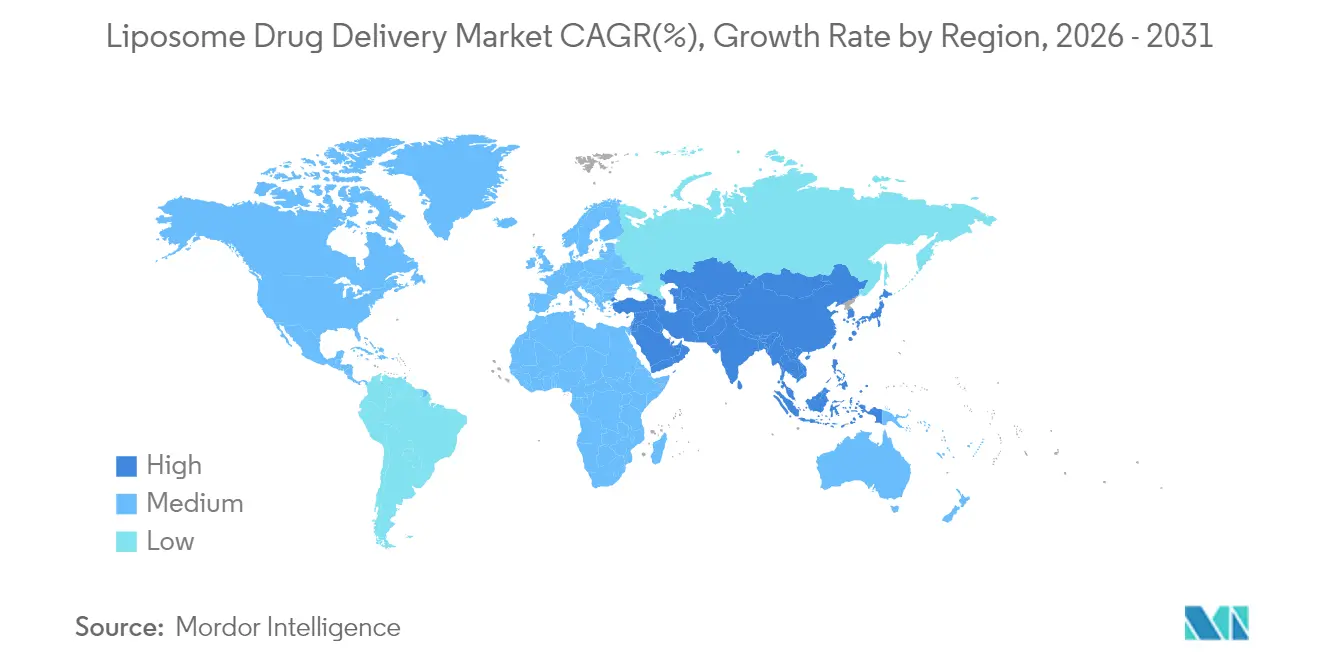
North America represented 40.78% of the liposome drug delivery market in 2025 on the strength of reimbursement parity for nanomedicines and deep clinical trial networks. The approval pathway remains predictable, letting innovators price at a premium when they can prove toxicity savings or extended survival. Manufacturers invest heavily in U.S. continuous-manufacturing suites to secure on-shore supply and satisfy rising political pressure for domestic production.
Europe Liposome Drug Delivery Market
Europe maintains robust adoption as EMA procedures allow centralized marketing authorizations that cover 27 states. Germany, France, and the United Kingdom champion specialist oncology centers piloting combination liposome regimens. EU policy also funds Horizon Europe grants aimed at cold-chain-free lipid nanoparticle vaccines, smoothing path to scale once technical milestones clear.
APAC Liposome Drug Delivery Market
Asia-Pacific achieves the fastest 10.57% CAGR to 2031. China’s contract development organizations align with multinational sponsors to produce GMP batches at lower cost, while Singapore and South Korea subsidize advanced therapy manufacturing parks. Local incidence of stomach, liver, and lung cancers fuels demand, and healthcare access expands via public-private insurance plans. India and Indonesia focus on generic liposomal anticancer drugs after expiries, anchoring regional volume growth.
LATAM and MEA Liposome Drug Delivery Market
Latin America and the Middle East & Africa show slower uptake because of shorter reimbursement lists and weaker cold-chain logistics. Nonetheless, Gulf Cooperation Council states pilot targeted oncology centers adopting irinotecan liposome. Brazil explores public–private partnerships to lease continuous-flow lines and slash import costs, and South Africa tests inhalable liposomal TB therapy at academic centers.
Regulatory Landscape
Liposome drug products are regulated as complex drug products, with regulators emphasizing deep Chemistry, Manufacturing, and Controls (CMC) characterization, human pharmacokinetics, and bioavailability to manage variability in particle size, encapsulation, and release behavior. In the United States, FDA guidance for liposome drug products and separate FDA guidance for drug products that contain nanomaterials shape NDA and ANDA development packages, reinforcing the need for extensive analytical comparability, sterility assurance under aseptic processing constraints, and labeling documentation aligned to product performance.
In Europe, the European Medicines Agency (EMA) applies a multidisciplinary approach to intravenous liposomal products developed with reference to an innovator, supported by reflection papers and product-specific bioequivalence guidance (including guidance for liposomal amphotericin B). Across major regions, ICH quality guidelines such as Q8(R2) anchor expectations for risk-based development and lifecycle control, while sponsors often use scientific advice to confirm the scope of non-clinical and clinical bridging required for complex liposomal and other nanomedicine submissions.
Value Chain Analysis
The value chain begins with sourcing high-purity lipids and excipients, including qualified phospholipids and functional lipids, then moves through preformulation, analytical method development, and process development for size control and encapsulation. Formulation and scale-up typically take place within specialized internal manufacturing teams or CDMOs with aseptic suites, followed by sterile fill-finish, packaging, and cold-chain distribution to hospitals, infusion centers, and specialty pharmacies for intravenous products, which represented 74.60% of route-based revenue in 2025.
Bottlenecks concentrate on multi-step processing, including size reduction and uniformity control via extrusion or high-pressure homogenization, along with limited batch sizes. Single-source dependencies also persist due to lipid-excipient qualification and stability requirements. Process modernization is increasingly linked to continuous and microfluidic manufacturing approaches with in-line monitoring of critical quality attributes, and established CDMOs such as Evonik highlight dedicated lipid-based parenteral delivery capabilities, including sites in Vancouver and Birmingham, Alabama, to support clinical-to-commercial transfer for liposomal programs.
Competitive Landscape
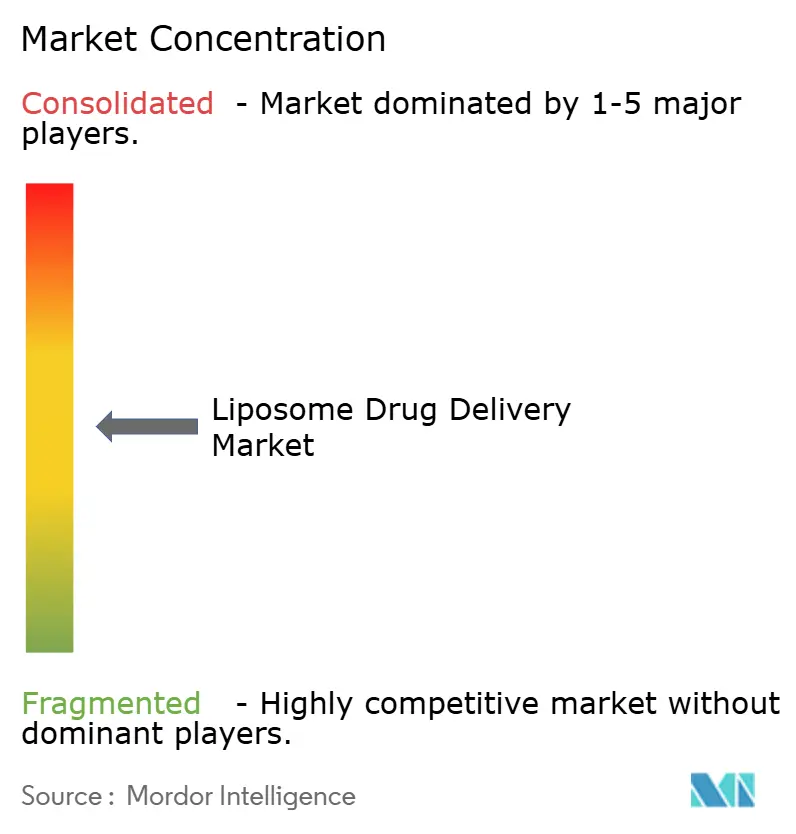
The liposome drug delivery market is moderately concentrated. Gilead Sciences holds entrenched share through AmBisome and developing long-acting HIV lenacapavir liposomes. Pacira BioSciences leverages its multivesicular DepoFoam platform and hit USD 675 million sales in 2023, reinvesting into osteoarthritis programs. Ipsen pushes Onivyde into front-line metastatic pancreatic cancer, and Spectrum Pharmaceuticals commercialises poziotinib inside stealth vesicles for EGFR exon 20 insertions.
Strategic moves focus on platform reuse: single lipid chemistries can support multiple payloads, raising R&D efficiency. Continuous-flow microfluidics in pilot plants cut batch time from hours to minutes, and leaders file patents to protect device-process combinations. Partnerships between big pharma and AI start-ups accelerate pre-formulation screening, shortening candidate nomination by several months.
Challengers differentiate via cubosomes that promise eight-fold higher uptake and broaden IP space. Most license from academic institutes in Australia and China, aiming at mRNA cancer vaccines. Smaller U.S. firms pursue galactose-targeted liposomes for hepatocellular carcinoma. Overall, barriers stay high because GMP lipid sourcing, aseptic-filling, and sterility validation require capital and know-how, keeping the playing field tilted toward incumbents.
Liposome Drug Delivery Industry Leaders
-
Gilead Sciences, Inc.
-
Pacira BioSciences, Inc.
-
Luye Pharma Group
-
Johnson and Johnson
-
Ispen
- *Disclaimer: Major Players sorted in no particular order
Liposome Drug Delivery Market Companies Covered in this Report
- Gilead Sciences
- Pacira BioSciences
- Spectrum Pharmaceuticals
- Takeda Pharma
- Luye Pharma
- Johnson & Johnson
- Ipsen
- Celsion
- Teva Pharmaceutical Industries
- Novartis
- Sun Pharmaceuticals Industries
- Acrotech Biopharma
- Bristol-Myers Squibb
- Pfizer
- Merck
- Astellas Pharma
- Acuitas Therapeutics
- Arcturus Therapeutics
- Evonik Health Care
- NanoCarrier Co.
Market Opportunities and Future Outlook
A near-term whitespace is visible in regulated-market expansion for established liposomal anti-infectives and oncology generics, where complex-product requirements raise the bar beyond conventional small-molecule generics. April 2026 EU marketing authorization for CSPC Pharmaceutical Group Limiteds Amphotericin B Liposomal (powder for concentrate for dispersion for infusion, HC1507G2) highlights continued entry of new suppliers into EMA-regulated markets, adding competitive pressure on legacy brands while widening procurement options for hospital systems.
Technology-driven opportunities center on manufacturability and differentiated functionality rather than simple reformulation. Service-capability buildout supports this shift, as seen in June 2026 when Creative Biolabs announced an expanded liposome development service portfolio covering functional and stimuli-responsive formulations for biologics, nucleic acid therapeutics, and vaccines, consistent with market pull from viral vaccines and advanced payloads. Additional whitespace sits in non-PEG stealth approaches and pulmonary delivery, where developers can address anti-PEG hypersensitivity concerns and cold-chain constraints while focusing on faster-growing administration routes highlighted in the report segmentation.
Recent Industry Developments in Liposome Drug Delivery Market
- January 2026: Pacira BioSciences entered an exclusive agreement with LG Chem to commercialize EXPAREL (bupivacaine liposome injectable suspension) in select Asia-Pacific markets. The deal extends the geographic footprint of a leading multivesicular liposome analgesic franchise and strengthens local commercialization pathways for liposomal pain management.
- November 2025: Pacira BioSciences signed an exclusive license and collaboration agreement with AmacaThera to develop AMT-143, a non-opioid long-acting analgesic. The partnership broadens Pacira's long-acting pain pipeline and reinforces continued investment interest in sustained-release injectable formulations that compete on duration and opioid-sparing protocols.
- December 2024: Pacira BioSciences was awarded U.S. Patent No. 12,156,940 covering manufacturing of bupivacaine multivesicular liposomes, with protection extending into July 2044. The added process IP supports lifecycle management for DepoFoam-based products and can influence competitive entry timelines for similar multivesicular liposome approaches.
Liposome Drug Delivery Market Report Scope and Research Methodology
Market Definition and Coverage
This market covers prescription liposome based drug delivery products where a lipid bilayer vesicle is used to encapsulate and deliver an active pharmaceutical ingredient for human therapy, and revenues are counted at the finished dosage form level.
Scope exclusions: We exclude OTC cosmetic liposome products, research-only liposome reagents, gene-therapy lipid nanoparticles, and standalone contract manufacturing service fees.
Segments Covered in This Report
- By Product
- Liposomal Paclitaxel
- Liposomal Doxorubicin
- Liposomal Amphotericin B
- Vyxeos (Daunorubicin + Cytarabine)
- Liposomal Irinotecan
- Others
- By Technology
- PEGylated (Stealth)
- Non-PEGylated Conventional
- DepoFoam
- Cubosome-based LNPs
- By Indication
- Cancer Therapeutics
- Fungal Infections
- Pain Management
- Viral Vaccines
- CNS Disorders
- By Route of Administration
- Intravenous
- Intrathecal / Intraventricular
- Topical / Dermal
- Ocular
- Pulmonary / Inhalation
- By Geography
- North America
- United States
- Canada
- Mexico
- Europe
- Germany
- United Kingdom
- France
- Italy
- Spain
- Rest of Europe
- Asia-Pacific
- China
- Japan
- India
- Australia
- South Korea
- Rest of Asia-Pacific
- Middle East and Africa
- GCC
- South Africa
- Rest of Middle East and Africa
- South America
- Brazil
- Argentina
- Rest of South America
- North America
Data Sources, Market Sizing, and Validation
Desk Research
Desk research was used to map what is already approved, what is in the clinic, and where demand is likely to come from in real use. We relied on public drug label information and regulatory databases (such as the FDA and EMA) to confirm dosage forms, routes of administration, and indication language that clarifies whether a product is truly liposomal.
To anchor demand and context, we also referred to sources such as the WHO, the National Cancer Institute, and the National Library of Medicine (PubMed) for disease and treatment landscape signals, along with payer and hospital channel cues where available. Company filings, investor presentations, and reputable press were used to check product revenue direction and major lifecycle events. We also used a paid subscription for company financials and another for patent intelligence to support product mapping and assumption checks. The desk sources listed here are illustrative, and many other public materials were used for data collection, cross-checking, and clarification.
Primary Interviews and Surveys
Primary work focused on validating what drives uptake for liposomal drugs in day to day practice, and what pricing and mix changes are realistic over the forecast. We spoke with a spread of stakeholders across drug developers, contract development teams, hospital pharmacy and procurement, and clinical specialists, and then used those inputs to close gaps that desk sources do not explain well (like line of therapy placement and substitution behavior).
Distribution of primary research fieldwork respondents
| Company type | Respondent position | Region |
|---|---|---|
| Top tier: 26% | CXOs: 12% | APAC: 49% |
| Mid tier: 60% | Functional/Unit leaders: 38% | EMEA: 32% |
| Smaller Players: 14% | Managers: 50% | Americas: 19% |
Market-Sizing & Forecasting
Market sizing was built using a top-down logic where the treated patient pool and therapy usage were reconstructed by key indications, and then translated into value using typical dosing patterns and price levels at the finished drug level. For a reality check, selective bottom-up approximations were used, such as rolling up a sample of major liposomal brands in high-adoption indications and testing implied averages against channel feedback.
Inputs that mattered most included the active liposomal product mix by indication, expected launch and loss of exclusivity timing, route of administration mix (IV versus other routes), typical vial strength and dose per cycle, and net price movement that reflects contracting and generic entry. When gaps appeared in brand level disclosures, we used primary inputs to set conservative ranges for share and price, and then tested the impact on totals before locking the model.
Forecasting relied mainly on scenario analysis because approvals, label expansions, and generic timing can shift the curve more than a smooth time series trend. Each scenario was tied back to expert consensus on adoption speed, expected patient access, and the pace of price normalization after competitive events, and then the base case was selected only after those assumptions looked consistent across regions.
Data Validation & Update Cycle
Outputs were validated through several checks, including comparing indication totals against independent signals like approval counts, therapy utilization narratives, and known pricing corridors for specialty injectables. Large variances were flagged, recalculated with adjusted assumptions, and then reviewed again by another analyst before sign-off.
If a new approval, safety signal, major reimbursement change, or manufacturing disruption was identified, we re-contacted sources to confirm the directional impact and update the model inputs. Reports are refreshed annually, and interim updates are made when a material event meaningfully changes near-term expectations. Before delivery, a final pass is completed to make sure the latest public updates and primary feedback are reflected.
Mordor Intelligence's Liposome Drug Delivery Market Size Compared Against Other Published Estimates
Published market sizes for liposome drug delivery do not always match because authors are not always counting the same set of products, the same year, or the same revenue point in the value chain. Differences also show up when some studies mix liposomes with adjacent lipid delivery platforms, or when price assumptions are not refreshed after exclusivity events.
Regulatory approval lists, product label language, and cross-checked brand revenue direction are the evidence points that keep Mordor Intelligence tied to finished, prescription liposomal dosage forms only, which avoids inflating the total by pulling in non-liposomal lipid nanoparticles or service revenues that do not represent drug sales.
Benchmark comparison
| Source | Market Size | Gaps in Research Methodology |
|---|---|---|
| Mordor Intelligence | USD 6.39 B (2026) | |
| Trade Publisher A | USD 5.29 B (2025) | Uses a different base year and a faster growth curve through 2032, and the scope description does not clearly separate finished drug revenues from broader system or supply chain revenue interpretations. |
| Industry Data Desk B | USD 6.11 B (2024) | Combines liposomes with lipid nanoparticle drug delivery systems in one total, which typically widens the counted product universe even if some large vaccine-related revenues are excluded. |
The comparison shows that timing and boundary choices explain most of the spread, rather than any single math step. By keeping the counted universe anchored to approved and marketed liposomal drugs, and then stress-testing price and mix with expert checks, the final number stays traceable to inputs that can be rechecked and updated.
Key Questions Answered in the Report
What is the current value of the liposome drug delivery market?
The liposome drug delivery market is valued at USD 6.39 billion in 2026 and is projected to grow to USD 9.48 billion by 2031 at an 8.19% CAGR.
Which product holds the largest share in the liposome segment?
Liposomal doxorubicin leads with 35.92% share, supported by decades of clinical use and proven cardiotoxicity reduction benefits.
Why is Asia-Pacific the fastest-growing region?
Cost-efficient manufacturing, expanding healthcare coverage, and rising cancer incidence give Asia-Pacific an 10.57% CAGR through 2031.
How do cubosomes differ from traditional liposomes?
Cubosomes feature a cubic lipid phase that provides up to eight-fold higher cellular uptake and improved endosomal escape, which benefits gene-therapy and vaccine delivery.
What is the main regulatory hurdle for new liposomal drugs?
Stringent chemistry, manufacturing, and controls standards require detailed characterization of particle size, encapsulation efficiency, and release kinetics, inflating development costs and timelines.
Are PEGylated liposomes still viable despite antibody concerns?
Yes, PEGylated systems still hold 60.65% market share; however, firms are investing in alternative stealth coatings to reduce hypersensitivity risk while preserving extended circulation.