
Lateral Flow Assays Market Size and Share
Market Overview
| Study Period | 2020 - 2031 |
|---|---|
| Market Size (2026) | USD 11.98 Billion |
| Market Size (2031) | USD 16.68 Billion |
| Growth Rate (2026 - 2031) | 6.85 % |
| Fastest Growing Market | Asia Pacific |
| Largest Market | North America |
| Market Concentration | Medium |
Major Players *Disclaimer: Major Players sorted in no particular order Image © Mordor Intelligence. Reuse requires attribution under CC BY 4.0. | |
Lateral Flow Assays Market Analysis by Mordor Intelligence
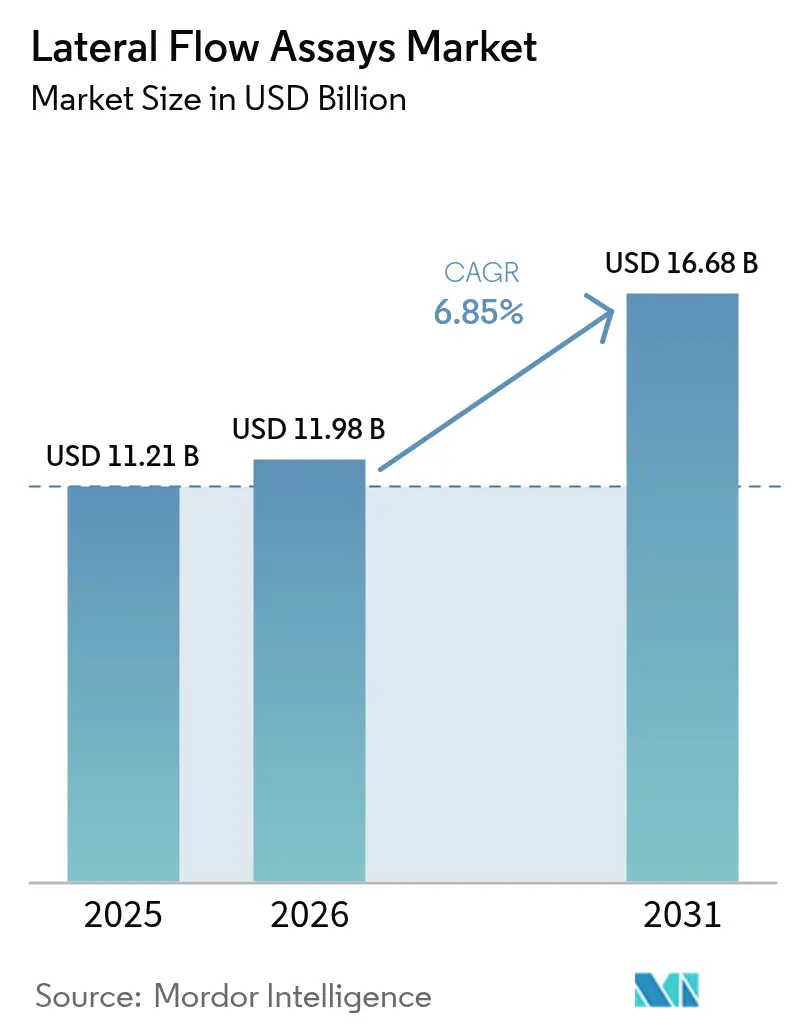
The Lateral Flow Assay Market size was valued at USD 11.21 billion in 2025 and estimated to grow from USD 11.98 billion in 2026 to reach USD 16.68 billion by 2031, at a CAGR of 6.85% during the forecast period (2026-2031).
Consistent demand for decentralized diagnostics, expanding use in home settings, and rapid regulatory evolution underpin this growth. Manufacturers benefit from the United States Food and Drug Administration’s (FDA) phased regulation of laboratory-developed tests, which improves product reliability and fosters clinician confidence. Technology convergence especially multiplex detection and digital readers opens white-space opportunities across clinical, veterinary, and food-safety domains. Meanwhile, environmental sustainability pressures incentivize research into biodegradable substrates and circular-economy manufacturing, creating additional avenues for differentiation.
Key Report Takeaways
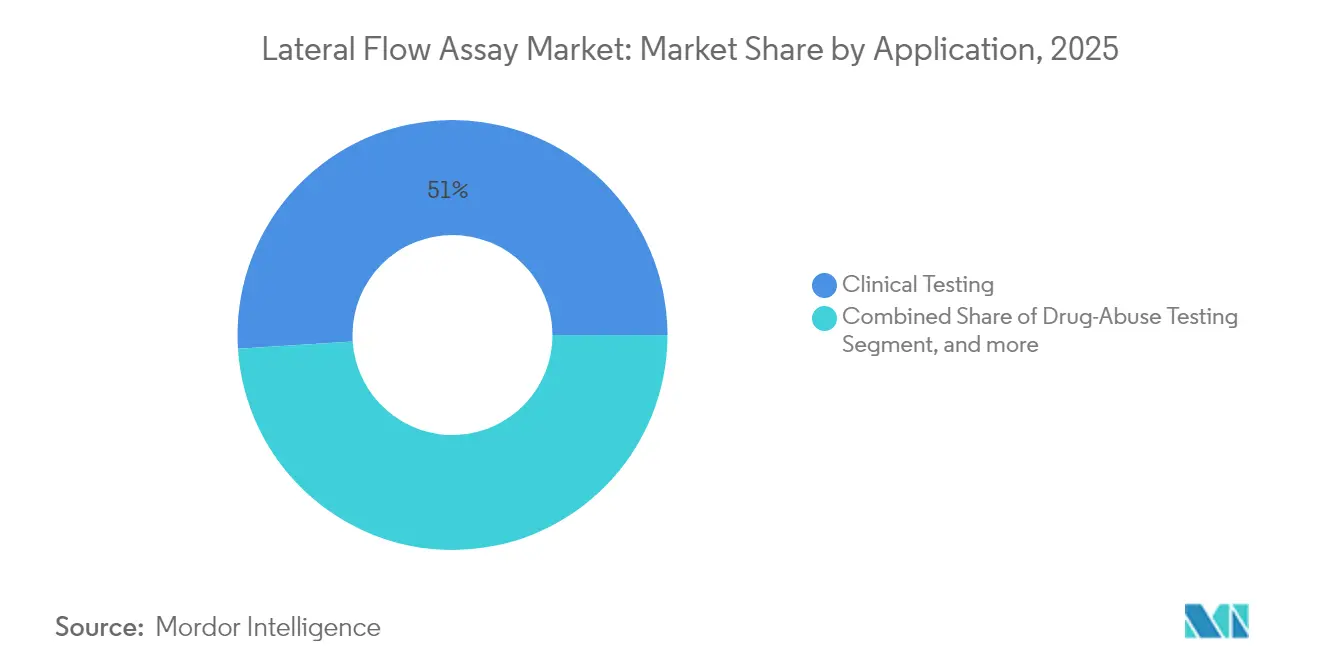
- By application, clinical testing retained 51.02% of the lateral flow assays market share in 2025, while drug-abuse testing is poised for a 10.24% CAGR through 2031.
- By technique, sandwich assays dominated with 66.02% lateral flow assays market share in 2025; multiplex assays are forecast to expand at 11.32% CAGR to 2031.
- By product, kits and reagents commanded 71.10% share of the lateral flow assays market size in 2025 and are set to grow at 11.98% CAGR.
- By end user, hospitals and clinics accounted for 46.50% of the 2025 lateral flow assays market size, whereas home care settings will accelerate at 12.95% CAGR.
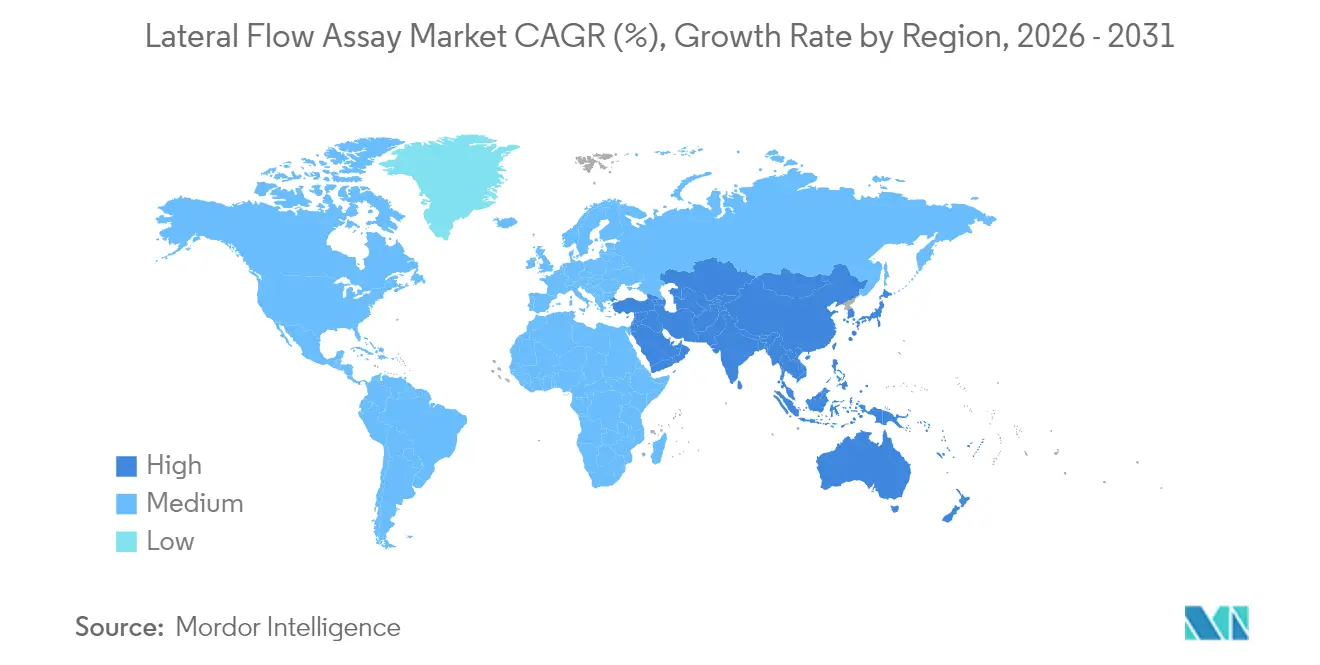
- By geography, North America led with 37.70% revenue share in 2025; Asia-Pacific is projected to register the fastest regional CAGR of 10.63% through 2031.
Note: Market size and forecast figures in this report are generated using Mordor Intelligence’s proprietary estimation framework, updated with the latest available data and insights as of 2026.
Market Trends and Insights
Drivers Impact Analysis of Lateral Flow Assays Market*
| Driver | (~) % Impact on CAGR Forecast | Geographic Relevance | Impact Timeline |
|---|---|---|---|
| Accelerating demand for point-of-care diagnostics | +1.8% | Global; strongest in North America & APAC | Medium term (2-4 years) |
| Surge in home-based testing adoption | +1.5% | North America & Europe; expanding to APAC | Short term (≤ 2 years) |
| Expansion into veterinary diagnostics & food safety | +1.2% | Global; early gains in North America, Europe, APAC | Long term (≥ 4 years) |
| Increased preparedness for biothreats | +1.0% | North America & Europe; spill-over to MEA | Medium term (2-4 years) |
| Integration with smartphone apps & digital readers | +0.8% | Global; led by North America & APAC | Long term (≥ 4 years) |
| Cost-effectiveness and scalability | +0.6% | Global; high impact in emerging markets | Short term (≤ 2 years) |
| Source: Mordor Intelligence | |||
Accelerating Demand for Point-of-Care Diagnostics
Healthcare providers intensify adoption of rapid testing to shorten treatment cycles and improve patient throughput. The FDA’s clearance of a high-sensitivity cardiac troponin I assay that delivers results in 17 minutes validates the clinical utility of advanced lateral flow formats.[1] Retail clinics, urgent-care centers, and workplace programs now deploy multiplex respiratory panels that simultaneously identify SARS-CoV-2, influenza A/B, and RSV, enabling single-visit triage. Investments in miniaturized detection modules and wireless connectivity position lateral flow platforms as core elements of continuous monitoring ecosystems and remote patient-management models.
Surge in Home-Based Testing Adoption
COVID-19 normalized self-testing, and regulators are widening the over-the-counter pathway. The FDA authorized an antigen combination test for COVID-19 and influenza under a standard 510(k) in 2024, lowering barriers for similar multiplex home tests.[2] Direct-to-consumer distribution provides manufacturers with recurring revenue streams and richer real-world data. Consumers favor the convenience of 15-minute results from single finger-stick blood drops, as exemplified by the First To Know Syphilis Test. Home-based diagnostics reduce clinical visits, cut payer costs, and support earlier therapeutic intervention, reinforcing market expansion.
Expansion into Veterinary Diagnostics and Food Safety Applications
Growing scrutiny of zoonotic disease transmission and stringent food-safety regulations drive lateral flow penetration beyond human healthcare. Rapid avian-influenza panels for H5 and H7 strains give poultry producers actionable results in 30 minutes, limiting culling losses. Similar platforms detect Salmonella enterica with 100-fold higher sensitivity than traditional PCR methods, trimming turn-around from seven days to three. Paper-based assays for porcine epidemic diarrhea virus reach 95.3% sensitivity compared with RT-PCR. One-Health initiatives endorsed by the World Organisation for Animal Health (WOAH) position these assays as cornerstone tools for integrated surveillance.
Increased Preparedness for Biothreats and Public Health Emergencies
Government biodefense budgets channel funding to rapid, field-deployable diagnostics. Programs exploring bioagent-agnostic signatures require multiplex immunoassays capable of detecting pathogen DNA alongside host-response biomarkers.[3] The U.S. Department of Health and Human Services prioritizes domestic manufacturing capacity for surge demand, encouraging on-shore production partnerships. Such investments create steady demand for innovative lateral flow formats with metagenomic integration that can handle novel or engineered threats.
Restraints Impact Analysis of Lateral Flow Assays Market*
| Restraint | (~) % Impact on CAGR Forecast | Geographic Relevance | Impact Timeline |
|---|---|---|---|
| Fragmented and evolving regulatory frameworks | -1.2% | Global; variable by region | Medium term (2-4 years) |
| Higher false-negative risk vs. PCR | -0.8% | Global; acute in clinical settings | Short term (≤ 2 years) |
| Volatility in supply of key raw materials | -0.6% | Global; acute in APAC manufacturing | Short term (≤ 2 years) |
| Environmental concerns over single-use plastics | -0.4% | Europe & North America; growing globally | Long term (≥ 4 years) |
| Source: Mordor Intelligence | |||
Fragmented and Evolving Regulatory Frameworks
Divergent rules across the United States, China, and the European Union complicate global submission strategies. The FDA’s four-year phase-out of enforcement discretion on laboratory-developed tests could cost the sector between USD 566 million and USD 3.56 billion in compliance spending. China’s National Medical Products Administration (NMPA) is simultaneously rolling out a 24-measure reform program, and the EU continues to refine in-vitro diagnostic regulations. Smaller firms face disproportionate burden, curbing innovation velocity despite the long-term benefit of universally higher quality standards.
Higher False-Negative Risk Compared to Molecular Diagnostics
Conventional immunoassays may detect as little as 30% of influenza A cases relative to PCR benchmarks. This performance gap curtails adoption for critical diagnoses. However, DNA-origami amplification and plasmonic scattering enhancements now cut detection limits by up to 4,400-fold, narrowing the gap and highlighting that sensitivity constraints are engineering challenges rather than intrinsic limitations.
*Our forecasts treat driver/restraint impacts as directional, not additive. The impact forecasts reflect baseline growth, mix effects, and variable interactions.
Lateral Flow Assays Market Segment Analysis
By Application:
Clinical Testing Retains PrimacyClinical testing captured 51.02% of the 2025 lateral flow assays market, underpinning routine workups in hospitals, clinics, and laboratories. The segment benefits from renewed growth in multiplex respiratory panels that diagnose SARS-CoV-2, influenza A/B, and RSV in a single visit. Pregnancy testing remains a mainstay across all care settings, while tuberculosis assays gain traction thanks to global elimination initiatives. Drug-abuse testing, currently smaller in absolute dollars, accelerates at a 10.24% CAGR through 2031 as employers respond to evolving marijuana legalization and safety mandates. Environmental monitoring and veterinary testing collectively account for a modest share today but show strong upside as regulators tighten surveillance requirements.
Clinical testing’s continued dominance is reinforced by improved reimbursement pathways and clinician trust in sandwich formats that deliver 15-minute results. Meanwhile, the fastest-growing drug-abuse segment benefits from advancements in multiplex panels capable of detecting synthetic cannabinoids and opioids without sacrificing speed. These developments solidify diversified revenue streams and mitigate reliance on legacy pregnancy testing.

By Technique:
Multiplex Assays Drive InnovationSandwich assays anchored 66.02% of the 2025 lateral flow assays market share owing to established manufacturing and high specificity. Yet, multiplex formats are projected to expand at 11.32% CAGR as health systems demand concurrent detection of multiple pathogens or biomarkers. CRISPR-Cas13a strips have already shown perfect concordance with RT-qPCR for multivirus panels, signaling a new performance benchmark. Competitive and reverse-flow assays continue serving niche applications such as small-molecule drug screening and enhanced-sensitivity hormone testing.
Multiplex innovation is propelled by radially compartmentalized paper chips that identify multiple gene targets within 10 minutes and integrate seamlessly with smartphone readers. Phenylboronic acid-modified magnetic quantum dots further raise the sensitivity ceiling, bringing molecular-class performance to low-cost substrates. This technical momentum suggests escalating adoption of multiplex platforms across infectious disease, oncology, and companion-diagnostic workflows.
By Product:
Kits and Reagents Command Dual LeadershipKits and reagents accounted for 71.10% of total revenue in 2025 and also exhibit the highest growth trajectory at 11.98% CAGR. The consumable nature of reagents ensures recurring revenue and creates low switching costs for customers. Nanotechnology innovations, such as gold-nanostar antibody conjugates detecting alpha-fetoprotein at 8.6 ng/mL, raise assay sensitivity while preserving cost advantages.
Digital and mobile readers, a subsegment within instrument hardware, deliver the fastest gains as health providers seek quantitative outputs and seamless data integration. Benchtop readers remain critical in core laboratories where higher throughput offsets capital expenditure. The convergence of novel labels like polymerized alizarin red-inorganic hybrids with connected hardware creates an ecosystem effect that supports sustained product demand.

By End User:
Home Care Takes the Growth SpotlightHospitals and clinics represented 46.50% of the 2025 lateral flow assays market size, drawing on entrenched procurement pipelines and integrated electronic-medical-record systems. Nonetheless, home care settings are expected to outpace all others with a 12.95% CAGR as consumers prioritize convenience. The FDA’s clearance of a 30-minute home test for chlamydia, gonorrhea, and trichomoniasis illustrates regulator willingness to broaden at-home diagnostics. Laboratories and research centers continue to employ lateral flow strips as rapid confirmation methods and screening tools, ensuring balanced demand across user categories.
Ultra-sensitive bead-based immunoassays are now supporting continuous-flow analysis for toxins, enabling future home-monitoring applications in chronic disease management. Such innovations expand the technology’s value proposition beyond episodic testing, reinforcing home care’s role as a structural growth driver.
Geography Analysis
North America Lateral Flow Assays Market
North America maintained the largest share at 37.70% in 2025. Robust healthcare infrastructure, payer reimbursement, and the FDA’s clear LDT framework underpin consistent demand. U.S. retail clinics and pharmacy chains increasingly deploy multiplex respiratory panels, while Canada and Mexico leverage USMCA supply-chain synergies to broaden access.
APAC Lateral Flow Assays Market
Asia-Pacific is the fastest-growing region at 10.63% CAGR. China’s 24-measure medical-device reform and the Healthy China 2030 agenda elevate domestic innovation and expedite approvals. The region also benefits from cost-competitive manufacturing that shortens time-to-market and expands availability in populous nations such as India and Indonesia. Japan’s aging demographics further fuel demand for rapid, user-friendly diagnostics.
EMEA and South America Lateral Flow Assays Market
Europe posts steady growth based on stringent performance requirements and environmental sustainability mandates that drive adoption of biodegradable substrates. Coordinated procurement in the European Union supports pan-regional launches, while national health systems adopt point-of-care platforms to lower hospital burden. The Middle East & Africa and South America record rising uptake aided by public-health programs and international funding, although supply-chain volatility and import duties occasionally temper growth. Geographic diversification ensures the lateral flow assays market remains resilient to localized downturns.
Regulatory Landscape
Regulation for lateral flow assays is tightening across major markets, reshaping compliance planning for both commercial IVDs and laboratory-developed tests (LDTs). In the United States, the FDA is continuing its multi-year LDT enforcement phase-out. Registration and listing obligations for laboratories manufacturing IVDs generally come due by May 6, 2026 for new commercial distribution activities, which raises expectations for quality systems and traceability for rapid test developers and their CDMO partners.
In Europe, IVDR transition execution is increasingly framed through concrete system and conformity-assessment milestones. This includes mandatory use of EUDAMED modules for IVD manufacturers as of May 28, 2026, plus heightened pressure on notified-body capacity and submission readiness for higher-risk IVD classes. For global access strategies, WHO IVD prequalification updated in January 2026 with a revised assessment approach that separates performance evaluation from the broader prequalification assessment, alongside an updated fee structure. That change affects both effort and cost for manufacturers pursuing donor-funded and public-sector procurement channels.
Competitive Landscape
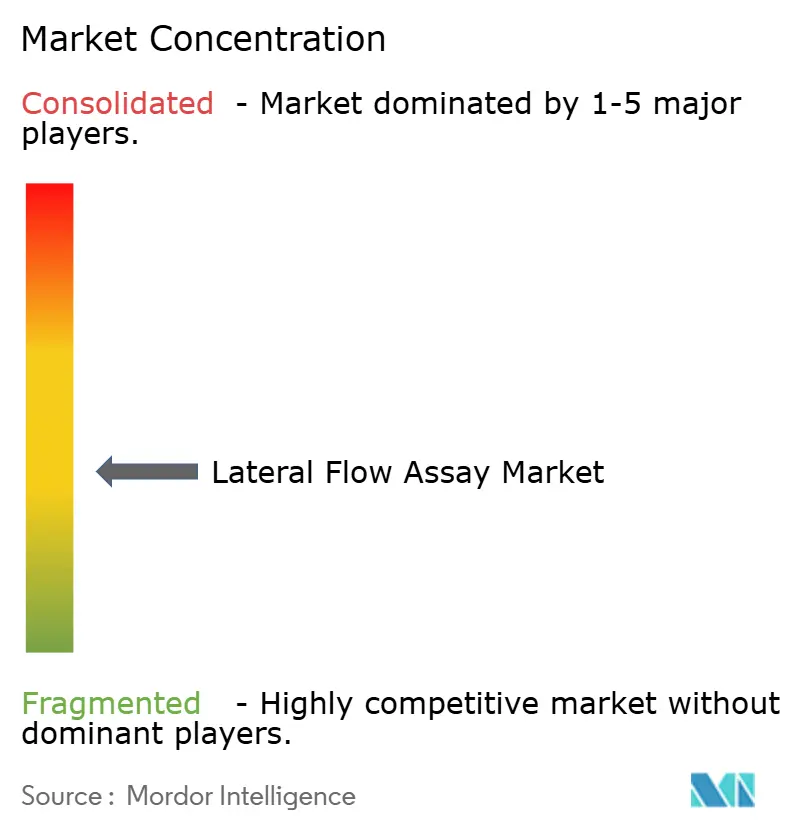
The lateral flow assays market exhibits moderate fragmentation, with multinational leaders consolidating specialized know-how through mergers and acquisitions. Roche’s USD 295 million purchase of LumiraDx’s point-of-care platform strengthens its decentralized portfolio and expands global distribution. Danaher’s new CLIA-certified Centers of Innovation and Thermo Fisher’s reagent manufacturing expansions illustrate strategic capacity building.
Emerging entrants leverage DNA origami, plasmonic nanoparticles, and CRISPR systems to leapfrog legacy performance. QuidelOrtho’s leadership realignment underscores the importance of operational agility amid fast-moving technological shifts. Sustainable manufacturing and biodegradable strip materials increasingly influence purchasing decisions, conferring competitive advantage to early adopters. Digital-health capabilities further differentiate players, turning data analytics and connectivity into critical selection criteria for health-system buyers.
Lateral Flow Assays Industry Leaders
-
F. Hoffmann-La Roche AG
-
Abbott Laboratories
-
Danaher Corporation
-
Thermo Fisher Scientific Inc.
-
bioMérieux SA
- *Disclaimer: Major Players sorted in no particular order
Lateral Flow Assays Market Companies Covered in this Report
- Abbott Laboratories
- Thermo Fisher Scientific
- Roche
- Danaher
- Siemens Healthineers
- QuidelOrtho
- Merck
- Revvity
- QIAGEN
- bioMérieux
- Hologic
- Beckton Dickinson
- Bio-Rad Laboratories
- Sysmex
- Chembio Diagnostics Inc.
- Zhejiang Orient Gene Biotech
- Hangzhou AllTest Biotech
- Shenzhen Mindray Bio-Medical
- Sugentech Inc.
- Baja Medica LLC
Market Opportunities and Future Outlook
Opportunities are widening around compliance-forward product development and manufacturing, as procedural and quality expectations become embedded in market access. The EU strengthened oversight of conformity-assessment execution via Implementing Regulation (EU) 2026/977 (dated May 4, 2026), setting uniform quality management and procedural requirements for notified bodies under IVDR. This increases the value of design controls, robust verification and validation packages, and standardized technical documentation for rapid tests and readers. Alongside this, the FDA order effective June 11, 2026 classifying simple point-of-care SARS-CoV-2 diagnostic devices into Class II (special controls) reinforces demand for manufacturers that can meet special-control expectations consistently across high-volume, decentralized use.
Manufacturing localization and integrated CDMO capability are also emerging as a whitespace as customers seek supply resilience and faster iteration cycles for multiplex and digitally read assays. In May 2026, Abingdon Health USA announced an expansion investment in Madison, Wisconsin to build a more fully integrated lateral flow diagnostic CDMO operation, reflecting continued customer demand for end-to-end development, transfer, and scalable production services. In June 2026, Lord's Mark Industries opened a 14,000 sq. ft. IVD manufacturing facility in Vasai, Maharashtra, increasing total manufacturing space to 34,000 sq. ft., which points to capacity build-out aligned with demand for locally supplied rapid diagnostics across clinical and public-health channels.
Recent Industry Developments in Lateral Flow Assays Market
- July 2026: Roche introduced the cobas Hepatitis D Virus (HDV) test, a fully automated, high-throughput solution for HDV RNA detection in countries accepting the CE mark. The launch expands Roche's infectious disease menu and reinforces the shift toward automated platforms that can absorb routine and specialty virology demand within consolidated laboratory operations.
- December 2025: Roche received FDA 510(k) clearance with a CLIA waiver, along with a CE mark, for its point-of-care test for Bordetella infections (including whooping cough/pertussis) on the cobas liat system. This regulatory milestone broadens near-patient testing access and supports faster clinical decision-making outside centralized laboratories, increasing competitive pressure on other rapid respiratory and infectious disease testing portfolios.
- June 2024: Cepheid received FDA De Novo marketing authorization with a CLIA waiver for Xpert HCV, a molecular test for Hepatitis C virus RNA using capillary whole blood. The authorization expands decentralized hepatitis C testing pathways and highlights how CLIA-waived access can accelerate adoption in non-traditional settings, shaping demand patterns across point-of-care testing ecosystems.
Lateral Flow Assays Market Report Scope and Research Methodology
Market Definition and Coverage
For this study, the lateral flow assay market covers rapid strip-based tests and related consumables and devices that deliver a visible or instrument-read result at the point of need, across healthcare and other testing environments.
Scope exclusions: We exclude upstream raw chemicals that are not purpose-made for lateral flow formats, general lab instruments not designed for LFA reading, and services that do not directly generate LFA test revenues.
Segments Covered in This Report
- By Application
- Clinical Testing
- Pregnancy Testing
- Influenza Testing
- Tuberculosis Testing
- D-dimer Testing
- Other Clinical Testing
- Drug-Abuse Testing
- Environmental Monitoring
- Other Applications
- Clinical Testing
- By Technique
- Sandwich Assay
- Competitive Assay
- Multiplex Assay
- Reverse Flow Assay
- By Product
- Kits & Reagents
- Lateral-Flow Readers
- Digital / Mobile Readers
- Benchtop Readers
- By End User
- Home Care Settings
- Hospitals & Clinics
- Diagnostic Laboratories
- Veterinary & Food Testing Labs
- By Geography
- North America
- United States
- Canada
- Mexico
- Europe
- Germany
- United Kingdom
- France
- Italy
- Spain
- Rest of Europe
- Asia-Pacific
- China
- Japan
- India
- Australia
- South Korea
- Rest of Asia-Pacific
- Middle East & Africa
- GCC
- South Africa
- Rest of Middle East & Africa
- South America
- Brazil
- Argentina
- Rest of South America
- North America
Data Sources, Market Sizing, and Validation
Desk Research
We start by building a clean fact base on test usage and procurement patterns, then map that back to how LFA kits, reagents, and readers are typically bought and priced. Public sources anchor the demand backdrop, including CDC and NIH updates on infectious disease testing, FDA safety communications and clearances for rapid tests, and WHO guidance that shapes screening practices.
To keep the model grounded, we also review sources such as OECD health statistics, UN Comtrade for trade signals on relevant diagnostic categories, and peer-reviewed journals that report adoption trends and performance benchmarks. In addition, we use company filings, investor presentations, press releases, and conference abstracts to understand product mix shifts, channel focus, and manufacturing scale. For cross-checking company footprints and patent activity, we selectively use paid subscriptions focused on company financial intelligence and patent databases. This desk research list is illustrative, and we reviewed other sources as well to collect, validate, and clarify data points.
Primary Interviews and Surveys
We then validate key assumptions through interviews and surveys with kit and reagent suppliers, reader and component ecosystem participants, distributors, and end users that routinely run rapid tests in hospitals, clinics, and home care settings. The inputs we collect help confirm real-world pricing ranges, the mix between kits and readers, and the practical split across major regions and common use cases, and then we revisit any gaps that desk research could not explain.
Distribution of primary research fieldwork respondents
| Company type | Respondent position | Region |
|---|---|---|
| Top tier: 31% | CXOs: 21% | APAC: 44% |
| Mid tier: 48% | Functional/Unit leaders: 23% | EMEA: 30% |
| Smaller Players: 21% | Managers: 56% | Americas: 26% |
Market-Sizing & Forecasting
Sizing is built using top-down and bottom-up logic so totals stay tied to a realistic testing and purchasing pool. In the top-down build, epidemiology and screening intensity signals are used to reconstruct likely test volumes by application, and those volumes are translated to value using typical ASP bands for kits, reagents, and readers.
To keep the numbers practical, we track inputs such as rapid test utilization in clinical settings, the share of point-of-care testing served by LFA formats, average tests per patient pathway in high-volume indications, reader attach rates for instrument-read formats, and price movements linked to procurement cycles and mix changes. Where public series are not directly available, gaps are handled by applying conservative ranges from primary inputs, then checking whether implied revenues align with observed supply capacity and channel feedback.
For forecasting, we use scenario analysis informed by expert views on normalization after outbreak spikes, expansion in decentralized testing, and regulatory and reimbursement changes that can lift or slow adoption. We then corroborate with selective bottom-up approximations, including supplier revenue split checks and sampled ASP multiplied by volume for key applications, before locking final totals.
Data Validation & Update Cycle
Before sign-off, the model is cross-checked against independent signals such as public health testing guidance changes, regulatory approvals, and visible shifts in product mix that show up in company commentary and channel behavior. When a variance looks too large, assumptions are revisited, and follow-up conversations are triggered to confirm whether the change is real or just timing and currency noise.
A multi-step review is followed, where another analyst re-checks key drivers, unit logic, and year-over-year movements before the final version is released. Reports are refreshed annually, and interim updates are made when there are material events such as major policy changes, category-level pricing resets, or step changes in testing demand. Right before delivery, a fresh pass is done so clients receive the latest updated view.
Mordor Intelligence's Lateral Flow Assay Market Size Compared With Other Published Estimates
Different published market sizes for lateral flow assays can legitimately vary because the scope boundary is not always the same, and because the demand signals used to scale test volumes can be picked differently. Even when the topic name matches, choices like the base year, currency timing, and what is counted as an LFA revenue item can move the final value.
Regulatory clearance activity, public health testing guidance, and application-level testing intensity are the evidence checks that keep Mordor Intelligence aligned to a defined demand pool and help prevent adjacent diagnostics revenue from being pulled into the LFA total. Other estimates may also use different starting years, fold in a broader point-of-care basket, or keep kit ASPs flatter than what channel feedback suggests, which can compress or inflate the total depending on the period chosen.
Benchmark comparison
| Source | Market Size | Gaps in Research Methodology |
|---|---|---|
| Mordor Intelligence | USD 11.98 B (2026) | |
| Global Research Publisher A | USD 8.51 B (2025) | Uses an earlier starting year and a shorter forecast window, and the value build appears more conservative on kit ASP progression and reader attach rates across high-volume applications. |
| Industry Publisher B | USD 10.00 B (2024) | Anchors the base in 2024 and applies a longer horizon, and its scope presentation suggests broader component and material coverage that can shift what is counted inside the LFA revenue line. |
Taken together, the spread is mostly explained by year choice and what is included around kits, readers, and adjacent component value. Our approach is to keep the inputs traceable to testing intensity and practical pricing signals, then to re-check the outputs with independent market indicators so the estimate stays repeatable and easy to defend.
Key Questions Answered in the Report
What is the current value of the lateral flow assays market?
The lateral flow assays market is valued at USD 11.98 billion in 2026.
Which application segment is growing fastest?
Drug-abuse testing leads growth with a projected 10.24% CAGR through 2031.
Why is Asia-Pacific considered the most attractive growth region?
Regulatory reforms, expanding healthcare access, and cost-effective manufacturing drive an 10.63% regional CAGR.
How are smartphone readers changing lateral flow assays?
They transform qualitative strips into quantitative, connected tools, enabling real-time data capture and remote monitoring.
What sustainability initiatives are influencing product design?
Manufacturers are developing biodegradable polylactic-acid substrates and adopting circular-economy practices to reduce plastic waste.
Who are the major players in the market?
Key companies include Abbott, Roche, Thermo Fisher Scientific, Danaher, and QuidelOrtho, all pursuing acquisitions and technology partnerships to strengthen portfolios.