
Krill Oil Market Size and Share
Market Overview
| Study Period | 2021 - 2031 |
|---|---|
| Market Size (2026) | USD 0.87 Billion |
| Market Size (2031) | USD 1.37 Billion |
| Growth Rate (2026 - 2031) | 9.51 % |
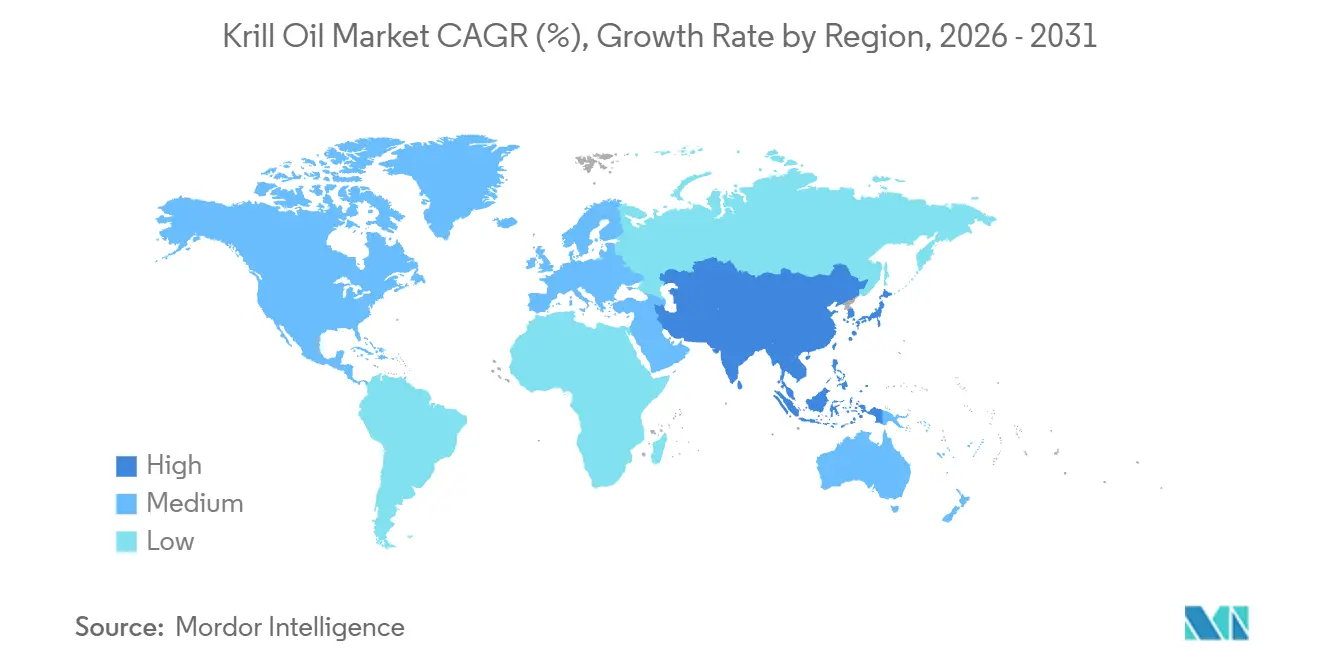
| Fastest Growing Market | Asia Pacific |
| Largest Market | North America |
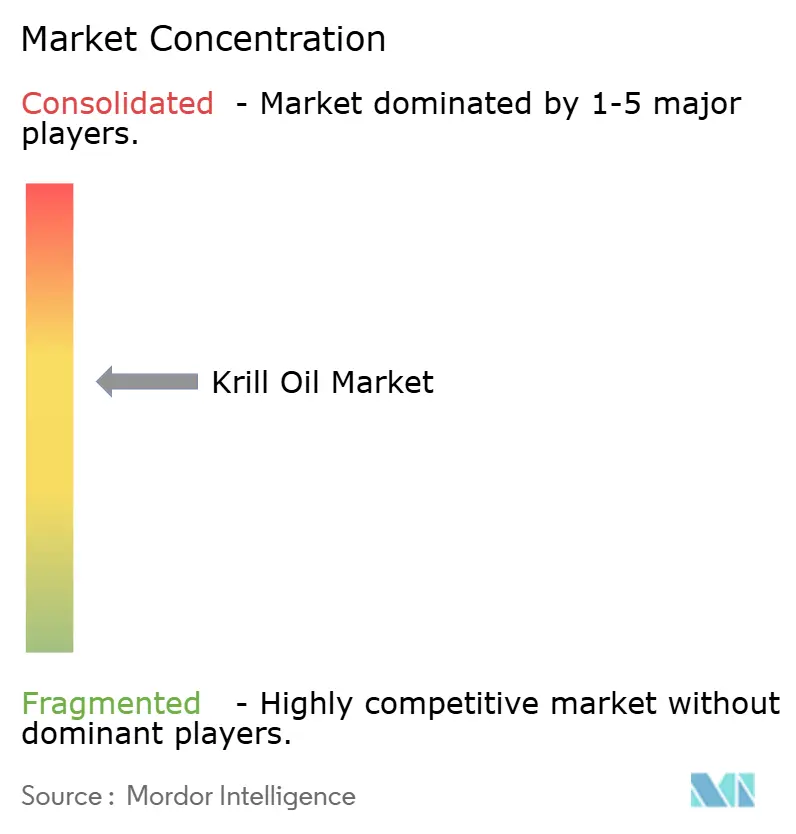
| Market Concentration | Medium |
Major Players *Disclaimer: Major Players sorted in no particular order Image © Mordor Intelligence. Reuse requires attribution under CC BY 4.0. | |
Krill Oil Market Analysis by Mordor Intelligence
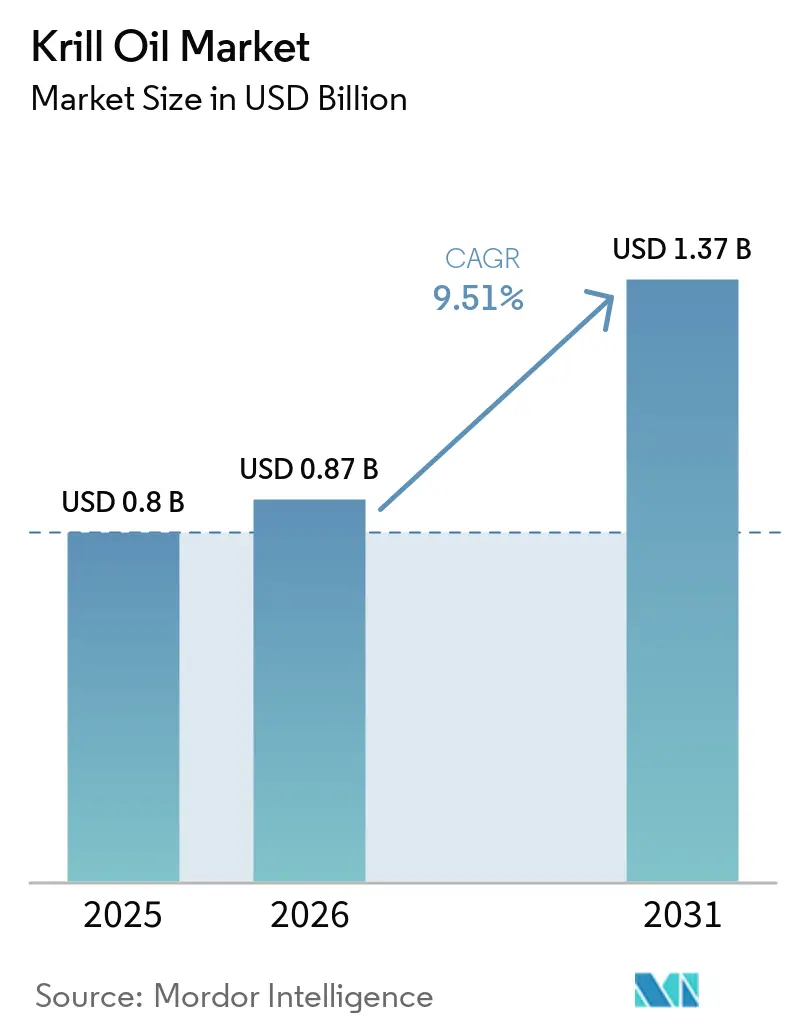
The krill oil market size is expected to grow from USD 0.80 billion in 2025 to USD 0.87 billion in 2026 and is forecast to reach USD 1.37 billion by 2031 at 9.51% CAGR over 2026-2031. This growth is driven by increasing clinical validation of the effectiveness of phospholipid-bound omega-3, rising budgets for preventive healthcare, and the bioavailability advantages of krill oil compared to fish oil. On the supply side, market concentration continues to influence pricing dynamics. Regulatory recognition of cardiovascular and cognitive health benefits, along with the growing adoption of eco-labels, highlights a structural shift in consumer purchasing behavior. Furthermore, premium positioning is supported by consumers' willingness to pay for sustainability and improved absorption benefits, enabling producers to maintain profit margins despite fluctuations in raw material prices. While competition remains intense due to vertically integrated harvesters securing Antarctic quotas, innovation in delivery formats and condition-specific formulations is creating opportunities for asset-light brands to enter the market.
Key Report Takeaways
- By nature, conventional commanded 76.81% of the krill oil market share in 2025; organic is projected to expand at a 10.54% CAGR through 2031.
- By application, dietary supplements led with 70.62% revenue share in 2025; pharmaceuticals are forecast to grow at a 10.74% CAGR to 2031.
- By geography, North America held 33.43% share of the krill oil market in 2025, while Asia-Pacific records the highest projected CAGR at 10.01% through 2031.
Note: Market size and forecast figures in this report are generated using Mordor Intelligence’s proprietary estimation framework, updated with the latest available data and insights as of January 2026.
Market Trends and Insights
Drivers Impact Analysis of Krill Oil Market*
| Driver | (~) % Impact on CAGR Forecast | Geographic Relevance | Impact Timeline |
|---|---|---|---|
| Growing awareness of omega-3 health benefits for heart and brain wellness | +2.1% | Global, with concentration in North America and Europe | Medium term (2-4 years) |
| Shift toward preventive healthcare and regular supplement use | +1.8% | Global, strongest in Asia-Pacific and North America | Long term (≥ 4 years) |
| Product innovation in high-concentration and condition-specific formulas | +1.5% | North America and Europe core, expanding to Asia-Pacific | Short term (≤ 2 years) |
| Expansion of krill oil into functional foods and beverages | +1.2% | Europe and Asia-Pacific lead, North America following | Medium term (2-4 years) |
| Increasing use in infant nutrition and maternal health products | +1.0% | Asia-Pacific and Europe, regulatory pathways opening in North America | Long term (≥ 4 years) |
| Sustainability certifications and eco-labels building brand trust | +0.9% | Europe primary, North America and Asia-Pacific secondary | Medium term (2-4 years) |
| Source: Mordor Intelligence | |||
Growing awareness of omega-3 health benefits for heart and brain wellness
Cardiovascular disease continues to be the leading cause of mortality worldwide, with omega-3 fatty acids playing a significant role in preventive cardiology protocols. In 2024, the American Heart Association updated its guidelines to recommend a daily intake of 1,000 milligrams of combined eicosapentaenoic acid (EPA) and docosahexaenoic acid (DHA) for individuals with coronary artery disease. Krill oil supplements meet this requirement through their concentrated phospholipid formulations. Clinical trials published in 2025 demonstrated that krill oil supplementation reduced triglyceride levels by 18% and improved markers of endothelial function within 12 weeks. These outcomes were comparable to those of prescription omega-3 ethyl esters but without associated gastrointestinal side effects. Cognitive health applications are also gaining prominence. A 2025 meta-analysis involving 3,200 participants found that phospholipid-bound docosahexaenoic acid (DHA) improved memory recall scores by 11% in adults over the age of 55. This finding aligns with the needs of aging populations, particularly in countries like Japan and Germany. The dual benefits for cardiovascular and cognitive health distinguish krill oil from fish oil, which lacks the phospholipid carrier necessary for effective blood-brain barrier penetration. Regulatory endorsements further strengthen market confidence. In 2024, the European Food Safety Authority reaffirmed health claims for omega-3 fatty acids related to heart and brain function, enabling manufacturers to use compliant marketing language across all 27 member states.
Shift toward preventive healthcare and regular supplement use
Healthcare cost inflation is encouraging consumers and payers to focus on preventive measures that help delay or avoid chronic disease treatments. According to data from the United States Centers for Disease Control and Prevention, 57.6% of adults consumed dietary supplements in 2024, with omega-3 products ranking third after multivitamins and vitamin D. This trend reflects a growing understanding that supplement regimens are far more affordable than pharmaceutical therapies while providing measurable improvements in health biomarkers. In India, preventive healthcare spending increased at an annual rate of 22% from 2023 to 2025, driven by higher disposable incomes and government-led initiatives promoting wellness over reactive treatments. Krill oil has gained from this trend due to its phospholipid structure, which allows for lower dosages compared to fish oil to achieve similar blood omega-3 levels, making it more convenient and improving adherence. Employers are also playing a role in this shift, as corporate wellness programs in North America and Europe increasingly subsidize omega-3 supplements as part of preventive care packages. This has opened up a business-to-business (B2B) channel that avoids traditional retail challenges. Furthermore, subscription models have become more popular, with direct-to-consumer brands reporting a 68% repeat-purchase rate for krill oil compared to 42% for fish oil. This indicates that the bioavailability advantages of krill oil contribute to stronger customer loyalty.
Product innovation in high-concentration and condition-specific formulas
Manufacturers are transitioning from generic omega-3 products to more targeted formulations that cater to specific health outcomes. For instance, Aker BioMarine's Lysoveta brand, launched in 2025, offers lysophosphatidylcholine-enriched krill oil designed to improve lipid metabolism in individuals with metabolic syndrome. This formulation has been validated through clinical trials, showing a 23 percent reduction in liver fat content. High-concentration omega-3 products, containing 500 milligrams or more per softgel, are gaining popularity at premium price points as consumers prioritize convenience and reduced pill intake. Additionally, condition-specific variants targeting joint health, eye health, and sports recovery have emerged, often combining krill oil with complementary ingredients such as astaxanthin, curcumin, or hyaluronic acid. Patent filings highlight a strategic focus on delivery mechanisms, with microencapsulation technologies that mask the marine taste and improve oxidative stability becoming increasingly common. In 2024, 14 patents were granted for innovations in coating materials and release profiles. Furthermore, pharmaceutical-grade krill oil is making progress in clinical development. Neptune Wellness Solutions, for example, has advanced a prescription formulation for hypertriglyceridemia, which completed Phase II trials in 2025. This formulation demonstrated non-inferiority to fenofibrate while offering superior tolerability. These developments are bridging the gap between dietary supplements and pharmaceuticals, potentially enabling reimbursement pathways and expanding market opportunities.
Expansion of krill oil into functional foods and beverages
Functional food applications offer a notable growth opportunity, especially in regions where consumer fatigue with supplement pills limits market penetration. European manufacturers have introduced products such as krill oil-fortified yogurt, protein bars, and ready-to-drink smoothies, leveraging the ingredient's neutral flavor profile when effectively microencapsulated. In 2024, Germany's Müller brand launched a krill oil-enriched dairy product line, marketed as brain-health support for students and professionals. This campaign resulted in a 9 percent growth in the category within six months. In Japan, krill oil is being incorporated into functional beverages aimed at enhancing cognitive performance, with Suntory adding 200 milligrams per serving to its health-drink portfolio in 2025. Regulatory frameworks remain inconsistent. While the European Union's Novel Food regulation permits the use of krill oil in specific food categories, the United States Food and Drug Administration (FDA) has yet to issue formal guidance, creating uncertainty that hinders investment. Additionally, aquaculture feed represents a promising area of application. Trials have shown that krill oil supplementation improves salmon pigmentation and omega-3 content, potentially establishing a circular value chain where farmed fish serve as premium omega-3 sources. Beverage fortification with krill oil faces challenges related to oxidative stability. However, advancements in antioxidant blends and the use of opaque packaging are addressing rancidity issues.
Restraints Impact Analysis of Krill Oil Market*
| Restraint | (~) % Impact on CAGR Forecast | Geographic Relevance | Impact Timeline |
|---|---|---|---|
| Environmental concerns regarding impacts on the Antarctic ecosystem | -1.3% | Global, with heightened scrutiny in Europe and North America | Long term (≥ 4 years) |
| Challenges posed by complex and evolving international fishery regulations | -1.1% | Global, most acute in Europe and Asia-Pacific | Medium term (2-4 years) |
| Public criticism of sustainability certifications and governance practices | -0.8% | Europe and North America primary, spillover to Asia-Pacific | Short term (≤ 2 years) |
| Supply chain concentration among a few large harvesters | -0.7% | Global, with North America and Europe most exposed | Medium term (2-4 years) |
| Source: Mordor Intelligence | |||
Environmental concerns regarding impacts on the Antarctic ecosystem
Antarctic krill plays a critical role in the Southern Ocean food web, supporting species such as whales, seals, penguins, and seabirds. While harvest activities are regulated, they often occur in the same foraging zones used by predators, raising concerns about localized depletion and competitive exclusion. A study published in 2025 highlighted a 12 percent decline in Adélie penguin colonies near areas of high-intensity fishing, which was linked to reduced krill availability during critical breeding periods. Climate change adds to these pressures, as warming waters are shifting krill distribution southward, concentrating their biomass into narrower zones that overlap with fishing grounds and predator habitats. In August 2025, the Commission for the Conservation of Antarctic Marine Living Resources (CCAMLR) closed Subarea 48.2 after acoustic surveys detected krill densities below the 75-gram-per-square-meter trigger threshold. This precautionary measure reduced the available fishing area by 18 percent [1]. Environmental advocacy groups have called for expanding marine protected areas to cover 30 percent of the Southern Ocean by 2030, a proposal that would further restrict harvest zones and increase raw material costs. Consumer sentiment is also shifting, as a 2025 survey revealed that 29 percent of European omega-3 buyers expressed concerns about the impact on the Antarctic ecosystem, compared to 14 percent in 2023. This trend indicates that reputational risks could negatively affect market growth if the industry does not demonstrate ecological responsibility.
Challenges posed by complex and evolving international fishery regulations
Krill harvesting operates within a complex regulatory framework involving the Commission for the Conservation of Antarctic Marine Living Resources (CCAMLR), flag-state authorities, and importing-country standards, which increases compliance costs. The precautionary approach adopted by CCAMLR requires real-time catch reporting, observer coverage on all vessels, and adaptive management measures that can close fishing areas mid-season. These requirements compel harvesters to maintain excess capacity and flexible logistics networks. Additionally, the Novel Food regulation necessitates separate approvals for krill oil across different food categories, a process that can take up to three years and cost over EUR 500,000 per application [2]. In the United States, the Food and Drug Administration's (FDA) Generally Recognized as Safe (GRAS) status for krill oil does not cover all formulations. Manufacturers introducing new extraction methods or concentration levels must submit New Dietary Ingredient notifications, which can delay product launches by six to twelve months [3]. In China, the 2024 revisions to dietary supplement registration rules introduced stricter heavy metal limits and required third-party testing for all imported omega-3 products. This change temporarily disrupted shipments from smaller European processors lacking partnerships with accredited laboratories. These regulatory variations fragment global supply chains, requiring manufacturers to maintain region-specific formulations, labeling, and quality documentation. This fragmentation reduces economies of scale and discourages market entry by smaller innovators.
*Our forecasts treat driver/restraint impacts as directional, not additive. The impact forecasts reflect baseline growth, mix effects, and variable interactions.
Krill Oil Market Segment Analysis
By Nature:
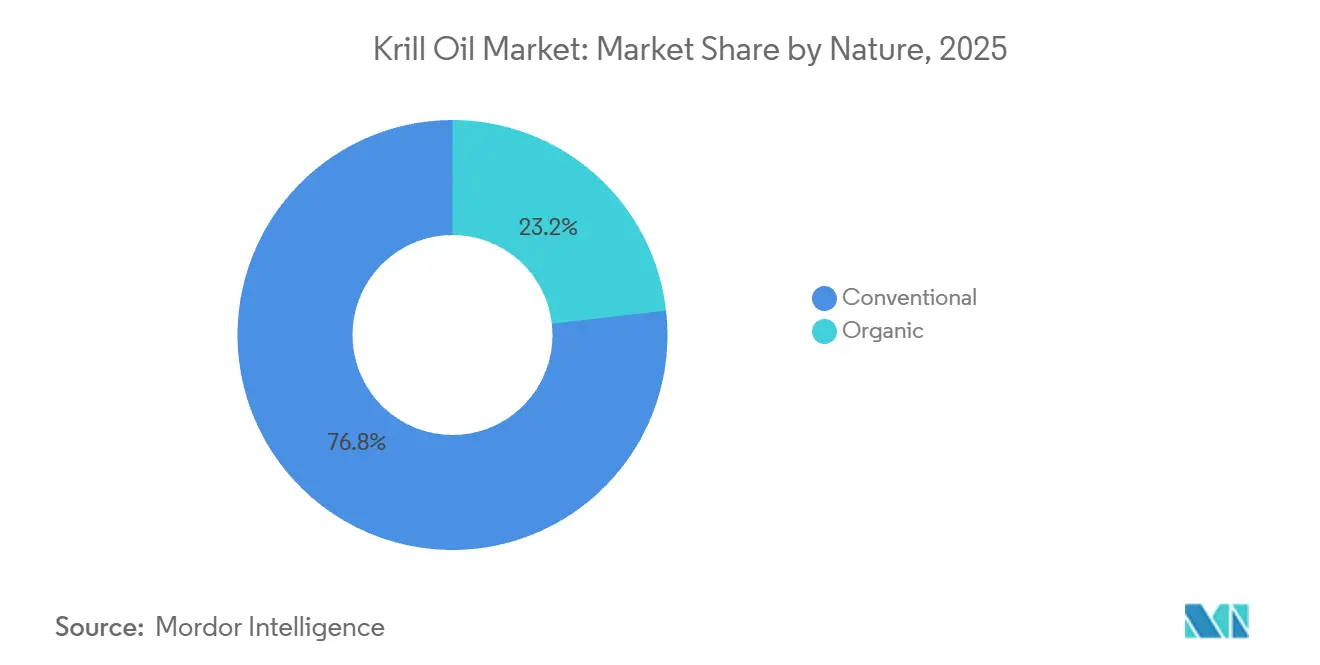
Organic Segment Gains Despite Certification HurdlesConventional krill oil accounted for 76.81% of the market share in 2025, supported by established supply chains, lower price points, and widespread retail availability. The organic segment, while smaller, is projected to grow at a compound annual growth rate (CAGR) of 10.54% through 2031. This growth is driven by consumers willing to pay 30 to 40% premiums for products certified as free from synthetic additives and sourced from fisheries adhering to organic aquaculture standards. However, organic certification for wild-caught krill remains a contentious issue. Traditional organic frameworks were developed for terrestrial agriculture and aquaculture, not for open-ocean fisheries.
The European Union's organic regulation allows wild-caught fish to carry organic labels only if they are harvested from certified sustainable fisheries and processed without prohibited substances. Currently, fewer than 5% of krill oil producers meet this standard. In the United States, the Department of Agriculture (USDA) National Organic Program has not issued formal guidance on wild-caught marine ingredients, leaving organic krill oil claims in a regulatory gray area, which poses enforcement risks for brands. Despite these challenges, demand for organic options persists. A 2025 consumer survey revealed that 41 percent of North American organic food buyers sought organic omega-3 supplements, and 18% indicated they would switch from conventional krill oil if certified organic alternatives became available.
Krill Oil Market:
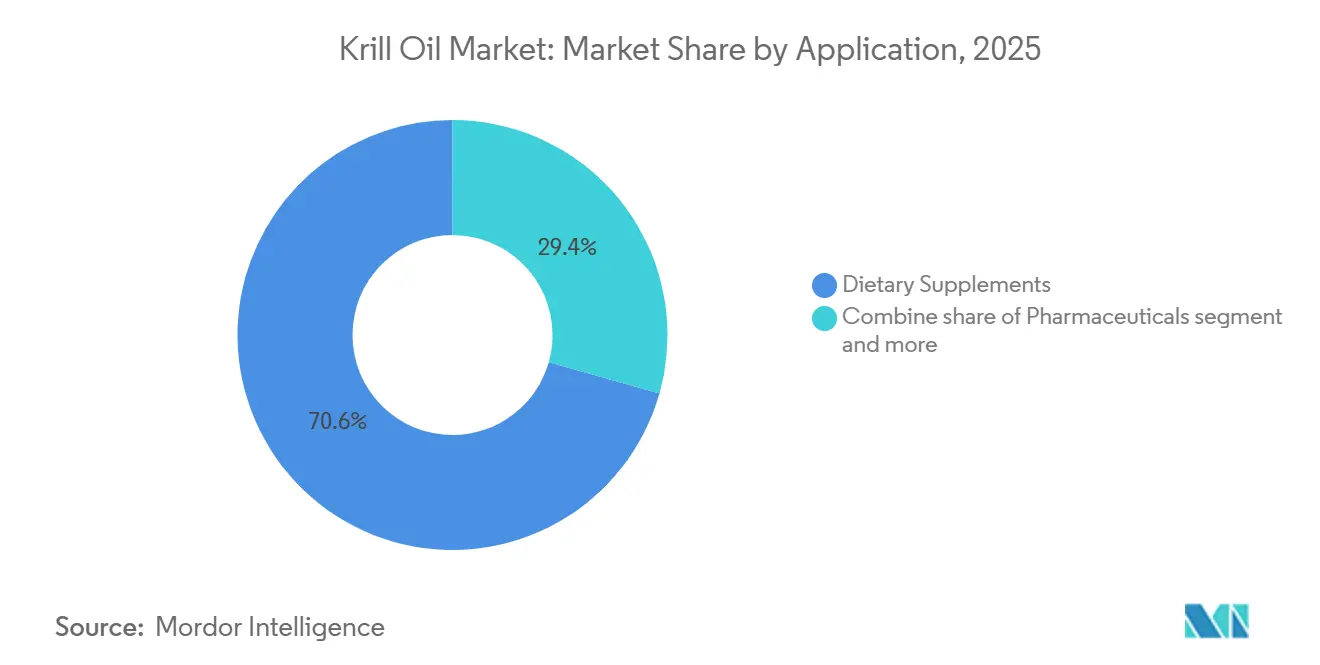
Market Share by ApplicationDietary supplements accounted for 70.62% of krill oil consumption in 2025. This dominance is attributed to well-established consumer awareness, a strong retail infrastructure, and regulatory pathways that allow structure-function claims without requiring prescriptions. Pharmaceuticals are the fastest-growing application, with a compound annual growth rate (CAGR) of 10.74% projected through 2031. This growth is supported by clinical evidence highlighting krill oil's effectiveness in managing hypertriglyceridemia, inflammatory conditions, and metabolic syndrome, which has attracted significant pharmaceutical investment. In 2025, Neptune Wellness Solutions completed Phase II trials for a prescription krill oil formulation aimed at patients with triglyceride levels exceeding 500 milligrams per deciliter. The trials demonstrated a 32% reduction in triglyceride levels within 12 weeks, positioning the product for submission to the United States Food and Drug Administration (FDA) for a New Drug Application in 2027. Pharmaceutical applications command price premiums of 200% to 300% over dietary supplements due to rigorous clinical validation, intellectual property protection, and reimbursement eligibility, making this segment appealing despite longer development timelines and regulatory challenges.
Pet food and animal nutrition applications are also growing, with krill oil increasingly incorporated into premium dog and cat supplements to support joint health, skin and coat condition, and cognitive function in aging pets. Clinical trials published in 2024 showed that dogs receiving 500 milligrams of krill oil daily experienced a 24% improvement in mobility scores and a 19% reduction in inflammatory markers compared to those receiving fish oil.

Geography Analysis
North America Krill Oil Market
In 2025, North America held a 33.43% share of the market, led by the United States' well-developed dietary supplement infrastructure, a favorable regulatory environment under the Food and Drug Administration's (FDA) Generally Recognized as Safe (GRAS) status, and strong consumer awareness of omega-3 health benefits. The region benefits from extensive distribution networks, including mass retail, specialty health stores, and e-commerce platforms, ensuring broad product availability and competitive pricing. In Canada, the Natural and Non-prescription Health Products Directorate has simplified the licensing process for krill oil products, reducing time-to-market for new formulations and encouraging innovation in delivery formats such as gummies and liquid emulsions. Meanwhile, Mexico's growing middle class and increasing health consciousness are driving the adoption of omega-3 supplements, with krill oil positioned as a premium alternative to fish oil in urban markets. However, growth in North America is slowing due to market saturation and heightened price sensitivity among consumers during economic uncertainty.
APAC Krill Oil Market
The Asia-Pacific region is the fastest-growing market, with a compound annual growth rate of 10.01% expected through 2031. This growth is largely driven by China's 31.4% annual increase in omega-3 supplement sales and regulatory reforms introduced in 2024 that accelerated the registration process for dietary supplements. These developments have created significant opportunities for manufacturers in the region.
EMEA and South America Krill Oil Market
Other regions, including South America and the Middle East and Africa, remain smaller markets but are showing early signs of growth. In South America, Brazil's dietary supplement market expanded by 18% in 2024, supported by urbanization and rising health awareness. However, the penetration of krill oil in the region remains limited due to price sensitivity and a preference for locally sourced fish oil. In Europe, the market is shaped by strict regulatory frameworks under the European Food Safety Authority (EFSA) and the European Commission's Novel Food regulation, which require comprehensive safety and efficacy documentation for new omega-3 formulations. Germany, the United Kingdom, France, Italy, and Spain are the largest markets in the region. Germany leads in functional food innovation, while the United Kingdom shows strong demand for sustainably certified supplements. The European Union's 2024 reaffirmation of omega-3 health claims for cardiovascular and cognitive function has provided manufacturers with standardized marketing language across its 27 member states, reducing regulatory fragmentation. Sustainability certifications are particularly important in Europe, where 64% of omega-3 buyers actively seek eco-labels, and 38% would switch brands if sustainability claims were questioned.
Regulatory Landscape
Krill oil used in foods and supplements is governed by fisheries management rules upstream and ingredient and product compliance rules downstream. Harvesting in the Antarctic operates under the Commission for the Conservation of Antarctic Marine Living Resources (CCAMLR), including precautionary, in-season management tools that can restrict access to fishing subareas, as seen with CCAMLR's August 2025 closure of Subarea 48.2 after low acoustic density readings. These measures can tighten raw material availability and raise compliance requirements, including real-time reporting and observer coverage.
For market access, the European Union and the United Kingdom treat Antarctic krill oil (Euphausia superba) as an authorised novel food under Regulation (EU) 2015/2283 and assimilated UK law (FSA regulated products listings). This drives dossier-led specifications and use conditions by application. In the United States, FDA GRAS notices have supported use in specified food categories, but GRAS is manufacturer-led and does not remove the need for New Dietary Ingredient notifications when formulations or processing methods change. Canada regulates krill oil as a natural health product ingredient through the NNHPD, with monograph-style quality anchors (for example, oxidative limits such as peroxide value, anisidine value, and Totox) and contaminant testing expectations that shape supplier qualification and batch-release programs for finished-goods brands.
Value Chain Analysis
The krill oil value chain starts with quota- and area-managed harvesting of Antarctic krill under CCAMLR, and it remains concentrated among vertically integrated operators that combine fishing access, onboard stabilization, and downstream refining. CCAMLR sets fishery-wide controls such as the 620,000-tonne combined catch limit for Subareas 48.1 to 48.4 (CM 51-01 for 2025), and spatial management rules and in-season closures influence where and when vessels can operate. Upstream steps typically include harvesting by specialized factory vessels, rapid onboard processing to stabilize sensitive lipids, and transfer logistics to regional hubs before refining and formulation.
Midstream processing converts stabilized intermediates into refined krill oil and phospholipid-rich fractions, then moves into encapsulation and dosage-form manufacturing (softgels, liquids, and increasingly formats enabled by taste-masking and oxidation-control technologies). Cold-chain integrity, oxidation management, and contaminant compliance (heavy metals and persistent organic pollutants) are recurring technical bottlenecks that favor suppliers with validated QA systems and consistent access to raw material. Downstream routes include brand owners and contract manufacturers supplying dietary supplements, functional foods, and, in some cases, pharmaceutical-development programs. Distribution is split across mass retail, specialty health channels, and fast-growing direct-to-consumer subscriptions, with sustainability labeling and traceability increasingly embedded into procurement and marketing requirements.
Competitive Landscape
The krill oil market is characterized by a high level of concentration, with vertically integrated harvesters playing a dominant role. These companies control Antarctic fishing licenses, proprietary extraction technologies, and downstream formulation partnerships. Aker BioMarine and Rimfrost together account for approximately 65 percent of the global harvest volume. They utilize economies of scale and intellectual property portfolios to establish significant barriers to entry. Aker BioMarine's acquisition of Lang Holdings in 2024 demonstrates its strategy of vertical integration, aimed at securing complete supply chains and capturing margins across ingredient supply, finished-dosage manufacturing, and brand partnerships.
Patent activity in the krill oil market highlights a strategic focus on improving bioavailability and developing condition-specific formulations. Aker BioMarine holds 14 patents related to lysophosphatidylcholine extraction and encapsulation technologies. Similarly, Neptune Wellness Solutions has filed 8 patents for pharmaceutical-grade krill oil designed for prescription applications. Mid-tier companies such as Nordic Naturals, DSM Firmenich, and GC Rieber Oils compete by focusing on quality differentiation, third-party testing certifications, and building brand equity through transparency and sustainability claims. These companies often source krill oil from major harvesters under long-term supply agreements and prioritize formulation innovation, clinical validation, and retail distribution partnerships to remain competitive.
There are significant opportunities in functional food applications, pharmaceutical formulations, and emerging markets where krill oil usage remains relatively low. Direct-to-consumer brands are transforming traditional retail models by offering subscription services, personalized dosing recommendations, and blockchain-enabled traceability, which resonate with transparency-focused consumers. Additionally, technology adoption is advancing rapidly. For example, Aker BioMarine has implemented real-time catch monitoring systems and artificial intelligence-driven biomass forecasting to improve operational efficiency and ensure regulatory compliance. These advancements set industry benchmarks that smaller competitors often find difficult to match.
Krill Oil Industry Leaders
-
Aker BioMarine AS
-
Rimfrost AS
-
Neptune Wellness Solutions Inc.
-
Coastside Bio Resources
-
NutriGold Inc.
- *Disclaimer: Major Players sorted in no particular order
Krill Oil Market Companies Covered in this Report
- Aker BioMarine AS
- Rimfrost AS
- Neptune Wellness Solutions Inc.
- Enzymotec Ltd.
- Coastside Bio Resources
- NutriGold Inc.
- NWC Naturals Inc.
- Qingdao Kangjing Marine Biotechnology Co., Ltd.
- RB LLC
- Olympic Seafood AS
- Tharos Ltd.
- Viva Labs
- Nutraceutical Corporation
- DSM Firmenich
- Valensa International
- Nordic Naturals
- GC Rieber Oils
- Beijing Gingko Group
- Daeduck FRD Inc.
- Superba Boost (Brand)
Market Opportunities and Future Outlook
Opportunity is building around differentiated, claim-supported and condition-specific krill oil propositions rather than commodity omega-3 positioning. Aker BioMarine's December 2025 approval for Superba Boost under Japan's Foods with Function Claims system for a skin health claim provides a template for brands to compete in beauty-from-within and targeted wellness segments, using locally acceptable evidence and compliant on-pack language. At the same time, ingredient innovation is widening addressable applications, including specialized phospholipid fractions such as Lysoveta, supported by new commercial contracting activity in 2026.
Channel and compliance dynamics are also reshaping where growth is easiest to execute. China's May 2026 SAMR campaign targeting deceptive online marketing in categories including krill oil raises the bar for substantiation and traceability in cross-border and domestic e-commerce, which benefits suppliers with rigorous testing, standardized specifications, and defensible labeling. Separately, sustainability scrutiny in parts of Europe has translated into retail delistings and product exits (for example, Holland and Barrett's completion of a krill-derived product exit in March 2026), creating whitespace for brands that can document responsible sourcing, strengthen third-party verification, and communicate fisheries management constraints clearly. Upstream, ongoing CCAMLR negotiations and proposals by member countries to adjust management approaches keep long-term raw material access a strategic variable, reinforcing the value of vertical integration, long-term offtake agreements, and flexible formulation pipelines across supplements, functional foods, and emerging pharmaceutical-grade programs.
Recent Industry Developments in Krill Oil Market
- July 2026: Aker BioMarine reported continued momentum in its krill oil business in Q2 2026, including year-over-year growth in krill oil revenues and disclosure of major new customer contracting for its Superba krill oil. The update reinforced the role of large, multi-year supply agreements in stabilizing demand for concentrated omega-3 ingredients and supporting premium positioning across supplement and functional nutrition applications.
- May 2026: Aker BioMarine signed a Lysoveta supply contract with a strategic partner to expand phospholipid-rich krill oil offerings. This strengthens the company's ability to address condition-specific wellness segments and differentiates its ingredient portfolio.
- March 2024: Neptune Wellness Solutions announced that the Nasdaq Hearings Panel decided to delist the company's common shares, resulting in trading suspension on Nasdaq. The event reduced the visibility and financing flexibility of one of the markets pharmaceutical-leaning participants, increasing reliance on a smaller set of scaled, vertically integrated krill oil suppliers for consistent ingredient availability.
Krill Oil Market Report Scope and Research Methodology
Market Definition and Coverage
For this study, the market covers the value of krill oil sold as an ingredient or finished oil for human and animal use, counted at the point where it is commercially sold and recorded in revenues.
Scope exclusions: We exclude revenue from non-krill omega-3 oils and general seafood products that are not refined and marketed as krill oil.
Segments Covered in This Report
- By Nature
- Organic
- Conventional
- By Application
- Dietary Supplements
- Pharmaceuticals
- Pet Food and Animal Food
- Functional Food and Beverages
- By Geography
- North America
- United States
- Canada
- Mexico
- Rest of North America
- Europe
- Germany
- United Kingdom
- Italy
- France
- Spain
- Netherlands
- Rest of Europe
- Asia-Pacific
- China
- India
- Japan
- Australia
- Rest of Asia-Pacific
- South America
- Brazil
- Argentina
- Rest of South America
- Middle East and Africa
- South Africa
- Saudi Arabia
- United Arab Emirates
- Rest of Middle East and Africa
- North America
Data Sources, Market Sizing, and Validation
Desk Research
Desk research was used to set the fact base around krill harvesting rules, supply signals, and how krill oil is used in end products. We reviewed public sources such as fisheries and conservation bodies that publish krill catch limits and ecosystem rules, customs and trade statistics for relevant marine oil shipments, and food and supplement regulators for labeling and claims guidance. We also read scientific literature and peer-reviewed nutrition journals to understand typical dose formats, and how phospholipid-bound omega-3 affects product positioning and price points.
To connect these signals to market value, we used company annual reports, investor presentations, and reputable press coverage to map product launches, application mix, and regional demand patterns. In a few cases, we relied on paid subscriptions for company financials and news, plus patent databases to track extraction and stabilization activity that can shift costs and selling prices. The sources listed here are illustrative only, and we referred to other public documents for collection, validation, and clarification during the work.
Primary Interviews and Surveys
Primary work focused on interviews and structured surveys with stakeholders across the krill oil value chain, including ingredient suppliers, brand-side commercial teams, distributors, and downstream users in supplements, foods, and animal nutrition. We used these conversations to confirm average pricing moves, the split between key applications, and how demand changes when availability, claims, or supply constraints shift. We then checked the outputs across major regions to keep assumptions realistic.
Distribution of primary research fieldwork respondents
| Company type | Respondent position | Region |
|---|---|---|
| Top tier: 36% | CXOs: 22% | APAC: 42% |
| Mid tier: 42% | Functional/Unit leaders: 22% | EMEA: 33% |
| Smaller Players: 22% | Managers: 56% | Americas: 25% |
Market-Sizing & Forecasting
The market was built using top-down and bottom-up logic, where global demand is first reconstructed from application-level consumption and supply-side constraints, then reconciled with observed commercial pricing. On the top-down side, we tied volumes to indicators such as krill harvest quotas and catch outcomes, expansion in softgel and liquid supplement formats, the share of omega-3 positioned products that use krill oil, and regional nutrition and preventive health spending patterns. These inputs helped define the likely demand pool, before value was calculated using realistic price bands by application.
To keep the model grounded, we corroborated totals with selective bottom-up checks, such as rolling up a sample of supplier and brand revenues where disclosures exist, and using simple volume times average selling price calculations for common pack formats. Where direct data was missing for smaller channels, we handled gaps through proxy splits based on distribution presence, import intensity, and interview-led application shares, then normalized so regional totals stayed consistent with supply signals.
Forecasting relied mainly on scenario analysis supported by a small set of tracked variables, including quota changes, expected penetration in dietary supplements, pricing progression for phospholipid-rich formulations, and regional growth in functional foods and pet nutrition. Assumptions were tightened after primary feedback, especially where respondents pointed to near-term constraints or faster adoption in specific end uses.
Data Validation & Update Cycle
Validation was done through stepwise triangulation across supply signals, demand indicators, and revenue reality checks, then reviewed by an analyst not involved in the first build. Large swings were flagged through variance checks at the region and application level, and outliers were tested against trade flow direction, known quota movements, and interview feedback before sign-off.
The report is refreshed annually, and interim updates are triggered when a material event occurs, such as a major quota change, a regulatory shift affecting claims, or a sharp move in average pricing. Before delivery, we run a final freshness pass so the numbers reflect the latest available public data and any newly validated primary inputs.
Mordor Intelligence's Krill Oil Market Estimate Compared With Other Published Estimates
Published numbers for krill oil rarely match perfectly because each publisher makes different choices on what is counted, which year is treated as current, and how price and volume are converted into revenue. Differences also come from how strictly supply limits are used, and whether adjacent omega-3 categories are blended into the same total.
The biggest spread usually comes from scope decisions around applications and the point in the value chain where revenue is booked, followed by pricing assumptions that may be too aggressive for premium formats. Catch limits and actual harvest outcomes matter in this market, so estimates can shift when those constraints are not used as a reality check or when currency timing and inflation treatment are not aligned.
Benchmark comparison
| Source | Market Size | Gaps in Research Methodology |
|---|---|---|
| Mordor Intelligence | USD 0.87 B (2026) | |
| Global Consultancy A | USD 0.88 B (2025) | Uses an earlier base year and a broad conversion from supplement demand into total market value, which can understate the effect of quota-linked supply tightness on pricing and realized volumes. |
| Industry Publisher B | USD 1.30 B (2026) | Often folds in wider omega-3 and marine lipid revenues, and applies higher blended ASP progression across formats, which lifts totals beyond krill oil only sales. |
The table shows that most of the gap is explained by what gets counted as krill oil revenue and how price bands are applied across applications. The main gap comes from whether adjacent marine omega-3 categories are included, where Mordor Intelligence counts only krill oil sales linked to the defined applications and validated price ranges rather than a blended omega-3 basket. With the supply constraint checks and application-level splits kept consistent, the final number stays traceable to clear drivers and can be repeated when new inputs are added.
Key Questions Answered in the Report
What is the current value of the krill oil market?
The krill oil market is valued at USD 0.87 billion in 2026 and is projected to climb to USD 1.37 billion by 2031.
Which region is expanding fastest for krill oil demand?
Asia-Pacific posts the highest forecast growth at 10.01% CAGR, driven by China’s surging omega-3 purchases and India’s preventive-health adoption.
Why are pharmaceuticals important to future krill oil revenues?
Clinical pipelines targeting hypertriglyceridemia and metabolic disorders carry price premiums two to three times higher than supplements, lifting long-term revenue potential.
How does krill oil differ from traditional fish oil in absorption?
Krill omega-3s are bound to phospholipids, allowing faster uptake and efficient delivery to cells, including across the blood-brain barrier.