
Knee Cartilage Repair Market Size and Share
Market Overview
| Study Period | 2020 - 2031 |
|---|---|
| Market Size (2026) | USD 1.99 Billion |
| Market Size (2031) | USD 2.62 Billion |
| Growth Rate (2026 - 2031) | 5.71 % |
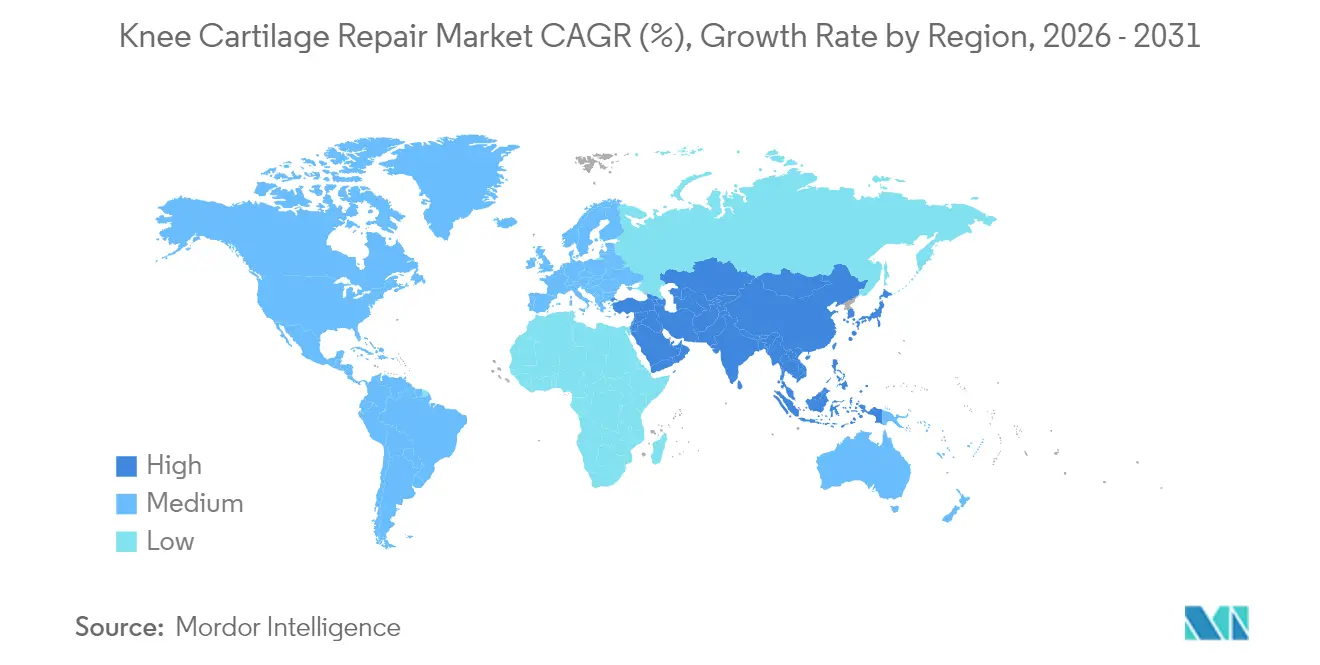
| Fastest Growing Market | Asia-Pacific |
| Largest Market | North America |
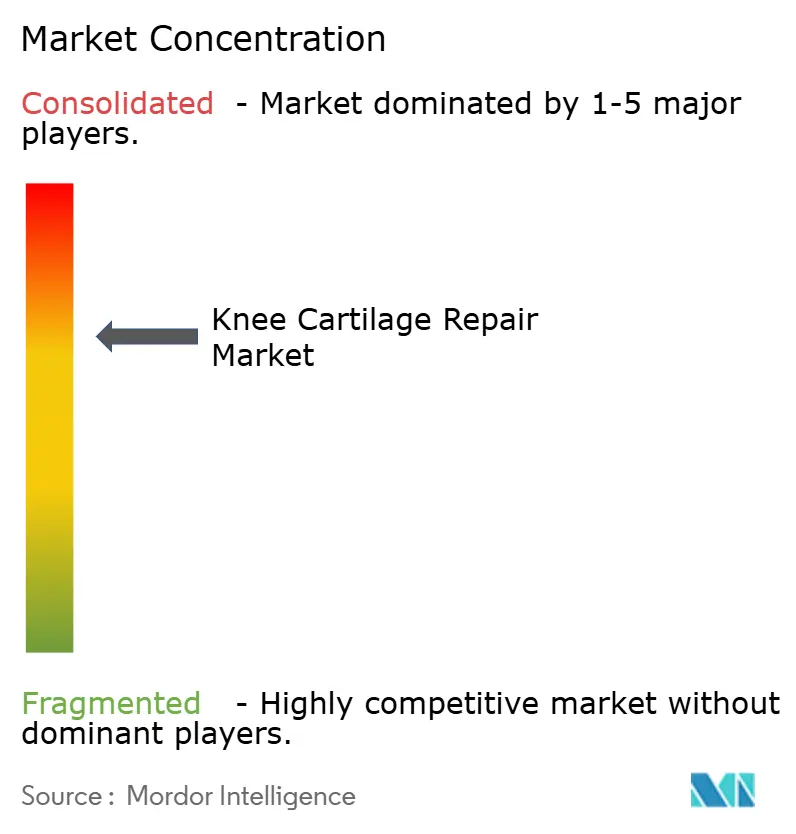
| Market Concentration | Medium |
Major Players
*Disclaimer: Major Players sorted in no particular order Image © Mordor Intelligence. Reuse requires attribution under CC BY 4.0. |
|
Knee Cartilage Repair Market Analysis by Mordor Intelligence
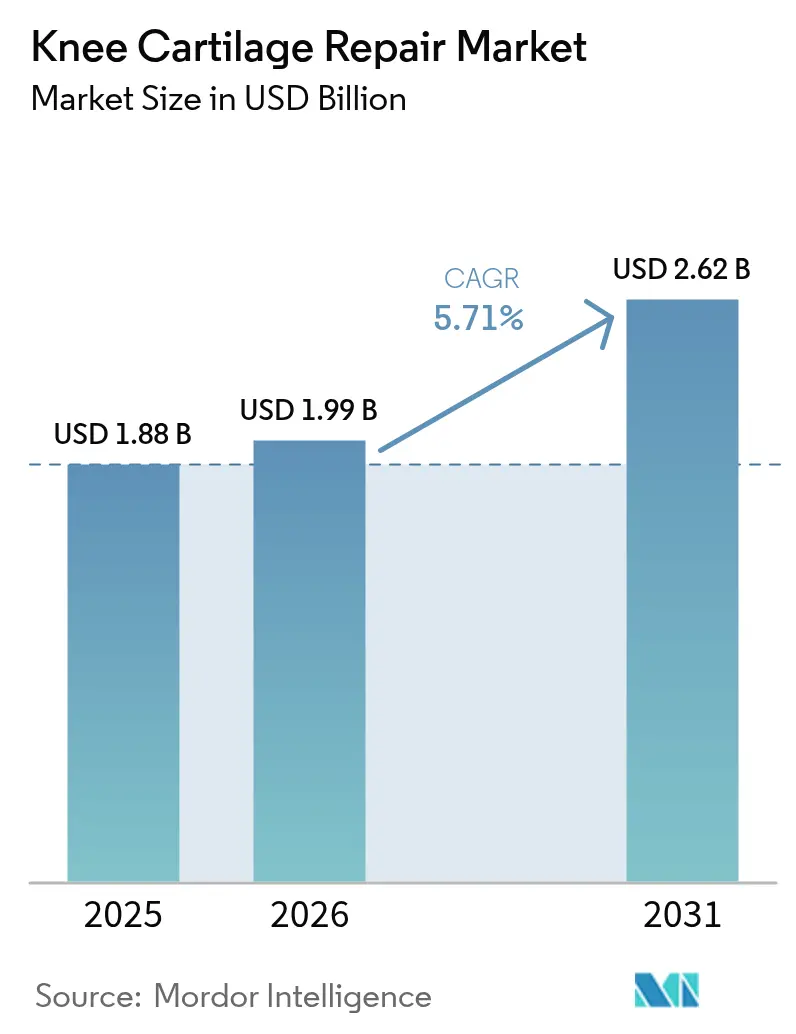
The knee cartilage repair market size is expected to grow from USD 1.88 billion in 2025 to USD 1.99 billion in 2026 and is forecast to reach USD 2.62 billion by 2031 at 5.71% CAGR over 2026-2031. Steady growth rests on the worldwide rise in knee osteoarthritis cases, wider adoption of minimally invasive surgery, and technology that improves scaffold design and cell processing. Strong reimbursement in high-income nations and expanding outpatient care models further widen patient access. At the same time, 3D printing and allogeneic cell platforms shorten lead times, reduce costs, and position suppliers for large-scale production.
Key Report Takeaways
- By application, autologous chondrocyte implantation led with 30.84% knee cartilage repair market share in 2025, while synthetic and 3D printed scaffolds are projected to grow at an 8.56% CAGR to 2031.
- By surgical approach, conventional arthroscopy held 61.92% of the knee cartilage repair market size in 2025; robotic-assisted systems record the fastest CAGR at 8.01% through 2031.
- By biomaterial type, collagen-based scaffolds accounted for 35.78% of the knee cartilage repair market size in 2025; 3D bioprinted osteochondral constructs are set to expand at 9.6% CAGR to 2031.
- By cell source, autologous chondrocytes commanded 39.22% knee cartilage repair market share in 2025, yet allogeneic chondrocytes are on track for a 9.32% CAGR through 2031.
- By end user, hospitals captured 43.58% of the knee cartilage repair market in 2025, whereas ambulatory centers will rise at 7.97% CAGR to 2031.
- By patient age group, individuals aged 45-64 years held 46.03% knee cartilage repair market share in 2025; the 25-44-year cohort is the fastest growing at 7.33% CAGR to 2031.
- By geography, North America led with 35.05% knee cartilage repair market share in 2025, while Asia-Pacific is forecast to climb at 8.35% CAGR during the outlook period.
Note: Market size and forecast figures in this report are generated using Mordor Intelligence’s proprietary estimation framework, updated with the latest available data and insights as of 2026.
Market Trends and Insights
Drivers Impact Analysis of Knee Cartilage Repair Market*
| Driver | (~) % Impact on CAGR Forecast | Geographic Relevance | Impact Timeline |
|---|---|---|---|
| Rapidly-Ageing Population & Knee-OA Prevalence | 1.8% | Global, with concentration in Japan, Europe, North America | Long term (≥ 4 years) |
| Rising Sports & Road-Trauma Injuries | 1.2% | North America, Europe, emerging APAC markets | Medium term (2-4 years) |
| Preference For Minimally-Invasive & Outpatient Arthroscopy | 1.0% | North America, Western Europe, urban APAC | Short term (≤ 2 years) |
| Regulatory Green-Lighting Of Allogeneic Chondrocyte Products | 0.9% | North America, EU, with spillover to APAC | Medium term (2-4 years) |
| 3-D Printed Osteochondral Scaffolds Entering Pivotal Trials | 0.7% | North America, select EU markets | Long term (≥ 4 years) |
| Bundled-Payment Shift Accelerating Same-Day Knee Procedures | 0.6% | United States primarily, early adoption in select EU markets | Short term (≤ 2 years) |
| Source: Mordor Intelligence | |||
Rapidly ageing population and knee osteoarthritis prevalence
Global osteoarthritis cases exceeded 607 million in 2021, with knee disease making up the largest share. Female patients carry a disproportionate burden and high body mass index multiplies disability risk, driving earlier intervention needs.[1] Younger yet heavier cohorts therefore seek durable regenerative solutions rather than short-term palliative care. The resulting demand for scalable therapies stretches across regions and underpins long-term growth for the knee cartilage repair market.
Rising sports and road-trauma injuries
Younger adults account for a sharp rise in acute cartilage lesions. The 25–44-year bracket shows the fastest procedure growth because athletes and accident patients insist on high-function recovery. Engineered nasal-septum cartilage matured for two weeks has outperformed traditional constructs in recent trials, helping players return to impact activities sooner.[2] Insurers and employers value the productivity gains, supporting premium pricing within the knee cartilage repair market.
Preference for minimally invasive and outpatient arthroscopy
Arthroscopic techniques move many knee cartilage repairs into ambulatory centers where costs are lower and same-day discharge is standard. Meta-analyses report no safety penalty when compared with inpatient care while emphasizing savings that appeal to payers.[3] In 2024, the US regulator cleared arthroscopic delivery of MACI, broadening the surgeon pool and accelerating adoption. These advances favor devices purpose-built for small-incision work in the knee cartilage repair market.
Regulatory approval of allogeneic chondrocyte products
The push toward standardized donor cell lines lifts capacity constraints that hinder autologous approaches. In pivotal trials, umbilical cord blood-derived mesenchymal stem cells repaired larger defects more effectively than microfracture nature.com. Regulatory fast-track programs in the United States and Europe shorten review cycles, enabling pharmaceutical-style manufacturing and global distribution that expand the knee cartilage repair market.
Restraints Impact Analysis of Knee Cartilage Repair Market*
| Restraint | (~) % Impact on CAGR Forecast | Geographic Relevance | Impact Timeline |
|---|---|---|---|
| High Episode-Of-Care Cost & Reimbursement Uncertainty | -1.4% | Global, with acute impact in price-sensitive markets | Short term (≤ 2 years) |
| Variability In Long-Term Clinical Outcomes | -0.8% | Global, particularly affecting adoption in evidence-based markets | Medium term (2-4 years) |
| Limited GMP Cell-Processing Capacity Causing Therapy Delays | -0.6% | North America, EU, with emerging impact in APAC | Short term (≤ 2 years) |
| Surgeon Learning-Curve For Advanced Biologic Techniques | -0.4% | Global, with regional variations in training infrastructure | Medium term (2-4 years) |
| Source: Mordor Intelligence | |||
High episode-of-care cost and reimbursement uncertainty
Robot-assisted total knee surgery carries extra costs of USD 2,400–15,000 per case despite shorter stays and fewer complications. When payers question long-term value, hospitals hesitate to adopt new implants, restraining early volumes in the knee cartilage repair market.
Variability in long-term clinical outcomes
Patient-reported improvements diverge widely across lesion sizes, defect locations, and comorbidity profiles. In some cohorts, microfracture results degrade after two years, whereas cell-based implants sustain benefit. The evidence gap keeps guidelines cautious and slows broad uptake in the knee cartilage repair market.
*Our forecasts treat driver/restraint impacts as directional, not additive. The impact forecasts reflect baseline growth, mix effects, and variable interactions.
Knee Cartilage Repair Market Segment Analysis
By Application:
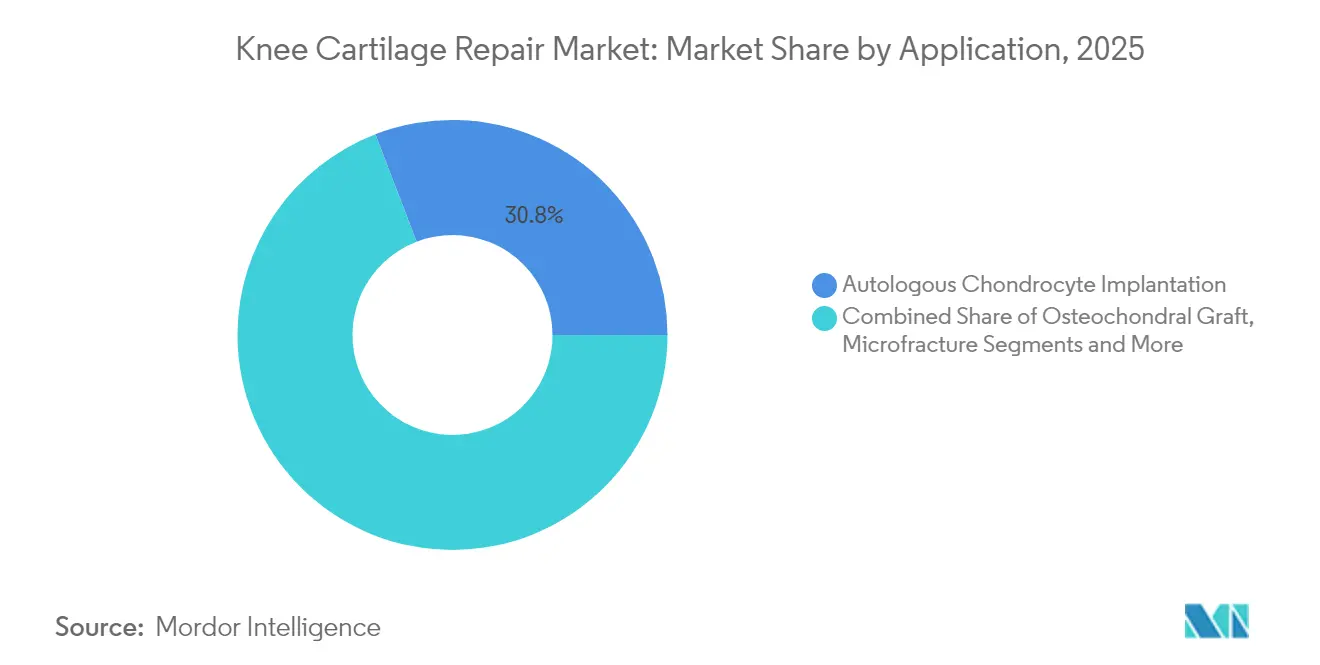
Cell-Based Therapies Lead InnovationAutologous chondrocyte implantation captured 30.84% knee cartilage repair market share in 2025 on the back of long-standing clinical data and growing use of MACI patches. Prospective trials showed durable pain relief and structural repair when compared with microfracture at five years. Synthetic and 3D printed scaffolds are expanding at an 8.56% CAGR to 2031 because they eliminate two-stage harvest and culture, improve logistics, and lower overall operating room time.
Microfracture remains common for small defects but faces erosion as larger lesions demand true hyaline repair. Osteochondral autografts and allografts serve focal cavities where immediate structural support is essential. Research teams have also reported “dancing molecule” peptides that trigger rapid chondrogenesis, a discovery that could transform early-stage interventions should human data confirm preclinical findings.

By Surgical Approach:
Robotic Precision Gains MomentumConventional arthroscopy represented 61.92% of the knee cartilage repair market size in 2025 due to its familiarity, short case times, and widespread instrumentation. Robotic systems, however, advance at an 8.01% CAGR through 2031 as hospitals seek reproducible alignment and defect mapping. Clinical audits found the VELYS platform cut 90-day revisit rates to 13.9% against 22.8% for other robots and trimmed total episode costs.
Open surgery still matters for complex reconstructions that surpass the reach of arthroscopic portals, yet volume declines as scopes and robots extend capability. Artificial intelligence overlays and augmented reality displays are already in pilot use, offering step-by-step guidance that shortens the learning curve and raises consistency across the knee cartilage repair market.
By Biomaterial Type:
3D Bioprinting Transforms PossibilitiesCollagen remains the workhorse scaffold, supporting 35.78% of market revenue in 2025 with its proven safety and well-defined regulatory path. Next-generation 3D bioprinted osteochondral constructs climb at 9.6% CAGR because layer-by-layer deposition matches native depth-dependent mechanical properties. Investigators using anisotropic printing have matched compressive moduli seen in healthy femoral condyles.
Hyaluronic acid gels and chitosan sheets serve low-load areas, while polylactic and polycaprolactone polymers deliver strength and controlled resorption. Ceramic additives increase stiffness for high-impact zones. Blending these materials with cell suspensions during printing opens the door to single-procedure cartilage resurfacing within the knee cartilage repair market.
By Cell Source:
Allogeneic Solutions Address ScalabilityAutologous chondrocytes generated 39.22% knee cartilage repair market share in 2025 yet require patient tissue harvest and weeks of culture. Allogeneic chondrocytes escalate at 9.32% CAGR, leveraging donor lots that remove the waiting period. Randomized studies report superior International Knee Documentation Committee scores for umbilical cord-derived mesenchymal cells versus microfracture in moderate lesions.
Adipose-derived stem cells also show rapid pain relief within 3 months post-injection, though stromal vascular fraction therapies need up to 12 months for similar benefit. Acellular matrices laden with growth factors appeal where regulatory or immunologic hurdles limit live-cell imports.
By End User:
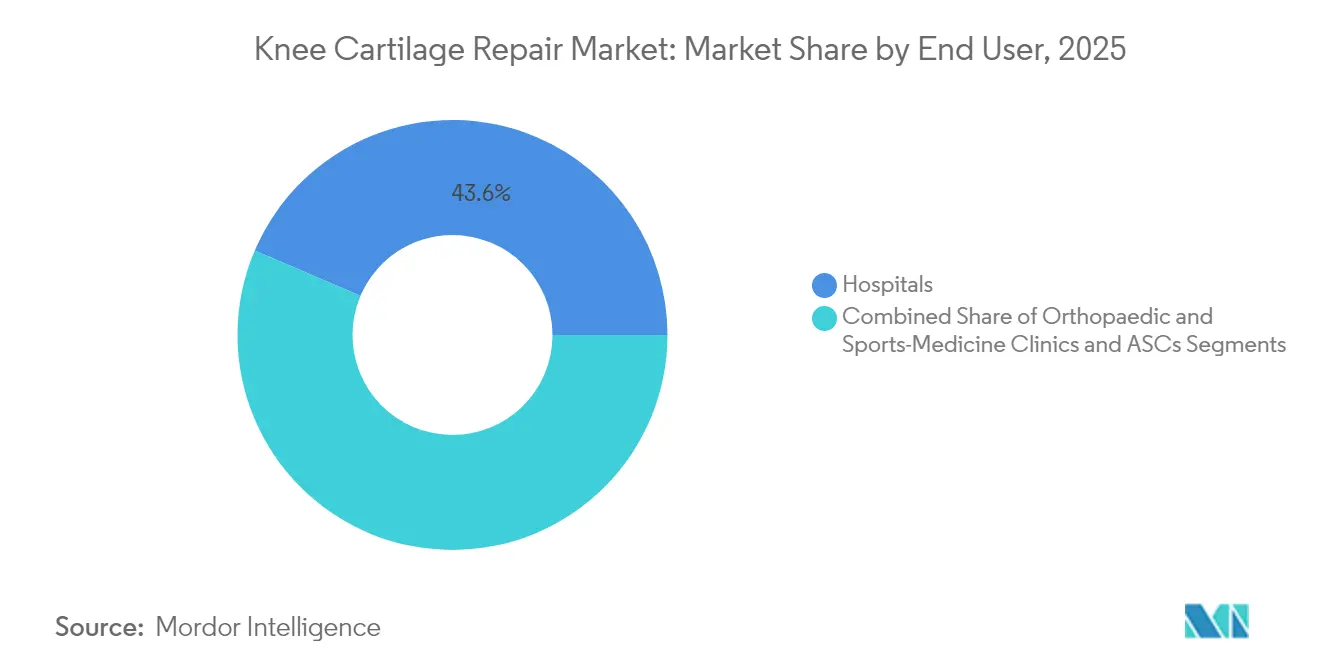
Ambulatory Centers Capture GrowthHospitals hold 43.58% of revenue due to intensive care infrastructure and insurance contracts. Ambulatory surgical centers expand at 7.97% CAGR as payers reward lower facility fees and patients prefer next-day mobility. Meta-reviews of more than 260,000 cases reveal equivalent infection and readmission rates between outpatient and inpatient cohorts.
Specialized orthopedic clinics focus on athletes and military personnel who demand accelerated rehab. Integration of imaging, surgery, and physiotherapy under one roof boosts care continuity and revenue capture, a model expected to propagate further within the knee cartilage repair market.
By Patient Age Group:
Middle-Aged Patients Drive VolumeAdults aged 45-64 supply nearly half of total procedures because their cartilage degeneration is symptomatic yet their joint life expectancy favors preservation over replacement. The knee cartilage repair market size for this cohort will keep rising as obesity amplifies lesion incidence. Meanwhile, the 25-44 group grows fastest as sports injuries and active lifestyles converge with willingness to pursue restorative options.
Pediatric demand is nascent yet important. A multicenter US trial evaluates MACI against microfracture in patients 10-17 years old, aiming to secure a label extension that could reduce long-term disability risk.
At the opposite end, patients over 65 often show diminished regenerative capacity, though bone marrow aspirate concentrate has achieved meaningful pain relief in moderate osteoarthritis.
Geography Analysis
North America Knee Cartilage Repair Market
North America accounted for 35.05% knee cartilage repair market share in 2025, supported by robust reimbursement, a large installed base of arthroscopes and robots, and ongoing surgeon training programs. Autologous procedures dominate, yet insurers now authorize donor-cell implants under coverage with evidence pathways, broadening therapeutic choice. CPT and HCPCS code updates in 2025 streamline claims, reducing administrative delays and reinforcing volume growth.
Europe Knee Cartilage Repair Market
Europe remains technologically advanced but cost containment policies moderate high-price implant uptake. EU Medical Devices Regulation mandates stricter post-market vigilance, pushing suppliers to expand clinical follow-up and registry participation. Nations with bundled payment pilots, such as Germany and the Netherlands, prioritize day-surgery conversions that benefit arthroscopic MACI and scaffold implants.
APAC Knee Cartilage Repair Market
Asia-Pacific advances at an 8.35% CAGR through 2031 as China, South Korea, and Australia scale specialty orthopedic centers. Hospital records show escalating knee arthroplasty in younger Chinese patients, a warning sign that early cartilage repair demand will grow rapidly. Japan confronts consumer hesitancy; only 17% of patients have opted for knee surgery in surveys, citing fear and limited awareness. Educational campaigns and minimally invasive options aim to lift uptake, providing upside for the knee cartilage repair market.
Middle East and South America Knee Cartilage Repair Market
Emerging Middle East and South American economies invest in private orthopedic clinics catering to medical tourists. Although procedure counts remain small, improving insurance coverage and surgeon repatriation programs indicate long-term opportunity. Import tariffs and registration lags, however, currently restrict immediate market entry.
Regulatory Landscape
Knee cartilage repair spans device, biologic, and combination-product frameworks, so classification and evidence requirements vary by jurisdiction. In the United States, FDA guidance on preparing IDEs and INDs for products intended to repair or replace knee cartilage anchors trial design and regulatory strategy for cell-based therapies, scaffolds, and combination approaches. From February 2026, FDA's Quality Management System Regulation (QMSR) became effective, aligning 21 CFR Part 820 with ISO 13485:2016 and tightening quality-system expectations for device-led components.
In Europe, EU MDR (Regulation (EU) 2017/745) continues to raise the bar for clinical evidence and post-market surveillance for implantable and Class III products, reinforced by MDCG classification guidance and the March 2026 Commission Delegated Regulation (EU) 2026/1451 amending MDR requirements for certain exempted device categories. In the United Kingdom, NICE moved its single-step scaffold insertion guidance into HealthTech Guidance (HTG728) in January 2026, reflecting wider reliance on health-technology assessment pathways for adoption decisions. In Japan, PMDA oversight of regenerative medicine products supports market entry for autologous approaches, illustrated by the JACC partial change submission in June 2024 and the subsequent approval conclusion in April 2025 for knee osteoarthritis and traumatic defects.
Value Chain Analysis
The value chain runs from biomaterials inputs such as collagen and synthetic polymers like PLA/PCL, to sterile device manufacturing, and specialized cell sourcing and processing for autologous and allogeneic programs. For cell-based therapies, the most critical steps are biopsy or harvest logistics, GMP processing, cold-chain transport, and scheduling around operating room slots, which can extend lead times versus scaffold-only solutions. By comparison, off-the-shelf scaffolds and hydrogels use more conventional medical-device pathways, supported by contract manufacturing and distributor networks tied to arthroscopy suites and sports-medicine channels.
Downstream, procedure economics and coding shape purchasing behavior for hospitals and ambulatory surgical centers, linking clinical evidence generation to reimbursement and stocking decisions. Japan Tissue Engineering (J-TEC) implementing national health insurance reimbursement for JACC effective January 1, 2026 highlights how payer coverage can accelerate adoption and stabilize planning for autologous supply chains. Manufacturing capability upgrades also affect availability and unit cost, including Regentis Biomaterials receiving European Notified Body approval in July 2026 for a solvent-free process for GelrinC that targets large increases in production yield, and Smith+Nephew publishing five-year data for CARTIHEAL Agili-C in April 2026 while progressing toward standardized procedure coding (with a CPT code effective January 1, 2027).
Competitive Landscape
The knee cartilage repair market shows moderate fragmentation. Global orthopedic majors pursue bolt-on deals to secure novel biomaterials and cell lines. Smith+Nephew paid USD 180 million for CartiHeal in January 2024 to gain a coral-derived scaffold that cuts the need for early total knee replacement by 87% at four years. Integration leverages the buyer’s distribution scale and surgeon network to accelerate uptake.
Zimmer Biomet posted USD 745.1 million in knee revenues in Q3 2024, up 5.5%, reflecting steady demand for legacy implants and early traction for its mini-incision systems. DePuy Synthes invests heavily in 3D printing to customize osteochondral plugs, while Stryker channels R&D into robot-enabled navigation modules that enhance defect mapping accuracy.
Younger firms focus on platform innovations. CytexOrtho secured USD 18 million in grants to refine polycaprolactone scaffolds that match native cartilage modulus and aim for Class III device clearance. Active Implants continues pivotal trials for a polyurethane meniscus replacement that has FDA breakthrough status. These ventures rely on venture and grant funding to reach regulatory milestones before partnering with larger strategics.
Long-term differentiation stems less from niche mechanical tweaks and more from scalable manufacturing, proven durability, and health-economic evidence. Players able to justify premium list prices with real-world outcome data will consolidate share as payers shift to value-based contracts.
Knee Cartilage Repair Industry Leaders
-
Smith & Nephew
-
Stryker
-
Zimmer Biomet Holdings, Inc.
-
Johnson & Johnson
-
Arthrex Inc
- *Disclaimer: Major Players sorted in no particular order
Knee Cartilage Repair Market Companies Covered in this Report
- Anika Therapeutics
- Arthrex
- B. Braun
- Conmed
- Johnson & Johnson
- Kolon TissueGene
- MEDIPOST
- Smiths Group
- Stryker
- Vericel
- Zimmer Biomet
- Geistlich Pharma
- Orthocell
- BioTissue AG
- CollPlant Biotechnologies
- Tissue Regenix Group
- Hyalex Orthopaedics
- CytexOrtho
Market Opportunities and Future Outlook
A key whitespace is scalable, off-the-shelf cartilage repair that reduces two-stage workflows and dependency on constrained GMP cell-processing capacity, while still targeting durable outcomes that support payer acceptance. Evidence accumulation around long-term performance continues to strengthen commercial pathways. In April 2026, Smith+Nephew published five-year clinical data for CARTIHEAL AGILI-C, reporting superior pain relief and functional gains versus standard of care, which supports broader surgeon uptake and formulary discussions. Coding and billing infrastructure also continues to advance, with a Category I CPT code established for procedures using AGILI-C (effective January 1, 2027), which can reduce administrative friction for providers and align purchasing with predictable reimbursement.
Manufacturing scale-up and geographic access create additional opportunity, particularly as outpatient arthroscopy models expand. In July 2026, Regentis Biomaterials received European Notified Body approval for a solvent-free GelrinC manufacturing process targeting a step-change in production yield, underscoring efforts to reduce unit costs and improve supply continuity for implantable biomaterials. In Asia-Pacific, national coverage milestones such as J-TEC's JACC insurance coverage effective January 1, 2026 show a concrete route to higher adoption of regenerative cartilage repair in a region characterized by rising orthopedic procedure volumes and expanding specialty centers. Development for allogeneic and MSC-based approaches further broadens the addressable population, with MEDIPOST initiating U.S. Phase III enrollment activity in 2026 for an umbilical cord blood-derived MSC therapy for knee osteoarthritis-related cartilage defects.
Recent Industry Developments in Knee Cartilage Repair Market
- July 2026: Stryker announced the U.S. commercial launch of Mako RPS (Robotic Power System) for total knee replacement procedures, introducing Mako Handheld Robotics. The launch expands robotic-assisted capability in knee procedures and reinforces the shift toward precision-enabled workflows that influence adoption of advanced cartilage repair techniques performed in similar orthopedic settings.
- October 2025: Smith+Nephew reported that the AMA CPT Editorial Panel established a Category I CPT code for procedures using the CARTIHEAL AGILI-C Cartilage Repair Implant, effective January 1, 2027. Standardized coding supports clearer reimbursement pathways for providers and can accelerate hospital and ambulatory center purchasing decisions for cartilage repair implants.
- October 2024: Regenity Biosciences obtained U.S. clearance for RejuvaKnee, a collagen meniscal scaffold designed for minimally invasive insertion. The clearance strengthens the supply of scaffold-based solutions aligned with arthroscopic, outpatient-first care models and broadens options for surgeons treating cartilage-related knee pathology.
Knee Cartilage Repair Market Report Scope and Research Methodology
Market Definition and Coverage
For this study, the knee cartilage repair market covers revenues tied to clinical procedures and related products used to repair or regenerate damaged cartilage in the knee joint, across typical surgical and outpatient care settings.
Scope exclusions: We exclude routine knee replacement implants, general orthopedic rehab services, and pain management drugs that are not part of a cartilage repair procedure.
Segments Covered in This Report
-
By Application
- Arthroscopic Chondroplasty
- Microfracture
- Osteochondral Graft
- Autologous Chondrocyte Implantation (ACI & MACI)
- Cell-based Cartilage Resurfacing (MSC, SVF, iPSC)
- Synthetic / 3-D Printed Scaffold Implants
-
By Surgical Approach
- Open Surgery
- Conventional Arthroscopy
- Robotic-Assisted Arthroscopy
-
By Biomaterial Type
- Collagen-based
- Hyaluronic-Acid / Chitosan
- Synthetic Polymer (PGA, PLA, PCL)
- Ceramic / Composite
- 3-D Bioprinted Osteochondral Scaffolds
-
By Cell Source
- Autologous Chondrocytes
- Allogeneic Chondrocytes
- Mesenchymal Stem Cells
- Acellular Biologic Grafts
-
By End User
- Hospitals
- Ambulatory Surgical Centers
- Orthopaedic & Sports-Medicine Clinics
-
By Patient Age Group
- < 25 years
- 25 – 44 years
- 45 – 64 years
- ≥ 65 years
-
By Geography
-
North America
- United States
- Canada
- Mexico
-
Europe
- Germany
- United Kingdom
- France
- Italy
- Spain
- Rest of Europe
-
Asia-Pacific
- China
- Japan
- India
- Australia
- South Korea
- Rest of Asia-Pacific
-
Middle East and Africa
- GCC
- South Africa
- Rest of Middle East and Africa
-
South America
- Brazil
- Argentina
- Rest of South America
-
North America
Data Sources, Market Sizing, and Validation
Desk Research
Desk research started by clarifying what is counted as knee cartilage repair, then mapping how patients move from diagnosis to treatment and follow ups. We used public sources to set the demand context and clinical backdrop, including CDC and WHO epidemiology snapshots for osteoarthritis and sports injury risk, NIH and NLM hosted clinical literature for procedure trends, and FDA databases for device clearances and safety notes. To keep assumptions grounded, we also referred to sources such as CMS coverage and reimbursement rules and OECD health statistics for surgery settings and utilization signals.
On the supply side, pricing and adoption cues were built using annual reports, investor presentations, and reputable medical press releases that discuss procedure mix and site of care shifts. Where available, paid company financials and news were used to standardize revenue disclosures and corporate actions, and a paid patent database was checked for activity signals around scaffolds and cell processing. We used these inputs to form first-pass ranges for procedure volumes, price bands, and regional splits. The list above is illustrative since many other public sources were also reviewed to collect, validate, and clarify data.
Primary Interviews and Surveys
Primary work focused on validating how often each repair approach is used in real practice and what typically drives pricing, such as lesion size, revision rates, and inpatient versus outpatient setting. We spoke with orthopedic surgeons, hospital procurement teams, ambulatory surgery center administrators, and distributors across major regions to close gaps from desk inputs and stress test the modeled ranges. When responses conflicted, we rechecked assumptions with follow up calls until the modeled procedure volumes and price bands were consistent for each geography.
Distribution of primary research fieldwork respondents
| Company type | Respondent position | Region |
|---|---|---|
| Top tier: 27% | CXOs: 21% | APAC: 37% |
| Mid tier: 52% | Functional/Unit leaders: 33% | EMEA: 37% |
| Smaller Players: 21% | Managers: 46% | Americas: 26% |
Market-Sizing & Forecasting
Sizing began with a top-down build that reconstructs the addressable demand pool using knee cartilage lesion prevalence, orthopedic visit and imaging rates, eligibility for repair versus replacement, and the share of patients who actually receive a cartilage repair procedure. Those patient pools were then translated into procedure volumes by therapy type using clinician feedback on current practice patterns and typical switching behavior.
After that, selective bottom-up checks were used to keep totals grounded, including sampled average selling price ranges by setting, distributor markups where relevant, and supplier revenue cues from public filings. When a country lacked clean procedure statistics, we bridged the gap using comparable markets based on population age mix, sports participation proxies, and access to arthroscopy centers, then adjusted with interview based utilization differences. For forecasting, we relied on scenario analysis anchored to a base case, where procedure growth is driven by aging, osteoarthritis incidence, and outpatient migration, and price movement is tied to reimbursement stability and product mix changes, including higher use of cell-based approaches in select centers.
Data Validation & Update Cycle
Outputs were cross-checked against independent signals, including procedure setting shifts, reimbursement rule changes, and whether implied per-site volumes sounded practical to surgeons and facility operators. Variance checks were run across regions so unusual spikes in one geography had to be explained by a real driver rather than a single input error. Before sign-off, a second analyst reviews the model logic, the math, and the written assumptions, and any large swing triggers a re-contact with relevant experts.
Reports are refreshed on an annual cycle, and interim updates are done when material events occur, including major approval, recall, or meaningful reimbursement change. Right before delivery, we run a final pass to confirm the latest public data points and news are reflected so clients receive an up-to-date view.
Mordor Intelligence's Knee Cartilage Repair Market Estimate Compared With Other Published Estimates
Published market values for knee cartilage repair can differ a lot, even when titles look similar, because the counted procedures, add-on products, and the year used as the starting point are not always the same. We also see differences when some publishers blend knee cartilage repair into the wider cartilage repair and regeneration space, which changes the total.
In this study, the biggest gap drivers are usually whether only knee focused repair procedures are counted versus broader regeneration therapies, whether outpatient and hospital procedure volumes are modeled separately, and how pricing is handled for grafts and cell processing steps. Some estimates also rely on more aggressive adoption curves for advanced techniques without enough clinician checks, and currency conversion timing can shift the reported USD total between years. This spread becomes clearer once knee-only arthroscopy linked therapies are separated from other joints and counted consistently, as done by Mordor Intelligence.
Benchmark comparison
| Source | Market Size | Gaps in Research Methodology |
|---|---|---|
| Mordor Intelligence | USD 1.99 B (2026) | |
| Trade Journal A | USD 2.30 B (2024) | Uses an earlier base year and appears to include broader knee regeneration revenues, which can pull in adjacent therapies beyond defined repair procedures, and it is not clear if outpatient volumes are split from hospital volumes. |
| Regional Consultancy B | USD 3.87 B (2024) | Seems to bundle knee cartilage repair with wider regeneration and device categories, and the pricing build is not transparent about what is counted as procedure related product revenue versus general orthopedic device spend. |
The table indicates that most of the spread comes from scope and timing rather than a different underlying patient need. By keeping the demand build tied to eligible patient pools, procedure conversion rates, and realistic price bands by care setting, the resulting market total stays traceable and repeatable across countries. This helps decision makers compare options without mixing unrelated revenue streams.
Key Questions Answered in the Report
What is the current size of the knee cartilage repair market?
The market is valued at USD 1.99 billion in 2026 and is projected to reach USD 2.62 billion by 2031, reflecting a 5.71% CAGR.
Which application segment leads the knee cartilage repair market?
Autologous chondrocyte implantation led with 30.84% revenue share in 2025, supported by strong long-term clinical data.
How fast is the robotic-assisted segment growing?
Robotic platforms are advancing at an 8.01% CAGR through 2031, outpacing conventional arthroscopy.
Why are allogeneic chondrocytes gaining attention?
Allogeneic cell lines remove the patient-specific culture step, enabling faster treatment and economies of scale that support a 9.32% CAGR.
Which region is the fastest-growing market?
Asia-Pacific is forecast to expand at 8.35% CAGR due to aging populations and improving surgical infrastructure.