
Market Overview
| Study Period | 2021 - 2031 |
|---|---|
| Forecast Data Period | 2026 - 2031 |
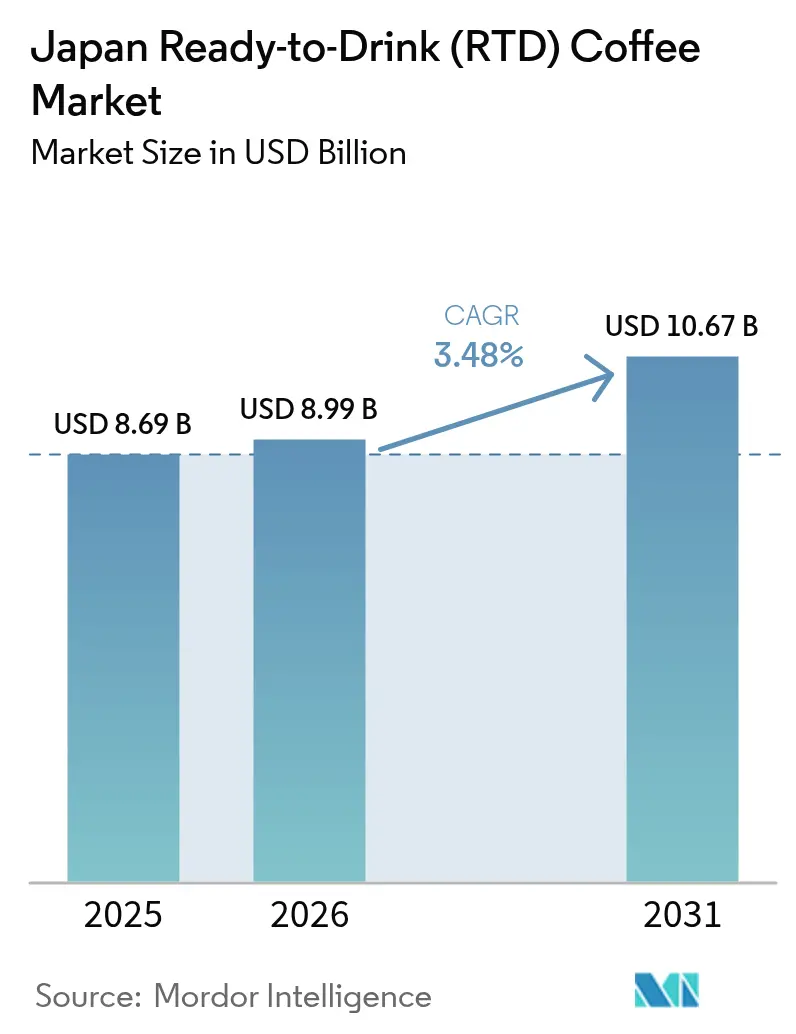
| Base Year Market Size (2025) | USD 8.69 Billion |
| Market Size (2026) | USD 8.99 Billion |
| Market Size (2031) | USD 10.67 Billion |
| Growth Rate (2026 - 2031) | 3.48 % |
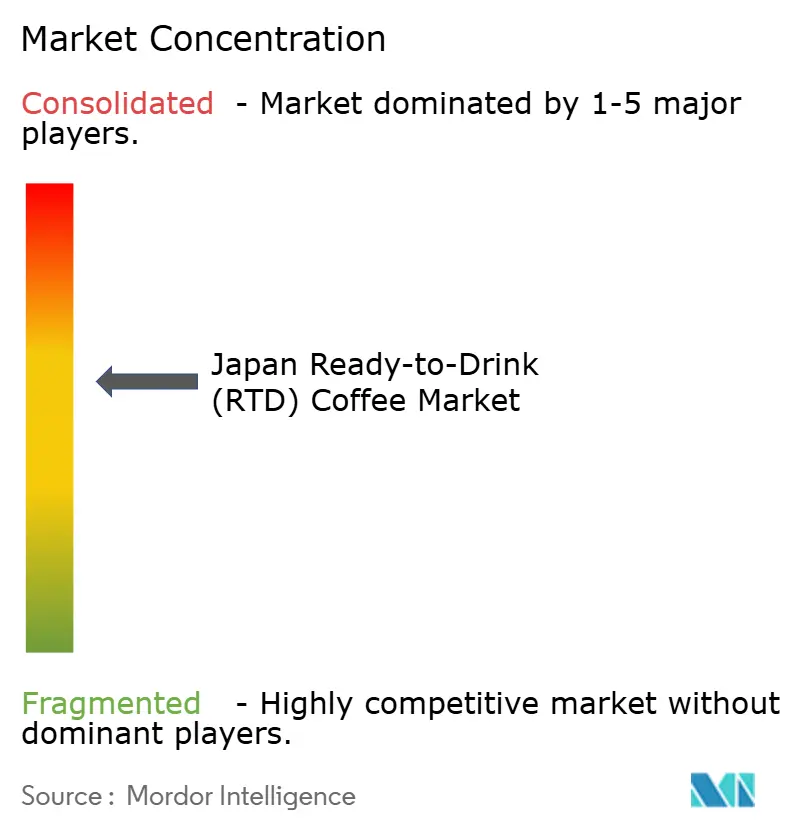
| Market Concentration | Medium |
Major Players *Disclaimer: Major Players sorted in no particular order Image © Mordor Intelligence. Reuse requires attribution under CC BY 4.0. | |
Japan Ready-to-Drink (RTD) Coffee Market Analysis by Mordor Intelligence
The Japanese Ready-to-Drink (RTD) Coffee market size is expected to grow from USD 8.69 billion in 2025 to USD 8.99 billion in 2026 and is forecast to reach USD 10.67 billion by 2031 at 3.48% CAGR over 2026-2031. The moderate growth trajectory reflects market maturity in a country where canned coffee has been deeply embedded in daily consumer routines for over five decades. However, the market's sustained performance is underpinned by rapid urbanization, Japan's unparalleled vending machine infrastructure, and persistent product innovation. Additionally, consumer preferences are transforming due to heightened health awareness and increasing demand for premium offerings. Significant market developments include the transition to convenient resealable PET bottles, the proliferation of cold-brew varieties, and diversification into plant-based alternatives. Despite intense market competition, established manufacturers maintain their market positions through innovative flavor combinations, enhanced functional benefits, and optimized distribution strategies.
Key Report Takeaways
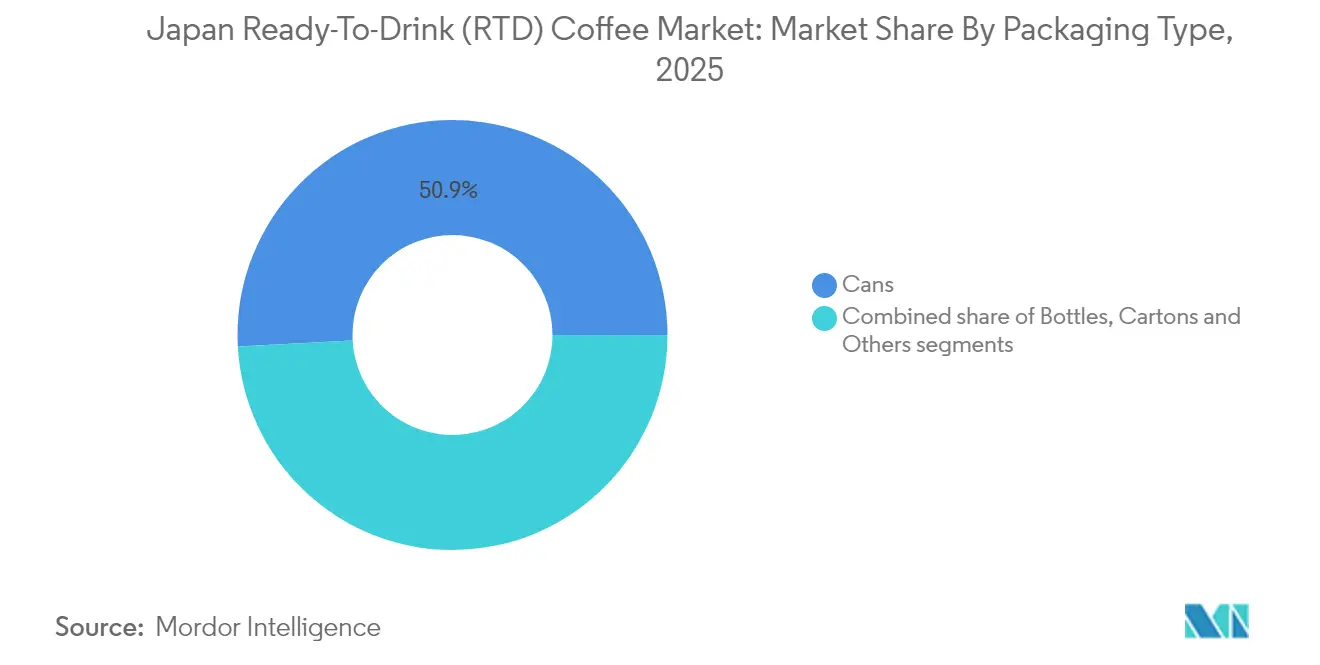
- By packaging type, cans led with 50.86% of the Ready-to-Drink Coffee market share in 2025, while bottles (PET + glass) are projected to post the fastest 4.98% CAGR through 2031.
- By product type, iced latte/cappuccino captured 54.25% of the Ready-to-Drink Coffee market size in 2025; cold brew is forecast to expand at a 5.62% CAGR to 2031.
- By flavor profile, plain/classic coffee captured 61.05% share in 2025; flavored variants are set to log the highest 6.15% CAGR over the same period.
- By ingredient base, dairy formats dominated with an 79.35% share in 2025, whereas plant-based alternatives are advancing at an 8.17% CAGR to 2031.
- By price positioning, mass-market SKUs accounted for 69.65% of sales in 2025, with premium lines growing at a 6.04% CAGR to 2031.
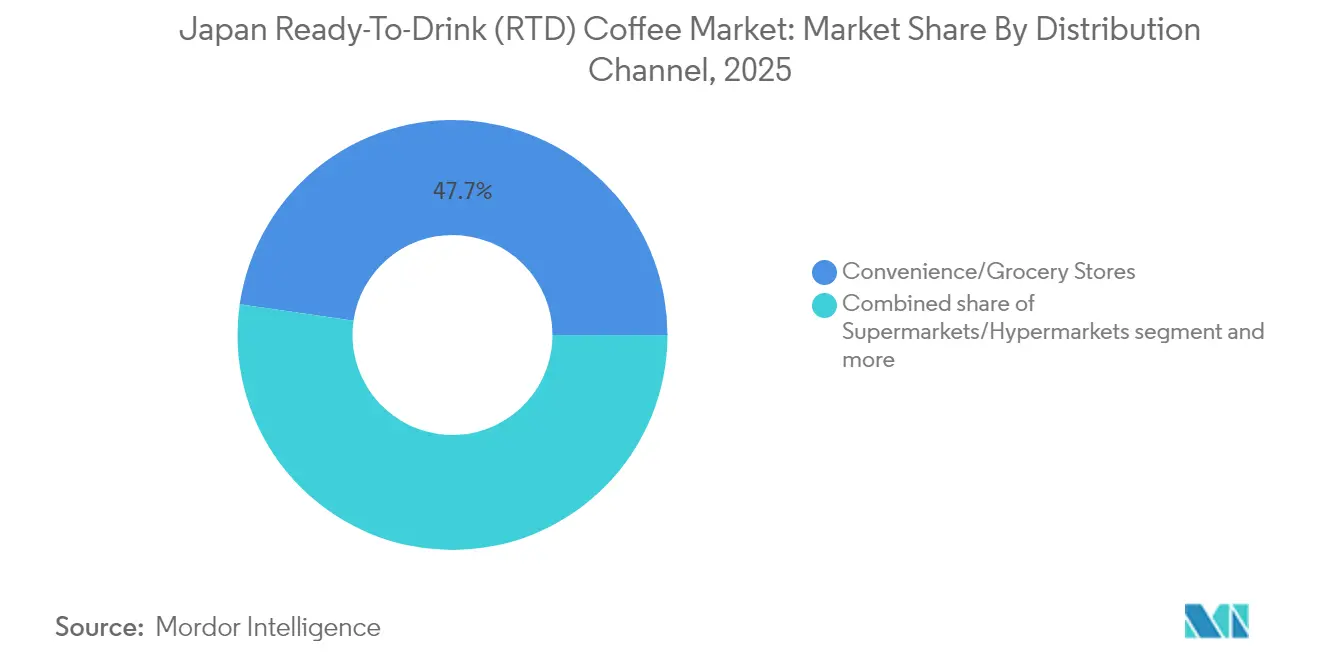
- By distribution channel, convenience/grocery stores delivered 47.72% of 2025 sales; online retail is rising at an 8.03% CAGR through 2031.
- By prefecture, Tokyo contributed 18.10% of national revenue in 2025, while Kanagawa is the fastest-growing area at a 4.16% CAGR to 2031.
Note: Market size and forecast figures in this report are generated using Mordor Intelligence’s proprietary estimation framework, updated with the latest available data and insights as of 2026.
Japan Ready-to-Drink (RTD) Coffee Market Trends and Insights
Drivers Impact Analysis*
| Driver | (~) % Impact on CAGR Forecast | Geographic Relevance | Impact Timeline |
|---|---|---|---|
| Convenience and On-the-Go Consumption on the Rise | +1.2% | National, with particular relevance in urban centers of Tokyo, Osaka, and Kanagawa | Short term (≤ 2 years) |
| Health Trends Spotting in RTD Coffee Beverages | +0.8% | National, with early adoption in Tokyo metropolitan area | Medium term (2-4 years) |
| Augmented Expenditure on Advertising and Promotional Activities | +0.5% | National, with concentration in major urban centers | Short term (≤ 2 years) |
| Product Innovation Experiences Notable Surge | +0.9% | National, serving as the domestic innovation hub | Medium term (2-4 years) |
| Established Coffee Culture Supports Market Expansion | +0.4% | National, with stronger impact in urban prefectures | Long term (≥ 4 years) |
| Workplace Consumption Boosts Market Demand | +0.3% | Tokyo, Osaka, Nagoya, and other business centers | Medium term (2-4 years) |
| Source: Mordor Intelligence | |||
Convenience and On-the-Go Consumption on the Rise
Japan's RTD coffee market thrives due to a large and active workforce, approximately 69.6 million people in 2024, as reported by the Ministry of Internal Affairs and Communication (Japan) [1], many of whom operate in fast-paced urban environments like Tokyo. In Tokyo's prominent business districts, notably Shinjuku and Marunouchi, office workers depend on canned or bottled coffee during work breaks, capitalizing on immediate availability and streamlined service. This labor force fuels demand for quick caffeine fixes, especially through the country’s dense vending machine network, which offers 24/7 access to hot and cold coffee. With one vending machine for every 23 people, Japan ensures unparalleled RTD availability, perfectly suited to its long-working-hour culture. The consistent year-round consumption of RTD coffee further highlights the entrenched role RTD beverages play in Japan’s daily lifestyle.
Health Trends Spotting in RTD Coffee Beverages
Japanese consumers are demonstrating a significant shift toward RTD coffee products with health benefits, compelling manufacturers to develop innovative formulations with reduced sugar content and enhanced functional ingredients. This trend aligns with Japan's comprehensive focus on wellness and preventive health, particularly resonating among busy office workers and health-conscious older consumers. The substantial increase in demand for unsweetened black coffee, prominently featured by major brands like Suntory's BOSS and Asahi's Wonda, reflects a decisive movement toward healthier, low-calorie alternatives. The market is experiencing robust growth in functional RTD coffees enriched with essential nutrients, including protein, vitamins, collagen, and probiotics. Meiji's strategic April 2025 launch of a whole oats RTD coffee beverage, featuring 12 grams of whole grain oats per bottle and delivering beneficial dietary fiber with heart-healthy beta-glucan, exemplifies this innovative approach. These enhanced beverages effectively bridge the gap between nutritional requirements and convenience, catering to consumers seeking wholesome options in their daily routines.
Augmented Expenditure on Advertising and Promotional Activities
Japanese RTD coffee manufacturers have significantly increased their marketing investments to differentiate themselves in the highly competitive market. Suntory's BOSS brand campaigns, featuring the Pride of BOSS commemorative can and Craft BOSS PET bottle series, generated substantial sales growth despite market deceleration. The Craft BOSS series achieved remarkable success through strategic market positioning and targeted consumer engagement. Companies are extensively utilizing digital platforms and social media channels to connect with younger consumers, focusing on sophisticated visual product design and packaging innovations. Additionally, cold brew products have particularly benefited from this digital-first approach, as their aesthetic appeal drives significant social media engagement and sharing among Gen Z consumers.
Product Innovation Experiences Notable Surge
The Japanese ready-to-drink (RTD) coffee market is undergoing extensive product innovation, as manufacturers develop sophisticated brewing methods, diverse flavor profiles, and advanced packaging solutions. UCC's launch of "water-brewed coffee" in June 2025 represents a breakthrough in cold extraction technology, delivering enhanced smoothness and aromatic complexity specifically designed for younger consumer preferences. The market evolution includes premium nitro-infused canned coffees and specialized functional RTD coffee beverages incorporating adaptogens and nootropics. Moreover, in a significant packaging advancement, SIG's implementation of aseptic carton packs at Moriyama's Kanagawa Prefecture plant demonstrates technological innovation while reinforcing environmental sustainability commitments.
Restraints Impact Analysis*
| Restraint | (~) % Impact on CAGR Forecast | Geographic Relevance | Impact Timeline |
|---|---|---|---|
| High Amout of HFSS Sugar Limiting Iced Coffee Growth | -0.7% | National, particularly affecting health-conscious urban consumers | Medium term (2-4 years) |
| Arabica Cost Volatility Post-Brexit Tariffs | -0.5% | National, influencing domestic importers and manufacturers | Short term (≤ 2 years) |
| RTD Coffee Faces Stiff Competition for Shelf Space from Emerging Alternatives | -0.4% | National, with stronger impact in urban retail environments | Medium term (2-4 years) |
| Caffeine Concerns Curbing RTD Coffee | -0.3% | National, with particular relevance among younger and elderly demographics | Long term (≥ 4 years) |
| Source: Mordor Intelligence | |||
High Amout of HFSS Sugar Limiting Iced Coffee Growth
The elevated sugar content in ready-to-drink (RTD) coffee beverages continues to deter health-conscious Japanese consumers, particularly amid growing awareness of high fat, salt, and sugar (HFSS) content. This concern is especially prominent among urban professionals and younger consumers who demand nutritional transparency in their beverage choices. The intensifying focus on health has accelerated the shift toward reduced-sugar options across the market. Manufacturers face the critical challenge of maintaining appealing flavor profiles while reducing sugar content, as traditional RTD coffee products typically contain significant levels of added sugars. This limitation particularly impacts the iced latte/cappuccino segment, where sweetened formulations have traditionally dominated consumer preferences. In response to this market evolution, major companies like Suntory and Asahi are actively developing and introducing innovative lower-sugar alternatives to address this growth constraint.
Arabica Cost Volatility Post-Brexit Tariffs
The fluctuating prices of Arabica coffee beans, combined with post-Brexit tariff changes, have significantly increased operational costs for Japanese ready-to-drink (RTD) coffee manufacturers. Japan's substantial dependence on European trading networks for premium coffee beans has made procurement increasingly complex under the new tariff structure. These mounting cost pressures directly impact production expenses and profit margins, particularly for premium RTD coffee products that require high-quality Arabica beans. In response, companies are actively developing alternative sourcing strategies and conducting comprehensive evaluations of coffee blend modifications to optimize costs. Smaller manufacturers, constrained by limited purchasing power, face intensifying challenges in maintaining market competitiveness against large companies that possess greater financial resources to absorb price fluctuations.
*Our forecasts treat driver/restraint impacts as directional, not additive. The impact forecasts reflect baseline growth, mix effects, and variable interactions.
Segment Analysis
By Packaging Type: Cans Maintain Dominance While Bottles Gain Momentum
Cans dominate Japan's RTD coffee market with a commanding 50.86% share in 2025, continuing their legacy since UCC's groundbreaking introduction of canned coffee in 1969. Japan's network of approximately 3.93 million vending machines, as reported by the Japan Vending Machine Manufacturers Association in 2023, enables consumers to purchase hot and cold coffee throughout the year . Japanese consumers demonstrate strong loyalty to canned coffee, purchasing an average of 100 units annually through vending machines and convenience stores, underscoring the format's deep-rooted position in daily consumption patterns.
The bottle segment (PET and glass) demonstrates robust growth potential with a projected 4.98% CAGR from 2026 to 2031, driven by increasing consumer demand for resealable packaging that ensures product freshness and flexibility in consumption. Besides, glass bottles have established a strong presence in the premium segment, particularly for cold brew and specialty coffee offerings, capturing the attention of discerning consumers who value superior quality and sophisticated packaging presentation.

By Product Type: Cold Brew Challenges Iced Latte Dominance
Iced latte and cappuccino products dominate 54.25% of the RTD coffee market share in 2025. These beverages capture mainstream consumer interest through their well-established taste profiles and premium milk-based formulations. The segment's market leadership reflects Japanese consumers' strong preference for creamy, balanced coffee beverages that minimize bitterness while delivering optimal caffeine benefits. Industry leaders BOSS Coffee (Suntory) and Georgia (Coca-Cola Japan) maintain substantial market presence through continuous product innovation and strategic marketing investments.
Cold brew RTD coffee exhibits exceptional growth at 5.62% CAGR (2026-2031). This expansion is primarily driven by younger consumers who value its distinctive, smooth, less acidic profile and enhanced caffeine content. The segment's market success is amplified by its established health advantages, including significantly reduced acidity and clean ingredient composition.
By Flavor Profile: Flavored Variants Disrupt Classic Dominance
Plain/classic coffee flavors dominate the Japanese market with a 61.05% share in 2025, underscoring the nation's deep-rooted appreciation for authentic coffee experiences. This significant market presence stems from Japan's sophisticated coffee culture, where consumers place high value on quality, craftsmanship, and traditional brewing methods. Black unsweetened varieties have gained substantial momentum, particularly among health-conscious consumers and coffee connoisseurs who seek pure, unaltered flavor experiences.
The flavored ready-to-drink (RTD) coffee segment demonstrates robust growth potential with a projected CAGR of 6.15% from 2026 to 2031. This expansion is fueled by younger demographics actively seeking diverse taste experiences, coupled with manufacturers' continuous investment in flavor innovation. The segment's evolution encompasses carefully curated seasonal limited editions and sophisticated fusion flavors that harmoniously blend coffee with complementary taste elements. Advanced flavor technology enables manufacturers to develop more refined and authentic taste profiles, while the strategic integration of local and international flavor trends allows companies to establish unique market positions in this dynamic segment.
By Ingredient Base: Plant-based Alternatives Challenge Dairy Dominance
Dairy-based RTD coffee products dominate the Japanese market with an 79.35% share in 2025. This dominance reflects established consumer preferences and Japan's extensive dairy processing infrastructure. The combination of rich texture and coffee flavor enhancement through dairy remains appealing to consumers, particularly in traditional formats like café au lait and milk coffee available in vending machines and convenience stores. Major companies like Georgia (Coca-Cola Japan) and BOSS (Suntory) have established their core product lines around dairy-based varieties, strengthening consumer confidence in this segment.
Plant-based milk alternatives in the RTD coffee segment are witnessing significant growth, with a projected CAGR of 8.17% from 2026 to 2031. This momentum is fueled by a rising focus on health and wellness, increasing rates of lactose intolerance, and growing consumer awareness of environmental sustainability. Technological advancements in emulsification and flavor-masking have played a key role in improving the taste and texture of plant-based RTD coffees, making them more appealing to mainstream consumers. Among the various alternatives, oat milk stands out due to its naturally creamy mouthfeel and neutral flavor profile, which harmonizes well with coffee. The expanding availability of plant-based offerings across convenience stores and e-commerce platforms further supports their integration into daily consumption habits.
By Distribution Channel: Online Retail Disrupts Traditional Channels
Convenience/grocery store retailers dominate RTD coffee distribution, capturing 47.72% market share in 2025. In Japan, convenience stores function as the primary distribution channel for RTD coffee, offering both refrigerated and ambient products that meet consumer demand for mobility and accessibility. According to the Ministry of Economy, Trade and Industry, Japan had over 56 thousand convenience stores in 2023 . These retail outlets operate as strategic distribution points for RTD coffee, implementing seasonal variants and store-specific products to maintain customer retention and stimulate product experimentation.
Additionally, online retail emerges as the fastest-growing distribution channel, achieving an 8.03% CAGR from 2026 to 2031, propelled by fundamental shifts in consumer purchasing behavior and accelerating digital adoption rates. E-commerce platforms deliver unprecedented access to an extensive range of RTD coffee products, encompassing both mainstream and premium offerings unavailable in traditional retail environments. Subscription-based RTD coffee delivery services are gaining significant momentum, particularly resonating with urban millennials who prioritize convenience and product exploration. Major manufacturers are strategically expanding their direct-to-consumer capabilities while simultaneously developing robust partnerships with established e-commerce platforms to maximize market penetration and capitalize on emerging growth opportunities.
By Price Positioning: Premium Segment Outpaces Mass Market Growth
Mass-market RTD coffee products dominate with 69.65% of sales in 2025, offering cost-effective options for daily consumption. This segment maintains its market leadership through robust distribution networks, particularly through strategically placed vending machines and convenience stores, ensuring maximum consumer reach. Major manufacturers, including Asahi, Suntory, and Coca-Cola Japan, engage in intense market competition through strategic pricing, targeted promotional campaigns, and continuous product innovations.
Premium RTD coffee demonstrates strong growth potential with a 6.04% CAGR (2026-2031), fueled by increasing consumer preferences for superior quality, distinctive flavor profiles, and enhanced functional benefits. The segment shows significant expansion in specialty coffee variants, carefully selected single-origin offerings, and products featuring clean label certifications. Rising disposable incomes and a sophisticated coffee culture among Japanese consumers continue to drive market growth. Manufacturers are investing in premium product portfolios, emphasizing sustainable sourcing practices, innovative brewing technologies, and premium packaging solutions to meet evolving consumer demands.
Geography Analysis
Tokyo dominates Japan's RTD coffee market with an 18.10% share in 2025, driven by its strategic advantages in population density, comprehensive vending machine networks, and concentration of office workers. The prefecture's fast-paced urban environment generates substantial demand for convenient caffeine solutions, particularly among time-conscious commuters and professionals. As a market trendsetter, Tokyo significantly influences national consumption patterns, with manufacturers prioritizing the capital for new product launches to capitalize on its sophisticated consumer preferences. The prefecture's extensive convenience store infrastructure, encompassing major chains like Lawson, FamilyMart, and 7-Eleven, forms a robust distribution network alongside vending machines. The market continues to evolve with innovative offerings, including premium single-origin selections and functional RTD coffee variants designed for health-conscious urban professionals.
Kanagawa prefecture demonstrates exceptional market potential with a projected 4.16% CAGR from 2026 to 2031, leveraging its strategic location near Tokyo and demographically advantageous younger population base. The ongoing development of urban infrastructure and expansion of business districts in Yokohama create multiple consumption opportunities across various channels. The prefecture's manufacturing capabilities are exemplified by Moriyama's advanced facility, which utilizes SIG's cutting-edge filling technology for premium RTD products, including organic coffee in aseptic carton packaging. Kanagawa's competitive living costs relative to Tokyo attract a younger consumer demographic, driving demand for innovative RTD coffee formats. The prefecture's distinctive coastal setting and popular recreational destinations generate significant seasonal demand for cold RTD coffee products, particularly during the summer tourism peak, contributing to sustained market growth.
Moreover, Osaka's RTD coffee market demonstrates consistent demand, primarily through convenience stores and train station retail locations serving urban professionals and students. Lawson's store-exclusive "UCC Black" canned coffee maintains strong sales performance during peak commuting hours, indicating consumer adoption of convenient beverage options. The city's comprehensive transit infrastructure facilitates RTD coffee distribution through these strategic retail points.
Competitive Landscape
The Japan RTD coffee market is moderately consolidated, with a few key players like Coca-Cola Japan (Georgia), Suntory, Asahi, and Kirin holding significant market shares. These companies leverage deep distribution networks, strong brand equity, and frequent product innovation to maintain their competitive positions. For instance, Suntory's BOSS brand maintains a significant market share in Japan's ready-to-drink coffee segment, distributing products ranging from low-sugar formulations to premium latte varieties through its vending machine infrastructure. UCC, the original manufacturer of canned coffee in Japan, sustains its market presence through product innovations that address evolving consumer demands.
While niche and regional brands continue to emerge, the dominance of established players in vending machines and convenience stores limits their overall impact. The market exhibits high entry barriers due to logistics, vending infrastructure, and consumer loyalty to legacy brands. As a result, competition is active but largely concentrated within a core group of large firms.
Moreover, digital technology integration and premium product development influence market dynamics. Nestlé Japan implements connected machines and digital loyalty programs for personalized solutions. Market demand for café-style beverages drives manufacturers to produce premium ready-to-drink lattes and cold brews. Companies adjust product formulations and distribution strategies to meet consumer preferences in Japan's ready-to-drink coffee market.
Japan Ready-to-Drink (RTD) Coffee Industry Leaders
-
Asahi Group Holdings, Ltd.
-
The Coco-Cola Company
-
Suntory Holdings Limited
-
UCC Ueshima Coffee Co., Ltd.
-
Nestlé S.A.
- *Disclaimer: Major Players sorted in no particular order
Market Opportunities and Future Outlook
Japan's RTD coffee market presents clearer value-led growth opportunities where convenience formats overlap with better-for-you positioning. The packaging mix is shifting toward resealable PET bottles, which are the fastest-growing packaging format in the study period, and this supports premium chilled occasions alongside Japan's long-standing canned coffee base. On the product side, recent in-market activity such as Meiji's April 2025 whole-oats RTD coffee and UCC's June 2025 water-brewed coffee shows space to expand functional claims and differentiated brewing approaches that can support higher price points while addressing HFSS- and caffeine-related concerns.
From a capability and route-to-market perspective, the most actionable opportunities center on scaling health-focused beverage production and improving multi-channel execution. In April 2026, Kirin Beverage announced a JPY 10 billion investment at its Shiga plant to increase production capacity for health-focused beverages, indicating continued capital allocation toward formulations and processes that can be used for functional RTD coffee extensions. On the supply and sustainability side, Ishimitsu & Co. confirmed in June 2026 that Allied Coffee Roasters' new Ono factory in Hyogo Prefecture is on track for completion by end-December 2026, with operations targeted for March 2027. This capacity build should feed upgraded roasting and manufacturing infrastructure for premium and specialty RTD coffee offerings. As online retail and subscription behavior continues to broaden within beverages, manufacturers can also strengthen direct-to-consumer bundles and limited-edition rotations, while keeping core volumes supported by convenience stores and vending-led immediate consumption.
Recent Industry Developments
- March 2026: Suntory Beverage and Food announced the nationwide renewal of the Starbucks GRAB&GO PET bottled coffee series from March 24, 2026, continuing the exclusive availability at 7-Eleven stores. The update maintains convenience-store exclusives as a key lever for visibility and repeat purchases in a mature RTD coffee category while keeping the format aligned with commuter and on-the-go needs.
- February 2026: Asahi Beverage announced Wonda Morning Americano in both black and latte variants (500 ml PET bottles), released nationwide on March 3, 2026. The launch extends Asahi's presence in larger, resealable packaging as consumers trade up from single-serve cans to formats suited for longer consumption occasions.
- April 2025: Meiji launched a ready-to-drink coffee beverage with whole oats under the Meiji Marugoto Oats line in 200 ml cartons. The product adds whole grain oats and highlights dietary fiber and beta-glucan positioning, reinforcing the category's move toward functional and better-for-you formulations amid sugar and wellness scrutiny.
Research Methodology Framework and Report Scope
Market Definition and Coverage
For this methodology, the market covers ready-to-drink coffee beverages sold in Japan that are brewed, cooled, and sealed for sale in formats like cans, bottles, and cartons, which are then bought for immediate or near-term consumption.
Scope exclusions: We exclude freshly prepared coffee served in cafes and foodservice, as well as home-brewing inputs like beans, grounds, capsules, and pods.
Segmentation Overview
- By Packaging Type
- Bottles
- Glass Bottles
- PET Bottles
- Cans
- Cartons
- Others
- Bottles
- By Product Type
- Cold Brew RTD Coffee
- Iced Latte/Cappuccino
- Nitro RTD Coffee
- Functional / Protein-Enhanced RTD Coffee
- By Flavor Profile
- Plain/Classic
- Flavored
- By Ingredient Base
- Dairy-Based
- Plant-Based Milk
- By Price Positioning
- Mass
- Premium
- By Distribution Channel
- Supermarkets/Hypermarkets
- Convenience/Grocery Stores
- Online Retail Stores
- Others (Vending Machine, Forecourt Stores, etc)
- By Prefecture
- Tokyo
- Kanagawa
- Osaka
- Aichi
- Saitama
- Other Prefectures
Data Sources, Market Sizing, and Validation
Desk Research
Desk research was used to build the backbone of the Japan RTD coffee model, mainly by anchoring the demand pool and checking if category movement looks realistic. We relied on public and official sources such as government statistics on household spending and price trends, customs and trade releases for beverage inputs, and national health and nutrition publications that help explain shifts in sugar, dairy, and functional preference.
We also reviewed trade association updates, packaging and recycling disclosures, company filings and investor presentations for category mix comments, and reputable press coverage for product launches and channel shifts (especially vending and convenience retail). Where needed, paid subscriptions for company financials and news were used to cross-check revenue direction and major corporate actions, and patent databases were reviewed to spot packaging and formulation signals. These examples are not exhaustive, and many other public sources were also used to collect data, validate assumptions, and clarify open questions.
Primary Interviews and Surveys
Primary work was used to pressure-test what the desk sources cannot fully explain, especially pricing logic, channel mix, and how quickly new formats gain shelf space. We spoke with a spread of stakeholders such as beverage brand teams, packaging and ingredient partners, distributors, and retail channel managers to confirm key assumptions, and feedback was also used to adjust forecast scenarios where recent input costs or consumer trade-down behavior changed the base case.
Distribution of primary research fieldwork respondents
| Company type | Respondent position |
|---|---|
| Top tier: 39% | CXOs: 19% |
| Mid tier: 41% | Functional/Unit leaders: 25% |
| Smaller Players: 20% | Managers: 56% |
Market-Sizing & Forecasting
Sizing starts with a top-down reconstruction that ties Japan beverage consumption to RTD coffee's category share, and then applies channel and pack-format splits to land at value. To keep the totals grounded, we corroborated them with selective bottom-up approximations, such as sampled price per unit by format and channel multiplied by implied volumes, followed by adjustments when the implied shelf reality did not match interview inputs.
Key inputs used in the model include average selling price movement by pack type (can versus PET or carton), vending machine versus convenience store mix, premium and functional SKU penetration, seasonality in cold consumption, and the pace of new product rotation that impacts effective distribution. When data gaps appear in smaller formats or niche claims, we interpolate using nearby channel benchmarks and then re-check against expert feedback so the final number does not overstate thinly distributed lines. For forecasting, scenario analysis is used because growth is influenced by pricing resets, pack renovation cycles, and channel traffic changes, which are then reviewed and refined with primary respondents before finalizing the curve.
Data Validation & Update Cycle
Outputs are validated through triangulation across independent signals, including price trend consistency, channel mix reasonableness, and year-over-year movements that should align with known category events. When an outlier shows up, the drivers are re-opened, assumptions are traced back to their source, and follow-up questions are triggered with select respondents until the variance is understood.
Before sign-off, the work is reviewed in multiple steps so that arithmetic, units, and scope rules stay consistent across the time series. Reports are refreshed annually, and interim updates are done when material events occur that can shift pricing, distribution, or consumer demand. Right before delivery, a final analyst pass is completed so the latest public releases and confirmed market signals are reflected.
Mordor Intelligence's Japan Ready to Drink Rtd Coffee Market Size Compared Against Other Published Estimates
Published market sizes for Japan RTD coffee can look far apart even when they use similar words, since the timing of the currency used, the price basis (retail versus other value points), and the update frequency can shift the headline number. Differences also build up when one model treats premiumization as a steady price lift, while another assumes sharper jumps from pack renovations or channel mix changes.
In our checks, the biggest gap drivers were how price is converted and refreshed through the year, how vending and convenience pricing is blended, and whether the scope is held tightly to packaged RTD coffee only. By keeping FX timing consistent with the base year and re-validating average selling price steps during refresh cycles, Mordor Intelligence avoids overstating market value when temporary price spikes or short-lived launches appear in a single channel.
Benchmark comparison
| Source | Market Size | Gaps in Research Methodology |
|---|---|---|
| Mordor Intelligence | USD 8.69 B (2025) | |
| Global Consultancy A | USD 8.10 B (2023) | Uses an earlier base year, and the valuation basis is not clearly pinned to a consistent retail price build across channels, which can undercount later price resets in convenience and vending. |
| Regional Consultancy B | USD 12.50 B (2031) | Presents a higher forward-year total that likely assumes faster ASP expansion and stronger growth from format upgrades, and the assumptions appear less constrained by channel-mix checks in a mature category. |
The spread in the table mostly comes from year alignment and how price is carried forward, rather than a disagreement that RTD coffee is well-established in Japan. When scope is held to packaged RTD coffee and the price build is re-checked by channel and format, the resulting estimate stays easier to trace back to clear steps that a buyer can replicate.
Key Questions Answered in the Report
What is the current Ready-to-Drink Coffee market size in Japan?
The Ready-to-Drink Coffee market size stands at USD 8.99 billion in 2026 and is projected to reach USD 10.67 billion by 2031.
Which product type is growing fastest in Japan’s Ready-to-Drink Coffee market?
Cold brew RTD coffee is forecast to register the highest 5.62% CAGR between 2026 and 2031, driven by demand for smoother taste and higher caffeine content.
Why are plant-based RTD coffees gaining popularity?
The plant-based alternatives market is experiencing an 8.17% CAGR, propelled by heightened consumer health awareness, increased recognition of lactose intolerance, and growing environmental considerations.
Which prefecture shows the strongest growth outlook?
Kanagawa Prefecture anticipates a 4.16% CAGR through 2031 in the RTD coffee market. The growth stems from the prefecture's young population demographics, urban infrastructure development, and manufacturing capital investments in RTD coffee production.