
Market Overview
| Study Period | 2021 - 2031 |
|---|---|
| Forecast Data Period | 2026 - 2031 |
| Historical Data Period | 2021 - 2024 |
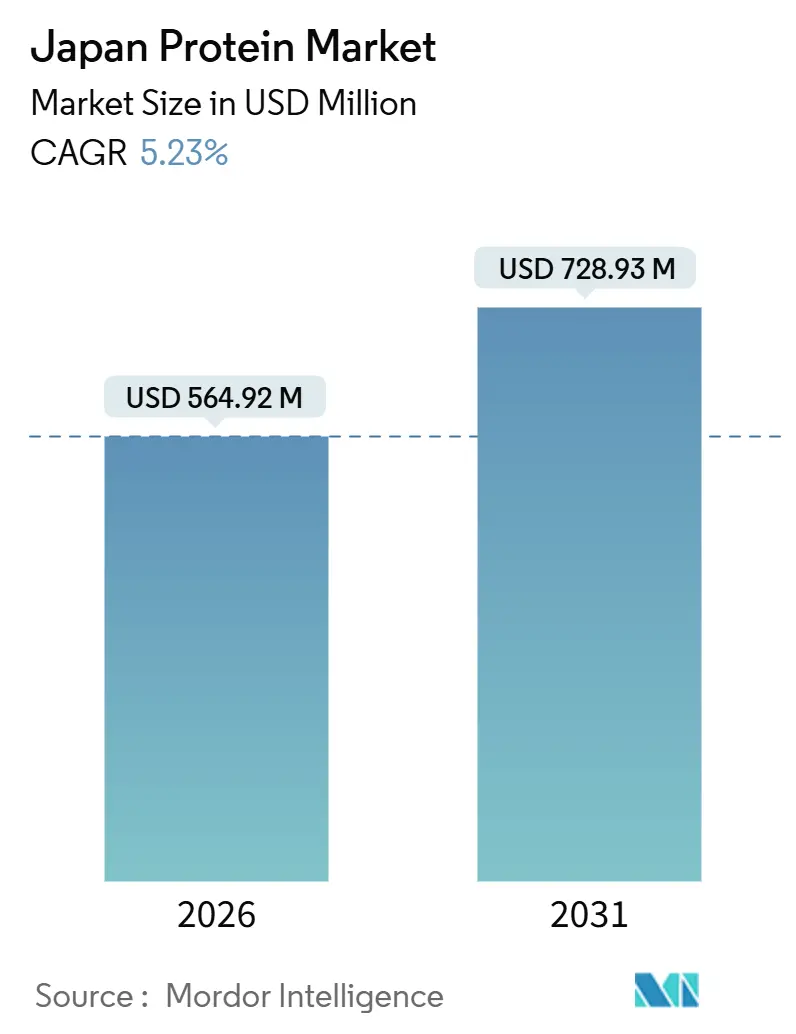
| Market Size (2026) | USD 564.92 Million |
| Market Size (2031) | USD 728.93 Million |
| Growth Rate (2026 - 2031) | 5.23 % |
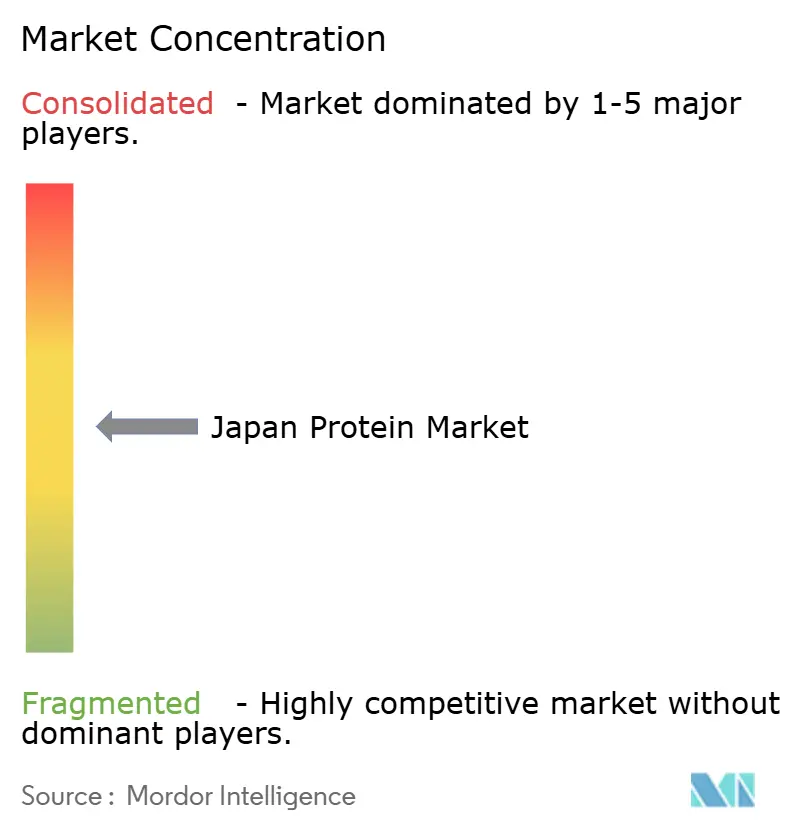
| Market Concentration | Medium |
Major Players *Disclaimer: Major Players sorted in no particular order Image © Mordor Intelligence. Reuse requires attribution under CC BY 4.0. | |
Japan Protein Market Analysis by Mordor Intelligence
The Japan Protein Market size is estimated at USD 564.92 million in 2026, and is expected to reach USD 728.93 million by 2031, at a CAGR of 5.23% during the forecast period (2026-2031). This growth reflects a significant shift in how protein is consumed, positioned, and integrated into daily nutrition. The market's expansion is driven by protein's evolution from a niche, performance-focused ingredient to a fundamental component of preventive health and functional diets. Simultaneously, advancements in processing technologies, formulation science, and ingredient functionality are enhancing digestibility, taste, and versatility. These improvements allow protein to be seamlessly integrated into a wide range of consumption occasions. Additionally, the market is adapting to clean-label expectations, sustainability concerns, and the demand for scientifically validated nutrition. These factors are reshaping product development strategies and strengthening consumer trust.
Key Report Takeaways
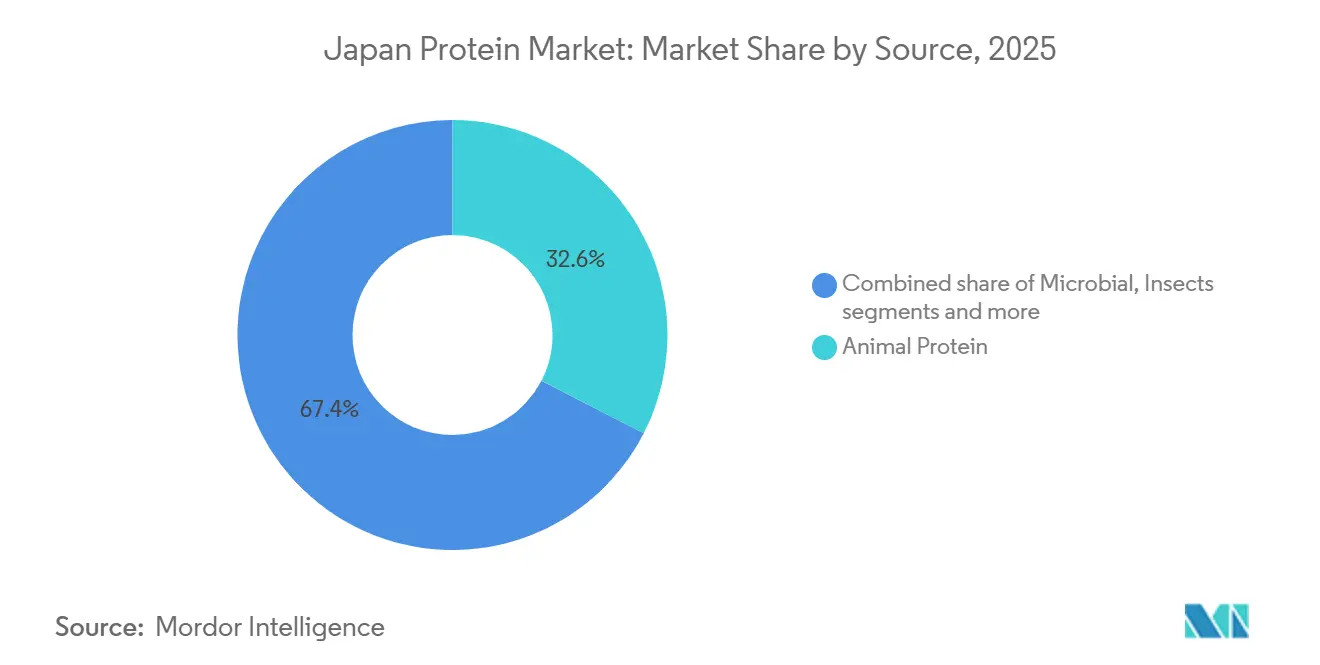
- By source type, animal protein held 32.56% of the Japan protein market share in 2025, while microbial protein is forecast to expand at a 5.64% CAGR through 2031.
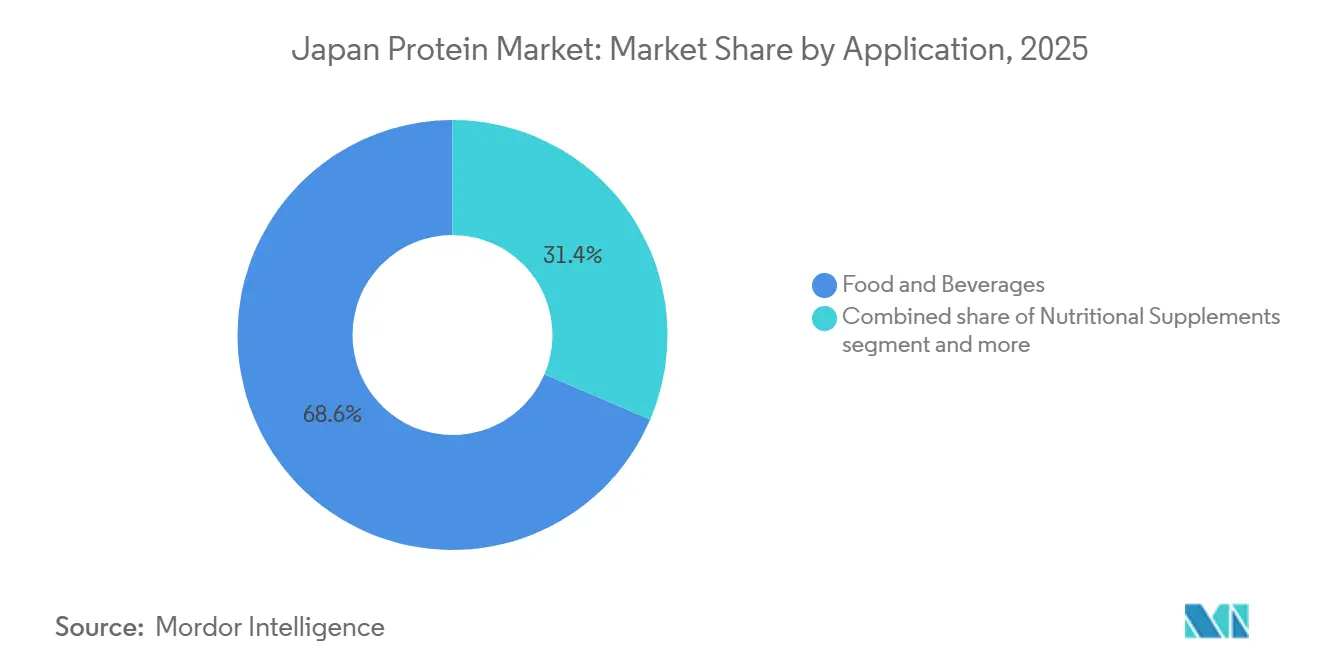
- By application, food and beverages accounted for 68.58% of the Japan protein market size in 2025, whereas cosmetics and personal care are projected to grow at a 6.45% CAGR to 2031.
Note: Market size and forecast figures in this report are generated using Mordor Intelligence’s proprietary estimation framework, updated with the latest available data and insights as of January 2026.
Japan Protein Market Trends and Insights
Drivers Impact Analysis*
| Driver | (~) % Impact on CAGR Forecast | Geographic Relevance | Impact Timeline |
|---|---|---|---|
| Rapidly aging society and healthy longevity focus | +1.2% | National, with concentration in Tokyo, Osaka, and rural prefectures experiencing accelerated aging | Long term (≥ 4 years) |
| Expansion of sports, fitness, and active lifestyle culture | +0.9% | National, with early gains in urban centers (Tokyo, Yokohama, Nagoya) | Medium term (2-4 years) |
| Clean label and minimalist ingredient preferences | +0.7% | National, strongest in metropolitan areas among consumers aged 30-50 | Medium term (2-4 years) |
| Growing demand for plant-based and hybrid protein products | +0.8% | National, with higher adoption in Tokyo, Kyoto, and Fukuoka | Medium term (2-4 years) |
| Convenience-driven nutrition consumption patterns | +0.6% | National, particularly among working-age population (25-55 years) | Short term (≤ 2 years) |
| Shift toward high-quality, easily digestible proteins | +0.7% | National, with emphasis on elderly population (65+ years) | Long term (≥ 4 years) |
| Source: Mordor Intelligence | |||
Rapidly aging society and healthy longevity focus
The rapidly aging population and the national emphasis on healthy longevity are key factors driving the Japan protein market. Dietary protein is increasingly recognized as vital for maintaining muscle mass, mobility, immune function, and overall quality of life among older adults. Japan's demographic structure, heavily skewed toward older age groups, heightens the demand for nutritional solutions targeting age-related conditions such as sarcopenia, frailty, and reduced metabolic efficiency. Protein-rich diets, delivered through fortified foods, functional beverages, supplements, and medical nutrition, are actively promoted to address these needs. This demand is further supported by the preference of elderly consumers for easy-to-consume, highly digestible, and clinically validated protein formats, such as whey, collagen peptides, and plant-based blends incorporated into everyday foods. The scale and urgency of this trend are highlighted by demographic data from the United Nations Population Fund (UNFPA), which indicates that individuals aged 65 years and older accounted for 29.56% of Japan's population in 2023, one of the highest proportions globally [1]. This demographic reality is driving food, beverage, and nutrition manufacturers to focus on protein fortification and age-specific formulations.
Expansion of sports, fitness, and active lifestyle culture
The growth of sports, fitness, and active lifestyle culture serves as a significant structural driver for the Japan protein market. Protein consumption is increasingly associated with physical performance, muscle recovery, and overall functional health across various age groups. Japan has experienced a consistent shift toward regular exercise, gym participation, recreational sports, and structured fitness routines. This lifestyle change is directly contributing to a rising demand for sports nutrition products, including whey and plant-based protein powders. Protein is now being positioned as a daily nutritional necessity rather than a specialized bodybuilding supplement, broadening its appeal among office workers, recreational athletes, and health-conscious individuals. Supporting this trend, data from the Ministry of Economy, Trade and Industry (METI) indicates that Japan had approximately 2.88 million fitness club members in 2024, underscoring the scale of organized fitness participation in the country [2]. This expanding fitness ecosystem is promoting consistent protein consumption as part of active lifestyle habits. Consequently, manufacturers are increasingly focusing on innovation in this space.
Clean label and minimalist ingredient preferences
Clean-label and minimalist ingredient preferences are becoming a significant driver in the Japan protein market, reflecting the country's strong consumer focus on transparency, safety, and simplicity in food and nutrition choices. Japanese consumers are increasingly examining ingredient lists and favoring protein products that exclude artificial additives, synthetic flavors, excessive sweeteners, and complex chemical components. This trend aligns with Japan's traditional food culture, which emphasizes purity, natural ingredients, and functional benefits over heavily processed formulations. Consequently, protein manufacturers are reformulating products to include shorter ingredient lists, easily recognizable raw materials, and clearly identified protein sources, such as whey, soy, marine collagen, and fermentation-derived proteins. Clean-label positioning is particularly impactful in categories such as functional foods, ready-to-drink protein beverages, elderly nutrition products, and beauty-from-within supplements, where trust and perceived safety play a critical role in purchase decisions.
Growing demand for plant-based and hybrid protein products
Growing demand for plant-based and hybrid protein products is a key factor influencing the development of the Japan protein market. Consumers are increasingly seeking nutrition solutions that offer health benefits, sustainability, and dietary flexibility. While animal protein remains a staple in traditional diets, there is a growing acceptance of plant-based proteins such as soy, pea, rice, and algae, especially when these are marketed as complementary rather than complete substitutes. This trend has driven the rise of hybrid protein formulations, which combine plant proteins with animal-derived proteins like whey or collagen. These formulations aim to improve amino acid profiles, digestibility, and taste while reducing dependence on single-source proteins. Additionally, increasing awareness of digestive health, cholesterol management, and environmental sustainability is encouraging consumers to diversify their protein sources. Food and beverage manufacturers are actively responding to these shifts in consumer preferences by innovating new product offerings, reformulating existing products, and investing in research to meet the evolving demands of the market.
Restraints Impact Analysis*
| Restraint | (~) % Impact on CAGR Forecast | Geographic Relevance | Impact Timeline |
|---|---|---|---|
| Taste, texture, and sensory acceptance challenges | -0.8% | National, particularly affecting plant-based and insect protein segments | Medium term (2-4 years) |
| Digestive sensitivity among elderly consumers | -0.7% | National, concentrated in population aged 65+ years | Long term (≥ 4 years) |
| Regulatory complexity for functional and health claims | -0.6% | National, affecting all novel protein ingredients and functional claims | Medium term (2-4 years) |
| Limited protein intake awareness relative to dietary norms | -0.4% | National, most pronounced in rural areas and among elderly population | Long term (≥ 4 years) |
| Source: Mordor Intelligence | |||
Taste, texture, and sensory acceptance challenges
Taste, texture, and sensory acceptance challenges are significant restraints in the Japan protein market, as consumer purchase decisions are heavily influenced by flavor authenticity, mouthfeel, and overall eating experience. Japanese consumers are highly particular about sensory quality, often expecting protein-enriched products to meet the same standards as traditional foods in terms of taste, aroma, and texture. Many protein formulations, particularly plant-based, microbial, and hybrid proteins, face issues such as bitterness, beany or earthy off-notes, chalky mouthfeel, or excessive thickness, which can deter repeat purchases. These sensory challenges are especially pronounced in ready-to-drink beverages, bakery products, and functional snacks, where protein inclusion can disrupt texture and flavor balance. Furthermore, elderly consumers, a key demographic for protein-fortified foods, are especially sensitive to texture and palatability, favoring smooth, mild, and easy-to-swallow formats, which limits formulation flexibility.
Regulatory complexity for functional and health claims
Regulatory complexity surrounding functional and health claims poses a significant restraint on the Japan protein market. Japan enforces one of the most stringent and detailed regulatory frameworks for foods, supplements, and functional ingredients. Protein products marketed with health, functional, or preventive benefits must adhere to various regulatory pathways, including Foods for Specified Health Uses (FOSHU), Foods with Function Claims (FFC), and general food labeling standards. Each pathway requires extensive scientific substantiation and documentation, creating significant challenges for manufacturers. This complexity often leads to prolonged approval processes, high compliance costs, and reduced flexibility in marketing communication, particularly for emerging protein sources such as microbial, insect, or hybrid proteins. Additionally, the need to navigate overlapping regulations and ensure compliance with evolving standards further complicates market entry. Manufacturers must carefully align scientifically accurate claims with regulatory requirements, which can dilute consumer-facing messaging, hinder product differentiation, and slow innovation in the market.
*Our forecasts treat driver/restraint impacts as directional, not additive. The impact forecasts reflect baseline growth, mix effects, and variable interactions.
Segment Analysis
By Source Type: Fermentation Drives Next-Generation Proteins
In 2025, animal protein accounted for a substantial 32.56% share of the Japan protein market, highlighting its continued preference among Japanese consumers. This dominance is largely attributed to the perception of animal proteins, such as whey, casein, collagen, and egg proteins, as high-quality, complete proteins that supply all essential amino acids required for muscle development, recovery, and overall health. The aging population in Japan further drives demand, as older adults increasingly adopt protein-rich diets to address sarcopenia and maintain bone and muscle health. Additionally, the growing fitness and sports nutrition trend has bolstered animal protein consumption, with gym-goers, athletes, and active individuals favoring whey and casein-based supplements for their benefits in muscle repair and sustained energy.
Microbial protein is emerging as the fastest-growing segment in the Japan protein market, with a projected CAGR of 5.64% through 2031. This growth is fueled by its alignment with Japan’s priorities in food security, sustainability, and technological innovation. Advancements in biotechnology and fermentation processes have enabled the efficient production of high-purity proteins from microorganisms such as yeast, fungi, bacteria, and algae. Unlike traditional animal protein, microbial protein offers consistent quality, controlled production conditions, and reduced susceptibility to agricultural variability, making it well-suited for industrial-scale applications. The segment’s expansion is further supported by Japan’s robust Research and Development (R&D) ecosystem and government initiatives promoting alternative protein development as part of future food systems.

By Application: Cosmetics Outpaces Food in Growth
In 2025, the food and beverages segment accounted for a significant 68.58% market share, solidifying its position as the cornerstone of the Japan protein market. This dominance is attributed to the widespread integration of protein into daily dietary habits, as consumers increasingly prioritize nutritional enhancement through regular food consumption rather than standalone supplements. Protein-enriched foods and beverages are favored for their convenience, familiarity, and ease of incorporation into daily routines. The growing demand for functional and health-oriented foods has further propelled protein inclusion as a key ingredient, aligning with consumer preferences for preventive nutrition and balanced diets. Manufacturers are focusing on clean-label formulations, improved taste profiles, and multifunctional benefits, enabling protein to be seamlessly incorporated into mainstream food and beverage products.
The cosmetics and personal care segment is the fastest-growing application in the Japan protein market, projected to expand at a CAGR of 6.45% through 2031. This growth is primarily driven by the increasing use of marine collagen peptides in anti-aging skincare, hair care formulations, and ingestible beauty supplements. Japan’s strong "beauty-from-within" culture has fostered the convergence of nutrition and cosmetics, positioning protein-based ingredients as essential components. These proteins are increasingly utilized in premium anti-aging serums due to their high bioavailability, clean sensory profile, and strong consumer trust in marine-derived ingredients. The segment’s growth is further supported by Japan’s premiumization trend in personal care, where consumers actively seek scientifically validated, functional, and age-defying formulations over conventional cosmetic solutions. This trend is reflected in trade data, as Japan Customs reported that the import value of cosmetics into Japan reached approximately JPY 446.1 billion in 2024, underscoring the robust demand for advanced, high-value cosmetic products that increasingly incorporate protein-based actives [3].
Geography Analysis
Japan's protein market demonstrates significant regional differences, influenced by variations in demographic profiles, industrial concentration, retail infrastructure, and lifestyle preferences. Urban areas benefit from dense populations, advanced distribution systems, and greater exposure to functional foods, sports nutrition, and premium wellness products. In contrast, rural regions exhibit demand patterns focused on aging-related nutrition and essential dietary supplementation. These regional disparities affect consumption volumes, preferred product formats, protein sources, and the adoption of innovations, resulting in a geographically diverse market structure.
The Greater Tokyo Area, along with Osaka and the Kansai region, serves as the primary demand hub for the protein market. High urbanization, frequent purchasing behavior, and rapid adoption of nutrition trends characterize these metropolitan areas. Fitness centers, specialty retailers, convenience food outlets, and innovation-driven foodservice channels are concentrated in these regions, driving strong demand for protein-enriched foods, ready-to-drink beverages, and lifestyle-focused nutrition products. Consumers in urban Japan show a preference for hybrid proteins, clean-label formulations, and functional claims related to performance, beauty, and preventive health. These factors position urban areas as key testing grounds for new protein concepts and premium offerings.
In contrast, regions such as Hokkaido and rural prefectures, including aging-intensive areas like Akita and Shimane, exhibit demand patterns centered on nutritional needs rather than lifestyle preferences. These areas face accelerated population aging and limited retail diversification, leading to a stronger reliance on protein-fortified staple foods, clinical nutrition products, and easily digestible formats designed for muscle maintenance and general health. Although innovation adoption is slower in these regions, they remain critical demand centers for functional and medical nutrition, highlighting protein's role in addressing Japan's long-term demographic challenges.
Regulatory Landscape
Japan protein ingredients used in foods, beverages, supplements, and related applications fall under the Food Sanitation Act (Act No. 233 of 1947), with oversight led by the Ministry of Health, Labour and Welfare (MHLW) for food safety and the Consumer Affairs Agency (CAA) for labeling and claims. Where ingredients are treated as additives, Japan follows a positive-list model, with only designated additives permitted (including separate categories for existing food additives and natural flavorings). Safety reviews are supported by the Food Safety Commission of Japan (FSCJ) under its Guidelines for the Risk Assessment of Food Additives (revised in 2024).
For soy and other protein formats, Japanese Agricultural Standards (JAS) offer voluntary quality benchmarks that can shape procurement and labeling decisions, including standards for textured soy protein products. For novel or emerging protein sources (including fermentation-derived formats and other new modalities), market access and permissible communications are determined through case-by-case consultations and supporting documentation across MHLW, CAA, and FSCJ. This approach reinforces the compliance burden discussed through functional and health positioning pathways such as FOSHU and FFC.
Value Chain Analysis
The Japan protein value chain starts with upstream raw material sourcing (domestic and imported oilseeds and grains, dairy inputs, and marine by-products for collagen), followed by processing into concentrates, isolates, hydrolysates, and functional blends through fractionation, enzymatic treatment, and fermentation. A key feature is Japan's multi-tiered ingredient distribution structure: general trading companies and specialized importers handle international sourcing, financing, customs clearance, documentation, and warehousing, before supplying products through first-line and second-line wholesalers to food and beverage manufacturers, supplement brands, and cosmetics formulators.
Downstream adoption depends on technical service, including application trials, flavor masking, and texture optimization, along with compliance support under the Food Sanitation Act and labeling rules. This increases the importance of distributors that can support traceability and provide regulatory dossiers. For emerging proteins, industry-government coordination also affects commercialization readiness, including work by the Japan Association for Cellular Agriculture (JACA), which submitted risk assessment and management policy inputs to the CAA in May 2025, and ongoing discussions in 2025 within government expert forums focused on novel foods.
Competitive Landscape
The Japan protein market is moderately concentrated, with a limited number of multinational ingredient suppliers operating alongside strong domestic specialists. Key players in the market include Archer Daniels Midland Company, Arla Foods amba, Bunge Limited, Fuji Oil Holdings Inc., and Darling Ingredients Inc. These companies leverage vertically integrated supply chains, diversified protein portfolios, and technical expertise to cater to various end-use applications, including food and beverages, nutrition, cosmetics, and pharmaceutical formulations.
Within the market, opportunities are emerging in hybrid protein formats that combine plant- and animal-derived proteins. These formats deliver complete amino acid profiles while maintaining taste, texture, and digestibility. This approach appeals to flexitarian consumers who prioritize nutritional balance and sustainability but are not ready to fully adopt plant-based diets. Hybrid proteins help suppliers address sensory challenges associated with single-source formulations while maintaining consumer trust and familiarity.
Technological advancements are reshaping competitive dynamics, emphasizing advanced processing and functional innovation. Enzymatic hydrolysis and fermentation technologies enable suppliers to fractionate proteins into bioactive peptides with targeted health benefits, such as muscle maintenance, skin health, digestive support, and metabolic function. These innovations allow protein ingredients to transition from basic nutritional products to high-value, science-backed applications, enhancing supplier relevance in functional foods, beauty-from-within products, and clinical nutrition.
Japan Protein Industry Leaders
-
Archer Daniels Midland Company
-
Arla Foods amba
-
Bunge Limited
-
Fuji Oil Holdings Inc.
-
Darling Ingredients Inc.
- *Disclaimer: Major Players sorted in no particular order
Market Opportunities and Future Outlook
A major opportunity is scaling alternative and next-generation proteins through established ingredient channels. Trading houses and specialist distributors can reduce adoption friction by pairing regulatory documentation with formulation support. This is reflected in June 2026 activity, when Lacto Japan finalized an investment in Leaft Foods (New Zealand) to build production and distribution pathways for Rubisco protein into Japanese food manufacturing, linking novel protein supply with Japan-specific commercialization infrastructure.
Another opportunity involves tightening safety and nomenclature frameworks for cell-cultured and other novel foods, which is being advanced through CAA-led discussions on safety standards and regulatory treatment during 2025. Alongside this, national programs tied to food security and sustainability, including MAFF initiatives such as the MIDORI Strategy and public-private food tech coordination, create openings for fermentation-based proteins, hybrid formulations, and domestically anchored supply. These efforts aim to address traceability, sensory performance, and consistent quality across food, supplement, and beauty-from-within uses.
Recent Industry Developments
- July 2026: Archer Daniels Midland (ADM) partnered with The EVERY Company to deliver US-based commercial-scale production of OvoPro egg white protein using precision fermentation at ADM's Clinton, Iowa, facility. The partnership expands industrial capacity for animal-free proteins and increases the availability of fermentation-derived options that can be supplied into global ingredient portfolios serving Japan-focused formulators.
- September 2025: Leaft Foods collaborated with Lacto Japan to advance commercialization of Rubisco Protein Isolate for use in Japanese food manufacturing. The collaboration uses Lacto Japan's ingredient distribution reach and technical interface with manufacturers, helping novel plant proteins move from pilot supply toward routine formulation in mainstream food categories.
- February 2024: NARO announced a Strategic Innovation Program (SIP) initiative focused on food system innovation, supporting R&D themes relevant to protein and alternative food technologies. Public R&D funding and program structures like SIP support upstream development in processing, fermentation, and ingredient functionality that suppliers can apply to improve taste, digestibility, and application performance in Japan.
Research Methodology Framework and Report Scope
Market Definition and Coverage
For this report, the Japan protein market is defined as the value of protein ingredients sold for use in Japan, covering animal, plant, microbial, and insect sourced proteins used in food, supplements, feed, cosmetics, and pharmaceutical applications.
Scope exclusions: The model excludes finished consumer products where protein is only an embedded ingredient and not priced or traded as a protein ingredient line item.
Segmentation Overview
- By Source Type
- Animal
- Microbial
- Insects
- Plant
- By Application
- Food and Beverages
- Nutritional Supplements
- Animal Feed
- Cosmetics and Personal Care
- Pharmaceutical
- Others
Data Sources, Market Sizing, and Validation
Desk Research
Desk work started by mapping Japan protein demand signals to public data series, and then matching those signals to how protein ingredients are produced, imported, and used. We referred to sources such as Japan Ministry of Agriculture, Forestry and Fisheries (MAFF) statistics for food and feed context, Japan Customs trade statistics for import and export direction, and UN Comtrade to cross-check HS level flows where classification is clear.
To keep assumptions realistic, we also reviewed sources such as FAOSTAT for commodity level production and usage trends, peer reviewed food science journals for adoption and formulation shifts (for example, in alternative protein and nutrition), and association or regulator publications that discuss ingredient standards and labeling. Company filings, investor presentations, and reputable press were used to understand capacity additions, pricing signals, and application mix shifts. A paid subscription covering company financials and another covering shipment level trade data were used selectively to validate outliers. The desk sources listed above are illustrative, and many other references were used to collect, check, and clarify inputs.
Primary Interviews and Surveys
Primary discussions were used to sanity check the demand pool, price ranges, and where the real growth is coming from across food manufacturing, supplements, and feed channels. We spoke with ingredient suppliers, distributors, formulators, and downstream users in Japan, then rechecked key assumptions with category specialists who track protein sourcing and application trends.
Because published numbers often blur ingredient value with retail product sales, the interviews helped separate ingredient revenue from finished product revenue, and kept the market boundary consistent across years.
Distribution of primary research fieldwork respondents
| Company type | Respondent position |
|---|---|
| Top tier: 30% | CXOs: 12% |
| Mid tier: 48% | Functional/Unit leaders: 36% |
| Smaller Players: 22% | Managers: 52% |
Market-Sizing & Forecasting
Sizing was built using top-down logic, where Japan consumption and trade indicators were used to reconstruct the addressable protein ingredient pool by source and by end-use, and then converted into value using realistic price bands. To avoid a model that depends on a single series, we tracked inputs such as protein ingredient import volumes and mix, relative movement in key feed and food commodity inputs, application level demand shifts in supplements and fortified foods, and the share of plant and fermentation based proteins within new product activity.
We then corroborated totals with selective bottom-up checks, such as sampled supplier revenue ranges, channel markups, and volume times average selling price calculations for major ingredient types. When company level disclosure was limited, gaps were handled by using proxy indicators like category production volumes and import reliance, which were then adjusted using interview feedback. For forecasting, we used scenario analysis supported by expert views on pricing progression, substitution between protein sources, and the pace of adoption in food and beverages and nutrition, which is where year to year swings are typically seen.
Data Validation & Update Cycle
Outputs were checked against independent signals, including trade movement, ingredient pricing direction, and application growth patterns, and any large variances were investigated before finalizing. We also ran cross checks across sources and applications so the total market matched the sum of included demand pools, and then a second analyst review was done to confirm that assumptions were consistent and repeatable.
The report is refreshed annually, and interim updates are made when a material event changes demand, supply, or pricing assumptions. Before delivery, a final pass is completed so clients receive the most current view with any late breaking data incorporated.
Mordor Intelligence's Japan Protein Market Size Versus Other Published Estimates
Different published market values for Japan protein can look far apart because scope is not always the same, and the pricing basis can also shift the total. In our experience, the biggest drivers are whether the estimate counts protein as an ingredient only or bundles in retail product sales, along with differences in which sources and applications are included.
Import and application consumption signals, supported by expert checks on ingredient pricing bands, are the evidence that keeps Mordor Intelligence tied to an ingredient revenue view for Japan instead of a broader packaged goods total. Gaps also come from how forecasts treat plant and fermentation adoption, how currency conversion timing is applied, and how recently assumptions were refreshed when new trade or formulation trends show up.
Benchmark comparison
| Source | Market Size | Gaps in Research Methodology |
|---|---|---|
| Mordor Intelligence | USD 564.92 M (2026) | |
| Industry Publisher A | USD 1.70 B (2024) | The estimate appears to combine protein ingredients with downstream finished categories (such as sports nutrition and functional foods), which inflates value versus an ingredient-only boundary, and the pricing basis is not clearly tied to ingredient level ASP bands. |
| Specialty Analytics B | USD 822.55 M (2025) | This figure focuses on protein powder products rather than the wider protein ingredient pool across food, feed, and non-food uses, and it likely reflects consumer product pricing instead of manufacturer level ingredient revenue. |
The spread is mainly explained by category boundaries and the price point used in the value build. When we keep the scope anchored to protein ingredients across defined applications and then validate volumes and prices with external signals, the resulting market total stays easier to trace and replicate year after year.
Key Questions Answered in the Report
How large is the Japan protein market in 2026?
The Japan protein market size reached USD 564.92 million in 2026 and is projected to continue growing at a 5.23% CAGR.
Which source type is expanding fastest?
Microbial protein is the fastest-growing source, forecast to rise at a 5.64% CAGR through 2031 as fermentation capacity scales.
Why is collagen popular in Japan?
Marine collagen from salmon and tuna skins offers high bioavailability and aligns with beauty-from-within trends, driving strong demand in cosmetics and supplements.
What is the main barrier to plant protein adoption?
Sensory challenges such as beany flavor and grittiness limit inclusion rates, although masking technologies are improving acceptance.