
IV Tubing Sets And Accessories Market Size and Share
Market Overview
| Study Period | 2020 - 2031 |
|---|---|
| Market Size (2026) | USD 1.53 Billion |
| Market Size (2031) | USD 1.98 Billion |
| Growth Rate (2026 - 2031) | 5.33 % |
| Fastest Growing Market | Asia Pacific |
| Largest Market | North America |
| Market Concentration | Medium |
Major Players *Disclaimer: Major Players sorted in no particular order Image © Mordor Intelligence. Reuse requires attribution under CC BY 4.0. | |
IV Tubing Sets And Accessories Market Analysis by Mordor Intelligence
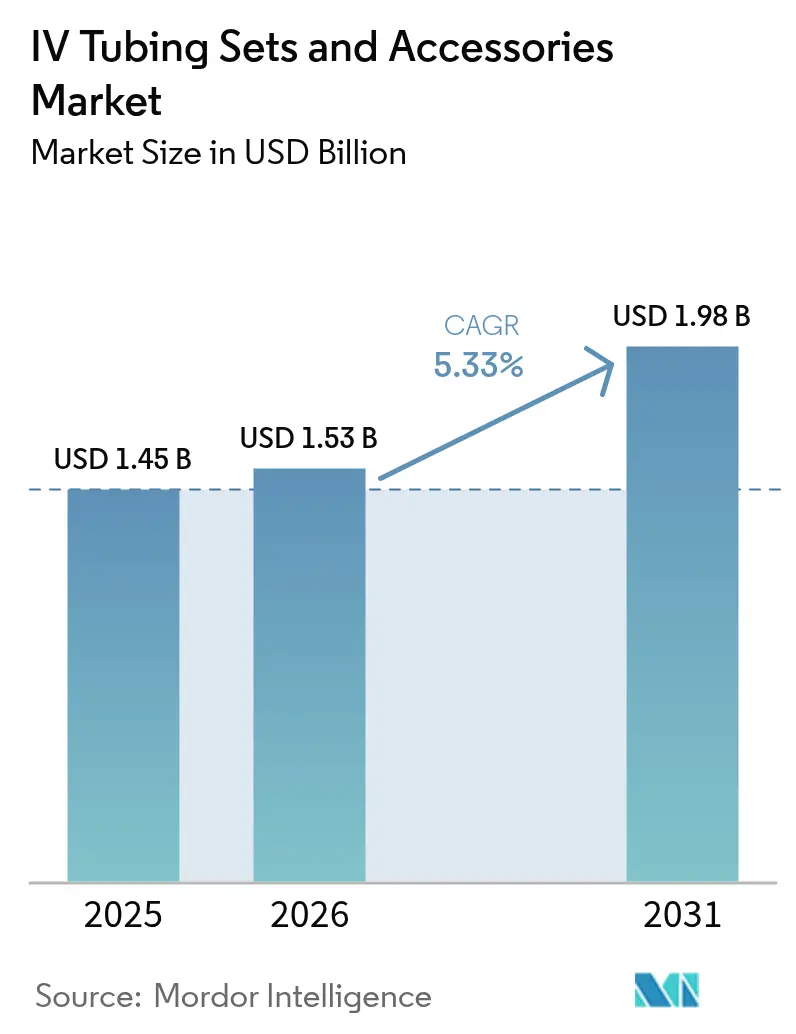
IV tubing sets & accessories market size in 2026 is estimated at USD 1.53 billion, growing from 2025 value of USD 1.45 billion with 2031 projections showing USD 1.98 billion, growing at 5.33% CAGR over 2026-2031. Growth rests on the migration of infusion therapy from inpatient wards to ambulatory and home-care settings, where demand shifts from episodic to continuous consumption [1]. Hospitals and outpatient centers now favor integrated tubing and connector systems that align with closed-system safety mandates, while smart pumps that authenticate each set at the bedside reduce medication errors. Manufacturers also benefit from vertical integration strategies that lock in recurring consumable revenue through proprietary tubing designs. At the same time, competitive pressure intensifies as Asian producers scale high-quality offerings that meet Western regulatory requirements.
Key Report Takeaways
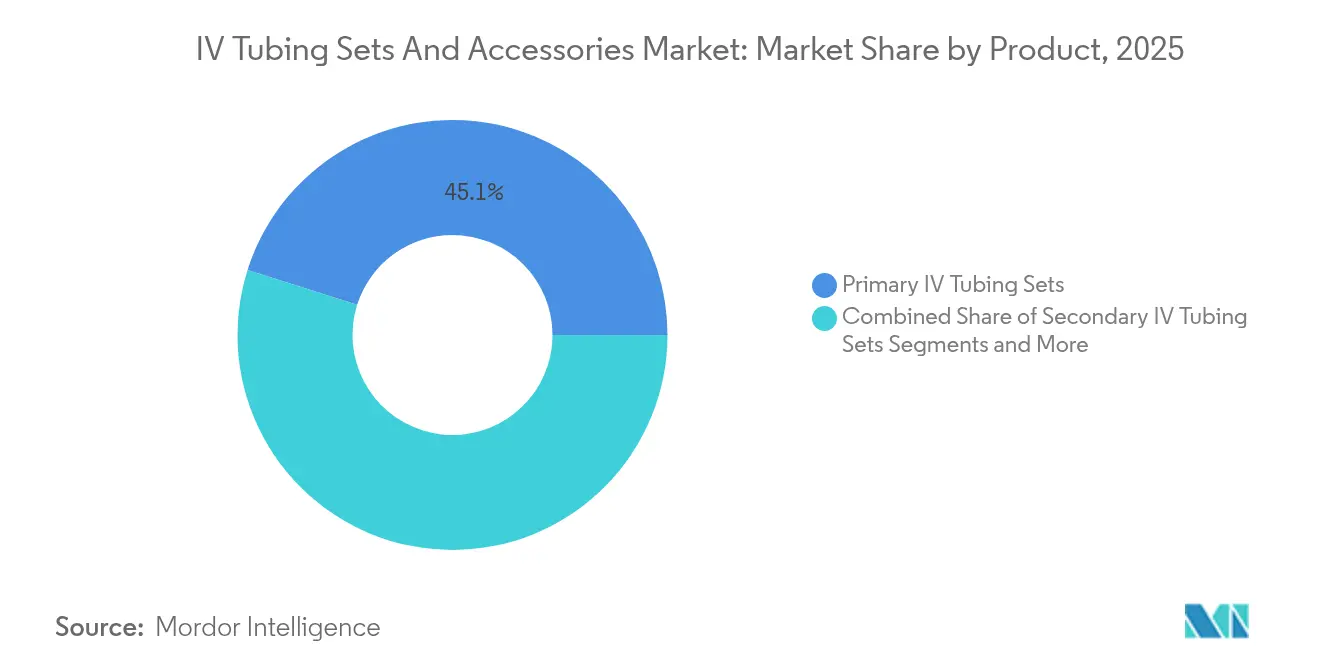
- By product, Primary IV Tubing Sets led with 45.12% revenue share in 2025; Secondary IV Tubing Sets are projected to expand at a 6.11% CAGR through 2031.
- By application, Peripheral Intravenous Catheter Insertion accounted for 40.95% of the IV tubing sets & accessories market share in 2025, while Central Venous Catheter Placement is set to grow at 6.18% CAGR to 2031.
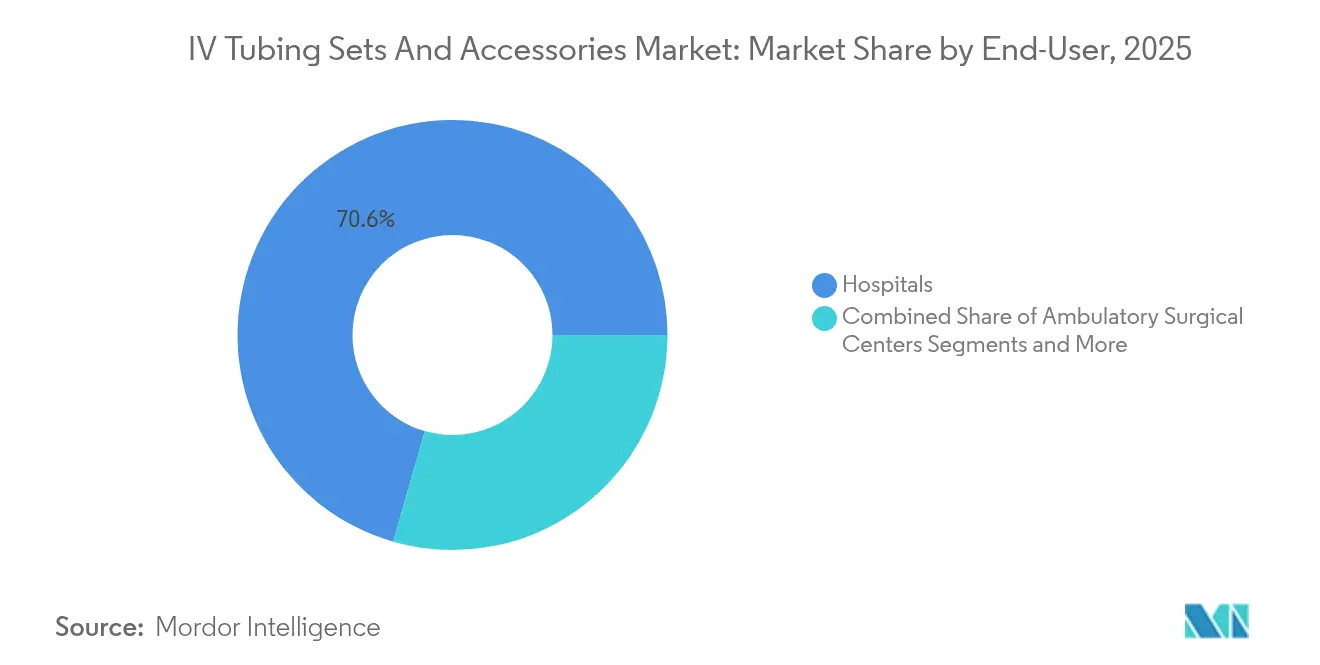
- By end user, Hospitals held 70.55% of the IV tubing sets & accessories market size in 2025; Ambulatory Surgical Centers will advance at a 6.32% CAGR between 2026 and 2031.
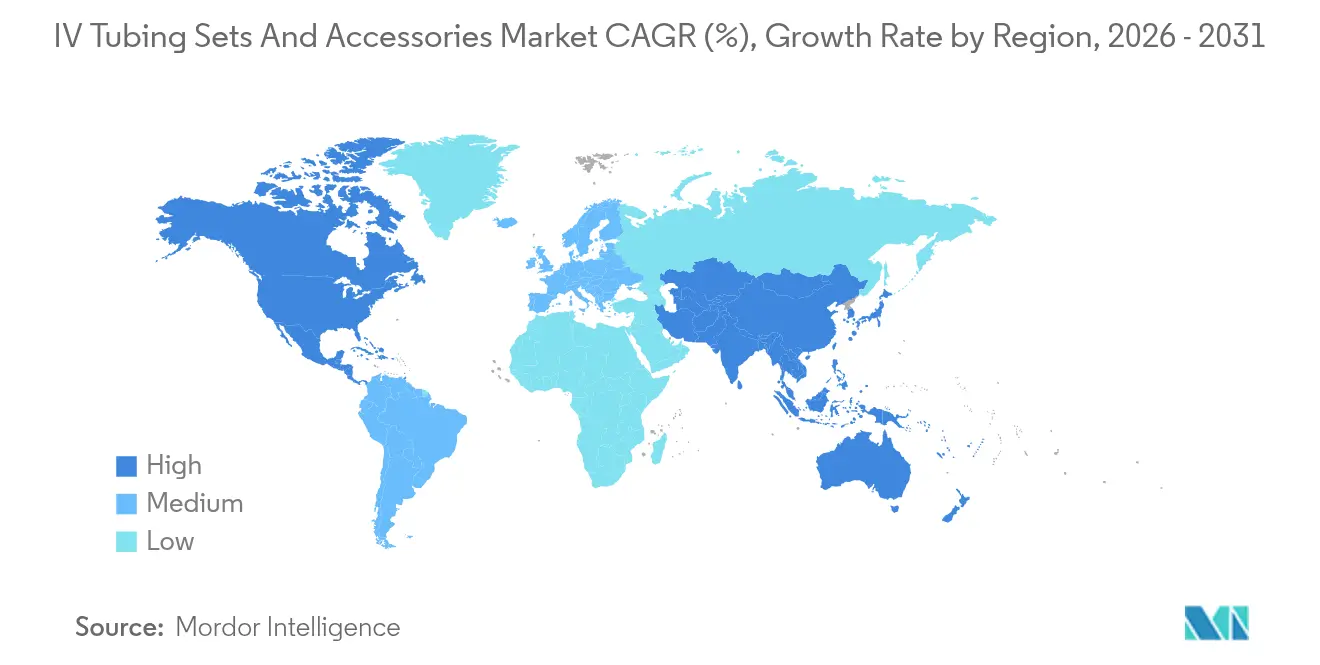
- By geography, North America captured 41.55% revenue share in 2025; Asia-Pacific is positioned for the fastest regional CAGR of 6.27% from 2026 to 2031.
Note: Market size and forecast figures in this report are generated using Mordor Intelligence’s proprietary estimation framework, updated with the latest available data and insights as of 2026.
Market Trends and Insights
Drivers Impact Analysis of IV Tubing Sets And Accessories Market*
| Driver | (~) % Impact on CAGR Forecast | Geographic Relevance | Impact Timeline |
|---|---|---|---|
| Rapid growth in home-infusion therapies | +1.2% | Global, with early gains in North America & Europe | Medium term (2-4 years) |
| Shift toward needle-free closed IV systems | +1.0% | Global, spill-over from North America to APAC | Short term (≤ 2 years) |
| Rising surgical volumes in emerging economies | +0.9% | APAC core, spill-over to MEA | Long term (≥ 4 years) |
| Increasing natality rate | +0.6% | Global, concentrated in APAC & MEA | Long term (≥ 4 years) |
| Government initiatives improving vascular-access safety | +0.8% | North America & EU, expanding to APAC | Medium term (2-4 years) |
| AI-enabled predictive maintenance of IV equipment | +0.4% | North America & EU initially | Long term (≥ 4 years) |
| Source: Mordor Intelligence | |||
Rapid Growth in Home-Infusion Therapies
Home infusion has shifted the IV tubing sets & accessories market by moving demand from short hospital stays to prolonged outpatient use. Payers now reimburse parenteral nutrition and chemotherapy administered at home, which requires tubing with higher durability and user-friendly connectors. The FDA has released guidance emphasizing closed pathways and needle-free valves to prevent contamination in settings without continuous clinical supervision. Smart pumps paired with RFID-tagged tubing allow remote monitoring, so caregivers receive alerts when flow deviates from prescribed parameters. As providers adopt these systems, manufacturers that bundle consumables with cloud-connected pumps secure sticky revenue streams. The shift also reduces inpatient costs, a point that aligns with health system strategies focused on lowering readmission penalties.
Shift Toward Needle-Free Closed IV Systems
Needle-free connectors reduce occupational exposure and cut the number of breach points that can harbor pathogens. California’s AB 2300 law sparked broader adoption by mandating closed systems in acute-care facilities, a template many states and countries now emulate [2]. Clinical studies show decreased catheter-related bloodstream infections when connectors incorporate mechanical valves that stay closed unless positively displaced. Market leaders respond with antimicrobial coatings and color-change indicators that confirm proper disinfection. Training remains essential because poor scrubbing technique negates device benefits. Early adopters in the United States influence purchasing behavior in Asia-Pacific, where hospitals upgrading to Joint Commission International standards must include closed-system components.
Rising Surgical Volumes in Emerging Economies
Infrastructure projects across China, India, and Southeast Asia add operating suites that require full IV ecosystems. Governments invest in universal coverage, and growing middle-class populations opt for elective procedures. These markets favor cost-effective primary sets but quickly shift to secondary sets as case complexity rises. Complex cardiac and oncologic surgeries demand multi-lumen central lines, stimulating the IV tubing sets & accessories market, especially premium accessories such as pressure transducers. Manufacturers entering these markets localize supply to avoid tariffs and meet certification timelines, locking in volume contracts with public procurement agencies [3].
Government Initiatives Improving Vascular-Access Safety
WHO guidelines published in 2025 call for closed infusion pathways, connector disinfection protocols, and staff certification programs. Public hospitals that implement these standards influence private facilities via shared labor pools and reference pricing. Procurement specifications now list compatibility with needle-free valves as a mandatory requirement, which narrows the vendor list and elevates compliance as a competitive differentiator. Manufacturers that fund clinician education enjoy preferred-supplier status because training aligns with value-based purchasing goals that tie reimbursement to infection metrics.
Restraints Impact Analysis of IV Tubing Sets And Accessories Market*
| Restraint | (~) % Impact on CAGR Forecast | Geographic Relevance | Impact Timeline |
|---|---|---|---|
| Stringent regulatory framework | -0.8% | Global, most restrictive in North America & EU | Short term (≤ 2 years) |
| Plasticizer & PVC-phthalate bans | -0.6% | North America & EU, expanding globally | Medium term (2-4 years) |
| Supply-chain fragility for medical-grade resins | -0.7% | Global, acute in North America | Short term (≤ 2 years) |
| Increasing recalls tied to flow-rate inaccuracy | -0.4% | Global, concentrated in North America | Medium term (2-4 years) |
| Source: Mordor Intelligence | |||
Stringent Regulatory Framework
The FDA and European MDR both demand real-world evidence before approving new tubing materials, lengthening development cycles and raising compliance costs. Notified-body bottlenecks in Europe delay market entry for smaller innovators. Cybersecurity clauses extend to any tubing that communicates with connected pumps, adding penetration testing and documentation steps unheard of a decade ago. While these rules favor entrenched firms with dedicated regulatory teams, they also slow innovation in niche segments such as pediatric oncology where specialized tubing could lower error rates. Start-ups often partner with established OEMs to piggyback on existing quality systems, but profit sharing erodes their margins.
Plasticizer and PVC-Phthalate Bans
Legislation in several U.S. states and the European Union restricts di-ethylhexyl phthalate (DEHP) use in devices that contact fluids for extended periods. Manufacturers must reformulate PVC blends or switch to alternative polymers like TPU. Reformulation drives up raw-material costs and necessitates new biocompatibility testing. Hospitals, though concerned about endocrine disruption, resist price hikes without demonstrated clinical benefit. Long-term, the bans encourage innovations in bio-based plastics, yet supply remains limited, so transition adds volatility to the IV tubing sets & accessories market.
*Our forecasts treat driver/restraint impacts as directional, not additive. The impact forecasts reflect baseline growth, mix effects, and variable interactions.
IV Tubing Sets And Accessories Market Segment Analysis
By Product:
Secondary Sets Ignite Growth Amid Primary Set DominancePrimary IV tubing sets accounted for 45.12% of revenue in 2025, underpinning the procedural backbone of routine hydration and antibiotic administration across all care settings. Their high installed base and standardized connectors keep them indispensable, anchoring bulk-purchase contracts that underpin the IV tubing sets & accessories industry. Yet the same contracts increasingly bundle secondary tubing, a category forecast to grow at 6.11% CAGR as clinicians adopt multi-drug regimens that call for parallel infusions without pausing the primary line. This rise dovetails with smart pumps that auto-adjust flow through each lumen, ensuring precise dosing even in home settings. Manufacturers add value by integrating anti-siphon valves and back-check features, enhancing safety while justifying moderate price premiums.
Extension sets and accessory portfolios expand as providers seek ergonomic options that reduce line restarts when repositioning patients. Demand intensifies in critical-care units where equipment density requires flexible routing solutions. Blood administration sets and chemotherapy-grade lines fall under the Others category, where chemical compatibility and light-blocking materials command premium prices. RFID tagging within select tubing ranges allows the pump to authenticate each set, reducing misload events. As digital traceability becomes routine, proprietary connectors strengthen lock-in effects, influencing the IV tubing sets & accessories market size tied to replacement cycles.

By Application:
Central Access Surges as Therapies Grow ComplexPeripheral catheter insertion maintained 40.95% share in 2025, reflecting its ubiquity and nurse-driven placement at bedside. Short-term antibiotics and hydration keep demand steady. However, central venous catheter placement is rising swiftly, predicted to outpace peripheral growth and register a 6.18% CAGR. Oncologic and critical-care protocols that rely on high-osmolar infusates prefer central access to prevent vessel damage, which in turn pulls through multi-lumen compatible tubing. The IV tubing sets & accessories market share benefits when hospitals replace one-size-fits-all kits with procedure-specific bundles that reduce setup time.
PICC line insertion bridges the gap between short and chronic therapy, gaining ground as ultrasound guidance improves success rates. Specialty sets with minimal priming volume and anti-reflux valves lower infection risk, broadening outpatient usage. The Others segment encompasses arterial lines and neonatal applications where pressure tolerance and micro-bore dimensions are critical. Advances in polyurethane formulations that combine flexibility with high tensile strength help minimize thrombosis, encouraging adoption in long-dwell scenarios. Emerging evidence from neonatal intensive care units highlights reduced complication rates when tubing materials match catheter chemistry, driving cross-selling opportunities for integrated vendors.
By End User:
Ambulatory Centers Outpace Hospital GiantsHospitals remained the primary consumer, gripping 70.55% of the IV tubing sets & accessories market size in 2025 due to their broad procedure mix and need for high inventory turnover. Central supply departments favor bulk packaging and standardized connectors that simplify logistics across intensive care, oncology, and surgery. Yet ambulatory surgical centers (ASCs) are rapidly narrowing the gap with a 6.32% forecast CAGR. ASCs rely on rapid room turnover and minimal staffing ratios, so they invest in tubing that combines quick-connect ports with visual anti-free-flow indicators, cutting setup time per case. Bundled infusion kits tailored to common outpatient procedures, such as orthopedic arthroscopy, align with reimbursement models that penalize delays.
Home-care settings, although still a smaller slice, post consistent growth as aging populations opt for therapy at home. Portable elastomeric pumps paired with low-weight, kink-resistant tubing extend dwell times and reduce emergency department visits, reinforcing payer support. The Others segment includes dialysis centers and long-term care facilities where infection-control standards mirror hospital requirements yet budget constraints drive preference for cost-optimized, high-volume tubing. Value-based care contracts incentivize providers to select systems with proven durability, helping reduce line replacement costs over the episode of care.
Geography Analysis
North America IV Tubing Sets and Accessories Market
North America held 41.55% of global revenue in 2025, strengthened by early adoption of closed-system connectors, stringent OSHA mandates, and bundled multi-product contracts that include pumps, solutions, and disposables. Hurricanes and pandemic-related freight disruptions exposed supply chain weaknesses, prompting U.S. manufacturers to invest almost USD 1 billion in domestic capacity that cushions against future shocks. Regional payers now reimburse infection-prevention add-ons, which encourages hospitals to pay a premium for antimicrobial ports and RFID-enabled sets.
APAC IV Tubing Sets and Accessories Market
Asia-Pacific posts the fastest regional CAGR at 6.27% through 2031, fueled by rising surgical caseloads and expansion of public insurance schemes in China and India. Volume-based procurement models encourage bulk orders of standardized tubing, yet regulators simultaneously tighten safety criteria, creating a two-tier market. Local firms win spot tenders on price, whereas multinational brands capture tertiary hospitals that prioritize infection metrics for medical tourism. APAC governments also channel grants into smart-pump pilots, driving accompanying demand for compatible tubing coded with GS1 identifiers.
EMEA and South America IV Tubing Sets and Accessories Market
Europe occupies the second-largest share, anchored by evidence-based procurement guidelines that stress clinical data over headline price. The post-Brexit regulatory split raised compliance costs, compelling manufacturers to maintain parallel EU and UK submissions. Germany and France continue to favor premium closed systems, while Eastern European hospitals climb the maturity curve. Middle East and Africa register early-stage adoption, yet Gulf Cooperation Council investments in flagship medical cities generate pockets of high-value demand. South America’s growth is steadier; Brazil’s economic rebound and Argentina’s currency stabilization unlock new device purchases, though import duties influence price positioning.
Regulatory Landscape
IV tubing sets and accessories are regulated as medical devices in major markets, which shapes design controls, testing, and documentation requirements. In the United States, intravascular administration sets fall under FDA Class II (21 CFR 880.5440) with 510(k) clearance requirements, and review-cycle planning is material for product refreshes, with 510(k) review times for the relevant device grouping cited at about 184 days in recent periods. The FDA Quality Management System Regulation (QMSR) final rule issued in February 2024 tightens lifecycle control and supplier management, incorporating ISO 13485:2016 by reference and increasing the compliance burden for manufacturers and critical component suppliers.
In Europe, IV tubing sets and accessories are governed under the EU Medical Device Regulation (MDR 2017/745), where accessories are assessed within the same framework as the parent device and must demonstrate conformity to General Safety and Performance Requirements (GSPR), with post-market surveillance readiness. Notified body expectations for technical documentation continue to evolve, including Team-NB guidance updates published in April 2026 that influence how manufacturers assemble evidence packages for review. Across regions, adherence to international consensus standards remains central for market access and tender eligibility, including ISO 8536-4:2019 for single-use gravity-feed infusion sets. In 2025, Korea aligned national requirements through KS P ISO 8536-4-2025, reinforcing cross-border standardization for manufacturers supplying Asia-Pacific procurement programs.
Value Chain Analysis
The value chain for IV tubing sets and accessories runs from medical-grade polymer and additive suppliers (PVC and non-PVC formulations, plasticizers, and colorants) through component and toolmakers (molding, extrusion, filters, clamps, connectors, needle-free valves, and luer interfaces), and then to device manufacturers and contract manufacturers covering assembly, packaging, sterilization, and labeling. Downstream channels include distributors, group purchasing organizations (GPOs), and providers such as hospitals, ambulatory surgical centers, and home-infusion providers. Quality and regulatory controls sit across the chain, from incoming resin qualification and process validation through sterilization lot release and traceability, with compliance increasingly aligned to ISO 13485-based requirements following the FDA QMSR final rule in February 2024.
Large OEMs often rely on bundled agreements that link pumps, software, and proprietary consumables to stabilize demand and improve forecast accuracy, while distributors and GPOs push for standardization and availability in response to high-volume, recurring consumption patterns. Operational risk clusters around resin availability, sterilization capacity, and logistics continuity, and external shocks can cascade into shortages and substitution behavior. The late-2024 IV fluid disruption after hurricane damage highlighted concentrated manufacturing footprints and just-in-time inventory exposure, prompting providers to ration usage and reduce elective procedures, which then affected adjacent consumables planning and allocation. Industry bodies and networks supporting supply visibility and policy advocacy, including AdvaMed, MDMA, AIMED, and the Medical Device Supply Chain Council, have reinforced initiatives around end-to-end transparency, dual sourcing, and domestic capacity resilience. As material restrictions on DEHP and PVC expand, upstream reformulation and revalidation add cost and lead time, which increases the strategic value of qualified alternative polymers and vertically integrated manufacturing that can shorten investigation cycles during quality events and recalls.
Competitive Landscape
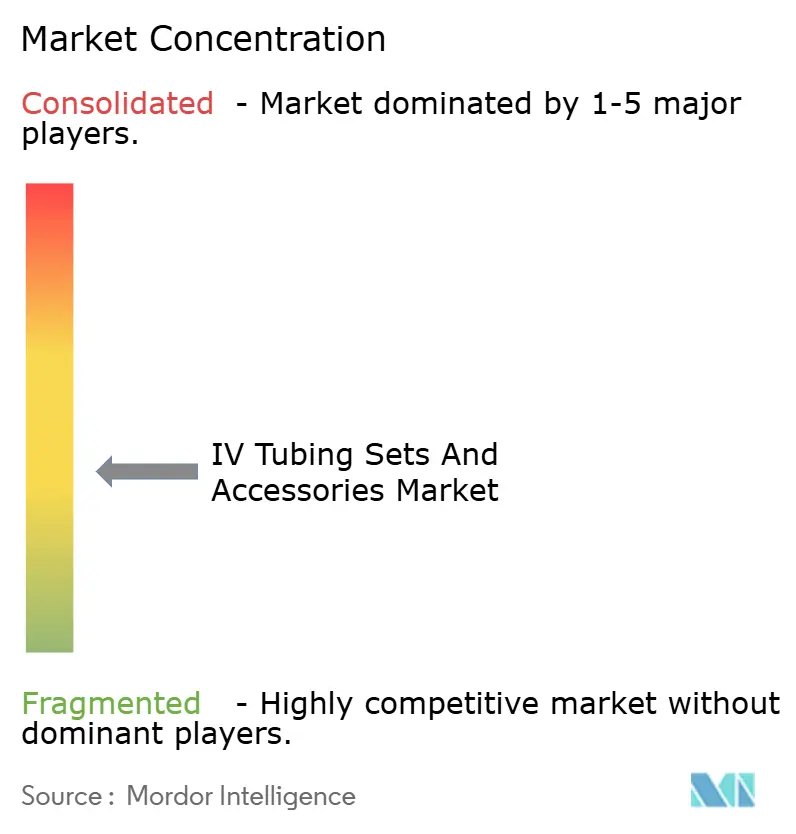
The IV tubing sets & accessories market shows moderate concentration. The firms cement relationships through multi-year contracts that bundle consumables with infusion pumps, software licenses, and maintenance services. The strategy locks providers into proprietary connector geometries, raising switching costs. ICU Medical’s completion of the Smiths Medical acquisition combined complementary pump and tubing portfolios, enabling cross-selling to 7,000 newly aligned customer accounts.
Investment now favors digital capabilities that integrate hardware and informatics. Fresenius Kabi’s Ivenix pump, cleared by FDA in 2024, supports tubing encoded with chip-based data that populates dosing libraries, reducing manual entry errors. Hospitals adopting the platform often sign exclusive consumables contracts, improving forecast accuracy for manufacturers. Mid-tier competitors such as Terumo and Nipro differentiate through specialty sets for oncology and blood products, areas where margin remains high. Chinese entrants leverage scale to win commodity bids in APAC; however, they struggle to penetrate North American and European markets due to quality-system gaps.
Recalls remain a reputational risk. Baxter’s 2024 tubing notice for flow variances triggered temporary formulary switches at large IDNs, benefiting competitors with proven uptime records. Meanwhile, suppliers that co-locate resin molding and final assembly mitigate recall impacts by shortening investigation timelines. Regulatory pressure on environmental sustainability catalyzes collaboration across the value chain to develop phthalate-free materials that do not compromise flexibility.
IV Tubing Sets And Accessories Industry Leaders
-
B. Braun Medical Inc.
-
Zyno Medical LLC
-
Nipro
-
Polymedicure
-
Baxter International
- *Disclaimer: Major Players sorted in no particular order
IV Tubing Sets And Accessories Market Companies Covered in this Report
- B. Braun
- Baxter
- Fresenius
- ICU Medical
- BD (Becton, Dickinson & Co.)
- Smiths Group
- Terumo
- Nipro
- Polymedicure Ltd.
- Vygon
- Codan Medizinische Geräte
- AngioDynamics
- Grifols
- Moog
- Zyno Medical
- AdvaCare
- Jiangsu Huida Medical Instruments
- Medline Industries
- Q Medical Industries
- Amsino International
Market Opportunities and Future Outlook
A key opportunity is aligning tubing sets and accessories with infection-prevention and closed-system purchasing mandates across hospitals, ambulatory sites, and home infusion. In these settings, compatibility with needle-free connectors and traceability features is increasingly reflected in procurement specifications. WHO bloodstream-infection prevention guidance updated in February 2025 reinforced closed infusion pathways and connector disinfection protocols, supporting demand for integrated systems that reduce contamination risk and standardize bedside workflows.
Another visible whitespace involves conversion away from DEHP-containing materials, driven by state-level restrictions and broader PVC-phthalate scrutiny. This is accelerating qualification of alternative polymers and sharpening supplier selection toward vendors with validated non-DEHP portfolios and testing capabilities aligned to ISO 8536-4. Supply resilience and regional manufacturing footprints also shape near-term investment and sourcing decisions. In North America, several large-scale actions indicate that providers and manufacturers are prioritizing domestic availability after the 2024 shortage environment: B. Braun reported adding capacity of more than 30 million IV sets annually (October 2024), BD announced USD 30 million of planned 2025 investments to expand IV line manufacturing at its Utah plant, and Otsuka ICU Medical announced in July 2026 a USD 500 million investment to build a new 500,000-square-foot facility and upgrade an existing 700,000-square-foot site in Austin, Texas, supporting non-DEHP IV solutions manufacturing. These expansions create room for tubing and accessory suppliers that can qualify into expanded lines, meet tighter quality-system requirements, and support large IDN and GPO contracts with dual-sourced, traceable, and closed-system compatible product families.
Recent Industry Developments in IV Tubing Sets And Accessories Market
- July 2026: Otsuka ICU Medical announced an investment of more than USD 500 million to build a new 500,000-square-foot manufacturing facility and upgrade an existing 700,000-square-foot site in Austin, Texas, supporting non-DEHP IV solutions manufacturing. The added output and modernization programs strengthen North American supply resilience and increase the installed base of IV therapy infrastructure that pulls through compatible administration sets, tubing, and accessories.
- March 2026: Baxter launched the IV Verify Line Labeling System, an automated bedside labeling solution offered through an exclusive distribution agreement with Vigilant Software. The platform supports hospitals pursuing error-reduction initiatives and can influence purchasing toward integrated infusion ecosystems where consumables and labeling processes are aligned.
- October 2024: Production ramp at B. Braun increased annual capacity for IV sets by more than 30 million units amid broader actions to address IV fluid supply disruption conditions in the United States. The capacity expansion underscored the strategic importance of domestic manufacturing scale and continuity planning for high-volume infusion consumables, including tubing sets and related accessories.
IV Tubing Sets And Accessories Market Report Scope and Research Methodology
Market Definition and Coverage
This market covers revenue generated from IV tubing sets and related accessories used to deliver fluids, medicines, and nutrition to patients across care settings. The sizing includes commonly used sets and add-ons that sit between the fluid container and the patient interface.
Scope exclusions: We exclude infusion pumps and monitors, IV catheters and needles, and standalone IV fluids or drugs from the market value.
Segments Covered in This Report
- By Product
- Primary IV Tubing Sets
- Secondary IV Tubing Sets
- Extension IV Tubing Sets
- IV Tubing Accessories
- Others
- By Application
- Central Venous Catheter Placement
- Peripheral Intravenous Catheter Insertion
- PICC Line Insertion
- Others
- By End User
- Hospitals
- Ambulatory Surgical Centers
- Home-care Settings
- Others
- By Geography
- North America
- United States
- Canada
- Mexico
- Europe
- Germany
- United Kingdom
- France
- Italy
- Spain
- Rest of Europe
- Asia-Pacific
- China
- Japan
- India
- Australia
- South Korea
- Rest of Asia-Pacific
- Middle East and Africa
- GCC
- South Africa
- Rest of Middle East and Africa
- South America
- Brazil
- Argentina
- Rest of South America
- North America
Data Sources, Market Sizing, and Validation
Desk Research
Desk research was used to set the demand context and to anchor the model with repeatable public data points. We referred to sources such as the US FDA device databases and safety communications, CDC guidance and infection control references, and the World Bank and OECD health expenditure and hospital capacity indicators. For trade and flow checks, we reviewed illustrative national customs statistics portals and UN Comtrade series where relevant.
To translate demand drivers into a practical tubing and accessories consumption picture, we used public hospital statistics, procedure volumes reported by ministries of health in key countries, and peer-reviewed clinical and nursing literature on IV therapy utilization and line change practices. We also reviewed company filings, investor presentations, and credible press coverage to understand product mix shifts such as primary versus extension sets and the spread of safety-focused connectors. For structured cross-checks, we used paid subscriptions for company financials and intelligence, patent databases, and an import or export shipment-level database where they improved consistency. These sources are not exhaustive, and many other references were used for data collection, validation, and clarification.
Primary Interviews and Surveys
Primary work focused on validating how IV tubing sets and accessories are purchased and consumed across hospitals, ambulatory surgical centers, and home-care channels, since these patterns can differ by country and reimbursement environment. We also discussed pricing movement, usage per procedure, and the practical impact of safety and closed system adoption, with supply-side and buyer-side experts across APAC, EMEA, and the Americas.
Distribution of primary research fieldwork respondents
| Company type | Respondent position | Region |
|---|---|---|
| Top tier: 38% | CXOs: 13% | APAC: 47% |
| Mid tier: 47% | Functional/Unit leaders: 41% | EMEA: 30% |
| Smaller Players: 15% | Managers: 46% | Americas: 23% |
Market-Sizing & Forecasting
Sizing started with a top-down demand pool build, where procedure and care-setting activity was translated into IV therapy events and then into expected set and accessory usage per event. To keep the logic easy to follow, we connected country-level signals such as inpatient and outpatient volumes, infusion and vascular access procedure mix, and the split of care delivered in hospitals versus ambulatory and home-care settings. Once the demand base was formed, pricing was applied using a blended ASP approach that accounts for primary, secondary, and extension sets plus accessories, and then it was converted into USD using consistent year-specific exchange assumptions.
Before finalizing totals, results were corroborated using selective bottom-up approximations, including supplier revenue cues from public disclosures, distributor and tender signals, and sampled ASP times volume checks in a few representative countries. Forecasting relied mainly on scenario analysis supported by primary inputs, since adoption of safety connectors, changes in line management practices, and procurement tightening can move volumes and ASPs in different directions. Where direct country data was thin, neighboring country proxies and region-level utilization ranges were applied, and then adjusted after expert feedback to avoid overstating consumption.
Data Validation & Update Cycle
Validation was handled through multiple checkpoints so that the final numbers stay tied to real-world usage. We compared model outputs against independent indicators such as hospital activity trends, procedure growth, and trade flow direction, and then reviewed outliers at the country and region level before sign-off. When a large variance showed up, respondents were re-contacted to confirm whether it came from pricing changes, mix shifts, or a one-time procurement swing.
Each report is refreshed annually, and interim updates are triggered when material events occur, such as major regulatory actions, sudden raw material price shocks that affect tubing pricing, or visible changes in care delivery settings. Before delivery, a final analyst pass is completed so clients receive an updated view using the latest available public statistics and checked assumptions.
Mordor Intelligence's Iv Tubing Sets Accessories Market Size Measured Against Other Published Estimates
Published values for IV tubing sets and accessories do not always match because each publisher draws the line differently on what counts as an accessory, which year is treated as the anchor, and how pricing is blended across care settings. The benchmark table helps show how even small scope and ASP choices can lead to noticeable differences in the final USD number.
Key gaps usually come from whether infusion pumps or IV catheters are mixed into the same market bucket, whether hospital-only demand is used instead of including ambulatory and home-care use, and whether pricing is modeled with one broad average rather than set-type-specific ASPs that reflect primary, secondary, and extension usage. The timing of currency conversion and the refresh cadence also matter, especially when procurement shifts affect reported prices from one year to the next.
Benchmark comparison
| Source | Market Size | Gaps in Research Methodology |
|---|---|---|
| Mordor Intelligence | USD 1.45 B (2025) | |
| Global Research Publisher A | USD 1.29 B (2025) | Uses a 2024 base and a tighter inclusion set in the published snapshot, which can undercount accessory attachment rates and non-hospital consumption that lifts total volumes. |
| Market Publisher B | USD 1.28 B (2025) | Leans on a broad blended average price and a longer forecast window, and the definition of accessories is less explicit, which can shift the counted revenue between sets and adjacent IV disposables. |
The table shows a fairly narrow spread around the 2025 value, and in Mordor Intelligence's model the total is built from care-setting demand signals and set-type-specific usage and pricing, instead of relying on one averaged spending bucket. When scope is kept clean (excluding pumps, catheters, and drugs) and assumptions are checked back with procurement and clinical workflow inputs, the resulting number becomes easier to trace and repeat year over year.
Key Questions Answered in the Report
What is the projected value of the IV tubing sets & accessories market in 2031?
The market is forecast to reach USD 1.98 billion by 2031, growing at a 5.33% CAGR.
Which product category is expanding the fastest?
Secondary IV tubing sets will post a 6.11% CAGR through 2031 because they enable simultaneous multi-drug infusions.
Why are ambulatory surgical centers attracting attention?
ASCs show the highest end-user growth at 6.32% CAGR as more procedures shift from inpatient wards to cost-efficient outpatient suites.
How significant is Asia-Pacific in future demand?
Asia-Pacific will deliver the fastest regional CAGR of 6.27%, propelled by infrastructure expansion and rising surgical volumes.
What safety trend is reshaping purchasing decisions?
Hospitals increasingly require needle-free closed systems, which lower catheter-related infection rates and protect staff from sharps injuries.