
Market Overview
| Study Period | 2021 - 2031 |
|---|---|
| Forecast Data Period | 2026 - 2031 |
| Base Year Market Size (2025) | USD 1.82 Billion |
| Market Size (2026) | USD 1.87 Billion |
| Market Size (2031) | USD 2.15 Billion |
| Growth Rate (2026 - 2031) | 2.83 % |
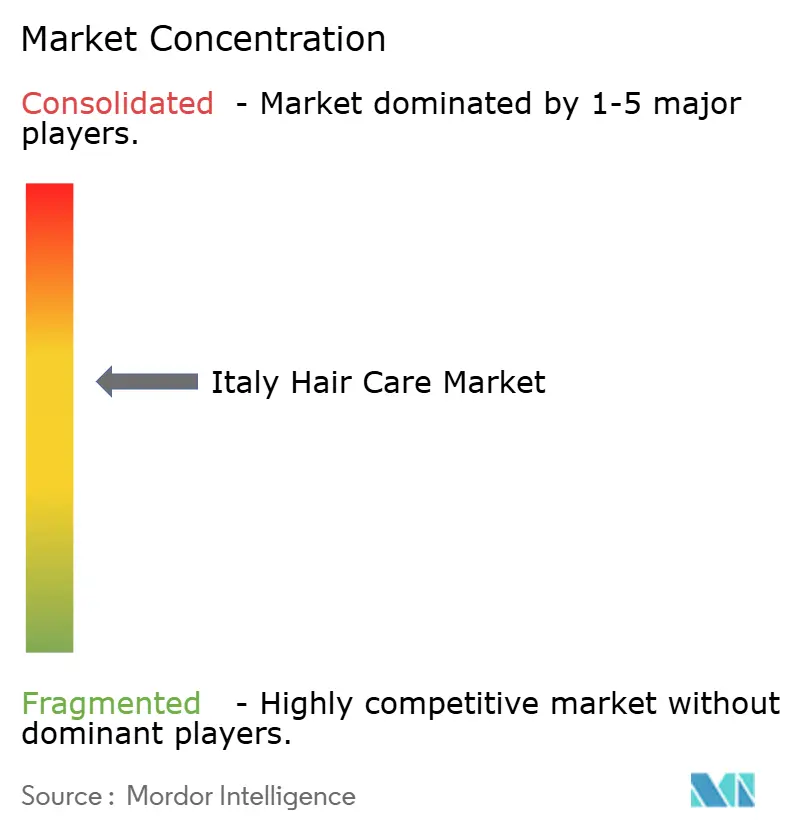
| Market Concentration | Medium |
Major Players *Disclaimer: Major Players sorted in no particular order Image © Mordor Intelligence. Reuse requires attribution under CC BY 4.0. | |
Italy Hair Care Market Analysis by Mordor Intelligence
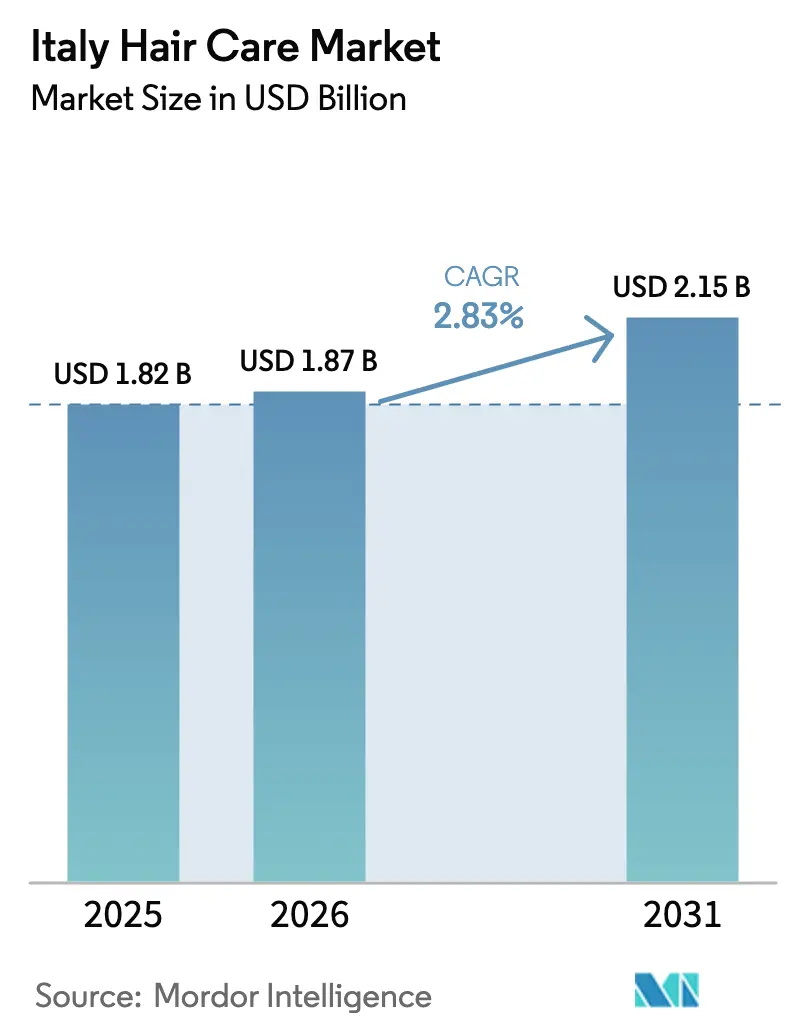
The Italy hair care market size was valued at USD 1.82 billion in 2025 and estimated to grow from USD 1.87 billion in 2026 to reach USD 2.15 billion by 2031, at a CAGR of 2.83% during the forecast period (2026-2031). Italian consumers are increasingly opting for hair care products that are free from sulfates, silicones, and other harmful chemicals. This change is being driven by growing awareness of healthier and safer formulations, supported by dermatologist-recommended content on social media platforms. European Union (EU) packaging regulations are encouraging brands to adopt sustainable practices, rewarding those with verified eco-friendly credentials. Styling creams that offer dual benefits, such as nourishing the scalp while shaping the hair, are gaining popularity. The online retail segment is experiencing rapid growth, making it easier for consumers to access a diverse range of products. The market remains moderately fragmented, with several players competing to meet the evolving demands of consumers.
Key Report Takeaways
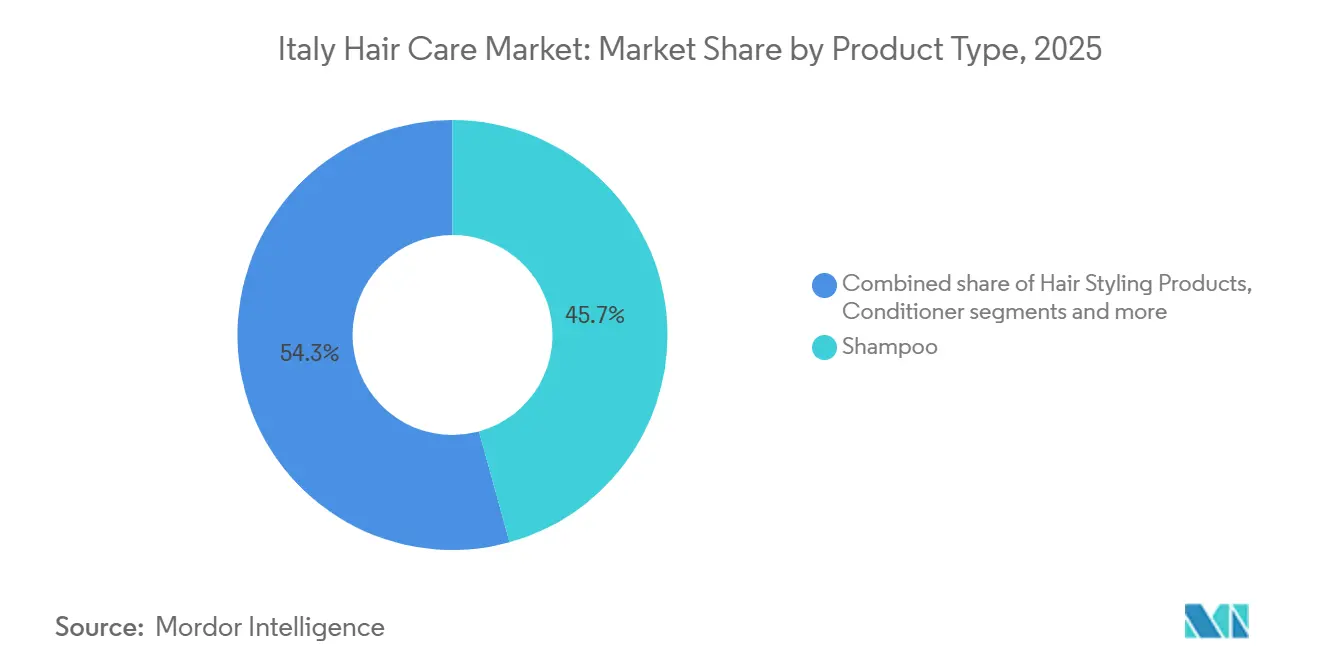
- By product type, shampoo accounted for 45.73% of the Italy hair care market share in 2025, whereas styling products are forecast to expand at a 3.57% CAGR through 2031.
- By category, mass-market products held a 79.46% revenue share in 2025; however, the premium tier is projected to grow at a 3.85% CAGR during 2026-2031.
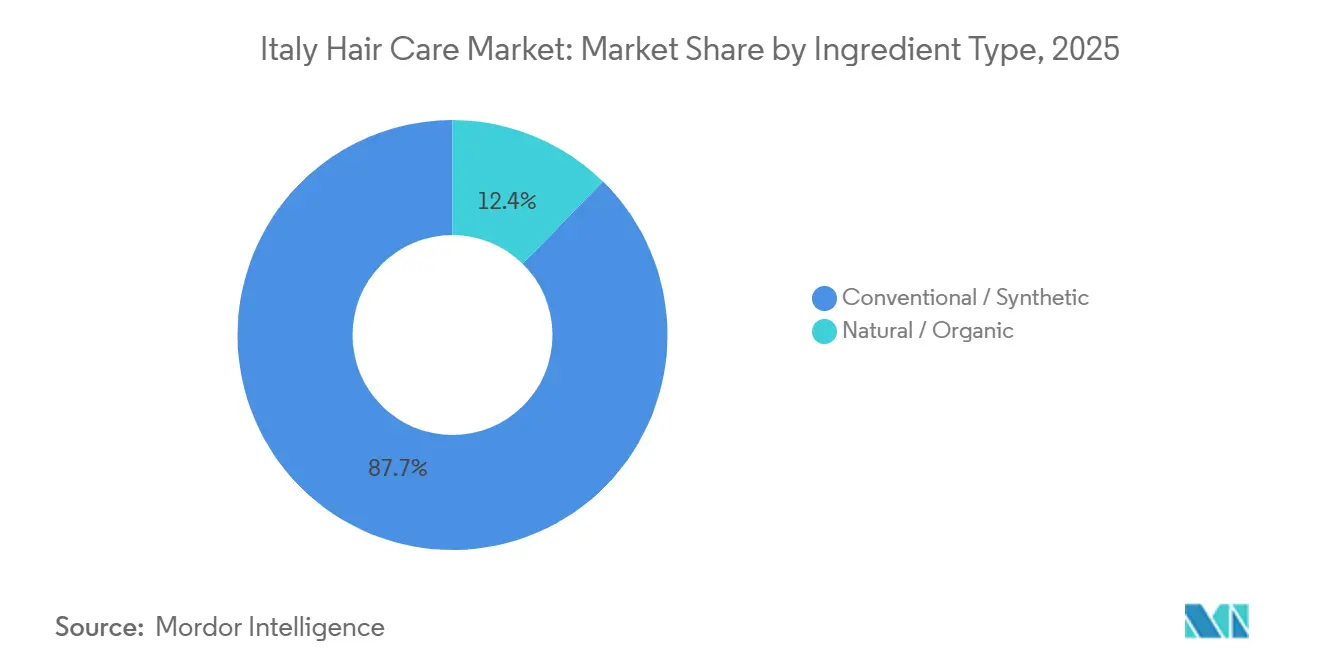
- By ingredient type, conventional formulas dominated the Italian hair care market with 87.65% of the market size in 2025, while natural and organic lines are poised to rise at a 4.16% CAGR through 2031.
- By distribution channel, supermarkets/hypermarkets led with 35.18% sales in 2025; however, e-commerce is set to post a 3.74% CAGR through 2031.
Note: Market size and forecast figures in this report are generated using Mordor Intelligence’s proprietary estimation framework, updated with the latest available data and insights as of January 2026.
Italy Hair Care Market Trends and Insights
Drivers Impact Analysis*
| Driver | (~) % Impact on CAGR Forecast | Geographic Relevance | Impact Timeline |
|---|---|---|---|
| Growing awareness of hair and scalp health | +0.6% | National, with concentration in urban centers (Milan, Rome, Florence) | Medium term (2-4 years) |
| Ingredient-conscious consumers prefer sulfate-free, silicone-free, and low-toxicity premium hair care products | +0.8% | National, strongest in Northern Italy | Long term (≥ 4 years) |
| Brand collaborations with lifestyle and beauty influencers | +0.5% | National, amplified via Instagram and TikTok | Short term (≤ 2 years) |
| Increased awareness through advertising and influencer campaigns | +0.4% | National, digital-first reach | Short term (≤ 2 years) |
| Consumer shift toward multifunctional and targeted hair treatments | +0.7% | National, early adoption in metropolitan areas | Medium term (2-4 years) |
| Preference for premium, heritage, and "Made-in-Italy" brands | +0.9% | National, with export spillover to Europe and United States | Long term (≥ 4 years) |
| Source: Mordor Intelligence | |||
Growing awareness of hair and scalp health
Awareness about hair and scalp health is becoming a significant factor driving the growth of Italy’s hair care market. Consumers are now treating their scalps with the same care as their facial skin, seeking products backed by clinical research. This trend is further supported by the high prevalence of hair loss in the country. According to the World Population Review, 44.37% of Italian men experienced male pattern baldness in 2024[1]. This has led to a growing demand for products that address hair loss, strengthen hair, and improve scalp health. Social media platforms like Instagram and TikTok, where dermatologists share educational content, have played a major role in increasing interest in products such as microbiome-friendly shampoos, exfoliating treatments, and scalp serums. As a result, pharmacies and perfumeries in cities such as Milan and Rome are experiencing a surge in sales of these specialized products.
Ingredient-conscious consumers prefer sulfate-free, silicone-free, and low-toxicity premium hair care products
Ingredient-conscious buying is becoming a key factor driving growth in Italy’s hair care market. Consumers are increasingly looking for products that are free from sulfates, silicones, and other harsh chemicals, as these are believed to promote better scalp health and long-term hair care. In response, brands are introducing cleaner and more sustainable product lines. For example, KIKO Milano launched a vegan hair care range in collaboration with stylist Rossano Ferretti in March 2024. This range focuses on natural ingredients and adheres to the Cosmetic Organic and Natural Standard certification standards, which emphasize organic and environmentally friendly formulations. The European Union Greenwashing Directive 2024/825 introduced stricter regulations on sustainability claims[2]. This means brands must now provide clear and verified information about their ingredients and environmental impact.
Consumer shift toward multifunctional and targeted hair treatments
The demand for hair care products that offer multiple benefits in a single application is driving growth in Italy’s hair care market. Consumers are increasingly seeking solutions that save time while addressing multiple hair concerns simultaneously. The common hair types influencing this trend in Italy are brown and blonde. Blonde hair, in particular, is considered more delicate and prone to damage compared to darker shades, as noted by World Population Review[3]. As a result, there is a growing preference for products that repair bonds, strengthen hair, and seal cuticles, especially for color-treated or naturally lighter hair. For example, brands like Davines introduced “The Present Time” demi-permanent color in January 2025, catering to this demand. Products such as lamellar gloss waters and peptide density serums are gaining popularity due to their ability to combine benefits like color care, repair, and shine.
Increased awareness through advertising and influencer campaigns
Digital advertising is playing an increasingly important role in driving growth in Italy’s hair care market as more consumers turn to online platforms to explore and purchase products. With the rise of beauty e-commerce, brands are shifting their marketing budgets away from traditional TV ads and focusing more on digital channels, such as programmatic video, Instagram, and TikTok. Short-form videos and influencer content on these platforms are proving to be highly effective, engaging larger audiences compared to print or in-store promotions. These digital campaigns allow brands to showcase their products in creative ways, making them more appealing to potential buyers. Strict disclosure rules enforced by Agcom have improved consumer trust in sponsored content, further enhancing the impact of digital advertising. By incorporating shoppable links directly into social media posts, brands make it easier for consumers to purchase products instantly.
Restraints Impact Analysis*
| Restraint | (~) % Impact on CAGR Forecast | Geographic Relevance | Impact Timeline |
|---|---|---|---|
| Environmental packaging mandates increase compliance costs | -0.5% | National, aligned with Europe-wide directives | Medium term (2-4 years) |
| Regulatory constraints on formulation and claims | -0.3% | National, governed by Europe Cosmetics Regulation (EC) No 1223/2009 | Long term (≥ 4 years) |
| Competition from counterfeit or unregulated products | -0.4% | National, concentrated in online channels | Short term (≤ 2 years) |
| Shift to DIY reducing professional channel strength | -0.6% | National, accelerated by social media tutorials | Medium term (2-4 years) |
| Source: Mordor Intelligence | |||
Environmental packaging mandates increase compliance costs
Environmental packaging rules are becoming a significant challenge for Italy’s hair care market as they increase costs and operational complexities, especially for smaller brands. The new European Union regulations require companies to use more recycled materials in their plastic packaging and ensure better traceability of these materials. This forces manufacturers to redesign their packaging, including bottles, caps, and labels, while also upgrading their production lines or partnering with specialized contract packers who can meet these stricter standards. Even brands that have already adopted refill pouches or sustainable packaging formats face high upfront costs for new equipment and the need to educate consumers about these changes. The introduction of digital product passports and QR-coded packaging adds extra expenses for IT systems and data management to monitor materials like microplastics.
Regulatory constraints on formulation and claims
Regulatory restrictions on product formulation and claims are slowing down the growth of Italy’s hair care market by making it more expensive and time-consuming to launch new products. The European Union Cosmetics Regulation 1223/2009 requires companies to prepare detailed safety reports and provide clinical evidence to support product claims. This process delays the introduction of new products and increases development costs, especially for smaller brands. The European Union Greenwashing Directive 2024/825 bans vague environmental claims unless they are independently verified. To comply, brands must obtain certifications, such as Cosmetic Organic and Natural Standard, before using terms like “natural” or “eco” on their packaging. Larger multinational companies are better equipped to handle these challenges due to their resources, but smaller brands often struggle.
*Our forecasts treat driver/restraint impacts as directional, not additive. The impact forecasts reflect baseline growth, mix effects, and variable interactions.
Segment Analysis
By Product Type: Styling Products Outpace Cleansing Staples
Shampoo continued to dominate Italy’s hair care market in 2025, accounting for 45.73% of the total market share. This highlights its importance as a staple product that is frequently purchased and replenished by consumers. Shampoos cater to a wide range of hair types and age groups, making them essential for use at home. The availability of options across mass-market, premium, and salon-grade categories further strengthens their position. The consistent demand for specialized variants, such as anti-dandruff, color-protect, and scalp-care shampoos, ensures steady sales growth in this segment.
Hair styling products are projected to grow at the fastest rate, with a 3.57% CAGR expected through 2031, surpassing the growth of shampoos and conditioners. This growth is driven by changing consumer preferences, as more Italians opt for heat-free styling solutions and multifunctional products, such as texture sprays and styling creams, that offer hold, shine, and protection. Social media influencers and salon professionals are playing a key role in promoting innovative styling formats such as mists, serums, and leave-in treatments. These trends are encouraging consumers to experiment with their hair care routines, leading to increased demand for premium and versatile styling products.

By Category: Premium Segment Gains Despite Mass Dominance
In 2025, mass-market hair care brands led the Italian market, contributing 79.46% of the total revenue. These brands maintain a strong presence in supermarkets, hypermarkets, and discount stores, making their products easily accessible to a wide range of consumers. Their affordability and familiarity make them popular, especially among price-sensitive households in Southern Italy and larger families. Frequent promotional campaigns and competition from private-label products help these brands maintain their dominance in terms of sales volume.
The premium hair care segment is projected to grow at a 3.85% CAGR from 2026 to 2031, surpassing the overall market growth rate. This growth is driven by increasing consumer preference for high-performance and salon-quality products. Factors such as endorsements from professionals, influencer marketing, and the convenience of online subscription services are making premium products more appealing and easier to purchase. Furthermore, private-equity investments are helping niche brands expand, particularly those focusing on scalp care, repair solutions, and sustainability. These trends are fueling the shift toward premiumization in Italy’s hair care market.
By Ingredient Type: Natural and Organic Momentum Continues
In 2025, conventional and synthetic hair care products dominated the Italian market, accounting for 87.65% of total revenue. These products remain popular due to their affordability, effective foaming properties, and familiarity among consumers. They are widely used in everyday shampoos, conditioners, and styling products, making them a preferred choice for budget-conscious buyers. Their consistent performance and ease of production make them suitable for large-scale retail and salon distribution, ensuring their continued demand in the market.
On the other hand, natural and organic hair care products are expected to grow at a 4.16% CAGR through 2031, driven by increasing consumer interest in sustainable and transparent ingredients. The introduction of stricter European Union Green Claims regulations is pushing brands to provide verified sustainability credentials, discouraging vague or misleading claims. This shift is building trust among consumers and encouraging them to invest in eco-friendly, plant-based hair care options. As a result, more Italian shoppers are opting for certified natural products that align with their environmental and health-conscious values.
By Distribution Channel: Online Retail Gains Ground on Stores
Supermarkets and hypermarkets made up 35.18% of Italy’s hair care sales in 2025, mainly due to their high customer traffic and frequent promotional campaigns. These stores are particularly successful in selling larger-sized products like family-size shampoos, conditioners, and value packs. Discounts and in-store displays further attract customers, making these outlets a convenient choice for purchasing mass-market hair care products. Their wide product range and accessibility cater to both urban and regional consumers, solidifying their position as a key distribution channel.
Online retail is projected to grow at a 3.74% CAGR through 2031, becoming the fastest-growing sales channel in Italy’s hair care market. The increasing popularity of influencer-led storefronts, direct-to-consumer subscription models, and QR-code authentication is boosting consumer confidence in online shopping. These advancements help address concerns about counterfeit products while simplifying the process of discovering and reordering hair care items. Both mass-market and premium brands are leveraging these tools to enhance customer trust and drive repeat purchases in the digital space.
Geography Analysis
Northern Italy plays a key role in driving the premium segment of the country’s hair care market. This region benefits from higher disposable incomes, a strong influence from the fashion industry, and a well-established network of salons and perfumeries. Cities like Milan, Turin, and Bologna lead the way in adopting professional, silicone-free, and treatment-focused products. These urban areas are often the first to embrace new formulations and sustainability trends. On the other hand, Southern Italy leans more toward mass-market products, although younger professionals in cities such as Naples and Bari are beginning to show interest in scalp care and treatment-oriented solutions.
Italy’s hair care market also gains significant strength from its global reputation, which enhances its premium image domestically. Italian professional hair care brands are highly regarded internationally for their innovative formulations and fashion-forward color systems. This global recognition boosts consumer confidence within Italy, where “Made in Italy” products are associated with superior quality and craftsmanship. As exports continue to grow and international collaborations expand, Italian brands gain additional credibility, allowing them to maintain higher price points in the local market while appealing to a broader audience.
Regional differences in digital adoption and retail infrastructure further influence the market dynamics. Northern cities benefit from faster e-commerce delivery services, a wider variety of online product options, and early access to refillable and sustainable packaging initiatives. This makes consumers in these areas more inclined to purchase premium and eco-friendly products. In contrast, southern and island regions face challenges such as slower online adoption and limited retail infrastructure, which delay the introduction of new retail concepts. Despite uniform national regulations, these regional disparities require companies to adapt their distribution, pricing, and product strategies to meet the unique needs of each geographic area within Italy.
Regulatory Landscape
Hair care products sold in Italy are regulated as cosmetics under EU Cosmetics Regulation (EC) No 1223/2009, which governs safety assessment, labeling, and the substantiation of claims across the EU single market. To market a product, companies must appoint a designated Responsible Person and submit a pre-market notification through the European Commission Cosmetic Product Notification Portal (CPNP), while maintaining a Product Information File that includes the cosmetic product safety report.
At the national level, the Italian Ministry of Health (Ministero della Salute) conducts market surveillance, including cosmetovigilance, inspections, and controls that can extend to border checks for imported products. Day-to-day compliance also depends on updates to regulation annexes for prohibited and restricted substances, as well as permitted colorants, preservatives, and UV filters, which can affect reformulation schedules and time-to-market for new hair care launches.
Value Chain Analysis
Italy's hair care value chain generally begins with specialty chemical and ingredient sourcing (surfactants, conditioning polymers, botanical extracts, preservatives, and colorants), followed by formulation and testing under EU cosmetics safety requirements. Manufacturing is carried out through brand-owned facilities as well as a contract manufacturing base.
Contract manufacturers such as SRC Srl, Verel, and Reynaldi Srl support execution from R&D and scale-up through filling and secondary packaging, helping brands move faster with salon-grade and premium SKUs. Packaging and logistics are also becoming more prominent in the value chain as sustainability and traceability requirements tighten, which drives redesigns of bottles, caps, labels, and the associated data systems. Distribution is split between supermarkets/hypermarkets for high-volume mass products, specialty stores (including perfumeries and professional/salon networks) for premium and professional lines, and online retail, where authenticity tools such as QR-code verification are used to reduce counterfeit risks and support repeat purchasing.
Competitive Landscape
The Italy hair care market is moderately fragmented, with both global corporations and domestic brands competing across various segments, including mass, professional, and premium categories. Large multinational companies like L’Oréal, Unilever, The Procter & Gamble Company, and Henkel dominate supermarket shelves due to their extensive distribution networks and strong marketing strategies. On the other hand, Italian brands such as Davines, Alfaparf, Kemon, and Framesi have carved out a niche in salons and premium online channels. This dynamic allows global players to focus on high-volume sales, while local brands excel in offering specialized, high-value products backed by their professional expertise and heritage.
Innovation and a focus on science are becoming critical for standing out in this competitive market. Companies are increasingly investing in advanced formulations, sustainable practices, and ingredient transparency to build consumer trust and meet regulatory requirements. Global corporations are expanding their product lines with high-end and biotech-driven brands, while Italian companies emphasize ethical sourcing and high-performance treatments. Products targeting hair repair, scalp health, and clean formulations are gaining popularity, as they justify premium pricing and secure space in salons and curated e-commerce platforms. These trends highlight the growing demand for effective and sustainable solutions in the market.
Private equity investments and digital advancements are also reshaping the competitive landscape. Investment firms are acquiring salon and beauty brands to achieve economies of scale in production and distribution. Additionally, funding is being directed toward omnichannel strategies and influencer-driven retail formats. Companies are adopting technologies like personalized online quizzes, QR-code authentication, and innovative packaging to combat counterfeit products and enhance customer engagement. In this evolving market, brands that combine proven effectiveness, sustainability, and authentic Italian craftsmanship are well-positioned to maintain their market share and drive growth.
Italy Hair Care Industry Leaders
-
L’Oréal SA
-
Henkel AG & Co. KGaA
-
Davines Group
-
Unilever plc
-
The Procter & Gamble Company
- *Disclaimer: Major Players sorted in no particular order
Market Opportunities and Future Outlook
Compliance-driven transparency around environmental and sustainability claims is creating an opening for brands that can evidence ingredient sourcing, packaging composition, and claim substantiation at SKU level. Italy's Legislative Decree of 20 February 2026, No. 30 (implementing EU Directive 2024/825) introduces tighter requirements for environmental claims from September 27, 2026, increasing the need for verifiable evidence, third-party certifications, and digital disclosure tools that work with the small-pack formats typical of hair care.
Product development is also tilting toward scalp health and more professional protocols, which supports premium treatment systems, microbiome-oriented lines, and multifunctional formats that combine care with styling benefits. In 2026, Lisap Milano introduced Keraplant Care, a professional system centered on scalp and microbiome concepts, with packaging made with up to 95% recycled plastic. Framesi also received a 2026 Cosmoprof Awards recognition for a molecular leave-in booster in its Morphosis range, reinforcing innovation pathways that support premium pricing in salons and curated e-commerce. On the supply side, Davines has been associated with continued investment in its Parma-based Davines Group Village, linking manufacturing scale with sustainability storytelling in support of professional-channel growth.
Recent Industry Developments
- July 2026: Henkel completed the acquisition of OLAPLEX after receiving the required regulatory approvals. The deal strengthens Henkel's position in premium and professional hair care, adding a globally recognized bond-repair brand to its Beauty Care portfolio.
- March 2026: Unilever introduced a refreshed Sunsilk positioning in Italy with a social-first identity and updated formulas aimed at Gen Z consumers. The relaunch increases competitive pressure in mass and masstige segments by pairing reformulation with digital-first marketing and faster online discovery.
- March 2024: KIKO Milano launched a vegan hair care range in collaboration with stylist Rossano Ferretti, highlighting clean-formula positioning aligned with recognized natural and organic certification standards. The launch broadened mainstream access to ingredient-conscious hair care and reinforced the role of collaborations in accelerating trial through retail and online channels.
Research Methodology Framework and Report Scope
Market Definition and Coverage
For this study, the Italy hair care market refers to the sales value of hair cleansing, conditioning, coloring, and styling products sold to end users in Italy through retail and other consumer-facing channels.
Scope exclusions: we exclude hair tools and appliances, salon services, and prescription-led hair loss treatments (including procedures).
Segmentation Overview
- By Product Type
- Shampoo
- Conditioner
- Hair Colorants
- Hair Styling Products
- Others
- By Category
- Mass
- Premium
- Ingredient Type
- Natural/Organic
- Synthetic/Conventional
- By Distribution Channel
- Supermarkets/Hypermarkets
- Specialty Stores
- Online Retail Stores
- Others
Data Sources, Market Sizing, and Validation
Desk Research
Desk work started with building a clean product and channel map for Italy so later numbers could be tied back to the same set of definitions. We referred to public sources such as Italian national statistics releases, Eurostat consumption and price series, EU regulations and guidance notes on cosmetics and packaging, and trade and customs datasets for relevant personal care flows.
To convert these signals into a usable model, we also reviewed company annual reports and presentations, category commentary from trade associations, and press coverage of pricing and promotions in Italy. In a few spots, we used a paid subscription that aggregates company financials and a separate paid patent database to sanity-check innovation activity, but the core sizing logic remained traceable to public indicators and interview inputs. The desk sources listed here are illustrative, and we used additional references to collect data, cross-check trends, and clarify open questions.
Primary Interviews and Surveys
Primary work was used to pressure-test desk assumptions and to fill gaps that are hard to read from public data, especially around category mix, price bands, and channel behavior in Italy. We spoke with manufacturers, distributors, retailers, and salon-adjacent professionals, then compared their inputs to consumer demand signals and reported performance.
To keep the final market number realistic, uncertain points like premium share, online contribution, and promotional intensity were rechecked through follow-up questions, and only then were the model drivers locked for forecasting.
Distribution of primary research fieldwork respondents
| Company type | Respondent position |
|---|---|
| Top tier: 34% | CXOs: 22% |
| Mid tier: 44% | Functional/Unit leaders: 33% |
| Smaller Players: 22% | Managers: 45% |
Market-Sizing & Forecasting
We built market size primarily from a top-down demand reconstruction, where national consumption patterns, beauty and personal care spending, and category-level price movement were used to rebuild the hair care value pool for Italy. Once the total was formed, we corroborated it with selective bottom-up approximations, such as a sampled price per unit by product group multiplied by implied volumes, plus channel checks to avoid overstating online and specialty-store sales.
A few practical inputs did most of the work in the model, and they were kept simple so they can be rechecked each year. These included shampoo and conditioner share within hair care, the mix shift between mass and premium products, the split between synthetic and natural or organic formulations, and distribution channel contribution (especially supermarkets versus online retail). When a variable was not available as a clean time series, we used interview-led ranges and applied conservative midpoints, then ran sensitivity checks so one assumption could not swing the whole total.
For forecasting, we used scenario analysis because pricing, premiumization, and channel shifts can move differently from volumes in a mature category. The forward view was anchored on expected inflation normalization, steady premium penetration, and realistic online growth, then cross-checked against the planning cases described by industry respondents for the next few years.
Data Validation & Update Cycle
Model outputs are validated through repeated cross-checks, not a single pass. We compare the totals against independent signals such as observed price trends, channel mix changes, and reported performance patterns, then investigate any large jumps that do not match market behavior.
Before sign-off, numbers go through a multi-step analyst review so definitions, units, and year mapping stay consistent across the time series. Reports are refreshed annually, and if a material event affects pricing, regulation, or distribution, we trigger an interim update and revalidate key assumptions through quick re-contacts. Right before delivery, we do a final data sweep so clients receive the most current view available.
Mordor Intelligence's Italy Hair Care Market Market Size Measured Against Other Published Estimates
It is common to see different market values for the same Italy hair care topic because publishers do not always count the same products, channels, and price points. Differences also come from how inflation is treated, how premium mix is projected, and whether the estimate is refreshed after category resets in retail.
Some published totals are broader because they fold in professional salon channel value or use a retail price lens that captures more margin, and then the number tends to rise. In Mordor Intelligence, the sizing is tied to consumer hair care product sales by product type and distribution channel in Italy, and professional services are not added into the market value.
Benchmark comparison
| Source | Market Size | Gaps in Research Methodology |
|---|---|---|
| Mordor Intelligence | USD 1.82 B (2025) | |
| Global Publisher A | USD 2.20 B (2025) | Uses a wider view of the category and can reflect broader channel coverage and price definitions, which typically lifts the total when compared with a consumer-product-only model. |
| Industry Data Provider B | USD 1.45 B (2025) | Often reported as retail value in EUR ranges and then converted, which can understate totals if currency timing is conservative or if some product groups (like colorants) are treated separately. |
The spread across sources is mainly explained by what is counted, the price basis used, and how conversions and updates are handled for 2025. By keeping the drivers visible (category mix, channel split, and price progression) and rechecking assumptions through interviews, the estimate stays easier to replicate and simpler to audit year over year.
Key Questions Answered in the Report
How large is the Italy hair care market in 2026?
The Italy hair care market size hit USD 1.87 billion in 2026 and is forecast to reach USD 2.15 billion by 2031.
Which product type is expanding fastest?
Styling products are projected to grow at a 3.57% CAGR through 2031, outpacing shampoo and conditioner.
Why are premium hair brands growing quicker than mass labels?
Premium lines leverage Made-in-Italy provenance, clean-formula certifications, and salon exclusivity, enabling a 3.85% CAGR versus the mass segment’s slower pace.
What is driving consumer interest in scalp-health products?
Dermatologist-endorsed social media content has reframed the scalp as skin, boosting demand for peptide serums, exfoliating shampoos, and microbiome-balancing treatments.