
Market Overview
| Study Period | 2020 - 2031 |
|---|---|
| Forecast Data Period | 2026 - 2031 |
| Base Year Market Size (2025) | USD 1.61 Billion |
| Market Size (2026) | USD 1.69 Billion |
| Market Size (2031) | USD 2.17 Billion |
| Growth Rate (2026 - 2031) | 5.12 % |
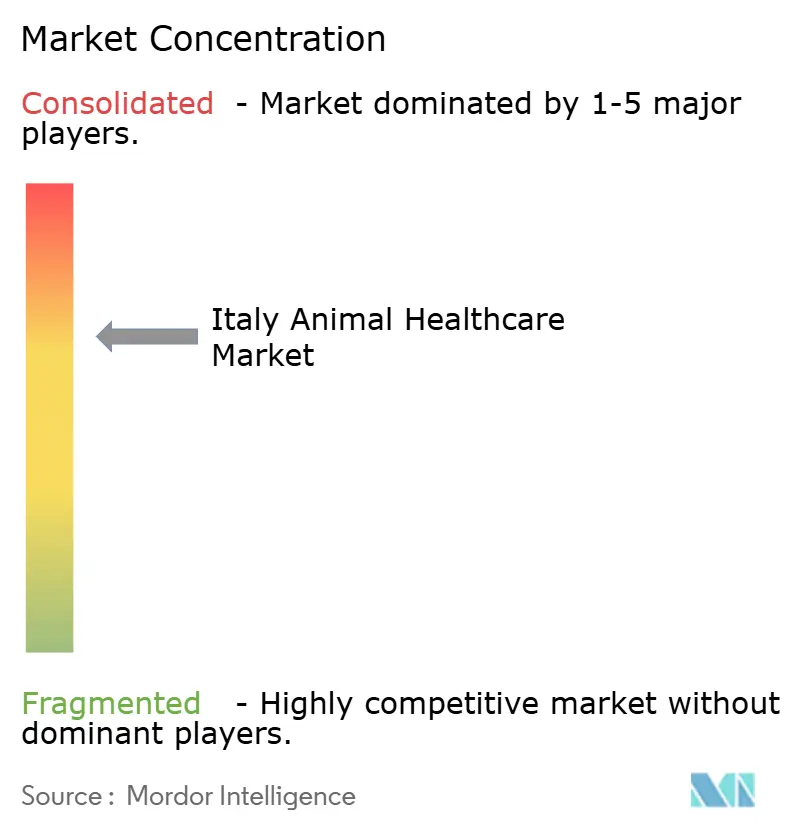
| Market Concentration | Medium |
Major Players *Disclaimer: Major Players sorted in no particular order Image © Mordor Intelligence. Reuse requires attribution under CC BY 4.0. | |
Italy Animal Healthcare Market Analysis by Mordor Intelligence
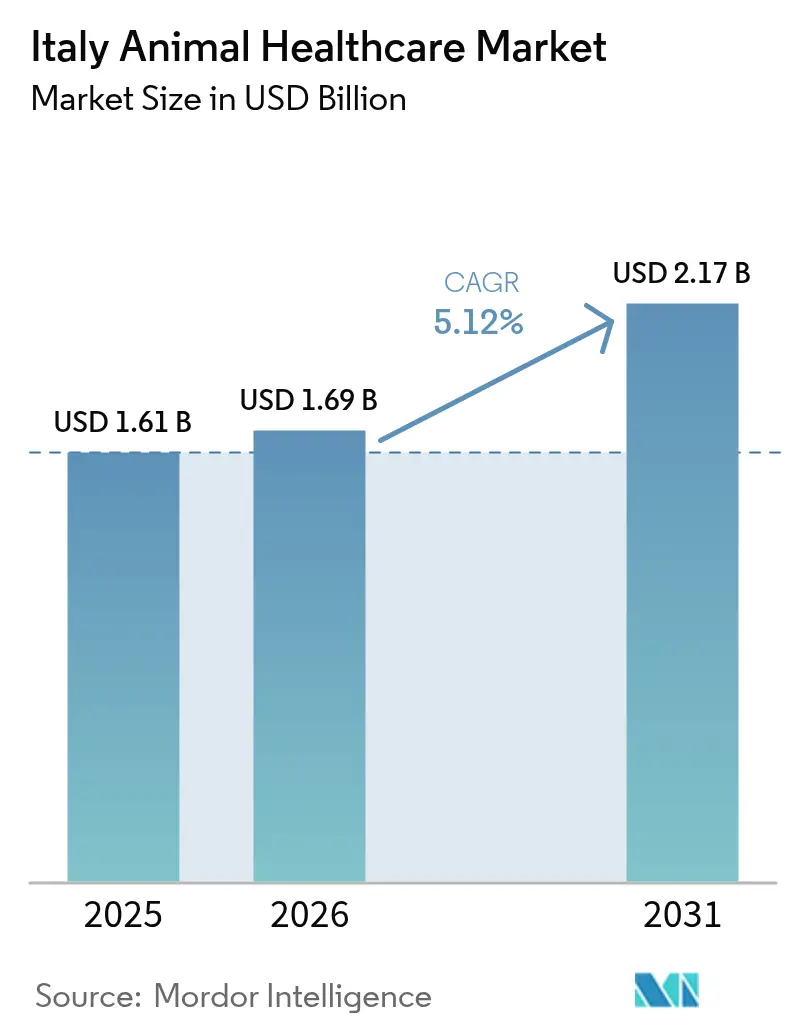
Italy animal healthcare market size in 2026 is estimated at USD 1.69 billion, growing from 2025 value of USD 1.61 billion with 2031 projections showing USD 2.17 billion, growing at 5.12% CAGR over 2026-2031. Growth is fuelled by rising ownership of companion animals. Italian households host 60.2 million pets, accompanied by a steady increase in preventive-care spending and a policy environment that explicitly links animal health to public health outcomes. Therapeutics remain the most significant revenue contributor, but diagnostics are scaling faster, driven by molecular assays and point-of-care innovations. Corporate networks are expanding their footprint, and the influx of capital is driving technology upgrades that help practices comply with the Ministry of Health’s antimicrobial stewardship mandate. The Italy animal healthcare market also benefits from European Union traceability rules that mandate more frequent livestock testing, thereby broadening the revenue base for laboratories. Counterbalancing these tailwinds are the profession’s manpower gaps and the high cost of advanced therapies, both of which could temper near-term access gains. Nevertheless, strong demand elasticity, combined with incentives embedded in the One Health framework, underpins a resilient outlook for the Italy animal healthcare market through 2030.
Key Report Takeaways
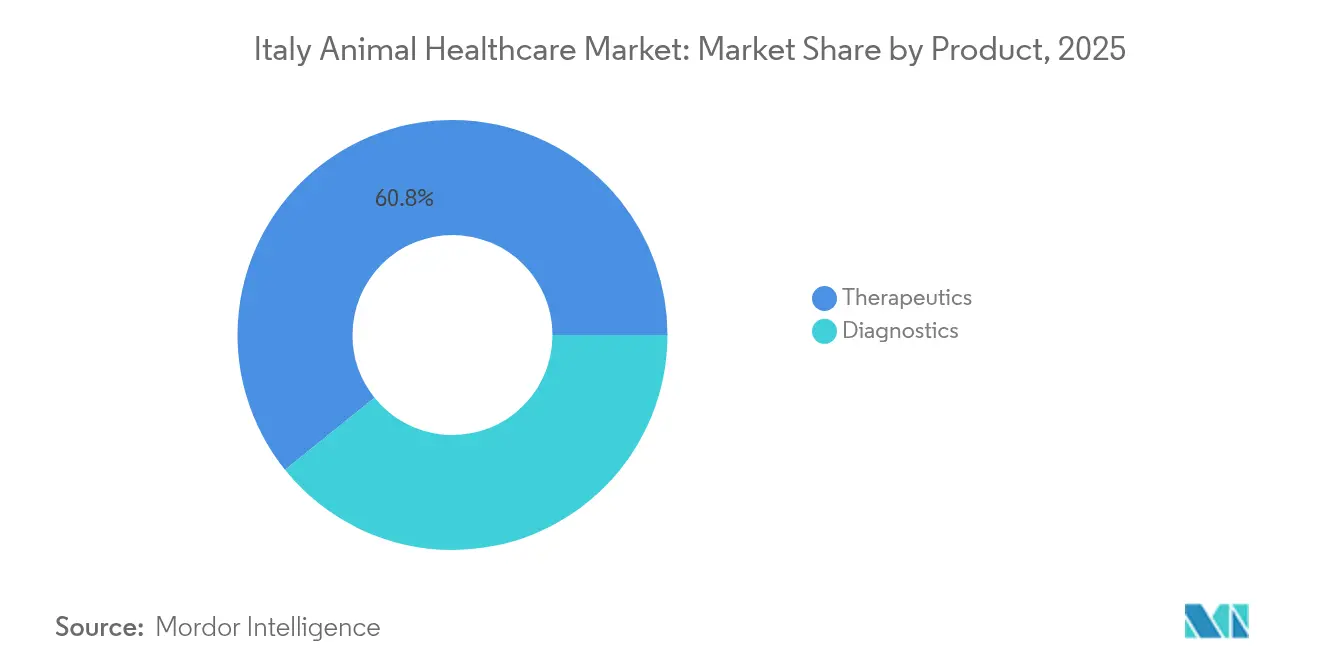
- By product type, therapeutics led with 60.78% revenue share in 2025, while diagnostics are projected to grow at a 7.29% CAGR to 2031.
- By animal type, dogs & cats accounted for 47.88% of the Italy animal healthcare market size in 2025, whereas the poultry segment is forecast to expand at a 6.17% CAGR between 2026 and 2031.
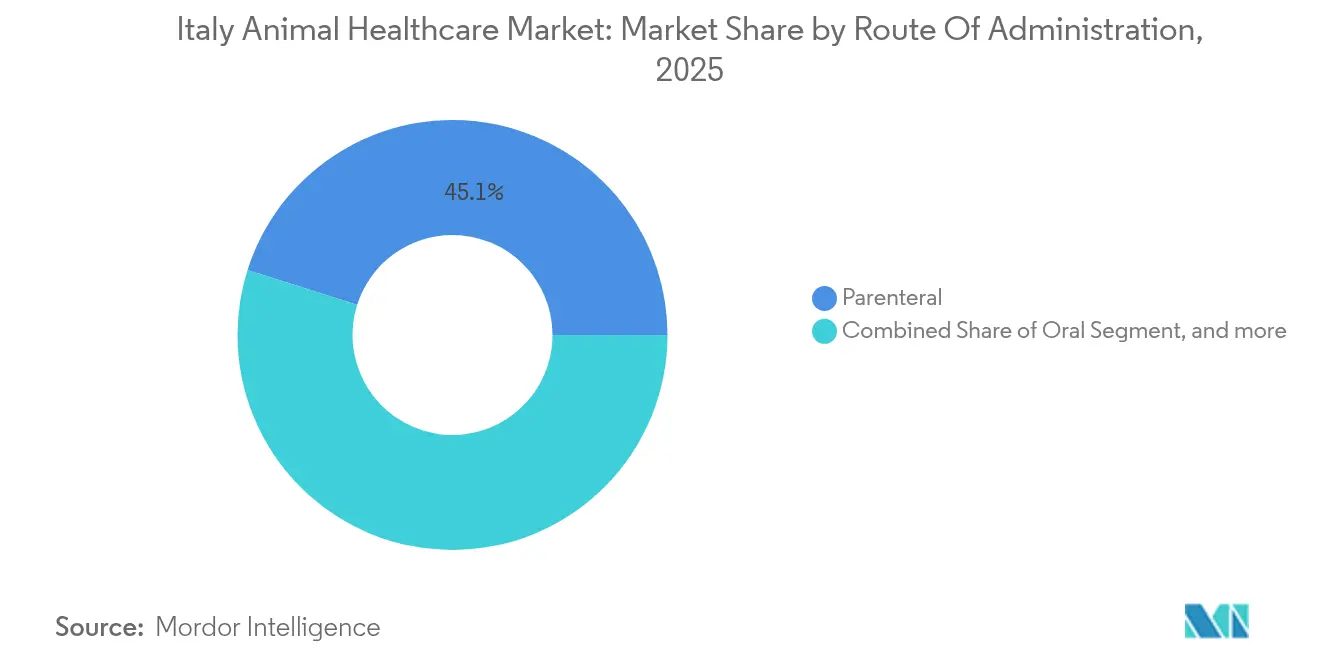
- By route of administration, parenteral products held 45.12% of the Italy animal healthcare market share in 2025; however, oral formulations are advancing at a 7.44% CAGR through 2031.
- By end user, veterinary hospitals & clinics captured 55.21% revenue share in 2025, while point-of-care settings are set to log a 6.31% CAGR over the forecast period.
Note: Market size and forecast figures in this report are generated using Mordor Intelligence’s proprietary estimation framework, updated with the latest available data and insights as of 2026.
Market Trends and Insights
Drivers Impact Analysis of Italy Animal Healthcare Market*
| Driver | (~) % Impact on CAGR Forecast | Geographic Relevance | Impact Timeline |
|---|---|---|---|
| Growing prescription volume and medication throughput | +1.5% | Global, strongest in North America and Europe | Medium term (2-4 years) |
| Expanding geriatric population and chronic-disease burden | +1.2% | Global; high-income, rapidly aging regions | Long term (≥4 years) |
| Heightened patient-safety and error-reduction mandates | +1.0% | Global, led by OECD members | Short term (≤2 years) |
| Shift toward centralized fill and hub pharmacies | +0.8% | North America and Western Europe | Medium term (2-4 years) |
| Integration of artificial intelligence for inventory optimization | +0.7% | Global; early adoption in tech-advanced health systems | Long term (≥4 years) |
| Surge in specialty-drug dispensing complexity | +0.6% | Global; oncology and rare-disease markets | Short term (≤2 years) |
| Source: Mordor Intelligence | |||
Expansion of Companion-Animal Population and Humanization Trends
Italy’s pet-care economy is expanding alongside a cultural shift that treats animals as family members. Sixty-three percent of owners consider pet health equal to human health and allocate around EUR 1,000 annually to pet upkeep, of which veterinary visits form a growing slice[1]. The constitutional amendment recognizing animals as sentient beings further legitimizes premium services such as oncology and advanced imaging. Pet-food expenditure rose to EUR 2.53 billion in 2024, reinforcing a willingness to pay for broader wellness packages. Demographically, northern regions possess higher disposable incomes, which translates into more frequent clinic visits and earlier adoption of telehealth. Urban millennials also favor subscription-based wellness plans that bundle vaccinations, diagnostics, and nutritional counseling. Collectively, these factors increase the average revenue per visit and underpin volume growth across both therapeutics and diagnostics in the Italy animal healthcare market.
Rising Expenditure on Preventive Veterinary Care and Insurance Uptake
Preventive care now commands a larger share of wallet as owners appreciate the cost-avoidance value of early intervention. About 32% of households purchase supplements and wellness products, and routine screening packages are becoming standard at corporate clinics. Although pet-insurance penetration lags northern Europe, policy count grew in double digits during 2024–2025, signaling latent demand. Insurers have begun partnering with multi-clinic networks to bundle coverage with annual check-ups, thereby embedding diagnostics and vaccinations into recurring revenue streams. Livestock operators are likewise investing in herd-health plans that emphasize biosecurity and vaccination compliance in response to EU disease-surveillance rules[2]. These structural moves collectively push the Italy animal healthcare market toward a more preventative model, reducing seasonality and stabilizing cash flows for service providers.
Government Incentives and Favorable Animal-Welfare Regulations
The Ministry of Health’s 2025 directive calls for nationwide antimicrobial-resistance monitoring and reinforces the One Health principle that ties animal and human well-being[3]. Complementary policies include a dedicated fund that offsets veterinary expenses for low-income families and VAT-relief proposals on critical animal-health products, both of which aim to widen access. The National Control Plan 2023–2027 mandates 15,007 full-time-equivalent staff for food-safety and veterinary inspections, increasing demand for laboratory diagnostics. University reforms that scrap entrance exams for veterinary medicine, effective in the 2025/2026 academic year, seek to ease the professional shortfall and improve rural service coverage. Collectively, these interventions reinforce structural demand and enhance the regulatory predictability crucial for investment in the Italy animal healthcare market.
Technological Advancements in Veterinary Pharmaceuticals and Diagnostics
Electronic prescription systems reduced antimicrobial scripts at the Naples University Veterinary Teaching Hospital from 41.6% to 36%, demonstrating technology’s regulatory utility. Liquid-biopsy protocols now achieve 85.7% diagnostic accuracy in canine oncology, expanding the addressable market for molecular tests. Business-intelligence platforms at Istituto Zooprofilattico Sperimentale delle Venezie standardize lab protocols and offer real-time disease-trend dashboards, enhancing biosecurity. Precision-livestock tools—wearables, GPS, and virtual fencing—help shepherds in hilly Sardinia monitor herd health, albeit adoption is slowed by cost and connectivity gaps. IDEXX Laboratories supports capability building by providing 90,000 continuing-education credits annually and rolling out the Cystatin-B renal test in 2024. Technology therefore boosts diagnostic throughput, operational efficiency, and clinical accuracy across the Italy animal healthcare market.
Restraints Impact Analysis of Italy Animal Healthcare Market*
| Restraint | (~) % Impact on CAGR Forecast | Geographic Relevance | Impact Timeline |
|---|---|---|---|
| High initial capital investment and maintenance costs | –1.0% | Global; most acute in emerging markets | Short term (≤2 years) |
| Workflow disruption and staff-training barriers | –0.7% | Global; facilities with limited change-management resources | Medium term (2-4 years) |
| Data security and privacy concerns in connected systems | –0.6% | Global; strictest in EU and North America | Long term (≥4 years) |
| Regulatory ambiguity for robotic sterile compounding | –0.4% | North America and select EU states | Medium term (2-4 years) |
| Source: Mordor Intelligence | |||
Shortfall of Veterinary Professionals and Rural Service Gaps
Veterinary headcount has not kept pace with demand; 78.5% of European countries report shortages, and Italy is no exception. Income disparity versus human-medical peers discourages graduates from livestock practice, while 76% of new veterinarians are women who often prefer urban clinics offering better work-life balance. Rural posts struggle with limited infrastructure and lower earnings, hindering disease surveillance in regions crucial to meat and dairy supply chains. The manpower gap compromises outbreak readiness, evidenced in slower response to the 2025 lumpy-skin-disease episode. The university-reform initiative may widen the talent pipeline, yet longer-term retention in underserved areas will require fiscal incentives and telemedicine support to narrow geographic disparities within the Italy animal healthcare market.
Escalating Costs of Veterinary Treatments and Pharmaceuticals
Average pet-care spending reached EUR 1,000 per animal in 2024, straining budgets of middle-income households. Veterinary antibiotic consumption rose 6.3%, compounding costs tied to antimicrobial resistance and making Italy Europe’s costliest jurisdiction for resistance-linked treatments. Specialized biologics and oncology drugs command premium prices, and mandatory investments in e-prescription platforms, imaging suites, and biosafety upgrades heighten overhead for clinics. Livestock producers face similar headwinds as feed additives and vaccines become pricier under tighter EU compliance standards. While corporate chains can leverage scale to negotiate better procurement terms, independent clinics may pass through costs, potentially suppressing volume growth in price-sensitive pockets of the Italy animal healthcare market.
*Our forecasts treat driver/restraint impacts as directional, not additive. The impact forecasts reflect baseline growth, mix effects, and variable interactions.
Italy Animal Healthcare Market Segment Analysis
By Product:
Therapeutics Leadership Amid Diagnostic InnovationTherapeutics generated 60.78% of the Italy animal healthcare market size in 2025, reflecting entrenched treatment protocols and reliable reimbursement from livestock operators. Vaccines form the blockbuster subcategory, buoyed by mandatory poultry and bovine immunization programs that mitigate epidemic-scale losses during avian-influenza and lumpy-skin-disease events. Parasiticides enjoy year-round demand given Italy’s Mediterranean climate that favors vector proliferation. Anti-infectives remain sizable but face regulatory scrutiny; veterinary antibiotic sales fell 12.7% to 585.4 tonnes in 2022 as stewardship programs intensified. Market attention is shifting to medical-feed additives, nutraceuticals, and targeted biologics that align with zero-antibiotic-residue labels favored by retailers.
Diagnostics, although a smaller base, are posting a 7.29% CAGR through 2031. Immunodiagnostic assays dominate routine screenings, while molecular platforms accelerate in oncology and genetic-disease panels. Diagnostic imaging sales benefit from corporate-clinic refurbishments in affluent northern cities, where computed tomography and digital radiography are becoming standard. Liquid-biopsy services, with 85.7% sensitivity in canine cancer, are opening adjacent demand for confirmatory molecular tests. Collectively, rapid diagnostic expansion adds a recurring-testing dimension that enhances stickiness of the Italy animal healthcare market.

By Animal Type:
Companion Animals Drive Growth Despite Livestock ChallengesDogs & cats represented 47.88% of 2025 revenue, supported by 19 million pets and high per-capita spend on wellness plans. Younger owners tend to gravitate toward minimally invasive therapies, driving the uptake of monoclonal antibodies for osteoarthritis and oral JAK inhibitors for dermatitis. Preventive dental care and weight-management programs add ancillary service revenue, deepening clinic-client engagement.
The poultry segment, advancing at a 6.17% CAGR, reflects Italy’s 1.3 million-tonne broiler output in 2024, a 10% increase that triggers expanded vaccine schedules. Stringent EU trade rules require disease-free certification, boosting lab testing volumes. The disease shock of 602,200 birds culled in the January 2025 avian influenza wave accelerates biosecurity investments. Swine, ruminants, and horses remain important, but their growth rates are steadier, influenced by commodity prices and targeted sports-medicine demand. Niche pockets such as aquaculture and exotic pets are nascent yet underscore the widening scope of the Italy animal healthcare market.
By Route of Administration:
Oral Delivery Innovation Challenges Parenteral DominanceParenteral formulations accounted for 45.12% of the Italy animal healthcare market share in 2025 due to the clinical preference for injectables in acute care and mass-vaccination campaigns. Yet oral products are scaling at a 7.44% CAGR as companies improve palatability and controlled-release profiles. Elanco’s Zenrelia, approved in August 2025 for canine allergic dermatitis, epitomizes this pivot toward once-daily oral convenience.
Oral delivery also benefits from the e-prescription system that simplifies refill logistics and aligns with antimicrobial-stewardship dashboards. Topicals hold steady for dermatological and ectoparasite indications, supported by Italy’s warm climate. Other routes—transdermal patches, implants, and inhalables—are niche but growing in oncology and chronic-pain management. As owner adherence increasingly determines therapeutic success, administration-route innovation remains a differentiator in the Italy animal healthcare market.
By End User:
Hospital Consolidation Accelerates Amid Point-of-Care InnovationVeterinary hospitals & clinics captured 55.21% of 2025 revenue, buoyed by chain formation and private-equity backing. Charme Capital Partners’ investment in Animalia, which operates 75 clinics across 13 regions, typifies consolidation that yields procurement scale and standardized protocols. Corporate players leverage data analytics to fine-tune service mix, integrate pharmacies, and cross-sell preventive plans, further solidifying their lead.
Point-of-care (POC) settings are advancing at a 6.31% CAGR as handheld analyzers, portable ultrasound, and cloud-based image archives shrink the turnaround time from diagnosis to treatment. Reference laboratories play a vital role in complex molecular tests and regulatory monitoring, with regional institutes ramping up their capacity to meet National Control Plan staffing targets. Academic & research centers diversify revenue through contract research and continuing-education programs, partly subsidized by diagnostics firms. Together, these end-user dynamics shape a multi-tier service ecosystem that broadens access and elevates clinical depth within the Italian animal healthcare market.
Regulatory Landscape
Italy regulates veterinary medicinal products under an EU-aligned framework centered on EU Regulation 2019/6, implemented nationally through Legislative Decree (D.Lgs.) 7 December 2023, No. 218, in force from 18 January 2024, which replaced the earlier D.Lgs. 193/2006. The Ministero della Salute is the competent authority for marketing authorization (AIC) pathways and compliance oversight, and it issues operational guidance for industry and veterinary stakeholders.
Compliance is increasingly digital and traceability-driven. The Ministry manages national systems and databases, including the Banca dati dei medicinali veterinari and a lifecycle traceability system for veterinary medicines and medicated feeds, with pack-level identification requirements (optical code carrying product identification, batch, and expiry). Transitional provisions allow certain products authorized under the prior EU framework to remain on the market until 29 January 2027 under defined conditions, which affects portfolio and labeling updates for manufacturers and distributors during the changeover.
Value Chain Analysis
The value chain covers multinational and domestic manufacturers (including local CDMO capacity), importers, intermediate distributors, pharmacies and wholesalers, veterinary hospitals and clinics, reference laboratories, and livestock producers, with the Ministero della Salute acting as the central node for authorizations, pharmacovigilance, and national traceability. Industry associations help structure channel activity, including AISA, which represents 26 member companies covering over 90% of the animal health market by value and volume, and Ascofarve, which represents 55 intermediate distribution companies covering about 70% of the veterinary distribution market.
Digitization is shaping both flow and compliance across the chain. Mandatory electronic veterinary prescription and the national traceability infrastructure connect manufacturers and distributors to downstream dispensers and prescribers, improving inventory visibility and recall readiness but increasing IT-integration requirements and data-handling complexity. In livestock, antimicrobial stewardship and compliance-linked monitoring support demand for diagnostics and controlled dispensing, while clinic-network consolidation is pushing more centralized procurement and standardized formularies and in-house testing protocols.
Competitive Landscape
The Italy animal healthcare market exhibits moderate concentration but growing consolidation. Multinationals such as Zoetis reported 4% Italian revenue growth to USD 29 million in Q1 2025, buoyed by demand for monoclonal antibodies and poultry vaccines. Domestic champions like Animalia leverage private-equity capital to expand regional footprints, standardize electronic health records, and negotiate favorable drug procurement contracts. IVC Evidensia, operating more than 2,500 European sites, channels cross-border know-how into Italian clinics, deepening competitive intensity.
Technology leadership has become a decisive factor. Chains rolling out electronic-prescription modules gain regulatory-compliance advantages and capture prescribing data that informs formulary choices. Laboratories that integrate liquid-biopsy and next-generation sequencing differentiate themselves in the oncology niche. Start-ups exploit white spaces in rural telemedicine and AI-enabled imaging triage, although reimbursement models remain nascent.
Strategic alliances across the value chain are rising. Elanco teamed with Medgene in February 2025 to commercialize an H5N1 cattle vaccine, potentially positioning firms for future livestock biosecurity mandates. On the CDMO front, the merger of Doppel Farmaceutici and Mipharm created DMX Pharma, enhancing local manufacturing capacity pivotal for supply-chain resilience. These moves collectively elevate entry barriers and reshape competitive contours in the Italy animal healthcare market.
Italy Animal Healthcare Industry Leaders
-
Elanco Animal Health
-
MSD Animal Health (Merck & Co.)
-
Virbac
-
Zoetis Inc.
-
Boehringer Ingelheim Animal Health
- *Disclaimer: Major Players sorted in no particular order
Italy Animal Healthcare Market Companies Covered in this Report
- Agrolabo S.p.A.
- BCF Technology (IMV Imaging)
- Boehringer Ingelheim
- Candioli Pharma
- Ceva
- Dechra Veterinary Products
- Dox-al Italia S.p.A.
- Elanco
- Farmina Pet Foods
- Fatro S.p.A.
- Friulchem
- Hill's Pet Nutrition
- IDEXX
- Innovet Italia
- IVC Evidensia
- Livisto
- Mars Petcare (Royal Canin)
- Monge & C. S.p.A.
- MSD Animal Health
- Teknofarma s.r.l.
- Virbac
- Zoetis
Market Opportunities and Future Outlook
Regulatory digitization and stewardship programs are expanding practical whitespace for software-enabled compliance services, clinic workflow tools, and lab connectivity. The Legislative Decree 218/2023 transition, together with the Ministry of Health traceability and e-prescription infrastructure, favors solutions that integrate dispensing, inventory, and reporting across manufacturers, distributors, pharmacies, and veterinary practices. This creates a clearer pathway for connected diagnostics and standardized treatment pathways within the animal healthcare market.
In livestock, investment momentum in adjacent inputs points to demand for health-linked solutions that couple feed, biosecurity, and monitoring. At Assalzoo's May 2026 annual assembly in Parma, the Italian feed industry reported 2025 turnover of EUR 10.167 billion, volumes of 15.628 million tonnes, and fixed investments up 5.3% to EUR 158 million, supporting spend on productivity and compliance enablers that intersect with veterinary services, including early disease detection, feeding management, and antimicrobial reduction. The Ministry of Health also extended the deadline for mandatory animal health training for operators, transporters, and professionals to 31 December 2026 (Decree 23 December 2025), which supports ongoing need for structured continuing education, certification, and standardized operating procedures embedded into farm and transport workflows.
Recent Industry Developments in Italy Animal Healthcare Market
- June 2026: Alivira Animal Health signed a binding agreement to acquire 100% of BioForLife Italia S.r.l., a Milan-based companion animal healthcare company. The deal expands Alivira's footprint in Italy and adds local product depth in companion animal-focused categories, supporting broader commercial reach through established channels.
- April 2026: Prange Pharma completed the acquisition of the MSD Animal Health manufacturing site in Aprilia, Italy, and launched a CDMO platform branded as Aprilia Animal Health. MSD also entered a long-term supply agreement with Prange Pharma to maintain production continuity, strengthening Italy's contract manufacturing availability for veterinary pharmaceuticals.
- December 2025: Vimian announced the acquisition of Italian companion animal diagnostics provider I-Vet. The transaction bolsters Vimian's diagnostics portfolio and distribution capabilities in Italy, reinforcing competitive intensity in fast-growing in-clinic and reference lab testing segments.
Italy Animal Healthcare Market Report Scope and Research Methodology
Market Definition and Coverage
This market covers spending in Italy on veterinary therapeutics and diagnostics used to prevent, diagnose, and treat diseases in companion and farm animals, counted at the point of sale to veterinary channels and other eligible end users.
Scope exclusions: We exclude human healthcare products, and we also exclude animal-related services that are not part of therapeutics or diagnostics (such as grooming and boarding).
Segments Covered in This Report
- By Product
- Therapeutics
- Vaccines
- Parasiticides
- Anti-Infectives
- Medical Feed Additives
- Other Therapeutics
- Diagnostics
- Immunodiagnostic Tests
- Molecular Diagnostics
- Diagnostic Imaging
- Clinical Chemistry
- Other Diagnostics
- Therapeutics
- By Animal Type
- Dogs & Cats
- Horses
- Ruminants
- Swine
- Poultry
- Other Animal Types
- By Route Of Administration
- Oral
- Parenteral
- Topical
- Other Route of Administrations
- By End User
- Veterinary Hospitals & Clinics
- Reference Laboratories
- Point-Of-Care / In-House Testing Settings
- Academic & Research Institutes
Data Sources, Market Sizing, and Validation
Desk Research
Desk research sets the factual base for the model and helps us keep assumptions realistic for Italy. We reviewed public sources such as Eurostat, the European Medicines Agency, and the Italian Ministry of Health for livestock indicators, disease control actions, and the context for authorized products.
On the demand side, we also used sources such as OECD agriculture statistics, FAOSTAT, and publications from veterinary or animal health associations to understand animal population trends and care intensity. These were complemented with company annual reports, investor presentations, and reputable press to map product mix shifts and distribution patterns, and then supported by paid subscriptions focused on company financials and intelligence, news and financials, and patent databases for signal checks. The sources listed here are illustrative only, and many other references were used for collection, cross-checking, and clarification.
Primary Interviews and Surveys
Primary work was used to pressure-test the desk findings and to convert broad indicators into market-specific shares and pricing logic. We spoke with a mix of manufacturers, distributors, veterinary hospital and clinic buyers, diagnostics-focused stakeholders, and practicing veterinarians across Italy so that product uptake, average treatment patterns, and channel margins could be validated.
To avoid over-relying on one view, feedback was gathered across major regions and animal cohorts, and then used to reconcile differences between usage-based signals and reported revenue trends.
Distribution of primary research fieldwork respondents
| Company type | Respondent position |
|---|---|
| Top tier: 27% | CXOs: 16% |
| Mid tier: 53% | Functional/Unit leaders: 40% |
| Smaller Players: 20% | Managers: 44% |
Market-Sizing & Forecasting
The core sizing starts from a top-down build where animal population and care intensity in Italy are translated into a demand pool for key therapeutic classes and diagnostic test volumes, which are then priced using observed channel-level pricing ranges. Once this structure was stable, selective bottom-up approximations were used to corroborate totals, mainly through supplier revenue direction checks, sampled price per dose or test multiplied by likely volumes, and distributor channel checks, followed by adjustments where gaps were seen.
Inputs that materially shape the model include companion animal ownership trends, livestock herd and flock counts, vaccination and parasite control seasonality, testing mix between in-clinic and reference labs, and route-of-administration patterns that affect dosing and packaging. Where a sub-segment had limited public visibility, we bridged gaps using validated share splits from interviews and then rechecked the implied per-animal spend against practical veterinary usage patterns.
For forecasting, scenario analysis was applied around a base case, with growth rates tied to a small set of drivers that experts could agree on, including preventive care adoption, diagnostics penetration, and expected price progression in Italy. The final outlook was then reviewed to ensure the year-to-year pattern stayed consistent with realistic clinic throughput and animal health program cycles.
Data Validation & Update Cycle
Results are triangulated through a set of consistency checks so that no single assumption can over-pull the outcome. Analysts compare the modeled totals with independent signals such as animal population changes, expected product mix trends, and the implied average spend per animal for major cohorts, and then investigate variances before sign-off.
If a large mismatch appears, the underlying inputs are reopened and select respondents are re-contacted to confirm whether the change is real or timing related. The study is refreshed annually, and interim updates are made when material events shift demand, supply, or pricing. Before delivery, a final analyst pass is completed to align the narrative and numbers to the latest available information.
Mordor Intelligence's Italy Animal Healthcare Market Size Versus Other Published Estimates
Different published numbers for Italy animal healthcare can vary quite a lot, even when they are talking about the same country and similar end users. The biggest reasons usually sit in what is counted inside the market, which year is treated as the base, and how pricing and growth are applied across product types.
The main gap comes from whether veterinary services and non-product spend are added into the same total, where Mordor Intelligence counts only therapeutics and diagnostics revenues and keeps clinic service fees outside the market value to avoid double counting when products are dispensed in the same visit.
Benchmark comparison
| Source | Market Size | Gaps in Research Methodology |
|---|---|---|
| Mordor Intelligence | USD 1.61 B (2025) | |
| Global Consultancy A | USD 3.80 B (2024) | Uses a wider scope that blends veterinary services with product sales, and it anchors to a different base year, which lifts the reported total versus a product-only view. |
| Industry Dataset B | USD 0.69 B (2025) | Limits coverage to companion animals only, which removes farm animal therapeutics and diagnostics and thereby pushes the value well below a total Italy animal healthcare estimate. |
The spread in the table mostly comes down to scope choices, first around services versus products and then around whether farm animals are included. By keeping the steps traceable to animal cohorts, test and treatment intensity, and pricing checks, the final figure stays repeatable and easier to reconcile when new information appears.
Key Questions Answered in the Report
What is the projected value of the Italy animal healthcare market in 2031?
The market is forecast to reach USD 2.17 billion by 2031, supported by a 5.12% CAGR.
Which product category currently dominates spending?
Therapeutics lead with 60.78% revenue share, driven by vaccines and parasiticides.
Why are diagnostics expanding faster than therapeutics?
Molecular assays, liquid-biopsy techniques, and point-of-care devices are shortening turnaround times and improving clinical outcomes, fueling a 7.29% CAGR for diagnostics.
Which animal segment is growing the quickest?
Poultry is advancing at a 6.17% CAGR as producers scale biosecurity and vaccination programs.
How is government policy influencing market demand?
The Ministry of HealthÕs One Health directive and antimicrobial-stewardship rules mandate greater surveillance and incentivize preventive care, expanding diagnostic and treatment volumes.
What challenges could restrict future growth?
Veterinary-workforce shortages, especially in rural areas, and rising therapy costs could limit access and slow adoption of advanced services.