
Intravenous Iron Drugs Market Size and Share
Market Overview
| Study Period | 2020 - 2031 |
|---|---|
| Market Size (2026) | USD 3.59 Billion |
| Market Size (2031) | USD 5.37 Billion |
| Growth Rate (2026 - 2031) | 8.40 % |
| Fastest Growing Market | Asia-Pacific |
| Largest Market | North America |
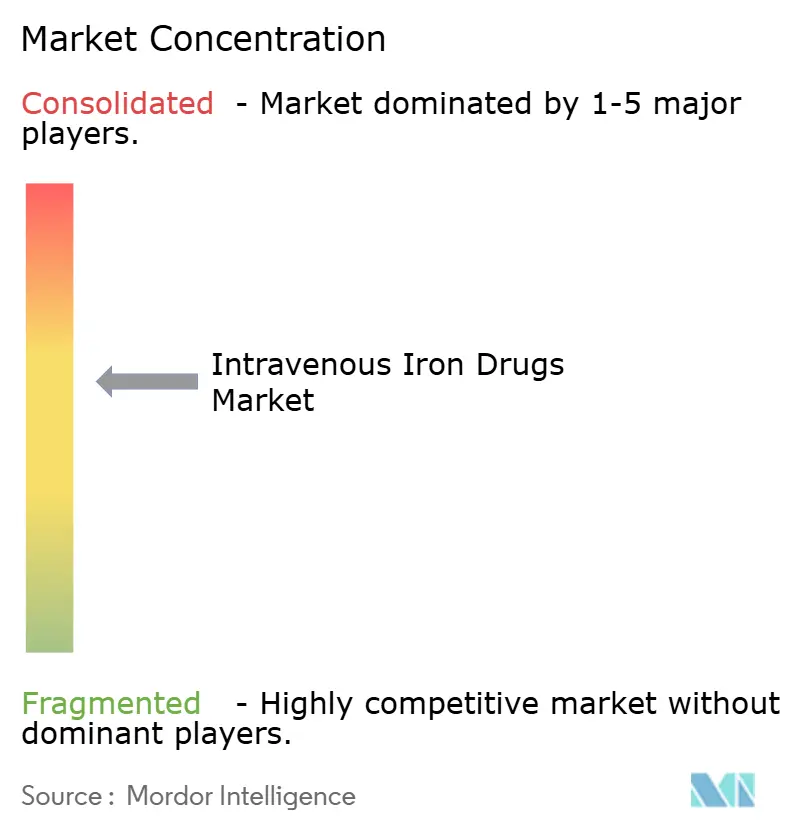
| Market Concentration | Medium |
Major Players *Disclaimer: Major Players sorted in no particular order Image © Mordor Intelligence. Reuse requires attribution under CC BY 4.0. | |
Intravenous Iron Drugs Market Analysis by Mordor Intelligence
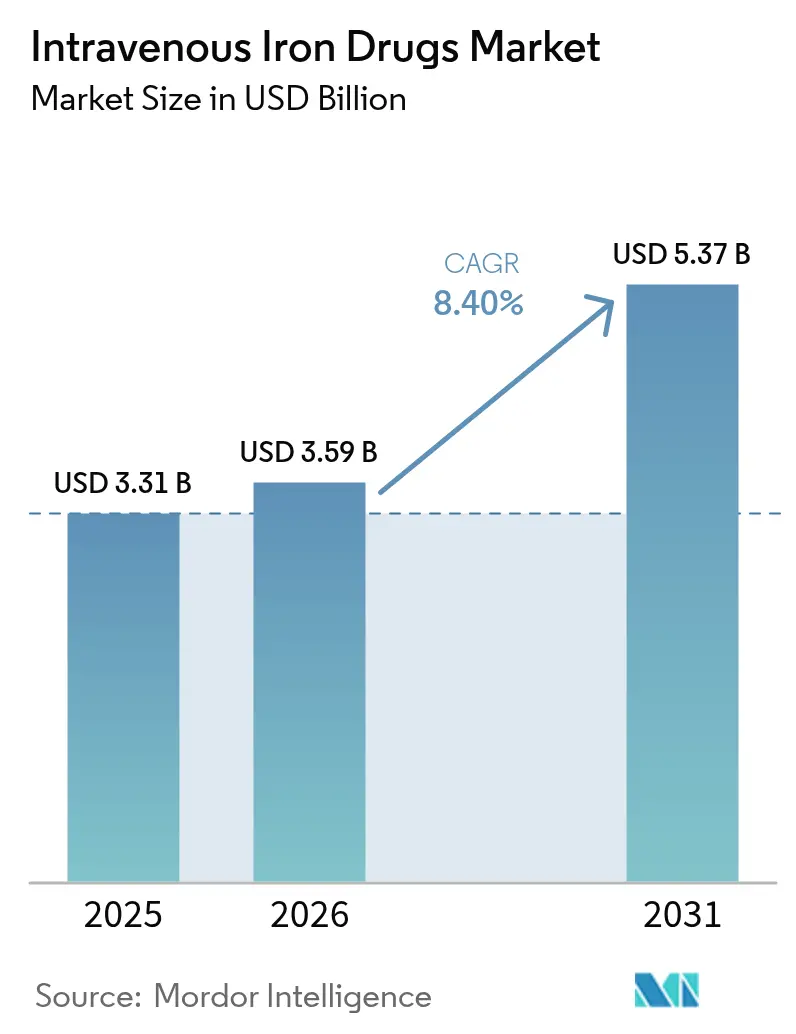
The intravenous iron drugs market size is expected to grow from USD 3.31 billion in 2025 to USD 3.59 billion in 2026 and is forecast to reach USD 5.37 billion by 2031 at 8.40% CAGR over 2026-2031. The growth is mainly driven by robust clinical data favoring parenteral formulations, the sector is transitioning from episodic anemia correction toward proactive iron repletion in chronic kidney disease (CKD), heart failure (HF), inflammatory bowel disease (IBD) and oncology. Physicians increasingly prescribe high-dose, rapid-infusion complexes that limit chair time, while home-based infusion and telehealth models broaden patient access. Intensifying guideline support, notably from KDIGO and the Heart Failure Society of America, reinforces first-line use of IV iron, and expanding outpatient infrastructure underpins sustained demand. The growth trajectory is tempered by vigilance around hypophosphatemia and by payer-mandated step-edit protocols that favor lower-priced generics.
Key Report Takeaways
- By product type, ferric carboxymaltose led with 44.78% revenue share in 2025; iron isomaltoside is projected to grow at a 10.14% CAGR to 2031.
- By indication, CKD held 51.62% of the intravenous iron drugs market share in 2025, while HF with iron deficiency is set to expand at a 10.02% CAGR through 2031.
- By end-user, hospitals accounted for 40.12% of the intravenous iron drugs market size in 2025, whereas home infusion and telehealth services will rise at an 10.96% CAGR between 2026-2031.
- By distribution channel, hospital pharmacies contributed 42.08% share in 2025; online & specialty pharmacies are anticipated to advance at an 11.05% CAGR over the forecast period.
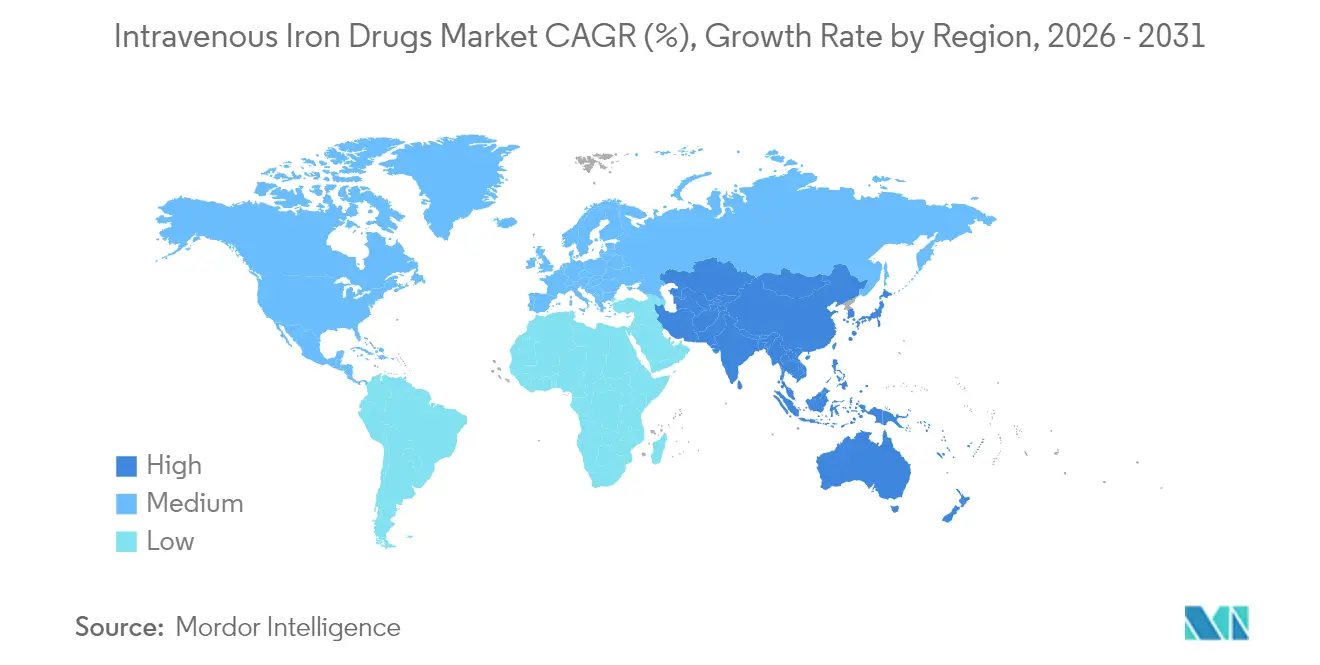
- By geography, North America commanded 42.05% of 2025 revenues; Asia-Pacific is expected to register the fastest 9.42% CAGR through 2031.
Note: Market size and forecast figures in this report are generated using Mordor Intelligence’s proprietary estimation framework, updated with the latest available data and insights as of 2026.
Market Trends and Insights
Drivers Impact Analysis of Intravenous Iron Drugs Market*
| Driver | % Impact on CAGR Forecast | Geographic Relevance | Impact Timeline |
|---|---|---|---|
| Escalating global iron-deficiency anemia burden across CKD, IBD, oncology & HF populations | +2.1% | Global; North America & Europe core | Long term (≥ 4 years) |
| Growing clinical preference for intravenous iron to overcome poor oral absorption & adherence | +1.8% | Global; developed markets | Medium term (2–4 years) |
| Rapid expansion of out-patient infusion centers and dialysis networks worldwide | +1.5% | North America & Asia-Pacific | Medium term (2–4 years) |
| Updated international guidelines endorsing IV iron as first-line therapy in CKD and heart failure | +1.3% | Global; early uptake in North America & Europe | Short term (≤ 2 years) |
| Introduction of high-dose, rapid-infusion complexes reducing treatment visits & costs | +1.0% | Developed markets; expanding to emerging economies | Medium term (2–4 years) |
| Rising healthcare expenditure in emerging markets improving access to parenteral therapies | +0.8% | Asia-Pacific, Latin America, Middle East & Africa | Long term (≥ 4 years) |
| Source: Mordor Intelligence | |||
Escalating Global Iron-Deficiency Anemia Burden Across CKD, IBD, Oncology & HF Populations
Clinical audits show iron deficiency in 37-61% of HF patients, and meta-analysis confirms that IV iron lowers cardiovascular mortality by 13% compared with placebo[1]. Renal guidelines mandate regular iron supplementation for 92% of dialysis recipients, while CKD prevalence growth sustains baseline demand. China still reports 79.6 million iron-deficient adults even after a 40.86% fall in dietary deficiency rates since 1990. Functional deficiency in cancer adds incremental volume because inflammation blocks gut absorption. Collectively, these disease pools secure long-run volume growth across nephrology, cardiology and oncology clinics.
Growing Clinical Preference for Intravenous Iron to Overcome Poor Oral Absorption & Adherence
Consensus statements published in 2024 indicate that oral ferrous salts often fail to normalize ferritin or improve 6-minute-walk distance in HF with reduced ejection fraction. The IRONMAN trial showed the greatest benefit among patients with transferrin saturation below 20%. Real-world Japanese data in 632,200 cases reported a 3.20 g/dL hemoglobin rise with ferric carboxymaltose versus 1.70 g/dL for oral iron at week 12. High discontinuation rates tied to gastrointestinal intolerance further tilt prescribers toward parenteral therapy, cementing demand across chronic disease cohorts.
Rapid Expansion of Outpatient Infusion Centers and Dialysis Networks Worldwide
Alternate-site infusion revenue is projected at USD 142 billion by 2027, and 50% of new FDA approvals require an injectable route. CMS raised ESRD facility reimbursement by 2.7% for 2025, allocating USD 6.6 billion to 7,700 centers[2]. During pandemic adaptations, 190 ferric carboxymaltose home infusions produced no grade ≥3 adverse events. These data validate safety of decentralized administration, shorten patient travel, and ease hospital capacity strain, catalyzing further distribution away from inpatient wards.
Updated International Guidelines Endorsing IV Iron as First-Line Therapy in CKD And Heart Failure
The Heart Failure Society of America’s 2024 update positions IV iron as standard care for symptomatic HF with iron deficiency. Asian expert panels released operational roadmaps to overcome cost and facility barriers. KDIGO’s 2025 revision advocates proactive iron correction before anemia manifests, enlarging the eligible patient base. Regulatory interest is also evident: the European Commission continues to scrutinize anticompetitive messaging in the sector, supporting broader product choice.
Restraints Impact Analysis of Intravenous Iron Drugs Market*
| Restraints Impact Analysis | (~) % Impact on CAGR Forecast | Geographic Relevance | Impact Timeline |
|---|---|---|---|
| Safety concerns (hypersensitivity, hypophosphatemia) limiting uptake of high-dose formulations | −1.2% | Global; developed markets with advanced pharmacovigilance | Short term (≤ 2 years) |
| Intensifying generic competition driving price erosion in mature molecules | −0.9% | North America & Europe; expanding to emerging markets | Medium term (2–4 years) |
| Reimbursement uncertainties for non-dialysis indications in major markets | −0.7% | North America & Europe | Medium term (2–4 years) |
| Cold-chain & infusion infrastructure gaps in low-resource regions | −0.6% | Sub-Saharan Africa; parts of Asia & Latin America | Long term (≥ 4 years) |
| Source: Mordor Intelligence | |||
Safety Concerns (Hypersensitivity, Hypophosphatemia) Limiting Uptake of High-Dose Formulations
Ferric carboxymaltose triggers hypophosphatemia in more than 70% of recipients within five weeks by elevating FGF-23, risking cardiac dysfunction and fractures[3]. Dutch cohort data in 2,468 courses documented insufficient replacement dosing and persistent anemia in 65% of cases, hinting that clinicians sometimes under-dose to mitigate adverse events. FDA guidance requires 30-minute post-infusion observation across the class, slowing clinic workflow. Collectively, these safety flags push some prescribers toward lower-dose or alternative complexes, capping near-term adoption of the highest-strength SKUs.
Intensifying Generic Competition Driving Price Erosion in Mature Molecules
Independence Blue Cross introduced a 2025 policy compelling use of two generics before branded Injectafer or Monoferric access. Public price sheets show 3-fold cost gaps between branded ferric carboxymaltose and generic ferumoxytol. CSL Vifor cited “dampened” outlook amid bundling pressure in renal drugs. While derisomaltose retains patent life into the 2030s, most legacy complexes confront margin compression, moderating nominal market expansion despite rising unit volumes.
*Our forecasts treat driver/restraint impacts as directional, not additive. The impact forecasts reflect baseline growth, mix effects, and variable interactions.
Intravenous Iron Drugs Market Segment Analysis
By Product Type:
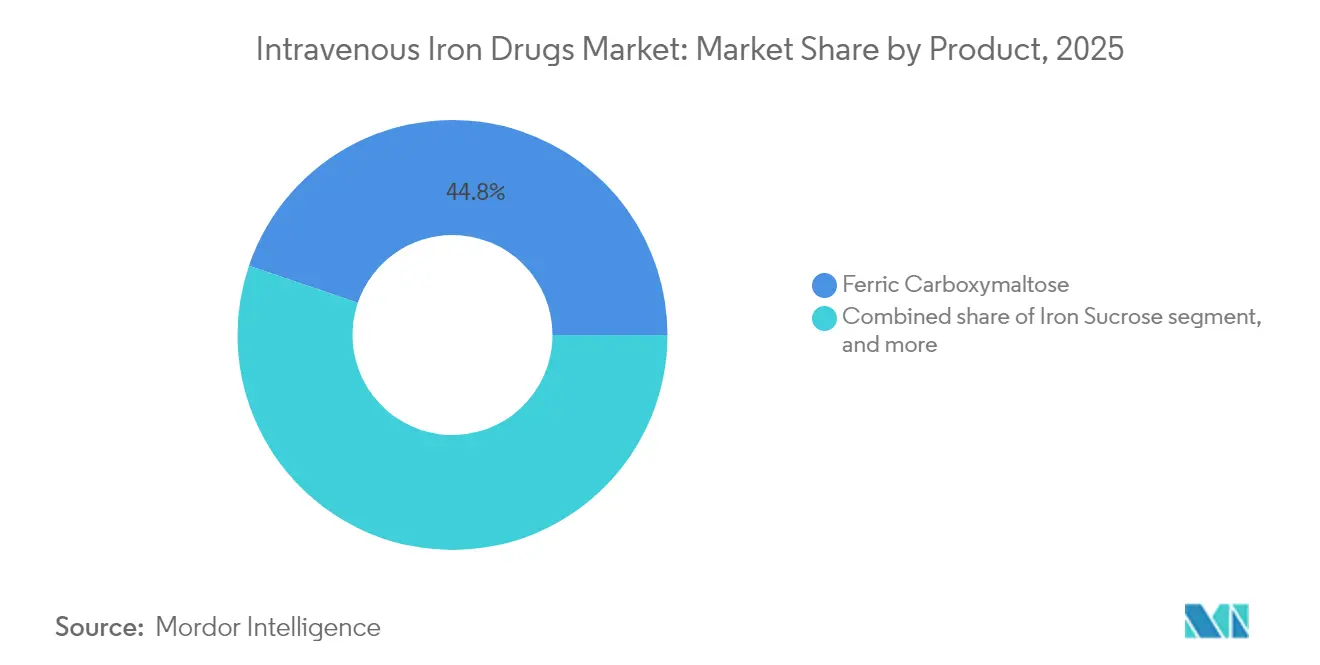
Persistent Ferric Carboxymaltose Leadership Amid Isomaltoside AccelerationFerric carboxymaltose held 44.78% of 2025 sales, securing the largest intravenous iron drugs market share on the back of extensive evidence across CKD and HF protocols. However, the intravenous iron drugs market size for iron isomaltoside is forecast to post a 10.14% CAGR to 2031 as prescribers value its lower hypophosphatemia risk profile. The PHOSPHARE-IBD study estimated that derisomaltose cuts infusion visits by 1.64 over a five-year horizon, translating into NOK 9,707 cost savings per patient.
Momentum toward safety-led selection continues. Sucrose enjoys embedded use in dialysis bundles, whereas sodium ferric gluconate fills niche hypersensitivity cases. Ferumoxytol’s generic entry exerts pricing leverage across the class, triggering formulary shifts. Overall, differentiated safety, dosing convenience and cost shape the competitive axis more than simple brand tenure.

By Indication:
CKD Supremacy Challenged by Heart Failure SurgeCKD accounted for 51.62% of revenue in 2025, underpinned by obligatory iron needs within hemodialysis protocols. Yet the intravenous iron drugs market will increasingly pivot toward HF, where the indication’s 10.02% CAGR reflects landmark trials showing 18% reductions in composite cardiovascular endpoints. Reimbursement updates in Europe now cover outpatient HF infusions, widening addressability.
Oncology, IBD and obstetric segments deliver incremental volume through recognition of functional iron deficiency unresponsive to oral therapy. Precision screening of transferrin saturation in bariatric surgery further elevates demand. The indication mix continues to diversify, distributing growth more evenly beyond traditional nephrology silos.
By End-User:
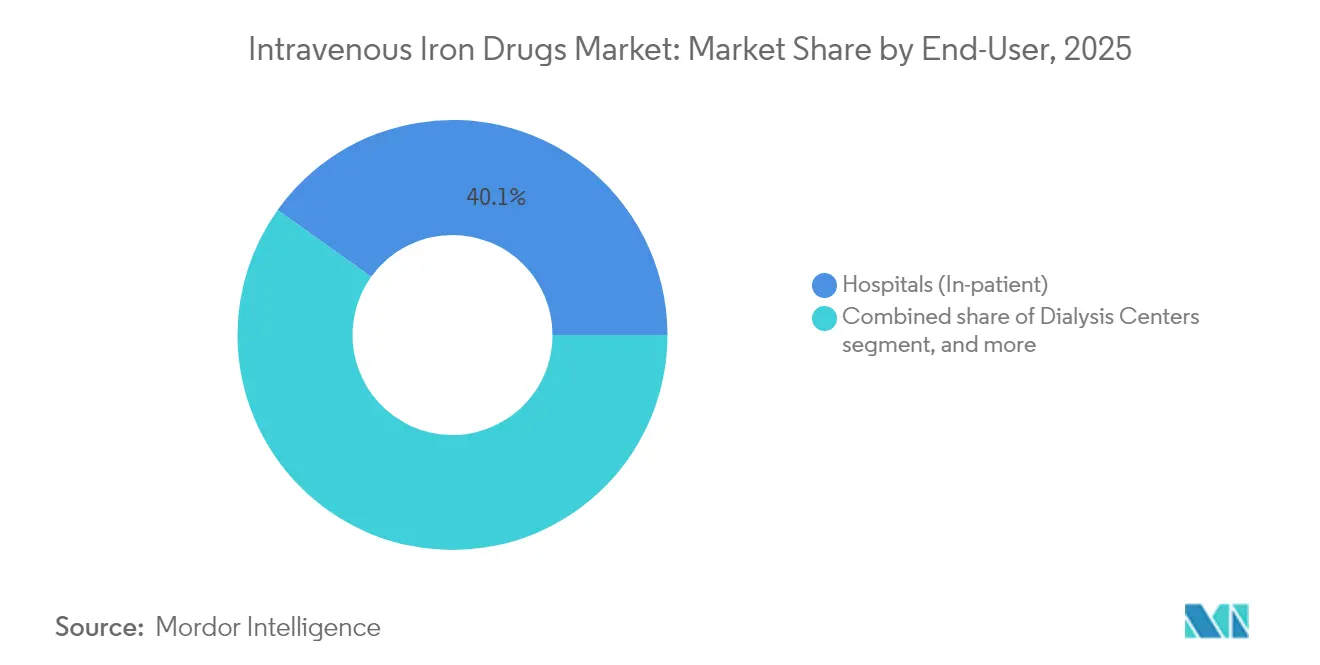
Hospitals Still Dominant as Home-Based Models RiseHospitals collected 40.12% of 2025 revenue, reflecting centralized infusion infrastructure. Nevertheless, home infusion recorded an 10.96% CAGR outlook, driven by payer preference for lower-cost sites of care and positive pandemic-era safety audits. The intravenous iron drugs market size for outpatient settings is projected to overtake inpatient channels in post-2030 scenarios if virtual monitoring tech matures.
Dialysis centers remain structurally important; CMS’s USD 6.6 billion allocation to ESRD facilities underpins continued integration of IV iron in routine sessions. Specialty clinics and ambulatory surgery centers complement the mix, reflecting fragmentation in service delivery.
By Distribution Channel:
Institutional Tenders Confront Specialty Pharmacy ExpansionInstitutional tenders dominate procurement owing to volume rebates and formulary standardization. Yet specialty pharmacy networks and e-commerce platforms are capturing share by synchronizing drug delivery with home-infusion nursing. Vertically integrated dialysis groups wield supply control advantages and negotiate aggressively on molecule price. With payer incentives favoring lower acquisition cost, channel power is redistributing toward entities that can document adherence, safety and real-world outcomes.
Geography Analysis
North America Intravenous Iron Drugs Market
North America contributed 42.05% of global turnover in 2025, sustained by guideline-driven uptake and broad reimbursement of parenteral iron. Independence Blue Cross’s step-edit rules exemplify mounting cost oversight, yet CMS’s reimbursement increase secures dialysis channel volume. Mature infrastructure supports stable demand, though unit growth is flattening as eligible CKD cohorts approach full penetration.
APAC Intravenous Iron Drugs Market
Asia-Pacific is forecast to record the fastest 9.42% CAGR through 2031, led by China’s volume-linked procurement that cut prices 42% while lifting usage 49%. Joint ventures such as CSL Vifor–Fresenius target more than 2,000 tier-3 hospitals, and India’s Anemia Mukt Bharat program seeks to narrow diagnostic gaps. Affordability remains a ceiling, yet economic expansion and insurance coverage gains support rising uptake.
EMEA and South America Intravenous Iron Drugs Market
Europe benefits from entrenched nephrology protocols and HF guideline alignment. However, high generic penetration and HTA scrutiny constrain price growth. Regulatory attention to fair competition—illustrated by the EU probe into disparagement claims—ensures diversified molecule availability. Middle East & Africa and South America show nascent but accelerating adoption as private insurers and public health funds recognize the productivity gains of rapid anemia correction.
Regulatory Landscape
Regulation of intravenous (IV) iron therapies continues to focus on safety management for hypersensitivity and on comparability requirements for complex nano-colloidal products. In the European Union, the EMA framework for IV iron-containing medicinal products reinforces class-wide vigilance via risk management planning and ongoing pharmacovigilance expectations, while EMA scientific guidance on data requirements for IV iron-based nano-colloidal products shapes how follow-on versions demonstrate similarity to reference products. In the United States, market access is increasingly shaped by payer medical and pharmacy benefit policies alongside FDA oversight. In August 2025, the FDA approved the first generic iron sucrose injection (with Competitive Generic Therapy designation), adding a major access pathway for CKD-related iron deficiency anemia treatment. In 2026, updated commercial policies from entities such as UnitedHealthcare and Maryland Physicians Care refreshed coverage criteria, prior authorization workflows, and site-of-service requirements for products including Feraheme, Injectafer, and Monoferric, tightening alignment between clinical thresholds, administration setting, and reimbursement.
Competitive Landscape
The intravenous iron drugs market displays moderate concentration. CSL Vifor, Pharmacosmos, Fresenius Kabi and Daiichi Sankyo collectively generate just under half of worldwide revenue, yielding no dominant single-player lockout. CSL Vifor’s leadership is challenged by EU antitrust inquiries and U.S. reimbursement bundling, prompting portfolio rationalization toward higher-value complexes. Pharmacosmos leverages derisomaltose’s safety narrative, while Fresenius Kabi exploits cost-utility data and integrated biosimilar offerings.
Generic suppliers escalate price competition, especially in ferumoxytol and sucrose formulations, pushing innovators to defend share through real-world evidence and patient-reported outcomes. Companies invest in digital adherence platforms and at-home infusion kits to capture shifting service models.
Pipeline innovation spans microneedle patches and magnetic nanoparticle targeting, although commercialization is unlikely before 2030. Overall rivalry is shaped by safety differentiation, care-site migration strategies and payer-driven formulary negotiations rather than classical detailing.
Intravenous Iron Drugs Industry Leaders
-
AbbVie (Allergan)
-
Covis Pharma GmbH (AMAG Pharmaceuticals, Inc)
-
CSL Limited (Vifor Pharma Management Ltd.)
-
Sanofi S.A.
-
Pharmacosmos A/S
- *Disclaimer: Major Players sorted in no particular order
Intravenous Iron Drugs Market Companies Covered in this Report
- CSL Behring
- Daiichi Sankyo
- Sanofi
- Pharmacosmos
- Shield Therapeutics plc
- Covis Pharma
- Akebia Therapeutics Inc. (Keryx/AMAG)
- Rockwell Medical
- Pfizer
- Zydus Lifesciences Ltd.
- Fresenius
- Dr. Reddy’s Laboratories
- Emcure Pharmaceuticals
- Teva Pharmaceutical Industries
- Nichi-Iko Pharmaceutical Co. Ltd.
- Lupin
- FDC Ltd.
- Hikma Pharmaceuticals
Market Opportunities and Future Outlook
Expanding guideline-driven use in CKD and broader institutional adoption create whitespace for manufacturers and providers that can operationalize standardized iron assessment and treatment in high-throughput settings. The KDIGO 2026 Clinical Practice Guideline for anemia in CKD explicitly recommends intravenous iron over oral iron for patients initiating iron therapy in hemodialysis (CKD G5HD), reinforcing protocolized IV iron use inside dialysis networks. This guideline integration is already visible in payer policy updates that reference updated laboratory thresholds and administration requirements, favoring products and care models that document appropriate iron indices and safe infusion practices. Geographic expansion and channel redesign remain prominent opportunity areas, especially where access constraints are being addressed through regulatory approvals, generics, and regional commercialization agreements. Health Canada issued a Notice of Compliance in March 2024 for Ferinject (ferric carboxymaltose) across adult and pediatric iron deficiency anemia, broadening labeled use in a major developed market, while the August 2025 FDA approval of a first generic iron sucrose injection introduces a new price-access lever in the United States. In China, China Medical System Holdings entered an exclusive commercialization and supply agreement with Pharmacosmos (April 2026) for Monofer (iron isomaltoside) and Cosmofer (iron dextran), highlighting the role of local partnerships and secured supply in scaling originator IV iron portfolios in growth markets as procurement and hospital coverage structures evolve.
Recent Industry Developments in Intravenous Iron Drugs Market
- April 2026: China Medical System Holdings signed an exclusive commercialization and supply agreement with Pharmacosmos for Monofer (iron isomaltoside) and Cosmofer (iron dextran) in China. The deal strengthens local commercialization and supply continuity for established IV iron brands, which is critical in a tender-driven hospital market where assured availability influences formulary decisions.
- August 2025: Viatris announced FDA approval of Iron Sucrose Injection, USP, positioned as the first generic version of Venofer Injection in the United States (with Competitive Generic Therapy designation). This approval accelerates price competition in a high-volume CKD segment and increases payer leverage in step edits and contracting for institutional and outpatient channels.
- November 2024: CMS finalized the 2025 ESRD Prospective Payment System rule, including a 2.7% payment update and an estimated USD 6.6 billion to 7,700 dialysis facilities. The reimbursement update reinforces dialysis-center capacity to administer IV iron within bundled care pathways and supports continued routine utilization tied to CKD anemia management.
Intravenous Iron Drugs Market Report Scope and Research Methodology
Market Definition and Coverage
This market covers prescription intravenous iron drug therapies used to correct iron deficiency or iron deficiency anemia when oral iron is not suitable, and the value is measured as manufacturer level revenue from these IV products across major countries.
Scope exclusions: We exclude oral iron supplements, blood transfusions, erythropoiesis stimulating agents, and IV administration services and infusion center procedure charges.
Segments Covered in This Report
- By Product Type
- Ferric Carboxymaltose
- Iron Sucrose
- Intravenous Ferumoxytol
- Sodium Ferric Gluconate Complex
- Iron Isomaltoside 1000
- Other Product Type
- By Indication
- Chronic Kidney Disease (Dialysis & Non-Dialysis)
- Inflammatory Bowel Disease
- Cancer- & Chemotherapy-Induced Anemia
- Obstetrics & Gynecology (Pregnancy-Related Anemia)
- Heart Failure with Iron Deficiency
- Bariatric & Gastrointestinal Surgery
- Other Indications
- By End-User
- Hospitals (In-patient)
- Out-patient Infusion & Oncology Centers
- Dialysis Centers
- Other End-Users
- By Distribution Channel
- Direct Tenders / Institutional Sales
- Hospital Pharmacies
- Online & Specialty Pharmacies
- Captive Dialysis Service Providers
- Geography
- North America
- United States
- Canada
- Mexico
- Europe
- Germany
- United Kingdom
- France
- Italy
- Spain
- Rest of Europe
- Asia-Pacific
- China
- Japan
- India
- Australia
- South Korea
- Rest of Asia-Pacific
- Middle East & Africa
- GCC
- South Africa
- Rest of Middle East & Africa
- South America
- Brazil
- Argentina
- Rest of South America
- North America
Data Sources, Market Sizing, and Validation
Desk Research
Desk work starts by building the clinical and demand backbone for IV iron usage, before we convert it into a market value. Public sources used include, for example, the World Health Organization for anemia context, the US Centers for Disease Control and Prevention for population health signals, and national health statistics portals where CKD and pregnancy related anemia burdens are tracked. We also refer to guidance and evidence summaries that influence utilization, such as clinical guideline bodies and peer reviewed journals indexed on platforms like PubMed.
On the supply and pricing side, we lean on sources such as FDA drug databases and label documents, the European Medicines Agency public assessment reports, and government procurement portals where tender patterns are visible. Company annual reports, investor presentations, and audited filings help validate product level revenue direction and regional exposure, and then patent databases are checked to understand formulation shifts and lifecycle timing. We also use paid subscriptions for company financials and intelligence, and for news and financials, mainly to keep timelines and product events consistent. This desk source list is not exhaustive, and many other public and paid references were used for data collection, validation, and clarification.
Primary Interviews and Surveys
Primary work is used to test what desk sources cannot fully explain, especially mix shifts between high dose complexes and older products, and how hospital protocols influence volumes. We speak with people across manufacturers, distributors, hospital pharmacy teams, and clinicians who routinely treat CKD, heart failure, IBD, oncology related anemia, and obstetric anemia, and inputs are taken across major regions to check if adoption and access look similar. Assumptions on dosing patterns, tender discount ranges, and outpatient versus inpatient share are then reconciled with the market model so totals remain realistic.
Distribution of primary research fieldwork respondents
| Company type | Respondent position | Region |
|---|---|---|
| Top tier: 31% | CXOs: 12% | APAC: 42% |
| Mid tier: 51% | Functional/Unit leaders: 34% | EMEA: 33% |
| Smaller Players: 18% | Managers: 54% | Americas: 25% |
Market-Sizing & Forecasting
The core sizing logic is built from the demand pool, where epidemiology and treated patient pathways are translated into IV iron volumes by indication and care setting, and then valued using average selling price assumptions. That top-down approach uses inputs such as CKD patient counts and anemia prevalence, dialysis and non dialysis treatment rates, guideline driven IV iron use in heart failure and IBD, typical dose per course and re dosing frequency, and site of care shifts that affect purchasing channels. Once the volume picture is stable, pricing is applied using a blended ASP view that reflects tendering, generic entry, and product mix, which is then rolled up to regional and global totals.
To make sure the totals are not drifting, results are corroborated with selective bottom-up approximations, such as supplier revenue direction checks, channel discussions on hospital tenders, and sampled ASP times volume logic for major geographies. When some inputs are thin in smaller countries, we fill gaps using proxy indicators like population, anemia burden, and comparable treatment protocols, and then we adjust using expert feedback. For forecasting, scenario analysis is used around pricing pressure and utilization expansion, and assumptions are anchored to how quickly outpatient infusion capacity grows, how safety discussions affect preference, and how fast newer dosing patterns are adopted.
Data Validation & Update Cycle
We run multiple checks before finalizing the market values, so model outputs are compared with independent signals like procurement activity, reported product revenue direction, and changes in utilization guidelines. Outliers are reviewed at country and regional level, and if a price, volume, or mix move looks too sharp, the inputs are rechecked and experts are re contacted to confirm what changed. A separate analyst review is done for calculations, assumptions, and currency handling, followed by a final sign off pass.
Reports are refreshed annually, and interim updates are triggered when a material event occurs, such as a major approval, a safety label change, or a clear price reset in tenders. Before delivery, the latest public updates are scanned again so clients receive an up to date view that matches the most recent market conditions.
Mordor Intelligence's Intravenous Iron Drugs Market Size Versus Other Published Estimates
It is common to see different published market sizes for IV iron drugs because the counted products, the year used as the starting point, and the way pricing is applied can vary a lot. Some publishers also blend forecast years into the same headline number, which can make two estimates look inconsistent even when underlying demand is similar.
In this report, the spread is often explained by how frequently prices and product mix are refreshed, how currency conversion timing is handled, and whether tender discounts are applied to hospital heavy markets, which are then further checked through follow up calls and desk updates before the final value is locked, a step kept current through the annual update cycle used by Mordor Intelligence.
Benchmark comparison
| Source | Market Size | Gaps in Research Methodology |
|---|---|---|
| Mordor Intelligence | USD 3.59 B (2026) | |
| Industry Publisher A | USD 3.41 B (2025) | Uses a different base year and presents a near term estimate that is not directly comparable to a 2026 value, and the headline does not clearly state how tender discounts and product mix shifts are reflected in ASP. |
| Industry Publisher B | USD 2.55 B (2025) | Appears to use a narrower value build with conservative utilization and slower price progression, and the estimate can sit lower when outpatient adoption and higher dose regimens are not fully converted into volume per treated patient. |
Overall, the table shows that year selection and pricing treatment explain most of the gap, more than a disagreement on clinical demand direction. By keeping assumptions traceable to dosing patterns, tendered pricing, and indication level adoption, our estimate stays repeatable and easier to reconcile when new public updates come in.
Key Questions Answered in the Report
What is the projected size of the intravenous iron drugs market by 2031?
The market is expected to reach USD 5.37 billion by 2031, growing at an 8.40% CAGR during 2026-2031.
Which therapeutic area will grow fastest within this market?
Heart failure with iron deficiency is forecast to post the highest 10.02% CAGR through 2031, reflecting strong clinical-outcome data.
Why are outpatient and home infusion channels expanding so quickly?
Payer incentives, patient convenience and CMS reimbursement increases support alternate-site care, while remote monitoring confirms safety equivalence to hospital administration.
How does hypophosphatemia affect prescribing patterns?
High rates of post-infusion hypophosphatemia with ferric carboxymaltose prompt closer phosphate monitoring and encourage uptake of lower-risk formulations such as iron isomaltoside.
Which region offers the greatest growth potential?
Asia-Pacific, led by China’s procurement reforms and expanding insurance coverage, is set to register the fastest 9.42% CAGR through 2031.
How significant is generic competition?
Generic ferumoxytol and other off-patent complexes create price gaps up to 3-fold against brands, leading payers to impose step-edit policies that favor lower-cost options before premium agents are approved.