
Interventional Oncology Devices Market Size and Share
Market Overview
| Study Period | 2020 - 2031 |
|---|---|
| Market Size (2026) | USD 3.01 Billion |
| Market Size (2031) | USD 4.78 Billion |
| Growth Rate (2026 - 2031) | 9.69 % |
| Fastest Growing Market | Asia-Pacific |
| Largest Market | North America |
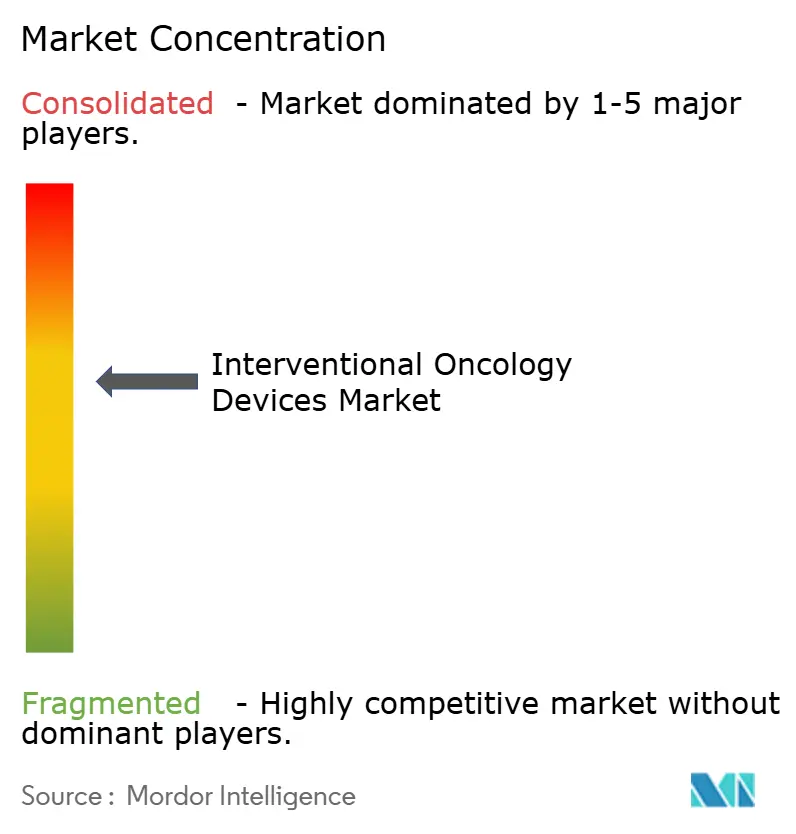
| Market Concentration | Medium |
Major Players *Disclaimer: Major Players sorted in no particular order Image © Mordor Intelligence. Reuse requires attribution under CC BY 4.0. | |
Interventional Oncology Devices Market Analysis by Mordor Intelligence
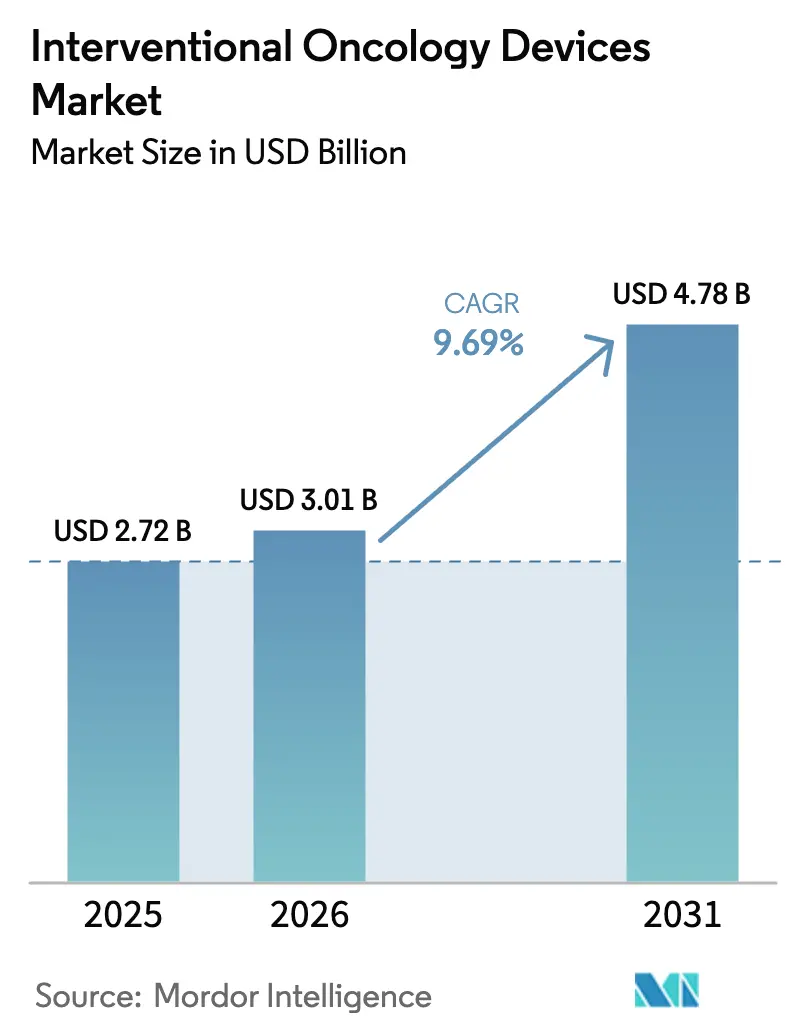
The Interventional Oncology Devices Market size is expected to grow from USD 2.72 billion in 2025 to USD 3.01 billion in 2026 and is forecast to reach USD 4.78 billion by 2031 at 9.69% CAGR over 2026-2031.
This growth aligns with tight radiation-oncology capacity, periodic chemotherapy shortages, and the preference of patients and payers for outpatient, image-guided tumor control. Category I CPT reimbursement for irreversible electroporation in pancreatic cancer, effective January 2027, repositions ablation from salvage to front-line care and de-risks hospital capital spending. CMS further accelerates technology uptake through its Technology and Coverage Evaluation Pathway, which now ties provisional coverage to FDA clearance within 90 days rather than the historical 18-month lag. On the product front, long-acting drug-eluting beads that maintain localized chemotherapy for 30 days, rather than 14, are doubling tumor control rates in hepatocellular carcinoma and creating a premium segment within the interventional oncology devices market. At the procedural level, evidence supporting sequential chemoembolization plus microwave ablation is steering oncologists toward combination protocols that harness synergistic cytotoxicity while reducing hospital length of stay.
Key Report Takeaways
- By product type, ablation devices led the interventional oncology devices market, accounting for 46.71% of the market share in 2025. In contrast, embolization devices are expected to expand at a 12.29% CAGR through 2031.
- By procedure type, the ablation segment accounted for 49.13% of the interventional oncology devices market size in 2025, and combination therapies are projected to grow at a 13.09% CAGR over the same horizon.
- By cancer type, liver cancer accounted for 35.48% of the revenue in 2025, while lung applications are forecasted to grow at 10.74% annually through 2031.
- By end user, hospitals accounted for 56.44% of revenue in 2025; however, ambulatory centers are projected to post a 15.50% CAGR from 2026 to 2031.
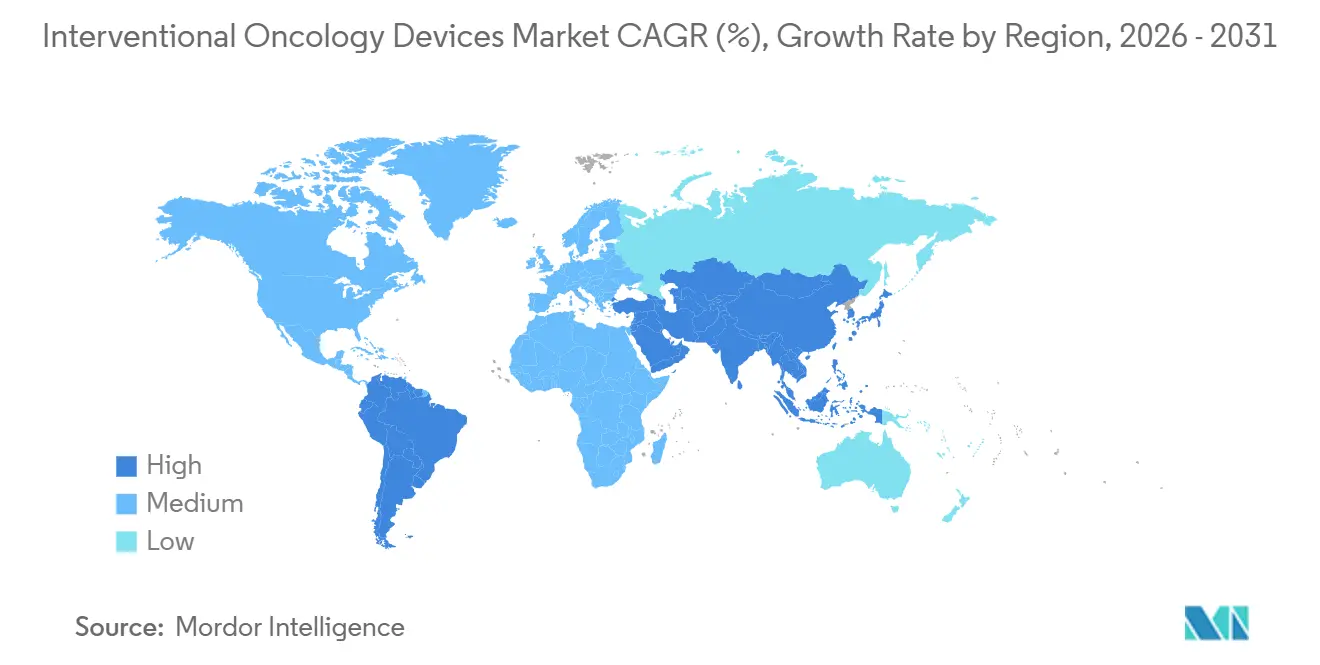
- By geography, North America accounted for 41.64% of revenue in 2025, and the Asia-Pacific region is poised for a 14.08% CAGR as China and Japan expand reimbursement and local approvals.
Note: Market size and forecast figures in this report are generated using Mordor Intelligence’s proprietary estimation framework, updated with the latest available data and insights as of January 2026.
Market Trends and Insights
Drivers Impact Analysis of Interventional Oncology Devices Market*
| Driver | (~) % Impact on CAGR Forecast | Geographic Relevance | Impact Timeline |
|---|---|---|---|
| Rising burden of cancer | +2.1% | Global; highest in Asia-Pacific and Sub-Saharan Africa | Long term (≥ 4 years) |
| Demand for minimally invasive therapies | +1.8% | North America and EU leading; expanding to Asia-Pacific | Medium term (2-4 years) |
| Advancements in image-guided ablation & embolization | +1.5% | Global; early adoption in developed markets | Medium term (2-4 years) |
| Favourable reimbursement & clinical guidelines | +1.2% | North America & EU primarily; selective Asia-Pacific | Short term (≤ 2 years) |
| AI-enabled navigation & robotic assistance | +1.0% | North America & EU core; spill-over to Asia-Pacific | Long term (≥ 4 years) |
| Growing palliative-care demand | +0.9% | Global; emphasis on aging populations | Long term (≥ 4 years) |
| Source: Mordor Intelligence | |||
Rising Prevalence of Cancer Driving Interventional Demand
Global cancer incidence climbed to 20 million new cases in 2024, a 15% rise over 2020, with liver, lung, and kidney tumors prime targets for image-guided therapy, making up 4.2 million diagnoses.[1]The International Atomic Energy Agency estimates a global deficit of 12,000 linear accelerators, prompting oncologists to turn to catheter-based embolization and percutaneous ablation as capacity substitutes. China’s 14th Five-Year Plan allocates USD 2.8 billion to establishing 500 cancer centers equipped with cone-beam CT suites by 2027, creating a pipeline that accounts for nearly one-fifth of the Asia-Pacific device shipments. Japan’s demographic profile, with 33% of citizens over 65 years, is linked to a 9% yearly increase in hepatocellular carcinoma, a cohort increasingly treated with radioembolization rather than resection. U.S. academic hospitals also report waitlists for external-beam therapy, prompting earlier referrals to interventional oncology clinics and increasing daily ablation throughput by 18%.
Advances in Image-Guided Navigation and Real-Time Fusion
AI navigation compresses pre-procedure planning from 45 minutes to 12 minutes, enabling radiologists to complete six cases daily instead of four.[2] Philips’ LumiGuide overlays real-time ultrasound on pre-acquired CT, cutting needle repositioning by 38% in lung biopsies. FDA-cleared LungVision combines bronchoscopic video with 3D maps, reducing peripheral-nodule ablation time by 22 minutes while lowering pneumothorax rates to 4.5%. Early clinical use of Apple Vision Pro at Massachusetts General Hospital projects holographic liver margins into the field of view, slicing positive margins by 19%. These innovations fortify the interventional oncology devices market as navigation evolves from accessory to standard-of-care capital equipment.
Growing Shift to Outpatient and Ambulatory Settings
CMS added 11 interventional oncology codes to the ASC list in its 2025 Outpatient Prospective Payment System, redirecting USD 340 million of yearly volume from hospital departments to ambulatory centers.[3] ASC facility fees run 58% below hospital outpatient rates, dovetailing with commercial payer contracts that reward site neutrality. Same-day discharge for uncomplicated liver ablation increased from 48% in 2023 to 67% in 2025, a swing that lifted throughput while trimming inpatient bed demand. AngioDynamics and SCA Health announced plans to place NanoKnife systems in 40 ASCs across Texas and Florida, targeting pancreas lesions previously eligible only for inpatient surgery. The FDA guidance finalized in 2024 affirmed that Class II ablation devices require no special facility certification beyond state licensure, thereby erasing an administrative hurdle for office-based procedures.
Expansion of Combination Therapy Protocols
A 2024 Lancet Oncology trial showed that chemoembolization followed by microwave ablation lifted 3-year survival in intermediate hepatocellular carcinoma from 58% to 71%. Boston Scientific’s TheraSphere, paired with ablation, achieved a 92% complete-response rate in tumors between 3 cm and 5 cm, compared with 67% for embolization alone. Medtronic’s Emprint Epoch integrates dual antennas with impedance feedback, extending ablation margins by 1.2 cm crucial when operators must avoid overlap injury. The FDA granted Breakthrough Device designation to three combination protocols in 2025, chopping trial timelines to 30 months and boosting reimbursement certainty. AASLD’s 2025 guidelines upgraded the protocol to Category 1A, prompting Medicare Advantage plans to issue rapid-coverage bulletins.
Restraints Impact Analysis of Interventional Oncology Devices Market*
| Restraint | (~) % Impact on CAGR Forecast | Geographic Relevance | Impact Timeline |
|---|---|---|---|
| High Cost of Advanced Diagnostics in LMICs | -1.6% | Sub-Saharan Africa & South Asia | Long term (≥ 4 years) |
| Lack of Standardized Criteria / False Positives | -1.2% | Asia-Pacific & Latin America | Medium term (2-4 years) |
| Specialty Reagent Supply-Chain Vulnerabilities | -0.9% | North America & Europe | Short term (≤ 2 years) |
| Heightened Regulatory Scrutiny of Multiplex Assays | -0.8% | North America, Europe, expanding Asia-Pacific | Medium term (2-4 years) |
| Source: Mordor Intelligence | |||
High Capital Costs Limiting Adoption in Resource-Constrained Settings
A turnkey interventional oncology suite costs USD 2.8 million, a figure exceeding the annual capital budgets of 78% of public hospitals in India and 65% in Brazil. Microwave generators alone sell for USD 180,000–USD 250,000, while per-case disposables add USD 8,500—four times the median out-of-pocket expenditure in Indonesia and Nigeria. Leasing penetration in Southeast Asia is only 12%, compared to 41% in Western Europe, which delays diffusion by four to six years. Import tariffs of 18%–35% and 90-day lead times further erode utilization, which falls below the 60% breakeven needed for payback.
Lack of Standardized Response Criteria and False-Positive Imaging
Inter-observer agreement on viable tumor after ablation ranges from 68% to 81%, producing a 14% false-positive rate in lung cases and driving unnecessary repeat procedures that cost USD 12,000 and extend recovery by three weeks. Contrast-enhanced ultrasound shows 19% discordance with MRI, while only 38% of U.S. practices adopted an SIR consensus template by December 2025. The evidence-generation cycle for payer coverage thus stretches another 18-24 months, tempering adoption in markets that rely on comparative-effectiveness dossiers.
*Our forecasts treat driver/restraint impacts as directional, not additive. The impact forecasts reflect baseline growth, mix effects, and variable interactions.
Interventional Oncology Devices Market Segment Analysis
By Product Type:
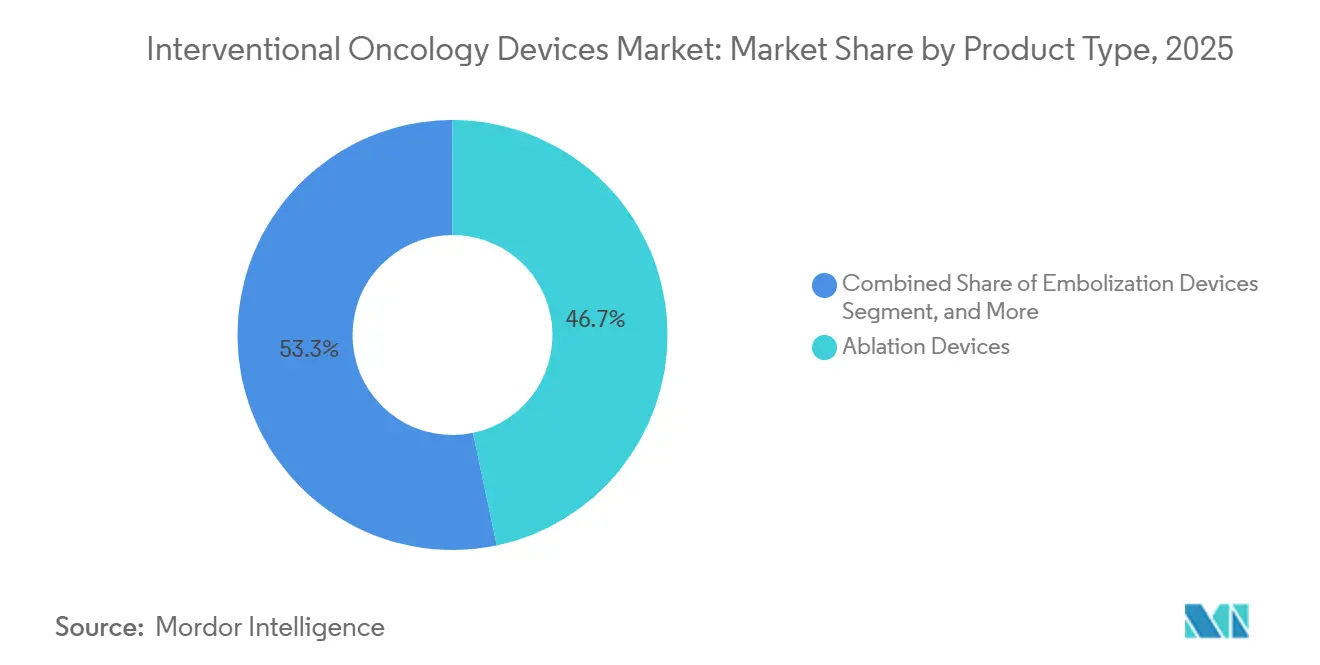
Embolization Momentum BuildsEmbolization devices are expected to grow at a 12.29% CAGR, outpacing the interventional oncology devices market, as 30-day drug-eluting beads double tumor control rates in hepatocellular carcinoma. Ablation devices still accounted for a 46.71% share of the interventional oncology devices market in 2025, driven by applications in the liver and lung. Yet, average selling prices have fallen 8% annually since 2023, pressured by low-cost Chinese entrants that price microwave generators 35% below those of incumbents. Irreversible electroporation is gaining traction in pancreatic indications after CPT reimbursement kicked in, resulting in a 77% increase in per-procedure revenue.
Navigation and imaging systems deliver 42% gross margins because proprietary AI algorithms reduce planning time and increase suite throughput, persuading hospitals that perform 200 or more cases annually to accept price tags of USD 350,000. Ancillary disposables mirror case volume but face double-digit price concessions under group-purchasing contracts negotiated by Premier Inc. Embolic microspheres command premium reimbursement, as irinotecan-loaded beads increase the objective response rate in colorectal metastases to 71% compared to 53% for bland embolization.

By Procedure Type:
Synergy Fuels Combination ProtocolsCombination therapies are on a 13.09% CAGR trajectory, fueled by survival benefits that earned Category 1A guideline status. Ablation held a 49.13% share of the 2025 interventional oncology devices market size, but growth is moderating to 8.2% as penetration plateaus in North America and Western Europe. Embolization procedures leverage Y-90 innovation to achieve a 10.1% CAGR; dosimetry advances now deliver 150 Gray to tumors while sparing parenchyma, thereby extending median survival in unresectable hepatocellular carcinoma from 10.7 to 16.4 months.
Chemoembolization reduces arterial flow by 68%, thereby mitigating the heat sink in vessels adjacent to tumors and enlarging the ablation margins by 1.2 cm. Medtronic’s impedance-regulated power control reduces charring and overlap injury, making the regimen feasible in previously risky locations. The FDA breakthrough designation shortens trial timelines and accelerates reimbursement, providing another tailwind.
By Cancer Type:
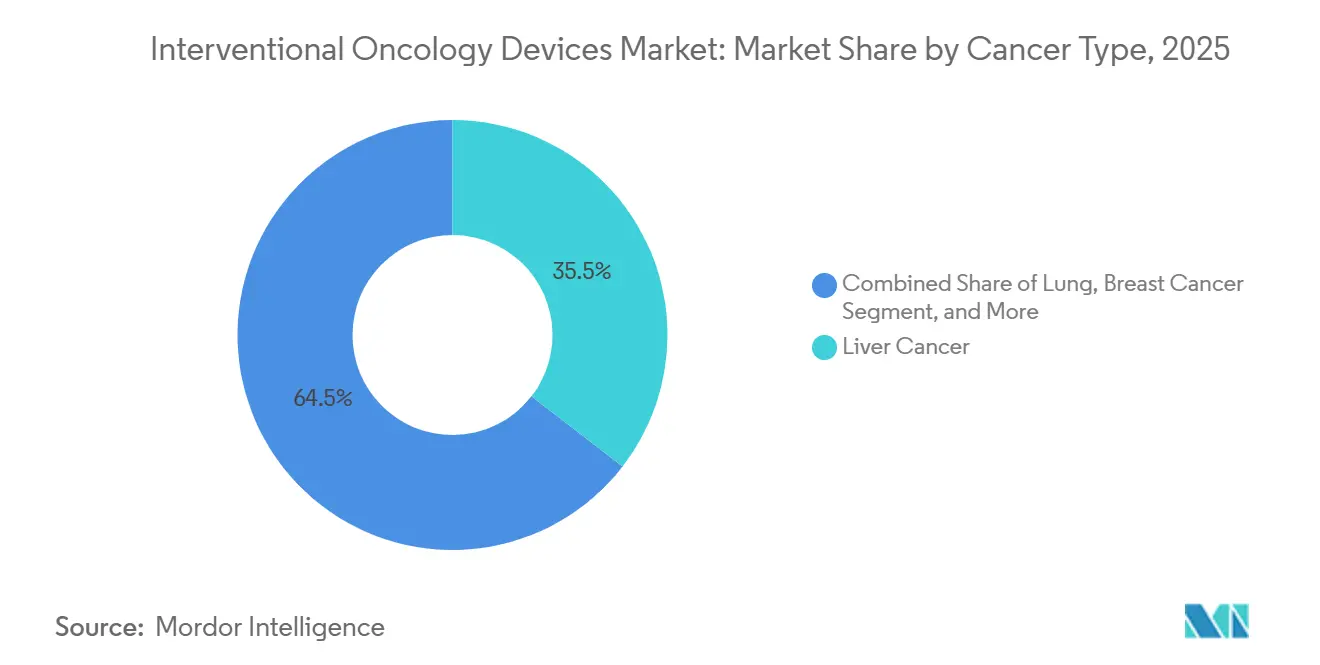
Lung Growth Leads, Liver Remains CoreLung indications will advance at a 10.74% CAGR to 2031, driven by microwave ablation achieving a 68% five-year survival rate in medically inoperable early-stage NSCLC, a parity result with stereotactic body radiation, but with half the treatment sessions. Liver cancer maintains its 35.48% revenue leadership, driven by approximately 900,000 annual cases. Kidney cryoablation continues at a steady rate of 9.1%, aided by 95% three-year cancer-specific survival and 92% renal function preservation in the elderly.
Prostate focal therapy posts an 11.3% CAGR; Profound’s MRI-guided ultrasound maintains erectile function in 78% of intermediate-risk patients. Bone metastasis ablation achieves a 60% pain reduction within 48 hours, expanding to orthopedic oncology clinics. Pancreatic irreversible electroporation expands at 16.8%, buoyed by reimbursement that lifts the number of eligible U.S. patients from 12,000 to 38,000 annually.
By End User:
ASC Penetration AcceleratesAmbulatory centers are expected to log a 15.50% CAGR, outperforming hospitals by 5.8 points as CMS approves more outpatient codes. Hospitals still own 56.44% revenue because complex cases require overnight observation. However, same-day discharge after uncomplicated liver and lung ablation rose 19 percentage points in two years, eroding inpatient volume. ASC cost advantages, combined with payer incentives for site neutrality, are expected to increase penetration from 8% of procedures in 2024 to a projected 19% by 2029.
Specialty cancer centers grow at a rate of 10.2% on multidisciplinary care pathways. In comparison, academic medical centers and VA facilities together form an 8% niche that drives teaching and early adoption of investigational technologies.
Geography Analysis
North America Interventional Oncology Devices Market
North America generated 41.64% of 2025 revenue, supported by a 12% fee-schedule bump on microwave liver ablation to USD 3,847 per case and CMS’s 90-day provisional-coverage policy. U.S. penetration is high, 4,200 suites are already equipped with cone-beam CT, so growth slows to 7.8%. Canada's growth rate increased to 9.4% after Ontario and British Columbia added Y-90 radioembolization to public coverage, benefiting 12,000 patients. Mexico’s market expands at 11.2% as 18,000 U.S. patients crossed the border for 60% cheaper liver ablation and four-week shorter wait times in 2025.
APAC Interventional Oncology Devices Market
Asia-Pacific is the growth engine with a 14.08% CAGR. China approved 47 devices for 2024–2025 and earmarked USD 2.8 billion for 500 cancer centers, accounting for 18% of regional shipments. Japan has added cryoablation of bone metastases to its fee schedule at JPY 420,000 (approximately USD 3,200) per procedure, catering to its large elderly population. India grows at the fastest rate of 16.1% under the Ayushman Bharat insurance plan, which now reimburses treatment for 500 million citizens.
Scandinavia, MEA and South America Interventional Oncology Devices Market
Scandinavia offsets some softness by favoring minimally invasive care in value-based procurement tenders. The Middle East & Africa enjoy a 12.6% CAGR, aided by medical tourism hubs in Dubai and Riyadh that subsidize 40% of the costs for GCC nationals. South America advances at 10.9%, led by Brazil’s March 2025 reimbursement of microwave ablation under the SUS national health plan.
Regulatory Landscape
In the United States, interventional oncology devices are generally positioned across Class II (Special Controls) and Class III categories and are regulated under the FDA framework (including 21 CFR Parts 800-898). Core compliance is anchored in Quality System Regulation requirements (21 CFR Part 820), labeling (21 CFR Part 801), and Medical Device Reporting (21 CFR Part 803). For developers running pivotal studies to expand indications or add novel delivery approaches, FDA Oncology Center of Excellence guidance on oncology trial endpoints and clinical evidence continues to shape study design and submission strategy.
In Europe, the MDR environment continues to tighten operational requirements for manufacturers and sponsors. As of May 28, 2026, multiple EUDAMED modules, including Actor Registration, UDI/Device Registration, Notified Body Certificate, and Clinical Investigation, became mandatory under Commission Decision (EU) 2025/2371. This raises the need for timely digital submissions tied to vigilance and market surveillance. ISO 14155:2020 remains the key reference standard for GCP in EU medical-device clinical investigations, while ongoing MDR certification capacity constraints keep pressure on earlier engagement with designated Notified Bodies for higher-risk interventional devices.
Competitive Landscape
The five leaders, Medtronic, Boston Scientific, AngioDynamics, Johnson & Johnson (Ethicon), and Siemens Healthineers, make the interventional oncology devices market moderately consolidated. Medtronic sells turnkey suites that bundle ablation generators, antennas, and O-arm imaging for USD 2.4 million, then secures 34% gross margins on service and disposables. Boston Scientific leverages its USD 420 million TheraSphere franchise to cross-sell cholangioscopy tools, lifting spend per radiology department by 18%. Siemens holds 47 AI-navigation patents, while Philips protects LumiGuide tracking with 12 patents that run into the mid-2030s, raising entry barriers.
White space remains in pancreatic ablation, where irreversible electroporation treats fewer than 8% of eligible patients, and in bone metastases, where pain-relief efficacy is strong but awareness is low. IceCure Medical’s ProSense cryo-system operates at -196 °C, 40 °C colder than argon units, yielding 96% complete ablation in breast tumors under 2 cm, and aims for a U.S. launch in 2027. Mirabilis Medical’s non-invasive MIRA-Q, cleared in November 2025, merges focused ultrasound with MRI thermometry to ablate fibroids and sarcomas without needles. A Q3 2025 resin shortage delayed Guerbet’s TheraSphere shipments by eight weeks, spotlighting raw-material risk in specialty microspheres.
Interventional Oncology Devices Industry Leaders
-
Boston Scientific Corporation
-
AngioDynamics
-
Sirtex Medical
-
Medtronic
-
Becton, Dickinson & Company
- *Disclaimer: Major Players sorted in no particular order
Interventional Oncology Devices Market Companies Covered in this Report
- AngioDynamics
- Beckton Dickinson
- Boston Scientific
- Cook Group
- Guerbet Group
- HealthTronics
- IceCure Medical
- Johnson & Johnson
- Medtronic
- Merit Medical Systems
- Profound Medical
- Siemens Healthineers
- Sirtex Medical
- Stryker
- Terumo Corp.
- Varian Medical Systems
- Medwaves Inc.
- Mirabilis Medical
- Monteris Medical
- ABK Biomedical Ltd.
Market Opportunities and Future Outlook
Reimbursement and coverage clarity for non-thermal ablation creates a near-term pathway to broaden usage beyond salvage settings, particularly in high-volume outpatient workflows. One concrete signal is the Medicare coverage framework for irreversible electroporation: Palmetto GBA issued a final LCD (L40205) for NanoKnife-based IRE covering intermediate-risk prostate cancer and metastatic colorectal cancer to the liver, effective July 5, 2026. This supports capital placement and case growth across both hospitals and ambulatory settings. CMS actions that expand outpatient coding, including additions to the ASC list in 2025, also reinforce site-of-care shifts that reward systems able to deliver image-guided tumor control with shorter stays and lower facility fees.
Whitespace remains in next-generation embolization and combination regimens that improve localization and dosing control. FDA clearances and approvals for newer embolic approaches, such as Instylla's Tembo Embolic System (510(k) clearance in January 2025) and the Embrace Hydrogel Embolic System (PMA in August 2025 followed by initial commercial use in January 2026), support premium segments focused on durable local effect and more predictable delivery. The pipeline for advanced modalities and software-assisted procedures is also widening, with FDA 510(k) clearance for Galvanize Therapeutics' Aliya EX Generator in May 2026 and new clinical studies initiated in 2026 for microwave ablation combined with systemic therapy (e.g., NCT07528274) and ablation-volume simulation software (e.g., NCT07226869). Together, these updates point to continued momentum toward integrated device, imaging, and treatment-pathway offerings.
Recent Industry Developments in Interventional Oncology Devices Market
- April 2026: Merit Medical Systems announced the acquisition of View Point Medical, Inc. to expand its therapeutic oncology portfolio. The deal adds adjacent interventional platforms that can be bundled with existing access and delivery products, strengthening supplier leverage with hospital and ambulatory accounts. It also reflects continued consolidation as companies seek broader procedure coverage across embolization and ablation workflows.
- January 2026: Instylla initiated commercial launch of the Embrace Hydrogel Embolic System and reported the first commercial procedure following its August 2025 FDA PMA. Moving from approval to first clinical use signals readiness for scaled adoption in hypervascular tumor embolization and creates a differentiated embolic option that can compete for liver-directed and other peripheral oncology procedures. The launch also increases competitive pressure on established embolic agents by emphasizing controllable delivery and tumor targeting.
- November 2024: Boston Scientific announced an agreement to acquire Intera Oncology, Inc., the company behind the Intera 3000 Hepatic Artery Infusion Pump. The transaction expands Boston Scientific's liver-directed therapy footprint beyond radioembolization into implanted infusion delivery, enabling a more comprehensive offering for hepatic oncology pathways. It also raises the bar for integrated portfolios that combine device therapy with procedure support and hospital contracting strength.
Interventional Oncology Devices Market Report Scope and Research Methodology
Market Definition and Coverage
This market covers the value of devices used to deliver minimally invasive, image-guided tumor therapies, mainly through ablation and embolization procedures performed in angio suites or hybrid operating rooms. Revenues include relevant capital equipment, procedure enabling delivery tools, and key single use disposables tied to interventional oncology workflows.
Scope exclusions: External-beam radiotherapy systems, systemic oncology drugs, and open surgical resection instruments are excluded from this market size.
Segments Covered in This Report
- By Product Type
- Ablation Devices
- Thermal Ablation
- Non-thermal Ablation
- Embolization Devices
- Embolic Agents
- Delivery Accessories
- Navigation & Imaging Systems
- Ancillary Disposables
- Ablation Devices
- By Procedure Type
- Ablation
- Embolization
- Combination Therapies
- By Cancer Type
- Liver
- Lung
- Breast
- Kidney
- Prostate
- Bone Metastases
- Pancreatic
- Other Cancers
- By End User
- Hospitals
- Cancer Specialty Centers
- Ambulatory Surgical Settings
- Other End Users
- By Geography
- North America
- United States
- Canada
- Mexico
- Europe
- Germany
- United Kingdom
- France
- Italy
- Spain
- Rest of Europe
- Asia-Pacific
- China
- Japan
- India
- Australia
- South Korea
- Rest of Asia-Pacific
- Middle East & Africa
- GCC
- South Africa
- Rest of Middle East & Africa
- South America
- Brazil
- Argentina
- Rest of South America
- North America
Data Sources, Market Sizing, and Validation
Desk Research
Desk research was used to set the market boundaries, build the early demand pool, and create reality checks for procedure volumes and care setting mix. We referred to public sources such as cancer incidence and mortality releases from the World Health Organization, surveillance outputs like the US SEER Program, procedure and utilization guidance from the Centers for Medicare and Medicaid Services, and statistics from the OECD and World Bank for health spending and demographic indicators.
To connect demand with device usage, we also reviewed peer-reviewed clinical journals and consensus statements that describe adoption of ablation and embolization approaches, along with regulatory and safety communications where applicable. Company filings, investor presentations, association websites, and trusted press were used to map product positioning and regional exposure. Paid subscriptions for company financials and patent databases were used selectively to validate innovation intensity and revenue direction. This desk list is illustrative, and many other public sources were also consulted for data collection, cross-checking, and clarification.
Primary Interviews and Surveys
Primary work focused on validating the real-world split between ablation and embolization activity, average device use per procedure, and how often capital equipment is refreshed across care settings. We spoke with clinicians, procurement and biomedical teams, distributors, and product or commercial leaders across APAC, EMEA, and the Americas to stress-test assumptions that desk research could not settle cleanly.
Distribution of primary research fieldwork respondents
| Company type | Respondent position | Region |
|---|---|---|
| Top tier: 27% | CXOs: 17% | APAC: 46% |
| Mid tier: 55% | Functional/Unit leaders: 32% | EMEA: 33% |
| Smaller Players: 18% | Managers: 51% | Americas: 21% |
Market-Sizing & Forecasting
For sizing, we start with a top-down build that reconstructs the addressable procedure pool and then converts it into device value using observable usage patterns. Procedure pathways like tumor ablation and transarterial embolization are mapped by major regions, and then linked to typical device baskets, which are priced using a mix of public price signals and interview-validated ranges.
Inputs used in the model include cancer incidence trends for key solid tumors treated with interventional oncology procedures, the share of patients moving into minimally invasive local therapies, the ratio of ablation versus embolization in practice, average devices used per case (including disposables), and the capital equipment replacement cycle in hospitals and specialty centers. Where country data is thin, gaps are handled by using regional benchmarks and care setting proxies, and then revisiting them through primary feedback until the implied utilization looks realistic.
Forecasts are built using scenario analysis anchored to adoption drivers and constraints that respondents described. We then check outcomes against expected changes in procedure capacity, reimbursement stability, and clinical guideline momentum. Results are corroborated with selective bottom-up approximations, such as sampled ASP times estimated volumes and channel checks, to confirm that totals stay within a plausible revenue band.
Data Validation & Update Cycle
Outputs are validated through triangulation across procedure indicators, supply-side signals, and the internal consistency of pricing and utilization assumptions. We run variance checks by region and by major therapy area, and any sharp jumps are reviewed until the cause can be tied to a known driver such as adoption, pricing, or capacity.
Before sign-off, the model is reviewed in multiple steps. This includes an analyst cross-review that focuses on assumptions and arithmetic integrity, followed by targeted re-contacts when a key input moves outside the expected range. Reports are refreshed annually, with interim updates for material events, and then a final pre-delivery check is completed so clients receive the latest updated view.
Mordor Intelligence's Interventional Oncology Devices Market Sizing Compared With Other Published Estimates
Published market values for interventional oncology devices can differ across sources, even when they appear to describe the same space. The differences usually come from how each study defines what counts as an interventional oncology device, what year is treated as the base, and how procedure volumes and pricing are converted into dollars.
By tracking procedure-linked device baskets and refreshing capital replacement timing, Mordor Intelligence keeps the total anchored to ablation and embolization device demand. The spread versus other estimates often comes down to whether support tools and single use disposables are counted consistently across regions.
Benchmark comparison
| Source | Market Size | Gaps in Research Methodology |
|---|---|---|
| Mordor Intelligence | USD 3.01 B (2026) | |
| Global Consultancy A | USD 2.90 B (2025) | Uses a different base year and a broader interventional oncology framing that can include procedure categories beyond device-led ablation and embolization, so the demand pool and pricing build do not line up year to year. |
| Industry Research Group B | USD 2.68 B (2026) | Applies a narrower device scope and a more conservative conversion from procedures to device value, which can undercount higher value disposables and system-related revenue tied to procedure growth in specialty centers. |
The table shows that most variance is explained by scope choices, base-year alignment, and the procedure-to-revenue conversion method. Our model stays easy to audit because it ties demand back to clear clinical workflows, practical usage per case, and prices that are repeatedly checked with primary respondents before the final totals are set.
Key Questions Answered in the Report
How fast is the interventional oncology devices market expected to grow through 2031?
The market is projected to expand at a 9.69% CAGR, climbing from USD 3.01 billion in 2026 to USD 4.78 billion by 2031.
Which product category will grow the quickest?
Embolization devices are forecast for a 12.29% CAGR as 30-day drug-eluting beads drive demand for durable local control.
Why are ambulatory surgical centers important for adoption?
CMS added 11 procedure codes to the ASC list and facility fees run 58% lower than hospital outpatient, helping ASCs capture faster 15.50% CAGR growth.
Which cancer indication offers the strongest upside?
Lung applications are poised for a 10.74% CAGR, driven by evidence that microwave ablation matches SBRT survival rates in early-stage NSCLC, requiring fewer treatment sessions.
What is the main regulatory catalyst in the United States?
The CMS Technology and Coverage Evaluation Pathway now delivers provisional coverage 90 days after FDA clearance, shrinking the reimbursement gap for new devices.