
Global Interdental Cleansing Products Market Size and Share
Market Overview
| Study Period | 2021 - 2031 |
|---|---|
| Market Size (2026) | USD 1.63 Billion |
| Market Size (2031) | USD 2.03 Billion |
| Growth Rate (2026 - 2031) | 4.48 % |
| Fastest Growing Market | Asia Pacific |
| Largest Market | North America |
| Market Concentration | Medium |
Major Players
*Disclaimer: Major Players sorted in no particular order Image © Mordor Intelligence. Reuse requires attribution under CC BY 4.0. |
|
Global Interdental Cleansing Products Market Analysis by Mordor Intelligence
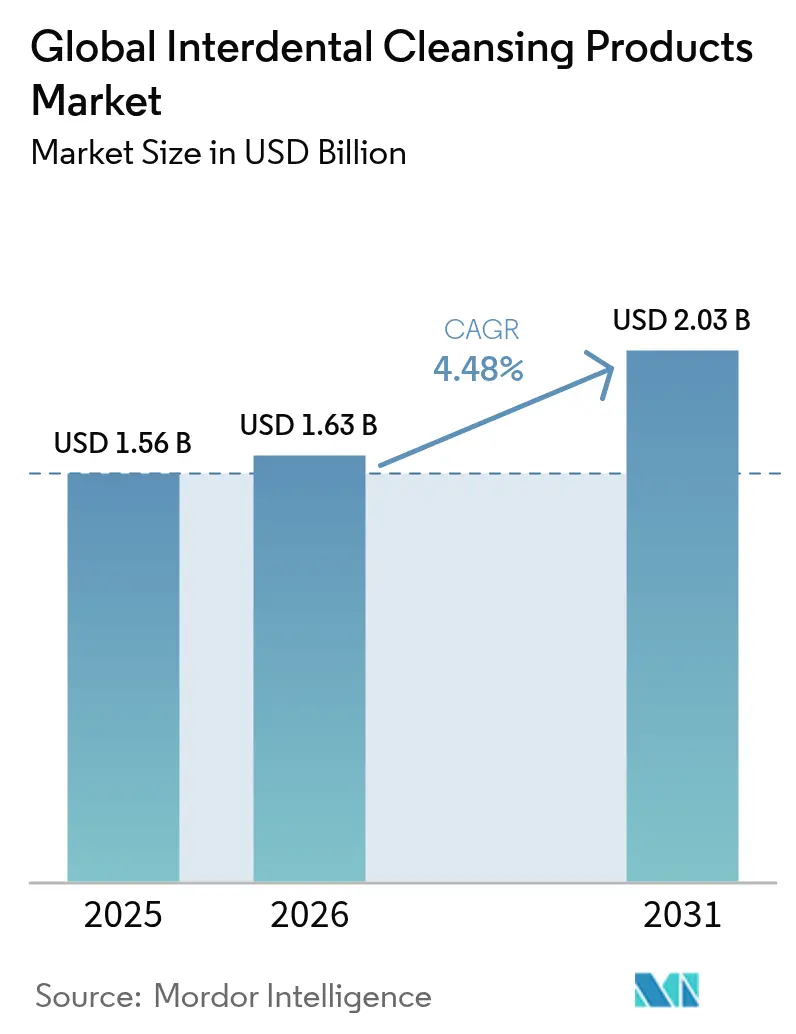
The interdental cleansing products market size is expected to grow from USD 1.56 billion in 2025 to USD 1.63 billion in 2026 and is forecast to reach USD 2.03 billion by 2031 at 4.48% CAGR over 2026-2031. This growth reflects the market's evolution from being a niche oral care supplement to becoming an integral component of preventive health routines. The increasing adoption of interdental cleaning is supported by clinical studies that highlight its role in reducing the risk of systemic health conditions, such as cardiovascular diseases. Additionally, the high prevalence of periodontal diseases continues to drive demand for these products. Advancements in technology, the incorporation of sustainable materials, and endorsements from dental professionals have significantly enhanced consumer interest. Furthermore, the rise of e-commerce platforms and subscription-based models has improved product accessibility, making them more convenient for consumers. Positioned at the convergence of consumer wellness, professional dental care, and digital health, the interdental cleansing products market offers manufacturers a wide range of opportunities for expansion and innovation.
Key Report Takeaways
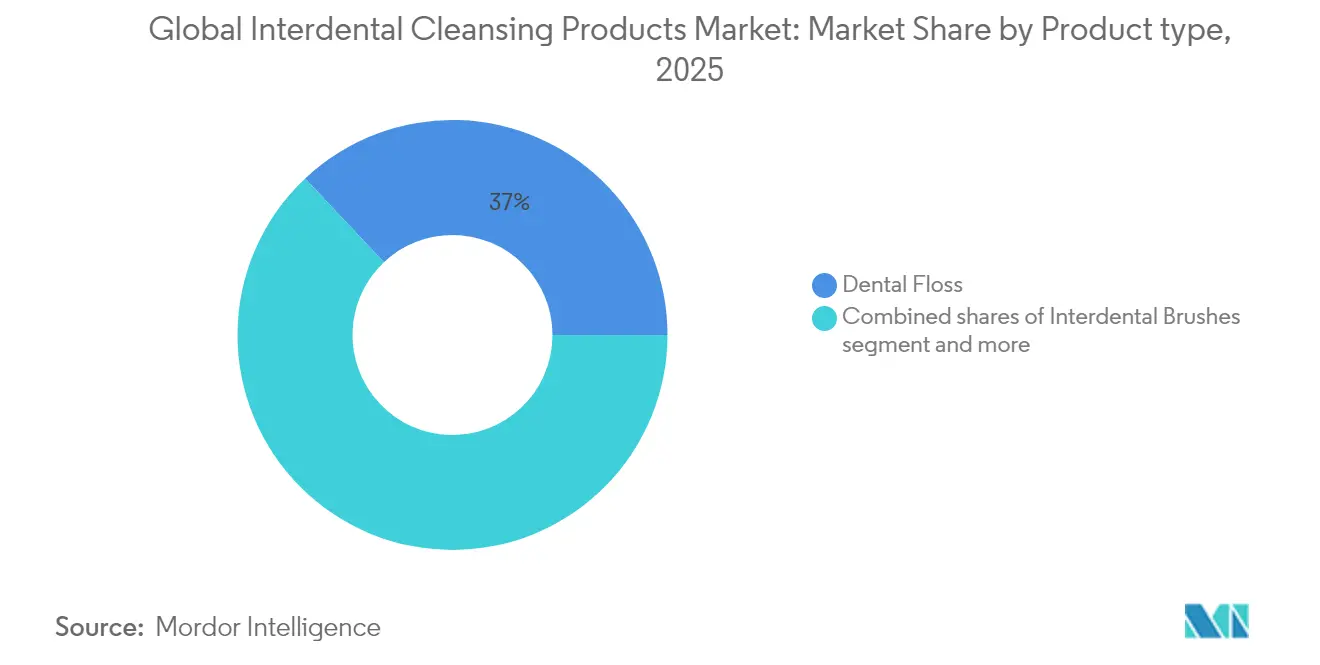
- By product type, dental floss held 37.02% of the interdental cleansing products market share in 2025, whereas oral irrigators/water flossers are forecast to grow at a 6.05% CAGR through 2031.
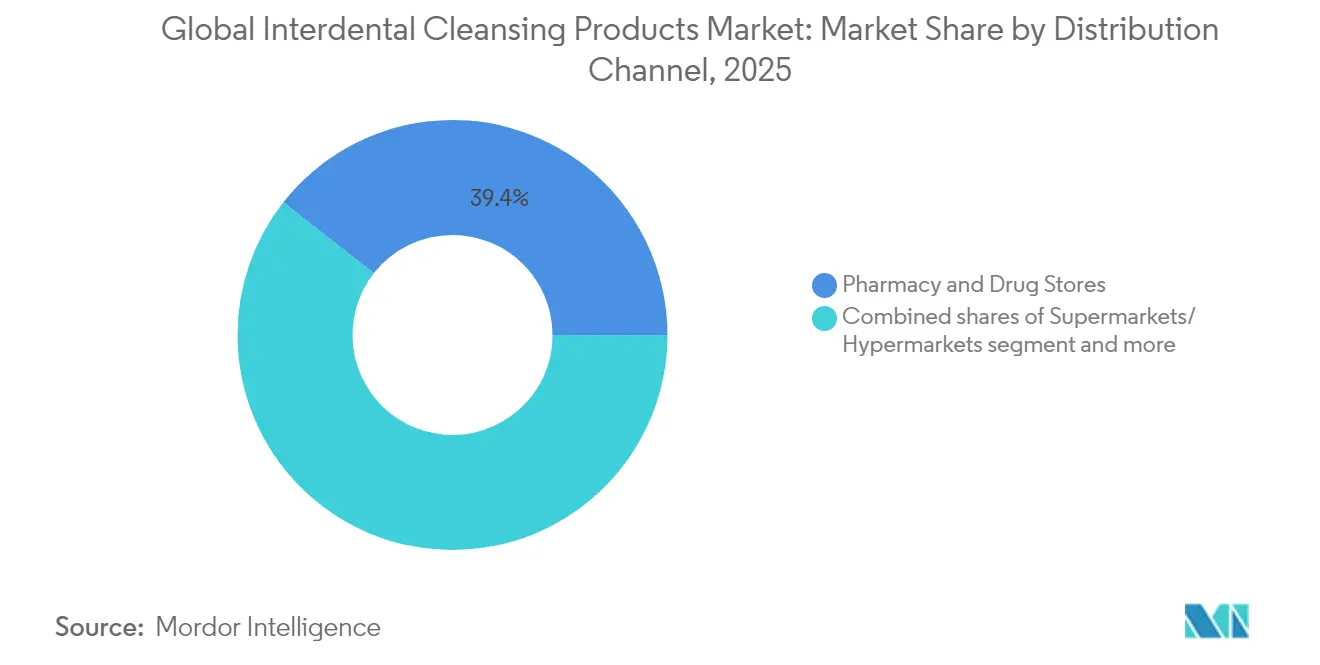
- By distribution channel, pharmacy and drug stores commanded 39.42% share of the interdental cleansing products market size in 2025, while online retail stores are set to expand at a 6.08% CAGR during 2026-2031.
- By geography, North America led with 35.12% revenue share in 2025; Asia-Pacific is projected to advance at a 7.18% CAGR through 2031.
Note: Market size and forecast figures in this report are generated using Mordor Intelligence’s proprietary estimation framework, updated with the latest available data and insights as of 2026.
Global Interdental Cleansing Products Market Trends and Insights
Drivers Impact Analysis*
| Driver | (~) % Impact on CAGR Forecast | Geographic Relevance | Impact Timeline |
|---|---|---|---|
| Increasing prevalence of dental disorders and periodontal diseases | +1.2% | Global – strongest in Asia-Pacific and North America | Long term (≥ 4 years) |
| Growing consumer awareness of oral hygiene’s role in overall health | +0.8% | Global – led by North America and Europe | Medium term (2-4 years) |
| Heightened emphasis on aesthetic oral care and cosmetic dentistry | +0.9% | North America and Europe core; Asia-Pacific rising | Medium term (2-4 years) |
| Rising demand for sustainable and eco-friendly interdental products | +1.1% | Europe and North America primary; Asia-Pacific spillover | Long term (≥ 4 years) |
| Endorsements from dental professionals promoting interdental cleaning | +0.7% | Global – stronger in developed systems | Short term (≤ 2 years) |
| Technological advancements in interdental cleaning devices and flossers | +0.6% | North America and Europe early adoption; Asia-Pacific next | Medium term (2-4 years) |
| Source: Mordor Intelligence | |||
Increasing prevalence of dental disorders and periodontal diseases
Globally, dental caries (cavities), gingivitis, periodontitis, and plaque buildup are among the most common oral health issues. In 2024, the Centers for Disease Control and Prevention reported that approximately 21% of adults aged 20–64 in the United States[1]Source: Centers for Disease Control and Prevention, "2024 Oral Health Surveillance Report", www.cdc.gov had untreated decay in one or more permanent teeth. These issues often result from inadequate oral hygiene, emphasizing the importance of preventive care, particularly interdental cleaning. With an increasing number of diagnoses, there is growing awareness of the need for comprehensive oral hygiene, especially for cleaning areas that regular brushing cannot reach, such as between teeth. Periodontal disease is now recognized as one of the most widespread chronic conditions. South Asia experiences the highest burden, making it a largely untapped market for preventive solutions. Emerging scientific evidence links periodontal inflammation to cardiovascular diseases, prompting healthcare systems to prioritize interdental cleaning as a cost-effective preventive measure rather than a cosmetic option. In China, public health programs have already incorporated flossing and interdental brushes into national oral health campaigns, highlighting policy-driven growth in demand.
Growing consumer awareness of oral hygiene’s role in overall health
Oral health issues affect nearly half the global population, broadening the potential user base for oral care products. As per the Oral Health Report 2025, the World Health Organization estimates that around 3.7 billion people worldwide grapple with oral diseases[2]Source: The World Health Organization, " Oral Health Report 2025', www.who.int. Through consumer education campaigns, health authorities have established interdental cleaning as a critical component of oral care. The WHO's Global Oral Health Action Plan 2023-2030 reinforces this shift by integrating oral health into comprehensive strategies for noncommunicable disease prevention. This strategic approach elevates the market positioning of interdental products, driving interest among health-conscious consumers who now perceive preventive care as a key lifestyle investment. Growing awareness of the connection between oral health and systemic conditions, such as diabetes and heart disease, has spurred adoption of specialized oral care products, even among previously uninterested demographic groups. Professional endorsements further strengthen this awareness, with dental associations emphasizing the importance of interdental cleaning in achieving comprehensive oral health. Additionally, the ongoing transition in healthcare spending from treatment-focused to prevention-focused practices continues to support growth in preventive oral care categories.
Heightened emphasis on aesthetic oral care and cosmetic dentistry
Increased focus on aesthetic oral care and cosmetic dentistry is driving the interdental cleaning market by raising consumer awareness and demand for products that support and sustain the outcomes of cosmetic procedures. The expansion of cosmetic dentistry, particularly in implants and clear aligners, has amplified the need for at-home maintenance tools to preserve aesthetic results. Clinical studies validate that interdental brushes are essential for maintaining peri-implant tissue health. Additionally, social media’s emphasis on smile aesthetics is encouraging younger demographics to adopt comprehensive oral care routines, including interdental cleaning. Dental clinics are addressing this trend by incorporating premium interdental products into post-treatment kits, establishing a dedicated sales channel.
Rising demand for sustainable and eco-friendly interdental products
The dental industry’s significant plastic footprint has led professionals to increasingly advocate for the integration of biodegradable or recyclable alternatives into dental care practices. However, the adoption of these sustainable solutions in practical applications has been relatively slow, presenting a notable commercial opportunity for brands that introduce eco-friendly innovations such as bamboo dental floss and compostable dental picks. Regulatory frameworks, including the European Union's comprehensive packaging directives and the sustainability standards established by North American retailers, are playing a pivotal role in accelerating this shift toward environmentally responsible practices. Furthermore, consumer trends indicate a growing readiness to pay premium prices for products that align with environmental sustainability, underscoring the expanding market potential for green dental care solutions.
Restraints Impact Analysis*
| Restraint | (~) % Impact on CAGR Forecast | Geographic Relevance | Impact Timeline |
|---|---|---|---|
| High cost of premium interdental cleaning devices and products | -0.9% | Global – strongest in emerging markets | Short term (≤ 2 years) |
| Limited dental visits for product education | -0.6% | Global – limited-access regions | Medium term (2-4 years) |
| Inconsistent product standardization across interdental cleaning tools | -0.4% | Global – regulatory variation | Long term (≥ 4 years) |
| Competition from low-cost traditional and generic interdental alternatives | -0.3% | Emerging markets; price-sensitive segments | Short term (≤ 2 years) |
| Source: Mordor Intelligence | |||
High cost of premium interdental cleaning devices and products
Premium products, which often incorporate advanced technologies such as powered flossers and specialized brushes, are typically priced at a premium. This higher price point can act as a barrier for a significant portion of the population, particularly for individuals with constrained budgets or those living in regions characterized by lower disposable incomes. As a result, the widespread adoption of these products remains limited. For instance, water flossers priced in the range of USD 50-150 face direct competition from basic floss options that cost less than USD 5. This stark price disparity creates notable affordability challenges, particularly in low-income economies, where such products may be perceived as a luxury rather than a necessity. Consequently, this mismatch in pricing limits early adoption, even when the clinical benefits of these advanced products are well-documented. Although mid-tier models with a limited set of smart features have started to address this affordability gap, it is imperative for manufacturers to ensure that their innovation pipelines are inclusive and cater to the economic diversity of their consumer base. By doing so, they can foster broader accessibility and drive adoption across various income segments.
Limited dental visits for product education
Infrequent dental visits and the resulting lack of product education significantly impede the growth of the interdental cleaning market by limiting consumer awareness and discouraging the adoption of advanced cleaning methods beyond traditional brushing. Currently, only 17% of certain populations have access to essential oral care services[3]Source: The World Health Organization, "World Oral Health Day 2025", www.who.int, which restricts opportunities for chair-side instruction on proper interdental cleaning techniques. The improper use of interdental cleaning products not only reduces their effectiveness but also negatively impacts repeat purchase rates. To address these challenges, brands are increasingly investing in digital tutorial applications, collaborating with influencers to enhance product visibility, and organizing retail demonstrations to bridge the gap created by limited professional interactions.
*Our forecasts treat driver/restraint impacts as directional, not additive. The impact forecasts reflect baseline growth, mix effects, and variable interactions.
Segment Analysis
By Product Type: Water Flossers Drive Innovation Leadership
Water flossers are projected to achieve a 6.05% CAGR through 2031, emerging as the fastest-growing category within the interdental cleansing products market. Although dental floss accounts for 37.02% of 2025 sales, its growth is leveling off as consumers increasingly adopt advanced devices that offer gentler and more effective plaque removal. Controlled trials demonstrate that the Waterpik Sonic-Fusion removes plaque twice as efficiently as manual brushing combined with string flossing, supporting its premium pricing among health-focused consumers. Interdental brushes, valued for their role in implant and orthodontic after-care, continue to experience stable demand, while biodegradable floss options appeal to environmentally-conscious shoppers aiming to minimize single-use plastic consumption.
Second-generation water flossers now feature AI chips capable of mapping gum topography and delivering haptic feedback to ensure optimal angulation, while companion apps gamify daily usage to enhance compliance. This innovation drives higher purchase frequency and strengthens brand loyalty, fostering a cycle of data-driven product improvements. Meanwhile, the “others” category, which includes hyaluronic-acid brushes and micro-foam picks, reflects the market's demand for condition-specific innovations that demonstrate measurable periodontal benefits in clinical applications.


By Distribution Channel: Digital Transformation Accelerates Online Growth
In 2025, brick-and-mortar pharmacies and drug stores accounted for 39.42% of the interdental cleansing products market, supported by pharmacist expertise and the convenience of immediate product availability. Conversely, online retail is the fastest-growing channel, achieving a 6.08% CAGR, driven by subscription models that address the recurring need for floss refills and brush heads. Henry Schein’s B2B marketplace, featuring over 8,000 non-clinical SKUs, exemplifies how professional distributors utilize e-commerce to expand their presence in the dental clinic segment. Hypermarkets serve as volume channels for value-oriented products, while specialty stores cater to the premium segment by offering curated device bundles aligned with specific patient diagnoses.
The transition to e-commerce enables brands to leverage first-party data, segment users based on oral health profiles, and provide personalized replenishment reminders. Features such as virtual try-on widgets and augmented-reality tutorials replicate in-clinic guidance, addressing the educational barriers that previously limited the adoption of at-home devices. By integrating digital education with streamlined fulfillment processes, both established and emerging brands can unlock additional growth opportunities while reducing customer acquisition costs.
Geography Analysis
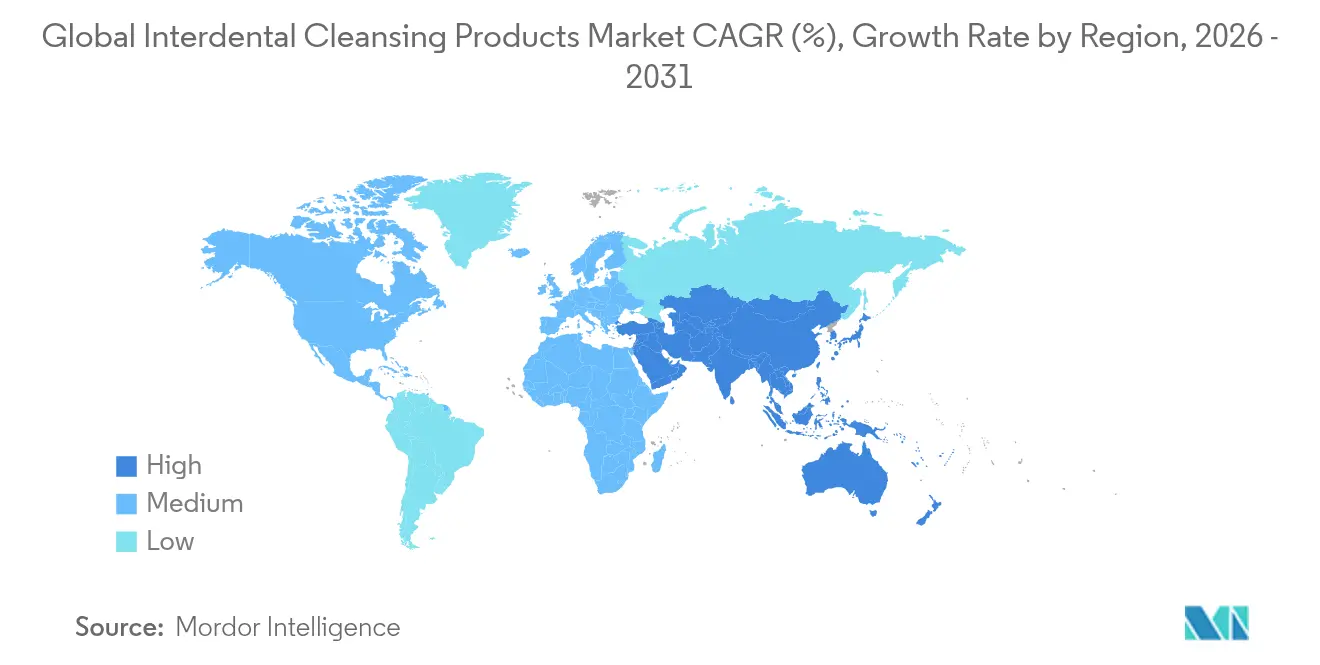
In 2025, North America contributed 35.12% of global revenue, firmly establishing its leadership position in the market. This dominance is driven by extensive dental insurance coverage and a proactive clinician culture that frequently recommends the use of interdental tools. The region benefits significantly from stringent yet supportive FDA guidelines, which enable innovators to expedite 510(k) submissions for new device iterations, providing North America with a competitive early-adopter advantage. Additionally, the ageing population, of which 70% is affected by periodontal disease, has elevated the status of therapeutic flossers and irrigators from optional lifestyle products to indispensable healthcare tools.
The Asia-Pacific region is projected to achieve the fastest regional CAGR of 7.18% through 2031. In China, the water-flosser category is expected to experience substantial growth, supported by government-led "Healthy China" initiatives that integrate flossing education into public health curricula. Similarly, India is following a comparable trajectory, driven by a growing middle class that is increasingly investing in preventive healthcare solutions. Furthermore, the high penetration of smartphones in the region enables brands to leverage direct-to-consumer e-commerce platforms, effectively bypassing traditional retail infrastructure and reaching consumers more efficiently.
Europe occupies a middle ground between the mature North American market and the dynamic growth observed in Asia-Pacific. The region's stringent environmental regulations are accelerating the adoption of biodegradable consumables, creating opportunities for eco-conscious innovators to gain a competitive edge through regulatory support. Unified CE-mark protocols simplify the process of launching products across multiple countries within the region. However, the economic diversity among member states necessitates the implementation of tiered pricing strategies to address varying consumer purchasing power. In contrast, South America and the Middle East and Africa, while currently trailing in market development, are showing potential in urban centers. These areas are witnessing increased dental clinic density and the implementation of awareness campaigns, which are gradually driving market growth.

Regulatory Landscape
Regulation varies by product claims and device form factor, which leads to different compliance paths for manual aids versus powered interdental devices. In the United States, many interdental devices fall under the FDA dental devices framework under 21 CFR Part 872, while the European Union applies Regulation (EU) 2017/745 (MDR), with classification and evidence requirements tied to intended use, especially where products make therapeutic or disease-management claims.
Standards and guidance increasingly shape market access and product design. ISO 16409:2016 provides performance, testing, and labeling benchmarks for manual interdental brushes, supporting consistency in product specifications. In Europe, CEN/TR 12401:2025 updates classification guidance for dental devices and accessories under the MDR, helping manufacturers and notified bodies reduce borderline disputes while reinforcing the need for appropriate technical documentation and post-market processes.
Value Chain Analysis
The value chain starts with upstream inputs such as specialized polymers (including nylon and polypropylene for filaments) and packaging materials, then moves into component manufacturing and final assembly using precision molding and automated lines. Production and export are concentrated in established manufacturing hubs, supported by a mix of brand owners and specialist OEM/ODM suppliers that handle product design, tooling, and scalable output for interdental brushes, picks, and floss formats.
Go-to-market routes cover mass retail, pharmacy and drug stores (a major 2025 channel), dental clinics and specialty outlets, and fast-growing e-commerce models that manage replenishment cycles. Brand owners and private-label programs depend on distributors and professional marketplaces for dental-channel reach, while online operations increase complexity around SKU proliferation, promotional pack changes, and retailer-specific merchandising requirements. Rising demand for sustainable materials and packaging is feeding back into supplier qualification, material selection, and manufacturing investment priorities across the chain.
Competitive Landscape
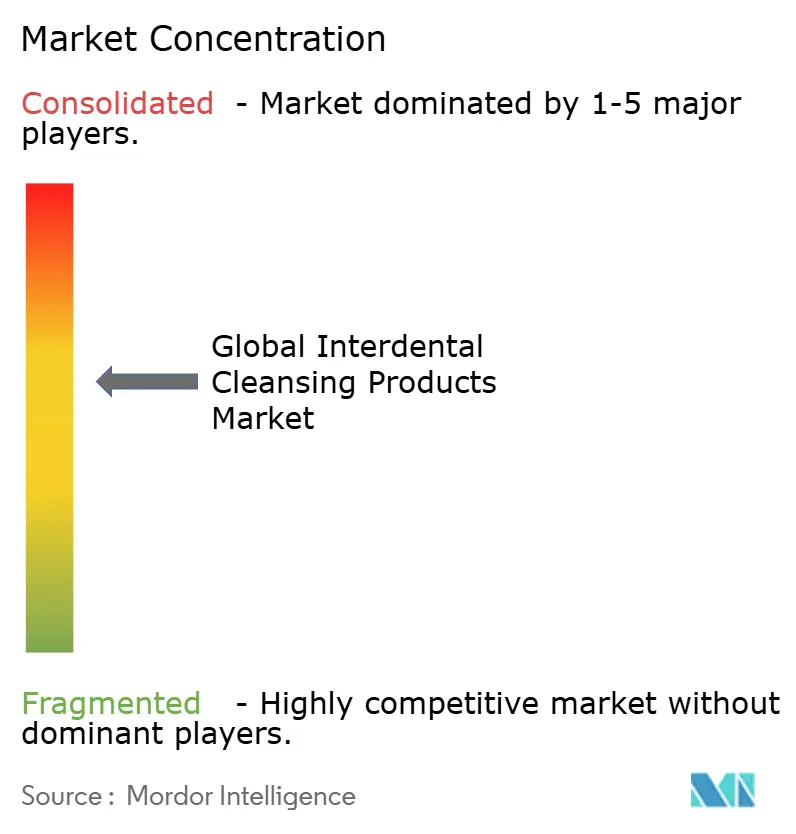
The global interdental cleansing products market is moderately consolidated, with the presence of prominent players competing to gain market share. Procter & Gamble Company, Colgate-Palmolive Company, Koninklijke Philips N.V., Sunstar Americas, Inc., and TRISA AG are some of the prominent players in the global market. Companies are investing in product development and expanding their distribution channel in order to gain a competitive edge in the market.
Technology plays a pivotal role in this market. For instance, Oral-B's iO and Colgate's Plaqless Pro leverage optical sensors to identify missed areas in real-time, transforming routine tasks into tailored coaching experiences. Sustainability is also influencing consumer choices; startups offering floss in refillable glass jars or bamboo-handled interdental brushes are capturing the loyalty of millennials and Gen Z.
To counteract rising raw material costs, established players are adopting lean manufacturing techniques and bundling replacement tips with their devices, enhancing the lifetime revenue per unit. Retail collaborations emphasize in-aisle educational kiosks and QR-code tutorials, bridging the knowledge gap between professionals and consumers. As subscription models evolve, competitively priced annual plans offering refills and firmware updates are emerging as a key focus for customer retention.
Global Interdental Cleansing Products Industry Leaders
-
Procter & Gamble Company
-
Colgate-Palmolive Company
-
Koninklijke Philips N.V.
-
Sunstar Americas, Inc.
-
TRISA AG
- *Disclaimer: Major Players sorted in no particular order

Market Opportunities and Future Outlook
Opportunities are concentrated in products that improve compliance and add measurable value beyond basic mechanical cleaning. Device-led ecosystems and clinically anchored education align with the shift toward preventive oral health, where the WHO Global Oral Health Action Plan 2023-2030 and national campaigns that include flossing and interdental brushes (notably in China) give manufacturers a channel platform through professional networks, digital tutorials, and retail activation for routine interdental adoption.
Product differentiation is also shifting toward ergonomic designs, visibility and guidance features, and bioactive concepts, alongside sustainability-driven materials. In April 2026, BURST Oral Care launched a 2-in-1 Adult Interdental Floss Pick combining black floss with a soft silicone pick, reflecting demand for simplified multi-function tools. Early-stage research activity, including probiotic nanofiber floss concepts reported from the Czech Republic in 2026, points to new delivery formats that could complement existing floss, interdental brush, and irrigator categories where willingness to pay is tied to perceived therapeutic benefits and ease of use.
Recent Industry Developments
- July 2026: Koninklijke Philips N.V. announced an AI-powered Philips Sonicare next-generation DiamondClean 9900 Prestige electric toothbrush. The move reinforces the premium end of connected oral care by adding on-device intelligence and strengthening ecosystem positioning around guided cleaning behaviors relevant to interproximal hygiene routines.
- February 2025: Colgate-Palmolive launched the Colgate Total Active Prevention System, including a foaming clean manual toothbrush positioned for comprehensive oral care. By bundling a system approach, Colgate expanded cross-selling potential with adjacent interdental routines and reinforced prevention-led messaging at the shelf and online.
- November 2024: Natural Dentist acquired four holistic oral care brands to broaden its natural and organic portfolio. The acquisition supported expanded participation in chemical-free and ingredient-conscious oral care, creating additional whitespace for natural-positioned interdental consumables alongside mainstream offerings.


Research Methodology Framework and Report Scope
Market Definition and Coverage
For this study, the market covers consumer and professional-use products designed to clean between teeth where a toothbrush typically cannot reach, and it is sized on the value of products sold through common retail and dental channels.
Scope exclusions: We exclude toothpaste, standard toothbrushes, mouthwash, whitening kits, and broad dental treatment services unless they are bundled as an interdental cleansing product.
Segmentation Overview
-
By Product Type
- Dental Floss
- Interdental Brushes
- Interdental Picks and Sticks
- Oral Irrigators/Water Flossers
- Others
-
By Distribution Channel
- Supermarkets/Hypermarkets
- Pharmacy and Drug Stores
- Online Retail Stores
- Dental Clinics and Specialty Stores
- Others
-
By Geography
-
North America
- United States
- Canada
- Mexico
- Rest of North America
-
Europe
- United Kingdom
- Germany
- Spain
- France
- Italy
- Russia
- Rest of Europe
-
Asia-Pacific
- China
- India
- Japan
- Australia
- Rest of Asia-Pacific
-
South America
- Brazil
- Argentina
- Rest of South America
-
Middle East and Africa
- Saudi Arabia
- South Africa
- Rest of Middle East and Africa
-
North America
Data Sources, Market Sizing, and Validation
Desk Research
Desk work starts with building a clear fact base on oral health trends and product usage so the size model has realistic demand anchors. We reviewed public health and epidemiology sources such as the World Health Organization, the US CDC, and OECD health statistics, along with guidance references from dental bodies such as the American Dental Association and similar national dental associations.
To connect demand to supply and routes to market, we also used sources such as USITC and UN Comtrade trade statistics, customs tariff notes, and peer-reviewed dentistry journals for hygiene and compliance patterns. Company filings, investor presentations, and trusted press coverage helped validate category focus, pricing moves, and channel shifts, while paid subscriptions for company financials and news intelligence were used selectively to cross-check revenue splits and major event timing. This desk source list is illustrative, and other public references were used to collect data, validate assumptions, and clarify gaps.
Primary Interviews and Surveys
Primary work was used to pressure-test the desk assumptions on what qualifies as an interdental product, typical price bands, and how quickly online retail is changing category mix. We spoke with manufacturers, distributors, dental professionals, and retail and e-commerce channel participants across major regions so regional adoption and product substitution effects were captured and then reflected back into the model.
Distribution of primary research fieldwork respondents
| Company type | Respondent position | Region |
|---|---|---|
| Top tier: 38% | CXOs: 19% | APAC: 47% |
| Mid tier: 42% | Functional/Unit leaders: 21% | EMEA: 29% |
| Smaller Players: 20% | Managers: 60% | Americas: 24% |
Market-Sizing & Forecasting
The sizing model is built using a top-down demand pool, where oral health prevalence and hygiene behavior indicators are converted into likely users and purchase frequency, and then filtered through realistic price bands by product type and channel. Once the total is formed, it is corroborated with selective bottom-up checks such as sampled price times volume for key categories, retailer and pharmacy channel checks, and supplier-side sanity checks on category revenue splits.
Inputs that mattered most included dentist-recommended interdental cleaning rates, penetration of floss and interdental brushes in regular routines, shifts toward water flossers in higher income urban areas, average selling price progression by channel, and the pace of online share gains versus pharmacies and supermarkets. Where direct visibility is lower (for example, smaller brands or informal retail in some countries), we fill gaps using proxy signals like trade flows, channel mix benchmarks, and interview-based ranges, and then adjust totals only when multiple checks point in the same direction.
Forecasting relies mainly on scenario analysis supported by a light multivariate view, where adoption, pricing, and channel shifts are varied together and then aligned to expert expectations gathered during interviews. Final outputs are kept traceable so each region and year can be explained through a small set of measurable drivers.
Data Validation & Update Cycle
Each major output is cross-checked against independent signals, including trade trends, category growth in adjacent oral care, and channel expansion rates, before it is allowed into the final tables. When a variance looks unusually large, the assumptions behind penetration, frequency, or pricing are revisited, and follow-up outreach is triggered to confirm whether the change is real or model-driven.
A multi-step review is followed, where one analyst builds the model and another reviews key inputs, calculations, and year-over-year movements before sign-off. Reports are refreshed on an annual cycle, and interim updates are made when material events occur, such as sharp pricing moves, channel disruptions, or regulatory changes impacting product claims. Before delivery, the latest public updates and interview learnings are checked again so clients receive a current view.
Mordor Intelligence's Interdental Cleansing Products Market Size Versus Other Published Estimates
It is common to see different market values for interdental cleansing products because publishers may count different product sets, use different base years, or apply different pricing and channel assumptions. Variations also come from how online retail is treated, how professional dental channels are counted, and whether values are reported at retail price or closer to manufacturer realizations.
The main spread usually comes from category scope and the demand indicators chosen, where some estimates lean on a narrower floss and brush basket, and others extend further into adjacent oral care add-ons. Differences can also be created by how fast price premiumization is assumed to occur, how currency conversion timing is handled, and whether the figures were refreshed after recent shifts in e-commerce mix and water flosser adoption. That is why the inclusion of oral irrigators within the core product set and the 2026 base-year anchor are key drivers in the number published by Mordor Intelligence.
Benchmark comparison
| Source | Market Size | Gaps in Research Methodology |
|---|---|---|
| Mordor Intelligence | USD 1.63 B (2026) | |
| Industry Research Publisher A | USD 1.24 B (2024) | Uses an earlier base year and appears to focus mainly on floss, interdental brushes, and picks, which can undercount oral irrigators and later online-led mix shifts. |
| Global Research Publisher B | USD 1.38 B (2025) | Applies a different base year and growth window, and may use more aggressive long-range growth assumptions through 2035, which can lift totals versus a nearer-term forecast cadence. |
Taken together, the table shows that year selection, what is counted as an interdental product, and how pricing and channel mix are projected can move the market total meaningfully. By keeping the scope tied to clearly defined interdental use cases and validating key inputs like adoption, frequency, and pricing through repeated checks, our estimate stays easier to reproduce and explain when it is used for planning.


Key Questions Answered in the Report
What is the current size of the interdental cleansing products market?
The interdental cleansing products market stands at USD 1.63 billion in 2026, with a forecast value of USD 2.03 billion by 2031.
Which region is growing the fastest for interdental cleansing products?
Asia-Pacific leads growth with a projected 7.18% CAGR through 2031, driven by rising middle-class spending and government preventive-health initiatives.
What product segment is expanding most quickly?
Oral irrigators and water flossers are the fastest-growing segment, advancing at a 6.05% CAGR on the strength of clinical efficacy and smart-device features.
How concentrated is the competitive landscape?
The market is moderately concentrated, with the top five brands controlling about 60% of sales and a concentration score of 6, leaving room for innovative start-ups.
Page last updated on:


 Your data is secure and never sold or shared.


