
Insulin Glargine Market Size and Share
Market Overview
| Study Period | 2020 - 2031 |
|---|---|
| Market Size (2026) | USD 2.78 Billion |
| Market Size (2031) | USD 3.73 Billion |
| Growth Rate (2026 - 2031) | 6.05 % |
| Fastest Growing Market | Asia Pacific |
| Largest Market | North America |
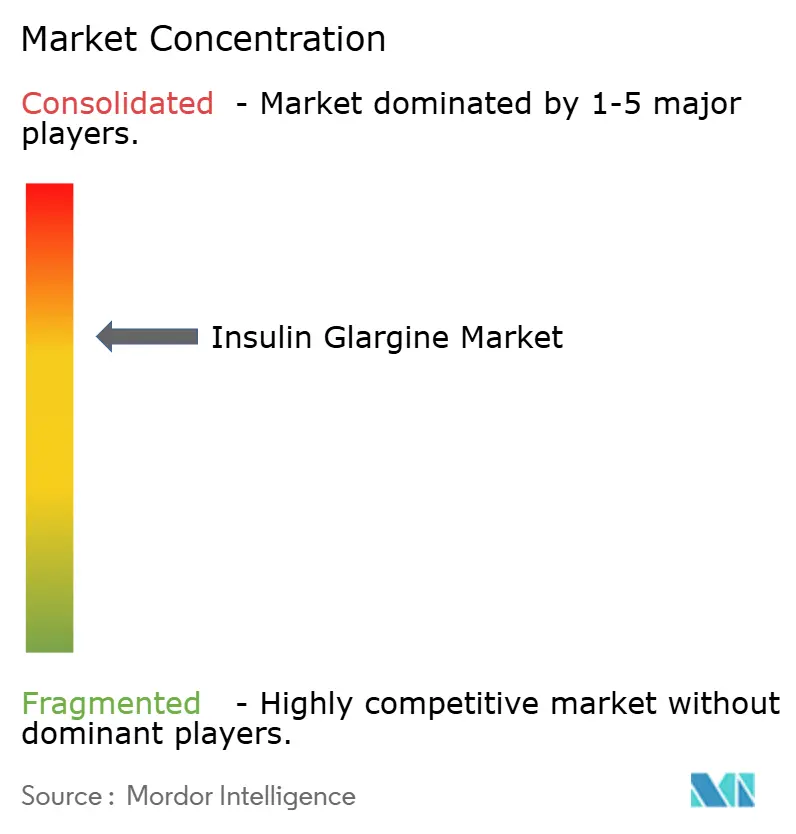
| Market Concentration | Medium |
Major Players *Disclaimer: Major Players sorted in no particular order Image © Mordor Intelligence. Reuse requires attribution under CC BY 4.0. | |
Insulin Glargine Market Analysis by Mordor Intelligence
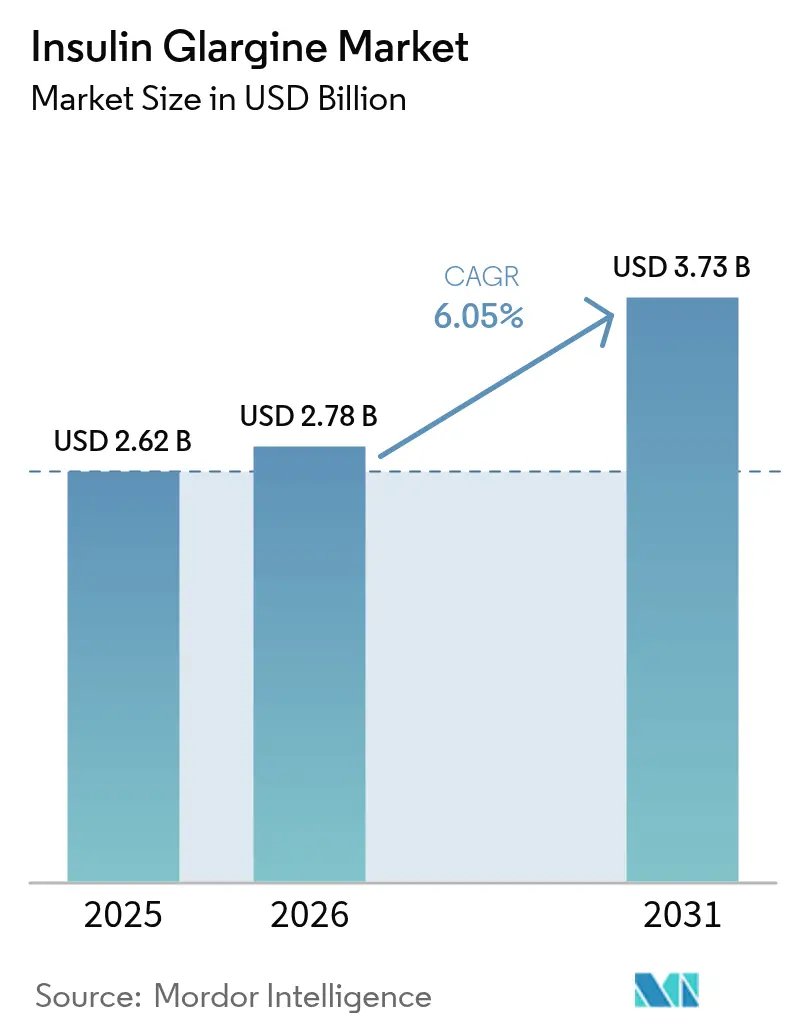
The Insulin Glargine Market size was valued at USD 2.62 billion in 2025 and estimated to grow from USD 2.78 billion in 2026 to reach USD 3.73 billion by 2031, at a CAGR of 6.05% during the forecast period (2026-2031). This progress is unfolding as global diabetes prevalence exceeds 800 million adults, driving sustained clinical demand for once-daily basal regimens. Biosimilar competition is intensifying price deflation while expanding patient access, especially after Semglee and Rezvoglar gained interchangeability in the United States. Government price caps such as the USD 35 Medicare ceiling are steering prescriber choices toward lower-net-cost options. Meanwhile, the e-pharmacy boom accelerates last-mile distribution, and smart delivery systems sharpen product differentiation. Strategic shifts toward GLP-1 receptor agonists by legacy insulin suppliers add competitive pressure yet preserve glargine’s basal niche.
Key Report Takeaways
- By brand, Lantus led with 43.72% of the insulin glargine market share in 2025. Glargine Biosimilars are expanding at an 8.25% CAGR through 2031.
- By concentration, U100 formulations captured 70.85% of the insulin glargine market size in 2025. U300 products are forecast to advance at a 6.95% CAGR between 2026-2031.
- By indication, type-2 diabetes accounted for 84.10% of volume in 2025. Type-1 diabetes applications are rising at a 6.88% CAGR to 2031.
- By distribution channel, retail pharmacies held 37.95% share of the 2025 value pool. Online pharmacies are projected to climb at an 8.05% CAGR through 2031.
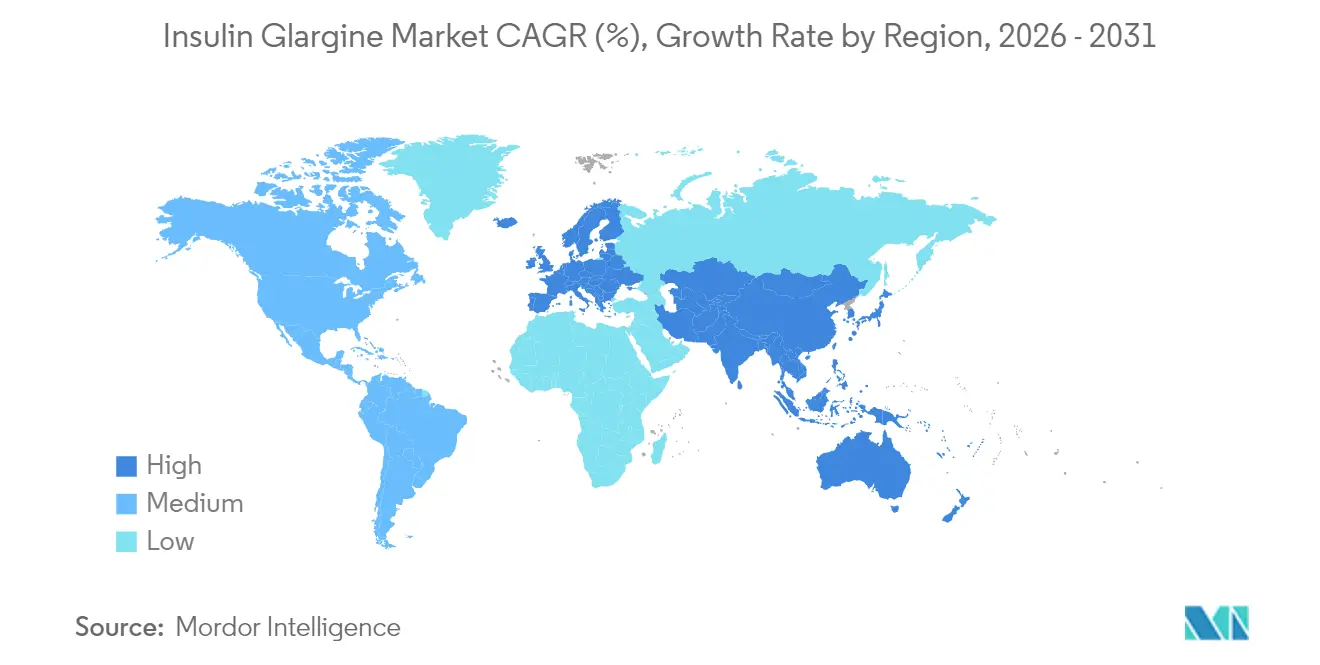
- By region, North America captured 44.98% of the insulin glargine market in 2025, whereas Asia-Pacific is expected to post the fastest growth at an 9.05% CAGR to 2031.
Note: Market size and forecast figures in this report are generated using Mordor Intelligence’s proprietary estimation framework, updated with the latest available data and insights as of 2026.
Market Trends and Insights
Drivers Impact Analysis of Insulin Glargine Market*
| Driver | (~) % Impact on CAGR Forecast | Geographic Relevance | Impact Timeline |
|---|---|---|---|
| Rising diabetes prevalence | +1.8% | Global, peak in Asia-Pacific | Long term (≥ 4 years) |
| Biosimilar insulin glargine | +1.2% | North America and EU; emerging markets next | Medium term (2-4 years) |
| e-pharmacy adoption | +0.9% | Global, led by North America & Europe | Short term (≤ 2 years) |
| Insulin-delivery technology | +0.7% | Developed markets first | Medium term (2-4 years) |
| Government price policies | +0.6% | North America, Europe, select APAC | Short term (≤ 2 years) |
| Physician brand trust | +0.4% | Global | Long term (≥ 4 years) |
| Source: Mordor Intelligence | |||
Rising Prevalence of Diabetes
Global diabetes prevalence has quadrupled since 1990 and now affects more than 500 million adults, with projections indicating 852 million cases by 2050. Type 2 diabetes comprises 96% of cases, and two-thirds of individuals initiating basal therapy start with glargine formulations. Incidence is surging in low- and middle-income countries where 90% of untreated patients reside, magnifying unmet need. Regional spikes are steepest in the Middle East and North Africa, while Brazil could see a 400% rise to 43 million cases by 2036.[1] The expanding clinical and economic burden, estimated at USD 1,015 billion in 2024, is pushing payers toward cost-effective basal options, strengthening long-run demand for glargine biosimilars.
Emergence of Biosimilar Insulin Glargine
Three FDA-approved glargine biosimilars—two interchangeable—have re-shaped formulary negotiations and unlocked automatic substitution pathways in pharmacies.[2] Biocon Biologics scaled up capacity while bilateral regulatory alignment between FDA and EMA reduced review times. Brazil streamlined approvals in 2024, enabling domestic programs that cut treatment expenditures by 55.9%. Multisource supply diminishes single-origin risks and lowers budget impact, although developers must still navigate patent thickets and meticulous quality audits.
Rapid Growth of e-pharmacy Channel Widening Home-care Access
Digital pharmacies are dismantling logistical barriers by connecting prescriptions, refill reminders, and remote consultations, trends reinforced during pandemic-era telehealth expansion. The channel’s 8.32% CAGR mirrors the broader digital health surge. Medicare Part D’s 2025 payment-smoothing policy further supports online fulfillment by reducing upfront costs. Data collected via e-pharmacies generate insights into adherence and real-world outcomes, providing actionable feedback to manufacturers. Nevertheless, temperature-controlled shipping raises operating hurdles that favor scale players with dedicated cold-chain networks.
Technological Advancements in Insulin Delivery
Next-generation delivery platforms integrate continuous glucose monitoring with connected pens and miniature patch pumps, fostering personalized dosing. Medtronic’s InPen upgrade received FDA clearance in late 2024, enabling real-time recommendations. Canada and the EU approved once-weekly insulin icodec in 2024, signaling regulatory openness to extended-interval analogs. India’s authorization of inhalable insulin reflects regional appetite for needle-free formats. Collaborative ventures such as PharmaSens–SiBionics aim to commercialize wearable patch pumps. These innovations allow pharmaceutical players to add value beyond molecule parity, shielding margins as biosimilars commoditize the drug substance.
Restraints Impact Analysis of Insulin Glargine Market*
| Restraint | (~) % Impact on CAGR Forecast | Geographic Relevance | Impact Timeline |
|---|---|---|---|
| High insulin cost | -1.4% | Global, acute in low-income states | Short term (≤ 2 years) |
| Complex approval pathways | -0.8% | Emerging markets | Medium term (2-4 years) |
| Shift to ultra-long analogs | -0.6% | High-income markets first | Long term (≥ 4 years) |
| Injection reluctance | -0.5% | Global, cultural variability | Medium term (2-4 years) |
| Source: Mordor Intelligence | |||
High Cost of Insulin Therapy
Even after the Medicare cap, affordability gaps persist because 20% of beneficiaries lack Part D coverage and remain exposed to high out-of-pocket spending. US insulin prices still average nearly 10 times OECD levels. Globally, 19.5% of surveyed patients ration doses due to financial strain. Supply shocks compound the issue, illustrated by South Africa’s 2024 pen shortages amid GLP-1 production swings. These cost and availability challenges cap near-term volume growth even as prevalence climbs.
Complex Regulatory and Approval Pathways
Biosimilar developers confront divergent global requirements: the FDA typically demands switching studies, whereas the EMA has begun granting waivers when analytical comparability is robust. Some emerging regulators lack expertise to evaluate intricate biologics, extending approval cycles and deterring local entry. Interchangeability legislation varies widely, adding extra studies and labeling revisions that inflate budgets. Manufacturing audits differ in scope, with some regions requiring site-specific inspections beyond WHO prequalification. While the International Council for Harmonisation is working toward convergence, full alignment remains several years away, delaying broad biosimilar uptake.
*Our forecasts treat driver/restraint impacts as directional, not additive. The impact forecasts reflect baseline growth, mix effects, and variable interactions.
Insulin Glargine Market Segment Analysis
By Brand:
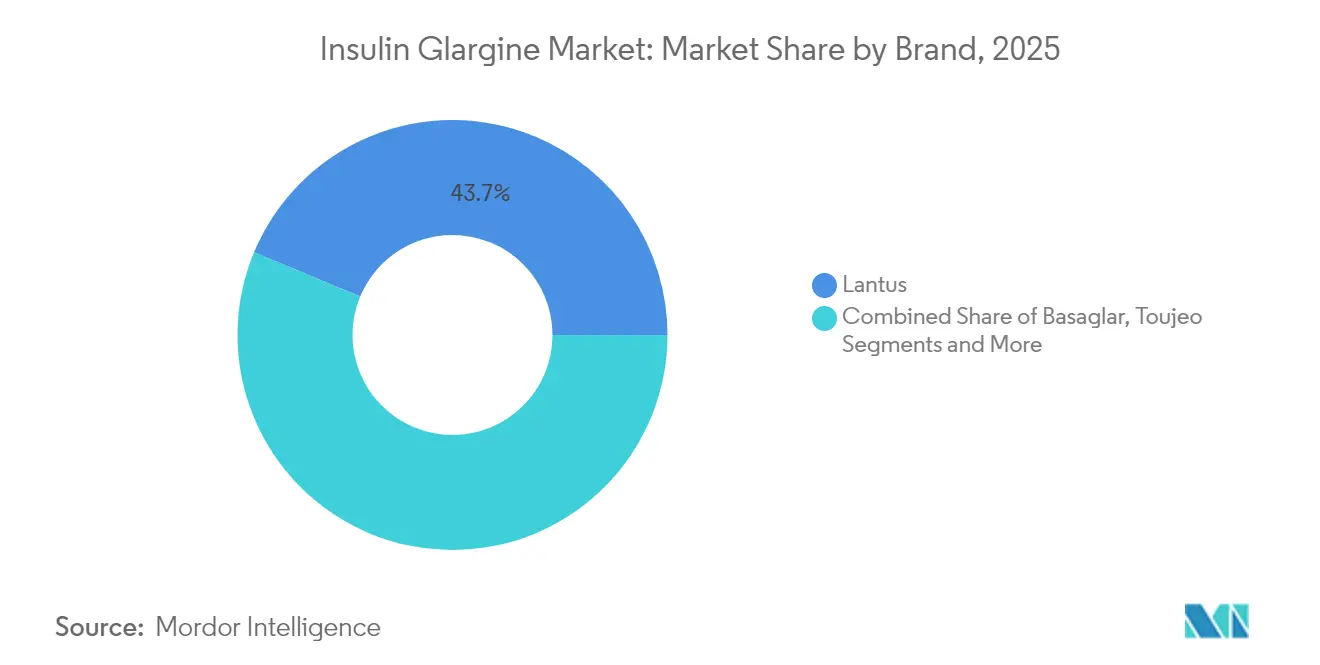
Biosimilars Chip Away at Lantus LeadershipLantus held 43.72% of 2025 revenue, anchoring the insulin glargine market through longstanding clinical trust and formulary placement. However, glargine biosimilars are leveraging interchangeability to capture switching prescriptions at an 8.25% CAGR. Basaglar, designated a follow-on biologic, exploits value-tier pricing, while Toujeo differentiates with U300 dosing. Soliqua/Suliqua combines glargine with lixisenatide to address multi-drug regimens. Second-generation biosimilars from Gan & Lee and Biomm are entering tender systems in Latin America, indicating accelerating commoditization. Originators respond by bundling devices, digital coaching, and co-pay assistance.
Physician surveys suggest confidence in biosimilar immunogenicity is rising, supported by post-marketing surveillance. Payers are mandating step-therapy that prioritizes lower-net-cost glargine biosimilars before covering originators, accelerating displacement. Nonetheless, clinical inertia favors brands with decades of safety records in vulnerable populations such as pregnant women. Marketing focus is therefore pivoting from molecule attributes to ecosystem value, including smart pen compatibility, digital titration support, and integrated glucose dashboards, tactics intended to protect share in a price-rationalizing landscape.

By Concentration:
U100 Prevails yet U300 Gains MomentumU100 products represented 70.85% of 2025 volume and remain the standard initiation strength worldwide. Familiar insulin-to-carbohydrate ratios and established dosing algorithms give clinicians confidence. However, U300 variants like Toujeo posted a 6.95% CAGR as reduced injection volume and flatter pharmacokinetic curves appealed to adherence-challenged cohorts. Clinical evidence shows lower nocturnal hypoglycemia and tighter fasting glucose ranges with U300 regimens.
Biosimilar developers are expanding portfolios to include both strengths, ensuring formulary parity with originators. Device manufacturers are updating cartridge specifications for dual-strength compatibility, reducing barriers to adoption. Cost differentials remain a restraint: U300 per-unit prices average 18% higher than U100, although lower volume requirements narrow the annual therapy gap. Patient education is critical because dosing confusion can lead to accidental under-treatment. Overall, concentration diversification underscores the ongoing evolution from molecule exclusivity toward holistic treatment experience.
By Indication:
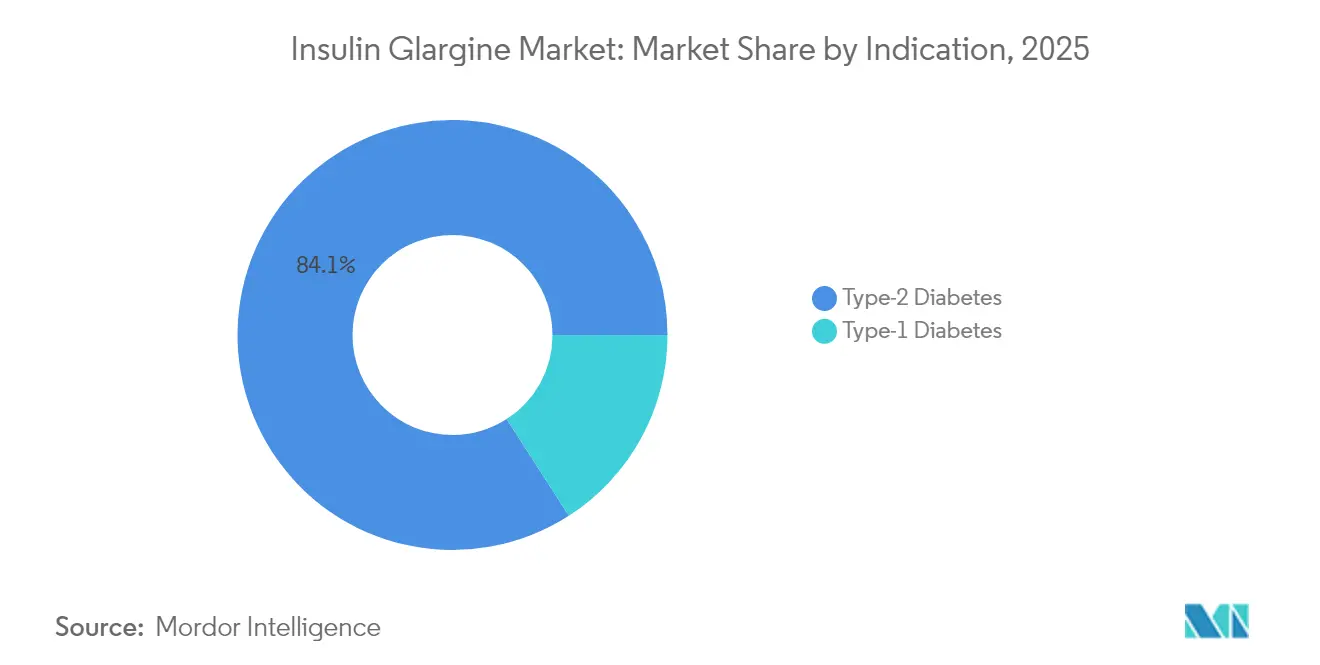
Type-2 Diabetes Drives the Bulk of DemandType-2 diabetes generated 84.10% of 2025 glargine utilization, making it the anchor indication for commercial forecasts. Progressive β-cell decline necessitates basal coverage once oral agents lose efficacy. Real-world data show two-thirds of basal starts use glargine owing to once-daily scheduling and lower hypoglycemia versus NPH insulin. Meanwhile, type-1 diabetes usage is rising 6.88% annually because of earlier diagnosis and wider CGM access that prompts tighter targets. The insulin glargine market share attributed to type-1 remains smaller but strategic, offering predictable lifetime demand.
Therapeutic protocols for type-1 combine basal glargine with rapid analogs in multiple-daily-injection or hybrid closed-loop systems. Poor glycemic control in Brazil, with average HbA1c near 9%, highlights unmet optimization potential. Pediatric specialists value glargine’s safety record, while weekly icodec may eventually alter basal patterns for adolescents. In type-2 cohorts, combination fixed-dose products integrating GLP-1 agonists may temper stand-alone basal volume, yet affordability concerns will sustain demand for cost-efficient glargine biosimilars over the forecast horizon.
By Distribution Channel:
Retail Pharmacies Hold Ground amid Digital SurgeRetail outlets controlled 37.95% of 2025 value, supported by counseling services and patient loyalty programs. Hospital pharmacies cater to complex cases requiring frequent titration, but online platforms are expanding at 8.05% CAGR as legislation normalizes home delivery of temperature-sensitive biologics. The insulin glargine market size handled by e-pharmacies could surpass USD 640.7 million by 2031 under current penetration trends. Leading digital players invest in insulated packaging and data-logging sensors to meet cold-chain mandates. Integration with CGM dashboards allows automated refill prompts based on real-time usage.
Policy changes add momentum: Medicare’s cost-spreading rules reduce up-front expense, encouraging auto-refill enrollment. In rural Asia, smartphone penetration combines with same-day courier networks to bridge access gaps. Still, stringent storage regulations raise hurdles for smaller e-commerce entrants. Physical pharmacies counter by expanding drive-through pickups and pharmacist-led titration clinics, aiming to retain high-value chronic customers through convenient hybrid models.
Geography Analysis
North America Insulin Glargine Market
North America persisted as the largest contributor, with 44.98% market share in 2025, benefiting from high diabetes prevalence and premium pricing. The region’s early adoption of biosimilar interchangeability promotes competitive discounts yet preserves substantial volume, while the USD 35 Medicare cap broadens access. Canada’s universal-coverage legislation could further expand treated populations, particularly among low-income seniors. Innovation pipelines for smart delivery devices are concentrated in Silicon Valley and Minneapolis, reinforcing North America’s leadership in integrated care ecosystems.
Europe Insulin Glargine Market
Europe displayed balanced market maturity and cost-containment rigor. Harmonized EMA guidelines implemented in 2024 shorten biosimilar review times, intensifying tender competition. Western countries such as Germany and France anchor revenue, while Central and Eastern Europe post higher growth from rising diagnosis rates and healthcare investment. Weekly icodec obtained EMA approval, signaling Europe’s receptiveness to paradigm-shifting basal regimens. National procurement agencies increasingly bundle insulin with CGM subsidies, creating holistic tender parameters that reward suppliers offering device integration.
APAC Insulin Glargine Market
Asia-Pacific remains the fastest-growing (9.05%) territory through 2031, driven by explosive prevalence and policy interventions to alleviate affordability barriers. China’s insulin tender program cut average glargine prices almost in half, boosting treated lives despite compressing unit margins. India unlocked needle-free delivery approvals and domestic manufacturing capabilities, widening therapeutic options. Southeast Asian e-pharmacy start-ups leverage smartphone ecosystems to deliver insulin within hours, bypassing under-resourced rural clinics. However, fragmented regulatory capacity and reimbursement heterogeneity slow cross-border launches, compelling suppliers to tailor country-specific market access strategies.
Regulatory Landscape
Insulin glargine is regulated as a biologic in major markets, with biosimilar and interchangeability frameworks increasingly shaping competition and pharmacy substitution. In the United States, the FDA has continued to expand the pool of substitutable options, including the May 2026 approval of Langlara (insulin glargine-aldy) as an interchangeable biosimilar to Lantus, following policy moves such as the FDA draft guidance (June 2024) that deemphasized dedicated clinical switching studies when analytical and clinical comparability is robust.
In Europe, centralized review via the EMA and final authorization by the European Commission support cross-country launches and tender participation; the European Commission granted marketing authorization for Sandoz's Ondibta (insulin glargine) in January 2026 (biosimilar developed by Gan & Lee). Trade policy is also emerging as a supply-side consideration in the United States: an April 2026 Section 232 proclamation introduced tariffs on patented pharmaceutical imports effective July 31, 2026 for most companies, while biosimilars and generics were described as excluded from those specific measures, reinforcing pricing headroom for biosimilar glargine versus imported patented insulins under that framework.
Value Chain Analysis
The insulin glargine value chain starts with biologics-grade raw materials and recombinant production in microbial systems (commonly E. coli K12 or Pichia pastoris), followed by multi-step downstream processing (refolding and purification) and sterile fill-finish into vials, cartridges, or prefilled pens. Because product quality and supply continuity depend on validated sterile operations, cold-chain logistics, and regulator-led GMP oversight, manufacturers and CDMOs invest in redundancies across drug substance, fill-finish, and packaging to protect tender participation and large pharmacy-channel volumes.
Commercialization runs through national reimbursement and tender channels (public procurement in many emerging markets) and through wholesaler, retail pharmacy, hospital pharmacy, and rapidly growing online pharmacy routes in developed markets. Recent supply-chain localization illustrates how governments and manufacturers are repositioning manufacturing footprints: Fiocruz, Biomm, and Gan & Lee aligned guidelines in April 2025 under Brazil's Productive Development Partnerships program to localize insulin glargine production for the SUS, while capacity expansions by originators and biosimilar players support multi-region supply. Device integration (pens, connected dosing support) and temperature-controlled distribution increasingly sit alongside the molecule as differentiators, particularly where interchangeability and tender rules compress net prices.
Competitive Landscape
The insulin glargine market exhibits moderate consolidation dominated by Sanofi, Novo Nordisk, and Eli Lilly. Biosimilar challengers such as Biocon Biologics and Gan & Lee are narrowing the gap by winning hospital tenders and securing interchangeability where available. Originators hedge revenue erosion by investing in GLP-1 franchises and next-generation analogs. Sanofi earmarked an extra EUR 1 billion for French biologics manufacturing in 2024, a move expected to double monoclonal antibody capacity and support insulin innovations. Novo Nordisk accelerates weekly basal trials while leveraging obesity drug windfalls to subsidize insulin discounts. Eli Lilly’s Rezvoglar launch illustrates the strategy of internal biosimilar competition to defend share.
Device partnerships broaden the competitive field. Medtronic’s Smart MDI ecosystem, Tandem-Abbott closed-loop collaboration, and PharmaSens–SiBionics wearable pumps illustrate cross-sector alliances. As payers emphasize outcome-based contracts, suppliers integrating drugs, devices, and data will command negotiating leverage. Local manufacturers in Latin America secure PDP agreements to supply public systems, exemplified by Biomm’s tie-up with Fiocruz for Brazilian glargine production, a template for emerging-market self-sufficiency.
Pricing battles are tempered by cost inflation in sterile-fill facilities and raw materials. Therefore, companies focus on operational excellence and differentiated patient-support programs instead of across-the-board price cuts. Real-world evidence platforms track hypoglycemia rates and adherence, offering value-demonstration tools in negotiations. Overall, competitive intensity will heighten as biosimilar penetration deepens, yet meaningful differentiation persists in delivery technology, wrap-around services, and geographic reach.
Insulin Glargine Industry Leaders
-
Sanofi Aventis
-
Novo Nordisk AS
-
Biocon
-
Eli Lilly and Company
-
Julphar
- *Disclaimer: Major Players sorted in no particular order
Insulin Glargine Market Companies Covered in this Report
- Sanofi
- Eli Lilly and Company
- Novo Nordisk
- Biocon Biologics Inc.
- Julphar (Gulf Pharmaceutical)
- Gan & Lee Pharmaceuticals
- Tonghua Dongbao Pharmaceutical Co., Ltd.
- Wockhardt
- Viatris (Mylan)
- Boehringer Ingelheim
Market Opportunities and Future Outlook
Interchangeability and substitution are creating a concrete access and volume lever for biosimilar insulin glargine, particularly in the United States where the FDA approved Langlara (insulin glargine-aldy) as the third interchangeable biosimilar to Lantus in May 2026. This expands the list of substitutable options for retail and mail-order channels, and it aligns with affordability mechanisms already influencing prescribing and dispensing decisions.
Manufacturing and supply-chain regionalization is also opening addressable space across tenders and regulated markets. Examples include the European Commission marketing authorization for Sandoz's Ondibta in January 2026 and Biocon's progress toward expanding EU-serving fill-finish capacity for insulin glargine (Semglee) in Malaysia, alongside Brazil's PDP pathway (Fiocruz and Biomm with Gan & Lee) aimed at supplying the public system. These actions support opportunities for companies that can combine reliable sterile capacity, tender-ready pricing, and differentiated delivery ecosystems (smart pen compatibility and data-enabled support) as glargine becomes more interchangeable.
Recent Industry Developments in Insulin Glargine Market
- July 2026: Duopharma Biotech Bhd secured RM225 million in insulin supply contracts from Malaysia's Ministry of Health, covering insulin glargine alongside other insulin types, with production supported by Biocon Sdn Bhd's Johor facility. The award strengthens public-sector volume visibility and highlights how localized manufacturing and procurement frameworks can shape competitive positioning in Asia-Pacific.
- October 2025: Biocon Biologics and Civica expanded their partnership to include a private-label insulin glargine for the United States, with a stated launch date of January 1, 2026. The move broadens channel access via a low-cost, mission-driven commercialization model and increases competitive pressure on branded and biosimilar net pricing in pharmacy benefit designs.
- December 2024: Eli Lilly and EVA Pharma announced Egyptian Drug Authority approval and first batch release of locally manufactured insulin glargine in Egypt under a collaboration initiated in 2022. Local release and regulator clearance point to a maturing tech-transfer pathway that can reduce import dependence and improve continuity of basal insulin supply for public and private channels.
Insulin Glargine Market Report Scope and Research Methodology
Market Definition and Coverage
For this methodology, the insulin glargine market covers revenues from long acting insulin glargine therapies sold for diabetes management, including originator products and biosimilars across major geographies and care settings.
Scope exclusions: We exclude non glargine insulin types, needles and pens as devices, glucose monitoring supplies, and clinical services.
Segments Covered in This Report
- By Brand
- Lantus
- Basaglar
- Toujeo
- Soliqua / Suliqua
- Glargine Biosimilars
- By Concentration
- U100
- U300
- By Indication
- Type-1 Diabetes
- Type-2 Diabetes
- By Distribution Channel
- Hospital Pharmacies
- Retail Pharmacies
- Online Pharmacies
- By Geography
- North America
- United States
- Canada
- Mexico
- Europe
- Germany
- United Kingdom
- France
- Italy
- Spain
- Rest of Europe
- Asia-Pacific
- China
- Japan
- India
- Australia
- South Korea
- Rest of Asia-Pacific
- Middle East and Africa
- GCC
- South Africa
- Rest of Middle East and Africa
- South America
- Brazil
- Argentina
- Rest of South America
- North America
Data Sources, Market Sizing, and Validation
Desk Research
Desk work started with public disease and treatment signals that anchor demand, such as International Diabetes Federation diabetes prevalence tables, World Health Organization diabetes burden updates, and US CDC diabetes statistics. We also reviewed medicine access and pricing context using US FDA biosimilar approvals and labels, EMA assessment reports, and selected national payer publications that explain reimbursement and interchangeability rules.
To translate demand into a workable value model, we cross checked volumes and trade flows through sources such as UN Comtrade and customs summaries. We also used company filings, annual reports, and investor decks to understand portfolio mix and regional exposure for insulin products. Patent databases were scanned to understand lifecycle timing for glargine and adjacent basal options. These examples are not exhaustive, and many other public sources were used to collect data, validate assumptions, and clarify gaps during the research.
Primary Interviews and Surveys
Primary work focused on expert interviews and short surveys with a mix of formulary and market access stakeholders, clinicians and diabetes educators, and supply side roles tied to manufacturing and distribution. We used these conversations to confirm how biosimilar uptake, list price versus net price movement, and channel mix shift by region, and then to sanity check the final model outputs before sign off.
Distribution of primary research fieldwork respondents
| Company type | Respondent position | Region |
|---|---|---|
| Top tier: 34% | CXOs: 12% | APAC: 49% |
| Mid tier: 46% | Functional/Unit leaders: 39% | EMEA: 32% |
| Smaller Players: 20% | Managers: 49% | Americas: 19% |
Market-Sizing & Forecasting
Sizing was built using a top-down demand pool approach where diabetes treated population, basal insulin use share, and glargine share within basal insulin were used to reconstruct annual consumption by region, which was then valued using a blended ASP logic. To keep the model realistic, the totals were corroborated with selective bottom-up checks, such as sampled country level volume and pricing checks, and supplier and channel feedback on share shifts.
Key inputs used in the model included diabetes prevalence and diagnosed treatment rates, basal insulin initiation and persistence patterns, biosimilar substitution and interchangeability behavior, gross to net pricing pressure from tenders and reimbursement, and the mix shift between U100 and U300 presentations. Where country detail was thin, we filled gaps using region peers with similar access rules and pricing corridors. We then re-tested assumptions through primary feedback. Forecasts relied on scenario analysis, because policy moves on insulin affordability and biosimilar penetration can change the net price curve quickly even when patient counts grow steadily.
Data Validation & Update Cycle
Outputs were checked through triangulation across demand side signals, pricing and reimbursement changes, and supply availability, and then variance checks were run at regional and global totals to catch step changes that did not match known events. If an anomaly showed up, we revisited the drivers, re-checked the underlying series, and re-contacted experts when the gap was linked to a market access or pricing assumption.
Each report goes through multi step internal review, followed by a final pass close to delivery so clients receive the most current view. We refresh the work annually, and interim updates are triggered when material events occur, such as major biosimilar approvals, reimbursement changes, or meaningful price caps that alter net realized pricing.
Mordor Intelligence's Insulin Glargine Market Estimate Compared With Other Published Estimates
Published market values for insulin glargine can look far apart because teams draw the boundary differently and they do not always treat pricing and biosimilar conversion in the same way. Differences also come from the year used as the anchor, the currency timing used for conversions, and whether net price erosion is captured or left as a flat assumption.
Tender signals, payer price caps, and biosimilar approval timelines are the evidence points that keep Mordor Intelligence's estimate tied to a net realized revenue view for insulin glargine, instead of a list price only picture. In addition, some publishers broaden scope by folding in delivery devices or all basal insulin molecules, and a few use long forecast horizons that amplify early year assumptions.
Benchmark comparison
| Source | Market Size | Gaps in Research Methodology |
|---|---|---|
| Mordor Intelligence | USD 2.62 B (2025) | |
| Trade Journal A | USD 1.29 B (2022) | Anchored to an earlier base year and often closer to a list price style valuation, which can understate later period demand expansion but also miss net price erosion dynamics by market. |
| Industry Research Portal B | USD 1.51 B (2025) | Narrower product form and channel framing and limited adjustment for reimbursement driven net price changes, which can compress the 2025 value even when volume and access are improving. |
The spread in estimates mainly comes from what is counted as glargine only, how pricing is translated from gross to net, and how quickly biosimilar uptake is assumed to change the revenue curve. By keeping the steps explicit and checking them against observable access and pricing signals, the resulting size stays traceable to a clear demand pool and repeatable assumptions.
Key Questions Answered in the Report
What is the current value of the insulin glargine market?
The insulin glargine market size reached USD 2.78 billion in 2026 and is forecast to climb to USD 3.73 billion by 2031.
How fast is biosimilar glargine growing compared with originators?
Biosimilar alternatives are expanding at an 8.25% CAGR through 2031, notably outpacing the overall 6.05% industry rate as interchangeability drives switching.
Which concentration is gaining momentum in basal insulin therapy?
U300 formulations are recording a 6.95% CAGR thanks to smaller injection volumes and flatter pharmacokinetic profiles that appeal to adherence-focused clinicians.
How are government policies affecting insulin affordability?
Initiatives such as the USD 35 Medicare cap and Chinas volume-based procurement have lowered net prices, widening patient access while compressing manufacturer margins.
Which region shows the highest growth potential?
Asia-Pacific leads future growth because of rising diabetes prevalence, expanding healthcare coverage, and regulatory actions to cut insulin prices.
What technological trends are reshaping basal insulin use?
Integration of smart pens, CGM-linked dosing algorithms, and wearable patch pumps is enhancing adherence and offering new differentiation levers beyond molecule parity.