
Market Overview
| Study Period | 2021 - 2031 |
|---|---|
| Forecast Data Period | 2026 - 2031 |
| Base Year Market Size (2025) | USD 90.80 Million |
| Market Size (2026) | USD 96.87 Million |
| Market Size (2031) | USD 133.86 Million |
| Growth Rate (2026 - 2031) | 6.69 % |
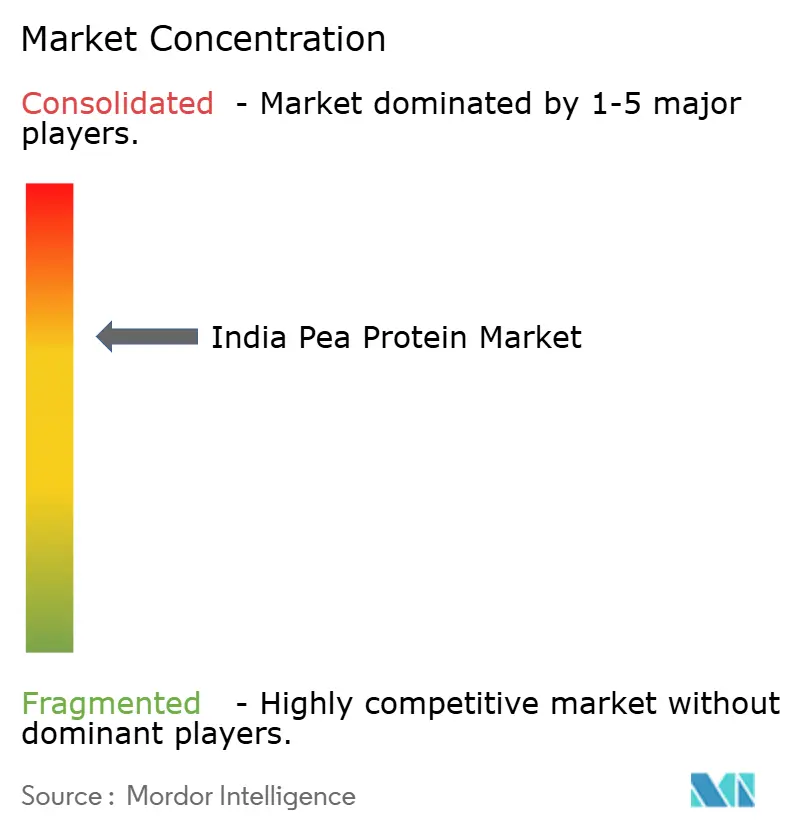
| Market Concentration | Medium |
Major Players *Disclaimer: Major Players sorted in no particular order Image © Mordor Intelligence. Reuse requires attribution under CC BY 4.0. | |
India Pea Protein Market Analysis by Mordor Intelligence
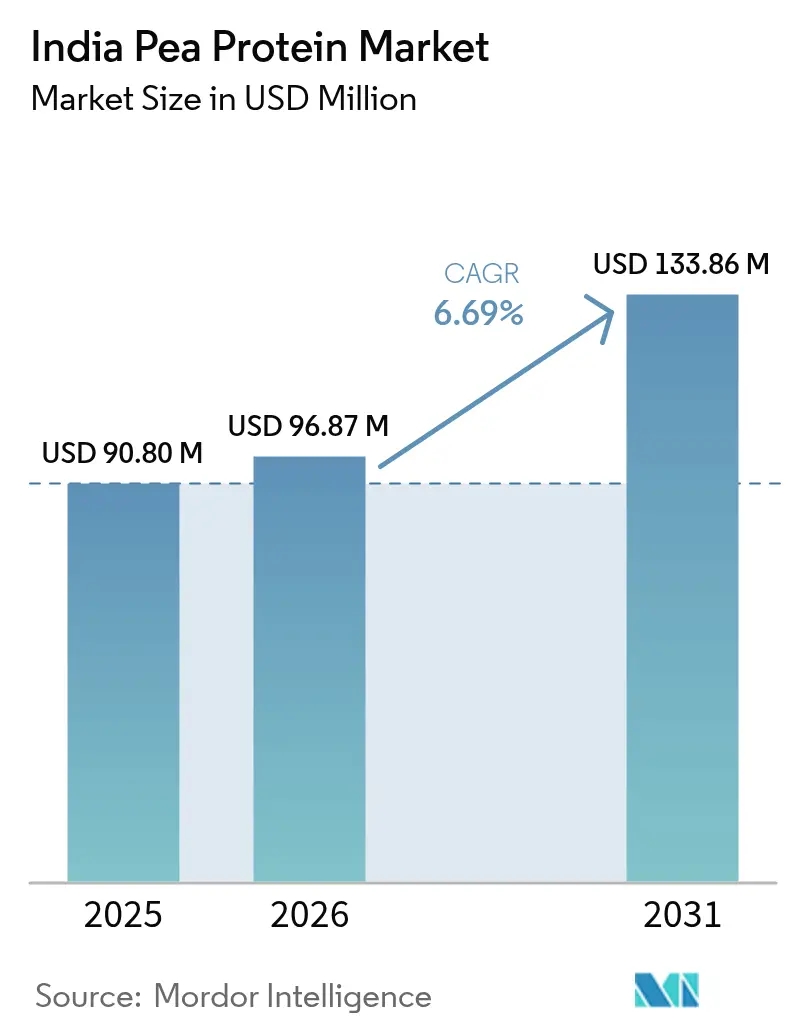
The India pea protein market size was valued at USD 90.80 million in 2025 and estimated to grow from USD 96.87 million in 2026 to reach USD 133.86 million by 2031, at a CAGR of 6.69% during the forecast period (2026-2031). This growth is primarily driven by increasing consumer awareness about the importance of protein in diets, advancements in pulse-processing technologies, and rising investments by multinational companies in developing specialized pea protein products. The demand for pea protein is further supported by trends such as the growing popularity of fortified foods, urban fitness movements, and the adoption of flexitarian diets. Pea protein concentrates are finding wider applications in various food products, while isolates are increasingly used in premium beverages and sports nutrition products due to their high protein content and functionality. Government initiatives aimed at boosting domestic pulse production, such as funding for pulse clusters, are helping to ensure a steady supply of raw materials. The India pea protein market is moderately concentrated, with a mix of domestic and international players competing in the space.
Key Report Takeaways
- By product type, isolates captured 50.78% of the India pea protein market share in 2025; concentrates are projected to rise at an 8.22% CAGR through 2031.
- By nature, the conventional segment accounted for 67.25% of the Indian pea protein market size in 2025, while organic offerings are expected to grow at a 7.48% CAGR through 2031.
- By application, food and beverages dominated with a 75.01% revenue share in 2025; sports, dietary, and medical nutrition are expected to advance at an 8.07% CAGR through 2031.
Note: Market size and forecast figures in this report are generated using Mordor Intelligence’s proprietary estimation framework, updated with the latest available data and insights as of 2026.
Market Trends and Insights
Drivers Impact Analysis of India Pea Protein Market*
| Driver | (~) % Impact on CAGR Forecast | Geographic Relevance | Impact Timeline |
|---|---|---|---|
| Rising health and fitness awareness increasing consumer preference for high-protein, plant-based nutrition options | +1.8% | National, concentrated in Tier-1 cities (Mumbai, Delhi, Bengaluru, Hyderabad) with spillover to Tier-2 urban centers | Medium term (2-4 years) |
| Increasing awareness of protein deficiency in India | +1.5% | National, with priority in states reporting high malnutrition (Bihar, Uttar Pradesh, Madhya Pradesh, Jharkhand) | Long term (≥ 4 years) |
| Growing adoption of vegetarian, vegan and flexitarian diet | +1.3% | National, strongest in urban metros and among 25-40 age cohort | Medium term (2-4 years) |
| Popularity of portion-controlled, diet-friendly meal bowls and ready-to-eat items | +0.9% | Urban Tier-1 and Tier-2 cities, quick-commerce and modern trade channels | Short term (≤ 2 years) |
| Growth of millet-based foods under India's "Shree Anna" push | +0.7% | National, with government procurement and mid-day meal programs as early adopters | Long term (≥ 4 years) |
| Growing preference for natural and plant-derived cosmetic ingredients | +0.5% | National, concentrated in premium personal care segment | Medium term (2-4 years) |
| Source: Mordor Intelligence | |||
Rising health and fitness awareness is increasing consumer preference for high-protein, plant-based nutrition options
Health and fitness awareness is growing rapidly in India, driving the demand for plant-based protein sources. The National Institute of Nutrition recommends a daily protein intake of 0.66 g per kilogram of body weight for healthy adults; however, many individuals fall short of this requirement[1]. As a result, consumers are increasingly turning to cleaner and allergen-friendly alternatives to whey protein. Influencers promoting fitness content and forming partnerships with gyms nationwide have made plant-based proteins a regular part of wellness routines. Pea protein, with a digestibility score of 0.82 and a mild flavor, is gaining popularity as it can be easily combined with other plant proteins, such as rice or hemp, to create a complete amino acid profile suitable for various dietary needs. Indian brands, such as Good Fettle, are leveraging claims like "soy-free" and "lactose-free" to attract consumers who are sensitive to these ingredients.
Increasing awareness of protein deficiency in India
Protein deficiency is a significant issue in India, with Frontiers Organization reporting in February 2025 that 70–80% of households fail to meet the recommended daily protein intake, regardless of income levels[2]. This has led to increased national efforts to address the problem, such as fortifying school meals and public-distribution staples with essential nutrients. These initiatives have increased the demand for cost-effective, allergen-free ingredients suitable for large-scale production processes, such as extrusion and mixing. Pea protein, along with other plant-based proteins, has emerged as a preferred choice due to its affordability and compatibility with such programs. For instance, in November 2023, Relsus introduced a premium range of plant-based protein powders in India, reflecting growing confidence in the market and the readiness of suppliers to meet this demand. Additionally, the versatility of pea protein makes it an ideal ingredient for addressing nutritional gaps in both urban and rural areas, further driving its adoption.
Growing adoption of vegetarian, vegan and flexitarian diet
Vegetarian, vegan, and flexitarian eating habits are significantly influencing protein consumption trends in India. India has the highest global share of vegans at 9%, according to the 2025 World Population Review[3]. However, the most notable growth is coming from flexitarians, particularly in urban areas, who are increasingly replacing some of their meals with plant-based alternatives. Pea protein is gaining popularity due to its lower likelihood of causing allergies compared to soy and its smaller environmental impact compared to animal-based proteins. These factors make it especially appealing to environmentally conscious consumers aged 25 to 40. To meet this growing demand, domestic manufacturers are collaborating with international technology providers to develop advanced high-moisture extrusion systems. These systems help transform pea protein into fibrous meat substitutes that are suitable for modern plant-based diets.
Growth of millet-based foods under India’s “Shree Anna” push
India’s national focus on millets under the Shree Anna initiative is changing the way nutrition is approached in the country and opening up new opportunities for pea protein. This initiative gained traction after the Government of India launched the Global Millets (Shree Anna) Conference in March 2023, as highlighted by Press Information Bureau[4]. The government emphasized the importance of millets as climate-resilient crops that can play a crucial role in public nutrition programs, retail markets, and the food-service industry. As food manufacturers expand their millet-based ready-to-eat and ready-to-cook product lines, they are increasingly adding complementary proteins, such as pea protein, to enhance the nutritional profile of these products. Pea protein is a preferred choice because it has a neutral taste, is easily digestible, and is free from common allergens. Both startups and established processors are creating millet–pea protein blends for various applications.
Restraints Impact Analysis of India Pea Protein Market*
| Restraint | (~) % Impact on CAGR Forecast | Geographic Relevance | Impact Timeline |
|---|---|---|---|
| High cost of product reformulation | -0.8% | National, acute for small and mid-sized food manufacturers | Short term (≤ 2 years) |
| Higher prices of pea protein compared to local protein sources such as soy, whey and pulses | -1.2% | National, most pronounced in price-sensitive Tier-2 and Tier-3 markets | Medium term (2-4 years) |
| Regulatory ambiguity around plant-based meat and dairy analogues | -0.9% | National, affecting product launches and labeling compliance | Short term (≤ 2 years) |
| Sensory mismatch in Indian traditional dishes | -0.7% | National, particularly in regional cuisines (South Indian, Bengali, Punjabi) | Long term (≥ 4 years) |
| Source: Mordor Intelligence | |||
Regulatory ambiguity around plant-based meat and dairy analogues
Unclear regulations surrounding plant-based meat and dairy alternatives are becoming a significant challenge for India’s pea protein market. There is ongoing confusion about whether terms like “milk,” “curd,” and “meat” can be used for plant-based products. This uncertainty has compelled companies to redesign their packaging, postpone product launches, or adopt temporary names that often confuse consumers and undermine brand messaging. Regulatory authorities frequently issue directives asking companies to avoid using dairy or meat-related terms, which disrupts product visibility on e-commerce platforms and complicates compliance processes for startups and manufacturers. These challenges make it difficult for businesses to plan effectively and invest confidently in advanced technologies, such as high-moisture extrusion equipment, hybrid formulations, and fortified plant-based foods. As a result, the growth of pea protein-based products across retail, food service, and institutional markets is slowing, limiting the market’s ability to expand at its full potential.
Sensory mismatch in Indian traditional dishes
Sensory challenges in traditional Indian dishes are a significant barrier to the widespread adoption of pea protein. Many popular recipes, such as curries, rotis, dal-based dishes, and regional snacks, depend on specific textures, flavors, and aromas that are deeply ingrained in Indian culinary traditions. Pea protein often alters these characteristics, introducing a slight beany taste, different thickness, or dryness in items like chapati dough, gravies, or stuffed fillings. These changes can make the dishes less appealing to households that value authentic and familiar flavors. Even though manufacturers are working on improving flavor masking and texture enhancement, many consumers still feel that adding pea protein changes the "home-cooked" essence of their meals. This disconnect between the nutritional benefits of pea protein and the sensory expectations of traditional Indian food slows its acceptance. As a result, pea protein remains more popular in health-conscious or urban experimental segments, while its integration into everyday cooking continues to face challenges.
*Our forecasts treat driver/restraint impacts as directional, not additive. The impact forecasts reflect baseline growth, mix effects, and variable interactions.
India Pea Protein Market Segment Analysis
By Product Type:
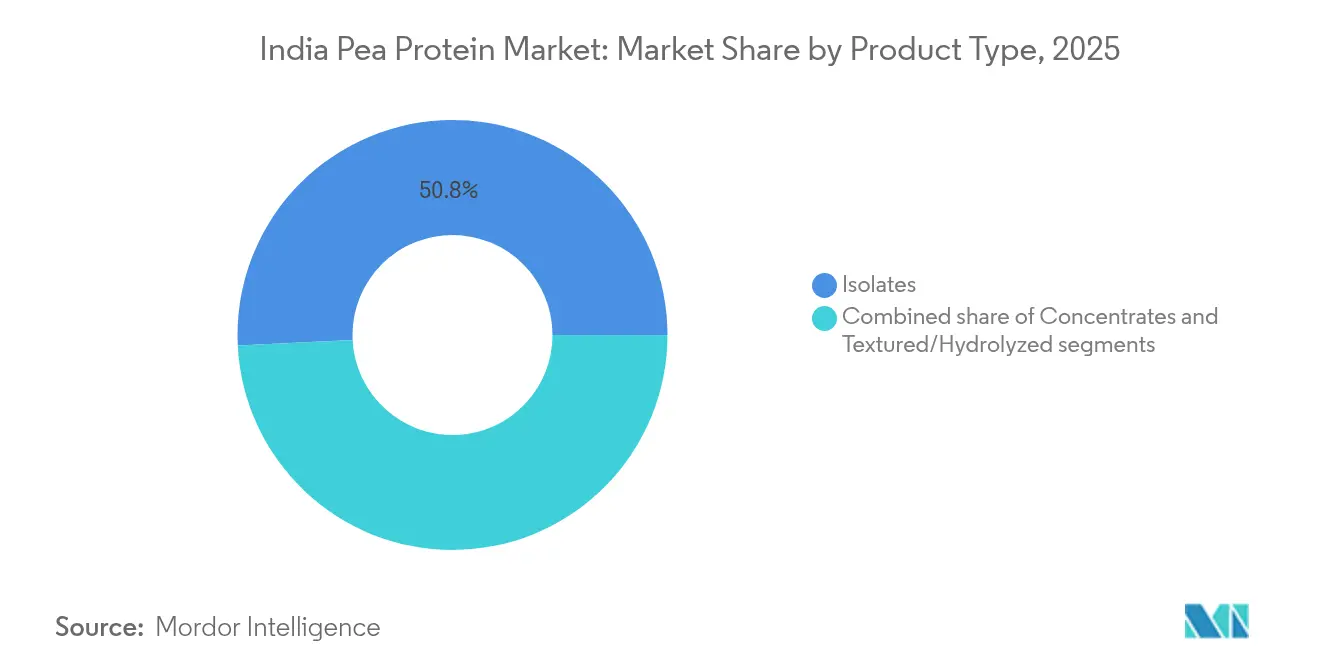
Concentrates Challenge Isolate DominanceIn 2025, pea protein isolates led the Indian market, accounting for 50.78% of the total market share. These isolates are widely preferred due to their ability to dissolve easily, neutral flavor, and smooth texture, making them ideal for use in products like clear beverages, premium sports nutrition powders, and dairy-free creamers. Consumers appreciate their convenience, as they mix well and have minimal grittiness, which enhances the overall product experience. This growing preference highlights the increasing demand for high-quality, clean-label protein options that cater to health-conscious and fitness-focused consumers.
Pea protein concentrates are projected to grow significantly, with an expected CAGR of 8.22% from 2026 to 2031. Their affordability and balanced nutritional profile make them a versatile ingredient for various applications, including fortified snacks, bakery products, and traditional meal preparations. Manufacturers use concentrates in hybrid grain blends and extruded products due to their ability to enhance texture and functionality. As these concentrates become more common in mainstream packaged foods, they are transitioning from niche health-focused products to being a regular part of everyday diets, appealing to a broader consumer base.

By Nature:
Organic Emerges as a Premium Export PlayIn 2025, conventional pea protein held the largest share of the Indian market, accounting for 67.25 percent. This dominance is attributed to the robust pulse farming and procurement systems in states such as Madhya Pradesh, Uttar Pradesh, and Rajasthan, which ensure a steady supply of raw materials at stable prices. Manufacturers prefer conventional pea protein because it is affordable and readily available, making it ideal for large-scale production. It is widely used by food, beverage, and nutrition brands to meet the growing demand for protein-rich products.
Organic pea protein is expected to grow at a CAGR of 7.48 percent through 2031, driven by the increasing preference for natural and chemical-free products. Urban consumers, particularly in premium markets, are increasingly opting for organic options, as they are associated with higher quality, greater safety, and improved sustainability. Although the supply of organic pea protein is currently limited, brands in categories like sports nutrition, infant-friendly products, and functional foods are exploring its potential. This shift toward organic and clean-label products is creating new opportunities for premium and health-focused offerings in the market.
By Application:
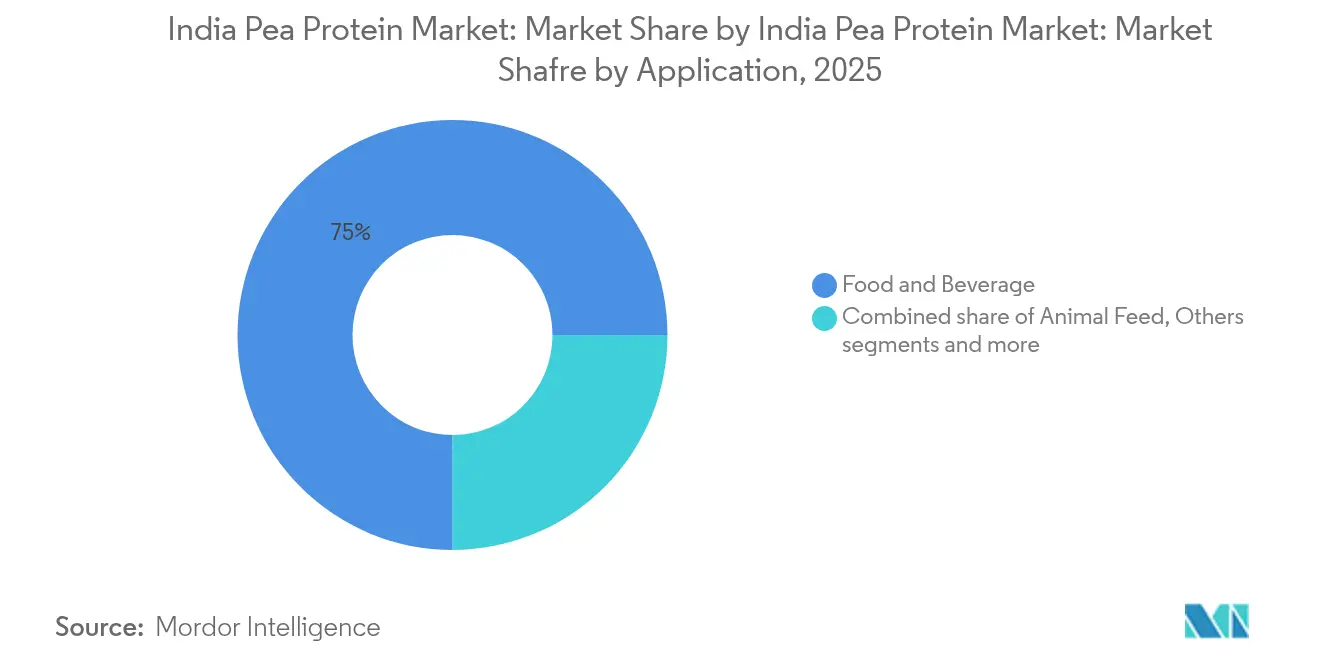
Food and Beverage Lead, Sports Nutrition AcceleratesIn 2025, food and beverage applications led the India pea protein market, capturing 75.01% of the total market share. The increasing demand for healthier and protein-enriched food options, including bakery mixes, dairy alternatives, plant-based meat, savory snacks, and fortified beverages, largely drives this growth. Pea protein’s neutral taste and versatility make it an ideal ingredient for a wide range of products, appealing to both traditional food manufacturers and modern direct-to-consumer (D2C) brands. As consumers increasingly prioritize clean-label and sustainable food choices, the demand for pea protein in this segment continues to grow.
The sports, dietary, and medical nutrition segment is anticipated to grow at the fastest rate, with a projected CAGR of 8.07% from 2026 to 2031. This rapid growth is driven by the increasing demand for lactose-free, vegan, and allergen-friendly products, including protein powders, bars, and beverages. Pea protein is gaining popularity as a viable alternative to whey, particularly among fitness enthusiasts and individuals with specific dietary requirements. The rising interest in personalized nutrition and gut-health-focused supplements is further boosting the adoption of pea protein in premium health and wellness products, making it a key ingredient in this segment.
Geography Analysis
Tier-1 cities are the primary drivers of the increasing demand for pea protein in India. These cities benefit from higher disposable incomes, well-developed retail networks, and greater exposure to digital marketing campaigns. Consumers in these urban areas are quick to adopt trends like plant-based diets and functional nutrition, making them ideal markets for new product launches. Meanwhile, Tier-2 cities are also gaining importance as quick-commerce platforms expand and consumers in these regions become more aware of clean-label and health-focused products. Government initiatives to improve pulse processing infrastructure in major producing states are expected to further enhance supply chains and reduce logistical challenges.
India’s pea protein market remains heavily reliant on imports, particularly for isolates used in high-end products such as premium beverages and sports nutrition. To address this, industry organizations and state governments are working to establish new processing clusters. These clusters aim to localize production, reduce costs, and strengthen the domestic market. As these facilities grow, they are expected to create a more competitive environment for food, beverage, and nutrition companies. There is increasing interest in exporting pea protein to Gulf countries and other markets that require products adhering to specific dietary and religious standards, which could open up new revenue streams for Indian manufacturers.
On the policy and trade side, global sustainability initiatives could benefit India due to its relatively low-emission agricultural practices, provided standardized frameworks for lifecycle assessments are implemented. Improvements in cold-chain and storage infrastructure, supported by public-private partnerships, are also helping to better manage sensitive ingredients. Furthermore, simplifying national food safety documentation for exports will be essential to facilitate smoother international trade. With expanding processing capacities and more efficient supply chains, India is gradually transitioning from being an import-reliant market to becoming a competitive regional supplier in the pea protein industry.
Regulatory Landscape
Regulation of pea protein ingredients and end products is anchored in India under the Food Safety and Standards Authority of India (FSSAI), including compliance with the Food Safety and Standards (Food Products Standards and Food Additives) Regulations, 2011. From June 1, 2026, FSSAI moved prior approval and risk assessment for non-specified food ingredients onto its Single Window System (ePAAS). This shift is relevant for newer plant-protein formats and specialty grades used in beverages, nutrition, and analog products.
On policy support, the Ministry of Food Processing Industries (MoFPI) continues to run the Production Linked Incentive Scheme for Food Processing Industry (PLISFPI) across 2021-22 to 2026-27, supporting capacity creation and product innovation in priority segments such as Ready-to-Cook/Ready-to-Eat foods where pea protein is increasingly formulated. MoFPI also held a high-level stakeholder consultation in July 2026 to deliberate the next phase of fiscal support, and the discussion included emerging categories such as plant-based proteins, keeping compliance-ready and scalable ingredient supply in focus.
Value Chain Analysis
The India pea protein value chain begins with pea cultivation and trading centered in key pulse-producing states such as Madhya Pradesh, Uttar Pradesh, and Rajasthan, followed by primary cleaning, splitting, and milling. Protein manufacturing then proceeds through dry fractionation or wet extraction, especially for higher protein isolates. Ingredient houses and blenders adapt functionality, including solubility, dispersibility, and flavor masking, for downstream users such as food and beverage manufacturers and sports, dietary, and medical nutrition brands. Distribution typically combines direct B2B sales to formulators with supply through ingredient distributors.
A structural constraint in the chain is limited domestic extraction capacity for high-protein grades, which supports continued import reliance for isolates used in premium beverages and nutrition applications, as noted in the report context. That dependence increases exposure to lead times and landed-cost volatility. Locally, bottlenecks also span process know-how, wet-milling equipment availability, and infrastructure such as storage and temperature-controlled logistics for sensitive ingredients. Government support programs focused on food processing capacity and cluster development, along with private facility investments, are key levers for improving localization and shortening the ingredient supply loop for Indian formulators.
Competitive Landscape
The Indian pea protein market is moderately consolidated, with global suppliers playing a key role in maintaining quality standards and ensuring large-scale supply. These suppliers rely on regional labs, long-term contracts, and a diverse range of ingredients to strengthen their market presence. They specialize in advanced pea protein types, such as textured and hydrolyzed variants, used in food, beverages, and dietary supplements. Their proximity to global processing hubs ensures a steady supply chain and faster delivery times, enabling Indian manufacturers to meet rising demand and stay competitive in the market.
Indian companies also contribute significantly to the market by offering flexibility, customized solutions, and smaller order sizes, which are particularly appealing to mid-sized brands. Many domestic players are adopting vertical integration strategies to better control production costs and reduce dependency on imports, which are often subject to price fluctuations. These companies are focusing on sustainability by using cleaner production methods and sourcing raw materials locally. This approach not only helps them differentiate themselves but also enables them to quickly adapt to changing consumer preferences and regional trends, thereby gaining a competitive edge in the market.
New processing clusters are expected to increase the number of suppliers and intensify competition, especially in the commodity concentrate segment. To remain competitive, multinational companies are shifting their focus toward premium products such as isolates, organic variants, and ingredients tailored for specific applications, which require advanced technical expertise. There is also growing potential in niche areas like infant nutrition, medical beverages, and high-performance functional foods. As the market evolves, it is likely to split into two main segments: cost-efficient suppliers focusing on concentrates and innovation-driven players specializing in high-value isolates, catering to more advanced and specialized needs.
India Pea Protein Industry Leaders
-
Archer Daniels Midland Company
-
Ingredion India Pvt Ltd
-
Roquette India Pvt Ltd
-
Proeon Foods Pvt Ltd
-
Titan Biotech Ltd
- *Disclaimer: Major Players sorted in no particular order
India Pea Protein Market Companies Covered in this Report
- Archer Daniels Midland Company
- Cargill Inc.
- International Flavors & Fragrances Inc.
- Ingredion India Pvt Ltd
- Roquette India Pvt Ltd
- Titan Biotech Ltd
- Rajvi Enterprise
- Proeon Foods Pvt Ltd
- Puris Proteins LLC
- Jeeva Organic Private Limited
- AGT Foods
- Taj Agro International
- Marico Limited
- Unilever PLC
- Prime Herbonix Health Products Private Limited
- Glanbia PLC
- Kerry Group PLC
- Nutrova
- Vaible Herbal
- Eklavya Biotech Private Limited
Market Opportunities and Future Outlook
Localizing functional pea protein supply for food and beverage, which accounted for 75.01% of 2025 market revenue, and for sports, dietary, and medical nutrition is a clear opportunity. In both areas, brands look for lactose-free, allergen-friendly alternatives to whey and soy. Specialized pea protein ingredients from global suppliers support formulation upgrades that target India-specific constraints around texture stability and sensory neutrality, reflected in launches such as Ingredion’s Vitessence Pea 100 HD for cold-pressed snack bars and Roquette’s NUTRALYS Pea 850F, positioned as a clean-tasting isolate.
Regulatory and platform changes also create room for innovation-led launches, particularly where prior approvals are involved. From June 1, 2026, FSSAI’s ePAAS Single Window System for non-specified food ingredients standardizes submission and tracking for approvals, which helps ingredient innovators and finished-product brands operationalize compliance. On the supply side, investments and partnerships that expand India-based specialty ingredient manufacturing capacity and technical capabilities can support faster sampling, application work, and cost-down programs for domestic formulators. This is especially relevant for ready-to-eat/ready-to-cook and fortified staples that align with MoFPI’s PLISFPI focus through 2026-27.
Recent Industry Developments in India Pea Protein Market
- June 2026: Ingredion entered into a joint venture with Sanstar Limited and took a 9% equity stake to manufacture specialty ingredients in India. The move strengthens Ingredion’s local footprint in high-value ingredient production and supports faster, India-based supply and application support for customers formulating plant-protein products.
- May 2026: Archer Daniels Midland Company launched eight new plant protein ingredients, including a pea flour ingredient positioned for bakery, cereal, batter, and breading applications. The rollout expands the range of plant-protein solutions available to Indian formulators and supports broader use cases beyond shakes and powders.
- November 2024: Ingredion and Lantmannen formed a strategic partnership to accelerate development of plant-based proteins, including pea protein isolates sourced from yellow peas, with a new facility planned in Sweden. The partnership deepens Ingredion’s access to upstream pea protein development and future supply options that can feed global and India-facing product portfolios.
India Pea Protein Market Report Scope and Research Methodology
Market Definition and Coverage
For this study, the market means the value of pea-derived protein ingredients sold into India for use in food, nutrition, and feed formulations, counted at the ingredient level across domestic supply and imports.
Scope exclusions: Whole peas, pea flour or starch not sold as protein ingredients, and finished consumer products (such as ready-to-drink shakes) are excluded from this market value.
Segments Covered in This Report
- By Product Type
- Concentrates
- Isolates
- Textured/Hydrolyzed
- By Nature
- Organic
- Conventional
- By Application
- Food and Beverage
- Sports, Dietary, and Medical Nutrition
- Animal Feed
- Others
Data Sources, Market Sizing, and Validation
Desk Research
Desk research was used to set the market structure and define measurable inputs before speaking with the industry. We reviewed public sources such as APEDA trade updates, Directorate General of Commercial Intelligence and Statistics (DGCIS) import export statistics, the Ministry of Food Processing Industries (MoFPI) sector snapshots, and Food Safety and Standards Authority of India (FSSAI) regulations, since these affect how ingredients can be used and labeled.
To keep assumptions grounded, we also referenced company annual reports and investor presentations, product specification sheets, and reputed press coverage on plant protein launches and capacity additions in India. Where available, we used paid subscriptions for company financials and intelligence, import export shipment level checks, and patent databases to gauge process maturity and application pull. These desk sources are illustrative only, and we relied on additional public documents to cross-check data points and close out open questions.
Primary Interviews and Surveys
Primary work centered on interviews and structured surveys with ingredient suppliers, importers and distributors, food and nutrition formulators, and a few large buyers that specify pea protein in recipes. Coverage included major consumption and manufacturing hubs in India. The respondent input was used to confirm pricing bands, channel margins, substitution patterns versus other proteins, and near-term demand signals by application.
Distribution of primary research fieldwork respondents
| Company type | Respondent position |
|---|---|
| Top tier: 33% | CXOs: 13% |
| Mid tier: 52% | Functional/Unit leaders: 43% |
| Smaller Players: 15% | Managers: 44% |
Market-Sizing & Forecasting
Sizing starts with a top-down build where import flows and domestic ingredient output are reconstructed, then mapped to end-use demand inside India. We corroborate these totals with selective bottom-up checks, using supplier roll-ups, distributor channel checks, and sampled price per kilogram multiplied by estimated volumes. When gaps show up, we adjust and re-check the assumptions.
Key inputs were kept practical and traceable, including pea protein import intensity, local availability of pulse fractionation, typical inclusion rates in fortified foods, the pace of plant-based and high-protein product launches, and price spreads between isolate and concentrate grades. Because price drives value in this ingredient market, we used scenario analysis, supported by interview-led consensus on how prices and adoption move together across food and beverage and nutrition applications. When company-level data was limited, missing volumes were handled through channel shares and trade-derived supply proxies, and then re-checked with application-side buyers to keep the final totals grounded.
Data Validation & Update Cycle
Outputs are validated through triangulation across trade data signals, supplier feedback, and application-side consumption logic, before a final number is signed off. Large swings are stress-tested using anomaly checks, including sudden price changes, one-time bulk imports, or a sharp shift in application mix. If the variance cannot be explained using the India ingredient context, analysts re-contact sources.
Reviews happen in steps, with a second analyst checking calculations, assumptions, and unit conversions, followed by a final pass for consistency across historical and forecast years. Reports are refreshed annually, and interim updates are made when material events occur, such as regulatory changes, major capacity additions, or trade disruptions. Right before delivery, we run a fresh sweep so clients receive the most current view available.
Mordor Intelligence's India Pea Protein Market Size Compared Against Other Published Estimates
Published market values for pea protein in India can appear far apart because the scope is not always the same, and the same ingredient can be counted at different points in the value chain. Differences also show up when firms assume different price paths for isolate versus concentrate, or when they use a longer forecast window that embeds a faster adoption curve.
Finished consumer products that contain pea protein sit outside Mordor Intelligence's scope, and that single exclusion usually brings the number lower versus studies that include retail protein foods and beverages as part of market value. Another driver is whether estimates rely mainly on optimistic demand stories, or whether they are cross-checked against import statistics, realistic formulation inclusion rates, and near-term capacity constraints in pulse processing.
Benchmark comparison
| Source | Market Size | Gaps in Research Methodology |
|---|---|---|
| Mordor Intelligence | USD 96.87 M (2026) | |
| Industry Data Publisher A | USD 96.20 M (2026) | Uses a similar starting year value, but scope language suggests broader end uses and looser treatment of product forms, with fewer visible checks on channel margins and grade-level price separation. |
| Industry Data Publisher A | USD 366.10 M (2036) | Long forecast window and a high CAGR assumption can lift the endpoint sharply, especially if pricing and adoption are not constrained by near-term import dependence and slower capacity build-up. |
The spread in the table is explained mainly by what gets counted as market value and how quickly adoption and prices are assumed to rise over time. By tying demand to measurable supply signals and application-side usage, the estimate stays easier to replicate and to stress-test when new trade or capacity information comes in.
Key Questions Answered in the Report
How large is the India pea protein market in 2026?
The India pea protein market size is USD 96.87 million in 2026 and is projected to reach USD 133.86 million by 2031.
What is the growth outlook for concentrates versus isolates?
Concentrates are expected to expand at an 8.22% CAGR through 2031, faster than isolates, because they meet protein targets in bakery and snack applications at lower cost.
Which application currently leads consumption?
Food and beverages held 75.01% of 2025 revenue, thanks to dairy alternatives, bakery, and plant-based meat formulations.
Who are the leading players in the market?
Multinationals such as Cargill, ADM, Roquette, and Ingredion hold a significant market share, while domestic firms like Titan Biotech and Proeon Foods are expanding rapidly.