
Incretin-based Drugs Market Size and Share
Market Overview
| Study Period | 2020 - 2031 |
|---|---|
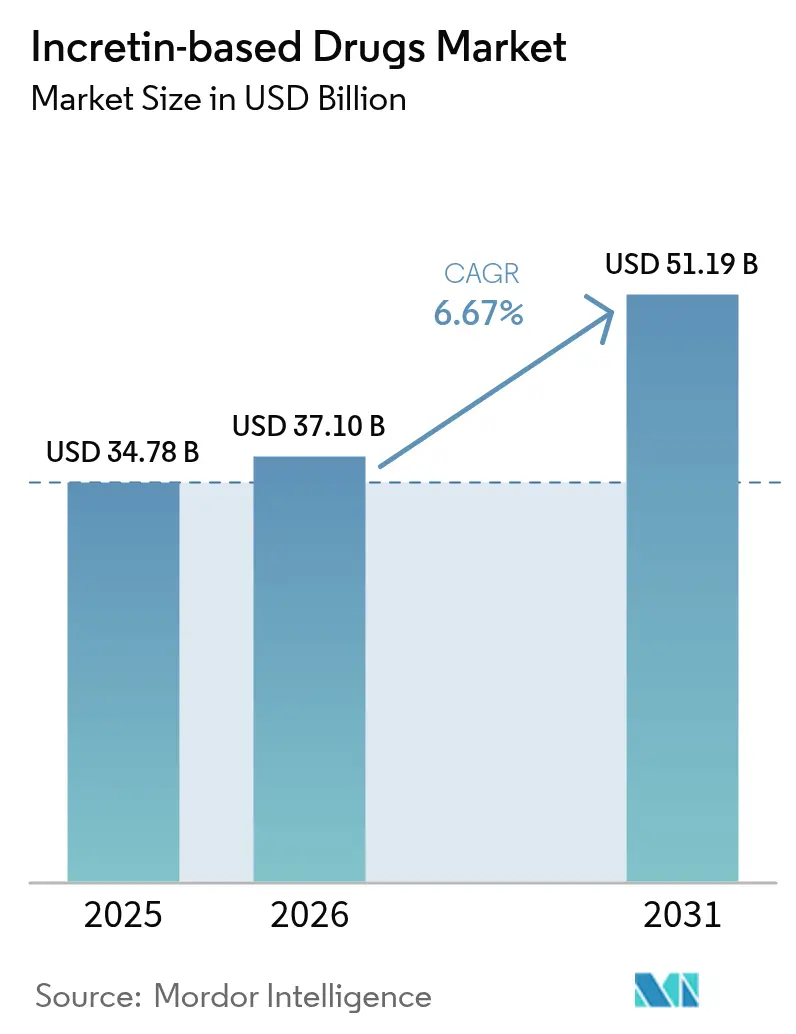
| Market Size (2026) | USD 37.1 Billion |
| Market Size (2031) | USD 51.19 Billion |
| Growth Rate (2026 - 2031) | 6.67 % |
| Fastest Growing Market | Asia Pacific |
| Largest Market | North America |
| Market Concentration | Medium |
Major Players *Disclaimer: Major Players sorted in no particular order Image © Mordor Intelligence. Reuse requires attribution under CC BY 4.0. | |
Incretin-based Drugs Market Analysis by Mordor Intelligence
The incretin based drugs market size is expected to grow from USD 34.78 billion in 2025 to USD 37.10 billion in 2026 and is forecast to reach USD 51.19 billion by 2031 at 6.67% CAGR over 2026-2031. Current growth is fueled by swift label expansions into obesity and cardiometabolic indications, rapid uptake of dual-mechanism agents, and record-high manufacturing investments that seek to relieve the supply bottlenecks that constrained sales in 2024. Converging clinical evidence showing 20%–25% weight-loss efficacy has broadened physician support and accelerated guideline inclusion for earlier intervention, while oral formulations remove adherence barriers linked to injections. Parallel API scale-up in India and China is lowering production costs, enabling tiered pricing strategies for price-sensitive regions. The incretin based drugs market now competes directly with lipid-lowering therapies for cardiometabolic disease management, signaling a medium-term shift toward combination prevention regimens.
Key Report Takeaways
- By drug type, GLP-1 receptor agonists led with 61.78% of the incretin based drugs market share in 2025; dual/triple incretin agonists post the fastest growth at a 6.85% CAGR to 2031.
- By route of administration, injectable formats captured 77.85% share of the incretin based drugs market size in 2025, while oral delivery is projected to expand at a 7.01% CAGR through 2031.
- By distribution channel, hospital pharmacies commanded 50.62% revenue in 2025; online/specialty pharmacies are rising at a 7.55% CAGR to 2031.
- By primary indication, type 2 diabetes accounted for 42.35% of the incretin based drugs market size in 2025, whereas obesity/weight management climbs at an 7.68% CAGR to 2031.
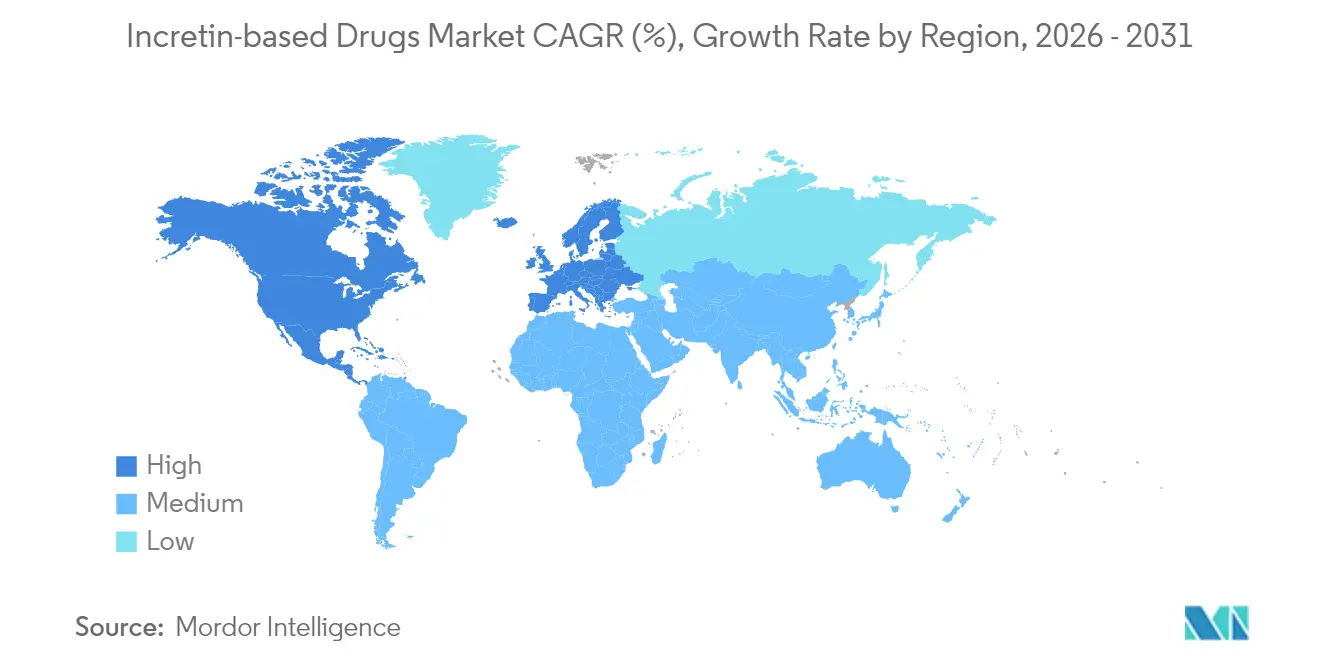
- North America held 43.10% share of the incretin based drugs market in 2025; Asia-Pacific records the highest regional CAGR at 7.98% heading to 2031.
Note: Market size and forecast figures in this report are generated using Mordor Intelligence’s proprietary estimation framework, updated with the latest available data and insights as of 2026.
Market Trends and Insights
Drivers Impact Analysis of Incretin-based Drugs Market*
| Driver | (~) % Impact on CAGR Forecast | Geographic Relevance | Impact Timeline |
|---|---|---|---|
| GLP-1 blockbuster launches outpacing supply | +1.2% | Global, acute shortages in North America & Europe | Short term (≤ 2 years) |
| Rapid obesity-centric label expansions | +0.8% | North America & EU leading, APAC following | Medium term (2-4 years) |
| Surge in self-pay channels & digital DTC | +1.1% | Global, early adoption in North America | Short term (≤ 2 years) |
| Oral small-molecule GLP-1 pipeline | +0.9% | Global, premium markets first | Medium term (2-4 years) |
| Dual/triple incretin agonists >20% weight loss | +1.3% | Global, led by North America & Europe | Long term (≥ 4 years) |
| API scale-up in India & China cuts COGS | +0.7% | Global supply chains, emerging-market access | Long term (≥ 4 years) |
| Source: Mordor Intelligence | |||
GLP-1 Blockbuster Launches Outpacing Supply
Severe manufacturing bottlenecks persisted in 2024, leaving patients waiting months for prescriptions and prompting premium pricing that protected revenue despite volume gaps. Eli Lilly earmarked USD 23 billion for new peptide facilities across three continents to relieve the deficit, yet analysts expect tight supply until mid-2026. Pharmacies in major U.S. cities introduced rationing lists, while European wholesalers prioritized cardiovascular-risk patients. The dislocation spurred parallel import and compounding channels that challenge quality oversight. As capacity comes online, the incretin based drugs market will likely see a burst of deferred demand, lifting unit sales faster than price cuts can dilute revenue.
Rapid Obesity-Centric Label Expansions
Regulatory agencies accelerated weight-management approvals after trials confirmed up to 22.5% body-weight reduction and 93% diabetes-progression risk decline with tirzepatide [1]. FDA and EMA green-lit cardiovascular benefit claims for GLP-1s, widening prescribing beyond endocrinology to cardiology and primary care. The broader labeling creates multiple reimbursement pathways and encourages earlier intervention, especially in high-risk prediabetes populations. Payors in the United States now reimburse obesity use for patients with heart failure or chronic kidney disease, a decision mirrored by private insurers in Germany and Australia. As label scope grows, routine polysymptomatic screening is expected to lift diagnosis rates, feeding additional volume to the incretin based drugs market.
Surge in Self-Pay Channels & Digital DTC Prescribing
Telehealth platforms such as Hims, Ro and Sequence recorded triple-digit subscription growth, offering rapid e-prescription of GLP-1s through online questionnaires. Cash-pay packages, priced at USD 350–500 per month, bypass prior-authorization delays and resonate with consumers motivated by cosmetic weight-loss goals. The channel now accounts for an estimated 12% of U.S. retail volume, up from 5% in 2023. While access broadens, clinician groups warn of fragmented follow-up and inconsistent laboratory monitoring. Manufacturers embrace the model by integrating direct-fulfillment services that protect list prices and gather real-time adherence data, reinforcing digital as a strategic route for the incretin based drugs market.
Oral Small-Molecule GLP-1 Pipeline Improving Adherence
Real-world evidence from Saudi Arabia showed oral semaglutide delivering 3.1% HbA1c reduction at six months with parallel weight gains similar to injectable counterparts. Oral formats eliminate injection anxiety, appeal to primary-care clinicians with limited training budgets, and streamline chronic-disease polypharmacy. Formulations leveraging permeation enhancers and nanoparticle carriers are advancing through late-stage trials, targeting once-daily dosing. The adherence boost could materially expand the incretin based drugs market into moderate-risk and elderly cohorts historically under-treated due to injection reluctance.
Dual/Triple Incretin Agonists Showing >20% Extra Weight Loss
Tirzepatide’s dual GIP/GLP-1 profile outperformed semaglutide by 5-6 percentage points of body-weight reduction in head-to-head studies. Early-phase triple agonists that add glucagon receptor activation have recorded 25% weight-loss markers, signaling a leap in efficacy that could reset patient and payer expectations. The superior outcomes justify premiums of 20%–30% over legacy GLP-1 monotherapies, insulating innovators from biosimilar erosion. Successive multi-hormone launches keep the incretin based drugs market on a steep innovation-led growth slope through the decade.
Restraints Impact Analysis of Incretin-based Drugs Market*
| Restraint | (~) % Impact on CAGR Forecast | Geographic Relevance | Impact Timeline |
|---|---|---|---|
| Limited reimbursement outside US & select EU payors | -0.9% | Global, acute in emerging markets | Medium term (2-4 years) |
| Persistent global supply shortages through 2026 | -1.2% | Global, severity varies by region | Short term (≤ 2 years) |
| Safety-signal overhangs (thyroid C-cell, GI) | -0.7% | Global, stricter oversight in EU | Long term (≥ 4 years) |
| Margin squeeze for retail / independent pharmacies | -0.5% | North America & Europe | Medium term (2-4 years) |
| Source: Mordor Intelligence | |||
Limited Reimbursement Outside US & Select EU Payors
Brazil’s ANVISA approved tirzepatide yet monthly therapy costs between BRL 1,883 and BRL 4,007 (USD 376–800) put it beyond reach of average wage earners. Similar affordability gaps exist in India, Indonesia and South Africa where public payors restrict coverage to severe cases or require prior failure of cheaper oral agents. The reimbursement divide creates a two-tier adoption curve that slows volume growth outside premium economies, capping upside for the incretin based drugs market until flexible contracting or local manufacturing narrows cost gaps.
Persistent Global Supply Shortages Through 2026
Device-component scarcities, peptide synthesis cycle times and sterile-fill limitations converged to restrict finished-product availability in 2024, forcing rationing protocols even in high-income systems. Although manufacturers have announced expansions, validation timelines and regulatory inspections prolong relief. The shortage curbs prescriber confidence and delays new-patient starts, lopping up to 1.2 percentage points off the forecast CAGR for the incretin based drugs market during the next two years.
Safety-Signal Overhangs (Thyroid C-Cell, GI Events)
Pharmacovigilance databases logged elevated cholelithiasis and rare medullary thyroid carcinoma signals, triggering EMA directives for enhanced labeling and ultrasound monitoring. The precautionary moves heighten clinician scrutiny and prompt conservative dosing in elderly and renal-compromised cohorts. Resulting drop-outs and slower titration rates temper near-term uptake, although long-term risk-benefit assessments remain favorable for most patients.
*Our forecasts treat driver/restraint impacts as directional, not additive. The impact forecasts reflect baseline growth, mix effects, and variable interactions.
Incretin-based Drugs Market Segment Analysis
By Drug Type:
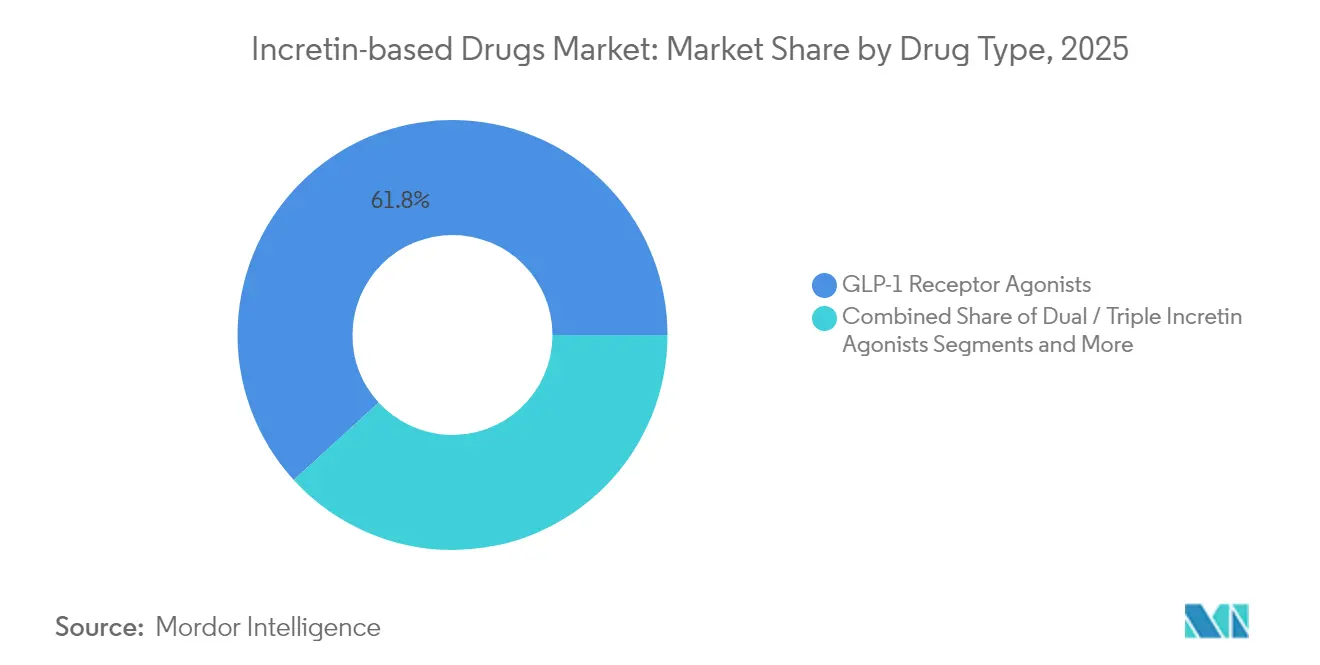
Dual Mechanisms Drive InnovationGLP-1 receptor agonists generated 61.78% of the incretin based drugs market size in 2025 on the strength of broad clinical evidence and payer familiarity. Dual/triple agonists, however, outpace all classes at a 6.85% CAGR through 2031 as superior 20%–25% weight-loss efficacy drives physician switching. Early real-world data show tirzepatide cutting HbA1c by 2.3 points in uncontrolled diabetics versus 1.7 points for liraglutide . DPP-4 inhibitors decline in relevance yet retain footing in fixed-dose combinations aimed at cost-sensitive segments. Pipeline entrants such as survodutide and cotadutide showcase triple-pathway modulation, positioning the incretin based drugs market for continual therapeutic breakthroughs.
The dual-mechanism surge reshapes competitive moats; innovators secure new composition-of-matter patents that defer biosimilar threats and sustain premium positioning. As clinical guidelines migrate toward weight-first management, single-hormone GLP-1s risk price erosion and must pivot to once-weekly depot or oral formats to defend share. Consequently, the incretin based drugs market sees an arms race of mechanistic complexity, with multi-agonists establishing a new standard for metabolic disease control.

By Route of Administration:
Oral Delivery Gains MomentumInjectables dominated the incretin based drugs market with 77.85% share in 2025 due to reliable bioavailability and clinician comfort. Yet oral formats post a 7.01% CAGR as permeability enhancers and stabilizing excipients offset digestive degradation, delivering efficacy on par with subcutaneous routes. Patient surveys indicate 68% preference for pills over pens when cost parity exists, highlighting latent demand. Primary-care physicians report shorter education sessions and higher refill persistence among oral users, translating into durable revenue accrual.
Scaling oral GLP-1 manufacturing requires separate tableting suites and stringent moisture controls, raising capex. However, those investments enable differentiated brand stories that reduce rebate exposure in the crowded injectable category. Over the forecast, oral penetration should lift overall adherence, enlarging the incretin based drugs market and lowering late-stage complication costs for health systems.
By Distribution Channel:
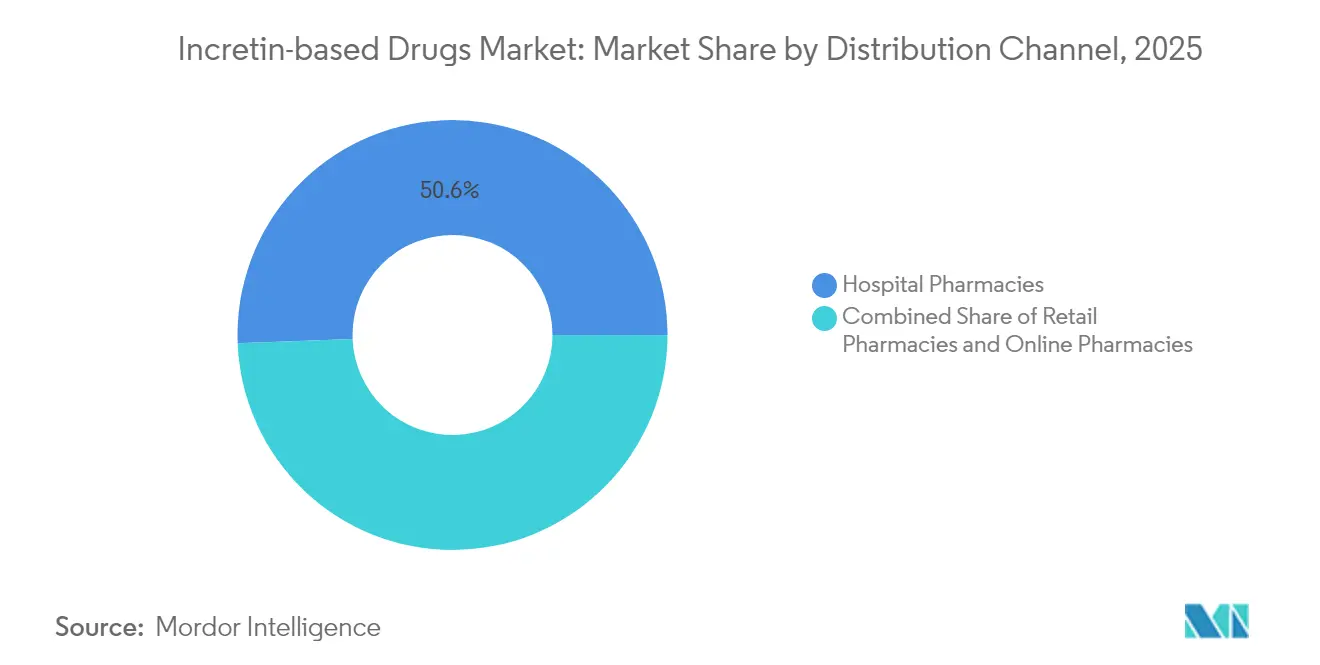
Digital Transformation AcceleratesHospital pharmacies retained 50.62% share of the incretin based drugs market in 2025 given initial titration and monitoring needs. Online and specialty pharmacies, nevertheless, are expanding fastest at 7.55% CAGR, propelled by direct-to-consumer telemedicine bundles and auto-replenishment logistics. Retail chains feel a margin squeeze as manufacturer direct-shipment and hub-service models bypass front-of-store dispensing.
Digital channels capture self-pay clients eager for discretion and speed, facilitating premium price realization outside payer formularies. Integrated data capture enhances real-world-evidence generation, feeding post-marketing safety analytics. As virtual care normalizes, the incretin based drugs market gains a scalable path to reach under-served metro and rural populations without brick-and-mortar footprint expansion.
By Primary Indication:
Obesity Applications SurgeType 2 diabetes contributed 42.35% revenue to the incretin based drugs market in 2025 owing to entrenched guideline placement and near-universal reimbursement in developed regions. Obesity and weight management applications log the strongest outlook at an 7.68% CAGR to 2031 as high-visibility cardiovascular-outcome studies shift payer calculus toward preventive weight control. Cardiometabolic comorbidity segments, including heart failure with preserved ejection fraction, represent nascent but promising niches that could add incremental USD 4 billion by the period end.
The broadened indication scope enables lifetime-value stacking, with patients cycling through obesity, diabetes prevention and lipid-control regimens under a single therapeutic umbrella. Such continuum-of-care positioning entrenches the incretin based drugs market within chronic-disease ecosystems once dominated by statins and ACE inhibitors.
Geography Analysis
North America Incretin-based Drugs Market
North America held 43.10% of the incretin based drugs market in 2025, supported by employer-based insurance that absorbs USD 1,000-plus monthly list prices and by active telehealth uptake that accelerates initiation. FDA fast-track designations for cardiometabolic uses keep the approval pipeline robust, and bipartisan legislative interest in obesity care hints at future Medicare coverage expansion. Canada mirrors U.S. clinical enthusiasm but negotiates lower net pricing through centralized procurement, moderating revenue per patient.
Europe Incretin-based Drugs Market
Europe delivers steady but heterogeneous demand. Germany and the United Kingdom reimburse GLP-1s for BMI ≥30 kg/m² plus comorbidities, while Italy and Spain impose stricter BMI triggers, dampening volume. Health technology assessment agencies increasingly factor cardiovascular benefits into cost-effectiveness models, a shift likely to unlock broader access by 2027. Regional purchasing alliances may, however, pressure list prices, nudging manufacturers toward outcomes-based contracts to protect margin within the incretin based drugs market.
APAC Incretin-based Drugs Market
Asia-Pacific is the fastest-growing region at 7.98% CAGR, driven by rapid urbanization and rising obesity prevalence. China’s cost-utility studies validate tirzepatide’s economic merit despite premium positioning, paving the way for volume-based procurement frameworks. Japan authorized obesity labeling in 2025, creating new reimbursement pathways, while Australia struggles with restricted formulary budgets, relying on patient copay programs. India straddles producer-consumer roles: domestic peptide output lowers COGS, yet public reimbursement remains limited, fostering a robust private-pay segment that nevertheless enlarges the incretin based drugs industry footprint.
Regulatory Landscape
Regulation for incretin-based drugs is shaped by faster benefit-risk reviews for obesity and cardiometabolic use, alongside tighter oversight of safety signals and off-label supply channels. In 2025, the World Health Organization (WHO) issued a global guideline on the use of GLP-1 medicines in treating obesity, which reinforced clinical legitimacy and supported broader guideline alignment across countries. In the United States, the FDA has also signaled a shift toward curbing non-FDA-approved GLP-1 products as supply begins to stabilize, including actions and policy clarifications tied to compounding under sections 503A and 503B.
In Europe, the EMA and the European Commission continue to influence access through centralized assessments and approvals, including generics and new dosage forms. In May 2026, the EMA CHMP adopted positive opinions for Liraglutide STADA and for Wegovy tablets (oral semaglutide) in multiple strengths. In July 2026, the European Commission approved the Wegovy pill as the first oral GLP-1 for weight management in the EU. Separately, the UK MHRA strengthened warnings for GLP-1 and dual GLP-1/GIP receptor agonists on acute pancreatitis risk (January 2026), which can affect monitoring requirements and prescribing protocols in routine practice.
Value Chain Analysis
The incretin-based drugs value chain runs from specialized raw materials and peptide synthesis inputs (protected amino acids, resins, coupling reagents) to API manufacturing (in-house and peptide CDMOs such as Bachem, PolyPeptide, and CordenPharma). It then moves into sterile fill-finish, device assembly for injection pens, and multi-channel distribution via hospital, retail, and online/specialty pharmacies. Industry bottlenecks remain concentrated in sterile fill-finish capacity, pen-device components, and solvent-intensive purification steps, with a cited vulnerability around acetonitrile availability for HPLC purification and concentration risks for certain single-sourced peptide building blocks.
The supply chain has been reconfigured around capacity control and geographic risk management. Novo Nordisk completed the USD 16.5 billion acquisition of three fill-finish sites from Catalent in December 2024 (Belgium, Indiana, and Italy), illustrating vertical integration to reduce dependence on constrained third-party sterile capacity. In February 2025, the FDA declared the national shortage of semaglutide injection products resolved, but manufacturers continued to plan for sustained demand and compliance scrutiny. By April 2026, Novo Nordisk highlighted tariff exposure on European-manufactured supply into the US as a margin headwind, prompting accelerated qualification of US-based supply footprints (including Clayton, North Carolina).
Competitive Landscape
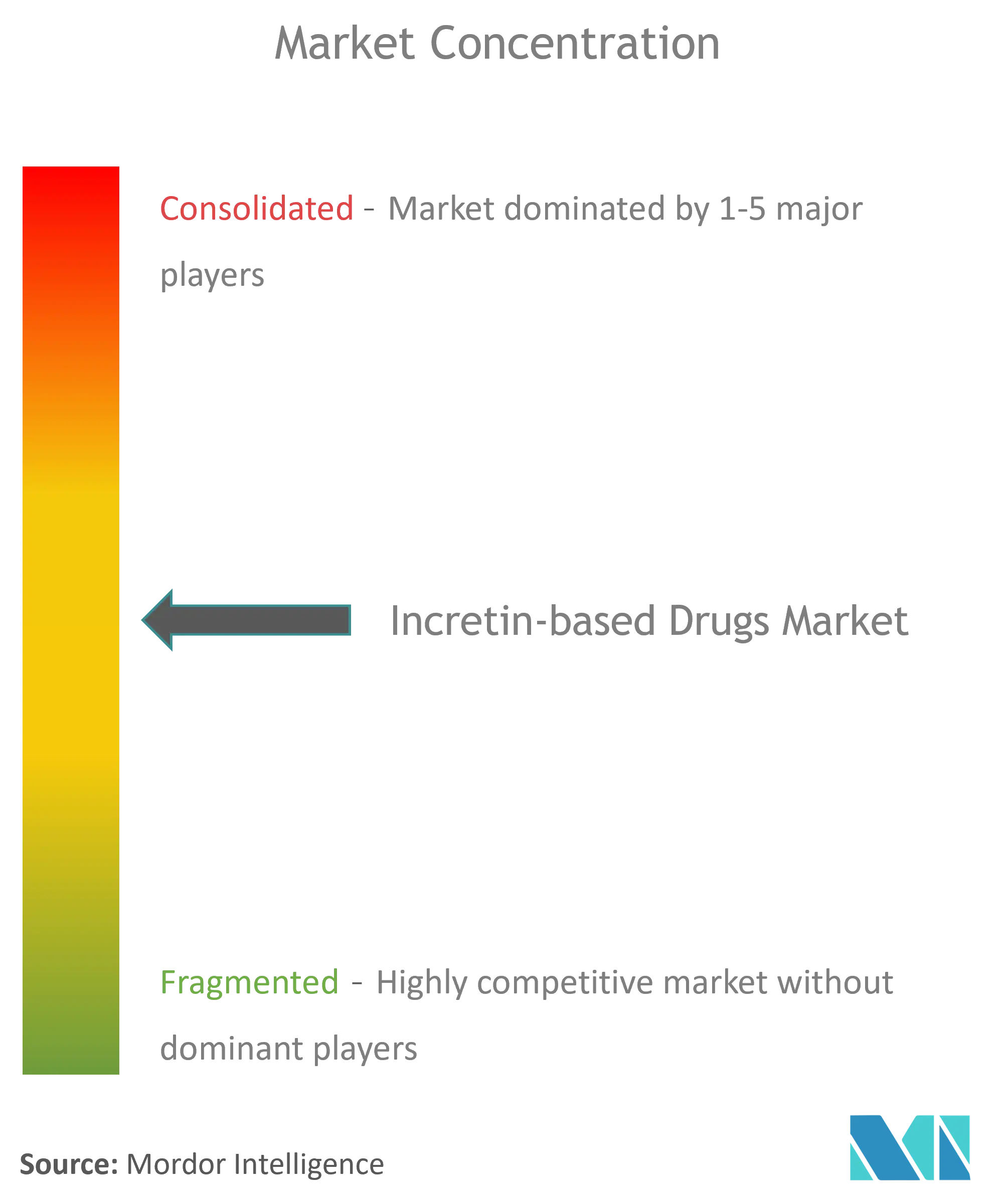
The incretin based drugs market remains oligopolistic. Novo Nordisk and Eli Lilly together control more than two-thirds of global revenue, leveraging patent depth, biologics manufacturing scale and integrated device portfolios. Both firms pursue 24-month capacity buildouts, dual-sourcing API and pen components to secure supply continuity. Novo’s once-weekly oral semaglutide tablet and Lilly’s auto-reconstitution pen exemplify device-formulation synergies that fortify brand stickiness.
Second-tier players such as AstraZeneca, Sanofi and Boehringer Ingelheim pivot toward partnership models to share peptide R&D risk. AstraZeneca’s licensing of ECC5004 adds an oral entry that complements its SGLT-2 franchise [3]. Meanwhile, Asian firms Biocon and Shanghai Desano scale GLP-1 analog APIs for contract supply, eyeing biosimilar pathways post patent expiry. The emergence of high-purity, low-cost Asian capacity erodes the manufacturing moat, compelling incumbents to differentiate through multi-agonist innovation.
Digital health companies integrate vertically by bundling teleconsultations, fulfillment and coaching under subscription models, capturing data that refine dosage algorithms. Such tech-enabled entrants lack manufacturing assets yet influence prescribing pathways and patient loyalty, creating partnership or acquisition targets for pharma majors intent on direct-to-patient engagement. The resulting ecosystem positions the incretin based drugs market at the intersection of biopharma, med-tech and consumer health.
Incretin-based Drugs Industry Leaders
-
AstraZeneca
-
Novo Nordisk
-
Eli Lilly
-
Novartis AG
-
Merck & Co. Inc.
- *Disclaimer: Major Players sorted in no particular order
Incretin-based Drugs Market Companies Covered in this Report
- Novo Nordisk
- Eli Lilly and Company
- Sanofi
- Merck
- AstraZeneca
- Boehringer Ingelheim
- Takeda Pharmaceuticals
- LG Chem
- Amgen
- Viking Therapeutics
- Johnson & Johnson
- Pfizer
- Dong-A ST
- Oramed Pharma
- Terns Pharmaceuticals
- Chia Tai Tianqing
- Hanmi Pharma
- AstraZeneca /Daiichi’s Eflornithine JV
- Biocon
- Amneal Pharma
- Teva Pharma
- Lupin
Market Opportunities and Future Outlook
A primary whitespace area is scaling oral incretin therapies to reduce reliance on pen-based sterile fill-finish and to expand adherence among injection-averse patients, while maintaining efficacy comparable to injectable GLP-1s. Concrete evidence of this strategic pivot came in May 2026, when the EMA CHMP adopted a positive opinion for Wegovy tablets (oral semaglutide) across four strengths, followed by the European Commission approval of the Wegovy pill in July 2026 for weight management in the EU. Manufacturing investments are also increasingly targeted at oral dosage capability: in March 2026, Novo Nordisk announced a 432 million euro expansion at its Athlone, Ireland facility to retrofit and expand capacity for oral GLP-1 treatments, with completion phases planned over 2027-2028.
Another opportunity is being created by tighter controls over non-approved GLP-1 supply, which shifts volume back toward authorized products and compliant distribution models. In 2026, the FDA communicated intent to take action against non-FDA-approved GLP-1 drugs and updated guidance for compounders as national GLP-1 supply begins to stabilize, reinforcing a regulated pathway advantage for approved brands and quality-assured generics. At the same time, authorization momentum for hybrid or chemically synthesized alternatives, such as the EMA CHMP positive opinion for Ablymico (liraglutide) from STADA in May 2026, points to a technology pathway that can support scalable production for established molecules and broaden access where biologics-style capacity is limiting.
Recent Industry Developments in Incretin-based Drugs Market
- July 2026: Novo Nordisk received European Commission approval for the Wegovy pill for weight management in the EU, marking the first oral GLP-1 approved for this indication in the bloc. The decision expands the addressable patient pool by removing injection-related barriers and gives Novo Nordisk a differentiated oral option alongside pen-based Wegovy.
- May 2026: Eli Lilly committed an additional USD 4.5 billion across its Indiana manufacturing footprint to expand capacity, including active pharmaceutical ingredients supporting its cardiometabolic portfolio. The investment reinforces supply security as demand broadens across diabetes and obesity use cases and raises the scale barrier for competitors that rely on constrained external capacity.
- March 2024: Eli Lilly partnered with Amazon Pharmacy to support delivery of select diabetes, migraine, and obesity medicines, including its GLP-1-based obesity therapy Zepbound. The collaboration strengthens patient access and fulfillment convenience, while supporting persistence through a high-throughput pharmacy channel.
Incretin-based Drugs Market Report Scope and Research Methodology
Market Definition and Coverage
This market covers prescription incretin based drugs sold for patient treatment, measured as revenue from products that act on the incretin pathway, mainly GLP-1 receptor agonists and DPP-4 inhibitors, across major geographies.
Scope exclusions: Non-incretin diabetes drug classes (such as insulin, SGLT-2 inhibitors, sulfonylureas, and metformin) are not counted in this market.
Segments Covered in This Report
- By Drug Type
- GLP-1 Receptor Agonists
- Dual / Triple Incretin Agonists
- DPP-4 Inhibitors
- Others / Pipeline Classes
- By Route of Administration
- Injectable
- Oral
- By Distribution Channel
- Hospital Pharmacies
- Retail Pharmacies
- Online / Specialty Pharmacies
- By Primary Indication
- Type 2 Diabetes
- Obesity / Weight Management
- Cardiometabolic Co-morbidities
- By Geography
- North America
- United States
- Canada
- Mexico
- Europe
- Germany
- United Kingdom
- France
- Italy
- Spain
- Rest of Europe
- Asia-Pacific
- China
- Japan
- India
- Australia
- South Korea
- Rest of Asia-Pacific
- Middle East & Africa
- GCC
- South Africa
- Rest of Middle East & Africa
- South America
- Brazil
- Argentina
- Rest of South America
- North America
Data Sources, Market Sizing, and Validation
Desk Research
Desk research starts by mapping the diabetes and obesity treatment landscape, then narrows the assessment to incretin based drugs only. We use public health statistics and epidemiology sources such as the CDC, the WHO, the International Diabetes Federation, and national health ministries to quantify diabetes burden and obesity trends by region.
On the supply and policy side, we review regulatory and reimbursement signals using sources such as the US FDA, the European Medicines Agency, and national drug price and coverage portals. We also rely on company annual reports, earnings call decks, and reputable medical journals to track label changes, route shifts from injectable to oral, and adoption patterns by care setting. For validation and cross checks, we may use paid databases for company financials, industry intelligence, news and financial filings, and patent databases, particularly when public disclosures vary across countries. These sources are illustrative, and other public references are also used to collect, validate, and clarify data points during the study.
Primary Interviews and Surveys
Primary work is used to pressure test assumptions that are difficult to observe directly in public datasets, especially around uptake drivers and price realization by channel. We speak with manufacturers, distributors, hospital and retail pharmacy stakeholders, and clinicians, and we balance inputs across APAC, EMEA, and the Americas so regional access differences and prescribing behavior are reflected.
Distribution of primary research fieldwork respondents
| Company type | Respondent position | Region |
|---|---|---|
| Top tier: 29% | CXOs: 15% | APAC: 50% |
| Mid tier: 54% | Functional/Unit leaders: 34% | EMEA: 29% |
| Smaller Players: 17% | Managers: 51% | Americas: 21% |
Market-Sizing & Forecasting
Sizing is built using a top-down approach where the treated pool is reconstructed from diabetes and obesity prevalence, diagnosis and treatment rates, and the share of patients eligible for incretin therapy by guideline practice. Those demand pools are translated into value using region-level price bands, therapy duration patterns, route mix (injectable versus oral), and channel splits across hospital and retail settings.
To keep totals realistic, we corroborate outputs using selective bottom-up approximations, such as rolling up a sample of supplier revenues where disclosures are available, and then checking implied volumes against prescribing momentum and known launch timing. Where direct inputs are missing, we handle gaps through proxy logic, for example by applying neighboring market adoption curves and adjusting for access constraints and reimbursement timing.
For forecasting, we use scenario analysis since future demand is sensitive to label expansions, payer coverage, and supply availability in some markets. The model is extended with expert-validated assumptions on obesity uptake, diabetes population aging, competitive intensity within GLP-1 and DPP-4 classes, and expected net price movement, which keeps projections practical and explainable.
Data Validation & Update Cycle
Outputs are validated by comparing model results against independent signals, including reported therapy class revenues, regional growth patterns, and major regulatory or reimbursement changes. When a variance looks too large, we isolate the driver, recheck the assumptions, and may recontact respondents to confirm whether changes are structural or temporary.
A multi-step analyst review is used before sign-off, and the checks focus on currency consistency, double counting across channels, and unusually sharp step changes around launch years. The report is refreshed annually, and interim updates are completed when material events occur, such as a major approval, a label expansion into obesity, or a meaningful supply disruption. Before delivery, a final pass is done so the numbers and commentary reflect the latest available public and primary inputs.
Mordor Intelligence's Incretin Based Drugs Market Sizing Compared With Other Published Estimates
Published market numbers for incretin based drugs can vary widely because the scope edges are not the same, and some studies mix pipeline or adjacent therapy revenues into the total. Differences also come from how pricing is treated across regions, since gross list prices and net realized prices can move in opposite directions when coverage expands.
The benchmark table shows a noticeable spread around the 2025 value, and in Mordor Intelligence's model the count is limited to GLP-1 receptor agonists and DPP-4 inhibitors sold as incretin based drugs, rather than adding broader diabetes drug baskets or early pipeline revenues. Another driver is how route mix shifts are reflected, since oral launches can change adherence and pricing assumptions, which then need to be checked against channel behavior and real-world access timing.
Benchmark comparison
| Source | Market Size | Gaps in Research Methodology |
|---|---|---|
| Mordor Intelligence | USD 34.78 B (2025) | |
| Global Consultancy A | USD 38.69 B (2025) | Often reflects a wider inclusion of obesity and cardiometabolic use cases and may assume faster uptake across regions, which can lift 2025 value when access barriers are not adjusted market by market. |
| Industry Publisher B | USD 37.40 B (2024) | Uses a different base year and can include broader incretin therapy buckets such as dual or pipeline categories, so the 2024 value is not directly aligned to a marketed-only 2025 view. |
The table suggests that scope edges and base-year choices explain most of the gap rather than a true disagreement on growth direction. By keeping the model tied to clear drug families, a defined time base, and practical demand inputs like treated populations and channel mix, we can explain each step and reconcile differences when new evidence appears.
Key Questions Answered in the Report
What is the current Incretin-based Drugs Market size?
The market is projected to reach USD 51.19 billion by 2031 based on a 6.67% CAGR.
Which segment grows fastest within this space?
Dual/triple incretin agonists record the highest CAGR at 6.85% through 2031 thanks to superior weight-loss efficacy.
Why are supply shortages expected to persist until 2026?
Peptide synthesis complexity, device-component scarcities and lengthy validation timelines slow capacity expansion despite large capital outlays.
Which region has the biggest share in Incretin-based Drugs Market?
In 2025, the North America accounts for the largest market share in Incretin-based Drugs Market.