
Immune Repertoire Sequencing Market Size and Share
Market Overview
| Study Period | 2020 - 2031 |
|---|---|
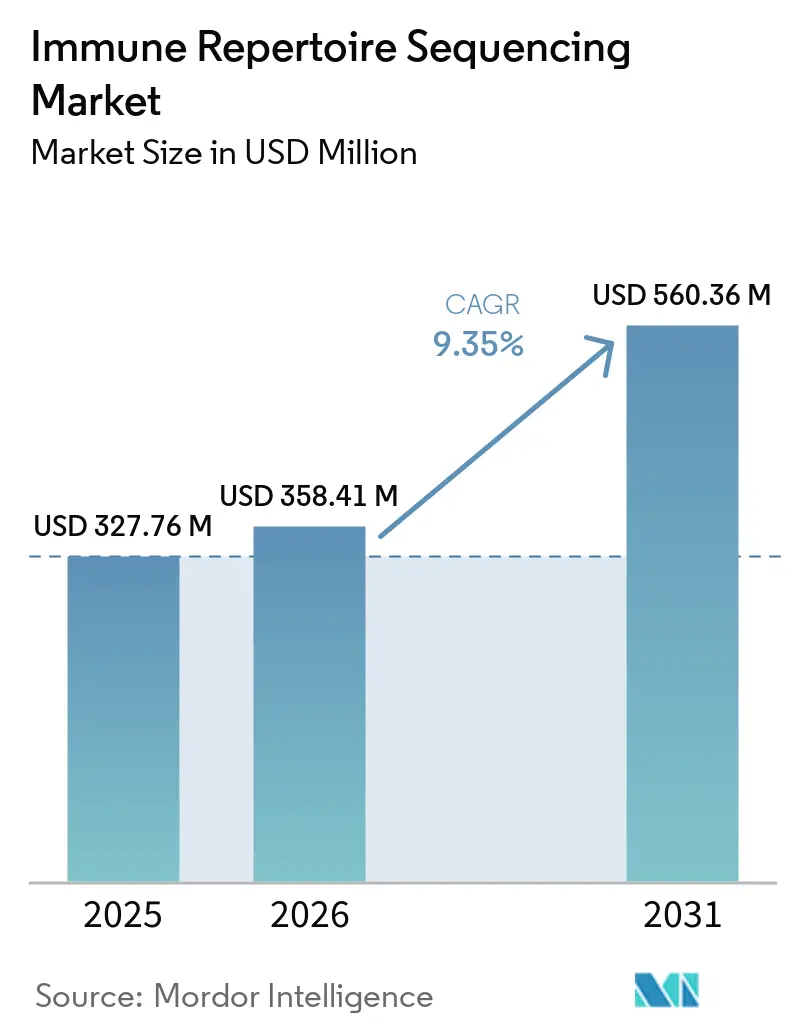
| Market Size (2026) | USD 358.41 Million |
| Market Size (2031) | USD 560.36 Million |
| Growth Rate (2026 - 2031) | 9.35 % |
| Fastest Growing Market | Asia-Pacific |
| Largest Market | North America |
| Market Concentration | Medium |
Major Players *Disclaimer: Major Players sorted in no particular order Image © Mordor Intelligence. Reuse requires attribution under CC BY 4.0. | |
Immune Repertoire Sequencing Market Analysis by Mordor Intelligence
The Immune Repertoire Sequencing Market was valued at USD 327.76 million in 2025 and is estimated to reach USD 358.41 million in 2026. The market is projected to grow further to USD 560.36 million by 2031, registering a CAGR of 9.35% during the forecast period from 2026 to 2031.
Growth in the immune repertoire sequencing market is increasingly tied to translational medicine programs, where pharmaceutical sponsors use immune profiling in biomarker plans, patient selection work, response assessment, and clinical development decisions that require comparable evidence across a program. Oncology remains central because T-cell receptor metrics can support response assessment and cell therapy research, including checkpoint inhibitor studies, tumor-infiltrating lymphocyte programs, and adoptive treatment approaches. Vaccine studies, autoimmune research, and transplantation monitoring broaden the set of settings that require repeat testing. Reusable adaptive immune receptor repertoire datasets also support machine-learning models for receptor and antibody discovery, allowing sequence information from prior cohorts to inform target selection and subsequent validation work. These developments favor providers that combine dependable assays, data analysis, and clinical validation. The immune repertoire sequencing market also depends on workflow designs that make results understandable to drug developers, laboratory teams, and treating clinicians.
Key Report Takeaways
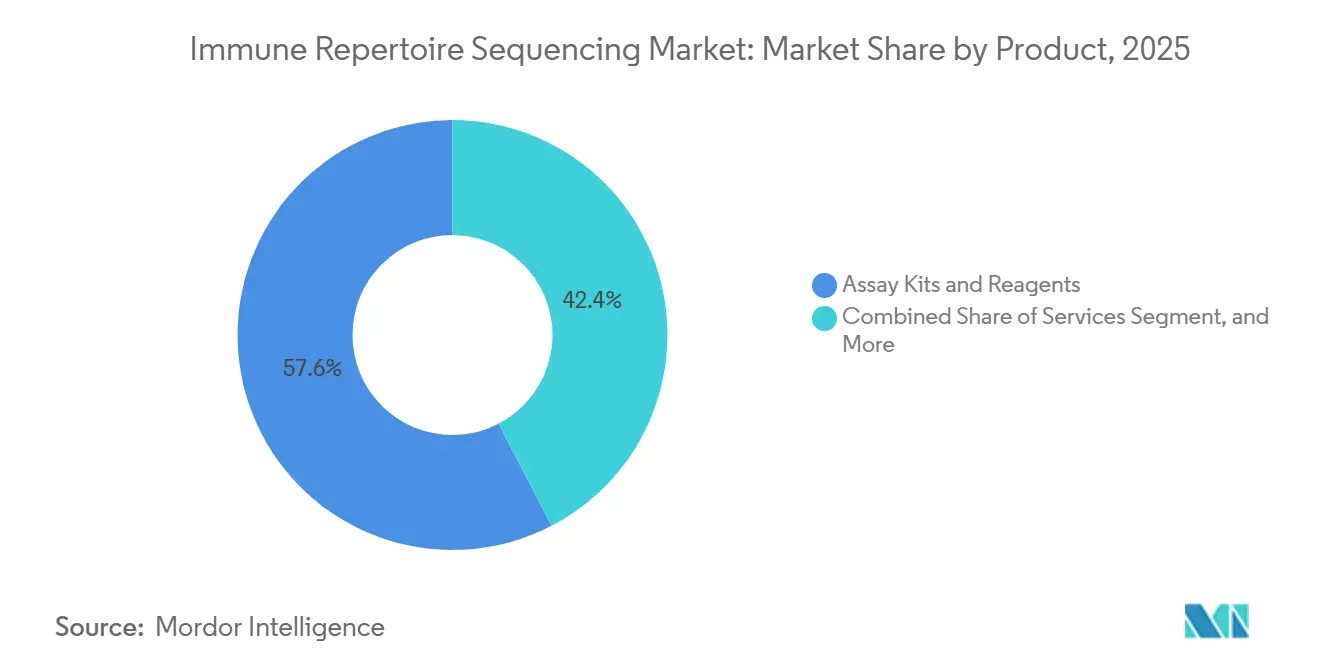
- By product, assay kits and reagents led with 57.62% revenue share in 2025, while services are forecast to expand at a 9.81% CAGR through 2031 in the immune repertoire sequencing market.
- By technology, sequencing technologies held 53.25% revenue share in 2025, while library preparation technologies are forecast to grow at a 10.22% CAGR through 2031.
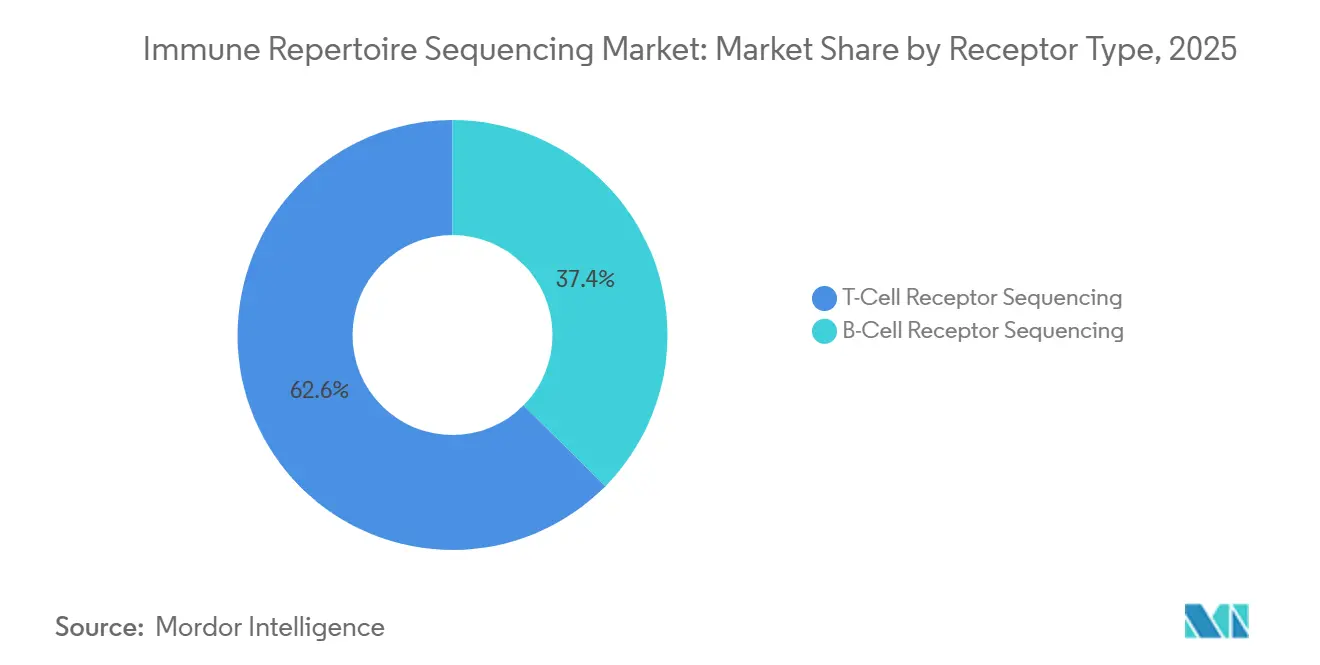
- By receptor type, T-cell receptor sequencing held 62.59% revenue share in 2025, while B-cell receptor sequencing is forecast to expand at a 10.73% CAGR through 2031 in the immune repertoire sequencing market.
- By application, oncology and cancer immunotherapy held 32.44% revenue share in 2025, while infectious diseases and vaccine development are forecast to grow at an 11.46% CAGR through 2031.
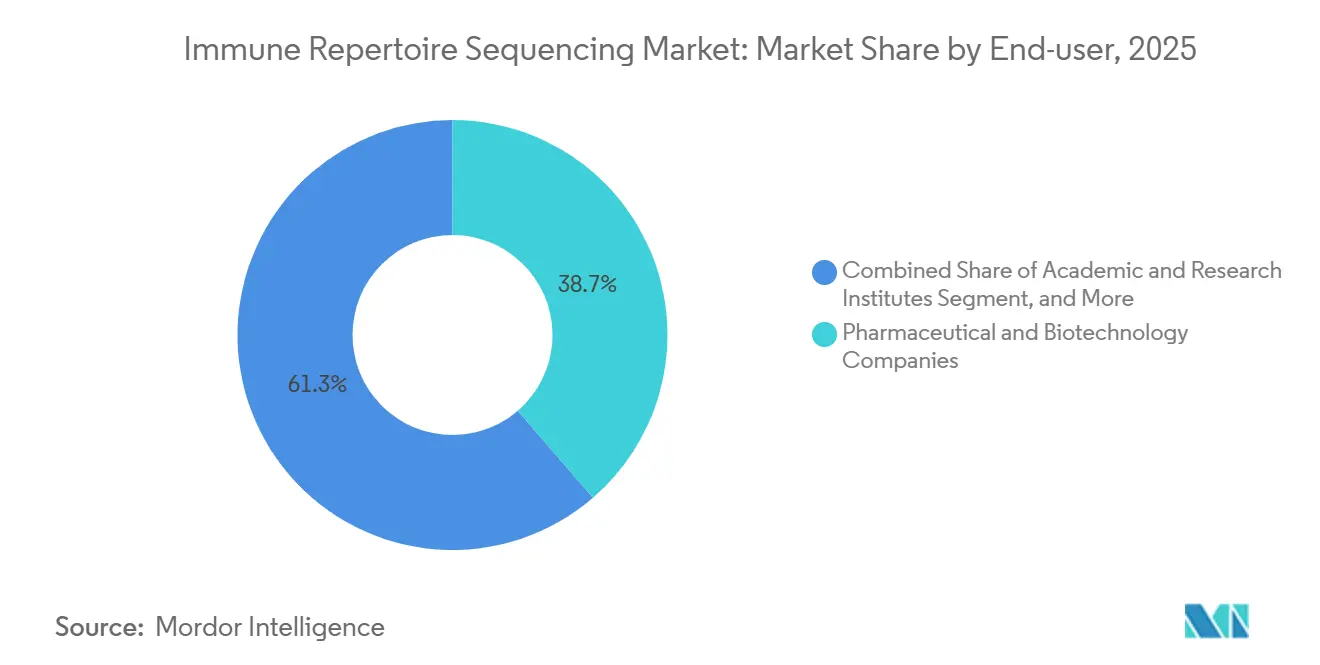
- By end user, pharmaceutical and biotechnology companies held 38.67% revenue share in 2025, while academic and research institutes is forecast to expand at an 11.95% CAGR through 2031 in the immune repertoire sequencing market.
- By geography, North America held 39.47% revenue share in 2025, while Asia-Pacific is forecast to grow at a 13.24% CAGR through 2031.
Note: Market size and forecast figures in this report are generated using Mordor Intelligence’s proprietary estimation framework, updated with the latest available data and insights as of January 2026.
Global Immune Repertoire Sequencing Market Trends and Insights
Drivers Impact Analysis*
| Driver | (~) % Impact on CAGR Forecast | Geographic Relevance | Impact Timeline |
|---|---|---|---|
| Precision Immuno-Oncology and Cell Therapy Programs | +2.5% | Global, concentrated in North America and EU | Short term (≤ 2 years) |
| Vaccine and Infectious Disease Repertoire Studies | +1.6% | Global, with strong traction in North America, EU, and APAC | Medium term (2-4 years) |
| NGS Immune Profiling in Autoimmune Research | +1.4% | North America and EU core, with spillover to APAC | Medium term (2-4 years) |
| Longitudinal Monitoring in Transplantation and MRD | +1.0% | North America and EU, with APAC emerging | Short term (≤ 2 years) |
| Paired-Chain and Full-Length Receptor Discovery | +0.8% | North America, EU, South Korea, and Japan | Medium term (2-4 years) |
| AIRR Datasets for AI-Assisted Discovery | +0.6% | Global, led by North America and EU research consortia | Long term (≥ 4 years) |
| Source: Mordor Intelligence | |||
Expansion of Precision Immuno-Oncology and Cell Therapy Biomarker Programs
Immune repertoire data is becoming a defined biomarker endpoint in later-stage immuno-oncology trials rather than remaining a purely exploratory research tool. A 2025 study found that baseline T-cell receptor clonality had value as a response biomarker in non-small cell lung cancer treated with immunochemotherapy.[1] An AACR 2026 presentation described a 96-well workflow for scalable T-cell receptor chain pairing and immunophenotyping from cancer-associated T cells.[2] For the immune repertoire sequencing market, this shifts purchasing toward validated assays and specialized service providers because sponsors need reproducible clinical-grade data across studies, sites, and patient populations. Adaptive Biotechnologies signed 2 nonexclusive immune receptor data licensing agreements with Pfizer in 2025, showing that curated receptor data can be used beyond one testing project. The immune repertoire sequencing market therefore benefits when biomarker strategy, data licensing, and treatment development progress together.
Growing Use of Repertoire Data in Vaccine, Autoimmune, and Infectious Disease Studies
Within the immune repertoire sequencing market, vaccine programs can create recurring test demand because immune responses are measured at several development, safety, and follow-up points. A 2026 Nature Immunology study reported that B-cell receptor sequencing detected changes in IgG clonotype diversity and intraclonal expansion after quadrivalent mRNA influenza vaccination that conventional titer testing did not capture.[3] The CORSA study used T-cell receptor sequencing to identify clonotype-level differences between lymphoma patients and healthy controls following SARS-CoV-2 mRNA vaccination.[4] In Crohn's disease, high-throughput B-cell profiling identified isotype switching patterns in inflamed colon tissue. Research in multiple sclerosis also linked immunoglobulin signatures to disease patterns and treatment responses. These uses give the immune repertoire sequencing market demand sources that are not limited to oncology.
Rising Demand for Longitudinal Monitoring in Transplantation and MRD
Longitudinal monitoring is moving immune profiling closer to routine clinical decisions in hematology and transplantation, creating a recurring use case for the immune repertoire sequencing market. The clonoSEQ Clinical Laboratory Fee Schedule rate was USD 2,007 per test from January 1, 2025, and Medicare coverage was later expanded to mantle cell lymphoma surveillance. That coverage supports testing during treatment-free remission every 6 months for up to 5 years, giving physicians a defined surveillance schedule rather than an ad hoc testing pathway. Evidence described in the 2026 Frontiers work indicates that early T-cell diversity metrics after hematopoietic stem-cell transplantation can predict acute myeloid leukemia relapse risk more sensitively than whole-blood chimerism analysis. The operational need is repeatable reporting across multiple time points, not a single sequencing event. This supports the immune repertoire sequencing market through continued use of assay kits, sequencing capacity, and clinical data interpretation services.
Scale-Up of Paired-Chain, Full-Length, and AI-Assisted Receptor Discovery Workflows
Paired-chain and full-length receptor workflows are important to the immune repertoire sequencing market because they retain biological relationships that bulk sequencing can miss. The immuneML platform in 2026 included unsupervised learning, generative modeling, and protein language model embeddings for immune receptor analysis. A 2026 paper described how deep learning can model clonal evolution, infer antigen specificity, and generate antibodies with selected properties. These capabilities turn data from a single study into an input for later discovery programs. Pharmaceutical users can reduce early screening cycles when datasets are well-annotated and interoperable. The resulting opportunity in the immune repertoire sequencing market lies in premium library preparation, paired-chain analysis, and curated data services rather than raw sequence output alone.
Restraints Impact Analysis*
| Restraint | (~) % Impact on CAGR Forecast | Geographic Relevance | Impact Timeline |
|---|---|---|---|
| Capital Intensity and Specialized Bioinformatics Needs | -1.3% | Global, most pronounced in APAC emerging markets and South America | Long term (≥ 4 years) |
| Clinical Validation and Reimbursement Limits | -0.6% | Global, most acute in EU, APAC, and emerging markets | Medium term (2-4 years) |
| Loss of Chain Pairing and Tissue Context in Bulk Assays | -0.4% | Global | Short term (≤ 2 years) |
| Privacy, Cross-Border Governance, and Interoperability Friction | -0.4% | EU and regions with GDPR-equivalent frameworks, and APAC | Medium term (2-4 years) |
| Source: Mordor Intelligence | |||
High Capital Intensity, Specialized Bioinformatics Requirements, and Bulk Assay Limits
High equipment costs and scarce data science expertise keep advanced immune profiling concentrated in well-funded institutions. Laboratories must obtain sequencing instruments and consumables while also maintaining expertise in V(D)J alignment, clonotype calling, and statistical analysis. A 2025 review of clinical AIRR-seq deployment identified underrepresented germline and HLA reference databases as a source of potential misassignment errors in non-European populations. High-throughput bulk assays can also lose chain pairing and tissue context, which limits their use where full biological resolution is required. Centralized certified laboratories can address some capability gaps, but they do not remove the costs of sample transfer, data linkage, specialist interpretation, and compliance arrangements needed when patient information crosses institutional or national boundaries. These constraints slow the immune repertoire sequencing market in emerging research settings and favor providers with integrated workflows.
Limited Clinical Validation, Reimbursement, and Data Governance Pathways
Clinical adoption remains uneven because scientific utility does not automatically create reimbursement or regulatory approval. The United States has an established payment route for clonoSEQ, while many European and Asia-Pacific laboratories face separate validation and payment requirements. EU IVDR 2017/746 requires clinical performance evidence, post-market surveillance, and quality systems for diagnostic products. Software used as a medical device also requires risk-based assessment and interpretable performance evidence, which can be difficult for complex deep-learning classifiers. Privacy rules and cross-border governance requirements can make shared data resources harder to build, especially where regulatory frameworks mirror GDPR. Until these barriers ease, the immune repertoire sequencing market will continue to have different clinical adoption rates across regions.
*Our forecasts treat driver/restraint impacts as directional, not additive. The impact forecasts reflect baseline growth, mix effects, and variable interactions.
Segment Analysis
By Product: Consumables Lead, Service Revenue Catching Up
Assay kits and reagents held 57.62% of the immune repertoire sequencing market share in 2025. Each sequencing run uses library preparation reagents, target enrichment panels, and sequencing chemistry, which makes consumable demand repeatable regardless of instrument age. Capture-based enrichment kits can increase per-run reagent spending because they require more complex panels and validation than older amplicon methods. Instruments and software held lower revenue positions, but instrument placements create future consumable demand. Software licenses are increasingly bundled into platform agreements, strengthening customer retention. These conditions keep kits and reagents as the revenue foundation of the immune repertoire sequencing industry, and they make the immune repertoire sequencing market less dependent on one-time capital equipment purchases.
Services is forecast to expand at a 9.81% CAGR through 2031, the highest rate in the product segmentation. Pharmaceutical sponsors often need validated AIRR-seq results but do not maintain internal clinical-grade processing capability. Specialized providers are also adding clinical support and patient stratification services that give oncologists interpretable immune repertoire findings. This integration of testing and interpretation was limited in AIRR-seq services before 2024, when suppliers more commonly delivered sequence outputs without the same degree of workflow support for clinical users. Parse Biosciences, now a QIAGEN company, introduced next-generation Evercode TCR and BCR kits and an integrated immune repertoire and transcriptome workflow on its Trailmaker platform in early 2026. Such integrated offerings may raise the value of kit bundles while increasing pressure on standalone software vendors, as customers favor fewer handoffs between library preparation, sequencing, and downstream interpretation.

By Technology: Platform Incumbency Meets Library Prep Innovation
Sequencing technologies accounted for 53.25% of revenue in 2025. Illumina's short-read platforms have a broad installed base across academic and clinical facilities, including NextSeq and NovaSeq systems. In July 2026, Illumina announced a NovaSeq X roadmap addition with a 1.5B 600-cycle kit designed for immune repertoire studies. Longer reads can improve CDR3 coverage and reduce the need for paired-end overlap assembly, a practical benefit where users seek more complete receptor information without adding complex reconstruction steps. Platform vendors retain a strong position because installed instruments influence later reagent and workflow selections. This installed base supports continuing demand in the immune repertoire sequencing market, because laboratories can adopt updated kits and longer-read options while retaining familiar operational processes, staff skills, and established vendor support structures.
Library preparation technologies are forecast to grow at a 10.22% CAGR through 2031. Growth in the immune repertoire sequencing market reflects multiplexed primer panels that profile 7 T-cell receptor and B-cell receptor chains from 1 sample. UMI-based error correction improves detection of rare clonotypes, while FFPE-compatible kits allow retrospective analysis of archived biopsies. Bioinformatics and data analysis technologies have a smaller current base but gain relevance as cloud-hosted and AI-enabled analysis expands. QIAGEN introduced QIAseq xHYB Long Read Panels in July 2025 for HLA typing, structural variants, and immune profiling with PacBio's Vega benchtop sequencer. Long-read methods can resolve full V(D)J sequences and IgH constant-region isoforms without the same level of computational reconstruction required by short-read workflows.
By Receptor Type: TCR Breadth Contrasted with BCR’s Pharmacological Upside
T-cell receptor sequencing represented 62.59% of revenue in 2025. It is widely used as a biomarker readout in checkpoint inhibitor studies, tumor-infiltrating lymphocyte programs, and CAR-T development. A study of advanced melanoma patients linked diversity in the peripheral repertoire after infusion to objective responses following adoptive cell transfer. These metrics give treatment developers a way to assess immune activity beyond preclinical tumor models. T-cell receptor analysis, therefore, remains closely connected to clinical immuno-oncology demand. Its wide use maintains a substantial revenue base in the immune repertoire sequencing market, because the same clinical research areas often require baseline, on-treatment, and follow-up samples for meaningful comparison.
B-cell receptor sequencing is projected to grow at a 10.73% CAGR through 2031. Antibody discovery programs use B-cell repertoires to identify rare lead antibodies from convalescent and vaccinated donor cohorts, linking a research measurement workflow to a defined early-stage drug discovery objective. In B-cell malignancies, assays that track clonal immunoglobulin sequences can provide sensitive early relapse signals. A large-scale paired heavy-light chain analysis showed that standard clonal family methods can introduce systematic bias, while machine-learning corrections improved resolution. This raises the importance of validated paired-chain workflows in commercial service delivery. As B-cell applications move from discovery toward monitoring, demand should favor premium libraries and analysis software.
By Application: Oncology Anchors the Revenue Base While Infectious Disease Accelerates
Oncology and cancer immunotherapy held 32.44% of revenue in 2025. Revenue is concentrated in sponsor-funded translational studies and FDA-cleared minimal residual disease testing for hematological cancers. Adaptive Biotechnologies reported 105,587 clonoSEQ tests in 2025, a 39% year-over-year increase. Medicare coverage included multiple myeloma, chronic lymphocytic leukemia, B-cell acute lymphoblastic leukemia, diffuse large B-cell lymphoma, and mantle cell lymphoma. The clinical payment structure helps convert sequencing from a research procedure into a repeat diagnostic service. Oncology, therefore, anchors the current commercial base of the immune repertoire sequencing market, where clinical validation, regulatory clearance, reimbursement, and pharmaceutical research activity are more developed than in many other applications.
Infectious diseases and vaccine development are forecast to grow at an 11.46% CAGR through 2031. mRNA vaccine programs create demand for B-cell and T-cell readouts that assess memory responses, clonal diversity, and expansion patterns more precisely than serological assays alone, especially during repeated immunogenicity evaluations. Autoimmune and inflammatory diseases also remain a large research application, especially for B-cell monitoring in therapy trials. Transplantation and immune tolerance represent a smaller application area with growing activity in relapse and rejection monitoring. EU IVDR 2017/746 and the FDA risk-based framework for software as a medical device shape diagnostic deployment in oncology and transplantation. Harmonized validation standards could improve transparency for suppliers and clinical laboratories.
By End User: Pharma Drives Volume, Academia Drives Methodological Innovation
Pharmaceutical and biotechnology companies accounted for 38.67% of end-user revenue in 2025. They purchase services and high-value assay kits from early immunogenicity screening through companion diagnostic development, creating demand at discovery, translational, clinical, and post-validation stages of the development lifecycle. Nonexclusive data licensing arrangements, including Adaptive Biotechnologies' 2025 agreements with Pfizer, show that receptor databases can be treated as an informatics asset. Their purchasing requirements favor validated turnaround times, strong data quality, and work that fits development protocols. Pharmaceutical sponsors also create demand for repeated sample testing across trials. This makes them the largest buying group in the immune repertoire sequencing industry.
Academic and research institutes are forecast to grow at a 11.95% CAGR through 2031. Open AIRR datasets, lower sequencing costs, and cloud analysis tools allow smaller laboratories to conduct repertoire studies with lower capital requirements, although access to strong reference databases and specialist interpretation remains uneven across research settings. The AIRR-ML-25 challenge in 2025 brought academic groups and benchmarking organizations together to evaluate machine-learning approaches for immune repertoire classification. Such work helps define future methods that commercial laboratories may later use. Clinical diagnostic laboratories form a third major group and are becoming more active as reimbursement expands for immune repertoire-based MRD testing. Their growth depends on national authorization, validated assay performance, and workable payment systems.
Geography Analysis
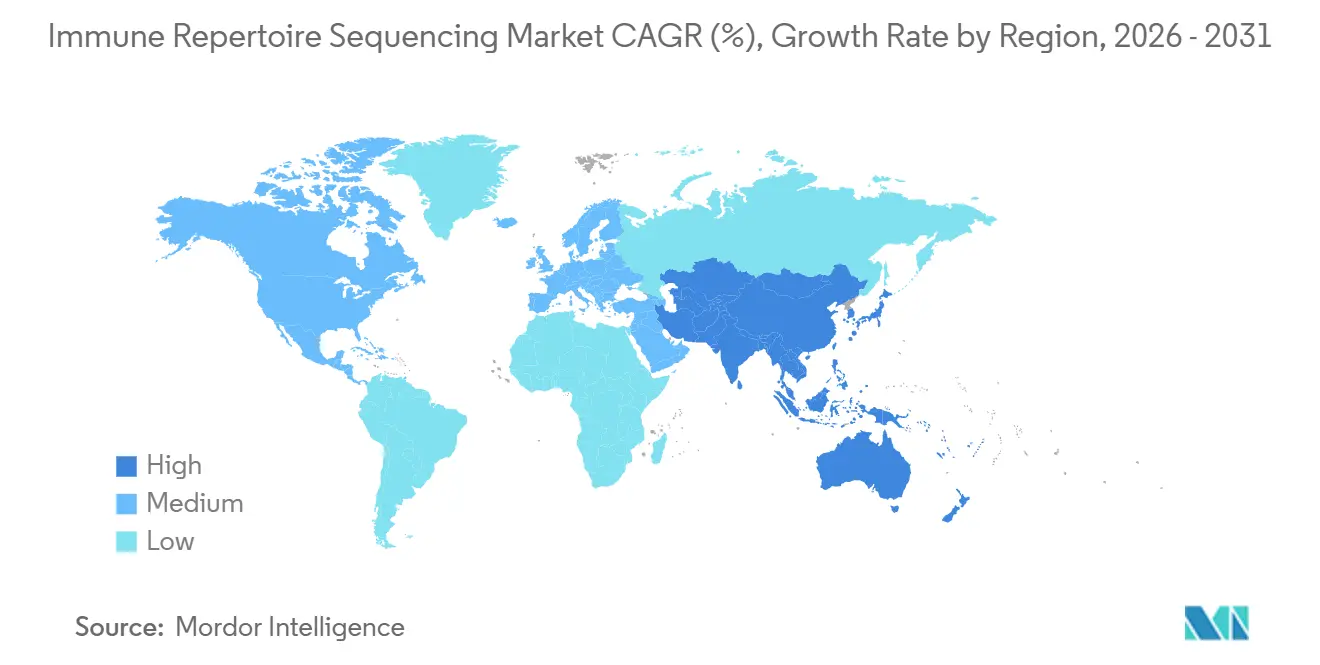
North America accounted for 39.47% of the immune repertoire sequencing market share in 2025. The region has the highest concentration of FDA-cleared immune repertoire diagnostic products, large pharmaceutical research programs, and extensive academic medical center capacity. The United States has a clinical reimbursement structure for immune repertoire tests, with clonoSEQ set at USD 2,007 per test in 2025 and an episode price of USD 8,029 across covered indications. Canada contributes through academic consortium-based immune monitoring. Mexico has an earlier-stage base centered on academic imports of international assay kits, which leaves adoption more closely tied to research budgets and access to suppliers than to established clinical reimbursement. These conditions keep North America at the center of the immune repertoire sequencing market.
Europe is the second-largest regional segment. Germany, the United Kingdom, and France lead adoption through academic consortia, including EuroClonality and EuroMRD, that support quality frameworks for NGS-based clonality testing. Clinical laboratories across the region are gradually applying these frameworks, which support more consistent NGS-based clonality testing while leaving individual laboratories to meet local clinical and administrative requirements. EU IVDR 2017/746 can delay laboratory-developed test deployments because it requires more formal compliance. The same requirements can strengthen the position of vendors that achieve certified in vitro diagnostic status, because those vendors can offer laboratories a clearer path through compliance expectations. The European market combines a strong research foundation with a more demanding route to clinical commercialization. For the immune repertoire sequencing market, this creates demand for suppliers that can support evidence generation and documented quality processes.
Asia-Pacific is forecast to grow at a 13.24% CAGR through 2031, the fastest regional rate. China's National Genomics Data Center and provincial precision medicine programs support high-volume sequencing infrastructure, while BGI includes immune repertoire sequencing in its multiomics service portfolio. IMMUQUAD introduced 7-chain concurrent TCR and BCR sequencing using 5'RACE Ultra construction, which supports full-length receptor profiling from 1 sample. Japan and South Korea add demand through academic genomics programs, government-backed precision oncology infrastructure, and research activity that supports adoption of advanced immune profiling methods. India is emerging as a cost-competitive service location for international clinical-trial sample processing. The Middle East, Africa, and South America remain early adoption regions, where Saudi Arabia, the UAE, South Africa, Brazil, and Argentina provide initial demand centers. Saudi Arabia and the UAE are investing in genomics under health transformation programs, while South Africa benefits from infectious disease surveillance networks. Brazil’s Fiocruz institutes and academic networks in Argentina are important sources of demand. High import duties on sequencing instruments and limited domestic reagent production continue to constrain wider uptake, despite government-funded research pilots and distributor expansion.
Competitive Landscape
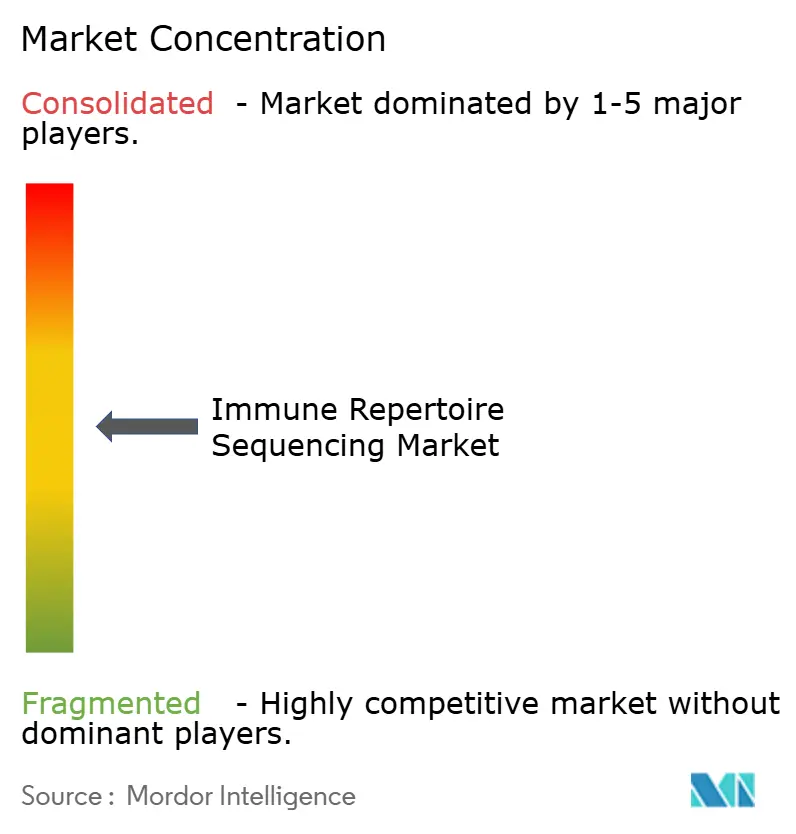
The immune repertoire sequencing market has a moderately fragmented, 2-tier structure. Platform companies control instrument placement and reagent ecosystems, while specialized providers compete on assay design, bioinformatics, and clinical validation. Illumina has the largest installed base for many immune repertoire workflows, and its July 2026 NovaSeq X roadmap addition extends its relevance to longer-read studies. Oxford Nanopore Technologies and Pacific Biosciences are relevant in full-length receptor sequencing, where computational reconstruction of short reads is less suitable, particularly when the full V(D)J sequence and constant-region information are important. QIAGEN uses hybrid-capture chemistry compatible with PacBio's Vega platform to address that need. This division means companies can compete at different points in the workflow without offering every component.
Adaptive Biotechnologies occupies a distinct position because clonoSEQ is an FDA-cleared commercial AIRR-seq diagnostic product. The company reported USD 212.3 million in MRD revenue for 2025, up 46% year over year. Its 2025 deployment of NovaSeq X Plus for clonoSEQ aimed to improve clinical sequencing throughput and quality. It also integrated clonoSEQ with Flatiron Health OncoEMR, reducing ordering friction for oncology practices. In January 2026, CareDx and 10x Genomics launched the ImmuneScape program, combining Chromium Flex single-cell sequencing and spatial biology for transplant research. These actions show competition shifting toward workflows that combine laboratory performance with usable clinical and research data, rather than treating sequencing, spatial biology, and clinical reporting as independent activities.
Immune Repertoire Sequencing Industry Leaders
-
10x Genomics, Inc.
-
Agilent Technologies, Inc.
-
BGI Group
-
CD Genomics
-
F. Hoffmann-La Roche Ltd
- *Disclaimer: Major Players sorted in no particular order
Recent Industry Developments
- July 2026: Illumina, Inc. expanded its NovaSeq X roadmap with a 1.5B 600-cycle flow cell kit. The new kit specifically targeted immune repertoire studies, metagenomics, and amplicon sequencing with longer read lengths, reinforcing Illumina's position as a platform for clinical-grade AIRR-seq workflows and addressing a read-length limitation for full CDR3 region coverage.
- January 2026: CareDx and 10x Genomics launched the ImmuneScape multiomics program. The initiative utilized 10x Genomics' Xenium spatial biology and Chromium Flex single-cell platforms to map antibody-mediated rejection and microvascular inflammation in transplant patients, aiming to develop next-generation clinical diagnostics for personalized transplant medicine.
- January 2026: Parse Biosciences, a QIAGEN company, partnered with Graph Therapeutics to build an immune perturbation atlas. The collaboration leveraged Parse's GigaLab whole-transcriptome single-cell technology and Graph's lab-in-the-loop platform to profile immune disease patient cells under systematic perturbation for AI-driven drug discovery.
Global Immune Repertoire Sequencing Market Report Scope
As per the scope of the report, immune repertoire sequencing is a specialized next‑generation sequencing (NGS) technique used to profile the diversity of T‑cell receptors (TCRs) and B‑cell receptors (BCRs) in the immune system. It helps researchers understand how the immune repertoire changes in diseases, vaccines, and therapies. This method is crucial for oncology, autoimmune disease research, and immunotherapy monitoring, as it reveals clonal expansions and immune diversity patterns.
The immune repertoire sequencing market is segmented by product, technology, receptor type, application, end-user, and geography. By product, the market is segmented into instruments, assay kits & reagents, services, and software. By technology, the market is segmented into sequencing technologies, library preparation technologies, and others. By receptor type, the market is segmented into T-cell receptor sequencing and B-cell receptor sequencing. By application, the market is segmented into oncology & cancer immunotherapy, autoimmune & inflammatory diseases, infectious diseases & vaccine development, transplantation & immune tolerance, and others. By end-user, the market is segmented into academic and research institutes, pharmaceutical and biotechnology companies, clinical diagnostic laboratories, and others. The geography segment is further divided into North America, Europe, Asia-Pacific, the Middle East and Africa, and South America. The report also covers the estimated market sizes and trends for 17 countries across major regions globally. The report offers the market size and forecasts in value (USD) for the above segments.
| Instruments |
| Assay Kits & Reagents |
| Services |
| Software |
| Sequencing Technologies |
| Library Preparation Technologies |
| Others |
| T-Cell Receptor Sequencing |
| B-Cell Receptor Sequencing |
| Oncology & Cancer Immunotherapy |
| Autoimmune & Inflammatory Diseases |
| Infectious Diseases & Vaccine Development |
| Transplantation & Immune Tolerance |
| Others |
| Academic and Research Institutes |
| Pharmaceutical and Biotechnology Companies |
| Clinical Diagnostic Laboratories |
| Others |
| North America | United States |
| Canada | |
| Mexico | |
| Europe | Germany |
| United Kingdom | |
| France | |
| Italy | |
| Spain | |
| Rest of Europe | |
| Asia-Pacific | China |
| India | |
| Japan | |
| Australia | |
| South Korea | |
| Rest of Asia-Pacific | |
| Middle East and Africa | GCC |
| South Africa | |
| Rest of Middle East and Africa | |
| South America | Brazil |
| Argentina | |
| Rest of South America |
| By Product | Instruments | |
| Assay Kits & Reagents | ||
| Services | ||
| Software | ||
| By Technology | Sequencing Technologies | |
| Library Preparation Technologies | ||
| Others | ||
| By Receptor Type | T-Cell Receptor Sequencing | |
| B-Cell Receptor Sequencing | ||
| By Application | Oncology & Cancer Immunotherapy | |
| Autoimmune & Inflammatory Diseases | ||
| Infectious Diseases & Vaccine Development | ||
| Transplantation & Immune Tolerance | ||
| Others | ||
| By End-user | Academic and Research Institutes | |
| Pharmaceutical and Biotechnology Companies | ||
| Clinical Diagnostic Laboratories | ||
| Others | ||
| By Geography | North America | United States |
| Canada | ||
| Mexico | ||
| Europe | Germany | |
| United Kingdom | ||
| France | ||
| Italy | ||
| Spain | ||
| Rest of Europe | ||
| Asia-Pacific | China | |
| India | ||
| Japan | ||
| Australia | ||
| South Korea | ||
| Rest of Asia-Pacific | ||
| Middle East and Africa | GCC | |
| South Africa | ||
| Rest of Middle East and Africa | ||
| South America | Brazil | |
| Argentina | ||
| Rest of South America | ||
Key Questions Answered in the Report
What is driving demand for immune repertoire sequencing?
Use is expanding in immuno-oncology biomarkers, cell therapy research, vaccine studies, autoimmune research, transplantation monitoring, and minimal residual disease testing.
How large is the immune repertoire sequencing market?
The market is estimated at USD 358.41 million in 2026 and is forecast to reach USD 560.36 million by 2031, at a 9.35% CAGR.
Which product category has the largest revenue base?
Assay kits and reagents led with 57.62% revenue share in 2025 because every sequencing run requires new consumables.
Which application is expected to grow fastest?
Infectious diseases and vaccine development is forecast to grow at an 11.46% CAGR through 2031.
Why is North America the leading region?
North America held 39.47% revenue share in 2025, supported by clinical diagnostics, pharmaceutical research, academic centers, and established reimbursement for clonoSEQ.
What limits clinical deployment of AIRR-seq tests?
Capital requirements, specialist bioinformatics needs, clinical validation, reimbursement gaps, and data governance requirements constrain broader clinical adoption.