
Hypertrophic Cardiomyopathy Therapeutics Market Size and Share
Market Overview
| Study Period | 2020 - 2031 |
|---|---|
| Market Size (2026) | USD 593.2 Million |
| Market Size (2031) | USD 707.18 Million |
| Growth Rate (2026 - 2031) | 3.56 % |
| Fastest Growing Market | Asia Pacific |
| Largest Market | North America |
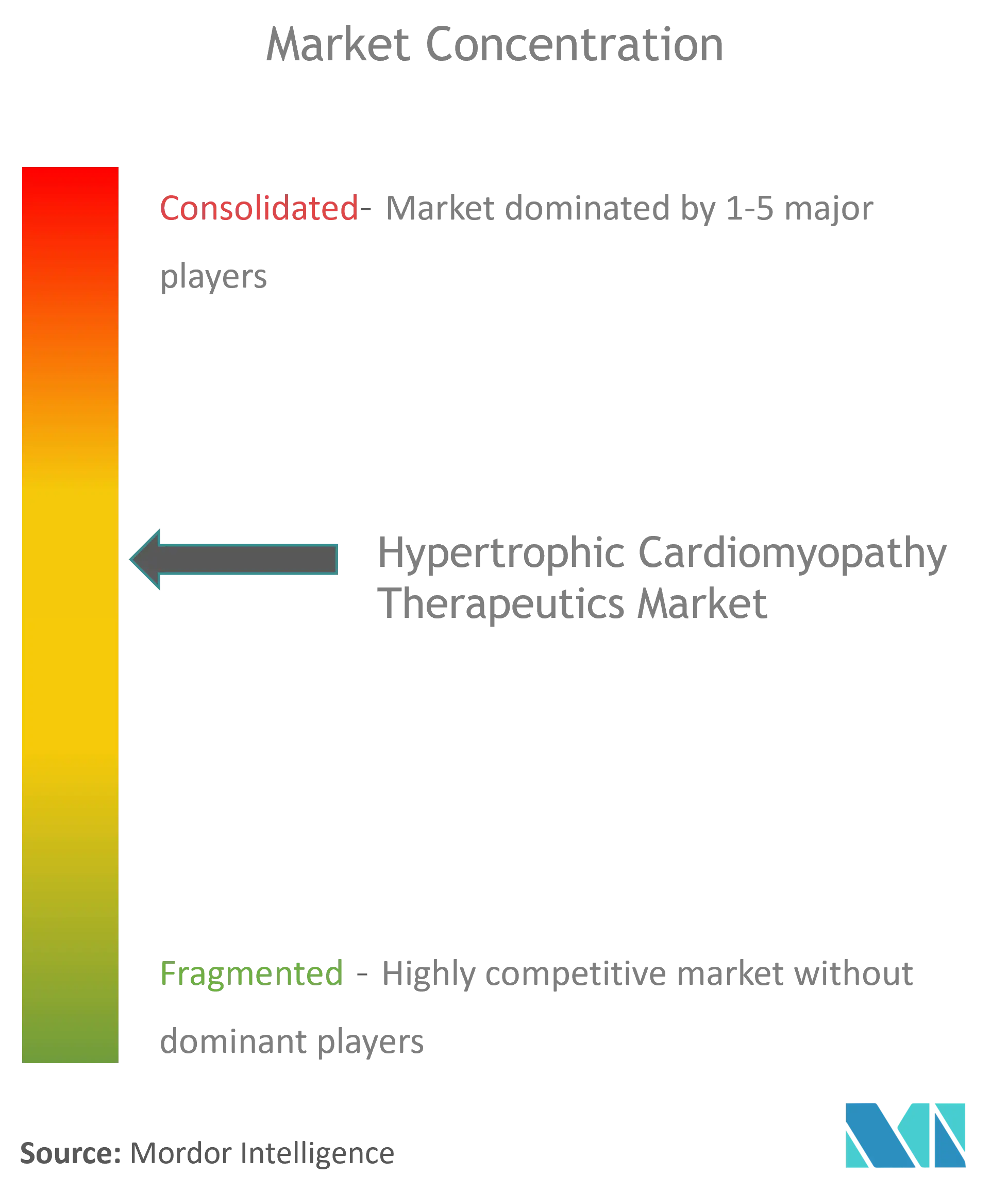
| Market Concentration | Medium |
Major Players *Disclaimer: Major Players sorted in no particular order Image © Mordor Intelligence. Reuse requires attribution under CC BY 4.0. | |
Hypertrophic Cardiomyopathy Therapeutics Market Analysis by Mordor Intelligence
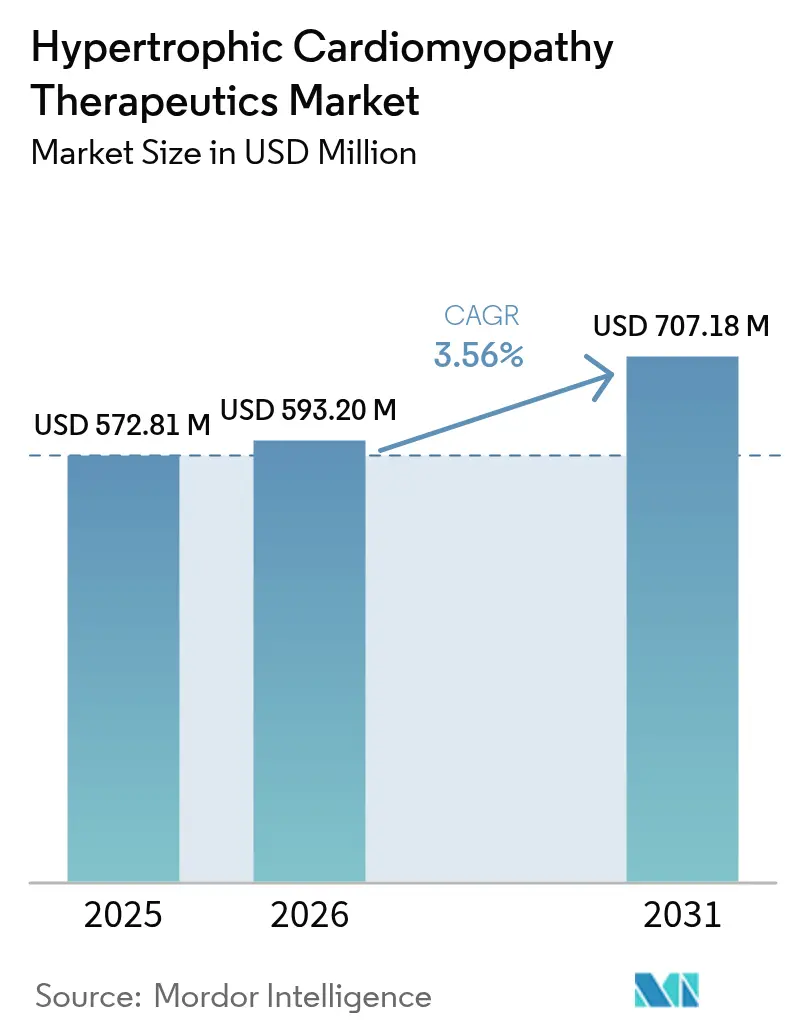
The hypertrophic cardiomyopathy therapeutics market size in 2026 is estimated at USD 593.2 million, growing from 2025 value of USD 572.81 million with 2031 projections showing USD 707.18 million, growing at 3.56% CAGR over 2026-2031. A measured growth profile masks strong value creation as premium-priced cardiac myosin inhibitors replace decades-old beta-blockers, shifting treatment from symptomatic relief toward sarcomere-directed disease modification. Competitive activity is shaped by stringent regulatory oversight, orphan-drug exclusivity, and the clinical need for long-term safety data, all of which encourage disciplined launch strategies and tiered reimbursement models. Geographic momentum diverges; mature North American demand is stable but slowing, while Asia-Pacific benefits from expanding diagnostic infrastructure, national genetic testing programs, and multinational licensing alliances that collectively widen the pool of treatable patients. Digital distribution is also altering the channel mix as US REMS requirements funnel prescriptions to specialty pharmacies, accelerating online volume growth amid broader consolidation.
Key Report Takeaways
- By drug class, beta-adrenergic blocking agents held 37.15% of hypertrophic cardiomyopathy therapeutics market share in 2025, while cardiac myosin inhibitors are projected to grow at a 4.12% CAGR to 2031.
- By disease phenotype, obstructive HCM dominated with 59.85% revenue share in 2025; non-obstructive HCM is advancing at a 4.18% CAGR through 2031.
- By route of administration, oral formulations accounted for 73.90% of the hypertrophic cardiomyopathy therapeutics market size in 2025, but parenteral products are expanding at a 4.29% CAGR.
- By distribution channel, hospital pharmacies commanded 47.10% share in 2025, whereas online pharmacies lead growth at a 4.40% CAGR.
- By geography, North America led with a 40.55% share in 2025; Asia-Pacific records the highest regional CAGR at 4.09% to 2031.
Note: Market size and forecast figures in this report are generated using Mordor Intelligence’s proprietary estimation framework, updated with the latest available data and insights as of 2026.
Market Trends and Insights
Drivers Impact Analysis of Hypertrophic Cardiomyopathy Therapeutics Market*
| Driver | (~) % Impact on CAGR Forecast | Geographic Relevance | Impact Timeline |
|---|---|---|---|
| FDA approvals for first-in-class cardiac myosin inhibitors | +1.2% | Global, led by North America & Europe | Medium term (2-4 years) |
| Rising genetic screening and cascade testing of at-risk relatives | +0.8% | North America & EU, expanding to APAC | Long term (≥4 years) |
| Growing prevalence of obesity and sedentary lifestyle | +0.6% | Global, concentrated in developed markets | Long term (≥4 years) |
| Orphan-drug incentives accelerating late-stage pipelines | +0.7% | North America & EU regulatory frameworks | Medium term (2-4 years) |
| AI-enabled echocardiography improving diagnosis rates | +0.5% | Global, early adoption in developed markets | Short term (≤2 years) |
| Payer shift toward outcomes-based contracting | +0.4% | North America & select EU markets | Medium term (2-4 years) |
| Source: Mordor Intelligence | |||
FDA approvals for first-in-class cardiac-myosin inhibitors
Accelerated endorsements for mavacamten and label refinements that cut mandatory echocardiography monitoring from quarterly to biannual intervals improve prescriber confidence and patient convenience [1]. Community cardiologists now feel more comfortable initiating therapy outside specialized centers, broadening access beyond academic hubs. The upcoming aficamten decision, expected in December 2025, may establish a duopoly that tempers price escalation while encouraging evidence-based switching. Such regulatory momentum signals a maturation phase in which mechanistic precision, not symptom palliation, determines standard of care. Nevertheless, the non-obstructive trial miss underscores phenotype-specific complexity that could slow expansive label gambits.
Rising genetic screening and cascade testing of at-risk relatives
Nationwide programs integrating next-generation sequencing with cardiology referral pathways enlarge the diagnosed population and reposition HCM from a late-stage discovery to a proactively managed hereditary condition. Family cascade testing detects asymptomatic carriers earlier, and AI-enhanced ECG tools boasting 94% sensitivity shorten diagnostic odysseys. Asian cohorts, historically underdiagnosed, show rising identification rates as regional payors reimburse panel tests and governments subsidize counseling, reinforcing Asia-Pacific’s outsized growth trajectory. Economic ramifications extend to productivity gains when early intervention delays morbidity, supporting payer willingness to finance premium drugs.
AI-enabled echocardiography improving diagnosis rates
Machine-learning algorithms that automatically flag subtle hypertrophy during routine scans improve detection in primary care settings where specialist sonographers are scarce. Standardized gradient measurements reduce inter-observer variability, aiding therapy selection and streamlining REMS compliance. Wider adoption generates a virtuous cycle: higher case capture justifies specialty-clinic expansion, which in turn fuels demand for advanced treatments, further enlarging the hypertrophic cardiomyopathy therapeutics market. Such digital tools also underpin outcomes-based contracts by furnishing real-time metrics on ventricular remodeling.
Orphan-drug incentives accelerating late-stage pipelines
Seven-year US exclusivity, priority review vouchers, and reduced filing fees entice novel entrants despite a relatively small patient base. Mavacamten enjoys exclusivity through 2029, while aficamten could secure similar protection, anchoring commercial forecasts that underpin venture financing rounds for second-generation agents [2]. Smaller study sizes, permissible under orphan regulations, compress development timelines and lower capital intensity, reinforcing a pipeline dense with gene-therapy, metabolic-modulator, and small-molecule assets. Yet payers increasingly demand risk-sharing contracts that tie reimbursements to functional improvements, tempering revenue certainty.
Restraints Impact Analysis of Hypertrophic Cardiomyopathy Therapeutics Market*
| Restraint | (~) % Impact on CAGR Forecast | Geographic Relevance | Impact Timeline |
|---|---|---|---|
| Premium pricing and REMS program limiting uptake | -0.9% | Global, acute in price-sensitive markets | Short term (≤2 years) |
| Generic beta-blocker competition | -0.6% | Global, concentrated in cost-conscious segments | Medium term (2-4 years) |
| Uncertain long-term safety data for myosin inhibitors | -0.4% | Global, regulatory focus in North America & EU | Medium term (2-4 years) |
| Limited specialist prescriber base for rare cardiomyopathies | -0.3% | Global, acute in emerging markets | Long term (≥4 years) |
| Source: Mordor Intelligence | |||
Premium pricing and REMS program limiting uptake
An annual therapy cost near USD 90,000 positions mavacamten among the most expensive chronic cardiovascular drugs, restricting adoption in health systems with high patient cost-share burdens. REMS enrollment layers logistical hurdles—specialty pharmacy use, baseline and follow-up echocardiograms, and prescriber certification—that dissuade community physicians. Out-of-pocket costs can exceed USD 10,000 for patients in high-deductible plans, generating a two-tier access dynamic tied to geography and insurance. Even where assistance programs exist, administrative complexity prolongs time-to-therapy, dampening early revenue ramp. Price renegotiations or the arrival of aficamten-driven competition may temper this headwind over the medium term.
Generic beta-blocker competition
Long-patent-expired agents such as metoprolol and propranolol cost pennies per day, carry decades of safety familiarity, and require no special monitoring, securing first-line status for mildly symptomatic patients worldwide. Physicians in emerging markets default to these options due to budget constraints, and guidelines still recommend beta-blockers as initial therapy. Consequently, premium mechanisms must demonstrate clear superiority before guideline committees endorse earlier-line use. While disease-modifying advantages drive eventual switch-over, widespread generics keep price pressure high and extend the adoption curve for innovative classes.
*Our forecasts treat driver/restraint impacts as directional, not additive. The impact forecasts reflect baseline growth, mix effects, and variable interactions.
Hypertrophic Cardiomyopathy Therapeutics Market Segment Analysis
By Drug Class:
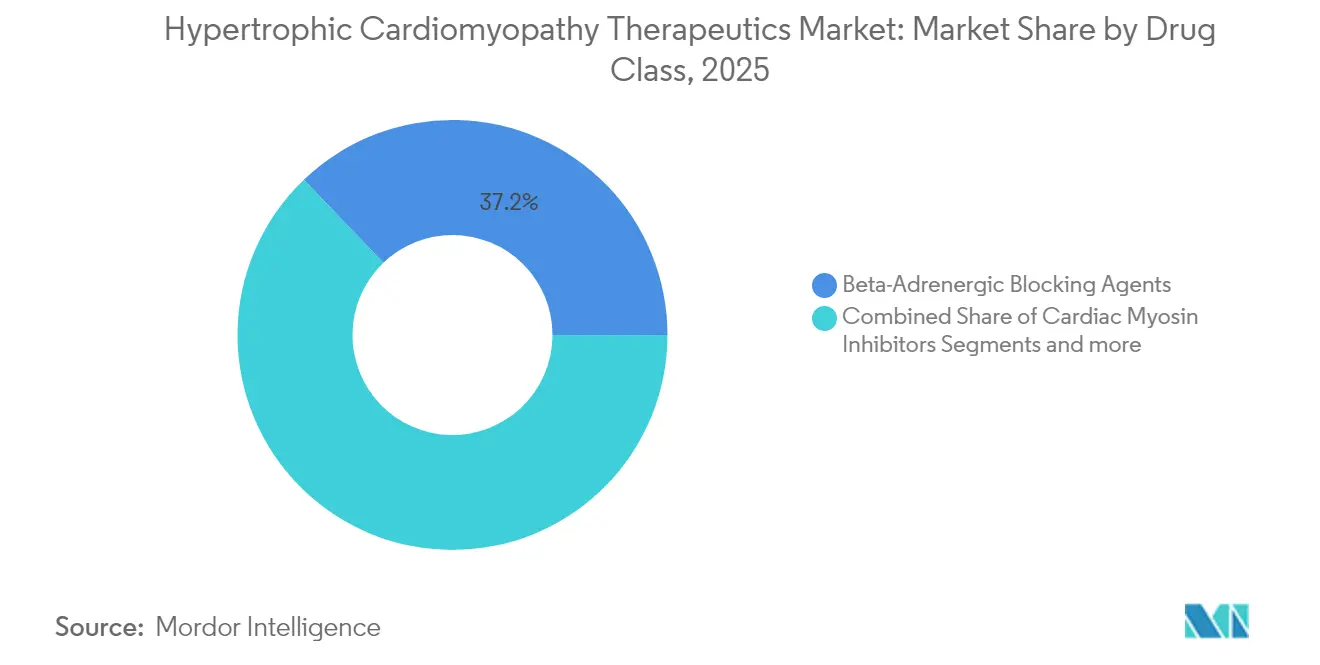
Myosin Inhibitors Challenge Beta-Blocker DominanceIn 2025, beta-adrenergic blocking agents commanded 37.15% of the hypertrophic cardiomyopathy therapeutics market, reflecting decades of clinical familiarity and broad formulary inclusion. The cardiac myosin inhibitor cohort, although nascent, is set to record a 4.12% CAGR through 2031 as growing physician comfort, guideline integration, and real-world safety validation propel uptake. Premium positioning will likely persist despite competitive entry because mechanistic differentiation supports measurable symptom relief and ventricular remodeling. The hypertrophic cardiomyopathy therapeutics market size for myosin inhibitors is forecast to capture an incremental USD 112.8 million by 2031, offsetting generic erosion in traditional classes.
Second-line classes retain niche relevance. Calcium channel blockers provide an alternative for beta-blocker-intolerant patients, particularly where bradycardia risk is high. Antiarrhythmic use centers on atrial fibrillation management, while anticoagulants expand as physicians increasingly recognize embolic stroke risk in HCM. Gene-therapy and metabolic-modulator pipelines housed within the “Others” segment promise step-change innovation, potentially resetting class hierarchies after 2030. Overall, competitive repositioning around disease modification solidifies the hypertrophic cardiomyopathy therapeutics industry’s transition away from purely symptomatic care.

By Disease Phenotype:
Non-Obstructive Gains Despite SetbacksObstructive HCM retained 59.85% share in 2025, benefiting from well-defined gradients that clearly warrant pharmacologic or surgical intervention. Yet non-obstructive disease is expanding faster, with a projected 4.18% CAGR, fueled by greater awareness, genetic identification, and the clinical void exposed by a pivotal trial miss. The hypertrophic cardiomyopathy therapeutics market size for non-obstructive candidates is small today but represents an attractive white space for next-generation approaches.
The ODYSSEY-HCM setback underscores the need for phenotype-tailored pathways, inviting metabolic or gene-editing interventions that correct distinct molecular drivers . As registries capture richer longitudinal data, precise end-points for non-obstructive efficacy should become clearer, enabling targeted development and premium reimbursement. In the interim, symptomatic control relies on traditional agents, maintaining a dual-tier structure until mechanism-specific efficacy is proven.
By Route of Administration:
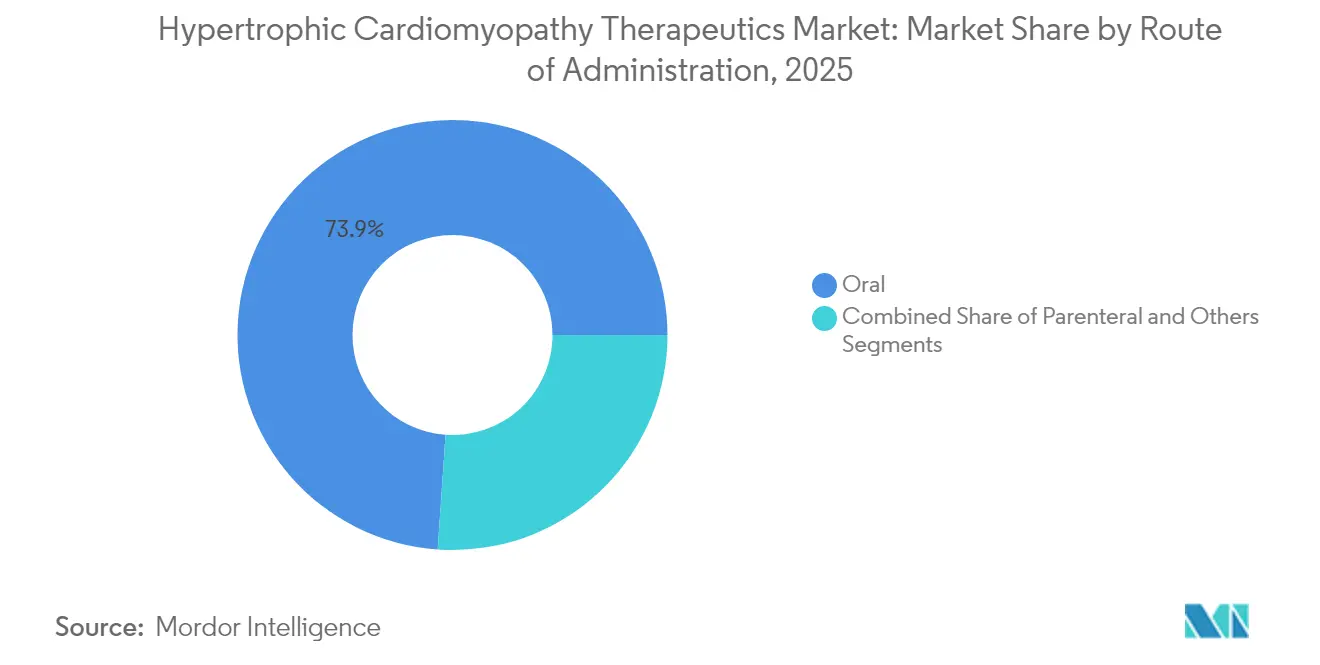
Parenteral Momentum BuildsOral drugs dominated with 73.90% share in 2025 thanks to established prescribing habits and convenience. Nonetheless, parenteral formulations are projected to grow at 4.29% CAGR as innovators pursue monthly or quarterly depot injections that ease adherence burdens for patients juggling polypharmacy. Long-acting injectables offer consistent plasma exposure, potentially smoothing hemodynamic control and reducing monitoring variability.
Immuno-oncology’s success with extended-interval dosing has primed both payers and providers to value convenience premiums, a trend cardiovascular developers hope to replicate. Early-stage gene-therapy vectors delivered intravenously aim at one-time cures, representing the ultimate parenteral extension. Should safety concerns be mitigated, market adoption could accelerate late in the decade, bringing step-wise gains to the hypertrophic cardiomyopathy therapeutics market share for injectable modalities.
By Distribution Channel:
Online Specialty Growth AcceleratesHospital pharmacies accounted for 47.10% of 2025 revenue, reflecting REMS mandates that centralize dispensing in accredited centers. Online specialty platforms, however, are forecast to expand at 4.40% CAGR as digital workflows integrate prior authorization support, educational modules, and automatic refill reminders. The hypertrophic cardiomyopathy therapeutics market size distributed through online channels is small today but increasing steadily as tele-cardiology normalizes.
Specialty pharmacy consolidation-spearheaded by players such as CVS Specialty and Accredo-creates scale economies that manufacturers leverage for patient-support programs and data capture. Retail chains lacking specialty certifications struggle to participate, but collaborative models could emerge where community outlets partner with cloud-based service layers to meet REMS obligations while retaining local dispensing.
Geography Analysis
North America Hypertrophic Cardiomyopathy Therapeutics Market
North America led the hypertrophic cardiomyopathy therapeutics market with a 40.55% share in 2025, supported by early drug approvals, robust insurance coverage, and a dense network of accredited HCM centers. Adoption, however, is moderating as payers intensify scrutiny of list prices and demand post-marketing evidence linking ventricular remodeling to reduced surgical interventions and hospitalizations. Tele-echocardiography programs are extending specialist oversight to rural areas, mitigating some access disparities, yet overall growth will decelerate relative to emerging regions.
APAC Hypertrophic Cardiomyopathy Therapeutics Market
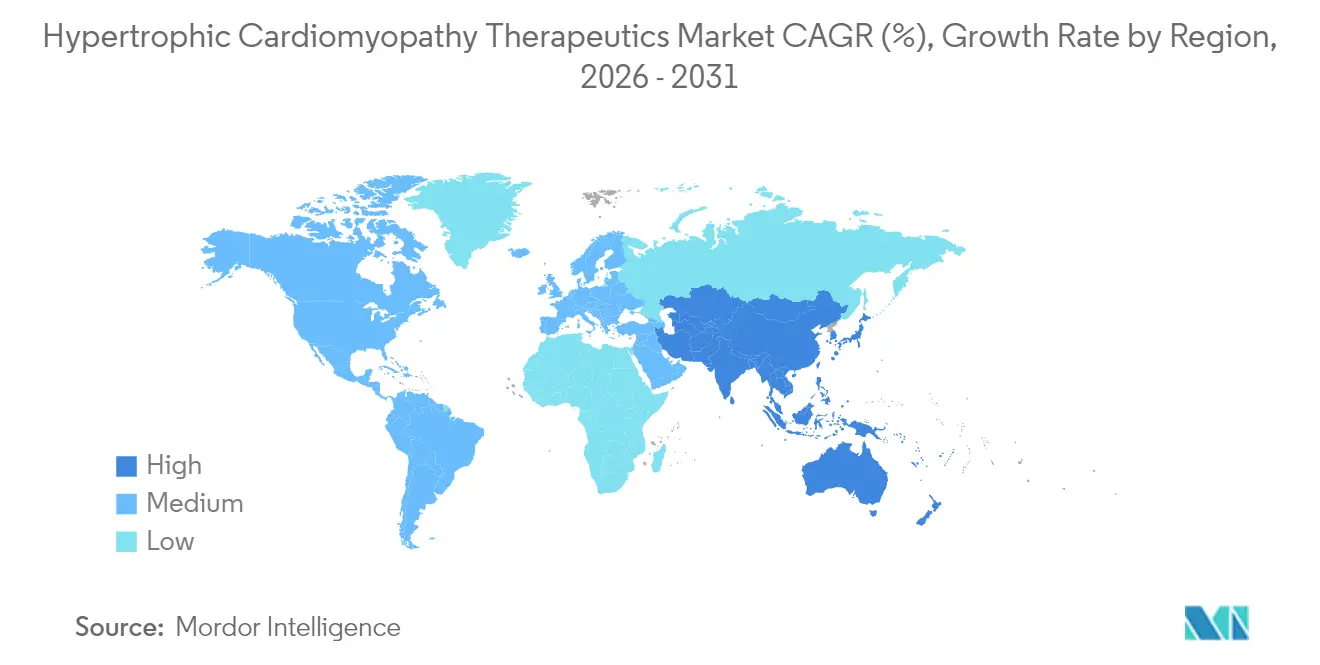
Asia-Pacific is tracking a 4.09% CAGR to 2031, the fastest worldwide, thanks to government-backed genetic testing consortia, expanding echocardiography capacity, and cross-border licensing deals such as LianBio’s partnership for mavacamten commercialization. China’s tiered hospital reforms, coupled with Japan’s early adoption of myosin inhibitors, provide dual growth pillars. Meanwhile, India and Southeast Asia concentrate on upgrading diagnostic hardware, creating a sizeable funnel for future drug uptake once affordability programs mature.
Europe Hypertrophic Cardiomyopathy Therapeutics Market
Europe sits between these poles: regulatory alignment through the EMA accelerates multi-country launches, but reimbursement is conditional on country-level cost-effectiveness reviews. Health-technology-assessment agencies in Germany and the United Kingdom demand real-world data, stretching time-to-peak sales yet ultimately reinforcing value-based positioning. Pan-European HCM registries facilitate post-approval commitments, bolstering pharmacovigilance and informing iterative guideline updates.
Regulatory Landscape
Regulatory oversight for hypertrophic cardiomyopathy (HCM) therapies centers on demonstrating functional and symptomatic benefit while managing class-specific safety monitoring. In obstructive HCM (oHCM), cardiac myosin inhibitors have established a clear multi-agency pathway: mavacamten set the precedent with approvals in 2022 (FDA) and 2023 (EMA), and aficamten entered the market with FDA approval in December 2025, followed by European Commission marketing authorization effective February 12, 2026. Regulators have accepted endpoints tied to exercise capacity and symptom improvement as a practical basis for approvals in this rare, heterogeneous population where traditional event-driven outcomes trials are difficult.
Post-authorization controls and access conditions shape real-world uptake and channel strategy. REMS-related requirements for myosin inhibitors continue to influence prescriber certification, echocardiography monitoring cadence, and specialty dispensing, which directly affects distribution mix (specialty and online channels) and payer utilization management. Beyond the United States and Europe, major launches depend on country-level decisions and local regulators (for example, China NMPA activity referenced for aficamten) along with reimbursement negotiations that can stagger commercialization even after central approvals.
Competitive Landscape
The hypertrophic cardiomyopathy therapeutics market is moderately concentrated, anchored by Bristol Myers Squibb’s mavacamten but poised for disruption as Cytokinetics’ aficamten approaches a December 2025 PDUFA deadline. Should approval occur, a two-player myosin inhibitor segment may ignite competitive rebate structures that expand access while sustaining innovation funding. Patent-term extension proceedings—CAMZYOS received a 2,723-day review period—illustrate the intricate intellectual-property dance that shapes life-cycle management.
Pipeline breadth is widening beyond sarcomere targets. Tenaya Therapeutics is advancing gene-replacement vectors aiming for one-time correction of pathogenic variants, while Edgewise Therapeutics explores small molecules that enhance energetic efficiency, each promising modality-based differentiation rather than incremental same-class variation. Market entrants must surmount high trial-design complexity given the need for precise hemodynamic endpoints and extensive cardiac safety monitoring. Consequently, collaboration with academic HCM centers remains a strategic imperative for both clinical execution and real-world-evidence generation.
Strategically, incumbents focus on label expansion into pediatric populations, perioperative management, and potential combination regimens that address arrhythmic complications. White-space opportunities in non-obstructive disease and long-acting injectable formulations offer new revenue terrain. Alliances with specialty pharmacies and digital platform partners provide data streams necessary for outcomes-based reimbursement, embedding service-layer capabilities into the traditional product model.
Hypertrophic Cardiomyopathy Therapeutics Industry Leaders
-
AstraZeneca Plc
-
Bayer AG
-
Sanofi S.A.
-
Merck & Co., Inc
-
Novartis AG
- *Disclaimer: Major Players sorted in no particular order
Hypertrophic Cardiomyopathy Therapeutics Market Companies Covered in this Report
- Bristol-Myers Squibb
- Cytokinetics
- Novartis
- Pfizer
- Bayer
- Merck
- Sanofi
- Teva Pharmaceutical Industries
- AstraZeneca
- Viatris
- Tenaya Therapeutics
- Imbria Pharmaceuticals
- BridgeBio Pharma
- Mezzion Pharma
- Eli Lilly and Company
- Gilead Sciences
- Daiichi Sankyo Co. Ltd.
- Amgen
- Johnson & Johnson
- Boehringer Ingelheim
- Novo Nordisk
Read Analysis of Hypertrophic Cardiomyopathy Therapeutics Companies
Market Opportunities and Future Outlook
A primary opportunity sits in expanding treatment beyond a single incumbent product in oHCM, with competition now tangible following aficamten’s FDA approval in December 2025 and U.S. availability in January 2026. This shift creates whitespace for differentiated access offerings (specialty-pharmacy services, adherence programs, and REMS workflow support) and for payer contracting approaches that tie reimbursement to functional outcomes, aligning with the market’s move from low-cost symptomatic agents to premium, mechanism-directed therapy.
Label and population expansion programs provide another near-term lever for market broadening. In 2025, the FDA updated the CAMZYOS (mavacamten) U.S. Prescribing Information to reduce echocardiography monitoring requirements for eligible maintenance patients and reduce contraindications, lowering administrative burden for community cardiologists and supporting wider adoption outside academic centers. In June 2026, the FDA accepted for priority review Bristol Myers Squibb’s supplemental NDA for CAMZYOS in adolescents with symptomatic oHCM, with a PDUFA date of September 30, 2026, highlighting active efforts to extend myosin inhibitors into younger populations while the pipeline also advances into non-obstructive HCM through late-stage and pivotal programs.
Recent Industry Developments in Hypertrophic Cardiomyopathy Therapeutics Market
- June 2026: Bristol Myers Squibb announced the FDA accepted for priority review its supplemental NDA for CAMZYOS (mavacamten) in adolescents with symptomatic obstructive HCM, with a PDUFA date of September 30, 2026. The filing expands the competitive battleground into pediatrics and reinforces lifecycle strategies that widen the treated population beyond adult-only use. It also increases the need for long-term safety and monitoring frameworks suitable for younger patients.
- February 2026: Cytokinetics announced European Commission approval of MYQORZO (aficamten) for adults with symptomatic obstructive HCM, effective February 12, 2026. This authorization converts the EMA/CHMP pathway into a commercially actionable label across EU member states, shifting the market from single-agent to multi-agent myosin inhibition in Europe. Country-level reimbursement and launch sequencing become key determinants of near-term penetration following the centralized approval.
- December 2024: Cytokinetics announced an agreement granting Sanofi rights to develop and commercialize aficamten in Greater China. The deal underscores the importance of regional licensing to navigate local regulatory, pricing, and access requirements in large, complex markets. It also signals continued globalization of the myosin-inhibitor franchise through partnerships with established commercial infrastructure.
Hypertrophic Cardiomyopathy Therapeutics Market Report Scope and Research Methodology
Market Definition and Coverage
This market covers prescription drug therapies used to manage hypertrophic cardiomyopathy (HCM), including medicines aimed at symptom control, rhythm management, and reducing clinical risk in diagnosed patients across healthcare settings.
Scope exclusions: We exclude surgical procedures, device revenues (such as ICDs and pacemakers), diagnostics, and non-prescription supportive care from this sizing.
Segments Covered in This Report
- By Drug Class
- Beta-Adrenergic Blocking Agents
- Calcium Channel Blockers
- Cardiac Myosin Inhibitors
- Antiarrhythmic Agents
- Anticoagulants
- Others
- By Disease Phenotype
- Obstructive HCM (oHCM)
- Non-Obstructive HCM (nHCM)
- By Route of Administration
- Oral
- Parenteral
- Others
- By Distribution Channel
- Hospital Pharmacies
- Retail Pharmacies
- Online Pharmacies
- By Geography
- North America
- United States
- Canada
- Mexico
- Europe
- Germany
- United Kingdom
- France
- Italy
- Spain
- Rest of Europe
- Asia-Pacific
- China
- Japan
- India
- Australia
- South Korea
- Rest of Asia-Pacific
- Middle East and Africa
- GCC
- South Africa
- Rest of Middle East and Africa
- South America
- Brazil
- Argentina
- Rest of South America
- North America
Data Sources, Market Sizing, and Validation
Desk Research
Desk work starts by mapping the HCM diagnosis and treatment pathway so the demand pool is grounded in real clinical practice. We refer to public sources such as the CDC, the NIH and National Library of Medicine (including PubMed), the FDA, and WHO, along with guidance and statistics shared by cardiology associations and peer reviewed journals.
These inputs help us pin down practical sizing anchors such as diagnosed prevalence ranges, treatment eligibility by phenotype, and the typical therapy mix by line of care. We also use company filings, investor presentations, clinical trial registries, and reputable press coverage to time new approvals and label expansions, then cross-check pricing direction using a paid subscription for company financials and news, plus a paid patent database for pipeline context. This list is not exhaustive, and many other public sources were reviewed to collect data, validate assumptions, and clarify open questions.
Primary Interviews and Surveys
Primary validation is done through expert conversations and structured surveys with cardiologists, pharmacists, payers, and commercialization roles who see HCM patients and therapy choices firsthand. Since the market is global, we balance input across major geographies and care settings, and we use these discussions to confirm diagnosis rates, switching patterns, real world uptake, and the practical impact of reimbursement and guideline changes.
Distribution of primary research fieldwork respondents
| Company type | Respondent position | Region |
|---|---|---|
| Top tier: 32% | CXOs: 16% | APAC: 43% |
| Mid tier: 47% | Functional/Unit leaders: 29% | EMEA: 36% |
| Smaller Players: 21% | Managers: 55% | Americas: 21% |
Market-Sizing & Forecasting
The core model is built using a top-down patient and treatment pool approach where epidemiology and diagnosis funnels are reconstructed by region, and then converted into treated patients by therapy class using physician practice patterns. We then corroborate totals with selective bottom-up checks, such as sampled price per patient per year multiplied by estimated treated volume, followed by channel checks on mix shifts.
A few inputs that matter most here include diagnosed HCM prevalence, obstructive versus non-obstructive split, treatment eligibility and persistence, therapy uptake after new approvals, and regional pricing and reimbursement posture. Where local data is thin, gaps are handled by using proxy markets with similar care access and then adjusting with expert feedback until the implied treated population stays realistic.
For forecasting, we primarily use scenario analysis so adoption curves can reflect guideline updates, access expansion, and competitive entries. Assumptions are kept readable and reviewed with clinical and market access respondents before the final forecast is locked.
Data Validation & Update Cycle
Outputs are cross-checked against independent signals like diagnosis trends, treatment rates shared in clinical literature, and the timing of regulatory and reimbursement milestones. When a region shows an unusual jump or drop, the drivers are re-tested, and respondents can be re-contacted to confirm whether the change is real or model-driven.
Before sign-off, the model goes through multi-step internal reviews, including variance checks on key inputs and a final consistency pass across regions and years. Reports are refreshed annually, and interim updates are made when major events occur, followed by a last update pass right before delivery so clients receive the latest view.
Mordor Intelligence's Hypertrophic Cardiomyopathy Therapeutics Market Estimate Compared With Other Published Estimates
Published market sizes for HCM therapeutics often differ because the patient pool, what counts as therapeutics, and the time window used for pricing and uptake are not always consistent. Exchange rate timing and whether forecasts assume faster access expansion can also move totals noticeably.
Key gaps usually come from scope boundaries, especially when some estimates fold device revenues or procedure related spending into the same bucket, and from different ways of projecting price erosion and therapy persistence. By tracking treated patient cohorts, price per treated patient, and refresh cadence around approvals and label changes, Mordor Intelligence keeps the estimate focused on prescription drug therapeutics only, which prevents adjacent device and procedure value from inflating the number.
Benchmark comparison
| Source | Market Size | Gaps in Research Methodology |
|---|---|---|
| Mordor Intelligence | USD 572.81 M (2025) | |
| Global Consultancy A | USD 1.43 B (2025) | Often uses a broader therapy definition that can include device related revenues or adjacent management costs, and may apply more aggressive uptake and access expansion assumptions across regions. |
| Industry Publisher B | USD 917.60 M (2025) | May include wider disease phenotype coverage and bundled channel values, and can differ on price baselines and persistence rates used to convert diagnosed patients into annual revenue. |
The spread is mainly explained by what is counted inside the therapeutics boundary and how treated patients are translated into revenue through price and duration assumptions. Our approach stays traceable to clear epidemiology, diagnosis, uptake, and pricing inputs, which makes the final market value easier to reproduce and stress test.
Key Questions Answered in the Report
What is the current value of the hypertrophic cardiomyopathy therapeutics market?
The market stands at USD 593.2 million in 2026 and is projected to reach USD 707.18 million by 2031.
Which drug class is growing fastest?
Cardiac myosin inhibitors are forecast to expand at a 4.12% CAGR, the quickest among all classes.
Why is Asia-Pacific the fastest-growing region?
Broader genetic testing, improved echocardiography access, and strategic licensing deals drive a regional CAGR of 4.09%.
How do REMS programs affect drug adoption?
REMS requirements centralize dispensing in specialty channels, elevate monitoring costs, and slow uptake, especially in community settings.
What competitive changes are expected by 2026?
Approval of Cytokinetics’ aficamten may create a duopoly, while gene-therapy candidates begin late-stage trials, diversifying future options.
Are generic beta-blockers still relevant?
Yes, their low cost and widespread familiarity keep them first-line for mild symptoms, although they provide only symptomatic relief.