
Hydroxyapatite Market Size and Share
Market Overview
| Study Period | 2021 - 2031 |
|---|---|
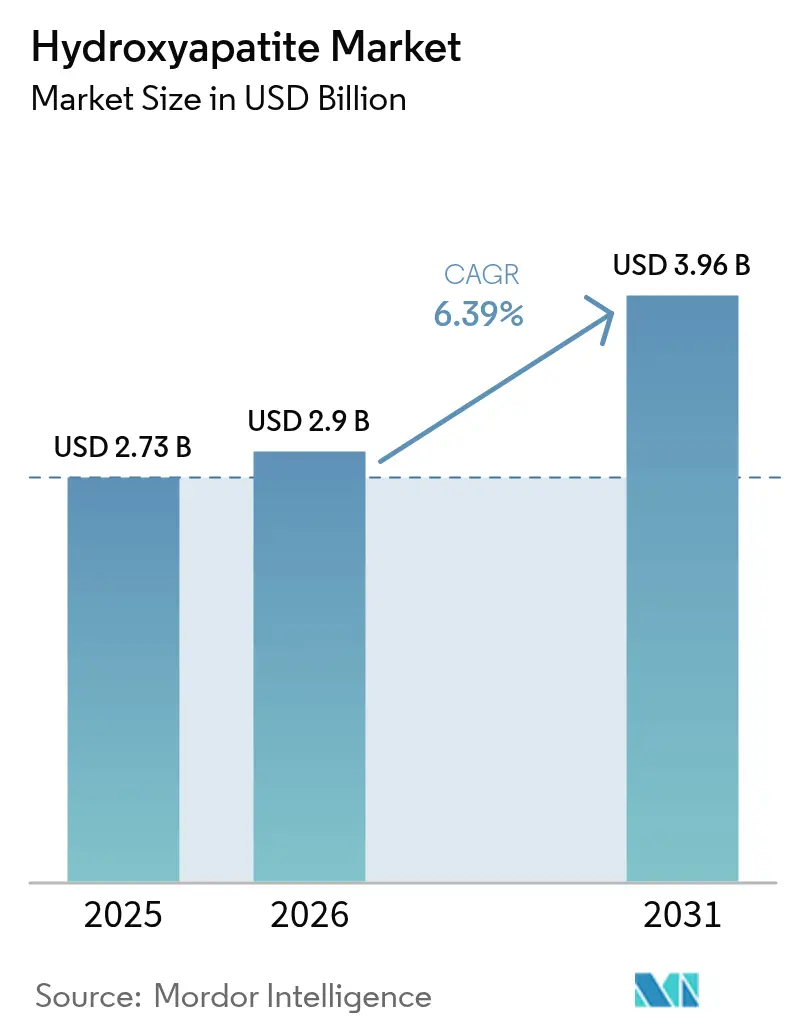
| Market Size (2026) | USD 2.9 Billion |
| Market Size (2031) | USD 3.96 Billion |
| Growth Rate (2026 - 2031) | 6.39 % |
| Fastest Growing Market | Middle East and Africa |
| Largest Market | Asia Pacific |
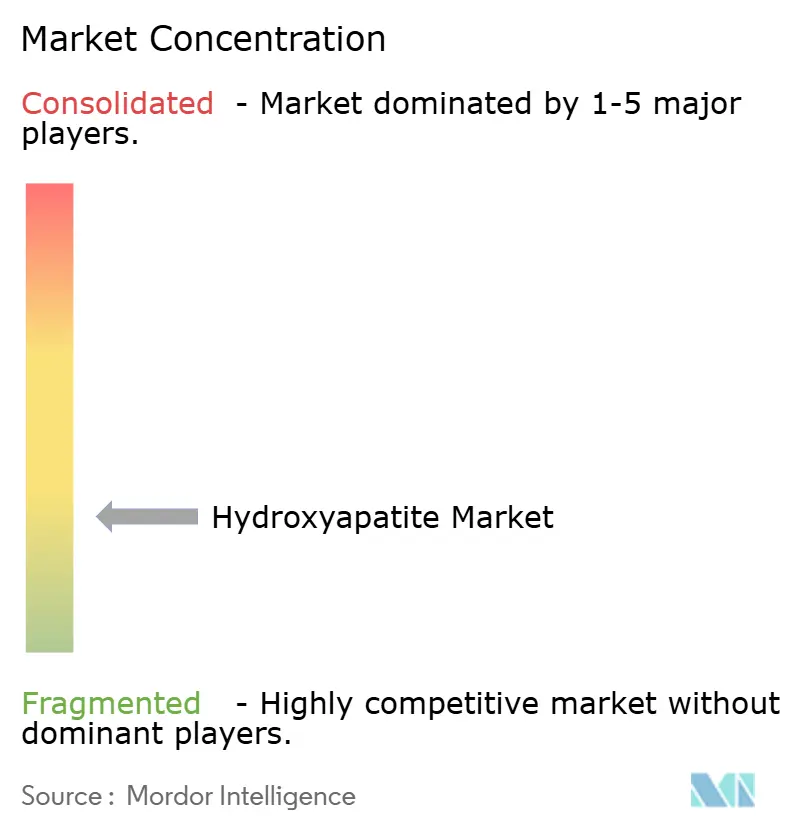
| Market Concentration | Low |
Major Players *Disclaimer: Major Players sorted in no particular order Image © Mordor Intelligence. Reuse requires attribution under CC BY 4.0. | |
Hydroxyapatite Market Analysis by Mordor Intelligence
The Hydroxyapatite Market size is projected to be USD 2.73 billion in 2025, USD 2.9 billion in 2026, and reach USD 3.96 billion by 2031, growing at a CAGR of 6.39% from 2026 to 2031. Aging populations in North America, Europe, and Japan are reshaping demand for osseointegrated dental and orthopedic implants that rely on hydroxyapatite’s biocompatibility, while regulators on both sides of the Atlantic are phasing out nickel- and cobalt-containing alloys in favor of calcium-phosphate ceramics. In craniofacial reconstruction, additive-manufacturing platforms are now producing patient-specific HA scaffolds with high porosity and compressive strength. This advancement has led to a significant reduction in theater time. Meanwhile, capacity expansions in China and Japan are broadening the global feedstock pool. However, premium margins continue to be concentrated in Europe and the United States. Here, factors such as ISO 13485 compliance, proprietary plasma-spray lines, and surgeon-education programs bolster pricing power.
Key Report Takeaways
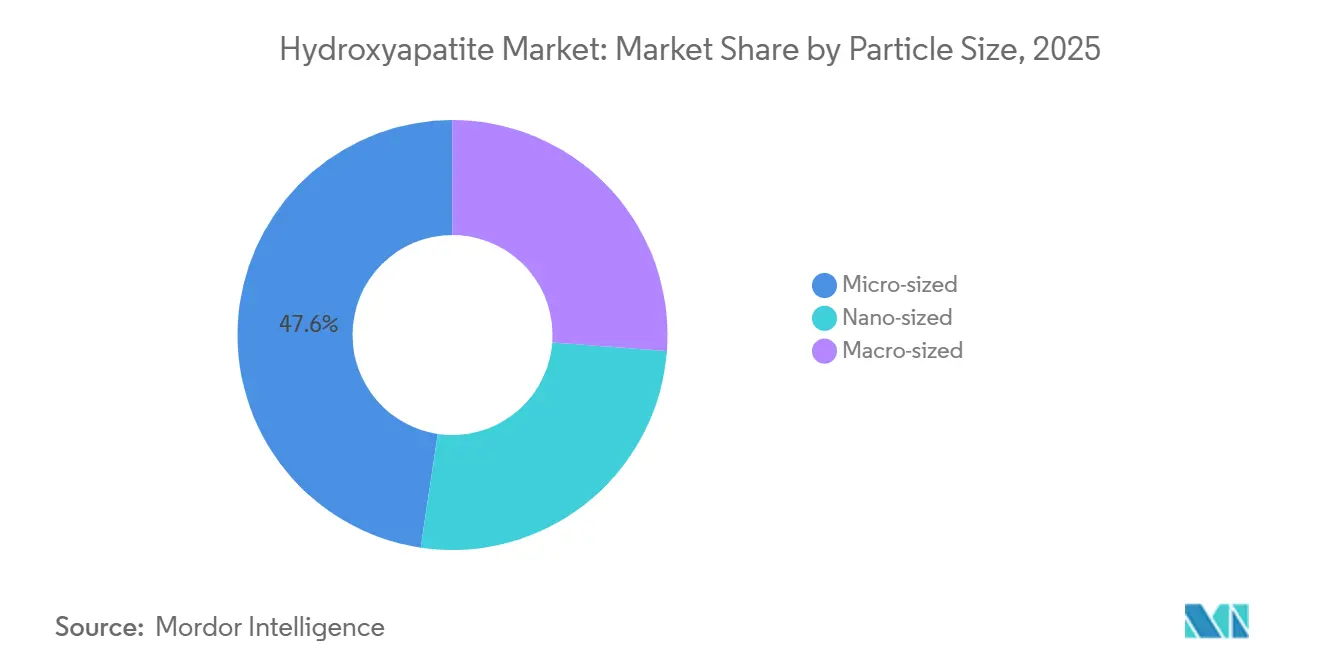
- By particle size, micro-sized grades held 47.65% of 2025 revenue, while nano-sized powders are projected to expand at a 7.09% CAGR between 2026 and 2031.
- By source, synthetic grades commanded 71.85% of the 2025 hydroxyapatite market size, and bio-derived alternatives are set to advance at a 6.83% CAGR over the same horizon.
- By form, powders represented 54.78% of 2025 demand, and coatings and pastes are on track for a 6.62% CAGR to 2031.
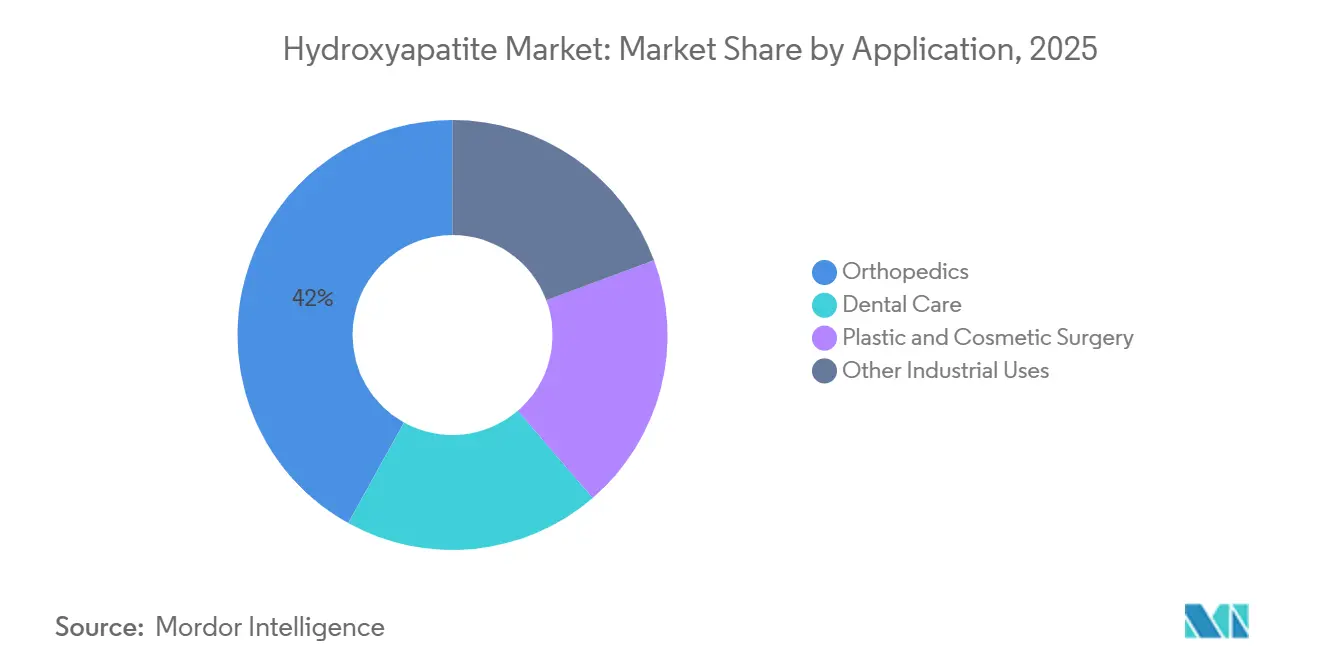
- By application, orthopedics retained 41.95% of the hydroxyapatite market share in 2025, whereas plastic and cosmetic surgery is forecast to deliver a 6.98% CAGR through 2031.
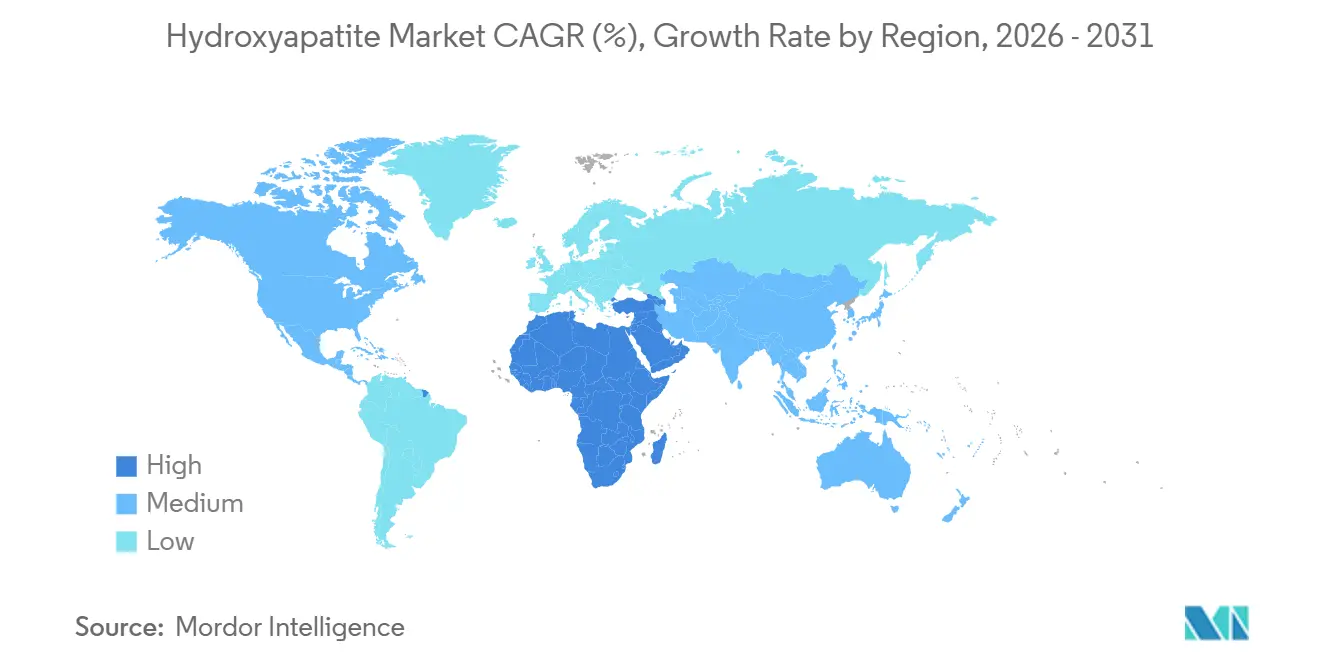
- By geography, Asia-Pacific captured 39.25% of the 2025 value; the Middle-East and Africa region shows the highest forecast CAGR at 6.47% through 2031.
Note: Market size and forecast figures in this report are generated using Mordor Intelligence’s proprietary estimation framework, updated with the latest available data and insights as of 2026.
Market Trends and Insights
Drivers Impact Analysis of Hydroxyapatite Market*
| Drivers | (~) % Impact on CAGR Forecast | Geographic Relevance | Impact Timeline |
|---|---|---|---|
| Dental-implant boom in aging economies | +1.8% | North America, Europe, Japan | Medium term (2-4 years) |
| Orthopedic implant volume growth | +2.1% | Global, with concentration in APAC and North America | Long term (≥4 years) |
| Biocompatibility advantage over metallic substitutes | +1.3% | Global, regulatory-driven in EU and North America | Medium term (2-4 years) |
| Government push for safer biomaterials | +0.9% | EU, North America, Japan | Long term (≥4 years) |
| 3D printing enabling patient-specific HA implants | +1.2% | North America, Europe, South Korea | Short term (≤2 years) |
| Source: Mordor Intelligence | |||
Dental-Implant Boom in Aging Economies
By 2027, over one-fifth of residents in Japan, Germany, and Italy will be aged 65 and older, spurring a demand for tooth replacements that leans towards HA-coated fixtures instead of removable dentures. Clinical studies indicate that HA-coated posts reduce healing time compared to their uncoated titanium counterparts[1]. This advantage helps maintain their premium pricing in markets backed by reimbursements. Dental-device companies are now aiming for comparable success with mandibular implants. In April 2025, Japan expanded its insurance coverage for HA-coated dental fixtures, projecting an addition of procedures annually starting in 2028. Proactive clinics are now integrating HA coatings with digital dentistry processes, leading to reduced chair time and increased patient turnover. These trends bolster the Hydroxyapatite market, ensuring steady demand in affluent economies.
Orthopedic Implant Volume Growth
In 2025, the global count for hip and knee arthroplasties saw significant growth, with revisions constituting a notable portion of the total. Surgeons are increasingly opting for HA-integrated cages in spinal fusions, steering clear of iliac crest autografts. This choice not only slashes operating time by nearly 40 minutes but also diminishes the risk of infections. Injectable HA-collagen putties, such as moldable scaffolds for posterolateral fusion, have gained clinical trust. The Asia-Pacific region witnessed substantial growth in orthopedic device revenue, largely driven by a rise in elective procedures in China and India. This consistent growth in surgical volumes, paired with payers' growing acceptance of premium coatings, propels the Hydroxyapatite market forward.
Biocompatibility Advantage Over Metallic Substitutes
Calcium-phosphate ceramics dissolve at a pace synchronized with bone remodeling, bypassing the stress-shielding that afflicts titanium and cobalt-chrome implants. ISO 10993 panels repeatedly show lower cytotoxicity and sensitization for HA than for allergy-prone metals. Europe’s MDR 2017/745 requires enhanced surveillance of nickel- and cobalt-based devices, inadvertently steering hospitals toward HA-coated stems that present no hypersensitivity risk. Pediatric orthopedics is another beneficiary, as resorbable HA avoids long-term foreign-body retention around growth plates. With regulators intensifying scrutiny of metal allergens, the Hydroxyapatite market gains a durable advantage rooted in chemistry rather than branding.
3D Printing Enabling Patient-Specific HA Implants
With advancements in vat photopolymerization, direct-ink writing, and robocasting, HA scaffolds now boast controlled pore sizes and an ideal porosity for osteoblast migration. Custom craniofacial plates, crafted from CT data, have been shown to cut surgical time and reduce revision rates associated with poor fitment. South Korea’s Ministry of Food and Drug Safety approved patient-specific HA implants, highlighting growing regulatory confidence in layer-wise manufacturing. As the costs of printers decline, even mid-tier hospitals are embracing chairside planning for trauma reconstructions. This shift in workflow is poised to boost volumes in the Hydroxyapatite market, particularly for anatomically intricate cases where standard hardware falls short.
Restraints Impact Analysis of Hydroxyapatite Market*
| Restraints | (~) % Impact on CAGR Forecast | Geographic Relevance | Impact Timeline |
|---|---|---|---|
| High implant procedure cost | -0.8% | Global, acute in emerging markets without reimbursement | Medium term (2-4 years) |
| Stringent FDA and CE approvals | -0.6% | North America, Europe | Long term (≥4 years) |
| Toxicology debate on nano-HA in oral-care cosmetics | -0.4% | EU, North America, Japan | Short term (≤2 years) |
| Source: Mordor Intelligence | |||
High Implant Procedure Cost and Regulatory Hurdles
In the U.S., single-tooth implants are expensive. Adding HA coatings further increases the component cost. This pricing structure often sidelines many Medicare beneficiaries, as routine dental care isn't federally covered. In orthopedics, revisions using HA grafts can significantly inflate hospital bills. Private insurers, however, closely monitor these costs, especially under bundled-payment models that target 90-day readmissions. Manufacturers face a hefty price tag for each 510(k) submission. This cost covers mechanical tests, biocompatibility panels, and sterility validations. Europe's MDR has extended CE-mark timelines, pushing back cash flows from product launches. These factors, combined with high surgical costs and extensive regulatory requirements, are dampening the short-term growth of the Hydroxyapatite market.
Toxicology Debate on Nano-Hydroxyapatite
In 2024, the EU Regulation 2024/858 set limits on nano-HA in toothpaste and mouthwash[2]. Meanwhile, other jurisdictions have remained silent, leading to fragmented batch-segregation requirements. The SCCS raised concerns about aerosolized nano-HA, citing it as a potential inhalation hazard. In North America, consumer advocates are pushing for nano-labeling, which could unfairly tarnish certain oral-care products. In 2025, two European startups abandoned their nano-HA initiatives after insurers refused liability coverage, highlighting the stifling effect on innovation. Should upcoming toxicology studies validate concerns over pulmonary risks, we might see a tightening of medical-grade standards, which could modestly dampen the Hydroxyapatite market's outlook.
*Our forecasts treat driver/restraint impacts as directional, not additive. The impact forecasts reflect baseline growth, mix effects, and variable interactions.
Hydroxyapatite Market Segment Analysis
By Particle Size:
Nano-Sized Powders Advance in Regenerative SurgeryNano-sized powders are on track for a 7.09% CAGR through 2031, outpacing the average growth of the Hydroxyapatite market. This accelerated growth is attributed to their surface area, which enhances protein adsorption within just 48 hours. Periodontal surgeons utilize these powders in guided-tissue membranes, ensuring a bony fill instead of a fibrotic repair. Micro-sized grades, still dominant with 47.65% hydroxyapatite market share in 2025. Their packing densities enable them to achieve a compressive strength, making them ideal for hip stems and spinal cages.
Wet-precipitation plants, optimized for micro-powders, face challenges in maintaining nucleation. This limitation drives suppliers to invest in more expensive sol-gel or hydrothermal reactors. While ISO 13779-3 provides guidelines on particle-size assays, it falls short on performance thresholds, leaving buyers to establish their own specifications. Notably, nano-HA derived from Japanese scallop shells demonstrates impressive antimicrobial efficacy against Streptococcus mutans, suggesting its potential dual role in promoting bone growth and combating bacteria. Although the EU has imposed cosmetic caps, these regulations haven't yet extended to implants. However, ongoing studies on chronic inhalation could influence future regulations. As a result, there's a pronounced trend of adoption in specialized surgical channels, with expectations of a broader rollout in mainstream dental applications.

By Source:
Synthetic Routes Hold Sway, Bio-Derived Grades Gain MomentumSynthetic production claimed 71.85% of 2025 volume, reflecting the stringent control over the Ca/P ratio, all under the watchful eye of ISO 13485 quality systems. The wet precipitation method, operating between 60-90 °C, adeptly transforms calcium nitrate and diammonium phosphate. The resulting commodity grades are priced at FOB China. Meanwhile, sol-gel batches, boasting higher purity, cater to craniofacial markets where radiographic clarity is paramount.
Bio-derived hydroxyapatite is growing at a 6.83% CAGR. This growth is largely attributed to mandates promoting a circular economy and the osteogenic advantages of trace strontium and magnesium, both sourced from marine feeds. When calcined between 900-1,000 °C, eggshell waste produces a porous form of HA. On the other hand, coral-based variants, while boasting interconnected channels that expedite vascular ingrowth, grapple with supply constraints due to CITES regulations. Shell Apatite, a powder derived from Japanese scallops, made its debut in local dental clinics in 2025 and is now pursuing CE certification. However, the variability in mineral trace elements poses challenges in lot release, prompting innovators to turn to blockchain-style provenance logs for solutions. In summary, as sustainability credentials gain prominence, bio-routes are transitioning from being mere novelties to becoming foundational pillars in the Hydroxyapatite market.
By Form:
Coatings and Pastes Outpace Commodity PowdersPlasma-sprayed coatings and injectable pastes are set for a 6.62% CAGR to 2031, riding orthopedic migration toward cementless fixation. Plasma deposition techniques produce HA layers with strong bond strength. This strength is underscored by the Oxford Cementless Partial Knee's impressive survival rate over a decade. Notably, pastes like NOVOSIS PUTTY achieved a higher fusion rate at the 12-month mark, surpassing the benchmark set by autografts.
Powders, though still 54.78% of 2025 sales, grapple with price pressures from Chinese exporters. Granules, positioned as tactile fillers for metaphyseal voids, strike a balance between free-flowing powders and thicker pastes. However, the industry faces capital hurdles: with plasma guns and heat-treat ovens priced significantly, it's clear why established players maintain a competitive edge. Electrophoretic deposition, while reducing temperature exposure, falls short on adhesion metrics. Furthermore, regulatory frameworks like ISO 13779-2 are expediting approvals for coatings, paving the way for broader adoption in revision arthroplasty and trauma hardware, thereby expanding the Hydroxyapatite market size.
By Application:
Cosmetic Surgery Segment AcceleratesPlastic and cosmetic surgery is projected at a 6.98% CAGR through 2031. This growth is driven by the efficacy of calcium hydroxyapatite fillers, which not only maintain a volumetric lift for up to 24 months but also stimulate neocollagenesis. This feature effectively doubles the aesthetic durability compared to hyaluronic acid. In the realm of mid-face augmentation, Radiesse stands out as a dominant choice. Furthermore, clinics across the Asia-Pacific region are increasingly favoring combination therapy, especially when paired with micro-focused ultrasound.
Orthopedics, with 41.95% of 2025 revenue, remains the backbone of the Hydroxyapatite market size, supported by spinal fusion and revision arthroplasty where HA reduces aseptic loosening rates. Following closely is the dental care sector, which is poised to benefit from an estimated significant number of implant placements in 2025. These placements are divided between premium HA-coated screws and uncoated titanium options. While industrial niches like heavy-metal adsorption and chromatography command only single-digit market shares, they play a pivotal role in diversifying revenue streams, especially in light of medical pricing challenges.
Geography Analysis
APAC Hydroxyapatite Market
Asia-Pacific contributed 39.25% of the 2025 share of global sales. China's wet-precipitation capacity offers commodity powders at prices significantly lower than their Western counterparts, making inroads into budget-conscious clinics in Southeast Asia. An insurance expansion in April 2025 for HA-coated dental implants in Japan is set to boost annual cases, benefiting domestic sol-gel suppliers like Matsumoto Koshou. In 2025, South Korea's regulators doubled the approvals for 3D-printed HA implants, showcasing their confidence in additive manufacturing. Meanwhile, India, despite witnessing growth in orthopedic devices in 2025, continues to prefer autografts in public hospitals, posing a challenge for HA vendors.
North America Hydroxyapatite Market
North America sees steady mid-single-digit growth, driven by innovations like patient-specific 3D prints, HA-collagen putties, and CaHA dermal fillers. Zimmer Biomet’s FDA-approved Oxford knee has set a new standard for coating durability, pushing competitors to enhance their offerings. While CMS's exclusion of routine dental implants limits their adoption among seniors, pilot bundled-payments might pave the way for reimbursing HA-coated fixtures, provided they maintain a complication rate within 90 days. In Canada, urban private clinics lean towards premium HA products, but rural hospitals often stick to uncoated metals, highlighting a divide in the provincial healthcare system. Mexico's push for near-shoring saw two multinationals establish HA-coating facilities in Monterrey in 2025.
EMEA and South America Hydroxyapatite Market
Europe grapples with extended approvals under MDR 2017/745, yet its emphasis on biocompatibility resonates with HA's inherent advantages. High arthroplasty rates in Germany, the UK, and France account for a significant portion of Europe's HA demand. The Middle East and Africa, buoyed by Saudi Vision 2030's healthcare investment, is witnessing 6.47% CAGR growth. This financial push is motivating orthopedic OEMs to establish hubs in Riyadh, with public-private partnerships facilitating the creation of new hospitals that are keen on premium HA implants. South America, despite grappling with currency fluctuations, sees Brazil's sizable population as a potential market, especially once reimbursement models find stability.
Value Chain Analysis
The hydroxyapatite value chain begins with calcium and phosphate inputs, sourced either from high-purity chemical salts for synthetic routes or from bio-waste streams such as eggshells and marine shells for bio-derived grades. Mined phosphate rock is also used but typically requires additional purification to remove trace metals for biomedical use.
Production is concentrated around wet precipitation for scale powders, while hydrothermal and sol-gel routes are used where tighter control of crystallinity and phase purity is required. Bio-derived routes add calcination and decontamination steps, which can increase variability and lot-release complexity. Downstream, value addition shifts into medical-device-grade finishing and conversion, including particle-size conditioning for powders, plasma-sprayed coatings for orthopedic and dental implants, and formulated pastes and putties for bone void filling and spine applications. Compliance infrastructure serves as a gating step for both material suppliers and OEMs, anchored by standards and test regimes such as ISO 13779-6 and ASTM F1185-23, along with country-specific requirements such as YY/T 1558.3 in China. Distribution typically runs through direct supply agreements to orthopedic and dental OEMs and specialty biomaterials contract manufacturers such as CaP Biomaterials, LLC, where analytical capability and ISO 13485-aligned quality systems shape supplier qualification, change control, and long-term contracts.
Competitive Landscape
The hydroxyapatite market is fragmented. Regulatory barriers remain effective moats: newcomers must replicate multi-year ISO 13779 and ISO 10993 testing to secure 510(k) or CE marks. The EU’s nano-HA cosmetic cap spurred implant makers to commission inhalation studies, pre-emptively safeguarding latitude in particle-size specs. Overall, technology bifurcation—plasma lines versus additive printers—produces stratified rivalry, with large firms defending coating franchises and smaller innovators colonizing patient-specific and bio-circular sub-segments.
Hydroxyapatite Industry Leaders
-
Zimmer Biomet
-
KYOCERA Corporation
-
Medtronic
-
CAM Bioceramics
-
Fluidinova
- *Disclaimer: Major Players sorted in no particular order
Hydroxyapatite Market Companies Covered in this Report
- Berkeley Advanced Biomaterials
- Bio-Rad Laboratories
- CAM Bioceramics
- Cerabone (Botiss)
- CGbio
- Clarion Pharmaceutical Co.
- Fluidinova
- Hoya Technosurgical Corporation (HOYA Corporation)
- KYOCERA Corporation
- Medtronic
- Merz North America Inc. (Merz Biomaterials)
- Regenity
- Reneuco Berhad (Granulab Malaysia SDN.BHD)
- SANGI Co. Ltd
- SigmaGraft Biomaterials
- Taihei Chemical Industrial Co. Ltd
- Tomita Pharmaceutical Co. Ltd
- Zimmer Biomet
Market Opportunities and Future Outlook
Opportunities cluster around points where hydroxyapatite moves from commodity powder into higher-value, qualified inputs for implants, coatings, and bone grafting systems. In the United States, bone void fillers and related products sit within established FDA device frameworks, including Class II pathways under 21 CFR 888.3045, supported by recognized consensus standards across the ISO 13779 series. For suppliers, that structure translates into development checklists for documenting phase purity, crystallinity, and lot-to-lot consistency, which supports whitespace for material vendors that can provide audit-ready test packages and application-specific specifications rather than offering generic hydroxyapatite grades.
On the supply side, investments in capacity and analytics that shorten qualification cycles and improve batch control can support new OEM programs and second-sourcing, especially for medical-grade powders and formulated calcium-phosphate portfolios. A concrete example is CaP Biomaterials, LLC completing an East Troy, Wisconsin facility expansion in June 2026, adding analytical equipment and batch production capacity (up to 600 kg), along with portfolio diversification into calcium sulfate. Technology differentiation is also moving toward functionalized and composite systems, such as ion-doped hydroxyapatite and hydroxyapatite-cellulose composites reported in 2025-2026 technical literature, which creates development pathways in regenerative medicine and patient-specific constructs where baseline hydroxyapatite mechanical limits have previously constrained adoption.
Recent Industry Developments in Hydroxyapatite Market
- June 2026: CaP Biomaterials, LLC completed an expansion of its East Troy, Wisconsin manufacturing facility, adding analytical equipment and increasing batch manufacturing capability (up to 600 kg). The upgrade strengthens domestic sourcing options for medical-device OEMs that require tighter lot traceability and faster release testing, while also broadening the company portfolio into adjacent calcium-phosphate offerings.
- February 2026: Medtronic announced U.S. FDA approval (PMA) to use INFUSE Bone Graft for one- and two-level Transforaminal Lumbar Interbody Fusion (TLIF) procedures. The approval supports higher utilization of advanced bone-grafting solutions in spine surgery and reinforces demand for complementary ceramic graft extenders and scaffold materials used in fusion workflows.
- November 2024: Zimmer Biomet received U.S. FDA approval for the Oxford Cementless Partial Knee featuring a hydroxyapatite coating. The milestone advanced cementless fixation options and validated long-term coating durability as a differentiator in partial knee systems, influencing competing OEM roadmaps for coated and porous-surface implants.
Hydroxyapatite Market Report Scope and Research Methodology
Market Definition and Coverage
For this methodology, the hydroxyapatite market covers the sales value of hydroxyapatite materials used across medical, dental, cosmetic, and selected industrial uses, counted at the product level across key producing and consuming countries. We consider hydroxyapatite sold as powders, granules, coatings, and pastes, including nano, micro, and macro particle sizes.
Scope exclusions: We exclude finished implants, instruments, and procedure revenues when hydroxyapatite is only a minor input or a coating layer on a broader device bill of materials.
Segments Covered in This Report
- By Particle Size
- Nano-sized
- Micro-sized
- Macro-sized (greater than 1 µm)
- By Source
- Synthetic (wet, sol-gel, hydrothermal)
- Bio-derived (egg-shell, coral, bovine, fish-scale)
- By Form
- Powder
- Granules
- Coatings and Pastes
- By Application
- Dental Care
- Orthopedics
- Plastic and Cosmetic Surgery
- Other Industrial Uses (catalysts, chromatography, water-treatment)
- By Geography
- Asia-Pacific
- China
- India
- Japan
- South Korea
- ASEAN Countries
- Rest of Asia-Pacific
- North America
- United States
- Canada
- Mexico
- Europe
- Germany
- United Kingdom
- France
- Spain
- Italy
- Russia
- Rest of Europe
- South America
- Brazil
- Argentina
- Rest of South America
- Middle-East and Africa
- Saudi Arabia
- United Arab Emirates
- South Africa
- Rest of Middle-East and Africa
- Asia-Pacific
Data Sources, Market Sizing, and Validation
Desk Research
Desk research was used to set the market boundaries, build the country coverage, and collect the base indicators that later anchor demand and pricing assumptions. We reviewed public sources such as the USGS for minerals context, US FDA and European Commission materials and device guidance, and trade data portals like UN Comtrade to understand cross border movement patterns where hydroxyapatite is reported.
To keep the model practical, we also used signals from peer reviewed journals (for example, biomaterials and orthopedic materials publications), government health statistics such as OECD and WHO for procedure related demand direction, and public standards references such as ISO documents cited in open summaries. Company annual reports, investor decks, and reputable press were then used to validate product mix and application focus, and paid subscriptions for company financials, patent databases, and import export shipment-level checks were used selectively where public reporting is thin. These sources are illustrative, and many other references were consulted for data collection, validation, and clarification.
Primary Interviews and Surveys
Primary work was used to pressure test the assumptions that desk research cannot settle cleanly, especially the split between medical grade and industrial grade hydroxyapatite, and the typical price ranges by form (powder versus coatings and pastes). We spoke with a mix of material suppliers, formulators, distributors, clinicians and lab linked users, and industrial end users across major consuming regions so the final totals reflect buying behavior and not only published narratives.
Distribution of primary research fieldwork respondents
| Company type | Respondent position | Region |
|---|---|---|
| Top tier: 26% | CXOs: 15% | APAC: 49% |
| Mid tier: 56% | Functional/Unit leaders: 40% | EMEA: 33% |
| Smaller Players: 18% | Managers: 45% | Americas: 18% |
Market-Sizing & Forecasting
The core sizing logic uses top-down and bottom-up methods, where we first reconstruct demand from application-linked pools and then allocate it across forms and particle sizes using observed adoption patterns in dental, orthopedics, cosmetic reconstruction, and industrial uses. In practice, the top-down build starts from country level procedure and manufacturing activity signals, which are then translated into hydroxyapatite consumption using penetration and usage-rate assumptions checked in interviews.
A small set of market fingerprints is used to keep the math grounded, including procedure volumes that typically use calcium phosphate materials, the mix shift between powder and coatings for implants and graft substitutes, the share of nano versus micro material used in higher value medical applications, and average selling prices by form and grade with local currency conversion at the year average rate. Where data points are missing for smaller countries, proxy ratios are applied from comparable markets and then adjusted for healthcare spend, local manufacturing presence, and import reliance.
For forecasting, scenario analysis is used so growth paths can flex with medical procedure normalization, regulatory or quality standard tightening, and capacity additions in key producing countries. The forecast variables are taken forward with simple step changes and range checks from expert feedback, and then the totals are corroborated with selective bottom-up approximations such as sampled supplier revenue patterns, distributor channel checks, and ASP times volume sanity tests by application.
Data Validation & Update Cycle
Validation is done in layers so the final numbers do not rely on one data stream. We compare the model outputs against independent signals like trade direction, known manufacturing footprints, and the implied consumption per procedure so overstatements can be flagged early.
Outliers are reviewed country by country, and assumptions are revisited when the implied pricing, growth rate, or mix shift looks inconsistent with interview feedback or public filings. Before sign-off, another analyst reviews the logic trail, and we re-contact sources when a key input moves meaningfully or when a large variance appears between regions. Reports are refreshed annually, with interim updates when material events occur, and a final pre-delivery pass is completed so clients receive the latest updated view.
Mordor Intelligence's Hydroxyapatite Market Size Measured Against Other Published Estimates
Published hydroxyapatite market numbers often do not match because each publisher counts a different basket of products and end uses, and those choices change the price mix and the implied volumes. Differences also come from how quickly assumptions are refreshed, especially when medical grade pricing and industrial grade demand move in opposite directions.
The main gap comes from whether industrial uses like catalysts, chromatography media, and water treatment media are included at the material level, where Mordor Intelligence counts them only when hydroxyapatite is sold as a distinct product form (powder, granules, coatings, or pastes) rather than being bundled inside broader finished device or consumable revenues. Currency timing and the way nano and micro material ASPs are stepped forward also explain part of the spread, since some estimates apply a single blended price across grades and forms.
Benchmark comparison
| Source | Market Size | Gaps in Research Methodology |
|---|---|---|
| Mordor Intelligence | USD 2.90 B (2026) | |
| Industry Publisher A | USD 2.72 B (2024) | Uses an earlier base year and often applies a broad blended price and growth rate across medical and industrial grades, which can understate higher value nano and coating volumes when the mix is shifting. |
| Trade Portal B | USD 0.12 B (2024) | Appears to reflect only a narrower traded-chemical view or limited product codes, which can miss captive consumption, medical-grade supply sold through specialized channels, and coatings material that is not tracked as bulk shipments. |
Across the three figures, the spread is mostly explained by what gets counted as hydroxyapatite revenue versus adjacent finished products, and whether industrial demand is treated as a real end market or filtered out through chemical trade coding. By keeping assumptions tied to form, grade, and application-linked demand signals, the final value stays traceable to inputs that can be rechecked and updated as new information appears.
Key Questions Answered in the Report
How big will the Hydroxyapatite market be by 2031?
It is projected to reach USD 3.96 billion by 2031, reflecting a 6.39% CAGR from USD 2.90 billion.
Which Hydroxyapatite form is growing the fastest?
Coatings and pastes lead growth at 6.62% CAGR, buoyed by plasma-spray adoption in cementless orthopedic implants.
Why are nano-sized Hydroxyapatite powders important?
Their more than 100 m²/g surface area speeds osteoblast adhesion, enabling 7.09% CAGR and widening use in periodontal and craniofacial repair.
Which region currently dominates sales?
Asia-Pacific held 39.25% of 2025 revenue thanks to China’s low-cost capacity and Japan’s sol-gel expertise.
What restrains wider Hydroxyapatite uptake in emerging markets?
High implant costs and complex 510(k)/CE approval pathways raise prices, curbing accessibility where reimbursement is absent.