
Hunter Syndrome Treatment Market Size and Share
Market Overview
| Study Period | 2022 - 2031 |
|---|---|
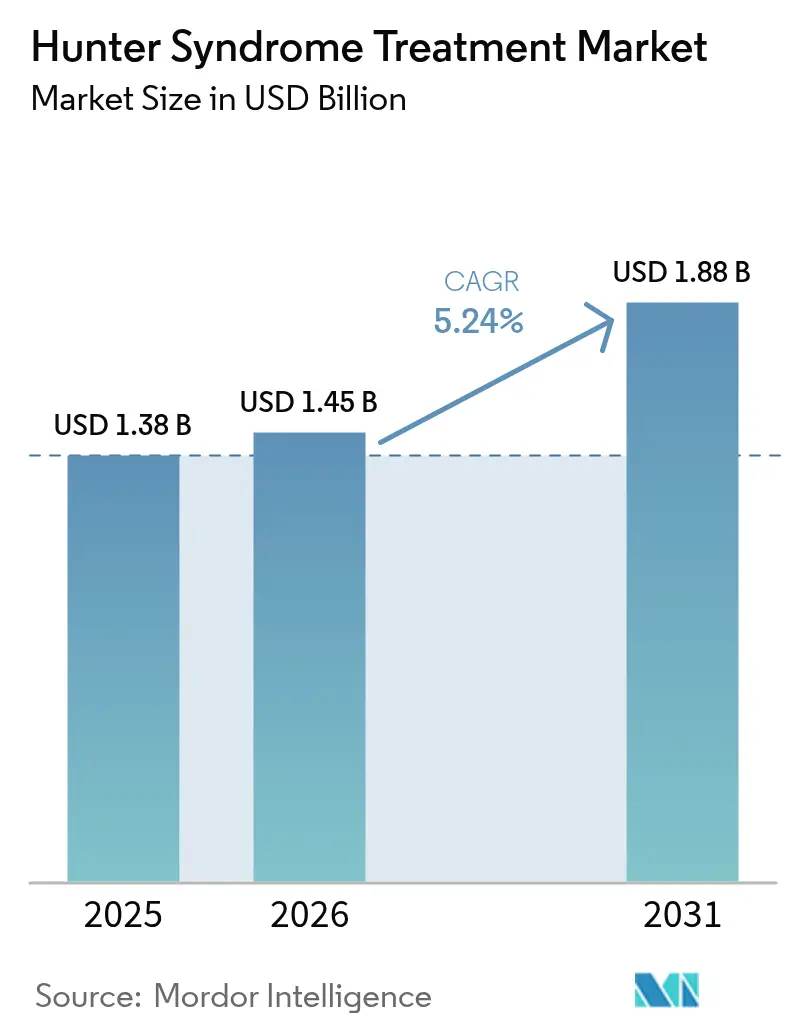
| Market Size (2026) | USD 1.45 Billion |
| Market Size (2031) | USD 1.88 Billion |
| Growth Rate (2026 - 2031) | 5.24 % |
| Fastest Growing Market | Asia Pacific |
| Largest Market | North America |
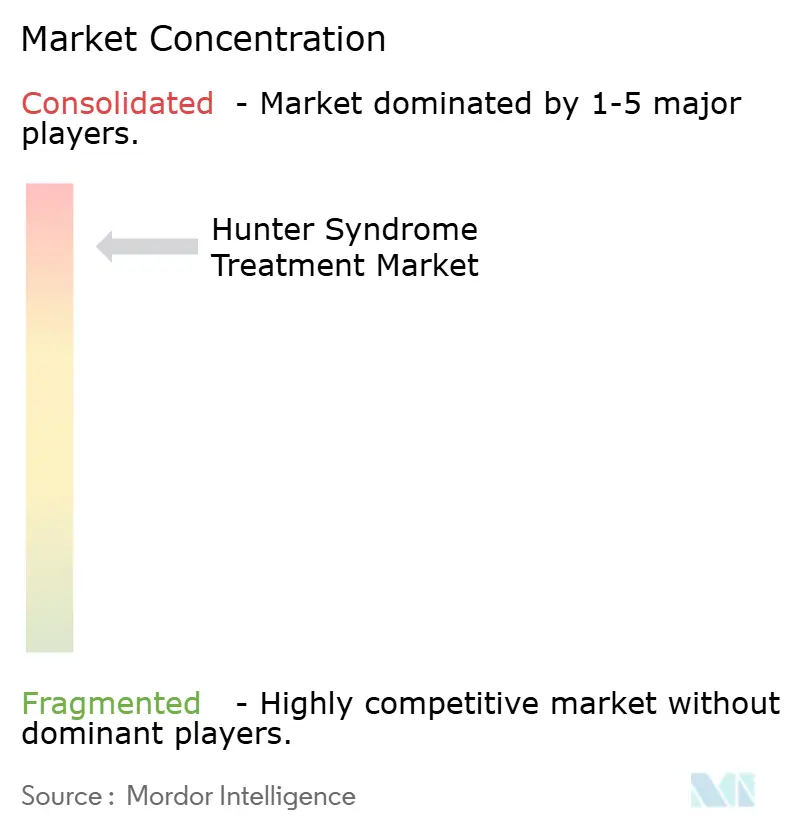
| Market Concentration | High |
Major Players *Disclaimer: Major Players sorted in no particular order Image © Mordor Intelligence. Reuse requires attribution under CC BY 4.0. | |
Hunter Syndrome Treatment Market Analysis by Mordor Intelligence
The Hunter syndrome treatment market size is expected to grow from USD 1.38 billion in 2025 to USD 1.45 billion in 2026 and is forecast to reach USD 1.88 billion by 2031 at 5.24% CAGR over 2026-2031. Robust orphan-drug incentives, accelerating approvals for blood-brain barrier (BBB)-penetrant enzyme replacement therapies (ERTs) and gene therapies, and the steady expansion of newborn screening programs underpin the upward trajectory of the Hunter syndrome treatment market. Enzyme replacement therapy (ERT) remains the revenue cornerstone. Yet, its neurological limitations have opened space for adeno-associated virus (AAV) and lentiviral vector gene therapies that promise durable central nervous system (CNS) benefits. Competitive intensity is rising as small innovators partner with large pharmaceutical companies to secure manufacturing scale and regional commercial know-how. Finally, home-infusion models are gaining traction because they cut administration costs and improve patient convenience, reinforcing overall demand.
Key Report Takeaways
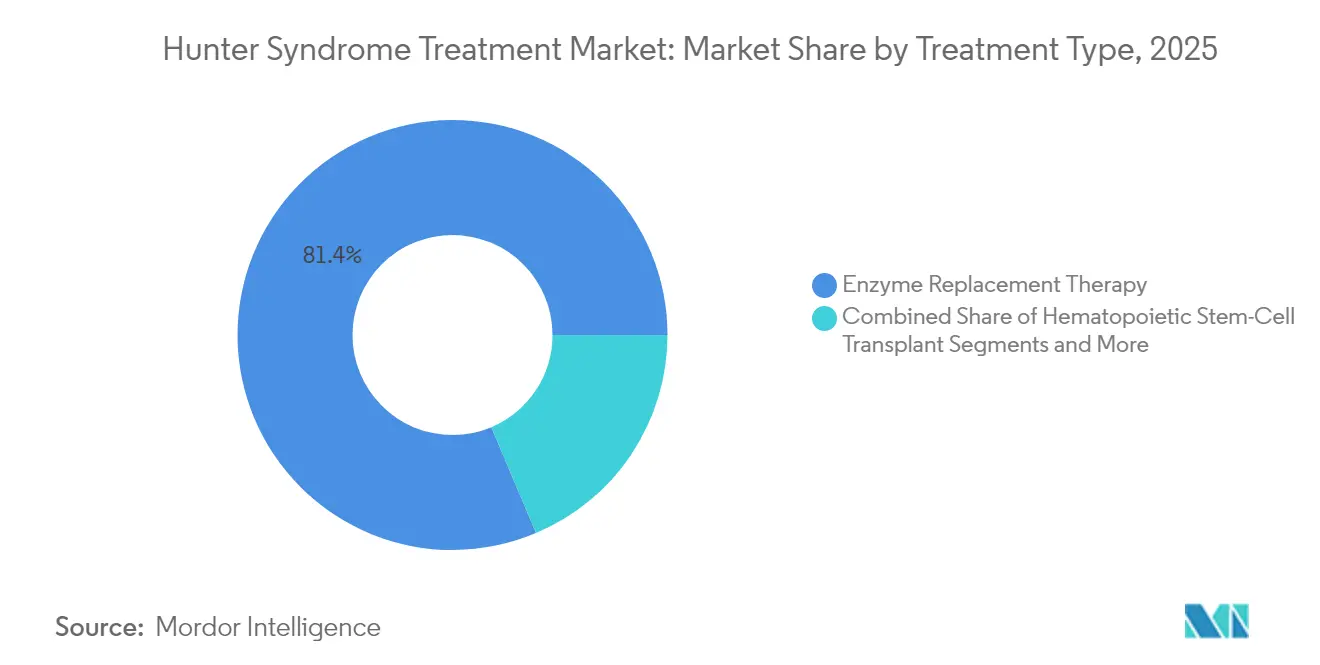
- By treatment type, enzyme replacement therapy commanded 81.35% of the Hunter syndrome treatment market share in 2025; gene and other advanced therapies are expanding at a 7.06% CAGR to 2031.
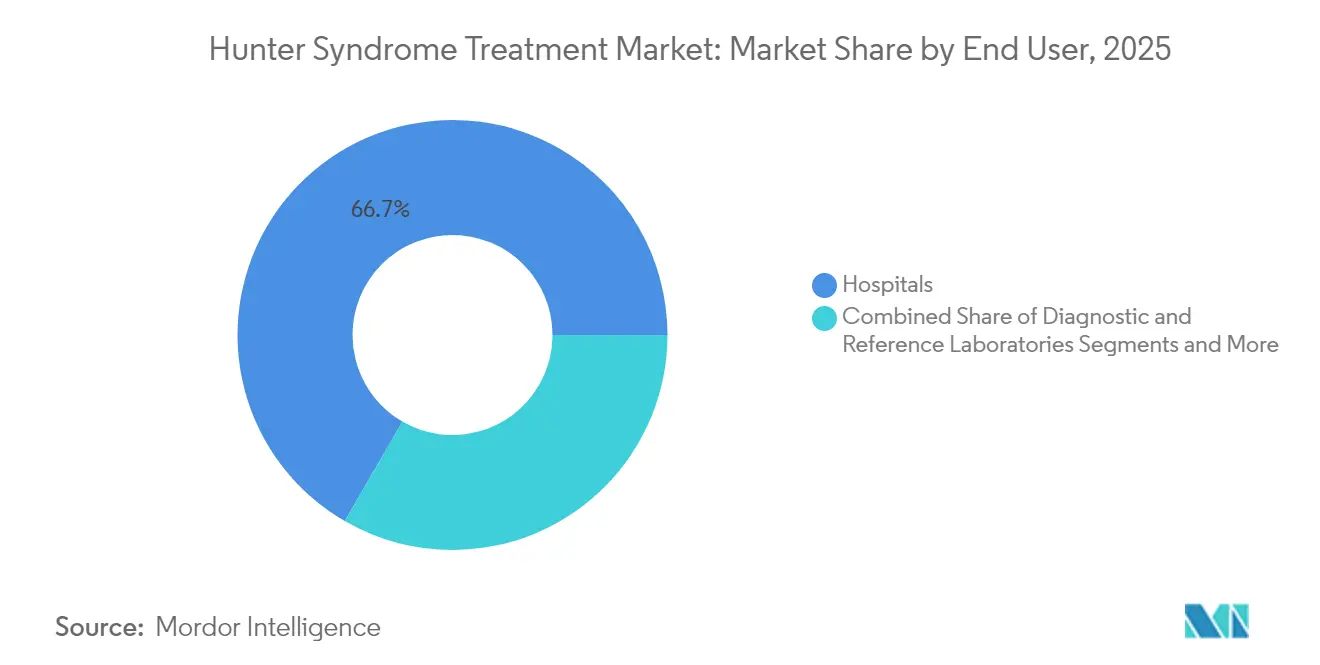
- By end user, hospitals held 66.65% of the Hunter syndrome treatment market share in 2025, while home-infusion and specialty clinics are set to grow at a 6.21% CAGR through 2031.
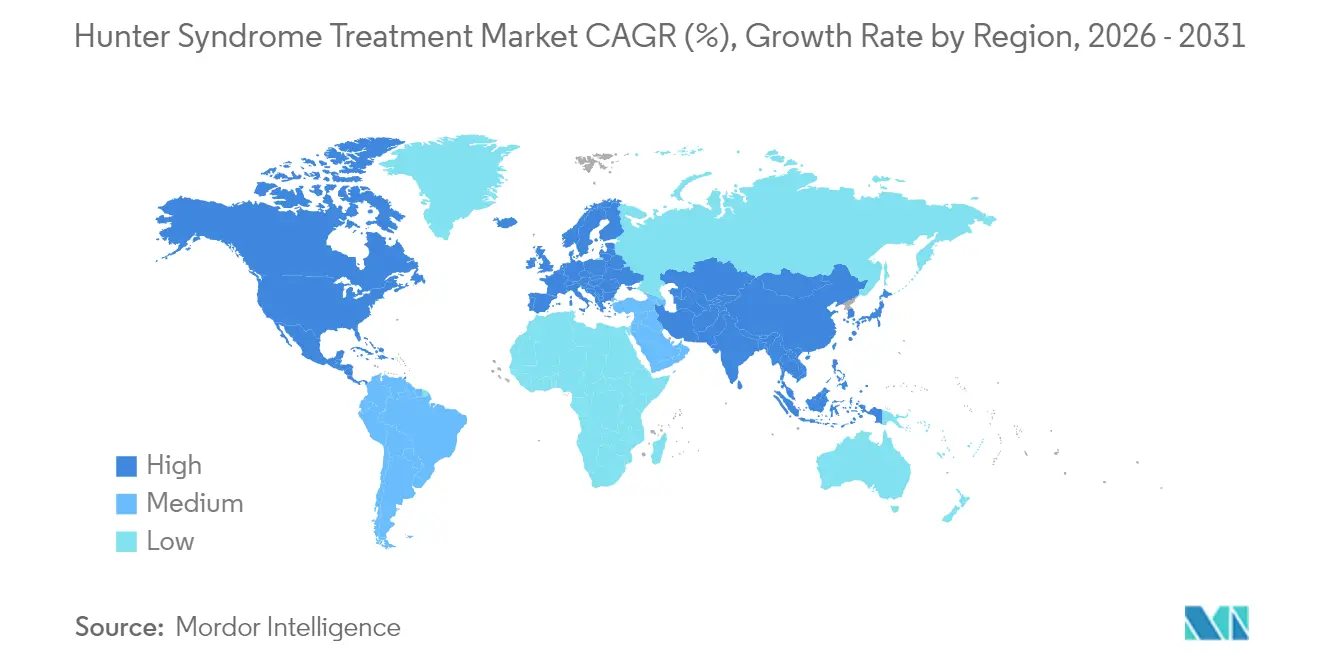
- By geography, North America led with 37.25% Hunter syndrome treatment market share in 2025; Asia Pacific is projected to post an 8.08% CAGR between 2026 and 2031.
Note: Market size and forecast figures in this report are generated using Mordor Intelligence’s proprietary estimation framework, updated with the latest available data and insights as of 2026.
Market Trends and Insights
Drivers Impact Analysis of Hunter Syndrome Treatment Market*
| Driver | (~) % Impact on CAGR Forecast | Geographic Relevance | Impact Timeline |
|---|---|---|---|
| Robust Orphan-Drug Incentives & Pricing Power | +1.80% | North America & EU | Long term (≥ 4 years) |
| Expanding Government Rare-Disease Funding Programs | +1.20% | Global, with concentration in developed markets | Medium term (2-4 years) |
| Commercial Launch Of BBB-Penetrant ERTs | +1.50% | Global | Short term (≤ 2 years) |
| Accelerating AAV9 & LV-Based Gene-Therapy Pipeline | +0.80% | North America & EU, expanding to APAC | Long term (≥ 4 years) |
| Newborn-Screening Panel Inclusion For MPS II | +0.60% | North America & EU, expanding globally | Medium term (2-4 years) |
| Growth Of Home-Infusion Service Models | +0.40% | Global, led by developed markets | Short term (≤ 2 years) |
| Source: Mordor Intelligence | |||
Robust Orphan-Drug Incentives & Pricing Power
Orphan designations confer market exclusivity—seven years in the United States and ten years in Europe, allowing sponsors to recoup high R&D costs from an ultra-small patient base.[1]In 2024, specialty-drug approvals represented more than 80% of all new U.S. medicines, underscoring the environment’s attractiveness to developers. Priority Review Vouchers deepen the appeal: Takeda’s hemophilia candidate ALHEMO secured one in December 2024, a transferrable asset that can shorten another drug’s regulatory review by four months. High list prices remain politically sensitive, but congressional proposals to soften Inflation Reduction Act provisions for sole orphan drugs signal continued legislative support. Consequently, pricing power is unlikely to erode materially over the 2025-2030 horizon, sustaining positive pressure on the Hunter syndrome treatment market.
Expanding Government Rare-Disease Funding Programs
Targeted grants stimulate discovery and translational science. The NIH PAR-25-266 call reserves resources for “high-value newborn-screen-eligible disorders,” explicitly citing mucopolysaccharidoses.[2] Europe’s proposed Orphan Genomic Therapies Fund similarly seeks to balance innovation incentives with equitable access across member states. These programs enlarge pre-symptomatic patient pools, permitting earlier intervention and supporting volume growth in the Hunter syndrome treatment market. Medium-term impact is expected because funding cycles launch new studies within two to four years.
Commercial Launch of BBB-Penetrant ERTs
Pabinafusp alfa demonstrated clinically meaningful CNS penetration by pairing iduronate-2-sulfatase with a transferrin-receptor antibody, achieving cognitive and behavioral improvements beyond somatic symptom control. Denali Therapeutics’ tividenofusp alfa cut cerebrospinal fluid heparan sulfate by 90% over 104 weeks and improved adaptive behavior scores, setting efficacy benchmarks that conventional IV ERTs cannot match. Early launch success is likely to accelerate the adoption of similar fusion-protein designs, immediately lifting the Hunter syndrome treatment market.
Accelerating AAV9 & LV-Based Gene-Therapy Pipeline
REGENXBIO’s RGX-121 delivered an 85% median cerebrospinal fluid heparan sulfate reduction sustained for two years and enabled 80% of pivotal-dose patients to discontinue ERT. Lentiviral hematopoietic stem-cell approaches report supraphysiologic enzyme expression and durable somatic correction, with first-in-human read-outs in 2024-2025.[3] Improved vector manufacturing capacity is shortening lead times and lowering the cost-of-goods, further bolstering the Hunter syndrome treatment market.
Restraints Impact Analysis of Hunter Syndrome Treatment Market*
| Restraint | (~) % Impact on CAGR Forecast | Geographic Relevance | Impact Timeline |
|---|---|---|---|
| High Annual Therapy Cost & Reimbursement Friction | -1.50% | Global, most acute in emerging markets | Medium term (2-4 years) |
| Limited CNS Efficacy Of IV ERTs | -0.80% | Global | Long term (≥ 4 years) |
| Ultra-Small Patient Pool Limits ROI For Entrants | -0.70% | Global, particularly in smaller markets | Long term (≥ 4 years) |
| Biologic Manufacturing Bottlenecks For Fusion Proteins | -0.50% | North America & EU, expanding to APAC | Short term (≤ 2 years) |
| Source: Mordor Intelligence | |||
High Annual Therapy Cost & Reimbursement Friction
Chronic IV ERT regimens can top USD 400,000 annually, stretching public budgets and private insurers alike. Gene therapies priced as one-time cures intensify budget-impact concerns despite long-run cost offsets. Payers, therefore, impose stringent prior-authorization hurdles and often reimburse only when a a sustained neurological benefit is demonstrated, slowing uptake in the Hunter syndrome treatment market. Outcome-based payment models such as milestone reimbursements contingent on biomarker normalization—are emerging but remain inconsistently applied across jurisdictions.
Limited CNS Efficacy of IV ERTs
The blood–brain barrier blocks adequate enzyme delivery to neuronal tissue, leaving severe phenotypes with progressive cognitive decline even under optimal somatic dosing. Intrathecal infusions partially address the gap but entail invasive procedures requiring operating-room resources. As newborn screening expands, clinicians and families increasingly demand disease-modifying options, relegating conventional IV ERTs to a maintenance role and capping their long-term contribution to the Hunter syndrome treatment market.
*Our forecasts treat driver/restraint impacts as directional, not additive. The impact forecasts reflect baseline growth, mix effects, and variable interactions.
Hunter Syndrome Treatment Market Segment Analysis
By Treatment Type:
Gene Therapy Disrupts ERT DominanceEnzyme replacement therapy generated JPY 91.6 billion (USD 610 million) for Takeda in fiscal 2025, translating to an 81.35% Hunter syndrome treatment market share that year. Yet gene and other advanced modalities are growing at a 7.06% CAGR, setting the stage for material share shifts by 2031. Early RGX-121 recipients recorded stable adaptive behavior and motor development, prompting 80% to discontinue weekly ERT altogether. Hospitals and payers recognize the clinical and logistical advantages of a one-time infusion, supporting rapid adoption even at multimillion-dollar list prices.
Pipeline momentum is not limited to AAV9 vectors. Lentiviral autologous stem-cell therapy yielded supraphysiologic iduronate-2-sulfatase expression without conditioning-related neurotoxicity in early studies. Several firms are now evaluating base-editing and CRISPR platforms that could further reduce vector loads, although those candidates remain pre-IND. Manufacturing capacity is a gating factor: viral-vector clean rooms ran near full utilization in 2024-2025, delaying supply for compassionate-use requests. Even so, the Hunter syndrome treatment market size tied to advanced therapies is expected to climb swiftly once the first gene therapy secures global approvals, reinforcing the segment’s leadership in value creation.

By End User:
Home Infusion Gains MomentumHospitals accounted for 66.65% of the Hunter syndrome treatment market in 2025 because IV ERT infusions demand sterile environments and anaphylaxis preparedness. Home-infusion and specialty clinics, however, are on track to expand at a 6.21% CAGR to 2031 as payers seek to curb facility overheads. German cohort data showed identical urinary glycosaminoglycan clearance and patient-reported outcome scores when ERT shifted from hospital to nurse-supervised home settings.
Gene therapy rollouts could temporarily restore hospital dominance because one-time infusions require extended monitoring and specialized vector-handling protocols. Yet post-infusion follow-up, including biomarker draws and neurocognitive assessments, aligns well with community specialty clinic infrastructure. Over time, the Hunter syndrome treatment market size tied to home care is likely to expand further as remote patient-monitoring technologies mature and as regulators grow comfortable with decentralized care models for rare disease therapies.
Geography Analysis
North America Hunter Syndrome Treatment Market
North America led the Hunter syndrome treatment market with a 37.25% share in 2025, thanks to robust orphan-drug tax credits, FDA accelerated approval mechanisms, and broad commercial insurance coverage. Gene-therapy activity is mainly concentrated in the United States, where the FDA accepted cerebrospinal fluid heparan sulfate reduction as a surrogate for clinical benefit in pre-BLA meetings for RGX-121. The Inflation Reduction Act introduces uncertainty for long-term pricing, but current legislative drafts exempt sole-indication orphan drugs from Medicare negotiations, preserving headroom for premium pricing.
Europe Hunter Syndrome Treatment Market
Europe offers streamlined centralized approval through the EMA, yet national reimbursement heterogeneity fragments access. Western European countries routinely reimburse high-cost orphan medicinal products within 12 months of marketing authorization, whereas Central and Eastern European markets often delay funding for two to three years. The proposed European Orphan Genomic Therapies Fund aims to bridge this gap by pooling risk and negotiating outcome-based contracts at an EU-wide level. Academic-industry consortia remain pivotal, with French, German, and UK centers running more than half of the active European clinical trials for Hunter syndrome gene therapy.
APAC Hunter Syndrome Treatment Market
Asia Pacific is the fastest-growing region at an 8.08% CAGR through 2031, reflecting strengthening healthcare infrastructure and the proliferation of rare disease policies. Japan approved its first BBB-penetrant ERT in 2024 and signed accords to fast-track gene-therapy dossiers, driving regional interest from multinational sponsors. China expanded its National Rare Disease List to include mucopolysaccharidosis type II in 2025, unlocking provincial reimbursement pilots and boosting diagnostic rates. India rolled out state-level newborn screening programs that capture more than 40% of births, a significant leap from less than 10% coverage in 2023. Collectively, these reforms enlarge the patient pool and set the stage for sustained double-digit growth in the Hunter syndrome treatment market across Asia Pacific.
Regulatory Landscape
Regulation for Hunter syndrome (MPS II) treatments is shaped by orphan-drug frameworks and expedited review pathways that accept biomarker-based evidence in ultra-rare diseases. In the United States, the FDA used an accelerated approval pathway in March 2026 for Denali Therapeutics' AVLAYAH (tividenofusp alfa-eknm) to treat neurologic manifestations of Hunter syndrome in pediatric patients weighing at least 5 kg, with cerebrospinal fluid heparan sulfate reduction serving as the surrogate endpoint and confirmatory trials required to verify clinical benefit.
In Europe, the EMA supports development through orphan designation and associated incentives for chronically debilitating rare diseases such as Hunter syndrome. Takeda's ELAPRASE (idursulfase) remains authorized in the EU under exceptional circumstances due to disease rarity, which places ongoing pharmacovigilance and periodic safety and efficacy update obligations on the marketing authorization holder, keeping real-world evidence generation and long-term follow-up infrastructures central for sponsors.
Value Chain Analysis
The value chain begins with specialized R&D and clinical development in ultra-rare disease centers, followed by biologics manufacturing and stringent quality systems for recombinant enzymes and next-generation modalities. The March 2026 FDA accelerated approval of Denali's AVLAYAH highlights the growing role of advanced protein engineering (BBB-penetrant fusion proteins) and the need for validated analytics, cold-chain handling, and post-marketing confirmatory evidence generation to maintain authorization.
Manufacturing and supply are concentrated among a small set of global-capable operators. Takeda runs a multi-site network spanning facilities such as Thousand Oaks (California), Singapore, Jaguariuna (Brazil), and Neuchatel (Switzerland) to support rare-disease biologics. Distribution is executed through specialty channels to hospitals and increasingly to home-infusion providers, where temperature-controlled logistics and digital orchestration tools help manage high-value, time-sensitive shipments. That infrastructure becomes more critical as gene-therapy programs progress and require tighter chain-of-custody and site readiness than conventional IV ERT delivery.
Competitive Landscape
The Hunter syndrome treatment market is moderately concentrated. Takeda’s ELAPRASE franchise generated JPY 91.6 billion (USD 610 million) in fiscal 2024, cementing the company’s leadership in conventional ERT. REGENXBIO, Denali Therapeutics, and JCR Pharmaceuticals spearhead the gene-therapy wave, each racing to secure first-in-class approval for CNS-penetrant modalities. Denali’s tividenofusp alfa earned FDA breakthrough therapy designation in January 2025 after delivering sustained cognitive gains in a Phase 1/2 study.
Strategic alliances mitigate commercial and manufacturing risk. REGENXBIO’s USD 110 million upfront partnership with Nippon Shinyaku includes potential milestones up to USD 700 million and grants the Japanese partner regional rights, ensuring culturally attuned market access. JCR Pharmaceuticals collaborates with Medipal Holdings to streamline distribution in East Asia, while Ultragenyx inked a supply agreement with WuXi Advanced Therapies to secure viral-vector capacity. Such moves underscore how manufacturing scale and local regulatory expertise have become competitive differentiators in the Hunter syndrome treatment market.
White-space opportunities persist in Latin America and the Middle East, where newborn screening infrastructure is catching up and reimbursement frameworks for ultra-rare diseases remain underdeveloped. Companies able to craft tiered-pricing and risk-sharing models could capture first-mover advantages. As of 2025, no biosimilar idursulfase candidates have progressed beyond preclinical stages, prolonging Takeda’s shield against price erosion. However, once biosimilar pathways mature, price competition could intensify, compressing margins for legacy ERTs but potentially expanding volume and overall value in the Hunter syndrome treatment market.
Hunter Syndrome Treatment Industry Leaders
-
REGENXBIO Inc.
-
Clinigen Group plc
-
JCR Pharmaceuticals
-
ArmaGen
-
Takeda Pharmaceutical Company Limited (Shire)
- *Disclaimer: Major Players sorted in no particular order
Hunter Syndrome Treatment Market Companies Covered in this Report
- Takeda Pharmaceuticals
- GC Biopharma
- JCR Pharmaceuticals Co. Ltd.
- REGENXBIO
- Denali Therapeutics
- Avrobio
- Sangamo Therapeutics
- Esteve Pharma
- Bioasis Technologies
- Clinigen Group
- CANbridge Life Sciences Ltd.
- ISU Abxis Co. Ltd.
- Ultragenyx Pharmaceutical
- Orchard Therapeutics plc
- Passage Bio Inc.
- uniQure N.V.
- Bluebird bio Inc.
- Idorsia Ltd.
- Lysogene S.A.
- ArmaGen Inc.
Market Opportunities and Future Outlook
A key commercial whitespace is the neurologic segment of Hunter syndrome, where conventional IV ERT has limited central nervous system effect. The market is addressing that gap through regulatory action: in March 2026, the FDA granted accelerated approval to Denali's AVLAYAH for neurologic manifestations in pediatric patients (>= 5 kg). The label creates a defined, labeled pathway for BBB-penetrant therapies and raises the bar for competitors on CNS-relevant endpoints such as cerebrospinal fluid heparan sulfate.
Gene therapy development also creates opportunities around one-time treatment delivery, long-term follow-up services, and payer contracting models that match high upfront costs to outcomes. In June 2026, REGENXBIO disclosed FDA alignment on a path forward for potential accelerated approval of NAVSUNLI (RGX-121), with the agency indicating existing CAMPSIITE data support BLA resubmission without additional enrollment. This regulatory stance increases the incentive for sponsors and partners to invest in vector supply, specialized infusion-center readiness, and confirmatory-study execution capabilities that can run alongside established ERT channels.
Recent Industry Developments in Hunter Syndrome Treatment Market
- June 2026: REGENXBIO announced FDA alignment on a path forward for potential accelerated approval of NAVSUNLI (clemidsogene lanparvovec-sngl, RGX-121) after appealing a Complete Response Letter. The FDA indicated existing CAMPSIITE data support BLA resubmission without additional patient enrollment, tightening timelines for manufacturing, site readiness, and commercial planning around a potential first gene therapy option in MPS II.
- March 2026: Denali Therapeutics received FDA accelerated approval for AVLAYAH (tividenofusp alfa-eknm) to treat neurologic manifestations of Hunter syndrome in pediatric patients weighing at least 5 kg. Approval based on cerebrospinal fluid heparan sulfate reduction formalizes a biomarker-led pathway in MPS II and shifts competitive focus toward BBB-penetrant biologics with required confirmatory evidence generation.
- July 2025: JCR Pharmaceuticals announced achievement of full enrollment in the global Phase III clinical trial (JR-141-GS31) for JR-141 (pabinafusp alfa). Completion of enrollment de-risks the near-term clinical execution step for a BBB-penetrant ERT program and supports downstream manufacturing scale-up and market access preparation across multiple regions.
Hunter Syndrome Treatment Market Report Scope and Research Methodology
Market Definition and Coverage
This market is defined as the revenue generated from therapies used to treat Hunter syndrome (MPS II), including ongoing drug treatment and related clinical administration where it is part of the treatment pathway.
Scope exclusions: We exclude general diagnostic testing, genetic counseling services, and supportive care products that are not specific to Hunter syndrome treatment.
Segments Covered in This Report
- By Treatment Type
- Enzyme Replacement Therapy (ERT)
- Hematopoietic Stem-Cell Transplant (HSCT)
- Gene & Other Advanced Therapies
- By End User
- Hospitals
- Diagnostic & Reference Laboratories
- Home-Infusion & Specialty Clinics
- By Geography
- North America
- United States
- Canada
- Mexico
- Europe
- Germany
- United Kingdom
- France
- Italy
- Spain
- Rest of Europe
- Asia Pacific
- China
- Japan
- India
- South Korea
- Australia
- Rest of Asia Pacific
- Middle East & Africa
- GCC
- South Africa
- Rest of Middle East & Africa
- South America
- Brazil
- Argentina
- Rest of South America
- North America
Data Sources, Market Sizing, and Validation
Desk Research
To set the base demand pool, we start with public, non-paywalled sources that anchor how many patients may exist and how care pathways are organized. Common inputs include prevalence and incidence references from sources such as the US National Library of Medicine, the US Centers for Disease Control and Prevention, and rare-disease summaries published by NIH-supported programs. We also use peer-reviewed journals for treatment patterns, dosing norms, and real-world switching or discontinuation signals.
For country level context, healthcare spending series and population tables from sources such as the World Bank and OECD are pulled in, then checked against regulator and public health agency sites where available. Company filings, investor presentations, and reputable press releases help validate therapy rollout timing and reported access expansion. In addition, we used paid subscriptions for company financials and intelligence, patent databases, and shipment-level import and export indicators to test whether supply availability broadly matches modeled treated volumes. These desk research sources are illustrative, and we also used other public and paid references to collect data, validate assumptions, and clarify open questions.
Primary Interviews and Surveys
Primary checks were completed with clinicians involved in metabolic and rare disease care, hospital pharmacy and infusion stakeholders, and payer or access-focused roles who see reimbursement constraints firsthand. We also spoke with supply-side roles across manufacturers, distributors, and specialty channels, so assumptions on dosing, therapy persistence, and country launch timing could be corrected before finalizing totals.
Distribution of primary research fieldwork respondents
| Company type | Respondent position | Region |
|---|---|---|
| Top tier: 30% | CXOs: 12% | APAC: 39% |
| Mid tier: 53% | Functional/Unit leaders: 30% | EMEA: 37% |
| Smaller Players: 17% | Managers: 58% | Americas: 24% |
Market-Sizing & Forecasting
Sizing starts with a top-down treated-cohort build that is reconstructed from prevalence references, diagnosis rates, and therapy eligibility by age and phenotype, then translated into annual demand using dosing schedules and average treatment duration. Once that demand pool is built, it is priced using typical net price progression logic, where list-to-net adjustments, tender impacts, and payer restrictions are applied so the average selling price does not move in a straight line.
We then corroborate the result with selective bottom-up approximations, mainly by sanity-checking regional revenue pools against publicly visible company disclosures, shipment or supply signals, and channel checks from primary conversations. Key variables used in the model include newborn screening and diagnosis momentum, uptake by treatment type (such as enzyme replacement therapy versus transplant or advanced options), infusion setting shifts (hospital versus home-infusion), country launch timing, and persistence trends that change repeat dosing volumes. Forecasting is primarily done using scenario analysis supported by expert consensus on what changes faster or slower, especially access expansion, label updates, and the timing of therapy switches. Where direct country data is thin, gaps are handled by using proxy markets with similar access rules, and then adjusting for population, coverage, and specialist availability.
Data Validation & Update Cycle
Outputs are cross-checked against independent signals like treated patient counts implied by dosing economics, regional access constraints, and the timing of therapy adoption that clinicians report. Outliers are reviewed in steps, first at the input level, then at the modeled output level, and finally through an analyst peer review before sign-off.
We refresh the report annually, and interim updates are triggered when a material event occurs, such as a major approval, a meaningful access expansion, or a pricing change that shifts net realizations. Before delivery, a final pass is done to re-check currency conversion timing, price assumptions, and any newly available public data so clients receive the latest updated view.
Mordor Intelligence's Hunter Syndrome Treatment Market Size Compared Against Other Published Estimates
Published market sizes for Hunter syndrome treatment can vary even when the topic name looks identical, because the underlying patient pool, price realization, and time window choices differ. Differences also show up when one study uses older exchange rates or assumes uniform pricing, which can inflate or compress the final USD value.
The bigger gaps usually come from how net pricing is handled for enzyme replacement therapy, whether home-infusion administration is counted as part of treatment revenue, and how quickly country launches are recognized in the model. When assumptions are refreshed close to publication, with currency timing aligned to the stated year and with primary re-contacts used to confirm dose persistence, the estimate stays closer to the real treated cohort economics, which is the refresh-led approach used in Mordor Intelligence.
Benchmark comparison
| Source | Market Size | Gaps in Research Methodology |
|---|---|---|
| Mordor Intelligence | USD 1.45 B (2026) | |
| Global Consultancy A | USD 1.31 B (2024) | Uses an earlier base year and can differ on net price assumptions by country, which shifts the average selling price when converted to USD and rolled forward. |
| Industry Publisher B | USD 1.05 B (2025) | Longer forecast window and different treatment boundary (for example, stricter inclusion of advanced therapies or care settings), which changes the treated revenue pool and implied uptake curve. |
Seen together, the spread is mainly explained by year selection, how list-to-net and currency timing are applied, and whether adjacent care settings are counted inside treatment revenue. Our approach stays traceable because each total ties back to a treated cohort, dosing logic, and a priced revenue bridge that can be rechecked when assumptions change.
Key Questions Answered in the Report
What is the current value of the Hunter syndrome treatment market?
The market is valued at USD 1.45 billion in 2026 and is projected to reach USD 1.88 billion by 2031.
Which treatment modality dominates revenue today?
Enzyme replacement therapy holds 81.35% of 2025 revenue, led by Takeda’s ELAPRASE franchise.
Which segment is growing the fastest?
Gene and other advanced therapies are expanding at a 7.06% CAGR thanks to BBB-penetrant ERTs and AAV-based gene therapies.
Which region shows the fastest growth?
Asia Pacific is forecast to grow at 8.08% CAGR between 2026 and 2031 as diagnostics and reimbursement frameworks mature.
How are home-infusion services impacting therapy delivery?
Home-infusion and specialty clinics are projected to grow at a 6.21% CAGR as they reduce facility costs while maintaining clinical outcomes.