
Global Human Milk Oligosaccharides Market Size and Share
Market Overview
| Study Period | 2021 - 2031 |
|---|---|
| Market Size (2026) | USD 338.93 Million |
| Market Size (2031) | USD 676.17 Million |
| Growth Rate (2026 - 2031) | 14.82 % |
| Fastest Growing Market | Asia Pacific |
| Largest Market | Asia Pacific |
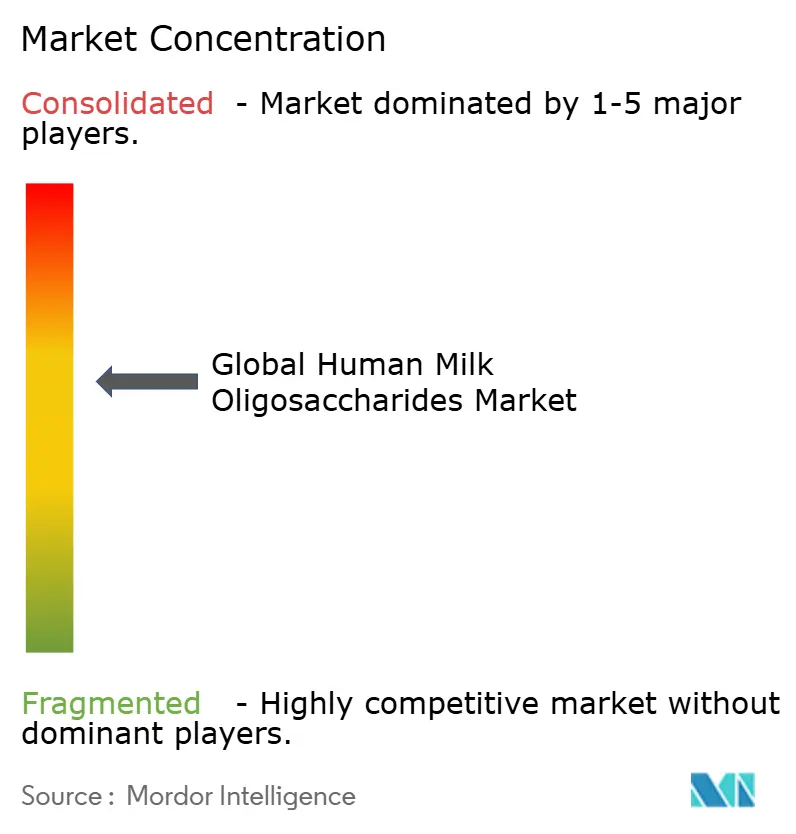
| Market Concentration | Medium |
Major Players *Disclaimer: Major Players sorted in no particular order Image © Mordor Intelligence. Reuse requires attribution under CC BY 4.0. | |
Global Human Milk Oligosaccharides Market Analysis by Mordor Intelligence
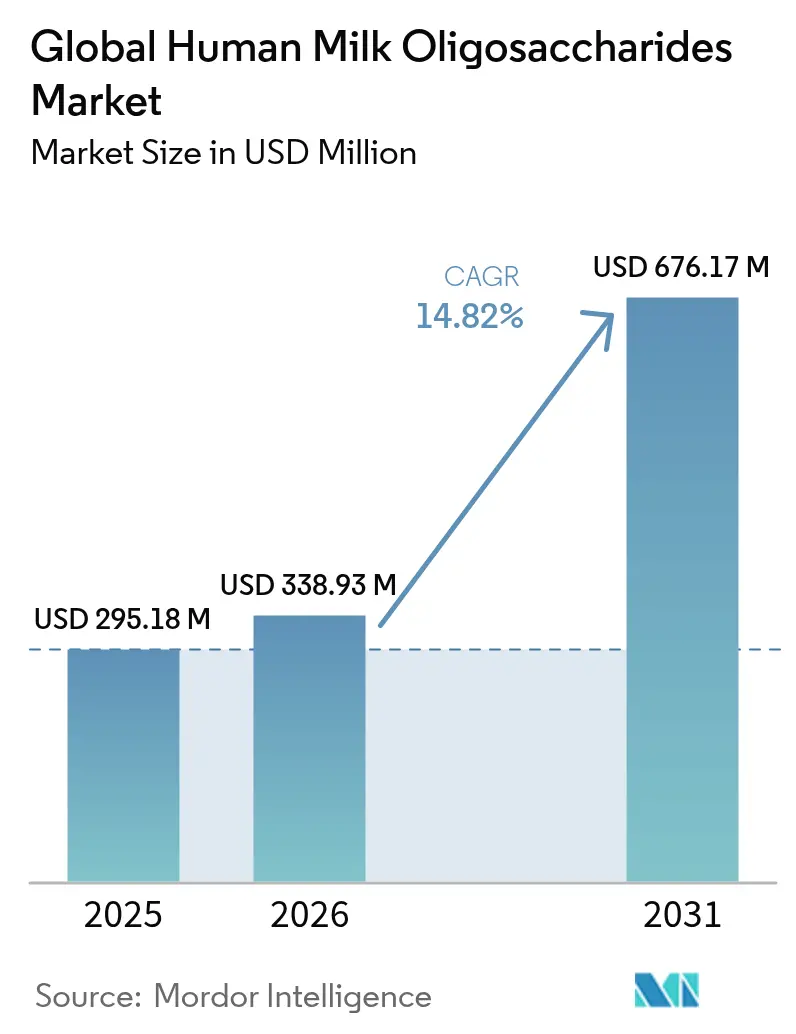
Human Milk Oligosaccharides market size in 2026 is estimated at USD 338.93 million, growing from 2025 value of USD 295.18 million with 2031 projections showing USD 676.17 million, growing at 14.82% CAGR over 2026-2031. This acceleration reflects the convergence of biotech manufacturing breakthroughs, regulatory harmonization across major markets, and the premium infant nutrition segment's structural shift toward functional ingredients that replicate breast milk composition. Manufacturing scale-up represents the primary catalyst behind this growth trajectory, with precision fermentation technologies enabling cost-effective production of complex oligosaccharide structures previously limited by chemical synthesis constraints. Among these, fucosylated neutral HMOs, led by 2′-Fucosyllactose (2′-FL), dominate the market, underpinned by extensive clinical validation of their role in shaping infant gut microbiota and immune modulation. Their structural similarity to key HMOs found in breast milk has made them the preferred addition in premium infant formulas, driving aggressive adoption across Europe, North America, and now accelerating in Asia following regulatory green lights. Meanwhile, sialylated HMOs such as 3′-Sialyllactose (3′-SL) and 6′-Sialyllactose (6′-SL) are emerging as the fastest-growing segment. This nuanced shift in product demand mix underscores how scientific advancements are progressively aligning commercial formulations closer to the diversity and functional complexity of human breast milk.
Key Report Takeaways
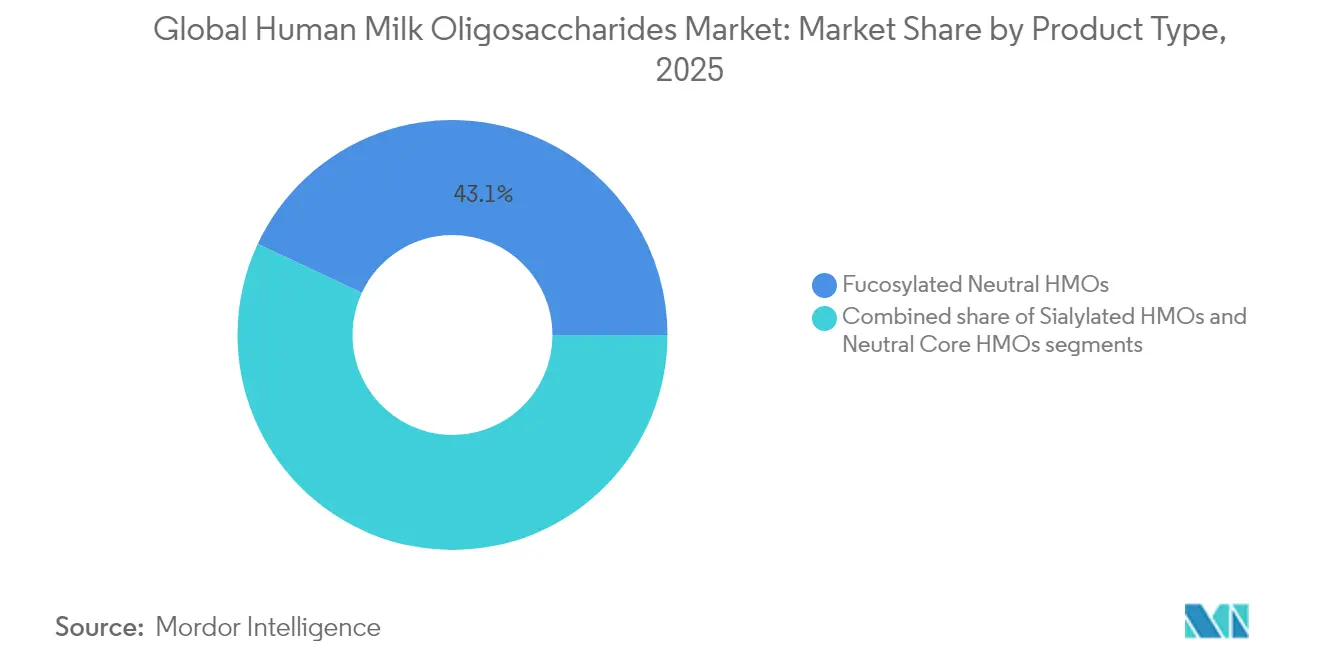
- By product type, fucosylated neutral HMOs held 43.05% of the human milk oligosaccharides market share in 2025, while sialylated HMOs are projected to expand at a 16.05% CAGR through 2031.
- By form, powder accounted for 57.32% of the human milk oligosaccharides market size in 2025 and is advancing at a 16.28% CAGR to 2031.
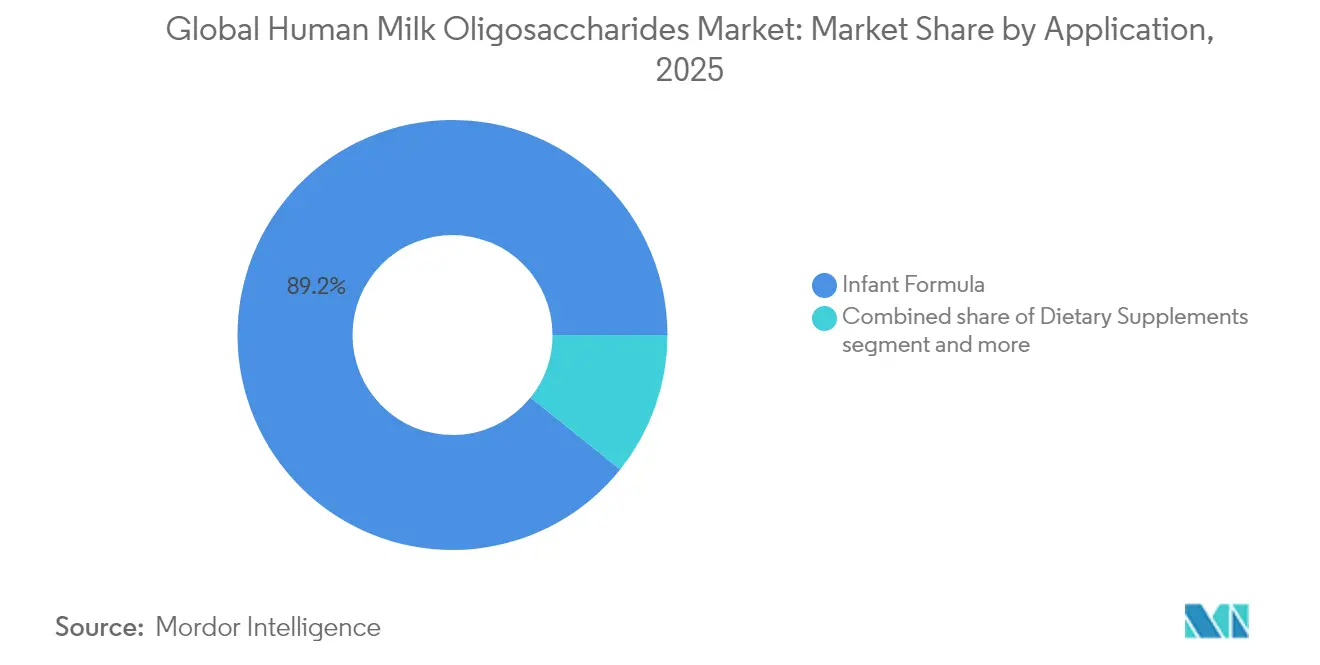
- By application, infant formula commanded 89.24% share of the human milk oligosaccharides market size in 2025, whereas dietary supplements record the fastest projected CAGR at 16.41% between 2026-2031.
- By geography, Asia-Pacific led with 45.22% revenue share in 2025 and is forecast to expand at 15.98% CAGR through 2031.
Note: Market size and forecast figures in this report are generated using Mordor Intelligence’s proprietary estimation framework, updated with the latest available data and insights as of 2026.
Market Trends and Insights
Drivers Impact Analysis of Global Human Milk Oligosaccharides Market*
| Driver | (~) % Impact on CAGR Forecast | Geographic Relevance | Impact Timeline |
|---|---|---|---|
| Rising demand for infant formula mimicking human breast milk | +4.2% | Global, with concentration in Asia-Pacific and North America | Medium term (2-4 years) |
| Expansion of premium infant nutrition segment | +3.8% | Asia-Pacific core, spill-over to Europe and North America | Long term (≥ 4 years) |
| Growing demand for clean-label, natural, and non-GMO ingredients | +2.9% | North America and Europe, expanding to Asia-Pacific | Medium term (2-4 years) |
| Consumer preference for functional, science-backed ingredients | +3.1% | Global, led by developed markets | Long term (≥ 4 years) |
| Widening application of Human Milk Oligosaccharide (HMO)'s beyond infant nutrition | +2.7% | North America and Europe initially, global expansion | Long term (≥ 4 years) |
| Growing research and development investment in infant formula manufacturing | +2.8% | Global, concentrated in biotech hubs | Medium term (2-4 years) |
| Source: Mordor Intelligence | |||
Rising Demand for Infant Formula Mimicking Human Breast Milk
One of the strongest forces driving the human milk oligosaccharides (HMO) market is the intensifying global focus on replicating the composition and health benefits of human breast milk in infant formula. Modern parents are more informed and discerning than ever, actively seeking nutritional solutions that provide immune, digestive, and cognitive advantages closely aligned with natural breastfeeding. Healthcare professionals likewise emphasize early-life nutrition that supports microbiome development and long-term resilience, fueling a shift toward advanced functional formulations. This momentum is reinforced by regulatory developments that legitimize and encourage the inclusion of HMOs; notably, the Food and Drug Administration (FDA)'s 2025 nutrient requirements review has explicitly called for evidence on the benefits of oligosaccharides for infant growth and health, signaling heightened institutional support for these bioactive compounds [1]. As a result, manufacturers are accelerating research into multi-HMO blends and tailoring formulations to specific health outcomes, from gut barrier function to infection resistance.
Expansion of Premium Infant Nutrition Segment
As demand for premium infant nutrition surges, the human milk oligosaccharides (HMO) market is experiencing significant growth. Parents are increasingly opting for infant formulas enriched with bioactive ingredients, striving to emulate the functional properties of breast milk. This trend is propelled by a rising middle class in emerging markets and a heightened parental emphasis on products that enhance immunity, gut health, and cognitive development. With the market shifting its focus from basic nutrition to functional health benefits, HMOs have become key differentiators for infant formula brands. Vinamilk's introduction of Vietnam's first 6-HMO formula highlights its global aspiration. Manufacturers are now developing sophisticated formulations that closely resemble breast milk. By placing these HMO-rich formulas in their premium tiers, companies are capitalizing on the purchasing power of the growing middle class. In February 2025, a2 Milk launched its a2 Genesis infant formula, specifically designed for the Chinese market. This premium product features a 3-HMO blend (2′-FL, 3′-SL, and 6′-SL), combined with algal DHA, prebiotic GOS, and Bifidobacterium lactis HN019. This move underscores manufacturers' premium positioning strategy and their dedication to meeting the refined demands of parents seeking breast-milk-like advantages for their children.
Growing Demand for Clean-Label, Natural, and Non-GMO Ingredients
Consumer scrutiny of infant formula ingredients has intensified following supply chain disruptions and contamination incidents, driving demand for clean-label formulations with transparent sourcing and minimal processing. The clean-label trend intersects with HMO adoption as fermentation-derived oligosaccharides offer "nature-identical" positioning compared to synthetic alternatives, addressing parental concerns about artificial additives in infant nutrition. The European Food Safety Authority's 2024 evaluation of human-identical milk oligosaccharides confirmed that HMO intake levels remain within natural ranges found in breast milk, supporting their regulatory acceptance [2]. The non-GMO certification trend presents manufacturing challenges, as current E. coli fermentation platforms require genetic modification, prompting companies to explore alternative production hosts like Bacillus subtilis or plant-based systems. The International Food Information Council's 2024 report indicates that 26% of United States consumers associate the term "natural" and 16% consumers prefer "non-genetically modified organisms" with greater food safety, increasing trust in products that carry these labels [3]. The industry's shift toward clean-label requirements and consumer pressure is driving investments in next-generation production technologies that can produce HMOs without GMO processes, which may provide competitive advantages to companies with these capabilities in the evolving market landscape.
Consumer Preference for Functional, Science-Backed Ingredients
Driven by scientific backing, the human milk oligosaccharides (HMO) market is witnessing a surge in demand for functional ingredients. Today's parents are increasingly discerning, opting for nutritional products that boast proven health advantages for their children. This trend underscores a heightened vigilance among consumers, who now meticulously scrutinize product labels for bioactive components linked to immunity, digestion, and cognitive growth. HMOs, being the third most prevalent solid in human breast milk, have garnered scientific endorsement through rigorous clinical studies. These studies highlight HMOs' role in balancing gut microbiota, bolstering immune responses, and potentially curbing infection risks. Such validated advantages resonate with parents aiming to replicate breast milk's benefits in formula-fed infants. For instance, Ingredion's 2023 data shows that 56% of consumers are willing to pay 10-30% more for all-natural products, while 33% would spend 20-30% extra. Additionally, clean label, all-natural, and no artificial ingredients benefits comprise five of the top six product claims [4]. This consumer behavior aligns with the Human Milk Oligosaccharides (HMO) market, where demand stems from the increasing preference for natural, scientifically validated ingredients with transparent sourcing that support health benefits. Regulatory bodies and health organizations have not only endorsed HMOs' safety and efficacy but also bolstered consumer trust. Moreover, healthcare professionals advocate for HMO-enhanced formulas in certain clinical scenarios, underscoring their functional merits. A case in point: Nestlé Health Science's hypoallergenic offerings, Althéra HMO and Alfaré HMO, cater to infants grappling with allergies or digestive challenges.
Restraints Impact Analysis of Global Human Milk Oligosaccharides Market*
| Restraint | (~) % Impact on CAGR Forecast | Geographic Relevance | Impact Timeline |
|---|---|---|---|
| Stringent regulatory hurdles in emerging markets | -2.1% | Emerging markets in Asia-Pacific, Latin America, and Middle East and Africa | Short term (≤ 2 years) |
| Complex manufacturing process requiring biotech expertise | -1.8% | Global, particularly affecting new entrants | Medium term (2-4 years) |
| Potential allergenicity or lactose sensitivity issues | -1.4% | Global, with higher impact in developed markets with stringent safety standards | Medium term (2-4 years) |
| Technical challenges in multi-HMO blends and customization | -1.6% | Global, concentrated in premium infant formula segments | Long term (≥ 4 years) |
| Source: Mordor Intelligence | |||
Stringent Regulatory Hurdles in Emerging Markets
Stringent regulatory requirements in emerging markets restrict the growth of the human milk oligosaccharides (HMO) market. While scientific evidence supports the health benefits of HMOs, complex approval processes and diverse local standards in developing economies slow their market adoption. This contrasts with established markets like the Europe and United States, where multiple HMO structures have received novel food ingredient approval or GRAS (Generally Recognized As Safe) status. The absence of standardized regulatory frameworks for synthetic or biofermented HMOs in emerging markets extends product registration timelines. Health authorities often require extensive clinical data specific to regional populations to validate safety and efficacy. For manufacturers, these fragmented approval processes increase compliance costs and delay market entry, affecting investment returns in these regions. Additional challenges arise from changing national infant nutrition guidelines and labeling requirements, necessitating product reformulations and relabeling to maintain compliance. These regulatory barriers slow the introduction of HMO-enriched formulas in emerging markets, reducing access to advanced nutritional products and delaying the health benefits of HMOs for these populations.
Complex Manufacturing Process Requiring Biotech Expertise
Market expansion for human milk oligosaccharides (HMOs) faces significant hurdles due to their intricate manufacturing process. Extracting HMOs from human milk is economically unfeasible due to their complex molecular structures. Instead, advanced biotechnological methods, such as microbial fermentation and enzymatic synthesis, are employed. Achieving the necessary purity and structural accuracy for regulatory compliance and clinical effectiveness demands specific bacterial strains, precise fermentation conditions, and multiple purification steps. This technical complexity confines HMO production to a select few companies with specialized expertise, proprietary bacterial strains, and comprehensive production facilities. Setting up HMO production facilities is capital-intensive, necessitating investments in fermentation bioreactors, filtration systems, and quality control infrastructure. Such stringent requirements create high entry barriers and consolidate market share among established biotechnology and ingredient manufacturing firms. Additionally, scaling production to match the natural characteristics of human milk oligosaccharides brings complications, including potential batch inconsistencies and performance variations. These manufacturing challenges limit the rise of new suppliers, restrict product availability, and sustain elevated production costs, hindering the wider adoption of HMOs in nutritional applications.
*Our forecasts treat driver/restraint impacts as directional, not additive. The impact forecasts reflect baseline growth, mix effects, and variable interactions.
Global Human Milk Oligosaccharides Market Segment Analysis
By Product Type:
Sialylated HMOs Drive Innovation Despite Fucosylated DominanceIn 2025, fucosylated neutral HMOs command a dominant 43.05% market share, largely due to the regulatory green light and expansive manufacturing capabilities of 2'-Fucosyllactose in key markets. This leadership is a testament to early commercialization triumphs and efficient production techniques, allowing competitive pricing for mainstream infant formulas. Neutral Core HMOs, which include Lacto-N-tetraose and Lacto-N-neotetraose, find themselves in a pivotal growth phase, buoyed by regulatory nods and their integration into multi-HMO blends. This shift underscores manufacturers' strategic pivot from singular components to intricate blends, mirroring the diverse oligosaccharide profile of breast milk.
Sialylated HMOs are rising, boasting a robust 16.05% CAGR projected through 2031. Their ascent is fueled by clinical findings linking them to cognitive benefits and a premium market stance appealing to health-focused consumers. With players like Kyowa Hakko Bio making waves with a 2023 launch, the market is witnessing a surge in investments towards fermentation platforms. These platforms, adept at churning out multiple HMO variants, are seen as key to seizing premium market slots and adapting to shifting consumer preferences. Notably, HMOs such as 3'-Sialyllactose and 6'-Sialyllactose, while offering cognitive benefits, come with a premium price tag, a reflection of their intricate manufacturing process and a scarcity of suppliers.

By Form:
Powder Dominance Reflects Supply Chain OptimizationIn 2025, powdered formulations command a dominant 57.32% share of the market, with projections indicating a robust growth rate of 16.28% CAGR through 2031. This supremacy is attributed to pivotal supply chain benefits: powders boast a longer shelf life, incur reduced transportation costs, and seamlessly integrate with current infant formula production lines. The preference for powdered formats is especially pronounced in emerging markets, where a lack of cold chain infrastructure makes stability and logistical efficiency paramount. The industry's pivot towards powder-centric products resonates with infant formula manufacturers, who aim to bolster local production and curtail import reliance.
Liquid HMO formulations carve out a niche market, predominantly catering to ready-to-feed products and pharmaceuticals, even as they grapple with elevated production and storage costs. To preserve oligosaccharide functionality during processing and storage, HMO suppliers and formula producers are pioneering powder integration technologies. Meanwhile, alternative forms like encapsulated and spray-dried variants are gaining traction in dietary supplements and functional foods. However, their market expansion is tempered by cost considerations and regulatory hurdles. These specialized formats underscore a wave of innovation, broadening the horizons of HMOs beyond just infant nutrition.
By Application:
Dietary Supplements Emerge as Growth CatalystIn 2025, infant formula applications command a dominant 89.24% market share, underscoring the pivotal role of HMOs as functional ingredients in early-life nutrition. This prominence is further bolstered by regulatory frameworks that prioritize infant safety in novel food approvals. The concentrated focus on infant formulas highlights the industry's commitment to mimicking breast milk benefits, a trend evident as major brands like Nestlé, Abbott, and Danone integrate HMOs into their premium product lines. While food and beverage applications witness consistent growth with manufacturers delving into HMO-infused functional foods, the pharmaceutical sector unveils new avenues, eyeing therapeutic formulations for targeted health conditions.
Dietary supplements, however, emerge as the frontrunner, boasting a robust 16.41% CAGR through 2031. This surge is fueled by burgeoning research spotlighting HMOs' advantages for adult gut health and bolstered immune function. Such diversification signals a strategic pivot by manufacturers, extending their reach from solely infant nutrition to encompass a wider health and wellness spectrum. Notably, DSM-Firmenich's GlyCare portfolio is at the forefront, honing in on adult gut health across diverse age demographics. This broadened application strategy not only amplifies the utility of HMO production investments across varied market segments but also mitigates the cyclical reliance on infant formula sales.
Geography Analysis
APAC Human Milk Oligosaccharides Market
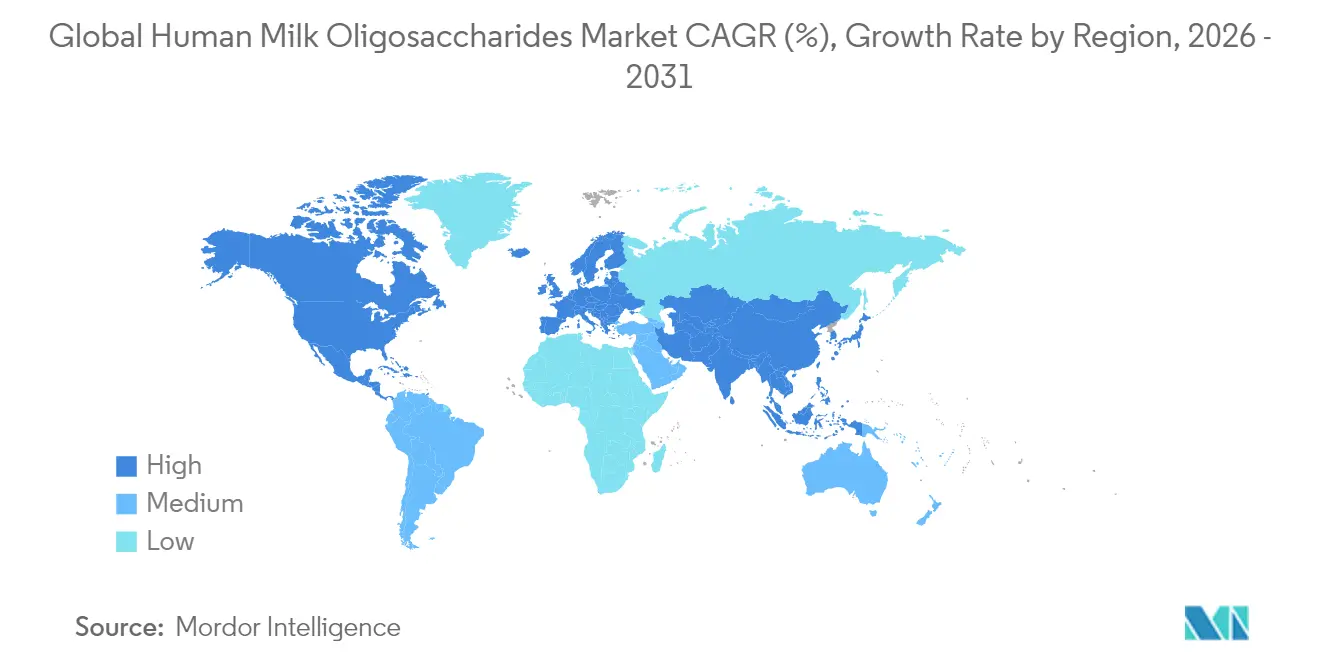
Asia-Pacific dominates with 45.22% market share in 2025 while simultaneously exhibiting the fastest regional growth at 15.98% CAGR through 2031, propelled by China's regulatory approvals, premium infant formula adoption, and manufacturing capacity expansion initiatives. The regional leadership reflects demographic advantages, including large birth cohorts, rising disposable incomes, and cultural emphasis on infant nutrition quality that drives premium product adoption. China's approval of 4 HMO types in 2024 catalyzed market expansion, while Vietnam's introduction of 6-HMO formulas by Vinamilk demonstrates regional innovation leadership. Additionally, regional strategies are evolving beyond regulatory compliance and manufacturing footprints to include targeted consumer education and healthcare professional engagement, which are crucial in accelerating HMO adoption.
North America and Europe Human Milk Oligosaccharides Market
North America maintains a significant market presence driven by established regulatory frameworks, with the Food and Drug Administration (FDA) Generally Recognized as Safe (GRAS) approvals enabling rapid product launches and consumer acceptance of functional ingredients in infant nutrition. The region benefits from advanced research infrastructure and clinical validation capabilities that support HMO development and commercialization. Europe represents a mature market with sophisticated regulatory requirements through European Food Safety Authority (EFSA) novel food approvals, while demonstrating steady growth driven by premium infant nutrition trends and clean-label consumer preferences.
MEA and South America Human Milk Oligosaccharides Market
Emerging regions, including South America, the Middle East, and Africa, present long-term growth opportunities as regulatory frameworks develop and economic conditions support premium infant nutrition adoption, though current market penetration remains limited by approval timelines and distribution infrastructure constraints. This blend of market education, strategic partnerships, and portfolio diversification across regions is expected to further solidify HMOs as a cornerstone of both pediatric and broader functional nutrition markets worldwide.
Regulatory Landscape
Regulatory oversight for HMOs is anchored in novel food and infant formula standards, with approvals often tied to a specific molecular structure, production microorganism or strain, and applicant. This framework shapes market access and can create temporary competitive protections. In Europe, HMO authorizations proceed under the Novel Food framework and Union list updates, supported by EFSA safety opinions, including the July 2025 NDA Panel opinion on Lacto-N-tetraose (LNT) produced with an E. coli K-12 derivative strain, and European Commission actions including the April 2024 authorization for 3-sialyllactose (3-SL) sodium salt produced by Kyowa Hakko Bio Co., Ltd. Great Britain maintains a separate post-Brexit novel foods register, where 3-fucosyllactose (Glycom A/S) is listed with data protection provisions extending into June 2029.
In Asia-Pacific, the regulatory pathway continues to expand the set of permitted HMO types in infant nutrition, but remains fragmented across national authorities and standards. Food Standards Australia New Zealand (FSANZ) gazetted approval of 3-fucosyllactose as a nutritive substance in infant formula products effective 20 January 2026, with a defined period of market exclusivity linked to the applicant data set (GLYCARE). Across jurisdictions, regulators are also adapting assessment approaches as multi-HMO products proliferate, illustrated by EFSA's 2024 technical assistance work on simplified intake assessment for human-identical milk oligosaccharides (HiMOs) when new uses or use extensions are proposed.
Value Chain Analysis
The HMO value chain starts with feedstocks such as lactose and plant-derived glucose, then moves into precision fermentation using engineered microbial strains. After fermentation, producers perform complex downstream purification to confirm the target structure, reach high purity, and maintain specifications suited for sensitive end uses like infant formula. Manufacturing is capital intensive, and quality systems are a key differentiator, since control of fermentation parameters and execution of multi-step separation and stabilization drive yield, batch-to-batch consistency, and compliance readiness. As suppliers expand portfolios beyond single molecules, developing and qualifying multi-HMO systems also increases development and quality-control burdens compared with single-ingredient output.
Regulatory approvals operate as a gate in the chain, with structure- and geography-specific dossiers that influence where a molecule can be sold and in which applications. Commercialization typically flows from ingredient suppliers that provide application support, documentation, and customized formats, commonly powder for compatibility with formula plants, to infant formula and nutrition manufacturers serving retail and healthcare channels. Partnerships linking fermentation scale with global commercialization remain prominent, including BENEO and WACKER's collaboration for European production and market rollout of 2-fucosyllactose (2-FL), and dsm-firmenich expanding regional access via approvals across China, Malaysia, and Thailand, improving the supply basis for local brand innovation programs.
Competitive Landscape
The HMO market exhibits moderate consolidation, characterized by a biotech-driven oligopoly where manufacturing expertise and regulatory navigation capabilities determine competitive positioning rather than traditional scale advantages. The major players in the market include Abbott Laboratories, DSM-Firmenich (incl. Glycom A/S), Royal FrieslandCampina N.V., BENEO. High entry barriers stem from biotech manufacturing requirements, regulatory approval costs, and intellectual property protection, which limit new entrants while allowing established companies to maintain premium pricing.
The formation of strategic partnerships between HMO suppliers and infant formula manufacturers creates vertical integration opportunities. Companies compete primarily through technological differentiation, investing in advanced fermentation platforms that can produce complex oligosaccharide structures matching the temporal composition changes in breast milk. Market opportunities exist in plant-based HMO production and multi-component formulations.
Research collaborations, such as the UC San Diego-Novonesis consortium, generate intellectual property that may influence competitive dynamics. While precision fermentation companies and therapeutic application startups represent potential market disruptors, regulatory requirements and manufacturing scale-up challenges continue to favor established biotech companies with proven capabilities in the market.
Global Human Milk Oligosaccharides Industry Leaders
-
Nestle SA
-
Abbott Laboratories
-
DSM-Firmenich (incl. Glycom A/S)
-
BENEO
-
Royal FrieslandCampina N.V.
- *Disclaimer: Major Players sorted in no particular order
Global Human Milk Oligosaccharides Market Companies Covered in this Report
- BASF SE
- Abbott Laboratories
- Nestle SA
- Novonesis (Novozymes A/S)
- DSM-Firmenich (incl. Glycom A/S)
- International Flavors and Fragrances Inc. (IFF) (DuPont)
- Elicityl SA
- Medolac Laboratories
- Royal FrieslandCampina N.V.
- ZuChem Inc.
- Inbiose NV
- Glycosyn LLC
- Kyowa Hakko Bio Co. (Kirin Holdings)
- Chr. Hansen A/S
- Conagen, Inc.
- Arla Foods amba
- Dextra Laboratories Ltd
- Jennewein Biotechnologie GmbH
- BENEO
- GeneChem Inc.
Read Analysis of Global Human Milk Oligosaccharides Companies
Market Opportunities and Future Outlook
A key opportunity is the shift from single-HMO fortification toward multi-oligosaccharide blends that more closely mirror breast milk diversity. This increases demand for broader approved portfolios (2-FL/DFL, LNT, 3-SL, 6-SL) and for suppliers that can manage the cost and complexity of downstream purification and stabilization. Approval momentum in Asia-Pacific also creates practical space for new product development in premium and specialized early-life nutrition. In March 2026, dsm-firmenich cited authorizations for 3-SL in China and multiple HMO ingredients in Malaysia and Thailand, expanding the set of compliant options for regional formula producers beyond the most common fucosylated ingredients.
Manufacturing scale-up and regionalization are also creating room for new supply agreements, localization of sourcing, and pricing structures that can support broader formulation adoption. In April 2026, Huangshan Tongxi Biotechnology delivered a second HMO production line in China with 3,000 metric tons of annual design capacity, for a total of 3,500 metric tons at the plant. A separate March 2026 landing agreement in Hefei outlined a synthetic biology HMO industrialization base project (about 510 million yuan) with 3,000 metric tons annual capacity. Alongside capacity projects, diversification beyond infant formula continues to widen addressable demand, including nutrition applications for older children and adult gut-health positioning in dietary supplements, while selective expansion into non-food uses depends on ingredient suppliers' ability to secure regulatory permissions and commercial pathways.
Recent Industry Developments in Global Human Milk Oligosaccharides Market
- May 2026: dsm-firmenich launched GLYCARE SK, positioning HMOs as biotechnology-derived actives for skin care applications. The product extends HMO commercialization beyond early-life nutrition and creates an additional demand outlet for suppliers with fermentation and purification capability.
- June 2025: BENEO and WACKER established a global strategic partnership to produce and commercialize the HMO 2'-Fucosyllactose (2'-FL), with WACKER running precision fermentation in Europe and BENEO leading commercialization. Initial supply into European infant formula manufacturing supports 2'-FL availability and reinforces producer-distributor partnerships as they scale HMOs.
- April 2024: DSM-Firmenich and Lallemand Health Solutions partnered to develop synbiotic solutions for early-life nutrition combining DSM-Firmenich HMOs (2'-FL and 3'-SL) with Lallemand probiotic strains. The collaboration supports product differentiation in premium infant formula by pairing prebiotic HMO functionality with targeted microbiome strains.
Global Human Milk Oligosaccharides Market Report Scope and Research Methodology
Market Definition and Coverage
This market covers the value of human milk oligosaccharides (HMOs) sold as ingredients across major end uses. We count revenue generated from commercialized HMO products in powder, liquid, or other similar saleable forms.
Scope exclusions: We exclude standard prebiotics that are not HMOs, and we also exclude internal R&D only volumes that are not sold into end markets.
Segments Covered in This Report
- By Product Type
- Fucosylated Neutral HMOs
- 2’-Fucosyllactose (2’-FL)
- 3-Fucosyllactose (3’-FL)
- Difucosyllactose (DFL)
- Neutral Core HMOs
- Lacto-N-tetraose (LNT)
- Lacto-N-neotetraose (LNnT)
- Sialylated HMOs
- 3’-Sialyllactose (3’-SL)
- 6’-Sialyllactose (6’-SL)
- Fucosylated Neutral HMOs
- By Form
- Powder
- Liquid
- Others
- By Application
- Food and Beverage
- Dietary Supplements
- Infant Formula
- Pharmaceuticals
- By Geography
- North America
- United States
- Canada
- Mexico
- Rest of North America
- Europe
- Germany
- France
- United Kingdom
- Spain
- Netherlands
- Italy
- Rest of Europe
- Asia-Pacific
- China
- India
- Japan
- Australia
- Rest of Asia-Pacific
- South America
- Brazil
- Argentina
- Rest of South America
- Middle East and Africa
- South Africa
- Saudi Arabia
- Rest of Middle East and Africa
- North America
Data Sources, Market Sizing, and Validation
Desk Research
Desk research was used to map what is technically an HMO ingredient, how it is labeled across regions, and where it shows up in finished products such as infant formula, supplements, and functional foods. We relied on public and official sources including FDA ingredient and safety communication pages, the European Commission and EFSA novel food resources, and Codex Alimentarius standards that influence formula composition.
We also reviewed statistics and science references to cross-check demand signals. UN Comtrade trade codes were used directionally for related ingredient flows, while OECD and World Bank population and income series were used to frame infant nutrition demand. Peer-reviewed nutrition journals were reviewed for typical inclusion rates and permitted claims. Company filings, investor presentations, press releases, and industry association websites were reviewed to understand capacity additions, commercialization timelines, and regulatory approvals, and these were cross-checked using a paid subscription for company financials and a patent database for technology activity. The desk sources listed here are illustrative, and other public references were also used during data collection, validation, and clarification.
Primary Interviews and Surveys
To close gaps that desk sources do not address well, we spoke with industry participants across ingredient manufacturing, formulation teams, distributors, and downstream brand and procurement roles. These interviews helped validate adoption by application, typical dosage ranges, pricing direction by HMO type, and the timing of regulatory driven launches across APAC, EMEA, and the Americas.
Distribution of primary research fieldwork respondents
| Company type | Respondent position | Region |
|---|---|---|
| Top tier: 29% | CXOs: 19% | APAC: 42% |
| Mid tier: 51% | Functional/Unit leaders: 40% | EMEA: 34% |
| Smaller Players: 20% | Managers: 41% | Americas: 24% |
Market-Sizing & Forecasting
Sizing starts with a top-down build that translates the addressable demand pool into HMO ingredient value by application. We use adoption rates in infant formula and adjacent uses, then convert inclusion levels into ingredient volumes that are priced to revenue. Totals are corroborated with selective bottom-up approximations, including roll-ups of revenues from a sampled set of suppliers, channel checks on typical pricing corridors, and a volume times ASP approach for key HMO types. When gaps appear, these bottom-up points are used to adjust totals.
Key inputs include the infant birth cohort and premium formula penetration by region, regulatory approval timing that enables new launches, and average inclusion rates by application, which move demand materially. We also use average selling price progression by form and by HMO class, plus capacity expansion signals that may relax supply constraints. For forecasting, scenario analysis was used with a base case anchored to interview consensus on adoption speed, price normalization, and product mix shifts toward more complex HMO portfolios. Where bottom-up points are missing for smaller countries, ratios from comparable markets were applied and then stress tested using trade and labeling activity along with expert feedback.
Data Validation & Update Cycle
Outputs are checked in more than one way so that no single assumption drives the total market size. We compare results against independent signals such as announced capacity additions, observed application launches, and price direction shared by multiple interviewees, and then review variances until the math and narrative line up.
Before sign-off, an additional analyst reviews the model logic, unit consistency, and year-over-year movements to flag anomalies that do not match known demand and regulatory trends. The report is refreshed annually, and interim updates are triggered when there are material events such as major approvals, step changes in capacity, or visible pricing resets. Before delivery, a fresh review pass is performed so clients receive the latest updated view.
Mordor Intelligence's Human Milk Oligosaccharides Market Estimate Compared With Other Published Estimates
Published market values for HMOs can differ widely because each publisher uses different application coverage, treats the base year differently, and assumes different speed of pricing evolution as supply scales. Variation also comes from how tightly estimates are linked to public regulatory approvals and actual product launch timing, which can shift how revenue is recognized by a year or two.
Some external estimates include broader prebiotic ingredients or add animal health and other adjacent uses in the same figure. In Mordor Intelligence, we count only commercialized HMO ingredients sold into the defined four applications, and we align regional totals to approval timing, form-level pricing, and adoption rates validated through interviews.
Benchmark comparison
| Source | Market Size | Gaps in Research Methodology |
|---|---|---|
| Mordor Intelligence | USD 338.93 M (2026) | |
| Industry Publisher A | USD 275.34 M (2025) | Uses an earlier base year and a different growth window, and the application mix and pricing path are not clearly linked to approval timing and inclusion rates, which can depress near-term revenue. |
| Research House B | USD 580.00 M (2024) | Appears to use a wider scope that can bundle additional sources, forms, or adjacent oligosaccharide categories, and the assumptions on adoption and ASP are not transparently reconciled to observed commercialization milestones. |
The spread across the three figures mainly comes down to scope choices, base-year alignment, and how directly pricing and adoption assumptions are tied to real launch and approval signals. By keeping inputs traceable to clear demand pools and practical checks, the estimate stays balanced and easier to reproduce when new data points emerge.
Key Questions Answered in the Report
What is driving the rapid growth of the Human Milk Oligosaccharides market?
Strong demand for breast-milk-mimicking formulas, precision-fermentation cost reductions, and expanding premium-nutrition segments push the market to a 14.82% CAGR toward 2031.
Which region leads the Human Milk Oligosaccharides market?
Asia-Pacific accounts for 45.22% of 2025 revenues and posts the fastest 15.98% CAGR, fueled by China’s regulatory approvals and premium-formula uptake.
Which product type grows fastest within the Human Milk Oligosaccharides industry?
Sialylated HMOs grow at 16.05% CAGR as evidence mounts for cognitive benefits, outpacing the dominant fucosylated segment.
Beyond infant formula, where are HMOs being used?
Dietary supplements record a 16.41% CAGR, and early-stage trials explore functional foods and therapeutic applications for gut and immune health.