
High-flow Nasal Cannula Market Size and Share
Market Overview
| Study Period | 2020 - 2031 |
|---|---|
| Market Size (2026) | USD 8.91 Billion |
| Market Size (2031) | USD 14.66 Billion |
| Growth Rate (2026 - 2031) | 10.45 % |
| Fastest Growing Market | Asia-Pacific |
| Largest Market | North America |
| Market Concentration | Medium |
Major Players *Disclaimer: Major Players sorted in no particular order Image © Mordor Intelligence. Reuse requires attribution under CC BY 4.0. | |
High-flow Nasal Cannula Market Analysis by Mordor Intelligence
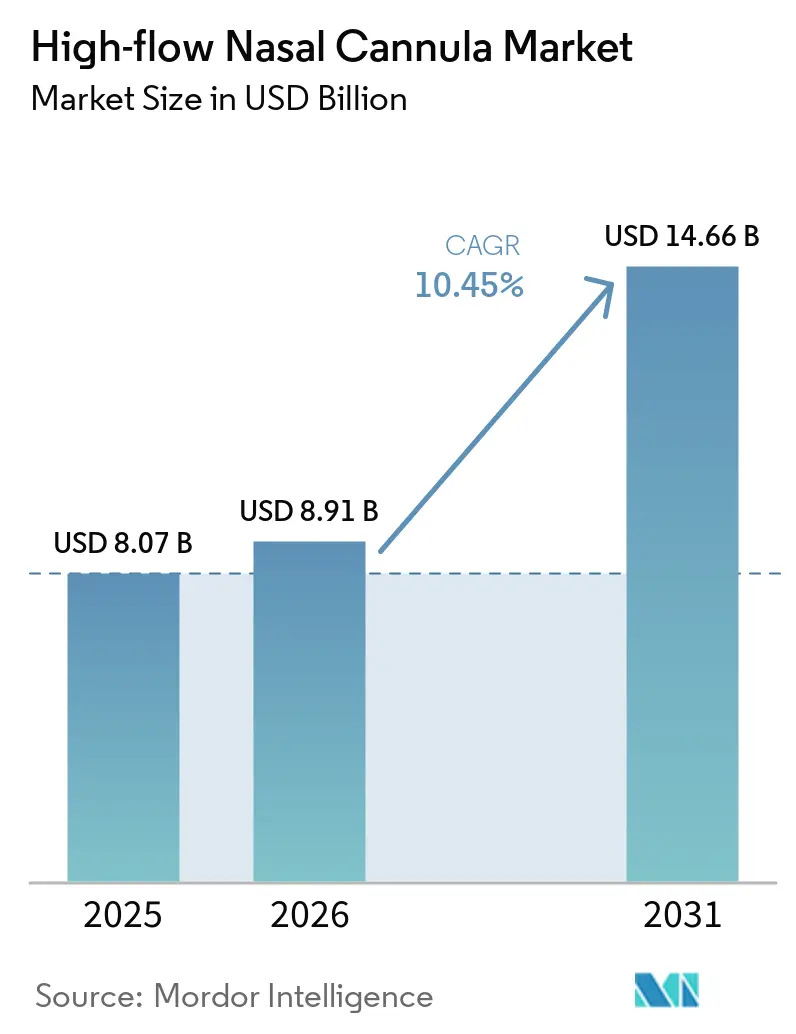
The high-flow nasal cannula market size was valued at USD 8.07 billion in 2025 and estimated to grow from USD 8.91 billion in 2026 to reach USD 14.66 billion by 2031, at a CAGR of 10.45% during the forecast period (2026-2031). Growth is propelled by the widening adoption of heated, humidified high-flow oxygen therapy that reduces intubation rates, shortens hospital stays, and improves patient comfort. Expanding clinical evidence in chronic obstructive pulmonary disease (COPD), bronchiolitis, and peri-operative care is broadening the high-flow nasal cannula market across hospital, emergency, and home-care environments. Increasing prevalence of respiratory illnesses—COPD affects 200 million people and caused 3.2 million deaths in 2024—continues to push demand firsnet.org. Rapid device innovation in integrated flow monitoring, coupled with tele-respiratory platforms, strengthens the value proposition for providers while lowering total cost of care. At the same time, infection-control learning from recent pandemics accelerates preference for non-invasive gas delivery systems that minimize aerosol dispersion.
Key Report Takeaways
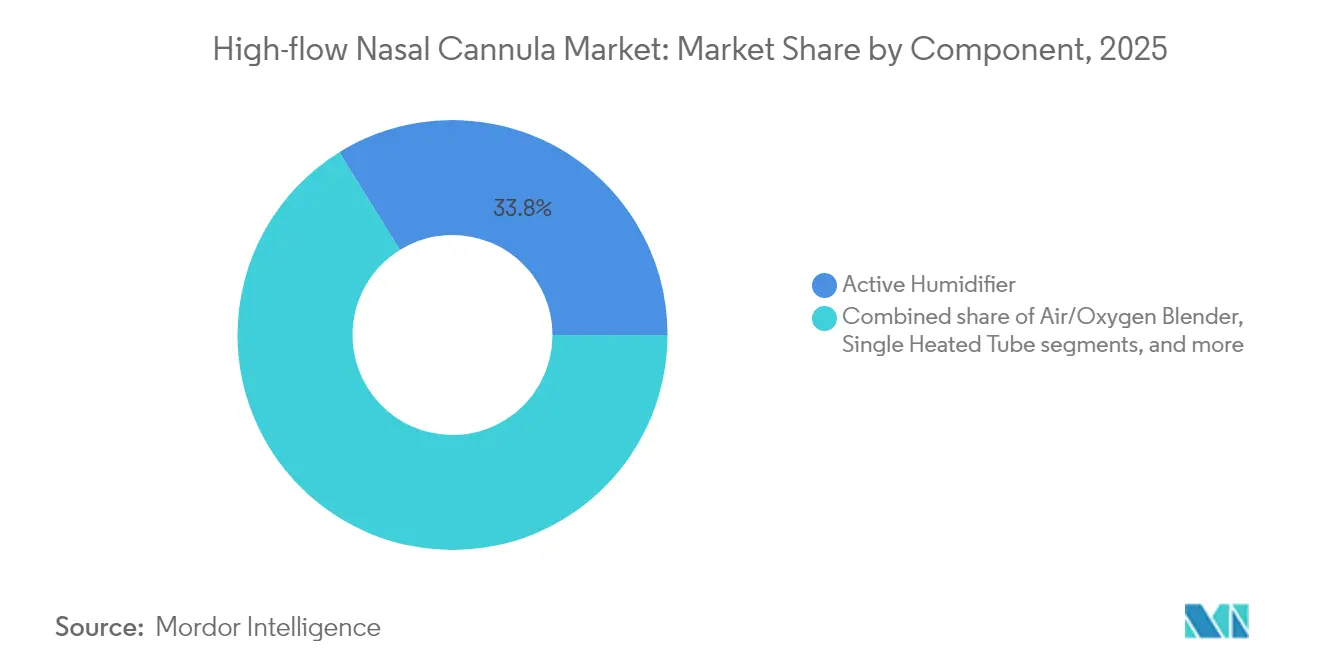
- By component, active humidifiers led with 33.82% of the high-flow nasal cannula market share in 2025, whereas nasal cannula components are forecast to advance at a 13.33% CAGR through 2031.
- By end-user, hospitals & intensive care units held 47.30% revenue share in 2025; Home-care Settings exhibit the fastest projected CAGR at 12.57% between 2026-2031.
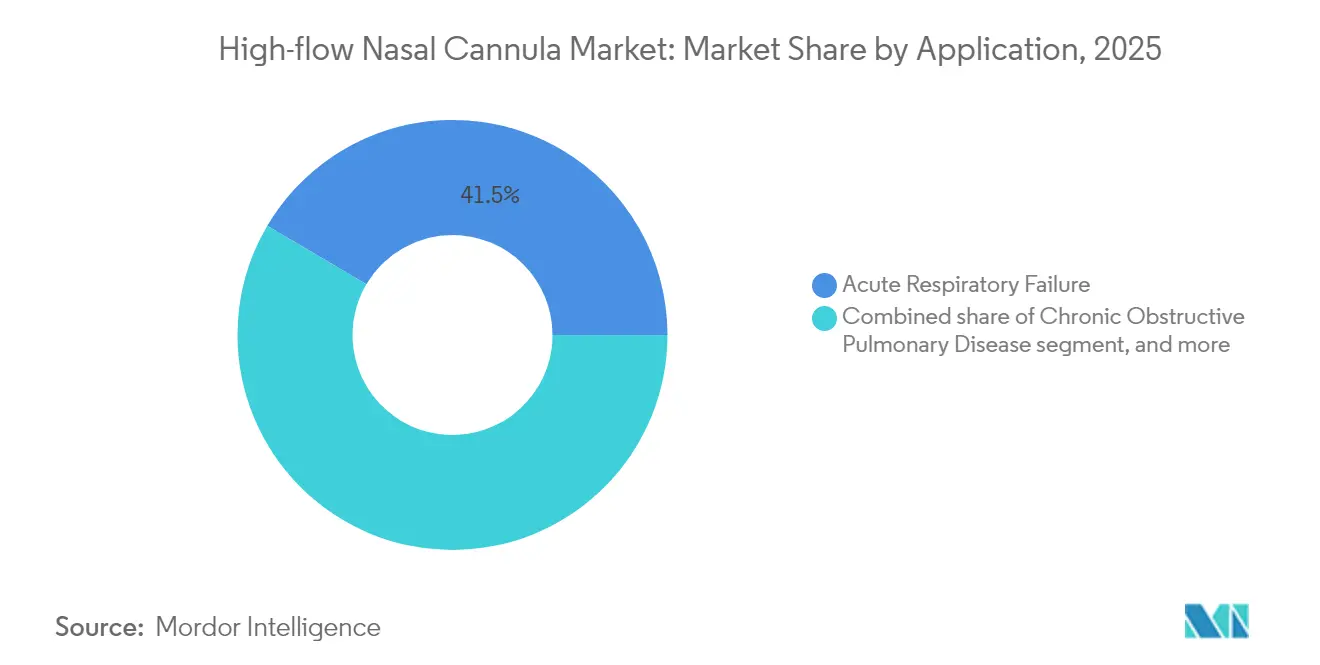
- By application, acute respiratory failure accounted for a 41.52% slice of the high-flow nasal cannula market size in 2025, while COPD applications are anticipated to grow at 11.23% CAGR to 2031.
- By patient age group, adults (18-64 yrs) comprised 58.40% of the high-flow nasal cannula market share in 2025; the geriatric segment is poised for a 10.21% CAGR from 2026-2031.
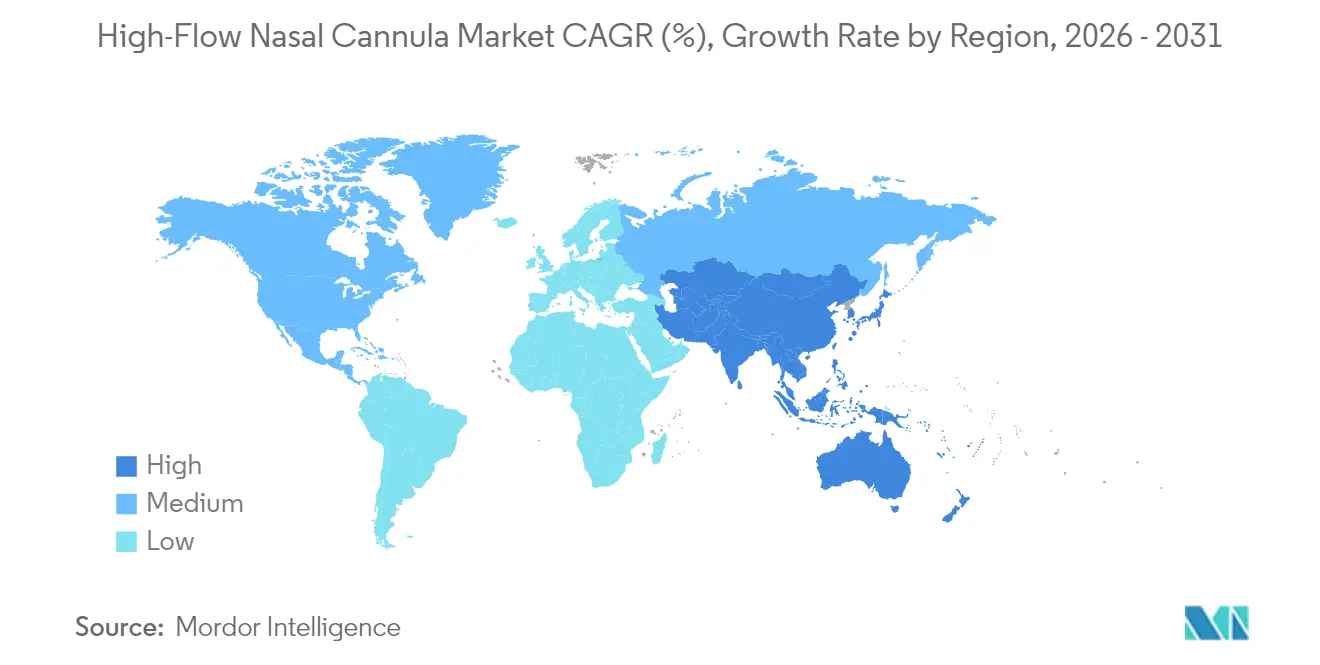
- By geography, North America commanded 37.45% of global revenue in 2025; Asia Pacific is predicted to register an 10.86% CAGR up to 2031.
Note: Market size and forecast figures in this report are generated using Mordor Intelligence’s proprietary estimation framework, updated with the latest available data and insights as of 2026.
Market Trends and Insights
Drivers Impact Analysis of High-flow Nasal Cannula Market*
| Drivers Impact Analysis | (~) % Impact on CAGR Forecast | Geographic Relevance | Impact Timeline |
|---|---|---|---|
| Rising global prevalence of acute & chronic respiratory diseases | +2.0% | Global | Long term (≥ 4 years) |
| Technological advancements in heated humidification & integrated flow monitoring | +2.0% | North America, Europe, Asia Pacific | Medium term (2-4 years) |
| Expanding applications of HFNC beyond ICU into emergency & peri-operative settings | +1.0% | North America, Europe | Short term (≤ 2 years) |
| Growing adoption of home-based oxygen therapy & tele-respiratory care | +3.0% | North America, Asia Pacific | Long term (≥ 4 years) |
| Favorable reimbursement & clinical guidelines supporting non-invasive oxygenation | +1.0% | North America, Europe | Medium term (2-4 years) |
| Increase in pre-term birth rates necessitating neonatal HFNC | +1.0% | Asia Pacific, Africa | Long term (≥ 4 years) |
| Source: Mordor Intelligence | |||
Rising Global Prevalence of Acute & Chronic Respiratory Diseases
The burden of COPD, which affected 200 million people and caused 3.2 million deaths in 2024, is pushing clinicians to escalate beyond conventional oxygen delivery methods[1]. Asthma cases exceeded 350 million worldwide, while seasonal influenza remained the most detected pathogen in northern hemisphere surveillance. These epidemiological pressures have elevated demand for high-flow therapy that lowers readmissions and improves health-related quality-of-life scores, positioning the high-flow nasal cannula market as an essential pillar of modern respiratory care.
Technological Advancements in Heated Humidification & Integrated Flow Monitoring
Bench studies comparing leading devices showed that AIRVO 2, bellavista 1000, and HUMID-BH delivered closer to nominal dew-point at 37 °C, enhancing mucosal protection and secretion clearance[2]. Computational fluid-dynamics modeling confirmed that optimized cannula geometry supports near-100% relative humidity in the nasopharynx, limiting airway obstruction. These innovations allow real-time titration of flow and FiO₂, extend therapy beyond ICU walls, and differentiate offerings within the high-flow nasal cannula market.
Expanding Applications of HFNC Beyond ICU into Emergency & Peri-operative Settings
A 1,000-patient randomized trial in sedated gastrointestinal endoscopy reduced hypoxia from 21.2% to 2.0% using HFNC, eliminating severe events. In emergency rooms, HFNC improves comfort and shows a downward trend in admission rates versus conventional oxygen. Peri-operatively, interim NOTACS data suggest lower pulmonary complications and shorter stays after cardiac surgery. Such evidence widens addressable demand, bolstering the high-flow nasal cannula market.
Growing Adoption of Home-based Oxygen Therapy & Tele-respiratory Care
Home HFNC in severe COPD patients cut exacerbations by 1.40 events and avoided 0.96 hospital admissions annually. Integration with cloud dashboards enables clinicians to adjust flow remotely, aligning with value-based care incentives. Early discharge protocols for preterm infants on domiciliary HFNC demonstrate extended reach into pediatric long-term support. Collectively, these developments open a lucrative frontier for the high-flow nasal cannula market.
Restraints Impact Analysis of High-flow Nasal Cannula Market*
| Restraints Impact Analysis | (~) % Impact on CAGR Forecast | Geographic Relevance | Impact Timeline |
|---|---|---|---|
| High capital & operating costs versus conventional oxygen delivery | -2.0% | Low-resource regions | Medium term (2-4 years) |
| Limited skilled personnel & training gaps in developing regions | -1.0% | Asia Pacific, Africa, South America | Long term (≥ 4 years) |
| Infection-control & aerosol-generation concerns during pandemics | -1.0% | Global | Short term (≤ 2 years) |
| Competitive pressure from alternative non-invasive ventilation (CPAP/BiPAP) | -1.0% | Global | Medium term (2-4 years) |
| Source: Mordor Intelligence | |||
High Capital & Operating Costs Versus Conventional Oxygen Delivery
Initial HFNC system investment can be 3–5 times the price of standard oxygen, and disposable circuits add recurring expenses. Cost-utility analysis in pediatric bronchiolitis showed CPAP costing USD 17,574 versus USD 29,421 for HFNC while yielding marginally higher QALYs. Budget constraints and infrastructure gaps, such as erratic power supply, slow uptake in developing economies and temper the high-flow nasal cannula market trajectory.
Limited Skilled Personnel & Training Gaps in Developing Regions
Surveys reveal wide variability in flow-rate selection and weaning strategies across facilities. A pediatric quality-improvement project that standardized weaning cut mean therapy duration by 16 hours and length of stay by 24 hours. Shortages of respiratory therapists and structured education programs in many middle-income countries restrict optimal HFNC implementation, placing drag on the high-flow nasal cannula market.
*Our forecasts treat driver/restraint impacts as directional, not additive. The impact forecasts reflect baseline growth, mix effects, and variable interactions.
High-flow Nasal Cannula Market Segment Analysis
By Component:
Active Humidifiers Lead Market ShareActive Humidifiers captured 33.82% of component revenue in 2025 thanks to their critical role in delivering gas at body-temperature humidity that protects mucosa. The high-flow nasal cannula market size for Active Humidifiers is set to rise at a steady 9.03% CAGR through 2031 as next-generation units embed algorithm-based dew-point control. Air/Oxygen Blenders follow, driven by demand for precise FiO₂ titration compatible with electronic health-record integration. Nasal Cannula components will pace the segment with a 13.33% CAGR, reflecting design improvements that reduce pressure ulcers and support pediatric sizing. Manufacturers increasingly lock these components into proprietary ecosystems, reinforcing stickiness within the high-flow nasal cannula market.
Design refinements stem from computational fluid-dynamics work demonstrating smoother gas distribution and reduced interface shear. Single Heated Tubes gain traction as they minimize condensation, which can trigger alarms and therapy interruptions. Integrative product strategies that combine humidifier, blender, circuit, and cannula under a single brand umbrella are helping major vendors defend pricing and margins within the high-flow nasal cannula market.

By End-user:
Home-care Settings Emerge as Growth FrontierHospitals & Intensive Care Units commanded 47.30% of global revenue in 2025 as HFNC became standard in escalation algorithms from nasal prongs to ventilation. Meta-analysis of 10,230 patients confirmed a relative risk of 0.85 for subsequent invasive ventilation versus conventional oxygen, reinforcing hospital demand. Long-term Care Centers are adding HFNC to manage chronic hypoxemia in elderly residents, aided by portable trolley-mounted units.
Home-care Settings are projected to expand at a 12.57% CAGR, the fastest across end-users, buoyed by evidence of fewer COPD readmissions and advances in tele-respiratory dashboards. High-flow ventilators are used in home care settings, specialty clinics, and long-term care centers. The high-flow nasal cannula market size for domiciliary use is expected to climb from USD 1.1 billion in 2025 to USD 2.23 billion by 2031. Pediatric retrospective data reveal low complication rates in children discharged on HFNC for upper-airway obstruction and CO₂ clearance. Emerging payor models that reimburse remote monitoring further stimulate adoption, diversifying revenue streams in the high-flow nasal cannula market.
By Application:
COPD Management Drives Growth MomentumAcute Respiratory Failure retained the largest application share at 41.52% in 2025. A MIMIC-IV study showed HFNC cutting 28-day sepsis mortality to 18.6% from 31.2% under standard care, underscoring clinical benefit. Acute Heart Failure represents a smaller but growing niche where mask-intolerant patients benefit from open-label oxygen delivery.
COPD use cases are rising fastest at an 11.23% CAGR, backed by randomized data indicating lower treatment failure compared with NIV and superior comfort. The 2025 GOLD report formally recommends HFNC for certain COPD phenotypes, providing guideline momentum. These endorsements are expected to lift the high-flow nasal cannula market share of COPD applications to 24.85% by 2031. Post-extubation, procedural sedation, and palliative indications collectively broaden the revenue base.
By Patient Age Group:
Geriatric Segment Shows Highest Growth PotentialAdults aged 18-64 years generated 58.40% of 2025 sales as clinicians embraced HFNC for sepsis, trauma, and post-operative care. Trials show that HFNC during exercise reduces work of breathing and could support rehabilitation programs. Neonatal & Pediatric therapy remains sizable due to bronchiolitis admissions tripling over the last decade.
The Geriatric cohort is projected to grow at 10.21% CAGR, fastest of all age groups, since comfort issues limit mask tolerance in older adults. Systematic reviews reveal improved dyspnea scores and fewer therapy discontinuations in fibrotic interstitial lung disease when HFNC is used over NIV. The high-flow nasal cannula market size for geriatric patients is forecast to double between 2026 and 2031 as home-care programs expand and tele-supervision mitigates staffing constraints.
Geography Analysis
North America High-flow Nasal Cannula Market
North America led with 37.45% revenue share in 2025, buoyed by advanced reimbursement and 25 million diagnosed asthma cases in the United States. High-flow therapy migrated from ICUs to general wards, as bronchiolitis support successes drove a 4.8-fold rise in pediatric HFNC utilization between 2013 and 2022. The high-flow nasal cannula market size for home-care in the region is on track to exceed USD 1.58 billion by 2031 amid insurer acceptance of tele-respiratory bundles.
APAC High-flow Nasal Cannula Market
Asia Pacific is set for the fastest 10.86% CAGR, propelled by rising respiratory disease incidence, infrastructure investment, and localization by global vendors. WHO’s 2024 compendium highlighted low-cost solutions such as PremieBreathe aimed at neonatal wards in low-resource hospitals. Government programs in China and India that subsidize non-invasive ventilation equipment will likely spur wider adoption in secondary-tier facilities.
EMEA and South America High-flow Nasal Cannula Market
Europe continues to adopt HFNC across Western health systems where robust clinical trials validate outcomes. Eastern European uptake is growing thanks to EU funding for respiratory care modernization. The Middle East & Africa and South America remain nascent yet promising; targeted clinician-training initiatives and modular HFNC systems suited to erratic electricity supply are expected to accelerate the high-flow nasal cannula market over the forecast horizon.
Regulatory Landscape
High-flow nasal cannula (HFNC) systems are regulated as medical devices, with market access shaped by safety and performance standards for respiratory high-flow therapy equipment and breathing-gas pathways. In April 2026, ISO published ISO 80601-2-90:2026, setting particular requirements for the basic safety and essential performance of respiratory high-flow therapy equipment. This update raises the bar for test evidence and risk management documentation used across major jurisdictions.
In the European Union, MDR (EU) 2017/745 compliance continues to tighten through standards and database requirements. In February 2026, Implementing Decision (EU) 2026/193 updated the list of harmonized standards under MDR, including updates relevant to breathing gas pathways and small-bore connectors. May 2026 also marked mandatory EUDAMED registration for all new MDR and IVDR devices placed on the EU market, increasing the importance of accurate device identification and nomenclature alignment. In the United States, HFNC components such as nasal interfaces continue to clear through the FDA 510(k) pathway under Class II device classifications, reinforcing the need for substantiated performance claims and labeling that matches cleared indications across hospital and non-ICU settings.
Competitive Landscape
The high-flow nasal cannula market shows moderate concentration. Fisher & Paykel Healthcare leads with the Optiflow platform and reported double-digit home-care growth in FY 2025. Teleflex leverages its broad anesthesia and respiratory portfolio to bundle HFNC with airway management tools. ResMed capitalizes on cloud connectivity know-how to integrate flow data into its AirView ecosystem for remote patient monitoring.
Bench humidity tests revealed measurable performance gaps between product families, shaping brand preference among clinicians. ICU Medical (Smiths Medical) plans to tie HFNC hardware into its infusion and vital-sign monitoring network, enabling unified clinical dashboards. Niche entrants focus on portable battery-operated units for outpatient transport and low-resource wards, using polymer additive manufacturing to cut cost and speed customization. As home-based therapy rises, consumer-grade aesthetics and smartphone apps are poised to turn patient experience into a competitive differentiator within the high-flow nasal cannula market
Several vendors are now piloting artificial-intelligence algorithms that auto-titrate flow and FiO₂ based on continuous vital-sign feeds, aiming to turn software accuracy into a core differentiator. Subscription models that bundle disposables with cloud analytics are gaining traction, generating predictable service revenue for manufacturers. Partnerships with hospital-at-home providers are accelerating the roll-out of compact, battery-ready HFNC carts that can be managed remotely by respiratory therapists. These moves intensify competitive pressure on price while elevating the importance of digital ecosystem strength across the high-flow nasal cannula market.
High-flow Nasal Cannula Industry Leaders
-
Fisher & Paykel Healthcare Limited
-
Teleflex Incorporated
-
Vapotherm Inc.
-
Masimo Corp. (TNI medical AG)
-
ResMed Inc.
- *Disclaimer: Major Players sorted in no particular order

High-flow Nasal Cannula Market Companies Covered in this Report
- Fisher & Paykel Healthcare
- Teleflex
- Resmed
- Vapotherm Inc.
- Masimo Corp. (TNI medical AG)
- Hamilton Medical
- Smiths Group
- Flexicare Medical
- Devatec S.A.
- Great Group Medical Co., Ltd.
- Medline Industries
- FisherBiotech GmbH
- Teijin Pharma Ltd.
- HEYER Medical AG
- BD (Becton, Dickinson & Co.)
- Cardinal Health
- GE HealthCare Technologies Inc.
- Koninklijke Philips
Market Opportunities and Future Outlook
A clear opportunity sits in expanding HFNC beyond ICU-centric workflows into emergency departments, peri-operative environments, and structured home and long-term care pathways, where simplified setup, portability, and remote oversight lower the operational barrier to sustained use. Practice guidance has begun formalizing pediatric high-flow protocols at the regional level, such as the Pan-London and South East England Best Practice Guidance for Heated Humidified High Flow Therapy (effective September 2024). These updates create procurement pull for standardized devices and consumables and reinforce training-led adoption in large hospital networks.
Product differentiation is shifting from basic heated humidification toward measurable performance in aerosolized therapy delivery and digitally enabled decision support. Comparative in vitro work (published February 2026) evaluating aerosol delivery efficiency on a new HFNC device versus Airvo 2 highlights whitespace around integrated aerosol delivery performance claims, including across neonatal to adult models. Research mapping in 2026 also points to greater emphasis on technology innovation and AI-driven decision support for predicting HFNC failure, which aligns with the market shift toward connected platforms that can support non-ICU deployment and home-care monitoring.
Recent Industry Developments in High-flow Nasal Cannula Market
- April 2026: Vapotherm received US FDA 510(k) clearance for its All Patient Circuit (APC), enabling the HVT 2.0 system to be used from neonatal through adult patients across a 2 to 45 L/min flow range. The clearance supports a single-circuit approach that can simplify hospital inventory and standardize protocols across age groups. It also strengthens Vapotherm's position in accounts seeking multi-population coverage without changing platform architecture.
- May 2025: Vapotherm announced that HVT 2.0 earned US Department of Defense (DoD) Authority to Operate (ATO) certification, aligning the system with Risk Management Framework requirements for military and Veterans Affairs hospitals. This milestone supports eligibility for security-sensitive deployments and can reduce procurement friction for connected respiratory devices. The certification also raises the competitive bar on cybersecurity and compliance expectations in institutional contracting.
- August 2024: The World Health Organization published its Compendium of Innovative Health Technologies for Low-resource Settings, which highlighted the need to adapt high-flow oxygen technologies for constrained hospital environments. The compendium reinforced design priorities such as robustness, usability, and suitability for variable infrastructure, directly shaping product requirements for emerging markets. It also provided a global-health anchor that vendors and implementers use when aligning HFNC offerings to low-resource care pathways.
High-flow Nasal Cannula Market Report Scope and Research Methodology
Market Definition and Coverage
This market covers high-flow nasal cannula (HFNC) therapy systems used to deliver heated and humidified oxygen at high flow rates for respiratory support in clinical and home-care settings. Revenues include the HFNC system components needed to deliver therapy as a complete setup.
Scope exclusions: Low-flow nasal cannulas and standalone oxygen blenders are excluded from this sizing.
Segments Covered in This Report
- By Component
- Air/Oxygen Blender
- Active Humidifier
- Single Heated Tube
- Nasal Cannula
- Other Consumables
- By End-user
- Hospitals & Intensive Care Units
- Long-term Care Centers
- Home-care Settings
- Other End-users
- By Application
- Acute Respiratory Failure
- Chronic Obstructive Pulmonary Disease
- Acute Heart Failure
- Other Applications
- By Patient Age Group
- Neonatal & Pediatric (0-17 yrs)
- Adult (18-64 yrs)
- Geriatric (65 yrs +)
- Geography
- North America
- United States
- Canada
- Mexico
- Europe
- Germany
- United Kingdom
- France
- Italy
- Spain
- Rest of Europe
- Asia-Pacific
- China
- Japan
- India
- Australia
- South Korea
- Rest of Asia-Pacific
- Middle East & Africa
- GCC
- South Africa
- Rest of Middle East & Africa
- South America
- Brazil
- Argentina
- Rest of South America
- North America
Data Sources, Market Sizing, and Validation
Desk Research
Desk research was used to set the demand context and to ground the model inputs in public signals that can be checked and repeated. We referred to sources such as the World Health Organization for disease burden and care access signals, the US CDC for respiratory illness trends, and the OECD and World Bank for health expenditure and population age structure. For clinical practice and uptake direction, we also reviewed published guidance and peer-reviewed studies (for example in respiratory and critical-care journals) that discuss HFNC use in hypoxemic respiratory failure, COPD exacerbations, and pediatric indications.
On the supply side, we screened manufacturer annual reports, investor presentations, product brochures, and regulatory listings to understand typical system configurations and replacement cycles for consumables. Limited paid subscriptions were used for company financials and intelligence, plus patent databases to track product improvement themes that influence pricing and adoption. The desk sources listed above are illustrative, and many other public and proprietary references were also used for data collection, validation, and clarification.
Primary Interviews and Surveys
Primary work focused on checking real-world utilization patterns and narrowing assumption ranges that are hard to validate from public sources alone. We spoke with respiratory therapists, ICU clinicians, procurement teams, and distributors across major regions to confirm where HFNC is used (ICU, ER, wards, and home-care) and how purchasing decisions link to protocols, patient throughput, and accessory replacement frequency.
Distribution of primary research fieldwork respondents
| Company type | Respondent position | Region |
|---|---|---|
| Top tier: 29% | CXOs: 13% | APAC: 37% |
| Mid tier: 53% | Functional/Unit leaders: 31% | EMEA: 36% |
| Smaller Players: 18% | Managers: 56% | Americas: 27% |
Market-Sizing & Forecasting
Market sizing starts with a top-down build that reconstructs the treated demand pool for HFNC from respiratory case volumes and care setting capacity, and then applies realistic adoption and usage assumptions. In practice, the model links HFNC spending to indicators such as acute hypoxemic respiratory failure and COPD hospitalization loads, ICU and emergency department bed availability, oxygen therapy protocol adoption, and the split between adult, pediatric, and neonatal usage where relevant.
To keep totals practical, results are then corroborated with selective bottom-up approximations, such as sampled average selling price ranges for HFNC systems, humidifiers, circuits, and cannulas, multiplied by estimated installed base and replacement cadence. Where direct unit signals are thin, gaps are handled by using conservative ranges from interviews and then tightening them through regional cross-checks (for example, comparing utilization intensity in hospitals versus home-care programs). Forecasts are generated using scenario analysis, where adoption rate, hospital capacity growth, and price progression are varied within validated bounds, and then consolidated into a central case that matched the most consistent expert feedback.
Data Validation & Update Cycle
Validation is done by checking whether the modeled totals align with independent signals, such as procedure and admission trends, reported respiratory device spending direction, and plausible per-bed utilization levels in key countries. Any sharp year-to-year movements are reviewed, and the assumptions are revisited with follow-up calls when the variance cannot be explained by known events like guideline changes or supply constraints. Before sign-off, the work is reviewed in steps by another analyst to confirm that the arithmetic, units, and conversions are consistent.
Reports are refreshed annually, and interim updates are triggered when material developments occur, such as major regulatory actions, reimbursement changes, or demand shocks that shift HFNC usage. Right before delivery, we run a final pass to ensure the latest public releases and validated assumptions are reflected in the numbers clients receive.
Mordor Intelligence's High Flow Nasal Cannula Market Size Measured Against Other Published Estimates
Published values for HFNC can look far apart even when they talk about the same clinical therapy, because each publisher draws boundaries differently and then applies different utilization and pricing logic. Differences usually show up around what is counted as a complete HFNC system versus adjacent oxygen therapy items, plus how fast adoption is assumed to expand beyond ICU settings.
Clinical utilization checks, such as ICU protocol uptake and reported movement of HFNC use into emergency and step-down wards, are the evidence points that tie Mordor Intelligence's estimate to a defined therapy set instead of mixing in low-flow accessories or broader oxygen equipment spend. The remaining spread in external numbers typically comes from whether revenues are counted at manufacturer selling price versus end-customer price, how aggressively home-care penetration is modeled, and whether currency conversion is taken at an average-year rate or a point-in-time rate.
Benchmark comparison
| Source | Market Size | Gaps in Research Methodology |
|---|---|---|
| Mordor Intelligence | USD 8.91 B (2026) | |
| Industry Publisher A | USD 8.21 B (2025) | Uses a different base year and a longer forecast horizon, and the product-type framing can pull in adjacent device components, which can shift the revenue boundary compared with a strict HFNC system definition. |
| Global Publisher B | USD 6.22 B (2025) | Often relies on factory-gate revenue conventions and broad segment buckets, which can undercount downstream channel markups and may treat consumables and replacements with a lighter usage cadence assumption. |
Looking across the table, the main drivers are scope discipline, pricing level in the revenue chain, and base-year timing, which together can move the market total by a meaningful margin. Our approach stays repeatable because it connects demand to care-setting activity and then sanity-checks the output with practical price and replacement patterns that can be re-tested as the market evolves.
Key Questions Answered in the Report
How big is the high-flow nasal cannula market in 2026?
The high-flow nasal cannula market size is USD 8.91 billion in 2026 and is projected to reach USD 14.66 billion by 2031 at a 10.45% CAGR.
Which component segment is growing fastest?
Nasal Cannula components are forecast to register the highest 13.33% CAGR from 2026-2031 as new ergonomic designs improve patient adherence.
Why is home-care adoption accelerating?
Clinical evidence shows home HFNC cuts COPD exacerbations and hospital stays, and payors now reimburse remote monitoring, spurring 12.57% CAGR growth in this end-user segment.
Which region offers the greatest near-term expansion opportunities?
Asia Pacific is expected to record an 10.86% CAGR through 2031 thanks to rising respiratory disease prevalence, healthcare investment, and localized low-cost devices.
What is the main restraint to wider HFNC use in developing markets?
High capital cost versus standard oxygen delivery, combined with shortages of trained respiratory personnel, remains the chief barrier to adoption in resource-limited settings.
Who are the leading companies in the high-flow nasal cannula industry?
Fisher & Paykel Healthcare, Teleflex, and ResMed are the current market leaders, together holding around 47.0% of 2024 global revenue and driving innovation in connected care features.