
Global HER-2 Negative Breast Cancer Market Size and Share
Market Overview
| Study Period | 2020 - 2031 |
|---|---|
| Market Size (2026) | USD 1.97 Billion |
| Market Size (2031) | USD 2.91 Billion |
| Growth Rate (2026 - 2031) | 8.12 % |
| Fastest Growing Market | Asia Pacific |
| Largest Market | North America |
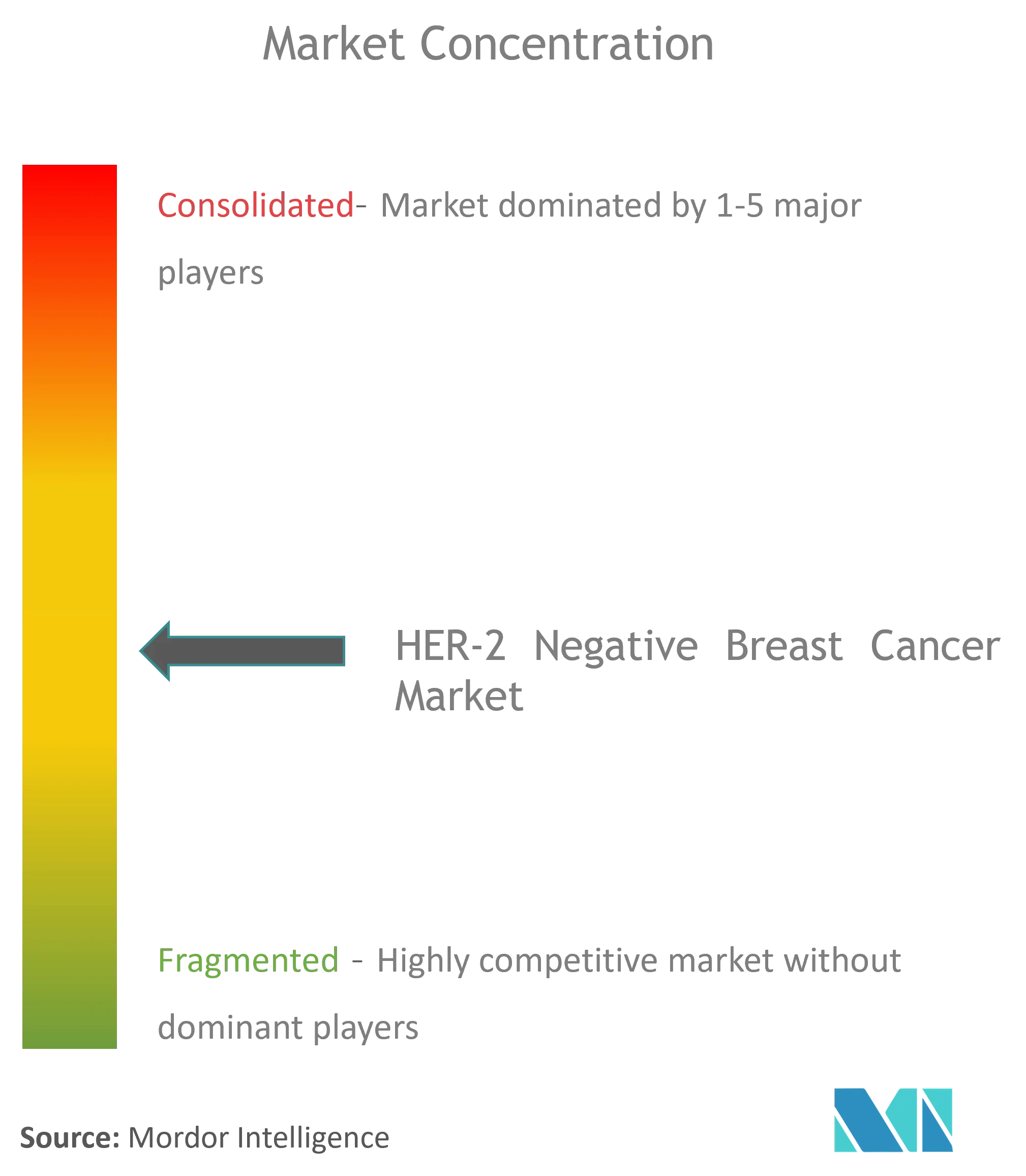
| Market Concentration | Low |
Major Players *Disclaimer: Major Players sorted in no particular order Image © Mordor Intelligence. Reuse requires attribution under CC BY 4.0. | |
Global HER-2 Negative Breast Cancer Market Analysis by Mordor Intelligence
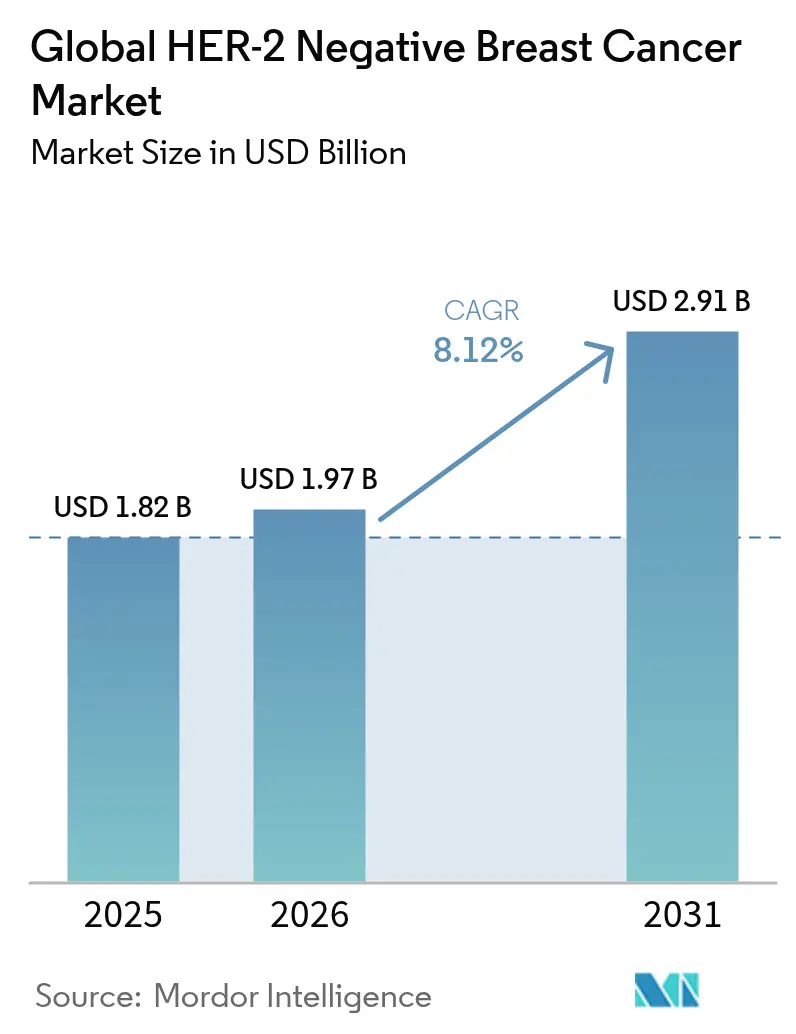
The HER-2 negative breast cancer market size is expected to grow from USD 1.82 billion in 2025 to USD 1.97 billion in 2026 and is forecast to reach USD 2.91 billion by 2031 at 8.12% CAGR over 2026-2031. Precision diagnostics, expanding antibody-drug conjugate (ADC) indications, and recognition of HER2-low tumors as a new therapeutic category combine to accelerate growth. Hormone receptor-positive/HER2-negative tumors represent 70% of incident cases, while triple-negative disease accounts for 15-20% and drives high unmet need. Targeted therapy shows the most rapid uptake as PARP inhibitors and next-generation ADCs displace conventional chemotherapy regimens. Geographic momentum shifts toward Asia-Pacific, where rising incidence and growing access to precision medicine reshape global demand. Payer adoption of value-based reimbursement and indication-specific pricing seeks to contain costs without stalling innovation.
Key Report Takeaways
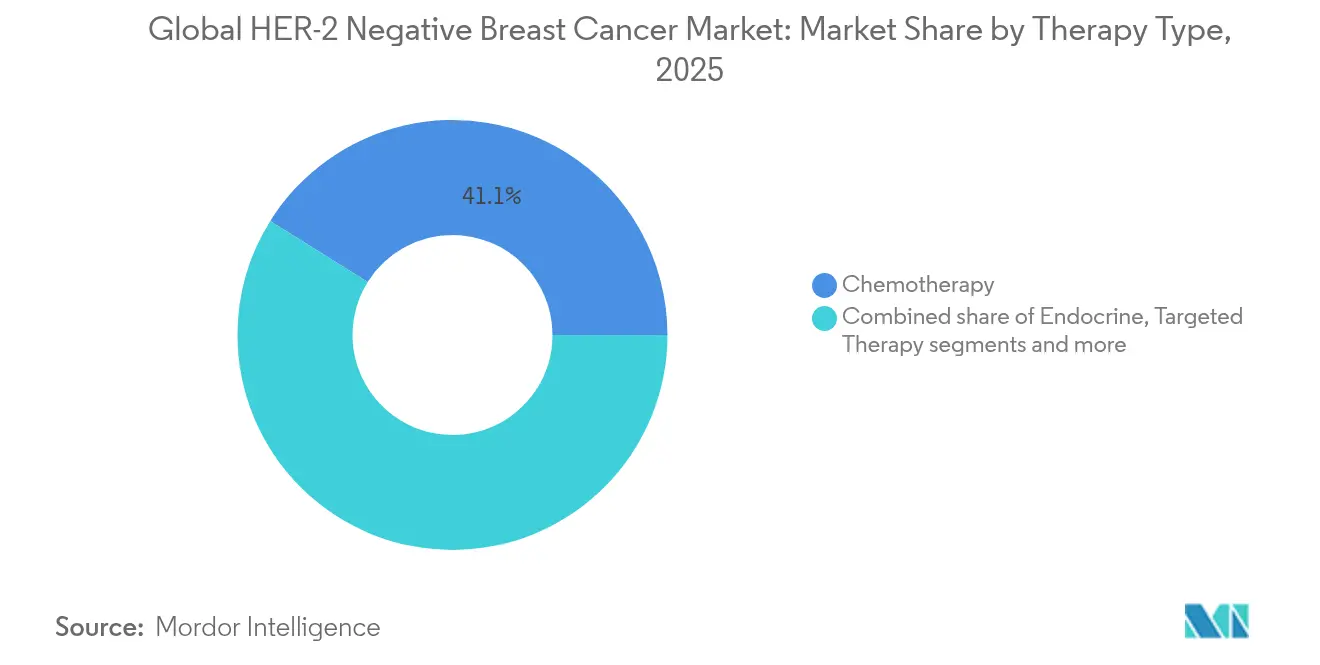
- By therapy type, chemotherapy held 41.10% of the HER-2 negative breast cancer market share in 2025, while targeted therapy is set to expand at a 9.02% CAGR through 2031.
- By biomarker sub-type, hormone receptor-positive/HER2-negative tumors captured 57.25% of the HER-2 negative breast cancer market size in 2025, whereas triple-negative breast cancer is projected to post a 9.42% CAGR to 2031.
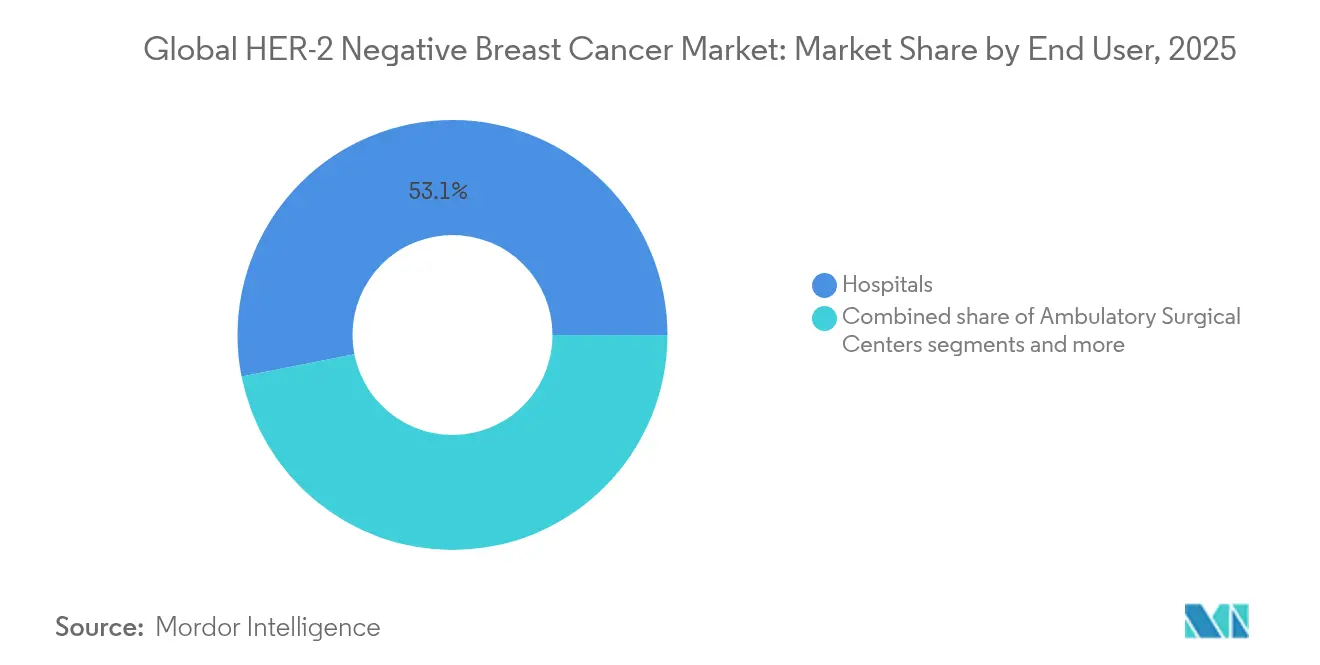
- By end user, hospitals accounted for 53.10% of the HER-2 negative breast cancer market size in 2025, and specialty cancer centers are forecast to grow at a 9.95% CAGR through 2031.
- By geography, North America led with 41.85% revenue share in 2025, while Asia-Pacific is poised to expand at a 10.35% CAGR to 2031.
Note: Market size and forecast figures in this report are generated using Mordor Intelligence’s proprietary estimation framework, updated with the latest available data and insights as of 2026.
Market Trends and Insights
Drivers Impact Analysis of Global HER-2 Negative Breast Cancer Market*
| Driver | (~) % Impact on CAGR Forecast | Geographic Relevance | Impact Timeline |
|---|---|---|---|
| Precision-diagnostics uptake in early-stage disease | +2.1% | Global, early gains in North America and Europe | Medium term (2-4 years) |
| Expanding approvals of PARP inhibitors in HR-positive disease | +1.8% | North America and Europe, spill-over to Asia-Pacific | Short term (≤ 2 years) |
| Growing reimbursement for ADCs | +1.5% | North America and Europe, gradual Asia-Pacific adoption | Medium term (2-4 years) |
| Rising neoadjuvant therapy adoption | +1.2% | Global, faster in high-income regions | Long term (≥ 4 years) |
| Tumor-agnostic trial designs | +0.9% | Global, led by North America | Long term (≥ 4 years) |
| AI-guided trial-matching platforms | +0.6% | North America and Europe, emerging in Asia-Pacific | Medium term (2-4 years) |
| Source: Mordor Intelligence | |||
Precision-diagnostics uptake in early-stage disease
Routine genomic assays such as Oncotype DX changed treatment recommendations for 65% of early-stage patients in Brazil and cut chemotherapy use by 66%. Lombardy, Italy pioneered reimbursement, proving public-payer willingness to fund genomic testing when clinical utility is clear. Adoption is uneven; under-representation in validation cohorts reduces test accuracy for African American women. Artificial-intelligence models now predict treatment response with 91% accuracy, promising equitable performance across ancestries. Precision diagnostics therefore lower overtreatment, identify high-risk patients earlier, and expand the HER-2 negative breast cancer market by enabling targeted therapy in adjuvant settings.
Expanding approvals of PARP inhibitors in HR-positive disease
Olaparib’s approval for high-risk early HER-2 negative breast cancer with BRCA mutation widened PARP inhibitor reach beyond metastatic TNBC. Homologous-recombination deficiency affects 20-30% of hormone-receptor-positive tumors, creating a larger addressable pool. Talazoparib proved cost-effective in China and the United States with incremental cost-effectiveness ratios of USD 2,484 and USD 6,815 per QALY, respectively. Trials testing PARP inhibitors with CDK4/6 inhibitors or immunotherapy show synergistic efficacy and could further lift adoption. As label expansions accumulate, PARP agents move from niche to foundational therapy, accelerating HER-2 negative breast cancer market growth.
Growing reimbursement for antibody–drug conjugates
Trastuzumab deruxtecan’s February 2025 approval for HER2-low disease expanded eligibility to nearly 90% of hormone-receptor-positive, HER2-negative cases. Datopotamab deruxtecan’s January 2025 clearance cut disease-progression risk by 37% versus chemotherapy. Positive health-technology-assessment outcomes reach 58% for single-manufacturer combinations but only 42% for dual-manufacturer regimens, underscoring pricing-coordination hurdles. Insurers impose step therapy, forcing failure on two CDK4/6 inhibitors before ADC funding, yet indication-specific pricing may ease budget impact. As payers align coverage with value, ADC reimbursement broadens and bolsters the HER-2 negative breast cancer market.
Rising neoadjuvant therapy adoption
The I-SPY2.2 trial showed datopotamab deruxtecan plus durvalumab achieved strong responses in early-stage disease, supporting ADC-immunotherapy combinations before surgery. De-escalation studies report 94% four-year disease-free survival after short neoadjuvant chemotherapy in HER2-positive cases and 92.7% in TNBC. The TROPION-Breast04 study is evaluating similar regimens in treatment-naïve patients. Early Ki-67 reduction predicts pathological response and guides adaptive therapy duration. Personalized neoadjuvant strategies therefore create earlier demand for targeted agents and enlarge the HER-2 negative breast cancer market.
Restraints Impact Analysis of Global HER-2 Negative Breast Cancer Market*
| Restraint | (~) % Impact on CAGR Forecast | Geographic Relevance | Impact Timeline |
|---|---|---|---|
| High attrition of TNBC immunotherapy assets | -1.4% | Global, pipeline concentrated in North America | Short term (≤ 2 years) |
| Cost–efficacy concerns of ADCs in community settings | -1.1% | North America and Europe, emerging Asia-Pacific | Medium term (2-4 years) |
| Limited biomarker testing rates in low-income markets | -0.8% | Asia-Pacific, Middle East & Africa, Latin America | Long term (≥ 4 years) |
| Emerging payer pressure on combination regimens | -0.7% | North America and Europe, spreading globally | Medium term (2-4 years) |
| Source: Mordor Intelligence | |||
High attrition of TNBC immunotherapy assets
Pembrolizumab plus chemotherapy improved survival only in PD-L1 positive TNBC patients, revealing the challenge of heterogeneity. Immune checkpoint inhibitors yield durable responses in fewer than 20% of cases, and toxicity escalates in combination regimens. The NIMBUS trial produced 20% objective-response rates overall, but 60% when tumor mutational burden exceeded 14 mutations per Mb. Combination approaches face 48.6% adverse-event rates versus 17.1% for monotherapy. As attrition curbs pipeline output, HER-2 negative breast cancer market expansion in TNBC slows.
Cost–efficacy concerns of ADCs in community settings
Trastuzumab deruxtecan’s incremental cost-effectiveness ratio surpasses USD 296,873 per QALY in HER2-low disease, well above payer thresholds. Community practices struggle to manage ADC-related interstitial-lung-disease rates of 4.2% with datopotamab deruxtecan, requiring specialized monitoring. Precise HER2-low classification depends on advanced pathology services often lacking outside academic centers. Step therapy and prior authorization delay access, and full care costs include monitoring, supportive care, and potential discontinuation. These factors temper HER-2 negative breast cancer market growth in community settings.
*Our forecasts treat driver/restraint impacts as directional, not additive. The impact forecasts reflect baseline growth, mix effects, and variable interactions.
Global HER-2 Negative Breast Cancer Market Segment Analysis
By Therapy Type:
Targeted therapy disrupts traditional paradigmsChemotherapy retained a 41.10% share of the HER-2 negative breast cancer market size in 2025, but targeted therapy is forecast to grow at 9.02% CAGR between 2026 and 2031. PARP inhibitors, CDK4/6 inhibitors, and ADCs deliver longer progression-free survival with fewer systemic toxicities, prompting clinicians to shift treatment algorithms. Olaparib’s success in adjuvant BRCA-mutant disease extends PARP relevance beyond metastatic settings. CDK4/6 inhibitors combined with aromatase inhibitors provide median progression-free survival over 30 months, surpassing historical endocrine monotherapy. Immunotherapy is standard in PD-L1 positive TNBC after the KEYNOTE-522 trial. ADCs such as trastuzumab deruxtecan broaden reach to HER2-low tumors and re-define sequencing. The HER-2 negative breast cancer market therefore pivots toward mechanism-specific regimens that personalize benefit.
Endocrine therapy remains backbone treatment for hormone receptor-positive disease, yet resistance drives demand for next-generation agents. Selective estrogen-receptor degraders like imlunestrant improved progression-free survival in ESR1-mutant populations and foreshadow a new combination partner for CDK4/6 inhibitors. The influx of biosimilars in chemotherapy and HER2-targeted segments exerts price pressure, but advanced targeted regimes sustain premium pricing through differentiated efficacy. Cumulatively, targeted therapy adoption accelerates the HER-2 negative breast cancer market and relegates conventional chemotherapy to later-line or combination use.

By Biomarker Sub-Type:
TNBC momentum challenges HR-positive dominanceHormone receptor-positive/HER2-negative tumors held 57.25% share of the HER-2 negative breast cancer market size in 2025, yet triple-negative breast cancer will grow fastest at 9.42% CAGR through 2031. Sacituzumab govitecan plus pembrolizumab cut disease-progression risk by 35% in PD-L1 positive metastatic TNBC, establishing ADC-immunotherapy synergy. Multiple ADCs targeting TROP-2 and LIV-1 are in late development, diversifying options for TNBC patients historically limited to chemotherapy.
Resistance to endocrine and CDK4/6 regimens in HR-positive disease propels innovations such as inavolisib, which lowered progression-risk by 57% in PIK3CA-mutated tumors. The KENDO trial showed CDK4/6 inhibitors outperformed chemotherapy with 19.9 months median progression-free survival versus 11.2 months. Although HR-positive disease retains volume dominance, TNBC growth outpaces due to greater unmet need, bolstering overall HER-2 negative breast cancer market expansion.
By End User:
Specialty centers capitalize on complexityHospitals controlled 53.10% of market revenue in 2025, yet specialty cancer centers are predicted to grow at a 9.95% CAGR because precision-oncology delivery demands integrated genomic testing, multidisciplinary teams, and advanced toxicity management. Seventy-two percent of metastatic tumors harbor actionable alterations requiring molecular-tumor-board review. ADC-related safety monitoring calls for high-resolution imaging and pulmonology support, capacities more common in tertiary centers.
AI-enabled trial-matching systems achieve 93.3% accuracy and are being adopted fastest in academic networks. Community practices, constrained by reimbursement cuts and staff shortages, struggle to invest in genomic platforms and clinical-research infrastructure. Consequently, referral patterns shift complex HER-2 negative breast cancer market cases to specialty centers, consolidating expertise and fostering faster uptake of innovative therapies.
Geography Analysis
North America HER-2 Negative Breast Cancer Market
North America captured 41.85% of 2025 revenue, driven by early adoption of precision diagnostics, robust clinical-trial ecosystems, and streamlined FDA approvals for datopotamab deruxtecan and trastuzumab deruxtecan. AI-guided trial-matching cuts screen-failure rates and accelerates first-patient-in timelines, reinforcing the region’s leadership. Yet payers question ADC value as cost-effectiveness ratios exceed USD 296,873 per QALY, leading to step therapy protocols that slow uptake. Canada exemplifies cost management through de-escalated bone-targeted-agent schedules that reduce expenditures without compromising outcomes.
Europe HER-2 Negative Breast Cancer Market
Europe follows with mature health-technology-assessment frameworks and pan-EU regulatory coordination. Lombardy’s genomic-testing reimbursement paved the way for wider adoption, and CHMP backed trastuzumab deruxtecan for HER2-low disease in February 2025. However, dual-manufacturer combination regimens see lower reimbursement approval, reflecting payer concern over bundled pricing. Eastern-European markets still lack widespread biomarker-testing infrastructure, delaying entry of complex targeted therapies.
APAC HER-2 Negative Breast Cancer Market
Asia-Pacific posts the highest growth rate at 10.35% CAGR as breast-cancer incidence rises from 1.25 million cases in 2021 to 1.68 million by 2030. Japan approved and launched datopotamab deruxtecan within 90 days, highlighting regulatory agility. China’s projected breast-cancer cost surge from USD 8 billion in 2021 to USD 14 billion by 2030 underscores the economic weight of the HER-2 negative breast cancer market.Thailand’s Pathum Raksa initiative shows how public-private models can extend testing capacity and could be replicated across emerging markets.
Regulatory Landscape
Regulation in the HER-2 negative breast cancer market is increasingly biomarker-anchored, with FDA and EMA decisions tying access to demonstrated mutation status and aligned companion diagnostics. The FDA has continued to expand targeted options across HR-positive/HER2-negative and TNBC settings, including the October 2024 approval of inavolisib (Itovebi) in combination with palbociclib and fulvestrant for endocrine-resistant, PIK3CA-mutated HR-positive/HER2-negative advanced disease, and the May 2026 approval of datopotamab deruxtecan-dlnk for unresectable or metastatic triple-negative breast cancer.
In Europe, EMA actions reinforce the same precision-medicine direction through centralized authorizations and label variations that broaden use in defined subgroups. The EMA granted marketing authorization for Itovebi (July 2025), and CHMP activity in 2026 included recommendations supporting camizestrant (Etcamah) for ER-positive/HER2-negative disease with ESR1 mutations, plus variations to existing ADC authorizations (Trodelvy and Datroway) in HR-positive/HER2-negative indications. Across major markets, compliance increasingly includes validated companion diagnostic pathways (FDA-authorized tests and CE-marked IVDs) as part of routine eligibility determination.
Value Chain Analysis
The value chain begins with patient identification and stratification in hospitals and specialty cancer centers, where pathology and molecular testing determine HR status, HER2 status (including HER2-low categorization), and actionable mutations such as PIK3CA, BRCA, and ESR1. Diagnostic platforms and lab networks (genomic assays and mutation testing) function as an upstream gatekeeper because many newer regimens are label-restricted to molecularly defined subpopulations. This shifts value toward testing access, sample logistics, and interpretation via multidisciplinary tumor boards.
On the therapy side, manufacturing and supply split between high-volume small molecules (endocrine agents, CDK4/6 inhibitors, PARP inhibitors, and newer oral classes) and complex biologics and ADCs that require specialized production, cold-chain handling, and safety-monitoring infrastructure at the point of care. Late-stage clinical development and commercialization rely on global trial and distribution operations run by large pharma and specialized biotech (for example, Celcuity advancing gedatolisib programs). Downstream dispensing and administration also depends on payer utilization management (step edits, prior authorization) and site-of-care capabilities, particularly for ADCs with monitoring requirements such as ILD surveillance.
Competitive Landscape
Competition is intensifying as precision approaches displace legacy chemotherapy. CDK4/6 inhibitors—palbociclib, ribociclib, and abemaciclib—dominate HR-positive therapy, but biosimilar erosion looms once patents lapse. ADC developers pursue novel targets such as TROP-2, LIV-1, and HER3; trastuzumab deruxtecan’s success in HER2-low tumors spurred a wave of follow-on programs. Combination development aligns therapies with molecular drivers and aims to delay resistance, exemplified by datopotamab deruxtecan plus durvalumab in neoadjuvant trials.
Technology partnerships bring AI into clinical-trial matching, reducing recruitment timelines by double digits and improving portfolio productivity. Price pressure fosters indication-specific pricing and value-based agreements to reconcile premium drug costs with constrained health-budget growth. Biosimilars, including FDA-approved trastuzumab-strf, will lower prices but manufacturing complexity delays similar dynamics for ADCs. Overall, the HER-2 negative breast cancer market exhibits moderate fragmentation as innovators race to capture emerging molecular niches while defending incumbent franchises.
Global HER-2 Negative Breast Cancer Industry Leaders
-
Eli Lilly and Company
-
AstraZeneca
-
GSK
-
Novartis AG
-
Pfizer
- *Disclaimer: Major Players sorted in no particular order
Global HER-2 Negative Breast Cancer Market Companies Covered in this Report
- Roche
- Pfizer
- Novartis
- AstraZeneca
- Eli Lilly and Company
- Merck
- Gilead Sciences
- Bristol-Myers Squibb
- Seagen
- Daiichi Sankyo
- Abbvie
- Amgen
- Sanofi
- Eisai
- Teva Pharmaceutical Industries
- MacroGenics
- Puma Biotechnology
- Genmab
- BeiGene
- Zentalis Pharma
Read Analysis of Global HER-2 Negative Breast Cancer Companies
Market Opportunities and Future Outlook
Newly approved, mutation-directed endocrine-resistance therapies create whitespace in post-CDK4/6 inhibitor treatment pathways and support the need for scalable mutation testing (ESR1 and PIK3CA in particular). In 2026, FDA approvals such as vepdegestrant (VEPPANU) for ESR1-mutated ER-positive/HER2-negative advanced or metastatic disease (a first-in-class PROTAC approval) and gedatolisib (REVTORPYK) combinations for HR-positive/HER2-negative locally advanced or metastatic disease without a PIK3CA mutation highlight a widening set of regulated treatment options that segment the addressable population by molecular status.
Earlier-line opportunities also focus on extending precision endocrine strategies into the adjuvant setting and improving patient selection for escalation or de-escalation. Roche/Genentech reported Phase III lidERA results in 2026 showing giredestrant achieved superior invasive disease-free survival versus standard-of-care endocrine therapy in ER-positive/HER2-negative early breast cancer, supporting continued movement of next-generation endocrine approaches upstream. In parallel, guideline and payer-facing adoption of validated prognostic and predictive assays (for example, assays used to guide chemotherapy intensity decisions in HR-positive/HER2-negative early-stage disease) creates room for integrated diagnostic-therapy pathways that reduce overtreatment while concentrating spend on high-benefit targeted regimens.
Recent Industry Developments in Global HER-2 Negative Breast Cancer Market
- July 2026: Celcuity announced FDA approval of REVTORPYK (gedatolisib) in combination with fulvestrant, with or without palbociclib, for HR-positive/HER2-negative locally advanced or metastatic breast cancer without a PIK3CA mutation. The approval expands targeted options beyond mutation-positive subsets and gives clinicians an additional pathway-based combination after progression on endocrine therapy.
- May 2026: Arvinas and Pfizer reported FDA approval of VEPPANU (vepdegestrant) for adults with ER-positive/HER2-negative, ESR1-mutated advanced or metastatic breast cancer. As the first approved PROTAC therapy, it broadens the competitive set in endocrine-resistant disease and increases the operational importance of routine ESR1 mutation testing to identify eligible patients.
- October 2024: The FDA approved inavolisib (Itovebi) in combination with palbociclib and fulvestrant for endocrine-resistant, PIK3CA-mutated HR-positive/HER2-negative advanced breast cancer. This decision reinforced biomarker-gated use of PI3K-pathway targeting and strengthened the role of upfront PIK3CA testing in treatment sequencing.
Global HER-2 Negative Breast Cancer Market Report Scope and Research Methodology
Market Definition and Coverage
This market covers the value of drug and therapy spending used to treat patients diagnosed with HER2-negative breast cancer, across the care pathway from initial treatment through advanced disease management, as captured in healthcare settings worldwide.
Scope exclusions: Diagnostic testing, screening programs, and non-oncology supportive care that is not directly part of HER2-negative breast cancer treatment are excluded.
Segments Covered in This Report
- By Therapy Type (Value)
- Chemotherapy
- Endocrine Therapy
- Targeted Therapy (PARP, PI3K, AKT, ADCs)
- Immunotherapy
- By Biomarker Sub-Type (Value)
- HR-Positive / HER2-Negative
- Triple-Negative Breast Cancer (TNBC)
- By End User (Value)
- Hospitals
- Specialty Cancer Centers
- Others
- By Geography (Value)
- North America
- United States
- Canada
- Europe
- Germany
- United Kingdom
- France
- Italy
- Spain
- Rest of Europe
- Asia-Pacific
- China
- India
- Japan
- South Korea
- Australia
- Rest of Asia-Pacific
- South America
- Brazil
- Argentina
- Rest of South America
- Middle East and Africa
- GCC
- South Africa
- Rest of Middle East and Africa
- North America
Data Sources, Market Sizing, and Validation
Desk Research
Desk work starts with building a clean patient and treatment context, then linking it to measurable healthcare spending signals. We relied on public sources such as the World Health Organization and GLOBOCAN cancer statistics, national cancer registries (for example SEER in the US), and guidance from bodies such as the FDA, EMA, and NCCN for therapy usage patterns.
To keep assumptions realistic, we also reviewed peer-reviewed oncology journals, conference abstracts where available, and hospital and payer publications that indicate regimen adoption and line-of-therapy shifts. Company annual reports, investor presentations, and press releases were used to understand indication coverage and pricing direction, while patent databases helped us track upcoming mechanisms that may change demand. In addition, we selectively used paid subscriptions for company financials and intelligence, news and financials, and patent databases to fill gaps and cross-check timelines. These sources are illustrative only, and many other public references were also used for collection, validation, and clarification.
Primary Interviews and Surveys
Primary inputs were used to confirm what is actually prescribed, how quickly new options are adopted, and how pricing and access differ by setting. We spoke with a mix of oncologists, hospital pharmacy stakeholders, payers, and industry participants across APAC, EMEA, and the Americas so that regimen mix, line-of-therapy movement, and real world constraints could be checked before finalizing assumptions.
Distribution of primary research fieldwork respondents
| Company type | Respondent position | Region |
|---|---|---|
| Top tier: 25% | CXOs: 13% | APAC: 38% |
| Mid tier: 61% | Functional/Unit leaders: 43% | EMEA: 37% |
| Smaller Players: 14% | Managers: 44% | Americas: 25% |
Market-Sizing & Forecasting
Our model starts with a top-down demand pool build that links breast cancer incidence, the share of HER2-negative cases, and treated patient volumes by region, which are then mapped to typical therapy use in each line of therapy. Once that demand base is formed, value is computed using a regimen mix view and an average selling price logic that reflects dosing duration, treatment cycles, and expected price movement.
To keep the totals grounded, results are corroborated using selective bottom-up approximations, such as cross-checking against company level oncology revenue disclosures where indication signals are available, and sampled price per cycle multiplied by realistic patient counts from clinical practice feedback. Key inputs that were tracked include incidence and prevalence trends, HER2-negative and triple-negative shares, guideline driven adoption of endocrine therapy and chemotherapy, uptake timing for newer targeted and immunotherapy options, and regional access and reimbursement patterns. For forecasting, scenario analysis is used around launch timing, uptake speed, and pricing pressure, and it is supported by a simple multivariate regression check against core disease burden and treatment rate indicators. Where bottom-up checks are incomplete in smaller countries, proxy assumptions are applied using comparable markets and are then re-tested with expert feedback.
Data Validation & Update Cycle
Validation is done through multiple passes so that the final numbers do not depend on one assumption. We compare outputs against independent signals, including epidemiology totals, broad oncology spending direction, and major therapy class growth patterns, and then investigate any sharp jumps that do not match clinical or access realities.
If a variance is seen, the team re-checks drivers like treated rate, regimen mix, and pricing, and we may re-contact primary respondents to confirm whether the shift is real or an input issue. A second analyst review is completed before sign-off, and the report is refreshed annually, with interim updates triggered by material events such as approvals, label expansions, or major pricing changes. Before delivery, we run a fresh pass on recent public updates so clients receive the most current view.
Mordor Intelligence's Her 2 Negative Breast Cancer Market Estimate Compared With Other Published Estimates
Published market sizes for HER2-negative breast cancer can look far apart, even when they are talking about a similar patient group. The spread usually comes from different timing choices for price conversion, different ways of treating new launches in the first year, and uneven validation of treated patient counts.
In our work, the refresh cycle matters because oncology pricing and regimen mix can move within a year, especially after guideline changes or access expansions. When exchange rates are taken from a different point in time, or when ASPs are not adjusted for duration and dose intensity, the same volume story can produce a very different value total.
Benchmark comparison
| Source | Market Size | Gaps in Research Methodology |
|---|---|---|
| Mordor Intelligence | USD 1.82 B (2025) | |
| Industry Publisher A | USD 16.82 B (2025) | This estimate appears to apply a broader treatment spending scope and higher implied ASPs, which can happen when total breast cancer drug classes and longer duration assumptions are folded into a HER2-negative label without consistent line-of-therapy checks. |
| Syndicated Source B | USD 19.61 B (2025) | The number is materially higher, which is typically driven by including a wider set of targeted regimens and adjacent patient pools, along with less transparent currency timing and limited cross-checking against treated patient volumes by setting. |
The table shows that scope boundaries and pricing mechanics are the biggest drivers behind the range. By updating FX timing and ASP progression assumptions during annual refresh work, and then re-checking them against treated patient signals, Mordor Intelligence keeps the estimate tied to a repeatable demand pool rather than a broad therapy spend bucket.
Key Questions Answered in the Report
What is the current value of the HER-2 negative breast cancer market?
The HER-2 negative breast cancer market size is USD 1.97 billion in 2026, with an 8.12% CAGR projected to lift revenue to USD 2.91 billion by 2031.
Which therapy segment is growing fastest?
Targeted therapy—including PARP inhibitors, CDK4/6 inhibitors, and antibody-drug conjugates—is projected to grow at a 9.02% CAGR from 2026-2031.
Why is Asia-Pacific considered the most attractive regional market?
Asia-Pacific shows the highest forecast CAGR of 10.35% owing to rising disease incidence, rapid regulatory approvals, and expanding access to precision medicine.
What is driving growth in specialty cancer centers?
Complex biomarker testing, multidisciplinary care, and management of ADC-related toxicities push patients toward specialty centers, which are forecast to grow at 9.95% CAGR.