
Hepatitis Therapeutics Market Size and Share
Market Overview
| Study Period | 2020 - 2031 |
|---|---|
| Market Size (2026) | USD 18.03 Billion |
| Market Size (2031) | USD 21.29 Billion |
| Growth Rate (2026 - 2031) | 3.39 % |
| Fastest Growing Market | Asia-Pacific |
| Largest Market | North America |
| Market Concentration | Medium |
Major Players *Disclaimer: Major Players sorted in no particular order Image © Mordor Intelligence. Reuse requires attribution under CC BY 4.0. | |
Hepatitis Therapeutics Market Analysis by Mordor Intelligence
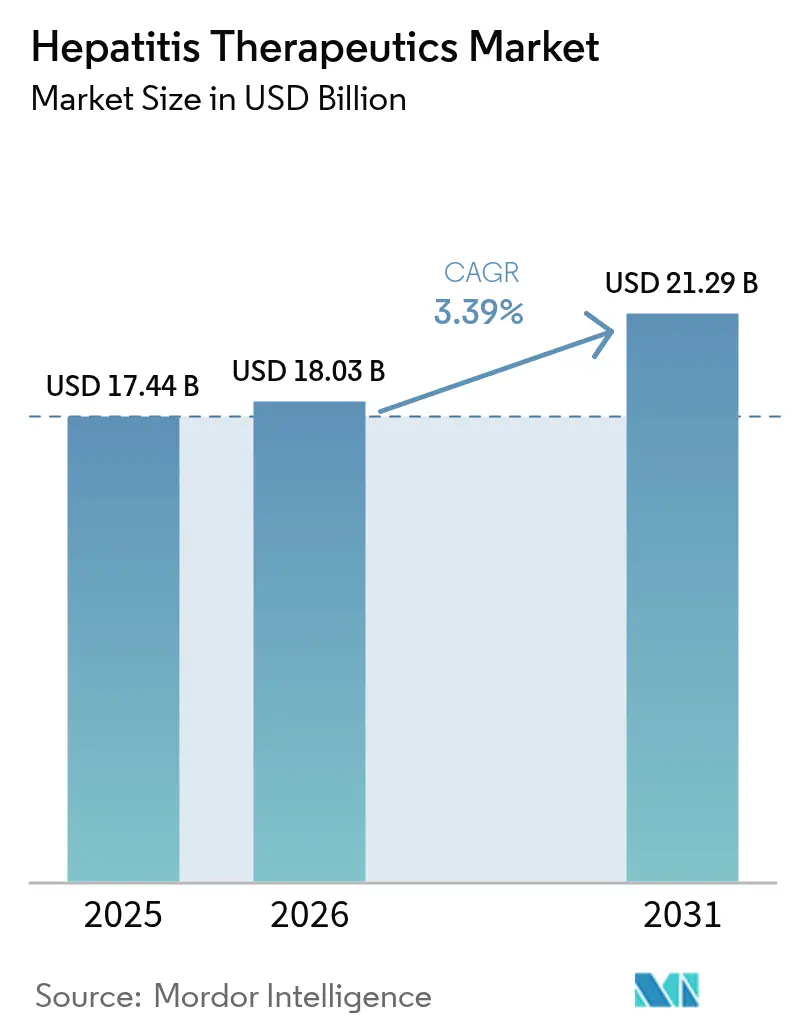
The hepatitis therapeutics market size is expected to grow from USD 17.44 billion in 2025 to USD 18.03 billion in 2026 and is forecast to reach USD 21.29 billion by 2031 at 3.39% CAGR over 2026-2031. This growth trajectory hides a structural pivot from suppressive regimens toward functional-cure combinations that attack viral replication, immune evasion, and host-factor interactions in parallel. Subscription-style procurement in Louisiana, which treated more than 11,000 residents at negotiated prices, demonstrates how value-based models can unlock latent demand while containing budget impact. In parallel, the WHO’s 2024 report that viral hepatitis now causes 1.3 million annual deaths, second only to tuberculosis, has accelerated elimination roadmaps and lifted diagnosis targets worldwide. North America continues to anchor 40.59% of global revenue. Yet, Asia-Pacific delivers the fastest regional expansion at 4.64% CAGR thanks to China and India’s combined hepatitis B and C caseload exceeding 35 million.
Key Report Takeaways
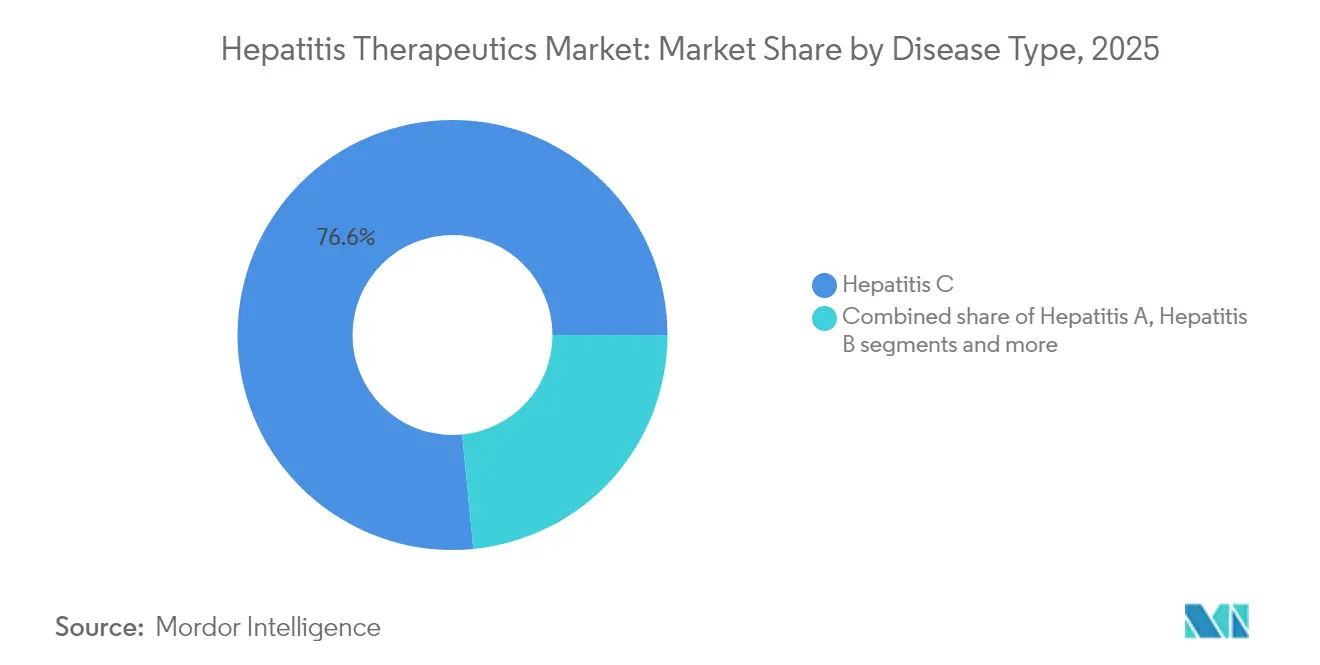
- By disease type, hepatitis C led with 76.55% revenue share in 2025, while hepatitis B is projected to expand at a 4.78% CAGR through 2031.
- By drug class, NS5A inhibitors commanded 34.61% of the hepatitis therapeutics market share in 2025; monoclonal antibodies post the highest forecast CAGR at 4.16%.
- By route of administration, oral therapies accounted for 94.12% of revenue in 2025; injectables lag but remain essential in combination regimens.
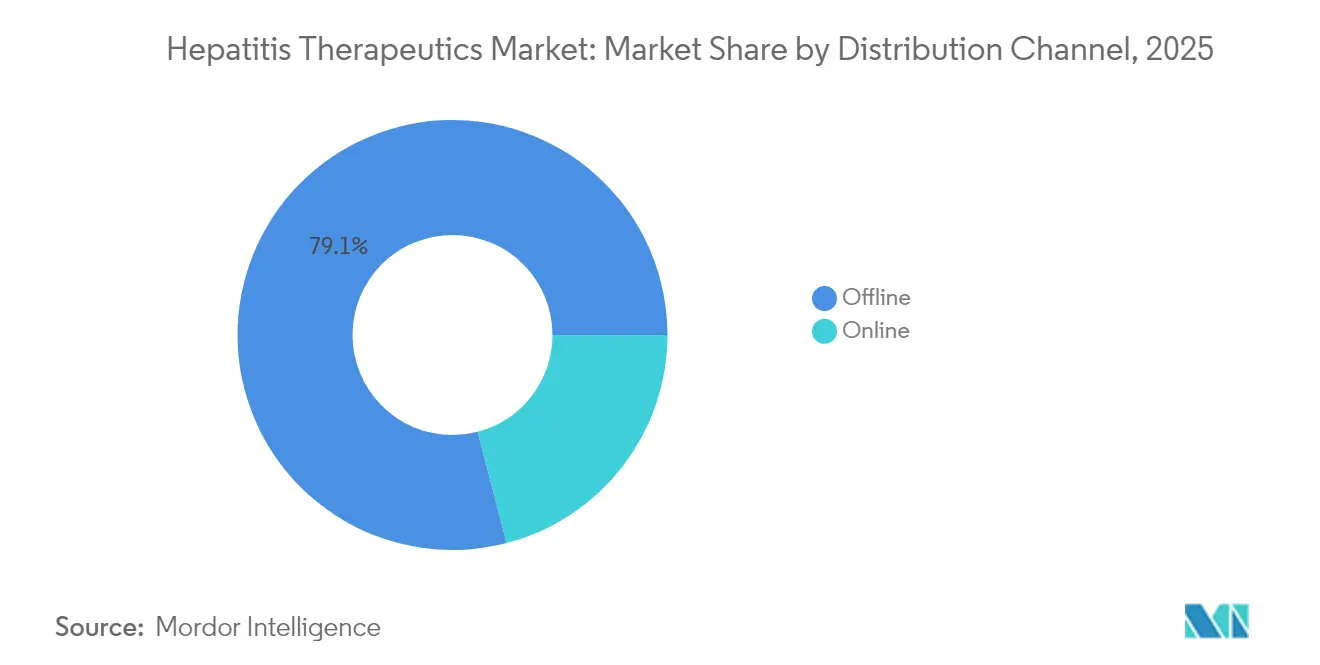
- By distribution channel, the offline segment held 79.05% share of the hepatitis therapeutics market size in 2025, whereas the online segment is set to record a 5.05% CAGR to 2031.
- By end-user, hospitals captured 61.62% revenue share in 2025; home-care settings represent the fastest-growing end-user cohort with 4.51% CAGR to 2031.
- By geography, North America accounted for 40.15% of the hepatitis therapeutics market size in 2025, while Asia-Pacific is the fastest-advancing region, forecast at 4.42% CAGR, propelled by intensified screening and treatment campaigns in China and India.
Note: Market size and forecast figures in this report are generated using Mordor Intelligence’s proprietary estimation framework, updated with the latest available data and insights as of 2026.
Market Trends and Insights
Drivers Impact Analysis of Hepatitis Therapeutics Market*
| Driver | (~) % Impact on CAGR Forecast | Geographic Relevance | Impact Timeline |
|---|---|---|---|
| High prevalence of viral hepatitis | +0.8% | Global, concentrated in Asia-Pacific and Sub-Saharan Africa | Long term (≥ 4 years) |
| Rapid launch of pan-genotypic DAA regimens | +0.7% | North America & EU, expanding to APAC | Short term (≤ 2 years) |
| Government-led awareness campaigns | +0.6% | Global, with accelerated impact in LMICs | Medium term (2-4 years) |
| Expanding reimbursement in high-income countries | +0.5% | North America & EU primarily | Medium term (2-4 years) |
| Rise of pay-for-cure value-based contracts | +0.4% | North America, pilot programs in EU | Short term (≤ 2 years) |
| AI-enabled drug-repurposing pipelines | +0.3% | Global, led by North America and EU | Long term (≥ 4 years) |
| Source: Mordor Intelligence | |||
High Prevalence of Viral Hepatitis
More than 304 million people live with chronic hepatitis B or C, a pool that sustains long-run demand independent of economic fluctuations. China and India contribute over 35 million cases, positioning Asia-Pacific as the principal growth engine for the hepatitis therapeutics market. Only 13% of chronic hepatitis B infections are diagnosed[1], and a mere 3% receive antiviral therapy, underscoring how underdiagnosis continues to inflate unmet need. Mortality is rising even where incidence is falling, revealing gaps in screening and linkage-to-care pathways that governments now frame as public-health emergencies. These epidemiological realities fortify long-term volume growth for companies able to scale affordable, decentralized treatment models.
Rapid Launch of Pan-Genotypic DAA Regimens
Eight-week pan-genotypic combinations have condensed treatment courses and removed the need for genotype testing in most settings. AbbVie’s MAVYRET received FDA clearance as the first 8-week therapy for acute hepatitis C, recording a 96% cure rate while slashing clinic visits. Atea Pharmaceuticals’ bemnifosbuvir-ruzasvir combo[2] posted a 98% sustained virologic response in Phase 2 and is moving into Phase 3 in 2025. Shorter regimens reduce loss-to-follow-up and ease scale-up in rural clinics, enhancing the hepatitis therapeutics market’s penetration potential.
Government-Led Awareness Campaigns & Vaccination Drives
National hepatitis elimination plans are shifting from aspirational policies to operational rollouts that couple integrated screening with universal-access treatment. West Bengal’s “Triple Elimination” initiative, which targets vertical transmission of hepatitis B alongside HIV and syphilis by 2026, is emblematic of programs that create immediate spikes in newly diagnosed patients. The WHO’s 2024 call for a mid-decade progress check has pushed ministries of health to budget for expanded diagnostic capacity and broader drug formularies. As eligibility widens, manufacturers with simple oral dosing and broad genotype coverage enjoy first-mover advantages in newly formed procurement pools.
Expanding Reimbursement in High-Income Countries
Ninety-one percent of countries have authorized at least one DAA, yet only 68% reimburse therapy, making payer decisions the final gateway to market volume. Australia’s risk-share pact for DAAs and the United States’ multiyear budget line for a national hepatitis C elimination plan showcase how outcomes-based financing transforms episodic access into predictable demand pipelines. Such frameworks lower out-of-pocket costs, lift initiation rates, and provide manufacturers with clearer revenue visibility that justifies continued R&D spending.
Restraints Impact Analysis of Hepatitis Therapeutics Market*
| Restraint | (~) % Impact on CAGR Forecast | Geographic Relevance | Impact Timeline |
|---|---|---|---|
| Uneven reimbursement in emerging economies | -0.6% | Asia-Pacific, Middle East & Africa, Latin America | Long term (≥ 4 years) |
| Stringent regulatory approval timelines | -0.4% | Global, most acute in North America & EU | Medium term (2-4 years) |
| Stigma-driven under-diagnosis in PWID populations | -0.3% | Global, particularly acute in LMICs | Long term (≥ 4 years) |
| API supply-chain concentration risk in LMICs | -0.2% | APAC, MEA, Latin America | Medium term (2-4 years) |
| Source: Mordor Intelligence | |||
Uneven Reimbursement in Emerging Economies
Only 52% of low- and middle-income countries reimburse DAA therapy, with many imposing specialist-only prescribing rules that narrow access channels. Development Impact Bond pilots in Cameroon achieved 96% cure rates but remain localized, indicating innovative finance alone cannot overcome systemic funding gaps. These disparities create a two-tier hepatitis therapeutics market where ability to pay, not disease burden, dictates uptake, limiting upside in regions with the largest patient pools.
Stringent Regulatory Approval Timelines
Functional-cure candidates must demonstrate durable antigen clearance, extending trial follow-up and complicating endpoint selection. Bulevirtide secured European approval for hepatitis D in 2020, yet a 2024 FDA complete-response letter shows how divergent standards delay U.S. entry. The emergence of combination therapies targeting multiple viral mechanisms[3] simultaneously compounds regulatory complexity. Longer timelines inflate capital needs and tilt competitive advantage toward firms with deep balance sheets.
*Our forecasts treat driver/restraint impacts as directional, not additive. The impact forecasts reflect baseline growth, mix effects, and variable interactions.
Hepatitis Therapeutics Market Segment Analysis
By Disease Type:
Hepatitis C Dominance Masks Accelerating B MomentumHepatitis C retained 76.55% revenue in 2025, underpinned by pan-genotypic regimens exceeding 95% cure rates. Nevertheless, hepatitis B is projected to outpace all other indications at 4.78% CAGR through 2031 as RNA interference, monoclonal antibodies, and capsid-assembly modulators converge in multi-agent protocols aimed at surface-antigen loss. The hepatitis therapeutics market size for hepatitis B therapies is on a steady growth trajectory, with multiple Phase 2 and 3 trials targeting HBsAg clearance through novel mechanisms, reinforcing the strategic shift underway.
As functional-cure expectations rise, manufacturers are reprioritizing pipeline capital toward B-specific platforms. Clinical programs such as Arbutus Biopharma’s imdusiran, which delivered a 50% functional cure rate in Phase 2a, highlight the commercial upside available to successful entrants. Hepatitis D, while niche, offers a precedent for accelerated adoption once first-in-class therapies clear regulatory hurdles.

By Drug Class:
NS5A Leadership Gives Way to Monoclonal UpswingNS5A inhibitors accounted for 34.61% revenue in 2025, anchored by sofosbuvir/velpatasvir’s 98% cure performance across genotypes. Yet monoclonal antibodies are forecast to grow 4.16% CAGR, the fastest among classes, propelled by candidates such as GIGA-2339, which combines more than 1,000 anti-HBs antibodies and exhibits 2,000-fold greater potency than current options. Multi-class cocktails pairing nucleo(t)ide reverse-transcriptase inhibitors with novel agents form the centerpiece of future filings.
For late-entry competitors, platform breadth outweighs single-asset strength. Firms able to assemble NS5A, siRNA, and antibody assets under one roof can tailor regimens to genotype, fibrosis stage, and prior therapy resistance, deepening share of wallet across the hepatitis therapeutics market.
By Route of Administration:
Oral Formulations Sustain Decentralized CareOral drugs generated 94.12% of 2025 sales and are projected at 3.60% CAGR through 2031. Once-daily glecaprevir/pibrentasvir delivers 97-100% sustained virologic response rates without injections, aligning perfectly with tele-hepatology models. Injectable agents preserve relevance in functional-cure combos where long-acting delivery can dampen viral rebound post-antigen clearance.
The hepatitis therapeutics market now blends clinical efficacy with service design: Oregon’s telemedicine trial enrolled 85% of eligible patients remotely, quadrupling initiation versus standard referral pathways. Manufacturers who co-develop oral regimens with remote monitoring kits stand to capture outsized loyalty among payers seeking cost-efficient scale-up.
By Distribution Channel:
Offline Dominance, Online VelocityOffline segment held 79.05% of global revenue in 2025, reflecting specialist counseling mandates and cold-chain dependencies for certain injectables. Online segment, however, are on track for 5.05% CAGR as regulatory reforms permit e-prescribing of specialty antivirals and as integrated telehealth ecosystems gain physician trust. Amazon Pharmacy and CVS Health have invested in virtual consult plus doorstep delivery programs that compress initiation timeframes, improving adherence and real-world cure rates.
A multi-node supply chain offers manufacturers superior pharmacovigilance data, enhancing post-market surveillance and payer negotiations. As electronic platforms mature, the hepatitis therapeutics market is expected to witness hybrid distribution models where first fill happens through specialty hubs and refills migrate online.
By End-User:
Hospital Leadership, Home-Care UpsurgeHospitals generated 61.62% of revenue in 2025 because advanced fibrosis, cirrhosis, and co-infection cases still demand multidisciplinary oversight. Yet home-care settings will compound at 4.51% CAGR as simplified dosing and remote monitoring lower clinical-visit burdens. Australia’s nurse-led telehealth initiative recorded an 88% treatment rate and 67% completion among rural patients, cutting travel costs and expediting viral clearance timelines.
The hepatitis therapeutics industry is increasingly designing patient-starter packs that include drug, adherence tools, and virtual support. Such kits allow payers to shift care away from high-cost tertiary centers toward primary-care or home-based management without sacrificing outcomes, strengthening total addressable volume.
Geography Analysis
North America Hepatitis Therapeutics Market
North America held 40.15% of revenue in 2025 and advances at 3.30% CAGR to 2031. Subscription contracts, value-based reimbursement, and generous Medicaid carve-outs underpin demand and insulate volumes from list-price deflation. The proposed federal carve-out program would replicate Louisiana’s flat-fee model nationally, establishing predictable multi-year procurement windows that favor companies with broad portfolios. Canada’s centralized purchasing and Mexico’s emergent generic hubs complement the region’s volume stability.
Europe Hepatitis Therapeutics Market
Europe posts a steady 3.10% CAGR, powered by coordinated elimination plans and early adoption of novel modalities such as bulevirtide for hepatitis D. Risk-sharing payment contracts in Italy and Germany tie reimbursement to sustained virologic response, ensuring therapy access while safeguarding budgets. Regional reference pricing pressures margins, but centralized approvals expedite multi-country launches, allowing quicker payback on development costs.
APAC Hepatitis Therapeutics Market
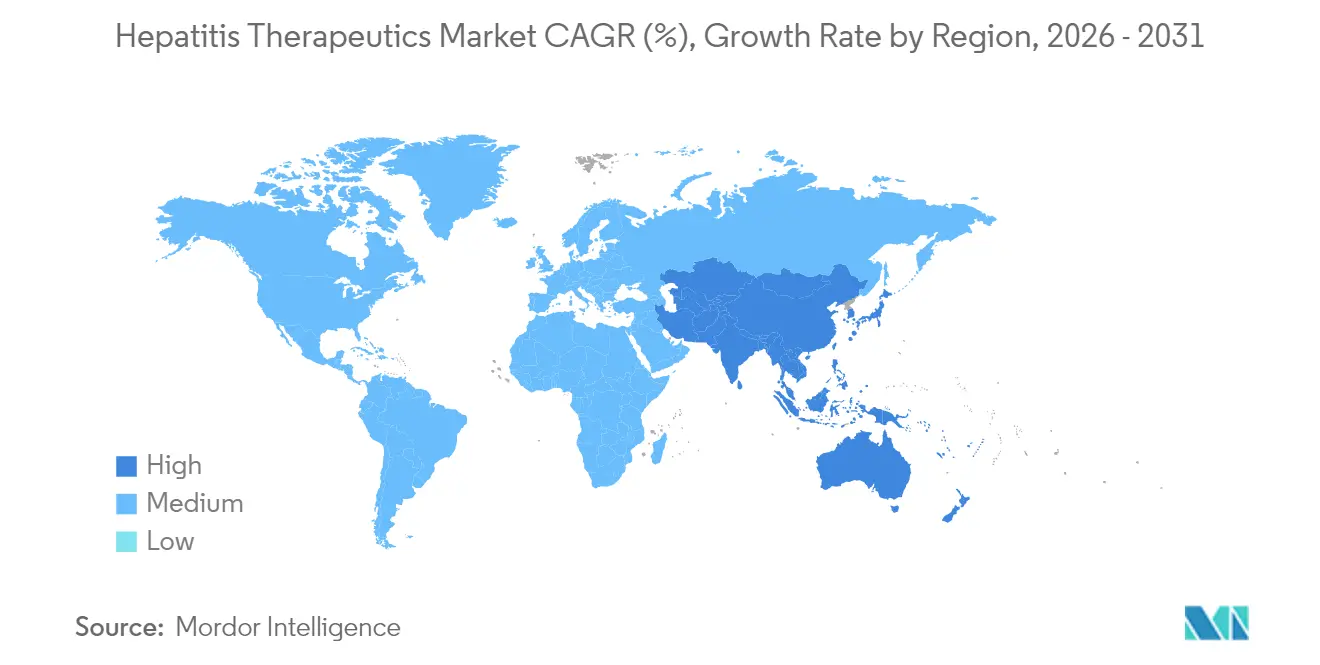
Asia-Pacific is the growth pacesetter at 4.42% CAGR. The hepatitis therapeutics market size for the region is projected to expand quickly as China rolls out national screening and as India integrates antivirals into public insurance. China documented a 31.54% fall in hepatitis C incidence but a 28.60% mortality increase, underscoring diagnostic lag. Japan and South Korea furnish high-value demand through aggressive screening of aging populations, while Australia’s outcomes-based DAA deal has become a case study for neighboring health ministries. Governments across Southeast Asia are earmarking special budgets to meet the WHO 2030 elimination milestone, further amplifying regional momentum.
Regulatory Landscape
Regulation in hepatitis therapeutics is shaped by stringent efficacy and safety standards for antivirals and immune-modulators, with increasing scrutiny on endpoints that demonstrate durable benefit beyond on-treatment viral suppression. In May 2026, the US FDA granted accelerated approval to Hepcludex (bulevirtide-gmod) for chronic hepatitis delta virus (HDV) infection in adults without cirrhosis or with compensated cirrhosis, reinforcing continued use of expedited pathways for high-unmet-need hepatitis indications.
In Europe, hepatitis development and approvals are guided by EMA scientific expectations for hepatitis B and continued post-authorization monitoring, and regulators are actively engaging functional-cure modalities. In March 2026, the EMA accepted for review GSK's marketing authorization application for bepirovirsen for chronic hepatitis B, aligning with finite-duration and functional-cure oriented submissions. At the policy level, WHO strengthened its operating framework for country programs from March to April 2026 through a consolidated implementation handbook and the Global Hepatitis Report 2026, adding pressure on national agencies to expand screening and treatment pathways aligned to elimination targets.
Value Chain Analysis
The value chain covers discovery and clinical development (small molecules, monoclonal antibodies, and nucleic-acid based candidates), regulatory submission and evidence generation, manufacturing (API, formulation, and finished-dose), and multi-channel distribution through hospitals, specialty clinics, retail, and growing e-pharmacy models. For high-volume hepatitis C regimens, generic supply is a major throughput driver, with India serving as a core API and finished-dose hub; trade analytics also point to concentrated exporter networks for sofosbuvir and ledipasvir, which affects pricing leverage, lead times, and country access strategies.
Downstream, access is determined by tendering and reimbursement mechanics, including subscription and outcomes-linked contracts that require manufacturers to support pharmacovigilance and real-world evidence collection. Supply resilience and quality assurance remain critical because affordable regimens can depend on a limited number of qualified sources (including WHO-prequalified pathways in some markets), while last-mile availability can still be constrained by specialty pharmacy stocking and payer rules even when manufacturing supply is adequate (as reflected in access frictions around entecavir despite no broad FDA-reported manufacturing shortage as of early 2026). NGO and public-health stakeholders, including WHO and CHAI, influence demand planning and procurement coordination by tracking treatment cascades and highlighting gaps between diagnosis and treatment initiation.
Competitive Landscape
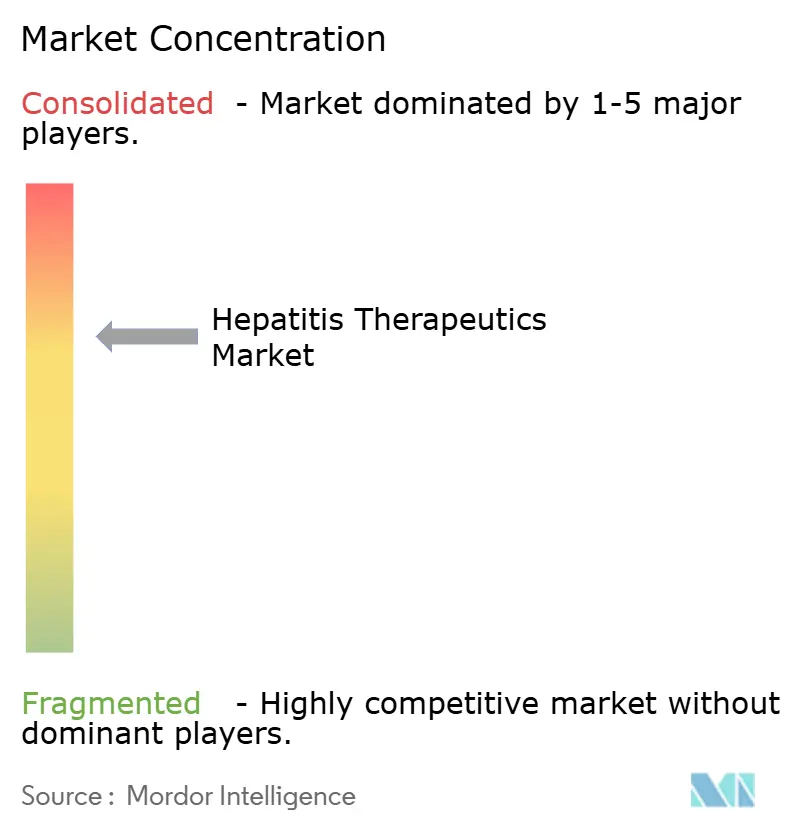
The hepatitis therapeutics market shows moderate concentration around a handful of large-cap incumbents yet is rapidly diversifying as functional-cure pipelines mature. Gilead, AbbVie, and GSK control the bulk of commercialized regimens, leveraging global access programs and deep regulatory experience to defend share. GSK’s USD 2 billion acquisition of efimosfermin and its USD 37.5 million AI alliance with Ochre Bio illustrate how big pharma is buying platform technology to future-proof portfolios.
Biotechnology challengers are forcing incumbents to accelerate innovation cycles. GigaGen’s Phase 1 dosing of GIGA-2339 underscores how hyper-potent monoclonals can redefine therapeutic benchmarks. Assembly Biosciences brought four next-generation core inhibitors into clinical testing by end-2024, signaling that multi-asset continuity—not single-shot discoveries—will dictate staying power. Across the hepatitis therapeutics market, competitive advantage is shifting toward companies able to integrate siRNA, monoclonal antibodies, and small-molecule capsid inhibitors into seamless cure-oriented regimens.
Digital-health partnerships now matter as much as chemistry. Firms that embed adherence analytics, remote liver-function monitoring, and AI-enabled resistance detection into drug launches lock in payer preference and command price premiums. This ecosystem approach is expected to redraw competitive maps, making cross-sector alliances an imperative rather than an option.
Hepatitis Therapeutics Industry Leaders
-
AbbVie Inc.
-
Bristol Myers Squibb
-
Gilead Sciences
-
GSK plc
-
Merck & Co., Inc.
- *Disclaimer: Major Players sorted in no particular order
Hepatitis Therapeutics Market Companies Covered in this Report
- Abbvie
- Alnylam Pharmaceuticals
- Arbutus Biopharma Corporation
- Assembly Biosciences, Inc.
- Atea Pharmaceuticals
- Bristol-Myers Squibb
- Cipla
- Dr. Reddy’s Laboratories
- Enanta Pharmaceuticals
- Roche
- Gilead Sciences
- Grifols
- GlaxoSmithKline
- Johnson & Johnson
- Merck
- Novartis
- Sun Pharmaceuticals Industries
- Viatris
- Vir Biotechnology, Inc.
- Zydus Lifesciences Ltd
Market Opportunities and Future Outlook
A clear opportunity remains in converting diagnosis into treatment at scale, particularly in high-burden regions where program financing and care-pathway execution lag affordability. In 2026, WHO intensified implementation support through its consolidated hepatitis B and C guidance and implementation handbook and the Global Hepatitis Report 2026, which underscore that elimination progress is off track even with reductions in new infections since 2015. CHAI also highlighted the hepatitis C care gap in 2026, reporting that 11 million people diagnosed with hepatitis C were untreated in 2024, pointing to operational opportunities around demand aggregation, treatment initiation, and simplified delivery models.
New pipeline and access moves are also opening commercial spaces beyond established chronic hepatitis C regimens. In May 2026, the FDA accelerated approval of Gileads Hepcludex (bulevirtide-gmod) for chronic HDV in the United States expanded the treated addressable population in a niche but high-unmet-need segment. In hepatitis B, activity is shifting toward finite-duration functional-cure approaches and regional access partnerships; GSK reported Phase III results for bepirovirsen in January 2026, and in May 2026 entered a strategic collaboration with Sino Biopharmaceutical to accelerate patient access in China, linking product development with high-burden market execution.
Recent Industry Developments in Hepatitis Therapeutics Market
- June 2026: AbbVie announced European Commission approval of MAVIRET (glecaprevir/pibrentasvir) for the treatment of acute hepatitis C virus infection in adults and children aged 3 years and older. The decision expands label breadth beyond chronic treatment settings and supports earlier intervention strategies that can reduce transmission and downstream liver disease burden.
- May 2026: GSK entered a strategic collaboration with Sino Biopharmaceutical to accelerate patient access to bepirovirsen in China. The partnership targets a high-burden geography and pairs late-stage development momentum with a local access pathway, strengthening commercialization readiness for functional-cure oriented hepatitis B regimens.
- June 2025: AbbVie received US FDA approval for an expanded indication for MAVYRET (glecaprevir/pibrentasvir) as a treatment for acute hepatitis C virus infection. This regulatory expansion reinforced the shift toward shorter, simplified DAA-based care pathways that can be deployed through broader screening and rapid-start treatment models.
Hepatitis Therapeutics Market Report Scope and Research Methodology
Market Definition and Coverage
For this study, the hepatitis therapeutics market is the value of prescription medicines used to treat viral hepatitis infections across care settings, where demand is driven by diagnosed and treated patients and the price and duration of therapy.
Scope exclusions: We exclude prophylactic hepatitis vaccines, diagnostic testing products, liver transplant procedures, and non-prescription supplements positioned for liver health.
Segments Covered in This Report
- By Disease Type
- Hepatitis A
- Hepatitis B
- Hepatitis C
- Hepatitis D
- Other Types
- By Drug Class
- Interferons
- Monoclonal Antibodies
- NS5A Inhibitors
- Nucleotide Analog RT Inhibitors
- Nucleotide Analog NS5B Inhibitors
- Multi-class Combinations
- Other Drug Classes
- By Route of Administration
- Oral
- Injectable
- By Distribution Channel
- Offline
- Online
- By End-User
- Hospitals
- Specialty Clinics
- Home-care Settings
- Other End-Users
- By Geography
- North America
- United States
- Canada
- Mexico
- Europe
- Germany
- United Kingdom
- France
- Italy
- Spain
- Rest of Europe
- Asia-Pacific
- China
- India
- Japan
- Australia
- South Korea
- Rest of Asia-Pacific
- Middle East and Africa
- GCC
- South Africa
- Rest of Middle East and Africa
- South America
- Brazil
- Argentina
- Rest of South America
- North America
Data Sources, Market Sizing, and Validation
Desk Research
Desk work was first used to set the medical and policy boundaries of what counts as hepatitis treatment, and to build a realistic demand pool by region. Public sources were reviewed for epidemiology, screening, treatment coverage, and care-pathway details, such as WHO hepatitis updates, CDC viral hepatitis surveillance, ECDC surveillance reports, and national health ministry or public payer guidance documents.
To translate that demand pool into a value model, we also checked evidence on treatment standards and regimen duration from peer-reviewed journals and clinical guideline bodies. We used company filings, investor presentations, and reputable press to sanity check therapy mix and the direction of pricing. Where helpful, we referenced paid company financials and intelligence subscriptions and a patent database subscription to track pipeline timing signals and portfolio exposure. The sources listed here are illustrative, and many other public references were used for collection, cross-checks, and clarification.
Primary Interviews and Surveys
Primary work focused on validating what portion of diagnosed patients are treated, how regimens are selected in practice, and how list-to-net pricing changes are handled across regions. We spoke with a mix of manufacturers, distributors, clinicians, and payer-side experts across APAC, EMEA, and the Americas, so the final assumptions reflect real-world access, switching, and adherence patterns.
Distribution of primary research fieldwork respondents
| Company type | Respondent position | Region |
|---|---|---|
| Top tier: 39% | CXOs: 15% | APAC: 38% |
| Mid tier: 43% | Functional/Unit leaders: 25% | EMEA: 35% |
| Smaller Players: 18% | Managers: 60% | Americas: 27% |
Market-Sizing & Forecasting
Sizing was built using top-down epidemiology logic, where prevalence and diagnosis rates are converted into an addressable treated cohort, and then multiplied by therapy initiation, regimen duration, and average annual treatment cost. Once the treated pool was constructed, totals were checked against selective bottom-up approximations such as sampled price points across key therapy classes and a limited roll-up of supplier exposure by region. We then adjusted when mismatches persisted.
Inputs that materially move the model include chronic hepatitis B and C prevalence, screening and diagnosis coverage, treatment eligibility rules and uptake, shifts in regimen mix (including pangenotypic options where relevant), generic entry and price erosion, and reimbursement expansion that changes access. Forecasts used scenario analysis anchored to expert views on policy actions, pipeline timing, and expected price progression by major region, and then blended into a base case so year-to-year movement remains explainable. Where local data gaps exist, assumptions were bridged using proxy countries with similar guidelines and income levels, followed by re-checks with regional interviewees.
Data Validation & Update Cycle
Outputs were validated through repeated cross-checks between the patient-based model and independent signals such as therapy volume direction, reimbursement policy changes, and major guideline updates, which helps catch unrealistic jumps early. When variances appeared, analysts re-checked conversion steps, re-tested pricing inputs, and re-contacted relevant experts if the change was linked to access, generics, or a material clinical shift.
Before sign-off, the work goes through multi-step internal reviews so assumptions and calculations are consistent across regions and time periods. The report is refreshed annually, and interim updates are triggered when a major approval, safety update, pricing event, or policy change can move treated volumes or realized costs. A final pre-delivery check is performed so clients receive the latest version of the model and commentary.
Mordor Intelligence's Hepatitis Therapeutics Market Size Versus Other Published Estimates
Published market sizes for hepatitis therapeutics can look different even when they use the same label, because the underlying boundaries and conversion steps are not always aligned. Differences usually come from what is counted as treatment value, which hepatitis types are emphasized, and how price erosion and access changes are carried into the forecast.
By tracking treated-patient build-ups and regimen cost updates, Mordor Intelligence keeps the estimate anchored to diagnosis-to-treatment conversion rather than relying mainly on revenue snapshots, which is why some publishers land slightly higher or lower depending on their inclusion of adjacent items and their timing of price assumptions.
Benchmark comparison
| Source | Market Size | Gaps in Research Methodology |
|---|---|---|
| Mordor Intelligence | USD 17.44 B (2025) | |
| Global Consultancy A | USD 17.36 B (2025) | Uses a 2024 base and may apply broader averaging for pricing and therapy duration across regions, which can smooth out country-level reimbursement and generic-erosion steps. |
| Industry Publisher B | USD 17.80 B (2025) | Often leans on optimistic uptake and faster expansion in treated volumes, and the pricing path can be less explicit about list-to-net adjustments and the timing of generic impact. |
The spread is not very large, but it is explainable once scope and input timing are made visible. Our approach stays traceable because each region ties back to a treated cohort, a regimen mix, and an updated cost path, which makes the number easier to defend and refresh when access or pricing shifts.
Key Questions Answered in the Report
How are government subscription-style contracts shaping access to hepatitis therapies?
State-level subscription models lock in flat annual payments for unlimited drug supply, giving payers budget certainty while allowing manufacturers dependable volumes. This arrangement accelerates treatment initiation among underserved populations and is inspiring similar frameworks in other high-income markets.
Why is the industry pivoting from viral suppression toward functional cure strategies?
Suppressive regimens require lifelong adherence and ongoing monitoring, whereas functional cure protocols aim to clear viral antigens and re-establish durable immune control. Achieving this outcome can shorten or eliminate therapy, reduce long-term liver-disease costs, and open competitive space for next-generation modalities.
What role do monoclonal antibodies play in emerging hepatitis B regimens?
New polyclonal and bispecific antibodies can neutralize circulating surface antigens and enhance immune recognition of infected hepatocytes. When paired with capsid inhibitors or siRNA agents, they form multi-mechanism combinations that raise the probability of sustained antigen loss.
How is tele-hepatology changing patient engagement and treatment adherence?
Virtual consultation programs integrate screening, prescription, and follow-up visits on a single platform, cutting travel burdens and wait times. Early pilots report markedly higher enrollment and completion rates compared with traditional referral pathways, making digital delivery a key competitive differentiator.
In what ways are reimbursement policies influencing therapy selection in Europe?
Outcomes-based agreements tie payment to real-world viral clearance, pushing clinicians to favor regimens with robust effectiveness across genotypes and patient profiles. This has encouraged rapid uptake of short-course pan-genotypic options and created incentives for companies to generate post-marketing evidence.
What supply-chain considerations are critical for hepatitis drug manufacturers targeting emerging economies?
Active-pharmaceutical-ingredient production is heavily concentrated in a handful of countries, making localized disruptions a significant risk. Diversifying sourcing, building regional formulation hubs, and adopting blockchain-based tracking help assure continuity and bolster payer confidence in long-term access.