
Market Overview
| Study Period | 2021 - 2031 |
|---|---|
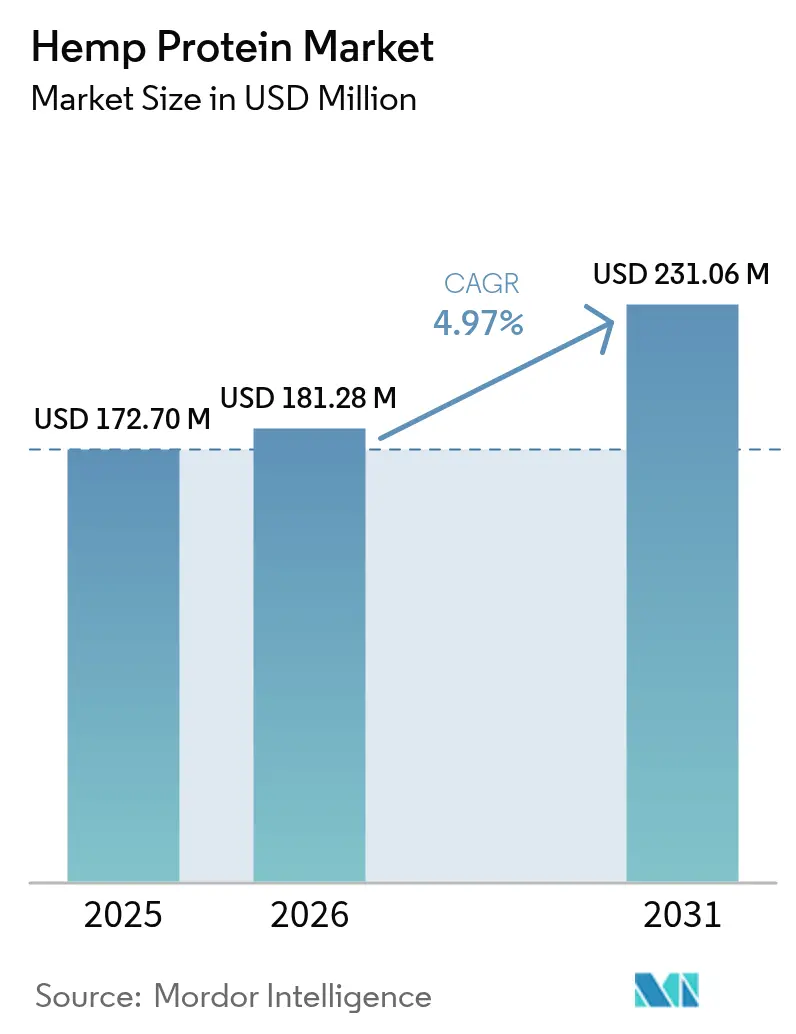
| Market Size (2026) | USD 181.28 Million |
| Market Size (2031) | USD 231.06 Million |
| Growth Rate (2026 - 2031) | 4.97 % |
| Fastest Growing Market | North America |
| Largest Market | Asia Pacific |
| Market Concentration | Medium |
Major Players *Disclaimer: Major Players sorted in no particular order Image © Mordor Intelligence. Reuse requires attribution under CC BY 4.0. | |
Hemp Protein Market Analysis by Mordor Intelligence
The hemp protein market size is expected to grow from USD 172.70 million in 2025 to USD 181.28 million in 2026 and is forecast to reach USD 231.06 million by 2031 at 4.97% CAGR over 2026-2031. This growth trajectory highlights the significant evolution of hemp protein from a niche supplement to a widely recognized and mainstream source of complete, plant-based protein. The increasing demand for hemp protein is primarily driven by several factors, including the removal of cultivation restrictions by national regulatory authorities, the expansion of vegan product portfolios by sports-nutrition brands, and the growing consumer emphasis on sustainable sourcing as a critical factor in purchasing decisions. The market's resilience is underpinned by key regional developments, such as North America's liberalized agricultural policies, Europe's stringent eco-design mandates, and Asia-Pacific's advanced agronomic expertise, which collectively contribute to the robust growth of the hemp protein market. Additionally, the competitive landscape remains highly dynamic, shaped by ongoing market consolidation, the strategic advantages of early adoption of organic certifications, and continuous advancements in functional ingredient innovation. These factors are expected to drive further opportunities and challenges within the market, ensuring its sustained growth and evolution over the forecast period.
Key Report Takeaways
- By source, conventional formats retained 83.35% of the hemp protein market share in 2025, yet organic products are projected to register a 5.98% CAGR through 2031.
- By application, the food and beverage category controlled 94.55% revenue in 2025, whereas supplements are set to expand at a 5.76% CAGR to 2031.
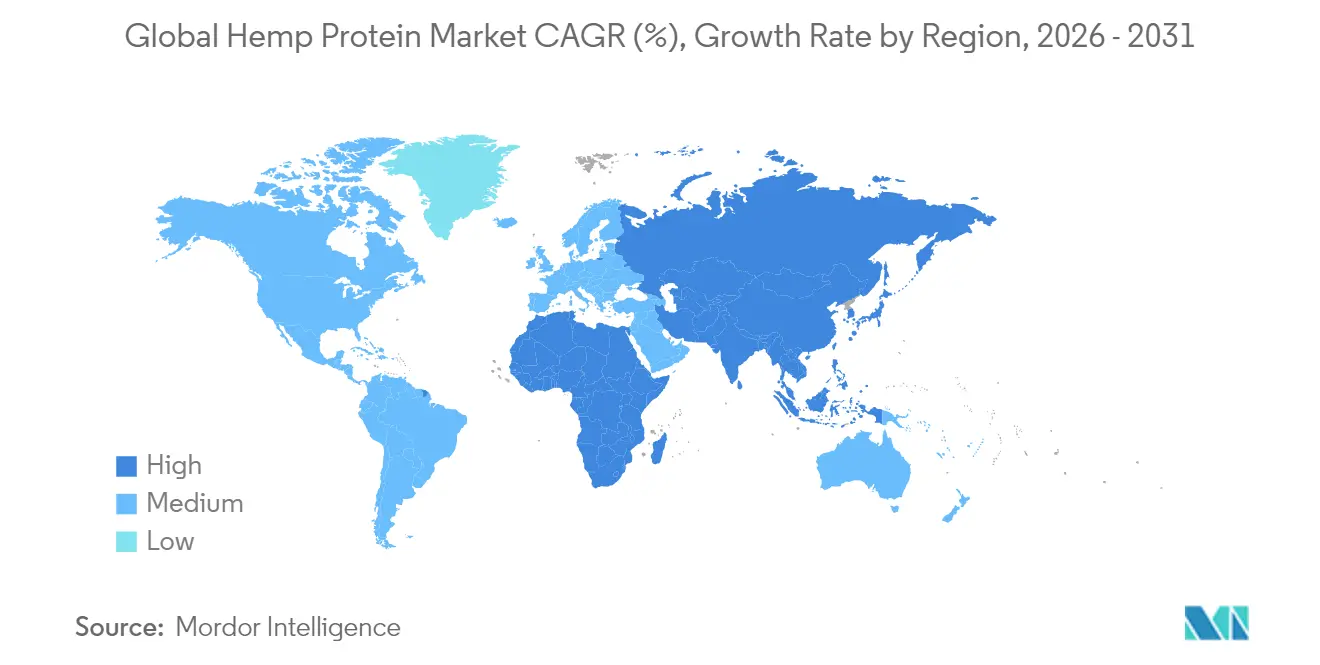
- By geography, Asia-Pacific commanded 47.20% of the hemp protein market size in 2025, while North America is expected to log the fastest 5.29% CAGR to 2031.
Note: Market size and forecast figures in this report are generated using Mordor Intelligence’s proprietary estimation framework, updated with the latest available data and insights as of 2026.
Market Trends and Insights
Drivers Impact Analysis of Hemp Protein Market*
| Driver | (~) % Impact on CAGR Forecast | Geographic Relevance | Impact Timeline |
|---|---|---|---|
| Rising popularity of plant-based and vegan protein sources | +1.2% | Global, strongest in North America and Europe | Medium term (2-4 years) |
| Growing prevalence of lactose and soy allergies | +0.8% | North America and Europe expanding to Asia-Pacific | Short term (≤ 2 years) |
| Regulatory relaxation for industrial hemp cultivation | +1.0% | North America and Europe, selective Asia-Pacific | Long term (≥ 4 years) |
| Expansion in functional foods and nutraceuticals | +0.9% | Global, premium developed markets | Medium term (2-4 years) |
| Growth in sports and nutritional supplements | +0.7% | North America and Europe, emerging Asia-Pacific | Short term (≤ 2 years) |
| Increasing demand for organic and clean-label products | +0.6% | North America and Europe | Medium term (2-4 years) |
| Source: Mordor Intelligence | |||
Rising popularity of plant-based and vegan protein sources
Consumer transition toward plant-forward diets extends beyond lifestyle into supply-chain strategy, and the hemp protein market benefits because hemp cultivation needs less water than soy, wheat, or pea. According to the Good Food Institute, in 2024, around 40% of adults in Germany and the UK plan to increase their plant-based food consumption. Health reasons account for 48% of this shift, while environmental concerns represent 29%, and animal welfare considerations comprise 25%[1]. Companies are leveraging the dual-purpose nature of hemp crops, which enables the simultaneous recovery of fiber and protein, thereby reducing the cost per functional unit. The European Union's Circular Economy Action Plan, which targets the development of sustainable textiles by 2030, has significantly increased the demand for hemp stalks. This growing demand not only enhances the economic value of hemp but also lowers the overall cost of protein feedstock. For example, Manitoba Harvest and Brightseed have recently launched an upcycled hemp-hull fiber supplement. This product utilizes material that was previously considered waste, effectively transforming circularity into a profitable margin opportunity.
Growing prevalence of lactose and soy allergies driving alternative proteins
As dietary preferences increasingly move away from dairy-derived and soy proteins, hypoallergenic hemp formulations are gaining prominence by securing "free-from" labels, which enable them to command higher price points. A double-blind crossover study, published in the American Journal of Clinical Nutrition, demonstrated that hemp seed protein and its hydrolysate significantly reduced blood pressure when compared to casein. This pivotal finding has elevated hemp from being merely a macronutrient to a nutraceutical with potential health benefits. The market has responded to this shift: In February 2025, The Simply Good Foods Company acquired the allergen-free shake brand OWYN for USD 280 million, emphasizing the growing commercial importance of allergen-conscious product positioning. Additionally, as the FDA enforces stricter labeling regulations for plant-protein analogs, hemp protein's minimal and straightforward ingredient profile emerges as a distinct competitive advantage in the market.
Regulatory relaxation for industrial hemp cultivation
The normalization of hemp cultivation is enhancing supply chain stability, enabling large-scale food manufacturers to expand from niche health food markets into mainstream grocery channels. The recent feed approval has established a regulatory precedent for the safety of hemp protein across various applications, reducing compliance challenges for human food manufacturers. Panda Biotech's flagship hemp processing facility in Texas, with a capacity to process 10 metric tons of industrial hemp per hour, highlights the infrastructure scale required to support mainstream adoption. This facility employs a zero-waste process powered by renewable energy, addressing sustainability concerns while achieving industrial-scale efficiency. In China, industrial hemp breeding programs, particularly in Heilongjiang and Yunnan provinces, are focused on optimizing yields and enhancing quality traits, potentially creating supply chain advantages for protein extraction applications.
Expansion in functional foods and nutraceuticals
Hemp protein, recognized for its distinctive bioactive compounds, is establishing itself as a premium functional ingredient rather than a standard commodity protein. This differentiation enables higher pricing, supported by emerging clinical evidence highlighting its health benefits. The increasing production of functional foods, particularly in China. The export value of health and functional food in China was USD 4,275 million in 2024[2] (as reported by the China Chamber of Commerce for Import and Export of Medicines and Health Products), which is driving this demand. Brightseed scientists have identified bioactive lignanamides in hemp hulls, specifically N-trans-caffeoyltyramine and N-trans-feruloyltyramine, which demonstrate positive effects on gut health. These findings are now leveraged on functional beverage labels. Additionally, Applied Food Sciences has developed PurHP-75™, a product containing 75% protein and texturizing fibers that replicate the mouthfeel of meat, creating opportunities in the hybrid meat-alternative market.
Restraints Impact Analysis of Hemp Protein Market*
| Restraint | (~) % Impact on CAGR Forecast | Geographic Relevance | Impact Timeline |
|---|---|---|---|
| Regulatory challenges and legal uncertainties | -0.7% | Global, especially cross-border | Long term (≥ 4 years) |
| Competition from alternative protein sources | -0.5% | Global, mostly developed markets | Medium term (2-4 years) |
| Inconsistent global THC thresholds | -0.4% | Export-dependent regions | Medium term (2-4 years) |
| Taste and texture limitations in food uses | -0.3% | Consumer-facing, developed markets | Short term (≤ 2 years) |
| Source: Mordor Intelligence | |||
Regulatory challenges and legal uncertainties
Although hemp cultivation, transportation, and processing are legal in many regions, farmers and processors often require specialized licenses. Regulatory authorities enforce rigorous testing and documentation to verify THC compliance, resulting in higher costs and delays. Inconsistent regulations regarding hemp content frequently lead to border delays, import restrictions, or product seizures for hemp protein products. These issues disrupt supply chains and limit global distribution, particularly in key markets such as the EU, China, and certain Middle Eastern countries. Differing rules on THC thresholds and novel-food approvals create significant scientific and legal challenges. In the EU, any new hemp derivative intended for consumption requires a detailed safety dossier. Additionally, Italy's 2024 court-supported bans on specific hemp products underscore the unpredictability of regulatory policies. However, established players with a recognized GRAS portfolio are well-positioned to capitalize on these market conditions.
Competition from alternative protein sources
The rapid expansion of the pea protein market sets a challenging benchmark for hemp protein suppliers, who must not only achieve comparable growth but also prioritize consumer education regarding the superior amino-acid density of hemp protein. According to Agriculture and Agri-Food Canada, 36 new products featuring pea protein-based nutritional and meal replacement drinks were launched in Canada in 2023[3]. Pea protein continues to strengthen its position as a dominant competitor within the market. In May 2025, Bunge announced a significant investment of EUR 484 million to establish a new soy processing plant in the United States, while Louis Dreyfus introduced a state-of-the-art pea-isolate production facility in Saskatchewan. These strategic initiatives underscore the substantial scale and cost efficiencies leveraged by established players in the soy and pea protein markets.
*Our forecasts treat driver/restraint impacts as directional, not additive. The impact forecasts reflect baseline growth, mix effects, and variable interactions.
Hemp Protein Market Segment Analysis
By Source:
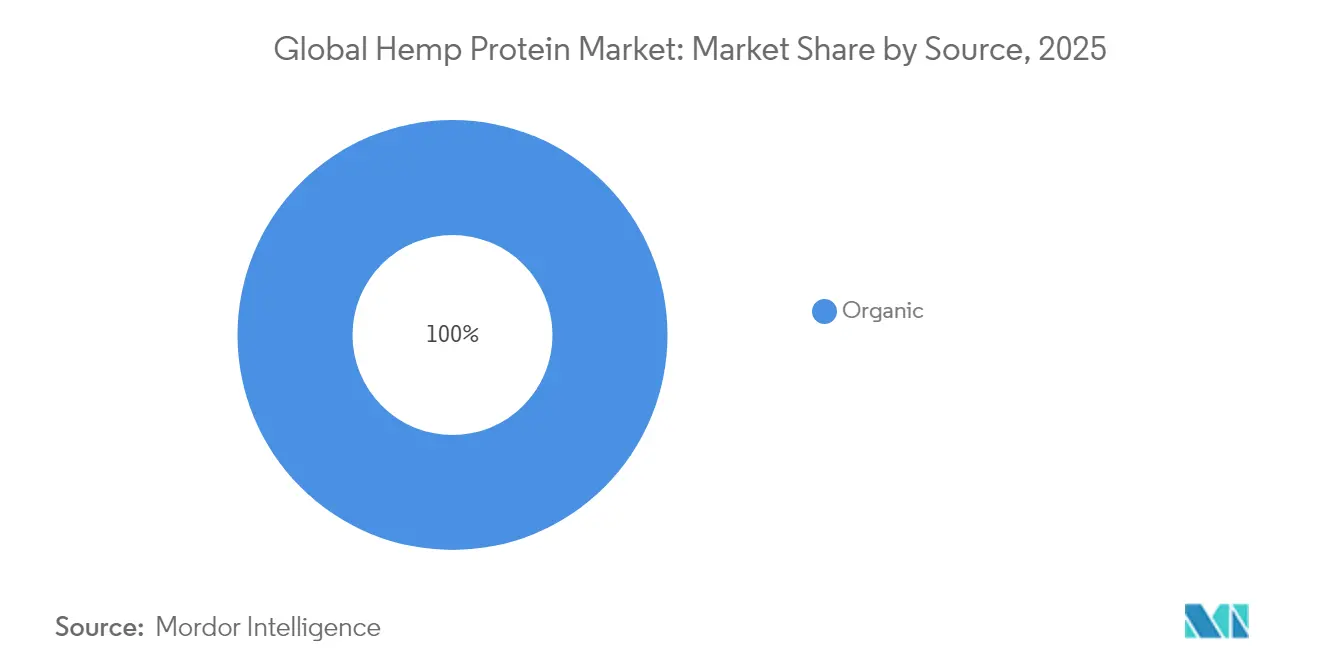
Organic Growth Accelerates Despite Conventional DominanceIn 2025, conventional cultivation remained dominant, contributing 83.35% of the hemp protein market's volume. Cost-conscious mass retail channels prefer lower-priced conventional inputs, while established agronomic practices continue to drive annual yield improvements. However, organic acreage is experiencing notable growth, as hemp's natural pest resistance minimizes certification costs. For example, Lithuania's emerging organic hemp exporters demonstrate how farmers can transition to premium categories without incurring significant agrochemical conversion expenses.
Organic product launches align with this agronomic trend. The global natural and organic food market is expanding, with protein-rich products outperforming the average growth of the category. Brands effectively leverage the consumer trust associated with organic certifications to justify premium pricing, enabling them to absorb higher raw material costs. The Hemp Fiber and Grain Association has introduced dedicated organic hemp grain programs that directly communicate price signals to farmers, ensuring a sustainable supply for processors. As a result, the organic segment is projected to achieve a 5.98% CAGR through 2031, exceeding the growth rate of the broader hemp protein market by over 100 basis points.

By Application:
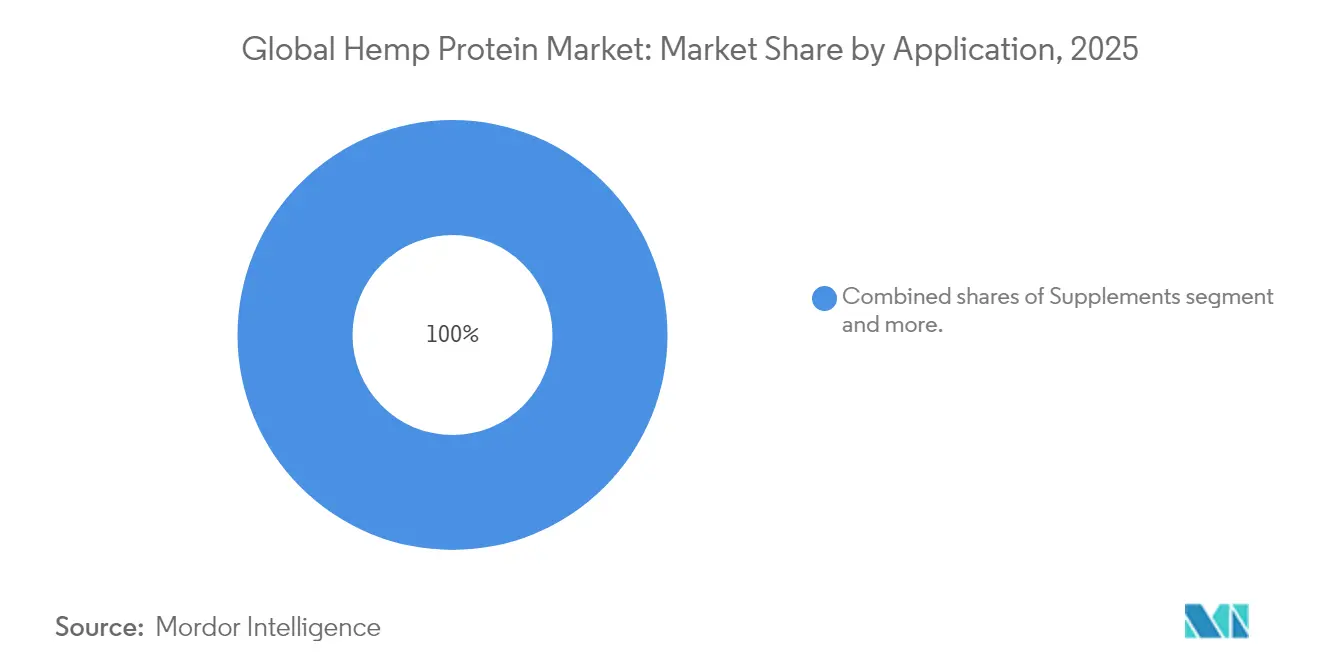
Supplements Drive Innovation Beyond Food DominanceIn 2025, food and beverage formulations represented a significant 94.55% of total revenue, with hemp being incorporated into bakery mixes, dairy alternatives, and ready-to-drink shakes. The expansive scale of the mass-market grocery sector means that even small percentage changes can result in substantial tonnage increases. Hemp's mildly nutty flavor integrates effectively into bars and cereals, while its natural emulsifying properties enhance the quality of plant-based milks. Recent advancements in protein isolates, such as Burcon's commercial-scale launch, provide formulators with a neutral-tasting, nearly undetectable option, enabling higher inclusion rates.
Conversely, the supplement sector stands out as the primary growth driver, with a strong CAGR of 5.76%. The increasing adoption of sports nutrition products is a key factor in this growth. Endurance athletes are progressively substituting dairy with hemp, which offers a complete amino acid profile and improved gut comfort. Success stories like OWYN have drawn the attention of larger strategic players, keeping them vigilant for acquisition opportunities. During the forecast period, analysts anticipate that capsule, gummy, and powder SKUs will increasingly occupy shelf space traditionally dominated by whey products. In the personal care segment, formulators are leveraging hemp peptides for their topical benefits. TRI-K's facility expansion highlights the commitment of ingredient suppliers to capitalize on this emerging opportunity.
Geography Analysis
APAC Hemp Protein Market
In 2025, Asia-Pacific held a leading 47.20% share of the hemp protein market. China's breeding programs in Heilongjiang and Yunnan are enhancing seed yields and protein concentration, resulting in exportable surpluses for both fiber and food applications. Producers in the region are leveraging low production costs to supply high-volume clients in the snack and bakery industries. In contrast, Australia remains a smaller market participant, with its industry council working to secure funding for livestock-feed compliance, which could slow short-term growth.
North America and Europe Hemp Protein Market
North America is anticipated to achieve the highest CAGR of 5.29% through 2031, driven by coordinated policy measures and infrastructure improvements. For example, Panda Biotech's zero-waste mill in Texas supports multiple downstream users, effectively reducing logistical challenges between growers and processors. Furthermore, Canadian public funding, such as Protein Industries Canada's USD 6.9 million grant for alternative proteins, is advancing research and development efforts, particularly in developing concentrates with improved solubility. This investment aligns with a broader shift toward plant-based nutrition and alternative proteins. Hemp protein, with its complete amino acid profile, is especially appealing to vegan and vegetarian consumers. Europe offers a balanced growth opportunity. The region's annual demand for vegetable proteins provides hemp processors with a viable market, supported by sustainability goals aligned with the EU Green Deal. However, challenges such as the high costs of Novel Food dossiers and inconsistent national THC regulations increase market risks, as evidenced by Italy's recent ban on oral CBD products. In North America, consumers are increasingly adopting plant-based proteins for purposes such as muscle building, weight management, and overall wellness. This trend is particularly prominent among fitness-conscious millennials and Gen Z, who favor hemp protein for its high fiber content, essential fatty acids, and digestibility.
Regulatory Landscape
Regulatory conditions for hemp protein continue to diverge by jurisdiction, affecting formulation decisions and cross-border supply chains. In the United States, FDA has issued “no questions” letters for certain GRAS notices covering hemp seed-derived ingredients (including hemp seed protein powder), which supports broader adoption in conventional food applications. Manufacturers still need to align with FSMA preventive controls and maintain supplier verification focused on contaminants, including pesticide residues and mycotoxins.
In Europe, treatment depends on processing and whether an ingredient is considered novel. In March 2026, the European Commission indicated that soluble edestin (a purified hemp protein) is a novel food under Regulation (EU) 2015/2283, which pushes highly purified isolates toward dossier-based authorization and increases time and cost to market entry. India follows a more prescriptive approach through FSSAI standards for hemp seeds and seed products, including THC limits, while Canada has pointed to further change through Health Canada’s forward regulatory planning for amendments to the Industrial Hemp Regulations. Together, these differences keep compliance planning and documentation burdens high for global suppliers.
Competitive Landscape
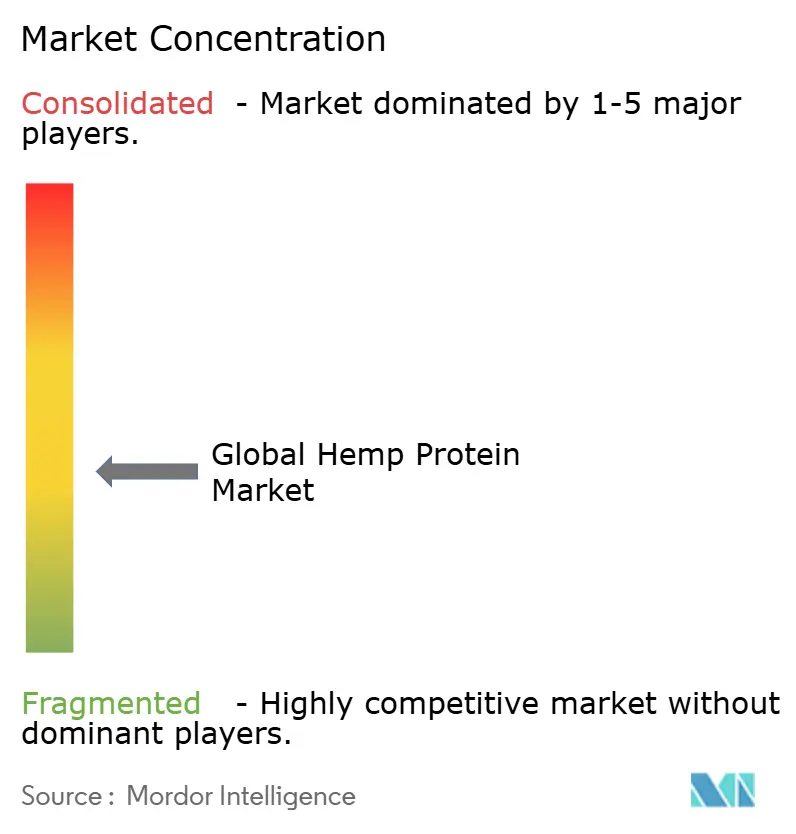
The global hemp protein market is moderately fragmented, with the presence of various players. Leading manufacturers in the hemp protein market focus on leveraging opportunities posed by emerging economies like India and China to expand their revenue base. Midsized companies are increasingly adopting vertical integration strategies to address the challenges posed by raw material price volatility. Manitoba Harvest serves as a notable example of this approach, utilizing its in-house farming network to achieve cost efficiencies in production. Additionally, the company has formed strategic partnerships, such as its collaboration with Brightseed, to expand its portfolio with premium bioactive product lines, further enhancing its market position. The major players operating in the market include Axiom Foods Inc., Manitoba Harvest Hemp Foods, Martin Bauer Group, and ETChem, among others.
Innovation remains a critical factor in differentiating competitors within the market. Burcon leverages its proprietary filtration technology to develop neutral-flavored protein isolates, effectively overcoming longstanding texture issues in high-inclusion formulations. This advancement enables the company to meet the evolving demands of food manufacturers seeking improved ingredient functionality.
Regulatory assets play a pivotal role in shaping competitive leadership within the market. Companies that possess GRAS (Generally Recognized As Safe) notices, such as those for hemp seed protein, are well-positioned to offer U.S. clients streamlined compliance solutions. This capability provides a significant advantage during the supplier selection process, as food manufacturers prioritize regulatory assurance. Furthermore, impending regulatory changes in the United States, which aim to eliminate self-affirmed GRAS status, are expected to intensify the competitive landscape. These reforms are likely to create a wider gap between established players with robust resources and emerging start-ups, further solidifying the dominance of resource-rich incumbents.
Hemp Protein Industry Leaders
-
Axiom Foods Inc.
-
Manitoba Harvest Hemp Foods
-
Martin Bauer Group
-
ETChem
-
Tilray Brands Inc.
- *Disclaimer: Major Players sorted in no particular order
Hemp Protein Market Companies Covered in this Report
- Axiom Foods Inc.
- Manitoba Harvest Hemp Foods
- Martin Bauer Group
- ETChem
- Tilray Brands Inc.
- Fresh Hemp Foods Ltd.
- North American Hemp & Grain Co. Ltd.
- Victory Hemp Foods
- Navitas LLC
- Canah International
- Hemp Oil Canada Inc.
- GFR Ingredients Ltd.
- Health Horizons
- Hemp Foods Australia Pty Ltd.
- India Hemp Organics
- Nutiva Inc.
- Jinzhou Qiaopai Biotech
- EnerLab Nutrition
- HempFlax BV
- Evo Hemp
Market Opportunities and Future Outlook
Processing scale-up and cleaner fractionation pathways are creating space for hemp protein beyond traditional powders and niche health retail. Solvent-free processing is one practical lever being supported by public and private programs, with Protein Industries Canada co-investing in May 2024 alongside Blue Sky Hemp Ventures Ltd., Virtex Grain Exchange, and Thar Process to deploy solvent-free processing for canola and hemp proteins in Saskatchewan. This effort helps align hemp protein production with industrial ingredient standards sought by large food manufacturers.
Regulatory-driven formulation choices also create near-term opportunity where compliance and documentation influence purchasing. In the EU, novel-food classification pressure for certain purified hemp proteins increases the value of established, food-compliant hemp protein formats and suppliers that can support dossier readiness and specifications. In North America, GRAS-backed hemp seed protein use cases combined with FSMA supplier verification requirements favor ingredient partners that provide robust testing, traceability, and consistent THC compliance, particularly for high-volume bakery and dairy-alternative customers that rely on repeatable functional performance and stable supply.
Recent Industry Developments in Hemp Protein Market
- July 2026: Axiom Foods entered a strategic partnership with NNB Nutrition to develop "Protein+" beverage and active nutrition formulations that combine plant proteins with functional ingredients. The collaboration targets integrated formulation solutions (e.g., sensory and functional performance) that help brands differentiate protein beverages beyond basic macro nutrition.
- April 2026: Manitoba Harvest launched Superfood Smoothie Boosters exclusively at Sprouts Farmers Market nationwide, featuring Regenerative Organic Certified hemp blended with fruit and vegetable powders. The retail rollout reinforces hemp protein positioning in value-added mixes where sourcing credentials and functional blends support premium shelf placement.
- April 2025: Victory Hemp Foods unveiled a large-scale processing line for hemp heart protein and oil in North America to increase supply of allergen-free hemp ingredients. Expanded processing capacity supports higher-volume food and beverage customers by improving throughput and shortening lead times for contracted ingredient programs.
Hemp Protein Market Report Scope and Research Methodology
Market Definition and Coverage
For this study, the hemp protein market is defined as the value of hemp seed-derived protein ingredients sold for use in food, beverages, supplements, and similar end uses, counted at the point of commercial sale in each geography.
Scope exclusions: We exclude hemp oil, hemp fiber, CBD-focused extracts, and finished consumer products where hemp protein is only a minor ingredient and the protein value cannot be reasonably separated.
Segments Covered in This Report
- By Source
- Organic
- Conventional
- By Application
- Food and Beverage
- Bakery
- Snacks
- Confectionery
- Beverages
- Supplements
- Sport/Performance Nutrition
- Elderly Nutrition and Medical Nutrition
- Personal Care and Cosmetics
- Food and Beverage
- By Geography
- North America
- United States
- Canada
- Mexico
- Rest of North America
- Europe
- United Kingdom
- Germany
- France
- Italy
- Spain
- Netherlands
- Rest of Europe
- Asia-Pacific
- China
- India
- Japan
- South Korea
- Indonesia
- Australia
- Rest of Asia-Pacific
- South America
- Brazil
- Argentina
- Rest of South America
- Middle East and Africa
- Saudi Arabia
- United Arab Emirates
- South Africa
- Rest of Middle East and Africa
- North America
Data Sources, Market Sizing, and Validation
Desk Research
Desk research starts with building the demand and supply context for hemp protein, so the model stays linked to real consumption and production signals. We refer to public agriculture and trade statistics (such as USDA hemp and oilseed publications, USITC trade data, and FAOSTAT series where applicable) to understand crop availability, cross-border movements, and processing footprints.
To tighten assumptions, we also review non-paywalled references such as food labeling and ingredient guidance from regulators (such as FDA and EFSA), published nutrition science in peer-reviewed journals, and updates from relevant trade associations and industry bodies. Company annual reports, investor presentations, and reputed press interviews are used to map product launches and capacity statements, and then a paid subscription covering company financials, news, and patents is used selectively to confirm timelines and fill gaps where public disclosures are thin. These examples are not exhaustive, and many other public sources were also checked during data collection and clarification.
Primary Interviews and Surveys
Primary work is used to pressure-test the desk view, especially on pricing, channel mix, and where hemp protein is being substituted for other plant proteins. We spoke with ingredient suppliers, contract processors, distributors, and downstream buyers across major consuming regions, and then reconciled the inputs into one consistent set of assumptions.
When interview feedback varied by application, the model was adjusted only after the underlying drivers were clarified, such as formulation rates, repeat order behavior, and typical pack sizes that influence ingredient draw.
Distribution of primary research fieldwork respondents
| Company type | Respondent position | Region |
|---|---|---|
| Top tier: 38% | CXOs: 14% | APAC: 46% |
| Mid tier: 44% | Functional/Unit leaders: 31% | EMEA: 36% |
| Smaller Players: 18% | Managers: 55% | Americas: 18% |
Market-Sizing & Forecasting
Sizing is built using a top-down demand pool approach, where food and supplement consumption trends are translated into hemp protein ingredient demand through application-level inclusion rates and realistic penetration ranges. Once those demand blocks are formed, we corroborate totals using selective bottom-up checks, such as sampled supplier volume discussions, distributor channel checks, and ASP x volume snapshots for key product forms to confirm that the outcome stays within a workable commercial range.
Inputs used in the model include indicators like hemp seed availability and processing scale, application mix shifts between functional foods and supplements, typical protein content claims by product type, import and export movement for relevant ingredient categories, and observed pricing bands by region and by organic versus conventional positioning. When a bottom-up checkpoint could not cover smaller or private participants, the gap was handled through conservative capture-rate assumptions that were validated in interviews and kept consistent across regions.
Forecasting is primarily done using scenario analysis supported by short time-series smoothing for pricing and mix, since the category can be affected by regulatory clarity, new product launches, and changing consumer diets. Final forecast settings are aligned to what practitioners expect for adoption speed and price movement, and then adjusted when the implied per-capita and channel volumes look out of line with observed market behavior.
Data Validation & Update Cycle
Validation is done in layers, starting with basic consistency checks on units, currency conversions, and year alignment, and then moving into variance review against independent signals like trade flows, crop availability context, and application demand indicators. If an outlier appears, we trace it back to the assumption that created it and re-check the relevant sources before the model is accepted.
Before sign-off, the numbers and logic are reviewed by another analyst so calculation errors and scope drift are caught early. The report is refreshed annually, and interim updates are made when material events occur, such as major capacity changes or policy shifts. Right before delivery, a final pass is completed so clients receive the most current view possible.
Mordor Intelligence's Hemp Protein Market Size Measured Against Other Published Estimates
Published market values for hemp protein can differ even when the topic label looks identical, because the counted product boundary and the year basis are not always the same. Some sources focus more tightly on hemp protein powders sold into sports nutrition, while others blend wider ingredient forms and add segmentation layers that change what gets included.
Trade movement signals and application-level demand checks are the evidence we used to keep the sizing grounded, and that is what ties Mordor Intelligence to USD 181.28 M (2026) rather than a number built mainly from broad category CAGRs.
Benchmark comparison
| Source | Market Size | Gaps in Research Methodology |
|---|---|---|
| Mordor Intelligence | USD 181.28 M (2026) | |
| Industry Publisher A | USD 178.40 M (2024) | Uses a different base year and a longer forecast window, and the scope description adds extra dimension splits like flavor and retail channel, which can shift what is counted as the hemp protein market value. |
| Nutrition Insights B | USD 173.21 M (2025) | Reports a nearby year but appears to use a broader narrative scope with less visible reconciliation to application inclusion rates and regional volume signals, which can pull the total down if penetration is assumed conservatively. |
Taken together, the spread is mostly explained by year selection and how tightly the product boundary is defined around ingredient sales versus wider powder and channel interpretations. By keeping assumptions traceable to practical signals like application use and observed pricing bands, the final number remains repeatable and easier to update when new evidence arrives.
Key Questions Answered in the Report
What is the current size of the hemp protein market?
The hemp protein market is valued at USD 181.28 million in 2026.
How fast is the hemp protein market expected to grow?
Industry forecasts show a 4.97% CAGR, taking market value to USD 231.06 million by 2031.
Which region leads hemp protein sales today?
Asia-Pacific holds the largest share at 47.20% of global revenue.
Which region is projected to grow the quickest?
North America is forecast to expand at a 5.29% CAGR through 2031 on the back of regulatory liberalization and new processing capacity.