
Hemorrhoid Treatment Devices Market Size and Share
Market Overview
| Study Period | 2020 - 2031 |
|---|---|
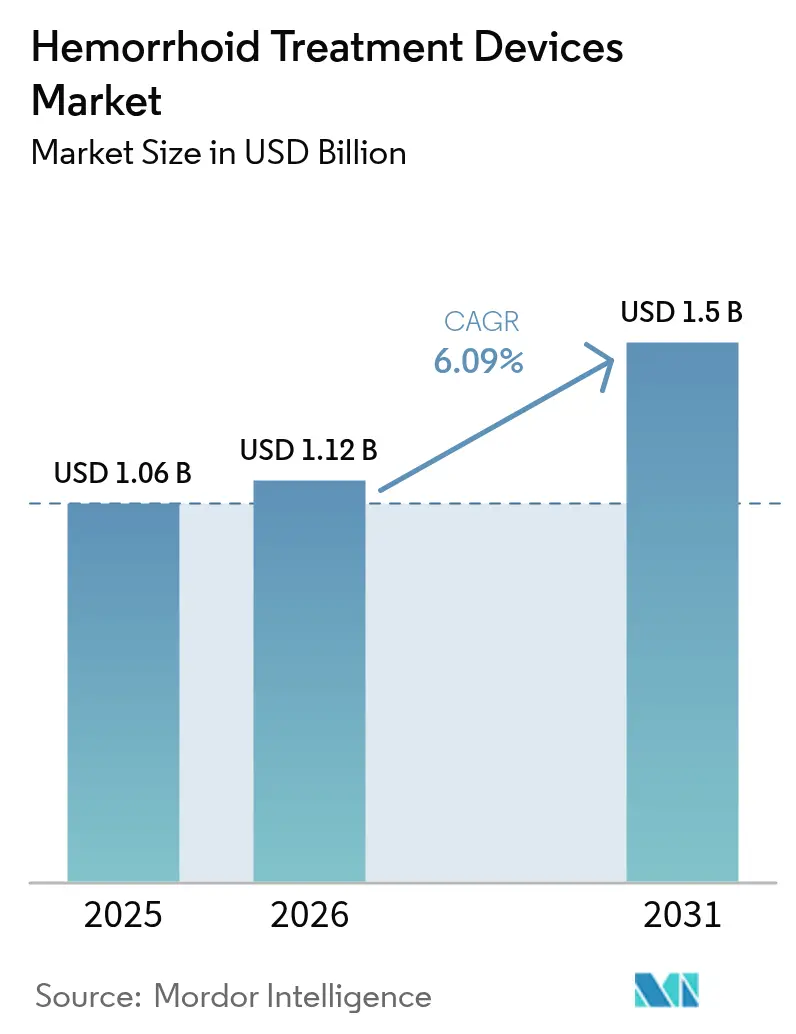
| Market Size (2026) | USD 1.12 Billion |
| Market Size (2031) | USD 1.5 Billion |
| Growth Rate (2026 - 2031) | 6.09 % |
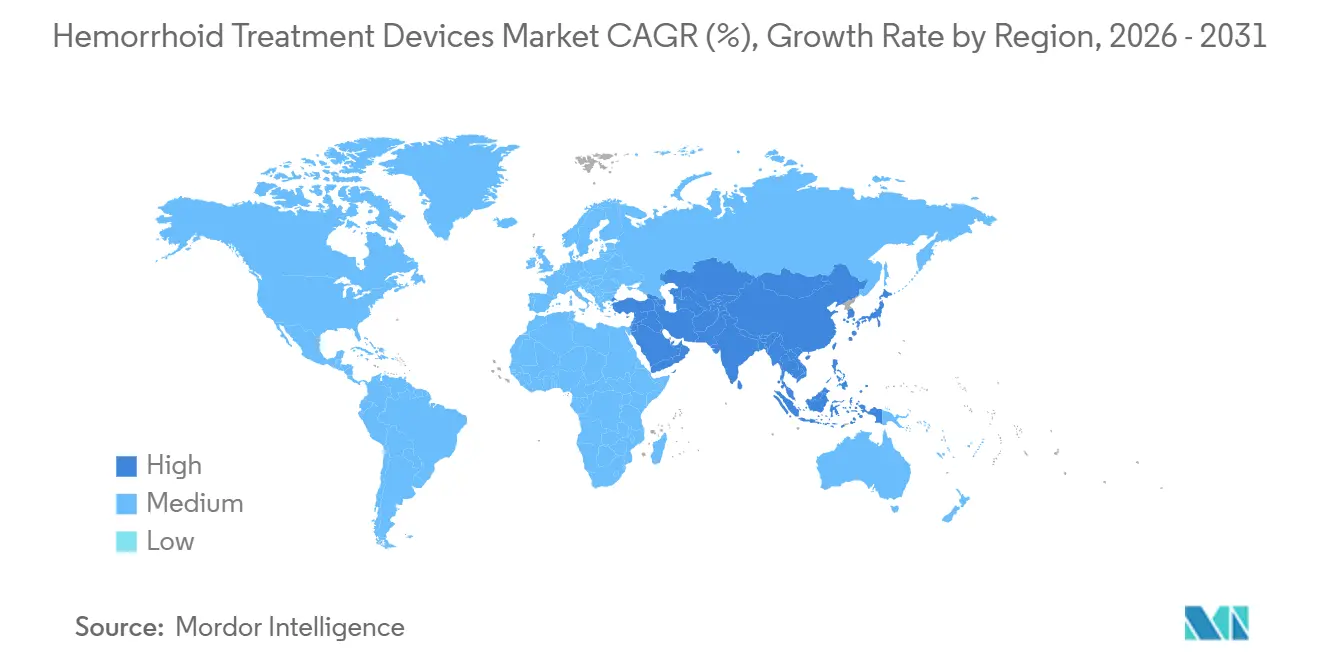
| Fastest Growing Market | Asia Pacific |
| Largest Market | North America |
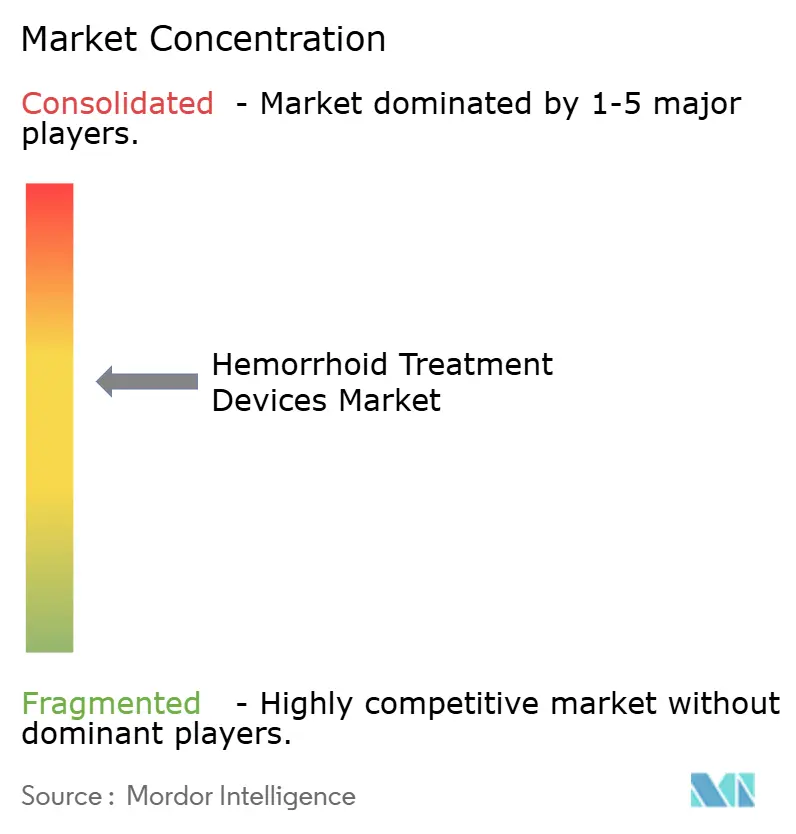
| Market Concentration | Medium |
Major Players *Disclaimer: Major Players sorted in no particular order Image © Mordor Intelligence. Reuse requires attribution under CC BY 4.0. | |
Hemorrhoid Treatment Devices Market Analysis by Mordor Intelligence
The Hemorrhoid Treatment Devices Market size is projected to expand from USD 1.06 billion in 2025 and USD 1.12 billion in 2026 to USD 1.5 billion by 2031, registering a CAGR of 6.09% between 2026 to 2031.
Demand is being pulled by an aging global population, sustained growth in outpatient colorectal procedures, and payer pressure to shift Grade II-IV hemorrhoid management from pharmacotherapy to device-based intervention.[1]Ambulatory surgery centers (ASCs) are capturing a rising share of these cases as Medicare and private insurers reimburse office-based ligation at attractive rates, while hospitals reserve operating rooms for complex colorectal surgery. Clinical studies reporting faster recovery and lower pain after laser hemorrhoidoplasty are accelerating the switch toward energy-based platforms, and infection-control concerns are fueling single-use device uptake.[2] With half of adults over 50 still managed medically, a sizable latent pool remains for device conversion, especially in Asia-Pacific where screening programs are scaling.
Key Report Takeaways
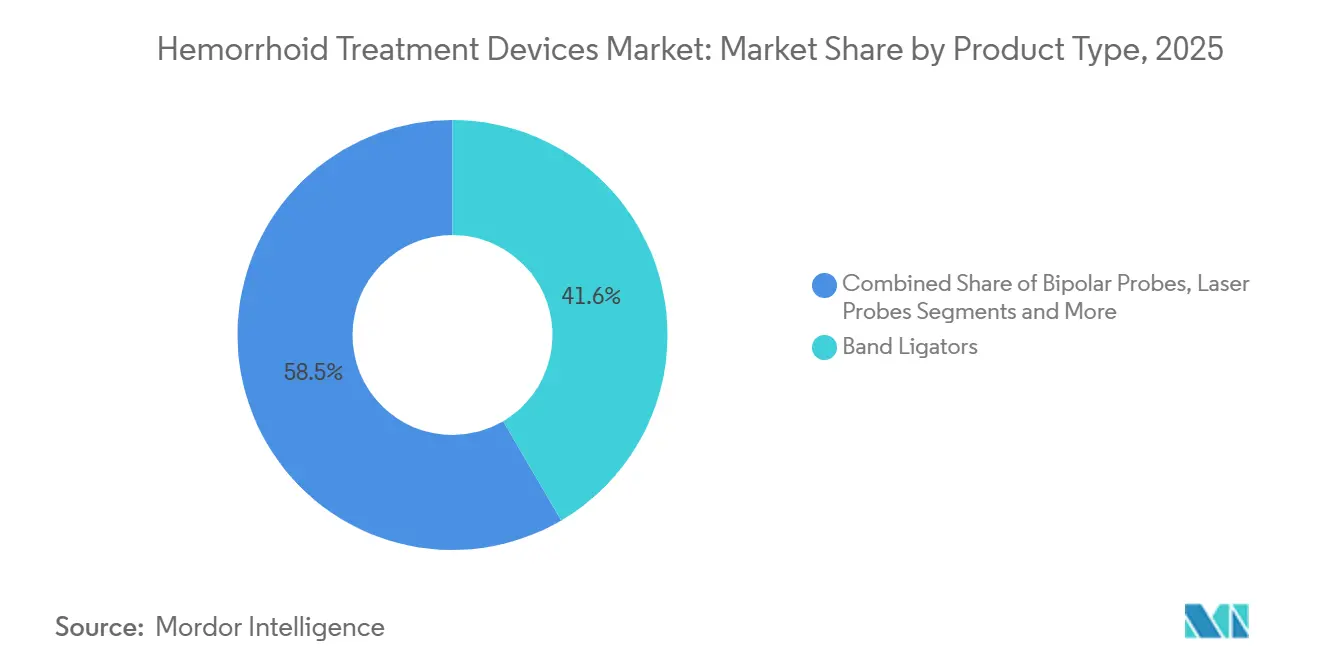
- By product type, band ligators led with 41.55% of the hemorrhoid treatment devices market share in 2025, while laser probes are forecast to expand at a 9.01% CAGR through 2031.
- By technology platform, mechanical systems commanded 53.74% share of the hemorrhoid treatment devices market size in 2025, and energy-based devices are projected to grow at 8.92% CAGR to 2031.
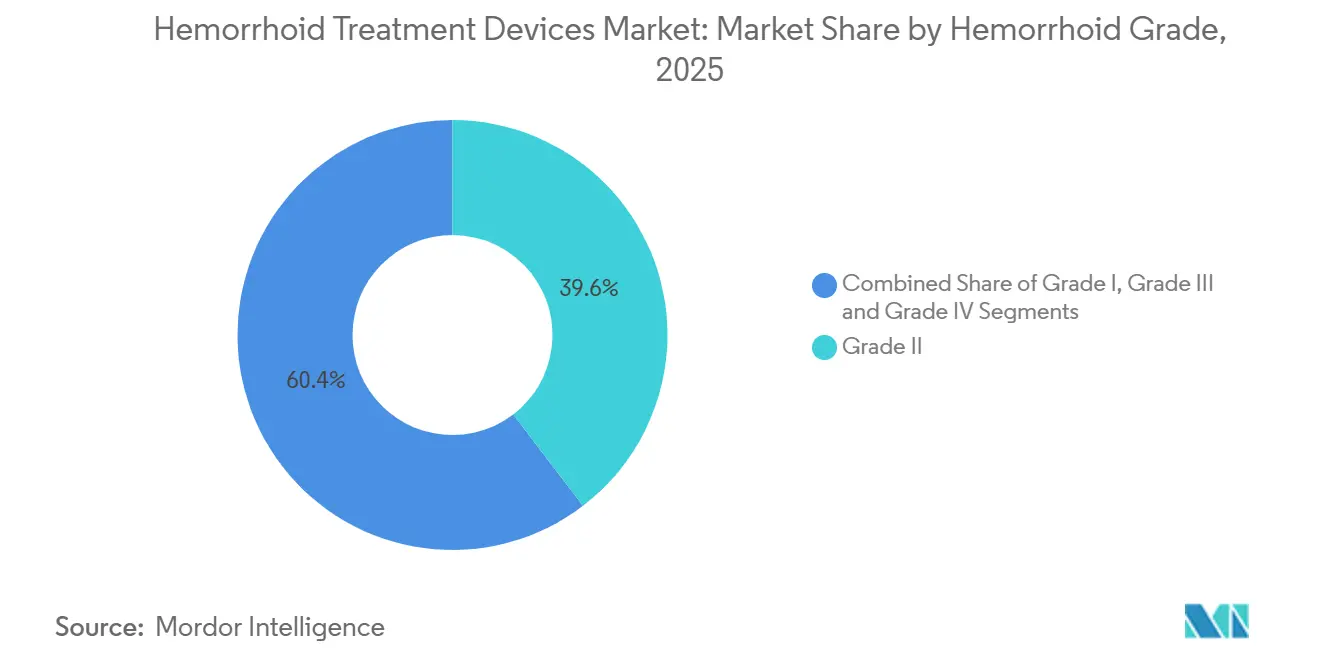
- By hemorrhoid grade, Grade II cases accounted for 39.62% of procedures in 2025; Grade IV treatments are set to rise at an 8.01% CAGR over the same horizon.
- By procedure, rubber band ligation held 37.76% share of the hemorrhoid treatment devices market size in 2025, while laser therapy is advancing at a 9.14% CAGR to 2031.
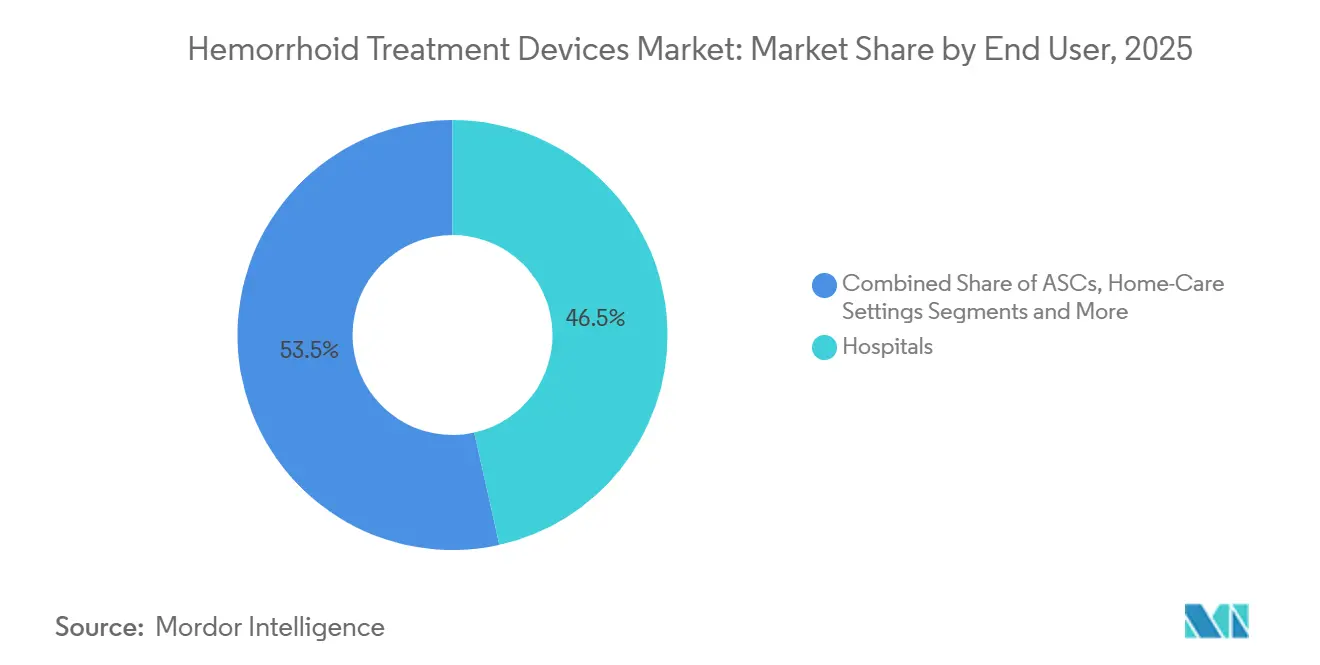
- By end user, hospitals captured 46.51% of 2025 revenue, yet ASCs are forecast to post the fastest growth at 8.33% CAGR through 2031.
- By geography, North America dominated with a 33.43% revenue share in 2025; Asia-Pacific is projected to register the quickest regional climb at an 8.43% CAGR.
Note: Market size and forecast figures in this report are generated using Mordor Intelligence’s proprietary estimation framework, updated with the latest available data and insights as of 2026.
Market Trends and Insights
Drivers Impact Analysis of Hemorrhoid Treatment Devices Market*
| Driver | (~) % Impact on CAGR Forecast | Geographic Relevance | Impact Timeline |
|---|---|---|---|
| Rising prevalence of hemorrhoidal disease | +1.6% | Global | Long term (≥ 4 years) |
| Growing adoption of minimally invasive outpatient procedures | +1.3% | North America, Asia-Pacific, selective EU | Medium term (2-4 years) |
| Technological advances in ligation and energy devices | +1.0% | Global, earliest in US/EU | Medium term (2-4 years) |
| Expanding healthcare infrastructure in emerging economies | +0.9% | Asia-Pacific, Middle East, Latin America | Long term (≥ 4 years) |
| Tele-endoscopy and remote guidance | +0.6% | Rural Asia, Africa, remote Australia | Medium term (2-4 years) |
| Infection-control push toward single-use ligators | +0.5% | US, EU, Japan | Short term (≤ 2 years) |
| Source: Mordor Intelligence | |||
Rising Prevalence of Hemorrhoidal Disease
Up to 50% of adults older than 50 experience symptomatic hemorrhoids, and growing life expectancy is pushing absolute case numbers higher. China alone is bracing for 1.4 million annual colorectal cancer cases by 2040; national screening rollouts mean more incidental hemorrhoid diagnoses that move quickly to procedural care.[3] Similar screening acceleration is visible in India, Japan, and South Korea. The clinical community now favors earlier device intervention for Grades II-III to prevent progression, anchoring a long-term tailwind for the hemorrhoid treatment devices market.
Growing Adoption of Minimally Invasive Outpatient Procedures
Payers continue to steer patients away from inpatient excisional surgery toward office or ASC-based ligation. Medicare reimburses rubber band ligation (CPT 46221) at USD 158.85 per facility case in 2026, a level that supports high-volume practice economics. Vizient forecasts a 19% jump in total U.S. outpatient surgery between 2024 and 2034, with gastrointestinal work leading the rise. The convenience of 15-minute visits and same-day discharge aligns with patient preference, accelerating device throughput and revenue.
Technological Advances in Ligation and Energy Devices
Single-use bipolar probes, infrared coagulators, and reloadable clips continue to roll out with superior ergonomics and faster hemostasis. Olympus’ 2025 Retentia HemoClip and EZ Clip launches blended reusable and disposable strategies to accommodate divergent hospital budgets. Peer-reviewed trials report postoperative pain scores 30-40% lower with laser hemorrhoidoplasty than with conventional excision, supporting premium pricing and higher adoption of energy-based devices.
Expanding Healthcare Infrastructure in Emerging Economies
India’s pledge to lift public health spending to 2.5% of GDP by 2025 is translating into new endoscopy suites and subsidized colorectal screening. Similar budgets are visible in Indonesia, Vietnam, and Saudi Arabia. As middle-income hospitals secure financing, they are procuring mid-tier mechanical ligators first, then layering on energy platforms as procedure volumes climb. This gradual technology laddering broadens the total addressable base of the hemorrhoid treatment devices market.
Restraints Impact Analysis of Hemorrhoid Treatment Devices Market*
| Restraint | (~) % Impact on CAGR Forecast | Geographic Relevance | Impact Timeline |
|---|---|---|---|
| High cost of stapling and laser systems | –1.2% | Global, highest in low- and middle-income | Long term (≥ 4 years) |
| Stringent FDA / CE regulatory pathways | –0.7% | United States, European Union, Japan | Medium term (2-4 years) |
| Competition from topical pharmacotherapy | –0.6% | Global | Short term (≤ 2 years) |
| Shortage of colorectal specialists | –0.5% | Africa, South Asia, rural Latin America | Long term (≥ 4 years) |
| Source: Mordor Intelligence | |||
High Cost of Stapling and Laser Systems
Capital outlays above USD 50,000 for a single laser console discourage adoption in resource-constrained hospitals despite clinical benefits. Deferred purchases are common in sub-Saharan Africa and lower-tier Chinese cities where budget committees favor mechanical ligators that cost one-tenth as much. Financing programs and leasing models are emerging, yet payback timelines stretch beyond five years for many facilities, slowing energy platform penetration.
Stringent FDA/CE Regulatory Pathways
Energy-based devices often require De Novo or pre-market approval, adding years and millions in test costs. Signum Surgical’s BioHealx cleared the FDA’s De Novo route only in mid-2024 after multiple clinical rounds, illustrating the hurdle for smaller innovators. While necessary for patient safety, these steps delay market entry and compress patent-protected sales windows.
*Our forecasts treat driver/restraint impacts as directional, not additive. The impact forecasts reflect baseline growth, mix effects, and variable interactions.
Hemorrhoid Treatment Devices Market Segment Analysis
By Product Type:
Band Ligator Leadership, Laser MomentumBand ligators owned 41.55% of 2025 revenue, underpinning the mechanical core of the hemorrhoid treatment devices market. High throughput, CPT-linked reimbursement, and a five-minute room turnaround keep demand brisk in physician offices and ASCs. The segment also benefits from infection-control upgrades as manufacturers roll out single-use variants. Laser probes, however, are set for a 9.01% CAGR, driven by compelling randomized evidence of superior pain relief and quicker return to work. Hospitals looking to differentiate colorectal programs are acquiring laser consoles, and private insurers in Germany and Japan now reimburse laser hemorrhoidoplasty, further lifting penetration.

By Technology Platform:
Mechanical Base, Energy UpswingMechanical systems generated 53.74% of the hemorrhoid treatment devices market size in 2025 thanks to band ligator ubiquity and their minimal learning curve. Budget-sensitive public hospitals in Latin America and Africa still prioritize these platforms. Energy-based devices are catching up at an 8.92% CAGR, led by bipolar and infrared coagulators that eliminate costly endoscope reprocessing. ASCs in the U.S. often bundle a disposable probe into the procedure fee, easing capital constraints and smoothing the upgrade path for surgeons.
By Hemorrhoid Grade:
II Dominant, IV AcceleratingGrade II treatments represented 39.62% of global volume in 2025, reflecting payers’ and clinicians’ preference for early outpatient management. The hemorrhoid treatment devices market share in Grade IV remains smaller but is expanding at an 8.01% CAGR as tertiary centers adopt Doppler-guided artery ligation and stapled hemorrhoidopexy for complex prolapse. Improved anesthesia protocols and faster discharge policies now allow many Grade IV cases to be scheduled in ASCs instead of inpatient ORs, broadening device demand.
By Procedure:
Rubber Band First, Laser FastestRubber band ligation dominated with 37.76% of 2025 procedures, and its cost advantage guarantees continued leadership. That said, laser therapy is rising on a 9.14% trajectory. Surgeons appreciate the bloodless field and reduced postoperative edema, and patients favor the short recovery window. Doppler-guided artery ligation and stapled hemorrhoidopexy fill more specialized niches, typically reserved for recurrent or circumferential prolapse.
By End User:
Hospital Core, ASC Growth TrackHospitals held 46.51% of 2025 spending, anchored by complex Grade III-IV caseloads and in-house anesthesia teams. Still, the hemorrhoid treatment devices market size captured by ASCs is climbing quickly at 8.33% CAGR as payers shift authorizations toward same-day settings. Physician offices remain the workhorse for single-ligator visits, especially in North America, while home-care use of disposable anoscopes is embryonic but gathering interest from tele-health startups.
Geography Analysis
North America Hemorrhoid Treatment Devices Market
North America generated 33.43% of 2025 revenue, underpinned by 6,300 Medicare-certified ASCs and clear procedural reimbursement. FDA device-intensive policies continue to influence purchasing, and infection-control rules make single-use ligators standard in many U.S. hospitals. Canada shows similar patterns, though provincial budgets extend capital cycles by one to two years longer than U.S. averages.
APAC Hemorrhoid Treatment Devices Market
Asia-Pacific is the fastest-growing arena at 8.43% CAGR through 2031. China is scaling colorectal screening, and provincial insurance now covers laser hemorrhoidoplasty in several pilot provinces. India’s private hospital chains are opening dedicated day-surgery wings, equipping them with bipolar and infrared platforms to differentiate from public facilities. Southeast Asian markets such as Indonesia are piggybacking on endoscopy infrastructure funded for gastric cancer programs, creating incremental device demand.
Europe Hemorrhoid Treatment Devices Market
Europe represents a mature but technology-hungry region. Germany and France reimburse energy-based procedures at higher tariffs than mechanical ligation, encouraging steady console refresh cycles every five to seven years. The United Kingdom is channeling National Health Service capital toward infection-risk reduction, pushing single-use devices to the fore. In Southern Europe, lingering budget limits lengthen adoption timelines, though EU-wide infection directives are narrowing the gap.
MEA and South America Hemorrhoid Treatment Devices Market
The Middle East & Africa and South America together account for a modest share but are important long-run contributors. Gulf Cooperation Council hospitals have moved rapidly into Doppler-guided and laser techniques to attract medical tourists, while Brazil and Colombia are expanding public coverage of outpatient ligation. Persistent shortages of colorectal surgeons and capital constraints temper growth, yet tele-endoscopy pilots and private specialty clinics are beginning to unlock latent demand.
Regulatory Landscape
Hemorrhoid treatment devices generally fall under established medical-device frameworks, with requirements varying by product and technology. In the United States, hemorrhoidal ligators are regulated as Class II devices under 21 CFR 876.4400, and some configurations may be 510(k)-exempt under defined limitations. Higher-risk energy-based systems and novel mechanisms can face more demanding FDA evidentiary pathways, including De Novo in certain cases, as seen with Signum Surgical's BioHealx clearance in mid-2024. Reimbursement-linked coding also affects market access in practice settings, with office and ASC throughput supported by Medicare payment for rubber band ligation (CPT 46221) at USD 158.85 per facility case in 2026.
In Europe, hemorrhoid devices must comply with Regulation (EU) 2017/745 (EU MDR), requiring clinical evaluation, post-market surveillance, and conformity assessment. Notified-body capacity and documentation burden continue to influence launch timing and portfolio prioritization, particularly for energy-based devices and stapling systems. The European Commission's device borderline and classification guidance remains an anchor for positioning anorectal accessories and treatment devices under MDR definitions, and manufacturers increasingly pair product rollouts with real-world data collection processes to support ongoing compliance.
Value Chain Analysis
The value chain starts with specialized component inputs (medical-grade polymers, elastomers, and metals for ligators, clips, staplers, and single-use probes) and extends through OEM manufacturing, sterilization and packaging, regulatory release, and commercialization via hospital and ambulatory channels. Mechanical ligation products typically depend on high-volume, cost-optimized manufacturing with strong distributor coverage, while energy-based platforms add capital equipment sourcing, service, and consumables management, often bundled into procedure economics in ASCs. Regulatory milestones act as inflection points that unlock downstream activity, illustrated by FDA 510(k) clearance for Ovesco Endoscopy AG's OTSCneo System Set in November 2025 and Cook Medical's CE Mark in March 2024 for a new hemorrhoid ligation device intended for EU commercialization.
Distribution and fulfillment differ by customer type: diversified medtech players use direct sales and group purchasing relationships for hospitals, while niche systems more often rely on direct-to-clinic models and focused channel partners for office-based procedures. Supply continuity and single-use conversion increasingly depend on contract manufacturing and molding partners for disposables, as reflected in Redfield Corporation's planned July 2026 delivery schedule for disposable slotted anoscopes manufactured with Monarch Molding to support the IRC2100 system. On the demand side, ASCs and physician offices influence product configuration choices (single-use kits, rapid setup, minimal reprocessing), while hospitals drive requirements for broader portfolio compatibility, service coverage, and infection-control documentation.
Competitive Landscape
Market rivalry is moderate, characterized by a handful of diversified surgical conglomerates and several focused innovators. Boston Scientific, Medtronic, Johnson & Johnson’s Ethicon, and Olympus collectively control most band ligator and stapler placements, leveraging broad distribution and bundled service contracts. Olympus pursued a dual-track device policy in 2025, rolling out the reusable EZ Clip for cost-sensitive buyers and the single-use Retentia HemoClip for infection-conscious centers.
Niche challengers are carving footholds. THD S.p.A. continues to build share with its Doppler-guided ligator platform, especially in Italian and U.K. NHS hospitals. Signum Surgical received FDA De Novo clearance in 2024 for its BioHealx radiofrequency device targeting the submucosal plexus, bringing a tissue-sparing alternative to the U.S. market. Merit Medical’s USD 120 million purchase of Biolife broadened its hemostatic sealant range, enabling procedural kits that bundle ligators with bleeding-control products.
Strategy themes include disposable product launches to meet infection-control mandates, cross-selling of hemostatic agents alongside ligators, and geographic expansion via local distributors in Asia-Pacific. Patent filings show a pivot toward hybrid mechanical-energy devices, while venture investors are funding start-ups focused on low-cost single-use consoles for emerging markets.
Hemorrhoid Treatment Devices Industry Leaders
-
Boston Scientific Corporation
-
Medtronic Plc
-
Cook Medical
-
Integra LifeSciences Corporation
-
Johnson & Johnson
- *Disclaimer: Major Players sorted in no particular order
Hemorrhoid Treatment Devices Market Companies Covered in this Report
- A.M.I.
- B. Braun
- Bluesail Surgical
- Boston Scientific
- Conmed
- Cook Group
- Integra LifeSciences
- Johnson & Johnson
- Medline Industries
- Medtronic
- Micro-tech
- Olympus
- Privi Medical
- Sapi Med
- Sklar Surgical Instruments
- Smiths Group
- Surkon Medical
- Teleflex
- THD S.p.A.
- Victor Medical Instruments
Market Opportunities and Future Outlook
Opportunities center on accelerating the shift of Grade II-III care into office and ASC settings and expanding higher-value energy and minimally invasive options when clinical differentiation is clear. The installed base of band ligators creates a conversion funnel to single-use, infection-control-forward kits and to premium energy-based modalities, supported by clinical evidence of lower postoperative pain for laser hemorrhoidoplasty and by payer dynamics that favor short visits and same-day discharge. In 2026, product releases reinforce this direction, including Triangel Medical's March 2026 Endolaser V6 dual-wavelength diode laser system positioned for proctology applications, adding to the competitive set of laser consoles and consumables that hospitals and ASCs evaluate when differentiating colorectal programs.
White space also extends to newer procedural pathways for bleeding-predominant or complex cases and to standardization of outcomes that helps providers and payers compare non-excisional interventions. Early clinical momentum for haemorrhoidal artery embolization (HAE) was reflected in the HEMBO-1 trial results presented at GEST 2026, pointing to incremental device and consumable demand across interventional radiology and colorectal care. In parallel, the steady cadence of Class II clearances, such as Ovesco Endoscopy AG's November 2025 FDA 510(k) clearance for OTSCneo as a hemorrhoidal ligator, supports ongoing room for iterative device upgrades, ergonomic improvements, and kit-based offerings that reduce procedure time and simplify adoption in outpatient workflows.
Recent Industry Developments in Hemorrhoid Treatment Devices Market
- June 2026: Cook Medical released its next-generation SureTome SW sphincterotome in the United States and Canada for gastrointestinal endoscopists. While not limited to hemorrhoid therapy, the update reinforces Cook Medical's endoscopy access and accessory footprint that overlaps with outpatient anorectal procedure workflows and purchasing channels.
- November 2025: Ovesco Endoscopy AG received FDA 510(k) clearance (K251562) for the OTSCneo System Set, regulated as a Class II hemorrhoidal ligator under 21 CFR 876.4400. The clearance expands competitive options in mechanical hemorrhoid intervention and supports broader commercialization through U.S. hospital and ambulatory procurement pathways.
- February 2024: Signum Surgical Limited received FDA De Novo classification (DEN240007) for the BioHealx device (Class II, 21 CFR 878.4835) as an adjunct to surgical repair in anorectal care. The De Novo outcome illustrates the evidentiary bar for novel anorectal technologies and provides a regulatory precedent that can influence adjacent innovation strategies in tissue-sparing hemorrhoid interventions.
Hemorrhoid Treatment Devices Market Report Scope and Research Methodology
Market Definition and Coverage
For this study, the market covers medical devices used to treat hemorrhoids in clinical and outpatient settings, including diagnostic visualization and procedure-enabling tools used across common hemorrhoid interventions.
Scope exclusions: Excludes pharmaceuticals, OTC creams and wipes, and general-purpose surgical capital equipment that is not primarily designed for hemorrhoid treatment.
Segments Covered in This Report
- By Product Type
- Band Ligators
- Infrared Coagulators
- Proctoscopes & Anoscopes
- Bipolar Probes
- Doppler-Guided Ligators
- Cryotherapy Devices
- Laser Probes
- Stapling Devices
- Other Emerging Devices
- By Technology Platform
- Energy-based Devices
- Mechanical Devices
- Hybrid/ Combination Devices
- By Hemorrhoid Grade
- Grade I
- Grade II
- Grade III
- Grade IV
- By Procedure
- Rubber Band Ligation
- Sclerotherapy
- Infrared Coagulation
- Laser Therapy
- Doppler-Guided Artery Ligation (DG-HAL)
- Stapled Hemorrhoidopexy
- Conventional Hemorrhoidectomy
- Other Procedures
- By End User
- Hospitals
- Clinics & Physician Offices
- Ambulatory Surgery Centers
- Home-Care Settings
- Others
- By Geography
- North America
- United States
- Canada
- Mexico
- Europe
- Germany
- France
- United Kingdom
- Italy
- Spain
- Rest of Europe
- Asia-Pacific
- China
- Japan
- India
- South Korea
- Australia
- Rest of Asia-Pacific
- Middle East & Africa
- GCC
- South Africa
- Rest of Middle East & Africa
- South America
- Brazil
- Argentina
- Rest of South America
- North America
Data Sources, Market Sizing, and Validation
Desk Research
Desk work starts with building a clean demand story and a practical device list, then checking it against public health signals. We refer to sources such as the US CDC, the US National Library of Medicine, FDA device and safety communication pages, and the WHO for broad disease and care-setting context.
Next, adoption and procedure signals are cross-checked using sources such as Centers for Medicare and Medicaid Services reimbursement and code references, OECD health statistics, and published articles in peer-reviewed colorectal and gastroenterology journals. Company annual reports, investor decks, and reputable press help understand product positioning and regional focus, while a paid subscription for company financials and news supports tracking ownership changes and product launches. These examples are not exhaustive, and many other public sources were also used for data collection, validation, and clarification.
Primary Interviews and Surveys
Primary work focuses on confirming what is actually used in practice and how purchasing happens across care settings. We spoke with clinicians, hospital procurement staff, ambulatory surgery center administrators, and device-side commercial and product roles across APAC, EMEA, and the Americas to validate procedure mix, replacement cycles, and price bands that were unclear from published sources.
Distribution of primary research fieldwork respondents
| Company type | Respondent position | Region |
|---|---|---|
| Top tier: 25% | CXOs: 13% | APAC: 46% |
| Mid tier: 60% | Functional/Unit leaders: 29% | EMEA: 36% |
| Smaller Players: 15% | Managers: 58% | Americas: 18% |
Market-Sizing & Forecasting
Sizing is built with a top-down and bottom-up approach, where procedure volumes and treated patient pools are reconstructed by region and then translated into device demand using realistic use-per-procedure assumptions. Results are then corroborated with selective bottom-up approximations, such as sampled ASP ranges by device type, channel feedback on typical order sizes, and supplier-side checks on where adoption is concentrated, and totals are adjusted when the two views disagree.
Key inputs used in the model include the share of hemorrhoid cases treated in office-based settings versus surgical settings, the procedure mix across rubber band ligation, sclerotherapy, and infrared coagulation, and the installed use of diagnostic visualization tools that are purchased as recurring accessories. We also track reimbursement and coding signals where relevant, typical replacement cycles for frequently used tools, and regional pricing differences driven by tendering and distributor structures. For forecasting, scenario analysis is used to reflect how outpatient shift, minimally invasive preference, and facility expansion could change procedure mix and device penetration, and then the scenarios are filtered through expert feedback before finalizing growth paths. Where granular unit data is missing in smaller countries, proxy splits are applied using hospital volume and healthcare spending indicators, followed by a reasonableness check against regional totals.
Data Validation & Update Cycle
Validation is done through multiple checks so the outputs stay close to real-world signals. We compare the model against independent indicators such as procedure trends, reimbursement direction, and observed price movement, and then investigate large jumps by region or device type before sign-off.
Assumptions are reviewed across analysts, and primary respondents are re-contacted when an input changes the totals in a meaningful way, such as a price reset, a new guideline shift, or a distribution change. Reports are refreshed annually, with interim updates when material events happen, and a final pre-delivery scan is completed so clients receive an updated view based on the latest available information.
Mordor Intelligence's Hemorrhoid Treatment Devices Market Size Versus Other Published Estimates
Published market sizes for hemorrhoid treatment devices can look far apart, even when they describe the same clinical need. The differences usually come from how each publisher sets the device boundary, which years are used for the base and forecast, and how procedure volumes and prices are converted into revenue.
The table shows a wide spread mainly because some estimates appear to blend in broader gastrointestinal surgical tools or mix treatment categories beyond hemorrhoids, which can lift the total quickly. It also matters whether the model leans on a recent base year with aggressive adoption assumptions, or on a later base year where growth is measured only after the category is more established, and currency timing and inflation handling can add further drift.
Benchmark comparison
| Source | Market Size | Gaps in Research Methodology |
|---|---|---|
| Mordor Intelligence | USD 1.12 B (2026) | |
| Global Consultancy A | USD 0.94 B (2024) | Uses an earlier base year and a higher-growth path to a longer-dated forecast, and the inclusion list looks more limited to device groupings that are framed as surgical versus non-surgical, which can shift totals depending on what is counted as a stand-alone hemorrhoid device. |
| Industry Publisher B | USD 2.21 B (2024) | Reports a much larger 2024 value, which may reflect a broader scope that likely folds in adjacent GI surgical and hospital-use items, plus different ASP assumptions and inflation handling across a 2025 to 2035 window. |
The table points to scope and base-year choices as the biggest gap drivers, and in Mordor Intelligence's model the total is tied to hemorrhoid-specific device demand mapped to procedure mix and care-setting use, rather than expanded GI tool baskets. When those inputs are kept explicit and reviewed against procedure and pricing signals, the final number becomes easier to reproduce and explain during planning discussions.
Key Questions Answered in the Report
What is the current size of the hemorrhoid treatment devices market?
The market stood at USD 1.12 billion in 2026 and is projected to reach USD 1.50 billion by 2031.
Which product type leads global sales?
Band ligators led with 41.55% revenue share in 2025 due to their cost-effectiveness and clear reimbursement pathway.
Which region is growing the fastest?
Asia-Pacific is forecast to expand at an 8.43% CAGR through 2031, driven by investments in colorectal screening and endoscopy capacity.
How quickly are ambulatory surgery centers adopting hemorrhoid devices?
ASC revenue is predicted to rise at 8.33% CAGR, fueled by payer incentives for same-day, minimally invasive procedures.
What technological trend is reshaping device choice?
Single-use, infection-control-focused ligators and energy probes are gaining traction as hospitals seek to cut reprocessing risk and labor cost.
Which companies are at the forefront of innovation?
Olympus, THD S.p.A., and Signum Surgical are actively launching single-use or radiofrequency devices that target shorter recovery and improved safety.